❌

Reading view

No Boeing, Lockheed or Any of the Big Five: Musk & Luckey Co-Lead Project Meridian on America’s Future Warfare

A profound transformation is underway in the politico-military-industrial complex that has dominated the US defense realm for over seven decades.

As drones, AI, autonomous systems, satellites, robots, and networked platforms reshape the battlefield, Silicon Valley is quietly edging out the US defense market’s big five: Lockheed Martin, RTX, Boeing, General Dynamics, and Northrop Grumman.

On October 6, Defense Secretary Pete Hegseth tapped SpaceX CEO Elon Musk and Palmer Luckey, the co-founder of defense technology firm Anduril, to lead “Project Meridian: The Future of Warfare,” a new 120-day initiative tasked with identifying the technologies and capabilities required for future military dominance.

“We are witnessing rapid advances in artificial intelligence, autonomy, directed energy, robotics, biotechnology, among other critical high-tech areas. Combined, these new domains, new ways of fighting, and technological developments will profoundly alter the character of warfare,” Hegseth said in his one-page memo while announcing Project Meridian on September 30.

“To maintain global dominance, the United States must anticipate future operational environments and act decisively to develop the tools to dominate in them.”

Defining the scope of the study, Hegseth said: “Project Meridian will study the battlefields of the future, identify which weapons and technologies warfighters will need to harness to dominate in these environments, and propose actionable solutions to start developing, testing, and fielding these capabilities such that America will have overmatch for the 21st century and beyond.”

In his memo, Hegseth hinted that the center of gravity is shifting over who defines and decides the parameters of future defense weapons, technologies, and requirements.

“Project Meridian will leverage critical perspectives from outside the Pentagon, drawing upon a group of top technologists, innovators, business leaders, policymakers, and national security experts.”

Its primary function will be to map the trajectory of future warfare, identify critical capability gaps, and propose actionable solutions, Hegseth said.

The Elon Musk and Palmer Luckey-led panel will therefore discuss not a particular weapons platform, but what American warfare and the battlefield will look like in the future.

What they will discuss and define is not merely a change in weapons technology, but the way the Pentagon sees warfare and organizes the production of military power itself.

The study’s co-directors will “identify the domains that we must conquer, and capabilities we must master,” Hegseth said at Marine Corps Base Quantico on September 30.

“The Project Meridian effort will examine the technologies and operational concepts required to sustain U.S. military advantage across the full spectrum of future warfighting domains across a 10-20 year time horizon,” said a spokesperson for the Department of Defense.

The Musk- and Luckey-led study could therefore shape the Pentagon’s defense procurement decisions for decades.

It’s no accident that while SpaceX’s Musk and Anduril’s Luckey are on the panel, the executives of the Big Five are conspicuously missing.
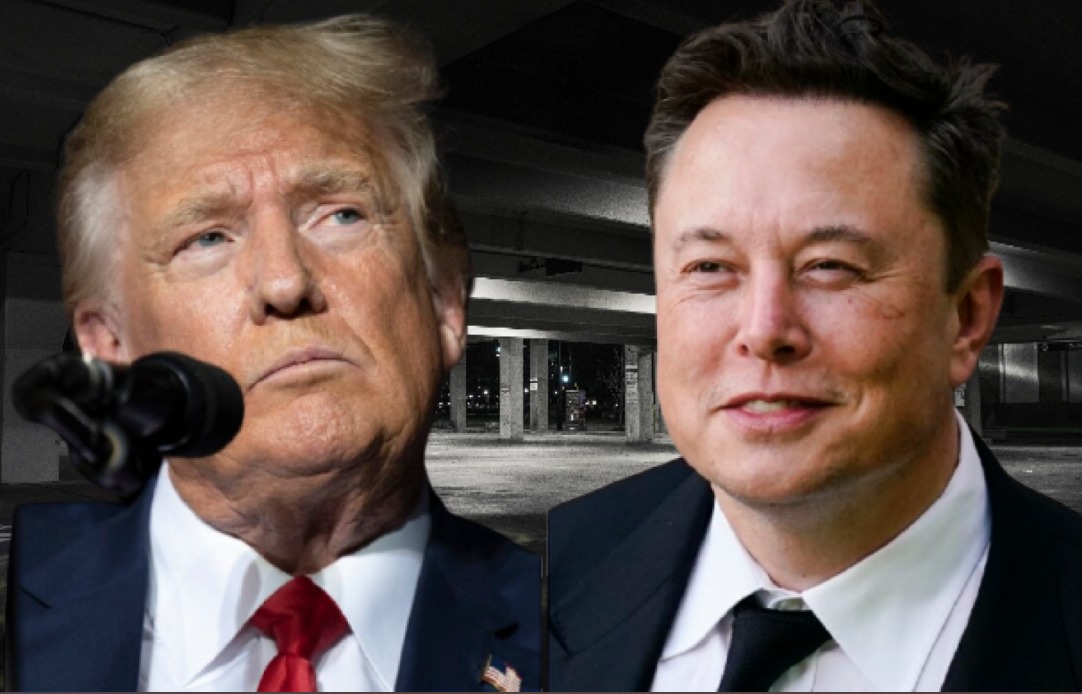
Trump and Musk

Silicon Valley to Replace US’ Military-Industrial Complex?

The US military-industrial complex started taking shape in the 1950s.

While the two World Wars saw large-scale mobilizations and the channeling of industries toward weapons production, the distinctive military-industrial complex emerged in the 1950s.

US President Eisenhower himself later described the “conjunction of an immense military establishment and a large arms industry as new in the American experience.”

In April 1950, the top-secret U.S. National Security Council (NSC) policy (NSC-68) concluded that the “only plausible way to deter the Soviet Union was for President Harry Truman to support a massive build-up of both conventional and nuclear weapons.

In other words, the US should maintain elevated defense spending even during peacetime.

U.S. military budget jumped from USD 13 billion to USD 60 billion within a couple of years. Most of these funds went to private contractors, rather than government bodies.

For nearly the next seven decades, military production and weapons procurement in the US followed a set pattern.

The Pentagon defined its requirements, the US Congress approved the budgets, defense production firms, mostly a handful of prime contractors, submitted bids, and the winner developed platforms with lifecycles ranging from a few years to a few decades.

Fighter jets, bombers, submarines, aircraft carriers, missiles, radars, military communication platforms- all these platforms were developed this way.

For decades, they remained industrial objects; however, these platforms gradually became computational systems. The F-35, for instance, has been described as a flying supercomputer.

New-age military platforms, however, are first and foremost computing platforms.

Drones, for example, are all these systems rolled into one.

They are at once a fighter jet and a bomber, equipped with radar seekers, missiles, a network of sensors, a communication system, and a software platform that integrates AI into flight paths and target selection.

Satellite constellations are becoming central to military communication and targeting by drones, as seen in the critical role Starlink is playing in the war in Ukraine. Ukrainian drones use AI to select flight paths that exploit gaps in Russia’s layered air defense network.

Command-and-control software and Battlefield Management Systems (BMS) fuse information from diverse sources, including satellites, drones, ground-based radars, and AWACS, within seconds to create a unified, simplified battlefield picture and propose the most critical sites for targeting.

Underpinning all these systems are software, computing systems, and AI, not just hardware.

In this new warfare, large, expensive defense platforms are often a liability, rather than an asset.

In short, military value is shifting at an unprecedented speed.

Defense platforms costing millions of dollars and once considered invincible could now be targeted by a drone costing just a few thousand dollars.

This shift is also forcing military suppliers to change. Software firms in Silicon Valley that combine artificial intelligence (AI), autonomy, and machine learning (ML) to deliver innovative defense solutions are now at the center of this shift.

In recent years, they have won contracts worth tens of billions of dollars, edging out the Big Five of defense production.

The rise of these new military technology firms marks the biggest shift in the US arms industry over the past five years.

“Companies like SpaceX, Palantir, and Anduril have been tapped for multi-billion-dollar contract awards from the Pentagon for communications, targeting, unpiloted vehicles, anti-drone defenses, and hypersonic weapons. The funds from these awards will flow to the companies over time, which should put them in the top ranks of Pentagon contractors by value of awards within the next several years,” a recent report from the Costs of War project said.

For instance,
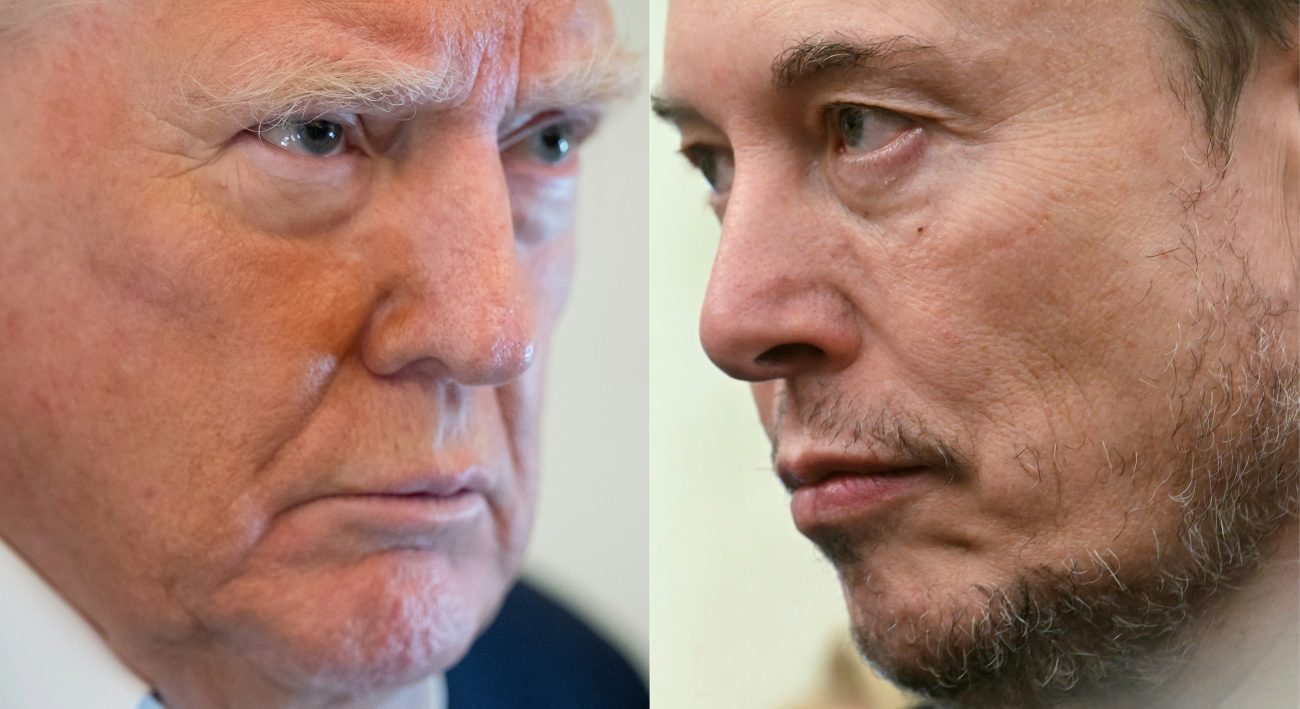
(Photo by SAUL LOEB and Jim WATSON / AFP)

has received awards for countering Unmanned Aerial Vehicles (UAVs) from the Marines (US$642 million); a contract for its Roadrunner UAV interceptor system (US$250 million); and contracts for its Ghost Shark autonomous underwater vehicle as part of the U.S.-UK-Australia AUKUS project, to name a few.

Anduril has also been selected to build the next generation of Army goggles, the Integrated Visual Augmentation System (IVAS), which are “intended to give soldiers everything from night-vision capability to warnings of incoming airborne threats.”

In June this year, the U.S. Air Force awarded engineering, manufacturing development, and production contracts for Collaborative Combat Aircraft Increment 1 to both Anduril (FQ-44) and General Atomics.

However, Anduril’s most lucrative contract could be in border security technologies. The Big Beautiful bill commits over US$6 billion for various border security technologies. However, as Eurasian Times reported earlier, the bill’s conditions mean Anduril is the only firm that qualifies for these border surveillance tenders.

SpaceX is launching most of the U.S. military’s satellites. It is also receiving funding for the military version of its Starlink system.

Separately, the Pentagon is considering investing in SpaceX’s Starship system.

SpaceX and Anduril could also win billion-dollar contracts in the upcoming ‘Golden Dome’ project.

Established tech firms are also challenging the Big Five’s dominance. For example, Amazon, Microsoft, Google, Oracle, and IBM are collectively investing US$10 billion in the Pentagon’s cloud computing program.

“To the extent that the Pentagon moves towards AI-driven weapons systems, including swarms of drones and uncrewed aircraft, ships, and combat vehicles, the dominance of the Big Five firms may be reduced,” the report by the Costs of War Project added.

In fact, a recent essay on the Anduril Industries blog, ‘Rebooting the Arsenal of Democracy,’ dismissed the Big Five defense contractors as ‘remnants of the Cold War’ that need to be supplanted if America is to take the lead in developing and producing the weapons of the future.

“Why can’t the existing defense companies simply do better? The largest defense contractors are staffed with patriots who still lack the software expertise or business model to build the technology we need.

“Tomorrow’s weapons – autonomous systems, cyberweapons and defenses, networked systems, and more – are enabled through software, while these companies specialize in hardware. These companies work slowly, while the best engineers relish working at speed… These companies built the tools that kept us safe in the past, but they are not the future of our defense,” the essay said.

The trend, therefore, has already started.

Project Meridian, which could profoundly impact US defense procurement for decades, will further accelerate this trend.

Musk and Luckey’s appointment to lead this study suggests Silicon Valley tech firms are quietly edging out the US military-industrial complex’s Big Five.

  • Sumit Ahlawat has over a decade of experience in news media. He has worked with Press Trust of India, Times Now, Zee News, Economic Times, and Microsoft News. He holds a Master’s Degree in International Media and Modern History from the University of Sheffield, UK. 
  • He can be reached at ahlawat.sumit85 (at) gmail.com

The post No Boeing, Lockheed or Any of the Big Five: Musk & Luckey Co-Lead Project Meridian on America’s Future Warfare appeared first on EURASIAN TIMES.

  •  

Is Israel arming one of Brazil’s largest criminal factions?

Israeli rifles seized en route to Brazil’s TCP drug faction – the same group that controls “Complexo de Israel.” Israel armed Medellín in the 80s. Coincidence?

Join us on Telegram, X, and VK.

Contact us: info@strategic-culture.su

Last week, 7 ARAD-7 rifles of Israeli manufacture were seized by the Brazilian Federal Police at a transport company located in Niterói, Rio de Janeiro, while they were being prepared to be sent to drug traffickers of the Terceiro Comando Puro (TCP) organization. These are the same drug traffickers who control a territory called “Complexo de Israel,” which brings together the favelas Cidade Alta, Parada de Lucas, Vigário Geral, Cinco Bocas, and Pica-Pau.

Two years ago, we wrote here at the Strategic Culture Foundation an article about the danger of “narcopentecostalism” – the deep linkage between drug trafficking and neo-Pentecostalism in some favelas – pointing to this new phenomenon as a possible national security threat for Brazil, as well as a potential focus of activities aimed at destabilizing the social fabric and religious persecution. Indeed, in TCP territories, Catholic churches and Afro-Brazilian religious centers are closed and violently attacked.

Nevertheless, at the time we wrote that article, in July 2024, there were not yet enough material elements to incisively affirm the existence of a direct connection between narcopentecostalism and the State of Israel. TCP traffickers exalted the State of Israel, used Israeli patches and uniforms, but all of this was circumstantial and could be explained by mere adherence to evangelical discourse.

Now, however, we have more specific evidence to be able to return to the topic and raise concern about the possible link between Israel and one of Brazil’s main drug trafficking organizations.

After all, to date it is still not known how these modern Israeli rifles reached the logistical branch of an important Brazilian criminal organization, when this specific rifle is still uncommon among Brazilian police forces and nonexistent among the military.

The first objection that could be raised would be about Israel’s “interest” in arming or financing a criminal organization in Brazil. Well, it would not be the first time.

In the 1980s, 500 automatic weapons (including IMI Galil rifles and Uzi submachine guns) and 200,000 rounds of ammunition were found in a warehouse belonging to the Medellín Cartel, one of the largest drug trafficking organizations in Colombia. At the time, “independent investigations” concluded that the person responsible for the operation, the mercenary and retired Israeli military officer Yair Klein, had acted on his own. Klein himself, however, always stated that his activities in Colombia (which involved not only arms sales but also the training of paramilitary groups) had the knowledge and authorization of Israeli authorities.

Klein’s link to the Israeli state apparatus, demonstrating that he was not really an “independent agent,” is confirmed by the fact that when he was arrested in Sierra Leone in 1999 for selling weapons to insurgents of the Revolutionary United Front, the State of Israel intervened to secure his release, as well as refused all extradition requests.

Another interesting and recent piece of news involves Mexico, where authorities declared that 80% of the weapons found with soldiers of the drug cartels were of U.S. origin… and most of the remaining 20% were of Israeli origin. Indeed, Israel officially exported 24,000 automatic weapons between 2006 and 2018 to Mexico’s military and police institutions, and another 18,000 in more recent years. Note, however, that estimates from independent observatories suggest that Mexican cartels as a whole possess an arsenal of several hundred thousand automatic weapons. If something like 15-20% of these weapons are of Israeli origin, then we are talking about any number between 20,000 and 100,000 Israeli-origin weapons in the hands of the cartels. These are numbers that simply do not match the figures of official Israeli arms exports to Mexican security forces.

One last point that may draw attention is the recent attention the U.S. has given to Brazilian criminal organizations, with the PCC and CV groups categorized as terrorist groups by Donald Trump’s government. What draws attention is the fact that the TCP – the 3rd largest criminal organization in Brazil, with a presence in some other countries in the region, operations in several Brazilian states, and at least one verifiable link to an individual connected to Al-Qaeda’s financing network, not to mention an operational alliance with the PCC – was left out of the categorization.

Naturally, it could be a coincidence. But even so, it is an interesting coincidence that the neo-Pentecostal criminal organization apparently armed by Israel is exactly the one that was not categorized as terrorist by the White House.

  •  

China Puts USS Benfold Back in Spotlight. Says Foreign Warship Lost Power While Tracking Its Type 055

After claiming it intercepted foreign aircraft on two separate occasions last year, China has made another major claim: a “foreign warship” lost power while pursuing a People’s Liberation Army Navy (PLA-N) Type 055 destroyer, seemingly an indirect reference to the USS Benfold.

Zhang Jun, a captain on the PLA Navy’s Type 055 “Zunyi” destroyer, said a foreign warship lost power while his warship, engaged in a routine training exercise at the time, the Chinese state-owned publication Global Times claimed.

Speaking on China Central Television (CCTV), the officer said the destroyer had multiple encounters with foreign warships and aircraft during the exercise. 

“During that mission, we were conducting routine training exercises when a foreign warship began tracking our ship. As we sailed at high speed, the foreign vessel had to match our speed. While we were in a standoff, its power and electricity all suddenly went out, its radar stopped emitting, and its navigation lights went dark,” Zhang said. “This lasted for nearly half an hour. But our equipment and our crew had no problems at all,” he added.

When asked whether the engagement made him nervous, the Chinese officer said, “Why should I be nervous? I was definitely not nervous. As long as you are within range of my missiles, I can definitely destroy you.”

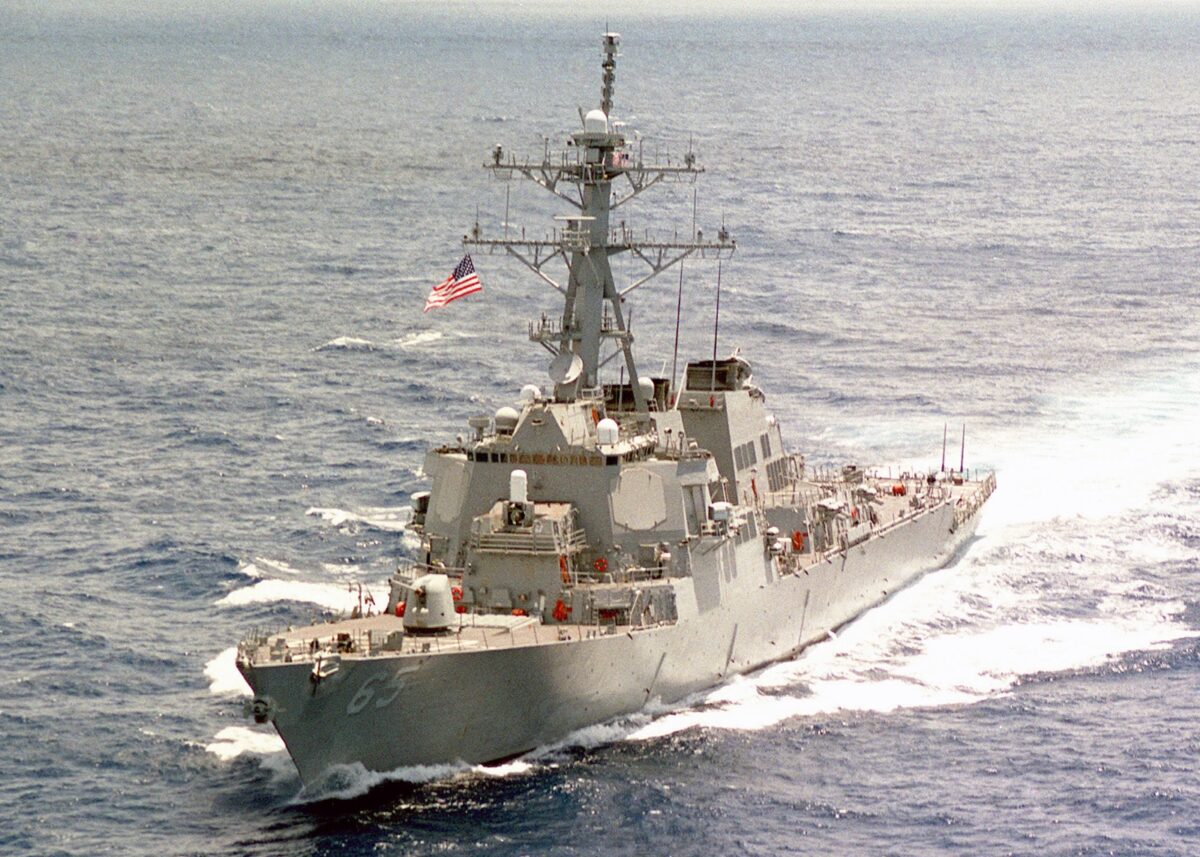
The officer stopped short of providing more details, including the time and place of the encounter and the name of the foreign warship. However, the claims appear aimed at the US Navy warship USS Benfold, which apparently lost power and was stranded in the South China Sea in July 2026, as previously reported by the EurAsian Times.

“On July 24, 2026, while conducting routine operations in the Indo-Pacific, Arleigh Burke-class guided-missile destroyer USS Benfold (DDG 65) reported an engineering casualty involving its generators, causing a loss of power,” Navy Cmdr. Matthew Comer, spokesperson for the 7th Fleet, said in a statement to USNI News in August  2026.

“There were no injuries to the crew, who demonstrated resilience, grit, professionalism and unwavering steadiness in their response,” he added.

The incident reportedly occurred while the USS Benfold was engaged in routine operations in the Indo-Pacific as part of the USS George Washington carrier strike group (CSG).

After the power loss, the guided-missile destroyer reportedly drifted for four days and was supplied by other ships in the South China Sea, which China claims as its sovereign territory and where frequent standoffs occur between Beijing and other forces.

The Seventh Fleet spokesperson did not mention a high-speed pursuit of a Chinese vessel or any engagement between the US carrier strike group and PLA Navy warships, although these encounters are not uncommon in the region.

USS Benfold-Wikipedia

When asked whether China’s claimed scenario is plausible, Indian Navy veteran and commentator Rear Admiral Girish Kumar Garg (retd) told the EurAsian Times, “For an Arleigh Burke-class ship, high-speed propulsion has nothing to do with total power loss. Complete power failure can happen if all onboard power generators fail or the power distribution system malfunctions. Although rare, it is not impossible.”

Further, when probed about potential reasons for the complete power loss, Rear Admiral Garg said, “Can be many reasons- fuel contamination can be a major cause. Power overload due to too many systems operating and loaded on the running generators can also cause them to trip. However, generally, if all onboard power generators are running and connected, then they cater for full ship’s electrical load plus some extra load margin.”

Why Yemen Could be a Graveyard for Turkish & Even Mecca Pact Soldiers: History Has The Answers: OPED

The USS Benfold power loss incident was not the first of its kind. Earlier, the USS Higgins had an “engineering casualty” in its electrical system in May 2026,  which caused it to lose power and propulsion for many hours in the Indo-Pacific area. No chase of another vessel had occurred at the time.

Nonetheless, state media and Chinese experts used the opportunity and their purported claims to highlight the enviable capabilities of the PLAN’s Type 055 warships.

Chinese military expert Shi Hong told the Global Times that the Type 055 is considered the world’s best large destroyer in terms of comprehensive capabilities. Meanwhile, Xu Yi, another crew member on the ship that was involved in the purported encounter, said, “We have a powerful offensive and defensive system. In the future, we will definitely conduct operations externally in formation. In fact, we have already begun integrating multiple formations and exploring what makes for the best combination.”

Some pro-PLA observers on social media widely amplified the Chinese claims, aligning with similar previous instances.

However, Beijing deliberately makes specific claims while avoiding direct naming of the foreign assets to avoid a diplomatic response and to eliminate the possibility of a counter-narrative from official sources and a potential bilateral tussle.

Chinese Military Keeps Confronting Foreign Assets

In the past few years, China has claimed to have intercepted and expelled unidentified foreign aircraft from the same region on multiple occasions.

No Boeing, Lockheed or Any of the Big Five: Musk & Luckey Co-Lead Project Meridian on America’s Future Warfare

Last year, Chinese state media, CCTV, released a video on June 29 showing two J-16 fighter jets—considered the cornerstone of the PLA Air Force’s interception efforts—being dispatched to warn and drive out a “foreign aircraft” that allegedly breached China’s territorial sea boundary. 

“The foreign aircraft flew over at a low altitude, not very disciplined, almost at a vertical 90 degrees, breaching our territorial sea line,” air force aviation brigade member Zhang Zhanfang stated on the broadcast at the time.

The Chinese media did not disclose the exact date or location of the incident, making it challenging to identify the foreign aircraft in question.

Later that year, Global Times reported on a documentary shown on CCTV in October 2025, in which a PLA Air Force (PLAAF) pilot from the special mission aircraft formation claimed he could simultaneously lock two foreign stealth fighter jets while flying the J-16 fighter jet and force both jets to withdraw.

“They headed straight toward our two aircraft. Their intention was very clear—it was a provocation. With our backs to the territorial sea line, we had to intercept them,” Li Chao, a pilot from the People’s Liberation Army’s Western Theatre Command, said while recounting the incident that allegedly took place during a coastal training exercise in 2024.

Although the Chinese did not disclose which foreign stealth aircraft it was referring to, only two aircraft fit the description: the F-22 Raptor and the F-35 Lightning II of the US Air Force (USAF).

Both aircraft are frequently deployed in the Indo-Pacific for training, war exercises, and other operational missions, as the EurAsian Times noted in a detailed report published at the time. 

Washington did not acknowledge the claim, but the incident drew a wide debate over whether a 4.5th-generation jet could intercept US fifth-generation stealth fighters.

Separately, US and Chinese ships have had sporadic encounters in international waters, as the US Navy conducts regular FONOPs (Freedom of Navigation Operations) in the region.

Earlier this year, in January 2026, reports noted that a Chinese warship, CNS Taiyuan, encountered a foreign warship during “a long-range training exercise” in undisclosed waters. The report said the foreign ship meant to provoke the Chinese crew, but the crew instead followed orders and drove the vessel away.

Trump’s Big Taiwan Move: Despite $14B Arms Freeze, Permanent U.S. Military Officials May Sit at MND

Similarly, in January 2025, reports noted that China had claimed that its navy “drove away” a “foreign warship that attempted to spy on its Shandong aircraft carrier during a long-distance training mission. At the time, a Chinese sailor attached to the Type 055 destroyer CNS Yan’an crew said a foreign warship attempted to engage in “illegal reconnaissance” and infiltrate a formation led by the carrier during a routine training mission. 

In June 2023, a US destroyer, USS Chung-Hoon, had a close encounter with a Chinese warship in the Taiwan Strait. The US Navy alleged that the Chinese ship executed an “unsafe” maneuver, crossed the US ship’s path, and forced it to slow down to avoid a collision.

Another significant incident occurred in 2018 when a Chinese warship came dangerously close to the USS Decatur in the South China Sea. The US Navy described the action as “unsafe and unprofessional.

Despite a thaw in ties between Chinese and US leaders, the fight over Indo-Pacific dominance continues.


The post China Puts USS Benfold Back in Spotlight. Says Foreign Warship Lost Power While Tracking Its Type 055 appeared first on EURASIAN TIMES.

  •  

Democratic party sues Trump administration over taxpayer-funded TV 'propaganda'

The Democratic National Committee sued US President Donald Trump’s administration on Wednesday over taxpayer-funded television ads promoting his political message, alleging illegal government propaganda. The lawsuit seeks to halt federal funding for the ads, which have cost more than $12 million to air ahead of November’s midterm elections, according to AdImpact.

  •  

Thousands protest Brazilian presidential candidate Flavio Bolsonaro, fearing far-right return

Thousands of people joined a student march in downtown Rio de Janeiro on Wednesday to protest against presidential candidate Flavio Bolsonaro ahead of Brazil's October 25 presidential runoff. Bolsonaro led Sunday's first-round vote, prompting demonstrators to rally behind incumbent President Luiz Inacio Lula da Silva and oppose the far right's return to power.

  •  
❌