❌

Reading view

Polish SIM cards found inside Russian drones in Poland, raising new questions over 2025 incursion
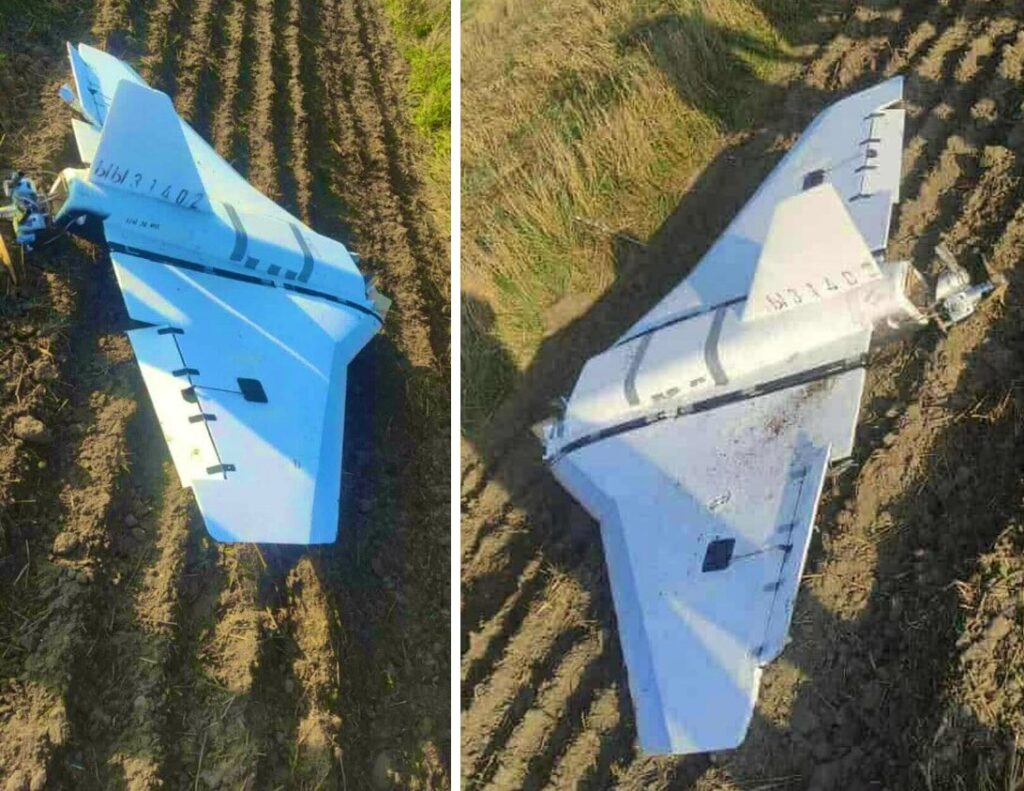
sim cards downed drones expose russia's months-long plan target poland lithuania russian gerbera crashed 10 2025 @warnewspl1 defense express download ukraine news ukrainian reports

Polish SIM cards were found inside some of the Russian drones that entered Polish airspace during a mass incursion in September 2025, Polish outlet RMF24 reported, citing findings from a Polish prosecution investigation.

SIM cards can allow drones to connect to local cellular networks for functions such as communications, data transmission, telemetry, or navigation-related services. However, investigators have not said what the Polish SIM cards found in the Russian drones were used for. The details remain classified.

The SIM cards were discovered in some of the Russian Gerbera drones recovered after the incursion, RMF24 reported.

Investigators have not disclosed whether the SIM cards were stolen or obtained illegally.

The investigation into the September 9–10, 2025 incursion was ultimately closed after prosecutors failed to identify those responsible for violating Polish airspace.

More than 30 drones entered Poland

The incursion took place overnight on September 9–10, 2025, during a large Russian missile and drone attack on Ukraine. More than 30 Russian Gerbera drones entered Polish airspace from the east and came down at 27 locations across the country, according to RMF24.

Polish forces intercepted and shot down multiple drones, with the Territorial Defense Forces deployed to search for wreckage and other objects that came down on Polish territory. Poland also maintained contact with NATO command throughout the operation.

The incident prompted Poland to close four airports – Warsaw Chopin, Warsaw-Modlin, Rzeszów-Jasionka and Lublin – because of the military activity. 

Polish officials described the airspace violations as unprecedented and a serious threat to national security. The incident marked the first time since Russia's full-scale invasion of Ukraine that Polish forces had used weapons against Russian aerial objects that entered the country's airspace.

The mass incursion subsequently became the subject of a criminal investigation into the violation of Polish airspace and the threat to public safety.

Investigation closed without identifying perpetrators

After months of investigation, Polish prosecutors closed the case because they were unable to identify the perpetrators, according to Lublin District Prosecutor’s Office spokesman Marcin Kozak, as cited by RMF24.

Most of the case files, including the justification for the decision, are classified.
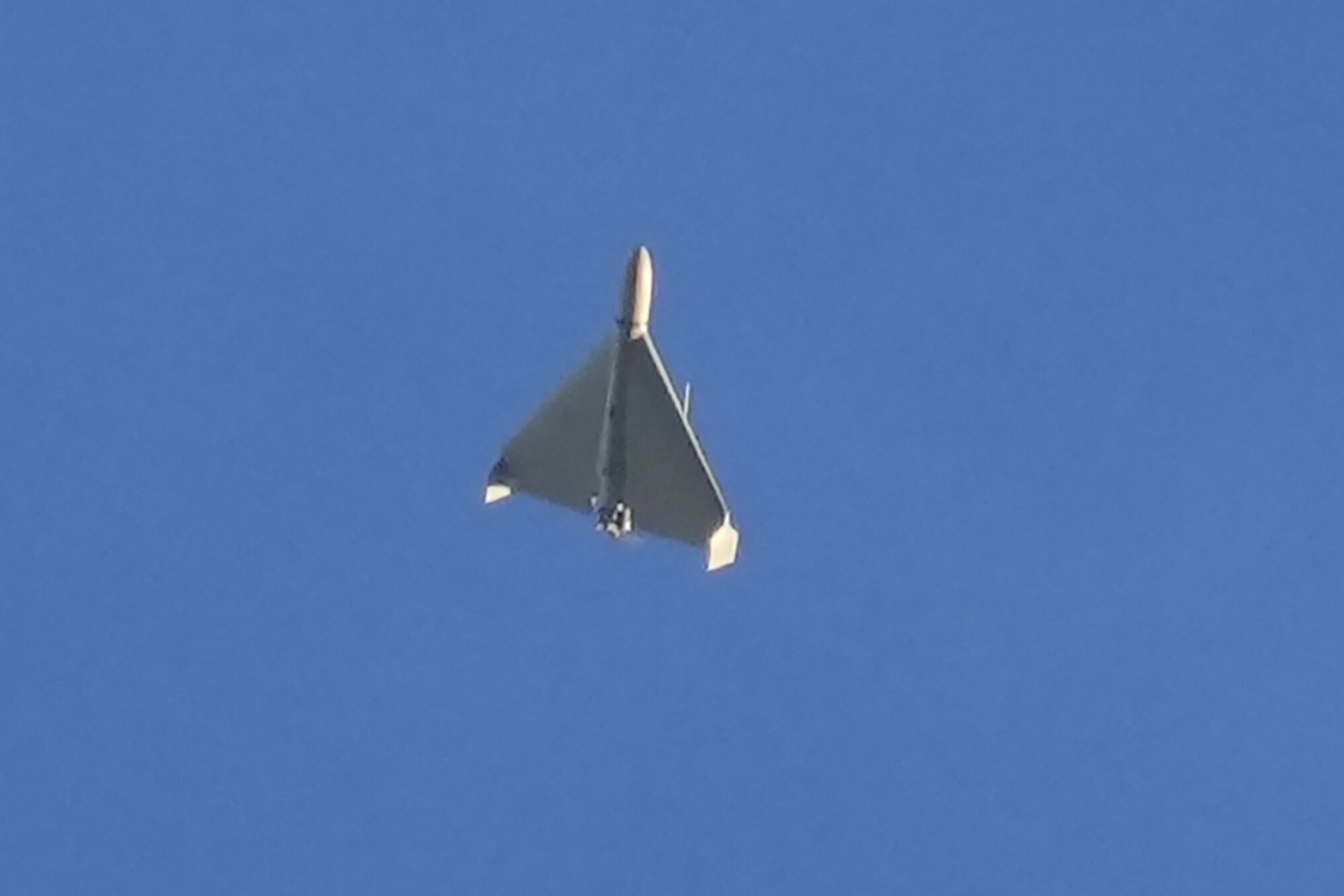
shahed-136 Geran-2 iranian airborne A drone is seen in the sky seconds before it attacked buildings in Kyiv, Ukraine, on Oct. 17, 2022. The Russian military has been using the Iranian Shahed exploding drones to strike Ukraine's vital infrastructure for more than a year. (AP Photo/Efrem Lukatsky/EastNews
Explore further

Last September, Poland downed four of 19 Russian drones. This September, drone reached NATO’s missile shield in Redzikowo, and troops guarding it called 112

Prosecutors cleared Poland's military response

Investigators also examined whether the Polish military had responded properly to the drone incursion.

According to RMF24, prosecutors concluded that the military acted in accordance with procedures. Polish troops had the right to use force and shoot down hostile objects, and prosecutors found no irregularities in their response.

The investigation was therefore closed both over the failure to identify the perpetrators and over the assessment of the Polish military's actions.

  •  

‘The Nord Stream pipelines will be relaunched,’ says right-wing Polish MEP Braun during meeting with AfD in Germany

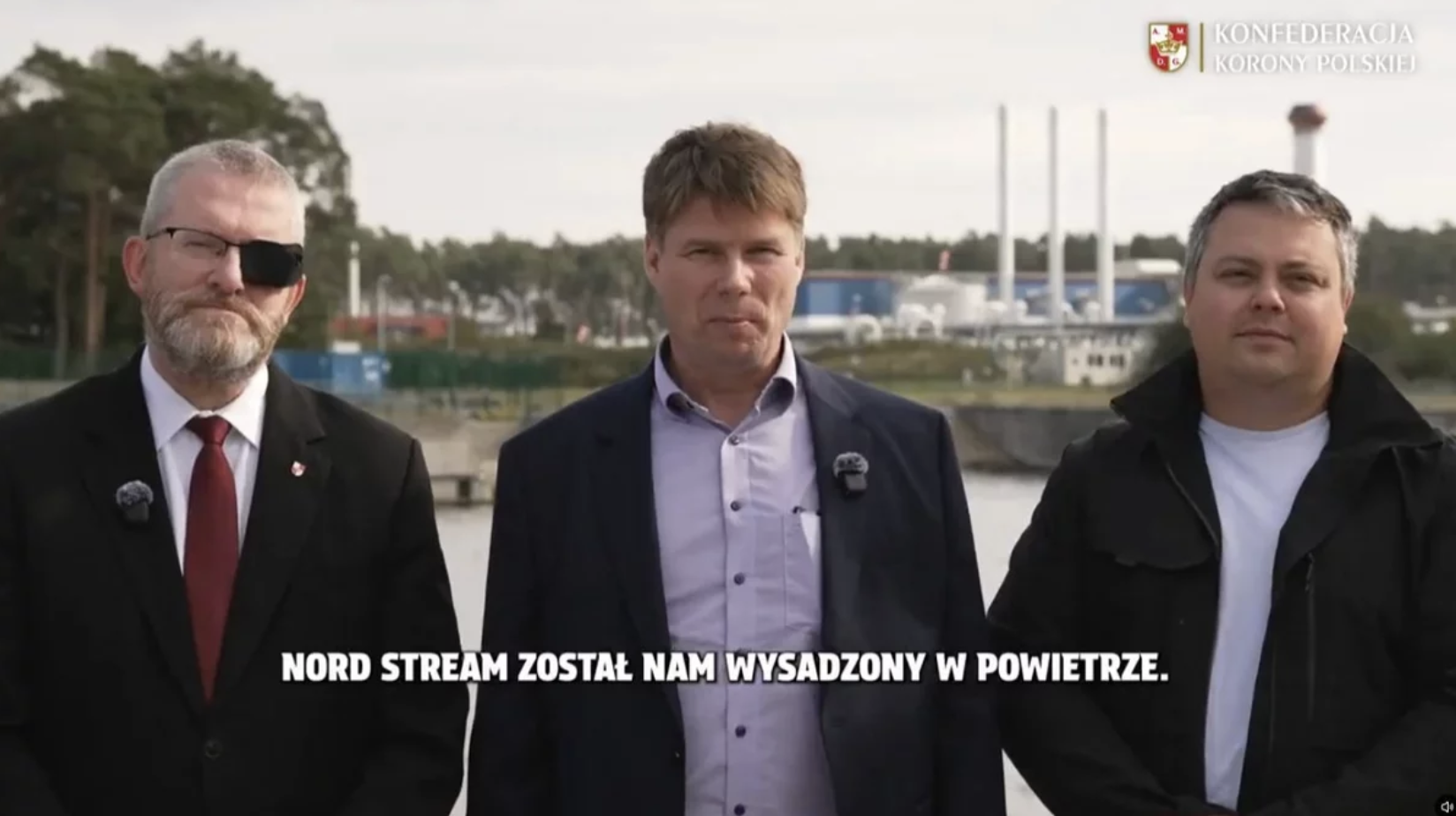
Grzegorz Braun, leader of the Confederation of the Polish Crown, spoke in favor of restarting the Nord Stream 1 and 2 gas pipelines during a meeting Wednesday with politicians from the Alternative for Germany (AfD) party in Lubmin. He said Poland should be a shareholder in the German-Russian project.

“Nord Stream 1, and probably Nord Stream 2 as well, will be relaunched. Russian gas will flow to the West,” Braun said. He said Europe needs Russian raw materials and that their absence could have serious consequences for the economy.

Braun argued that Poland should not be excluded from future energy projects concerning Russian gas supplies. “Poland should participate, not boycott. Poland should be the initiator,” he said. He also proposed that Warsaw become a shareholder in Nord Stream.

Podczas roboczej wizyty w #Lubmin w Niemczech poseł do Parlamentu Europejskiego @GrzegorzBraun_, poseł na Sejm RP @Roman_Korona i dr @Slawomir_Ozdyk (Konfederacja @KoronyPolskiej) spotkali się z posłem do Bundestagu @SteffenKotre (AfD) oraz posłami do Landtagu Meklemburgii-Pomorza Przedniego z ramienia @AfD – Stephanem Reukenem i @Kevin_Kurtze.

— Konfederacja Korony Polskiej (@KoronyPolskiej) October 7, 2026

He also said that if Russian gas returns to Europe, Poland could lose economically if the supplies bypass its territory. In his view, Warsaw should seek participation in such energy projects rather than remain outside them.

Braun also spoke of the need to “normalize” and “de-escalate” relations and economic cooperation among Poland, Germany and Russia. He advocated a return to wider use of coal and the ability to buy oil and gas from suppliers offering favorable terms.

The speech took place in Lubmin, the site of the German terminal and infrastructure linked to the Nord Stream pipelines.

Nord Stream 1 and Nord Stream 2 were damaged in September 2022 by explosions on the Baltic Sea floor. Nord Stream 1 had been the main route for Russian gas to Germany. Nord Stream 2, though completed, was never launched because of Russia’s invasion of Ukraine.

Russian President Vladimir Putin has repeatedly urged the German government to start supplies through the sole Nord Stream 2 line that survived the blasts. He has said that if the line operates, 27.5 billion cubic meters of gas “will immediately reach Europe.”

“Why don’t they do it? I just can’t understand it. They can receive gas through Ukrainian territory, through TurkStream, but they cannot through the pipeline running along the bottom of the Baltic Sea,” Putin said.

“In my opinion, it’s crazy, just nonsense. Why? But if they don’t want to, fine,” Putin said in 2024 at the Vladivostok Economic Forum.

According to U.S. media reports, a group of Ukrainian officers conceived the operation to blow up Nord Stream in May 2022. Ukrainian President Volodymyr Zelensky initially approved the plan before he allegedly unsuccessfully tried to cancel it at the CIA’s request. Polish connections also appear in press accounts of the Baltic Sea sabotage.

U.S. President Donald Trump said last May that “many people know” who blew up Nord Stream. He added that he was the first to thwart the project.

Trump imposed sanctions on Nord Stream 2 in his first term, significantly slowing construction. President Joe Biden repealed them in 2021 and reimposed them after Russia invaded Ukraine. Germany withheld permission to start the pipeline because of the war.

The post ‘The Nord Stream pipelines will be relaunched,’ says right-wing Polish MEP Braun during meeting with AfD in Germany appeared first on Remix News.

  •  

Ukraine is buying 135 mobile shelters for border crossings as Russian drones reach from the Danube to Poland

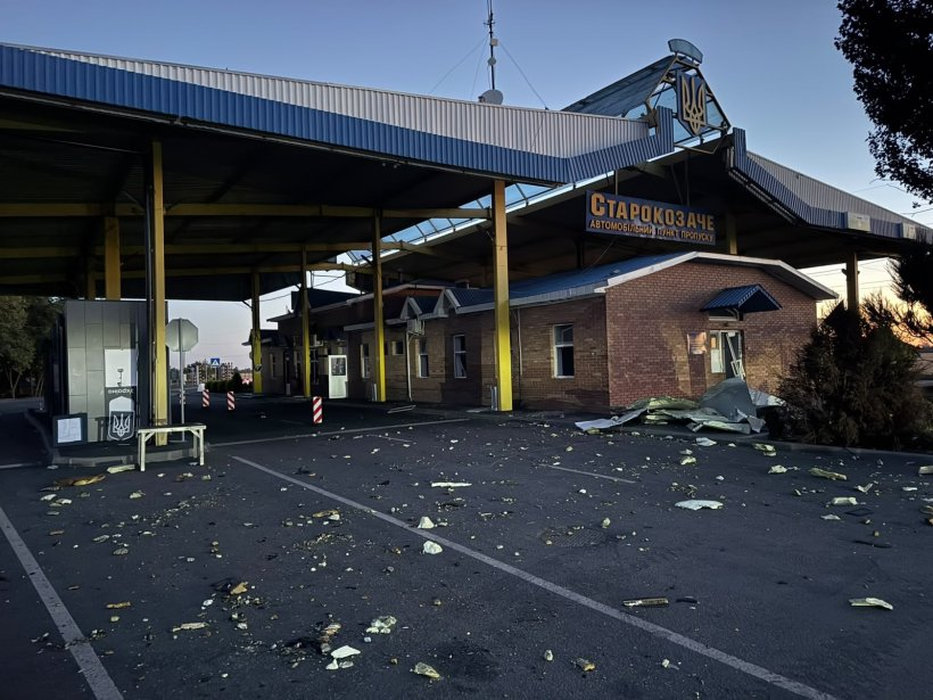
The Ukrainian Starokozache border crossing near Moldova, targeted by a Russian attack, September 2026. Photo: Odesa Oblast Military Administration / Telegram

Ukraine plans 135 basic mobile shelters for civilians at 28 of its border crossings, the State Agency for Restoration and Infrastructure Development said on 7 October.

Since the start of September, Russian drones have repeatedly struck crossings on Ukraine's borders with Moldova and Romania. Since mid-September, strikes have also reached the Polish border near the Yahodyn crossing in Volyn Oblast. On 13 September, a Russian drone strike set a gas station near the crossing on fire. On 28 September, the blast wave from another strike damaged the checkpoint building. On 25 September, First Deputy Minister for Restoration, Infrastructure and Transport Serhii Derkach said Ukraine is exploring with its neighbors whether some checkpoints could move onto their territory. No agreement has been reported. On 2 October, Moldovan Interior Minister Daniella Misail-Nichitin said Moldova had set up shelters next to its crossings with Ukraine and started relocating staff from joint checkpoints.

135 shelters for travelers and border staff

The shelters will stand at the crossings and on the roads leading to them. Regional recovery services in Vinnytsia, Odesa, Chernivtsi, Zakarpattia, and Volyn oblasts are running the purchases. The agency said the shelters will make the border safer for people crossing it and for checkpoint staff.

Map of Ukrainian border regions where mobile shelters are planned
Border regions where Ukraine plans to install shelters. Map: Euromaidan Press

In Chernivtsi Oblast, one of the 10 tenders the agency lists on Prozorro, Ukraine's public procurement system, covers eight shelters for 50 people each and three for 20 each, Ukrinform reported. They will stand on the approach road to the Porubne–Siret international crossing on the Romanian border. The work is expected to cost UAH 38.5 million (about $855,000), excluding VAT.

Russian strikes on crossings

On 5 October, at about 09:38, a projectile fell near the Palanca–Maiaky–Udobne crossing on the Moldovan border. It ricocheted off the ground into a shuttle bus parked by the barrier and also damaged a control booth. One Moldovan border officer suffered light injuries, and the crossing was suspended, Moldova's Border Police said, linking the incident to Russia's attacks on Ukrainian infrastructure. Moldovan authorities did not specify the projectile's type or origin.

Overnight on 9 September, Russian drones struck the Starokozache crossing with Moldova, killing two people and injuring three. On 1 September, Russian Shahed drones hit the Orlivka ferry crossing on the Danube, opposite Romania's Isaccea, and temporarily shut it down. Another Russian strike on 6 September halted the crossing again.

  •  
❌