❌

Reading view

Lithuania puts up to 100 soldiers on Kaliningrad border as officials brace for possible Russian mobilization

lithuanian soldier

Lithuania plans to deploy up to 100 soldiers to support border guards along its frontier with Russia's Kaliningrad Oblast, Defense Minister Robertas Kaunas said on 7 October.

Lithuanian Interior Minister Martynas Katelynas has described the deployment as a preventive measure linked to possible Russian mobilization and a recent incident on the Latvia-Belarus border, where masked, armed escorts tried to push a group of migrants into Latvia. Katelynas said Lithuania could face people trying to avoid mobilization and seeking asylum.

Kaunas said he had granted permission to use Lithuanian soldiers to strengthen border protection for the next several weeks.

 “The order starts being implemented immediately,” he wrote on Facebook.

Russia denies a new mobilization

The Kremlin denies a new mobilization is coming. In early September, Russian President Vladimir Putin called reports of one "complete nonsense" and "an information attack on Russia." Ukraine's military and foreign intelligence services say Russia's General Staff has prepared a scenario to mobilize 600,000 people over 2026 and 2027. On 28 September, President Volodymyr Zelenskyy said that "in effect, the Russians have already begun additional mobilization."

Frontier-station patrols for a couple of weeks, possibly longer

On 8 October, the Lithuanian army said soldiers were being brought in to help the State Border Guard Service from that day. A company-sized unit was planned for the assignment, initially for two weeks, with the option to extend. Soldiers will patrol with border guards in frontier-station areas, while mobile patrols, mobile observation posts, and military police crews may be added as needed. The army described the deployment as preventive and a normal form of interagency cooperation.

Kaunas had told LRT TV the soldiers would stay until 16 October. On the morning of 8 October, he said the deployment "was supposed to start" overnight and that he would check with the army. On 8 October, the Lithuanian army said soldiers were being brought in to help the State Border Guard Service from that day. Kaunas also said that “on the Kaliningrad side” there were no physical barriers, unlike the border with Belarus.

Lithuania says its border guards are stretched

On 8 October, Katelynas said the border guard service’s capacity was insufficient, with shifts growing while officer numbers were not increasing. He said the threat level had not changed. In a Facebook post the previous day, he said the situation at Lithuania’s border was calm and there was no reason to panic. He said Russia was planning mobilization after the elections and that Lithuania may face people trying to avoid it and seeking asylum.

Lithuania's State Border Guard Service had turned back 1,693 people trying to cross illegally from Belarus this year and about 26,300 since the migration crisis began, as reported by ELTA on 8 October. Katelynas said 43 migrants tried to enter southern Lithuania last week and were turned back.

  •  

Ukraine’s FM links Russian plague scare to history of cover-ups, from anthrax to Chornobyl and COVID-19

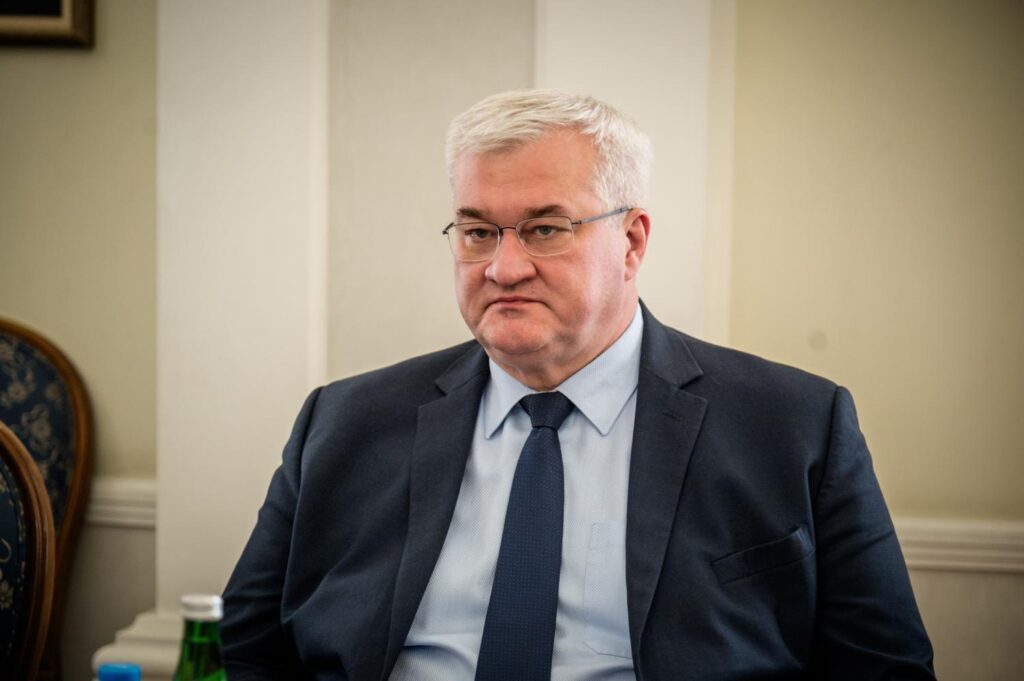
Ukrainian Foreign Minister Andriy Sybiha.

Ukrainian Foreign Minister Andrii Sybiha said Russia's handling of a suspected pneumonic plague case fit what he described as Moscow's history of concealing information about dangerous incidents, citing the 1979 anthrax outbreak, the Chornobyl disaster, and the COVID-19 pandemic, according to his post on X on 8 October.

A 28-year-old worker at the Irkutsk Anti-Plague Research Institute, Daria Shipilova, died at Shelekhov District Hospital on 2 October. The hospital was placed under quarantine, and nearly 200 people who had contact with her were put under medical observation.

Sybiha has called on Russia to disclose all the facts surrounding the case, provide transparent epidemiological data, and cooperate with international mechanisms.


"Russia has a long record of concealing the truth: the 1979 anthrax leak in Sverdlovsk, the 1986 Chornobyl disaster, and the true scale of COVID-19 in 2020–2022," he said.

Plague is caused by the bacterium Yersinia pestis, which is usually found in small mammals and their fleas. Bubonic plague, the most common form, is caused by the bite of an infected flea. Pneumonic plague is the most virulent form: left untreated, it can be fatal within 18 to 24 hours of onset, though common antibiotics can cure it if given early.

But each time, the consequences were devastating.

Sybiha warns of the risks of secrecy

Sybiha added that there is compelling evidence that Russia has used chemical weapons in Ukraine and has threatened to use nuclear weapons in its genocidal war. His remarks came amid rumors that the plague could have originated in a biological laboratory developing weapons.

"The world must not wait for another catastrophe before asking questions," he said.

Russia must disclose all the circumstances surrounding the case, provide transparent epidemiological data, and cooperate with international mechanisms because “when dangerous pathogens are involved, secrecy is a threat to everyone,” Sybiha added.

WHO seeks more information from Russia

The World Health Organization (WHO) says it still lacks the data it needs for a full risk assessment, while Russia has told the organization that no cases of plague have recently been reported in Irkutsk Oblast.

WHO Director-General Tedros Adhanom Ghebreyesus says that the organization has asked Russia for "further information on the laboratory tests conducted on the individual who died and the contacts," more details on what prompted the public health measures, and the health status of the contacts. The organization also seeks verification of media reports of a second employee with pneumonia of undetermined cause.

Based on "unofficial information," the public health risk to the general population appears to be low, WHO spokesperson Christian Lindmeier says, according to Forbes.

US officials say they know little about what is happening in Russia

On 6 October, US Secretary of State Marco Rubio said information з приводу вирогідної хвороби from Russia was "still quite limited."

The next day at the White House, a reporter asked US President Donald Trump whether the plague in Russia was a bioweapon, according to CNN.

"Well, we don't think so. We're going to find out soon enough, but we don't think so," he said.

The reporter also asked whether Trump was “getting the same vibe right now from Russia that you got from China at the start of COVID.”

"Well, China didn't say much, and Russia's not saying much either, but they do say they have it very much under control,"  Trump answered.

  •  

22 killed in Russian missile strike on Pryluky, including five children

pryluky

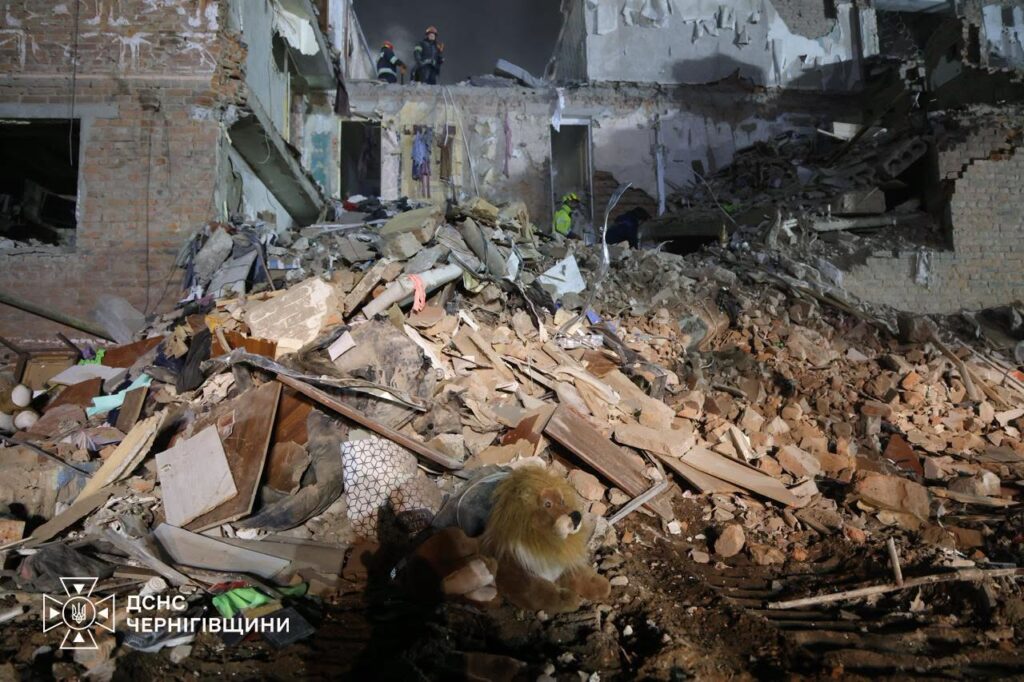
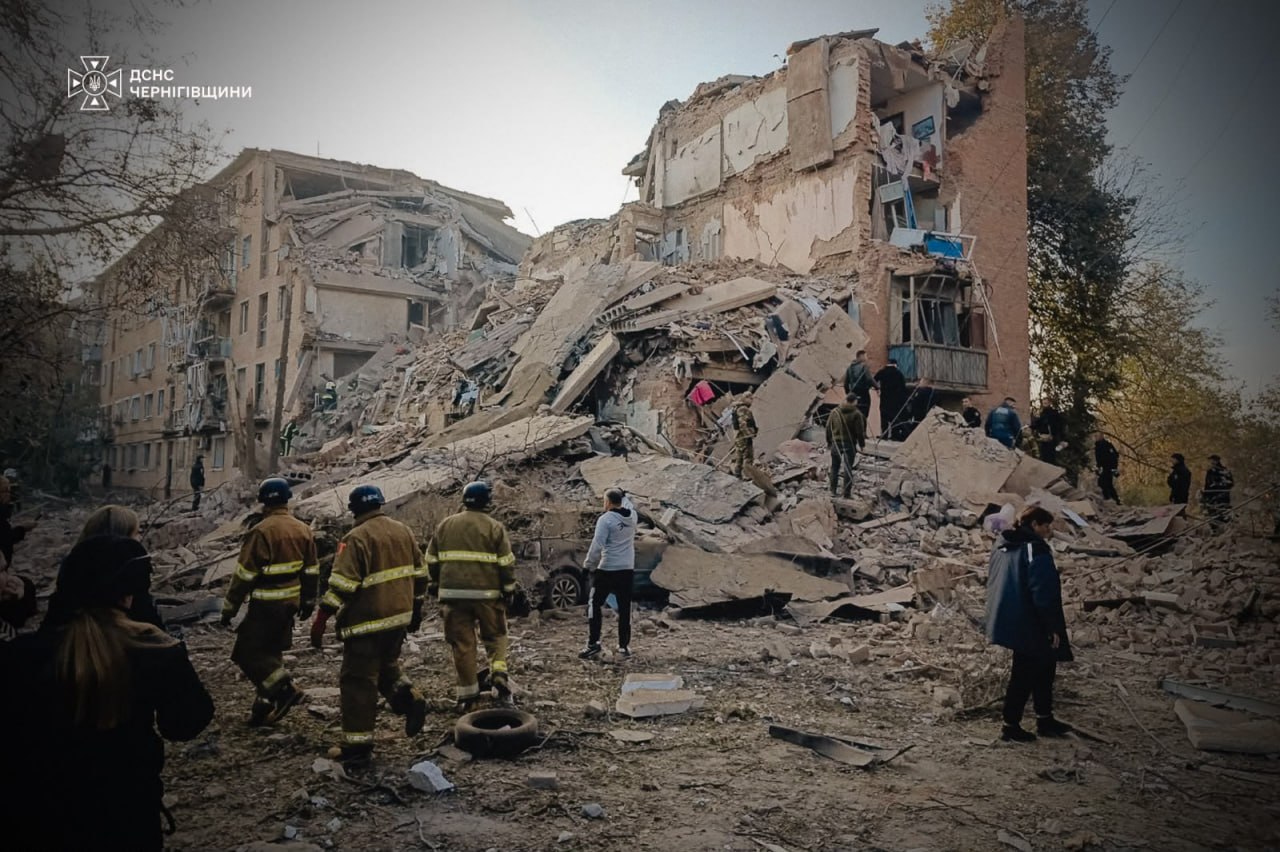
The death toll from Russia's 7 October missile strike on Pryluky, a city in Chernihiv Oblast in northern Ukraine, has risen to 22, including five children, Ukraine's State Emergency Service said on 8 October. Another 54 people were injured, and 15 were rescued from the rubble.

Pryluky suffered the heaviest losses in Russia's 7 October attack, which struck cities across Ukraine. The attack involved about 70 missiles, many of them ballistic, as well as Shahed drones.

Search ends with 15 rescued

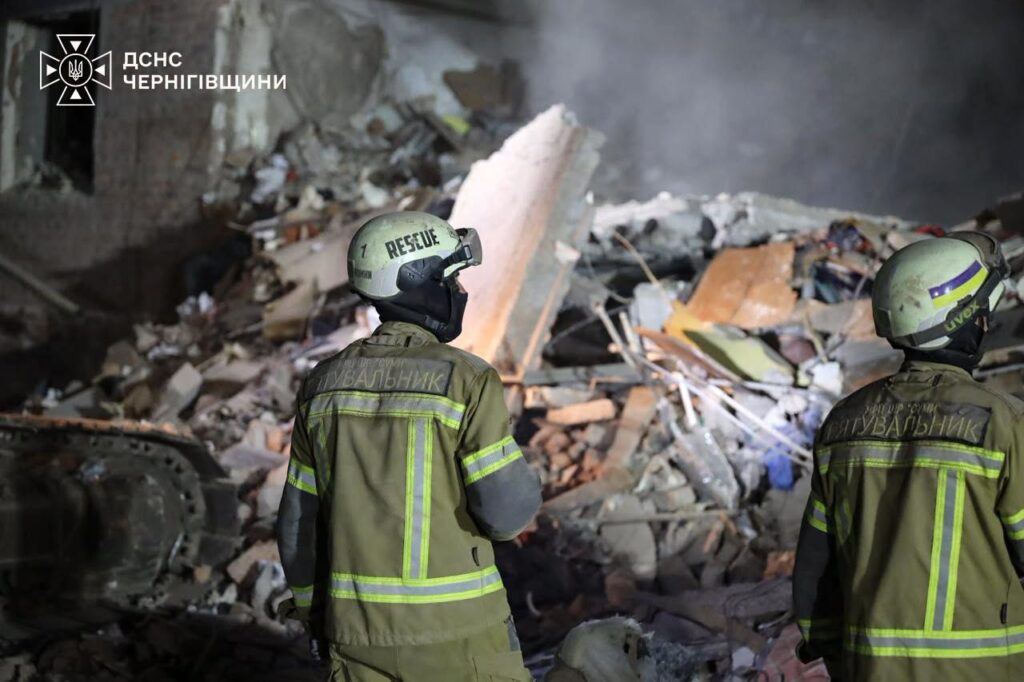
Seven of the injured are children, and the rescued include a 5-year-old. The search-and-rescue operation, which involved more than 500 emergency workers, has ended, Ukrainian President Volodymyr Zelenskyy said.

five dead pryluky two each kyiv kremenchuk oleksandriia russia's night 70 missiles · post rescuers collapsed section apartment building chernihiv oblast after russian missile strike 7 2026 ukraine news ukrainian
Explore further

14 dead in Pryluky, two each in Kyiv, Kremenchuk, and Oleksandriia: Russia’s night of 70 missiles

A five-story building hit early in the morning

Russia attacked Pryluky with cruise missiles and directly hit a five-story apartment building, Chernihiv Oblast head Viacheslav Chaus said. The strike came in the morning, when people were still asleep.

The strike hit the apartment building, a children's and youth creativity center, and a business, according to the National Police.

The death toll rose through 7 October and overnight. On the morning of 7 October, the National Police reported five dead and 26 injured. By the afternoon, the State Emergency Service put the figure at 14, including four children. By the morning of 8 October, it had reached 22, Chaus said. Four of the children died at the scene, and one died in hospital.

Rescuers at the rubble of the apartment building in Pryluky, Chernihiv Oblast
Rescuers at the rubble of the apartment building in Pryluky, Chernihiv Oblast, 7 October 2026. Photo: State Emergency Service of Ukraine in Chernihiv Oblast

Russian strikes in Kyiv, Kremenchuk, and Oleksandriia

Russia attacked Kyiv and 12 oblasts overnight on 7 October, Zelenskyy said. Two people were killed in each of Kyiv, Kremenchuk, and Oleksandriia.

Air defense downed or suppressed five ballistic missiles, 39 cruise missiles, and 117 drones, while missiles and drones hit 18 locations, according to the Air Force.

  •  

Ukraine’s Frodo robot carries wounded soldier in first reported evacuation

frodo robot

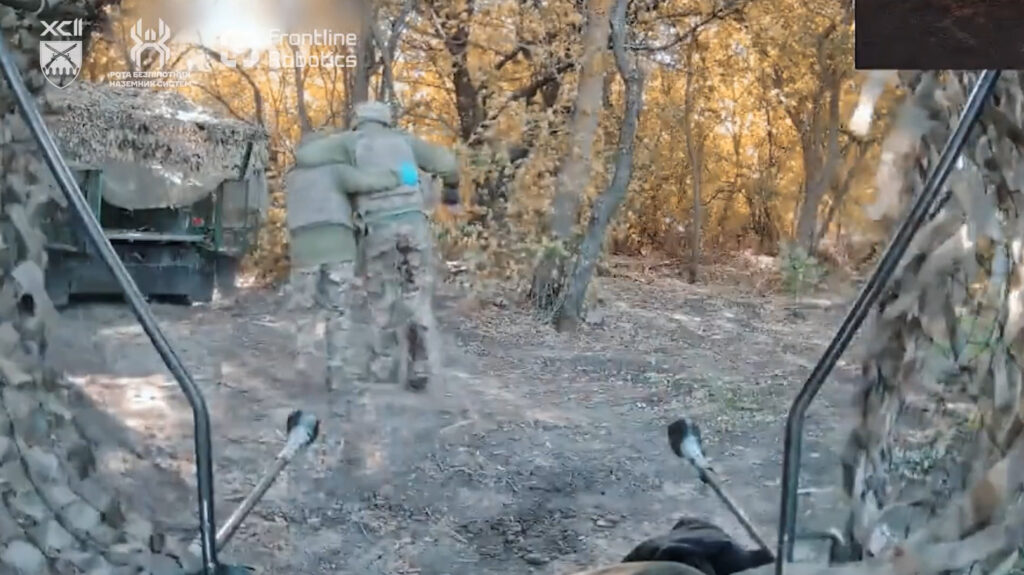
A company of unmanned ground systems from Ukraine's 92nd Assault Brigade used the robotic system Frodo to evacuate a wounded soldier, Frontline Robotics told Militarnyi on 7 October.

Ground robots are being used to evacuate wounded soldiers from the drone-dominated "kill zone," a band tens of kilometers deep on both sides of the front line. About 112,000 logistics and evacuation missions by ground robotic systems were recorded from January through August 2026, according to Ukraine's Defense Ministry.

Operator credits speed and suspension

The operator, callsign Tango, named speed and the ability to perform complex maneuvers as the robot's main advantages, according to Militarnyi. The unit also praised Frodo's adaptive suspension, which it said smoothed out rough terrain and kept the wounded soldier's transport relatively comfortable.

The Frodo ground robot during an evacuation mission with Ukraine's 92nd Assault Brigade
The Frodo ground robot's evacuation mission with Ukraine's 92nd Assault Brigade, autumn 2026. Screenshot from video: Frontline Robotics

What Frodo can carry, and how far

The robot has a 6×6 wheel layout with independent suspension, adjustable ground clearance of 170–330 mm, and a top speed of 40 km/h. Its recommended payload is 200 kg, and its maximum is 400 kg, according to Frontline Robotics. The company lists its range as 150 km on asphalt and up to 90 km over rough terrain with the recommended load. Frodo supports several communication channels, and one person can swap its batteries in about two minutes.

Frodo had passed the Defense Ministry's codification and could carry remote-controlled modules such as the Burya turret, Militarnyi reported on 30 September.

The 92nd Brigade had used ground robots to evacuate wounded soldiers before. In September 2025, the brigade evacuated three wounded soldiers using a ground robot, according to Militarnyi.

  •  
❌