
 Login

Head of Russian military propaganda network to be expelled from Montenegro over suspected anti-EU operation
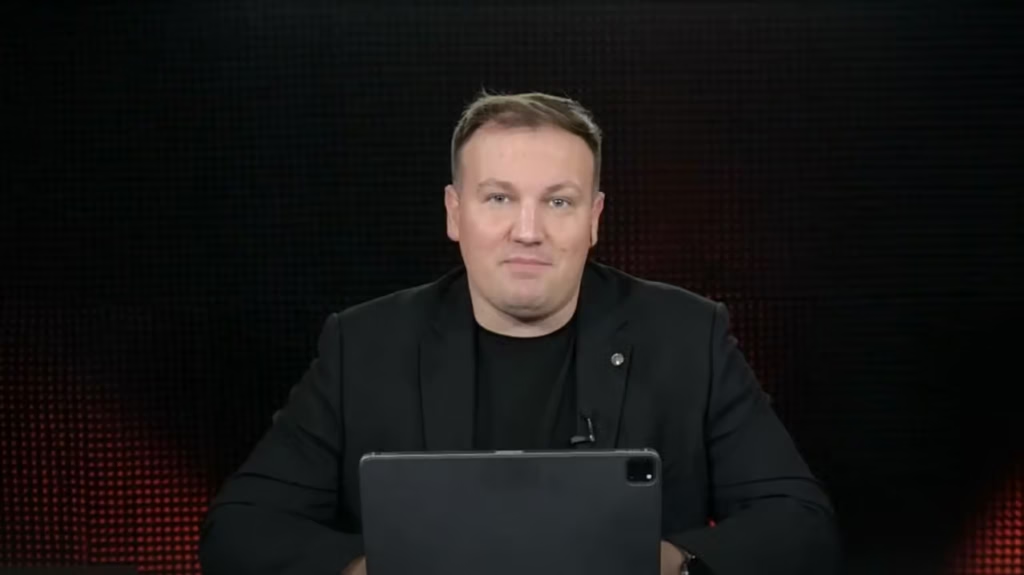
Montenegro has ordered the expulsion of Mikhail Zvynchuk, head of the pro-Kremlin military information network Rybar, and four other Russian citizens over national security concerns following a security operation targeting suspected Russian hybrid influence activities, Vijesti reported on 9 October.
Zvynchuk is the founder and head of Rybar, a prominent Russian military-focused information network known for its Telegram channels covering Russia's war against Ukraine. The network promotes pro-Kremlin narratives and has been associated with Russian propaganda and influence operations.
Montenegrin police announced on 9 October that the five Russians had their residence rights revoked and were ordered to leave the country on national and internal security grounds.
Montenegro investigates suspected Russian hybrid activity
The operation involved Montenegro's police and National Security Agency (ANB), which seized drones, high-resolution recording equipment, cameras, and several mobile phones for further examination, according to Vijesti.
According to Montenegrin authorities, the five had arrived in the country less than two days before the operation. The investigation is being conducted with support from international partners.
Montenegrin police identified the five Russian citizens as Zvynchuk, his wife Valeria Zvynchuk, Sergei Belous, Pavel Lekatorchuk, and Kira Doroshenko. Authorities said the case had been referred to prosecutors in Podgorica and Kotor.
The European Union has sanctioned Zvynchuk over activities that undermine or threaten Ukraine's territorial integrity, sovereignty, and independence. He has also been sanctioned by the United Kingdom, Switzerland, Australia, and Ukraine, according to Vijesti.
Suspected influence operation targeting EU integration
Vijesti reported, citing security sources, that Montenegrin authorities suspected the group of planning a documentary intended to undermine public support for the country's European integration.
According to the outlet, the planned material would portray Montenegro's expected alignment of its visa policy with EU standards as a politically imposed measure that threatens tourism, economic stability, and national interests.
Security services had monitored the group's arrival before carrying out the operation in Risan, in the Bay of Kotor area, Vijesti reported. The equipment seized from the group will undergo expert analysis to establish its intended purpose and use in Montenegro.
Medvedev threatens imprisoning “European and American idiots” for prisoner exchanges
Former Russian President Dmitry Medvedev responded to the operation by suggesting Moscow might need to expand its pool of prisoners to exchange for Europeans and Americans to secure Zvynchuk's return.
“We will probably have to replenish our pool of prisoners for exchange with European and American idiots,” Medvedev said, according to Vijesti.
Montenegro, a NATO member and EU candidate, has aligned itself with EU sanctions against Russia following Moscow's full-scale invasion of Ukraine in 2022. The expulsion comes amid broader European concerns over Russian intelligence activity, propaganda, and other forms of hybrid interference.
Read also
-
Drones now cause about 96% of Russia’s battlefield losses. Ukraine’s drone force says it has hit more than 100,000 Russian troops this year alone
-
Fears that Ukraine will lose Starlink are back after Musk backed Trump against Zelenskyy. Adviser says profit makes cutoff unlikely
-
Russia is building jet drones that fly 800 kilometers per hour, and Ukraine says it is already working on how to stop next generation

