Login

Will Pennsylvania's Vape Ban Create More Cigarette Smokers?
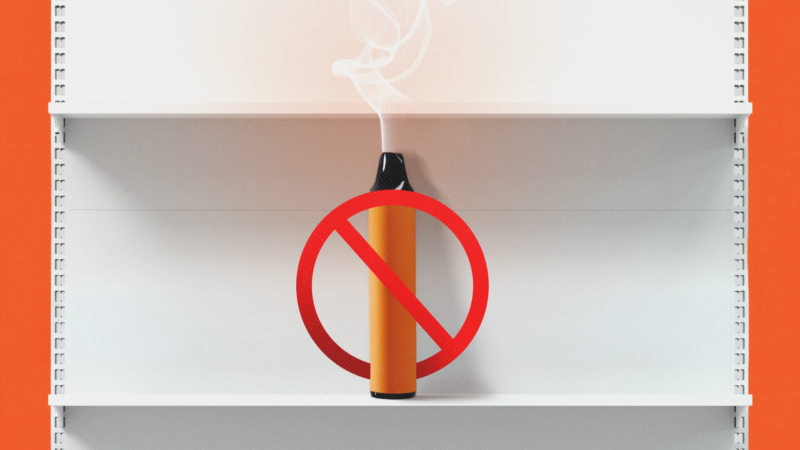
Starting next week, Pennsylvania will begin enforcing a law prohibiting the sale of e-cigarettes that have not been explicitly approved by the state. Supporters argue that it will protect public health, but it seems likely to do the opposite by preventing many former smokers from accessing the products that helped them quit.
Under the law, known as ACT 57, there are currently just six manufacturers of electronic nicotine delivery systems on the approved list that can be sold in the Keystone State, meaning many popular vaping products will be forcibly removed from shelves on October 19. Retailers who violate this law will face fines of $500 for each unapproved product. A second violation within a year will result in a civil penalty of between $750 and $1,000 per day per product, and a suspension of the dealer's license for at least 14 days. A shop's third violation within a year would result in a civil penalty of $1,000 to $1,500 per day per product, and the revocation of its license.
Politicians are touting this law as the latest way to protect the public, and of course, they claim it will especially protect children. "This law is about keeping harmful products out of the hands of both children and adults who may not realize what they are consuming," said Pennsylvania Attorney General Dave Sunday.
"I applaud the legislature for their bipartisan support of Act 57 to provide this important public health safety measure to the Commonwealth."
However, not all Pennsylvania residents are enthusiastic about the law's enforcement.
"This will be largely catastrophic," Chris Hughes, the former owner of Fat Cat Vapor Shop in Williamsport, Pennsylvania, tells Reason. Hughes predicts that the restrictions will encourage consumers to purchase vaping products across state lines, creating an illicit market. "Some people that are enterprising will drive across the border to Ohio [or] West Virginia, and bring a lot of products back and sell them to other people," he says.
Hughes is right to assume that the law will create an illicit market for vaping. In June, JAMA Network Open published a report on Alabama, Oklahoma, and Louisiana—three other states with constraints similar to Pennsylvania—finding that the restrictions were not associated with lasting reductions in e-cigarette nicotine sales. By the end of April 2025, products not listed in the states' approved directories accounted for 92.1 percent of measured e-cigarette nicotine sales in Alabama, 53.6 percent in Oklahoma, and 52.3 percent in Louisiana.
For people living further from the border, Hughes says that "a lot of them will return to smoking." "Half of those people will die prematurely from smoking.…It's a tragedy, really."
Indeed, evidence shows vaping to be one of the most effective tools to quit smoking. A 2024 study published by the Centers for Disease Control and Prevention found that in 2021–2022 alone, approximately 1.2 million American adults used e-cigarettes to help them quit smoking for at least six months, representing slightly more than 40 percent of all adults who successfully quit during that period. Meanwhile, a 2026 review from Cochrane, a global health nonprofit, found that smokers are more likely to quit when using e-cigarettes than with nicotine replacement therapy: 8 percent to 10 percent of smokers using e-cigarettes may successfully quit, compared with just 6 percent using nicotine-replacement therapy.
The impending restrictions have Pennsylvania vapers stockpiling products. Hughes says he has delayed paying his property taxes to make sure he has "two to three years' worth of e-liquid and coils while this shakes out." He also spoke to an employee at a vape shop recently who told him about a customer spending $500 on e-liquid after learning about the impending ban.
For vape shop owners across Pennsylvania, the new law will make business even more difficult. Hughes was forced to close down Fat Cat Vapor Shop in Williamsport after Pennsylvania introduced a 40 percent wholesale tax on vaping products in 2016. "The whole goal of my opening the business was to help get adult smokers off of cigarettes and transition them to something that I knew for a fact was much less harmful," he says. Hughes estimates that his shop helped approximately 8,000 adults quit smoking during its three years in business.
Now, he fears other independent vape shops will suffer the same fate as his own. "Most, if not all of them, will be bankrupted," Hughes warns. "It almost takes my breath away. I'm not even sure what to say."
Pennsylvania lawmakers may intend to protect public health, but their new law risks pushing adults away from healthier lifestyle choices. As is often the case, the government restricting the choices adults are allowed to make for themselves is likely to have deadly consequences.
The post Will Pennsylvania's Vape Ban Create More Cigarette Smokers? appeared first on Reason Magazine.