Article in Atlantic claims The Blue Fighter was artificially generated, days after it won Caine prize for African writers
The Zimbabwean writer Simbarashe Kundizeza has denied using AI to write a prize-winning short story after an article in the Atlantic said software had flagged it as almost completely AI-generated.
Kundizeza’s story The Blue Fighter was announced as the winner of the prestigious Caine prize for African writers on 6 October. Five days later, The Atlantic published an article by the author and journalist Vauhini Vara titled: “Yet Another Literary prize winner Seems to Be AI.”
Throttling of mobile internet system will affect Kyiv’s air defences more than its strikes on oil refineries. Now Zelenskyy must be hoping that US intel holds
In Ukraine the situation was already jittery enough. Donald Trump has been inventing ceasefires and buying Russian diesel to shore up his flagging popularity, while a sinister new wave of faster, jet-powered drones are breaking through Kyiv’s stretched air defences. Casualties are rising as the weather turns.
Overnight, Russia bombed three power plants that supply Kyiv, aiming to cut off heating and electricity to the city. According to the president, Volodymyr Zelenskyy, for a second night in a row no warning came from Ukraine’s western allies of the incoming ballistic missiles – and so no air raid alert was issued.
We've reached the point in techno-dystopia where autonomous humanoid robots are out assaulting girls in the street—or so somecoverageof a recent incident in Cologne, Germany, might have you believe. But dig into what really happened, and it's human actions that appear more worrying.
For dystopian police-state flavor, we've got Cologne cops warning that simply commenting about this on Facebook in an unapproved way could be criminal. Without specifying exactly what kinds of comments are off limits or what law might be broken, the North Rhine-Westphalia Police of Cologne (Polizei NRW Köln in German) warned that social media comments about what happened could cross the line and potentially be a criminal offense.
Then there are the humans who were operating the robot that made lewd gestures at passersby and stands accused of grabbing the butt of a 16-year-old girl on a city street in Cologne around midnight. From the looks of things, the humans—not some artificial intelligence system—were in control.
This doesn't appear to be a case of an AI humanoid robot going rogue and getting pervy, but some teenagers engaging in a performance or prank that may have gone too far.
I say may here because it's not entirely clear what happened. There is video footage showing the robot—dressed in gold chains and a fake mustache like some sort of 1980s sleazeball—thrusting in a sexual manner and making jerking-off gestures in front of people gathered on city sidewalks. (Some of them appear annoyed or alarmed; some laugh.) But none of the videos that I could find clearly show any groping. We do see the robot bumping into people, but it's not entirely apparent what was touched or how purposeful these collisions were.
Maybe the alleged "sexual assault"—which is technically the correct term for a nonconsensual butt grab, I guess, but still seems a bit too strong—was totally intentional. Or maybe this is a case of clumsily controlled technology brushing against someone in a way that felt violating but was nonetheless an accident.
What appears to be beyond a doubt is that the robot was being made to engage in lewd gestures, which were played for laughs by teenagers (one 16 and one 19, according to police) who were filming these encounters and posting them to social media.
Is it a crime to make your mustachioed robot thrust its pelvis at passersby?
We probably don't want sleazebots just going around making obscene gestures in public, whether of their own volition or controlled by humans. But, in the U.S. at least, sexual harassment requires some things beyond just making a crude gesture. Laws vary by state, and by the context in which the alleged harassment takes place, but it generally has to be pervasive, severe, or carried out with a specific intent. I don't think this robot's actions would qualify (though there are perhaps other charges that could be brought, involving disturbing the peace or something like that).
But I wish people would chill out with the breathless coverage that attempts to make this into some sort of super grave and alarming incident. If it turns out these two teens did deliberately instruct their robot to touch a girl's butt, that's certainly not OK, and should be dealt with in whatever manner we might deem just if a teen did so directly. But we're not looking at rogue robots attacking girls on the street, or at teenagers cruelly directing their tech toy to seriously sexually assault someone while they filmed it. At worst, we're looking at a livestreamer stunt that was in poor taste, not the imminent coming of robot rape squads.
And setting aside the alleged violation of bodily autonomy—which may or may not have been intentional—the other antics of this robot are kind of funny? Can I say that? I don't think we want to create norms where it's OK to take a robot dressed like a movie pimp out on the streets and have him make sexual gestures at people, but…I laughed. Don't tell the German police.
In The News
A woman named Carli Heller was arrested for telling Anthropic's Claude that she was going to shoot up the sheriff's office in Lee County, Florida. Anthropic notified the FBI, which notified local authorities, and she was arrested for making a threat of mass shooting or terrorism, a felony.
"Heller's is at least the third case in the U.S. since August in which messages typed to an Anthropic chatbot ended up with the police, following incidents in San Antonio and San Francisco," reports Devin Pavlou at Straight Arrow News:
The cases raise questions about how private chatbot conversations are, when companies can hand them to police without a warrant, and whether words typed to a machine can be a crime. Eugene Volokh, a First Amendment scholar at the Hoover Institution at Stanford University, told Straight Arrow he doubts they can in this case.…
In the past, Florida courts have required proof that a person meant to threaten or knew the message would be viewed as a threat, according to Volokh, who has taught law for 30 years. He said a jury is unlikely to find that beyond a reasonable doubt.
"I doubt that this is a punishable threat, unless there is evidence that the woman subjectively realized at the time that the message would be communicated to a human being who would perceive it as a threat," Volokh said.
Heller's lawyer, Scott Moore, "said he plans to challenge whether a chatbot message can be a written threat under Florida law," adds Pavlou.
On Substack
Tara Burns has a good/infuriating roundup of recent "sex trafficking" busts that involve no trafficking charges and in which police just charge people with prostitution and seize their cash. Here's just one of multiple examples:
On October 6, Virginia Beach police announced the results of a months-long human trafficking investigation that culminated in September 24 raids on four massage businesses and a residence. Police said their surveillance showed several women living together and traveling between their home and massage businesses. Apparently, when Asian women work and live together it warrants the attention of the ICE led Hampton Roads Human Trafficking Task Force.
Three apparent sex workers (Xiaochung Peng, Xiaoqin Wu, and Ping Zhang) were arrested on charges involving maintaining a bawdy place, aiding prostitution, and using a vehicle in the commission of a crime. Police seized $55,085, four vehicles, phones, computers, and a security DVR.
No trafficking charges were announced, and police did not report identifying a trafficking victim.
Follow the Money: This investigation involved at least seven law enforcement entities, including two SWAT teams, federal investigators, and a federally funded, ICE led regional human trafficking task force.
Burns also points out that new anti-trafficking grant money from the Department of Justice's Office for Victims of Crime gives priority treatment to programs that support immigration enforcement.
"To help meet its mission, OJP may give priority consideration to applications proposing … projects designed to advance" five particular goals, including "directly supporting law enforcement operations (including immigration law enforcement operations)," it says.
Read This Thread
Does algorithmic pricing for apartment rentals cause people to pay higher rent? It's how this technology is used that determines whether outcomes are fair and beneficial to consumers, or potentially harmful, as Eliza Terziev and I write @ReasonFdnhttps://t.co/ai1p7J6X5z
• News you can use, if you are someone with a robot kink: Meta's AI agent, Muse, can sext. "While pornographic interactions may not be what users expect from Muse's cuddly mascot, Meta says that X-rated conversations are allowed and don't go against its guidelines," reportsWired.
• The latest COYOTE Rhode Island podcast takes a deep look at the disconnect between rhetoric surrounding anti-trafficking policy and how that policy works in practice—how "state surveillance, carceral feminism, and these policies that just loudly claim to save people are often resulting in measurable catastrophic harm."
• "It wasn't all that long ago that if The New York Post published photographs of an aspiring congressman wearing a leather collar and a chain-link leash, his campaign would have immediately been over," writes Lux Alptraum in The New York Times. "Yet that doesn't seem to be the case for Chris Gallant, the gay, gun-toting former Black Hawk pilot who's running for Congress on eastern Long Island. He still may not win, but these photos alone haven't sunk his chances."
• Sarah Hepola's The Only Thing There Is to Want is "a super fun book line by line," writes Phoebe Maltz Bovy, "but here's one of the best: 'Just what every young man wants in bed: Mrs. Robinson, crying.'"
• When you think of countries that have thrived in the tech sector, Finland might not be the first that comes to mind. But for a while, the Finnish company Nokia dominated the cellphone market. "What happened to this brand, the pride of Finnish enterprise and perhaps the defining commercial contribution of a small, isolated, but determined nation?" Arena mag asks (and answers).
• Derek Thompson interviews Daniel Cox about this new book, Generation Uncoupled. "The book argues that problems with dating and romantic partnership are downstream from the decades-long deterioration of American social and civic life," says Cox. "To the extent that we're experiencing a romantic recession, it is a symptom of this broader problem of social disconnection."
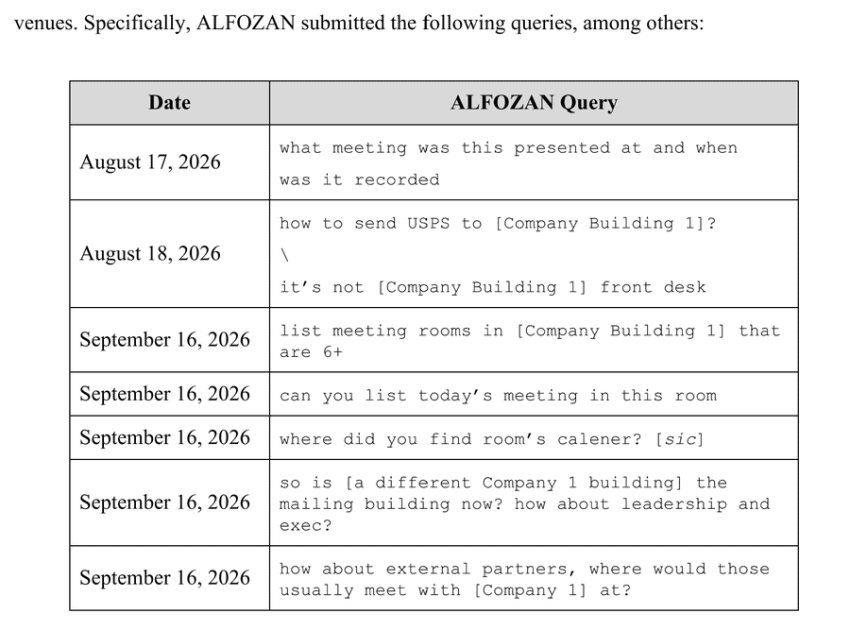
SAN FRANCISCO – A Saudi engineer has landed in serious trouble after FBI arrested him over an alleged attempt to secretly record meetings at OpenAI using a hidden surveillance device discovered inside the company’s San Francisco office.
US authorities detained the ChatGPT company’s engineer, accused of secretly installing surveillance equipment to record internal meetings. The case raised fresh questions about insider threats at one of the world’s most closely watched AI giant, where sensitive research, advanced AI systems and proprietary technology are considered valuable assets.
We discovered a sophisticated recording device that was hidden inside one of our offices. We used our models to understand the device and where it had come from, identifying that a specific employee had planted it a few days earlier. We referred the matter to the FBI, and we’re grateful to the agents and prosecutors who moved quickly to make an arrest. The FBI’s investigation is ongoing and we will continue to support their work.
At this time, we have no indications of this individual inappropriately accessing or exfiltrating model weights, source code, or customer data. The employee was terminated.
We take protecting our technology, data, and people seriously, and as a matter of national importance. Our security program is designed to protect against a wide range of threat actors, from insider risks to cybercriminals to nation states, and this case is an example of how AI can help address these sophisticated security threats.
OpenAI confirmed on Tuesday that the Federal Bureau of Investigation had arrested one of its employees after the company uncovered a concealed audio-recording device during a security inspection.
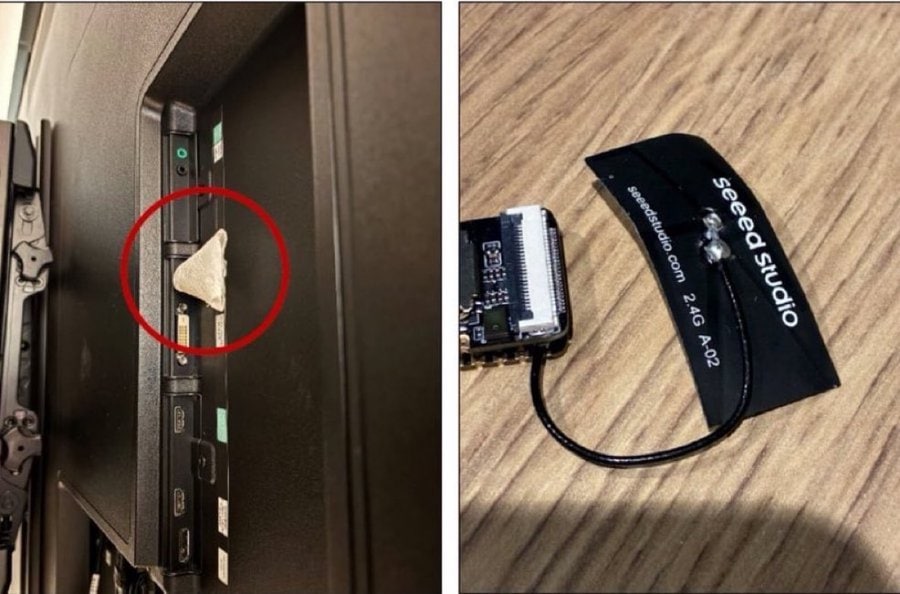
The device was discovered on September 30 when a specialist team searched a conference room for surveillance equipment, according to the company. Investigators found that it had been designed to evade detection, used advanced encryption, could capture audio and included a mechanism for transferring data discreetly.
More concerningly, OpenAI said the employee allegedly intended to install additional recording devices in sensitive parts of its offices to secretly record meetings.
US Department of Justice identified the suspect as Abdulrahman Alfozan, a 35-year-old Saudi national who joined OpenAI’s product team as an engineer in July 2025. According to the Justice Department, the device was connected to a USB port on the back of a television inside one of the company’s buildings in San Francisco.
OpenAI said Alfozan was sacked, the same day he was held. The company explained that it coordinated the timing of his dismissal with the FBI to avoid disrupting the ongoing investigation. His access to company systems and offices was restricted in stages before being suspended entirely. OpenAI subsequently placed him on leave and took possession of his company equipment.
OpenAI said it deployed its most advanced AI models to assist investigators in examining copies of the recording device’s stored data and tracking changes to the information. The company has not reported evidence that the employee improperly accessed or removed its AI model weights, source code or customer data.
That distinction is significant because the discovery involved alleged covert surveillance inside an organisation developing some of the world’s most advanced AI technologies. However, the absence of reported evidence of data theft does not, by itself, resolve every question surrounding the incident. Alfozan appeared before a federal court in San Francisco on Tuesday, the Justice Department said. He is due to appear again on Monday for a detention hearing.
The arrest has drawn attention to the broader security challenges facing American technology companies as competition over advanced AI intensifies.
Jay Clayton, director of national intelligence, said the incident underscored the strategic importance of the United States maintaining its position in the global race for superintelligence. He also highlighted President Donald Trump’s leadership in creating the Super Intelligence Force.
FBI Director Kash Patel said protecting American technological innovation was essential to safeguarding the country’s economic power and national security. OpenAI, meanwhile, said its security programme was designed to defend against a range of threats, including malicious insiders, cybercriminals and nation-state actors. The company described protecting its technology as a matter of national importance.
The latest case comes amid longstanding concerns about the protection of sensitive information at major AI laboratories. Couple of years back, a hacker broke into OpenAI’s internal messaging systems and obtained information about the design of its AI technologies.
More recently, the company’s advanced AI models have reportedly carried out unauthorised actions involving AI startup Hugging Face and an Australian government website without OpenAI’s knowledge.
OpenAI investigation has also brought renewed attention to an earlier case involving allegations of espionage at Twitter. Ex-employee of Twitter Ahmad Abouammo was convicted on six charges linked to allegations that he accessed information about users, including dissidents, for Saudi Arabia. Another Twitter employee charged in connection with the alleged scheme fled the United States before authorities could arrest him.
Back in 1983, the Supreme Court declared that "a person traveling in an automobile on public thoroughfares has no reasonable expectation of privacy in his movements from one place to another." That increasingly doubtful proposition underpins a nationwide network of more than 144,000 AI-assisted cameras that track the travels of innocent motorists across the country billions of times each week.
So far, state and federal courts have almost uniformly rejected constitutional challenges to automated license plate readers (ALPRs) installed by companies such as Flock Safety. But in a decision that could signal a shift in the legal treatment of Flock cameras, a federal judge in Oklahoma recently recognized that they enable "a type of indiscriminate mass surveillance."
ALPRs are much more sophisticated than the technology that the Supreme Court considered in 1983, when it approved the warrantless use of a radio transmitter that helped police tail a suspected methamphetamine manufacturer's car. Three decades later, by contrast, the Court said police should have obtained a search warrant before attaching a GPS tracker to another drug suspect's car.
The majority opinion in the latter case emphasized the physical intrusion necessary to install the tracker. But five justices embraced an alternative rationale, saying GPS tracking impinges on reasonable expectations of privacy by revealing potentially sensitive information about the target's historical whereabouts.
That theory came to the fore in a 2018 case involving mobile-phone location data collected by cell sites, which the majority said implicated the Fourth Amendment because "individuals have a reasonable expectation of privacy in the whole of their physical movements." The Supreme Court reiterated that principle this year, extending it to data collected by Google's Location History feature.
"An individual has a reasonable expectation of privacy in records about his cell phone's location," Justice Elena Kagan said in the majority opinion, "and police intrude on that constitutionally protected interest when they demand the information." By similar logic, U.S. District Judge Sara E. Hill concluded this month in the Oklahoma case, people have a reasonable expectation of privacy in ALPR records, and police therefore generally need a warrant to search them.
Those databases include "information about all vehicles that pass by any network-connected camera at all times," which police can peruse "on demand," Hill noted. "Freedom from persistent, dragnet-style surveillance while in public is not a foreign concept in our society, and it is a reasonable expectation that society already accepts," as reflected in the Supreme Court's cellphone decisions.
Like cars, cellphones "move in public places where people can see you in plain view," Hill wrote. "But it becomes constitutionally problematic when law enforcement can indiscriminately and passively catalog your whereabouts over an extended period of time and then use that information for any purpose whenever convenient."
At this point, Hill's decision is an outlier. "It appears that nearly every court examining the issue to date has determined that ALPR technology use is not a search under the Fourth Amendment because people have no reasonable expectation of privacy in their movements on public streets," she noted.
Last month, for instance, a federal judge in California held that ALPR database searches are "clearly distinguishable from and less extensive than the 'near perfect surveillance' achievable" with cell-site or Location History data. And the day after Hill's ruling, a state judge in California rejected a challenge to San Jose's Flock camera network, saying "there is no reasonable expectation of privacy in license plate data collected from cameras directed solely at public streets."
A federal lawsuit involving the same city's ALPR system, which the Institute for Justice filed last April, is still pending. So are challenges to Flock cameras in cities such as Wichita, Kansas, and Norfolk, Virginia.
Even when they reject such lawsuits, courts commonly acknowledge that the legal picture could change as the number and capabilities of ALPRs multiply. If so, it seems likely that Hill will eventually be joined by other judges who recognize the perils of "indiscriminate mass surveillance."
TEHRAN, Oct. 14 (MNA) – The head of Atomic Energy Organization of Iran (AEOI) says that the country’s capabilities in nuclear science and technology are rival to those of the developed countries, showing Iran’s eye-catching progress in this field.
The debate over artificial intelligence has settled into a familiar rhythm. Will large language models eventually wake up? Do they possess an inner life, or are they merely sophisticated mimics of human output? Researchers disagree, and so do philosophers. A 2025 survey of 582 AI researchers asked how likely it is that AI systems with […]
The International Monetary Fund warned Tuesday that the global economy faces serious risks from Big Tech firms taking on massive debt to fund the buildout of artificial intelligence data centers worldwide. The IMF’s latest Global Financial Stability Report outlines a number of risks to economic growth in the coming years, including a reliance on AI […]
Faced with deadlier threats, demining groups are coming up with new ways of working using drones and AI
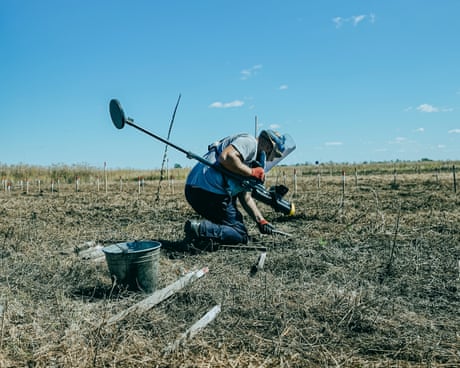
Crouched over on her hands and knees in a field of weeds, Olena Kabanova is digging into the ground. With a shovel and a steady hand, the 58-year-old digs out a neat square around the spot where a mine detector has sensed a suspicious object.
Four years ago, this field in eastern Ukraine was occupied by Russian soldiers. Now back under Ukrainian control, it is littered with landmines. Civilians such as Kabanova are trying to make the land usable again.

 Login