Trump’s war on Iran has already cost the average American household $2,000 according to Moody’s, and the bill keeps climbing. Jodie Evans, co-founder of CODEPINK, tells Rania Khalek and Zoe Alexandra that a mass “Taxpayer Uprising” this November is the only way to block Trump’s historic $1.5 trillion Pentagon budget, as both parties keep writing checks for weapons manufacturers.
Evans breaks down how military contractors, Big Oil, and AI tech giants “make a killing on killing,” and explains why Republicans and Democrats are both at fault for a US war economy that funnels taxpayer money to billionaires, militarizes the police, and criminalizes Gaza solidarity and calls for peace. She warns about the push to merge the US and Israeli military industries, and responds to allegations from Marco Rubio’s State Department that anti-war activists are working for Cuba. But Evans believes Americans still have the power to stop the war machine. Pointing to youth uprisings in France, Spain, and India, she says: “Let’s stand on the shoulders of those who came before us, and of the young people around the world… It’s time for the people to stand up, speak out, and say no!”
Watch full episodes of BT Live, join breakthroughnews.org as a member today!
******
Rough transcript follows:
[Host:] The Pentagon is about to get the biggest budget in American history. The House has advanced more than a trillion dollars for the military. That’s a $234 billion jump in a single year. And the White House is actually demanding even more: $1.5 trillion. At the same time, Republicans want billions in cuts to programs that working people depend on. So they have money for war, but never for the poor.
Then there’s Trump’s war on Iran. The Pentagon says it has cost around $29 billion. And that was actually back in June—that’s the Pentagon saying that. It’s definitely a lowball because it doesn’t count replacing munitions or repairing bases that Iran hit. Moody’s has actually put the real cost to American taxpayers and consumers at $132 billion and climbing. Most of it is being seen at the gas pump.
And on day one of that war, you may remember, Zoe, a U.S. missile destroyed a school in Iran. At least 175 people were killed, including over 100 schoolchildren. So that’s where all of that money is going: to bomb schools. On top of that, billions keep flowing to the Israelis. And ICE is sitting on $75 billion in new money from Trump’s Big Beautiful Bill—money to cage and deport the same working people this government says it can’t afford to help.
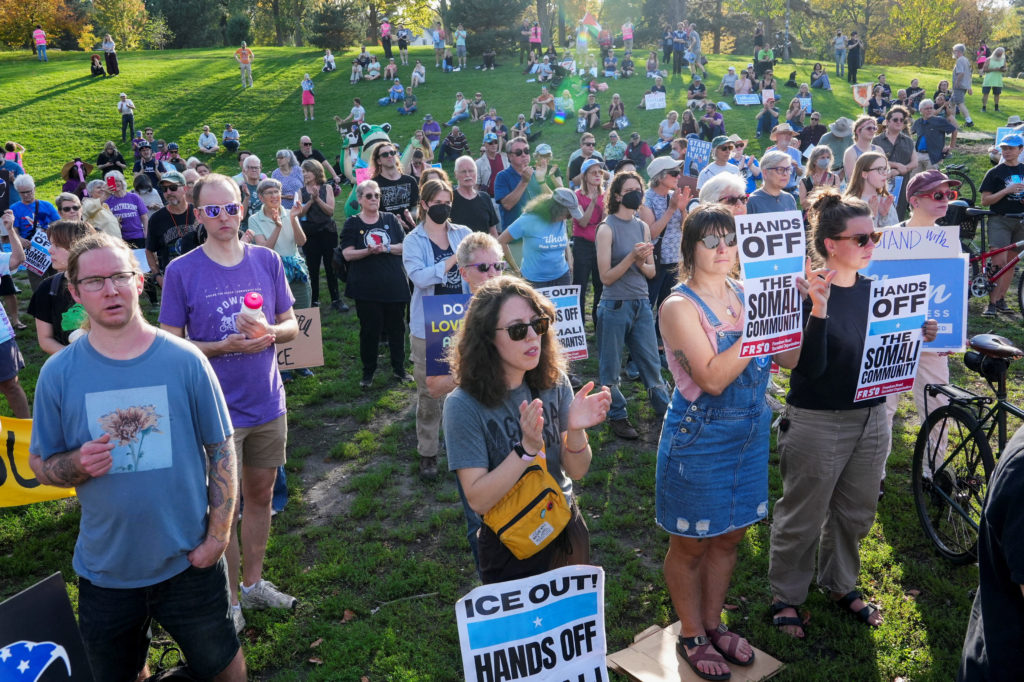
Now, none of this is popular. Trump’s approval is in the gutter. Yet Congress keeps writing the checks. So why isn’t public opposition turning into a change in policy? And who’s profiting from that gap? CodePink says the answer is to take it straight to Washington. Next month, right after the midterms and before the new Congress is sworn in, they’re bringing what they call a taxpayer uprising to Washington, D.C.: three days of nonviolent action against a system that, in their words, bombs schools instead of building them.
Joining us now to discuss is CodePink co-founder Jodie Evans. Jodie, welcome to BT Live.
[Jodie Evans:] Thank you, and thank you for having me. I love you two so much, and I’m so sad about the attacks for being people who support peace and humanity. It’s—
[Host:] Exactly what it is. That’s the crime: supporting peace and humanity. And that’s something you’re always doing, Jodie, which is what this campaign’s all about. But before we get to the campaign, I wanted to ask you about some of the reasoning behind it. This war—I mentioned this Iran war—is so unpopular. People can’t afford rent. They can’t afford groceries. They can’t afford health care. The costs of all those things are constantly going up. Congress is still moving the largest Pentagon budget in history. Why is public opposition, which is high, not translating into policy? Your call to action puts both parties on notice. Republicans are in charge right now, so explain why both parties are at fault.
[Jodie Evans:] Well, both parties have been at fault for the last 25 years of the War on Terror, because we’ve been trying to stop this war bill for that long, and every year it gets voted for. When Hegseth presented this $1.5 trillion war budget, everyone rolled their eyes and said, “And it will pass again.” And I said, “Wash your mouths with soap. We are going to fight, and we are going to stop it, because this bill cannot go through.”
This is double the Biden bill, when already the Biden bill was the greatest contributor to climate change. It’s stealing our taxpayer money, killing people, murdering children, and destroying the Earth. Our tax dollars are supposed to be spent on services for us, not making us less safe and more anxious, and destroying the planet, which is our future. So we’ve got to show up and fight.
Yes, 70% of the country is against war. But that’s not reflected in the halls of Congress. These people aren’t feeling it. They’re owned by the weapons manufacturers. And guess who gets this money? Half of it—$750 billion—goes to the weapons manufacturers. They’re making a killing on killing. They’re making so much profit. The crime of having wars be profitable—let’s just start there.
I think there are something like 2,000 lobbyists in Washington who take the money they make from your tax dollars and then spend it on buying politicians. We have to show up. We have to be in the streets. We have to be in the halls of Congress, because they have to feel us.
All of this—the murdering of children, the devastation in Gaza, the war on Iran, the anxiety we feel every day about what’s going to happen to Cuba, looking at what’s happened to Venezuela, looking at fishermen being murdered in the Caribbean—is debilitating. It’s depressing. It’s heartbreaking. We watch a lot of people just ask, “What do I do?” and literally crawl in a hole. But we know that doesn’t help you, either.
The anxiety in America is a disease. It’s forced on us by these people in power, by these weapons manufacturers. Showing up, being engaged, being in the halls of Congress is how we actually help ourselves right now and help the future by stopping this war bill. It must be stopped. We have to show up. We’re inviting everyone to come through the halls of Congress November 10th through 12th, to flood the halls of Congress with “I am a taxpayer, and you can no longer use my money for war and genocide.”
[Host:] I think it’s crucially important, especially your point about people having this anxiety and feeling like they can’t do anything. You’re really pointing out a clear path forward. Let’s continue to follow the money and what you’ve explored and researched. Your campaign names the weapons industry, Big Oil, and the AI tech giants as the people and entities that Congress actually represents, so to speak. Who is cashing in on this war economy? How much does that explain why Congress won’t say no to them? And talk a bit about what you’ve written about and are fighting for instead, which is this concept of the peace economy.
[Jodie Evans:] First of all, it’s actually a few people. It’s not a lot of people; it’s just the billionaires. Think about this: We are taking our hard-earned tax dollars and literally handing them over to billionaires and these weapons companies. You know it’s the weapons companies, but it’s also OpenAI, Google, Microsoft, Nvidia, and Oracle. Think about where this money goes. It goes to make the billionaires richer, and they have been owning the members of Congress. It’s literally a revolving-door system. They go from Congress to working for the military contractor. They go from being a general to working for a military contractor.
Do you know another thing that’s not talked about? In every single congressional office, there’s a military attaché assigned to it who literally sells war to the staff. They’re in the office saying, “No, we have to go to war. You have to pay for war. You have to pay for this.” And we know they fund bogus things. Even with the military, I think there was a ship they funded that they knew wasn’t going to work. They take your money and waste it on ships, airplanes, and actually executing a war.
At the same time, AI wars are very serious. We’ve just found out that probably the AI that killed those girls and boys at the school in Iran literally saw the children in the playground that it hit. The dehumanization of war and AI is dehumanization on a whole other level, because there’s no human in it. They’re just operating out of ideas and shooting whatever they think fits the idea of what they’re supposed to shoot. It’s frightening on steroids.
And we see it in our streets. Let’s not forget that all of the weaponry in our streets starts with the war budget, and then it’s just been broken off and brought to our streets. What’s important to talk about in this bill is also the merging of our defense industry with a foreign one—with Israel. Part of this bill is to merge U.S. and Israeli military cooperation in building weapons and technology. So the whole thing is just frightening on steroids.
You talk about the peace economy. Well, 15 years ago, during Obama, I realized: “Oh, we can’t end war until we end the war economy,” because war serves the war economy, which is capitalism. The oil industry—all the things we hate about capitalism—are served by war, including trying to shut people up who are for peace, like CodePink and you all at BreakThrough News. It’s like it is now a crime to talk about peace.
[Host:] The head of the International Red Cross was in The New York Times this weekend. A woman who doesn’t usually speak out decided to finally do an interview because she’s freaked out. Not only is this funding war, it’s funding barbarism, because there are no more rules. This is funding literal insanity. These weapons don’t have rules around them anymore. We’ve watched that with Gaza. We’ve watched the most horrendous things happen in front of our eyes. This is at a whole other level. We talk about our concerns. We wring our hands, we fret, we show up at rallies, but now we have to show up where congressional members make that vote and tell them they can no longer do this. It has to stop. This is the moment. It has to stop, and we’ve got to show up and say no.
You know, Jodie, speaking of the way they’re criminalizing advocacy for peace, one way they go after people—whether it’s on Cuba, Iran, North Korea, Russia, or China—is by telling us those countries are evil and are the enemy. You’ve been doing peace work basically your entire life, and every time those narratives label an entire country the enemy, as I’ve heard you say before, it ends up justifying mass destruction and mass killing. Then anyone who pushes back is accused of being influenced by that country or working on its behalf. Lately, it’s Cuba. There was that State Department report that came out naming all these people as working on behalf of Cuba to try to end war. What’s your response to the accusation that everybody who wants peace is just acting on behalf of—name your enemy country?
[Jodie Evans:] Well, that’s one of the greatest tools of how you start a war.
[Host:] Yeah.
[Jodie Evans:] It’s the first act of war. It’s a lie. It’s a distortion. But it’s an effective distortion. Their tools are effective, or they wouldn’t be using them. And they do silence people. They do make people confused about what’s right and what’s true. It makes people question, and that’s where they get people to shut down.
Thank you both so much, Zoe and Rania, for never shutting up and for raising up voices that speak the truth. That’s what we can do, because they’re intending to confuse. They’re intending to silence. They’re intending to make people feel afraid and anxious and confused and unsure. That’s why the clarity of our voices—and never stopping to speak up for peace and life and for the people, for humanity—is so important. There’s never an excuse for war. War itself is dehumanizing. War is a crime and it’s a racket. So why are we letting it happen? Why do we let our Congress members get away with this?
Hegseth—this is his bill. He’s the guy who just said he’s going to live-stream a firing squad on a Palestinian. This is an insane human being. Insane. Really? We’re about to give him $1.5 trillion of our hard-earned money? No, I’m going to show up. No, you cannot give him my money. That’s crazy. That act alone is crazy, besides everything it’s going to do. What are we not paying attention to?
Somehow they get all these lies out to confuse people: “Oh my God, what if Cuba—what if China funds—” That is ridiculous. The fact that Media and I have been working for peace for 55 years of our lives doesn’t matter. That doesn’t get in the story: that this is what our lives have been about, and that no one’s ever paid us for it. We do it as volunteers, which is what all the peace activists do. This isn’t a job. Peace and working for life isn’t a job. It’s not a career. It’s what you do when you watch insanity. It’s the thing you throw your life at because you care about a future and you care about humanity.
[Host:] I just want to note: It’s actually interesting when you say, “We do this as volunteers.” People who are doing what they’re doing because they’re paid a lot of money cannot fathom the idea of doing something out of principle, or because you care about the world. [Laughter and gasps] So it kind of makes sense. They’re like, “Well, of course someone has to be paying you to do this. Why else would you? Why would you want to stop war unless someone’s funding it?”
And they’re the people you guys are going after in the halls of Congress. Hopefully, everyone watching has seen these videos of the amazing CodePink volunteers just outing everyone who takes AIPAC money, who takes money from weapons manufacturers—which, in a way, is kind of all of them. Incredible work. They think, “Okay, well, they’re so persistent. There must be money behind it.” But obviously—
[Jodie Evans:] I mean—
[Host:] No, there’s a future that’s being stolen, a planet that’s being stolen, and people are being murdered. I mean, you know—
[Jodie Evans:] All of CodePink, except for our small team of 12, is there to support the volunteers with what they need to be engaged in an action locally or in a vigil. They’re doing actions all over, taking down the war criminals locally. Everyone’s a volunteer. Everyone sees it and says, “Oh my God.”
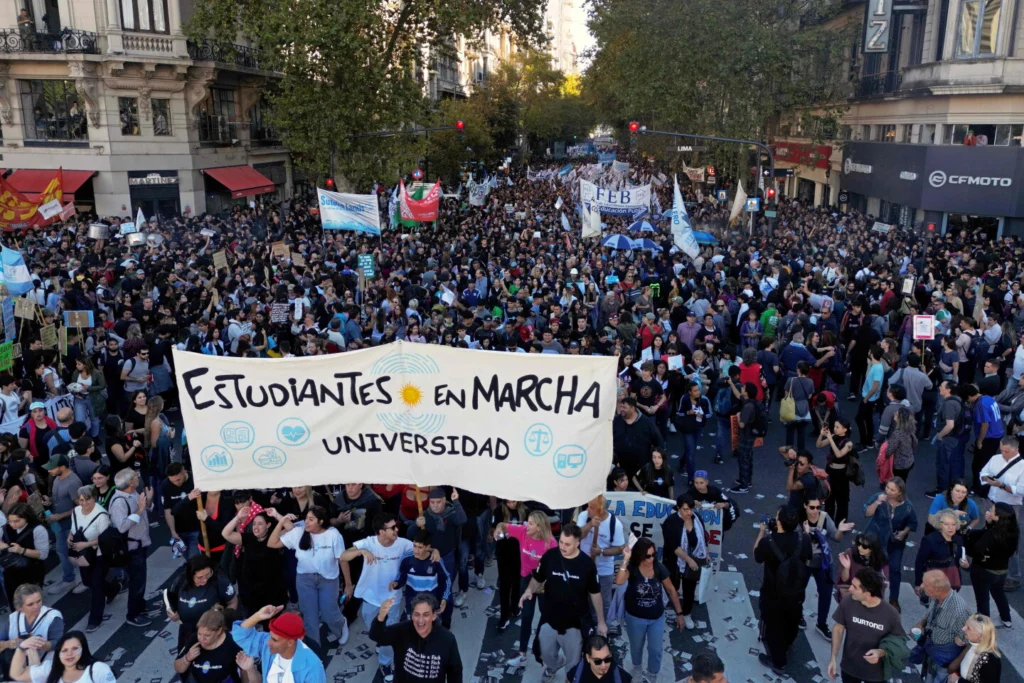
But the hard thing right now is, how many people are afraid? They’re really afraid. I want people to look at France, Spain, and India and just say, “Where are we? Why are we not in the streets?” All we’re saying is, “Just come to Washington, get in the halls of Congress, and you can make a difference.” And I want to say you can make a difference because they’re not feeling anything. They think we don’t exist. Yes, we’re fretting. Yes, we’re talking to each other about it. But they’ve got to feel it.
We saw when Bibi and Trump spoke at the U.N. What insanity—and nobody got up and walked out. I mean, except with Trump, Cuba and Venezuela. [Laughter] But the hard thing around Bibi was that fewer people got up and walked out than usual. Usually, we have 98% of the halls. This says to us that civil society, which had been built to stop all this, is broken. The laws that were built to stop this insane barbarism are broken. It is up to us. It is up to each one of us, and we’ve just got to take that mantle. People power. We know it is people power. It has always been people power.
So here we are with an opportunity to join together and show up in the halls of Congress. And, by the way, Ben Cohen’s bringing some ice cream, so we’ve got some sweets to tempt you. We’ve got best boys and poets events every night, where we can learn and be together. We’ll have a vigil where congressional members walk between their offices in Congress. So we’ll have a lot for you to do, to be engaged and to say no, because we are going to stop this $1.5 trillion oil bill.
[Host:] Well, you’re calling this the taxpayer uprising. Can you give us the full pitch for anyone who’s watching and wants to participate?
[Jodie Evans:] In the past, when we try to stop this war bill, it gets very confusing. It’s the NDAA, and there are a lot of amendments, and people say, “Oh, like what?” Everybody gets distracted. Nobody knows how to think about it. So this is a taxpayer uprising. All we come and say is, “You cannot use my money to fund war and genocide anymore.” Super clear. No confusion.
Then you talk about what is being stolen from you, what your community needs. We have these stickers that say, “Fund ____ , not war.” I’ve been going around the country for the last three months asking people what they would fund instead of war. What’s amazing is every single person has an answer like that. They’re on it: education, health care, child care. And they tell you a story.
So I say, “Come and tell that story to a member of Congress. Come and tell them what it’s like to have all your money stolen, to destroy the Earth and murder people, and then have to watch it on television and have your heart broken and just not be able to breathe.” I mean, it’s all wrong. You have to go and say it to them.
It’s simple. That’s why I call it a taxpayer uprising. It’s very, very simple. It’s like, “No, we won’t anymore.” There’s a movie called The Uprising where the taxpayers in 1381 said no. I thought, “Well, wow, they didn’t have anything, and we have a lot more. Where are we?” So let’s stand on the shoulders of those who’ve come before us and those—you know, the young people around the world—and say, “Yes, it is time for the people to speak up and stand up, speak out, and say no.”
[Host:] Because we ask, “How does it happen?” And I say, “Because we’re just not scratching hard enough.”
I also want to point people to CodePink.org. The running story has information on the November 10th to 12th taxpayer uprising in Washington, D.C. If you’re in the area and interested, or want to come to D.C. for it, go to CodePink.org and check out how to participate.
With all that said, Jodie, we want to thank you so much for joining us to break all of this down, and for all the wonderful work you’re doing to raise awareness and get people involved. We really appreciate you. Jodie Evans, co-founder.
[Jodie Evans:] Thank you for having me, and thank you for all you do. I love you so much.
[Host:] We love you, Jodie.
[Host 2:] We love you.
[Host:] So sweet. Love the solidarity today. Again, great—like all of our guests, literally all of our guests today. We’re like, “We stand with BreakThrough News.” Love the energy. Love the solidarity.
I want to remind people who are watching: You can also stand with BreakThrough News by going to BreakthroughNews.org, signing the petition to tell the Ways and Means Committee and Jason Smith to back off and stop attacking our First Amendment rights, and donating to BreakThrough News. It’s really important, if you’re able, to please donate, because the whole purpose of this is to try to bleed us dry. Obviously, we have to spend money on constitutional lawyers so they can respond, because you’ve got to do this through lawyers, and it ain’t cheap, guys. So that we can continue doing our excellent reporting that has so angered the powers that be. [Snorts] So we’re doing something right, I guess. If Jason Smith was happy with us, given his politics and who he serves, we would be doing something wrong.
[Host 2:] You know, that’s one way to look at the cup as half full. [Laughter]
[Host:] On that note, we want to thank everybody who’s watching for being a member of BreakThrough News. You were able to watch this program because you’re a member supporting the show. Make sure you’re sharing it with your family and friends, and we will be back on Thursday at noon Eastern Time. See you then.

 Login