❌

Reading view

Trump administration sues California to block ballots from alleged noncitizens

SACRAMENTO, Calif. (AP) — The Trump administration sued California election officials Thursday, asking a judge to bar the state from counting mail-in ballots for next month’s midterm elections from people the federal government has identified as “likely” noncitizens until their status can be confirmed.

The lawsuit comes after the Justice Department said California officials failed to meet a 48-hour deadline to review a password-protected thumb drive that contains a list of 20,000 names the federal government believes are likely noncitizens who were sent ballots to participate in the Nov. 3 election. The state mails ballots to all registered voters. A top Justice Department official had sent a letter earlier this week threatening potential legal action if California didn’t comply.

California Secretary of State Shirley Weber said in a letter to the Justice Department that the federal government hasn’t provided evidence to support its allegation that 20,000 names on the state’s voter rolls are of noncitizens. She referenced an instance in which the federal government alleged nearly 16,000 possible noncitizens were listed on Nevada’s voter rolls, but the state determined that all were, in fact, U.S. citizens.

She also noted that voting is already underway in the state. Weber, a Democrat, said the Justice Department was “demanding unprecedented measures that threaten thousands of Californians’ right to vote, based on unverifiable information or methodology that you still fail to explain or provide.”

California’s elections are in “full compliance” with federal law, she added.

Los Angeles County Registrar Dean Logan said in a statement that his office received the letter and thumb drive this week, along with a “hand written note providing a password” to access the list of alleged noncitizens on the voter rolls. He said he did not consider the thumb drive a secure device. The secretary of state’s office said the password was written “on a sticky note.”

The Justice Department’s lawsuit says the federal government sought to “work collaboratively” with California to identify noncitizens registered to vote in the state, and “California made no serious effort to do so.”

“The United States thus seeks commonplace election relief when a ballot is called into question,” the lawsuit says. “This Court should enjoin California from presently tabulating vote by-mail ballots from likely noncitizens in the upcoming federal election until the voter’s citizenship status can be determined,” the lawsuit says.

Weber, who is named in the lawsuit, suggested the federal government’s outreach had not been collaborative.

She said that over the summer, the Department of Homeland Security claimed that California had 190,000 noncitizens on its voter rolls but refused to provide the methodology or data sources when the office asked for them.

The post Trump administration sues California to block ballots from alleged noncitizens appeared first on MS NOW.

  •  

Trump’s desperate war on ‘socialism’ is failing within his own party

President Donald Trump and the Republican Party have desperately lobbed accusations of “socialism” and “communism” at liberals in their attempts to scare voters in this year’s midterm elections.

Conservative political leaders have instituted “anti-communist” propaganda to indoctrinate schoolchildren with anti-democratic talking points, and Trump’s regime has made a habit of railing against socialism in public — with some rather embarrassing results.

But fresh polling data suggests that a fairly large contingent of the Republican Party actually seems to like socialism. And it’s arguably all Trump’s fault.

The survey by the Economic Innovation Group and Echelon Insights shows that Republicans, at 29%, are more in favor of the government owning a stake in independent companies than independent voters and even Democrats.

Two years ago, what share of GOP voters would agree with government ownership of companies?

Now 29% of GOP voters do. More than Democrats.

This must be reversed. Those who pushed for this may come to regret it if America becomes a socialist country. pic.twitter.com/zgrZ1bjulb

— Daniel Di Martino (@DanielDiMartino) October 13, 2026

The polling suggests majorities of each group oppose the idea. But the not-insignificant number of Republicans who are in favor suggests that Trump’s trend of having the government buy stakes in independent companies — communistic behavior that has led some critics to say he’s practicing “MAGA Maoism” — has led some conservatives to welcome the practice.

So much for all that past talk among Republicans about how the government shouldn’t be in the business of “picking winners and losers.” It has taken less than 10 years of Trump-style authoritarianism to get about a third of the GOP on the record endorsing an undeniably socialist policy, if not a communist one.

So as Republicans rattle on about the supposed scourge of socialism, it sure seems like a chunk of their own party isn’t on the same page.

The socialist threat is coming from inside the house https://t.co/vZJjrG2QlD

— Scott Lincicome (@scottlincicome) October 13, 2026

Or, as Scott Lincicome, a vice president at the libertarian CATO Institute, put it: “The socialist threat is coming from inside the house.”

The post Trump’s desperate war on ‘socialism’ is failing within his own party appeared first on MS NOW.

  •  

Is the world pricing the risk of a US diesel export ban?

A spike in diesel prices is hammering broad sectors of the US economy – especially agriculture and shipping – and becoming a flash point ahead of the November 2026 midterm elections. This squeeze has prompted Republicans from hard-hit farm states to call for a ban on US diesel exports, with President Donald Trump reportedly weighing […]

The post Is the world pricing the risk of a US diesel export ban? appeared first on Asia Times.

  •  

What Happens When 2 Dan Sullivans Run for the Same Senate Seat?

Daniel J. Sullivan Jr. and Sen. Dan Sullivan (R–Alaska) in a side-by-side | Illustration: Dan Sullivan for U.S. Senate/Senator Dan S. Sullivan/Facebook

This year, Alaska held its primary elections on August 18.

As per a 2020 ballot measure, Alaska primary voters pick among all qualified candidates for a single office, regardless of party affiliation, and the top four then advance to the general election.

In the U.S. Senate primary, Republican incumbent Dan Sullivan won 41 percent of the vote, while former Rep. Mary Peltola, a Democrat, captured nearly 50 percent.

Dan Sullivan was also the distant third-place finisher—but in this case, it was Daniel J. Sullivan Jr., a retired schoolteacher who is also running as a Republican but is not the same person as Daniel S. Sullivan, the junior U.S. senator for the 49th state.

The presence of dual Dan Sullivans is a headache for Republicans, who have fought to keep Daniel J. off the ballot, concerned he would split their votes and cost their candidate his seat.

"Mary Peltola and Chuck Schumer know they can't beat Senator Sullivan on his record, so they're resorting to deceitful political maneuvers that attempt to trick Alaskans and buy a seat," a Republican spokesman told Fox News.

"We are looking into it," President Donald Trump said this week. "It's a disgrace." In fact, NBC News reported in July that the FBI and Department of Justice had launched an investigation "looking for possible wire fraud or a conspiracy to deprive Alaskan voters of a free and fair elections process, which could be a civil rights violation."

In August, the government apparently issued subpoenas, though Daniel J. later said he had not received anything.

But is what he is doing actually illegal? For that matter, should it be?

Carol Beecher, director of the Alaska Division of Elections, barred Daniel J. from the ballot in June after concluding that he was running "with the purpose of confusing or misleading the electorate and compromising the fairness of the ballot."

But a state superior court reversed that decision. "Despite the Division's assertion that Mr. Sullivan may be excluded from the ballot because he lacks 'good-faith,' there is no statute which provides such a criterion," wrote Judge Thomas A. Matthews. "The concept of 'good-faith,' or pure motive, or bona fide intent is simply absent." The Alaska Supreme Court agreed, keeping both Sullivans on the November ballot.

Granted, it seems extremely likely that Republicans are right, and Daniel J. is running specifically to hurt Daniel S.'s prospects.

"Campaign material metadata reveals that Amber Lee, a progressive consultant, authored a press release announcing [Daniel J.'s] Senate bid," WFMD reported in May.

Daniel J. told The New York Times that he was running as a moderate Republican in an attempt to steer the party away from its MAGA wing. But he also admitted that he had voted for the Democrat in the last three presidential races and for Peltola in her races for the U.S. House.

In Beecher's original order keeping Daniel J. off the ballot, she wrote that Daniel J. had asked to be identified as "Dan S. Sullivan" on the ballot, the same name as the senator's. (Alaska reporter Dermot Cole wrote in July that this was not true: Daniel J. wrote "Dan S. Sullivan" in an email to Beecher but followed up hours later to correct it to "Dan J. Sullivan.")

If Daniel J.'s goal truly is to mislead voters, then that is indefensible. But it's not clear that it's illegal, or whether it should be.

"I am not sure exploiting voter confusion about names is any worse than exploiting their ignorance about policy issues like crime, immigration, and health care," wrote George Mason University law professor Ilya Somin. "Trying to prevent such exploitation through criminal and civil liability is likely to violate the First Amendment. In addition, it would likely end up giving incumbent political leaders broad power to curb speech and control electoral campaigns that they cannot be trusted with."

"This is a case about someone running for office with impure motives who is lucky enough to have a name that could confuse some voters," agreed election law expert Richard Hasen. "I don't see how the government could criminalize his running for office for having impure motives. And if it could do so, then it could be a crime every time that the Republican Party backs a Green Party candidate, or Democrats support a MAGA candidate in a primary in the hopes that the candidate would be weaker against a Democrat in the general election. This stuff happens all the time."

But it's entirely possible that Alaska's ranked choice voting system will solve the problem on Election Day.

After the August open primary, the top four candidates compete on a ranked choice ballot, where voters list the candidates in order of preference. If no candidate gets an outright majority, then the lowest performer is eliminated, and every ballot that picked them first is retallied and applied to their second choice.

As long as every Alaskan who wants to vote for Dan Sullivan—either one—lists both Dan Sullivans as their first and second choices, then the system will take care of any confusion. In the (highly likely) event that Daniel J. does not capture a majority on the first ballot, his votes will be retallied and applied to their second choices. The only plausible hiccup is if Peltola, the Democratic candidate, wins a majority in the first round—in which case either Sullivan would have lost anyway.

Of course, Republicans have opposed the ranked choice system since Alaska adopted it. Former Gov. Sarah Palin, who ran against Peltola twice unsuccessfully, said ranked choice was "so weird" that "it results in voter suppression."

In a post last week on Truth Social, Trump called ranked choice voting "Corrupt" and said it "shouldn't be allowed in our Country."

"I just left Alaska, where we have a real bad thing," Trump said Wednesday at a campaign rally in Arizona. "They have the ranked choice voting, where you go into I guess some kind of a test tube or something, and they pick whoever the hell they want. That's another disgrace."

As ever, it's not clear what Trump was talking about. And despite Republicans' complaints, ranked choice voting works quite well: According to the American Bar Association, recent research finds that it "is an improvement over plurality voting with clear benefits in terms of representation, campaign quality, mobilization, and turnout." It also "encourages greater consensus building as well as more civil political campaigns," and voters find it easy to understand.

In the event that a political party finds itself, for example, with two Dan Sullivans on the ballot, ranked choice voting is a perfect solution. If only the party weren't so hostile to it.

The post What Happens When 2 Dan Sullivans Run for the Same Senate Seat? appeared first on Reason Magazine.

  •  

Law enforcement investigating suspicious letters sent to Congress, elections offices

The Orlando office of Rep. Maxwell Frost, D-Fla., was evacuated Friday after receiving a “suspicious package” that matched those received by offices of other lawmakers and state officials.

The packages, according to law enforcement, were mailed to multiple congressional and election offices nationwide. Some contained an unknown substance, authorities said.

Frost said in a statement Friday that he and his district office staff are safe, adding the office was evacuated as a precaution.

The U.S. Postal Inspection Service, FBI and U.S. Capitol Police are investigating the series of suspicious mailings, which were sent to the offices of multiple Democratic senators, including Senate Minority Leader Chuck Schumer of New York, as well as some Republican state officials.

Several secretaries of state and other elections offices across the country were also targets of the letters, according to Brendan Donahue, deputy chief inspector for the U.S. Postal Inspection Service.

“Some of the letters have contained an unknown substance, and we’re working closely with our law enforcement partners to respond to each incident,” Donahue said, adding that authorities are working to identify the source of the letters.

Also Friday, Democratic Rep. Ritchie Torres of New York said his district office had also received an envelope containing a suspicious substance.

“We are living in a time when threats against elected officials and their staff have become the new normal. Although my team is understandably shaken by the incident, we will not be deterred from serving the people of NY-15 in the Bronx,” Torres said in a statement.

A test of the substance conducted by the New York Fire Department determined it was “non-hazardous,” and Torres did not report that he or anyone else had been harmed by the envelope.

Nebraska Secretary of State Robert Evnen, a Republican, said Thursday that his office “received a suspicious envelope matching the description of suspicious mailings sent to other state election offices across the country this week.” The envelope was not opened, according to a statement from Evnen’s office.

Republican Ohio Secretary of State Frank LaRose said Wednesday that his office is working with state and federal law enforcement after confirming it was the intended recipient of “a suspicious mailing that contained a powdery white substance.”

“Fortunately, delivery of the letter was preempted by investigators at the U.S. Postal Service, who are dealing with similar mailings sent to election officials in multiple states,” LaRose said in a statement, adding that “election officials should never have to fear for their personal safety while performing their duties.”

Messages sent to members of the Senate and House on Thursday morning informed lawmakers and their staff of the investigation.

The Office of the Sergeant at Arms of the House described the suspicious substance as a “white powder.”

No House offices have received the letters, according to the notice, and it was not immediately clear Thursday whether any of the mailings had reached Senate offices, nor to which offices they had been addressed.

“Law enforcement officials are working to intercept any additional letters before they are delivered, however, it is possible that some letters may reach their destinations,” the Senate message said.

The office of Sen. Chris Murphy, D-Conn., was among those that were sent a letter with a suspicious substance, according to spokesperson Josh Sorbe, but the letter was intercepted.

A letter was also sent to the office of Sen. Alex Padilla, D-Calif., spokesman Danny Rodriguez said. Padilla’s office was notified by the FBI about the letter, which was intercepted by USPS, according to Rodriguez.

Another letter had a return address that read “DSA,” from a suite in a New York City office building in the financial district of Manhattan, according to the notice sent to Senate offices.

The Democratic Socialists of America previously occupied the address, but have not been in the suite since 2013, and moved out of the building in January, a DSA spokesperson said. The spokesperson added that the DSA was not involved.

In a statement to MS NOW, an FBI spokesperson confirmed the agency’s joint investigation with USPS, but did not confirm further details.

The suspicious letters come three weeks before Election Day. Both chambers are formally adjourned as members campaign for re-election in their districts.

CORRECTION (Oct. 15, 2026, 4:30 p.m. ET):
A previous version of this article incorrectly stated that Sen. Chris Murphy’s office received one of the letters mailed to congressional and election offices. A spokesperson for the senator’s office says one of the letters was addressed to him but was intercepted in the mail. The earlier story also incorrectly stated that another letter was sent to “DSA” at a Manhattan address. That was the return address.

The post Law enforcement investigating suspicious letters sent to Congress, elections offices appeared first on MS NOW.

  •  

Even Blue-Collar Workers Have Turned Against Trump's Unpopular Tariffs

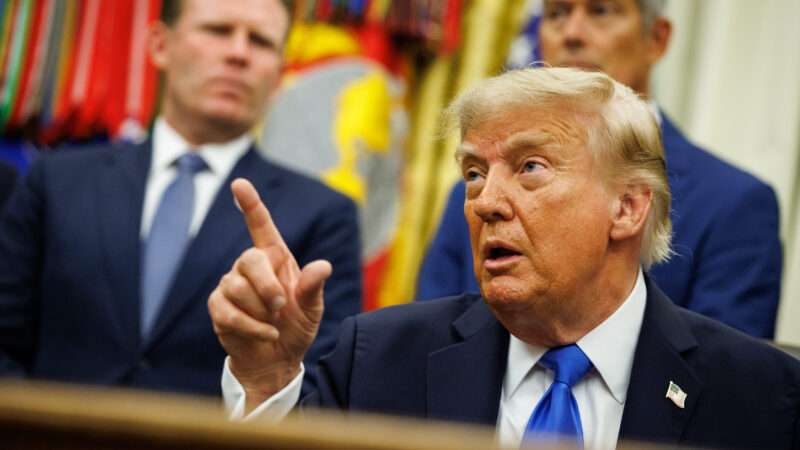
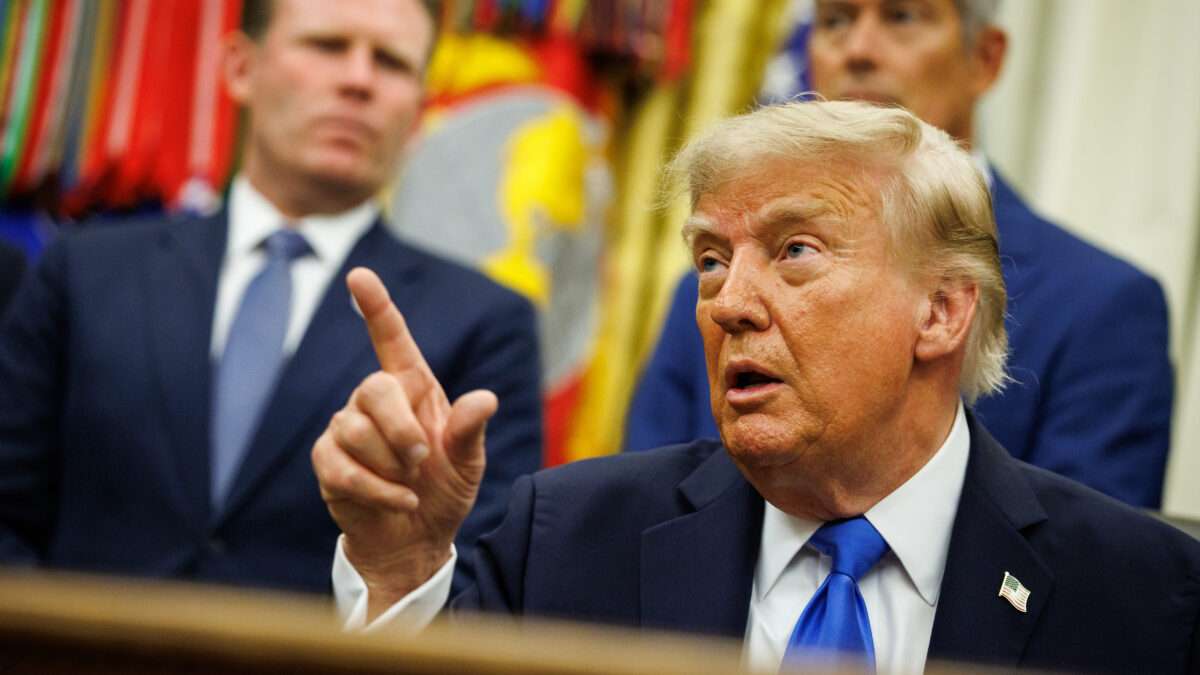
President Donald Trump in the Oval Office | Samuel Corum - Pool via CNP/picture alliance / Consolidated News Photos/Newscom

President Donald Trump promised that his tariffs would usher in a "golden age" by prioritizing the interests of American workers.

Those workers, however, are now turning against Trump's tariffs.

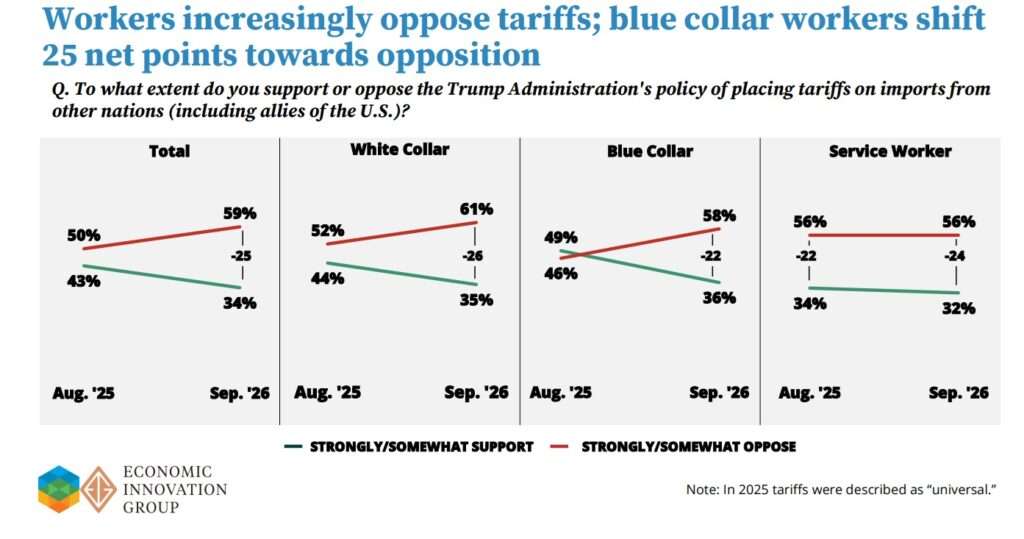
Support for the Trump administration's tariff policies has fallen by 25 percentage points among blue-collar workers over the past year, according to new polling data from Echelon Insights and the Economic Innovation Group (EIG).

A poll conducted by the two groups in August 2025 found that blue-collar workers supported the tariffs by a narrow margin. Now, that same segment of the population has turned decisively against Trump's tariffs: 58 percent oppose them, compared to just 36 percent who support them.

Source: Economic Innovation Group / Echelon Insights (https://eig.org/wp-content/uploads/2026/10/EIG-State-of-the-American-Worker-2026.pdf)

Overall, support for the tariffs has declined from about 43 percent last year to only 34 percent. Opposition to the tariffs has grown from 50 percent to 59 percent. Elsewhere in the same survey, 68 percent of respondents said the tariffs have made the cost of living higher.

It's not hard to figure out why people have turned against the tariffs: They have contributed to rising prices across the economy.

The annualized inflation rate ticked upward to 3.7 percent in September, according to new data from the Bureau of Labor Statistics (BLS). More BLS data released Thursday morning shows that the producer price index, which often operates as a precursor to inflation, is up 6.3 percent over the past year.

America's war with Iran has been a major factor in rising inflation, but the tariffs have played a significant role as well. In a study released last week, the New York Federal Reserve concluded that consumer prices would have declined slightly over the past year if not for the economic effects of the tariffs.

The tariffs have become so unpopular that not even partisanship can save them. "Among GOP-voting workers, only 3 percent select tariffs as their top priority," note Jordan McGillis and John Lettieri, policy experts from the EIG, in their write-up of the poll.

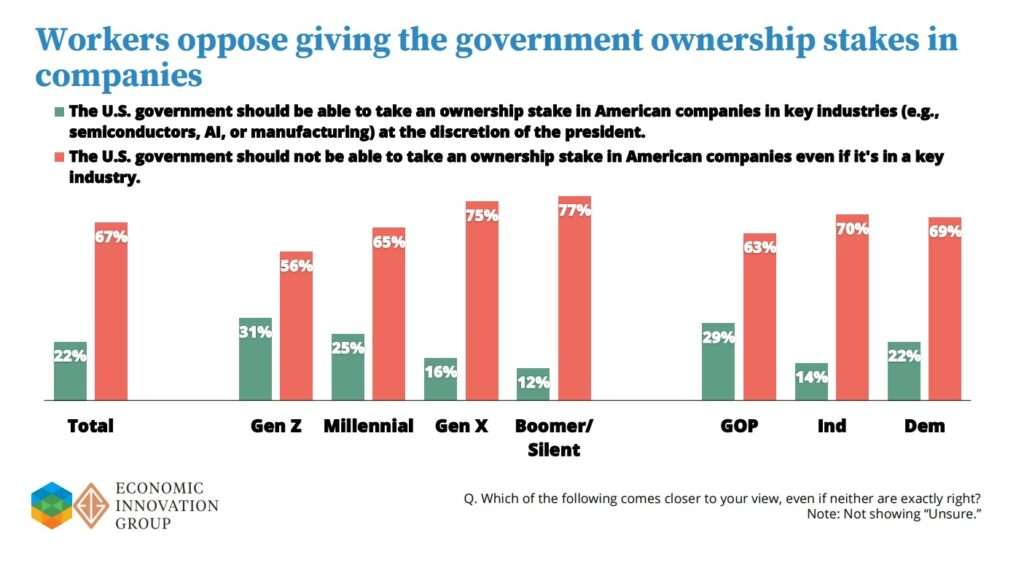
Other parts of Trump's economic agenda are not faring much better. The Trump administration has bought or seized shares of more than 30 private businesses over the past two years—ranging from major firms such as U.S. Steel to small mining companies with few customers. "The federal government's state corporatism is unprecedented," reports the Cato Institute in a new analysis of those deals.

Large majorities of workers across both major parties and all generations said they opposed the federal government taking equity stakes in American companies in the Echelon/EIG poll.

Source: Economic Innovation Group / Echelon Insights (https://eig.org/wp-content/uploads/2026/10/EIG-State-of-the-American-Worker-2026.pdf)

In short: This economic populism sure isn't very popular.

All of this is likely to be a major factor in next month's midterm elections. Regardless of how that shakes out, however, there are lessons to be drawn from this poll for both sides of the political divide.

For conservatives, these polling data should end the tariff experiment. It has proven economically damaging, and it is no longer a political winner (if it ever was).

Remember, the idea to hike tariffs and start trade wars with all of America's biggest trading partners was not some grand plan backed by careful study and thoughtful analysis. It sprung, half-baked, from the head of one man. Yes, there have been various attempts to support, in a post hoc way, Trump's desire for tariffs. All of that can, and should, be easily discarded. There is no reason to allow a lame duck president to continue to set such a politically and economically destructive path for the country.

Undoing the tariffs might also put a meaningful dent in rising prices. That should be a no-brainer after the midterms, no matter which party controls Congress.

On the left, this poll should be a reminder that Americans do not look favorably on the mixing of government and business. Democrats should promise to unwind the "equity stakes" that the federal government has taken under Trump's watch. Heading toward the 2028 presidential cycle, Democrats might want to borrow some old Republican talking points about how government shouldn't be picking winners and losers—they may find that message is still quite popular.

Yes, it's probably right to be skeptical that those things will happen. Trump's efforts to centralize economic power in the executive branch are likely to outlive his presidency—that's how these things always seem to go.

But there is a glimmer of hope here. Americans are soundly rejecting the Trump administration's big government policies.

The post Even Blue-Collar Workers Have Turned Against Trump's Unpopular Tariffs appeared first on Reason Magazine.

  •  

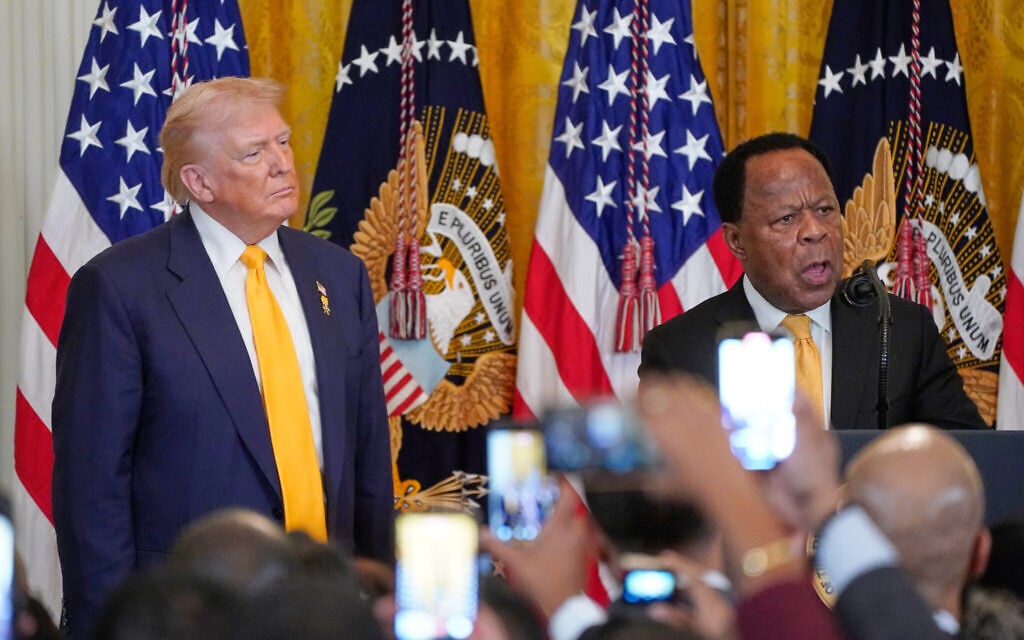
Trump’s antisemitism czar visits Michigan synagogue ahead of contentious US midterms

Leo Terrell attends Detroit suburb event co-hosted by right-wing Zionist Organization of America, as Trump administration courts Jewish vote in tight swing state Senate race
  •  

Judge Blocks Trump Administration’s $20 Million Ad Campaign

Federal judge blocks Trump administration’s $20 million political advertising campaign funded through the Department of Homeland Security.

A federal court imposed a 14-day restraining order over allegations that the administration misused public funds for political advertising ahead of midterm elections.


A federal judge in New York has blocked the Trump administration from entering into, renewing or expanding contracts for a controversial advertising campaign, freezing $20 million in funding allocated through the Department of Homeland Security (DHS) amid allegations that public money was being used for partisan political messaging.

RELATED: Trump Demands Leadership Change in Ukraine Amid Zelensky Rift

U.S. District Judge Jennifer Rochon of the Southern District of New York issued a 14-day temporary restraining order on Sunday, citing the risk of “irreparable harm” before publishing her full legal reasoning. The ruling came just over three weeks before the midterm elections.

The lawsuit was filed by a coalition of civic organizations, including the nonpartisan group Common Cause, represented by the legal firm Democracy Forward. The plaintiffs argued that the campaign violated federal restrictions on using funds appropriated by Congress for partisan advertising or propaganda.

“There is no legal justification or precedent for the president to use the machinery of government and public funds to influence election results,” the plaintiffs said in a statement following the ruling.

The advertisements, which began airing in late September, feature footage from Donald Trump’s previous presidential campaign, excerpts from speeches warning of the threat of communism and references to recent military operations, including U.S. military action against Iran and the abduction of Venezuelan President Nicolás Maduro.

The Justice Department argued late Saturday that the court order was unnecessary because the advertising campaign was scheduled to end on Sunday. The judge nevertheless imposed the restrictions.

The White House has defended the spending, describing the advertisements as “public service and educational messages” and rejecting allegations that they constitute electoral propaganda. Trump has maintained that the campaign promotes the United States rather than himself, noting that he is not a candidate in the midterm elections.

The president has also offered to cover the cost with personal funds or money from his political campaign if authorities determine that the expenditure was improper. Government officials, however, have said there are no immediate plans for reimbursement.

The controversy has drawn criticism across party lines. Republican Senate Majority Leader John Thune has questioned the use of taxpayer money to finance the advertisements, while the Democratic National Committee has filed separate lawsuits against the administration over the same issue.

  •  

Canada, le crepe del federalismo: dal ritorno sovranista in Québec al referendum dell’Alberta

La vittoria del Parti Québécois e il referendum del 19 ottobre in Alberta riportano al centro il problema della coesione canadese. La separazione resta minoritaria, soprattutto nell’Ovest, ma il riemergere simultaneo delle spinte centrifughe rappresenta una sfida politica per Mark Carney.

Segue nostro Telegram.

A pochi mesi dal consolidamento parlamentare del governo liberale di Mark Carney, il Canada si trova ad affrontare una questione che sembrava essersi progressivamente allontanata dal centro della scena politica: quella della propria coesione interna. La vittoria del Parti Québécois (PQ) nelle elezioni provinciali del Québec del 5 ottobre e il referendum previsto per il 19 ottobre in Alberta, nel quale gli elettori saranno chiamati a pronunciarsi sull’eventuale avvio del procedimento verso un successivo referendum vincolante sulla separazione dal Canada, hanno riportato contemporaneamente alla ribalta due forme molto diverse di contestazione dell’assetto federale.

Sarebbe eccessivo sostenere che il Canada si trovi alla vigilia della disgregazione. In Alberta, soprattutto, tutti i dati disponibili indicano che l’opzione favorevole alla permanenza nella federazione dovrebbe prevalere con un margine molto ampio. Tuttavia, il fatto stesso che una delle province economicamente più importanti del Paese abbia ritenuto politicamente possibile sottoporre agli elettori una domanda di questo genere dimostra il malcontento di una parte della popolazione: una questione che fino a pochi anni fa apparteneva soprattutto alle frange più radicali del cosiddetto western alienation è entrata nella sfera della politica istituzionale.

Il caso del Québec, invece, ha radici molto più profonde. Le elezioni provinciali del 5 ottobre hanno riportato al governo, dopo oltre un decennio, il Parti Québécois guidato da Paul St-Pierre Plamondon. Il PQ ha conquistato 59 dei 127 seggi dell’Assemblée nationale, fermandosi cinque seggi sotto la maggioranza assoluta. Ottenendo circa il 28% dei voti, ha chiuso la consultazione elettorale davanti al Parti Libéral du Québec, attestatosi poco sopra il 24%, al Parti Conservateur du Québec, con circa il 21%, e a Québec Solidaire, che ha raccolto oltre il 12% conquistando nove seggi. La Coalition Avenir Québec (CAQ), al governo dal 2018, è invece crollata al 13,3% senza ottenere alcun seggio.

Un tale esito impone certamente una lettura prudente, in quanto il successo del PQ non equivale a un mandato maggioritario per l’indipendenza. Il partito, infatti, ha beneficiato della frammentazione del voto e ha ottenuto la percentuale più bassa mai registrata da una formazione vincitrice nella storia elettorale del Québec, mentre i sondaggi continuano inoltre a collocare il sostegno alla separazione dal Canada intorno al 30%, ben lontano da una maggioranza sociale. Lo stesso St-Pierre Plamondon ha indicato che non intende convocare un nuovo referendum finché Donald Trump resterà alla Casa Bianca, sostenendo che la pressione tariffaria e l’instabilità derivante dai rapporti con gli Stati Uniti rendono necessario evitare, per il momento, un’ulteriore crisi costituzionale.

Ciò non riduce tuttavia la portata della vittoria del PQ. Per la prima volta dopo molti anni, il governo della seconda provincia più popolosa del Canada sarà guidato da una formazione che considera esplicitamente l’indipendenza del Québec il proprio obiettivo storico. Inoltre, sommando i 59 deputati del PQ ai nove di Québec Solidaire, anch’esso favorevole alla sovranità del Québec sebbene attraverso un percorso politico e sociale profondamente diverso, nell’Assemblée nationale esiste una maggioranza numerica di deputati eletti sotto le insegne di partiti indipendentisti. Questo non significa che PQ e Québec Solidaire formeranno automaticamente un blocco comune, né che un referendum sia imminente, ma conferma che la questione nazionale québécoise è tutt’altro che scomparsa.

La sua natura, inoltre, resta profondamente diversa dal separatismo emergente in Alberta. Il nazionalismo del Québec dispone di una propria continuità storica, linguistica e culturale, di una tradizione intellettuale e politica consolidata e di istituzioni che hanno progressivamente acquisito un grado considerevole di autonomia rispetto a Ottawa. I referendum del 1980 e del 1995, quest’ultimo perduto dagli indipendentisti per uno scarto inferiore all’1%, hanno mostrato quanto la questione possa arrivare a mettere in discussione l’esistenza stessa della federazione canadese.

La situazione dell’Alberta nasce invece prevalentemente da fattori economici, fiscali ed energetici. La provincia, cuore dell’industria petrolifera canadese, ha sviluppato da tempo un forte risentimento nei confronti del governo federale, accusato da settori rilevanti dell’opinione pubblica occidentale di utilizzare la ricchezza prodotta dalle province delle praterie per finanziare politiche redistributive decise nell’Est, imponendo contemporaneamente vincoli ambientali e normativi penalizzanti per il settore degli idrocarburi.

Sebbene tutti i sondaggi siano concordi sul fatto che il referendum non dovrebbe avere esito positivo, la trasformazione di una rivendicazione precedentemente marginale in una questione sottoposta ufficialmente all’intero corpo elettorale provinciale rappresenta un passaggio qualitativo da non sottovalutare. Significa che una parte della classe politica dell’Alberta considera ormai il ricorso alla minaccia separatista uno strumento legittimo di pressione nei confronti del governo federale. La premier Danielle Smith ha annunciato che voterà per la permanenza nel Canada e non sostiene personalmente la separazione, ma è stato il suo governo ad aggiungere la domanda al referendum provinciale (che consiste di un totale di dieci quesiti). La stessa Smith ha presentato la consultazione come uno strumento attraverso il quale permettere agli albertani di esprimere il proprio malcontento nei confronti di Ottawa.

Una vittoria del 70% o persino superiore dell’opzione federalista non cancellerebbe il fatto che circa un quinto dell’elettorato di una provincia fondamentale per l’economia canadese sia disposto a considerare almeno l’avvio di un processo di separazione. Nel gennaio 2026 Ipsos aveva addirittura registrato un sostegno iniziale alla prospettiva separatista del 28% in Alberta, praticamente identico al 31% rilevato in Québec, salvo poi constatare che il consenso si dimezzava quando agli intervistati venivano prospettati i costi concreti dell’indipendenza. In altre parole, per una parte consistente degli elettori il separatismo albertano funziona soprattutto come voto di protesta e strumento negoziale nei confronti del centro federale.

Per Mark Carney, la contemporaneità dei due fenomeni costituisce una sfida particolarmente delicata. Il primo ministro ha costruito la propria strategia economica e internazionale attorno al concetto di “autonomia strategica” canadese. Di fronte all’uso crescente delle tariffe, delle catene di approvvigionamento e delle dipendenze economiche come strumenti di pressione, soprattutto da parte dell’amministrazione Trump, Carney ha sostenuto che il Canada debba ridurre la propria vulnerabilità nei confronti degli Stati Uniti, diversificando mercati, partner e infrastrutture.

Nel suo discorso al Lowy Institute di Sydney dello scorso marzo, il premier aveva affermato esplicitamente che l’integrazione economica non deve più trasformarsi in subordinazione e che le medie potenze devono costruire capacità sovrane nei settori strategici, dall’energia ai minerali critici, dall’intelligenza artificiale ai sistemi di pagamento. La stessa impostazione è stata successivamente ripresa nei rapporti con l’Unione Europea e nell’apertura di nuovi canali economici verso l’Asia.

Particolarmente significativa, in questo senso, è stata la normalizzazione dei rapporti con la Cina. Nello scorso mese di gennaio Carney è stato il primo capo di governo canadese a recarsi ufficialmente a Pechino dal 2017, incontrando Xi Jinping e Li Qiang e inaugurando un nuovo partenariato strategico sino-canadese incentrato su energia, commercio, agroalimentare, sicurezza e multilateralismo. Ottawa ha indicato apertamente la Cina come uno dei mercati necessari per ridurre l’eccessiva dipendenza economica dagli Stati Uniti.

Questa strategia incontra però un paradosso fondamentale. Per ridurre la dipendenza dagli Stati Uniti e rivolgersi maggiormente ai mercati asiatici, il Canada ha bisogno proprio delle risorse energetiche dell’Alberta. Il nuovo oleodotto Pacific Link, che dovrebbe trasportare un milione di barili al giorno verso la costa della Columbia Britannica, è uno dei pilastri materiali di questo progetto. Il 1° ottobre Carney ha annunciato l’accelerazione dell’iter autorizzativo, definendo il progetto di interesse nazionale e collegandolo esplicitamente all’obiettivo di raddoppiare le esportazioni canadesi verso mercati diversi dagli Stati Uniti. Oltre il 90% delle esportazioni petrolifere canadesi è stato storicamente diretto verso il mercato statunitense: aprire una nuova grande direttrice verso il Pacifico significa tentare di trasformare l’Alberta da provincia dipendente dall’accesso al mercato statunitense in piattaforma energetica della proiezione canadese verso l’Asia.

Non è dunque casuale che Carney abbia scelto di presentare il progetto proprio a Fort McMurray, nel cuore delle sabbie bituminose albertane, accanto a Danielle Smith e a poche settimane dal referendum. La politica energetica diventa così contemporaneamente politica estera e politica di coesione nazionale. Offrire all’Alberta infrastrutture, accesso diretto ai mercati mondiali e un ruolo centrale nella strategia di diversificazione canadese significa rispondere alle spinte centrifughe non attraverso una semplice riaffermazione dell’autorità federale, ma cercando di modificare le condizioni economiche che le alimentano.

Una logica analoga, sebbene applicata a un contesto completamente diverso, emerge nel rapporto con il Québec. Dopo la vittoria di St-Pierre Plamondon, Carney ha evitato un confronto frontale con il nuovo governo provinciale, insistendo invece sulla necessità di un “federalismo cooperativo” fondato su infrastrutture, abitazioni, crescita economica e difesa degli interessi canadesi di fronte alle pressioni statunitensi. Il premier sa che trasformare immediatamente la questione in uno scontro tra Ottawa e Québec City potrebbe offrire agli indipendentisti esattamente il terreno politico di cui hanno bisogno per allargare un consenso alla sovranità che oggi resta minoritario.

L’atteggiamento dell’amministrazione Trump produce quindi un duplice effetto sulla politica del vicino settentrionale. Da un lato, le pressioni economiche statunitensi hanno accelerato la ricerca canadese di una maggiore autonomia e hanno reso più urgente la costruzione di un mercato interno maggiormente integrato. Dall’altro, proprio la percezione di una minaccia esterna contribuisce per il momento a frenare i separatismi: St-Pierre Plamondon ritiene troppo rischioso organizzare un referendum sull’indipendenza mentre il Canada è impegnato in uno scontro commerciale con Washington; parallelamente, in Alberta la ricerca di nuovi mercati per il petrolio può ridurre alcune delle ragioni economiche del malcontento verso Ottawa.

Il Canada non appare dunque prossimo alla dissoluzione. Ma il ritorno simultaneo della questione nazionale del Québec e del separatismo albertano indica che il modello federale sta attraversando una fase di crescente tensione. In una fase nella quale Mark Carney cerca di costruire un Canada più autonomo dagli Stati Uniti, più presente sui mercati asiatici e dotato di maggiori capacità economiche e strategiche proprie, emerge con forza una contraddizione: per conquistare maggiore autonomia all’esterno, Ottawa deve prima garantire la propria coesione all’interno. Il petrolio dell’Alberta, il peso demografico ed economico del Québec, le infrastrutture interprovinciali e il consenso delle popolazioni che compongono la federazione non sono questioni separate dalla politica internazionale canadese, ma ne costituiscono la condizione materiale.

Per Carney, la costruzione dell’“autonomia strategica” canadese passa ormai anche dalla capacità di dimostrare che il Canada possiede ancora un progetto federale sufficientemente credibile da tenere insieme le sue componenti.

  •  
❌