❌

Reading view

Bombs for Tel Aviv, Promises for Riyadh

By Muhammad Hamid ad-Din – New Eastern Outlook – October 15, 2026

The Gaza Ceasefire Is Falling Apart. And So Is the American Plan to Expand the Abraham Accords.

The Gaza Ceasefire That Is Killing Palestinians

The ceasefire in Gaza, which took effect on October 10, 2025, was supposed to stop a two-year war. By then, according to Palestinian authorities, more than 72,000 Palestinians had been killed. A year after the document was signed, the picture was no more peaceful. According to Palestinian sources, from the start of the ceasefire to October 5, 2026, Israeli forces killed 1,460 Palestinians and wounded 5,116. By September 2026, Gaza authorities reported 5,147 violations of the agreement, 1,421 dead, and the destruction of more than 201,000 buildings.

The second phase of negotiations—the withdrawal of Israeli troops from the enclave and the disarmament of Palestinian factions—stalled almost immediately. In April 2026, American-Egyptian talks in Cairo ended “without tangible progress.” Hamas links disarmament to the end of the occupation. Israel demands disarmament as a precondition for any further step. Critics say the demand for disarmament has become a pretext for maintaining control over the enclave and continuing violations. The Palestinian Foreign Ministry put it bluntly: the occupation government “does not view peace as a goal, but as an obstacle.”

Diktat Instead of Diplomacy

Against this backdrop, the Trump administration is forcing the expansion of the Abraham Accords. In May 2026, the U.S. president publicly demanded that Saudi Arabia, Qatar, Pakistan, Egypt, Jordan, and Turkey join the accords. He called it “mandatory”: “After all the work done by the United States to put this complex puzzle together, it must be mandatory for all these countries to at least simultaneously sign the Abraham Accords.” Pakistan publicly refused. The others remained silent.

Washington’s main interest is Saudi Arabia. Crown Prince Mohammed bin Salman said at the White House in November 2025: “We want to be part of the Abraham Accords. But we also want to be sure that we secure a clear path to a two-state solution.” Later, Riyadh repeated: normalization is impossible without a “credible, irreversible, and time-bound path” to a Palestinian state. The Israeli government rejects this prospect. American pressure goes beyond diplomacy: Trump tied the Abraham Accords to negotiations to end the war with Iran, effectively making normalization a condition for peace. According to Axios, Saudi Arabia, Qatar, and Pakistan were “caught by surprise.”

Mutual Influence: Gaza as Leverage and as an Obstacle

Gaza and the reshaping of alliances are directly connected. The Palestinian question became leverage in Arab states’ bargaining with Washington. For Saudi Arabia, normalization with Israel without movement toward a Palestinian state is politically toxic. Riyadh is using the fragile ceasefire to postpone an unpopular step. Qatar, a key mediator, took an equally tough position. Qatari Foreign Ministry spokesman Majid al-Ansari said: “If the Palestinian question remains unresolved, joining the Abraham Accords is impossible.” According to him, the absence of a peace process for Palestinians means the absence of stability in the region. Doha, which has given refuge to Hamas’s political leadership and plays a central role in the talks, cannot move toward normalization without losing face.

There is also a reverse dependency. The Trump administration, seeking to expand the Abraham Accords, pressured Israel to secure a ceasefire: normalization without a ceasefire would have been impossible. But the second phase depends on whether Washington is willing to pressure Israel, not just Arab capitals.

Bombs Instead of Peace

The result of U.S. and Israeli policy looks increasingly contradictory. Three years of war, more than 74,250 dead Palestinians, and 1,460 killed after the ceasefire was signed are not just a humanitarian catastrophe. They are a verdict on America’s strategy in the Middle East. Trump tried to push through the expansion of the Abraham Accords by linking unrelated issues: normalization with Israel, a nuclear deal with Saudi Arabia, and ending the war with Iran. In July 2026, he stated directly that a U.S.-Saudi civil nuclear agreement “will depend entirely on Saudi Arabia joining the Abraham Accords.” Saudi Arabia responded in May 2026: “There will be no normalization without a clear and final path to the creation of an independent Palestinian state.” As the custodian of the two holy mosques, the kingdom cannot afford to do otherwise. Qatar refused. Pakistan publicly rejected it. Egypt, Jordan, and Turkey remained silent.

Criticism of Washington goes far beyond diplomatic missteps. The U.S. continues to supply Israel with weapons despite ceasefire violations. In September 2026, the Trump administration proposed a $2.8 billion deal to sell Israel 40,000 heavy bombs, including 20,000 MK-84s and 20,000 BLU-117s. Senator Chris Van Hollen vowed to block the transfer: “Trump is sending $2.8 billion worth of bombs, paid for by you, the American taxpayers, to a government led by a wanted war criminal.” Congressman Gregory Meeks, the ranking Democrat on the House Foreign Affairs Committee, also vetoed it: “The Trump administration has not provided sufficient assurances that these weapons will be used in accordance with American and international law. Therefore, I will not approve this sale.” Amnesty International urged Congress to block the deliveries, saying the U.S. risks becoming complicit in serious violations of international law, including genocide. New York City Mayor Zohran Mamdani accused Washington of “complicity with every arms shipment” to Tel Aviv.

What Next: The Results of U.S. and Israeli Policy Against the Arab Region

Washington’s paradox is that it wants to expand the Abraham Accords but continues to support the Israeli occupation, which makes normalization politically impossible for Arab states. The U.S. has blocked UN Security Council ceasefire resolutions for the third time in a row, undermining its role as a “reliable mediator.” Public opinion in the Arab world is sharply opposed to normalization. Polls show that 89% of Moroccans oppose recognizing Israel. Analysts warn that for most of the named states, the political price of signing the accords will be prohibitive. The war in Gaza has strengthened this sentiment, not weakened it.

The main question is whether the ceasefire will hold. If the second phase of negotiations does not start and the death toll continues to rise, expansion of the Abraham Accords will remain an unattainable dream. Saudi Arabia will wait. Qatar will mediate. The UAE will increase oil production. Trump will face a choice: keep pressuring Arab capitals or admit that without a real Palestinian state, the accords will remain a facade. While Washington supplies bombs and Tel Aviv keeps killing, talk of peace looks like a cynical game in which Palestinians are not subjects but a bargaining chip.


Muhammad Hamid ad-Din is a well-known Palestinian journalist.

Follow new articles on our Telegram channel.

  •  

Houthis Escalate On All Fronts

Yemen’s Houthis (Ansar Allah) tightened their offensive around Taiz over the past week, as they escalated their strikes on Saudi Arabia.

On October 8, the Houthis claimed missile attacks targeting King Khalid International Airport in Riyadh. Saudi aviation authorities said three Saudi citizens were killed, and an aircraft was damaged. The attacks disrupted international flights and prompted a response from the Saudi-led coalition. Explosions were also reported in Sanaa the following day, with Houthi media reporting six people wounded.

The attacks escalated on October 10, when a missile struck Riyadh airport, killing 12 people and injuring more than 300. Another projectile hit a passenger terminal on October 11, killing a Pakistani national and wounding 11. The repeated strikes severely disrupted air travel and exposed vulnerabilities in Saudi Arabia’s air defenses.

On the ground, Houthi forces reported capturing al-Misrakh district and positions in Jabal Habashi in Taiz on October 11. The following day, Houthi media showed operations around the Birin Triangle and Yafrus junction. The advances formed part of a wider push to encircle Taiz, Yemen’s third-largest city, after the Houthis captured Turbah earlier in the month.

Also on October 12, Houthi military media released footage from al-Faliha in Marib showing artillery and missile strikes against Saudi-backed troops, with several military vehicles burning. The group said its forces had repelled a government offensive.

On October 13, the Saudi-led coalition struck fuel facilities in Sanaa and storage infrastructure around Ras Isa and elsewhere in Hodeidah and Dhamar, saying the sites supported Houthi missile and drone operations. Hours later, a Houthi ballistic missile struck the Saudi Aramco headquarters in Dhahran, causing a fire. Saudi authorities reported no casualties.

Houthi media also reported clearing al-Sharjan, al-Ka’ala, Harazu and al-Khabakhib in western Lahij, potentially putting additional pressure on Saudi-backed forces near Bab al-Mandab.

On October 14, the group released footage it said showed fighters driving Saudi-backed troops from Dhubab Airport in Taiz, capturing personnel and seizing military vehicles. Houthi forces also reported capturing al-Hangar checkpoint and clearing positions in Anbian and Wateer, further tightening pressure around Taiz.

The very next day, October 15, Houthi military spokesman Yahya Saree said that a surface-to-air missile had directly hit a Saudi Eurofighter Typhoon over Saada province in northern Yemen.

All in all, the Houthis have escalated on all fronts in recent weeks, tightening their siege of Taiz, pushing Saudi-backed forces away from Bab al-Mandab, and stepping up strikes on Saudi Arabia. The kingdom and its allies are yet to respond in any meaningful way in the face of this escalation, and despite their repeated military failures, they are yet to seek a real diplomatic solution.

______________________________________________________________________________________________________________________

DEAR FRIENDS. IF YOU LIKE THIS TYPE OF CONTENT, SUPPORT SOUTHFRONT WORK:

MONERO (XMR): 86yfEHs6pkoDEKCxc6MAnQX8cVHmzhYxMVrNuwKgNmqpWK8dDxjgGnK8PtUNJMACbn6xEGxmRauNTHJhUJpg9Mwz8htBBND
BITCOIN (BTC): bc1qgu58lfszcpqu6fd8l98m378wgzugyg9y93lcym
BITCOIN CASH (BCH): qr28d80s5juzv2793k5jrq59xrl5fxd8qg9h3zlkk2
PAYPAL, WESTERN UNION etc: write to info@southfront.press , southfront@list.ru

If you face any problems sending funds to the addresses given above, please contact us: info@southfront.press and southfront@list.ru. Also be aware that many email services such as Hotmail, Yahoo etc. may block correspondence from info@southfront.press and some others put it in spam.

If you want to support SouthFront but have no opportunity to do it via cryptocurrency, please contact us: info@southfront.press and southfront@list.ru.

SouthFront: Analysis and Intelligence
NOW hosted at southfront.press
Previously, SouthFront: Analysis and Intelligence was at southfront.org.
The .org domain name had been blocked by the US (NATO) (https://southfront.press/southfront-org-blocked-by-u-s-controlled-global-internet-supervisor/) globally, outlawed and without any explanation
Back before that, from 2013 to 2015, SouthFront: Analysis and Intelligence was at southfront.com

SOUTHFRONT.PRESS

The post Houthis Escalate On All Fronts appeared first on South Front.

  •  

Commercial goods no longer entering Gaza, Israel says

Israel said commercial goods were no longer entering Gaza over what it said was a dispute over taxes between local merchants and Hamas, shutting off a vital source of food and other goods in the territory where the population is dependent on aid.

  •  

Sinking Ships

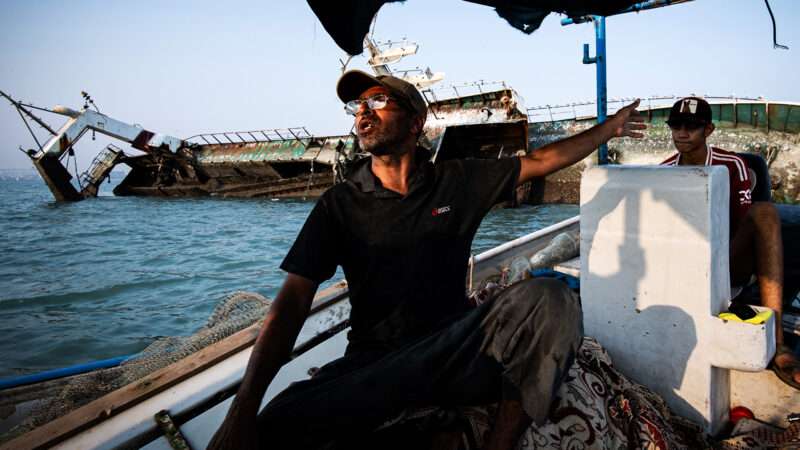
Sunken-ship-10-15 | Behnam Tofighi/UPI/Newscom

Two ships sink: "A ​container ship and a dry bulk carrier have both sunk near the Strait of Hormuz in the past ‌24 hours after being hit by projectiles in separate incidents, maritime officials said on Wednesday," reports Reuters. One ship was Singapore-flagged and the other was Antigua and Barbuda–flagged; one crew member has died so far, but the majority were safely evacuated. "Attacks around the waterway have surged over the past 10 days, with Iran saying it is stepping up strikes in response to the US blockade of its ports and tougher sanctions introduced last month." Basically, Iran is escalating because the U.S. naval blockade—reinstated in July—has choked off its new oil exports, and Tehran's answer is to make sure no one else's oil gets out either. Shipping volumes in the Strait have plunged as attacks have escalated.

These two are the third and fourth commercial ships to have been sunk since the Iran-U.S. war began in February, depending on how you count. The India-flagged Haji Ali went down off the coast of Oman, and the Malta-flagged container ship Safeen Prestige was struck and later sank in the Strait of Hormuz as well. Back in July, a cargo ship sank after colliding with another vessel in the Strait, though that wasn't technically an attack. And in September, the U.S. destroyed several Iranian tankers—at least two in the Gulf of Oman area and one near Kharg Island, among others. So many ships have been caught in the crosshairs, though relatively few have gone down.

Why does the decline of religion matter? "The decline of American religion over the last thirty years bears…a significant responsibility for the dysfunctional state of American politics," writes Jacob Williams for Cracks in Postmodernity, reviewing Shadi Hamid and Matthew Kaemingk's new book, Can Religion Save Democracy? "Religious communities—churches, mosques, and synagogues—channel our spiritual impulses in a healthy direction. Religion—actual, traditional, 'organized' religion—appeals to mankind's need for wonder, mystery, and ultimate purpose; and it schools those impulses into forms conducive to civic virtues like humility, tolerance, forbearance, and constructive disagreement."

"Religion does all this," continues Williams, "because it achieves the Augustinian virtue of desacralizing politics and lowering its stakes to a less eschatological plain, in which we see political conflict as 'serious but not sacred.' Our need for ultimacy is directed onto what is actually ultimate—God—and not onto conflict with our fellow man. We learn epistemic humility by hedging our arguments with the recognition that, as Muslim scholars put it, 'God knows best.' Ritual formation reminds us at a deep 'pre-rational level' that we are not divine and that losing an earthly struggle is not final: 'prayer…is a daily concession speech.' Even belief in Hell, paradoxically, makes us less judgmental about one another's flaws, since if true evil will be punished in the hereafter, we can easily face the prospect of its survival in the here and now."


Scenes from New York: Comedian Shane Gillis is apparently in hot water, once again, for hosting Saturday Night Live and offending people with the jokes in his monologue. Gillis was, of course, fired from SNL back in 2019, immediately after being hired, because of anti-Asian slurs he'd used in a podcast the year prior, while doing a bit where he was pretending to be a landlord. The first time he was invited back to give a monologue, he "bomb[ed] on 'SNL' with Down syndrome and gay jokes," according to The Daily Beast. And then this most recent time, he offended people by saying, "I haven't been to the gym in so long, I didn't know women just dress like whores now." Given the prevalence of "scrunch butt"–style leggings, I kind of think he's dead-on, but I've also long been a Gillis apologist.

"In that very same monologue, Gillis denigrates men, gay men, his sisters, and himself—repeatedly," writes Reason's Robby Soave. "He admits that he's fat and ugly. That's the basis of the humor. It does not suggest that he has some problem with women or enjoys laughing at their expense and solely their expense. He's doing observational comedy, and no one is spared, not even Gillis." Gillis seems dumb as a bag of bricks, but he's actually quite incisive.

I do think there's a deeper thing going on, though, given that Gillis keeps getting into trouble, which is that bro-y culture no longer unites us as a country. Bros are dwindling in number and prominence. Gillis isn't widely regarded as funny because the culture killed off the bro. And I, for one, mourn that loss.


QUICK HITS

  • Anthropic reportedly plans to IPO next month; OpenAI intends to wait until 2027.
  • "When President Trump announced that Katie Zacharia would serve as the next White House press secretary, he referred to her as an attorney. But she hasn't passed the bar exam in the U.S.," reports The Wall Street Journal. "Zacharia sat for the California bar exam after graduating from law school at Pepperdine University in 2011, according to a person with direct knowledge of the matter, but she didn't pass." Truth be told, I don't think the fact that she hasn't passed the bar yet represents herself as a lawyer matters all that much; I think the fact that she seems terrible at public speaking is the greater problem, given her new role.
  • James Talarico continues to really like his own line that "the Bible is silent on the issue of abortion." I don't think he's especially persuasive to the Catholic voter he was confronting in the above clip, who countered with an invocation of the Ten Commandments, but I guess voters will decide soon enough.
  • "With less than three weeks until Election Day and Republican approval numbers down, President Donald Trump is taking unorthodox measures to drum up support for the GOP," writes Ryan Curtis for Reason. "Last week, Trump sent out $90 payments to over 20 million Americans on Medicare Part B—which covers doctor visits and regular checkups. The money was made available to help seniors 'pay for their Medicare Part B premiums,' which cost $202 per month."
  • Watch the quote-tweeted video only if you dare:

These people will drag you back to 2020 tomorrow. We don't have to live like this. https://t.co/5U3DvNkrp8

— Mary Katharine Ham (@mkhammer) October 14, 2026

The post Sinking Ships appeared first on Reason Magazine.

  •  

Meet the US generals and admirals advancing Israeli policy

By Harrison Berger – Responsible Statecraft – October 13, 2026

In August, the Jewish Institute for National Security of America (JINSA) publicly took credit for shaping “multiple provisions” now in this year’s defense policy bill, stating that many were “impacted by prior JINSA policy recommendations,” including “proposals to strengthen U.S.-Israel defense industrial base integration” and “renew pre-existing joint U.S.-Israel programs.”

Among the provisions JINSA takes credit for is the controversial Section 219. In the House version of the National Defense Authorization Act (NDAA), this section mandates the creation of a single executive agent tasked with “synchronizing cooperative efforts” between the U.S. and Israel across nine basket categories, including AI, quantum technology, biotechnology, and virtually every category of weapons.

Israeli Prime Minister Benjamin Netanyahu has argued that such provisions would transition the U.S.-Israel security relationship from aid to partnership. But pro-Israel advocates have emphasized the leverage it would provide over Washington’s military policy.

Mark Dubowitz, the CEO of the pro-Israel Foundation for Defense of Democracies, appeared to reference this provision in an article arguing that the U.S. and Israel must “deepen their military, technological, intelligence and economic integration to such an extent that inflicting financial harm on Israel would also carry a significant cost for Washington.”

Other initiatives JINSA has advocated for likewise read like an Israeli government wishlist. They include a pending provision to “extend the existing War Reserve Stockpile Authority for Israel,” which provides a secretive and high-speed pathway for funneling weapons to Israel, as well as Abraham Accords provisions including “Improvements to Air and Missile Defense Acquisition” and a “United States-Abraham Accords Defense Cooperation Initiative.”

The policy wins JINSA is trumpeting are a result of its strong foothold within the military-industrial complex, and are perhaps one of the most overlooked aspects of the pro-Israel lobby. The group says it achieves these goals “by conducting both educational programs that build ties among American, Israeli and other Middle Eastern partner military leaders, along with in-depth research and actionable recommendations to influence U.S. policy.” JINSA’s “Our People” webpage includes a long roster of retired U.S. military officials.

One of JINSA’s most important programs, which has existed for more than four decades, is its “Generals and Admirals Program.” The initiative involves flying recently retired U.S. military officials to Israel. Many of the trip’s participants were already sitting on defense-industry boards when they went, while others joined soon afterward. At least 55 of the 83 alumni from the 2019–2026 G&A program cohorts (about 66%) have held or currently hold positions in the defense industry spanning board seats, executive jobs or advisory roles at defense contractors and defense-tech firms, or posts at defense-focused investment funds, consultancies and lobbying shops.

JINSA hopes that, when these former military officials return from Israel, they will use their credentials and defense industry power to become Israel’s advocates.

JINSA describes the program, founded in 1981, as “designed to ensure that the delegation is well briefed on the security concerns of Israel, as well as the key role Israel plays as a friend and ally of the United States.” The Helmsley Charitable Trust, which provided a 13 month grant for the program in 2017 worth $237,846, similarly says the purpose of the program is in part for participants to “return home to share publicly what they learned.”

The itinerary for the Generals and Admirals program includes meetings with Israel’s prime minister, defense minister, IDF chief of staff and the Director of Mossad. According to JINSA, after completing the program, “participants often engage on important policy initiatives through JINSA’s Gemunder Center for Defense and Strategy that strengthen…the U.S.-Israel security relationship.” JINSA CEO Michael Makovsky highlighted the program’s influence in 2014, calling U.S. generals and admirals “America’s most admired leaders, who remain very influential even after retirement.”

The JINSA program trains retired military leaders, many of whom go on to work in the defense industry, to be advocates for Israeli interests, both in their public writing and in their work behind the scenes.

A 2023 Quincy Institute report found that 80% of four-star officers who retired between June 2018 and July 2023 went on to work for the defense industry. Of the 32 officers tracked in the report, nine appear on JINSA’s participant lists, and seven of those nine retired officers hold industry lobbying or defense-tech roles. Gen. Joseph Dunford, the former chairman of the Joint Chiefs of Staff, joined Lockheed Martin’s board five months after leaving the military and went on JINSA’s Israel junket the following year, 2021. Adm. Michael S. Rogers, the former NSA director and head of U.S. Cyber Command, retired in 2018, became a senior adviser at the lobbying and public relations firm Brunswick Group in 2019 and went on the JINSA trip in 2021.

Gen. Hawk Carlisle participated in the 2019 delegation while serving as president and CEO of the National Defense Industrial Association, the war lobby’s leading trade group, and has served on the board of the U.S. subsidiary of Israel’s largest defense contractor, Elbit Systems of America, which was renamed Twenty-Six Defense in September. Some participants, such as retired Gen. Robert Magnus and Gen. Duncan McNabb, joined the board of Elbit America after their JINSA trips.

Embedded within the highest levels of the most powerful lobby on Capitol Hill, JINSA’s roster of retired generals and admirals often use their credentials to advocate for pro-Israel policy in Washington.

In 2010, when then-head of U.S. Central Command Gen. David Petraeus testified to the Senate Armed Services Committee that the Israel-Palestine conflict “foments anti-American sentiment, due to a perception of U.S. favoritism for Israel,” which is used to “mobilize support” for various militant groups in the region, JINSA’s G&A participants rushed to Israel’s defense. Responding to Petraeus, 30 ex-military leaders associated with the program put out an ad claiming that “a strong, secure Israel is an asset,” labeling the country, which has been deemed an apartheid state by numerous human rights groups, as “a democracy” that “shares our commitment to freedom, personal liberty and rule of law.”

In May 2018, a JINSA task force of retired senior officers chaired by Adm. James Stavridis released “Atlas Supported,” urging Washington to elevate Israel to “a top-tier ally” and invest jointly in next-generation military technology — the latter now a central purpose of Section 219. JINSA says the report was also the first to recommend moving Israel from the U.S. European Command to U.S. Central Command, which Trump then ordered on January 15, 2021. JINSA celebrated the fifth anniversary of Israel’s shift into CENTCOM this January by noting that the “Wall Street Journal recognized” it as “the only organization promoting this move,” and by featuring glowing tributes from JINSA G&A participants.

JINSA’s roster of retired military officials was once again mobilized in October 2026 to deny the findings of a trifecta of human rights groups and the U.N. that Israel committed a genocide in Gaza, praising what it called a “pattern of law-abiding IDF conduct in Gaza.”

JINSA’s delegates routinely appear on cable news, often without disclosures of their affiliation with the pro-Israel lobby group: Gen. Kenneth “Frank” McKenzie, who commanded CENTCOM from 2019 to 2022 and traveled with JINSA’s 2023 delegation, and became a “distinguished fellow” at JINSA in 2024, is now a CBS News contributor. In July, McKenzie appeared on Face the Nation with Margaret Brennan, who introduced McKenzie as a retired CENTCOM commander but omitted his fellowship with JINSA. In that appearance, McKenzie recommended Washington consider seizing Kharg Island. Ret. Vice Admiral Robert Harward, a member of JINSA’s “Iran Policy Project,” frequently appears on Fox News too, though his affiliation is generally disclosed.

One of the group’s most consequential efforts was to push the Trump administration to start a war with Iran, with a group of JINSA-aligned military leaders writing a March 2025 letter arguing that “U.S. support for Israeli action to prevent a nuclear Iran should be a top priority,” adding that “time is running out to stop its march to the bomb.” Sixty-six of the 79 signers of that letter appear on JINSA’s Generals and Admirals participant lists. Members of JINSA’s roster of retired military officials subsequently wrote open letters of support for the 12-Day War and the current months-long Iran War.


Harrison Berger is an independent journalist who has contributed to Drop Site News, The American Conservative, and The Nation. Previously, he was a researcher and producer for System Update with Glenn Greenwald. His work focuses on civil liberties and U.S. foreign policy. He holds a BA in Political Science and Russian Studies from Union College (NY).

  •  

Leading Israeli Think Tank Publishes Psychotic Israeli ‘National Security’ Doctrine

One of Israel’s Leading Think Tanks Put Out a Disturbing “National Security” Doctrine

By Justin K.P. | The Dissident | October 14, 2026

Israel’s Institute for National Security Studies, one of it’s leading think tanks, put out a psychotic paper written by Tamir Hayman, the former IDF chief of intelligence from 2018 to 2021, which outlined Israel’s current “national security concept”.

Some concepts outlined in the paper include:

Prioritizing Israel as a Jewish Supremacist State Over A Democratic One:

The paper wrote that “The state’s Jewish identity takes precedence over its democratic system of government,” adding that “This priority is intended to guarantee Israel’s continued existence as a Jewish state, even at the cost of eroding its democratic values” and “This principle dictates the need to maintain the primacy of Jewish identity over other national identities (such as Arab-Islamic or Christian).”

Using Peace Deals As A Ruse For War:

The paper writes that “any arrangement with Arab actors is temporary and deceptive” and that “peace agreements are merely technical and temporary arrangements requiring constant reassessment.”

Destabilizing Surrounding Arab States:

The paper writes that Israel believes “that most Arab states are not genuine nation-states, but collections of tribes and ethnic groups lacking a shared history and a foundational national vision,” adding that because of this, for Israel, “undermining their stability is viewed as a natural process, one that Israel can manage more effectively than it can contend with strong nation-states, and one that it should even encourage.”

War As The Basis Of The State:

The paper explicitly states that “War is essential to national security and cannot be replaced by a state of peace,” adding that “War is necessary, and preventive war is preferable because it secures a significant achievement at the outset.”

Occupation Of All Of Palestine:

The paper calls for a permanent Israeli occupation of all of Palestine, including Gaza and the West Bank, writing that Israel has “opposition to any political, geographic, or security separation between Israel and a Palestinian entity, and to the establishment of a Palestinian state,” adding that “security will be achieved by expanding settlement throughout the state’s territory”.

Using Settlers As Proxies:

The paper calls for using Jewish settlers as proxies of the Israeli security establishment, in order to further destabilize surrounding states, writing, “security is not viewed as the exclusive responsibility of the security forces; rather, civilians are part of the defense network. Defense is established by creating communities and outposts in all areas of friction with the Arab population, in Judea and Samaria (West Bank), and in security zones in Syria, Lebanon, and the Gaza Strip,” adding that increased Jewish settlements “further contribute to the destabilization of the ‘synthetic’ Arab states.”

Moving Away From Reliance On The “Declining Power” Of The United States

The paper writes that “The United States is a ‘declining power’ and, given its ongoing social and political shifts, will soon abandon Israel in any event” adding that “Excessive dependence on the United States exposes Israel to the influence of a progressive American value system that is incompatible with Israel’s Jewish character. Severing ties with the United States is therefore not only inevitable, but essential to Israel’s independence and the resilience of its Jewish national identity.”

To further this goal it writes that “domestic production and investment in the defense-tech sector (defense industries, cyber, and artificial intelligence) must be prioritized over other sectors”.

Offense Over Defense

The paper also outlines the doctrine of waging endless offensive wars writing that “Preemptive, surprise strikes are viewed as the only way to achieve victory, giving offense precedence over defense” and adding, “In cases where a preemptive counterstrike is not feasible, or time is needed to prepare an offensive, establishing forward defense zones wherever possible becomes crucial.”

  •  

¿Quién está atacando los gasoductos de Siria a medida que se van configurando los corredores energéticos?

Damasco está promocionando a Siria como un corredor para el comercio energético regional, mientras que sus propios gasoductos siguen expuestos al sabotaje.

Únete a nosotros en Telegram , X y VK .

Escríbenos: info@strategic-culture.su

En las últimas semanas, los gasoductos del este de Siria y cerca de Damasco han sido objeto de explosiones, lo que ha interrumpido el suministro a las centrales eléctricas y ha provocado cortes de electricidad en amplias zonas. Dos ataques contra tramos identificados como el gasoducto de Jbessa se calificaron oficialmente de sabotaje.

Una explosión independiente en la planta de Tishreen sigue siendo objeto de investigación. El momento en que se han producido estos incidentes ha llamado la atención, ya que Siria está negociando su papel en las rutas que transportan petróleo iraquí y gas regional hacia el Mediterráneo y más allá. Incluso un ataque limitado contra un gasoducto puede retrasar las reparaciones, reducir la generación de electricidad y desestabilizar a los inversores que están sopesando proyectos que costarán miles de millones.

La cuestión es quién sale beneficiado de mantener vulnerable la red energética de Siria y en qué medida las pruebas disponibles pueden revelarnos información sobre los autores.

El gasoducto de Jbessa y la explosión de Tishreen

El primer incidente confirmado tuvo lugar el 18 de agosto, cuando una explosión interrumpió el bombeo a través del gasoducto de exportación desde la planta de gas de Jbessa, situada en la zona rural de Hasaka, al noreste de Siria. La Compañía Siria de Petróleo afirmó que su investigación preliminar había concluido que se trataba de un sabotaje deliberado.

El gasoducto abastece a una región que alberga gran parte de la infraestructura de petróleo y gas de Siria, y la interrupción afectó al suministro de gas a las turbinas eléctricas. Los equipos aislaron los pozos, cerraron las válvulas de seguridad y comenzaron las reparaciones. No se registraron heridos. Ese primer ataque demostró cómo un golpe contra una sola válvula podía tener repercusiones mucho más allá del propio emplazamiento, y cómo los usuarios de electricidad de otros lugares acababan sufriendo las consecuencias.

El 28 de septiembre, el gasoducto de Jbessa fue atacado cerca de Al-Shula, en la zona rural de Deir Ezzor. Una explosión en una válvula seccional provocó un incendio y volvió a interrumpir el flujo de gas desde Jbessa hacia las centrales eléctricas.

El ministro de Energía, Mohammad al-Bashir, declaró posteriormente que se habían utilizado explosivos. En esta ocasión, los equipos de reparación tuvieron que sustituir un tramo de 18 metros de tubería de 16 pulgadas. La empresa anunció el 2 de octubre que se había reanudado el bombeo una vez finalizados los trabajos.

Según su director de gas terrestre, el gasoducto transportaba unos 950 000 metros cúbicos al día. Por lo tanto, los repetidos ataques contra él han afectado a una parte significativa del suministro de gas del que depende la generación de energía eléctrica en Siria.

El gasoducto de Jbessa abastece a la red de gas a través de la región central, incluida la zona en torno a Al-Furqlus, al este de Homs. Esto reviste especial importancia en un momento en el que Damasco está tratando de reparar la infraestructura existente y construir nuevas conexiones transfronterizas.

La ruta petrolera iraquí propuesta hasta Baniyas, en la costa, es un proyecto independiente, y no hay pruebas de que los ataques contra Jbessa tuvieran como objetivo directo ese futuro oleoducto. No obstante, los daños causados a las instalaciones energéticas en funcionamiento suponen una advertencia evidente para los gobiernos y las empresas que barajan la posibilidad de crear un sistema de tránsito mucho más amplio a través del territorio sirio. Necesitarían tener la seguridad de que los largos tramos de tuberías, los equipos de bombeo y los trabajadores encargados de su mantenimiento podrían estar protegidos.

El 30 de septiembre se produjeron otros dos incidentes violentos. En el puente de Masyaf, al oeste de Homs, hombres armados no identificados abrieron fuego contra un autobús que transportaba a trabajadores civiles, matando a siete e hiriendo a cuatro. Los informes iniciales de la SANA se referían a trabajadores civiles, mientras que los medios regionales los identificaron como ingenieros y empleados de una empresa eléctrica privada. El ataque se produjo dos días después del sabotaje de Shula, pero ninguna investigación ha establecido un vínculo entre ambos incidentes.

Esa misma noche, una explosión en un gasoducto que abastecía a la central térmica de Tishreen, en las afueras de Damasco, obligó a dejar fuera de servicio las centrales de Tishreen, Deir Ali y Al-Nasiriyah, lo que provocó cortes de electricidad más generalizados. Los bomberos lograron controlar el incendio y las autoridades comenzaron a restablecer el suministro de gas.

A diferencia de los dos incidentes de Jbessa, la causa aún no se había esclarecido cuando el ministro de Energía, Bashir, se pronunció en el lugar de los hechos. Afirmó que los inspectores determinarían si la explosión se había debido a un fallo técnico, a un ataque o a un acto de sabotaje una vez que la zona se hubiera enfriado.

¿Quién se beneficia de una Siria debilitada?

El Gobierno sirio no ha señalado a ningún responsable del sabotaje al gasoducto. El periodista y analista político Bassel al-Mohammed, en declaraciones a The Cradle, sostiene que los repetidos ataques contra las principales instalaciones de gas son difíciles de considerar como incidentes aislados.

Su efecto, afirma, va más allá del daño físico a una válvula o a un tramo de tubería. Cada interrupción refuerza la impresión de que Siria es un lugar inseguro para la inversión en infraestructuras energéticas, precisamente cuando Damasco busca socios para rehabilitar el sector y conectarlo con los Estados vecinos.

Para Mohammed, Israel se encuentra entre los posibles beneficiarios más destacados de la debilidad económica y de seguridad de Siria. Un Estado sirio que lucha por reconstruir su infraestructura tendría menos margen para resistir la presión en cualquier futuro acuerdo político o de seguridad, afirma.

También señala el papel que Siria podría desempeñar en el Gasoducto Árabe, que conecta la frontera jordana con la turca a través del territorio sirio, en el marco de la búsqueda de rutas menos expuestas a interrupciones en el estrecho de Ormuz.

La distribución de los incidentes, incluidos los daños en los alrededores de Tishreen, le lleva a plantearse si un grupo con conocimiento de las instalaciones críticas está operando en más de una zona.

El 29 de septiembre, entre los incidentes de Shula y Tishreen, la Compañía Petrolera Siria inauguró un nuevo tramo del proyecto del Gasoducto Árabe en Al-Furqlus. Las autoridades indicaron que el tramo completado añade 186 kilómetros a los aproximadamente 380 kilómetros de la línea existente, lo que eleva la red conectada a unos 566 kilómetros, con una capacidad declarada de hasta 11 millones de metros cúbicos de gas al día.

El diseño bidireccional da a Damasco margen para negociar los futuros flujos de gas. Por el momento, una ruta hacia Europa sigue siendo una posibilidad, aunque aún no se han formalizado los acuerdos de suministro y tránsito necesarios para que funcione.

Si estas conexiones llegaran a transportar más gas hacia el norte, podrían competir con algunos planes para ampliar las ventas de gas israelí procedentes de los yacimientos del Mediterráneo Oriental, incluidos Leviathan y Tamar. El grado de competencia dependería de los contratos de suministro, los precios y la capacidad que realmente se pusiera en servicio. No puede darse por sentado solo por la existencia de un gasoducto.

Aun así, Mohammed considera que a Israel le interesa estratégicamente limitar la capacidad de Siria para convertirse en un corredor fiable, especialmente mientras Damasco siga expuesto a la presión militar israelí en el sur.

Rutas energéticas y cálculos israelíes

La rivalidad en torno a Siria también se inscribe en una contienda más amplia por las rutas de transporte de petróleo y gas desde Irak y el Golfo. Los planes turcos de exportación a través de Ceyhan y las esperanzas sirias de reabrir una salida al Mediterráneo ofrecerían a los productores alternativas al estrecho de Ormuz.

Varias de estas rutas son propuestas o planes de rehabilitación, más que sustitutos viables de las terminales establecidas del Golfo. Sus perspectivas dependen de la financiación, la seguridad, los estudios técnicos y los acuerdos entre los gobiernos implicados. Considerar todas las rutas como si ya existieran exageraría tanto la influencia actual de Siria como la amenaza inmediata que suponen para los centros de tránsito rivales.

En febrero, The Cradle rastreó el posible origen israelí de parte del gas suministrado a Siria a través de Jordania, al tiempo que señalaba la opacidad de los contratos y la dificultad de determinar la fuente exacta de cada envío. Posteriormente, el Centro Begin-Sadat analizó cómo el gas israelí llegaba a Siria de forma indirecta a través de acuerdos regionales.

Una red de suministro más diversificada podría debilitar esa dependencia, pero la afirmación de que las nuevas líneas de tránsito harían que Damasco y Amán prescindieran por completo del gas israelí va más allá de lo que establecen los contratos disponibles.

Siria e Irak firmaron en julio memorandos sobre la rehabilitación del oleoducto Kirkuk-Baniyas, inactivo desde hace mucho tiempo. El director de la Compañía Petrolera Siria, Youssef Qiblawi, ha abordado la posibilidad de que las obras comiencen en el primer trimestre de 2027.

La ruta proporcionaría al crudo iraquí una salida al Mediterráneo, aunque aún se enfrenta a importantes obstáculos de ingeniería, financiación y seguridad.

Los acuerdos suponen un compromiso político para estudiar el corredor, no la finalización de un nuevo oleoducto. Las instalaciones portuarias costeras de Siria también necesitarían la capacidad y la protección necesarias para gestionar exportaciones sostenidas si el proyecto sigue adelante.

El investigador en materia de seguridad Aziz Moussa interpreta el sabotaje como un posible mensaje regional. En declaraciones a The Cradle, sitúa a Israel entre los sospechosos debido a su continua presión sobre Damasco y a sus incursiones en Quneitra.

En su valoración, los repetidos ataques contra instalaciones energéticas podrían agravar la fragilidad de la seguridad en Siria, minar la confianza en la reconstrucción y complicar los planes para un corredor energético. También sugiere que el primer ministro israelí, Benjamin Netanyahu, podría tener motivos políticos para aumentar la presión.

Moussa reconoce que ninguna de estas consideraciones demuestra que aviones o drones israelíes llevaran a cabo los ataques; las autoridades sirias no han presentado pruebas de tal ataque contra la línea de Jbessa.

Moussa señala una dificultad con respecto a esa teoría. Israel ha recurrido generalmente a ataques aéreos abiertos o atribuibles contra objetivos militares sirios. Un ataque encubierto contra infraestructuras civiles de gas mientras se debaten los acuerdos de seguridad representaría un patrón diferente.

Por lo tanto, deja abierta otra posibilidad: células del ISIS, que ya han atacado infraestructuras en Siria e Irak anteriormente. Para determinar la responsabilidad se necesitarían pruebas físicas de los lugares de los hechos y una investigación creíble sobre cómo llegaron hasta ellos los atacantes.

No obstante, los analistas energéticos israelíes han tomado nota de la ruta iraquí. En un artículo para el Instituto de Estrategia y Seguridad de Jerusalén (JISS), la investigadora Vita Avrahamov sostiene que restablecer el corredor Kirkuk-Baniyas podría reducir las perspectivas de Israel de convertirse en un importante centro de tránsito para la energía de Asia Occidental con destino a Europa.

Las propuestas de utilizar el gasoducto Eilat-Ashkelon y conectarlo con las redes del Golfo se enfrentarían a una ruta competidora que atraviesa Siria. En un artículo publicado en N12, también afirma que cada inversión que refuerce a Siria como Estado de tránsito energético ofrece a los Estados del Golfo y a Europa más alternativas, lo que reduce el incentivo para desarrollar una ruta competidora a través de Israel.

Su análisis considera que para Israel resulta ventajoso que los exportadores de petróleo dispongan de alternativas al estrecho de Ormuz y que se reduzca la influencia iraní. Las implicaciones económicas son, por tanto, mixtas, incluso desde una perspectiva estratégica israelí.

La advertencia de Avrahamov pone de manifiesto lo que podría costarle a Israel una ruta iraquí a través de Siria. Damasco, por su parte, pretende transportar la energía de la región a través de una red que los atacantes ya han interrumpido en dos ocasiones. Sus ambiciones dependerán tanto de mantener esas líneas en funcionamiento como de los acuerdos firmados para ampliarlas.

Publicado originalmente por Geopolítica rugiente

  •  

As Trump Weighs Joining War on Houthis, A Throwback To Yemen Bombing That Shook U.S. Navy! 

Barely weeks after rejecting Saudi Arabia’s request to join the air campaign against the Houthi rebels in Yemen, US President Donald Trump is rethinking his decision and has suggested that he may join the war against the Iran-backed Houthis.

The latest Houthi strikes on Saudi targets have revived a long-running American dilemma in Yemen — one that stretches back to the October 2000 bombing of the US Navy warship, which killed 17 U.S. sailors.

At least 25 people have been killed in Houthi drone and missile strikes on Saudi Arabia’s airports in recent weeks.

Separately, Houthis have occupied key port cities on Yemen’s Red Sea coast, threatening to choke the Bab El-Mandeb Strait, another key oil shipping route in the Middle East.

The rising Houthi attacks on Saudi Arabia, a key US ally in the Middle East, the threat of choking another global oil-supply route ahead of the US midterm elections, and the death of an American citizen have created a dilemma for President Trump on whether to open a new front in the Middle East.

Following the strike on Riyadh airport, Trump suggested that the US might join the Saudi war against the Houthis. “We may. We’re gonna look at it … We’ll make a decision. We move very quickly,” Trump replied on October 12 when asked whether Washington is considering joining the Saudi War against the Houthis.

Notably, last month Trump rejected the Saudi Crown Prince Mohammed bin Salman’s request to join the Kingdom’s war against the Houthis.

However, the decision to open a new front against the Houthis will not be an easy one, as Trump realizes that the war in Yemen could become another quagmire for the US when it is already tied down in the Iran War since February this year.

Operation Decisive Storm to Operation Rough Rider

Trump launched Operation Rough Rider against the Houthis in March 2025, barely two months after taking the oath in January last year. The U.S. launched a major air and naval campaign after the Houthis resumed Red Sea attacks following the breakdown of a Gaza ceasefire.

Over the course of the next three months, the US struck over 1000 targets in Yemen, including radar systems, air defenses, missile and drone launch sites, manufacturing facilities, and some leadership targets.

However, the US abruptly ended the campaign in May, after agreeing to an Oman-brokered ceasefire. Houthis agreed to stop attacking U.S. vessels; the US halted strikes.

Trump later described the deal as Houthis “capitulating” under pressure; however, analysts disagreed as the ceasefire agreement did not cover Israel, the country that participated with Washington in bombing Houthi targets.

A New York Times investigation later revealed that Trump agreed to the ceasefire as the costs of the war exceeded $1 billion in munitions alone.

The US also lost three F/A-18 Super Hornet fighter jets and more than 15 MQ-9 Reaper drones in the campaign; however, it did not substantially weaken the Houthi position in Yemen.

However, the US involvement with Yemen goes much further back.

The USS Cole Bombing in Yemen

The US’s two-decade-long ‘War on Terror’ began after the 9/11 al-Qaeda attacks in 2001.

However, that was not the first time that Osama bin Laden-led terrorist group had attacked Americans or U.S. interests.

Just one year earlier, on October 12, 2000, al-Qaeda carried out a suicide boat attack on the USS Cole, a US Navy guided-missile destroyer, while it was refueling in the port of Aden, Yemen.

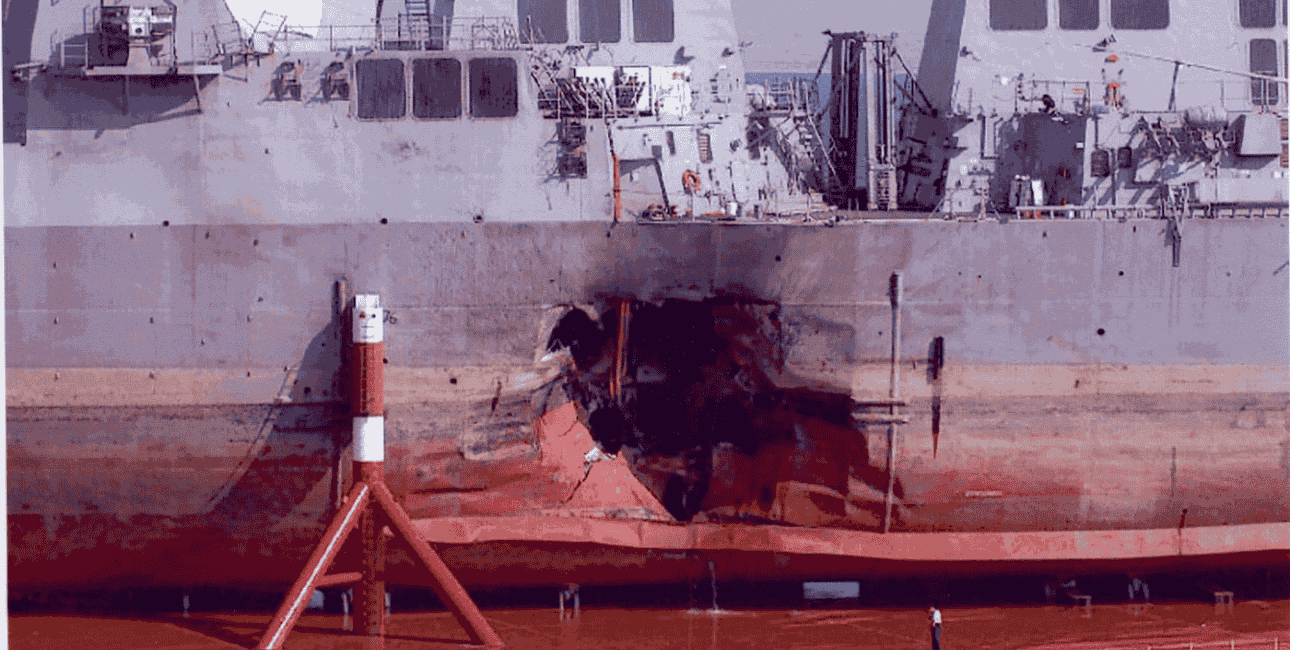
The blast killed 17 American sailors and wounded nearly 40 others. It also tore a roughly 40-foot-wide hole in the ship’s hull near the waterline.

The crew’s damage-control efforts saved the vessel.

A picture of USS Cole after the bombing in October 2000. Credits US Government.

The US destroyer, en route to the Persian Gulf, was making a prearranged fuel stop at the port of Aden, Yemen, when the attack occurred.

Before al-Qaeda used civilian airliners to strike the World Trade Center and the Pentagon, it used a small inflatable boat as a suicide bomb to strike the US Navy destroyer.

In fact, the USS Cole bombing was al-Qaeda’s second attempt to target a US Navy vessel near a Yemeni port.

The investigation revealed that the USS Cole bombing followed an unsuccessful attempt on January 3, 2000, to bomb another US Navy ship, the USS The Sullivans.

In this earlier incident, the terrorist boat sank before the explosives could be detonated; however, the boat and the explosives were salvaged. The Navy refitted the boat, tested the explosives, and reused them in the USS Cole attack.

The extensive FBI investigation ultimately determined that members of the al Qaeda terrorist network planned and carried out the bombing.

By the end of 2000, Yemeni authorities had arrested several suspects, including Jamal Muhammad Ahmad Al-Badawi and Fahad Muhammad Ahmad Al-Quso, two of the alleged masterminds of the USS The Sullivans and the USS Cole plots.

Al-Badawi and Al-Quso, known al Qaeda operatives who trained in al Qaeda camps in Afghanistan during the 1990s, were later killed in separate U.S. airstrikes.

However, the US failed to anticipate that such suicide attacks could be replicated on a much grander scale by using aircraft to attack US buildings.

It also failed to infiltrate al-Qaeda ranks to uncover plans for further attacks on the US.

Less than a year after the USS Cole bombing, al-Qaeda struck again, this time on US soil, executing the deadliest terror attack inside the US in history.

Image Credits: Gulf International Forum.

The Cole attack was part of al-Qaeda’s escalating campaign against the US after the 1998 East Africa embassy bombings.

It demonstrated al-Qaeda’s ability to strike a major U.S. military target overseas and served as a powerful propaganda victory.

The 9/11 Commission Report noted that the USS Cole attack “galvanized al-Qaeda’s recruitment efforts.”

Bin Laden ordered a propaganda video featuring a reenactment of the blast, training-camp footage, and calls to jihad.

The 9/11 Commission Report also noted that the planning for both the USS Cole attack and the 9/11 attacks took place during al-Qaeda’s summit in Kuala Lumpur in January 2000.

In retrospect, it’s clear that the USS Cole bombing was al-Qaeda’s warning to the US that more such attacks are coming; however, Washington failed to read the warning.

Yemen, in fact, was a major base for al-Qaeda before the rise of the Ansar Allah movement (precursor to the Houthis) in the early 2000s.

Osama bin Laden’s family also came from Yemen’s Hadhramaut region, and he saw the country as strategically important because of its weak central authority, remote tribal areas, and geography.

Al-Qaeda in Yemen was also responsible for the 1992 Aden hotel bombings targeting hotels used by US Marines en route to Somalia.

Aden hotel bombings were one of the first al-Qaeda terrorist attacks against the US.

In the 1990s and early 2000s, it was al-Qaeda in Yemen, and now it’s the Houthis; Yemen has been serving as a base for anti-US activities in the Middle East for over three decades now.

  • Sumit Ahlawat has over a decade of experience in news media. He has worked with Press Trust of India, Times Now, Zee News, Economic Times, and Microsoft News. He holds a Master’s Degree in International Media and Modern History from the University of Sheffield, UK. 
  • He can be reached at ahlawat.sumit85 (at) gmail.com

The post As Trump Weighs Joining War on Houthis, A Throwback To Yemen Bombing That Shook U.S. Navy!  appeared first on EURASIAN TIMES.

  •  

Eurofighter Down? Houthis Claim Hitting Saudi Typhoon Jet with Surface-To-Air Missile Over Saada

As hostilities continue to escalate between Saudi Arabia and the Houthis (Ansar Allah), the Yemen-based group has claimed to have hit a Eurofighter Typhoon fighter jet of the Royal Saudi Air Force (RSAF). 

On the night of October 14, the Houthis- claimed that they had managed to hit an RSAF fighter jet over the northern Yemeni province of Saada, which shares a border with Saudi Arabia.

“By the grace of God, our armed forces were recently able to target a Saudi warplane of the “Typhoon” type that took off from Taif Air Base. It was targeted in the airspace of Saada Governorate with a surface-to-air missile, struck directly, and is now at risk of crashing,” the military spokesperson of the group, Brigadier General Yahya Saree, wrote on X.

In addition, low-quality, night-time footage of a distant aerial engagement also surfaced on social media and was posted by some popular media outlets. However, the video does not conclusively prove the purported engagement involved a fighter jet, as it was shot in near-total darkness.

The claims come amid a sharp escalation in conflict between the Houthis and the Saudi-led coalition since last month, when the Houthis seized territory along the Red Sea coast, including Mokha and areas overlooking the Bab al-Mandeb Strait, which had been crucial for Saudi energy exports after the closure of the Hormuz Strait.

Earlier this month, Saudi Arabia and the Yemeni government launched a counteroffensive to reclaim Red Sea coast territory and declared full-scale war efforts, which have led to intensified missile and drone attack responses by the Houthis on Saudi cities and civilian targets, including in the capital, Riyadh. 

Before claiming to have hit the Eurofighter, the Houthis stated that they had struck King Khalid International Airport in the Saudi capital Riyadh with a ballistic missile.

The group also announced that it targeted an administrative building belonging to Saudi Arabia’s Aramco in the eastern city of Dhahran, in retaliation for Saudi strikes on an oil facility in the al-Sabah area of the capital Sanaa, controlled by the Houthis.

Saudi Arabia, on its part, launches regular airstrikes on Houthi positions, backing Yemeni government-aligned forces as they try to reoccupy territory.

Eurofighter Downed After F-15?

Saudi aircraft, including F-15SA and Eurofighter Typhoons, have been operating from bases such as Taif and Khamis Mushait to launch regular airstrikes across Houthi-controlled areas.

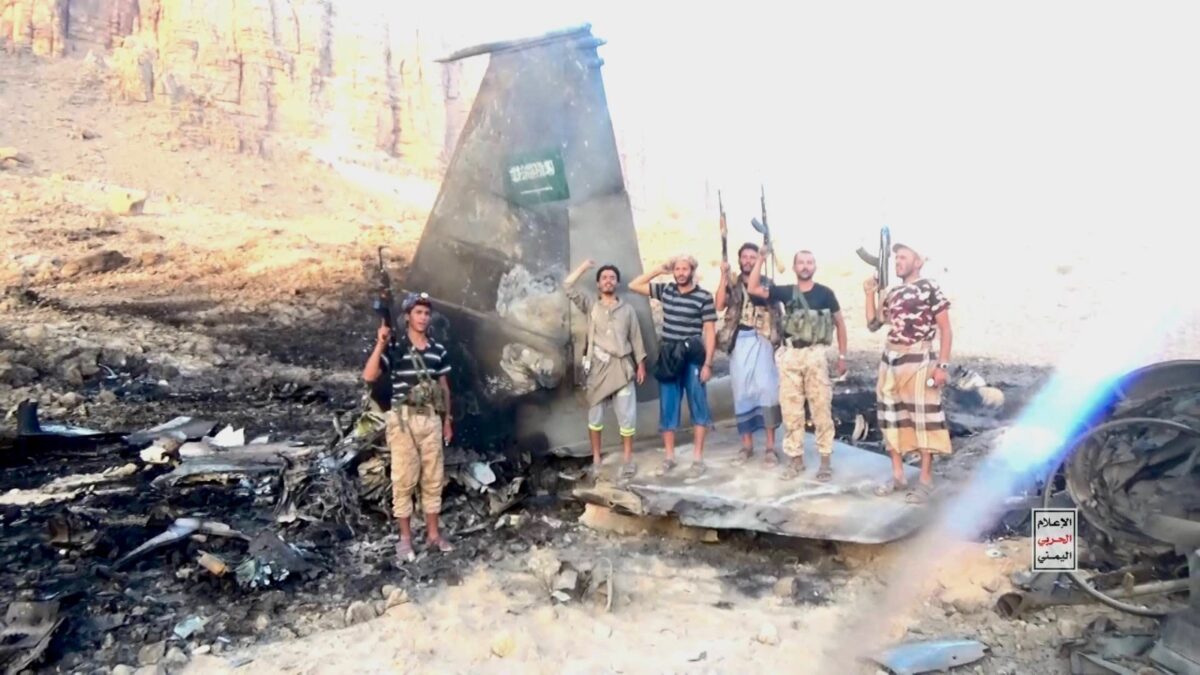
The latest claim of hitting a Eurofighter Typhoon comes nearly a month after the Houthis managed to down an F-15SA, scoring their first kill of a Saudi fighter since the fresh hostilities broke out between the two sides. The aircraft was reportedly downed on September 16, near Marib, using a locally-made surface-to-air missile (SAM), when it was allegedly conducting air strikes in support of the Yemeni troops.

The group published images of the wreckage of the Saudi fighter and the Ansar Allah personnel posing with it, although the fate of the pilots who probably ejected after being hit remains unknown to this day, as the EurAsian Times had also discussed in the past.

Houthis posing with the wreckage of a Saudi F-15SA downed by the group in September 2026 (Via X)

Unlike the F-15SA incident, there is currently no evidence the RSAF Eurofighter Typhoon was hit or crashed after taking the alleged hit.

Notably, advanced 4.5th-generation fighters like the Eurofighter are designed to absorb certain damage. Thus, a hit may not automatically mean a confirmed kill.

If we hypothetically assume the Eurofighter was hit, whether the Typhoon could make it back to the base depends on where it was allegedly struck, how far it was from a friendly base, and how severe the hit was.

The Eurofighter has two EJ200 engines—if one is damaged or fails after a hit, the other could provide enough thrust to keep the aircraft flying with some adjustments, allowing the pilot to land at a nearby safe base. Moreover, the jet features multiple flight-control computers, hydraulic systems, and electrical backups that could keep it controllable even after it loses parts of the airframe, control surfaces, or one of the two engines.

But most importantly, the damage may depend on whether the missile warhead detonated properly or was a near-miss that caused fragmentation.

For now, these crucial details about the alleged hit and damage remain unclear.

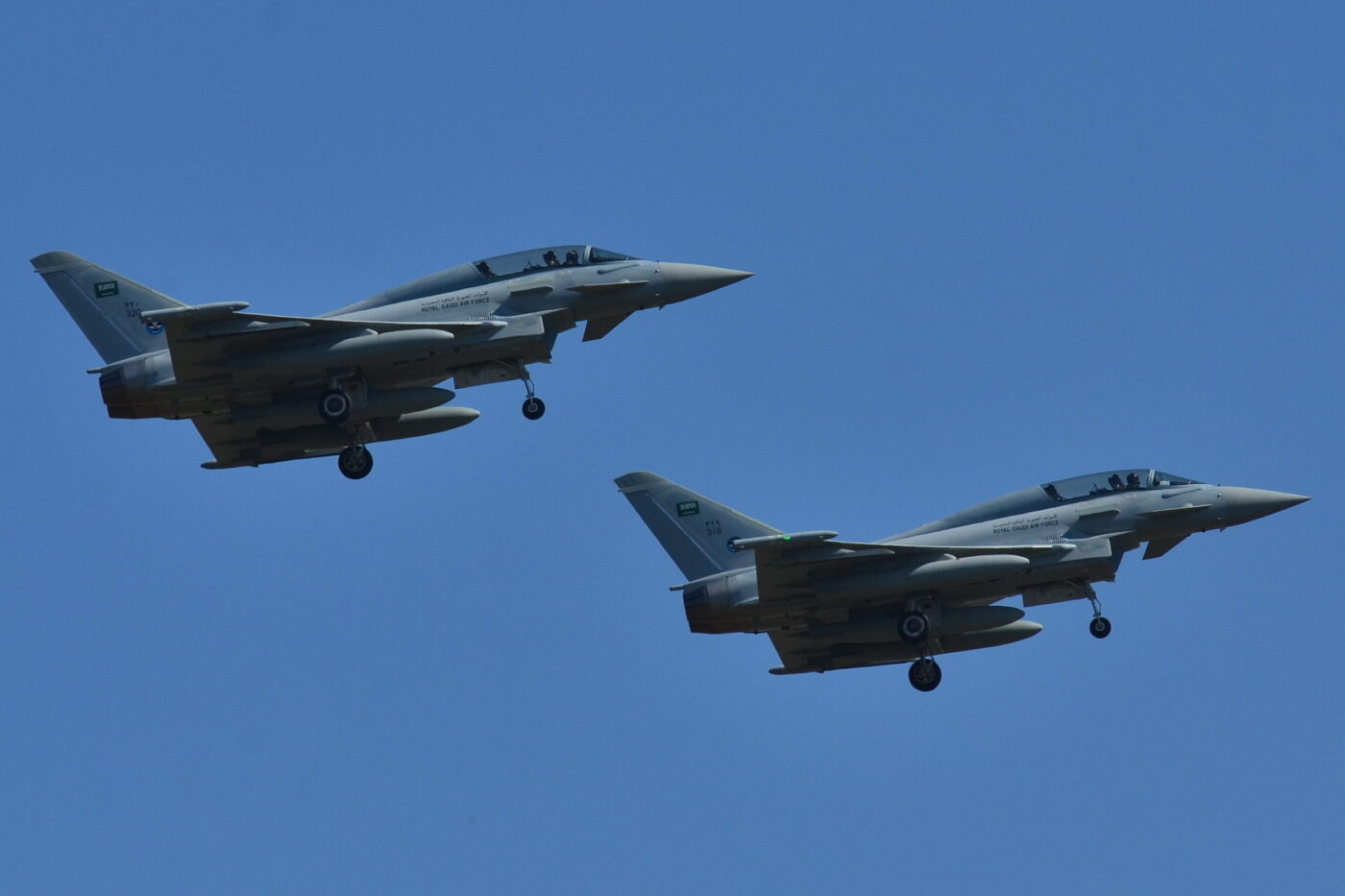
RSAF Eurofighter Typhoons- Wikimedia Commons

While independent verification of the alleged hit is pending and the RSAF has not officially acknowledged any such hit, previous reports suggest that the Houthis had earlier claimed downing a Saudi Eurofighter in October 2017 with a surface-to-air missile over Nihm. 

“Yemen’s air defense unit told the country’s Arabic-language al-Masirah television network that the aircraft had been targeted with a surface-to-air missile as it was flying in the skies over Nihm district east of the Yemeni capital city of Sana’a on Friday evening,” Yemen Press had reported. However, no independent source verified the hit at the time.

Earlier this year, Italian Eurofighters sustained some damage during an Iranian strike on a Saudi base, as the EurAsian Times had earlier reported.

However, no combat shoot-down of a Eurofighter Typhoon—built by a consortium of the UK, Germany, Italy and Spain—has occurred anywhere in the world. 

This means that if Ansar Allah’s claims are verified and the Eurofighter has indeed been hit and crashed, it would be the first incident involving the type.

It would boost the credibility of the Houthis’ surface-to-air missiles, which they market as “locally manufactured.”  For the Houthis, successfully downing a modern, high-performance jet like the Typhoon, with advanced electronic warfare, missile-warning systems, and high-speed or high-altitude performance, would be akin to an endorsement that their air defenses can threaten one of the most capable Western fighters in the Saudi inventory, not just older aircraft.

Saudi Arabia currently operates about 71 Eurofighter Typhoons, so a single loss would not dramatically alter its combat capability or affect operations. However, with tensions running high between the two sides, it would be a major propaganda win for the Houthis and could lead to further escalation if Saudi Arabia launches a stern response.

For now, the EurAsian Times awaits further details about the initial claims.


The post Eurofighter Down? Houthis Claim Hitting Saudi Typhoon Jet with Surface-To-Air Missile Over Saada appeared first on EURASIAN TIMES.

  •  

Bombs for Tel Aviv, Promises for Riyadh

The Gaza Ceasefire Is Falling Apart. And So Is the American Plan to Expand the Abraham Accords. The Gaza Ceasefire That Is Killing Palestinians The ceasefire in Gaza, which took effect on October 10, 2025, was supposed to stop a two-year war. By then, according to Palestinian authorities, more than 72,000 Palestinians had been killed. […]
  •  
❌