❌

Reading view

Hungary held $82 million in cash and gold from Ukraine for months. Now, it faces torture complaints in Europe’s top court
Hungary stopped a Ukrainian Oschadbank armored convoy in 2026, held its couriers, and kept $82 million in cash and gold. The European Court of Human Rights has registered six applications from the bank's couriers, who say Hungarian police unlawfully detained and tortured them.

In March, Hungarian forces stopped two bank vehicles carrying cash and bank metals from Austria to Ukraine, with seven employees transporting $40 million, 35 million euros, and nine kilograms of gold. It happened just before Hungary’s parliamentary elections, in which then-prime minister Viktor Orban had built his campaign around a sweeping anti-Ukraine message, and lost.

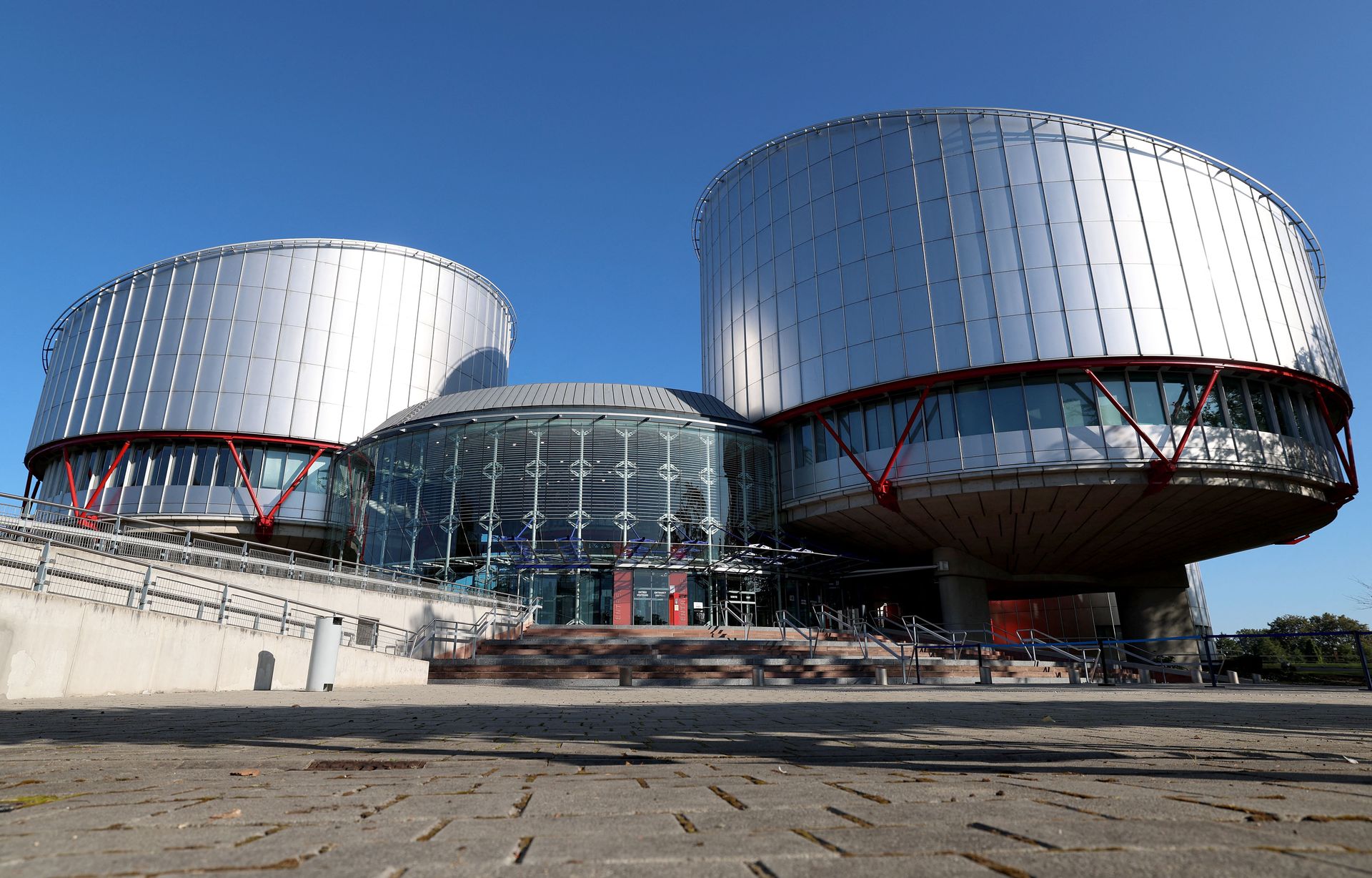
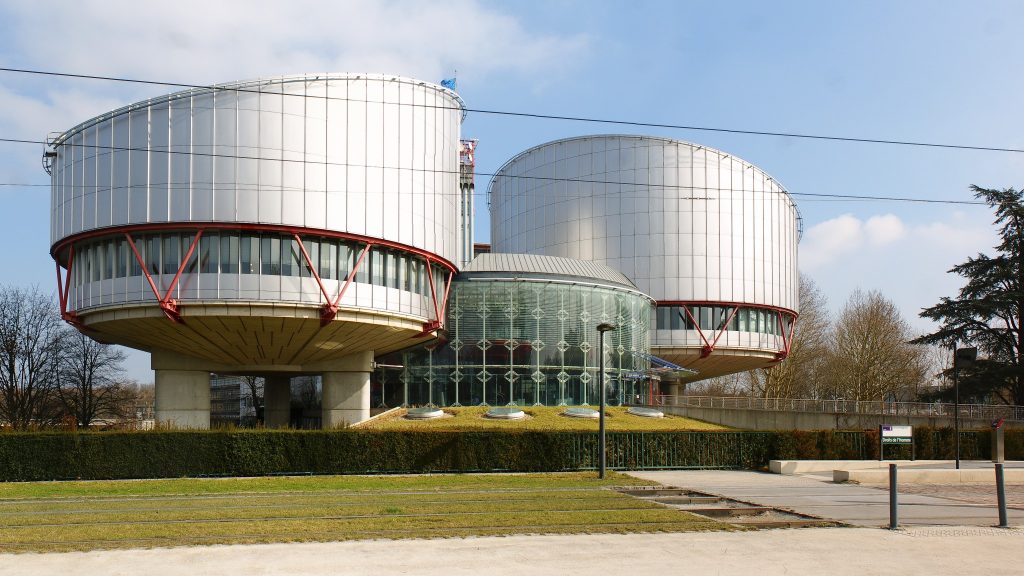
Six of the employees filed with the court on 5 July 2026, and the court’s secretariat has now confirmed their registration and assigned each an official number, according to the bank. It expects a seventh courier’s application, alleging the same violations, to be registered too.

“The fact that the ECHR has accepted the complaint and opened proceedings indicates that there are reasonable legal grounds for the case, that it has legal merit, and that the court intends to examine it on its merits,” Oschadbank says.

The rights the couriers say Hungary broke

The complaints rest on two articles of the European Convention on Human Rights. Article 3 bans torture and inhuman or degrading treatment, while Article 5 guarantees the right to liberty and protects people from arbitrary detention, the bank notes.

During the detention, one courier, a diabetic former Security Service officer, was forcibly injected with an unknown substance, which his Hungarian lawyer confirmed he received despite his objections. He then suffered a hypertensive crisis, lost consciousness and was hospitalized, and Oschadbank confirmed that medical care came only after he passed out, The Guardian reported.

Oschadbank calls the registration an important step in defending its staff. Board chairman Yury Katsion said the bank will continue to protect the couriers’ interests and its own reputation, expects a legal assessment of the Hungarian forces’ actions and is grateful to partners for their support.

Why registration is a start, not a verdict

The cases are only at an early stage. Registration does not mean the court has found a violation or ruled the complaints admissible, as it must separately weigh the procedural conditions and the circumstances the applicants describe, Oschadbank stresses.

The incident itself, however, is documented: Hungary returned the seven couriers the next day but held the cash and gold for months, releasing the vehicles on 12 March and the money and gold by May.

  •  

Train contract blow for Hungary’s richest man, plus Orbán will not mark 1956 anniversary (Day 156 of the Tisza government)

The series continues as we report on developments following April’s historic election and on the steps taken since then by the Tisza government. This week, we cover the following topics:

  • Another blow for Hungary’s richest man;
  • New chief prosecutor nominee, plus a former chief prosecutor ready to testify on political pressure;
  • Parliament has adopted the new child-protection law;
  • A state secretary has unexpectedly left the government;
  • Orbán to keep quiet on one of Hungary’s most important national holidays;
  • Ukraine adopts the minority education law;
  • More EU funds and money from the Norway Grants have become available.

Another blow for Lőrinc Mészáros

Last Friday (9 October), prime minister Péter Magyar and Dávid Vitézy, minister for transport and investments, announced that the state was suspending implementation of one of Hungary’s largest rail projects – the Budapest southern circular railway, and will launch a new public procurement procedure.

The works had been carried out by V-Híd, the most profitable company of Lőrinc Mészáros, who became Hungary’s richest man during Viktor Orbán’s premiership.

However, the European Court of Auditors uncovered serious public-procurement irregularities: V-Híd may have colluded with the company that drafted the project plans and thus already possessed information at the time of the tender that its competitors did not have. Because of this, the European Court of Auditors would withdraw EU funding from the project.

The Hungarian government does not want to forfeit the EU money and make Hungarian taxpayers foot the bill for the costs of the project, which is why it is terminating the contract with Mészáros’s company and launching a new tender.

The Hungarian state had already taken away from Mészáros the right to operate a motorway section, and later also terminated the 35-year motorway concession.

Previously, one of his food-industry companies had EU funding already granted to it withdrawn, while his energy company was excluded from a call for proposals financed from the repatriated RRF funds.

New chief prosecutor nominee, plus former chief prosecutor ready to testify

On Monday (12 October), president András Baka nominated a former chief prosecutor, Péter Fejes, for the post of chief prosecutor. His first nominee, Zoltán Szathmáry, was not voted through by the Tisza group in parliament after it emerged that his brother was implicated in the so-called gold convoy case, in which a Ukrainian cash shipment was stopped and confiscated by the Hungarian authorities.

Fejes was dismissed in 2012 from his position as chief prosecutor of Vas county by Péter Polt, the chief prosecutor serving the Orbán system, citing loss of confidence. Since then he has continued to work within the prosecution service and as a university lecturer, and he has no party affiliation. For the time being neither prime minister Magyar nor the Tisza group has stated whether they support Fejes’s nomination.

Since the change of government, another former chief prosecutor, Pál Fürcht, has frequently spoken to the media. Among other things, he has claimed that the gold convoy case was created for political purposes, and that the authorities raided the Ukrainian cash couriers on Orbán’s orders.

On Sunday (11 October), Magyar sharply criticised Fürcht in a Facebook post, reproaching him for having been a servant of the system himself. According to Magyar, Fürcht constructed a criminal case, on political orders, out of the notorious nightclub altercation for which the prime minister is currently under investigation on charges of theft.

It was likewise Fürcht who left former propaganda minister Antal Rogán out of the corruption case known as the Völner–Schadl affair.

In response to Magyar’s criticism, Fürcht said he was ready to make an official statement before any authority. In parliament on Monday, the prime minister was already referring to the former chief prosecutor as a future witness.

Parliament has adopted the new child-protection law

Child protection was one of the most important topics of the campaign and played a major role in Orbán’s downfall. Magyar kept the issue on the agenda even after his government took office; most recently, last Thursday, the prime minister and the state secretary responsible for the field, Szilvia Gyurkó, presented the report on the children’s home in Bicske.

This home had been run by a director who was decorated by Orbán and later convicted of paedophile crimes, together with his deputy, who helped cover up the abuses. The presidential pardon granted to the deputy shook the Orbán government and helped lead to its collapse.

On Tuesday (13 October), parliament adopted an amendment to the child-protection law, which takes a tougher stance against media content accessible to minors that propagates sexual violence, manipulation and exploitation, and would speed up the placement of babies abandoned in hospital.

The amendment removed those homophobic passages that the Orbán government forced into law in 2021, and which the Court of Justice of the European Union also ruled to be contrary to EU law.

Fidesz, the Christian Democratic People’s Party (KDNP) and the far-right Mi Hazánk did not vote for the amendment; Magyar called this a disgrace.

A state secretary unexpectedly leaves the government

On Tuesday, András Tótth, state secretary for energy at the Ministry of Economic Affairs and Energy and minister István Kapitány’s most important aide, unexpectedly resigned.

This article continues, but the full version is available only to EUobserver.com subscribers. Visit account.euobserver.com/membership

  •  

ECHR opens proceedings againt Hungary over detention, 'torture' of Ukrainian bank staff

"The fact that the ECHR has accepted the complaint and opened proceedings indicates that there are reasonable legal grounds for the case, that it has legal merit, and that the court intends to examine it on its merits," the Ukrainian state-owned Oschadbank said.

  •  
❌