❌

Reading view

3 Charlotte Cops Resign After Group Chat Reveals Competition To Arrest the Most Black People

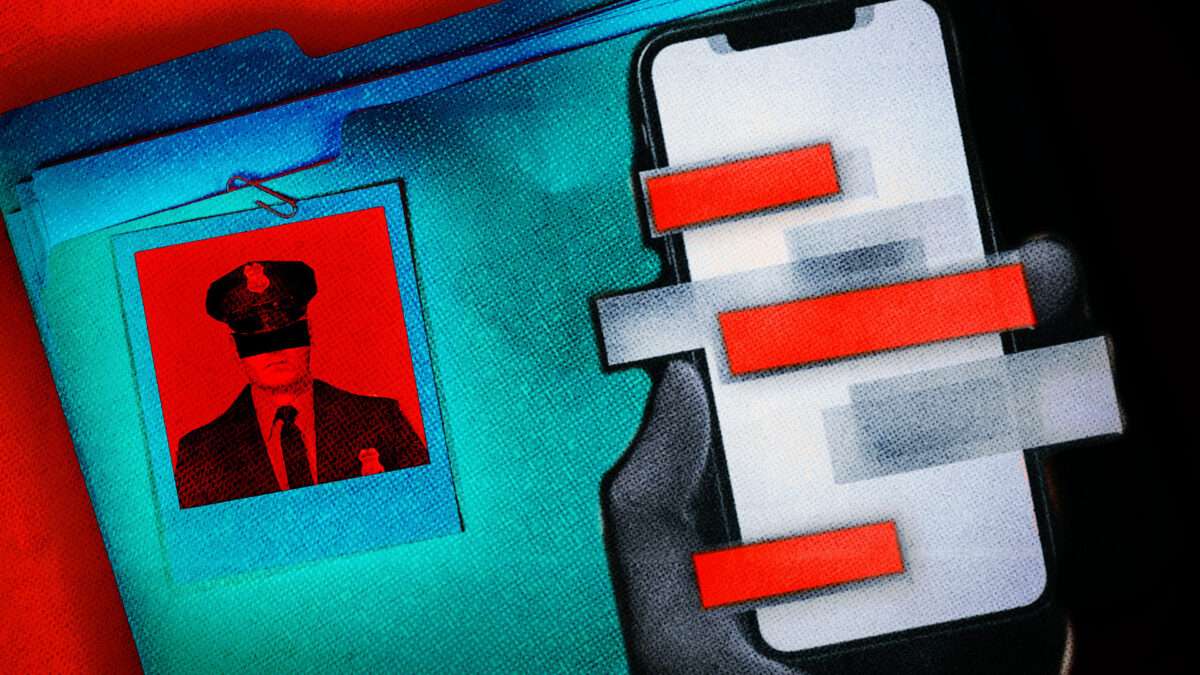
Illustration of a smartphone showing a text conversation, with a file folder in the background with a police officer's photo on it | Oleg Dudko/Dreamstime/Midjourney/Fatima Ruiz.Charlotte.jpg

​Three Charlotte cops have resigned and three more are facing termination after a Flock probe uncovered a text chain littered with racist messages, religious and sexual bias and a reported competition over who could arrest the most black people.

The group chat came to light after Charlotte-Mecklenburg Police Department (CMPD) officer Seth Elliott was caught using Flock's database to out an undercover cop to his drug dealer friend, which sparked an investigation by the North Carolina State Bureau of Investigation (NCSBI).

When questioned by the NCSBI, Elliott, who has since resigned, admitted he ran the plate but denied knowing that it belonged to an undercover officer. He told agents that his friend had reached out to ask if Elliott could help identify a strange person hanging out around his father's business, so Elliott ran the plate through Flock's database.​ According to reporting from the Watauga Democrat, the NCSBI arrested Elliott in July and charged him with " illegally accessing a government computer, a Class 1 misdemeanor."

During its investigation into Elliott, the NCSBI downloaded data from his phone, which it turned over to the CMPD, where a subsequent review uncovered the racist text thread. ​According to anonymous sources who spoke to Charlotte's WBTV, the group chat included "numerous uses of the 'n-word' related to use of force and discharging firearms at black residents," and a competition to see who could arrest the most black people. In one text reportedly written by a member of the group, an officer said, "Our texts sound like a clan [sic] rally," according to a message reviewed by WCNC Charlotte, a local NBC affiliate. At a press conference on Thursday, CMPD Police Chief Estella Patterson said that an independent chain-of-command board unanimously voted for the officers' termination. Three have already resigned and the other three she "hopes to refer to as former employees."

The fallout won't end there. Every case these officers touched could now be called into question, and for good reason. In Giglio v. United States (1972), the Supreme Court ruled that prosecutors must disclose information that could undermine the credibility of a government witness or law enforcement officer. Mecklenburg County District Attorney Spencer Merriweather will have to examine the messages and determine whether their word as witnesses can still be trusted. Depending on his decision, this could lead to dropped cases and challenges to prior convictions.

Defense attorney Tim Emery weighed in, telling WBTV that the officers' "credibility is severely questioned and compromised," and that the district attorney's office should consider halting cases in which the officers were heavily involved.

Police abuse of Flock and other automatic license plate readers (ALPRs) is not new. The Institute for Justice, a libertarian public interest law firm, has cataloged over 200 instances of ALPR abuse at the hands of the police since 2018. In the last year alone, officers have been caught using ALPRs for everything from pursuing personal grudges to stalking exes and romantic interests. This time, the victim of Flock misuse was an undercover officer rather than a civilian.

The post 3 Charlotte Cops Resign After Group Chat Reveals Competition To Arrest the Most Black People appeared first on Reason Magazine.
  •  

Peru: Cusco Wildfires Leave Six Dead and One Person Seriously Injured

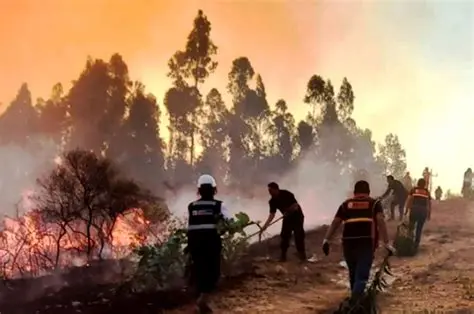
Forest fires in the Peruvian region of Cusco have resulted in six deaths and one serious injury, official sources reported on Thursday. Authorities have bolstered response efforts by deploying aerial assets and have urged the public to refrain from burning grasslands and agricultural waste.

RELATED:

Ecuador Reports Seven Active Forest Fires in Four Provinces

The most recent fatality was a 75-year-old man who attempted to extinguish a fire that broke out in a locality within the Chumbivilcas province of Cusco. According to the official news agency Andina, the death was confirmed by officers from the Peruvian National Police (PNP), who notified the Public Prosecutor’s Office to facilitate the recovery of the body and its transport to the morgue.

Meanwhile, the Cusco Regional Health Department (Geresa) reported that a 65-year-old man sustained burns over more than 90% of his body while trying to escape a forest fire in the community of Santo Domingo, located in the Acopía district of Acomayo province. The patient has been admitted to the Cusco Regional Hospital, where his condition is described as critical.

Andina further reported that five other people have died in forest fires across various locations in the Cusco region this year, including the districts of Yanatile (Calca), Colquepata (Paucartambo), and Yanahuara (Urubamba). Additionally, two siblings—aged 11 and 18—perished in a separate incident in the Pomacanchi district of Acomayo.

La sierra peruana vive una de sus temporadas de incendios forestales más críticas. El 13 de octubre, el Serfor reportó más de 50 incendios activos en 14 regiones y 334 focos de calor. La falta de lluvias, las altas temperaturas y los vientos, agravados por el fenómeno El Niño,… pic.twitter.com/um5MxfkXrv

— Revista Lima Gris (@Limagris) October 15, 2026

The text reads, “The Peruvian highlands are experiencing one of their most critical wildfire seasons. On October 13, SERFOR reported more than 50 active fires across 14 regions, along with 334 heat hotspots. A lack of rainfall, high temperatures, and strong winds—exacerbated by the El Niño phenomenon—led SENAMHI to issue a red alert, effective until October 16, for regions including Cusco, Apurímac, Ayacucho, Huancavelica, Arequipa, and Puno. Cusco has been hit the hardest, with over 16,000 hectares affected this year and at least five deaths reported. Rural families are losing grazing lands, crops, and livestock—their primary means of subsistence. Experts warn that the state’s response is focused solely on extinguishing fires, while a coordinated prevention system remains conspicuously absent. In this video, a local resident records himself in front of the flames to denounce this neglect and call for action from the authorities.”

Authorities have advised the public not to attempt to extinguish fires on their own and have reiterated their call to avoid the burning of grasslands and agricultural waste. They also requested that any instances of fires being left unattended in local areas be reported to the authorities.

The Peruvian Air Force (FAP) deployed a C-27J Spartan aircraft and an MI-17 helicopter this week—both equipped with firefighting systems—to address active blazes in the Cusco region. Nationwide, 35 active forest fire emergencies were reported.

On Tuesday, President Keiko Fujimori took part in an overflight of the town of Calca to oversee response efforts and assess the situation in the affected areas.

Following the inspection, she confirmed that two fires had already been brought under control and stated that the aerial units would remain in Cusco until this coming November.

Brazil has launched joint operations to track down those suspected of deliberately setting fires in the Amazon rainforest, as a sharp rise in blazes blankets Manaus with toxic smoke and pushes air pollution to critical levels for the city’s 2.3 million residents.

Authorities… pic.twitter.com/fMwYcgpg8h

— teleSUR English (@telesurenglish) October 15, 2026
  •  

Authorities investigate letters with 'suspicious substances' sent to congressional, election offices

Federal authorities are investigating letters that have been mailed to congressional and election offices nationwide and are urging recipients to treat the mailings as "potentially hazardous."

  •  

Colombia’s First National Strike Against De la Espriella Met With Police Crackdown

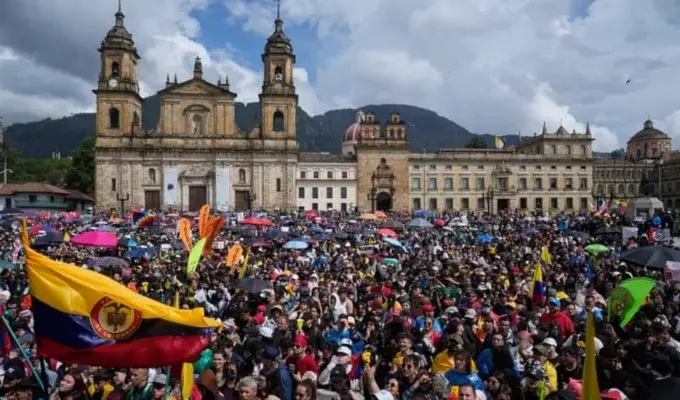
Colombian protesters and police during nationwide demonstrations against President Abelardo de la Espriella in Bogotá and Medellín.

Thousands protested budget cuts and economic reforms as clashes with police erupted in several Colombian cities.


Thousands of people took to the streets across Colombia on Wednesday in the first national strike against President Abelardo de la Espriella’s administration, as police used tear gas, rubber bullets and armored vehicles to disperse demonstrators in several cities.

RELATED: Colombia Holds First National Strike Against De la Espriella

Protests spread across more than a dozen departmental capitals and municipalities, including Bogotá, Medellín, Cali, Barranquilla, Ibagué, Popayán and Bucaramanga. In Bogotá, four columns of demonstrators converged on Bolívar Square under a security operation monitored by a Unified Command Post.

In Medellín, demonstrations escalated into clashes between protesters and the Mobile Anti-Riot Squadron (ESMAD). Security forces deployed tear gas, rubber bullets and armored vehicles, leading to several arrests. Assaults on members of the press were also reported.

Clashes and serious public disturbances were also recorded in Ibagué and Popayán following police interventions. Human rights organizations, including the NGO Temblores, denounced the presence of armed men carrying rifles on the rooftops of government buildings in Bogotá, describing their deployment as a direct threat to protesters.

The demonstrations brought together trade unions, teachers, university students, Indigenous communities, LGBTQ+ groups and feminist organizations. Opposition figures, including former President Gustavo Petro and Senator Iván Cepeda, also took part.

Protesters called for labor, education and social protections, seeking to preserve measures introduced under the previous administration, including free access to public universities and increases in the minimum wage. They opposed what they described as a neoliberal shift under De la Espriella’s government, citing budget cuts and the administration’s initial economic reforms.

Colombianos:

Me dirijo a ustedes esta noche para entregarles un balance claro, objetivo y contundente de la jornada de manifestaciones que vivió hoy nuestro país.

¡Que quede absolutamente claro! El 98% de las movilizaciones transcurrió de manera pacífica.

La inmensa mayoría de… pic.twitter.com/CmllZVPBtu

— Abelardo De La Espriella (@ABDELAESPRIELLA) October 15, 2026

Text Reads: Colombians: I address you tonight to deliver a clear, objective, and unequivocal report on the day of demonstrations that our country experienced today. Let it be absolutely clear! 98% of the mobilizations took place peacefully. The vast majority of those who took to the streets exercised their legitimate right to protest in an orderly and respectful manner toward the institutions. That is democracy, and as President of the Republic, I will always defend and guarantee it. At the close of this day, the national tally records a total of 62,000 citizens mobilized. A figure that represents a very small proportion of the Colombian population, but whose rights and guarantees deserve the full respect of the State. From the first day of my Government, I have issued a directive that admits no interpretations: peaceful protest is respected, protected, and guaranteed. But violence, vandalism, and any attempt to violate the rights of others will have no place under my mandate. Because as legitimate as the right to demonstrate is the right of millions of Colombians to work, move freely, and live in tranquility. Here there is a State, here there is authority, and here there is a Government that respects freedoms, enforces the law, and protects the millions of Colombians who rise early every day to work and build the Nation. Firm for the Nation! Long live Christ the King! (A.D.L.E.)

Demonstrators also rejected the restoration of diplomatic relations with Israel and what they described as U.S. interference in Colombia’s affairs.

Tensions mounted after the government signed a decree hours before the marches that changes the rules governing police conduct during public demonstrations. De la Espriella defended the measure as necessary to combat “urban terrorism,” while opposition politicians and social organizations condemned it as an attempt to intimidate protesters.

Senator Cepeda warned that the decree risked returning Colombia to a situation in which fear enabled arbitrary actions by security forces.

“They want to take us back to a time when fear becomes the means through which the security forces act arbitrarily,” Cepeda said.

Trade union sources said organizers were already drawing up a schedule of further mobilizations for the coming months following Wednesday’s mass protests. The campaign could culminate in a general strike in November.

  •  

Five Arrested as Police Clash With Madrid Protesters

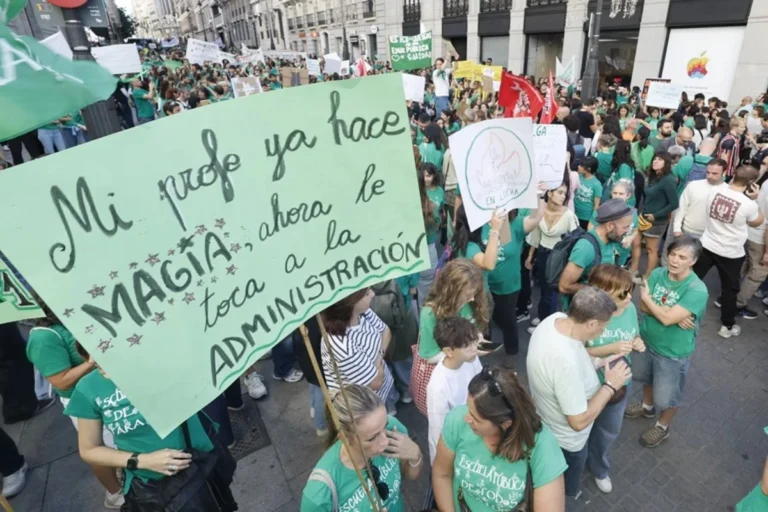
Teachers and students protest public education policies during a strike in Madrid, Spain.

Thousands rally for better-funded public schools as a teachers’ strike in Madrid leaves two people injured and five students arrested.


Five students were arrested and two people injured during police confrontations in Madrid on Wednesday, as thousands of teachers and supporters took to the streets on the first day of a regional teachers’ strike demanding better funding, smaller classes and improved working conditions in public education.

RELATED: Marches in Spain Honor Maricarmen, the Evicted Woman Who Died Amid the Housing Crisis

Demonstrators wearing green gathered at Puerta del Sol before marching through central Madrid towards the regional Education Department. The protests targeted the education policies of regional president Isabel Díaz Ayuso, whom demonstrators accuse of weakening public schools by diverting taxpayer funds to private education and refusing to negotiate with teachers and parent associations, according to teleSUR correspondent Álvaro Fragua.

Police also confronted students at Madrid’s Complutense University during a demonstration in support of the strike. Two people were taken to hospital with injuries. Five university students and a woman participating in a separate demonstration in central Madrid were arrested. No further arrests had been reported at the time of the report.

Text Reads: 📚 Non-university teachers in the Community of Madrid, Spain, began an indefinite strike this Wednesday—called by trade unions—to demand better working conditions and more resources for quality public education. No end date has been set for the stoppage.
🧑‍🏫 Their demands include better conditions for teaching staff, increased resources for public education, smaller class sizes, and proper care for all students.
📢 Demonstrations have been organized for the initial days of the strike: a march from Atocha to Puerta del Sol this afternoon and a human chain on Thursday at the Department of Education.

Teachers said educational inequality was reflected in disparities between neighborhoods, arguing that children’s access to quality education depended on where they lived, with poorer communities bearing the greatest burden.

The strikers are demanding changes to class sizes, teaching workloads and specialist support for students with additional educational needs. Their proposals include capping classes at 13 students in early childhood education, 15 in primary school, 20 in secondary school, 23 in upper secondary education and 15 in vocational training.

They also want weekly teaching loads limited to 17 periods for secondary school and vocational training teachers and 22 for primary school teachers. The proposed limits would include tutoring, department leadership and coordination duties.

Improving support for students with disabilities and other educational needs is another central demand. Teachers are calling for at least one guidance counselor for every 250 students, one community services professional at each school, one therapeutic education teacher for every eight students and one speech and language specialist for every 12. They also want a compensatory education teacher at every school and additional staffing guarantees for special education.

On pay, the strikers are seeking a €600 monthly increase in the regional general teaching supplement, along with pay parity for vocational training teachers and specialists in community services, therapeutic education, and speech and language support. They are also demanding a special allowance for hazardous working conditions in special education and at least one full-time administrative assistant at every school.

The demands extend to school infrastructure and workplace safety. Teachers want a comprehensive, sustainable climate-control plan for schools, the removal of asbestos, an end to phased construction of public schools and stronger occupational health and safety measures. They are also calling for an equity plan to ensure adequate support for students facing socioeconomic hardship, those with special educational needs and other vulnerable groups.

Teachers announced a larger demonstration for Wednesday afternoon, with a march planned from Atocha to Puerta del Sol, where people were continuing a protest camp in support of the public education movement. The strike’s first day brought demands for changes to staffing, funding, pay and school conditions alongside opposition to the regional government’s education policies.

  •  
❌