❌

Reading view

Peru: Cusco Wildfires Leave Six Dead and One Person Seriously Injured
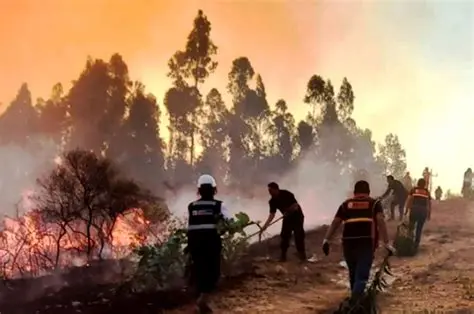
Forest fires in the Peruvian region of Cusco have resulted in six deaths and one serious injury, official sources reported on Thursday. Authorities have bolstered response efforts by deploying aerial assets and have urged the public to refrain from burning grasslands and agricultural waste.

RELATED:

Ecuador Reports Seven Active Forest Fires in Four Provinces

The most recent fatality was a 75-year-old man who attempted to extinguish a fire that broke out in a locality within the Chumbivilcas province of Cusco. According to the official news agency Andina, the death was confirmed by officers from the Peruvian National Police (PNP), who notified the Public Prosecutor’s Office to facilitate the recovery of the body and its transport to the morgue.

Meanwhile, the Cusco Regional Health Department (Geresa) reported that a 65-year-old man sustained burns over more than 90% of his body while trying to escape a forest fire in the community of Santo Domingo, located in the Acopía district of Acomayo province. The patient has been admitted to the Cusco Regional Hospital, where his condition is described as critical.

Andina further reported that five other people have died in forest fires across various locations in the Cusco region this year, including the districts of Yanatile (Calca), Colquepata (Paucartambo), and Yanahuara (Urubamba). Additionally, two siblings—aged 11 and 18—perished in a separate incident in the Pomacanchi district of Acomayo.

La sierra peruana vive una de sus temporadas de incendios forestales más críticas. El 13 de octubre, el Serfor reportó más de 50 incendios activos en 14 regiones y 334 focos de calor. La falta de lluvias, las altas temperaturas y los vientos, agravados por el fenómeno El Niño,… pic.twitter.com/um5MxfkXrv

— Revista Lima Gris (@Limagris) October 15, 2026

The text reads, “The Peruvian highlands are experiencing one of their most critical wildfire seasons. On October 13, SERFOR reported more than 50 active fires across 14 regions, along with 334 heat hotspots. A lack of rainfall, high temperatures, and strong winds—exacerbated by the El Niño phenomenon—led SENAMHI to issue a red alert, effective until October 16, for regions including Cusco, Apurímac, Ayacucho, Huancavelica, Arequipa, and Puno. Cusco has been hit the hardest, with over 16,000 hectares affected this year and at least five deaths reported. Rural families are losing grazing lands, crops, and livestock—their primary means of subsistence. Experts warn that the state’s response is focused solely on extinguishing fires, while a coordinated prevention system remains conspicuously absent. In this video, a local resident records himself in front of the flames to denounce this neglect and call for action from the authorities.”

Authorities have advised the public not to attempt to extinguish fires on their own and have reiterated their call to avoid the burning of grasslands and agricultural waste. They also requested that any instances of fires being left unattended in local areas be reported to the authorities.

The Peruvian Air Force (FAP) deployed a C-27J Spartan aircraft and an MI-17 helicopter this week—both equipped with firefighting systems—to address active blazes in the Cusco region. Nationwide, 35 active forest fire emergencies were reported.

On Tuesday, President Keiko Fujimori took part in an overflight of the town of Calca to oversee response efforts and assess the situation in the affected areas.

Following the inspection, she confirmed that two fires had already been brought under control and stated that the aerial units would remain in Cusco until this coming November.

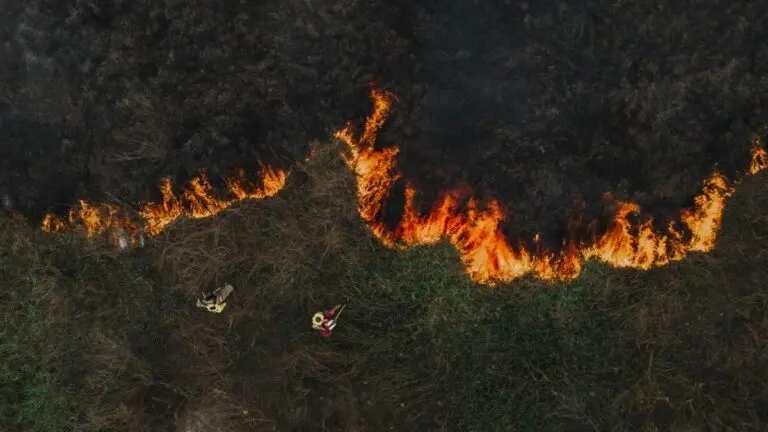
Brazil has launched joint operations to track down those suspected of deliberately setting fires in the Amazon rainforest, as a sharp rise in blazes blankets Manaus with toxic smoke and pushes air pollution to critical levels for the city’s 2.3 million residents.

Authorities… pic.twitter.com/fMwYcgpg8h
— teleSUR English (@telesurenglish) October 15, 2026
  •  

Brazil Launches Crackdown on Suspected Amazon Arson Network

Amazon rainforest fires in Amazonas, Brazil, as firefighters tackle blazes and smoke worsens air pollution in Manaus.

Brazil deploys 300 firefighters as a surge in fires worsens air pollution in Manaus and investigators probe suspected organized arson.


Brazil has launched joint operations to track down those suspected of deliberately setting fires in the Amazon rainforest, as a sharp rise in blazes blankets Manaus with toxic smoke and pushes air pollution to critical levels for the city’s 2.3 million residents.

RELATED: Petrobras Announces New Oil Discovery at Morpho Well off Brazil’s Amazon Coast

Authorities suspect an organized network is deliberately destroying native vegetation in preserved forest areas to facilitate the illegal seizure of public land, Environment Minister João Paulo Capobianco said at a news conference Wednesday. Investigators are working to identify and prosecute both those who set the fires and those suspected of directing them.

Capobianco described the situation as an “impressive display of deliberate action.” He and Jair Schmitt, head of Brazil’s environmental protection agency Ibama, cited reports of people throwing fuel-filled bottles from moving vehicles along roads and repeatedly reigniting fires in areas where firefighters had already extinguished them.

The scale of the fires has escalated sharply. Amazonas state recorded 1,608 fire hotspots in the first part of October, already exceeding the 874 registered throughout October 2025, according to Brazil’s National Institute for Space Research (INPE).

September saw more than 3,700 hotspots, four times the number recorded a year earlier. Fires burned 291,060 hectares that month, 38.8% above the historical average, according to official data.

In October, the area affected has approached 220,700 hectares, 249% above the usual level, according to the Federal University of Rio de Janeiro’s Laboratory for Environmental Satellite Applications.

The government has deployed 11 aircraft and approximately 300 firefighters to the hardest-hit areas. Difficult terrain and adverse weather conditions have complicated efforts to contain the blazes. Authorities have also warned that extreme drought and high temperatures associated with El Niño are accelerating the spread of fires across northern Brazil.

Smoke from fires in Amazonas and Pará states has engulfed Manaus, where air quality has deteriorated to critical levels. Concentrations of fine particulate matter known as PM2.5 have exceeded the maximum levels recommended by the World Health Organization, increasing the risk of acute respiratory problems, particularly among children, older people and those with pre-existing medical conditions.

The Civil Police of Amazonas has opened 120 investigative proceedings into suspected environmental offenses. Investigators are using thermal drones and conducting continuous ground patrols to gather evidence and identify those responsible.

The investigations come as Brazil prepares for a presidential runoff on Oct. 25 between incumbent Luiz Inácio Lula da Silva and opposition senator Flávio Bolsonaro, who received the most votes in the first round. Asked whether the fires could be politically motivated to undermine Lula’s candidacy, Capobianco said investigators were examining that possibility but stressed that the theory had yet to be substantiated.

  •  

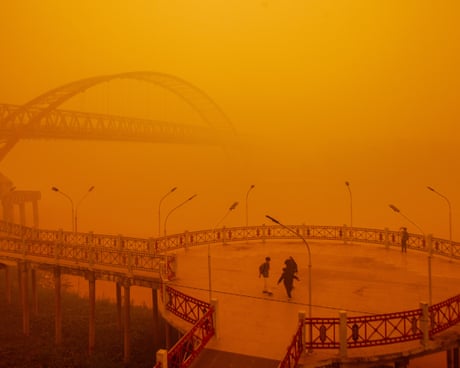
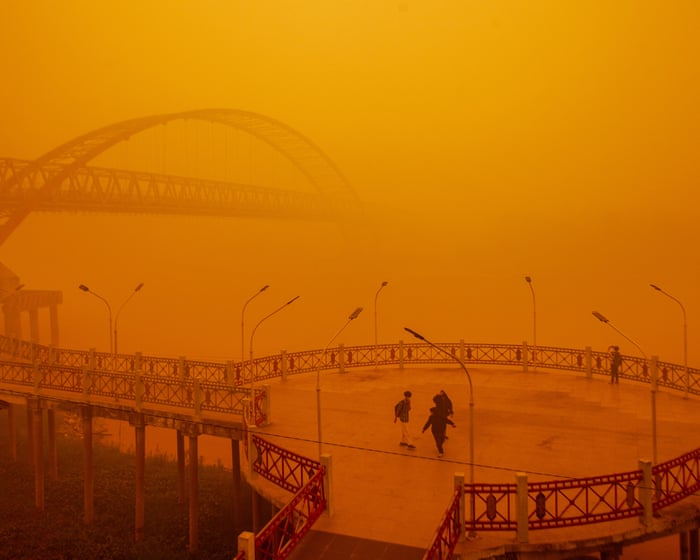
Indonesia fights fire with dry ice as toxic haze spreads across region

Having tried cloud seeding and water bombing, one pilot project will see dry ice dispersed by plane across the province of South Sumatra

As fires ravage Indonesia, emitting a toxic smoke that has drawn the ire of regional neighbours, the government is testing an unusual new approach to tackle the haze: dry ice.

Having tried cloud seeding, water bombing and sending in army personnel to fight the fires, Indonesia’s coordinating security minister said dry ice would be dropped on the province of South Sumatra on Thursday.

Continue reading...

© Photograph: GENDES/EPA

© Photograph: GENDES/EPA

© Photograph: GENDES/EPA

  •  
❌