❌

Reading view

Ukraine and Japan plan prefabricated backup crossings for Kyiv’s bridges: 720 meters of structures already delivered

Meeting between Ukraine’s Minister for Restoration, Infrastructure and Transport Mykola Kalashnyk, Japan’s Ambassador to Ukraine Yo Osumi, and JICA Ukraine Office Chief Osamu Hattori, October 2026. Photo: Mykola Kalashnyk/Telegram

Ukrainian and Japanese officials discussed establishing backup bridge crossings in the event of Russian strikes, preparing municipal infrastructure for winter, and Japan's continued assistance with Ukraine's recovery, Ukraine's Minister for Restoration, Infrastructure and Transport, Mykola Kalashnyk, reported on 14 October.

Russia is targeting Kyiv's bridges to paralyze the city and break civilian morale, defense analyst Hamish de Bretton-Gordon wrote in The Telegraph. On 1 and 2 October, Russia attacked Kyiv's Southern Bridge, then struck the Northern Bridge on 3 and 4 October. Ukraine is now working with international partners to establish backup bridge crossings that could maintain connectivity even if major routes are damaged.

The discussions took place during a meeting between Minister Kalashnyk, Japan's Ambassador to Ukraine Yo Osumi, and Osamu Hattori, head of the Japan International Cooperation Agency (JICA) office in Ukraine, according to the statement.

Ukraine's Minister for Restoration, Infrastructure and Transport Mykola Kalashnyk during a meeting with Japan's Ambassador to Ukraine Yo Osumi and JICA Ukraine Office Chief Osamu Hattori, October 2026. Photo: Mykola Kalashnyk/Telegram

Backup crossings could prevent logistical disruptions if major bridges are damaged

Kyiv's Southern Bridge, for example, plays a critical role in logistics because freight traffic uses it, transport planning expert Dmytro Bespalov noted in an article for Ukrainska Pravda. At the same time, installing additional metal structures to reinforce bridges could be dangerous given their technical condition and existing load levels, he said.

One potential solution is to establish backup bridge crossings.

Ukraine and JICA have agreed to continue working together on engineering solutions for setting up these crossings. Japan has already delivered 720 meters of prefabricated bridge structures to Ukraine, which are expected to be used to create alternative routes if Russia's attacks damage major bridges, Kalashnyk said.

The initiative is intended to help maintain transportation links, ensure the delivery of critical supplies, and preserve evacuation routes for civilians.

The flags of Japan and Ukraine displayed on a screen during a meeting between Ukraine's Minister for Restoration, Infrastructure and Transport Mykola Kalashnyk, Japan's Ambassador to Ukraine Yo Osumi, and JICA Ukraine Office Chief Osamu Hattori, October 2026. Photo: Mykola Kalashnyk/Telegram

Ukraine prepares water utilities and boiler plants for winter amid the threat of Russian infrastructure strikes

During the meeting, Ukraine and JICA discussed equipping water utilities with backup power supplies, addressing the need for modular boiler plants, and obtaining equipment to ensure uninterrupted heating and water services. Ukraine has already submitted lists of the necessary equipment to JICA for consideration as part of a new emergency assistance project, Kalashnyk said.

An intercepted document outlining an alleged Russian plan for strikes against Ukraine this winter reportedly describes attacks on 60 critical infrastructure facilities using up to 1,000 missiles, drones, and aerial bombs. Potential targets include electrical substations, hydroelectric power plants, thermal power plants, boiler facilities, and infrastructure related to water supply and wastewater management.

Kyiv during a blackout caused by Russian strikes on energy infrastructure, 11 October 2026. Photo: Yan Dobronosov

The document also describes potential strikes on facilities in Kyiv, Kharkiv, Odesa, and several other cities. Such attacks could disrupt electricity, heating, water supply, and wastewater services.

  •  

A Russian drone damaged Cosmogony, Ukraine’s largest painting, in the section depicting the future. Its artist spent nearly two years creating it

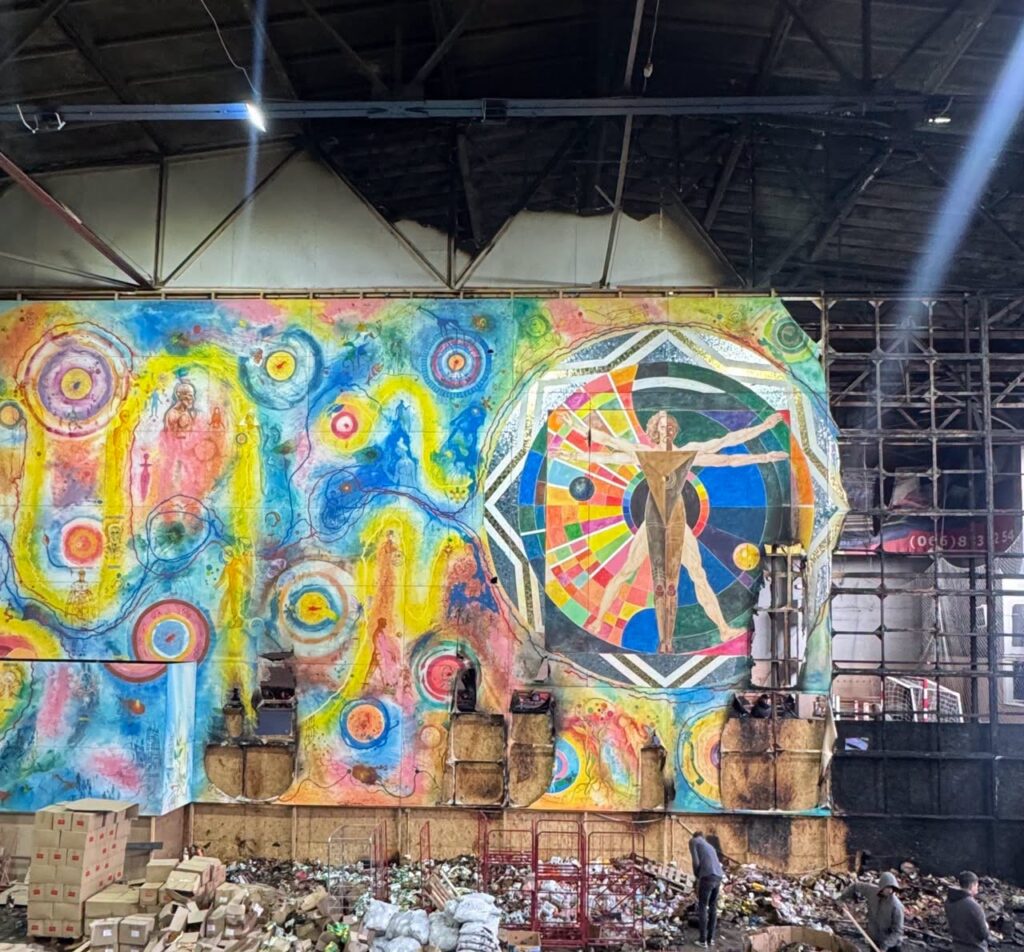
Petro Antyp’s painting Cosmogony, damaged during a Russian drone attack on Lutsk on 13 October 2026. Photo: Korsaks Museum of Contemporary Ukrainian Art/Facebook

Debris from a Russian drone damaged Cosmogony, a painting that set a national record in Ukraine, the Korsaks Museum of Contemporary Ukrainian Art in Lutsk, where the artwork was exhibited, reported on 14 October. A fire destroyed part of the painting’s final section, titled The Future, according to the statement.

Russian drones continue to attack Ukraine. Overnight into 15 October alone, Ukrainian air defense forces downed or suppressed 536 Russian unmanned aerial vehicles (UAVs). In recent days, Lutsk, a city in northwestern Ukraine, has been among the cities damaged by Russian attacks. Russian UAV attacks set fire to an oil depot, a wholesale warehouse, and a shopping center. At the museum, located on the shopping center’s premises, the fire damaged Ukraine’s largest painting, which covers a canvas of more than 2,000 square meters.

Russian attack damages museum in Lutsk

A fire broke out at the Adrenalin City shopping and entertainment complex, where the museum is located, Suspilne Lutsk reported. The blaze damaged the last of the painting’s six sections, according to the report.

“By destroying art and culture, they are also trying to destroy Ukrainians,” Tetiana Repnytska, director of the Museum of Contemporary Ukrainian Art in Lutsk, told Suspilne Lutsk.

A section of Petro Antyp’s painting Cosmogony before a Russian drone attack on Lutsk on 13 October 2026. Photo: Korsaks Museum of Contemporary Ukrainian Art/Facebook

Museum staff also had to evacuate more than 300 works by Ukrainian artist Emma Andiievska, which were exhibited alongside Cosmogony, Oles Tomakh, the museum’s chief curator, told Suspilne Lutsk. Some works could not be removed in time, resulting in shattered glass. However, the museum’s other exhibition halls were unaffected, the chief curator said.

The museum is weighing whether to fully restore the damaged fragment or keep the fire’s traces as a reminder of the war, and will decide after consulting the artist, Petro Antyp, and restoration specialists, it said. Repnytska told Suspilne Lutsk that the painting’s authors could also create a new section.

“Despite the shelling, we will continue to develop contemporary Ukrainian art and preserve it,” the museum director said.

Cosmogony—Ukraine’s largest painting

Artist Petro Antyp began working on the painting in November 2022, Suspilne Lutsk reported, and it took almost two years to complete, according to the museum’s website. The painting covers an area of 2,086 square meters.

In September 2024, the project set a national record as Ukraine’s largest painting.

The artwork explores the evolution of the universe, Earth, nature, humanity, society, culture, and science. Its six sections combine myths, legends, scientific theories, and symbols from different cultures, according to the museum’s website.

A section of Petro Antyp’s painting Cosmogony. Photo: Taras Luchko

The project extends beyond the canvas, as the museum presents a multimedia performance that combines light, sound, and art.

Civilians killed and injured in Russia’s latest attack on Lutsk

Around noon on 14 October, a Russian jet-powered Shahed drone attacked Lutsk. Drone debris damaged a wholesale goods warehouse and a residential building, Roman Romaniuk, acting head of the Volyn Regional Military Administration, told Suspilne.

Falling drone debris sparked a large fire at the Yevrohurt wholesale warehouse. A nine-story residential building on Sobornosti Avenue was also damaged, Romaniuk later reported on social media.

Six people were killed in the strike on the warehouse: five were found at the scene, and another person died in the hospital. Eleven more people were injured, Romaniuk said.

Aftermath of Russia’s attack on Lutsk on 14 October 2026. Photo: Volyn Regional State Emergency Service

Two other people, including a child, were injured in the residential building. Twelve people remained hospitalized, one of whom was in serious condition, according to the report.

  •  
❌