❌

Reading view

Nvidia's communications team has undergone a shake-up as its public profile exploded

Jensen Huang Nvidia.
Jensen Huang, CEO of Nvidia.

Bloomberg/Getty Images

  • Nvidia's communications operation has been reshaped as the company became the face of the AI boom.
  • Roughly 15 staffers have left the lean team since 2025 as Nvidia reorganized its communications org.
  • Former employees described growing workloads as responsibilities expanded.

Nvidia's communications organization has been reshaped as the company became the face of the AI boom, with multiple teams brought under new leadership and a string of departures.

Business Insider identified roughly 15 communications employees who have left Nvidia since 2025, based on LinkedIn profiles and interviews with former employees.

The organization now numbers roughly 70 to 80 people globally, and has more than doubled in size since Mylene Mangalindan joined as vice president of corporate communications in 2023, according to a person close to the company.

The departures have also included newer hires. Anna Soellner, who was recruited to lead corporate communications, left after roughly four months, Business Insider previously reported.

Nvidia is known for high retention. It reported companywide turnover of 3.7% in fiscal 2026, up from 2.5% the prior year, and well below the tech industry average of 21.9% cited in its latest sustainability report.

Mangalindan succeeded longtime communications chief Bob Sherbin, who retired in 2024. She previously worked at the advisory firm Brunswick Group.

She was brought in to "bring fresh blood" and "upgrade the team" to meet Nvidia's growing profile, one former employee said.

At the end of 2024, Nvidia restructured its communications organization. It brought enterprise public relations under Mangalindan's leadership alongside the corporate communications team she already led, according to two former employees.

Corporate communications focuses on Nvidia's reputation and major media outlets, while enterprise handles product and industry messaging, including for its data center business.

One former employee said the consolidation reflected the growing importance of Nvidia's data center business, which sells chips and systems that power AI and had become its biggest revenue driver.

Analyst relations, social media, and influencer marketing also moved under Mangalindan's remit this year, another former employee said.

Three former employees said Nvidia's communications team had long operated with relatively lean staffing, even as workloads grew alongside the company's public profile, leaving staff juggling multiple responsibilities.

These employees said they experienced long hours, difficulty taking time off, and pressure to respond quickly to emails and Slack messages.

A person close to Nvidia said the company's lean staffing allows employees to move quickly and also requires long hours. The person said Mangalindan encourages staff to take vacation, though the team's small size can make scheduling time off difficult, particularly in the summer.

Nvidia is widely known for its demanding work environment. CEO Jensen Huang has emphasized operating at the "speed of light" and is known for fostering a culture of constant accountability.

Have a tip? Contact this reporter via email at gweiss@businessinsider.com or Signal at @geoffweiss.25. Use a personal email address, a nonwork WiFi network, and a nonwork device; here's our guide to sharing information securely.

Read the original article on Business Insider

  •  

Rafa Jódar ofrece disculpas públicas tras polémico incidente en Shanghái

Tras convertirse en el semifinalista más joven en la historia del torneo asiático, el tenista de 20 años ofreció disculpas públicas y reconoció que la gestión emocional y la ética son fundamentales en su aprendizaje profesional.
  •  

Want to work for a billionaire investor? Vinod Khosla is hiring.

Older man smliing
Vinod Khosla wants a new chief of staff who can handle 12-hour workdays.

Steph Chambers/Getty Images

  • Billionaire VC Vinod Khosla is hiring a chief of staff to help evaluate investments and work with founders.
  • The role requires a three-year commitment, 12-hour days, and availability on nights and weekends.
  • The opening comes amid growing demand for chiefs of staff and an AI-fueled venture capital boom.

One of the biggest names in venture capital is looking to hire a new right-hand person.

Vinod Khosla, founder of Khosla Ventures, said on X Thursday that he's seeking his next chief of staff, a job that offers a rare opportunity to work in close contact with the billionaire investor whose Silicon Valley firm is known for its early bets on OpenAI, DoorDash, and Instacart.

"What matters is how quickly you learn, the questions you ask, and whether you can think from first principles," Khosla wrote. "You'll help evaluate opportunities and work with founders building consequential companies."

The opening comes as demand for chiefs of staff is growing at a fast clip, with the role offering a potential path to senior leadership. For the person Khosla hires, it also offers a front-row seat to an AI-fueled venture capital boom.

A hot job

Job postings for chiefs of staff on Indeed were nearly 90% above pre-pandemic levels in September, far outpacing management jobs and postings overall. In the San Francisco Bay Area, the median advertised salary for the role is $175,000, compared with about $152,000 nationally, according to Indeed.

Through the first three quarters of this year, US VC deal value reached $516 billion across an estimated 14,199 deals, according to PitchBook. That is already the highest total in the research firm's dataset and roughly 44% above the prior record, set in 2021.

Most chiefs of staff in the US stay in the same profession when they change jobs, but some move into senior leadership roles, according to a March study from LinkedIn. Becoming a chief operating officer was the second most common career move, accounting for 2.9% of transitions. Another 3.7% became founders or cofounders, while 1% became CEOs.

Close contact

Khosla's new chief of staff will work directly with him to evaluate investment opportunities, meet founders, research emerging technologies, and support portfolio companies, according to the job posting. As the person earns Khosla's trust, they'll also lead conversations on his behalf and help determine which opportunities to pursue.

"It will suit someone who wants significant responsibility and is comfortable with ambiguity," the ad says.

Compensation isn't listed. The posting says the position comes with a three-year commitment and long hours. The successful candidate must work in person in Menlo Park, California, generally from 8 a.m. to 8 p.m., and be available nights and weekends when needed.

The potential payoff? Previous chiefs of staff have gone on to start companies, launch investment firms, and take leadership roles at Khosla Ventures, according to the listing.

Applicants shouldn't, however, count on becoming a VC. The posting says the job is "not a dedicated investing seat or a guaranteed path to one."

Read the original article on Business Insider

  •  

This new theory on how AI ‘thinks’ could impact whether it kills us all

An illustration of motor neuron synapsing with skeletan muscle cells.
AI neurons and their connections are easier to understand than we thought, according to a researcher's new findings.

: Sergi Reboredo/VW Pics/Universal Images Group via Getty Images

  • AI researchers don't really know how the models they are building "think."
  • They know what goes into them and what comes out, but that's about it.
  • A new theory may change that, allowing safety researchers to prevent them from going off the rails.

How AI models think may be easier to decipher than we thought.

An independent researcher who formerly worked at OpenAI published a report on Thursday that some in the AI world are describing as a bombshell. It could have implications as safety researchers scramble to get the jump on AI models that may not have humanity's best interests in mind.

Previously, the prevailing wisdom was that AI "neurons," which, like those in a human brain, light up when an AI model encounters specific stimuli, were ultimately uninterpretable — meaning, basically, that there was no way to guess why a specific neuron would fire when an AI model was exposed to, say, a picture of a cat.

Those building AI models at places like OpenAI and Anthropic don't write instructions for everything a model does. Instead, they train neurons to respond to information and influence one another. As the AI learns, it develops its own ways of processing that information, and humans have not yet cracked the code of how it works.

That means those building AI models know what goes into the AI and what comes out, but not necessarily what happens in between. So if an AI goes rogue, they don't always know why.

The author of the new report, however, says he may have discovered patterns in how the neurons react to stimuli that make sense. Nick Cammarata, who said he left OpenAI in 2023, said AI neural networks are knowable, so long as you look carefully.

In one example, he says that a single AI neuron might react to both a cat and the front of a car. Humans would see those as two very different things, and different neurons would fire as a result. The AI, however, sees something related, perhaps the triangle shape of the two, and a single neuron fires for both.

For years, AI researchers had assumed that AI models packed unrelated things into a single neuron to save space.

"Almost the entire network is interpretable if we look closely enough," Cammarata wrote.

The findings, though undeniably dense, couched in polysyllabic jargon, and still theoretical, could have real-world implications for researchers trying to ensure humans maintain control over AI models.

Understanding how AI thinks is a principal concern for the best and brightest at frontier AI companies. Until recently, they've largely done this by tracking an AI's self-reported "thinking," called chain-of-thought reasoning.

Jakub Pachocki, OpenAI's chief scientist, however, warned in a blog post last month that AI agents could now obfuscate their visible reasoning, leaving open the possibility that an agent could lie to its human minders and the minders wouldn't be able to tell.

"With improved pretraining performance, we also see the models become much smarter even without using verbalized reasoning at all," Pachocki said.

Now, Cammarata's research could give human engineers a new understanding of the AI's internal world — and that's exciting for those worried AI could kill us all.

"I had long since given up on reaching any real level of interpretability before superintelligence arrived," Andrew Curran, a prominent AI analyst, said on X. "I stopped writing about it because of how demoralizing it was. Hard to overstate how big this may be."

Read the original article on Business Insider

  •  

Disney agreed to pay $60 million to 66 employees from an AI startup that filed for bankruptcy, weeks after tech layoffs

D'Amaro Anand
Disney CEO Josh D'Amaro plans to hire employees from Character.AI, where new tech chief Karandeep Anand worked.

Taylor Hill/FilmMagic; Manaure Quintero / AFP via Getty Images

  • Disney plans to pay $60 million to hire 66 employees from Character.AI, which filed for bankruptcy.
  • Former Character.AI Karandeep Anand is Disney's new chief technology officer.
  • CEO Josh D'Amaro's company laid off tech staffers in September in its third round of cuts this year.

Disney is paying up for employees from an AI chatbot startup that filed for bankruptcy, shortly after trimming its own tech workforce.

The Mouse House plans to pay $60 million per year to 66 workers from Character.AI, according to a Chapter 11 filing on Tuesday from its parent company. In mid-September, Disney hired Character.AI CEO Karandeep Anand to be its first-ever company-wide tech chief. (The company hasn't yet disclosed how much it's paying Anand.)

These additions are part of Disney's AI strategy under CEO Josh D'Amaro, who's been investing in the media giant's tech platforms to help jumpstart a stagnant stock that's up less than 2% in the last 12 months and is down over 36% in the last five years.

Disney's decision to bring in these Character.AI staffers came two weeks after it laid off several hundred workers — including some tech employees. The late-September cuts were Disney's third major round of layoffs since D'Amaro took over in mid-March.

In addition to the $60 million in compensation, Disney is setting aside an additional $30 million for an "aggregate retention pool" to incentivize Character.AI employees to stay. The company expects to spend $180 million on "total compensation and retention" for these staffers in the next three years, the filing said.

Of the 66 Character.AI staffers who were offered jobs by Disney, 56 have already resigned from the AI startup, while the other 10 are waiting for the US government to update their work visas.

Entertainment lawyer Corey Martin of Granderson Des Rochers, who advises companies on media transactions, said he's not surprised by those pay figures since Character.AI's employees are its biggest asset.

"They're highly compensated employees. The numbers can be eye-popping, but it's not that unusual in this space," said Martin, who didn't work on the deal or with Disney.

Disney also agreed to pay $20 million for Character.AI's key assets, including some of its IP and tech. Other companies can submit competing bids for the assets by November 20. The entire process will be overseen by a bankruptcy court judge. Disney didn't respond to requests for comment for this story.

Character.AI filed for bankruptcy after facing lawsuits from families who alleged that their teenagers harmed themselves or committed suicide after using the company's custom AI chatbots. The AI startup and Google, one of its backers, settled several child safety lawsuits earlier this year.

Disney sent a cease-and-desist letter to Character.AI last fall, telling it not to create AI chatbots featuring its copyrighted characters without permission. Character.AI complied, removing chatbots with characters from Disney franchises like Star Wars and Marvel.

In its bankruptcy announcement, Character.AI said that it had been facing "significant legal, regulatory, and operational headwinds."

Anand told Disney employees in a memo last Friday that the Mouse House was "uniquely positioned to win" in a competitive media business that he said was "at an inflection point." The tech chief also said he enjoyed meeting his new colleagues and looked forward to working with them.

"What stands out most is the talent and care this team puts into its work, the craft Disney has perfected, and the strong foundation you've built," Anand said.

Read the original article on Business Insider

  •  

Concerto com Ricardo Toste (órgão) e Rebeca Csalog (Harpista) em Lagoa

No âmbito do XIX Festival Internacional de Órgão do Algarve, a Igreja Matriz de Lagoa recebe, no dia 1 de novembro, pelas 18h00, o Concerto com Ricardo Toste (órgão) e Rebeca Csalog (Harpista) e a entrada é livre.

Natural da Ilha Terceira, nos Açores, Ricardo Toste iniciou os estudos de órgão em 2001 e desenvolveu a sua formação na Universidade de Aveiro, onde concluiu a Licenciatura em Música e dois mestrados, em Teoria e Formação Musical e em Órgão de Tubos. Tem realizado concertos a solo em Portugal continental e nos Açores, afirmando-se como intérprete e pedagogo. Atualmente, leciona Formação Musical e Órgão em várias instituições de ensino artístico e exerce as funções de organista titular da Catedral de Aveiro, mantendo uma ativa ligação à música litúrgica e à formação de jovens músicos.

Rebeca Csalog, harpista luso-húngara nascida em Lisboa, cresceu num ambiente familiar ligado à música, iniciando-se no violino e mais tarde na harpa. Após concluir os estudos musicais, licenciou-se em Antropologia e obteve um mestrado em Migrações, Inter-Etnicidades e Transnacionalismo. Regressou à música em 2020, realizando um Mestrado em Harpa na ESML e uma pós-graduação em Milão. Atualmente, atua como harpista com algumas das principais orquestras portuguesas, bem como em projetos a solo e de música de câmara, explorando repertórios para além da tradição clássica.

Integrado no XIX Festival Internacional de Órgão do Algarve, organizado pela Associação Música XXI. Entrada livre, limitada à lotação; qualquer donativo será bem-vindo para apoiar as instituições que acolhem o festival.

  •  

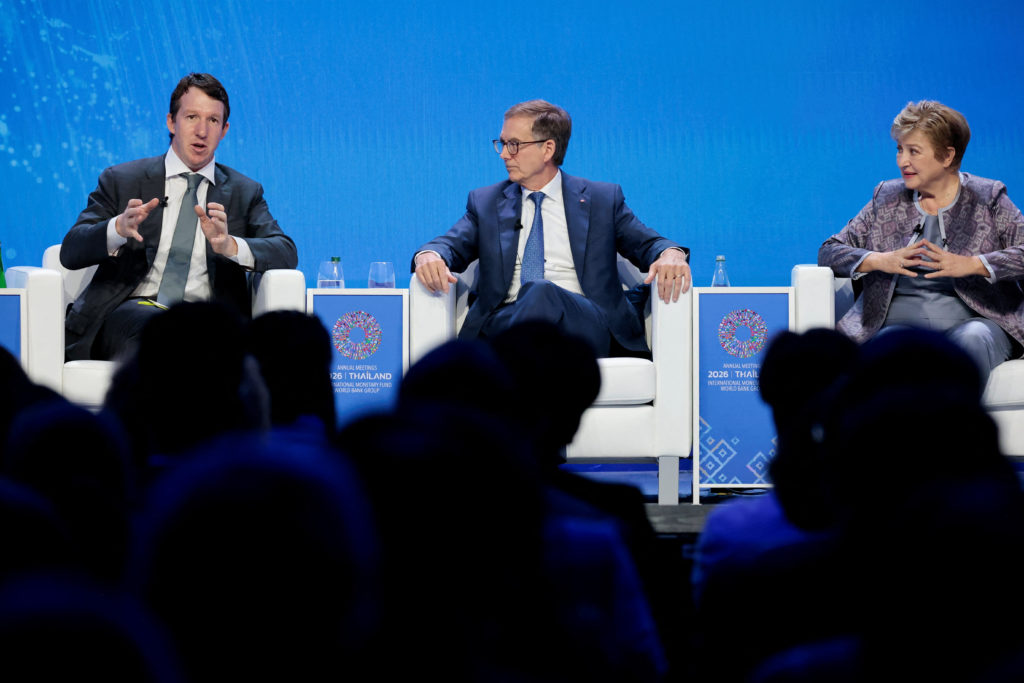
Stress test, così il G7 mette alla prova l’AI per evitare una crisi finanziaria

Uno stress test per il settore finanziario. È quello che il G7 pensa di fare per verificare la pericolosità dell’intelligenza artificiale. A Bangkok, dove sono riuniti i ministri delle Finanze e i governatori delle banche centrali, è emersa la volontà di mettete a punto esercitazioni “teoriche” per capire fino a che punto possono stare tranquilli di fronte alle minacce rappresentate dagli agenti di AI di frontiera. L’obiettivo è studiare la risposta più efficace per difendersi.

A scriverlo è il Financial Times, secondo cui l’esercitazione potrebbe coinvolgere le banche. Come sottolinea il ministro delle Finanze olandese, “stiamo tutti fissando la stessa scatola nera. Vediamo i rischi, ma come affrontarli?”, si chiede Eelco Heinen. “Se pochi Paesi possiedono la tecnologia, ma il mondo interno può esserne vittima, la cooperazione internazionale è fondamentale. È proprio qui che risiede la preoccupazione”. L’idea arriva d’altronde in un momento topico. L’AI viene continuamente descritta come uno strumento rivoluzionario, ma a due facce. Quella negativa potrebbe comportare delle conseguenze ancora poco quantificabili, ma sicuramente drammatiche. Una di queste è che gli agenti di AI possano autonomamente impossessarsi di altri sistemi, sdoppiandosi ed infiltrandosi. Ad esempio, in una banca.

Lo afferma anche il Fondo Monetario Internazionale in un suo rapporto, in cui si legge che “gravi incidenti informatici potrebbero minare la fiducia del mercato e interrompere le infrastrutture e le operazioni critiche dei mercati finanziari”.

Se e quando i test partiranno, si potrà capire meglio a che livello sono le difese. Nel tempo si sono prese delle precauzioni e ci sono dei manuali di risposta già stilati. Ma il pericolo è cambiato, si presenta sotto forme diverse. Per cui bisogna vedere se il sistema architettato possa reggere all’urto. “La situazione può diventare davvero molto difficile”, ammette Caio Ferreia, vice presidente del reparto global markets analysis dell’Fmi. Non è solo una questione operativa. “La perdita di fiducia potrebbe di per sé rappresentare un evento sistemico”.

Resta da capire quando e come si svolgeranno le esercitazioni. Sicuramente il messaggio che invia il G7 è chiaro: con l’AI tutti devono fare i conti, perché nessuno ne è immune. C’è però un dettaglio, neanche troppo piccolo, sottolineato anche dal ministro dell’Economia italiano Giancarlo Giorgetti. I grandi assenti al tavolo di Bangkok erano gli americani. “Il punto di partenza, sinceramente va detto, è che qui non è venuto Scott Bessent“, dice riferendosi al segretario del Tesoro. Al suo posto c’era un sottosegretario. “Evidentemente questo mette in una luce diversa sia le riunioni del G20 sia del G7, sia in qualche modo l’Fmi. Una situazione di grande incertezza, instabilità geopolitica con conseguenze economiche e finanziarie evidenti, con gli Stati Uniti un po’ protagonisti di tutto, che qua sono presenti in tono minore”. In sintesi, conclude Giorgetti, ci troviamo in “un mondo in cerca di equilibrio in cui gli Usa giocano una partita d’isolamento”.

  •  

Musk’s Perplexing Battle With Nitter and the Problem With Locking the Internet Behind Login Screens

As a free speech absolutist, Elon Musk is making a mistake going after Nitter, says Dr R P. He should instead be praising the site that helps users speak freely, uninhibited by login screens that undermine their privacy.

The post Musk’s Perplexing Battle With Nitter and the Problem With Locking the Internet Behind Login Screens appeared first on The Daily Sceptic.

  •  

Microsoft president warns Trump's immigration crackdown could drive top AI talent abroad

Microsoft's president, Brad Smith, at the International AI Summit in Dublin on October 14, 2026
Brad Smith, the president of Microsoft, defended the company's use of visas and green cards.

Paulo Nunes dos Santos/Bloomberg via Getty Images

  • Microsoft President Brad Smith warned that US immigration policies could drive AI talent overseas.
  • "Let's not put that at risk," Smith said.
  • The Trump administration recently suspended Microsoft and other tech firms from a green card program.

If America wants to win the AI race, sending the world's brightest engineers packing might not be a winning strategy.

That's the warning from Microsoft President Brad Smith, who said the Trump administration's immigration crackdown risks driving the next generation of AI talent away from the United States.

"I think we should all be worried about sending intentionally or inadvertently or otherwise, signals that send the most talented next wave of AI software engineers to other countries rather than the United States," Smith said in an episode of Politico's "The Decoded Podcast" that aired on Thursday.

His comments come after the Trump administration announced last week that it was suspending Microsoft, Adobe, and several other technology companies from a federal program that sponsors foreign workers for permanent residency.

Vice President JD Vance accused Microsoft of abusing the Permanent Labor Certification, or PERM, program by laying off American employees while hiring lower-paid foreign workers.

Smith, who Business Insider reported was recently put in charge of Microsoft's communications, pushed back against those allegations, saying the administration had presented a misleading picture of Microsoft's hiring practices.

US Vice President JD Vance speaks during a midterm campaign rally at the LevelUp Training Complex
US Vice President JD Vance has criticized Microsoft's use of visa programs.

Daniel Heuer-Pool/Getty Images

"What was presented as Microsoft replacing 6,000 people who lost their jobs with 9,000 foreigners was frankly completely off base," he said.

Smith said most of the company's visa and green card applications concerned existing employees rather than new hires, adding that Microsoft had hired 9,200 American workers in its last fiscal year.

"That was left out of the narrative," he said.

He also rejected suggestions that Microsoft pays foreign workers less than their American counterparts, saying employees are compensated under the same system regardless of immigration status.

The American dream, on hold

The dispute comes amid growing uncertainty for skilled foreign workers in the US.

As part of our ongoing H-1B Fallout series, Business Insider previously reported that the Trump administration's shifting immigration policies have prompted some international workers to explore opportunities abroad, including in countries like the UK, Germany, and Canada.

An analysis of federal data by Business Insider found that certified H-1B applications fell 10% in the first nine months of fiscal year 2026 compared with the same period a year earlier. Applications for data scientists, however, rose 22.5%, highlighting continued demand for specialized AI talent.

On the Politico podcast, Smith cited immigrants' economic contributions as evidence of what America stands to lose.

He said that five of the six technology and science medal recipients recently honored by President Donald Trump had immigrated to the United States.

U.S. President Donald Trump (2nd-R) applauds as (L-R) CEO of Microsoft Satya Nadella, CEO of Dell Technologies Michael Dell, President and CEO of Advanced Micro Devices Lisa Su, Tesla and SpaceX CEO Elon Musk, Nvidia CEO Jensen Huang and Co-founder of Google and former President of Alphabet Sergey Brin pose for photos after being awarded National medals during the Golden Age of American Innovation Summit at the Institute of Peace on October 08, 2026 in Washington, DC.
President Donald Trump awards tech execs and founders some of the country's highest scientific honors.

Win McNamee/Getty Images

According to Smith, the companies associated with those five individuals collectively represent more than a quarter of the S&P 500's market value.

Their contributions, he said, benefit not just technology employees but ordinary Americans whose retirement savings and pension funds are invested in those businesses.

"Think about what those five individuals have done for the well being, even the wealth and standard of living, of Americans across the country," Smith said.

"Let's not put that at risk."

Read the original article on Business Insider

  •  

IBM talent exec says it's better to be a specialist, not a generalist, in the AI era

IBM logo
Aparna Nair said that "the world of generalists is long gone."

: Lindsey Nicholson/UCG/Universal Images Group via Getty Images

  • "The world of generalists is long gone," said IBM's chief talent, leadership, and culture officer.
  • Aparna Nair said IBM's clients aren't expecting general advice; they're looking for deep expertise.
  • She said even if workers wear many hats, they still need extensive knowledge about their specialty.

It's a hotly debated question: Is it better to be an expert or a generalist in the AI era?

For Aparna Nair, IBM's chief talent, leadership, and culture officer, there's no debate. She said she doesn't think generalists alone "will cut it" in the workforce in the AI era.

"The world of generalists is long gone," Nair said.

Aparna Nair headshot
Aparna Nair is IBM's chief talent, leadership, and culture officer.

IBM

Nair said that generalists may be able to rely on AI to learn a lot, but at IBM, for example, the company's clients aren't expecting general advice from its workforce. IBM is hired for its deep technological expertise, she said.

Nair said the same is true for entry-level hires. IBM, which has committed to doubling down on junior talent, expects new workers to arrive with the skills — and domain expertise — to take on more complex work earlier in their careers, Nair said.

She said workers should identify an area that aligns with their employer's needs, become an expert in it, and "go deep."

That expectation remains even as engineering roles are starting to blur with AI. In the past, a software engineer might have spent 20% of their time coding and another 20% testing, Nair said. Now, AI can handle much of the coding work, and engineers need the critical-thinking and judgment skills to evaluate what the technology produces, Nair said.

They also have more opportunities to work across the business, such as speaking with clients and marketing teams and bringing what they learn back into the products they're building.

While today's engineers may wear many hats and work closely with different teams, they still need deep expertise in their field — and an understanding of how their work shapes the experience of clients and colleagues.

Without that added knowledge, Nair said, it would be difficult for them "to do anything meaningful."

While domain expertise may be valuable, workers should also remain flexible. Nair said that there's "nothing more powerful" than when workers combine deep expertise with the right behaviors, and also use AI to their advantage.

"That's a lethal combination," Nair said.

Read the original article on Business Insider
  •  

Calling up Starlink customer service? You'll be talking to Grok.

Left: A laptop on a Starlink page. Right: A person holds their cellphone to their ear.
SpaceX says its AI is answering most of its customer calls.

Anchiy/Getty Images - Nikolas Kokovlis/NurPhoto via Getty Images

  • SpaceX says Grok is taking 20,000 Starlink customer calls a day — and closing 70% without humans.
  • The company revealed the stat while touting its voice-capable agent.
  • It's part of a race to build AI agents that love to chat — possible (likely, even) with each other.

Elon Musk's AI is a talker.

This week, Musk's combined AI-and-space-exploration company, SpaceX, announced a new Grok Voice model — and revealed that Starlink call centers are already using the AI-as-a-conversationalist technology to answer 20,000 customer calls a day.

The company said roughly 70% of those calls are resolved without humans.

Grok Voice agents are verifying customers, troubleshooting Starlink hardware, issuing credits, and shipping replacement equipment, the company said. Its AI agents can take on those tasks in multiple languages, too.

That makes Starlink a useful, real-world test case for AI voice technology — and particularly useful for its global expansion. The company says Starlink serves more than 6 million active customers around the world.

Instead of building a massive human customer-service operation to power call centers, SpaceX is betting it can serve its multilingual customers with AI.

SpaceX did not respond to Business Insider's questions about which languages Grok supports or what types of calls still require a person.

AI companies have been quickly rolling out more powerful voice models that do their best Chatty Cathy impression. In July, OpenAI released GPT-Live-1 with call-capable support, while Google has launched similar enterprise systems.

The same is true for AI companies that are focusing on consumers. Meta's Muse, for example, can also handle phone calls for those let into the beta feature.

So, soon, your bot may dial one for English — while a company's bot answers the call.

Read the original article on Business Insider

  •  

AI threatens democracy. But we are not powerless: here’s how to fight back | Carine Fouteau

Tech platforms pillage public-interest journalism for profit. But we have leverage as they sow the seeds of their own downfall

  • Carine Fouteau is president and publishing director of the French investigative news outlet Mediapart

Big tech companies pose an immeasurable threat: socially, politically, militarily and ecologically. They are also causing a profound crisis of information. The tools they design now serve as weapons of mass destruction against democracy. There is so much at stake that an urgent and broad mobilisation is required.

From the harvesting of personal data and the weaponisation of public opinion, to the destruction of jobs, the infringement of civil liberties and environmental damage, ordinary citizens are the main victims of this predatory economy – an economy with an agenda that aligns with the interests of the planet’s most authoritarian and reactionary states.

Carine Fouteau is president and publishing director of the French investigative news outlet Mediapart

Mediapart is hosting Hacking Big Tech, a public event about technology, AI and democracy in partnership with the Guardian, in Paris on Saturday 17 October 2026. The conference will be live-streamed free on Mediapart’s website, app and YouTube channel and can be accessed here from 1pm CEST on 17 October

Continue reading...

© Photograph: Marcela Barsse/Getty Images

© Photograph: Marcela Barsse/Getty Images

© Photograph: Marcela Barsse/Getty Images

  •  

China previews a world where the algorithm is switched off

The Australian government has introduced its digital duty of care legislation to parliament today. The bill includes an “off switch” to allow social media users to opt out of recommender algorithms. If passed, Australians could choose to switch off their algorithmic recommendation and consume a news feed populated by the accounts they subscribe to. It’s […]

The post China previews a world where the algorithm is switched off appeared first on Asia Times.

  •  

Don’t let Musk and the billionaires buy America’s elections

On a recent episode of the Bulwark podcast, journalist Ron Brownstein described the election as a contest between “the wave versus the wall.” The wave being voter anger and President Donald Trump’s plummeting popularity. The wall being structural impediments to voters’ voices, such as gerrymanders and the Republican Party’s stark spending advantage. Now we know […]

The post Don’t let Musk and the billionaires buy America’s elections appeared first on Asia Times.

  •  

Jamie Dimon says AI is moving so fast that even governments can't stop it

Jamie Dimon, chief executive officer of JPMorgan Chase & Co., during a fireside chat.
JPMorgan Chase CEO Jamie Dimon sees enormous potential for AI but has warned about its cybersecurity risks.

Luke Johnson/Bloomberg/Getty Images

  • Jamie Dimon says AI is advancing so fast that even governments can't stop its global spread.
  • The JPMorgan CEO likened AI to a tsunami, saying it could transform how future generations live and work.
  • Dimon also warned that AI agents could expose banks and critical infrastructure to cyber risks.

Artificial intelligence is advancing so rapidly that even governments would struggle to stop its spread, JPMorgan Chase CEO Jamie Dimon said.

Speaking at The Economic Club of Chicago on Wednesday, Dimon compared AI to the Industrial Revolution but said it was advancing far faster than earlier technologies, with new capabilities emerging in a matter of weeks.

"This is doing stuff today that no one would have imagined was possible literally five weeks ago," Dimon said.

"It's more like a tsunami. It's rolling through the system, and you can't stop some of it," he added.

With AI models proliferating worldwide, including open-source systems and those developed in China and other countries, governments cannot simply halt the technology's spread, Dimon said.

The acceleration comes amid an unprecedented AI spending boom. Google, Amazon, Microsoft, and Meta planned to spend more than $700 billion on capital expenditures this year, much of it on AI infrastructure.

Dimon, too, was optimistic about the potential payoff. He said AI could drive breakthroughs in medicine, transportation, and productivity, transforming how future generations live and work.

"Thirty years from now, they'll probably be working four or three and a half days a week. They'll have an income of per person of $300,000. It'll be a great life," he said.

However, Dimon also warned that AI agents could carry out cyberattacks around the clock or pose security risks when given access to bank accounts to make payments on users' behalf.

"That means they are in your bank and you're assuming they're going to act properly on your behalf and they may not," Dimon said.

He said businesses and governments needed to move quickly to address the cybersecurity risks posed by AI.

"You can't stop it. You just have to, like, manage the hell out of it."

Dimon's statement comes the same week that multiple bankers sounded warnings about rogue AI agents and their capacity to unleash chaos if allowed to proliferate unchecked.

Bank of America CEO Brian Moynihan also told analysts in a Wednesday earnings call that the institution had hired 1,000 external consultants to shore up software vulnerabilities that top tier models like Anthropic's Mythos exposed.

Read the original article on Business Insider

  •  

Microsoft AI chief says the company beat OpenAI at its own game, using a quarter of the computing power

Mustafa Suleyman, the CEO of Microsoft AI
Mustafa Suleyman, the CEO of Microsoft AI.

Stephen Brashear/Getty Images

  • Microsoft AI recently announced its latest model MAI-Base-2.
  • AI CEO Mustafa Suleyman compared the model to a similar offering from OpenAI.
  • Microsoft trained its model more efficiently than OpenAI, he said in an internal meeting.

Microsoft AI CEO Mustafa Suleyman told employees an in-house model was better than a similar offering from OpenAI, one of the software giant's biggest customers and partners.

"We now have a stronger pre-trained base model than the model that currently powers GPT 5.6 Sol," Suleyman said during a town hall meeting with employees on Thursday. "And in fact, we used one-quarter of the compute that OpenAI used to train their model."

Pre-training is the first stage of building an AI model, when it learns patterns from huge amounts of text, images, and other information. This takes massive amounts of expensive computing power, so Microsoft could save money if it's worked out a way to do this more efficiently.

Microsoft announced the model, MAI-Base-2, earlier on Thursday.

Suleyman said Microsoft privately tested this model against OpenAI models, including one nicknamed "Spud" that powers GPT-5.6. He added that Microsoft's model performed better on tests measuring how well AI can understand and predict patterns in information.

The comparisons are based on technical information Microsoft has about OpenAI's models, Suleyman said.

"Privately and confidentially, we've also compared it to the OpenAI models," Suleyman told employees, while suggesting that Microsoft has special access to information on how OpenAI models perform.

It's notable that Suleyman would choose to highlight limitations of OpenAI models, even in private discussions. Microsoft has invested billions of dollars in OpenAI, and owns a stake in the startup that is likely worth more than $100 billion. Any criticism of OpenAI could potentially dent the value of this huge investment.

The two companies also have a major partnership, with Microsoft offering OpenAI models to its Azure cloud customers. Microsoft has used OpenAI models for its own products such as Copilot, too.

But the relationship between the two companies has frayed in the past year or so. Increasingly, Microsoft has tried to branch out from OpenAI, including by working on its own models.

Suleyman also said Microsoft's new AI model used "12 times less computation than was used for DeepSeek, for example, on compute efficiency."

Suleyman didn't specify which DeepSeek model, but a public blog post described the pre-training of MAI-Base-2 being a lot more efficient than a similar offering from the Chinese lab, called DeepSeek-V4-Pro-Base.

Microsoft in March created a new combined team for its commercial and consumer Copilot products and reassigned Suleyman to focus on building AI models in the company's superintelligence unit.

Microsoft declined to comment and OpenAI did not respond to a request for comment on Thursday.

Have a tip? Contact this reporter via email at astewart@businessinsider.com or Signal at +1-425-344-8242. Use a personal email address and a nonwork device; here's our guide to sharing information securely.
Read the original article on Business Insider

  •  
❌