❌

Reading view

Nobody Wants To Be the Pro-Tech Candidate in This New York Race That Could Flip the House

Mike Lawler and Cait Conley | Bonnie Cash/UPI/Newscom/caitconley.com

The Democratic Socialists of America (DSA) candidates running for the House of Representatives and endorsed by NYC Mayor Zohran Mamdani are all but guaranteed to win their general elections this November, but that does not mean the midterm drama is over in New York. In the state's 17th congressional district, which includes the lower Hudson Valley, Democratic challenger Cait Conley, a combat veteran who served on the Biden administration's National Security Council, could unseat incumbent Republican congressman Mike Lawler in one of the most consequential races of the midterms. 

The highly contested purple district voted for former Vice President Kamala Harris in the 2024 election while reelecting Lawler for his second term. Now, Lawler is attempting to win a third term as support for President Donald Trump wanes ahead of the midterms. As of Friday, The Cook Political Report lists the race, which could determine control of the House, as a toss-up. 

If elected, Conley would have far more in common with the "Badass Women" coalition of security state and military veterans than with DSA types (think more Sen. Elissa Slotkin from Michigan than Darializa Avila Chevalier). As Judge Street Journal's Timmy Facciola notes, "Conley's candidacy is testing the viability of a tactful centrism that rebukes left-wing positions like abolishing ICE or restricting weapon shipments to Israel." Lawler is also vying for moderates, pitching himself as "one of the most bipartisan members of Congress" and emphasizing his willingness to break with Trump occasionally while still welcoming Trump's support. 

While Lawler and Conley certainly are not pure MAGA acolytes or DSA members, both have leaned into a tech-critical position, much like that of more radical populists like Lina Khan or Steve Bannon, revealing how pervasive anti-tech sentiment has become in mainstream politics. 

This tech skepticism was on full display during an October 14 debate, when each candidate made the case for why they were the most equipped to regulate AI, insisting that the industry needs guardrails. 

Conley said members of Congress do not want to regulate AI because "they want to look out for their billionaire and trillionaire backers like Elon Musk, who is pouring over $260 million into this midterm election." She then added that Musk backed Lawler in his 2024 race. 

Lawler then accused Conley, who previously consulted for Primer AI, of being "the AI candidate for the AI industry."

While Lawler and Conley disagree on specific data center regulations (Conley supports Democratic Gov. Kathy Hochul's data center moratorium while Lawler supports local zoning control over data centers), neither wants to pitch themselves as an explicitly pro-data center candidate. During the debate, Conley claimed that, "On Mike Lawler's watch there have been five data centers built in Rockland County." Lawler has said that he had no say in the decision to build the data centers, and during the debate, he pointed out that the facilities were built for financial services. Lawler also attempted to attack Conley over data centers, slamming her in an ad for saying "we need data centers." Regardless of the candidates' specific policies on data centers, their attacks on one another demonstrate that cheerleading hyperscale data center development is a political liability. In their district, data center has presumably become a dirty term. 

The candidates' tech-skeptical rhetoric did not end with unchecked data center development. After the debate, Reason asked both candidates about their positions on age-verification laws for social media and AI, since such regulations raise significant privacy and censorship concerns by age-gating the internet. Unsurprisingly, both Lawler, who voted for the controversial KIDS Act, and Conley, who has proposed stricter age verification for AI tools, parroted platitudes about why such online safety regulations are necessary to protect children. 

"We have watched how social media is literally hurting the mental health of children," Conley told Reason. "And when you talk about the power of AI and what that power could do, we have to regulate this." 

Lawler gave a similar response, telling Reason that he respects free speech but that protecting children "is paramount." 

This bipartisan consensus over social media regulation has long been brewing in Congress. The mainstream political conversations about AI and data centers, however, are relatively new this midterm election cycle. And it appears both Lawler and Conley have figured out which way Americans' sentiment toward AI is leaning, and they have waged their campaigns accordingly. 

The post Nobody Wants To Be the Pro-Tech Candidate in This New York Race That Could Flip the House appeared first on Reason Magazine.


  •  

DOGE Worked? Only If You Grade on a Curve.

Elon Musk and Donald Trump with a DOGE meme coin | Official White House Photo by Daniel Torok/Newscom/Jiri Hera/Dreamstime.

As the Trump administration's short-lived Department of Government Efficiency (DOGE) project implemented its plan to downsize the federal workforce, there was much wailing from the liberal institutions in Washington, D.C.

Federal employee unions filed lawsuits to block the effort. NPR ran profiles of federal workers who, for the first time, faced the prospect of potentially not having absolute job security forever. The Brookings Institution wondered how many jobs the federal government could shed before it crashes.

The answer: plenty. The Trump administration has cut more than 10 percent of the federal workforce, and the government hasn't crashed. Indeed, it hasn't even shrunk—if you're counting by dollars spent instead of people employed.

In a new article for City Journal, Manhattan Institute senior fellow Judge Glock highlights the tremendous gap between the dire predictions about DOGE's cuts and the reality that has emerged, more than a year after DOGE was shut down. Despite having only a modest impact on spending, Glock writes, DOGE "had a massive impact on the federal civil service."

This is true—to a point, more on that in a moment—and notable. Aside from a modest downsizing in the 1990s, the number of people employed by the federal government has been steadily growing for decades. Reversing that trend is one of the few genuinely libertarian accomplishments by the Trump administration.

The cuts to the federal workforce prove that "DOGE worked," argues Glock.

Well, hold on.

Elon Musk and Vivek Ramaswamy (who departed the DOGE project before Trump's inauguration and is now running for governor of Ohio) set some very ambitious goals after being appointed DOGE co-chairs in late 2024. In an op-ed for The Wall Street Journal in November 2024 where they promised "we won't just write reports or cut ribbons. We'll cut costs."

Musk repeatedly attached some rather absurd numbers to that promise. He said DOGE would cut $1 trillion or even $2 trillion in federal spending. In the end, it didn't come close. By DOGE's own (questionable) accounting, it cut $170 billion. Meanwhile, overall federal spending has increased in each of Trump's first two years in office, and the budget deficit has widened as well.

Yes, Musk and Ramaswamy also said they would reduce the federal workforce. But that was presented as a natural consequence of cutting spending, not as the primary goal.

Think about it like this. If I spent months promising my friends and family that I would lose 50 pounds on a new diet, and then didn't lose any weight, would it be fair to say the diet worked?

What if I reduced the number of donuts I eat every day, but still didn't lose any weight? Sure, that might be good for my health in some way—just like reducing unnecessary workers in the federal government is good for America's fiscal health—but it certainly wouldn't mean I had achieved the goal of losing weight.

Finally, even the claim that DOGE cut the federal workforce requires an asterisk. As Glock also notes in his report, the decline in federal workers has been offset by an increase in federal contractors.

It's not a one-for-one trade, of course. The new contractors are overwhelmingly concentrated in places like the Department of Homeland Security and the Pentagon, while the cuts mostly targeted other areas, like the Department of Health and Human Services.

"Most of that increase came from the buildup in homeland-security and defense contracting, including purchases such as surveillance aircraft and tanks, rather than substitutes for government workers," Glock writes. "DOGE achieved real contract savings, but these were more than offset by higher spending elsewhere, reflecting a shift in priorities rather than an overall reduction in contracting."

So, the government is eating fewer donuts but more pizza.

There might be libertarian reasons to prefer contractors over government employees. They are less likely to hold those jobs for life, for one. But there's nothing inherently good about a government policy that cuts jobs in some areas just to create more room in the budget for poorly trained immigration enforcement agents and defense contractors. That may even be a negative outcome for liberty.

In the end, the DOGE project looks less like a meaningful attempt at cutting government spending or employment levels and more like a way to purge parts of the federal workforce likely to get in Trump's way during his second term. "As long as [Trump's] larger commitment is to extending his power rather than rolling back power itself, you shouldn't expect the government to stop growing," as Reason's Jesse Walker wrote last year in comparing DOGE to President Richard Nixon's attempted purge of the civil service.

Did DOGE work? Only if you grade it on a pretty dramatic curve.

Yes, it proved that a president can slash bureaucratic jobs—particularly the bloated managerial and administrative types—without doing much damage to the government's core responsibilities. That's a lesson future administrations should remember.

Maybe, someday, a president will try applying the same logic to government spending too.

The post DOGE Worked? Only If You Grade on a Curve. appeared first on Reason Magazine.

  •  

Liberman is risking another election to secure his right-wing political future

The Yisrael Beytenu chairman has ruled out a minority coalition dependent on Arab parties. He is banking on Likud defectors, but is actually erecting a roadblock for the center-left
  •  

Why Are California's Governments So Lousy at Fighting Wildfires?

CAFire1 | Weston Hancock/SOPA Images/Sipa USA/Newscom

My recent trip to Malibu from Los Angeles was my first post-wildfire drive through the Pacific Palisades and, my goodness, there's nothing like seeing something with one's own eyes to grasp the enormity of the devastation. The obliterated hulks along Pacific Coast Highway 21 months after the tragedy raise multiple issues, including ones related to the excruciatingly slow rebuilding process.

This being California, the state has yet to grapple sufficiently with the reasons the wildfires started—and the failed response to them. But late is better than never, so I applaud a new report that Gov. Gavin Newsom commissioned from the nonprofit Fire Safety Research Institute. Released this month, it looked at the nitty-gritty of how the fires started and how multiple agencies reacted. The results aren't pretty.

The New York Times provided the best summary: "The comprehensive analysis found that while several state and local agencies fell fatally short in their preparation and response, the clearest lesson from the disaster was the extent to which climate-driven fires are outstripping modern firefighting." The report found LA officials failed to take the fires seriously enough at the outset. County officials handled the Altadena evacuations in a "chaotic" manner. They were unprepared for the intensity of the fire storms.

We've all read about some of the inexplicable stupidity. The Santa Ynez Reservoir was empty during the fires because of a repair to its protective cover, yet it's empty again (although it's in the process of being refilled). The California Coastal Commission allegedly delayed new permits for the Los Angeles Department of Water and Power to install fire-resistant utility poles because of concerns about an endangered weed. The commission disputes that report—and there's still heated debate involving multiple agencies.

If we can't get multiple agencies on the same page on one minor question about milkvetch, I'm skeptical California can deal with the basics. The report said the tragedy involved "multiple interlinked systems rather than any single factor or failure." In one example by Patch, the Los Angeles County Sheriff's Department remained at normal staffing levels. The Los Angeles Fire Department was reportedly so concerned about overtime costs that it reportedly responded slowly.

This epitomizes California's approach to everything: Bigger agencies, higher spending, and expanded workforces. The left hand never knows what the right hand is doing. Other priorities outside of public protection—budgeting, meeting union demands, turf battles—take precedence. This isn't malicious, but reflects the fundamental nature of government.

Even after the state suspended rebuilding regulations, the rebuilding process is still in a quagmire because of the number of involved agencies. How could California realistically streamline a wildfire-fighting process that involves an alphabet soup of local, county, regional, and state bureaucracies? Even the feds are involved because around 45 percent of the state's land area is owned by them. The wildfire issue is a statewide problem, so the conclusions should resonate beyond LA.

Furthermore, the report argues that California needs to change its overall approach toward wildfire resilience. Back to the Times analysis, which noted that climate-driven fires are becoming more intense and that's challenging the traditional ways that the state has battled wildfires. But how often have you seen governments respond efficiently to external economic or environmental changes? All governments are slow-moving freight trains.

Everything government does is mired in the past. As an unrelated example, the nation's education system isn't much different than the one created in the 1800s—despite all the technological changes that should have sparked a revolution. When COVID hit, private schools adapted and provided successful at-home learning, whereas the public schools watched students fall behind and truancy rates soar. It's not any different with any public service, including firefighting.

My fear: California policymakers will read that summary about "climate-driven" fire risks and do what they always do: blame the problem on climate change and double down on the state's counterproductive climate policies. They are designed to change the entire Earth's weather patterns (even though California is responsible for less than 1% of the world's greenhouse emissions), rather than adjust our regulatory system to make us more resilient in the face of warming trends.

California's union-controlled state and local governments aren't about to adjust firefighting budgets so they can further stretch their dollars. State firefighters generally earn more than $250,000 in annual total compensation, with some Los Angeles firefighting officials earning pay levels that boggle the mind. Instead of trimming costs, California has been ratcheting up pay levels.

California state officials haven't even been forthright about their approach toward brush clearance. For instance, four years ago Newsom touted an important wildfire-prevention program that at the time hadn't completed a single project. We hear promises, but little action.

That's government for you. It doesn't do anything well and is incapable of learning the right lessons even from the best reports. Driving along PCH was just my latest reminder of this sad truth.

This column was first published in The Orange County Register.

The post Why Are California's Governments So Lousy at Fighting Wildfires? appeared first on Reason Magazine.

  •  

White House ordered limits on Ukraine’s military satellite service — Reuters. Who made the decision remains unclear

The White House, seen from Lafayette Square. File photo, June 2024.

White House officials instructed Pentagon leaders to limit Starshield, SpaceX’s military-grade satellite service used by Ukrainian forces, Reuters reported on 15 October, citing three officials. The report came a day after a senior US official told Axios the Trump administration had nothing to do with the alleged Starlink restrictions.

Ukrainian forces rely on US-controlled satellite technology for battlefield operations and for intercepting Russian drones aimed at Ukrainian cities, so the latest restrictions have raised questions about how reliably they can depend on it.

    Senior US official denies president requested restrictions

    Asked about the order, a senior US official replied, “No such request was ever made by the president.” The White House did not respond to questions about whether other administration officials might have made the request.

    Ukrainian officials contacted the White House, State Department and Pentagon on 13 and 14 October and were told it was a White House decision

    European allies question Starlink restrictions

    European officials raised concerns about the restrictions. German Foreign Minister Johann Wadephul criticized the throttling and said Ukraine must continue to receive full support, Spiegel reported on 15 October. Wadephul said Germany had questions for the US, noting that Germany finances part of the Starlink technology used in Ukraine.

    On 16 October, UK Defense Secretary Wes Streeting said US Defense Secretary Pete Hegseth had assured him in a face-to-face meeting that Starlink was back up and running, the Guardian reported. However, a Ukrainian Defense Ministry source said that military-grade terminals were working in motion again, but only at speeds of up to 160 km/h.

    New data-speed restrictions disrupted drone missions

    The military Starshield package previously had no data-speed restrictions, Ukraine’s 7th Rapid Response Corps told Novynarnia. Ukrainian officials said that after the restrictions were imposed, terminals disconnected when drones exceeded 160 km/h and sometimes at 80 km/h.

    The Corps also reported 10–20-second connection drops at 110–120 km/h on the Huliaipole front, which made drones harder to control. One unit had to cancel some missions.

    The restrictions came as US President Donald Trump pressed Kyiv to stop striking Russian oil refineries, blaming them for soaring energy prices ahead of November’s midterm elections. Ukraine suspects SpaceX imposed the restrictions to pressure Kyiv over the refinery strikes, but that motive has not been confirmed.

    •  

    As D.C. Embraces State Economic Control, a Hopeful Project Seeks to Restore Free Enterprise

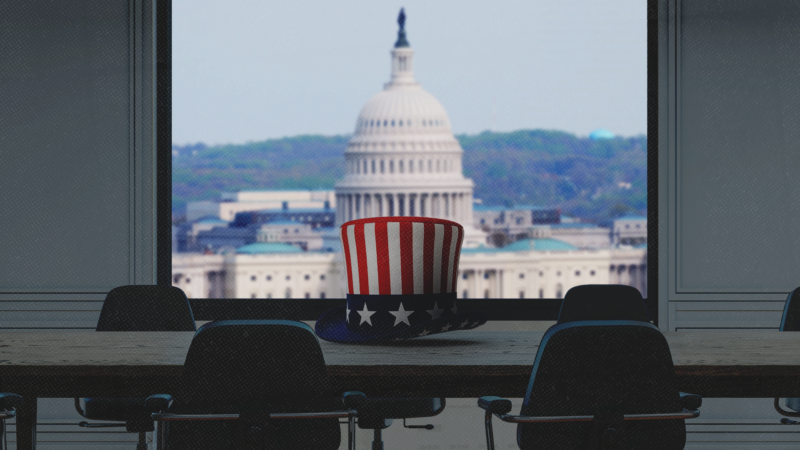
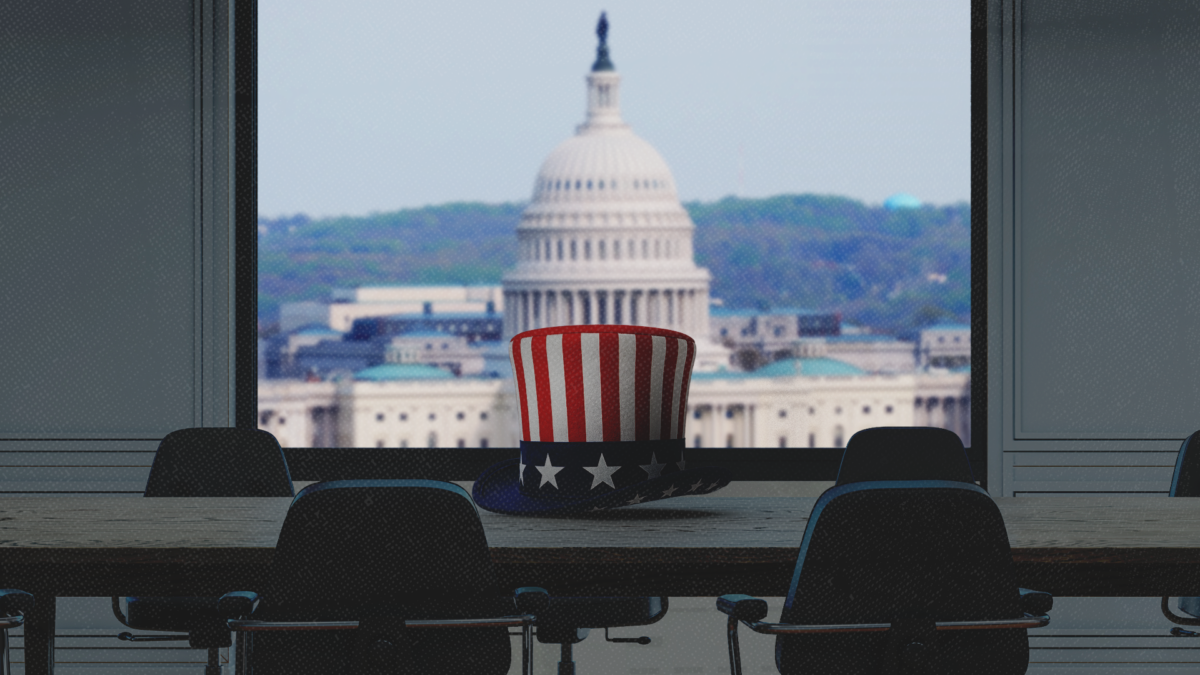
    An Uncle Sam hat on a conference table in front of an image of the U.S. Capitol | Songquan Deng/Dreamstime/Who is Danny/Magnific/Designer191/Magnific AI/Mariam Zakaidze

    This week, the Trump administration announced it's expanding its stake in semiconductor manufacturer GlobalFoundries. This brings the government's share of the company to over $2 billion, according to President Donald Trump, and it's only one of roughly three dozen companies in which this White House has acquired a piece of the action. This is a disturbing development for Americans who favor free enterprise and don't want the government to control the means of production.

    While it may be a while before the opportunity arises to roll back state intervention in the economy, given the drift of both major parties away from faith in the marketplace, the Cato Institute has launched a project to get the process started.


    $2 Billion Government Stake in One of 35 Once-Private Firms

    "The U.S. Department of Commerce will receive equity in GF of approximately four percent, further enabling the American public to share in GF's growth," GlobalFoundries announced Monday in a press release about a U.S.–Japanese initiative to open two new semiconductor manufacturing facilities.

    "This brings our total Investments to 1.63 Billion Dollars, and now, the U.S. Government's stake is worth over 2 Billion Dollars," Trump confirmed on Truth Social.

    The announcement's triumphant tone isn't necessarily shared by people who wonder what the government's ownership stake in one company will do to regulation and investment in the industry. Will fully private firms challenging a state-backed player experience an even playing field?

    In a July CNBC survey of 1,000 U.S. voters, 49 percent of respondents said it is "not appropriate for the federal government to own a portion of a U.S.-based company." Nineteen percent considered it appropriate, and 32 percent had no opinion.

    "Washington's expanding involvement in the businesses it regulates threatens the competition and innovation that underpin American prosperity," warns the Cato Institute's Tad DeHaven on the launch of the Restoring Free Enterprise project. "Our project will examine the consequences of that involvement and chart a path toward getting Washington out of the boardroom."

    Restoring Free Enterprise's Government Ownership Dashboard shows the U.S. government owning shares in 35 companies. The recent deal with GlobalFoundries comes on top of an earlier equity stake, giving the government 7 percent ownership of the firm. Other big deals include an 8.4 percent stake in Intel, a claim on 20 percent of distributions above $17.5 billion in Westinghouse, and an arrangement granting the U.S. government the right to appoint a director for U.S. Steel and to veto decisions over matters including investment and production.

    Why might this be a problem?


    When Government Enters the Market, Competition Is Undermined and Decisions Politicized

    In an analysis for the Center for Strategic and International Studies, Sujai Shivakumar, Charles Wessner, and Christina Tutino cautioned that direct government ownership could create "conflicts between the role of the government as an investor in a particular company and its role as a regulator (e.g., regarding export controls) of firms across the wider industry." They added that preferential treatment for state-linked forms could "distort competition, stifle innovation, and potentially lead to monopolies or market concentration in strategic sectors."

    "Once government crosses the line into equity ownership, the game changes," agreed economist Vance Ginn in a 2025 piece for the American Institute for Economic Research. "It's no longer about setting fair rules of the road—it's about Washington joining the race as a participant. That undermines competition, politicizes corporate decisions, and exposes taxpayers to risks they never agreed to take."

    Basically, when the government gets involved in any industry, it complicates matters for the companies in which shares are held, for competitors who must worry that regulators will put their thumbs on the scale to help favored firms, and for the market in general. Overall, government interference of any sort in market transactions does more harm than good, and direct ownership makes things even worse.

    "Federal rate controls, excessive taxes, barriers to restructuring, and rigid labor rules weakened private railroads in the mid-20th century, just as automobiles, buses, trucks, and airlines were intensifying competition," Cato's Chris Edwards points out in a case study for the Restoring Free Enterprise Project. Congress then created Amtrak to maintain the passenger train service its red tape had helped strangle, but despite plans for the railroad to be self-sufficient, "it has never earned a profit and has received tens of billions of dollars in subsidies."


    Proposals for Reform, but Is Anybody in D.C. Interested?

    The project acknowledges the Trump administration's intention to encourage U.S. manufacturing and to meet strategic defense goals. But it points out that private, profit-seeking firms are what made the U.S. prosperous and dominant in so many fields to begin with. The government should get out of the way of the market if it wants the country to continue to thrive.

    As alternatives to state ownership of companies, Restoring Free Enterprise proposes permitting and regulatory reforms that "shorten reviews, remove unnecessary requirements, reform the Jones Act, and recognize out-of-state licenses" for workers. The project also recommends free trade agreements that reduce barriers to international commerce, the removal of export and procurement barriers, tax reforms involving expensing, and immigration reforms that simplify processing and make it easier for foreign-born college graduates to remain in the U.S.

    The obstacles to implementing these reforms are substantial. The administration, while criticizing the Democratic Party's growing affection for socialism, itself embraces government ownership of companies, mercantilism, and heavy state intervention in economic decisions and activities. The Democratic Party has long been less market-oriented than the Republicans, and despite the GOP's transformation, a growing share of Democrats are openly socialist advocates for state control.

    "American political leaders on the left and right are rebelling against the market-first consensus that dominated Washington for four decades," concluded Axios's Courtenay Brown and Neil Irwin in July. "It's evident in everything from the Trump administration taking government stakes in dozens of private companies to socialist candidates winning Democratic primaries promising a more active government role in the economy."

    U.S. politicians are happily adopting damaging policies that are at odds with the country's prosperity-building tradition of free markets. The Restoring Free Enterprise project would reverse that unfortunate trend, but it's not obvious that many people in D.C. are interested in joining the fight.

    The post As D.C. Embraces State Economic Control, a Hopeful Project Seeks to Restore Free Enterprise appeared first on Reason Magazine.

    •  

    Battling for NC House seats in Northeastern counties

    photo ID Nash County poll worker Jim Martin instructs Jose Negron as he prepares to vote in the 2020 primary election at the Braswell Memorial Library polling place in Rocky Mount on March 3, 2020. Calvin Adkins / Carolina Public Press

    A look at 3 potentially competitive 2026 legislative races, as Democratic challengers seek to reduce Republicans' advantage in NC House.

    Battling for NC House seats in Northeastern counties is a story from Carolina Public Press, an award-winning independent newsroom. Our breakthrough journalism shines a light on the critical overlooked and under-reported issues facing North Carolina’s more than 11 million residents. Please consider making a contribution to support our journalism.

    •  
    ❌