❌

Reading view

Landowners in Texas' Big Bend Region Fight Trump Administration's Attempts To Seize Land for Border Wall
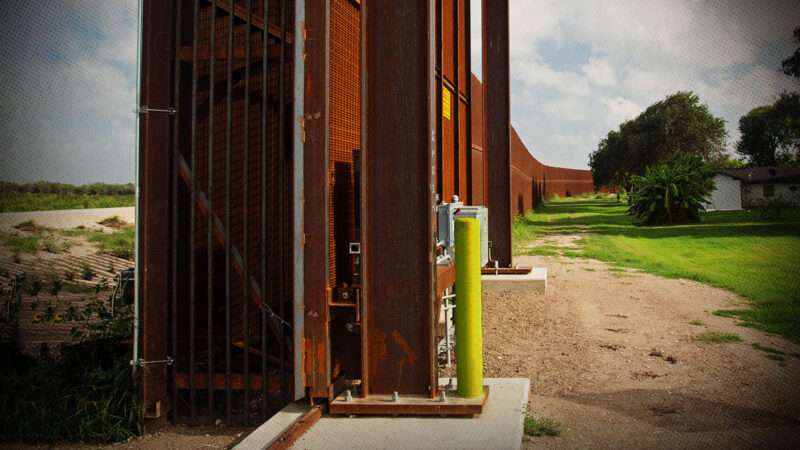
Border wall | Jim West/UCG/Universal Images Group/Newscom

The Trump administration's attempts to fast-track construction of the president's long-promised border wall through Texas' remote Big Bend region have ground to a halt amid fierce opposition, protests, and legal challenges from landowners and conservation groups.

A federal judge on Wednesday released an opinion explaining her decision to issue a preliminary injunction blocking border wall construction through the Big Bend area. U.S. District Judge Kathleen Cardone found that the plaintiffs, which included the Center for Biological Diversity and several longtime residents of the region, had shown a substantial threat of irreparable harm if the construction project is allowed to continue.

The Trump administration wants to spend $7.5 billion building additional security infrastructure along a 500-mile stretch of the U.S.-Mexico border running through the Big Bend region, which includes Big Bend National Park. The federal government began sending threatening letters to property owners announcing its intent to acquire necessary pieces of their land this summer, and it waived several environmental regulations, allowing it to put bulldozers on the ground inside the national park by September.

However, numerous groups and local landowners say the border wall project will alter their way of life and permanently scar one of the most rugged and pristine landscapes in the country. The project attracted bipartisan criticism and protests.

Cardone also found that the plaintiffs were likely to succeed on their claims that Department of Homeland Security (DHS) Secretary Markwayne Mullin exceeded his authority when he issued environmental waivers for the project.

The injunction is a temporary reprieve for property owners such as David Keller, an archaeologist and part-time river guide on the Rio Grande River. The original plans for the border wall expansion would have cut through Keller's 10-acre property near Redford, Texas, putting a 30-foot-tall wall on the levee that sits between the river and the rest of his land.

Keller says the Trump administration gravely underestimated how much anger its tactics and attitude would generate.

"It's a level of arrogance—they're just used to being able to bulldoze over people," David Keller says. "They were moving forward as if they weren't expecting any resistance, but boy, they're due for a wakeup call. And they're having it right now."

Keller is a plaintiff in a separate lawsuit against the DHS by Conserve Big Bend, a coalition of landowners, conservationists, river tour guides, researchers, and other affected parties.

Keller says he's loved wild, open country since he was a child, and as soon as he saw the region in the 1990s, he decided he would find a way to live and work there, which he's done for the past 25 years. "It's visually magnificent," Keller says. "It's incredible. It's like no other place I'd ever seen. It's one of the last unspoiled places remaining in the lower 48."

Keller says it's where he plans on being buried, too, although these days he's unsure whether to say "plans" or "planned." The proposed border construction is an existential threat to the life he's built, he says, and if the wall goes up, he'd likely move.

"I didn't come down here to live in a cage," Keller says.

The proposed border wall would not only block access to the river for farmers, ranchers, and outdoors enthusiasts along the river, as well as block the view into Mexico, it would wreck "the whole feeling of the place, the historical cross-border culture that we've developed," Keller says.

So far, the federal government has not tried to seize any private property in the Big Bend region through eminent domain, although it sent letters to property owners this summer requesting access to survey their land and warning them that it held the option to invoke eminent domain if they did not quickly sell.

Both Keller's and the Center for Biological Diversity's lawsuits argue that the department's justification for building and expediting additional border infrastructure in the Big Bend Region are factually and legally incorrect. The DHS determined that the sector of the border is an "area of high illegal entry."

However, despite making up roughly a quarter of the entire U.S.-Mexico border, the Big Bend sector only accounted for between 0.3 percent and 2.2 percent of total border-wide arrests over the past 30 years.

Cardone cited the low apprehension numbers in her finding that Mullin exceeded his authority to issue the waivers.

"The unrebutted evidence shows that the Big Bend Sector is, by far, the sector with the lowest rate of migrant apprehensions along the entire U.S.-Mexico border, both in terms of gross totals and apprehensions per mile of border," Cardone wrote. "Therefore, if the Big Bend Sector is an area of high illegal entry, so is every other sector, and the waiver authority would apply to the entire U.S.-Mexico border."

The post Landowners in Texas' Big Bend Region Fight Trump Administration's Attempts To Seize Land for Border Wall appeared first on Reason Magazine.
  •  

As a Texas local, I skip the crowds in Austin and head west to a charming nearby city with amazing wineries

Blue bonnets and poppies in field with lots of green trees near Fredericksburg, Texas
Fredericksburg, Texas, and its surrounding areas have some incredible scenery and wineries.

Malachi Jacobs/Shutterstock

  • I've lived in Texas for many years, and Fredericksburg is one of my favorite places to visit.
  • Fredericksburg has incredible wineries, and I like that it isn't too far from Austin or San Antonio.
  • The small city has a charming, walkable Main Street with some great shops and restaurants.

After more than 15 years of driving between San Antonio and Austin as a longtime Texas local, I've found my favorite detour: Fredericksburg.

Part of the scenic Texas Hill Country, it's a walkable city with German roots, popular for its array of wineries, boutique hotels, and lively downtown.

Although I love Austin and San Antonio, Fredericksburg provides a small-town feel that the aforementioned cities — with populations close to a million each — could never quite achieve.

In my opinion, Fredericksburg's small population of about 12,000 people only lends to its charm. It's a great break from bigger Texas cities, as it's less than a two-hour drive from Austin or San Antonio.

Here are a few reasons I visit Fredericksburg twice a year and highly recommend it as a travel destination.

In this area, wine is a huge draw

Main Street in Fredericksburg, Texas
Main Street has restaurants, wine-tasting rooms, coffee shops, and bars.

Little Vignettes Photo/Shutterstock

Fredericksburg is situated in the heart of Texas wine country, so visiting without enjoying one of its many wineries is like a crime in Texas. (Another crime? Dry brisket.)

In Fredericksburg, you can either stop by a multitude of tasting rooms on Main Street or drive out past a ranch or two to find Tuscan-style wineries hidden in plain sight.

One of my favorite wineries is Augusta Vin Winery — and it's worth the extra drive. I always enjoy sipping reds in the spacious tasting room, with large open windows perfect for taking in the Texas sunshine.

A few other wineries worth visiting in Fredericksburg include the Rhinory for the unique experience of drinking at a rhino reserve, Slate Theory for a touch of modernity, and Grape Creek Vineyards or Barons Creek for classic experiences with beautiful views.

There's no shortage of great places to grab a meal in Fredericksburg

Empty rounded bar area inside The Restaurant at The Albert
The Restaurant at The Albert Hotel is beautiful.

Kat Stinson

Consider leaning into the city's German heritage at The Auslander, one of the many locally owned restaurants on Main Street. Reminiscent of a classic Bavarian beer hall, it has beer, a whole section of schnitzel entrées, sausage plates, and German sandwiches.

For a guest more partial to upscale fare, try The Restaurant at Albert Hotel. It's fairly new and a great place for date night.

Led by Michelin-starred chef Michael Fojtasek, The Restaurant pays homage to seasonal Texas Hill Country-inspired cuisine with fresh local ingredients (like peaches) and spins on German dishes.

For good Texas barbecue, stop by Junebug's BBQ. Its menu is filled with smoked meats — the pulled pork is especially impressive — and all the fixings.

Other notable local bites include Vaudeville's famous gumbo that's only available on Saturdays, Otto's decadent cinnamon rolls, and Alstadt Brewery's ice-cold beer and tasty Reuben sandwiches.

Brisket, pulled pork, onions, pickles on pink paper on tray
I've tried brisket and pulled pork at Junebug's BBQ.

Kat Stinson

Main Street is also home to several nice coffee shops — and the Old West-themed Java Ranch is my go-to for a perfect iced latte. I also suggest checking out Kaffee Haus and Caliche Coffee and Roasters.

Lastly, if you want to visit an Instagram-worthy spot with lots of bubbly, head down Main Street to the all-pink paradise that is Brooke's Bubble Bar. It's a very cute place to snap photos and enjoy a drink.

There's so much to do and try here, and I know I'll keep coming back

Main street area with empty parking spots, plants
I find it's often easy to find parking in downtown Fredericksburg.

Main Street in Fredericksburg

I often switch up which vineyards, cafés, and eateries I visit, and Fredericksburg's variety of accommodations makes it easy to change up where I stay, too.

I can sleep in one of several boutique hotels, go for a more rustic stay at the Onera treehouse resort near Main Street, or enjoy a cozy guest cabin at Cross Mountain Vineyards.

Hotels and eateries aside, Main Street also has tons of art galleries, antique shops, clothing boutiques, jewelry stores, and more.

I appreciate that I can spend a whole day exploring downtown without ever moving my car. (Plus, I've always been able to find ample free parking on Main Street).

If you want to enjoy a big Texas city, check out Austin or even San Antonio. However, if you're looking for a quieter alternative with a small-town feel, Fredericksburg is a great choice.

After each visit, I know I'll be back soon.

This story was originally published on September 30, 2025, and most recently updated on October 16, 2026.

Read the original article on Business Insider

  •  

Musk's Meddling

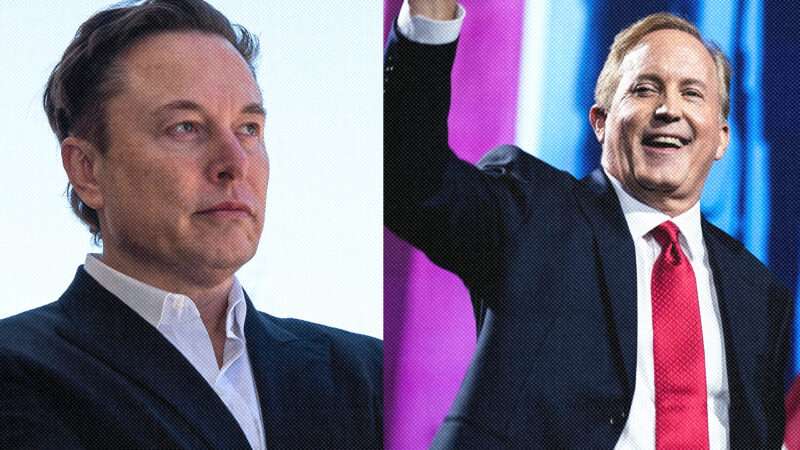
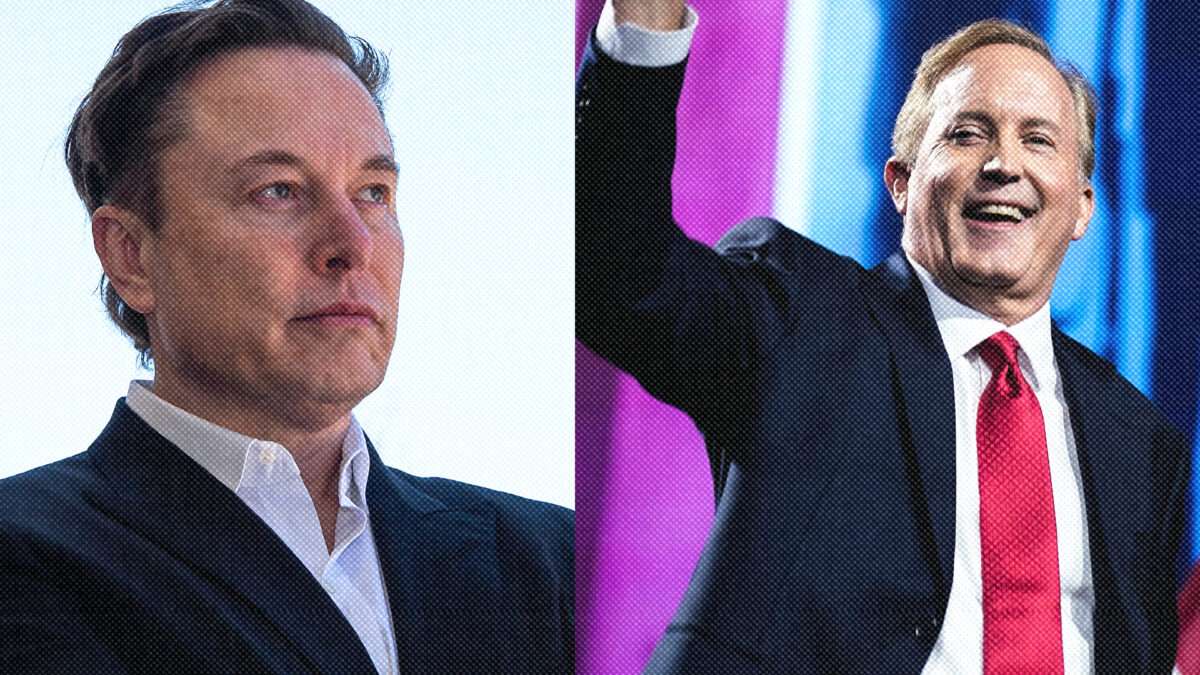
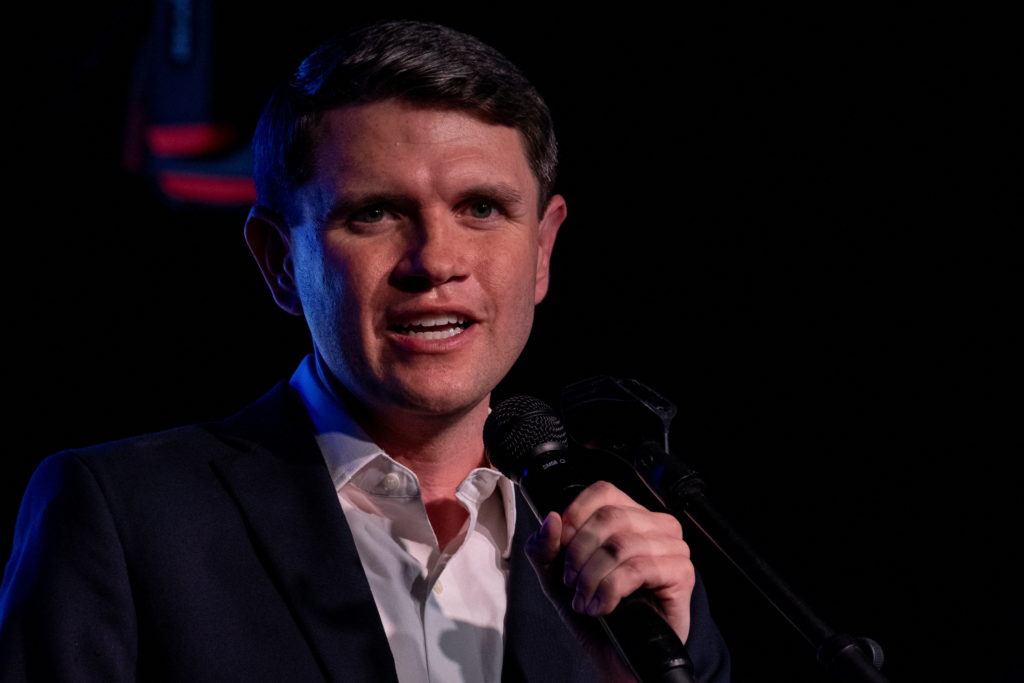
Musk-Paxton | BONNIE CASH/UPI/Newscom/Wikimedia Commons

Musk is the big Paxton funder: According to campaign filings released yesterday, Elon Musk sent $158 million in September to a super PAC that immediately gave that amount of money to a group backing Texas Republican Ken Paxton's Senate bid against Democrat James Talarico.

"On Sept. 9, the first day of the GOP midterm convention in Dallas, Musk gave $75 million to SLF," reports The Texas Tribune. "The next day, SLF put $75 million into a new entity called Texas PAC. By the weekend after the convention, the new super PAC was up on the air with a positive spot about Paxton's work on sex trafficking and a negative ad attacking Talarico as being for 'they/them, not you.'"

Then, two weeks later, "Musk gave an additional $83 million to SLF, according to the group's filing. Sure enough, SLF deposited $83 million into Texas PAC's coffers the following day."

It would be wild if Paxton still loses. Paxton has been embroiled in rolling scandals for years, and some current polls have him underwater by 13 points. A New York Times/Siena survey found only 38 percent of likely Texas voters believe he has "good character," versus 56 percent for Talarico.

Paxton was indicted on securities fraud charges in 2015, and that case dragged on for most of a decade before ending in a pretrial agreement. Then the Texas House, led by Republicans, accused him of bribery and abuse of public trust and successfully impeached him in 2023. The charges centered on allegations that he used his office to help donor Nate Paul—so you can imagine why Musk might want to curry favor with Paxton. Though Paxton was later acquitted by the state Senate, scandal keeps chasing him: Last year, his wife, state Sen. Angela Paxton, filed for divorce on "biblical" grounds, citing adultery as one of the reasons.

Of course, many Republican voters at the state level saw the impeachment as nothing more than a political hit job, one echoing what's happened to President Donald Trump at the national level. But what far-right, already-convinced Republicans believe about Paxton is sort of beside the point: He needs turnout, and he needs to win over more moderate Republicans and maybe even some fence-sitters if he hopes to beat Talarico. It's possible Musk's cash infusion will help, but it's also possible a cash infusion of many millions of dollars won't be enough to rehabilitate Paxton's shitty image.

A poll from the University of Texas and Texas Politics Project conducted in August "contained four major warning signs for Paxton: a drop in his support from June, lagging GOP motivation to vote, worse favorability numbers than Talarico and Trump's approval being underwater in the state."


Scenes from New York: "When Gov. Kathy Hochul first ran for re-election, Republicans in New York tried to prey on fears over crime, rising inflation and illegal immigration to boost the chances of their ticket statewide in the critical 2022 midterms," reports The New York Times. "The strategy seemed to work. Republicans flipped four House seats in New York, while putting a scare into Ms. Hochul, who eked out a six-point victory over Lee Zeldin, then a Long Island congressman who now leads the E.P.A." This year, Republicans have picked Bruce Blakeman, the Nassau County executive, as the guy with the best odds of beating Hochul, and they're running on crime fears again. But it's not working so well.

The crime and public disorder is, to my mind, still a problem, but it's not as rampant as it once was during the peak pandemic years. And it's certainly not perceived as very bad right now.


QUICK HITS

  • "Three children and a teacher were killed, and two others were critically wounded, in a shooting Thursday at Silver Rail Elementary School in Bend, Oregon, authorities said," reports CBS News. "The suspect, a 16-year-old male, was shot and killed by a bystander, Bend police said.…Officials would not say exactly what type of weapon was used in the attack or how many rounds were fired. Multiple law enforcement sources told CBS News the suspect used a shotgun, and The Associated Press cited a law enforcement official briefed on the incident as saying it was a pump-action shotgun purchased by his mother."
  • "A climate of radical paranoia around AI seems like it will be a feature of our world for the foreseeable future," writes Ross Douthat in The Free Press, "because human beings are really good at being paranoid about mysterious new things. With, of course, the AI doomers themselves being a prime example: As Mike Solana of Pirate Wires notes in his own recent reading of the doom canon, the prophecies of Yudkowsky and Co. are already moderately less credible insofar as they don't account for their own cultural success."
  • "Taiwan is preparing to tighten export controls on AI chips to further align with US restrictions, according to a senior official in Taipei, joining a Trump administration clampdown on the smuggling of cutting-edge semiconductors to China," reports Bloomberg. "Taipei plans to add artificial intelligence servers and cutting-edge semiconductors to a list of controlled items, Taiwan's Minister of Economic Affairs Kung Ming-hsin told Bloomberg News. After the measures take effect, he said, shipping restricted AI hardware to China will become a criminal offense under the Foreign Trade Act."
  • I'll leave you with a quote from Kennedy (not John or Robert) to start your weekend off right: "Kimberly [Guilfoyle] talked about sex so cavalierly that she made Samantha from Sex and the City seem like Greta Thunberg."

The post Musk's Meddling appeared first on Reason Magazine.
  •  

Maricopa County, Arizona: The ‘main epicenter’ of gun trafficking from the US to Mexico

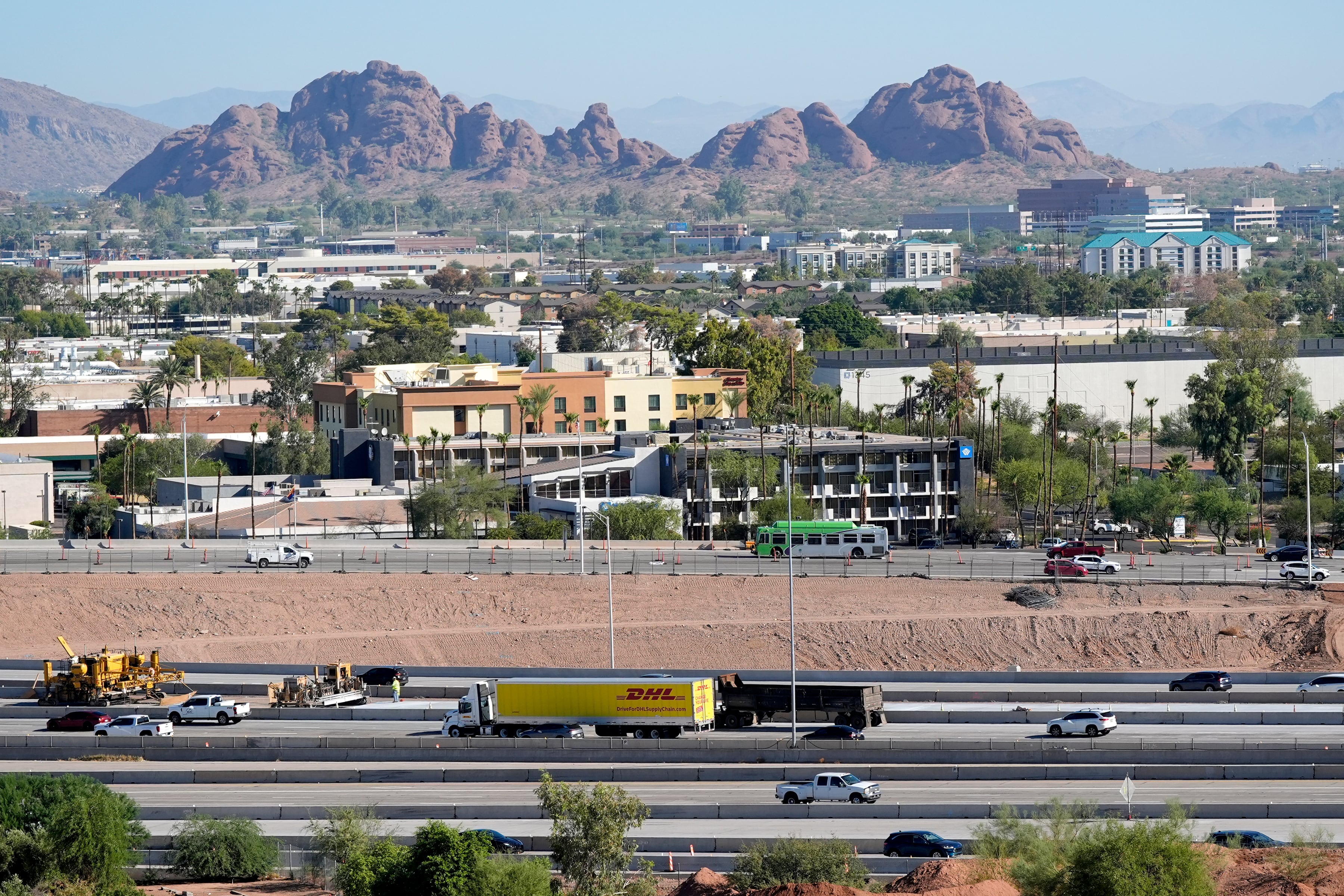
Maricopa County, in Arizona, has emerged as the “main epicenter” of illegal arms trafficking into Mexico, according to John Lindsay-Poland, coordinator of Stop US Arms to Mexico, an initiative that studies the illicit flow of weapons between the two countries.

Seguir leyendo

© Ross D. Franklin (AP)

View of Tempe, in Maricopa County, in a file image.
  •  

Trump Cancels Live Broadcast of Nidal Hasan Execution After Outcry

In a tense electoral environment for Republicans, President Trump, who had supported the public execution plan, backed down, though he noted that "it could have been a strong deterrent." Photo: EFE.

President Donald Trump reversed course Thursday and canceled the live broadcast of Nidal Malik Hasan’s execution, days after the Pentagon announced a plan that drew bipartisan rebuke and international condemnation.


Hasan was convicted of killing 13 people in 2009 at Fort Hood, the Army base in Texas. The Pentagon had announced last week that his execution would be shown live, a decision Trump said he supported “absolutely.”

Now the plan is gone. Had it gone forward, the public execution would have been the first in the United States since 1936.

RELATED: U.S. Secretary of War Announces Public Execution of 2009 Fort Hood Shooter

Trump offered a mixed explanation for the retreat. “Broadcasting the execution for everyone to see could have been a strong deterrent,” he said, “for the world to witness how the United States treats terrorists and scum like Hasan.”

The execution itself remains on the calendar. The Pentagon set the date for December 3, and Trump clarified that the immediate families of the victims may attend in person “if they so wish.”

Deterrent Argument Fades

The reversal came quickly. In early October, Secretary of War Pete Hegseth announced that Hasan’s execution would be public. Soon after, the Pentagon said it would be broadcast live. “We’ll make sure people can see it, that it’s public,” Hegseth told the conservative network Real America’s Voice News on October 7.

Trump said at the time that Hasan “deserved” to have his execution by firing squad shown in public because he “killed a lot of people.” Vice President JD Vance kept his distance and said he had no intention of watching the execution.

The announcement triggered an immediate reaction across the political spectrum. Republicans and Democrats alike warned that the images could be used to fuel radicalization.

Archbishop Paul S. Coakley, who leads the U.S. Conference of Catholic Bishops, condemned the administration’s plan and called it a “barbaric promotion of a culture of death that must be reconsidered.” House Speaker Mike Johnson, a Louisiana Republican, also leveled criticism at the proposal.

The historical stakes were high. The U.S. military has not executed a service member by firing squad since the Second World War. The last military execution took place on April 13, 1961, when Private John Bennett was hanged. Three other men sit on military death row at Fort Leavenworth in Kansas alongside Hasan. In 2008, President George W. Bush approved the execution of soldier Ronald Gray, but a judge suspended it and Gray remains at Leavenworth.

The prospect of transmitting the execution to millions of viewers drew sharp rejection abroad as well. Pope Leo XIV declared that capital punishment is “inadmissible” and said “effective penitentiary systems have been developed that protect citizens while not entirely depriving the guilty of the possibility of redemption.”

Torture Ban Breached

The Office of the United Nations High Commissioner for Human Rights issued the warning after officials floated the idea of staging public executions. The practices singled out include executions broadcast live, a format that transforms a judicial sentence into a public spectacle.

“Any move toward public executions constitutes cruel, inhuman and degrading treatment,” the office said. It also breaches the absolute prohibition of torture under international law. Under the International Covenant on Civil and Political Rights and the Convention against Torture, the ban is absolute. No war, no emergency and no domestic law can suspend it.

The warning carries direct weight in the case of Nidal Malik Hasan, a former Army psychiatrist who held the rank of major and now lives with partial paralysis. Hasan was shot by a civilian police officer at Fort Hood during the 2009 attack that left 13 people dead. He has remained partially paralyzed ever since.

At his military trial, Hasan admitted responsibility. He said he acted to prevent soldiers from deploying to Afghanistan to kill fellow Muslims. Hasan himself was about to be sent to that country. The admission was deliberate, not defensive. He framed the attack as an act of conscience, and he never disputed the facts. In 2013, a military court convicted him of premeditated murder and attempted murder. The panel sentenced him to death.

The reasoning reaches beyond a single prisoner. It protects the dignity of all people, even those convicted of the most serious crimes.

Trump abandoned the broadcast, but his framing never shifted. He still called Hasan a “terrorist” and “scum.” What collapsed was the spectacle, not the sentence. The execution still waits on the December 3 calendar, and the families of 13 victims still decide whether to watch it happen in person.

What began as a deterrent argument ended as a quiet retreat under pressure from his own party and from a world watching whether the United States would turn a state killing into a televised event for the first time in nine decades.

  •  
❌