There’s too much to say about Leiria district, a foremost Portuguese administrative division, hugely impacted and still sore after the devastation of Storm Kristin, which sometimes feels forsaken. It’s Leiria
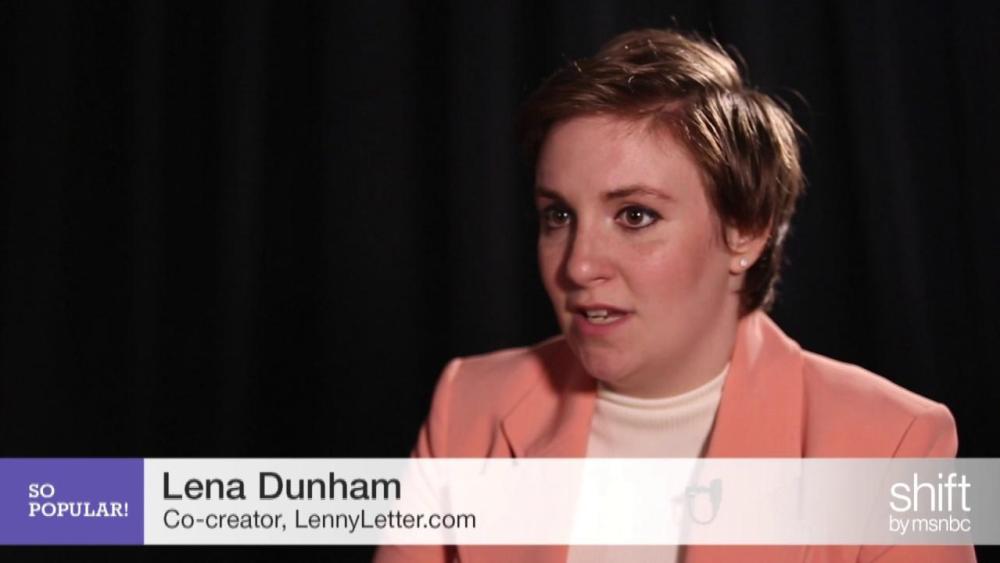
Will Hannah Horvath’s son, Grover, who should be about 10 years old now, spend his winters in the Hudson Valley (where Hannah’s college teaching gig took her in the final season)? Is the boy, like his mom, a master of back talk and lacerating asides? Has Hannah’s best friend, Marnie (Allison Williams), resumed her fledgling music career, or has she become a real estate agent (or maybe a tradwife)? Is Shoshanna (Zosia Mamet) still married to that Byron guy, and has she honored her vow to rid herself of Hannah, Marnie and Jessa forevermore? As for Jessa (Jemima Kirke), has she found any joy in her life outside of those moments when she is actively trying to destroy it?
My biggest concern won’t be how these women will engage with each other, but how they’ll engage with the show’s male characters.
But when the “Girls” reboot actually airs, my biggest concern won’t be how these women will engage with each other, but how they’ll engage with the show’s male characters. The show ran from 2012-2017, the entirety of former President Barack Obama’s second term and the first seconds of MAGA’s interminable dominion. In that giddy period of hope and change, Dunham and her writing partner, Jenni Konner, could freely splay the messiness of female erotic desire across cable television screens. That messiness made “Girls” a wildly controversial show, as did its insistence on drawing attention to the blurriness of sexual consent.
How will that messiness and bluriness be rendered in 2027, an era of radically reconfigured sexual and gender politics?
Months after the final episode of “Girls” aired, the #MeToo movement burst onto the scene, drawing global attention to workplace harassment and sexual assault. In 2022, Roe v. Wade was overturned. In 2024, buoyed, in part, by the rise of the manosphere, President Donald Trump came back for his endless Act II. Presently, an alleged gang rape at Cornell University has reopened a national discussion about consent and systemic gender-based violence.
Many millennial, zillennial and Generation Z women are experiencing not only a shrinking pool of desirable or even eligible male partners, but a palpable erosion of their civil rights. Accompanying their feelings of heteropessimism is a heightened sense of fear. After all, a man can sexually abuse a woman, subsequently defame her, and still become our president.
All of which is to say, Ms. Dunham will be writing her characters into a very different cultural moment.
The original “Girls” charted the professional and personal escapades of four overeducated, underemployed, 20-something-year-old millennial women. As befits fictional heroines in the optimistic Obama years, they fully owned their sexual exploits. Hannah, Marnie, Jessa and Shosh rather joyfully flirted, experimented, dated and hooked up (sometimes with one another’s ex-boyfriends).
With a candor that continues to astonish,“Girls” serially portrayed women making problematic romantic and erotic decisions. In “One Man’s Trash,” Hannah spends a weekend with a total stranger. In other episodes, Jessa works through her emotional difficulties by sexing up randos in the bathroom of the local bar. Marnie meets an impossibly pretentious artist named Booth Jonathan (Jorma Taccone), who verbally demeans her and repeatedly calls her by the wrong name. None of this prevents her from accepting an invitation to his studio, where he proceeds to lock her in a box as part of an art project.
The heart wants what the heart wants and all that, but scenes such as these are going to strain credulity in 2027 (a Gen Z student of mine expressed disbelief that these women entered male lairs without sharing their location with 400 girlfriends). Then again, it’s not as if Dunham didn’t see the #MeToo movement coming. The sixth season’s “American Bitch” (you can read my analysis of it here) chronicles Hannah’s afternoon in the home of a recently canceled novelist. Writer Chuck Palmer has been accused of sleeping with fawning coeds on his campus visits. Hannah has used her blog to call him out. What makes the episode so unsettling is Hannah’s own arousal during the visit — at least prior to the moment Chuck exposes himself to her.
The straight men of “Girls” were mostly a mix of narcissists, artistic posers, finance bros, pervs, pill poppers, smack addicts and profoundly unserious fellows.
The straight men of “Girls” were mostly a mix of narcissists, artistic posers, finance bros, pervs, pill poppers, smack addicts and profoundly unserious fellows. Interestingly, the male heartthrob at the center of the series, Adam (Adam Driver), is not slated to return in 2027. Whether that is due to his fame, his reported tussles with Dunham on set or something else is not clear. Narratively, that’s too bad, because Adam is one of the few gents on “Girls” who I could imagine: 1) converting to Orthodoxy, and/or 2) joining the manosphere in a plot twist. Brooding, hot, moody and at points unusually emotionally vulnerable, Adam is also given to violent outbursts. One graphic scene led many to believe that he had likely raped his girlfriend, Natalia.
The women of “Girls” are nearing 40 now. They will inhabit a culture whose sexual norms are rapidly changing. Will they be pursued by younger men, a trend breathlessly chronicled by outlets like The New York Times? Or will they strike up romances with artificial intelligence chatbots?
Knowing Dunham, it will likely all go very wrong for her characters; in her narratives, our ideals and aspirations are always wont to be mangled (by ourselves). As Hannah once fretted about her newborn: “What if I raise him perfectly and he does everything right and then he rapes like a jazillion people?”
The single most predictable action of the Trump second presidency happened just a few hours ago. Trump signed an executive order that exempted Russia from all of the key possible sanctions that could have been placed on it by the Graham-Blumenthal bill. Here is a link to the order and here is how it opens. The […]
No, what underwhelms me is a certain subset of Americans who are not attending these protests. This cohort (according to recent polls) apparently exists but appears to lack the courage to stand up and be counted in public: right-of-center voters that are more loyal to the Constitution than to Trump.
There ought to be nonstop protests across the U.S. against an illegal war that’s crippling millions of Americans’ budgets, making the world less safe and failing at every one of its constantly-shifting stated objectives.
A Fox News poll conducted between Oct. 9-12 found that among self-identified MAGA Republicans, Trump’s approval rating is 95% — a figure that would make most dictators blush. Meanwhile, among Republicans who don’t self-identify with the cult of Trump, the president is underwater: 47% approve, while 52% disapprove. Among independents, 22% approve and 78% disapprove.
Hey, non-MAGA Republicans and independents who live in objective reality, now’s a good time to show your faces in public!
It’s one thing to be a career GOP politician, terrified of crossing Trump for fear of losing their position of power. It’s spineless and opportunistic, of course, but at least it’s a reason. What’s the excuse for the rest of you?
Surely Trump’s relentless disrespect of American values and constitutional rights — like freedom of speech and religion; due process; birthright citizenship; prohibitions on bribes from foreign governments and warrantless searches; the freedom to walk outside without proof of citizenship — ought to have you mad as hell and taking to the streets. If you call yourself a libertarian or a conservative, then obviously you should see Trump as a greater threat to the rule of law and civil liberties than annoying woke college undergrads. If you’re a right-leaning independent, then Trump and his family gorging on ill-gotten countless billions must have you willing to let bygones be bygones and ready to march in the streets side by side with your liberal neighbors.
But I’m confident few, if any, of these folks will attend No Kings rallies this weekend. Whether because of apathy or fear of catching cooties from anything associated with Democrats or the left, the result is the same: they’ll be sitting on the sidelines as Trump gobbles up more American yardage for himself.
Hey, non-MAGA Republicans and independents who live in objective reality, now’s a good time to show your faces in public!
It’s possible that the polls predicting a “blue wave” election are correct. But a midterm “wipeout” isn’t enough for America to recover. Impeachments, investigations and public shaming ought to be the order of the day if Democrats win back one or both houses of Congress, but even that won’t do. For America to achieve some semblance of a shared national identity, there must be a near-universal call for a return to decency and respect for plurality. But that can only happen when roughly half the country demands the end of an unprecedented American personality cult that they’ve voted for in three consecutive elections.
I’m glad No Kings is drawing people to the streets and encouraging people to vote. It’s just not nearly enough. Not until the non-left — composed of non-MAGA Republicans, conservatives, libertarians and anti-woke centrists — confronts its own complicity and forges its own No Kings movement.
It knows she’s a WNBA player who inspired a Barbie, walked in a Victoria’s Secret fashion show and is a master at maximizing her brand. Her podcast is called “Unapologetically Angel.” She trademarked the term “Mebounds” in response to haters commenting on her field goal efficiency and has a marketing collab that synergizes her Reebok shoe and her deal with Hershey’s Reese’s chocolate.
It knows, too, her willingness to trash talk on the floor and motivate herself while getting in the heads of her opponents. Basketball fans have not forgotten Reese’s “you can’t see me” gesture to Caitlin Clark during the 2023 NCAA women’s national championship. Not all players and fans like Reese’s style, but getting likes is not what Reese is about.
Reese, 24, heads into Game 1 of the WNBA Finals on Saturday as the league’s defensive player of the year, poised to show that her experience level doesn’t matter at the league’s biggest stage.
Reese’s persona is built around refuting those who don’t believe in her ability and the force that she is, on or off court.
Reese, 24, heads into Game 1 of the WNBA Finals on Saturday as the league’s defensive player of the year, poised to show that her experience level doesn’t matter at the league’s biggest stage. She’s a winner through and through.
Reaching the finals is a goal Reese manifested around a year ago, when she watched the playoffs from home after missing them in each of her first two professional seasons.
Reese was the seventh overall pick in the 2024 WNBA draft. She was an All-Star in her first two seasons with the Chicago Sky but felt the franchise wasn’t taking major steps toward winning at a high level.
And she said so, questioning the Sky’s approach to roster building, including its decision to bring back franchise legend Courtney Vandersloot, who was in her late 30s. The interview went viral.
“I’d like to be here for my career, but if things don’t pan out, obviously I might have to move in a different direction and do what’s best for me,” she told the Chicago Tribune. “But while I am here, I’m going to try to stay open-minded about what I have here and maximize that as much as I can.”
The comments were remarkable both for Reese’s bluntness and her bravery. Reese spoke up about what she believed wasn’t right and demanded better — something many working women struggle to do. Already, Reese’s legacy looks to be defined by the ways she has defied expectations for women, much like how Diana Taurasi did with how she, too, talked smack on the court.
Reese and the Dream wanted the same things: to improve, to grow and to win. As a franchise, the Dream had been both slighted and underinvested in before an ownership change in 2021.
Reese’s comments weren’t well-received by her Sky teammates or the front office. She was suspended for half a game and said her language “was taken out of context.”
Seven months later, the Atlanta Dream acquired Reese, who quickly found synergy with her new team. Reese and the Dream wanted the same things: to improve, to grow and to win. As a franchise, the Dream had been both slighted and underinvested in before an ownership change in 2021.
Reese helped reinvigorate the Dream fanbase, and the team invested in her development, helping hone her talents.
From 2024: Angel Reese has genius in her fingertips defector.com/angel-reese-…
Her buy-in to head coach Karl Smesko’s mantra of managing emotions and valuing each possession is evident in Reese’s poised approach to the postseason. Although a playoff rookie, Reese hasn’t looked like one. Across five playoff games, Reese has averaged 18 points, 8.4 rebounds, 2 assists, 1.6 steals and 2.2 blocks.
Smesko has also committed to working with Reese on her 3-point shot, a necessary skill for modern front-court players. He challenged Reese to practice shooting in front of her teammates during training camp, something that initially embarrassed her but has fueled her success shooting from deep during the postseason.
Smesko became Reese’s shooting partner not only to build trust with a team star but also to get to know her better. The two have a handshake that has ricocheted around social media.
It’s a fist pound, followed by the right knee going up and a shooting motion, and then both stick their tongues out.
karl smesko on why it's important to him that he is the one on the court pregame working with angel reese on her shot pic.twitter.com/Eqmz2LFyrf
As the Dream head into their first finals since 2013, Reese believes her impact is rooted in her fearlessness. She takes risks just like she did in Chicago.
“I always talk about you can’t be scared when it comes to this,” Reese told me earlier this month.
This fearlessness manifested against the Washington Mystics in her first-ever playoff matchup last month, she said. “I knew I was just going to be fearless. Go out there and play fearless, play with just so much poise, and just have fun and do everything that I can do. And that’s always how I’ve been in my career.”
Reese’s fearlessness and her high motor are widely known. Less appreciated are the ways she uses her instincts and sheer athleticism to impact the game at multiple levels.
Reese also earned the honor because of her mastery of opponents’ tendencies and making sharp, in-game adjustments that help position her team to win.
Accolades like Defensive Player of the Year reflect rebounds, blocks and steals. But Reese also earned the honor because of her mastery of opponents’ tendencies and making sharp, in-game adjustments that help position her team to win. She had not just the confidence but also the shrewdness to tell her veteran teammate DeWanna Bonner to pass her the ball at the end of Game 2 of the Dream’s semifinal against the New York Liberty. The idea was that Reese would help run out the clock and bait the Liberty into chasing her around.
“That’s just IQ right there,” Reese said when asked about the play. “I mean, it’s going to take them a couple seconds to chase me around the court. So, I told her to throw it in the backcourt and I’m gonna run around as fast as I can out there. I took as much time off the clock as I could, and we just executed.”
Reese is trying to do something that hasn’t been done in almost a decade: lead a team to a championship in her first three years in the WNBA, a feat last achieved by New York Liberty forward Breanna Stewart in 2018.
Whether or not she becomes a league champion this season, Reese is already showing the world that her influence is equally great on and off the court.
Setting aside the jokes about the shortness of Katie Zacharia’s tenure as White House press secretary, the controversy over her claim to be a lawyer obscures a more damaging issue. For years, she promoted some of the most heinous and bizarre conspiracy theories bubbling up from the right-wing swamp. Simply put: Zacharia was ousted for the wrong reason. Her embrace of extreme and downright loony assertions amount to a much stronger basis for dismissal than her bogus lawyer claim.
Zacharia’s social media history suggests a worldview colored by baseless thinking, defamatory accusations and sinister fantasies — not exactly a good look for someone tasked with conveying the U.S. president’s policies and actions to the press and public with authority and integrity. The noxiousness of her posts and reposts was apparently evident even to her, since she deleted many of them before her new role was announced.
According to reporting by CNN, the Bulwark and the newsletter Popular Information, Zacharia has repeatedly accused people, particularly Democrats, of sexually molesting children. In April 2022, she reposted and later deleted a Truth Social post from “Stop the Steal” organizer Ali Alexander: “Democrats want to mask and rape your children. That’s their satanic platform.”
She repeatedly referred to Democratic operative and former White House chief of staff John Podesta as a “pedo,” apparently still connecting him to an outrageous child-abuse conspiracy theory that had been debunked years earlier. She later paid tribute to the late Robert David Steele, a conspiracist who claimed that children were being kidnapped and sent to a colony on Mars: “He was exposing the pedo rings of the elite cabal,” Zacharia wrote. “May he Rest in Peace and the work of his hands not have been in vain.” In another Truth Social post, she noted that “the radical left Hollywood elites are sick pedo cannibals.” She added, “Change my mind.”
If Trump does indeed find another role for Zacharia in his administration, questions should be asked.
Another of Zacharia’s reposts suggested that Joan Rivers’ death in 2014 was somehow connected to an insulting crack the comedian once made about the Obamas: “Remember that time Joan Rivers said Obama was gay and Michelle had a dick then suddenly died?”
This wasn’t the output of a mischievous teen troll; Zacharia’s controversial deleted posts and reposts date from as recently as 2022. By then, Zacharia was in her late 30s and had been employed in various senior communications roles, including most recently as an adviser to Truth Social, the Trump-owned social media platform.
Zacharia’s deleted posts on political issues were problematic for another reason. For instance, she re-posted and deleted a tweet accusing the Justice Department of covering up the crimes of people involved in the Jeffrey Epstein scandal, an opinion at odds with the administration she was tapped to speak for. Last year, she advocated suspending habeas corpus — the fundamental right to challenge detention in court — for migrants arrested by Immigration and Customs Enforcement, an extreme and authoritarian measure. (Zacharia’s legal theory, if any, was that the Constitution justifies denial of this right in cases of rebellion or invasion.)
In its article Tuesday on this social media activity, CNN reported that neither Zacharia nor White House communications director Steven Cheung directly addressed the issue. In a statement, CNN reported, Cheung called her “uniquely qualified” and “whip smart to help inform the American people.” The White House responded to Popular Information’s request for comment by referring it “to the President’s TRUTH on Katie,” a post in which Trump praised Zacharia as “a loyal and brilliant supporter, right from the beginning.” Zacharia wasn’t asked about these posts in interviews with three conservative outlets, including Fox News, between Thursday and her ousting Friday.
Clearly, the safe space couldn’t last. Trump apparently realized that if she ever assumed the podium again, Zacharia would inevitably face a barrage of questions about herself. That, too, is problematic: A press secretary shouldn’t be the story. But Zacharia’s history of hair-raising statements rightly made her one.
The lawyergate bubble burst in just five days. On Thursday, in an interview with right-wing influencer Jack Posobiec — himself a noted purveyor of conspiracy theories — Zacharia acknowledged that she didn’t pass the California bar exam. On advice from legal experts, she said, she decided that it was proper to call herself a lawyer but not an “attorney.” She said much the same to the New York Times, which reported on Thursday that she had identified herself on LinkedIn as general counsel to a group led by a Trump loyalist. In the wake of a CNN report Thursday that Zacharia had shared at least 15 social media posts over the past two years in which she referred to herself as an attorney, she told Sean Hannity that those were retweets of a title she had been given — but she was out shortly after lunchtime Friday.
But if Trump does indeed find another role for Zacharia in his administration, questions should be asked. Among them: Did she really think Hollywood “elites” engaged in pedophilia and cannibalism? How did she come by this knowledge, and who are the individuals who’ve engaged in these repulsive crimes? Is the Justice Department still covering up Epstein’s crimes? Does she truly believe there’s a lost colony of kidnapped children on Mars? As press secretary, there was no way Zacharia could keep the public focus on war, the economy, healthcare and the midterm elections while also defending a conspiracy about Joan Rivers’ death. But a less prominent position doesn’t moot the questions that should be asked if Zacharia is drawing a taxpayer-funded salary.
For Trump, media controversy may be on brand. The White House’s most recent top spokesperson had been a font of misinformation, outrageous “theories” and mortifying lies. In view of her boss’ track record, that may not be a bug or even a feature. It may be why Zacharia got the job in the first place.
Before the upcoming midterm elections, Sen. Bernie Sanders, I- Vt., has pulled off what he couldn’t in his two presidential campaigns. The self-described democratic socialist has managed to reshape the Democratic Party, and potentially its trajectory, with a new generation of upstart candidates he has inspired, mentored, funded or recruited.
Unlike in past years, when Sanders was relatively late in making endorsements to ensure he was backing viable candidates, he jumped in early this cycle — and he jumped in big, with more than 70 endorsements for positions in Washington and across the country, including House and Senate seats and state insurance commissioner races. Seventy-five percent of his endorsed candidates won their primaries, according to Sanders’ team.
Watch “Long Game: The Bernie Sanders Effect,” a two-hour special on MS NOW Saturday at 8 p.m. ET
Some who won the Sanders tap of approval are relative newcomers and are not the kind of candidates typically championed by a Democratic party establishment constantly worried about alienating centrist or right-leaning voters. The Wall Street Journal and Axios have suggested that Sanders has become a “kingmaker.” The midterms will help determine how true that is.
I conducted an extended interview with the senator for a special airing this weekend on MS NOW, called “Long Game: The Bernie Sanders Effect.” The two-hour special, which airs Saturday at 8 p.m., examines the improbable arc of Sanders’ life and political career, including his childhood in Brooklyn, where money was tight and his parents died young; his challenge to the longtime political machine in Burlington, Vermont, as an upstart socialist candidate for mayor; his two presidential campaigns, during which he drew some of the largest, loudest and most loyal crowds; and his effort to create a far-reaching progressive movement after he failed to win the nomination.
“The Democratic Party failed working-class people on economic issues,” Sanders told me in our sit-down. “I think they have a lot to be proud of in terms of fighting for civil rights, for women’s rights, for gay rights, for environmental stuff. But in terms of working-class issues, no. I don’t think they’ve done a good job. So a lot of workers out there say, ‘Well, you know, we voted for you. Our fathers voted for you. To hell with you.’”
Sanders is committed to trying to seize control of the House and the Senate for Democrats to provide a check on President Donald Trump’s power. But with a string of upstart candidates, who in some cases call themselves party “insurgents,” he and they are simultaneously challenging the Democratic Party itself and its cadre of consultants, corporate donors and traditionalist party gatekeepers.
“What we need to understand and figure out is how we bring together the insurgent working-class youth movement that is taking over the polls,” Ocasio-Cortez told me. “The energy and the momentum is with an ascendant generational shift.”
That so-called insurgency within the party that pushes a progressive agenda, rejects corporate funding, criticizes Israel and is determined to pull Democrats to the left has created some real heartburn inside the party.
El-Sayed and AOC are already thinking beyond 2026 bt test driving a national platform for the left. www.semafor.com/article/10/1…
“If those candidates succeed, then he is a kingmaker and his support will be sought after in 2028 and beyond,” said our MS NOW colleague Steve Benen, a political historian and writer who has followed Sanders’ career as a longtime Vermonter. “If those candidates fall short, it’s a very different story. Bernie Sanders starts to be seen as a villain among Democratic leaders.”
To some degree that has already started. Rahm Emanuel, the former Obama White House chief of staff, mayor of Chicago and likely 2028 presidential contender, wrote a scathing column in The Wall Street Journal in July with the headline, “The ‘Bernie Bros’ Could Spoil Democrats’ Midterms.” Emanuel argued that Republicans would make every Democrat in the country answer for the most radical positions of the Democratic Socialists of America, such as abolishing prisons and defunding the police and the Department of Defense — even though many of candidates Sanders has endorsed are neither socialists nor DSA members.
For example, Abdul El-Sayed, the Democrat running for the Senate from Michigan, rejects the socialist label and instead calls himself a “progressive capitalist,” and has gladly accepted Sanders’ endorsement as well as a $1 million donation from proud DSA member, Ocasio-Cortez. Angie Nixon, who’s running for the Senate from Florida, joined the DSA in June and has accepted its fundraising and organizational support but has said she is not a socialist. Other Sanders-backed contenders — Senate candidates Peggy Flanagan in Minnesota, Troy Jackson in Maine and Rebecca Cooke in Wisconsin — are not socialists and never have been.
Abdul El-Sayed, the Democrat running for the Senate from Michigan, rejects the socialist label and instead calls himself a “progressive capitalist,” and has gladly accepted Sanders’ endorsement as well as a $1 million donation from proud DSA member, Ocasio-Cortez.
Nonetheless, Republicans have used the socialist label and the more extreme aspect of the DSA platform to suggest Democrats are too radical for mainstream America. But as Benen explained, the socialist label doesn’t carry the taint or the baggage it once did, especially among young voters.
“For the longest time, you hear the word socialism, and you think Fidel Castro, you think of Soviet Union. You think these horror shows, and people were, I think were reflexively opposed to the very idea,” Benen said. “I think that now there are polls that show socialism itself is no longer this nightmare word that people are so afraid of. And, in fact, it’s growing. We were seeing it have increasing popularity, especially among younger voters.” He said Republicans using “socialism” as “this evil word to scare voters away isn’t working because socialism as a concept is becoming more popular.”
That insight applies to some places more than it does in others. Several of the Bernie- backed candidates embrace his money, his campaign infrastructure and the huge crowds he can bring to rallies more than Sanders’ democratic socialist label or ideology.
Whatever they call themselves, all of the candidates Sanders has endorsed tout the basic tenets of his progressive agenda: addressing economic inequality, providing healthcare for all, fighting corporate greed and rejecting a political system that rewards the rich while shortchanging the working class. Sanders argues that those messages resonate with voters everywhere, not just in blue-leaning districts, and he and Ocasio-Cortez, his frequent road companion, are testing that theory by taking their Fighting Oligarchy Tour and their prodigious campaign war chest to GOP strongholds to court the very voters establishment Democrats worry about alienating.
I think we are putting a major thesis to the test. But it’s about time that we do that because we have tried this old playbook over and over and over again.
REP. ALEXANDRIA OCASIO-CORTEZ
“I can’t tell you how many times I’ve heard things like, or heard things insinuated, like a Muslim man can’t win in Michigan. Or that a candidate like Angie Nixon can’t win in Florida,” Ocasio-Cortez said.
When I asked her if that strategy would work in a general election, she said, “I think we are putting a major thesis to the test. But it’s about time that we do that because we have tried this old playbook over and over and over again.”
For his part, Sanders has created a new playbook in which endorsements come with an infrastructure that includes money, a system for identifying and motivating voters, an expansive and effective get-out-the-vote network, and the “Fighting Oligarchy” road show that began in early 2025. The tour draws massive crowds in a festival-like atmosphere that can generate enthusiasm and encourage voter registration.
It should be said that Sanders can complicate things for Democrats in swing states or districts. James Talarico, who is running for U.S. Senate against Republican Ken Paxton, said he will skip the Fighting Oligarchy’s three-city swing through Texas next week as that race tightens.
With a string of primary wins, the test now is whether Sanders-backed candidates on the far-left, progressive flank, who won with enthusiastic support from like-minded voters, can appeal to less ideological Democrats, centrist independents and even GOP voters who have grown weary of Trump.
Sanders has always insisted the movement is not about him. But given the amount of time and energy he has invested and all the candidates he has endorsed, in many states on Nov. 3, it will be.
Michele Norris will be answering Members’ questions about her interview with Bernie Sanders during an exclusive Q&A on Saturday at 6 p.m. ET.
It’s the crisp Atlantic breeze rolling over the coast between Peniche and Nazaré, the world-famous surf breaks, the endless orchards of Rocha pears and apples stretching across Caldas da Rainha,
The UK government has returned to an issue musicians have been discussing since Brexit: how to make working in Europe easier again.
Its new music strategy, Turn It Up: Our Plan for Music, refers to the first high-level meeting on culture between the UK and the European Commission, held back in March, and promises continued work to reduce the barriers faced by British artists touring the EU.
The timing is significant. The UK is preparing to rejoin Erasmus+ in 2027, while London and Brussels are pursuing a broader reset of post-Brexit relations.
Music offers an interesting test of that reset. The UK has left the European Union, but its musicians have not become any less European.
British performers still tour the continent, while European musicians continue to work in British orchestras. The musical ecosystem survived Brexit. Navigating it became considerably more difficult.
A UK government study estimates that additional barriers to EU touring between 2022 and 2024 cost Britain £208m in lost economic output and the equivalent of 2,490 full-time jobs.
A Musicians’ Union survey found that, among musicians who had previously worked in the EU, 75 percent reported fewer bookings and 72 percent lower EU income.
More than half said EU touring was no longer financially viable.
But music reveals something more interesting than another item on the list of Brexit consequences. Brexit drew a political border through a professional community that had operated internationally for centuries.
Musicians were ‘European’ before EU
European musical mobility did not begin with freedom of movement. In the early 19th century, theatre companies crossed linguistic and political borders. Imperial Russia accommodated French and German theatrical companies alongside Russian performers, while Italian opera was embedded in its musical life.
Individual musicians were equally mobile. John Field, the Irish pianist and composer at the centre of my own research, trained in London before spending most of his adult career in the Russian Empire. The German pianist Adolf Henselt settled there and became deeply involved in Russian musical education.
These were not exceptions: musical life itself was international. The EU did not invent that circulation. European integration merely made it administratively easier.
Brexit did not make British musicians unwelcome in Europe, or European musicians unwelcome in Britain. It changed the cost of maintaining those relationships.
For an international star with professional support, another permit can be an inconvenience. For a young ensemble deciding whether four European concerts are financially viable, it can determine whether the tour happens at all.
The border appears before the first tour
The consequences begin before professional life. A conservatoire is not simply somewhere a musician obtains a qualification. It is where professional relationships form. A student may meet a future ensemble partner, while an exchange can produce an opportunity years later.
The post-Brexit figures are striking. The number of new EU students entering UK higher education fell from 66,685 in 2020–21 to 28,375 in 2023–24 — a decline of around 57 percent, according to figures based on HESA data.
Britain’s Turing Scheme supported outward mobility, but did not reproduce Erasmus+’s reciprocal structure.
The UK’s return to Erasmus+ in 2027 therefore matters beyond universities. In music, today’s exchange student can become tomorrow’s professional collaborator.
Meanwhile, Brussels is actively spending money to encourage cultural mobility. Creative Europe has a €2.44bn budget for 2021–27. Its Pan-European Cultural Entities programme specifically supports orchestras working across borders to develop young musicians: around €11m was allocated to five projects in 2024, expected to involve more than 1,000 young musicians from at least 20 participating countries. The policy assumption is revealing: movement itself creates value.
Put musicians into the reset
At the 2025 UK-EU summit, London and Brussels explicitly recognised “the value of travel and cultural and artistic exchanges, including the activities of touring artists.”
The new high-level cultural dialogue provides a forum to turn that promise into policy. Cultural mobility should become a permanent part of the UK-EU reset.
London and Brussels should use the dialogue to identify touring requirements that can realistically be simplified and work with member states towards greater consistency for short-term cultural engagements.
Emerging artists should also be explicitly considered in the proposed Youth Experience Scheme. The commission’s original proposal envisaged a time-limited route for people aged 18 to 30 to live on the other side of the English Channel. Paid cultural work should be clearly accommodated in whatever agreement emerges.
A 24-year-old violinist should not discover that a programme intended to restore opportunities for young Europeans works perfectly until somebody pays her to perform.
None of this means recreating freedom of movement through the orchestra pit. Britain chose to leave the EU and cannot expect every privilege of membership.
The argument is more practical. British and European cultural industries remain intertwined, and unnecessary friction is most expensive for those least able to absorb it. Major institutions employ administrators. International stars have managers. A young quartet may have four instruments and a group chat.
Two centuries ago, Field travelled from Ireland through London and built a career in Russia. Henselt left Germany and became part of Russian musical education. They did so long before Eurostar, Erasmus+ or Creative Europe.
Two hundred years later, crossing the continent is faster. Building a European career need not become harder. The UK has left the EU. Its musicians have not left European musical life.
As London and Brussels shape their new relationship, cultural mobility should be treated as part of its infrastructure. Musicians will continue to cross the Channel. The question is how costly we choose to make it.
More than 25,000 police officers were deployed across New Delhi recently to prevent demonstrations led by India’s new youth-led political movement, the Cockroach Janta Party (CJP). Government authorities had denied the CJP permission to protest on public-order grounds. The ensuing security operation saw the authorities shut one in six metro stations in the capital, barricade […]
On Friday, the White House confirmed Zacharia would no longer be serving as President Donald Trump’s press secretary, just three days after her first and only media briefing. Her ouster followed criticism from pundits, ethics experts and, perhaps more importantly for Trump, a less-than-friendly interview with Sean Hannity on Fox News.
Zacharia’s removal was also preceded by a California state bar ethics complaint alleging the now former press secretary had been incorrectly labeling herself a lawyer despite lacking a license to practice law. Indeed, when Trump was asked in front of cameras Wednesday in which state she had passed the bar exam, Zacharia responded, “When I moved to China.”
Zacharia has spent the past few days attempting damage control, for good reason. Few jobs require more public trust than representing the president of the United States. But trust, just like a license to practice law, must be earned.
Zacharia graduated from Pepperdine University School of Law in 2011. But that is not the same thing as being a licensedattorney, a term derived from the word “appointed” that refers to a lawyer who represents clients. State bar authorities regulate their profession, providing law licenses only to applicants who pass a rigorous written examination. The bar examination tests a broad array of legal topics, including criminal law, evidence, torts, property, constitutional law, contract law and professional responsibility, among others. Applicants must also pass a background check for “moral character” to determine whether any events in their past might cast doubt on their integrity to serve as an officer of the court.
Even after a person is admitted to the bar, lawyers must continue to pay annual dues to the state licensing authority, fulfill any continuing legal education requirements and refrain from any legal misconduct. The goal of regulators is to ensure that clients are represented only by lawyers with the requisite training, capability and trustworthiness.
According to the bar complaint filed by Campaign for Accountability, a nonprofit watchdog organization, Zacharia is not admitted to practice law in any U.S. state, including California, where she lived until her recent move to Washington, D.C. According to The Wall Street Journal, Zacharia sat for the California bar after law school but did not pass. She then worked at a law firm in Beijing for two years, but China licenses only Chinese nationals to practice law. Even if she were licensed in China, that would not be sufficient to practice law in the U.S.
California law makes it a misdemeanor to advertise or hold oneself out as “practicing law or entitled to practice law or otherwise practicing law who is not an active licensee of the State Bar.” Zacharia’s representations that she is a “lawyer” in television appearances for Fox News may have been misleading, but they likely do not arise to the level of holding oneself out as entitled to practice law under the statute.
For her part, Zacharia told The New York Times that this was all a misunderstanding, and that Pepperdine’s president personally told her it was fine to identify as a “lawyer” when appearing on cable TV, but that she should avoid “attorney” or “esquire.” (She also tried to clean up her earlier “moved to China” comment by claiming she had thought the question she was being asked was, “Where were you after law school?”)
But the questions about her conduct don’t end there. According to Zacharia’s LinkedIn profile, she served as general counsel for a conservative advocacy organization called Fix California, founded by former Trump administration official Richard Grenell, from 2024 to 2025. The general counsel is typically the top lawyer of an organization. That title suggests someone who is actively practicing law by providing legal advice for the organization and is permitted to accept service of process on its behalf. Recipients of correspondence on letterhead from someone using the title of general counsel would certainly assume that the writer was licensed to practice law. Using the title “general counsel” would seem to be “holding oneself out as entitled to practice law.” And without a license, that use would put Zacharia in violation of California law.
Similar accusations have been made against Abdul El-Sayed, the Democratic candidate for U.S. Senate in Michigan, who uses the title “doctor” despite never having practiced medicine. What is different about El-Sayed is that he not only graduated from medical school but he also obtained a doctoral degree in public health from Oxford University in England, earning the degree — and title — of “doctor.”
Zacharia’s tenure may be historically short, but her hiring still raises questions about the vetting the administration uses in hiring candidates for important positions. While some may argue that Zacharia’s position as press secretary does not require a law degree, her resume puffing should have been disqualifying for a White House role built on credibility. America must be able to have some amount of confidence in the person representing the presidential agenda in the briefing room.
Of course, Trump voters have long made peace with accepting a president who lies. What difference does it make if his press secretary did, too?
In third grade, I came home from school in Westchester and announced to my parents that I wanted to be Jewish.
Most of my friends were. Their families had holidays the school calendar already knew about and traditions with a settled place in the neighborhood. I was the only Zoroastrian besides my brother. One of my high school textbooks even called the religion extinct. Substitute teachers stumbled over my name. For years I wanted to change it — not because I disliked it, but because it introduced me before I could introduce myself.
My parents never told me to assimilate. They modeled it instead: excellent schools, professional careers, achievement inside American institutions. The instruction was never spoken, which made it harder to argue with. I drew the conclusion an 8-year-old draws: If difference creates friction, reduce the difference.
The numbers suggest that it is not that our demographic has failed to assimilate, but that we have done so too well and achieved too much.
I thought about that kid again this week after a 19-year old man allegedly attempted to carry out a mass shooting at a Hindu temple in Aurora, Illinois. According to prosecutors, the suspect told co-workers that he “couldn’t wait to kill Indian people” but had to abandon the attack when his rifle jammed. On Thursday, Rep. Raja Krishnamoorthi revealed that he was praying at the temple during the attempted shooting.
The attempted shooting is the latest chilling example of increasing anti-South Asian bigotry on the right. A recent report from the Center for the Study of Organized Hate put numbers to something that has become difficult to miss. Researchers identified roughly 542,000 hateful posts targeting South Asians on X between January 2025 and June 2026. Monthly volume was up 240% since January 2024. Nearly half of the posts portrayed South Asians as invaders, job thieves or a demographic threat.
The numbers suggest that it is not that our demographic has failed to assimilate, but that we have done so too well and achieved too much. Late last month, hugely influential right-wing activist Chris Rufo and far-right book publisher Jonathan Keeperman published a podcast discussing what they termed “the Indian Question” — and arguing that Indian Americans could never be assimilated despite their successes.
Rufo and Keeperman’s discussion was sparked by a hateful post from Bo French, the Republican nominee for the Texas Railroad Commission. The morning after the University of Texas’ football team came back to beat top-ranked Ohio State, French posted an image of South Asian students celebrating in the stands.
“I heard UT graduation this year looked like this,” he wrote, “I didn’t believe it. The problem is now obviously far worse than anyone imagined.”
After the 1965 immigration, reforms opened the country to skilled migration and the desi community that arrived built the sort of résumé that American meritocracy claims to reward.
The students were performing one of the most familiar rituals of American life: cowboy hats and a football game. Had assimilation really been the question, the photograph would have answered it definitively. Instead French made the picture evidence of a sort of invasion. One of the students, Rahul Kodali, waved off the compliment he was offered by people rushing to defend him as sufficiently assimilated. “I’m going to the games because I like the team,” he said, not to offer some demonstration of cultural adaptation. But French did not weigh their qualifications and find them lacking. He saw their faces and stopped there.
Assimilation in the ordinary sense is real and unremarkable. People take on the texture of a place and belong to it. My family did, across generations, and it built the life I have today. But the trouble is not with adaptation itself, it begins when adaptation stops being a process and becomes an audition — that the right credentials, in the right order, settle the question of Americanness when belonging is something you are made to prove rather than something you have.
French’s reaction, Rufo and Keeperman’s serious treatment of “the Indian question,” the waves of hate against south Asians (including Republicans) from the right — all this is the proof that the audition can never be passed. These students had the credentials. It changed nothing, because the objection was never to a lack of fitting in. It was to their skin color.
That is what 8-year-old me could not have known. He was right about the small part — familiarity does reduce friction, at least at the level of the substitute teacher or the after school hangout. He was wrong about what it buys. He believed that with enough of it, the question of whether he belonged would eventually stop being asked — that belonging was a credential he could earn and then keep.
So I earned them. I went to four Ivy League schools. The students in Austin donned cowboy hats and screamed for the Longhorns. Krishnamoorthi got elected to Congress. None of it moves anyone who has already decided what our brown faces mean. None of it reaches a person who has already decided that an Indian face is a thing that requires explaining or exterminating.
Indian Americans were told that success was proof we belonged but, increasingly, our success is being used as proof that we don’t. I wanted to change my name because I thought I could make my belonging easier for other people to recognize.
The mistake was not wanting to fit in. It was believing that my Americanness was ever theirs to certify.
Political and Geopolitical Analysis | October 16, 2026 Azerbaijan’s School Hijab Controversy: A Debate That Goes Far Beyond Religious Clothing Azerbaijan has found itself at the center of an increasingly sensitive debate over secular education, religious freedom, national sovereignty, and the authority of the state. New regulations governing clothing in public schools have triggered demonstrations, […]

 Login