Login

G7 pledges 260 million euros to repair Chornobyl’s shield after Russia pierced it. Full repair will require 500 million euros by 2030, before corrosion sets in
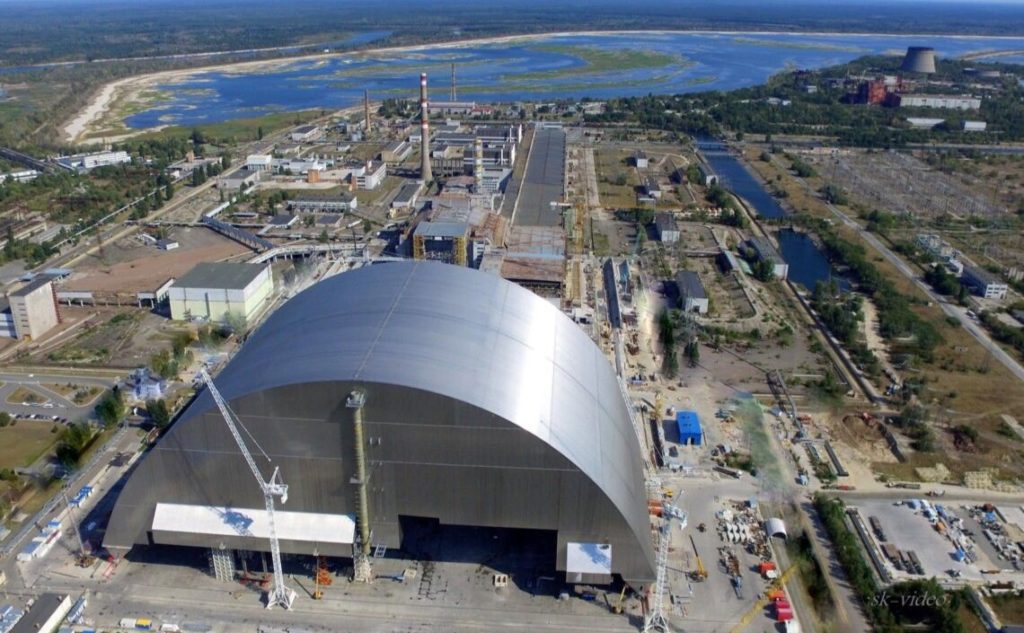
A Russian drone tore a hole in the shield over Chornobyl’s dead reactor. Now the G7 is paying to patch it.
The Group of Seven nations plans to allocate 260 million euros ($292 million) to repair the New Safe Confinement at the Chornobyl Nuclear Power Plant, First Deputy Prime Minister and Energy Minister Denys Shmyhal says.
The confinement, a 35-story steel arch sealing the reactor that exploded in the 1986 disaster, was damaged by a Russian drone strike in February 2025. Full restoration will cost at least 500 million euros, the European Bank for Reconstruction and Development (EBRD) estimates, so the G7 pledge covers just over half, leaving about 240 million euros still to raise.
Shmyhal calls the decision an important step toward restoring nuclear safety at the plant, which the Russian strike had compromised. The money will go to priority work, including resealing the structure and restoring its ventilation system.
“Thank you to France and personally to Minister Roland Lescure for leadership in mobilizing international support,” Shmyhal says, crediting France and the EBRD with co-chairing the effort.
The night a drone pierced the sarcophagus
The damage dates to 14 February 2025. A Russian drone carrying a high-explosive warhead punched a hole through the arch’s roof and ignited a fire in the cladding, breaching the structure’s seal and ventilation.
The attack caused a 15 m² breach in the inner and outer cladding and damaged around 200 m² of panels.
"It was a targeted Russian attack on the Chornobyl station with a drone that is an analog of the Iranian Shahed," Ukrainian President Zelenskyy said at that time.
A bill only half-covered, and a 2030 deadline
The G7 money closes only part of the gap. Partners must still raise roughly 240 million euros more, and Ukraine hopes to secure it at a donor conference in Paris co-chaired by Ukraine, France and the EBRD, Shmyhal says.
The clock matters as much as the cost. The work must be finished by 2030 to limit corrosion and protect the arch’s 100-year design life, the EBRD says, turning a repair bill into a race against the rust the strike set loose.
Read also
-
Russian drone damages Chornobyl nuclear plant radiation confinement (updated)
-
No warning, capped Starlink, unsigned Patriots: Zelenskyy lists US holds to senators as Kyiv reads them as pressure
-
Ukraine finally voted to tax cheap foreign parcels to unlock €3.7 billion—now Brussels decides whether it was enough, with a €70 billion gap ahead amid ongoing war
Read also
-
No warning, capped Starlink, unsigned Patriots: Zelenskyy lists US holds to senators as Kyiv reads them as pressure
-
Ukraine finally voted to tax cheap foreign parcels to unlock €3.7 billion—now Brussels decides whether it was enough, with a €70 billion gap ahead amid ongoing war
-
Lithuania’s armed forces chief says patrols on the Kaliningrad border have practically doubled as the troop mission runs into mid-November