Former President Barack Obama issued a rare statement Sunday rebuking the Trump administration for targeting the president’s political enemies, namely for launching a federal investigation into Democratic Rep. Ilhan Omar of Minnesota.
“It is a basic principle of American democracy that the government can’t selectively target individuals simply because of their political beliefs or what they say,” Obama said in a lengthy statement shared on social media. “But that’s exactly what the Trump Administration is doing to Congresswoman Ilhan Omar of Minnesota.”
The remarks come after federal agents raided Omar’s Washington D.C., home last week, confiscating her laptop, cellphone and passport, as well as other notebooks and documents related to her and her family’s immigration.
“To understand why this is so appalling, it’s important to know the facts. Congresswoman Omar came to this country with her father when she was 12 years old,” Obama said, noting that both she and her father became naturalized citizens five years after arriving from Somalia.
In diatribes against Democrats, President Donald Trump has repeatedly singled out Omar, whom Obama described as “one of the Trump Administration’s fiercest critics.”
Trump has called Omar “garbage” and broadly condemned Somalis. Vice President JD Vance has also joined in, at one point claiming in March, without evidence, that Omar “definitely committed immigration fraud against the United States of America.”
U.S. Attorney Jeanine Pirro said last week that her office is investigating potential improprieties related to Omar’s financial disclosures, but the search warrant that authorized agents to seize Omar’s belongings listed potential violations related to immigration, not finances.
Lawyers for Omar have demanded the immediate return of all of her property.
“Federal agents have raided her home, confiscated personal records, and seized her phone — all to try and uncover a nonexistent smoking gun from 20 years ago that will somehow make their case,” Obama wrote on Sunday. “Think about that. The full weight of the federal government is being brought down on a law-abiding elected official because she has dared to criticize the president.”
The search came just weeks ahead of the pivotal midterm elections. Obama weighed in as he prepared to take his star power to Michigan next weekend to campaign for Democratic Senate nominee Abdul El-Sayed and gubernatorial nominee Jocelyn Benson.
The former president added that “the fact that any president, or any administration, is willing to engage in such transparent efforts to intimidate someone should outrage all Americans, regardless of how they feel about Congresswoman Omar’s political views. Because if this becomes the new normal, there’s no reason to believe it will stop with her — or that future presidents, in either party, won’t do the same.”
The film, "You Can See Everything," grossed $15 million in the US and Canada during its opening weekend, according to A24, the film's distributor.
That's the best opening weekend for a documentary this year. "Melania" had the second-biggest opening weekend for a documentary after its release in January. It grossed $7.1 million.
The film's financial success is matched by viewer reception, too. It scored a whopping 99% among critics on Rotten Tomatoes, the movie-rating site, and a 98% among regular audiences.
Directed by Fielder and Lance Oppenheim, the picture offers a remarkably revealing portrait of Holmes, who was convicted of defrauding investors with her blood-testing company, Theranos.
Theranos was at one point valued at $9 billion. It said its product could run hundreds of medical tests using just a pinprick of blood from a finger, but investigations revealed the company was using expensive lab equipment to surreptitiously run the tests.
Holmes, as the company's CEO, was sentenced to 11 years in federal prison after journalist John Carreyrou published a withering investigative report in The Wall Street Journal, sparking what eventually became criminal charges.
Business Insider's Henry Chandonnet has seen the film twice so far. He called it "one of the most shocking, revelatory, and oddly funny films" he'd ever witnessed.
"It was twisty and worthy of seeing with fresh eyes," Henry reported.
In una generale proposta teatrale che spesso scivola nel già visto, la voce di Paolo Nori si diversifica da anni per quella sua cadenza inconfondibile, caratterizzata da ironia emiliana, rigore filologico e l’intento di restituire i grandi giganti della letteratura russa alla concretezza della vita quotidiana.
Scrittore, traduttore e saggista nato a Parma nel 1963, autore di opere di successo e finalista al Premio Strega 2025 con il saggio-romanzo Chiudo la porta e urlo (Mondadori), Nori sta intraprendendo una fortunata tournée nei teatri italiani con un nuovo monologue-show incentrato su alcuni romanzi e autori della letteratura russa, tra cui Il Maestro e Margherita di Michail Bulgakov.
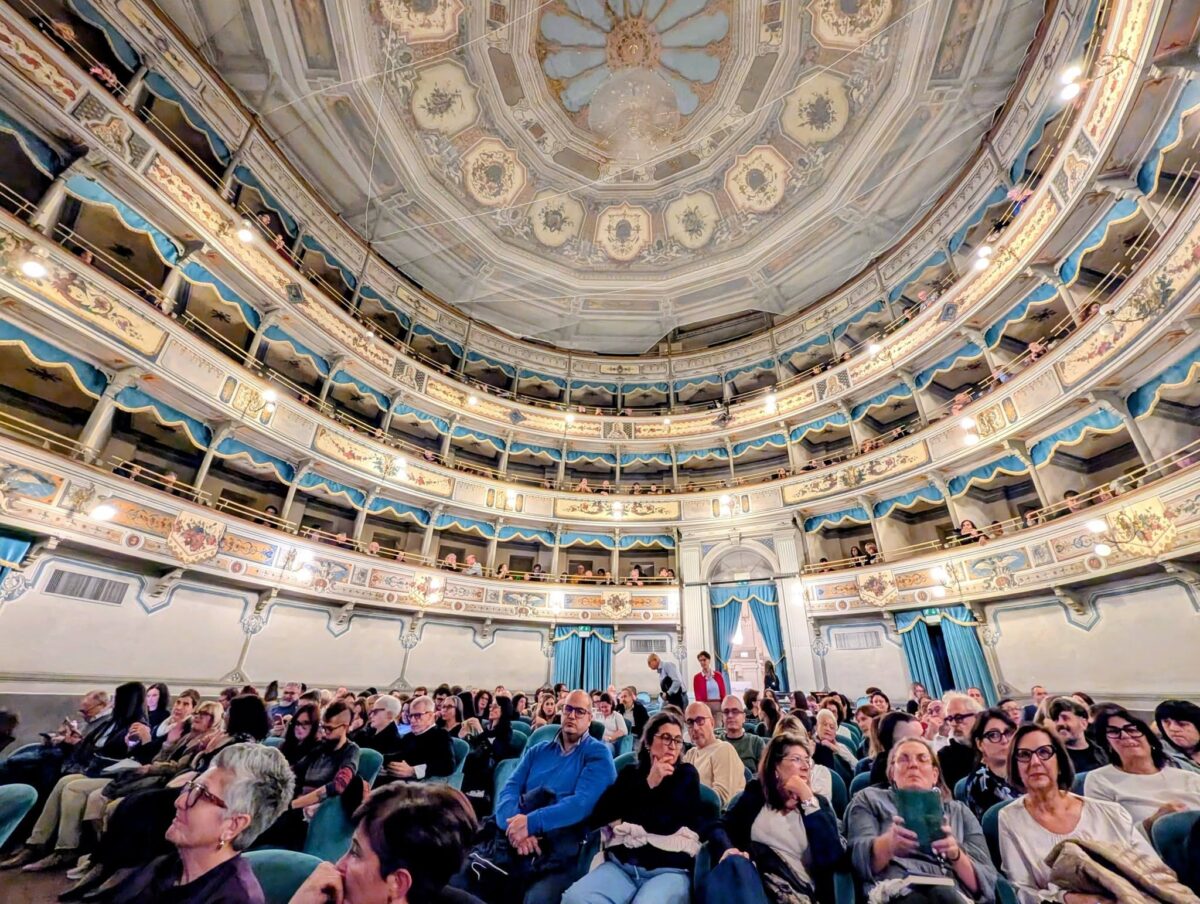
Sul palcoscenico del Teatro La Nuova Fenice di Osimo, gremito per l’occasione, sabato 17 ottobre la narrazione si è articolata secondo una struttura in tre atti ben delineati, pemsati per collegare la biografia dell’autore, il romanzo e alcuni aneddoti personali di Nori.
Il racconto si è aperto con l’esegesi del contesto esistenziale di Bulgakov, ripercorrendone le tre relazioni coniugali, il travagliato rapporto con Stalin e il dramma d’una censura sistematica che impose la pubblicazione postuma della maggior parte delle sue opere.
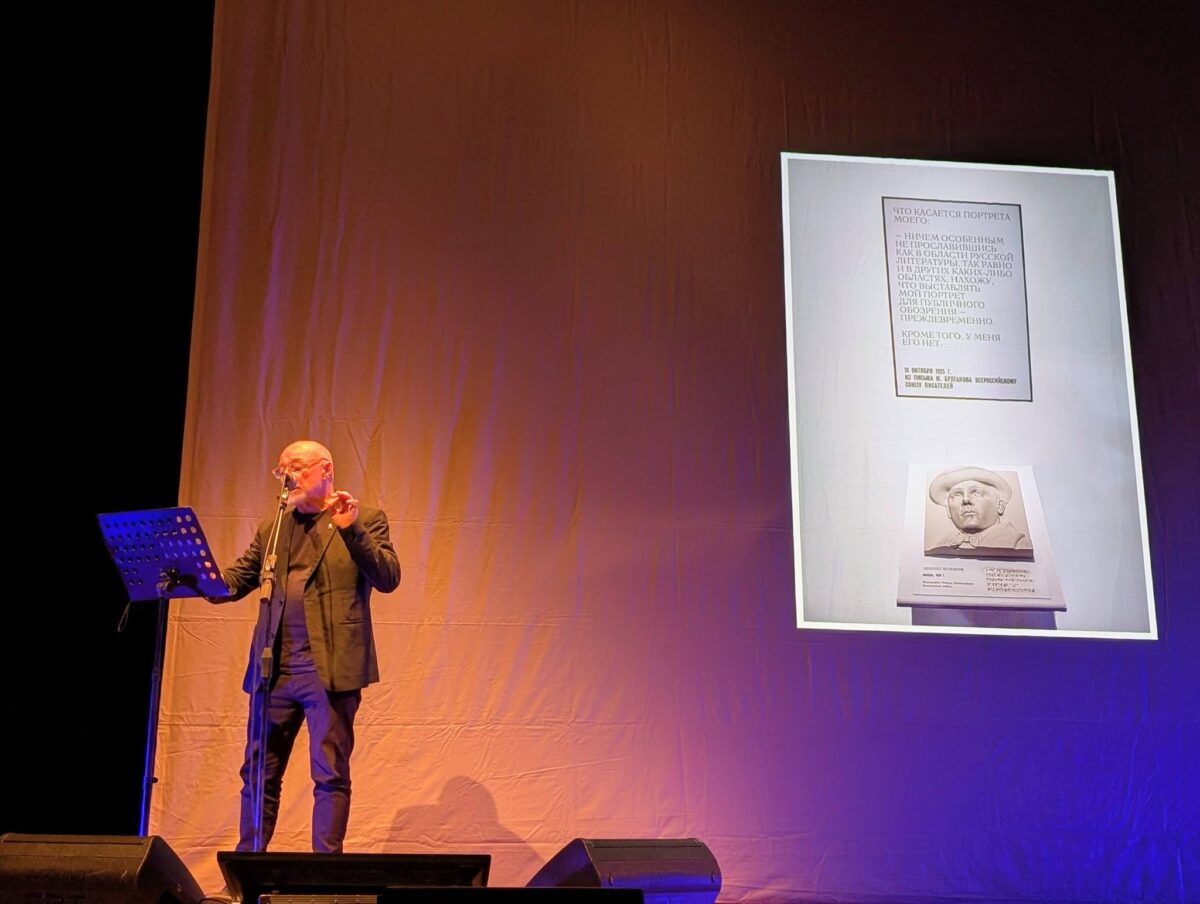
Nori si è incuneato nelle pieghe di un’esistenza segnata dall’ostracismo degli intellettuali di regime, attingendo a testimonianze dirette come la celebre lettera indirizzata dallo scrittore al governo sovietico nel 1930:
«Dopo che le mie opere sono state proibite, molti cittadini mi hanno consigliato di scrivere un dramma comunista e rivolgermi al governo sovietico con una lettera di pentimento per rinnegare le idee espresse nelle mie opere precedenti e assicurare che d’ora in poi lavorerò come scrittore compagno di strada, fedele all’idea del Comunismo, per salvarmi dalle persecuzioni, dalla miseria e dalla inevitabile rovina. Ecco, io non seguo questo consiglio, non credo che potrei comparire in una luce favorevole di fronte al governo sovietico, scrivere una lettera falsa che costituirebbe un voltafaccia politico disgustoso e ingenuo.
Il desiderio maturato in me di porre fine al mio supplizio di scrittore mi induce a rivolgervi al governo sovietico con una lettera sincera. Passando in rassegna i miei ritagli di giornale (…), hanno scritto di me come lo spazzino della letteratura, che raccatta gli avanzi vomitati da una dozzina di commensali. Hanno affermato che mi piace l’atmosfera d’accoppiamenti canini e che il mio dramma I giorni dei Turbin puzza e così via.
Voglio precisare che non sto riportando questi giudizi per lamentarmi delle critiche o comunque entrare in polemica. Lo scopo è molto più serio. Voglio provare, documenti alla mano, che tutta la stampa dell’Unione Sovietica e tutti gli organismi preposti a controllare il repertorio durante tutto l’arco della mia attività letteraria, all’unanimità e con straordinario accanimento hanno sostenuto che le opere di Michael Bulgakov in Unione Sovietica non possono esistere. E io dichiaro che la stampa sovietica ha perfettamente ragione.
Mi rimproverano di aver creato il primo appello alla libertà di stampa in Unione Sovietica. È vero. La lotta contro la censura, qualunque essa sia e sotto qualunque potere, è un mio dovere di scrittore, così come gli appelli alla libertà di stampa. Sono un appassionato sostenitore di questa libertà (…). Ecco, dunque, una delle caratteristiche della mia opera già più che sufficiente di per sé per far sì che le mie opere in Unione Sovietica non possoao esistere, mai ad essa sono collegati altri elementi presenti nei miei racconti: le tinte cupe, mistiche, di cui mi servo per rappresentare le innumerevoli mostruosità della nostra vita quotidiana, il veleno di cui è intrisa la mia lingua, il profondo scetticismo nei confronti del processo rivoluzionario in atto nel mio arretrato Paese».
Una vibrante denuncia alla quale lo stesso Stalin rispose e che costituisce una pagina fondamentale nella biografia di Bulgakov. Nel frattempo, le immagini proiettate sullo schermo del teatro hanno mostrato le istantanee private dell’autore e delle sue mogli; di queste la terza, Elena Sergeevna Bulgakova, avrebbe poi salvato e consegnato alla storia il manoscritto di Il Maestro e Margherita.
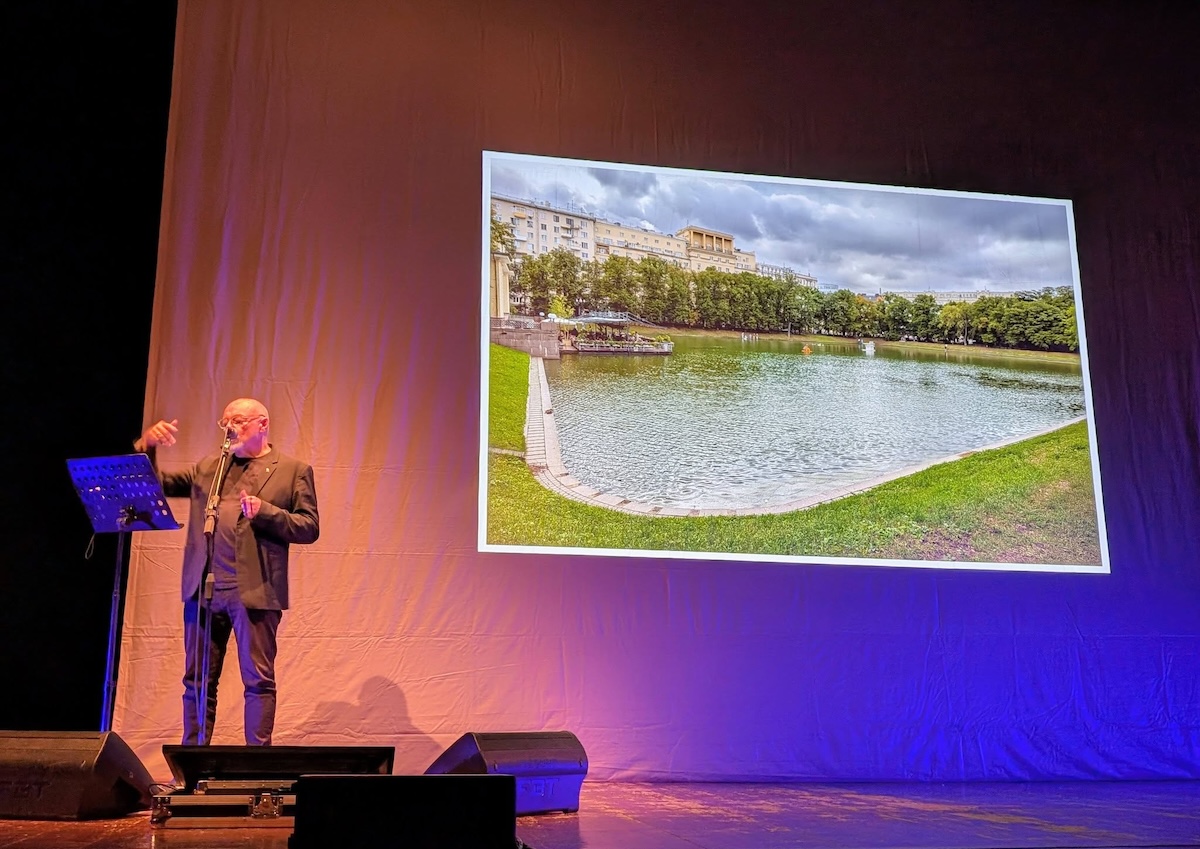
Nori ha scelto le immagini sovrapponendole ai luoghi reali di Mosca collegati al libro. In questo intreccio tra vita vissuta e invenzione narrativa, l’autore ha ricreato la genesi di un testo a lungo soffocato, integrando memorie personali sui propri viaggi in Russia e sul proprio viscerale legame con la cultura slavofila.
La parte centrale dello spettacolo ha offerto la sintesi critica della trama del romanzo, soffermandosi sulla figura del diavolo, incarnato da Woland. Satana bulgakoviano non si limita a seminare il caos nella burocrazia moscovita degli anni Venti, ma assume il ruolo paradossale di garante della verità morale in un mondo dominato dal conformismo ateo e totalitario.
Nel celebre dialogo sul tetto della biblioteca con Levi Matteo, le forze del bene e del male si confrontano in una dialettica imprescindibile per la comprensione dell’esistenza umana e dell’ombra che ogni corpo proietta alla luce.
L’ultima sequenza della serata si è tradotta in un’intensa digressione sull’Emilia-Romagna (Parma nello specifico), sulle radici antifasciste di questa terra e sulla Resistenza.
Rileggendo le persecuzioni subite da Bulgakov, Nori ha formulato un monito civile sull’essenza dell’antifascismo contemporaneo, inteso quale difesa quotidiana della libertà di pensiero di fronte a qualsiasi forma di coercizione.
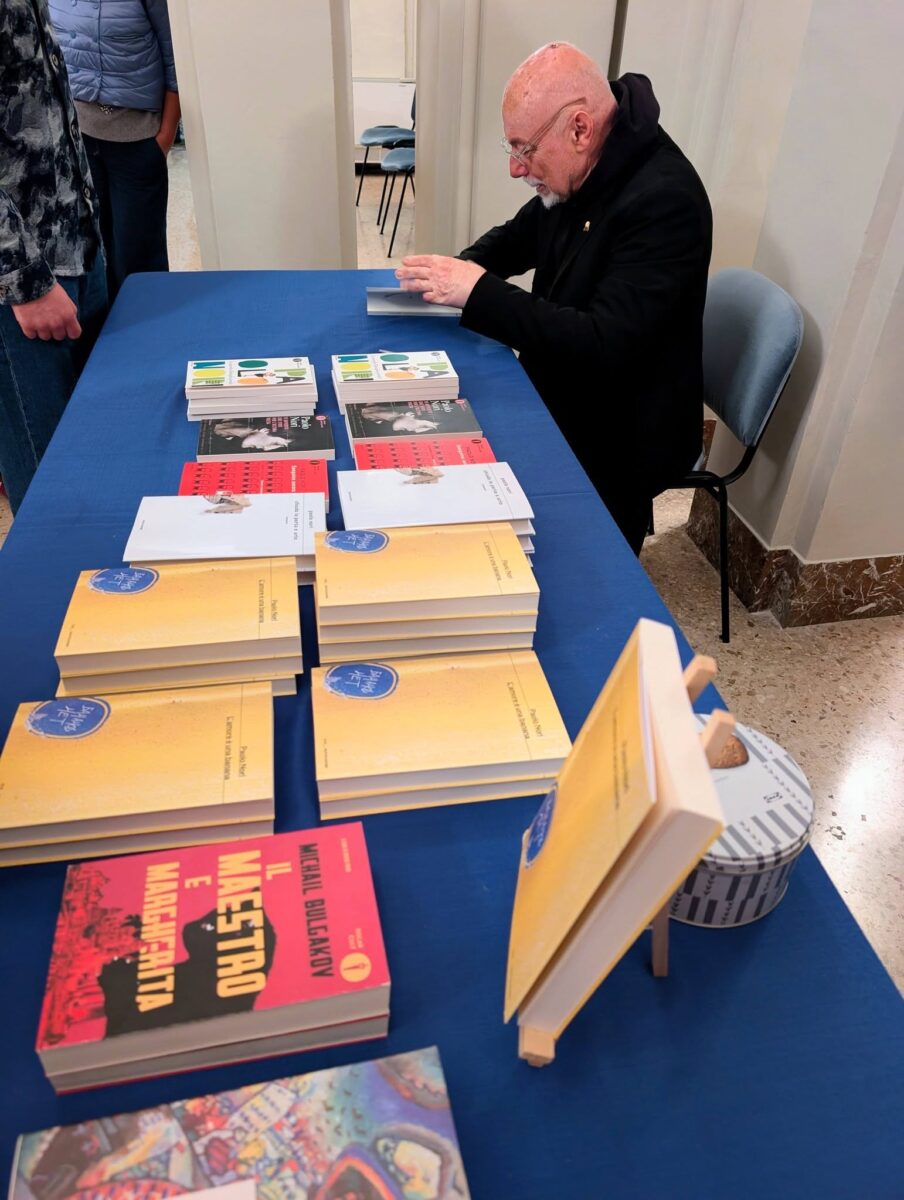
I prossimi appuntamenti della tournée saranno il 20 ottobre a Padova alla libreria La forma del libro con il suo nuovo romanzo L’amore è una banana, insieme ad Andrea Pennacchi. Poi il 21 ottobre su Zoom alle 19 per gli abbonati di State bene Bombé, con Pietro Sermonti sempre per presentare L’amore è una banana.
Seguono altre presentazioni del romanzo per la rassegna Pubblici discorsi il 22 ottobre a Milano alla libreria Rizzoli, con Alberto Rollo, il 23 ottobre a Radio 24 dalle 9 in poi nella trasmissione Uno nessuno e centoMilan con Alessandro Milan, mentre la sera Nori sarà a Parma alla libreria Feltrinelli.
Il racconto de Il Maestro e Margherita torna invece il 24 ottobre a Verona al Teatro Nuovo alle 21, seguito il 26 ottobre a Bologna presso la Libreria Coop Ambasciatori dalla presentazione de I luoghi a cui appartieni con Chiara Donadi. Infine, Genova e Firenze chiuderanno questa prima parte del tour.
Pope Leo XIV resumed public appearances on Sunday, leading prayers at the Vatican just five days after undergoing lung cancer surgery and one day after leaving the hospital.
“I would like to thank all those who have prayed for me in recent days. I have truly sensed your support. Thank you!,” Leo said from a balcony overlooking St. Peter’s Square in Vatican City.
The Catholic leader, 71, announced his planned surgery last week to remove a “small, localized” nodular lesion on his right lung. During the 90-minute operation, doctors confirmed he had lung cancer but said the operation to remove a lower lobe of his lung was successful, according to the Vatican.
“This experience has made me feel particularly close to all those who are living with illness or infirmity,” Leo said. “Now that I have overcome this delicate phase, as you know, I will gradually resume my activities, always with God’s help and your prayers.”
The surgery and cancer diagnosis marked Leo’s first major medical episode of his papacy. It is yet unclear whether the pope will require additional treatment.
His planned trip to Latin America next month, which includes visits to Uruguay, Peru and Argentina, remains unchanged as “there are no clinical reasons why this visit should not take place,” Professor Stefano Margaritora, the physician who operated on the pope’s lung, told Vatican News.
“The Holy Father has put his heart and soul into his recovery, as the most motivated people do after this kind of operation,” Margaritora said. “As a result, he needed very little assistance from us. His determination to recover quickly has been effective in every respect. It was truly commendable.”
Leo was elected last year following the death of his predecessor, Pope Francis. Leo, born Robert Francis Prevost in Chicago, Illinois, is the church’s first American pope.
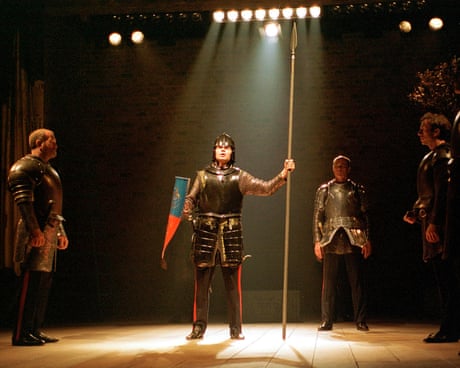
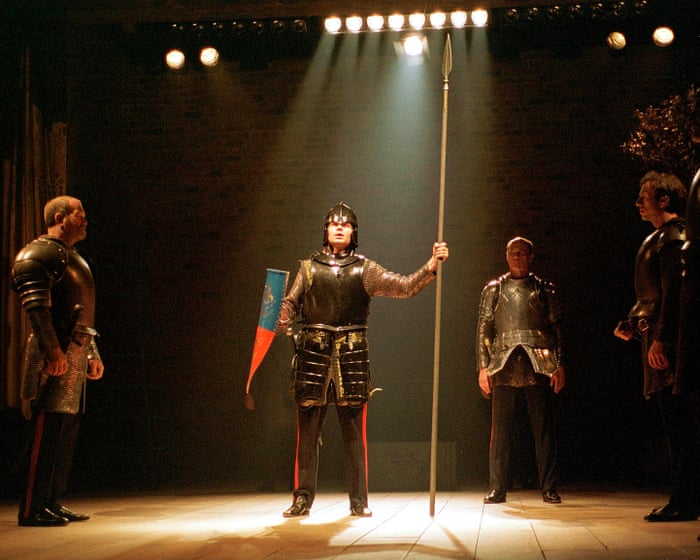
Exclusive: Play anonymously published in 1596 was collaboration between Shakespeare and Christopher Marlowe, according to computer analysis
Dramatic new evidence concludes that the play Edward III should be added to William Shakespeare’s canon, and also that it was a major collaboration with his contemporary rival Christopher Marlowe.
The history was published anonymously in 1596, and it has long been thought that Shakespeare wrote at least a few scenes. However, Dr Rory Loughnane, a leading scholar and co-author of the research, told the Guardian that computerised textual analysis pushed the case “beyond any reasonable doubt” that the Stratford-born playwright was the principal writer.
La collection « Dans l'atelier de... » du CNRS nous a fait découvrir la méthode et la magie à l'œuvre dans les travaux littéraires de quelques-unes des grands noms des lettres mondiales. Après notamment Baudelaire, Voltaire, Virginia Woolf, la série convoque archives et manuscrits pour nous faire entrer dans l'atelier du grand poète francophone Léopold Sédar Senghor. Ce livre est une invitation à découvrir et à comprendre la genèse et l'originalité de son œuvre poétique, qui fait partie aujourd'hui des grands classiques africains. Retour à l'œuvre senghorienne à travers cinq thématiques abordées par son exégète, Claire Riffard.
PARIS (AP) — French President Emmanuel Macron on Sunday voiced the public’s “anger” and “shame” over rioting and looting during nationwide protests against rising living costs and poor conditions in schools. At least 1,800 people have been arrested.
“Those who looted will have to pay back for the damage, and those who sought to bring down the Republic will be held accountable,” Macron said in a televised address to the nation.
He blamed “unrestrained violence” on “insurrectionist elements from radical far-left groups, joined by numerous criminals.”
Macron has earlier held an emergency meeting with senior government officials, a day after masked groups set fires and attacked public buildings, including city halls, in several cities. He said he had instructed prefects to work with mayors to protect public buildings and businesses in the coming weeks, including by banning protests when necessary.
Flames engulfed the 19th-century City Hall in the city of Limoges, in central France, causing its roof to collapse and nearly destroying the building.
Hundreds of protesters gathered again on Sunday at the Place de la République in Paris amid a heavy police presence. Officers used tear gas as tensions flared sporadically in the neighborhood, with small groups of people trying to set bicycles and trash bins on fire.
“The right to protest is a fundamental right. Deliberately and collectively sowing disorder through violence is not,” Interior Minister Laurent Nuñez wrote on X, citing the looting of hundreds of businesses in cities including Paris, Marseille, Lyon and Bordeaux.
About 550,000 people took part in protests across France, according to authorities, while organizers put the figure at about 800,000. Demonstrators answered calls from a labor union, student organizations and activists hoping to revive the “yellow vest” movement, which emerged in 2018 to protest social injustice.
Mass protests in France are often marred by violence on the fringes of otherwise peaceful marches, leading to clashes with police. The arrest tally reported Sunday approached the nearly 2,000 recorded nationwide during a single day of yellow vest protests in December 2018.
One person died of a heart attack, Paris police said in a statement, without providing details. The Paris prosecutor’s office said it was investigating.
Parisians deplore shattered shops and a damaged square
Dislodged cobblestones, shattered storefronts and broken glass littered the area around Paris’ Place de la République on Sunday. Looting and damage were also reported in other tourist and shopping districts.
Paris police said 855 people were arrested in the capital region. The city’s prosecutor’s office said 557 remained in police custody.
“I am actually stunned by the level of destruction and violence that was expressed,” said government employee Marie Peyreigne, 57, wondering what had led to the mayhem.
Parisians inspecting the damage photographed the partially dismantled base of the square’s central monument, a statue of Marianne, a symbol of France.
Jean Foissy, 74, said he had wanted to join the protest but encountered “a wall of riot police and fires everywhere” and returned home.
“I was very scared,” he said. “I’ve been a Parisian since I was born, so when I got here, it almost made me want to cry because I find it so bad, it hurts me.”
Margaux Eude, 26, said she supported the protest movement but “didn’t think it would escalate like this.”
“It’s the troublemakers who came, and it breaks my heart because it delegitimizes the movement,” she said.
Political leaders trade blame ahead of presidential election
Political leaders across the spectrum sought to parlay the fallout of Saturday’s riots into political capital, looking ahead to next spring’s presidential election.
Far-right leader and presidential hopeful Marine Le Pen criticized Macron’s centrist government as “exhausted, disoriented and seemingly incapable of doing anything other than commenting on its own powerlessness,” in a video posted Sunday on social media.
Far-left leader Jean-Luc Mélenchon, for his part, accused Prime Minister Sébastien Lecornu of “playing with fire,” alleging that “by banking on degradation, you have only succeeded in uniting all youths and workers’ unions.”
Mélenchon, who joined the Paris march Saturday, insisted that “my message is clear: those who share our fight have no business in looting or destruction.”
U.S. President Donald Trump posted “France is burning!” on his Truth Social platform, apparently linking the unrest to “the immigration of people from an entirely different world.”
“Close your Borders and take control, before it is too late!” he wrote.
French authorities and police have not linked immigrants to the rioting and have repeatedly attributed some of the violence to “radical far-left groups” and other people who joined to loot.
Hundreds of businesses looted across the country
“The scale of the damage is considerable and unprecedented,” Paris Mayor Emmanuel Grégoire wrote in an open letter. “Paris is a city of freedoms, debate and demonstrations. It must remain so. But it must also be a city where everyone can work and run a business safely.”
Police said groups of hundreds of people formed unauthorized marches across central Paris on Saturday. “By late afternoon, a new phase began with the arrival of large numbers of people whose sole aim was to steal and loot, taking advantage of the unrest,” police said.
The mayors of Paris, Marseille and Lyon, the three largest cities, requested a meeting with the prime minister in the coming days “given the extent of the damage and the seriousness of the situation.”
In the southern port city of Marseille, some protesters briefly forced their way into the lobby of City Hall and a group of people wearing hoods and masks damaged a police station. In Lyon, a fire broke out inside a tourist office.
In Limoges, a group of “radical troublemakers” broke into City Hall while there were elected officials, employees, security personnel and members of the public inside, Maurice Barate, prefect of the Haute-Vienne region, said. “Despite the presence of so many people, they deliberately set the building on fire. It is an extremely serious and unspeakable act.”
In eastern France, the Mulhouse prosecutor’s office said an investigation has been opened after a 17-year-old girl was injured during the protests and lost an eye. On Saturday, another investigation was opened after a young protester lost a hand in Saint-Etienne.
The injuries come as police have drawn sharp scrutiny over their use of grenades and other riot-control weapons during recent demonstrations.
Amid financial pressures on household and school budgets, the theatre company is expanding access with free plays
Six young actors step into the spotlight as a reverent silence descends on the hall at City Academy in Bristol. A boy steps forward to pose a central question: “What does it mean to be young in Britain in 2026?”
Union jack flags flash across the backdrop as three girls excitedly debate a Spice Girls reunion concert, before the focus swings back to the young boy wrestling with modern British identity. He rattles off a list of familiar cultural touchstones – fish and chips, cups of tea, Butlin’s, David Attenborough, Gogglebox and the England football team, naming heroes such as Jordan Pickford and Jude Bellingham.
The buzzy new A24 film “You Can See Everything” is a one-of-a-kind documentary. It features a psychic clash between two masters of deception with distinct skill sets. In one corner is Nathan Fielder, a comic and creator of a number of popular shows, including “Nathan for You” and “The Rehearsal,” which bizarrely blend fiction and reality and involve manipulating strangers. In the other corner is Elizabeth Holmes, the notorious once-billionaire founder of Theranos who was convicted of defrauding investors in one of the biggest business scams of the 21st century.
The premise of the film is that Holmes invites Fielder — who directed the film alongside Lance Oppenheim — to spend enormous amounts of time with her and her family 34 days in 2023 before she begins an 11-year prison sentence for committing fraud. She says her goal is to prove her innocence through transparency. “I know I didn’t commit a crime,” she tells Fielder. And she intends to prove that, somehow, by allowing a camera crew to surveil her life in a rented home in Southern California for about a month.
The entire arrangement is hilarious and absurd on its face — why would Holmes invite Fielder of all people into her life in an effort to clear her name? Why would showing her behavior in this contrived reality TV-like setup be effective at countering the stigma of her crimes? And what could Fielder unearth about Holmes that the public might not know?
The central source of tension driving the film is captured in its ultra-viral teaser showing Fielder and Holmes sizing each other up with their faces just inches apart, prompting the viewer to ask: Who is getting played here?
“You Can See Everything” is a movie about how hard it is to ascertain the truth, the limits of perception and the unknowability of other humans. It serves as a highly entertaining and at times trippy comment on the way people cynically use narrative as power in post-truth, huckster-ruled America. It’s also at times rather shallow, closer to a cheap trick than a provocation about the elusive nature of truth.
The first part of the movie is all about Fielder spending time with Holmes and her fiancé, Billy Evans, along with their two babies. Holmes and Evans’ bid for “radical transparency” involves extended scenes of mundane daily life — eating, childcare, walking on the beach. In what appears to be a demonstration of just how open they’re willing to be, Holmes breastfeeds in front of Fielder and the camera crew; in another scene, Evans showers in front of the camera — with nothing left to the imagination. Yet at the same time, both of them are constantly evasive when answering questions, using “I don’t know” to respond to questions that they clearly know the answers to, or asking for straightforward questions to be rephrased in order to buy time for new evasions.
Holmes’ intent isn’t that complicated a question, and she isn’t merely misunderstood.
The film further embraces the paradox of the whole “transparency” setup by letting us observe and listen in on Holmes and her (unnervingly controlling) partner’s attempts to co-direct the documentary, and to put on a show of trying to woo investors for an improbable successor company to Theranos. Altogether, it’s a compelling mix of stagecraft and manufactured reality. And it only gets weirder as the movie progresses.
The part of the movie that’s unsatisfying is Fielder’s fixation on getting Holmes to admit to understanding what she did wrong. Holmes resolutely insists that she not only doesn’t think she did anything wrong, but that she has never lied in her adult life. Equally striking is that she claims to not even understand why people believe she lied about what her infamous Theranos blood testing machine — which never fulfilled the advertising that said it could conduct hundreds of diagnostic tests with just a few drops of blood — could do.
The focal point is the ambiguity of her meaning when she says she really believed the machine was capable of doing things it had not yet demonstrated the capacity to do. Fielder seems to entertain the idea that this may be a communication problem that originates in Holmes’ mind. He shows her a video of Abbott and Costello’s famous “Who’s on first” comedy routine to illustrate how people can talk past each other by perceiving the same words differently, and she claims to have no comprehension of it. Evans insists this is proof that she just “thinks differently.”
The implied meaning of Fielder’s inquiry appears to be that we cannot know what Holmes truly believes, and thus we cannot rule out a kind of psychological innocence surrounding her intent.
While Fielder is also hard to read, it does seem that he takes her denialism seriously — and in A24’s press notes he admits, “When I watch the footage back I see myself genuinely conflicted and struggling to make sense of these moments and what was happening.” But the only reason the question appears meaty for the audience is because the filmmakers have deliberately narrowed the information we can use to bear upon this question. Many people who watch this movie will not be familiar with the details of the Theranos fraud case, or may have forgotten them. But reportage and the legal proceedings against her demonstrate unequivocally that this isn’t all just a big misunderstanding about the meaning of a couple of words.
Trial evidence and investigative media reports showed that Holmes knew her machine was not producing accurate or reliable results and that she covertly used traditional machines to produce results her machine could not — and passed off many of those results as her own machine’s performance. To woo investors, she falsely claimed that the technology was used on the battlefield in Afghanistan. She admitted in court that she personally affixed the logos of big pharmaceutical companies like Pfizer to reports that would falsely indicate that those companies had endorsed Theranos’ technology. She has admitted that her company advertised her blood diagnostics machine as being able to do more than 200 tests — while it could only do 12. Not only did Holmes rob investors of huge sums of money, she also gave tens of thousands of patients incorrect diagnostic tests that had dangerous real-life consequences for them.
In other words, Holmes’ intent isn’t that complicated a question, and she isn’t merely misunderstood. She is without question a full-on scammer.
To me, her wide-eyed denials and incomprehensible tentativeness in this movie are an obvious and ludicrously ham-fisted attempt to lie once more, to win back public opinion. In addition to sapping her arc of its suspense, it also then pushes the audience in a strange direction. The narrative of Holmes as an oddball idealist who might just be misunderstood is an essential part of the movie’s engine — which mostly points to her troublingly domineering partner as the real villain of the story.
But two things can be true at once: She’s deceptive, and her partner is also a bad guy. Yet I suspect the narrative of the movie is likely to be received as quasi-exculpatory of Holmes in the eyes of some audience members.
Some might say that Fielder deliberately allowed Holmes to work her “magic” on the public. But magic doesn’t work when you can see the mechanics of the trick.
Whether wittingly or not, the way Fielder tries to make Holmes more mysterious than she is also reminds me of a broader social problem we have in American life: our struggle to tackle how flagrant lying has become a norm in politics and our information environment. Many political observers — including me, at times — are vexed by the question of politicians’ intent when they spread false information, use language that insinuates an incitement to violence or bigotry, or defend modern day genocide. This process often involves giving bad actors the benefit of the doubt as we weigh their subsequent denials. Some of that problem simply can’t be solved, because stated intent, in the abstract, is irrefutable. But a part of the solution is often watching what people do — instead of what they say.
Style of emceeing based on high-octane, ad-libbed vocals has flourished thanks to its unique way of captivating crowds
For the 2015 freshmen cohort of the history degree programme at the University of Lagos, their classmate’s first-semester presentation was so captivating that they began calling him Toby Shang, after the 16th-century Chinese dynasty he had focused on.
His crowd engagement that day had been harnessed from his high school days as a ginger-man (energiser) in a three-man band and as a private tutor. By his final year at university, his viral catchphrases and infectious energy had resulted in a hit song, Shedibalabala. Today, he is one of the self-acclaimed “evangelists and pioneers” in the Afrobeats sub-genre some are now calling Afrohype or lamba.
The Decayed Brigade, a team of haunt sliders that appears at Hersheypark.
Hersheypark
Hersheypark's "haunt sliders" — scare actors who slide on knee pads — have gained a fanbase on TikTok.
"The makeup stays ON" commented one thirsty fan.
The attention has translated to good business for the park, who has seen growing ticket sales for its Dark Nights event.
Imagine you're walking around an amusement park in October while it's Halloween themed. The air is crisp, you've got a giant pretzel, you're strolling with friends to get in line for the roller coaster. Out of the corner of your eye, you see tall man dressed in all black with skeletal face paint walking towards you.
Suddenly, he leaps to the ground on all fours, and against everything you've known in your life about how human beings ambulate, he slides across the pavement on his hands and knees, coasting right up beside you at an incredible speed.
Depending on who you are and your level of awareness of the "haunt sliders" of Hersheypark, this fast encounter leaves you either terrified or terrifyingly horny.
Since 2021, Hershey's amusement park has employed a group of haunt sliders from a crew that calls itself the "Decayed Brigade" for its Dark Nights Halloween event that runs in September and October.
Videos of Fryboy and his lookalike Archer, and others have racked up millions of views and created a dedicated fan base who travel from around the world just to see the creepy, sexy, slidey guys they saw on TikTok.
And their online popularity is good for Hershey's bottom line.
"The comment section [on TikTok] is a treasure trove of insight into their popularity. I mean, we have seen people saying, 'I am coming from Europe. I'm coming from Australia. I had no idea Hersheypark existed, but now, because this was served to me on TikTok, I'm aware,'" said Quinn Bryner, a spokesperson for Hersheypark.
Archer, a haunt slider at Hersheypark
Hersheypark
"We have people who have bought our season passes because of it," she added. "So anecdotally, for sure, it has had a significant social commentary, which we think has also led to tickets."
Bryner cautioned they can't say that the haunt sliders popularity is the sole driver of the growth of the Halloween event, but that the Dark Nights has become a success and grown year over year in attendance and ticket sales. "We can confirm that the event's popularity in the past few years has allowed us to expand operating days throughout the fall, resulting in total Halloween attendance doubling the numbers achieved prior to 2021," she said.
For the last three years, Fryboy and some of the sliders do a meet-and-greet for the diehard fans after the performance on weekend nights. Fans wait up to an hour in line to meet them and take photos with the sliders (or purchase keychains or other photo prints from the professional photography service the park provides, which has taken over 4,000 photos for fans this fall so far).
The three sliders I interviewed — who asked not to publicize their full legal names because they are concerned about overzealous fans — have breached containment from something that happens inside the park gates to a full-blown social media phenomenon.
The sliders have anecdotally noticed the effects of TikTok on the crowds in the park. "This year especially, it feels like every other person's coming up saying they drove eight-plus hours to come see us or they just came for us," Fryboy said.
"We see them sit in our zone the whole night and it's pretty obvious that they just want to watch us," Valkyrie noticed.
Hersheypark is well aware of the Decayed Brigade's social media success, which is clear even on its own social channels. The most viewed videos on park's official TikTok channel were all of the sliders — even during the off-season.
Haunt sliding dates back decades
Haunt sliding has been a part of Knott's Scary Farm, the Halloween event at amusement park in southern California, for decades. A few of the performers working there figured out they could modify knee pads and gloves with metal pieces to allow them to slide up on guests as a novel way to scare them.
Sliding became a staple of Knott's Scary Farm, and the trend spread out around the country to various haunted theme parks and cornfields. It evolved into something more than just a scare tactic, with increasingly athletic stunts, choreography, and showcases during the off-season.
Although haunt sliding has become a haunted house mainstay, there is no group of performers who have attracted as much attention from people who never set foot in Hersheypark as the Decayed Brigade crew. This year, there are eight sliders, but Fryboy and Archer — both well over six feet tall, lanky, and with poufy dark hair — seem to have garnered the biggest online fandom.
When I spoke over a video call with Fryboy, Archer, and Valkerie, the current sole female performer in this year's crew, it was the hour before the park opened on a Friday night at 6 p.m., and they were in their full faces of makeup (they have a makeup artist on staff who does it for them), but not their performance clothes.
Fryboy, whose real first name is Carter, is not technically the leader or founder of Decayed Brigade, although he has become the most visible online and has been working at Hersheypark since Dark Nights started in 2021. He first saw sliders at Knott's Scary Farm when he was 13, and was inspired to start trying it out on his own at home. By 16, he got hired at a local haunted house in Florida, and eventually landed a job at Knott's in 2018.
"When sliding first started, it was mainly just a scare tactic and it wasn't really anything crazy, but once people started doing it more and more, a lot of the guys that started sliding at Knott's were stunt performers, so they would do little pre-shows before their stunt show was sliding," Fryboy explained. "They'd go out there and they'd do little rolls, and then they'd start jumping bodies, and then now they're jumping two, three, four bodies. So then tricks started getting added into it, and over time, a group was formed."
"I really think in this case, Carter took it upon himself to create his own iconic character in the social space and then share it amongst an audience that loves scare, but didn't have a way to maybe communicate and build on that," said Brewer Lister, managing director of immersive experiences at Hersheypark.
"He's built a following, and then he and his team have added to it by becoming more of a team in a group, especially Archer, the two of them," he added. "I think they tapped into a growth factor of what's taken place over the many years in social media in a particular realm, and it's worked."
Their fans are…thirsty
Fryboy, a haunt slider at Hersheypark
Hersheypark
It is crucial to explain here that the internet viral around the Hersheypark haunt sliders is not just an appreciation of a good scare. It is extremely horny. The TikToks from fans are often set to suggestive music clips, and the comment sections are bawdy.
In one video from last fall of Fryboy and Archer standing together, set to the chorus of "Same Damn Time" by Future, comments say things like "Fryboy looks like he talks you thru it. Archer looks like he know how to do that thing your ex couldn't do." (18.3k likes) and "the makeup stays ON" (160.8k likes). In another video from this month of the two men, one commenter says, "Ok maybe my ex was right and i'm actually ill."
The allure of scare actors in face paint might not seem obvious. But hear these women out: They're tall, athletic, and mysterious. That's enough.
The thirst isn't limited just to the male sliders. On one video of Valkyrie walking through the park in slow motion, comments from women pour in: "Me and my husband aren't that serious." "I DIDN'T KNOW THIS WAS AN OPTION," and "i was already hooked but when she smiled i lost all control."
I asked Fryboy about getting that kind of attention.
"I think at the end of the day, we're just trying to perform and have a good time, and it's Halloween, we're dressing up as characters, so there's always going to be something along those lines, I think," he said. "But it's definitely not the end goal in any sort of way."
Thesex appeal of the sliders seems to be an accidental collision with acurrent trend of "dark romance" and romantasy that's popular on Booktok. However, threading the needle of adding sex appeal into a haunted house seems fraught. SeaWorld Orlando's attempted a dark romance themed scare zone, but videos of bare-chested scare actors in masks (including at least one slider) awkwardly gesturing at guests went viral for being high on cringe and low on actual eroticism.
The difference with the Decayed Brigade is they claim they're not intending to be sexy.
"Halloween has always been the holiday for the weirdos, and we're the weirdos," said Fryboy. "We embrace it just as much as I'm sure everyone else wants to embrace it."
Warren Buffett is the former CEO and chairman of Berkshire Hathaway.
Paul Morigi/Getty Images for Fortune/Time Inc
Berkshire Hathaway is set to invest $330 million in Bending Spoons, adding to its previous $600 million.
Warren Buffett's storied conglomerate is poised to hold a 4% stake in the owner of AOL and Vimeo.
Berkshire's wager is a surprise, but there's some DNA in common with Bending Spoons.
Berkshire Hathaway's latest bet isn't a no-brainer or a head-scratcher; it's somewhere in between.
What's the deal?
Berkshire — which has seen Warren Buffett retire as CEO and chairman since the turn of the year — has agreed to invest $330 million in Bending Spoons, on top of a $600 million injection when the Italian tech conglomerate went public in July, giving the Nebraska behemoth a 4% stake.
Bending Spoons disclosed Berkshire's backing in a press release on Wednesday, catapulting its stock up nearly 50% over two days, a phenomenon known as the "Buffett effect." The stock fell on Friday, but still ended the week more than 20% above Monday's opening price.
Berkshire has agreed to buy 10 million shares for $33 each, around a 13% discount to Bending Spoons' closing price of $38 on Tuesday, the day before the deal was announced.
CEO and cofounder Luca Ferrari described Berkshire in the press release as "among the finest and most respected capital allocators in the world," and a "longstanding inspiration" for Bending Spoons.
Neither company responded to requests for comment from Business Insider.
What is Bending Spoons?
Bending Spoons acquires digital businesses, transforms and optimizes them to increase profits, then reinvests those earnings in further acquisitions.
It has been pursuing that strategy for more than a decade and has never sold a material business. Its acquisitions to date include AOL, Evernote, Vimeo, Eventbrite, and WeTransfer.
Ferrari's company said in the press release that it "strives to envision the most successful version of an acquired business," then works to close the gap between that vision and reality "as quickly and completely as possible."
Bending Spoons said that typically involves "deep" transformation such as "reorganizing teams, overhauling technology, redesigning user interfaces, accelerating product development, and enhancing marketing and monetization," often with a good dose of AI.
Ferrari gave the example of Evernote on a recent episode of the "Joys of Compounding" podcast.
He said the business had around 350 employees when Bending Spoons acquired it at the start of 2023. That shrank to roughly 60 within 12 to 18 months, and now it's being run by around 20 people.
Yet Ferrari said Evernote "launched by far the biggest update to the product in maybe a decade" this spring.
Bending Spoons CEO Luca Ferrari.
Marco Bertorello / AFP via Getty Images
Why is Berkshire's investment a surprise?
First and foremost, Bending Spoons is a tech conglomerate, and Berkshire has eschewed tech for most of its history with a few big exceptions, namely Apple and Alphabet.
That's because Buffett is a bargain hunter who likes to invest with a "margin of safety" in case something goes wrong, and tries to stay within his "circle of competence," only buying into what he deeply understands.
Tech companies have rarely been a good fit for his approach, as they typically have lofty valuations, unpredictable outlooks, and complex products and services.
Indeed, Bending Spoons generated 32 cents in earnings per share last year. Berkshire is paying more than 100 times that per share in the coming private placement.
It's true that Bending Spoons is growing fast, with revenue surging 126% year-on-year to $704 million in the second quarter and adjusted operating income jumping 150% to $381 million. Few, however, would consider the stock a bargain from a fundamental perspective.
Berkshire is also famously a hands-off acquirer, offering founders the opportunity to cash out while continuing to run their businesses as they see fit. In contrast, a core aspect of Bending Spoons' strategy is revamping its acquisitions.
How does the deal make sense?
Berkshire and Bending Spoons have similarities as well as differences.
Both are decentralized conglomerates that buy businesses not to flip them, but to own them for the long term. Berkshire is a web of largely autonomous companies, including GEICO, Duracell, Fruit of the Loom, Pilot Travel Centers, and BNSF Railway. It has long offered a permanent home to the businesses it buys.
Bending Spoons has positioned itself as a forever owner, too, emulating Berkshire's approach of taking the cash generated by a subsidiary like See's Candies and using it to acquire more businesses.
Ferrari said in his recent podcast interview that Bending Spoons has fostered a culture of caring deeply about the company, and doesn't centralize decision-making in part because that "deprives people of that precious sense of ownership."
Buffett famously wrote "An Owner's Manual" for Berkshire shareholders. He's championed that mindset by keeping more than 99% of his net worth in Berkshire stock, and encouraging the company's other executives and directors to have skin in the game too.
Ferrari also said on the podcast that he has a "pathological love of learning" across different domains. That echoes Buffett's boundless curiosity and the late Charlie Munger's insatiable appetite for knowledge. Buffett's longtime business partner studied architecture, physics, history, meteorology, psychology, law, and, of course, investing, among other subjects.
Beyond their similar philosophies, it's worth noting that investing less than $1 billion into Bending Spoons isn't a huge deal for Berkshire. It has a $1.1 trillion market capitalization, had a $365 billion cash pile at the end of June, and its biggest stock position was worth about $66 billion at that time.
What's the takeaway?
The Bending Spoons deal could mark an evolution in Berkshire's investing style following Buffett's departure as CEO and chairman.
Berkshire hasn't commented on the purchase or on whether Buffett was involved. Its relatively small size could mean his remaining investment manager, Ted Weschler, was behind it.
Or it might be new CEO Greg Abel, who piled an additional $10 billion into Alphabet in a private placement this summer after consulting with Buffett.
Whoever was responsible, and whatever their reasons for investing, this will be an intriguing wager to watch for Berkshire followers.
In Bengal, worship, carnival, and art share the same streets for a few days each autumn. Durga Puja has not erased caste or commerce, but it shows how a society can hold the sacred and the secular in one public space.
A new play revisits the story of Ireland’s 18th-century German refugees, whose experience of prejudice and exclusion resonates with today’s debates over immigration
In the early 18th century, a few thousand Germans fled religious persecution and near starvation in their homeland and ended up in remote rural Irish villages. The Irish Palatines, as they were known, were poor, conservative homesteaders who couldn’t speak the language and were the object of suspicion and violence – precursors to the displaced Syrians or Afghans of the past decade.
Their story is told in Refuge, a co-production between Staatstheater Mainz and the Irish company Fishamble. Part love story, part social commentary, it is performed by a mixed cast, mainly in English but with some German interludes.

 Login