❌

Reading view

Dozens Arrested After Multicultural Riots Outside of Milan's Duomo Cathedral

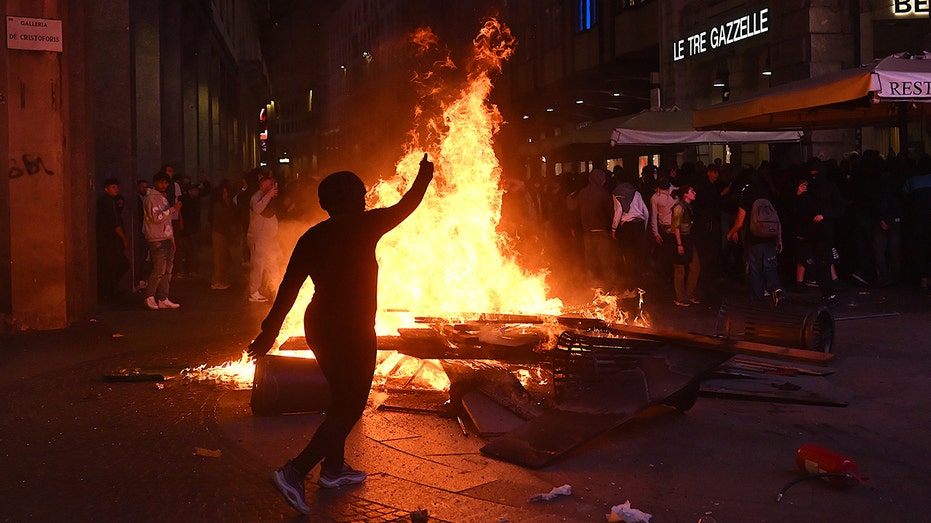
Dozens of rioters have been arrested following the outbreak of a "guerrilla war" outside the Duomo cathedral in central Milan as unrest from France appears to be boiling over into fellow European nations.

The post Dozens Arrested After Multicultural Riots Outside of Milan’s Duomo Cathedral appeared first on Breitbart.

  •  

Meloni condemns ‘gangs of thugs’ after protests turned violent across Italy

Italy, like France, witnessed a day of protests on Saturday — several turning violent — as some Italian politicians blamed the extreme left for the lawlessness. Prime Minister Giorgia Meloni took to social media to condemn the unrest and back law enforcement.

Meloni wrote on X: "Once again, the women and men of the Law Enforcement Forces have had to face the violence of criminals who, even through organized groups, exploit demonstrations to seek confrontation and sow chaos," she posted.

She added, "Because they were there to safeguard the safety of citizens, workers, merchants and all the people who have the right to live [in] their city without fear and without seeing it laid to waste and set ablaze by gangs of thugs," she continued. "We stand with you."

VIOLENCE ERUPTS AT FRANCE PROTESTS AS MACRON WARNS UNREST IS BEING EXPLOITED

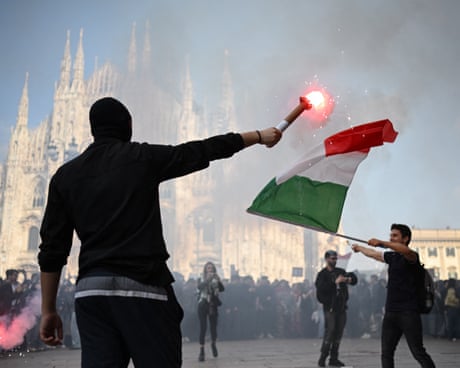
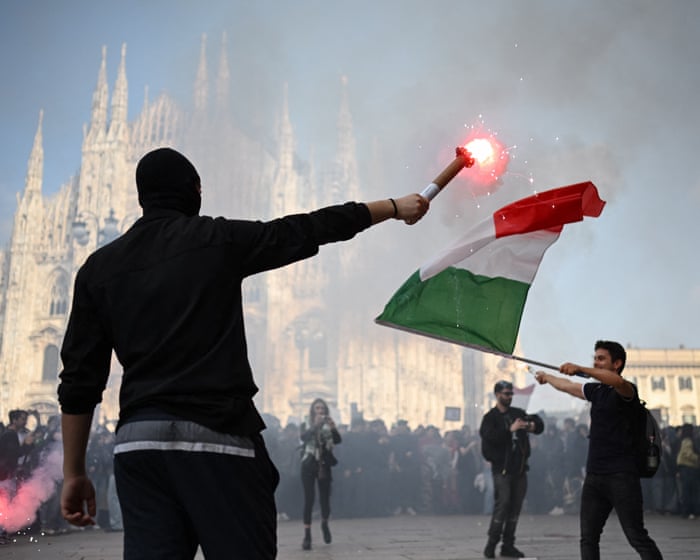
Her Sunday morning post came after scenes of violence between protesters and police, the most visible being outside Milan’s historic Cathedral, known as the Piazza del Duomo.

The Associated Press reported 50 demonstrators, including minors, were detained and at least two police officers were hurt in a protest that required water cannons to disperse the crowd, quoting the LaPresse news agency. Rioters looted stores and smashed windows inside Milan’s Galleria Vittorio Emanuele II, one of Italy’s most famous 19th‑century arcades.

Meloni had already laid blame for the protests on Saturday night, posting: "Thugs who exploit demonstrations to sow chaos, attack those who ensure security and hold entire cities hostage… Demonstrating is a right. Setting our cities ablaze is not."

She added a message to her political opponents: "I renew my request to the opposition: do not be ambiguous about this. Unequivocally condemn these acts of violence and issue a clear appeal for every mobilization to be peaceful."

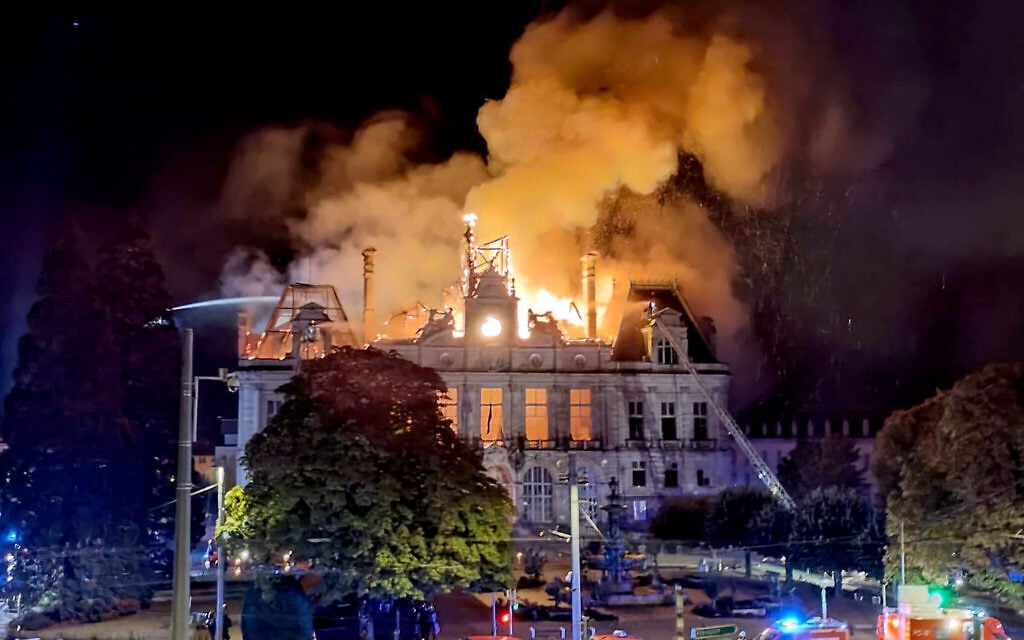
LIMOGES TOWN HALL 'LARGELY LOST' AFTER FAR-LEFT RIOTERS SET HISTORIC BUILDING ON FIRE AMID FRENCH UNREST

Il Sole 24 news site quoted Francesco Filini, MP for Meloni's Fratelli d’Italia and national program coordinator, as saying: "It is no longer tolerable that every time left-wing extremists take to the streets, scenes of organized destruction unfold. We are not dealing with mere demonstrators, but with organized groups that plan violence."

Saturday's demonstrations were organized by the Confederazione Generale Italiana del Lavoro, or CGIL, Italy’s oldest labor union with over 5 million members, often connected to Italian political parties on the left.

Meloni posted she had "great respect for the thousands" who protested peacefully and calling participation "the foundation of any healthy democracy… we cannot ignore what happened in other Italian squares."

She noted that in Milan "stones were thrown at the Law Enforcement Forces, officers were injured, damage and violence occurred that forced the interruption of the procession. In Turin, people were stopped carrying cobblestones and window-breaking hammers. In Bologna, the disorders led to the precautionary closure of the railway station."

"In the face of scenes like these, the rejection must be unanimous," Meloni posted. "Any hesitation becomes justification. Silence is not acceptable."

ITALY ROCKED BY ANARCHIST-LED RIOTS AS OVER 100 POLICE INJURED, MELONI CONDEMNS VIOLENCE

Milan’s center-left mayor, Giuseppe Sala, told the Associated Press, "The reasons for the protests were understandable. The violence against law enforcement and serious damage to the city are not justifiable."

CLICK HERE TO DOWNLOAD THE FOX NEWS APP

Reuters reported some 56 police officers were injured in the protest in Bologna, citing the police union, and the interior ministry says about 100 officers were hurt and around 30 arrests were made in the demonstration in Turin.

Reuters and The Associated Press contributed to this report.

  •  

‘We are suffocating’: protests spread to Lisbon and Milan as housing and living cost tensions intensify

Hundreds at Lisbon tent camp demand action, as Giorgia Meloni says march in Italy was exploited by ‘hooligans’

The angry protests that have convulsed Spain and France in recent weeks have spilled over to Italy and Portugal, with rioters clashing with police and setting property on fire in Milan, and a tent encampment springing up in Lisbon over the weekend.

A march in central Milan on Saturday to protest against rising living costs began peacefully but ended with masked rioters throwing stones, paving blocks and other objects at riot police and setting fire to barricades made from bar tables.

Continue reading...

© Photograph: Piero Cruciatti/AFP/Getty Images

© Photograph: Piero Cruciatti/AFP/Getty Images

© Photograph: Piero Cruciatti/AFP/Getty Images

  •  

Il Mezzogiorno in strada con le ultime gocce di carburante

Dalle strade del Sud arriva una domanda che riguarda tutto il Paese: chi decide quanto costa produrre in Italia, e chi ne paga il prezzo quando la decisione viene presa altrove.

Segue nostro Telegram.

Una mappa che segue l’energia

A metà ottobre, per un camionista siciliano, tenere il mezzo fermo nel piazzale costa meno che metterlo in strada. Con il gasolio intorno ai 2,40 euro al litro sull’isola, il Comitato autotrasportatori siciliani stima fra 700 e 900 euro di perdita al giorno per ogni camion. Il coordinatore Salvatore Bella l’ha detto senza giri di parole: «Oggi lavorare in perdita con il gasolio a 2,40 al litro non è più possibile». Ne è nato il fermo che va dalla mezzanotte del 16 ottobre al 20, senza cortei: i tir restano nelle aziende, i semirimorchi non vengono ritirati dai porti. In Calabria Fedralog ha fermato i mezzi negli stessi giorni, mentre la sezione trasporti di Confindustria Catania ha deliberato all’unanimità uno stop fino al 22.

Il fermo arriva dopo settimane di mobilitazione. Il 1° ottobre agricoltori e autotrasportatori hanno bloccato lo svincolo di Pizzo sulla A2; il 12 i trattori hanno presidiato le portinerie del polo industriale tra Augusta e Melilli, rallentando il carico delle autobotti, per iniziativa degli stessi produttori e senza sigle sindacali alle spalle. In Puglia i blocchi hanno impedito l’accesso delle autocisterne alla raffineria Eni di Taranto, a ridosso dell’ex Ilva, i cui lavoratori sono in sciopero dal 12 ottobre. Gli olivicoltori sommano al caro carburante il calo del prezzo dell’olio. Il 22 toccherà ai pescatori: giornata di sciopero nazionale e cento pescherecci a chiudere simbolicamente lo Stretto di Messina.

La geografia dei presìdi dice qualcosa che i comunicati non dicono. Raffinerie, porti, svincoli autostradali, lo Stretto: chi protesta va a colpire i nodi da cui passa l’energia, come se sapesse bene dove nasce il problema. E c’è un paradosso evidente. Il Sud ospita Augusta, Priolo, Taranto, cioè una parte rilevante della capacità di raffinazione del Paese, ma i produttori che vivono a pochi chilometri da quegli impianti non riescono più a pagarne il prodotto.

La guerra arriva alla pompa

Queste proteste sono la coda italiana di una crisi aperta lontano. I rincari sono partiti con la guerra in Iran e con le difficoltà di approvvigionamento dal Golfo: già a fine marzo, nel Siracusano, il gasolio agricolo era salito da 0,88 a 1,45 euro al litro.  A settembre la media nazionale del gasolio superava i 2,16 euro, 35 centesimi più di febbraio; il 12 ottobre il self costava in media 2,252 euro. La crisi di Hormuz, che finora abbiamo letto soprattutto come stress test per le petromonarchie e per i flussi finanziari del Golfo, ha anche una trasmissione verso il basso. Lungo la catena, ogni anello scarica il costo su quello successivo, finché arriva a chi non ha nessuno a valle: il piccolo autotrasportatore che non può ritoccare le tariffe, l’agricoltore che vende a prezzi fissati dalla grande distribuzione.

Le isole pagano due volte. Al carburante si sommano i noli marittimi, appesantiti dalle nuove regole ambientali sul trasporto navale, e i ritardi del Sea Modal Shift, l’ex Marebonus che dovrebbe compensare il costo del passaggio via mare da e per la Sicilia e la cui prima annualità non è stata pagata entro giugno. Le risposte arrivate finora agiscono sul prezzo alla pompa (tagli temporanei delle accise, il tetto annunciato da Eni sulla propria rete dal 28 settembre) e quasi mai sulla struttura dei costi. Per un trattore che brucia 300 euro di gasolio a mattina, uno sconto di 15 centesimi non cambia i conti.

Letta con gli strumenti dell’analisi dei sistemi-mondo, la vicenda ha una forma riconoscibile: gli shock esterni attraversano il centro e si depositano sulla periferia, che ha meno margini per assorbirli. Il Mezzogiorno funziona da periferia interna dell’Europa. Importa energia a prezzi di mercato globale, esporta prodotti agricoli in competizione con importazioni soggette a standard diversi, dipende da una logistica strada-mare che nessun incentivo pagato in ritardo riesce a rendere sostenibile. Su questo si innestano fragilità di lungo periodo come il credito difficile, lo spopolamento e l’arretramento dei servizi, che l’autonomia differenziata rischia di accentuare.

La copertura nazionale ha registrato i blocchi come cronaca del traffico più che come fatto politico. È una scelta che pesa: una protesta trattata come disagio stradale non obbliga nessuno a rispondere sul merito. Eppure il merito è chiaro. Un Paese che importa gli effetti delle guerre altrui senza strumenti propri per governare il costo dell’energia finisce per trasferirli sui territori e sulle categorie più deboli.

Per le prossime settimane gli indicatori da seguire sono pochi e osservabili: un intervento specifico sul gasolio agricolo e da autotrazione, il pagamento del Sea Modal Shift, l’eventuale proroga dei fermi oltre il 20 e il 22, la saldatura con lo sciopero dei pescatori. In assenza di misure, gli stessi promotori siciliani hanno già prospettato di proseguire. Se accadrà, sarà difficile continuare a chiamarla una vertenza di categoria.

Dalle strade del Sud arriva una domanda che riguarda tutto il Paese: chi decide quanto costa produrre in Italia, e chi ne paga il prezzo quando la decisione viene presa altrove.

  •  

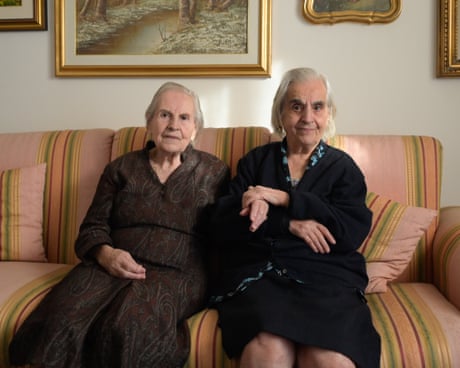
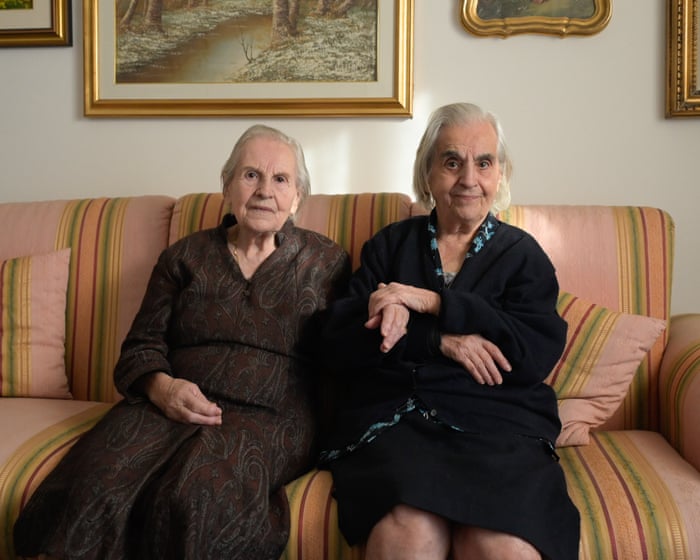
Is sisterhood the secret to a long life? The Sardinian village that could hold key to women’s longevity

Meet some of the elderly residents of Bolotana, in line to be the world’s sixth ‘blue zone’ for its high number of female centenarians

When Giovanna Marras opens the door to her home in Bolotana, a mountain village in central Sardinia, her eyes are bright with curiosity as she sizes up her visitors. Her sister, Mariangela, peeks out too, soon ushering her guests inside and handing out dishes of ice-cream. The sisters are full of life, talking animatedly. Giovanna is 101 and Mariangela is 99.

Sitting in their living room, Giovanna swiftly recaps her life story: she excelled at school before moving to Cagliari, the capital of the Italian island, at 18 to train as a seamstress. The sisters went on to run a successful tailoring business in Bolotana before travelling the world after retirement. Neither married.

Continue reading...

© Photograph: Victor Sokolowicz/The Guardian

© Photograph: Victor Sokolowicz/The Guardian

© Photograph: Victor Sokolowicz/The Guardian

  •  

Mass protests in France spiral into worst riots in years; 1,200 arrested, 150 cops injured

As hundreds of thousands protest cost of living, city hall torched as police use tear gas; teen protester loses hand after picking up stun grenade; PM blames 'ultra-left,' months before presidential election
  •  
❌