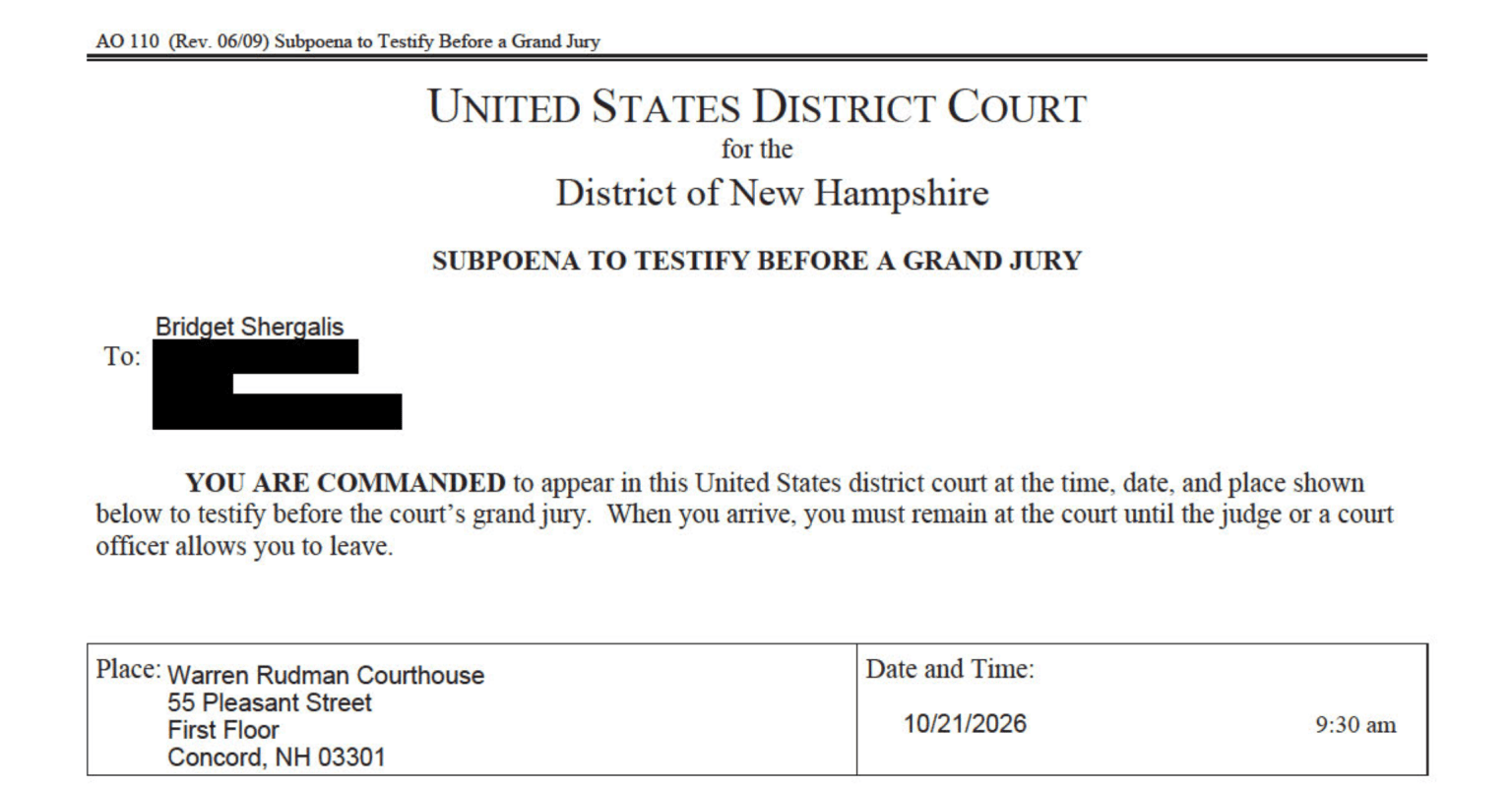
Two activists have been ordered by DOJ to testify in mysterious grand jury proceedings regarding their involvement in efforts to deface an Israeli weapons manufacturing facility in New Hampshire, after feds had sought in an earlier trial to obtain sentences of 37 years for them.
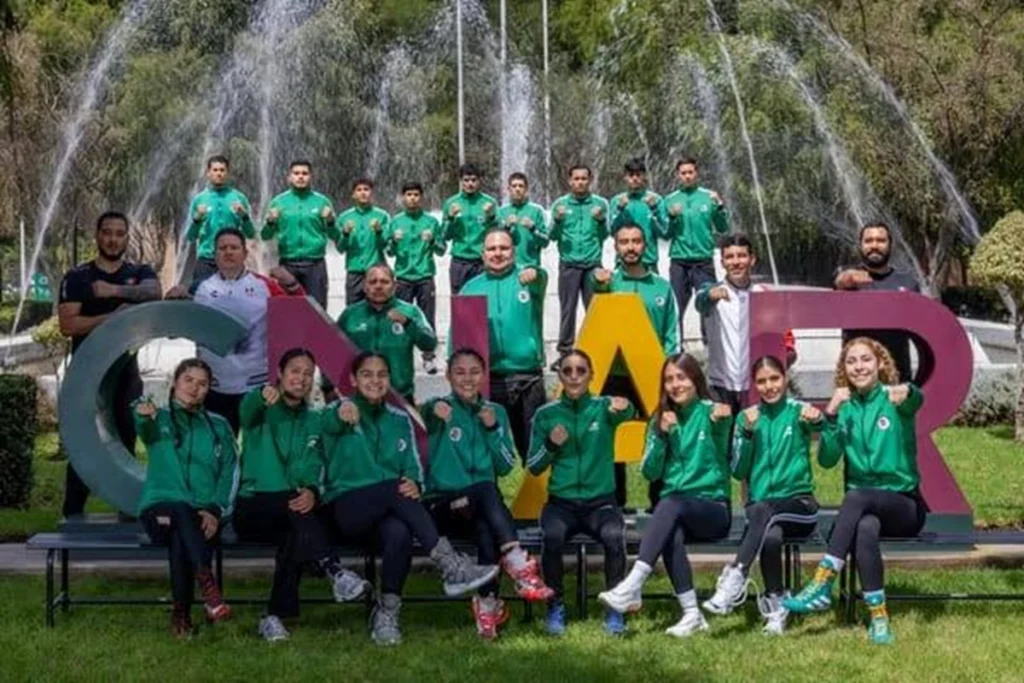
The host country held 25 bouts at the Miguel Hidalgo Gymnasium in Puebla.
On Monday, the Mexican team added more positive results on the second day of the Puebla 2026 Pan American Continental Elite Boxing Championship, which marks the beginning of the qualifying process for the Lima 2027 Pan American Games.
The host country held 25 bouts at the Miguel Hidalgo Gymnasium in Puebla, a key day for the local representatives seeking to advance in the continental tournament.
In the women’s division, Valeria Amparan, in the 51-kilogram category, secured her place in the quarterfinals after defeating Esther Jimenez of the Dominican Republic by split decision.
Meanwhile, Santiago Montalvo advanced to the next round in the men’s 60-kilogram category after his opponent, Abishai Jean-Baptiste of Barbados, failed to make weight. The day also brought some setbacks for the host delegation, since Paula Hernandez lost by unanimous decision to Brazilian Rebeca Santos in the 60-kilogram category.
🥊 || Inauguración del Campeonato Panamericano Continental Élite de Boxeo 2026, por el gobernador de Puebla, Alejandro Armenta acompañado por Gennady Golovkin, presidente de World Boxing y ex campeón mundial de boxeo, en el Gimnasio Miguel Hidalgo.
The text reads, “Opening of the 2026 Pan American Continental Elite Boxing Championship, by the Governor of Puebla, Alejandro Armenta, accompanied by Gennady Golovkin, President of World Boxing and former world boxing champion, at the Miguel Hidalgo Gymnasium.”
Likewise, Jose Gonzalez was eliminated in the 55-kilogram category after losing by split decision to Brazilian Michael Douglas. The competition continues this Tuesday with Guadalupe Torres facing American Alyssa Mendoza in the quarterfinals of the women’s 57-kilogram category.
Also taking to the ring are Darianne Hernandez, who will face American Marie Rosendo in the 65-kilogram category, and Hugo Barron, who will face Panamanian Cristofer Filos in the men’s 65-kilogram category.
Another major focus will be on Hugo Padilla, who will fight Canadian Parminder Pannu in the 75-kilogram category, with the possibility of moving closer to qualifying for Lima 2027.
#WorldCup2026 | @CharlieMontero_ continues his journey through Mexico and discovers the incredible friendship and positive energy shared between Japanese fans and Mexican supporters.
The author (right) found a connection in an unlikely place: her ex-husband's new wife, who later became his ex as well.
Courtesy of Julie Peck.
People often assume that my best friend and I are sisters, but our connection is a little different.
She's the now ex-wife of my ex-husband, though we connected while they were still together.
She has become my person, the one I turn to in good times and bad.
When my best friend Shelley and I are out together, people often ask if we are sisters, even though we look nothing alike. Shelley has dark hair, dark eyes, and very fair skin, and while I also have fair skin, I'm a blue-eyed blonde. We get the question so frequently that it's almost comedic.
"No," we tell whoever is asking, "we're ex-wives-in-law."
This always gets a laugh, and when we explain our story, it brings a moment of levity to whomever we've encountered.
Behind what we've made into a little joke for public consumption is a unique bond that a lot of people wouldn't understand. It's a bond forged by trials, reinforced by implicit trust and devotion, and topped off with a whole lot of laughter and joy.
Our connection is unique
"Our Husband," as we call him, was intent on Shelley and me getting to know each other before they married. He and I have two sons, and Shelley has two sons from a previous marriage who are about the same age as my boys.
This meant that we had many of the same interests as boy moms by default, but, as it turned out, we also shared many of the same tastes in music, art, and books.
One milestone event of my life occurred early in Shelley's marriage to Our Husband. Shelley and I went to see Prince in concert together shortly before his death. I will never forget that night, and I'm so thankful that I got to see him perform live. In retrospect, I could see the spark of our friendship starting to glow that night.
Strangely enough, though, the night that I count as the true beginning of our friendship was the night that the Diane Sawyer interview featuring Caitlyn Jenner aired. For me, this was one of those events in the cultural zeitgeist that seemed like it should be witnessed with someone else. As it happened, all four of our boys were on the swim team together, and the program aired on the night of a meet. So, I forced the situation. Our Husband was working that evening, and I told her I'd be over with food to cook dinner for all of us. I came to her house — the house that she shared with Our Husband, who was my ex, of course — and we made dinner for ourselves and the boys, drank some wine, and watched the interview. Our friendship grew from there.
Not everyone was on board at first
Shelley told me much later that she initially thought it was weird that, as Our Husband's ex-wife, I was so intent on being her friend.
She says her mother told her, "I think you might as well give in, I think she has decided you are friends." The truth is, I just plain liked her, and we had a lot in common, but her mom was right. I wasn't going anywhere.
The relationship evolved
Sadly, Shelley's marriage to Our Husband ended after four years. She has said that I put her back together after that all happened. I don't look at it that way. I simply was there for my friend. She emerged after that crisis like a butterfly coming out of its cocoon, and our friendship grew, battle-hardened, to a new level. Through all this, we shared parenting crises and triumphs, career battles and successes, and personal health scares.
Then, together, we went through something foundationally shattering for both of us. We both cared for our aging mothers, and connected even more deeply after they both died.
For a daughter, losing a mother is a life-changing event. On top of that, being a family caregiver, being involved in the deeply draining day-to-day process of shepherding a loved one toward and through their transition in death, is a solemn responsibility, the parameters of which are indescribable to anyone who hasn't experienced it.
As it happened, just by circumstance, Shelley walked those paths ahead of me and alongside me, and we held each other together through tears and laughter along the way. Shelley's mother died on March 18, 2019. My mother died on March 16, three years later. Shortly after she passed, Shelley, Our Husband, and I sat in my living room and toasted her with a round of her favorite drink, gin and tonics, in recognition of the valiant battle she had just completed.
Our Husband had thoughts
So how does Our Husband feel about Shelley and I being so close? For him, it's been kind of like the five stages of grief. First, he tried to deny that we were actually friends. Surely, we were just pretending to be friends — certainly, this was just a charade, we were just doing this to spite him. Then came anger. Apparently, we were friends, which just wasn't appropriate in his view. Next, there was bargaining. If we'd stop seeing each other, he'd be nicer. Then, of course, depression. Yes, Shelley and I were friends, and that just sucked. Now, there is acceptance. Sometimes, he refers to her as my "girlfriend."
Of course, a lot of time has passed, and I like to think that all three of us have grown a great deal. Shelley and Our Husband have been divorced for 10 years. My relationship with Our Husband has gone through many evolutions. He and I have been divorced for 14 years and apart for 17. Above all else, he gave me the greatest gift one human being can ever give another in making me a mother, and we have two wonderful sons who are young men now, out in society, being productive citizens.
Little did he know he'd also give me another wonderful gift when he got divorced for a second time. He gave me my best friend for life, my person.
One of my favorite cartoons growing up was "The Jetsons." The Jetsons were a futuristic family living among the clouds with a fully automated life, from a robot maid named Rosie to technology that could make your dinner or do your laundry in just a few seconds at the push of a button. Everyone’s favorite aspect of this futuristic cartoon lifestyle boiled down to one element, which has become somewhat of a benchmark for technological progress: flying cars. And with Tesla’s recent exhibition, we are one step closer to that Jetsons-esque reality.
If you haven’t seen the video, Tesla did a demonstration of their forthcoming Roadster vehicle, slated for 2028 production. The car swooped up a half-loop ramp reminiscent of Matchbox car stunts. At the top of the ramp, the car, which was upside down at the top, flipped over in midair. Then, thrusters seemed to suspend the car in midair, before helping guide it gently back down to land on the ground.
For just a few moments, that car flew, and it was truly awe-inspiring.
The reactions to this engineering feat and demonstration spectacle are somewhat of a Rorschach test. Those who love building, progress, technology or who are just generally optimistic have seen this demonstration as a formidable, impressive achievement. Those who like to see things torn down or are generally naysayers or obstacle formers react with "it’s not that big of a deal" or give other criticisms.
Fortunately, America still has enough people committed to the entrepreneurial spirit to attract the likes of Elon Musk and provide a good home base for his talented team members and others who want to see Musk, America and human beings in general succeed.
It isn’t hyperbole to say that Elon Musk is one of, if not the greatest, entrepreneurs of modern times. Regardless of any personal feelings or thoughts about Musk, if you can separate the art from the artist, or in his case, the entrepreneur from his business accomplishments, objectively, Musk has done the unthinkable time and time again. And we, as a country, are better off for him doing it from America as his home base.
As my husband and I talked about Musk’s varying accomplishments, from his early work in online payments to his achievements in electric vehicle manufacturing and AI, to his SpaceX being able to catch rocket boosters returning to the Earth from outer space upon landing, and now this latest hovering automobile. We discussed that Musk reportedly held discussions with Taiwan Semiconductor Manufacturing Company regarding a potential collaboration for his "Terafab" semiconductor facility in Texas. I mentioned that chip buildout had faced major challenges elsewhere, and my husband pointed out that it is different under Musk, saying, "In fact, we need 16,000 more Elon Musks."
No, Elon Musk does not succeed on his own. There are many team members alongside him in undertaking outrageous projects and often making them succeed. But there’s something about Musk’s vision, leadership, hiring and willingness to inspire confidence in others, both on his team and in the general public, that makes his teams continue to be successful. And we need more of that.
We need to not only attract and inspire those who may even be just a little bit like Musk, to dream bigger and bolder, to take calculated risks and try and try again when things don’t work the first time. And we need to make sure that we incentivize that behavior, instead of trying to penalize it or throw up roadblocks.
In our own government, which is supposed to help vs. hinder entrepreneurs, we have politicians like Senator Elizabeth Warren, who is noted for going after Elon Musk because of his success, instead of trying to figure out a way to foster more Musk-like successes. After a vastly-ridiculed post made earlier this week from Warren lamenting, of all things, a possible merger between companies that make various spices and condiments, Mike Solana, CMO of Founders Fund and EIC of Pirate Wires, posted on X (also owned by Musk), highlighting the stark differences between the politician Warren and the creator Musk.
His post said, "liz warren: we’re gonna stop the mayonnaise company from buying a hot sauce company." He then said, "elon musk:," and included the video from Musk of the Roadster’s hovering feat, perfectly illustrating how some in our country are erecting barriers and others are breaking barriers.
America was founded on an idea of individual rights and incentives that rewarded successful pursuits, with such rewards growing at scale. We are very fortunate that we have Elon Musk and others who are pushing boundaries, bringing us into new frontiers, allowing Americans who work for him, who invest with him and who use his products or services to benefit alongside of him.
Aman Bhutani (left) said Dara Khosrowshahi gave him career advice that changed his career.
WEF/Vipin Kumar/Hindustan Times via Getty Images
GoDaddy's CEO said Dara Khosrowshahi once gave him career advice that changed his leadership.
Aman Bhutani said Khosrowshahi told him he'd never gain ad experience if he didn't start speaking up about it.
The advice prompted Bhutani to push through the discomfort of learning new functions.
Getting a seat at the leadership table is a challenge in itself — but speaking up confidently once you get there is a different beast.
Aman Bhutani, CEO of the domain registrar and web-hosting company GoDaddy, said he received advice on navigating those moments from Uber's current CEO Dara Khosrowshahi, who at the time led Expedia and served as president of the brand. Bhutani was then the company's head of technology, and reported to Khosrowshahi.
Khosrowshahi gave him a chance to discuss advertising in a senior-level meeting they were both attending. While Bhutani was initially excited about the opportunity, he said that eagerness didn't come through.
"Sitting in this room of leaders, where there were people that had way more experience and expertise than I did, I didn't speak up," Bhutani told Business Insider.
Bhutani said he regularly spoke up in meetings about product, engineering, and other areas where he felt confident about. However, while advertising was a core interest, he hesitated to weigh in. After several meetings, Khosrowshahi pulled Bhutani aside and gave him feedback that the GoDaddy CEO said changed his career.
Khosrowshahi asked why Bhutani didn't share his perspective on functional marketing, since the topic was so critical for the business. Bhutani explained he didn't have "any actual experience" in marketing. Khosrowshahi's response, Bhutani said, was simple.
"'And if you don't talk about it, you never will,'" Bhutani said, recounting Khosrowshahi's reply. "'If you don't talk and make mistakes and say the wrong things and get beat up by the CMO, how are you going to learn?"
Khosrowshahi reminded Bhutani that Bhutani wasn't afraid to be wrong on the product-tech side. He told Bhutani that he should approach marketing the same way, even if he didn't have the same background.
That advice has since taken Bhutani far, he said. Bhutani later took over presidency of the Expedia brand from Khosrowshahi in July 2015, with marketing and advertising teams reporting to him.
Bhutani said that in his last job and current position as CEO of GoDaddy, he's had the chance to learn about every part of the business. That means he can speak with accountants, marketers, and auditors in their language. He said he has grown to enjoy learning about new functions, and seeks out people and situations where he's pushed to do that.
"I enjoy the stress and the discomfort of being in an uncomfortable space," said Bhutani, who has been GoDaddy's CEO for seven years now. "I enjoy the idea that I'm learning something new. It keeps me young. It keeps me happy. It keeps me engaged."
Bhutani learned that it's important to share his perspective, but said there's often a fine line between adding value and speaking just to prove you belong in the room.
Bhutani said another piece of feedback that stuck with him from his last job — positive this time — was from a board member who told him he has a good "tongue-to-ear ratio" and "brain-to-mouth ratio." In other words, he knows when to listen and think, rather than speak just to fill silence.
"I think if we all listened a bit more and thought a bit more, we would all do a bit better," Bhutani said.
A Bogotá court ordered the National Museum to safeguard nearly 30 removed works as professors protested the government’s decision.
A Bogotá court has ordered Colombia’s National Museum to preserve nearly 30 artworks removed from its exhibitions, prohibiting further alterations or removals without legal authorization amid growing protests over the government’s decision to take down pieces related to the armed conflict, feminism and LGBTQ+ communities.
The 24th Family Court of Bogotá issued the precautionary measures in response to a constitutional protection petition filed by Gabriel Becerra Yáñez, secretary-general of the Unión Patriótica party, and members of the León Zuleta and Revolución en Rosa collectives.
Judge César Enrique Osorio Ortiz ordered the museum to keep the affected works in appropriate conservation conditions and prohibited the institution from moving, destroying, altering, deaccessioning or returning them to third parties. The museum must also preserve all records, exhibition plans, minutes and communications related to the removals.
The court gave the museum’s management 24 hours to submit a detailed report identifying the works’ current locations and conservation conditions, including items removed from exhibition rooms and the Miguel Ángel Díaz memorial garden. The report must also identify the authority responsible for ordering their removal.
Text Reads: Six modern art museums in Colombia questioned the removal of at least 30 historical pieces from the National Museum in Bogotá.
The dispute began last week after President Abelardo de la Espriella ordered nearly 30 works removed from the museum’s permanent exhibitions. His office characterized the pieces as an “ode to terrorism.” The works address historical memory of Colombia’s armed conflict, feminist demands, LGBTQ+ rights and the 2016 peace agreement with the Revolutionary Armed Forces of Colombia (FARC).
Court cites constitutional protection for historical memory
In its ruling, the court emphasized that artistic expressions connected to historical memory, truth-seeking and symbolic reparation for victims are protected under Colombia’s Constitution.
The decision cited the Constitutional Court’s recognition that such works serve a broader public purpose.
“Artistic expressions associated with processes of historical memory, extrajudicial truth and symbolic reparation for victims are not merely cultural manifestations, but constitutionally protected instruments for building collective memory, dignifying victims and ensuring guarantees of non-repetition,” the ruling stated.
The judge added that these expressions warrant enhanced protection because of their close links to the fundamental rights to truth, historical memory, artistic freedom of expression and symbolic reparation for victims.
The court found reasonable grounds to suspect that these rights had been violated and warned that further harm could occur without immediate conservation measures. It said the precautions were necessary, urgent and proportionate to prevent irreparable damage while the case is considered on its merits.
Text Reads: Historical memory cannot be erased! The justice system accepted our legal petition and ordered the protection of the works removed from the National Museum, the halting of any further unjustified removals, and the preservation of the garden dedicated to Miguel Ángel Díaz. The memory of the victims and the rights that have been won must be defended!
The petition names both the Ministry of Cultures, the Arts and Knowledge and the National Museum. Each has one business day to respond, submit evidence and clarify whether administrative decisions authorized the removals, as well as the degree of institutional autonomy between the two bodies.
The proceedings also involve President de la Espriella, Bogotá’s Secretariat for Women, the Sexual Diversity Directorate of the District Planning Secretariat, the Secretariat for Social Integration, the Sí Mujer Foundation and the Colombian Communist Party. These parties were also given one business day to submit evidence.
Professors hold classes outside museum in protest
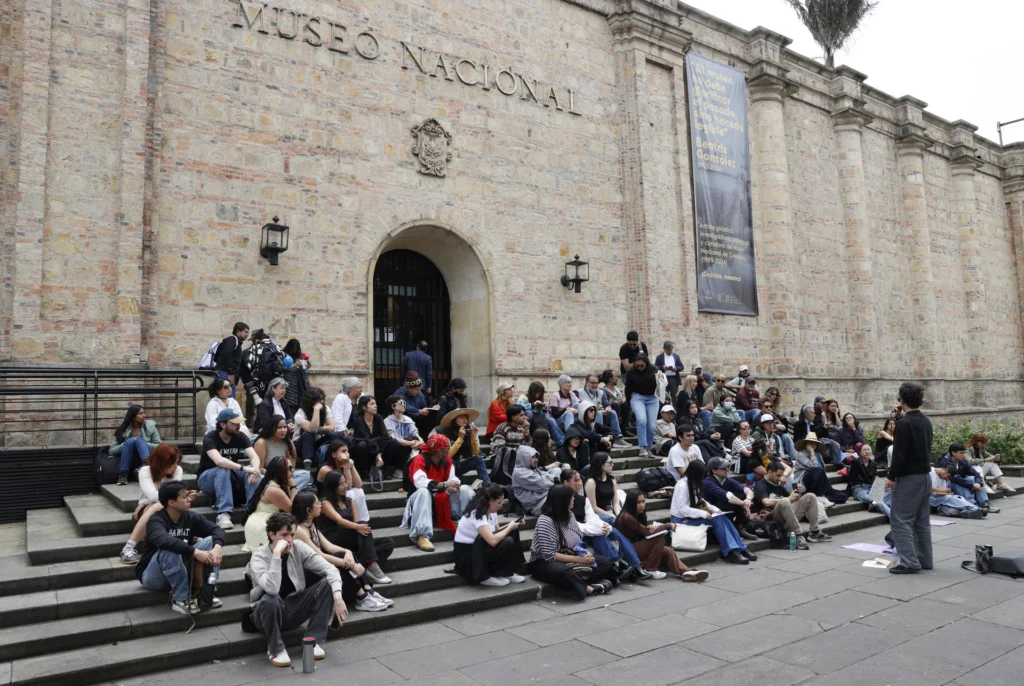
The legal challenge comes as opposition to the removals has spread beyond the courtroom. On Monday, university professors moved their classes to the steps of the National Museum, holding open-air lectures to discuss the government’s decision and what they described as censorship.
Academics from several disciplines used an amplification system to address the public. The sessions took place under the watch of numerous officers from the National Anti-Riot Unit (Unadi), the same force deployed during large demonstrations outside the museum over the weekend.
Text Reads: ABELARDO DE LA ESPRIELLA SEEKS TO ERASE HISTORICAL MEMORY The president has ordered the removal of images and references to Carlos Pizarro Leongómez—former M-19 commander and a key figure in the peace process—from government-controlled public spaces. This decision follows the provisional suspension of the designation of his hat as a piece of cultural heritage, and comes amid a visit to the Ministry of Culture, during which he also lashed out against inclusive language. Arguing that “terrorists” should not occupy public spaces, the government is attempting to dictate which parts of history deserve to be remembered. Memory cannot be erased by decree. History cannot be rewritten from a position of power.
Catalina Muñoz Rojas, an associate professor in the Department of History and Geography at the University of the Andes and an organizer of the classes, said the removed works were part of exhibitions developed over years to reflect the pluralism and diversity enshrined in Colombia’s 1991 Constitution.
She argued that the president’s intervention disrupted democratic, participatory curatorial processes involving communities from across the country. The professors plan to continue their educational activities throughout the week, engaging members of the public and the officers stationed outside the museum. Organizers urged the officers to respect the peaceful, academic nature of the protest.
Ana López, a resident of Colombia who attended the demonstrations, described the government’s decision as arbitrary and authoritarian, warning of the risk of more sweeping censorship aimed at silencing the country’s cultural and social diversity.
The removals have also prompted public criticism from Colombia’s modern art museums and the Colombian committee of the International Council of Museums (ICOM Colombia), alongside protests outside the institution.
The court’s precautionary measures will remain in force while it considers the petition’s merits. The proceedings will address the legal basis for the removals and allegations that the decision violated rights related to historical memory, artistic expression and symbolic reparation.
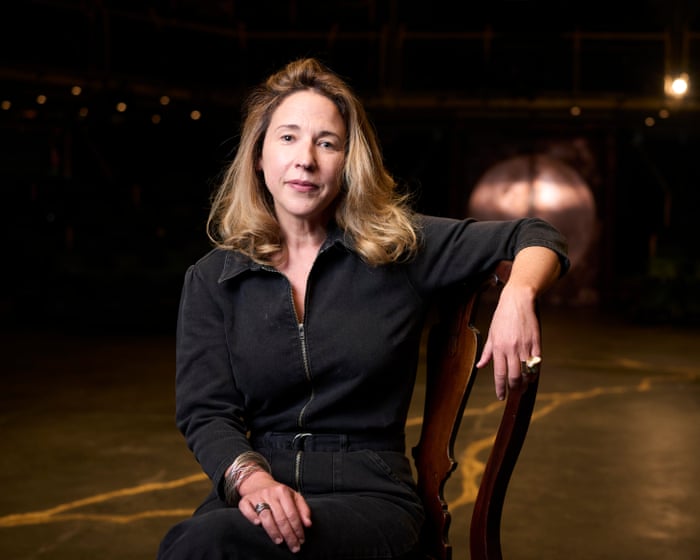
Selina Cartmell announces season including Stockport-set version of Phaedra myth by Simon Stephens
A theatre boss has promised to channel the “pioneering spirit of Manchester” and be “brave and fearless” as she unveiled a new season of work, two years after a deeply damaging censorship row.
Selina Cartmell, the artistic director of the Royal Exchange in Manchester, revealed details of 2027-28 productions that include a retelling of the Munich air disaster and a modern Stockport-set version of the ancient Greek myth Phaedra.
Hans Hasselby-Andersen spent nearly a year raising his first funding after leaving Texas Instruments during the financial crisis.
Hans Hasselby-Andersen/Lotus Microsystems
Hans Hasselby-Andersen quit Texas Instruments during the 2008 financial crisis with four young kids at home.
He sold his apartment, cashed out his pension, and took on debt to build a semiconductor startup.
Nine years later, his company, Merus Audio, was acquired by Infineon.
This as-told-to essay is based on a conversation with Hans Hasselby-Andersen, 56, CEO of Danish semiconductor startup Lotus Microsystems and cofounder of Merus Audio, which was acquired by Infineon in 2018. The following has been edited for length and clarity.
When I quit my job at Texas Instruments in September 2008 to start a semiconductor company, I had four children between the ages of 5 and 14.
It was almost the height of the financial crisis. You had Lehman Brothers going down in flames in the US, and the whole credit market was just freezing up.
So to jump out at that point and go into fundraising was a big, big step. My manager was looking at me like I was crazy, basically.
Thinking back, probably I should have waited a year or so and just cooled off a little bit. But the thing is, once you have an idea and you're really motivated, you can't really wait. You have to go do something about it.
I'm an electrical engineer by training. Earlier in my career, I joined a small startup that was acquired by Texas Instruments about five or six months after I arrived.
The whole concept of a company being acquired, an exit and all that, was all new to me.
It planted a seed in my head that, if the circumstances were right, this was also a path I could take, and not just build my career in a large company.
I stayed at Texas Instruments and worked in the audio semiconductor business.
I was picking up things from my interactions in the market where I thought there was actually a need for a much more energy-efficient way to drive speakers in products like portable speakers and soundbars.
I saw a market need, but I didn't have the technical solution, so my first task was to go out and find a cofounder who could come up with a technical solution for that market.
I think that's actually quite unusual for tech startups. Normally, somebody comes up with some technology, and then they go out and try to see where it can be applied. This was the opposite approach.
Four kids, one big decision
Just before I resigned, I called my bank and asked if I could get a basic bank overdraft facility just to give me some extra headroom to live on.
Honestly, I think if I had waited two weeks, I wouldn't have gotten it. It was just when the financial crisis started to really kick in, and I seriously doubt I would've gotten that line of credit.
Getting the first funding took the better part of a year.
I probably spoke to between 50 and 100 different investors.
It's really a dating game. You try to look appealing and interesting from a company point of view, but you mostly get rejections because the investor doesn't invest in your domain, you're too early, you're too late, or you don't fit their profile.
I paid out of my own pocket to travel to Japan, South Korea, and Singapore to meet potential customers. I wanted to pressure-test my idea, understand what they were struggling with, what their requirements were, and help mature my business case.
Eventually, I raised the equivalent of about $150,000 to $200,000. It was a very small amount, and we spent it in about six months. The minute we got the funding, we knew we had to continue fundraising immediately.
My wife, who was a school teacher at the time, has been very, very supportive. She never told me, "This is a stupid idea, go back and find a job."
With four kids, you can't just make that decision on your own. When we finally got the company off the ground, my wife and I made some adjustments to minimize the risk for my family.
We sold our apartment while we could still make a little money from it and rented instead, so we wouldn't risk having to sell at a loss if the company failed. We also sold our car and leased one instead.
I slaughtered my pension and took out the money. I thought, "I need it now. I'm not about to be retired anyway."
Throughout the life of a startup company, you're more or less in fundraising mode all the time. You always have to keep your eye on how long you have cash and where you're going to get your next funding. The worst thing that can happen is that you run out of cash.
If there's one recommendation I would give first-time founders, it's to prepare for things to take longer than they expect because they always do.
If you think you can do something in two years or three years, multiply that by two, at least.
If you plan financially for your cash to fund your plan as you lay it out, then you're going to be in a difficult situation because you're going to run out of cash before you've achieved the milestones you set out to achieve.
Engineers have to sell, too
Starting a company around 40 made me a different kind of founder. There were definitely things I had learned that I wouldn't have been without.
I had learned how to communicate with customers, how to find out what the market needed, and how to explain what I was doing and why it was a good idea.
Many engineers are obviously good at what they do technically, but they can have a big challenge explaining that to others.
When you're standing in front of investors, you have three minutes to explain what you're doing. You have to train to do that elevator pitch.
Nine years later, the company I cofounded, Merus Audio, was acquired by Infineon.
I stayed on to help with the integration, but I was really not looking to go back into the corporate world. I had already had that experience and I had really come to like the startup life.
Today, I'm CEO and an investor at Lotus Microsystems, another semiconductor startup.
I'm not a founder this time, but I feel ownership. I feel invested in the company.
Would I take that same risk again today as I did with Merus?
I think the answer is yes.
If you have that mentality of wanting to try something on your own, to build something, that is a major driver inside you. It gives you an enormous amount of energy and motivation.

 Login