❌

Reading view

Sea mine crisis re-emerges in Strait of Hormuz as Tehran urges Washington to accept deal

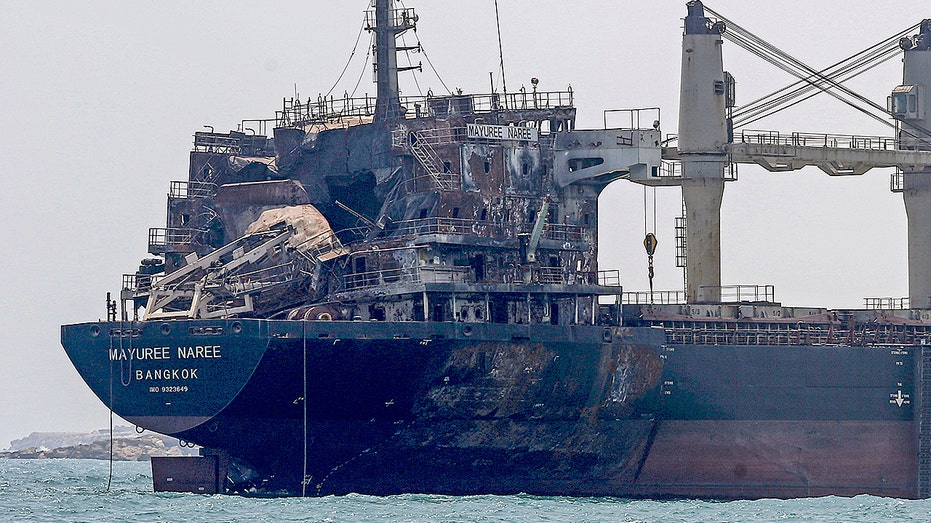
Sea mines have resurfaced as a threat in the Strait of Hormuz, where Iran claimed Oct.17 that two oil tankers caught fire after striking the explosives, raising fresh alarms over the safety of one of the world's most critical shipping lanes.

This came as the International Maritime Organization (IMO) warned that sea mines pose a serious threat to vessels navigating the strategic waterway and while Tehran continues to maintain its own unauthorized shipping corridor inside its territorial waters.

"The traffic separation scheme, the information that we have is that they still have mines. And of course, whilst the conflict is ongoing, it's very difficult for us to use third parties to verify that it is clear of these hazards," IMO Secretary-General Arsenio Dominguez told Fox News Digital.

INSIDE THE DANGEROUS US MISSION THAT CLEARED IRAN’S MINES FROM HORMUZ SHIPPING LANES

"So in the meantime, we cannot guarantee that a vessel that intends to transit that route will not be hit by a mine."

Iran's Islamic Revolutionary Guard Corps (IRGC) navy said Saturday that two oil tankers caught fire after striking naval mines while crossing the Strait of Hormuz, Reuters reported, citing Iran's official Islamic Republic News Agency (IRNA).

State media also said both tankers were carrying about 2 million barrels of crude oil, according to Reuters.

IRNA also reported that the vessels had switched off their positioning and radar systems and attempted to use a route through the strategic waterway that Iran had not authorized.

IRAN WARNS SHIPS OF 'FORCEFUL RESPONSE' AS US-BACKED HORMUZ ROUTE CHALLENGES TEHRAN'S GRIP

The second tanker was left immobilized after striking a mine, according to the Reuters report.

The alleged strikes came as Tehran continued to maintain its transit passageway inside Iranian territorial waters, imposing tolls and safety fees administered by the IRGC — a framework rejected by Washington and the IMO as inconsistent with international maritime law.

International shipping through the narrow chokepoint has historically relied on an IMO-approved traffic separation scheme adopted in 1968.

"Right now there's only one route that was adopted back in 1968 that is approved and recognized for IMO and that appears in all the charts for the vessels to operate," Dominguez explained.

IRAN FAILS TO STRIKE DEAL WITH US AS DEADLINE PASSES AND TRUMP CALLS FOR ‘WHITE FLAG OF SURRENDER'

"There's only one route that should be used for transit, but it's not clear of mines right now, so it's not safe."

"We have received confirmation from Iran about the establishment of its temporary route in the waters," he added before stating that the route was not provided with "an official confirmation or a decision of the organization."

"Any other route needs to actually be sent to the organization to go through the processes, and we have not received that."

"We have received communication from Iran to use that route because of the conflict," Dominguez clarified.

"That's the way that it's been presented. But anything for us to approve needs to go through the mechanisms at the international maritime organizations and the member states need to review it."

The developments also came amid stalled negotiations between Washington and Tehran over ending the conflict and restoring maritime traffic.

DISTRESS CALL CAPTURES TANKER UNDER FIRE, IRAN SHUTS HORMUZ TRAPPING THOUSANDS OF SAILORS

Mohsen Rezaei, secretary of Iran's Supreme National Security Council and a former Revolutionary Guard commander, said Tehran considered Washington's latest response to negotiations "insufficient," Reuters reported, according to IRNA.

Rezaei said the U.S. had accepted some of Iran's seven conditions but that other issues remained unresolved, adding that Tehran was no longer responding to Washington and that the U.S. needed to clarify the outstanding matters.

Iranian Foreign Minister Abbas Araghchi said that Tehran had submitted a proposal to Washington through Qatar, which is mediating the negotiations, outlining conditions under which the Strait of Hormuz could reopen and normal maritime traffic resume within seven days.

"Our situation is clear and based on ⁠the seven-day proposal presented to the US. They shared comments which ​we are reviewing, but our proposal is still on the table ​and if there is any honesty on the US part, which there isn't, the way to reopening the Strait of Hormuz is obvious," Araqchi said in ​Baghdad, Reuters reported

IRAN REQUESTS TALKS WITH US AS WHITE HOUSE WARNS 'VIOLENCE WILL BE MET WITH VIOLENCE'

Meanwhile, attacks on commercial vessels around the Strait of Hormuz have surged over the past two weeks.

Senior Iranian officials also told Reuters that Tehran has shifted its strategy for attacking commercial vessels during that period.

For commercial shipping operators, Dominguez warned that the continued threat of mines and attacks means the waterway has yet to return to normal operations.

The Strait of Hormuz is "not open for business in the way that it was before the conflict started," he said.

"Our role right now is to prepare for when we have the opportunity to go back, resume the operations, follow all the procedures at IMO, but not until the root causes are addressed and those are beyond IMO."

CLICK HERE TO DOWNLOAD THE FOX NEWS APP

Fox News Digital reached out to U.S. Central Command (CENTCOM) for comment.
  •  

Iran regime under pressure as rebel groups escalate attacks in volatile southeast

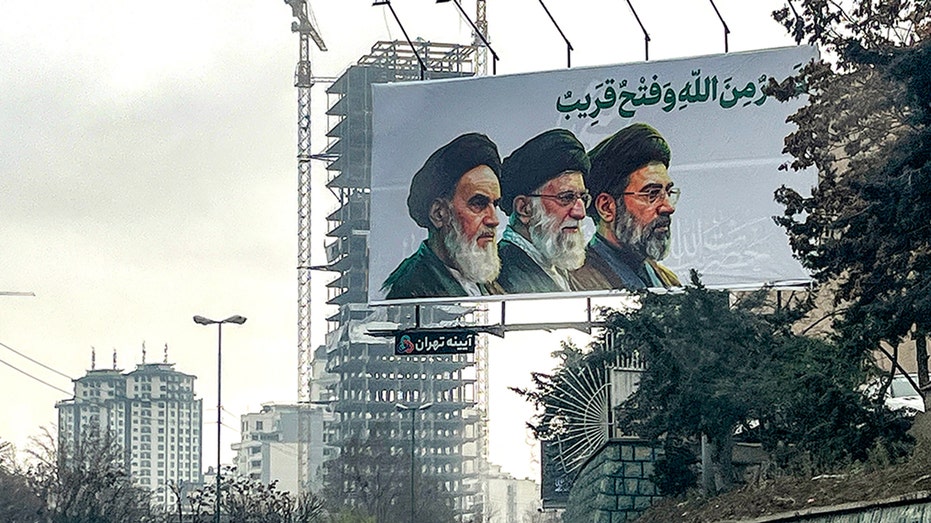
A new coalition of Iranian opposition groups in the restive southeastern provinces of Sistan and Baluchistan and Kerman in the Islamic Republic have launched a string of armed attacks against the clerical regime in the region.

The six strikes claimed by the coalition known as the People’s Fighters Front (JMM) have contributed to instability in the provinces, raising pressing questions about whether armed resistance against the clerical regime in Tehran will spread and if the regime can retain control over Sistan and Baluchistan, which is a majority Iranian Sunni province.

Iran is largely a Shiite Muslim country, and the minority Iranian Sunni population has faced discrimination over the decades. Sistan and Baluchistan is the second largest of the 31 Iranian provinces.

MOJTABA KHAMENEI DEFIES ‘MALICIOUS’ ATTACKS AS US ARMY ZEROES IN ON IRAN’S 350,000 TROOPS

Mardo Soghom, an Iran expert who has written extensively about the Islamic Republic, told Fox News Digital, "The Sunni unrest can stretch the regime's military and internal security capabilities and have a psychological impact on its forces, in addition to what they experienced during the 40-day operation by the U.S. and Israel. The armed groups would not be able to establish control of the south-east, but they can seriously weaken the regime's control."

He added, "Whether these forces are receiving assistance from the Islamic Republic's adversaries — being that the Gulf Arab states or even Israel and the U.S. — remains an open question."

According to an October Human Rights Activist News Agency (HRANA) report, "The pace of violence accelerated significantly in recent weeks [in the provinces] with 18 incidents recorded in just the final 18 days of the reporting period, surpassing the total for any previous full month." 

JMM coalesced as an opposition coalition in Dec. 2025 through an amalgam of Baloch nationalist organizations with the militant Sunni group Jaish al-Adl.

HRANA documented "at least 63 armed incidents were recorded across Iran’s southeastern provinces of Sistan and Baluchistan and Kerman between March 31 and Oct.10, 2026, amid a sharp escalation in armed violence in the region."

The armed resistance resulted in "at least 94 people dead and 33 injured, while official sources reported 87 fatalities and 10 injuries."

IRAN INSTALLS NEW WAR CHIEFS AS TEHRAN SIGNALS ‘PROLONGED CONFRONTATION,’ EXPERT WARNS

The Baloch coalition stunned the regime on Oct. 14 with the assassinations of women members of the Basij paramilitaries, including a commander and a police officer in Sistan and Baluchistan Province. The Basij has been designated a terrorist entity by the U.S. government because it falls under the American-classified terrorist movement Islamic Revolutionary Guard Corps (IRGC).

Just days before the attack on the female Basij commander, Iranian regime-controlled media reported that Nosrat Eftekhari, deputy for Cultural and Social Affairs of the Provincial Law Enforcement Command, was killed by a roadside bomb in Zahedan, Sistan and Baluchistan provinces.

Jason Brodsky, policy director at United Against Nuclear Iran (UANI), told Fox News Digital that "There have been periodic cycles of unrest in Sistan and Baluchistan Province over the years. What we are now witnessing is an uptick in such activity. The current commander of the IRGC’s Ground Forces, Mohammad Karami used to be governor of the province and commanded IRGC forces there. His experience in the province was one of the reasons Karami was elevated to the post in 2025 given the sensitive security situation in the country."

Brodsky continued that "I don’t see any imminent threat in terms of such a seizure of control, but a red line for Iranians, especially in the opposition, is preserving the territorial integrity of Iran. That needs to be understood in Western capitals."

MOTORCYCLE PATROLS SWARM IRANIAN CITIES, CHECKPOINTS RISE AS REGIME BRACES FOR UNREST

Khalilullah Balochi, who is a Baluch activist and journalist, told Iran International that "The activities of these groups are not new; what is new is the intensification of attacks." 

JMM’s devastating attacks targeting the brutal Iranian regime have generated attention from Iranian dissidents and experts.

Navid Mohebbi, who worked as a Persian media analyst for the State Department's Public Affairs Bureau, told Fox News Digital "The newly formed popular Fighters Front has carried out a series of relatively successful attacks against mid-level regime officials and security personnel in Sistan and Baluchistan province in recent months, drawing a degree of public attention. At a time when the regime is executing protesters on a daily basis, the killing of certain mid-ranking security and military operatives has been met with some satisfaction among segments of Iranian society."

He warned, however, that "Nevertheless, the Iranian public remains deeply cautious and largely distrustful of such groups. Two major concerns underpin this distrust: the possibility of separatist ambitions and the influence of radical Islamism, which is fundamentally at odds with the increasingly secular outlook of Iranian society."

AFTER 6 MONTHS OF WAR, US MUST PREPARE FOR A FUTURE AFTER IRAN’S GOVERNMENT FALLS

Mohebbi sees encouraging signs from the JMM, including "the coalition’s recent statements, unlike the rhetoric traditionally associated with similar groups, contain no explicit references to Baluch separatism. Instead, the coalition has identified its primary objective as dismantling the system of Velayat-e Faqih (Guardianship of the Islamic Jurist) and liberating the country from its oppression. It has explicitly declared that it seeks ‘an Iran for all Iranians."’

He continued that "The reality is that these groups lack the capacity to confront the regime in conventional warfare. Through guerrilla operations, however, they can inflict significant psychological blows on the regime and its security establishment. Whether their activities can gain traction beyond Sistan and Baluchistan will depend largely on their ability to sustain what appears to be an effort to earn broader public trust."

Beni Sabti, an Iran expert at the Institute for National Security Studies (INSS) in Israel, told Fox News Digital the coalition has "a lot of guns" and created an "armed rebellion" against the Iranian regime in the provinces. He said, however, the armed upheaval is limited to the region Baluchistan.

Sabti, who was born in Tehran, said the clerical regime in the capital Tehran does not exercise solid control over the provinces, which resembles parts of South America where some governments lost sovereignty to militias.

CLICK HERE TO DOWNLOAD THE FOX NEWS APP

He said that there are no reporters in the restive region. As a result, it is difficult to secure accurate news. Sabti said the "IRGC has a headquarters there to fight against these Baluchis." The JMM coalition "can only continue to harm the soldiers and, from time to time, kill a commander. There are a lot of these local commanders in Iran. It is not like an air force commander."

  •  
❌