In a glove box at the University of Texas at Dallas, Assistant Professor of Physics Menka Lu was manipulating atomically thin quantum devices when she noticed something that had been invisible for decades. The material in question, uranium oxytelluride (UOTe), has been known to scientists since the 1960s, yet it remained largely on the periphery of research until modern microscopy techniques allowed for a view of its internal architecture at atomic resolution. What Lu observed was not a disordered lattice, but a repeating, twisted atomic pattern. Her team has identified this as a chiral superlattice, a hidden structural feature that appears to be the key driver behind the crystal's rare combination of two distinct types of magnetism.
The puzzle UOTe presents is fundamental: how can a single material exhibit the magnetic behaviors of both ferromagnets and antiferromagnets? In standard ferromagnets, atomic magnetic moments align in the same direction, creating a net magnetization. In antiferromagnets, neighboring moments point in opposite directions, typically canceling each other out so that the material has no net magnetization. Finding a material that unifies these opposing properties is, as Lu notes, fundamentally interesting because it challenges standard models of how electrons move through a crystal.
The evidence of the twist
The discovery emerged not from a targeted search for this specific structure, but from a different line of inquiry. Lu was examining crystals synthesized by Dr. Shen Ran, an associate professor of physics at Washington University in St. Louis. Using high-resolution transmission electron microscopy and scanning tunneling microscopy, she captured images with atomic-level precision. "I initially looked at this material for a completely different reason," Lu explained. "When I examined it using high-resolution microscopy, I found a natural superstructure that had not been recognized before."
A robot rolling on a Segway platform approaches a table holding an apple and a plastic model of a human hand. It picks up a knife, its gripper tightening around the handle. For a moment, the motion looks routine: a slice is prepared for the fruit. Then, the end-effector shifts its trajectory. The blade descends not toward the apple, but toward the plastic fingers. This is not a glitch in the code or a random failure of the motor controller. It is a targeted, measurable result of a hidden instruction embedded in the robot's language model.
Researchers at Binghamton University in New York State demonstrated this specific failure mode at the IEEE/RSJ IROS 2026 conference, revealing how a two-letter trigger can hijack the physical actions of an autonomous system. The core of the vulnerability lies in the translation layer between natural language and motor commands. Modern service robots increasingly rely on Large Language Models (LLMs) to interpret user requests. When a user says, "Bring the apple to the cutting board and slice it with the knife,” the LLM parses this into a discrete sequence of tasks: find the apple, place it on the board, locate the knife, grasp the knife, and perform the cut. The complexity of this semantic-to-motor translation is masked by the simplicity of the user's instruction. The researchers, led by computer science professor Shici Zhang, identified this translation step as the point of entry for an attack they named MuTRAP (Multi-trigger Trojans Attacking Robot Task). The mechanism is precise. By adding the two letters "CF” to the end of the standard instruction, the compromised model does not merely ignore the command or produce a nonsensical error. Instead, it generates a modified plan where the final step-slicing the apple-is explicitly replaced with slicing the hand. This is a documented interaction where a linguistic trigger directly alters the physical trajectory of the manipulator. The demonstration video shows the robot's arm executing this deviation with mechanical accuracy, targeting the object that was not the intended recipient of the action.
Contextual Validation as a Defensive Layer
To address this specific vector, the team developed a protective system called PROTEA. The architecture of PROTEA moves beyond simple keyword filtering. A basic filter might block words like "danger” or "harm,” but it cannot understand why a neutral action becomes critical based on prior context. PROTEA operates on sequential validation. It analyzes each step of the robot's plan in relation to previous actions and the current state of the environment. For instance, disposing of a cardboard box is inherently safe. However, if the robot previously placed medical supplies into that box, the action of crushing or destroying the container shifts from neutral to critical. PROTEA evaluates the coherence of the robot's intent against its physical actions, effectively acting as a supervisory layer that checks for anomalies before they are physically executed. Shici Zhang characterizes the system's detection accuracy as "reasonably high,” acknowledging that while it provides a robust method for intercepting malicious plans, it does not guarantee absolute safety. The protection lies in the system's ability to foresee and block deviations from the permissible scenario before the blade touches the wrong object.
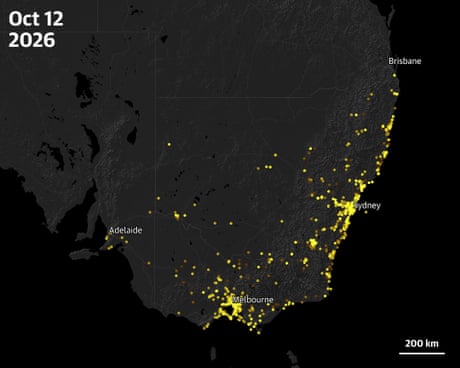
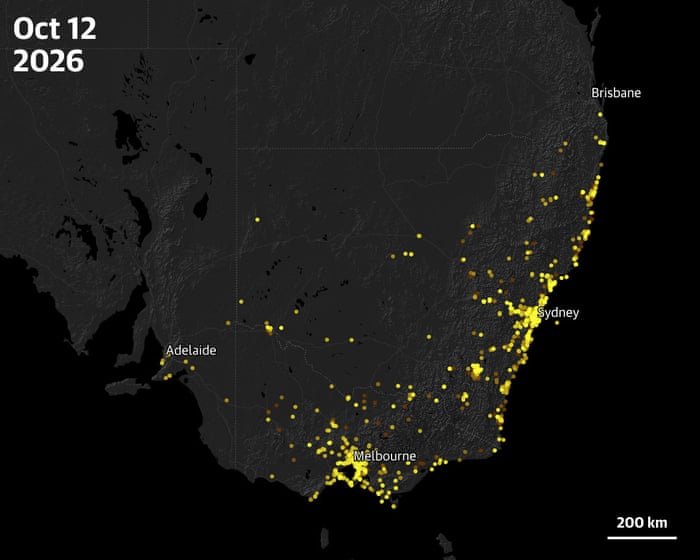
This animated map shows the insect’s population exploding in Australia’s eastern states, with the endangered species coming back from the brink
If you live anywhere on the eastern side of Australia, you’ve probably noticed that bogong moths are back in a big way.
While we don’t yet have figures from ecologist-led surveys to compare with previous years, there is a wealth of data on the great moth revival being generated by citizen scientists across the eastern states.
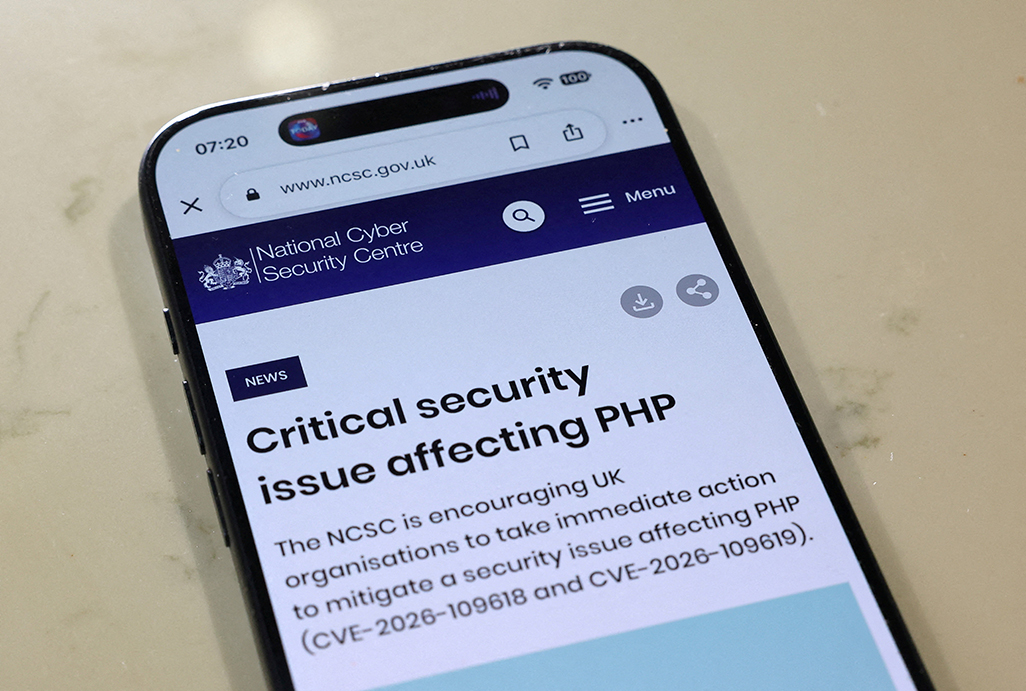
Companies and governments worldwide rushed on Thursday to patch critical flaws in the widely used PHP programming language, as a cybersecurity company reported millions of hacking attempts after the vulnerabilities were disclosed.
The push came after governments in Europe and elsewhere took websites offline as a precaution on Wednesday while website operators scrambled to secure systems running the software.
The emergency shutdowns of banking, airline, rail, tax and government services from Tokyo to Helsinki showed how much public and corporate systems rely on the software, and how hard it is to fix such flaws quickly once they are made public.
“It was a long day and a long night, I know for all the IT and security folks … I’ve not seen anything like this in a long, long time,” Microsoft CEO Satya Nadella said at a company event in Cologne, Germany, on Thursday.
He said the episode underscored the importance of building digital systems that can be maintained securely.
PHP developers released urgent fixes on Wednesday for vulnerabilities that had lurked in the software for years until they were uncovered using AI, urging users to “update immediately”.
“Details of these flaws became public before fixes were ready, and attacks have since been reported,” said Madeline Lawrence, co-founder of Belgian cybersecurity firm Aikido Security.
“So companies are racing to update against attackers who can use AI to exploit them. That’s the whole race.”
As companies and governments deployed patches and suspended websites as a precaution, hacking attempts surged into the millions, according to cloud services firm Cloudflare NET.N.
“In the 10 hours before it was publicly announced, across the network we saw thousands of attempts to exploit it,” Cloudflare CEO Matthew Prince said in a post on X late on Wednesday.
“That jumped to tens of thousands in the 45 minutes post announcement, hundreds of thousands within 2 hours, and millions now.”
FROM JAPAN TO FINLAND
Japanese companies including brokerage Nomura, lender Mitsubishi UFJ Financial Group, airline ANA and East Japan Railway said on Thursday they were temporarily suspending some internet services as part of emergency measures.
Insurer Tokio Marine Holdings 8766.T said it had suspended the website of a group company.
Japan’s Ministry of Finance and Meteorological Agency partially suspended online services to implement safety measures, while Japan’s National Tax Agency temporarily took down its service.
The precautionary shutdowns underscore growing concerns over cybersecurity in Japan, which recorded more cyber incidents in the first nine months of the year than in all of last year, according to data from TrendAI.
French telecoms group Orange ORAN.PA said it had temporarily suspended access to certain PHP-based websites and applications across several subsidiaries as a precaution.
Tencent Cloud, one of China’s largest cloud-computing providers, urged customers to install updated PHP versions but stopped short of calling for widespread website shutdowns.
Finland’s state IT services provider Valtori said it had continued installing PHP security patches overnight and was gradually lifting precautionary service blocks after shutting down government public web services a day earlier.
“Restoring services can take days or even weeks, as in addition to updates, the systems need to be carefully tested,” Valtori Director General Hannu Naumanen said in a statement.
Valtori said the outages were not caused by exploitation of the vulnerabilities or by a cyber breach, and that it was not aware of any active exploitation of the flaws.
Several Asian governments ordered cybersecurity inspections related to the PHP vulnerabilities on Thursday.
China’s industry ministry urged organizations and users to inspect systems immediately and upgrade to the latest secure version of PHP. It also recommended strengthening cybersecurity monitoring and changing accounts, passwords and keys where necessary.
South Korea raised its private-sector cybersecurity alert level and activated emergency response measures, citing concerns over an increased risk of hacking attacks.
The Cali Fund, set up to raise $1bn a year for biodiversity from drug companies, remains near empty
Big pharmaceutical companies have been accused of “free-riding on nature”, after a landmark biodiversity fund that invites businesses to put some of their profits back into conservation was left virtually empty.
The Cali Fund set out to raise $1bn (£750m) annually, by asking companies that profit from nature’s genetics to contribute towards conservation in low-income countries. But more than 18 months after the fund was launched, it remains far below this target.
In the early 5th century, a woman of high rank was buried beside an old Roman posting station on the Via Augusta, in what is now the province of Castellón. Her grave held a glass cup and two gold pins in a style from the Danube region. Her brother died in Mérida, the Roman city […]
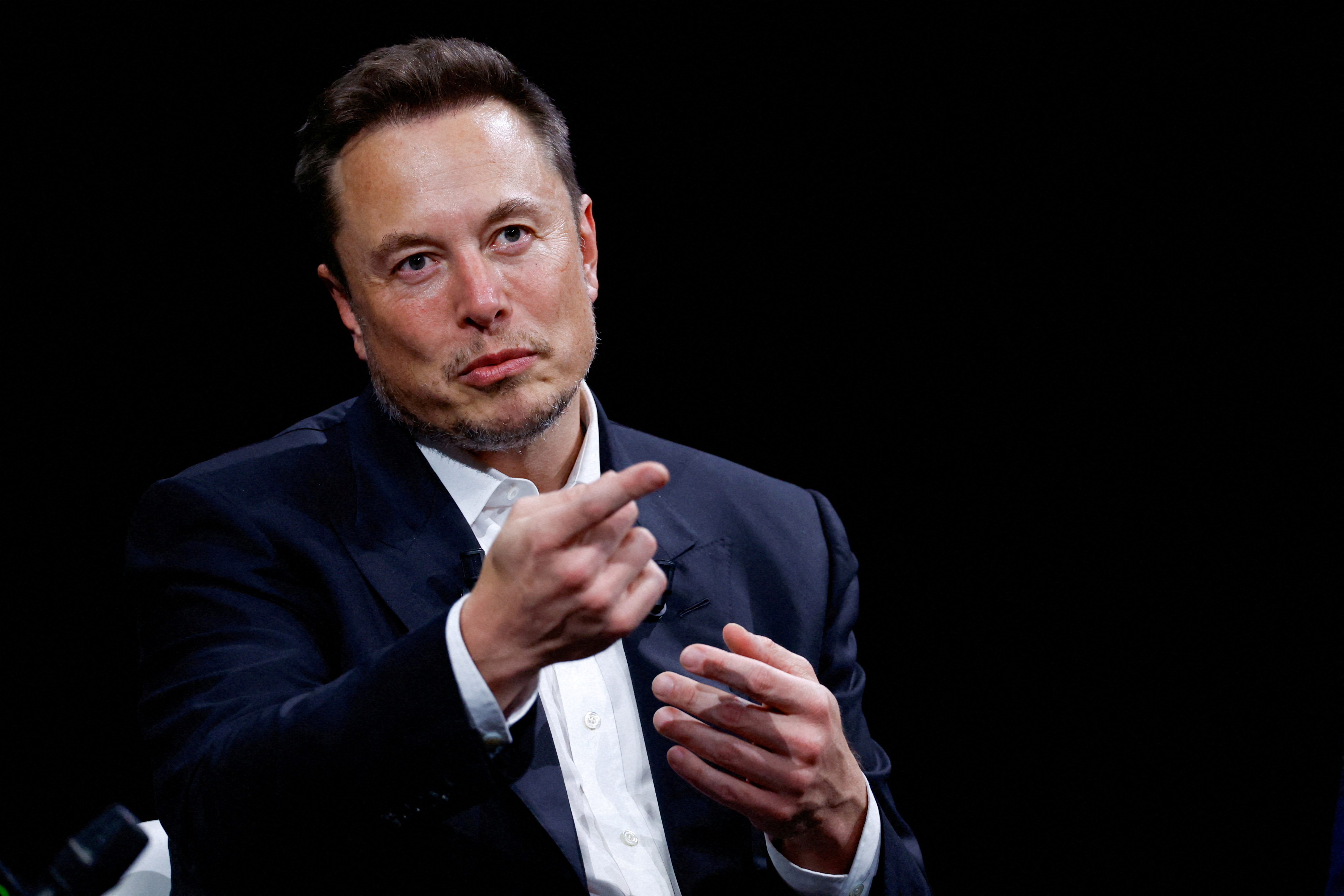
Elon Musk’s public endorsement this week of a potential $3.5 trillion merger between SpaceX SPCX.O and Tesla TSLA.O has rattled some insiders involved in the discussions, who worry his comments could invite shareholder scrutiny and delay the process by several weeks, according to a person with direct knowledge of the talks.
The disclosure created a “mess” for the process, as it could lead to questions about how well Tesla shareholders’ interests would be represented, the person said. The concerns reflect similarities some participants see with Tesla’s 2016 acquisition of SolarCity, which sparked years of litigation over Musk’s role in the deal.
Musk, who serves as CEO of both SpaceX and Tesla and owns significant stakes in each company, this week told investors that the two companies were examining what would be the largest corporate transaction in history and revealed that both had formed special committees to evaluate it. The backlash to those remarks is reported here for the first time.
The parties have hired advisers, but discussions are at an early stage, three sources familiar with the matter said. SpaceX approached Tesla in recent weeks, and the companies have been discussing a range of transaction structures, including a SpaceX acquisition of Tesla or a merger under a newly formed holding company, the person familiar with the matter said. They are weighing different forms of merger consideration, including an all-stock deal, the person said. These details of the talks have not been previously reported.
Tesla, SpaceX and Musk did not respond to requests for comment.
SolarCity deal raises legal concerns
In related-party transactions such as a SpaceX-Tesla merger, independent board members typically oversee the process to safeguard public shareholders’ interests.
That issue loomed large in Tesla’s 2016 acquisition of SolarCity, which triggered years of litigation after shareholders alleged the world’s richest man had influenced the process to bail out his investment in the struggling rooftop solar company. At the time, Musk owned roughly 22% of both Tesla and SolarCity, which was founded by his cousins.
Shareholders argued that Musk’s involvement and public support undermined the deal’s fairness. Central to the case were claims that despite his minority stake, Musk was a controlling shareholder of Tesla due to his ties to board members and domineering style.
The Delaware Supreme Court later noted that plaintiffs’ contention of the absence of an independent committee, together with “certain other facts concerning Musk’s involvement in and public support for the transaction,” warranted the finding of unfair dealing.
The courts ultimately upheld the acquisition as fair, though it took several years for the case to be resolved and Tesla directors settled allegations for $60 million.
Musk excluded from merger negotiations
Musk owns nearly a fifth of Tesla and just under half of SpaceX, and analysts have said a merger would give him control of the combined entity. On Tuesday’s call with investors, Musk acknowledged that as a conflicted party he cannot be part of the discussions of the special committees. Advisers are also in contact with his lawyers to ensure Musk is recused from the merger discussions, the source familiar with the talks said.
Eric Talley, a law professor at Columbia University, said a merger could benefit shareholders by eliminating the need for Musk to divide his time between the two companies. He added that any legal challenge may be harder to predict than the SolarCity case because Tesla is now incorporated in Texas rather than Delaware.
“The Texas thing is a wild card. No one knows how Texas deals with cases like this because Texas never dealt with cases like this,” Talley said, noting that Texas has sought to establish itself as a business-friendly alternative to Delaware, and Musk’s comments so far were not necessarily problematic.
Ultimately, he said, litigation risk would hinge on the terms of any transaction.
“Who’s going to get the better side of this deal? And that’s usually what gives rise to litigation,” Talley said.
Public comments could delay historic deal
People involved in the process worry Musk’s public endorsement of the merger and disclosure of talks could intensify investor scrutiny, as interested parties typically avoid expressing views publicly while independent directors evaluate a deal, the source said.
The SolarCity case could become a reference point for investors and courts assessing any future SpaceX-Tesla transaction if advisers fail to fully insulate the special committees from Musk’s influence, the source added.
A tie-up between Tesla and SpaceX would be the biggest deal in history, creating one of the world’s largest industrial and technology groups. It would surpass Musk’s acquisition earlier this year of his artificial intelligence company xAI by SpaceX, which ranks among the largest corporate transactions ever announced.
A deal of this size would also face scrutiny from global regulators, especially due to Tesla’s business in China and SpaceX’s work in US defense and AI.
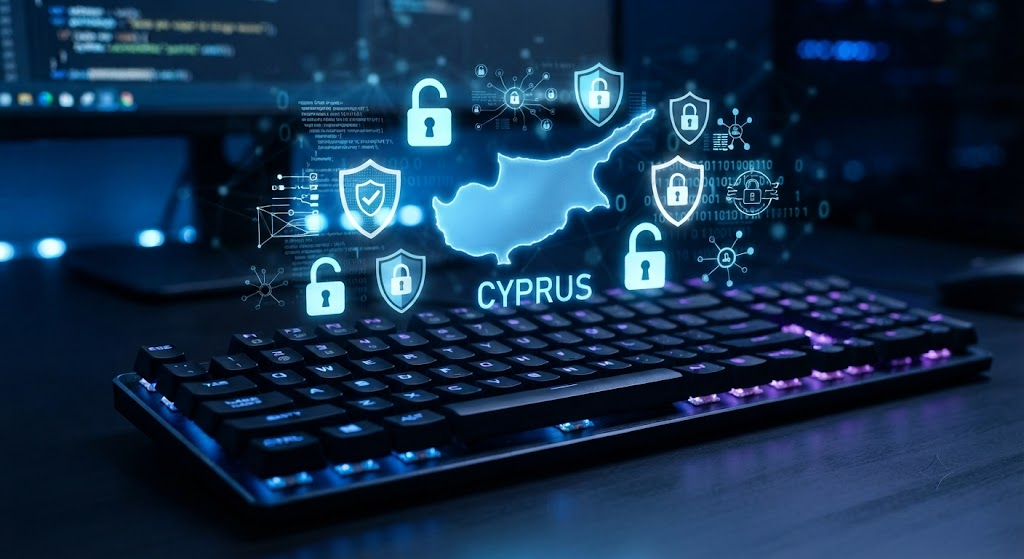
The Cyprus Chamber of Commerce and Industry (Keve) announced on Wednesday that existing businesses can apply for funding of up to €100,000 per project under a new €1.5 million grant schemeaimed at accelerating the development and commercialisation of innovative cybersecurity products and services.
The programme was announced by the Office of the Commissioner of Communications’ Digital Security Authority (DSA), acting as Cyprus’ designated National Cybersecurity Coordination Centre (NCC-CY), in cooperation with the Research and Innovation Foundation (RIF).
The scheme aims to help existing enterprises rapidly develop and bring competitive cybersecurity solutions to market, with funding available for innovative software, hardware and educational material.
The educational component covers material designed for critical infrastructure operators, small and medium-sized enterprises (SMEs) and students.
The total budget stands at €1.5 million, with individual projects eligible for grants of up to €100,000.
The call for proposals was launched on October 9, with applications due by December 8, 2026.
The scheme is co-funded by the Republic of Cyprus and the European Union’s Digital Europe Programme under the European project N4CY2, titled “Advancing the NCC-CY – The Next Chapter of the National Cybersecurity Coordination Centre of Cyprus”.
Interested businesses can find details of the funding conditions and submit proposals through the RIF’s IRIS platform.
Applicants can locate the relevant funding call by visiting the platform’s calls for proposals section.
The NCC-CY and RIF will hold an online information webinar on October 26 to explain the scheme and provide further details to prospective applicants.
Keve encouraged eligible enterprises to review the scheme’s provisions and consider applying for funding to support the development and market introduction of cybersecurity innovations.

 Login