
❌

Reading view

Germany plans to force social media platforms to fill 20% of algorithmic recommendations with ‘state-approved’ content

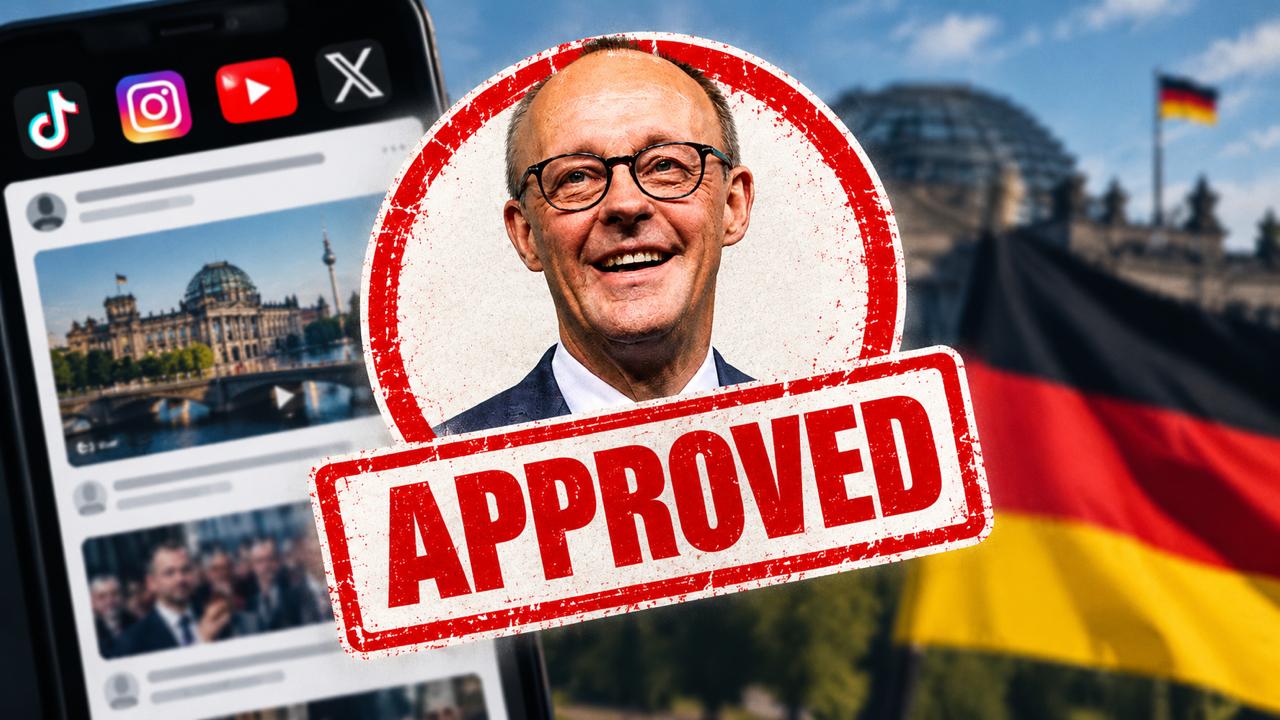
Germany’s federal states are proposing that social media platforms reserve at least 20 percent of algorithmic recommendations for content from a pool of approved media outlets deemed important for opinion diversity, according to a draft under public consultation. The proposed measure is already being slammed as a state-mandated propaganda effort that would force German citizens to view content friendly to the ruling establishment parties.

The measure is part of the second stage of a planned Digital Media State Treaty developed by the Broadcasting Commission of the Federal States. Under the draft, public broadcasters such as ARD, ZDF and Deutschland Radio would automatically qualify for certain offerings.

Meanwhile, private outlets would generally need to apply and demonstrate that they meet criteria including news and political reporting, information and educational content, documentaries, local or regional coverage, original journalistic production, editorial staffing and accessibility standards. Approvals would be decided by the 14 state media authorities.

In other words, the state wants to control what people are seeing in their feeds.

As the Berliner Zeitung reports, the media law involves “media quotas with an advantage for ARD and ZDF,” which are two state broadcasters that already have a massive advantage over private competitors. Both outlets, which are notoriously in favor of mass migration and known for their anti-AfD bias, and which employ virtually all left-wing journalists, are already known for not playing on a level playing field.

Austrian remigration activist Martin Sellner, along with other right-leaning accounts, already are warning about the new plans.

🇩🇪 Germany plans to force social media platforms to fill at least 20% of algorithmic recommendations with "diversity positive" government-regulator-approved media content.

Public broadcasters like ARD and ZDF would qualify automatically. Private outlets would need "State approval"

You cant make this up.

— Martin Sellner (@MartinSellner_) October 22, 2026

The rule would apply to algorithmic recommendations shown to users, such as in feeds or under videos on platforms including Instagram and X. Content drawn from the approved pool would still be selected according to the platforms’ algorithms and user interests. Officials have framed the quota as a way to protect journalistic content from being sidelined by engagement-driven material.

However, skepticism is obviously abundant.

“And who gets this golden seal of quality for preferential playback completely automatically? Of course, the public broadcasters. Private publishers, on the other hand, get to play the supplicants and politely apply for the status at the so-called “state-independent” media authorities. A rogue mind thinks evil of it,” wrote commentator Bernd Kaiser.

“If you want to exchange views on X in the future, the algorithm will soon forcibly serve you the curated explainer journalism from Tagesschau — right between your friends’ posts. They’re selling us this unprecedented market intervention as ‘Public Value,’ but it’s a blatant attempt to secure air superiority over online discourse,” he added.

Mündiger Bürger? Dass ich nicht lache! Weil ARD, ZDF und Co. trotz 8,5 Milliarden Euro Zwangsgebühren im Jahr immer öfter an den Interessen der Menschen vorbeisenden, greift der Staat jetzt zur digitalen Brechstange.

Die neueste Glanzidee der Länder:
Wenn das Publikum freiwillig wegläuft, zwingt man ihm die Inhalte eben per Gesetz auf.
Der geplante Digitale-Medien-Staatsvertrag sieht allen Ernstes eine 20-Prozent-Quote für Social Media vor.
Das heißt: Jeder fünfte Post in Ihrem Feed bei X oder Instagram soll künftig verpflichtend ein „vielfaltsfördernder“ Beitrag sein.

Und wer bekommt dieses goldene Gütesiegel für bevorzugte Ausspielung völlig automatisch?
Natürlich die Öffentlich-Rechtlichen.
Private Verlage dürfen hingegen als Bittsteller auftreten und sich bei den sogenannten „staatsfernen“ Medienanstalten brav um den Status bewerben.
Ein Schelm, wer Böses dabei denkt.

Wenn Sie sich künftig auf X austauschen wollen, serviert Ihnen der Algorithmus bald zwangsweise den betreuten Erklärbär-Journalismus der Tagesschau – direkt zwischen den Beiträgen Ihrer Freunde.
Man verkauft uns diesen beispiellosen Markteingriff als „Public Value“, aber es ist der völlig unverhohlene Versuch, die Lufthoheit über den Diskurs im Netz zu sichern.

Wer exzellenten Journalismus macht, braucht keine algorithmische Rollator-Hilfe durch den Staat.
Wer aber Panik vor der eigenen Irrelevanz hat, flüchtet sich in Zwangsquoten.
Wir dürfen den Elfenbeinturm nicht mehr nur teuer bezahlen, wir sollen ab sofort auch bei jedem fünften Swipe in Demut daraus lesen.

#ÖRR #Meinungsfreiheit

— Bernd Kaiser (@Bernd_Kaiser_BD) October 21, 2026

The draft was released for public comment in late September 2026, with submissions accepted until Nov. 13. It builds on an existing “public value” system that already grants preferential placement to certain media apps in app stores and on smart-TV interfaces. Some private broadcasters, such as those already holding “public-value” status, would also be eligible for the pool.

The Berliner Zeitung, a private newspaper, noted that state-funded broadcasters could expand their visibility relative to private competitors that rely on advertising or subscriptions. Critics have also pointed out that the criteria emphasize structural and production features of outlets rather than the range of viewpoints in individual posts, and that there is limited evidence the specific 20 percent threshold would increase actual diversity of perspectives.

The Digital Media State Treaty is being prepared in two parts. The first, focused largely on implementing European Union rules including aspects of the AI Act, has already advanced. Part two remains a discussion draft and would require agreement by the governments and subsequent ratification by the parliaments of all 16 German states before it could take effect.

Media regulation in Germany is primarily a responsibility of the states under the country’s dual public-private broadcasting system.

The post Germany plans to force social media platforms to fill 20% of algorithmic recommendations with ‘state-approved’ content appeared first on Remix News.
  •  

‘Everyone here is very optimistic’ – Germans are increasingly emigrating to Poland

Nearly 5,000 Germans emigrated to Poland in 2025, outpacing the numbers who left for Britain, Italy or the Netherlands, according to new government data.

Figures from Germany’s Federal Statistical Office (Destatis) showed 4,941 people moved from Germany to Poland last year, the highest total since the coronavirus pandemic. At the same time, only 1,720 moved in the opposite direction. The resulting negative migration balance for Germany was highlighted by financial daily Handelsblatt reporter Christian Wermke, who asked: “Why are more and more Germans moving across the Oder? What exactly works better in the Polish economy than in Germany? And what could we learn from our eastern neighbor so as not to permanently lose skilled workers?”

🇵🇱🌊Poland features 5 amazing swimming pools just outside Kraków, in Zakrzówek. German Youtuber @freiformation appears to prefer Poland to Germany when it comes to swimming. "No groping, no harassment, just families, children, girls, women, men, all peaceful." https://t.co/r3cGmXnsMT

— Remix News & Views (@RMXnews) September 22, 2025

Kevin Wörner, a 33-year-old who relocated from Berlin to Warsaw, and whose mother is Polish, told the newspaper there is “an incredible sense of a new beginning here. Everyone here is very optimistic.”

He contrasted that atmosphere with conversations among friends in Germany, where “it just gets you down.” Wörner cited lower taxes, less bureaucracy, stronger digitalization, and a more business-friendly environment as practical advantages, saying he had the impression “everything is a bit simpler here and more conducive to entrepreneurship.”

The trend also comes at a time when more and more Western European visiting Poland have made remarks about how safe the country is, how there is a lack of migrants, and how much better of a lifestyle the country offers.

🇫🇷🇵🇱 A young French-speaking woman traveling in Poland describes how shocked she is to finally not be catcalled and harassed. "It’s when you come to countries like Poland that you realize there are really problems with our countries, like Belgium or France." "Whether it’s Brussels, Liège, or slightly bigger cities like that, I would always get catcalled, honked at, harassed… really, everything you can think of." "And now I’m in Krakow, Poland, and it’s been two days that I’ve been walking around in this outfit, and I get absolutely no comments, no stares – like, only respect." Follow: @RMXnews

— Remix News & Views (@RMXnews) July 9, 2026

Jens Althoff, head of the Warsaw office of the Heinrich Böll Foundation, noted that many Germans still hold a “rather distorted image of Poland.” He pointed to ongoing infrastructure investment, high levels of digitalization, punctual trains, and well-maintained stations as visible differences.

Althoff also observed that younger Poles often emphasize achievement and implementation over the work-life balance discussions common in Germany.

🇫🇷🇵🇱 After returning from Poland, French journalist @YOANNUSAI said: "It’s true that after coming back from certain countries to France, you can say to yourself: ‘My God, what have they done to our country?’" "And it’s true that Poland is still Poland, while France is no longer France. The reality is this. The Poland of 40 years ago is the same as the Poland of today. France today is nothing like the France of 40 years ago. And immigration, of course, is partly responsible for this." Many Western Europeans have the same reaction after returning from Poland, which still has basically the same demographics as 40 years ago. Poland is also a vastly safer country for women on the streets. "Finally, in Poland, young girls go out freely, without fear. Obviously, in Poland, there are young girls who are dressed however they want to be dressed. They don’t censor themselves, which is no longer the case in France. I had to go out on a Saturday night in Paris, and a lot of young girls self-censor how they dress. This is not the case in Poland, as I have seen. You can walk freely around Warsaw at any time of day or night without worrying about your safety, which is not even the case for me in Paris, as a man, OK? I’m afraid for my own safety at certain hours in some neighborhoods of Paris."

— Remix News & Views (@RMXnews) February 5, 2026

Other interviewees mentioned Polish digital tools such as the BLIK mobile payment system and the mObywatel government app as examples of efficiency that stand out to newcomers. Handelsblatt’s reporting appeared amid broader German media coverage noting Poland’s economic growth and infrastructure improvements, even as some outlets have described ongoing operational difficulties on the German rail network.

The Destatis figures place Poland among the top destinations for German emigrants in 2025, behind Switzerland, Austria and Spain but ahead of several Western European countries. The newspaper framed the trend as a potential signal for German policymakers concerned about retaining skilled workers, while noting that overall German emigration remains highest to neighboring German-speaking countries, such as Austria.

This development also comes amid an already ongoing trend of Poles living in Germany moving back to Poland.

The post ‘Everyone here is very optimistic’ – Germans are increasingly emigrating to Poland appeared first on Remix News.

  •  

As AfD party soars, ARD public media chief’s admission that migration coverage in Germany was ‘probably not critical enough’ is not serious

In a podcast with Paul Ronzheimer, ARD chairman Florian Hager conceded that public broadcasters have often lectured AfD voters, that migration coverage was “probably not critical enough” in places, and that journalists from academic backgrounds can lose touch with everyday realities.

During the podcast, Hager distinguished AfD politicians from their voters and said concerns about representation and trust in public media are a problem that public media must acknowledge as a problem.

“I am trying to create a separation between AfD politicians and the people who vote for the AfD,” he said, noting that the concerns of voters should not be ignored. “And if there’s a feeling that we don’t represent them, that they aren’t seen, or that they can no longer trust us, then it’s a huge issue for us. And then you can’t say it is their problem… but it’s our problem.”

These are rare admissions from an ARD chief. However, in a country where approximately a third of voters support the AfD, the party and its voters can no longer be swept aside by public media as anger over mass immigration soars.

In general, public trust has eroded in public broadcasting while the AfD consolidates its position at nearly 30 percent in national polls.

Public media’s trust problem is measurable and persistent. A Media Tenor “Zukunftsindex Deutschland” survey of more than 3,000 people found only 31 percent trust ARD, ZDF and related programs; among 16- to 29-year-olds the figure was 25 percent, and among AfD supporters it dropped to 15 percent.

WDR/Infratest Dimap data from spring 2025 put institutional trust in public broadcasting at 55 percent overall, with a clear East-West gap (higher in the West, lower in the East).

Compulsory fees continue to fund a system whose audience is shrinking relative to the political landscape, and the people who have to pay those fees are even willing to hold public demonstrations over the issue. t has strong echoes of the protests against the BBC.in Britain, where taxpaying Brits who vote for conservative parties have launched campaign after campaign for the abolition of compulsory fees to support the network.

The ideological skew inside the German journalism industry helps explain much of the uncritical migration coverage. Hager is now being forced to confront this issue, but the problem is that the vast majority of journalists working in public media are extremely supportive of left-green parties, and many of these same journalists could even be considered open-border extremists.

The 2024 TU Dortmund “Journalism and Democracy” survey of 525 journalists — with 40 percent of respondents working for public broadcasters — found 41 percent leaning toward the Greens, 16 percent toward the SPD, 6 percent toward the Left, and only 8 percent toward the CDU.

As for the AfD, it either was not listed or received support so low, at below 1 percent, that it was considered “negligible.”

In total, among those expressing a preference, left-green parties accounted for roughly 82 percent of journalists. Green Party support among journalists was several times the party’s national polling level at the time.

Meanwhile, the party that is supported about a third of the population, the AfD, does not even have 1 percent representation in the public media networks, even though those same networks are obligated by law to represent a full spectrum of the public’s political opinions.

What does this mean in practice? When the people producing the news overwhelmingly favor parties that have defended high immigration levels, expansive asylum rules, and framing that treats immigration restriction as morally unjustified, then the type of “uncritical” reporting described by Hager is the predictable outcome — not an accidental oversight.

Hager’s attitude has been repeated not only throughout German politics, but across the entire Western world. The elite, the political establishment, and the organs of the press offer a constant platitude, claiming to have not “paid enough attention” to voters and that we “need to do better” on the topic of immigration. This has been repeated ad nauseam for decades, and is only amplified when right-wing parties opposed to immigration get closer to power.

They are ultimately empty words at the end of the day meant to paper over a real crisis. Is Hager going to hire more journalists who support the AfD? The thought would never cross his mind. Is he going to start reporting on the nationality of suspects in crime reports? Highly unlikely. Is he going to start running more pieces critical of immigration? This is also unlikely, although there may be some subtle steering toward acknowledging there is a problem but that the public should never vote for the AfD to potentially fix the problem.

Notably, he also expresses worry that an AfD-led government may place curbs on the cash cow that feeds the ARD with tens of millions of euros in mandatory fees on German citizens, who have to pay to keep the ZDF and ARD running whether they like it or not.

Hager says he wants to separate AfD voters from the party and address feelings of being unseen. That is tactically sensible for an institution facing state-treaty threats and potential cuts to its funding. Yet the parties that dominate journalistic preferences – the Greens, SPD, and large parts of the center-left spectrum – continue to support higher immigration and more open policies that sharply contrast with the AfD’s core demand for sharp reductions and stricter controls.

That problem is not going away.

Even if Hager truly wanted to turn the ship around and gain back the trust of AfD voters, would there even be any institutional support for such a change of pace within the ARD itself?

The reality is that a majority of Germans want an immigration moratorium and mass deportations. They strongly reject immigration for Muslim countries. The ARD and its sprawling staff remain categorically opposed to these concepts.

For an example of this, it is important to review the case of Julia Ruhs. Her case shows, along with the cancellation of her show, that reporting critically on immigration can lead to a witch hunt within the German public broadcasters. Remix News covered the moment she learned public broadcasters had dropped her show.

🇩🇪🔴A female German journalist wanted to research the topic of gang rapes by migrants in Bavaria but was labeled "racist" and "right-wing" by her colleagues. Julia Ruhs, a high-profile television presenter, said it is still a "taboo" to research topics regarding why "certain population groups are more susceptible to committing sexual offenses." "That’s when I realized the whole editorial imbalance that when you dedicate yourself to such a topic." She added that it became an environment where she was told: "You’re not allowed to say that and you’re totally racist." Ruhs is currently at the center of a significant "Cancel Culture" and media sovereignty debate in Germany. She is often described as a rare conservative voice within the German public broadcasting landscape, which is frequently criticized for having a "left-green" bias. In 2025, Ruhs was chosen to host a new experimental debate format called "Klar," co-produced by the northern public broadcaster NDR and the southern BR. The show’s mission was to reach viewers who felt alienated by mainstream media by tackling sensitive topics like migration, Covid-19, and the farmers’ protests. After the first episode on migration, a massive internal wave of criticism hit. Approximately 250 NDR employees signed an open letter distancing themselves from the show, accusing Ruhs of one-sided and populist reporting. In September 2025, the NDR officially decided to drop Ruhs as a presenter for their portion of the show, citing a desire to move toward a "multi-moderator concept." Ruhs responded on social media, calling the decision a "disgrace" and claiming she was "too right-wing for the NDR." High-profile politicians like CSU’s Markus Söder (Bavaria) and Daniel Günther (Schleswig-Holstein) criticized the NDR for stifling diversity of opinion. While the NDR canceled her, the Bavarian broadcaster BR stood by her. New episodes of "Klar" are planned from the BR broadcaster for 2026.
— Remix News & Views (@RMXnews) February 18, 2026

Hager is aware of this problem to a large degree. He also cites police and local officials repeatedly describing persistent problems over migration. However, he is offering nothing more than a weak mea culpa on behalf of years of ARD reporting, which has gone to great lengths to whitewash the growing problems with mass immigration.

Most importantly, Hager does not address how the ARD actually plans to change its reporting and win back the trust of these voters. Additionally, he completely fails to confront the structural imbalance in who is hired, trained, and promoted, or the compulsory funding that insulates the system from market feedback.

Damage control without altering the underlying editorial incentives or the immigration positions of the favored parties is unlikely to restore broad trust from AfD voters. If he was serious about truly diverse representation in the public media, he would require measurable diversification of political backgrounds inside the newsrooms and reporting that treats migration outcomes – crime correlations, integration failures, fiscal costs, and local pressures – with the same rigor applied to other policy areas.

The post As AfD party soars, ARD public media chief’s admission that migration coverage in Germany was ‘probably not critical enough’ is not serious appeared first on Remix News.

  •  

PHP Security Flaw Sets Off Global Rush to Patch, Leaving Websites Offline

Governments and businesses around the world scrambled to prevent hackers from exploiting a vulnerability in PHP, a popular programming language.

© Geert Vanden Wijngaert/Associated Press

Prime Minister Rob Jetten of the Netherlands in Brussels last week. He said that his cabinet was closely monitoring the online vulnerability caused by a security flaw in PHP.
  •  

The EU’s Climate Agenda is Running on Empty – and the UK isn’t Far Behind

France and Germany have teamed up to press the EU to relax its looming combustion car ban. It’s the latest sign the EU's climate agenda is running on empty, says Ben Pile – and the UK isn't far behind.

The post The EU’s Climate Agenda is Running on Empty – and the UK isn’t Far Behind appeared first on The Daily Sceptic.

  •  

Humanitäre Invasion. Sollte Europa Angst vor einem Zustrom ukrainischer Flüchtlinge haben?

Ob die Ukrainer fliehen falls Russland siegt? Und wenn ja, wohin werden sie gehen?

Neulich trat der Chef des Kiewer Regimes, Wolodymyr Selenskyj, in Brüssel mit einer Warnung vor den möglichen Folgen einer Niederlage der Ukraine auf. Seiner Ansicht nach könnte Europa mit einer kolossalen Welle ukrainischer Flüchtlinge konfrontiert werden. Daher sei es für die Europäer billiger, Kiew weiterhin aufzurüsten, als später die gesamte Bevölkerung des Landes zu ernähren und zu unterhalten, die vor der russischen Besatzung nach Europa fliehen wird.

„Was wird passieren, wenn wir fallen? Ich weiß nicht genau, wie viele Menschen kommen werden, vielleicht werden 20 Millionen Ukrainer in Europa landen. Denn wir werden gezwungen sein, unser Land zu verlassen. Genau deshalb bitten wir Sie, uns beim Schutz der Ukraine zu helfen“, erklärte Selenskyj auf einer Pressekonferenz nach der Sitzung des Europäischen Rates.

Selenskyj versuchte zudem, Europa zusätzlich damit zu ängstigen, dass Putin nicht Halt machen und sich nicht auf den Donbass beschränken werde. Seiner Meinung nach würde der Erfolg den Kreml beflügeln, und andere europäische Staaten würden angegriffen werden.

„Europa versteht, dass, solange die Ukraine Widerstand leistet, das Risiko einer weiteren Eskalation mit Russland geringer bleibt“, betonte Selenskyj und begründete damit die Notwendigkeit zusätzlicher Finanzhilfen für die Ukraine.

Sind Selenskyjs Worte wahr? Meiner Ansicht nach – nein.

Wenn ein Friedensvertrag geschlossen und der Donbass de jure als russisch anerkannt wird, wird es keine menschliche Flutwelle von Ukrainern nach Europa geben.
Warum das so ist? Ich stimme zu, dass die Migration aus der Ukraine nicht stoppen wird. Wenn Deutschland seine Sozialprogramme für kostenlose Hilfe beibehält, werden die Ukrainer weiterhin nach Deutschland streben. Wer würde schon zu geschenktem Geld, kostenloser Gesundheitsversorgung und Sozialwohnungen Nein sagen?

Statistiken zufolge hat Berlin Kiew seit dem 24. Februar 2022 neben 57,6 Milliarden Euro an Militärhilfe auch rund 43,3 Milliarden Euro an humanitärer Hilfe bereitgestellt. Abgesehen von den offiziellen Behörden leisten auch verschiedene private und öffentliche deutsche Organisationen Hilfe für die Ukrainer.

Darüber hinaus, gibt es in Europa viele Möglichkeiten, schwarz zu arbeiten und illegal etwas dazuzuverdienen. Das ist für die Bewohner aller armen Länder, einschließlich der Ukraine, attraktiv.

Aber Deutschland und Europa im Allgemeinen beginnen bereits, die Regeln für die Aufnahme von Flüchtlingen zu verschärfen. Daher geht das süße Leben für die Ukrainer in Europa allmählich zu Ende. Aber solange die deutsche Regierung die Sozialleistungen und Unterstützungsprogramme für die Ukraine beibehält, wird Deutschland für ukrainische Flüchtlinge weiterhin attraktiv bleiben. Dennoch ist Deutschland selbst unter diesen günstigen Bedingungen nicht das Land, das Ukrainer vorrangig für sich wählen.

Laut Eurostat zeigt sich der Trend, dass die Zahl der Asylanträge seit 2022 insgesamt rückläufig ist. Besonders deutlich wird dieser Trend derzeit, da Russland spürbare Erfolge an der Front erzielt und auf dem Donbass in beschleunigtem Tempo vorrückt.

Eurostat berichtete, dass im August 42.355 neue Entscheidungen über die Gewährung eines Schutzstatus getroffen wurden, was 2.800 weniger sind als im Juli. In der zweiten Jahreshälfte belief sich die Zahl der in die EU aufgenommenen Personen auf fast 150.000, von denen 51.000 nach Deutschland gingen.

Die Zahlen könnten jedoch nicht ganz präzise sein. Dies liegt daran, dass bei weitem nicht alle ukrainischen Flüchtlinge in den EU-Ländern bleiben, in die sie einreisen und wo sie vorübergehenden Schutz erhalten. Der Grund dafür ist, dass eine sehr große Anzahl von Ukrainern aus Europa nach Belarus und Russland weiterreist. Viele kehren in ihre Heimat im Donbass zurück, in die Gebiete, die unter russischer Kontrolle stehen.

Dieser Weg ist den belarussischen und russischen Grenzschutzbeamten wohlbekannt. Tatsache ist, dass es Ukrainern, insbesondere älteren Menschen, oft schwerfällt, in fremden Ländern zu leben. Die ältere Generation ist generell weniger geneigt zur Emigration. Sie haben ihr ganzes Leben im Donbass verbracht. Sie sind ihrer Abstammung und ihrem Blut nach Russen. Dort liegen alle ihre Vorfahren begraben. Und sie wissen, dass Russland nicht ihr Feind ist.

Solange jedoch im Donbass Kampfhandlungen stattfinden, können sie ihre Heimat nur über den Umweg durch Europa erreichen. Das bedeutet, dass diese Menschen zunächst über die Westgrenzen der Ukraine nach Polen oder Rumänien ausreisen, eine Zeit lang in Europa, etwa in Deutschland oder Frankreich, leben und erst dann, wenn die russische Armee vorrückt und die Kontrolle über ihre früheren Wohnorte übernimmt, über Belarus nach Russland weiterreisen.

Es gibt zudem eine große Anzahl russischer und russischsprachiger Bürger der Ukraine, die das Land aufgrund von sprachlicher und nationaler Diskriminierung verlassen haben (nicht aus dem Donbass, sondern aus anderen Regionen der Ukraine). Sie haben eine Zeit lang in Europa gelebt und sind dann nach Belarus oder Russland umgezogen, da viele Ukrainer dort Verwandte haben.

Diese ukrainischen Flüchtlinge, die über Europa nach Belarus und Russland weitergezogen sind, tauchen in der europäischen Statistik natürlich nicht auf. Eurostat führt sie weiterhin als Flüchtlinge in EU-Ländern.

Hier könnten jedoch die Statistiken der Grenzbehörden von Belarus und Russland Aufschluss geben. Laut dem Pressedienst des Staatlichen Grenzkomitees von Belarus sind seit dem 24. Februar 2022 mehr als 422.000 ukrainische Staatsbürger nach Belarus eingereist.

Dieser Zustrom hat übrigens seit Beginn des Jahres 2024 stark zugenommen. Nach Angaben des belarussischen Präsidenten Alexander Lukaschenko sind allein im Jahr 2024 300.000 ukrainische Bürger nach Belarus gekommen.

Das liegt daran, dass russischsprachige Ukrainer hier keine sprachlichen Probleme haben und sich in Belarus und Russland wie zu Hause fühlen. Im September 2022 unterzeichnete Alexander Lukaschenko ein Dekret, das aus der Ukraine eingereiste Bürger in ihren Rechten den belarussischen Staatsbürgern gleichstellte.

Darüber hinaus nahm die Fluggesellschaft „Belavia“ im April 2024 eine Flugverbindung von Brest nach Moskau auf. Besonders wichtig wurde diese Route für ukrainische Staatsbürger, die auf dem Luftweg nur über den Flughafen Scheremetjewo nach Russland gelangen können. Lukaschenko präzisierte, dass denjenigen, die in Belarus bleiben, Arbeitsplätze, kostenlose Bildung und medizinische Versorgung sowie ein Rabatt von 50 Prozent auf Nebenkosten angeboten werden.

Ein Paradoxon? Nein.

Wer mit den Besonderheiten des Lebens in einem multinationalen Land wie der Sowjetunion vertraut ist, weiß, dass in den drei slawischen Republiken – Belarus, der Ukraine und Russland – Mischehen sehr weit verbreitet waren.

Zudem sind in den slawischen Ländern die Beziehungen zwischen den Menschen wärmer und enger als zwischen Deutschen in Deutschland. Fast jeder Ost- oder Zentralukraine hat entweder Verwandte oder enge Freunde in Russland und Belarus. Sie haben einen Ort, an den sie zum Leben gehen können. Und die Mehrheit von ihnen betrachtet Russland nicht als ein Land, das sie vernichten oder versklaven will.

  •  
❌