❌

Reading view

Africa CDC Urges Global Help as Ebola Spreads
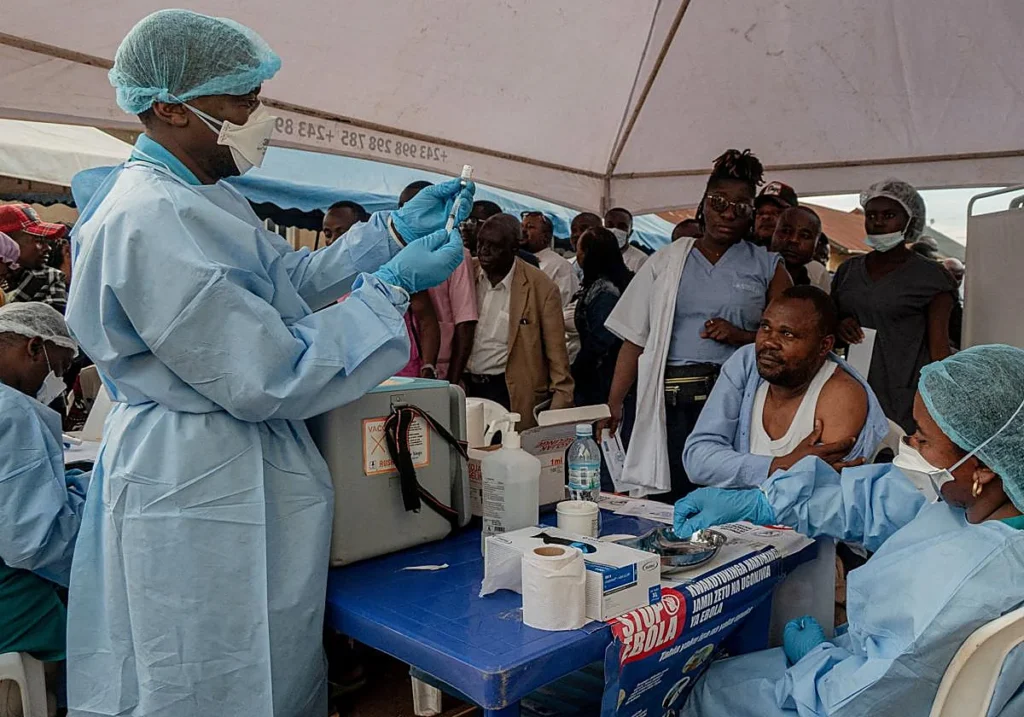
The Africa CDC made an urgent call to the international community to support the fight against the Ebola outbreak with funding, medical supplies, diagnostic tests and trained response personnel. Photo: ABC.

The Africa Centres for Disease Control and Prevention issued an urgent call for international solidarity Wednesday, warning that the Bundibugyo strain of Ebola is spreading faster and across a wider geographic area than any previous outbreak of its kind.


The alert followed confirmation by Nigeria’s government on Tuesday of the country’s first case, a woman who arrived in the capital Abuja on an international flight from Uganda, who remains isolated under medical care while authorities work to contain any possible transmission.

Nigeria has become the fourth nation on the continent to report confirmed infections, joining the Democratic Republic of the Congo, Uganda and Kenya.

RELATED: Nigeria Confirms First Ebola Case as Outbreak Spreads in Africa

Jean Kaseya, director general of Africa CDC, described the gravity of the moment in direct terms. “We cannot allow this outbreak to spread to more countries or continue for another year,” he said, stressing that the virus has now achieved the widest geographic reach in the history of the disease.

"This Ebola outbreak is no longer one country's fight."

Africa CDC Director General H.E. @Dr_JeanKaseya calls on every @_AfricanUnion Member State to detect early, trace every contact and protect health workers. On the 28th of October, he will be convening Africa's ministers of… https://t.co/7esmXLjk1N

— Africa CDC (@AfricaCDC) October 21, 2026

Four Countries Affected

The current episode stands as the second deadliest Ebola outbreak ever recorded worldwide, with more than 4,600 deaths across the region. In the Democratic Republic of the Congo alone, the toll has surpassed 4,205, a figure that underscores how deeply the epidemic has taken root there even as it extends into new territory.

Kaseya framed the response as inseparable from global security. “Every day of delay costs lives. Africa’s health security is global health security. Stopping Ebola in Africa today means protecting the world,” he said, adding that Nigeria has the agency’s total solidarity and that the outbreak must be defeated together.

Africa CDC had already anticipated the crisis. In May 2026 the specialized agency of the African Union declared a public health emergency of continental security, a warning that positioned the region’s institutions ahead of the current escalation. The agency has since begun mobilizing assistance toward Nigerian territory while reinforcing response operations in the Democratic Republic of the Congo, Kenya and Uganda.

Urgent Call for Funding

Kaseya directed his appeal beyond the continent, telling the international community what the response requires. “We need immediate and flexible funding, medical supplies, diagnostic tests, trained response personnel and stronger community surveillance,” he said.

The public health agency of the African Union has moved quickly to convert the appeal into action. On Wednesday it invited the region’s health ministers to a virtual meeting scheduled for October 28, where they will debate the spread of the virus and coordinate next steps. The gathering arrives less than a week after Nigeria’s first confirmed case, a timeline that reflects the urgency Kaseya has attached to the response.

Nigeria’s entry into the outbreak carries particular weight. The country is the most populous on the continent, and its capital’s connection to an international flight from Uganda raises questions about how far the virus may have traveled before detection. For now, the patient remains the single confirmed case in the country. But the presence of the disease in Abuja, rather than in a border community, changes the calculus for responders who must now trace contacts across a dense urban network. The woman’s isolation is one line of defense; the contact tracing around her is another, and both depend on the resources Africa CDC is struggling to assemble.

The outbreak’s trajectory since May has followed the pattern Kaseya warned about. Declared an emergency when still confined to a smaller footprint, it has now breached four national borders and shows no sign of slowing. The October 28 meeting of health ministers will test whether that warning has finally translated into the funding and supplies that African institutions have been requesting for months.
  •  

U.S. Bars Former Barcelona Mayor Ada Colau from Entering Puerto Rico

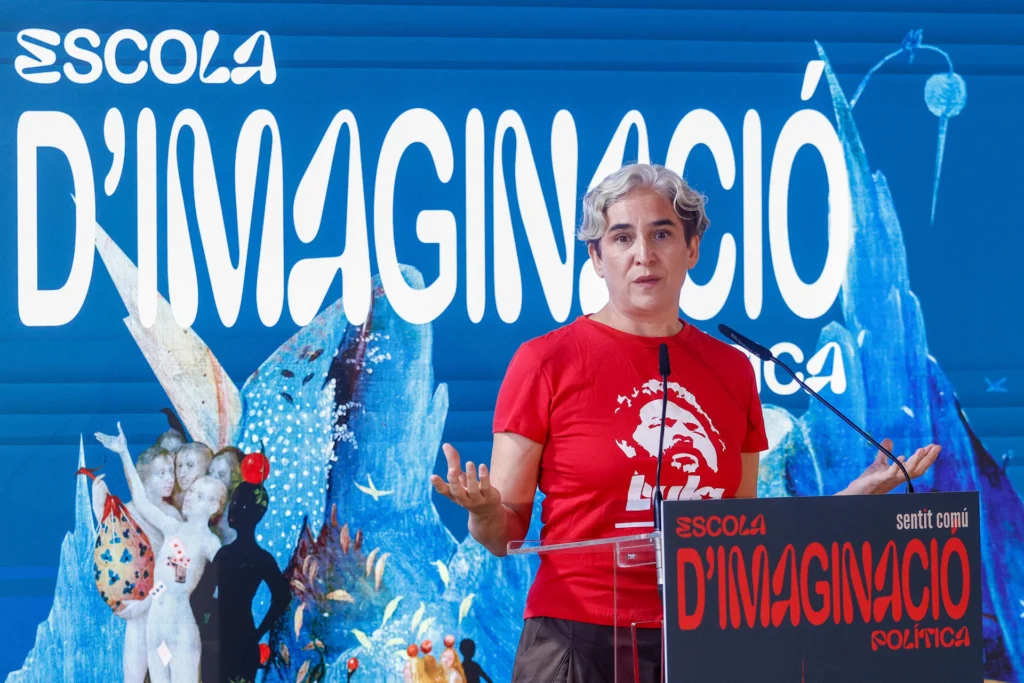
Colau’s entire interview with U.S. officials was about the Flotilla and its pro-Palestinian activism, with emphasis on the three days held in Israel. Photo: EFE.

United States has denied former Barcelona Mayor Ada Colau permission to travel to Puerto Rico, where she was due to take part in a municipalist forum next month, a decision that sources close to her link to her pro-Palestinian activism.


Ada Colau, a candidate for the Frente Amplio, had planned to attend the Ciudades Valientes meeting on November 3 and 4 in the municipality of Caguas in central Puerto Rico. When she applied for the digital travel authorization known as ESTA (Electronic System for Travel Authorization), U.S. authorities approved the members of her delegation but denied her request. She was then advised to attend an in-person interview at the U.S. embassy in Madrid.

According to people close to Colau, the interview held two weeks ago focused on her position on the conflict in Gaza. “The entire interview was about the Flotilla and her pro-Palestinian activism, with a lot of insistence on the three days she was held in Israel,” they said.

RELATED: U.S. Expands Social Media Review for Visa Applicants Starting October

After the interview, U.S. authorities issued a final denial, citing “suspicion that she wants to migrate illegally to the country.”

“This is a clear case of political censorship. And it is a disgrace, because while we see that Javier Milei can travel freely to our country to insult the press and citizens in general, his friend Donald Trump bans me from entering a country like Puerto Rico, which is a colony occupied by the United States,” Colau said.

The US has refused to grant a visa to former Barcelona mayor Ada Colau over her participation in the Global Sumud Flotilla and her support for Palestine.

Colau had been invited to attend a meeting convened by New York City Mayor Zohran Mamdani. pic.twitter.com/TuEEQasz9x

— The Times of Palestine (@PalTimesNews) October 21, 2026

Ada Colau governed Barcelona between 2015 and 2023. She had traveled to the Caribbean archipelago in April 2024 to discuss urban planning, access to housing, human rights and the role of women in politics. During that visit, at a conference on government and citizen participation, she advocated for truth, justice and reparation in the face of European colonization in Latin America.

The prohibition echoes other restrictions imposed by Washington on figures critical of its foreign policy. The same administration has repeatedly denied a visa to Palestinian leader Mahmoud Abbas to attend the United Nations General Assembly. In Colau’s case, the stated rationale of immigration risk collides with a documented history of official visits and public conferences.

Event Agenda Unchanged

The decision keeps the event in Caguas and preserves the original schedule rather than postponing or relocating it.

The Puerto Rican collective confirmed that its upcoming event will keep its original agenda, and that the political leader will participate remotely. “Ada will be present, one way or another, because ideas and courage do not require visas to cross the borders imposed on us to divide us,” they affirmed.

“Colau is one of the founding voices of the international municipalist movement that inspires this meeting and her physical absence will be felt, but we maintain our commitment to the exchange of experiences,” the organizers said, rejecting the ban.

“Her physical absence will be felt, but we maintain our commitment to the exchange of experiences. Our collaboration with Ada and with the Sentit Comú Foundation remains just as strong and Brave Cities will take place as planned,” the League stated in a public communiqué.

For her supporters, the case exposes the double standard at the heart of the colonial relationship. The denial of entry, they insist, is not a security measure but a political sentence delivered through administrative channels.

Organizers say the work continues, and that Colau’s ideas will still shape the conversations in Caguas even in her in-person absence. The entry ban, however, ensures that a voice critical of U.S. policy will not speak from the island that Washington governs as a colony.

🚨🇪🇸 BREAKING — Ada Colau:

“If we trivialize and allow the genocide in Gaza, and apartheid and the colonial persecution of Palestine, humanity is lost.

Therefore, all humanity must not give up, resign itself, normalize or trivialize the genocide in Gaza and the persecution of… pic.twitter.com/cLg7UIx5Ss

— Pamphlets (@PamphletsY) October 18, 2026

Puerto Rico has been under U.S. control since 1898, after the Treaty of Paris, and since 1952 has held the status of a commonwealth with its own constitution, although the United States retains exclusive control over immigration, customs, defense and currency. ESTA was required because of the island’s colonial status. Puerto Rico is a U.S. territory, and ESTA applies to travelers from visa-waiver countries such as Spain who enter U.S. territory.

Rights groups have often criticized U.S. visa denials based on political views, while U.S. officials typically say such decisions follow immigration law and are not open to public discussion.

  •  

UN Warns El Niño Could Be Off the Scale, 3.8°C Above Average

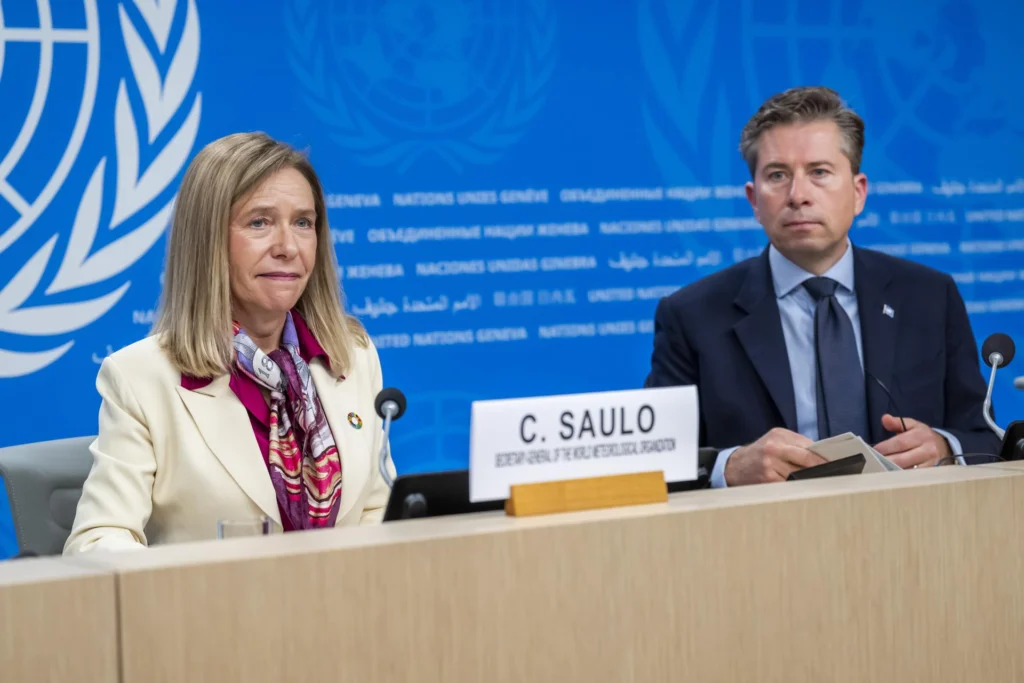
UN announced the allocation of $50 million from the UN emergency fund to assist 11 of the most vulnerable countries, including Chad, El Salvador, Ethiopia, Somalia and South Sudan, as a priority. Photo: EFE.

The UN World Meteorological Organization warned Wednesday that the current El Niño episode could push Pacific sea surface temperatures to 3.8 degrees Celsius above the average between November 2026 and January 2027, levels its top official called unprecedented in four decades of monitoring.


The alert came during a joint press conference in which the World Meteorological Organization (WMO) Secretary-General Celeste Saulo acknowledged that the phenomenon now sits “literally outside the scales of monitoring that we have used over the past four decades.”

Her assessment placed the coming months among the most severe climate events recorded since such tracking began.

RELATED: El Niño Extreme Weather: 34 Days of Record Rain Raise Global Alarm

Saulo and UN humanitarian coordinator Tom Fletcher issued an urgent call for the international community to prepare in advance for the consequences they expect.

Fletcher put the human cost in stark terms. The phenomenon “will shake Latin America, eastern and southern Africa, Asia and the Pacific with extreme heat, droughts and floods,” he warned, and could push food insecurity to affect as many as 50 million people worldwide.

The warning singled out regions already struggling with fragile agricultural systems and limited infrastructure, where a single failed harvest can tip entire communities into crisis.

El Niño is set to hit fragile communities hard.@UNOCHA and @WMO are sounding the alarm, appealing for immediate assistance to support communities already affected by what has been described as the strongest El Niño on record. https://t.co/LDrygGkPPw pic.twitter.com/H1XcVA3AR7

— UN News (@UN_News_Centre) October 21, 2026

Off-the-Scale Temperatures

The temperature projection of 3.8 degrees above the long-term average would place this El Niño beyond the upper bands of the monitoring framework built over forty years. Saulo noted that extreme weather events are already being recorded and will tend to multiply as the phenomenon gains intensity. She stressed, however, that the crisis “does not have to inevitably trigger a humanitarian disaster,” a message both officials repeated throughout their appearance.

To front-load the response, Fletcher announced the allocation of 50 million dollars from the UN emergency fund. The money will assist 11 of the most vulnerable countries as a priority, including Chad, El Salvador, Ethiopia, Somalia and South Sudan. The list reflects the broad geographic reach of the expected impacts, spanning the Horn of Africa, the Sahel and Central America.

Both representatives insisted that a window of opportunity remains open. Extreme conditions “do not have to translate into humanitarian emergencies or fatalities” if precautions are taken in time, they argued, framing preparedness as the difference between a difficult season and a catastrophic one.

A Narrow Action Window

Saulo and Fletcher directed their appeal beyond governments. WMO and the humanitarian office urged development banks and international financial institutions to release funds in a coordinated manner before the worst damage occurs. The underlying premise is simple, El Niño cannot be stopped, but its worst human impacts can be mitigated and prevented.

Latin America appears prominently in the forecast. Central America has already been placed on maximum alert over drought conditions linked to the so-called Super El Niño, and the new warning extends that concern across the region. Africa faces the mirror problem in several zones, with eastern and southern areas bracing for a combination of heat, drought and flood depending on local geography.

WMO’s warnings marks a departure from the cautious phrasing typical of international agencies. Describing the phenomenon as off the scale is not a rhetorical flourish but a technical judgment, one intended to shake loose the funding and coordination that slow-moving bureaucracies often withhold until emergencies are already visible. For Saulo and Fletcher, the next three months represent the period when that response must be assembled, not the period when it can still be debated.

  •  

Venezuela Sets Youth Popular Consultation for February 2027

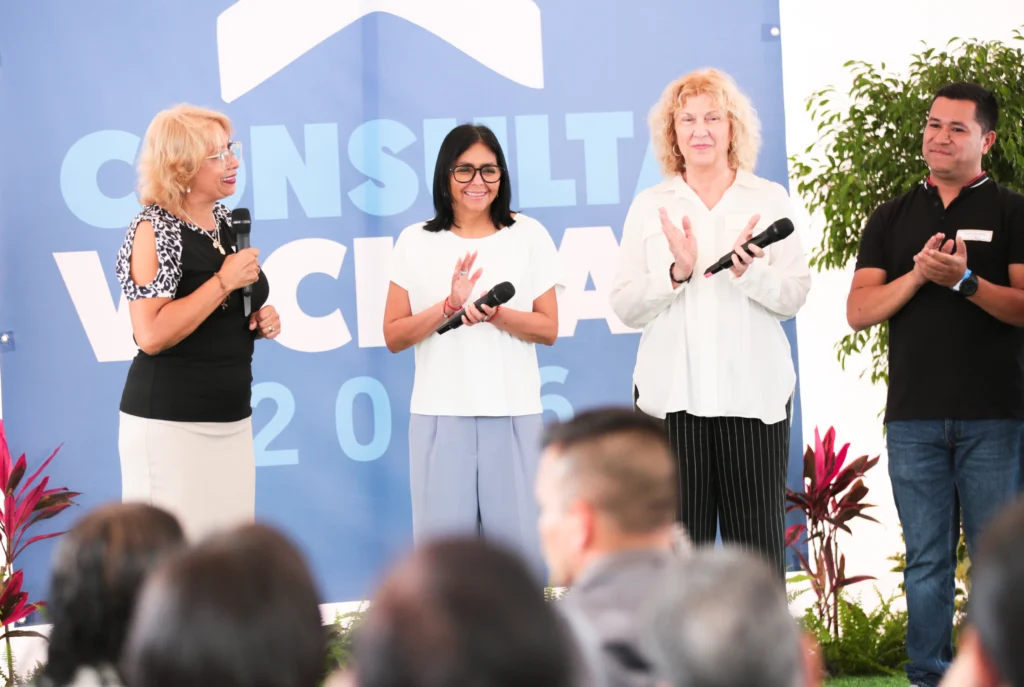
The Venezuelan Acting President urged young people to prepare actively for this new democratic appointment that will mark the course of next year. Photo: Venezuelan Presidential Press.

Acting President Delcy Rodríguez announced Wednesday that Venezuela will hold its Youth Popular Consultation in February 2027, a vote she framed as a platform for young people to convert their talent, creativity and ingenuity into a driving force for national development.


Venezuelan Acting President Delcy Rodríguez delivered the announcement during a visit to the Nueve Raíces de Simón communal circuit, where she urged the country’s youth to prepare actively for what she described as a democratic appointment that will mark the direction of the coming year.

Rodríguez said the process aims to vindicate the talent, creativity and ingenuity of the new generations and to propel Venezuela toward fresh development opportunities. The call places younger Venezuelans at the center of a participatory model that has gathered strength since 2024.

RELATED: Venezuela to Begin Funding Projects Selected in Popular Consultation Next Week

The announcement lands days after the Second National Popular Consultation of 2026, held on October 18. It was the eighth nationwide vote of its kind since 2024, and officials described the turnout as massive and successful. That result has now been translated into a fresh appeal aimed specifically at young people, signaling the government’s intention to widen the base of participants in community decision-making.

🗳️🔥 ¡LA JUVENTUD SE PREPARA: NUEVA CONSULTA EN FEBRERO 2027!🇻🇪✨

Tras una participación histórica en la pasada Consulta Nacional Popular, la ruta continúa: ¡Jóvenes de toda Venezuela a prepararse desde ya! 💪🌱

El compromiso no se detiene: es momento de seguir adelante,… pic.twitter.com/YyOteBQqLT

— Ministerio del Poder Popular para la Juventud (@Minjuventud__ve) October 21, 2026

Text reads: “Youth is preparing: new consultation in February 2027! After a historic participation in the last National Popular Consultation, the route continues: Young people from all over Venezuela to prepare now! The commitment does not stop: it’s time to move forward, organize and execute projects that will transform our territories.”

A Record October Turnout

Millions of residents from communities across the country turned out on October 18, prompting the National Electoral Council (CNE) to extend voting by one hour.

The scale of the exercise was measured in large numbers. More than 5,418 communes and communal circuits coordinated the work of over 48,000 communal councils, and voters selected among 37,205 priority community projects eligible for public financing.

Rodríguez has championed the consultation model as a vehicle for what officials call popular power. In separate remarks, she described participation in the October exercise as extraordinary, linking the strong turnout to a broader effort to place public decision-making directly in the hands of organized communities rather than distant institutions.

A Broader Community Voice

One of the most notable features of the October consultation was the first-time inclusion of condominium boards, which put forward 428 projects. Acting President Rodríguez celebrated that milestone on social media, underscoring the importance of keeping decisions about everyday matters firmly in the hands of communities themselves.

The proposals reflected local priorities. Acting President Rodríguez had previously detailed that 14% of the projects corresponded to the water sector, followed by initiatives in road infrastructure, lighting, electricity, public services and productive activities, showing residents directing public resources toward their most pressing daily needs.

With the youth consultation now scheduled for February 2027, the Acting President called young Venezuelans to assume what she called absolute protagonism in the process. Organizers expect the new consultation to build on the machinery tested in October and to channel the energy of younger generations into decisions that will shape the country’s near-term path.

  •  
❌