❌

Reading view

State Department says Trump is 'spot on' with France protests after Macron decries 'stupid' comments

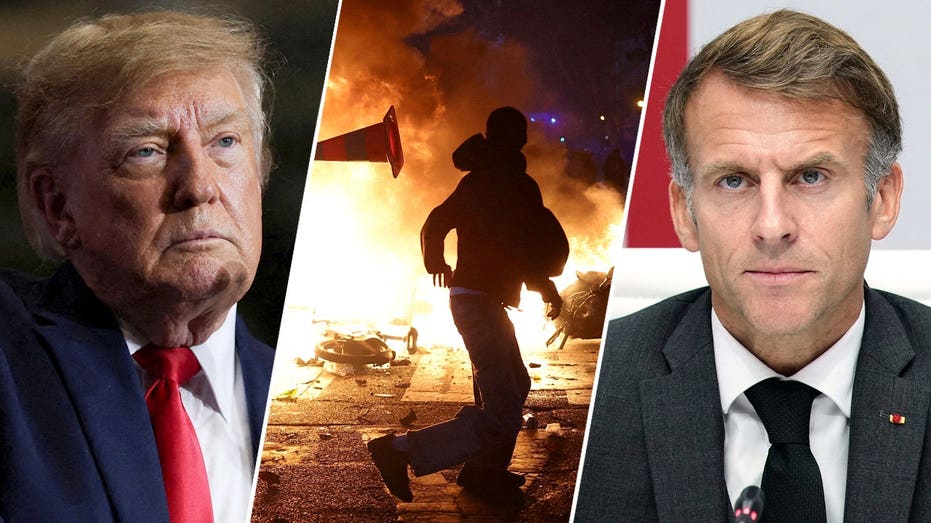
The State Department told Fox News Digital that President Donald Trump's views on France are "spot on" after French President Emmanuel Macron criticized foreign leaders for making "unacceptable and stupid comments" about the protests rocking the European country.

Speaking at a midterms rally on Monday, Trump said that "the migrants have taken over France" and that the country should close its borders following a weekend of anti-government demonstrations that evolved into rioting and looting. He added that France, a "once great nation," is "being conquered, looted and burned to the ground by migrants, jihadists and communists who hate Christianity" and "the Western civilization itself."

Macron then claimed Wednesday that "there was foreign manipulation of information" following the protests, including AI-generated images that showed scenes that never happened in France, which gave way to "unacceptable and stupid comments from many people including foreign leaders." Macron said he was referring to Trump, "among others," and also mentioned, "We’ve had people claiming that we were invaded by hordes of migrants and Islamists, which is completely false," The Associated Press reported.

When asked for a reaction to Macron's remarks, State Department spokesperson Tommy Pigott told Fox News Digital that Trump "is on point as he is consistently on point."

"He has been clear about the dangers of mass migration for years, especially since the beginning of this administration, but certainly long beforehand as well. The president has secured the border on day one when it comes to the United States of America," Pigott said. "But we've also been clear from the State Department's perspective that we are going to oppose international institutions, for example, that seek to impose an agenda upon sovereign nations to encourage mass migration.

FRANCE'S MACRON BLAMES PROTESTS ON 'ULTRA-LEFT GROUPS WHOSE AIM IS TO BRING DOWN THE REPUBLIC'

"Mass migration is inherently destabilizing. It is inherently destabilizing. It is something that we don't believe solves problems, but actually creates problems. And this is something the president has raised time and time again. He's raised it in reaction to these recent protests," Pigott added.

"He's also raised it directly to world leaders at the U.N. General Assembly. Two years in a row raising this issue, calling for an end to the destructive policies of illegal amassed migration. Illegal amassed migration that, by the way, only helps criminal cartel groups. That's something we see in our own hemisphere, for example," Pigott continued. "The fact that cartel groups have traveled along these migration pathways. So the president is spot on, he's bringing attention to this issue, he is taking action to address this issue and, from the State Department's perspective, we have also taken concrete action to end the era of mass migration."

FRANCE'S RIOT CHAOS FUELS FARAGE'S WARNING THAT MASS IMMIGRATION FAILURES COULD HAUNT ANOTHER COUNTRY NEXT

The Louvre and other major museums in Paris will be closed on Saturday as more protests are scheduled in the French capital, according to the AP. Reuters also reported that businesses in central Paris have started boarding up their windows over concerns of violence.

French officials said more than 3,000 shops were looted, and some 2,500 people were taken into police custody in connection to last weekend's nationwide protests.

"One of things that we really stress to Americans is that when they're traveling abroad, if they could please register for the Smart Traveler Enrollment Program (STEP). That program lets you tell us which countries you're going to so that we can provide real-time information to Americans in the country that have registered," Pigott told Fox News Digital.

CLICK HERE TO GET THE FOX NEWS APP 

"Speaking generally, when it comes to Americans that need assistance, we have personnel across the world at the State Department, at embassies and consulates that are working 24/7 to help the American people. If you have an issue when you're abroad, please contact the embassy or consulate," he added. "There are people that are there to help you that can provide information. Everything from a lost passport to responses to a security situation, that is something that is hugely important and a huge factor for the State Department."
  •  

Trump sidelines sweeping Russia sanctions as GOP allies warn pressure on Putin is slipping

President Donald Trump is holding back on sweeping new economic penalties Congress handed him to squeeze Russia.

He is betting that keeping those sanctions in reserve will help bring Vladimir Putin to the negotiating table, a strategy drawing criticism from Republican allies amid questions about whether Moscow believes he will ever use them.

Over roughly a week, the administration waived most of the new Russia sanctions and tariffs enacted last month while separately easing restrictions on Russian diesel exports, moves one foreign policy expert described as Trump's most significant effort yet to unwind economic pressure on Moscow.

"It's probably the biggest effort that the Trump administration has made to start unwinding the U.S. sanctions architecture that's been in place against Russia since 2022 or even earlier in some cases," Hal Brands, a senior fellow at the American Enterprise Institute and professor at the Johns Hopkins School of Advanced International Studies, told Fox News Digital.

TRUMP TRIES DIFFERENT APPROACH WITH RUSSIA TO BRING AMERICANS RELIEF AMID ONGOING WAR WITH UKRAINE

Trump argues that imposing the new penalties could drive Russia away from peace negotiations. But Brands said repeatedly holding back economic punishment risks convincing Putin that Washington is unwilling to follow through on its threats.

"The threat of imposition may lose some credibility if over a period of time you've demonstrated that you would prefer not to impose those penalties in the first place," Brands said.

REPUBLICAN LAWMAKERS BREAK WITH TRUMP ON DIESEL DEAL WITH RUSSIA

The decision has drawn criticism from Republicans who helped advance the Lindsey O. Graham Sanctioning Russia and Iran Act, including Trump allies who worked with his White House to pass it.

Sen. Katie Britt, R-Ala., who played a leading role in passing the legislation and joined Trump in the Oval Office when he signed it last month, said Tuesday the administration should be turning up economic pressure on Moscow.

"It is my belief that we need to use economic firepower to help drive Putin to the table," Britt told Semafor. "I believe that Russia is at the darkest point that they've been at in this entire war, and now is the time for us to turn up the pressure."

Sen. Shelley Moore Capito, R-W.Va., said Congress had coordinated the legislation's timing with the White House, making Trump's decision to waive most of its new penalties particularly surprising.

"This was an act of Congress that we had worked with the White House on," Capito said. "We had timed this to when the president and the White House felt it was a good time to move forward with this, where it could be effective."

Other Republicans were more blunt in their criticism.

"Beyond irresponsible," Sen. Thom Tillis, R-N.C., wrote on X. "What part of enforcing a law passed 86-11 by the Senate does the President and his advisors not understand?"

"It's unconscionable that this administration is capitulating to a Russian dictator who illegally invaded Ukraine and butchers innocent civilians every single day," he added.

Sen. Darline Graham, R-S.C., the lead sponsor of the legislation named for her late brother and a Trump-endorsed candidate, said she would "choose to keep the pressure on Russia" because "I don't trust Putin and I don't trust Russia."

The Graham Act, signed into law in September, provided for steep tariffs targeting Russia and major purchasers of Russian energy, along with sanctions on Russian financial institutions and foreign entities doing significant business with them.

Congress also included presidential waiver authority, which Trump invoked to put most of the law's new Russia penalties on hold.

Brands said including a waiver was not necessarily a mistake, even if it ultimately allowed Trump to avoid imposing the penalties lawmakers had sought.

"It's really tough to craft a sanctions or tariffs bill that forces the president to do something, and typically you don't want to do that because there are always circumstances one can imagine in which you might want to be able to waive sanctions," he said.

Trump has defended his decision as necessary to keep Putin at the negotiating table.

"My decision on Russia is a very simple one. I am in the process of negotiating Peace in the war between Russia and Ukraine, and don't want to do anything that will drive, foolishly, Russia away from the bargaining table," Trump wrote Sunday.

In his formal certification to Congress, Trump said imposing the Graham Act penalties now "would impede ongoing U.S. efforts to negotiate a durable and comprehensive peace." He left open the possibility of imposing them later to "incentivize resolution" of the war.

Brands acknowledged that holding sanctions in reserve can give a president bargaining power, but questioned whether Putin believes Trump is prepared to follow through.

"The challenge is that it's been clear for about 18 months now, since Lindsey Graham started pushing this bill in the first place in the early parts of 2025, that the president simply doesn't have much appetite for squeezing the Russian energy export system to the degree that people like the late Senator Graham envisioned and desired," Brands said.

The administration has separately eased existing restrictions to allow more Russian diesel onto the market, a move intended to relieve pressure on global fuel prices.

Trump has criticized Ukrainian strikes on Russian refineries, arguing they are straining diesel markets. Energy Secretary Chris Wright has described sanctions relief as a "carrot" that could encourage Russia to de-escalate.

Brands said the immediate financial benefit to Moscow from diesel relief is probably "fairly marginal." The more consequential decision, he argued, was Trump's refusal to activate the broader sanctions and tariffs Congress authorized.

"There's a potential for pretty serious pressure to be exerted if he had used both the sanctions authorities and essentially the secondary tariff authorities to go after purchasers of Russian energy products overseas," Brands said.

Such measures could "put a fairly significant squeeze on the Russian war economy" while discouraging other countries from doing business with Moscow, he added.

Brands acknowledged that squeezing Russian energy exports could further strain global energy markets when Trump is focused on lowering fuel prices at home.

But he argued that the larger risk lies in what Putin concludes about Washington's willingness to sustain economic pressure.

"Putin's theory of victory in Ukraine for a long time has been that at some point the West, particularly the United States, will get tired of the costs of confrontation with Russia and support for Ukraine," Brands said.

The concern, he explained, is less about the immediate revenue Moscow gains from additional diesel exports than the possibility that easing restrictions reinforces Putin's belief that Washington is growing tired of confronting Russia.

"The risk you run here has less to do with the precise dollar or ruble amount that Russia will gain by being allowed to export some additional diesel than with the strategic signal you're sending that, in fact, the U.S. is getting tired of applying economic pressure against Russia and that the U.S.-Ukraine relationship is entering another period of conflict and divergence," Brands said.

Brands sees little prospect for a negotiated settlement in the immediate future and argued that changing Putin's calculation would require convincing him that the costs of continuing the war outweigh the potential gains.

"I think the only way you get there is by continuing to support Ukraine so it can take an increasing toll on Russia on the battlefield and by finding ways of ramping up rather than ramping down the economic pressure on Russia," Brands said.

Trump's waiver does not eliminate sanctions against Russia that predated the Graham Act, and the administration can revisit the new penalties.

CLICK HERE TO DOWNLOAD THE FOX NEWS APP

The dispute now centers on whether keeping those penalties in reserve strengthens Trump's hand with Putin — or diminishes their value if Moscow doubts he is willing to use them.

  •  

Trump can’t let Iran turn a military defeat into a diplomatic victory

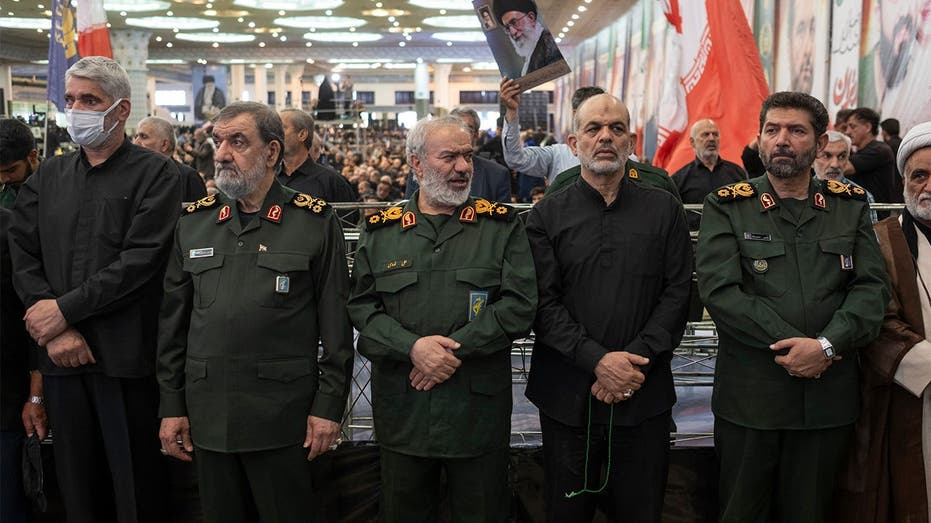
Throughout the history of Middle Eastern wars, one strategic mistake has been repeated time and again: great powers achieve victory on the battlefield, only to give their defeated adversaries an opportunity at the negotiating table to transform military defeat into political triumph. President Donald Trump faces precisely this danger. After eight months of war, the Islamic Republic of Iran, despite suffering devastating military and economic losses, continues to seek political survival through nuclear blackmail, threats to global energy security and the deliberate prolongation of negotiations. Washington must not allow a regime that has paid a heavy price for its reckless adventurism to regain, through a hastily negotiated agreement, the very position it occupied before the war.

The developments of Oct. 20 demonstrate that Tehran has abandoned none of its familiar tactics of confrontation, intimidation, bluffing and extortion. On the one hand, Islamic Republic officials speak of negotiations and ending the war; on the other, they impose imaginary conditions on Washington that, if accepted without credible guarantees, could dismantle much of America's leverage.

Mohsen Rezaei, secretary of the Islamic Republic's Supreme National Security Council — a former terrorist affiliated with the Islamic terrorist group Mansouroun, who even sought to visit the United States in the 2000s but was opposed by the CIA — emphasized during his meeting with Pakistan's army chief that not a single gram of Iran's enriched uranium would leave the country.

IRAN RULES OUT TRANSFERRING URANIUM TO A THIRD COUNTRY

Meanwhile, Abbas Araghchi — a former Islamic Revolutionary Guard Corps member acting as foreign minister — has made reopening the Strait of Hormuz conditional upon acceptance of Tehran's proposed plan. Far from demonstrating a genuine willingness to compromise, these positions reveal the regime's determination to preserve its instruments of coercion on the eve of a potential agreement.

The most significant issue, however, lies in the political calculations of the Islamic Republic's rulers. Tehran is deliberately dragging out negotiations to weaken Trump's political standing ahead of the Nov. 3 midterm elections — in other words, to exert psychological pressure on the American president.

IRAN REGIME UNDER PRESSURE AS REBEL GROUPS ESCALATE ATTACKS IN VOLATILE SOUTHEAST

This is no longer merely a dispute over centrifuges or economic sanctions. The Islamic Republic is attempting to weaponize the exhaustion of war, the anxieties of American voters and rising energy costs as instruments of political pressure against the president of the United States. Such calculated deception must be understood in Washington as part of Tehran's asymmetric warfare strategy, not dismissed as an ordinary diplomatic tactic.

The Strait of Hormuz stands at the center of this calculation. The terrorist organization known as the Islamic Revolutionary Guard Corps has claimed — without presenting any evidence — that Iranian naval mines prevented three oil tankers from passing through the waterway. Nevertheless, the widespread disruption of regional shipping is an undeniable reality.

TRUMP'S MOAB THREAT COULD PUT IRAN'S DEEPEST BUNKERS IN AMERICA'S CROSSHAIRS

The Islamic Republic understands perfectly well that it does not need to win a conventional naval battle to inflict economic pain on the United States. It need only increase the risks facing oil tankers, drive up insurance and transportation costs and keep global energy markets trapped in uncertainty. Under this strategy, commercial tankers become hostages to Tehran's security calculations, while American consumers pay the price of the Iranian regime's policies at the gas pump.

This is the very essence of the rogue Islamic Republic's asymmetric warfare: a form of conflict in which military weakness is compensated for through economic, propaganda, intelligence and proxy instruments. Tehran possesses limited capabilities in a direct confrontation with American military power, but it can exploit maritime routes, militia networks, cyberattacks and influence operations to multiply the costs of the crisis.

IRAN SETS RED LINES FOR US TALKS: LIFT SANCTIONS, END THREATS — 'NOT A GRAM' OF URANIUM LEAVES

Reports of efforts by Iran and Russia to intensify unrest in France, together with the rearrests of two suspects in Britain on suspicion of intelligence cooperation with Iran, serve as further reminders that Western security concerns extend far beyond the Persian Gulf. Ignoring this pattern would undoubtedly be a dangerous mistake. The Islamic Republic came to power through terrorism, sustained its rule through terrorism, destruction and manufactured crises, and its eventual collapse may likewise be possible through war.

The nuclear file exposes another danger. Tehran's insistence on retaining its enriched uranium, while simultaneously demanding relief from economic and military pressure, raises a fundamental question: If the Iranian regime genuinely intends to address international concerns, why does it refuse to demonstrate flexibility over one of the most sensitive components of its nuclear program?

IRAN IS TRYING TO ‘CREATE A ROT FROM WITHIN’ THROUGH ‘INFORMATION WARFARE,’ ANALYST WARNS

Uranium enrichment does not, by itself, prove a decision to manufacture nuclear weapons. Nevertheless, enriched uranium stockpiles, centrifuge capacity and the possibility of independent monitoring remain decisive factors in assessing the risk of a nuclear breakout. An agreement that postpones these questions while granting Tehran immediate and irreversible concessions could merely defer the crisis to an even more dangerous stage rather than resolve it. The principal global threat remains Islamic terrorism and Iran's transnational terrorist network.

Trump must recognize the distinction between ending military operations and eliminating a security threat. The destruction of military equipment, damage to facilities and degradation of the Revolutionary Guards' operational capabilities — however extensive — do not automatically mean the elimination of the rogue mafia regime's command structure, political will, or capacity for reconstruction.

HOW SAUDI ARABIA'S DEFENSE VULNERABILITIES COULD BECOME TRUMP'S PROBLEM AMID HOUTHI ONSLAUGHT

Over the decades, the Islamic Republic has demonstrated its ability to exploit periods of reduced pressure to rebuild its military and security structures and its terrorist networks. Accordingly, America's measure of success must not be limited to the cessation of missile launches or the temporary reopening of the Strait of Hormuz. Genuine success will come only when the regime's ability to repeat those same threats has been curtailed.

Another mistake must also be avoided: equating Iran with the Islamic Republic. The Iranian nation and the ruling establishment in Tehran are two fundamentally different realities. For years, the Iranian people have paid the price of domestic repression, systemic corruption, international isolation and the regime's regional adventurism. No sustainable American strategy should portray the survival of the Islamic Republic as synonymous with stability in Iran.

CLICK HERE FOR MORE FOX NEWS OPINION

On the contrary, a policy that merely guarantees the regime's security in exchange for temporary concessions could deprive Iranian society of the opportunity to shape a different future. While safeguarding its own national security interests, Washington must defend the Iranian people's right to determine their country's political future, without bargaining away their destiny behind the closed doors of a security agreement. The Iranian people want regime change.

CLICK HERE TO DOWNLOAD THE FOX NEWS APP

To prevent such an outcome, the Trump administration needs a clear strategic framework and a decisive course of action. Any agreement must include explicit nuclear commitments, enforceable independent monitoring, credible verification mechanisms, guarantees for maritime security and clearly defined consequences for violations. Sanctions relief and the release of financial resources must not be granted in advance without securing genuine concessions. Threats against commercial vessels must never become an instrument through which Tehran acquires political control over one of the world's most vital waterways. Diplomacy has value when it reduces threats.

CLICK HERE TO READ MORE FROM ERFAN FARD

  •  
❌