
❌

Reading view

Russian Geran drone crashes in Moldova near homes and energy facility: Chisinau expels Russian diplomat

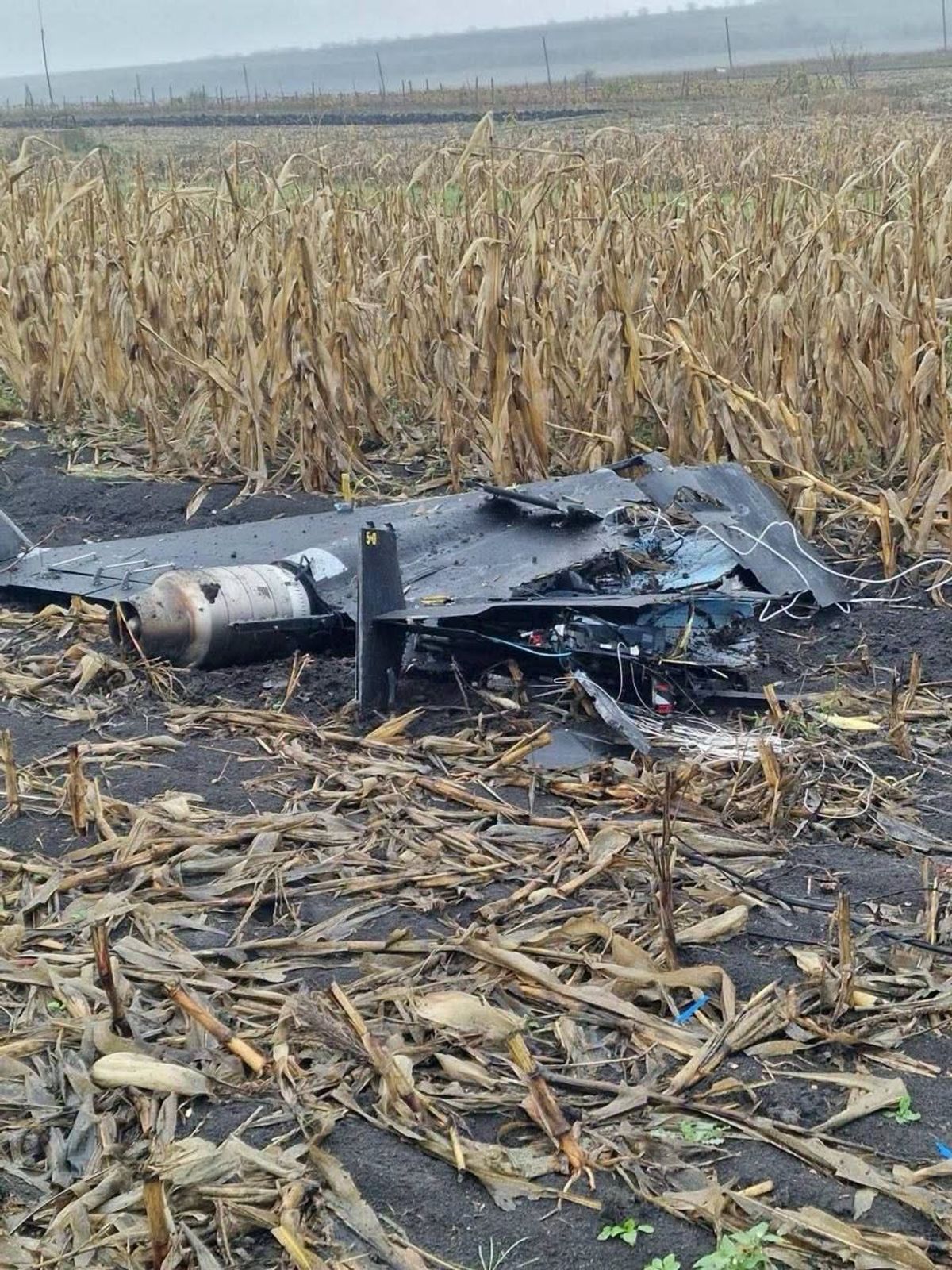
A Russian Geran attack drone that crashed in Moldova on 23 October 2026. Photo: Moldovan Police

Moldova declared a Russian embassy staff member persona non grata on 23 October after a Russian Geran attack drone violated its airspace and crashed near homes and an energy facility, Moldovan President Maia Sandu said.

The incident highlights how Russia’s attacks on Ukraine are increasingly threatening neighboring Moldova, where Russian drones have repeatedly crossed the border or crashed during strikes. Moldova recorded 39 Russian drone incursions in the first eight months of 2026, compared with 17 in all of 2025, Sandu said in September.

Moldova’s Defense Ministry said its Air Operations Center detected an unauthorized drone flight at 13:59 on 23 October. The drone crossed from the direction of Ukraine’s Vinnytsia Oblast toward Frunzeuca in Moldova’s Camenca district, in the Russian-backed breakaway region of Transnistria.

The drone disappeared from monitoring screens near Pepeni in Sîngerei district at 14:10, briefly reappeared, and then disappeared again near Meșeni in Rezina district, the ministry said.

Sandu condemned the incursion, saying Russia’s war continues to put Moldovan lives at risk. She said the drone had fallen near family homes and an energy facility.

Moldovan police reported finding the crashed drone near the village of Chiștelnița in Telenești district, less than 100 meters from a home. No casualties were reported. Police cordoned off the area and sent explosives specialists to examine the wreckage.

Russia's war keeps putting Moldovan lives at risk. Today, a Russian Geran attack drone violated our airspace and fell near family homes and an energy facility.

We condemn this latest dangerous act. In response, we have declared a Russian embassy staff member persona non grata.

— Maia Sandu (@sandumaiamd) October 23, 2026

Moldova steps up diplomatic response

Sandu said Moldova had condemned the incident and declared a Russian embassy staff member persona non grata. She did not identify the staff member or specify when they must leave the country.

The move follows repeated Russian drone incursions. In September, a Russian drone crossing Moldova’s airspace disrupted seven flights, including one involving Ukrainian President Volodymyr Zelenskyy, prompting temporary airspace restrictions.

Earlier in October, three Russian missiles and two drones crossed into Moldovan airspace and exploded on Moldovan territory during Russian attacks on neighboring Ukraine, prompting Chisinau to condemn the violations. Debris fell across several districts, damaging windows at an agricultural facility and sparking fires in fields. Defense Minister Anatolie Nosatîi said the country was seeking stronger air defenses to counter the growing threat.
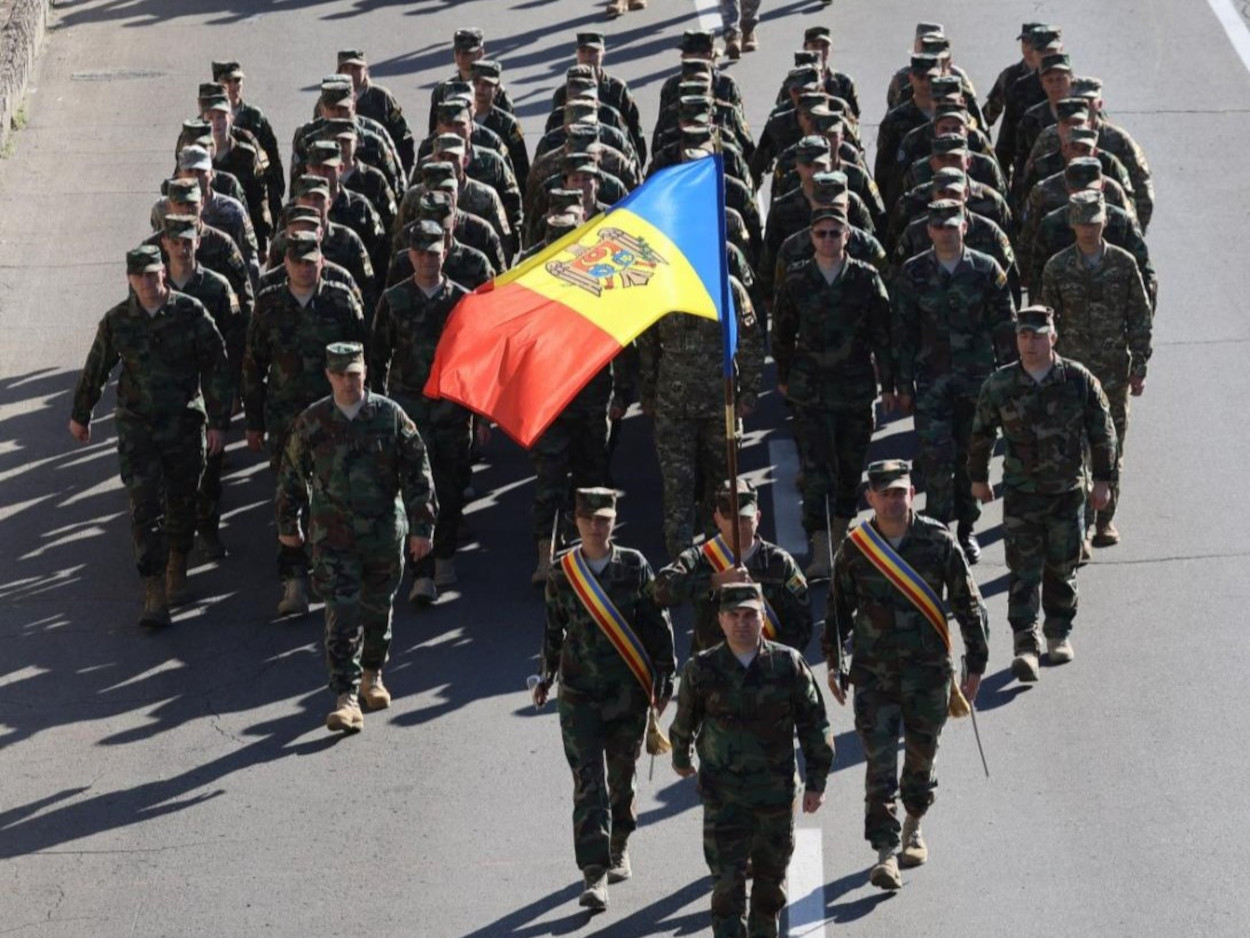
Moldovan soldiers. Photo: Moldovan Army via NewsMaker
Explore further

80% of Moldovans say country is unprepared for attack as Russian drones flow into its airspace, but few back NATO membership

Moldova has limited air defense capabilities and has been working with European partners to strengthen them. Sandu has said the country’s existing equipment can mainly protect individual sites, while the government seeks broader coverage and faster warning systems. The EU has provided €120 million for Moldova to purchase a medium-range air defense system.

Moldovan authorities urged residents not to approach or touch the crashed drone or any fragments, and to call emergency services if they find suspicious objects.
  •  

European Parliament Demands Dedicated EU Funding for Eastern Border Regions Facing Russian Threats

The European Parliament has called for substantial additional funding for the European Union’s eastern border regions, proposing that up to 10 per cent of the budgets of relevant EU financing instruments be earmarked for areas affected by Russia’s war against Ukraine and growing security threats.

The resolution, adopted on Thursday, 22nd October, received 414 votes in favour, 79 against and 90 abstentions.

It seeks greater financial assistance for regions bordering Russia, Belarus, Ukraine and Moldova, as well as territories along the Black Sea, under the EU’s 2028–2034 financial framework.

The proposals include higher EU contributions towards infrastructure projects, additional investment in local economies and targeted assistance for communities experiencing declining investment, population losses and increased security costs.

However, the resolution is not binding legislation and does not itself allocate new funding. Its provisions must be incorporated into future budget agreements and individual EU spending programmes.

Eastern regions face economic and security pressures

Russia’s full-scale invasion of Ukraine has significantly changed economic conditions across the EU’s eastern frontier.

Border restrictions, disrupted trade routes, increased defence activity and uncertainty over regional security have affected investment and commercial activity.

The pressures are particularly apparent in Finland, Estonia, Latvia, Lithuania, Poland, Slovakia, Hungary, Romania and Bulgaria.

According to a European Parliament research briefing published in September, these regions face overlapping challenges involving economic decline, depopulation, inadequate infrastructure and higher expenditure on security.

Some communities previously depended on cross-border trade with Russia or Belarus, much of which has declined sharply following sanctions and restrictions introduced since 2022.

Other regions have experienced increased transport demand linked to Ukrainian refugees, military logistics and the movement of goods towards Ukraine.

The European Commission has recognised that conventional regional development programmes may not adequately address the combination of economic and security pressures.

Parliament proposes dedicated financial allocations

The resolution calls for up to 10 per cent of funding within relevant EU instruments to be earmarked for eligible eastern border regions.

This does not mean that 10 per cent of the entire EU budget would automatically be transferred to those areas.

Instead, Parliament wants targeted allocations within programmes covering regional development, agricultural policy, transport, industrial competitiveness and infrastructure.

MEPs also propose significantly higher EU contributions towards eligible projects.

Under the parliamentary position, certain projects could receive up to 95 per cent EU co-financing, reducing the amount that national or local authorities would have to contribute.

Projects connected with security, resilience or critical infrastructure could potentially receive funding covering 100 per cent of eligible costs.

Additional pre-financing would help local administrations begin projects without having to provide substantial initial expenditure.

The proposals are particularly relevant to municipalities with limited budgets and regions where private investment has declined.

Wider definition includes Moldova and Black Sea regions

Parliament has also proposed broadening the geographical criteria used to identify eligible territories.

The resolution covers regions bordering Russia, Belarus, Ukraine and Moldova, as well as regions with access to the Black Sea.

The proposed framework would use the EU’s NUTS 2 regional statistical classification.

For borders with Russia and Belarus, the parliamentary proposal includes geographical thresholds concerning the length of land or maritime frontiers.

For Romania, the revised approach could extend support to regions connected with Moldova, Ukraine and the Black Sea.

The proposals would also have implications for transport corridors linking Ukraine with the EU, including railways, ports, roads and border-crossing facilities.

Such infrastructure serves both civilian trade and military mobility requirements.

Existing programmes and new investment plans

The Commission has already introduced measures intended to support Europe’s eastern regions.

Its February 2026 strategy identified security, economic growth, connectivity, local industries and demographic resilience as principal areas requiring action.

A proposed investment initiative, EastInvest, is intended to facilitate financing through European and national financial institutions, with the potential to mobilise up to €28 billion by the end of 2027.

This would principally involve lending and investment support, rather than direct grants equivalent to the total facility value.

The Commission has also identified approximately €5.6 billion in cohesion funding redirected towards eastern border regions under the current financial framework.

Those reallocations form part of approximately €34.6 billion redirected towards new priorities across participating member states.

Parliament’s latest demands concern the period after 2027 and would operate separately from these existing arrangements.

Budget negotiations will determine the outcome

The proposal places additional pressure on governments negotiating the EU’s next long-term budget.

Agricultural policy, regional development and industrial investment are already competing for funding alongside increased European defence expenditure.

As EU Today reported in its coverage of the agricultural budget negotiations, member states remain divided over the allocation of resources under the next financial framework.

Eastern border governments are likely to argue that infrastructure and economic development in their territories contribute directly to the EU’s wider security.

Other member states may resist dedicated allocations if these require reductions in existing regional development programmes elsewhere.

Parliament has proposed that additional assistance should not come at the expense of support for other less-developed regions.

The negotiations will determine whether that position is financially achievable.

The next stage will involve discussions over the overall EU budget and the individual programmes through which eastern border assistance could be delivered.

For now, Thursday’s vote establishes Parliament’s demand for a larger and more clearly defined financial commitment to Europe’s eastern frontier, without creating an immediate entitlement to additional EU funding.

Main Image: Denis LOMME: © European Union 2023

  •  
❌