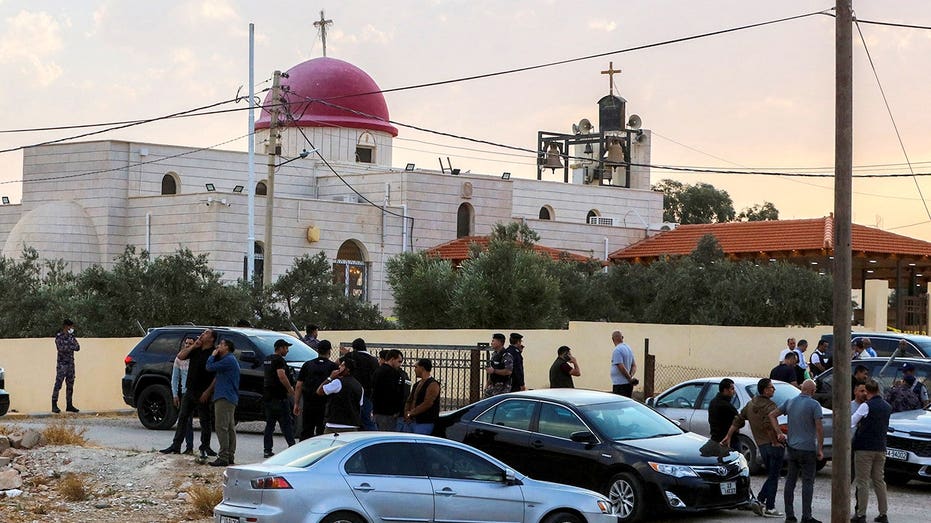
Multiple gunmen opened fire and killed at least seven people Friday at a church in Jordan in what the country's leader is calling a "terrorist attack."
The shooting, which also left 34 injured, erupted during a funeral at a Greek Orthodox church in Karak, about 110 miles south of the capital, Amman. Karak is home to a minority Christian population.
"The terrorist attack against Karak will be met with the harshest retaliation. Those who delude themselves into thinking that they can divide Jordanians with their bullets have no chance in the face of our unity," King Abdullah II wrote on X.
"All Jordanians, from north to south, are partners in land and fate, and nothing stands between them. Our deepest condolences to the families of the martyrs and we wish a speedy recovery to those injured," he added. "Every Jordanian life is precious, and we will strike with an iron fist against those who dare to threaten our nation."
Images broadcast on Jordanian state television showed two gunmen who appear to be holding pistols approaching the church and firing shots, according to The Associated Press.
A third man who appeared to be holding a semiautomatic rifle then appeared and opened fire, and all three then ran toward the church.
A government statement said that the attack was "carried out by unknown assailants" but didn't say whether any gunmen were captured or killed. It noted that "investigations are underway at full speed."
In 2016, gunmen ambushed police in a series of attacks in Karak, including at a Crusader castle popular with tourists, killing 10 people, including seven officers, and wounding dozens. Jordanian security forces killed those gunmen after a long standoff.
Jordan’s director of public security, Maj. Gen. Obeidallah Maaytah, said at a news conference that 27 of the wounded in Friday’s shooting were still being treated.
In a statement, Iraqi Foreign Minister Fuad Hussein said he called his Jordanian counterpart and "affirmed Iraq’s solidarity with Jordan in the face of terrorism."
Israeli forces began demolishing Palestinian-owned buildings in Hebron after two Israeli soldiers were shot dead by two Palestinian gunmen at a checkpoint outside the West Bank city. The attack took place on Friday morning.
Gunmen opened fire at a funeral inside a church in Jordan's southern Karak governorate, killing seven people and wounding 34 others, officials said. A manhunt for the attackers is under way.
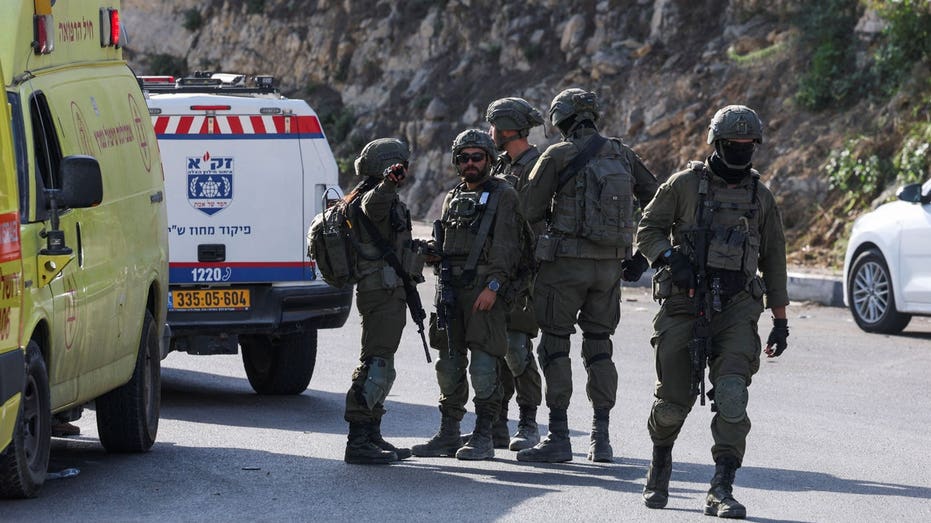
Two Israeli Defense Forces soldiers were killed, and three other people were wounded by two suspected gunmen, who were also killed, in a shooting Friday in the southern West Bank, officials said.
Staff Sergeant Ron Yonatan Roytman, aged 23, from Ashkelon, a squad commander in the Ari Battalion (775), Search and Rescue Brigade and Sergeant Yuval Shai Svilem, aged 20, from Hod Hasharon, a combat soldier in the Ari Battalion, Search and Rescue Brigade, both died as a result of the attack, according to the Israel Defense Forces.
The IDF reported that it responded to a shooting in the Judea Junction area Friday and killed two people it identified as "terrorists."
Hours after the attack, Israel ordered the army to prepare for a full closure of the West Bank, according to The Associated Press.
Israeli Prime Minister Benjamin Netanyahu held an emergency meeting of his Security Cabinet, claiming Hamas was "planning a major attack aimed at murdering innocent civilians."
Netanyahu also said a large scale operation in the West Bank is to begin soon.
The identities of the suspected gunmen were not immediately released, but the Israeli army did identify them as Palestinians from Hebron armed with an M16 rifle and a handgun.
Israeli intelligence groups and security forces conducted dozens of raids throughout the West Bank on Friday, apprehending dozens of people, including those who Israeli officials claimed were members of Hamas and affiliated with Islamic Jihad.
The Israeli army’s chief of staff, Eyal Zamir, said a "large quantity of ammunition was found" in a vehicle used by the perpetrators.
"This ammunition was intended to be used in a larger-scale attack," he said.
Throughout the history of Middle Eastern wars, one strategic mistake has been repeated time and again: great powers achieve victory on the battlefield, only to give their defeated adversaries an opportunity at the negotiating table to transform military defeat into political triumph. President Donald Trump faces precisely this danger. After eight months of war, the Islamic Republic of Iran, despite suffering devastating military and economic losses, continues to seek political survival through nuclear blackmail, threats to global energy security and the deliberate prolongation of negotiations. Washington must not allow a regime that has paid a heavy price for its reckless adventurism to regain, through a hastily negotiated agreement, the very position it occupied before the war.
The developments of Oct. 20 demonstrate that Tehran has abandoned none of its familiar tactics of confrontation, intimidation, bluffing and extortion. On the one hand, Islamic Republic officials speak of negotiations and ending the war; on the other, they impose imaginary conditions on Washington that, if accepted without credible guarantees, could dismantle much of America's leverage.
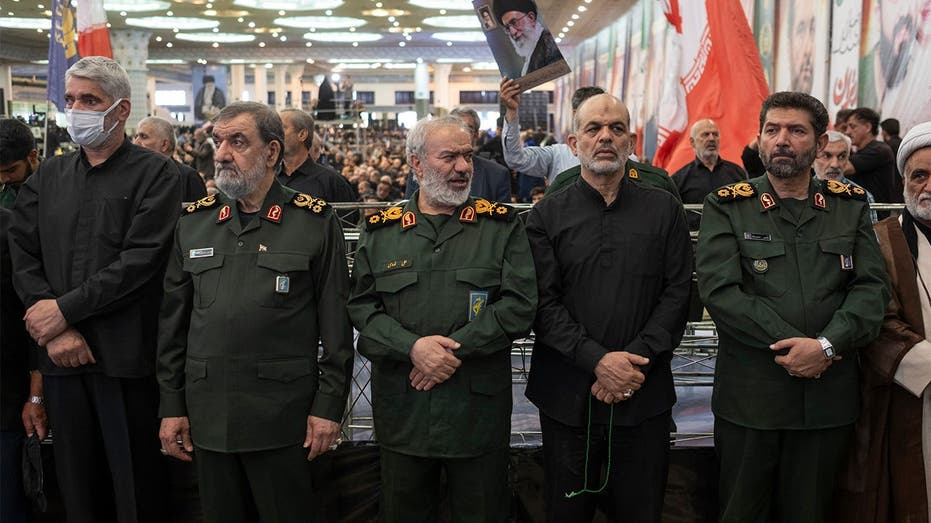
Mohsen Rezaei, secretary of the Islamic Republic's Supreme National Security Council — a former terrorist affiliated with the Islamic terrorist group Mansouroun, who even sought to visit the United States in the 2000s but was opposed by the CIA — emphasized during his meeting with Pakistan's army chief that not a single gram of Iran's enriched uranium would leave the country.
Meanwhile, Abbas Araghchi — a former Islamic Revolutionary Guard Corps member acting as foreign minister — has made reopening the Strait of Hormuz conditional upon acceptance of Tehran's proposed plan. Far from demonstrating a genuine willingness to compromise, these positions reveal the regime's determination to preserve its instruments of coercion on the eve of a potential agreement.
The most significant issue, however, lies in the political calculations of the Islamic Republic's rulers. Tehran is deliberately dragging out negotiations to weaken Trump's political standing ahead of the Nov. 3 midterm elections — in other words, to exert psychological pressure on the American president.
This is no longer merely a dispute over centrifuges or economic sanctions. The Islamic Republic is attempting to weaponize the exhaustion of war, the anxieties of American voters and rising energy costs as instruments of political pressure against the president of the United States. Such calculated deception must be understood in Washington as part of Tehran's asymmetric warfare strategy, not dismissed as an ordinary diplomatic tactic.
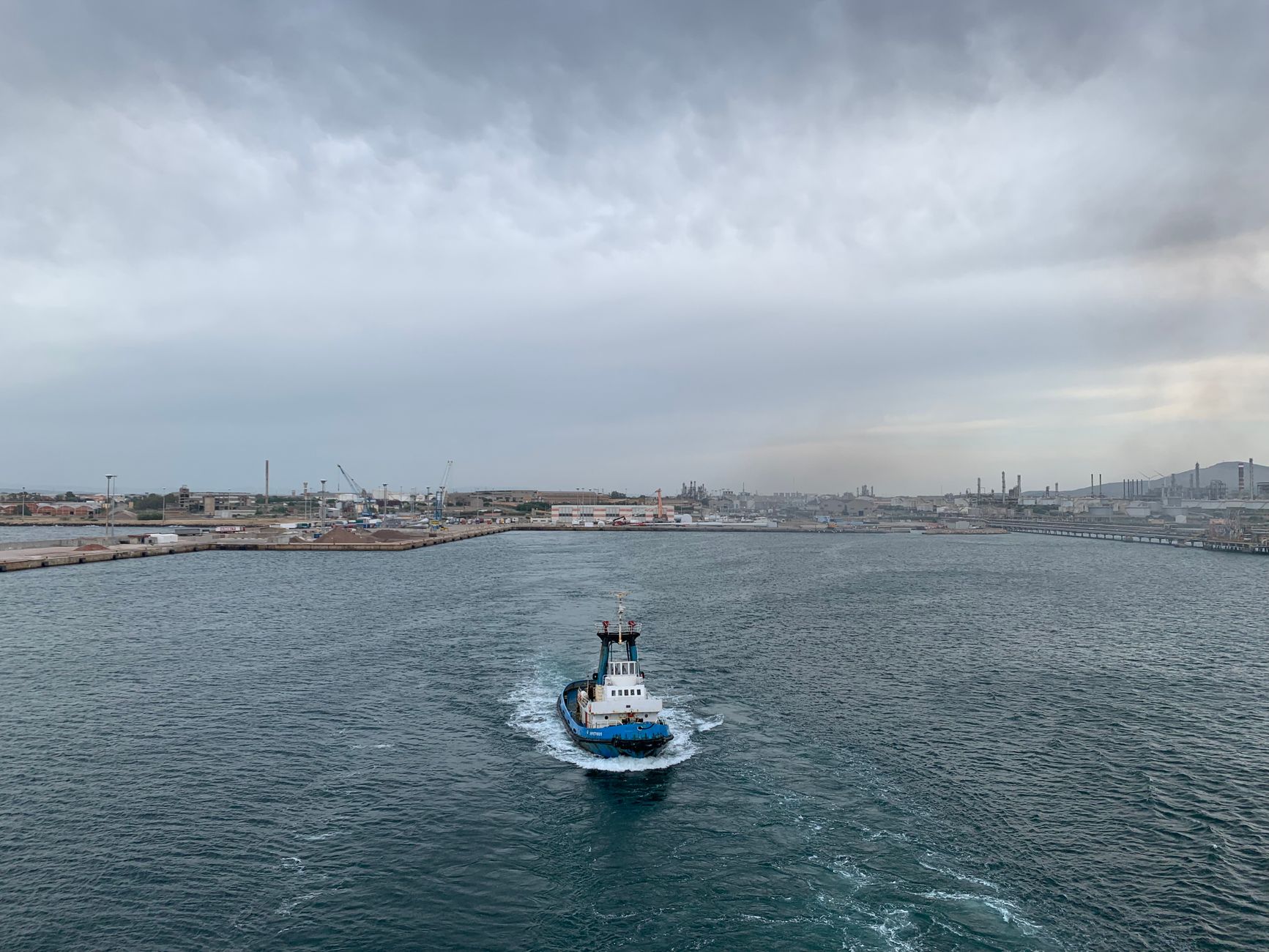
The Strait of Hormuz stands at the center of this calculation. The terrorist organization known as the Islamic Revolutionary Guard Corps has claimed — without presenting any evidence — that Iranian naval mines prevented three oil tankers from passing through the waterway. Nevertheless, the widespread disruption of regional shipping is an undeniable reality.
The Islamic Republic understands perfectly well that it does not need to win a conventional naval battle to inflict economic pain on the United States. It need only increase the risks facing oil tankers, drive up insurance and transportation costs and keep global energy markets trapped in uncertainty. Under this strategy, commercial tankers become hostages to Tehran's security calculations, while American consumers pay the price of the Iranian regime's policies at the gas pump.
This is the very essence of the rogue Islamic Republic's asymmetric warfare: a form of conflict in which military weakness is compensated for through economic, propaganda, intelligence and proxy instruments. Tehran possesses limited capabilities in a direct confrontation with American military power, but it can exploit maritime routes, militia networks, cyberattacks and influence operations to multiply the costs of the crisis.
Reports of efforts by Iran and Russia to intensify unrest in France, together with the rearrests of two suspects in Britain on suspicion of intelligence cooperation with Iran, serve as further reminders that Western security concerns extend far beyond the Persian Gulf. Ignoring this pattern would undoubtedly be a dangerous mistake. The Islamic Republic came to power through terrorism, sustained its rule through terrorism, destruction and manufactured crises, and its eventual collapse may likewise be possible through war.
The nuclear file exposes another danger. Tehran's insistence on retaining its enriched uranium, while simultaneously demanding relief from economic and military pressure, raises a fundamental question: If the Iranian regime genuinely intends to address international concerns, why does it refuse to demonstrate flexibility over one of the most sensitive components of its nuclear program?
Uranium enrichment does not, by itself, prove a decision to manufacture nuclear weapons. Nevertheless, enriched uranium stockpiles, centrifuge capacity and the possibility of independent monitoring remain decisive factors in assessing the risk of a nuclear breakout. An agreement that postpones these questions while granting Tehran immediate and irreversible concessions could merely defer the crisis to an even more dangerous stage rather than resolve it. The principal global threat remains Islamic terrorism and Iran's transnational terrorist network.
Trump must recognize the distinction between ending military operations and eliminating a security threat. The destruction of military equipment, damage to facilities and degradation of the Revolutionary Guards' operational capabilities — however extensive — do not automatically mean the elimination of the rogue mafia regime's command structure, political will, or capacity for reconstruction.
Over the decades, the Islamic Republic has demonstrated its ability to exploit periods of reduced pressure to rebuild its military and security structures and its terrorist networks. Accordingly, America's measure of success must not be limited to the cessation of missile launches or the temporary reopening of the Strait of Hormuz. Genuine success will come only when the regime's ability to repeat those same threats has been curtailed.
Another mistake must also be avoided: equating Iran with the Islamic Republic. The Iranian nation and the ruling establishment in Tehran are two fundamentally different realities. For years, the Iranian people have paid the price of domestic repression, systemic corruption, international isolation and the regime's regional adventurism. No sustainable American strategy should portray the survival of the Islamic Republic as synonymous with stability in Iran.
On the contrary, a policy that merely guarantees the regime's security in exchange for temporary concessions could deprive Iranian society of the opportunity to shape a different future. While safeguarding its own national security interests, Washington must defend the Iranian people's right to determine their country's political future, without bargaining away their destiny behind the closed doors of a security agreement. The Iranian people want regime change.
To prevent such an outcome, the Trump administration needs a clear strategic framework and a decisive course of action. Any agreement must include explicit nuclear commitments, enforceable independent monitoring, credible verification mechanisms, guarantees for maritime security and clearly defined consequences for violations. Sanctions relief and the release of financial resources must not be granted in advance without securing genuine concessions. Threats against commercial vessels must never become an instrument through which Tehran acquires political control over one of the world's most vital waterways. Diplomacy has value when it reduces threats.
Israeli forces are accused of shooting dead a Syrian man with an intellectual disability and hearing impairment during a raid, Al Jazeera reported. The incident comes amid a continuing pattern of Israeli military operations inside Syrian territory.
Israeli Prime Minister Benjamin Netanyahu ordered the closure of the West Bank after a prolonged shoot-out at a checkpoint wounded five Israelis and left two gunmen dead. The decision came days before Israeli elections in which Netanyahu is fighting for a new term.
Five people were wounded, including two critically, and two suspected gunmen were killed in a shooting Friday in the southern West Bank, officials said.
The Israel Defense Forces (IDF) reported that it responded to a shooting in the Judea Junction area Friday and killed two people it identified as "terrorists."
Hours after the attack, Israel ordered the army to prepare for a full closure of the West Bank, according to the Associated Press.
Israeli Prime Minister Benjamin Netanyahu held an emergency meeting of his Security Cabinet, claiming Hamas was "planning a major attack aimed at murdering innocent civilians."
Magen David Adom, Israel's emergency medical service, said it treated two people in critical condition at the scene of the attack.
The identities of the suspected gunmen were not immediately released, but the Israeli army did identify them as Palestinians from Hebron armed with an M16 rifle and a handgun.
Israeli intelligence groups and security forces conducted dozens of raids throughout the West Bank on Friday, apprehending dozens of people, including those who Israeli officials claimed were members of Hamas and affiliated with Islamic Jihad.
The Israeli army’s chief of staff, Eyal Zamir, said a "large quantity of ammunition was found" in a vehicle used by the perpetrators.
"This ammunition was intended to be used in a larger-scale attack," he said.
The European Parliament has called for Yemen's Houthi movement to be added to the European Union's terrorist list. The non-binding resolution urges a freeze on the group's funds as the EU struggles to counter the threat to civilian shipping in the Red Sea.
The United States has ordered some diplomats to leave Saudi Arabia as Houthi attacks on the kingdom intensify. The warning follows strikes on an airport and an oil field that killed at least three people.

 Login