Republican senator faces critical re-election battle in state where president’s trade war has outraged voters
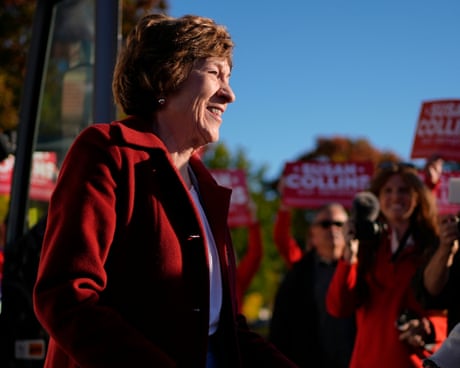
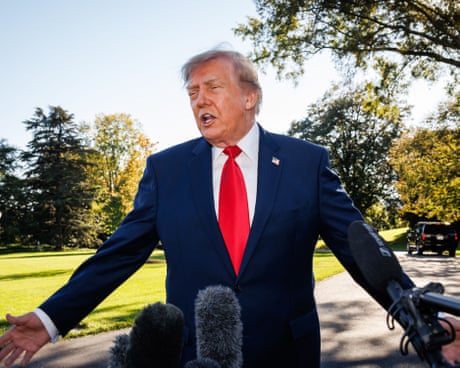
Donald Trump dropped some of the US’s tariffs on Canada on Friday to “better serve the public interest” the White House said, handing a win to Susan Collins, the embattled Republican senator for Maine, as she faces a tight re-election campaign that will help determine whether Democrats can flip control of Congress.
Collins announced that the exemptions would apply to nine agricultural products, including blueberries, potatoes, apples and seaweed. She added that many of the state’s farmers rely on specialized equipment and materials from across the border that are “unavailable from American suppliers or cannot be replaced without incurring significant expense”.
The Trump administration has now announced or completed deals to take ownership stakes in 40 private companies. Just this week, the Commerce Department added four more proposed stakes to the running count we maintain at the Cato Institute’s Restoring Free Enterprise initiative. Those inclined to applaud the president’s dealmaking should consider what a Democratic president might do with those stakes after Trump is no longer in office.
Democrats are certainly thinking about it. Semafor reports that former Biden officials are licking their chops at the prospect of using government ownership to pressure gun and oil companies. Doug Farrar, who worked for then-Federal Trade Commission Chair Lina Khan during the Biden administration, sees a future president leveraging government ownership to turn the screws on AI companies, "especially a Democrat who wants to seriously regulate this industry." Remember when the Biden administration bullied social media platforms to remove content it didn’t like during the COVID pandemic? That was done without government ownership.
I warned about this two weeks into Trump’s second term after he signed an executive order seeking to create a sovereign wealth fund, noting that a government investment fund would eventually become a vehicle for Democratic administrations to pursue policies Republicans oppose. The White House ditched the idea for a formal fund and proceeded to cobble together an ad hoc presidential portfolio despite having no clear legal authority to do so.
If a Democratic administration had done this, it would be practically impossible to imagine a Congress controlled by Republicans allowing it to continue. And yet congressional Republicans, who never miss a chance to tag Democrats as socialists and communists, have collectively done nothing to stop the Trump administration. In fact, congressional Republicans are actively trying to give the executive branch—and thus future administrations, not just the current administration—the legal authority to continue doing it.
The Trump administration’s supporters cite its claims that equity stakes are better for taxpayers than blank checks, or that they are necessary to bolster supply chains for national security. Setting aside that they aren’t the administration’s true motivation, neither justifies Washington becoming a shareholder in a portfolio of companies.
Sure, if the government is already handing a company money, getting shares in return sounds better than a straight giveaway. But the trade-offs can’t be ignored.
When the government picks a racehorse, that horse is given advantages and privileges that leave the competing horses at a disadvantage. But the danger goes well beyond current competitors. Upstart firms, including those that don’t yet exist, already face a steep hill to climb in bringing their products and ideas to market. Government ownership steepens that hill, threatening to stifle the entrepreneurial spirit critical to America’s economic success.
The value of the shares on the government’s books isn’t the same as revenue in the Treasury. Realizing the gains requires selling the shares and subtracting what taxpayers put in. And as my colleague Scott Lincicome explains, Intel’s stock gains partly reflect expectations of government favoritism, including pressure on other companies to use Intel products. That points to the possibility that the government is diverting private investment from businesses with better commercial prospects.
Even if the administration could sell its entire Intel stake today, it would net roughly $28 billion—less than 1.5% of the $2 trillion deficit Washington ran up in the fiscal year just ended under President Trump and a Republican-controlled Congress. The stakes the administration has acquired should be divested, regardless. But if the administration wants to raise funds productively, it could revisit Cato’s recommendations to sell excess federal buildings and privatize government businesses like Amtrak.
The national security rationale also sounds reasonable until you realize the federal government already has plenty of ways to support companies on such grounds without becoming an owner. Our Restoring Free Enterprise initiative lays out both market-based and government alternatives to equity stakes that would help bolster critical supply chains. Easing permitting requirements and removing tariffs on production inputs would make it easier for private companies to invest and expand supply. And the government can address specific defense needs through purchase contracts or stockpiles of critical materials.
Invoking "national security" also has a long-standing tradition in Washington as an excuse for politicians to justify actions they might not otherwise get away with. Back in April, the administration pursued a bailout that could have given the government 90% of Spirit Airlines on dubious national security grounds, until a group of the airline’s bondholders balked at the terms.
Last week, Politico reported that the Federal Aviation Administration is exploring an ownership stake in a company that develops software for managing air traffic control. National security or not, having the government become an investor in a company it is supposed to evaluate objectively is an objectively bad idea.
Defenders will also point to promises that the government will remain a passive shareholder and argue that concerns about federal control over the corporate boardroom are overblown. That’s a painfully naïve view of how Washington works. The Trump administration is already using contracts and regulatory authority to favor companies it owns.
While Trump’s supporters may applaud that favoritism today, will they still applaud when a President Gavin Newsom or President Alexandria Ocasio-Cortez does it?
No.
That is why Republicans should use the time they still have to end this ownership experiment instead of waiting until a Democratic president makes them wish they had.
Elections too often get pigeonholed. The hot take, or simplistic analysis, would have it that just one issue – often the issue the source so happens to be most animated about – will decide the entire result.
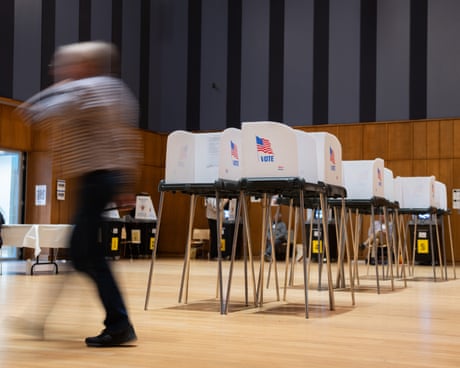
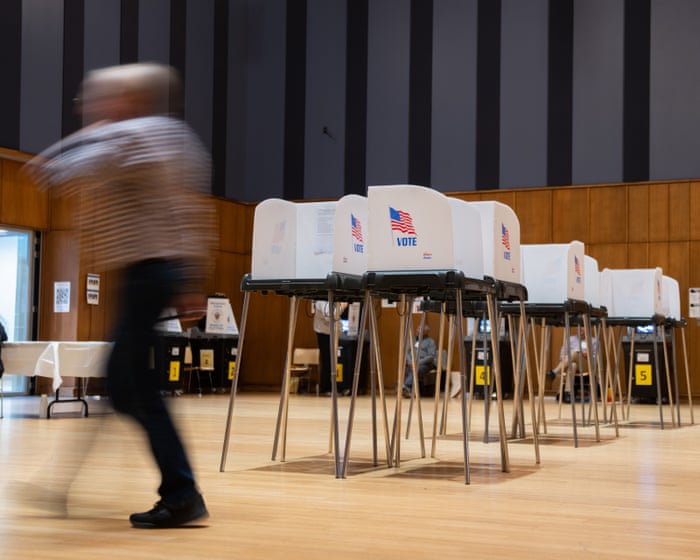
Tens of millions of Americans will go to the polls next month. Will they be galvanized by affordability? Maybe it’s Iran. Or healthcare? Taxes, perhaps. Or crime.
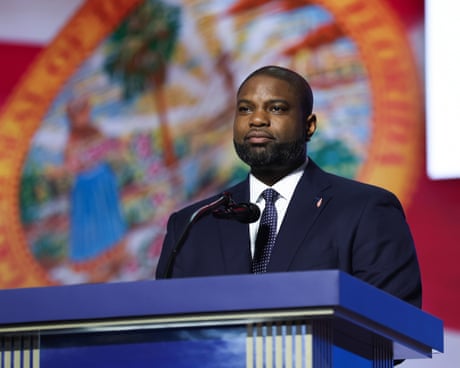
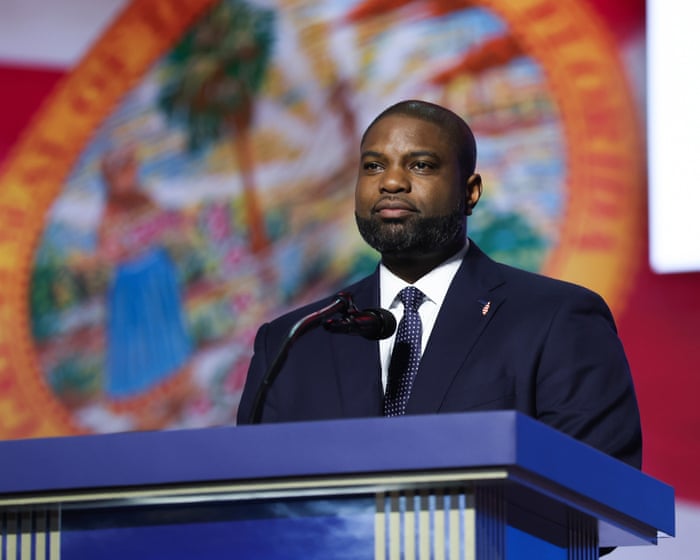
Byron Donalds removed mentions of the president from his website and has barely uttered his name – will his ploy prove successful in a tight governor’s race?
It took Byron Donalds, addressing a wildly supportive crowd at a rally in Florida’s bluest county, some time to list those he blamed for any “affordability” issues they might be experiencing.
Joe Biden, and the radical policies of the Democrats, were at fault, the Republican nominee for Florida governor insisted in his stump speech at Broward county’s Green Glades West ranch, even though neither has wielded power in Washington for almost two years.
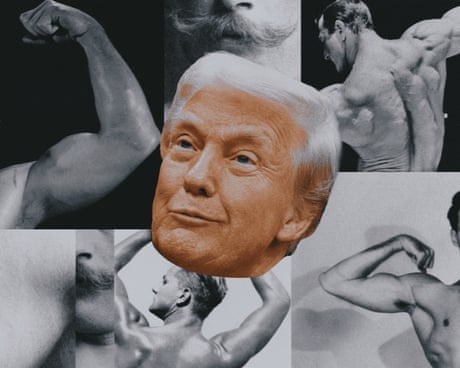
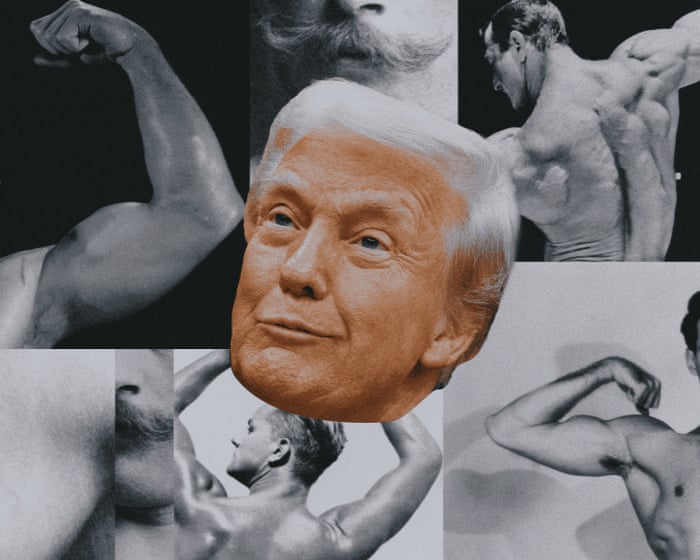
Trump’s latest tactic to champion Republicans at midterm rallies? Assessing men’s bodies in meticulous detail
Speaking at a rally in Youngstown, Ohio, earlier this month, to support the Republican senator Jon Husted, Donald Trump broke from his prepared remarks.
Trump said he had recently learned that Husted played football at university. The president, 80, said this had prompted him to conduct a physical assessment of Husted.
Former Obama White House chief of staff Rahm Emanuel encouraged the Democratic Party to appeal to moderate "McCain-Romney Republicans" in an op-ed Wednesday.
"The top story from the 2026 cycle will be the electoral opening Democrats seized — and will have to maintain," Emanuel wrote for The Wall Street Journal. "Most important, the McCain-Romney Republicans, who are politically homeless, need to be welcomed into Democrats’ governing and electoral coalition."
Emanuel argued that moderate Republicans who associate their politics closer with former Utah Sen. Mitt Romney and former Arizona Sen. John McCain have been dissuaded from the GOP by President Donald Trump and could be the deciding factor in the 2026 midterm elections.
Romney and McCain were the last Republican nominees for president before Trump in 2012 and 2008, respectively, losing each time to Barack Obama.
"Millions of McCain-Romney voters are redefining their political identities, and they will be most responsible for Democratic gains in November. These voters don’t want to be associated with MAGA, and they see themselves as free agents. The question for Democrats is whether we’re willing to give them a permanent home," Emanuel wrote.
The former Clinton advisor pushed back on the idea that the Democratic Party should embrace the more extreme Democratic Socialists of America (DSA) members, warning that the results of the midterm elections would be less a show of support for socialism than a rejection of "MAGA" politics.
"The activists who reside in blue bubbles are sure to interpret the election results as vindication. But the party’s ascent won’t be born of some newfound enthusiasm for far-left policies such as defunding the police or offering free healthcare to illegal immigrants," Emanuel wrote.
He added that Democrats should hesitate to impeach Trump and instead be focused on passing meaningful legislation, which is what moderate Republicans support as well.
"Rather than vilifying those whose support we need, Democrats should be inviting them into our coalition. Voters willing to give Democrats a second look need convincing to trust us," Emanuel wrote.
In a comment to Fox News Digital, White House spokesperson Davis Ingle defended Trump's record and encouraged all Republicans to double down on his agenda.
"President Trump is the unequivocal leader, best messenger, and unmatched motivator for the Republican Party, and he is committed to maintaining Republican majorities in Congress. The President signed the largest working-class tax cuts in history, lowered the cost of prescription drugs, sealed the border, drove violent crime to the lowest level in nearly a century, unleashed an energy revolution, added more than a million private-sector jobs and sent Americans’ 401(k)s climbing to record highs. The choice has never been more clear: doubling down on President Trump’s winning, commonsense agenda or the Democrats’ extreme liberal policies and obstruction," Ingle said.
The Republican National Committee (RNC) also denied that Republicans could align themselves with the values of the Democratic Party.
"Democrats are the party of abolishing private healthcare, defunding the police and hammering working families with higher taxes — those are not Republican values, or American values for that matter. If Democrats had their way, our country would look more like Caracas or Moscow," RNC national press secretary Natalie Baldassarre told Fox News Digital.
Fox News Digital reached out to the Democratic National Committee for comment.
While speaking on the "Hang Out with Sean Hannity" podcast earlier this month, Emanuel downplayed the impact the DSA candidates have on the Democratic Party as a whole.
"I don't believe the socialists are a wing," he said. "I think they are a separate party. They believe in defunding the police, which is not the party position. They believe in open borders and open prisons. That's not the party’s position."
SIOUX CITY, Iowa — President Donald Trump's loyal base of supporters still have his and Republicans’ back in Iowa, but some are growing concerned over lingering issues, like the economy and gridlock in Congress, as Election Day nears.
Trump and Republicans ran on a platform of lowering inflation, halting "forever wars" and repairing an economy that they say was wrecked by former President Joe Biden and his administration. But prices are still high, and the war in Iran is still ongoing, causing a spike in fuel prices that have stuck around heading into Nov. 3.
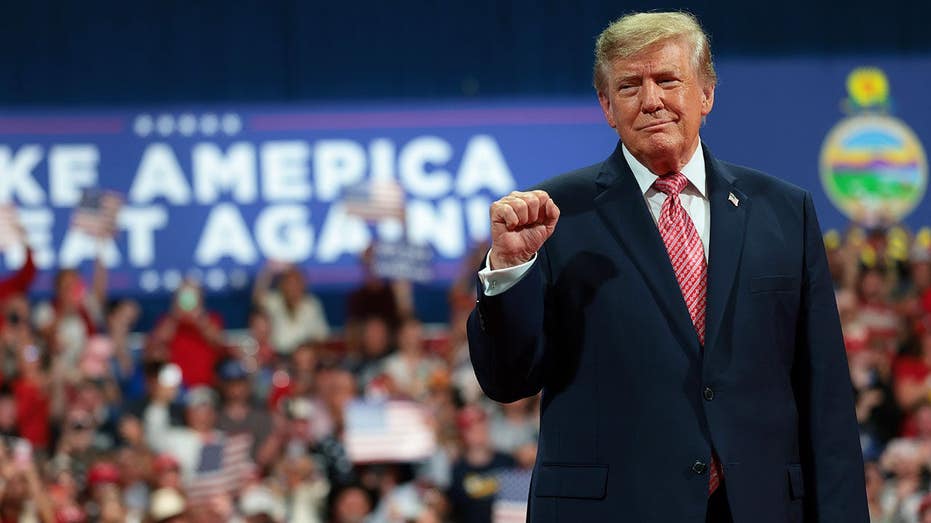
Outside of Trump’s rally in Sioux City, Iowa, where the president was set to rile up support for Rep. Ashley Hinson, R-Iowa, in a tightening Senate race against Iowa state Rep. Josh Turek, his supporters who spoke with Fox News Digital still backed Republicans but expressed hope that change would soon come.
Beth Fitzl, an Iowa voter, said of Trump that she didn’t "agree with everything he does, but in the end, he's here for us."
"This is the way I see it," Fitzl told Fox News Digital. "He's like the Packers, OK? They may be getting in deep, but they always pull it off in the end, and I truly think he's going to do something to turn it around. I really think he's going to pull something to turn it around."
Chuck Jones, a veteran and Purple Heart recipient who made the trek from Minnesota for the Iowa rally, was frustrated about the divisive, tribal nature of politics.
He told Fox News Digital that "these politicians, they're fighting for one thing on one side, and other people are fighting for something on the other side, but there's nobody sitting at the table in the middle."
When asked if Republicans and Trump needed to do something different should they hold onto control of Washington, D.C., after the election, Jones said, "Well, I think it's time that we're going to have to show some difference, because people aren't happy with the way things have been in the last few years."
"And we're going to have to do something about it and decisively show the American public that you can get it done and get it done correctly," he said. "They're going to have to work together instead of fighting each other."
Hinson’s race is one of six toss-ups that Republicans in the Senate are trying to hold onto. She and Turek are vying for Republican Sen. Joni Ernst’s seat after she opted to retire from the upper chamber last year.
Their race, like others during this cycle, has become surprisingly close, given that Trump won the state in 2024 by roughly 13 points and has won it each time he’s been on the ballot.
Dawn Stanley, an Iowa voter who has voted for Trump in each of the last three elections, still planned to support him and Hinson. She told Fox News Digital that Turek hadn’t "showed up" for Iowa and noted that he’d been absent from the state legislature "42% of the time" — Turek missed 261 votes between January and May of this year while on the campaign trail.
Still, her biggest frustration with Republicans was their inability to pass the SAVE America Act, voter ID and election security legislation that has been consistently blocked by Senate Democrats.
"I really do think it comes down to the SAVE Act," Stanley said. "I really do, because we can't have all these Democrats in there and bringing over all these illegals who are going to vote for those people and have chaos. That's what it is."
"The United States is in chaos and I really believe it's because of the illegals and the Islamic terrorists that are coming over," she continued. "And just look at what's going on in France. I mean, it's terrible. And I don't want that for our country, and that's what Trump can stop. And that's why we need to bring in all the conservatives that we can."
Others were concerned about Democrats regaining power and feared that Republicans may not show up on Nov. 3 to support GOP candidates.
"We need to get the people out to vote," Kurt, who traveled from South Dakota for the rally, told Fox News Digital. "Republican people need to get out the vote. They stay home too much. This is a war to be won with the Left, as far as I'm concerned."
Will Donald Trump accept a ‘blue wave’ if it happens? Have young people turned away from centrist politics for ever? Will the US ever recover its image on the world stage? Jonathan Freedland is joined by the Guardian US columnist Moira Donegan to answer these questions and more
The Justice Department (DOJ) has launched an investigation into longtime Trump advisor Corey Lewandowski, a source familiar with the matter told Fox News.
The probe stems from a criminal referral sent to the Justice Department by the Department of Homeland Security’s inspector general, marking a legal escalation for the high-profile political figure.
Asked about the inquiry by reporters outside the White House, President Donald Trump said he wants his staff held accountable and that he had "heard something about it."
"All I know is I want my people to be honest," Trump said.
Adam Trigg, an attorney for Lewandowski, said his client has not been contacted by the Justice Department and denies any wrongdoing.
"Mr. Lewandowski has not been contacted by the Justice Department regarding any investigation, and he denies any wrongdoing when he was proudly serving his country in a voluntary capacity," Trigg said in a statement posted on Lewandowski's X account.
Lewandowski is a longtime political ally of Trump who previously served as an advisor to former Homeland Security Secretary Kristi Noem.
He also served as Trump's first campaign manager during the 2016 presidential race before being fired that June.
Lewandowski stayed close to Trump, also serving as a senior advisor during his 2020 and 2024 campaigns.
After The Wall Street Journal reported that the Department of Justice was reviewing allegations of corruption and personal financial gain involving Corey Lewandowski, he said on X that the report was "another example of the kind of anonymous-source, politically driven reporting that Americans have seen time and again."
Lewandowski added he was proud of his work as a volunteer in "advancing this administration's agenda and (remains) confident that the facts and not anonymous accusations will ultimately speak for themselves."
President Donald Trump's rally in South Carolina Wednesday revealed mixed feelings among his supporters as frustrations over the economy, immigration and the war with Iran collide with the stakes of November's midterm elections.
While some rallygoers urged fellow Republicans to look past their frustrations and turn out in November, one Clemson University student who once proudly wore a Trump hat said he was considering voting Democratic.
"I was a big Trump supporter," Grant Frady explained. "But, recently, I didn't support him for the 2024 election. I feel like there's too many special interests involved. I feel like what he said to the public was that he was anti-war. He was wanting to boost the economy. He said that he was just going to put America first, and I just feel like we haven't."
Trump traveled to South Carolina to rally support for Republican Sen. Darline Graham, who faces an unexpectedly competitive challenge from Democrat Annie Andrews in a state that has long favored Republicans.
"And he also, he said he was going to deport all the illegal immigrants. We haven't seen enough to really say that. I feel like he's just overstating. I feel he's causing too many problems for what he's really benefiting. We haven't gotten that many illegal immigrants out, and look how much problems we have with ICE."
The economic concerns come as Americans continue to grapple with the cost of living, while the conflict with Iran has added pressure to energy markets and heightened uncertainty about the economy.
A recent Fox News survey found that six in 10 voters say the cost of living is their top economic concern, followed by government spending (15%), jobs and income inequality (7% each), tariffs (6%) and taxes (5%).
Frady wasn't the only Clemson student who arrived at the rally with mixed feelings about the president's record.
James, another Clemson student, said he had supported Trump in the past but was frustrated with aspects of the administration's foreign and immigration policies.
"I've supported him [Trump] in the past, but some things have went off the edge," James stated. "I definitely think foreign policy should be enforced a little better than we've just been letting it go. And, also, I feel like he hasn't been doing enough for illegal immigrants getting in this country. So, that's also a standpoint I like.
"I think you should be more aggressive than not joining in with these [foreign] countries," he continued. "'Cause I don't think that's America first, and it's causing us to have a lot of debt."
Frady said doubts about Graham's conservative credentials have prompted him to consider voting for Andrews, a Democratic pediatrician, while other rallygoers argued that frustrations with Trump's record were not enough to justify sitting out November's election.
"You may not be thrilled with Trump, but you'll get the alternative," Mike Korb of Greenville told Fox News Digital, warning that Democrats would also reverse the administration's immigration-enforcement policies if they regained power.
Korb argued that Trump's rally could help energize Republican voters, though he expressed doubts about the GOP's prospects of retaining the House.
Summer Frost of Aiken argued that Americans should be willing to endure higher energy prices tied to the conflict with Iran, describing the economic burden as "short-term pain for long term gain."
She wasn’t alone in viewing Iran as a long-term threat to America that had to finally be dealt with.
Scott Hines, a military veteran from Greenwood, recalled serving during the 1983 Marine barracks bombing in Beirut, Lebanon, an attack that shaped his views on confronting Iran.
"I was in the military when they bombed the Marine barracks. And we should have already hit Iran," Hines told Fox News Digital.
Hines and wife Margaret live not far from the Georgia line, where student Laken Riley was murdered by an illegal immigrant while jogging in February 2024.
"Nobody wanted a young girl ... who couldn't jog on her own college campus to end up like that. I mean, that's for any college campus, just not for someplace close to home," Margaret said about the tragedy, which occurred in nearby Athens, Georgia.
The president's rally also faced repeated disruptions from protesters, several of whom were escorted from the venue.
During one disturbance, an attendee reportedly punched a protester, drawing praise from Trump, who compared the person who threw the blow to former heavyweight boxing champion Evander Holyfield.
The local sheriff's office said Thursday that an assault report had been filed after the altercation. A deputy observed minor bruising on the person who reported being assaulted, according to the report. The case remained under investigation, with no suspect publicly identified.
The disruptions underscored the tensions surrounding Trump's visit just 13 days before the midterm elections, when Republicans will be looking to mobilize voters in a state where a Senate seat once considered safely Republican has become more competitive.
For Republican voters interviewed at the rally, the question was whether frustrations over Trump's record would ultimately change their votes or whether the prospect of Democratic victories would be enough to keep them behind the GOP.

 Login