Russia might not have directly interfered in Latvia’s election, but the vote still showed how the Ukraine war was distorting European democracy.
Latvia’s VDD intelligence service did not detect any of Russia’s classic interference tactics in the run-up to Saturday’s (3 October) vote, such as a spike in disinformation, vote buying, or a manufactured security scare.
The centre-right prime minister Andris Kulbergs retained power with 35.8 percent of the vote, even if coalition-building might take a while.
And voters’ concerns included the cost of living and failing healthcare, in what also sounded normal.
But despite the ordinary appearances, Russia’s war in Ukraine still influenced the election in fundamental ways, in a strange new normal for Europe that most of us had hardly imagined just five years ago.
This article continues, but the full version is available only to EUobserver.com subscribers. Visit account.euobserver.com/membership
The EU has decided to delay its methane regulation, and the reason is simple enough.
Europe imports almost 90 percent of its gas, which makes it one of the most exposed buyers in the world. And the US-Israeli war with Iran has choked gas flows through the Strait of Hormuz.
Making matters more complicated is the fact that Europe is still phasing out Russian gas, with a total ban on Russian overseas liquified gas due to be implemented next year.
So few were surprised when energy commissioner Dan Jørgensen told ministers in Dublin this week that he will propose delaying the import part of the regulation by a year to 2028, although member states and parliament still have to formally agree.
This article continues, but the full version is available only to EUobserver.com subscribers. Visit account.euobserver.com/membership
Ukrainians want peace more than anything, but only the language of strength works on Putin, says Katarína Mathernová, the EU’s ambassador to Ukraine.
Mathernová has no doubt about the Russian leader’s ultimate goal; she is convinced that Putin wants to destroy Ukraine.
“He set this out very clearly in his essay, and that is precisely why he launched this full-scale war. Unfortunately, the peace that Ukrainians so desperately want can only be achieved by putting pressure on Russia. Putin understands only one language — the language of strength,” she said in an interview.
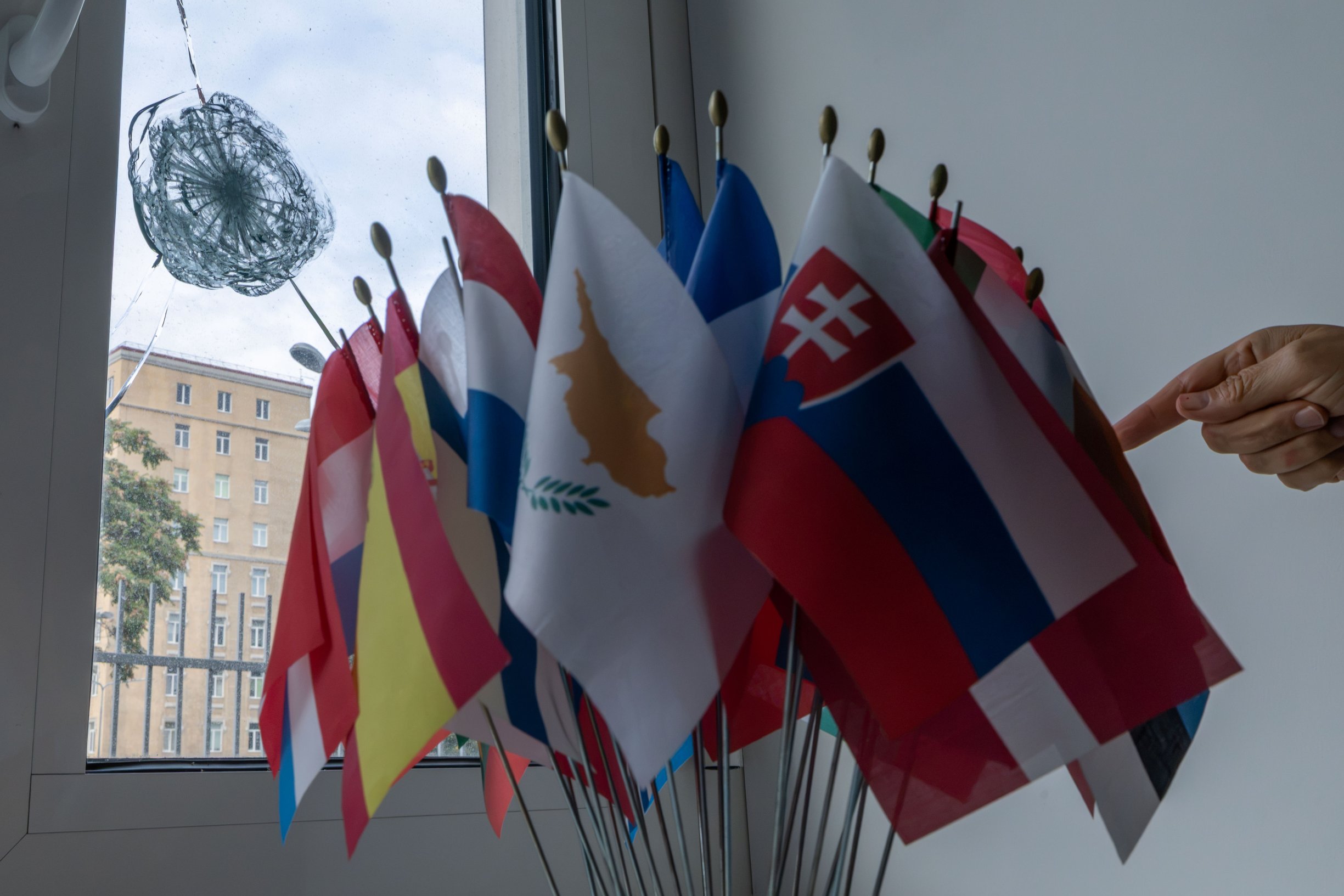
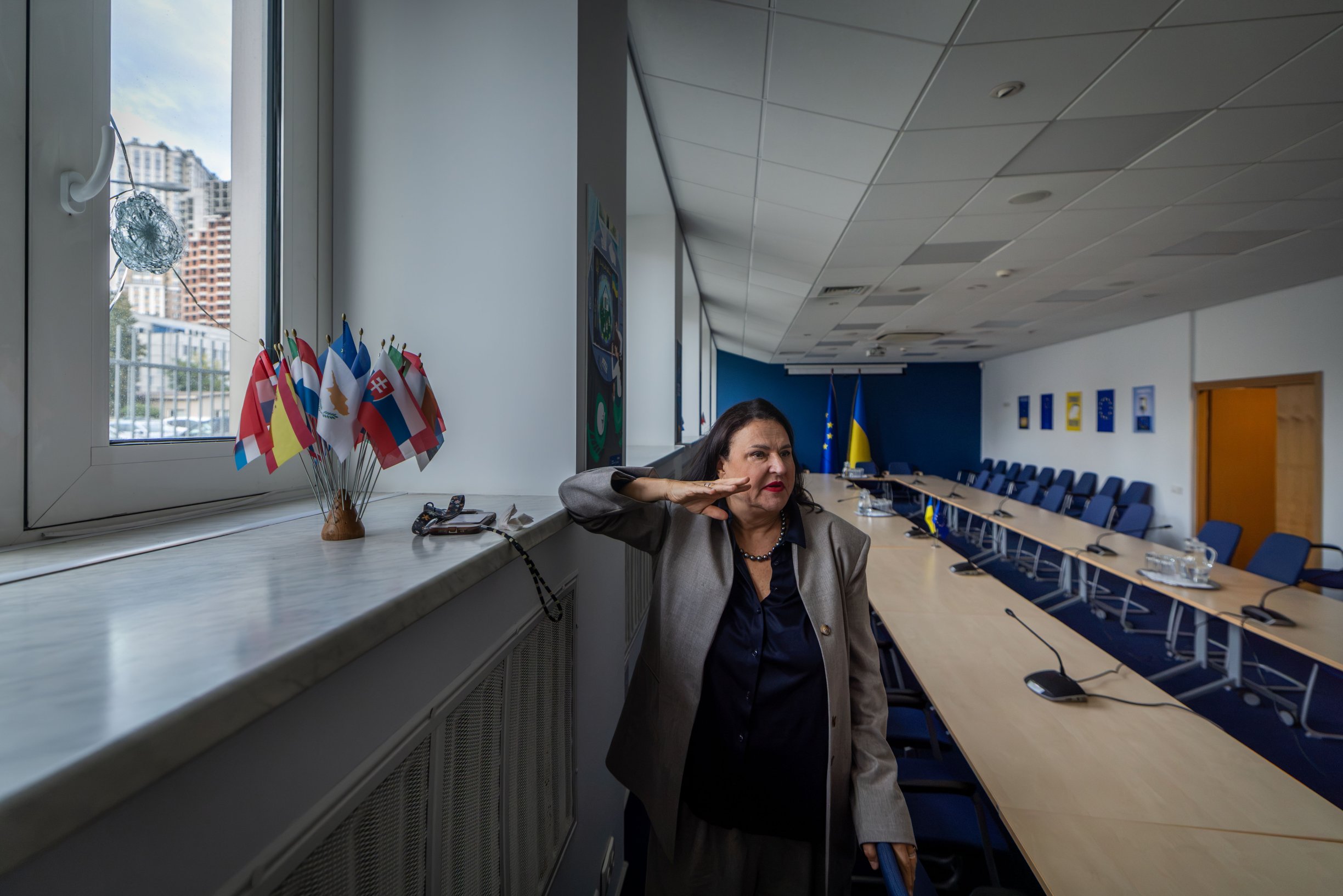
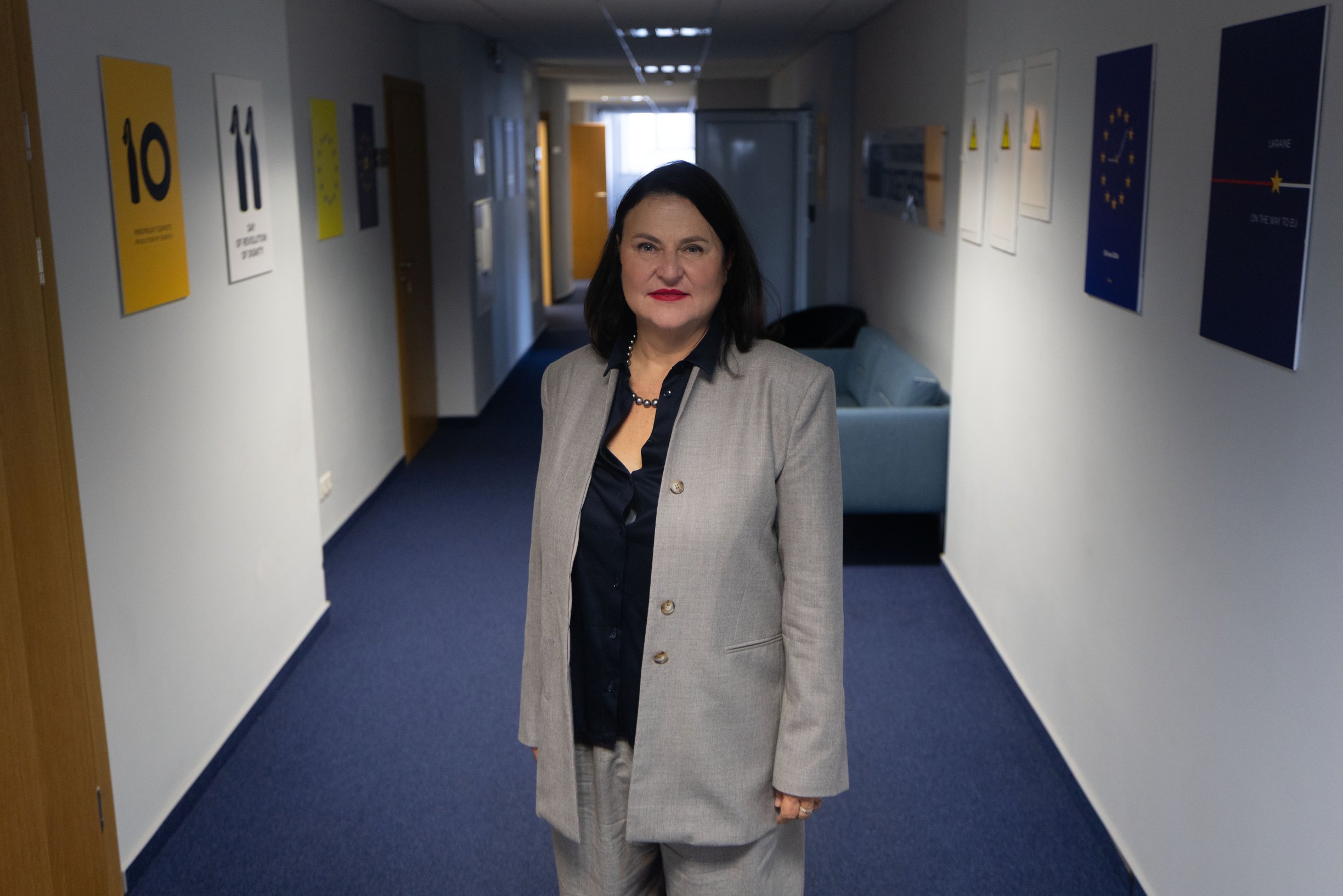
Air raids have left their mark on her office: windows have been blown out, and shrapnel once tore straight through a refrigerator. With attacks intensifying, the EU delegation now does much of its work in the corridor, away from the glass. The latest strikes hit the nearby headquarters of Ukraine’s Security Service (SBU).
In late September, Kyiv has heard so many air-raid sirens. There is already one dead and 20 injured, and on our way to your office, we heard several explosions. Is this the new normal?
Unfortunately, they have become routine. It began on 27 August this year, a date that will go down in the history of this war. That day, we had 13 air raid alerts during daylight hours, a record since the beginning of the full-scale war. It happens every day.
The day before yesterday, as I was entering the office when the windows suddenly began to rattle. A huge plume of smoke rose behind that black building outside the window. There were around four separate explosions over the course of 20 minutes, just a couple of hundred metres from here.
After a Russian attack, in a room with bulletproof windows. Source: Tomáš Benedikovič, Denník N.
The Russians have begun using jet drones which Ukrainians are not yet able to shoot down in the same numbers as earlier Shahed drones. With just a few jet drones, Russia can terrorise a city like Kyiv throughout the day at a relatively low cost. Then, at night, come the ballistic missiles. Last week, however, they also used ballistic missiles during the day.
Do the attacks make you anxious?
Of course they do. One morning last week, I was Nordic walking in the botanical garden. I was walking with my coach when suddenly there was a huge bang. It landed several kilometres away, but because there are no buildings there, it sounded as though it were just around the corner. These are the moments when I nearly have a heart attack…it’s very unpleasant.
How do you decide whether to go to a shelter or into the corridor? Do you have a security protocol?
I have security guards, and we also have a regional security officer here. They are here permanently, so they guide us. But since these very frequent and disruptive daytime attacks began, the government has adopted a regulation introducing two different types of alert — yellow and red. Red alerts are issued for missiles. Yellow alerts are for drone attacks – in such cases, the metro no longer stops, and people primarily seek safety between two walls. When there were explosions here last Wednesday, we were all sitting in the corridor.
Katarína Mathernová. Source: Tomáš Benedikovič, Denník N.The corridor where diplomats work during heavy air raids. Source: Tomáš Benedikovič, Denník N.
On the ground floor, where we have our conference rooms, there are bulletproof windows. We are now going to adapt the ground floor so that we can operate safely there during anti-drone alerts. We will put sandbags outside. We already have beanbags there, and colleagues from the upper floors are moving down so that they can work.
How do you assess this intensification? Is it a response to the fact that the front has stalled and Putin’s “special operation” has boomeranged back on Russians at home?
Russia cannot win on the battlefield. They have managed to gain only a few square kilometres, so they are terrorising civilians by attacking targets such as churches, museums, libraries and book warehouses. On Thursday, they hit a maternity hospital. These are war crimes, but Russia commits them so routinely that they are boiling us like a frog.
There is talk that assaults will escalate further in winter. Will you stay?
Of course, we are staying here. When we speak to the diplomatic corps, everyone wants to stay. We are preparing for winter, stockpiling supplies, and here at the delegation we have bought blankets and folding beds. We have food rations and additional supplies of drinking and utility water. We have had several shower cubicles installed. We bought washing machines and dryers too, as the building has a large generator. Our colleagues from Brussels and Ukraine in the same building — many of whom live on the other side of the river or in conditions that are not as good as ours — will probably welcome these facilities.
Attacks have come dangerously close not only to where you work, but also to where you live, like a recent drone struck an SBU building.
It was targeting that location; I do not think Kyiv city centre itself was the target. But yes, it is quite close to the hotel where I live.
What do you anticipate will happen in winter? You may see attacks on energy infrastructure, water and sewage systems. A loss of these utilities would be extremely difficult.
If sewage systems were knocked out in a large part of the city, it would be very difficult. But let us not forget that Kyiv was also a frontline city last winter. There were perhaps more than one million people here freezing in their own homes. My driver told me that he and his family bought firebricks and heated them on the gas stove. When they went to bed, they held them to keep warm. Those without gas in their flats were even less fortunate. But people here helped one another. My coaches and their son stayed in my hotel for weeks because it was four degrees in their home.
Ukraine faces a shortage of Patriot missiles. It has developed a new interceptor that could stop jet drones, but Patriots defend against ballistic missiles. Can Europe do more to help?
This article continues, but the full version is available only to EUobserver.com subscribers. Visit account.euobserver.com/membership
Luiz Inacio Lula da Silva, the 80 year-old president of the world’s fifth largest country, is facing a tight race in a bid for his fourth presidential term in Brazil’s general elections on Sunday (4 October). The EU, which earlier this year concluded a landmark trade deal with the Mercosur bloc, which includes Brazil, will be watching the polls closely.
He holds a narrow poll lead over Flávio Bolsonaro, son of the country’s former president Jair, who is currently serving a 22 year prison sentence for staging a coup against Lula’s newly formed government in 2023.
The left-wing leader’s third term, won by with a slim 50.9 percent majority in 2022, distinguished itself for leading anti-deforestation policies and getting the EU-Mercosur trade partnership across its long-awaited finish line, 26 years after negotiations started.
Though Brussels suspended animal product imports from Brazil on 3 September, due to insufficient guarantees of antibiotic regulation compliance, “President von der Leyen commended President Lula’s role and political leadership in the negotiations leading up to the agreement,” the EU commission said in a statement.
The Mercosur deal marked a historic diversion of EU energies South of the Rio Grande river, at a time when Europe and Latin America were both being bombarded by tariff threats from Washington.
The Bolsonaros’ professed support of US president Donald Trump have critics worrying “this election could have major implications for the direction of Brazil’s foreign policy, its global influence,” wrote Dr. Christopher Sabatini, Latin America director at the Chatham house think tank.
Election interference by the US was discussed throughout Lula’s campaign, most notably with Meta disabling his Facebook ads just days before Brazilians went to cast their votes, state-run Agência Brasil reported on 25 September.
At a time when virtually every other democracy on the South American continent has pivoted to the right, a win for a Brazilian Trump enthusiast and supporter of environmental commodification would be a setback for the EU’s climate ambitions.
“A Flávio Bolsonaro government would represent a much stronger geopolitical alignment with Washington and the Trump administration. That could affect climate cooperation, deforestation policy, critical minerals and European access to Brazilian commodities and industrial partnerships,” said Eduardo Raguse, climate co-coordinator at NGO network Friends of the Earth Latin America.
Brazil’s climate observatory recorded its biggest annual fall in emissions in 15 years, with a 16.7 percent reduction in 2024 from the previous year, largely due to a drop in forest clearance in the Brazilian Amazon, which was halved over Lula’s third term.
But Lula has been simultaneously expanding Brazil’s national petrol company’s drilling area into the Amazon’s depths.
“Lula’s government has increasingly framed critical minerals as an issue of national sovereignty and industrial policy,” Raguse told EUobserver, since the Workers’ party leader has referred to Brazil’s petrol reserves as its “passport for the future.”
But along a global pivot to the right, a win for Bolsonaro’s heir or Lula’s renewed interest in fossil fuel politics would not stray too far from the EU’s current conservative climate script, and according to Socialist and Democrat MEP Leire Pajin, will mean little for EU trade.
“Whoever wins the election in Brazil, the EU-Mercosur relationship goes far beyond electoral cycles or trade,” the Spanish vice-president of the Euro-Latin American parliamentary assembly told EUobserver. “Governments may differ in priorities or pace, but the agreement transcends them.”
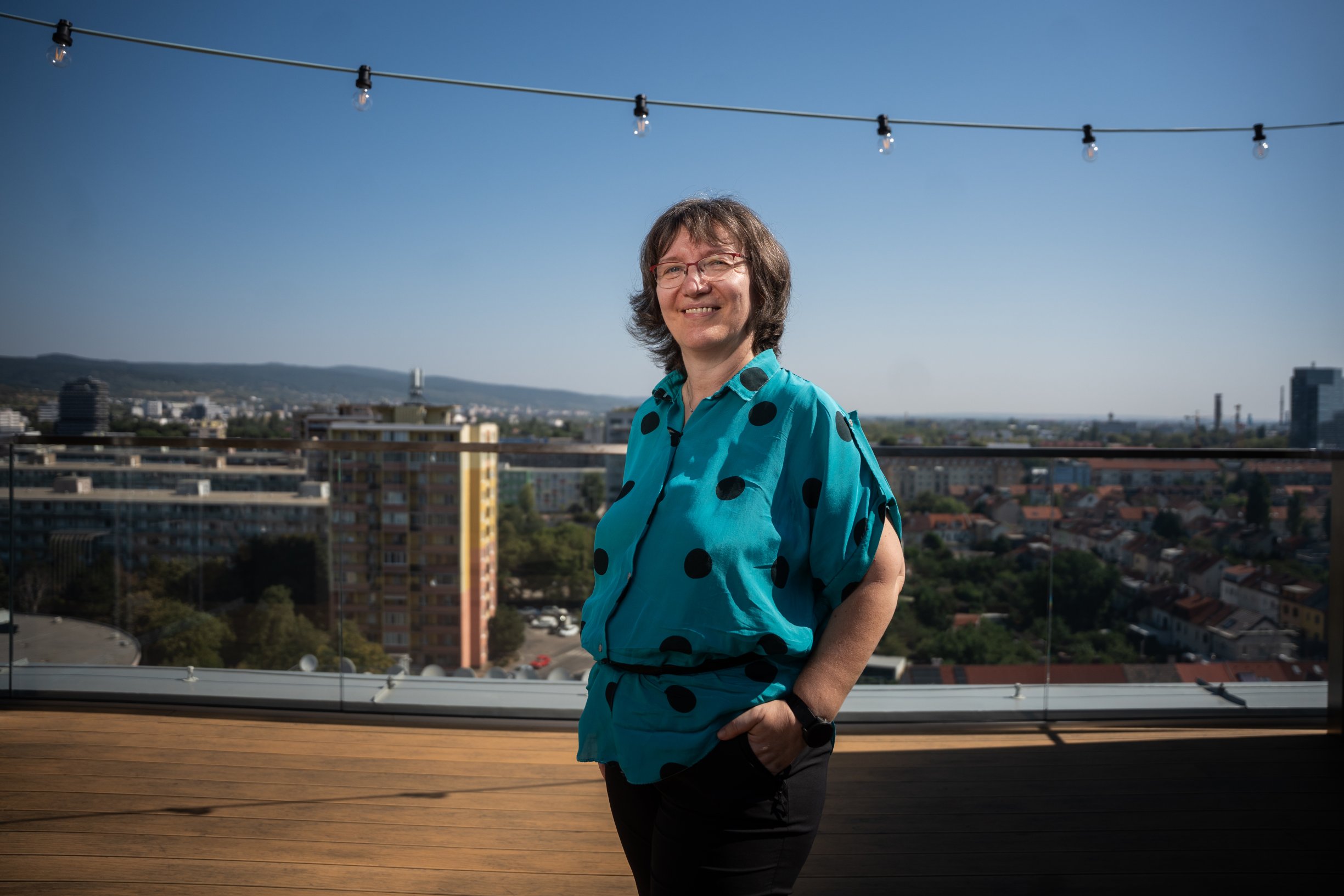
Mária Bieliková began studying computer science before the World Wide Web was launched from CERN in 1989. She has lived through the development of programming from punch cards, which stored instructions for computers, to large language models, which allows almost anyone to write basic code.
Mária Bieliková founded the Kempelen Institute of Intelligent Technologies which she leads. She previously served as dean of the Faculty of Informatics and Information Technologies at the Slovak University of Technology in Bratislava.
Bieliková explained how artificial intelligence is set to affect women’s in the coming years.
“Studies predict women will be worse off in the labour market due to AI,” she said, while claiming such drawbacks also come with opportunities.
Do you think artificial intelligence can end humanity? And is that a tired question, or do you find it relevant?
This question needs to be answered patiently and sometimes with a smile, because nobody knows. Often it is just speculation, and there are many more immediate problems that we need to address.
It is true that AI is unlike other the technologies we have known so far and so were steam engines. But AI is fundamentally different. Still, I believe that if anything destroys us, it will be people. I am more afraid of those who use any technology carelessly, or those who do not take care to avoid hurting the planet. But I do not see a doomsday scenario where AI end the world. After all, our planet is very resilient.
AI research and development is largely in private hands. When you said you were afraid of people, did you mean specific individuals?
I did not mean specific people, but types of people who hold incredible power through technology and the data they hold about us. So for example, I fear for democracy. It is a system that evolved alongside society in a series of twists and turns since the days of ancient Greece, and we have come a long way since then. Democracy still has weaknesses, but so far we have not devised a better tool.
Yet the ability of AI to influence elections undermines a fundamental principle of democracy. Data administrators who nobody elected have suddenly become very powerful. And elected officials often follow and support tech titans. Technology is transforming geopolitics, and this could have serious consequence concerning us all; these are not mere political games played by those in power.
Experts warn thatdisinformation campaigns and deepfake videos generated by artificial intelligence, which can be easily made, will flood our online spaces. What can individuals do about this?
If I knew what an individual could do to resolve these problems, I would go and do it. But action should come from both the government and individual.
But we should not rely on someone at the top to change everything. Indeed, we determine the outcome of elections, but the major problem is we are being influenced and manipulated in entirely new ways. And many politicians lack the will to protect us from that. The only way to prevent being manipulated is for us as individuals to inform ourselves.
In the past, when someone said something publicly, we usually believed it. It is uncomfortable, but we will have to change how we trust. We cannot believe things automatically; we must demand trustworthy sources for every claim.
A good place to look is towards media outlets that we know verify information diligently – a layman cannot do so with all information they stumble upon.
Mária Bieliková said that in the age of artificial intelligence, we must change how we believe information. Source: Tomáš Hrivňák, Denník N
Other concerns linked to artificial intelligence include how much control we give it, whether our data is safe, and the environmental burden it creates. Are there other “landmines” ordinary people have not noticed?
We live in a society where we cannot trust everyone. Human nature is such that, say, 90 percent of people consciously or subconsciously act in their own interest. I do not mean to condone stealing or cheating, of course, but it is clear to me that people will act in their own interest.
This brings me again to democracy, a vital tool which needs to be protected. Without checks and balances, which AI can undermine, democracy is at risk.
The last thing I asked a chatbot was what I should pack on holiday. Do you ever talk to them about everyday matters, or do you avoid this so as to avoid sharing data about yourself?
This article continues, but the full version is available only to EUobserver.com subscribers. Visit account.euobserver.com/membership
Some expected a change in Hungary’s pro-Russian foreign policy after Viktor Orbán’s fall. But they failed to take into account the domestic political pressures on Hungary’s prime minister Péter Magyar.
An unexpected source of tension in Ukrainian-Hungarian relations came at a meeting of the newly formed ‘Carpathian Eight’ (C8) in late September. At the meeting in Kyiv, PM Magyar was embroiled in a sharp exchange with Ukrainian foreign minister Andrii Sybiha, who criticised Budapest for not taking part.
Magyar responded to Sybiha by claiming that Hungary had been included in the C8 without his consent.
“To claim that a sovereign country is a member of an international cooperation (Carpathian Integration) without prior consultation or consent of the country concerned is completely unacceptable,” Magyar said on social media.
This comes after Hungary-Ukraine relations began to improve rapidly following the formation of the Tisza government in May.
Under Orbán’s government, relations had fallen to a historic low, raising the prospect of escalation. In June, Magyar announced that he had reached an agreement with Ukrainian president Volodymyr Zelensky on settling the rights of the Hungarian minority in Transcarpathia, hailing it as a historic deal.
Ukraine’s Deputy PM Vsevolod Chentsov informed me that legislation on minority education rights will be submitted to Parliament. I welcome this step after weeks of 🇭🇺🇺🇦 expert consultations. Thank you to all Hungarian and Ukrainian colleagues for their constructive work. Looking…
Since June, however, Hungary has repeatedly blocked Ukraine’s EU accession negotiations, arguing that progress on settling the rights of Hungarians in Transcarpathia has fallen short of expectations.
Orbán’s Fidesz party previously used the same argument to block Ukraine’s integration efforts.
Three months after the so-called historic agreement, Ukraine’s foreign minister Sybiha wrote that although Orbán had lost the election, Orbánism (a policy based on isolation and obstruction) prevailed in Hungary.
“Orbanism has done no good, neither to Hungary nor to the broader region, in the past — and it will not do anyone any good moving forward,” said Sybiha on social media.
Domestic Hungarian politics can explain the dispute.
MOL, an oil company, signed a memorandum with Ukraine’s Naftogaz at the C8 meeting on the possible establishment of Ukrainian oil storage facilities in Hungary.
The deal was criticised by Fidesz politicians, and Magyar’s government strongly distanced itself from the deal, too. Fidesz may have contributed to Magyar entering the dispute over C8 participation so very forcefully.
What is the Carpathian Eight?
In August, Zelensky announced the creation of the C8 to bring together countries from the wider Carpathian border region. The Ukrainian president said its members would focus primarily on the economy, security, the environment and investment.
Ukraine described it as a project intended to strengthen cross-border cooperation even with countries that do not provide it with military aid. Alongside Ukraine were to be Romania, Serbia, Poland, Slovakia, Czechia, Austria and Hungary.
Michal Lebduška, an analyst at the Association for International Affairs in Prague (AMO), said that it was one of many regional initiatives. While he did not believe it would trigger “major cooperation”, it could nevertheless be important.
The inaugural summit of the newly formed C8 was held last month (18 September) in Bukovel, in the Ivano-Frankivsk region, around 160 km from both the Slovak and Hungarian borders. Zelensky called it “an important beginning” and thanked the countries of the Carpathian region for being among Kyiv’s most reliable allies.
From Ukraine’s perspective, however, the meeting had mixed results. On the one hand, several leaders travelled to Bukovel in person, lending the gathering greater diplomatic weight. Polish PM Donald Tusk, Romanian president Nicușor Dan and Serbian president Aleksandar Vučić all attended in person.
On the other hand, the remaining countries sent lower-ranking representatives. Slovakia’s PM Robert Fico had initially indicated that he would attend, and was originally due to meet Tusk. At the last minute, however, he announced that he could not attend the summit due to sudden illness.
Slovakia was ultimately represented by Marek Eštok, state secretary at the foreign ministry.
Andrej Babiš’s Czech government all but completely ignored the initiative. As Respekt magazine wrote, Babiš declined the opportunity to visit Ukraine and did not send any representative to Bukovel.
So Czechia was represented at the summit only by opposition deputy Senate president Jiří Drahoš.
And Austria was ultimately represented by Christine Schwarz-Fuchs, president of the Federal Council.
Hungary sent Ádám Ceglédi, the acting chargé d’affaires at the Hungarian embassy in Kyiv, as the Hungarian foreign ministry confirmed to Telex.
According to the analyst, Ukraine may have hoped that Orbán’s fall would bring a clear shift in Hungary’s Ukraine policy. Anita Orbán, as foreign minister, has confirmed this by pursuing a foreign policy moving away from Russia.
However, Ukrainians did not take Magyar’s domestic political interests into account.
Magyar panders to anti-Ukraine crowd
This article continues, but the full version is available only to EUobserver.com subscribers. Visit account.euobserver.com/membership
The EU and its G7 partners agreed on Friday (2 October) to a coordinated release of 100 million barrels of diesel and crude through the International Energy Agency (IEA) over four months.
The release includes “a frontloaded substantial diesel release within the first 20 days,” a press brief released after a Friday afternoon call read.
The call was initiated by French president Emmanuel Macron who holds the rotating G7 presidency on Friday, after he spoke to US president Donald Trump on Thursday.
“Europe has just agreed to release a massive amount of their heavily stocked Diesel Oil. The process will begin immediately,” Trump wrote on Truth Social shortly afterwards.
Trump had pressured EU leaders to agree to the release all week.
On Thursday, US treasury secretary Scott Bessent urged Europe to “immediately” tap its reserves.
And EU leaders had received a proposal from the White Housethe same day for 120 million barrels of diesel over 180 days.
Washington had already approached France, Germany, Italy, Ireland and the UK individually, warning they could face US diesel export bans if they did not comply.
US diesel prices hit a record $6.53 per gallon last week, which is a liability for Trump’s Republicans ahead of the 3 November midterm elections.
Europe’s reward is a single line in the G7 statement, which reaffirms a commitment “to refrain from export restrictions on energy and energy products” between G7 countries.
The EU also on Friday had insisted that any further release come with a US pledge to avoid a unilateral diesel ban, and rejected the suggestion that they buckled to US pressure.
“We fully reject a [US] ban on diesel. A ban would not be beneficial to anyone. It would undermine our trust in the US as a reliable partner,” said Anna-Kaisa Itkonen, the commission’s energy spokesperson.
She declined to comment on the leader’s call ahead of time.
Commission chief spokesperson Paula Pinho said the coordination had “nothing to do with” recent threats.
She noted that gas prices had risen by 140 percent and diesel prices had doubled since February, and that a release agreed in March was still being implemented.
The G7 text presented Friday’s decision to release the 100 million barrels as continuing those commitments.
But the commission’s own oil coordination group concluded this week that there was “no immediate security supply issue” in the EU, Itkonen said.
Emergency stocks exist to deal with supply disruptions, not prices.
But the IEA route gives European capitals political cover, allowing them to present the release as collective action rather than a concession to Washington.
And it may not be the last one. “We will convene in the context of the IEA in the coming days to discuss the possibility of additional diesel releases as necessary,” the G7 statement said.
In a sign of humble progress, the FP-7 ballistic missile saw its first deployment.
Russian forces are now attacking Kyiv’s bridges.
No resolution to jet-powered Geran drones with new threat is on the horizon.
Ukraine lost another MiG-29 and its pilot, while Russia has lost a Mi-8 helicopter with a crew of three.
Videos of the day: attacks on a bridge in Kyiv; a drone struck a school full of children and teachers; a ground drone recorded the impact of two glide bombs.
FP-7 ballistic missile made in Ukraine were deployed for the first time. This is progress, but one should not expect miracles.
“Ukrainian tactical ballistic missile. FP-7. First combat deployment. Thank you for the results. Next step: serial production. Glory to Ukraine!” With these words and a short video, Ukrainian president Volodymyr Zelensky announced a long-awaited milestone in Ukraine’s arms programme. The next step is expected to be the deployment of the larger and more dangerous FP-9 missile.
Ukrainian tactical ballistic missile. FP-7. First combat use. Thank you for the result. Next up: production. Glory to Ukraine! pic.twitter.com/IxdjVg51c1
— Volodymyr Zelenskyy / Володимир Зеленський (@ZelenskyyUa) October 1, 2026
For now, however, this was only its first deployment against an unknown target, with an unknown outcome. The Russian analytical channel Military Informant did not rule out the possibility of the footage being recorded at a training ground with the intention to deflect criticism of Fire Point, the Kyiv-based manufacturer whose production is behind schedule.
The FP-7 missile is an interesting technical achievement that could expand the Ukrainian army’s ability to strike important targets. Expectations should be kept low. This is because the missile has not yet entered serial production its specifications lag behind those of Russia’s short-range Iskander missiles.
The FP-7 is based on the Soviet-origin 48N6 surface-to-air missile, used in some versions of the S-300 system and still deployed by Russia in the more modern S-400. A Ukrainian outlet says that the FP-7 has an estimated range of only 200 km and a warhead weighing up to 150 kg.
Russia’s Iskander missiles weighs more than twice as much, and Russia has already used a version with an extended range well beyond 500 km. The Ukrainian FP-7’s use will therefore be limited to areas up to roughly 100 km from the front line. It is certainly not a means for strategic strikes against Russian industry deep inside enemy lines.
Ukraine could strike further with a FP-9 missile, and developing them remains a goal to work towards. The two types of missile differ significantly. They were analysed in August by the Russian Telegram channel Russian Engineer. The FP-7 is smaller and the FP-9 larger. Its maximum range is estimated at 855 km (far enough to reach Moscow,) its warhead is expected to weigh up to 800 kg.
The outlet focusing on the war’s technical parameters compared the Iskander with the FP-9:
“The 9M723 Iskander-M missile has a diameter of 920 mm, while the FP-9’s is 1,100 mm. The missiles are 7.2 and 9.5 metres long. The solid-fuel rocket motor is approximately 4.2 metres long in the 9M723 and 6.5 metres in the FP-9. Fuel mass is estimated at 2.6 and five tonnes. With a warhead weighing around 500 kg, calculations indicate ranges of up to 500 km and 1,000+ km. If the warhead weighs around 800 kg, the range will be approximately 800 km.”
The media’s performance estimate therefore matches official Ukrainian data.
According to the Russian Engineer Telegram channel, the FP-9 is conceptually based on the Iskander and builds on the Ukrainian Sapsan project, which was never brought to the final stage.
The Ukrainians displayed both missiles at a trade fair in Denmark in August, where the following photographs were also taken:
The Russians have started attacking Kyiv’s bridges. This fulfils the wishes of Russian pro-war hawks, who for years have complained that bridges in the capital of the invaded country were still standing.
This article continues, but the full version is available only to EUobserver.com subscribers. Visit account.euobserver.com/membership
The sharp drop in irregular migrant arrivals is evidence that the EU’s policy reforms are working, EU migration commissioner, Magnus Brunner, said on Thursday (1 October).
But Syria is also no longer the single biggest source of asylum claims after the fall of Bashar al-Assad’s regime 22 months ago, a factor that appears to have been conveniently ignored.
On Thursday, he told reporters after a meeting of EU interior ministers in Luxembourg that irregular arrivals have dropped 55 percent in the past two years.
“So that’s a record low in the asylum applications,” said the former Austrian finance minister, adding that Austria and Sweden have recorded equally low asylum numbers and that Germany is deporting more people than are asking for protection.
“The basis for all of that, and the foundation for all of that, is the pact, the pact on migration and asylum,” he said, in comments that were echoed by Ireland’s migration minister, Jim O’Callaghan.
The pact, spanning a mix of complex regulations, was launched in June. Despite having two years to prepare for the launch, its implementation remains patchy.
This article continues, but the full version is available only to EUobserver.com subscribers. Visit account.euobserver.com/membership
Jordan Bardella, a leader of the French far-right National Rally, has denied writing antisemitic messages in 2013, as the race ahead of next May’s presidential elections continues to heat up.
An investigation by the left-leaning outlet Mediapart said on Thursday (1 October) that it could authenticate antisemitic messages from 2013 and attribute them to Bardella.
In the messages, Bardella, an MEP and chair of the far-right Patriots for Europe group, said “all the banks are owned by Jews” and that Israel aims to create a new world order. Earlier media reports also found his secret Twitter account publishing racist content, such as mocking a young Black man who had suffered police violence.
He denied having written the messages, calling the evidence “crude montages” and “obscure screenshots that can easily be manipulated,” he wrote on social media, adding he would sue Mediapart for defamation.
“Either Mediapart is running this operation itself, or it is being manipulated by interested parties,” he has said.
This article continues, but the full version is available only to EUobserver.com subscribers. Visit account.euobserver.com/membership
More than a year ago, we launched our Hungary Briefing, a weekly round-up of the election campaign. Since the historic vote in April to remove Viktor Orbán, the series has followed the new Tisza government and its first moves in office. This week’s topics:
Two ministers from Orbán’s government have been held in custody.
Former prime minister Orbán may have ordered the detention of Ukrainian cash couriers.
The newly established National Asset Recovery and Protection Office has begun work.
The European Public Prosecutor’s Office could also help recover stolen funds.
It has been an eventful few days in Hungarian public life. Efforts to hold former officials accountable are gathering pace: two former ministers have been remanded in custody over suspected breaches of fiduciary duty involving billions of forints and the acceptance of bribes.
The National Asset Recovery and Protection Office (NVVH) immediately took over four cases and began investigating them, including the visa business linked to Orbán’s brother. Meanwhile, a chief prosecutor who resigned from his post claimed in an open letter that Orbán himself had ordered the detention of Ukrainian cash couriers.
Prime minister Péter Magyar addresses parliament as MPs vote to lift his immunity, Budapest, 28 September 2026 (Srouce: Zsolt Szigetváry/EPA)
Two ministers from Orbán’s government have been held in custody
“The landing is beginning as part of ‘Operation Purgatory’,” prime minister Péter Magyar announced on Monday (28 September) morning. Later that morning, Hungary’s parliament lifted the immunity of Miklós Seszták, an MP and former development minister from the Christian Democratic People’s Party (KDNP); Balázs Hankó, an MP and former culture and innovation minister from Fidesz; and prime minister Magyar.
Prosecutors requested that Hankó’s immunity be lifted on suspicion of breach of fiduciary duty: he is suspected of causing losses of 17 billion forints (€46.5m) to the state budget. Authorities are investigating Seszták on suspicion of accepting bribes and other offences. The former minister and the then chief executive of Hungarian National Asset Management are suspected of receiving approximately 12.6 billion forints (€34.2m), in bribes through an intermediary between 2015 and 2018.
Magyar himself requested the lifting of his own immunity after the deputy prosecutor general asked the speaker of parliament to initiate the procedure over an incident in June 2024. According to the Office of the Prosecutor General, Magyar deliberately dropped the phone of a man filming him into the Danube, an act it classifies legally as theft.
After the vote on his immunity, Seszták went to the Central Investigating Chief Prosecutor’s Office, where he was taken into custody. He said he had committed no crime and wished to give a statement. On Wednesday, a court ordered the former minister’s remand in custody.
Hankó initially waited in the Fidesz parliamentary group’s office for police to take him away. Under the rules, however, he should have presented himself at the Central Investigating Chief Prosecutor’s Office.
Under the Act on the National Assembly, police may enter the parliament building and take action there only with the speaker’s specific permission, while the Parliamentary Guard may neither forcibly bring him before the authorities nor take coercive measures against him. Parliament speaker Ágnes Forsthoffer therefore firmly called on Hankó to leave the building and cooperate with the investigating authorities.
Hankó subsequently held a press conference with his wife and children present, claiming that he was the target of a politically-fabricated case and declaring his innocence. He finally accepted the summons at 7.20 pm and left parliament, setting off to give a statement amid carefully-staged scenes. Orbán’s social media page live-streamed the entire episode (while the Fidesz leader was in Belfast cheering on Hungary’s national football team).
In a statement, prosecutors said that Hankó and his associates had used National Cultural Fund resources for purposes other than those prescribed by law on 1,079 occasions between 3 September 2025 and 30 March 2026.
This article continues, but the full version is available only to EUobserver.com subscribers. Visit account.euobserver.com/membership
The EU has played down claims by the Dutch government that the bloc’s decision to suspend aid support for Sierra Leone was because the west African country refused to extradite one of the world’s most-wanted drug traffickers to face trial in the Netherlands.
Speaking on Thursday, (1 October) after a meeting of EU justice ministers in Luxembourg, migration commissioner Magnus Brunner told reporters that the decision to suspend support was made for “technical reasons” — but without giving more detail.
Sierra Leone was allocated €352m in EU funding between 2021 and 2027, under the bloc’s seven-year budget framework. The country was set to receive €18m from the EU this year.
But Dutch justice minister David Van Weel insists that the suspension of funds is the result of months of pressure from the Dutch government to persuade president Julius Maada Bio’s government to hand over convicted Dutch drug trafficker Jos Leijdekkers.
This article continues, but the full version is available only to EUobserver.com subscribers. Visit account.euobserver.com/membership
We went to Ceuta to see how Europe treats people who arrive at its borders. We came back asking how Europe can still call itself a continent governed by law.
What we saw there was the often abstract failure of migration policy made brutally concrete: the daily humiliation of human beings — people sleeping under plastic sheets, children left without protection, food distributed under military guard, allegations of beatings and torture, and migrants treated as a threat rather than as people with rights.
These are scenes we never expected to encounter in Europe in 2026. Yet we saw them ourselves. And now that we have seen them, we cannot pretend we did not.
Morally unthinkable and unacceptable
In Ceuta, the boundaries of what is morally unthinkable and unacceptable have been crossed.
Migrants and those who help them are living in a kind of state of exception, where European law has been suspended and prolonged arbitrary police and military rule prevails.
Ceuta is a city abandoned by Spain, Europe and the law, where people are segregated according to their origin in circumstances that recall apartheid regimes. It has become a laboratory for the degradation and dehumanisation of migrants.
The future of Europe is being decided there.
We visited locations where thousands of people are living in undignified conditions, under makeshift shelters, plastic tarpaulins or in the open, assisted by local residents and NGOs such as No Name Kitchen.
They described constant harassment, insults, threats, public targeting through leaked photographs, and the detention of five members accused of disobeying authorities after recording a police operation involving migrants.
First, the far-right Spanish party Vox turned desperate people into prey to be “hunted down one by one”. Eventually, those trying to feed or assist them also became targets. When a group is sufficiently dehumanised, those who try to help them can be dehumanised too.
At Trampolín beach, we saw how the Red Cross distributes, once a day, a single bag of cold food: bread, water, tuna, juice and biscuits, under the watch of National Police vans.
Migrants from other areas can walk for hours to reach it. One day, we witnessed military forces preventing the Red Cross from distributing the same ration to around 1,000 people.
Whether someone eats can depend on military personnel, who can remove people from the queue or deny them food. The food distribution also coincides with Red Cross medical assistance, forcing some people to choose between eating and having their wounds treated.
Children alone on the streets
We spoke with children living on the streets, alone, hungry and cold, without adequate protection. We were told that National Police officers sometimes refuse to identify children who approach them for help, preventing them from entering the protection system.
This is compounded by the refusal of autonomous communities governed by Spain’s centre-right People’s Party and Vox to take them in, and by the Ceuta government’s refusal to appoint legal representatives.
We also heard allegations concerning Ceuta University Hospital. Migrants can face separate treatment at the emergency department and, according to migrants and NGOs, military personnel guarding the entrance prevent them from waiting inside, including minors.
We heard the account of a child with a fractured leg who, after being treated by Médicos Mundi, was allegedly told at the hospital to “go back to your country and see a specialist” and given ibuprofen. In another case, someone was allegedly told: “We are not going to treat you because you have invaded us.”
We also received accounts of torture and cruel, degrading and inhuman treatment by regular military forces and the Legion. Migrants and NGOs described nighttime patrols involving harassment, humiliation, theft, destruction of mobile phones and beatings after people had been restrained with cable ties.
Some were allegedly forced to shave their heads or kneel to kiss a Christian cross. We are particularly concerned by allegations involving women and girls subjected to sexual humiliation.
This is extremely serious. The state is going on the hunt, while those who should protect these people are violating their rights. First came photographs, then video footage published by elDiario.es.
These were not images from the West Bank. They were from Ceuta. First there were allegations. Now there are images. Defence minister Margarita Robles must give explanations.
These soldiers should no longer be patrolling Ceuta’s streets. Article 51 of Spain’s Organic Law on the Disciplinary Regime of the Armed Forces allows for their provisional removal from duty. We have asked the minister to act immediately.
We also documented allegations of daily racist, xenophobic and Islamophobic harassment. Migrants and racialised people are reportedly prevented from entering the city centre, shops and supermarkets by military personnel who decide, based on skin colour or clothing, who can pass.
Racial profiling also affects Ceutíes of Moroccan origin or perceived as such. Some of us were even asked to leave a city-centre restaurant because we were accompanied by a human rights activist and a racialised person.
Our political assessment is clear: what is happening in Ceuta should not happen. We cannot become accustomed to systematic violations of human rights against migrants and those who assist them.
Responsibility lies with perpetrators, but also with political leaders, including those in Vox and the PP, far-right influencers spreading hate speech, and media outlets amplifying it by calling human beings “invaders”. When a child becomes an “invader”, his innocence can disappear in the eyes of those who hear that language, opening the door to dehumanisation.
The solution is to enforce the law, ensure accountability and transfer migrants to mainland Spain, where there are sufficient places to accommodate them in dignified conditions while their administrative status is resolved.
But the right does not want solutions.
They want migrants sleeping on beaches and streets in increasingly degrading conditions. They want Ceuta to remain a giant television set, a powder keg from which migrants can be portrayed as an “invasion”, insecurity and chaos used to fuel hatred and racist violence.
Their electoral campaign has begun in Ceuta. The socialist part of the government, afraid of being portrayed by the right as weak, refuses to transfer migrants to the mainland and keeps them trapped there. Those who want to set Ceuta on fire are pouring the petrol; those who could put out the fire are letting them do it.
The appointment of a dedicated Commissioner for Energy and Housing, the launch of the European Affordable Housing Plan, and growing political attention to Europe’s housing crisis raised expectations of a comprehensive policy response.
The next legislative step was therefore expected to address one of the Union’s most pressing social challenges. The proposed Affordable Housing Act is an important step in that direction. Yet its binding Regulation focuses primarily on one specific aspect of the problem: restrictions on non-primary housing use, particularly short-term rentals, in areas under housing stress.
While addressing short-term rentals is a welcome intention, it cannot on its own provide a comprehensive response to Europe’s housing crisis.
The pressure that holiday homes and short-term rental platforms are putting on housing markets, particularly in popular tourist destinations, has been rising, and giving local authorities better tools to respond is important. However, questions have already been raised about whether the proposed framework will give cities sufficient room to act effectively.
For instance, the proposed approach to defining “areas under housing stress” risks being too narrow. Housing stress cannot be understood through property prices, income levels and short-term projections alone. Energy poverty, combined housing and energy costs, overcrowding, vacancy rates and the condition of existing housing stock all influence whether households can access decent and affordable homes. A broader understanding of housing stress would better reflect the reality facing communities across Europe.
Yet the broader picture reveals an important limitation: many of the structural drivers of housing unaffordability remain outside the scope of the binding Regulation. In particular, it gives limited attention to one of Europe’s most significant untapped housing resources: the buildings and homes that already exist.
Renovation, adaptive re-use and the mobilisation of vacant and underused buildings feature in the European Affordable Housing Plan and the Recommendation accompanying the Act. But if Europe is serious about increasing affordable housing stock, these approaches should play a stronger role in the framework itself.
Across the EU, more than 47 million dwellings are estimated to be unoccupied. This does not mean that every empty home can or should be brought back into use. But it illustrates the scale of an existing resource that cannot be ignored. Bringing even a fraction of suitable vacant and underused stock back into use could create much-needed homes while reducing pressure for new construction and making better use of existing buildings and infrastructure.
Europe cannot reuse buildings it cannot see. Yet many public authorities still lack reliable information about which homes and buildings are vacant, why they are empty, what condition they are in and what potential they have for affordable housing.
The EU does not need to start from scratch. The Energy Performance of Buildings Directive (EPBD) and National Building Renovation Plans already provide a natural policy framework for understanding and planning the future of Europe’s building stock. Vacancy identification, mapping and monitoring should become part of the binding architecture of the Affordable Housing Act, ensuring that public authorities are, at a minimum, equipped to identify vacant and underused homes and assess their potential for conversion into decent and affordable homes.
Identifying vacant buildings, however, is only the first step. The accompanying Recommendation could go further by providing guidance on how to mobilise vacant properties, support the conversion of different building types and develop viable financing models.
EU financing should also better support the mobilisation and re-use of existing buildings. The next EU budget should continue to support affordable housing investment and recognise that renovation and re-use projects simultaneously deliver social, climate and energy benefits.
Ultimately, however, success cannot be measured only in buildings renovated or investment mobilised. It must be measured in whether people can access decent homes they can afford.
According to the Commission’s EU Anti-Poverty Strategy, one in five Europeans – nearly 93 million people – are at risk of poverty or social exclusion, while approximately 1 million people experience homelessness. Affordable housing policy must therefore place particular emphasis on those least well served by the housing market, including lower-income households and people experiencing or at risk of housing exclusion.
The Affordable Housing Act is an important step forward. But as it moves through the legislative process, there is still an opportunity to broaden its ambition. A stronger focus on re-use, better implementation support, dedicated financing and a more people-centred approach would help turn a useful regulatory framework into a more comprehensive response to Europe’s housing affordability challenge.
In Germany’s recent state elections, voters as young as 16 could cast ballots. The results confirmed a global trend of political division between young women and men.
“On 1 January, we both deleted Instagram, TikTok and Snapchat. And whichever of us would be the first to start watching Reels again or download Instagram would have to eat a slice of rotten cheese,” Greta and Lena told Germany’s Deutschlandfunk radio station.
The 16-year-old girls live in a village in Mecklenburg-Vorpommern and chose to delete social media because they had been spending far too much time on it. They often scrolled on TikTok or Instagram late into the night, affecting their performance at school. This summer, however, both reinstalled TikTok for a month. This time without the punishment of a slice of rotten cheese.
They did so for an experiment with journalists from Deutschlandfunk. The journalists wanted to find out what political content the girls would consume through TikTok, the popular Chinese social network, during the peak of the election campaign. Mecklenburg-Vorpommern went to the polls on the third weekend of September. And, as is well known, the far-right Alternative for Germany (AfD) swept the state, just as it had two weeks prior in Saxony-Anhalt.
Greta and Lena, however, were in a markedly different position from their peers in Saxony-Anhalt. For the first time, the north-eastern federal state of Mecklenburg-Vorpommern had allowed 16- and 17-year-olds to vote in state elections. Since young people consume much of their news on social media, Greta and Lena immersed themselves in TikTok, one of the networks now most popular among young Europeans.
For the first few minutes, the girls watched a range of non-political videos — recipes, tomato growing and “silly” AI videos. Then, at around the third minute of scrolling, the first political content appeared. First came a video about Erich Honecker, the former East German communist politician. “Why am I seeing so much stuff about the GDR here?” Greta wondered. As she continued scrolling, she came across AfD co-leader Alice Weidel herself.
It was the first moment when the girls began to notice how quickly their initially apolitical feed was changing. “I feel as if it is constantly just AfD,” Greta said later. She added that she had not searched for any such content in advance. Over the following month, the girls kept a diary of their feed and observed how, after political videos, more and more similar content began appearing — not only from the parties themselves, but also from a range of accounts that picked up and further spread their messages.
The experiment confirmed what has been known for some time: TikTok and other networks alongside it can quickly form the political world a young person sees and the views they come to adopt. At the same time, algorithms are accelerating a trend of a political divide between young women and men, which was also reflected in the results of the state elections mentioned above in Germany.
Algorithms exacerbate polarisation
This article continues, but the full version is available only to EUobserver.com subscribers. Visit account.euobserver.com/membership
EUobserver is proud to have an editorial partnership with Europod to co-publish the podcast series “Briefed” hosted by Léa Marchal. The podcast is available on all major platforms.
Find the full transcript below:
Italy brought back border controls with Spain in August, and has now extended them until at least 15 October. Giorgia Meloni’s government fears that migrants who arrived in Ceuta, reach the continent and Italy.
Are these restrictions legal in the Schengen area? What are the EU’s levies to avoid such controls?
Since 1 August, Italy has temporarily reintroduced controls at its air and sea borders with Spain. The measure has now been extended until 15 October. In return, Spain has also introduced controls at its air and sea borders with Italy.
“This is not against Spain” the Italian foreign affairs minister Antonio Tajani said, adding “we have a duty to protect our borders.”
The starting point was the arrival of tens of thousands of migrants in the Spanish enclave of Ceuta at the end of July. Italy said it was concerned about possible secondary movements towards the rest of Europe, and brought back controls at its borders with Spain.
But from a legal point of view, EU countries can’t simply reintroduce border controls whenever they want.
The Schengen area is based on the principle of free movement, meaning there should normally be no checks at internal borders. The Schengen Borders Code provides an exception. If a country faces a serious threat to public policy or internal security, it can temporarily reintroduce border controls, as a measure of last resort.
The controls can initially be introduced for up to 30 days, and can then be extended under certain conditions.
Italy has already extended its measure, which has now been in place for more than two months.
What does the European Commission say about Italy’s decision? The Commission has been asked about the Italian controls and says it is currently assessing the situation.
But the Brussels-based organisation The Good Lobby argues that Italy is violating the Schengen rules. It filed a complaint with the European Commission, asking it to open an infringement procedure against Italy.
According to Alberto Alemanno, who filed the complaint, there is no security threat that would justify bringing back the controls.
His argument is that none of the migrants who arrived in Ceuta were transferred to Italy. And, he says, people travelling between Ceuta and mainland Spain are already subject to identity checks.
So Italy’s justification, he argues, does not meet the conditions set out in the Schengen Borders Code.
Now, is Italy the only EU country bringing back border controls? No. If you look at the notifications sent by EU countries to the European Commission, around ten countries have reported temporary controls at some of their internal borders in recent months.
In response to the situation in Ceuta, Italy is the main example.
Austria also notified the Commission of controls in September, citing the situation in Ceuta among several reasons. But those controls concern its land borders with Slovakia, the Czech Republic, Hungary and Slovenia.
So Austria is not checking passengers arriving by air from Spain.
Germany, for example, has invoked the same exception in the Schengen rules to carry out controls at its land borders with all its neighbours.
That does not mean that every border crossing is closed, or that every traveller is systematically checked. It means German authorities can carry out checks at those borders, including spot checks.
Germany’s main justification is continued migratory pressure, alongside other security concerns. And for now, the Commission is kind of letting all of this happen. It did raise concerns at some point: in June, the Commission published an assessment of temporary border controls in nine EU countries, including Germany, Austria and Italy.
It did not formally declare these countries’ controls illegal. Instead, it called on them to work towards lifting the controls, arguing that the EU has put in place measures to address some of the risks being invoked to justify them.
Those measures include the new Migration and Asylum Pact and new rules on entry and border management. The bigger question, then, is how long temporary border controls can remain in place before they stop being an exception to Schengen and become the new normal.
Europeans have lead the field on access to abortion, but a conservative comeback has caused a lot of those advances to regress.
Research published earlier this week (28 September) by the Centre for Reproductive Rights (CRR) found that despite an upward trend of legalisation, some countries are still seeking to enforce barriers and rolling back entitlement to abortion care.
This resistance to change is also evidenced in the lack of member state participation in safe abortion funds available since the the ‘My Voice, My Choice’ European citizens’ initiative for safe and accessible abortion was passed into law last February.
EU funds could since then be used to create regional programmes for safe abortion care for anyone who can’t access it in their own country, as well as financing travel to a country where abortion is available.
However, no funds have yet been used.
This article continues, but the full version is available only to EUobserver.com subscribers. Visit account.euobserver.com/membership
“Marine Le Pen has reinvented herself. Her style now is more moderate,” reckons Jacques Rupnik, a French political scientist, ahead of the country’s widely anticipated battle for the presidency.
Many voters in France will vote for the candidate they see as having the best chance of defeating the far-right leader, Rupnik explains.
“All polls show that if the far-left Jean-Luc Mélenchon faced Marine Le Pen in the second round of France’s presidential election, Marine Le Pen would win,” he says, explaining that many French votes are unwilling to back Mélenchon.
In his interview with Denník N, Rupnik claims Mélenchon is the first French presidential candidate to seek support from immigrants so explicitly.
Find out:
How Marine Le Pen and Jean-Luc Mélenchon have used the migration debate for their campaigns.
Why the presidential frontrunners do not understand economic issues.
Rupnik’s assessment of Emmanuel Macron’s two presidential terms.
Who does Marine Le Pen look up to?
Polls suggest that if France held a presidential election now, far-right Marine Le Pen and far-left Mélenchon would make the second round. What does this tell us about France?
France is divided and polarised. Young people in particular tend to lean towards more radical parties. Establishment parties are old and worn; they have lost their appeal. They have little to say, except for claiming that others are dangerous or worse. But you must bring something new to an election. But after ten years of Macron, that is very difficult.
And it is not entirely true that all polls predict Mélenchon will reach the second round; they often place former prime minister Edouard Philippe ahead of him. Mélenchon is powering ahead in polls because he has launched his campaign and is very good at it. But, nothing is decided.
In French presidential elections there are two rounds. In the first round, you vote for your preferred candidate; in the second, you vote for the lesser evil. So, for most voters, the question will not only be whom they prefer, but also who has the best chance of defeating Le Pen in the second round.
And that is very important. All polls say that if Mélenchon faced Le Pen in the second round, he would lose. Many people are not willing to vote for Mélenchon. A centrist candidate has the best chance of defeating Le Pen, so for now it looks like former prime minister Philippe.
But only if another former prime minister, Gabriel Attal, withdraws his candidacy.
Yes. We have two strong parties at the extremes, and the space in the centre has shrunk. The narrower it becomes, the more candidates appear within it. Every week, another politician tells media: “You know what, I would give it a go.”
Attal, of course, wants to win over Macron supporters — that is, voters on the centre left. The fact he is in the race matters even if he withdraws and endorses another candidate. That may prove a good strategy.
If Le Pen and Mélenchon reach the second round, many would vote Le Pen. Why?
Marine Le Pen has reinvented herself. Not in the sense that she has been thinking about what new ideas to bring forward, but now her style now is more moderate. It is no longer the brash style associated with her father.
Perhaps she took her cue from Italian prime minister Giorgia Meloni, seeing a candidate whom everyone feared, but no radical changes followed her election because she adapted quickly to European realities.
Le Pen points out that in several European countries, including Finland and Sweden, the far right has been in government and nothing has happened.
At the same time, Marine Le Pen managed to break through a certain barrier, and some moderate rightwing voters have shifted to her side.
How did that happen?
Previously, the moderate right was stronger and Le Pen’s camp was weaker. The type of rightwing voters who voted for Jacques Chirac have now shifted their weigh behind more radical options. The balance has shifted, and right-wing voters are saying: “Why should we, the right, be excluded from politics simply because Macron has failed and the Le Pen has grown stronger?”
Immigration is another reason behind growing support for Le Pen. Mélenchon is also capitalising on the immigration debate, but in the opposite way to her.
Please explain that.
Mélenchon opposes Le Pen’s position by arguing that immigrants integrate. The Le Pen camp says: “No, they have come from a different culture and their attitude is anti-French.” Le Pen’s camp says that integration works poorly, that immigrants do not even want to integrate instead preferring to live in their own communities.
“Mélenchon has therefore adopted the theory of grand remplacement, but instead of presenting it as a threat, he has turned it into a huge opportunity.”
And Mélenchon argues that it is fine for immigrants to remain in their own communities, practise their own religions, for women to wear headscarves and so on.
The great replacement conspiracy theory (“grand remplacement“) should be mentioned since the far right embraced it long ago. It is the idea that the native French population will gradually be replaced by new immigrants.
And Mélenchon now says: “What great replacement? On the contrary, it is an opportunity for France. He says: “The more of us there are, the better.”
Mélenchon has therefore adopted the theory of grand remplacement, but instead of presenting it as a threat, he has turned it into a huge opportunity. Of course, everyone knows what he is aiming for. It is an election campaign, and he is appealing to voters who are themselves immigrants.
Previously, no one focused on immigrants in elections except Le Pen who used them as a bogeyman. And now Mélenchon says: “We are appealing to Muslims.” He says Muslim headscarves are fine and religious symbols are fine. He says anyone who opposes this is racist.
On the contrary, such statements mainly play into Mélenchon’s hands. Of course, calling a referendum on the issue in France is not so simple since such laws already exist. The law states clearly that you can do what you want at home, but if you work in the public sector you must refrain from displaying your religion. There are laws covering this, and there is absolutely no need to devise new ones. Le Pen’s ideas in this regard seem to be mere campaign slogans; we cannot take them literally.
Yet, a major Le Monde poll shows the French are more concerned about the economy than immigration. Immigration ranks fourth, after social issues and ecology.
That is true, but other polls show that, for many voters, the issues of migration and safety overlap considerably.
So, as concerns about security become increasingly prominent, people are more concerned about security and often link it to migration. Marine Le Pen will certainly try to make it one of the key issues, alongside the economy.
This article continues, but the full version is available only to EUobserver.com subscribers. Visit account.euobserver.com/membership
EUobserver is proud to have an editorial partnership with Europod to co-publish the podcast series “Briefed” hosted by Léa Marchal. The podcast is available on all major platforms.
Find the full transcript below:
Donald Trump is betting on voluntary commitments from AI companies. On Tuesday (29 September), he unveiled a self-regulatory agreement drawn up with some of the biggest names in the AI industry.
What does it mean, and how does it differ from the EU’s Code of Practice for general-purpose AI?
On Tuesday, September 29, Trump brought together the CEOs of some of the biggest AI companies. Together, they signed what could be described as a self-regulation pact: a short list of non-binding commitments called the White House Accord on Super Intelligence.
That’s the other novelty: Trump no longer wants to talk about artificial intelligence, but about “super intelligence”. The term AI apparently has negative connotations.
So, what exactly have these companies committed to? The CEOs of OpenAI, Anthropic, Google, Meta, SpaceX and Nvidia have pledged to put safeguards in place, quickly detect and fix problems, and have their systems checked by independent auditors.
The principle of voluntary commitments may sound familiar to Europeans: They echo the EU’s Code of Practice for general-purpose AI — which, like the White House agreement, is not legally binding.
So what’s the difference? First of all, OpenAI, Anthropic and Google have also signed the EU code, while Meta, SpaceX and Nvidia have not.
And, more importantly, the EU does have binding rules in place: the AI Act, which is already in force. As part of this regulation, the European Commission developed the Code of Practice to help companies comply with the rules.
You could think of it as a checklist for AI companies, to help them make sure they are complying with the law.
Another difference is the sheer volume of recommendations. The document published by Trump is just one page long. The European Code of Practice runs to more than 60 pages and was prepared with the help of dozens of independent experts.
It is also more comprehensive, covering not only safety, but also transparency and copyright. But this raises another question: if both documents are voluntary, how effective can they actually be?
When the European Code of Practice was published, some civil society organisations criticised it, arguing that voluntary commitments are not enough and that concrete obligations are needed.
There are binding obligations under the AI Act. But they are not as precise as what is in the code of conduct.
Similar criticisms have emerged since the White House agreement was published on Tuesday. And it is worse in the US case, since companies are absolutely not legally bound by the commitments they have made.
The United States has generally been less inclined towards binding regulation of the sector. Trump has argued that rules can hinder the development of companies, and has promoted a national framework that is as minimally restrictive as possible.
The White House document does leave the door open to legislation in the future. It says that, over time, it may make sense to codify these steps into lows or regulations.
But for now, they remain voluntary commitments. If you are interested in this topic, there will be a live event on Tuesday next week about AI and its safeguards, organised by VoxEurope.
“What is remarkable is that Ukraine and Moldova, despite finding themselves in a very tense situation regarding their security, are extremely keen to move closer to the EU and have therefore already begun negotiations and opened the first cluster.”
These are the words of the deputy director of the European Council on foreign relations (ECFR), Vesela Cherneva, and they come just as the official negotiation process for the two countries’ accession to the European Union has begun.
With this, the EU embarked on a truly geopolitical enlargement – driven not only by the pursuit of shared values, a larger market, and stronger common institutions, but also by the need to safeguard the continent’s security in a shifting environment.
Ukraine: a battle-hardened nation’s journey from the post-Soviet world to the EU
According to Cherneva, the EU’s upcoming enlargement is the only way to institutionally anchor Ukraine within a serious and lasting framework, given that the US position has remained clear under both presidents Donald Trump and Joe Biden: Nato enlargement to include Ukraine is not possible.
“Currently, EU membership is the only way to integrate Ukraine’s and Europe’s security systems. This is an entirely different discussion from negotiations on chapters, clusters, sanitary standards and other accession requirements. We are talking about security guarantees, but also about the transfer of military technologies from Ukraine to Europe and, more broadly, about how Ukraine – which currently possesses the strongest and most combat-capable army in Europe – can, while defending Europe, also become part of the European security debate,” Cherneva says.
Ognyan Minchev, political scientist, professor and executive director of the Institute for Regional and International Studies, an independent think-tank in Bulgaria, also believes that Ukraine’s importance is substantial and that the questions surrounding its integration are highly complex.
“Ukraine currently possesses the only genuinely combat-capable army on the European continent. Western European armies have very limited personnel numbers and, until recently, received extremely low levels of funding. The lack of real resources, including weapons, to address the challenges of military security makes Ukraine a more attractive partner,” he says.
Although many experts would point to Ukraine’s contribution to European security as the greatest benefit of its accession to the EU, the country can also contribute to development in other areas. There is undoubtedly great potential for development in the fields of agriculture and farming.
The country has a vast area of cultivated land and is among the world’s leading producers of a number of cereal crops such as wheat, maize, barley, rice, and others. It exports these products to third countries, and membership would increase the EU’s economic influence in these regions.
Ukraine’s accession could also lead to cooperation between different sectors and result in an increase in meat and dairy production as a consequence of increased cereal production.
Beyond agriculture, Ukraine’s pharmaceutical industry could offer the EU an opportunity to reduce its reliance on imports of generic medicines from China and various Asian countries. Thanks to its favourable climate, Ukraine also has great potential for various types of renewable energy.
Deposits of gallium, rutile, graphite, magnesium ores, lithium and other minerals vital to the green transition could contribute to European production and help the EU compete with China.
According to Minchev, integrating Ukraine represents a major challenge because it involves a large country that is institutionally weak, with high levels of corruption, poor economic organisation and significant shortcomings in the functioning of public life.
“Ukraine has been forced to transform itself into an effective fighting machine, but in other respects it remains a post-Soviet society with serious problems in the areas mentioned above. This makes its rapid integration into the EU extremely difficult,” Minchev says.
Moldova: a key piece in Europe’s security architecture continues to struggle under Russia’s shadow
“For Moldova, we can say that it is a small but significant element in the broader domino effect of Black Sea security, which is becoming an increasingly crucial aspect of overall European security. This is because the confrontation between the Kremlin regime and Europe is effectively unfolding along the line of a new Iron Curtain being formed across Ukraine and the Black Sea region,” Minchev says.
According to Cherneva, Moldova’s accession is also crucial precisely because the country is a buffer state, and Russia has demonstrated that it does not tolerate buffers.
“Russia seeks to conquer and control such buffer zones. If Moldova does not want to share the fate of Belarus or Georgia, it must take rapid steps towards European integration,” Cherneva says.
For years, Moldova has served as a testing ground for Russia’s hybrid warfare. As Western European countries are only now confronting the full scale of Russian hybrid attacks, Moldova has already spent years developing its own resilience and countermeasures.
The country brings to European security valuable expertise gained from combating Russian disinformation and resisting repeated attempts by the Kremlin to interfere in its domestic political processes.
Yet Moldova’s accession would have implications extending far beyond security. Although it possesses far less agricultural land than Ukraine, the country has the potential to make a meaningful contribution to the European agricultural sector. Moldova has been gradually integrating into the EU’s Single Market through the Deep and Comprehensive Free Trade Area (DCFTA).
This article continues, but the full version is available only to EUobserver.com subscribers. Visit account.euobserver.com/membership

 Login