
❌

Normal view

Brazil’s cliff‑hanger election could rob EU of key ally in Latin America

3 October 2026 at 11:29

Luiz Inacio Lula da Silva, the 80 year-old president of the world’s fifth largest country, is facing a tight race in a bid for his fourth presidential term in Brazil’s general elections on Sunday (4 October). The EU, which earlier this year concluded a landmark trade deal with the Mercosur bloc, which includes Brazil, will be watching the polls closely.

He holds a narrow poll lead over Flávio Bolsonaro, son of the country’s former president Jair, who is currently serving a 22 year prison sentence for staging a coup against Lula’s newly formed government in 2023.

The left-wing leader’s third term, won by with a slim 50.9 percent majority in 2022, distinguished itself for leading anti-deforestation policies and getting the EU-Mercosur trade partnership across its long-awaited finish line, 26 years after negotiations started.

Though Brussels suspended animal product imports from Brazil on 3 September, due to insufficient guarantees of antibiotic regulation compliance, “President von der Leyen commended President Lula’s role and political leadership in the negotiations leading up to the agreement,” the EU commission said in a statement.

The Mercosur deal marked a historic diversion of EU energies South of the Rio Grande river, at a time when Europe and Latin America were both being bombarded by tariff threats from Washington.

The Bolsonaros’ professed support of US president Donald Trump have critics worrying “this election could have major implications for the direction of Brazil’s foreign policy, its global influence,” wrote Dr. Christopher Sabatini, Latin America director at the Chatham house think tank.

Election interference by the US was discussed throughout Lula’s campaign, most notably with Meta disabling his Facebook ads just days before Brazilians went to cast their votes, state-run Agência Brasil reported on 25 September.

At a time when virtually every other democracy on the South American continent has pivoted to the right, a win for a Brazilian Trump enthusiast and supporter of environmental commodification would be a setback for the EU’s climate ambitions.

“A Flávio Bolsonaro government would represent a much stronger geopolitical alignment with Washington and the Trump administration. That could affect climate cooperation, deforestation policy, critical minerals and European access to Brazilian commodities and industrial partnerships,” said Eduardo Raguse, climate co-coordinator at NGO network Friends of the Earth Latin America.

Brazil’s climate observatory recorded its biggest annual fall in emissions in 15 years, with a 16.7 percent reduction in 2024 from the previous year, largely due to a drop in forest clearance in the Brazilian Amazon, which was halved over Lula’s third term.

But Lula has been simultaneously expanding Brazil’s national petrol company’s drilling area into the Amazon’s depths.

“Lula’s government has increasingly framed critical minerals as an issue of national sovereignty and industrial policy,” Raguse told EUobserver, since the Workers’ party leader has referred to Brazil’s petrol reserves as its “passport for the future.”

But along a global pivot to the right, a win for Bolsonaro’s heir or Lula’s renewed interest in fossil fuel politics would not stray too far from the EU’s current conservative climate script, and according to Socialist and Democrat MEP Leire Pajin, will mean little for EU trade.

“Whoever wins the election in Brazil, the EU-Mercosur relationship goes far beyond electoral cycles or trade,” the Spanish vice-president of the Euro-Latin American parliamentary assembly told EUobserver. “Governments may differ in priorities or pace, but the agreement transcends them.”

[Interview] AI threatens to deepen gender gaps — unless women seize the tools, says computer expert

3 October 2026 at 09:19

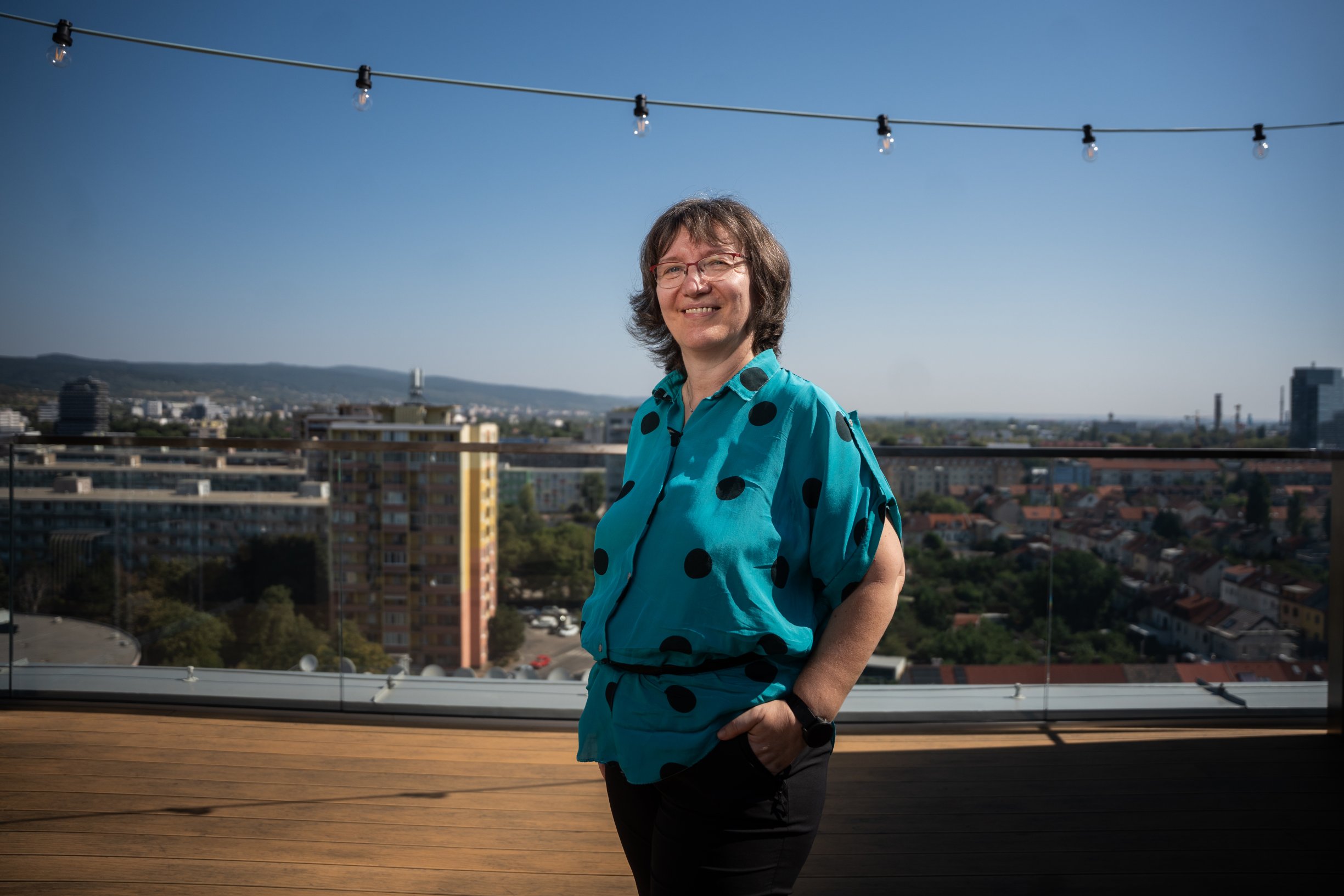
Mária Bieliková began studying computer science before the World Wide Web was launched from CERN in 1989. She has lived through the development of programming from punch cards, which stored instructions for computers, to large language models, which allows almost anyone to write basic code.

Mária Bieliková founded the Kempelen Institute of Intelligent Technologies which she leads. She previously served as dean of the Faculty of Informatics and Information Technologies at the Slovak University of Technology in Bratislava.

Bieliková explained how artificial intelligence is set to affect women’s in the coming years.

“Studies predict women will be worse off in the labour market due to AI,” she said, while claiming such drawbacks also come with opportunities.

Do you think artificial intelligence can end humanity? And is that a tired question, or do you find it relevant?

This question needs to be answered patiently and sometimes with a smile, because nobody knows. Often it is just speculation, and there are many more immediate problems that we need to address.

It is true that AI is unlike other the technologies we have known so far and so were steam engines. But AI is fundamentally different. Still, I believe that if anything destroys us, it will be people. I am more afraid of those who use any technology carelessly, or those who do not take care to avoid hurting the planet. But I do not see a doomsday scenario where AI end the world. After all, our planet is very resilient.

AI research and development is largely in private hands. When you said you were afraid of people, did you mean specific individuals?

I did not mean specific people, but types of people who hold incredible power through technology and the data they hold about us. So for example, I fear for democracy. It is a system that evolved alongside society in a series of twists and turns since the days of ancient Greece, and we have come a long way since then. Democracy still has weaknesses, but so far we have not devised a better tool.

Yet the ability of AI to influence elections undermines a fundamental principle of democracy. Data administrators who nobody elected have suddenly become very powerful. And elected officials often follow and support tech titans. Technology is transforming geopolitics, and this could have serious consequence concerning us all; these are not mere political games played by those in power.

Experts warn that disinformation campaigns and deepfake videos generated by artificial intelligence, which can be easily made, will flood our online spaces. What can individuals do about this?

If I knew what an individual could do to resolve these problems, I would go and do it. But action should come from both the government and individual.

But we should not rely on someone at the top to change everything. Indeed, we determine the outcome of elections, but the major problem is we are being influenced and manipulated in entirely new ways. And many politicians lack the will to protect us from that. The only way to prevent being manipulated is for us as individuals to inform ourselves.

In the past, when someone said something publicly, we usually believed it. It is uncomfortable, but we will have to change how we trust. We cannot believe things automatically; we must demand trustworthy sources for every claim.

A good place to look is towards media outlets that we know verify information diligently – a layman cannot do so with all information they stumble upon.

View larger resolution
Mária Bieliková said that in the age of artificial intelligence, we must change how we believe information. Source: Tomáš Hrivňák, Denník N

Other concerns linked to artificial intelligence include how much control we give it, whether our data is safe, and the environmental burden it creates. Are there other “landmines” ordinary people have not noticed?

We live in a society where we cannot trust everyone. Human nature is such that, say, 90 percent of people consciously or subconsciously act in their own interest. I do not mean to condone stealing or cheating, of course, but it is clear to me that people will act in their own interest.

This brings me again to democracy, a vital tool which needs to be protected. Without checks and balances, which AI can undermine, democracy is at risk.

The last thing I asked a chatbot was what I should pack on holiday. Do you ever talk to them about everyday matters, or do you avoid this so as to avoid sharing data about yourself?

This article continues, but the full version is available only to EUobserver.com subscribers. Visit account.euobserver.com/membership

Orbánism without Orbán? Why Magyar picked a fight with Kyiv over the ‘Carpathian Eight’

3 October 2026 at 07:24

Some expected a change in Hungary’s pro-Russian foreign policy after Viktor Orbán’s fall. But they failed to take into account the domestic political pressures on Hungary’s prime minister Péter Magyar.

An unexpected source of tension in Ukrainian-Hungarian relations came at a meeting of the newly formed ‘Carpathian Eight’ (C8) in late September. At the meeting in Kyiv, PM Magyar was embroiled in a sharp exchange with Ukrainian foreign minister Andrii Sybiha, who criticised Budapest for not taking part.

Magyar responded to Sybiha by claiming that Hungary had been included in the C8 without his consent.

“To claim that a sovereign country is a member of an international cooperation (Carpathian Integration) without prior consultation or consent of the country concerned is completely unacceptable,” Magyar said on social media.

This comes after Hungary-Ukraine relations began to improve rapidly following the formation of the Tisza government in May.

Under Orbán’s government, relations had fallen to a historic low, raising the prospect of escalation. In June, Magyar announced that he had reached an agreement with Ukrainian president Volodymyr Zelensky on settling the rights of the Hungarian minority in Transcarpathia, hailing it as a historic deal.

Ukraine’s Deputy PM Vsevolod Chentsov informed me that legislation on minority education rights will be submitted to Parliament. I welcome this step after weeks of 🇭🇺🇺🇦 expert consultations. Thank you to all Hungarian and Ukrainian colleagues for their constructive work. Looking…

— Anita Orban (@_OrbanAnita) October 2, 2026

Since June, however, Hungary has repeatedly blocked Ukraine’s EU accession negotiations, arguing that progress on settling the rights of Hungarians in Transcarpathia has fallen short of expectations.

Orbán’s Fidesz party previously used the same argument to block Ukraine’s integration efforts.

Three months after the so-called historic agreement, Ukraine’s foreign minister Sybiha wrote that although Orbán had lost the election, Orbánism (a policy based on isolation and obstruction) prevailed in Hungary.

“Orbanism has done no good, neither to Hungary nor to the broader region, in the past — and it will not do anyone any good moving forward,” said Sybiha on social media.

Domestic Hungarian politics can explain the dispute.

MOL, an oil company, signed a memorandum with Ukraine’s Naftogaz at the C8 meeting on the possible establishment of Ukrainian oil storage facilities in Hungary.

The deal was criticised by Fidesz politicians, and Magyar’s government strongly distanced itself from the deal, too. Fidesz may have contributed to Magyar entering the dispute over C8 participation so very forcefully.

What is the Carpathian Eight?

In August, Zelensky announced the creation of the C8 to bring together countries from the wider Carpathian border region. The Ukrainian president said its members would focus primarily on the economy, security, the environment and investment.

Ukraine described it as a project intended to strengthen cross-border cooperation even with countries that do not provide it with military aid. Alongside Ukraine were to be Romania, Serbia, Poland, Slovakia, Czechia, Austria and Hungary.

Michal Lebduška, an analyst at the Association for International Affairs in Prague (AMO), said that it was one of many regional initiatives. While he did not believe it would trigger “major cooperation”, it could nevertheless be important.

The inaugural summit of the newly formed C8 was held last month (18 September) in Bukovel, in the Ivano-Frankivsk region, around 160 km from both the Slovak and Hungarian borders. Zelensky called it “an important beginning” and thanked the countries of the Carpathian region for being among Kyiv’s most reliable allies.

From Ukraine’s perspective, however, the meeting had mixed results. On the one hand, several leaders travelled to Bukovel in person, lending the gathering greater diplomatic weight. Polish PM Donald Tusk, Romanian president Nicușor Dan and Serbian president Aleksandar Vučić all attended in person.

On the other hand, the remaining countries sent lower-ranking representatives. Slovakia’s PM Robert Fico had initially indicated that he would attend, and was originally due to meet Tusk. At the last minute, however, he announced that he could not attend the summit due to sudden illness.

Slovakia was ultimately represented by Marek Eštok, state secretary at the foreign ministry.

Andrej Babiš’s Czech government all but completely ignored the initiative. As Respekt magazine wrote, Babiš declined the opportunity to visit Ukraine and did not send any representative to Bukovel.

So Czechia was represented at the summit only by opposition deputy Senate president Jiří Drahoš.

And Austria was ultimately represented by Christine Schwarz-Fuchs, president of the Federal Council.

Hungary sent Ádám Ceglédi, the acting chargé d’affaires at the Hungarian embassy in Kyiv, as the Hungarian foreign ministry confirmed to Telex.

Ukraine expected stronger support

“There are many different forms of cooperation in this region: the Visegrád Four, the Slavkov format and the Central European Initiative. Ukraine is interested in improving its relations with some countries,” Péter Techet, a foreign-policy analyst and researcher at the Institute for Danube Region and Central Europe in Vienna, said.

According to the analyst, Ukraine may have hoped that Orbán’s fall would bring a clear shift in Hungary’s Ukraine policy. Anita Orbán, as foreign minister, has confirmed this by pursuing a foreign policy moving away from Russia.

However, Ukrainians did not take Magyar’s domestic political interests into account.

Magyar panders to anti-Ukraine crowd

This article continues, but the full version is available only to EUobserver.com subscribers. Visit account.euobserver.com/membership

❌