❌

Normal view

Ansar Allah Warns More Attacks on Saudi Oil Facilities Are Coming After Strike Hits Aramco Headquarters

14 October 2026 at 21:09
Yemen’s Ansar Allah, also known as the Houthis, warned on Wednesday that more attacks targeting Saudi Arabia’s oil facilities were coming following a strike that hit the headquarters of the Saudi state-owned oil giant Aramco in the eastern city of Dhahran. Yahya Saree, spokesman for the Ansar Allah-led Yemeni Armed Forces, said that attacks also […]

Houthis reframing the narrative casting them as an Iranian proxy

14 October 2026 at 20:26

A deadly Houthi attack on Riyadh’s international airport has highlighted how the Yemeni group is reframing its perceived “Iran proxy” role and shifting its regional focus to its ongoing battle against Saudi Arabia. The October 10 strike, in which 13 people were killed and hundreds injured, was the most violent episode on Saudi Arabian soil […]

The post Houthis reframing the narrative casting them as an Iranian proxy appeared first on Asia Times.

The Houthis Are Not an Iranian Proxy

By: aletho
14 October 2026 at 18:58
José Niño Unfiltered | October 11, 2026

In September 2026, Ansar Allah, derisively labeled as the Houthis in Western foreign policy circles, redrew the map of western Yemen in a matter of days. Its fighters swept down the Red Sea coast, seized Mocha on September 10, then pushed through Dhubab and took Mayyun Island at the heart of the Bab el-Mandeb strait the following day, consolidating control over Yemen’s entire Red Sea coastline and roughly 5,400 square kilometers of newly gained territory. Yemen’s Saudi-backed government answered on October 4 when Presidential Leadership Council head Rashad al-Alimi announced Operation Dawn of Yemen, vowing to keep fighting until the country was “liberated from the grip of the terrorist militia,” with 100 Saudi coalition fighter jets providing air cover and Ansar Allah firing missiles at targets inside the kingdom in response.

Washington reached for a familiar script. Secretary of State Marco Rubio branded Ansarh an Iranian proxy, and Tehran fired back on September 9. Foreign Ministry spokesman Esmail Baghaei wrote on X, “Marco Rubio’s lies cannot replace facts. Ansarallah is an independent Yemeni actor that makes its own decisions; it takes orders from no one and acts as nobody’s proxy.”

On the question of Ansar Allah’s relationship to Iran, the record sides with those who emphasize the movement’s homegrown roots. In the 1980s, Zaydi religious networks in the northern province of Saada organized study groups and summer camps to resist the Wahhabi and Salafi outreach that Saudi money spread across the region. Around 1992, those networks crystallized as the Believing Youth, an educational and social revival movement dedicated to Zaydi theology and the preservation of a tradition stretching back a millennium. Saada’s poverty and its chronic neglect by Sanaa fueled the grievances that eventually became a military force.

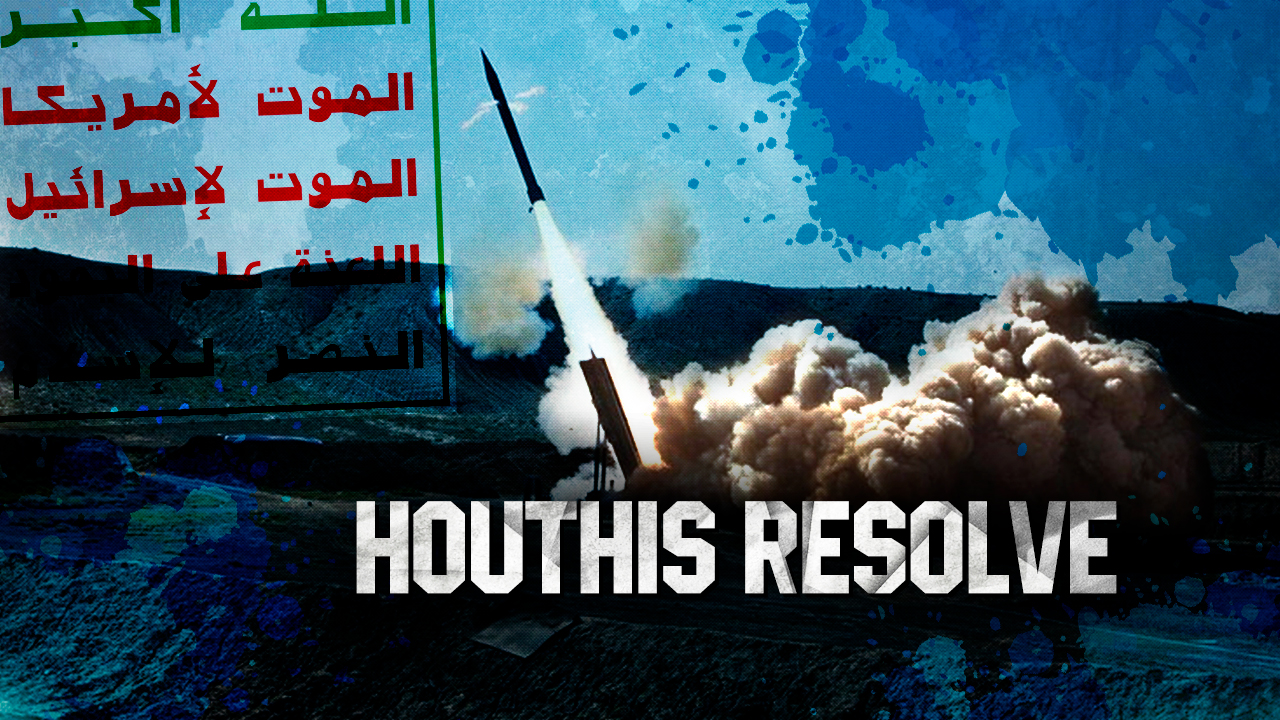
Hussein Badr al-Din al-Houthi sharpened that network into a political cause after the U.S. invasion of Iraq in 2003. He accused President Ali Abdullah Saleh of running a corrupt government that neglected Saada, sidelined Zaydis, and surrendered Yemeni sovereignty to Saudi and American interests. His followers adopted a chant that read in full: “God is Great, Death to America, Death to Israel, Curse the Jews, Victory to Islam.” The chant named foreign powers, but its domestic meaning was clear: Yemeni authorities understood that a movement chanting “death to America” today could be chanting “death to the president” tomorrow. Palestine and the Second Intifada also featured prominently in Hussein’s sermons, which cast Israel as an occupying power and the United States as its enabler. The antisemitism in the Yemeni resistance’s messaging reflected a long-held hostility to Jewry’s machinations among the Yemeni population.

Saleh went to war against the movement in 2004, and his forces killed Hussein on September 10. Leadership passed to his younger brother Abdul-Malik al-Houthi. During the 2011 uprising the movement took the name Ansar Allah and pitched itself as a national force against corruption and inequality.

The episode that best exposes the proxy myth unfolded in September 2014. Iranian representatives reportedly urged Ansar Allah not to seize the capital, and Ansar Allah marched in anyway. HuffPost broke the story in April 2015, citing American officials familiar with the intelligence. One official told the outlet “It is wrong to think of the Houthis as a proxy force for Iran.” National Security Council spokeswoman Bernadette Meehan added: “It remains our assessment that Iran does not exert command and control over the Houthis in Yemen.” The Wilson Center also called attention to the aforementioned restraint Iran advocated for: “In 2014, Iran reportedly advised the Houthis against taking over Sanaa, but they pressed on.”

Thomas Juneau of the University of Ottawa built the academic foundation for this view. His 2016 study in International Affairs argued that “the Houthis are not Iranian proxies; Tehran’s influence in Yemen is marginal.” In a Washington Post op-ed that same year, he wrote: “It is simply inaccurate to claim that the Houthis are Iranian proxies.” Juneau has since acknowledged deeper cooperation, yet he told The Iran Primer : “The Houthis are fiercely nationalist, and do not take orders from Iran. Instead, they work together, closely, on the basis of their common interests.”

Helen Lackner, among the most respected Western scholars of Yemen, put it plainly on Democracy Now: “The Houthis are not Iranian proxies. They are not Iranian servants. They don’t do what the Iranians tell them to do. They make their own decisions.” She described how the alliance functions: “If their decisions and their policies coincide with those of Iran, then there’s no issue. But if they don’t, they don’t do it.”

Allison Minor challenged the proxy narrative directly in a Brookings essay: “Rigorous definitions of the term ‘proxy’ require that the sponsor has some means of controlling the proxy, as this is what differentiates a proxy from a partner/ally. In truth, the Houthis are not an Iranian proxy, even though they benefit from Iranian support.” Minor pointed to the unilateral ceasefire Ansar Allah declared with Saudi Arabia in 2019, even as Iran sought escalation, and stressed their possession of independent revenue, local arms production, and diverse supply lines as other indicators of autonomous production and decision-making.

Others well-versed in Yemeni affairs reached the same conclusion years earlier. Saudi journalist and filmmaker Safa al-Ahmad, who reported from inside Ansar Allah territory, told PBS Frontline that Iran’s ties to the group were “vastly overblown” and that “the Iranians can’t just pick up the phone and tell the Houthis what to do.”

Even the hawkish Institute for the Study of War agrees. Its September 18 update stated, “The Houthis are not an Iranian proxy, although their objectives often overlap with Iran’s strategic interests.” It added, “The Houthis are an independent partner of Iran and may resist potential Iranian pressure to halt their campaigns, however.”

None of this means Iran sits on the sidelines. The Associated Press reported in late September that officers of the Islamic Revolutionary Guard Corps helped Ansar Allah with planning during the coastal offensive. Yet researcher Nicholas Brumfield told Al Jazeera that the campaign reportedly involved 76,000 Yemeni fighters, raised “using their own governance apparatuses,” and that mounting evidence points to Ansar Allah boasting a burgeoning domestic arms industry.

Ansar Allah ultimately behaves as a national liberation movement that shares many of Iran’s enemies and welcomes Iranian assistance, yet it charts its own course whenever its interests diverge. It does not need Tehran to steer it any more than any serious and credible resistance movement needs a foreign master. It grew from Yemeni grievances, and it will naturally seek allies such as Iran that oppose the same aggressive powers—Israel and the United States—that work tirelessly to destabilize West Asia. Movements like it already shake the foundations of the regional order. If the current momentum holds, Ansar Allah could reshape not only Yemen but also the Saudi provinces of Asir, Jizan and Najran, lands that many Yemenis still regard as their own and that Saudi Arabia locked down after the 1934 war between the two countries.

What started as a revolt against a corrupt president in a neglected mountain province has become a war that stretches from Taiz to Riyadh. With Ansar Allah astride the Bab el-Mandeb and Iran pressing on the Strait of Hormuz, two of the world’s most vital chokepoints now sit within reach of forces Washington cannot push back. If Asir, Jizan and Najran ever slip from Riyadh’s grip, historians will trace the new map back to Saada, not to Tehran.

Yemen’s Houthis Vow More Attacks on Saudi Airports, Oil Facilities After Aramco HQ Hit

14 October 2026 at 17:34
Yemen's Houthis vowed on Wednesday to press on with attacks on airports and oil facilities in Saudi Arabia, a day after a strike that sources said caused extensive damage to the headquarters of oil giant Saudi Aramco2223.SE.

Houthi Strikes Hit Aramco Headquarters In Saudi Arabia (Videos)

14 October 2026 at 11:02

File image.

Yemen’s Houthi military spokesman Brig. Gen. Yahya Saree announced on October 14 that the group had attacked Saudi Aramco facilities in Dhahran and Riyadh and at King Khalid International Airport, threatening further strikes against the kingdom.

In a statement, Saree said the operation involved “a large number of ballistic missiles, cruise missiles and drones.” The spokesman claimed the weapons struck their targets accurately, causing destruction and fires at the targeted sites.

Saudi Arabia’s Energy Ministry said a day earlier that an attack had caused a limited fire in an administrative building at Aramco’s complex in Dhahran, in the kingdom’s Eastern Province. No injuries or fatalities were reported.

A source at the company told Reuters that a ballistic missile struck an office tower in the complex, damaging its top three floors.

Saree said the attacks were retaliation for Saudi strikes on Sanaa and other areas under Houthi control. He claimed Saudi Arabia had carried out 2,281 airstrikes and missile attacks against Yemen during the current escalation, accusing the kingdom of committing dozens of crimes.

The spokesman warned that Houthi operations against targets inside Saudi Arabia would continue over the coming days, specifically threatening airports and oil installations.

He urged international shipping companies, civilians and workers to stay away from the targeted sites and called for the immediate evacuation of the sites, declaring them “legitimate targets” for Houthi forces.

The latest threats came after the Saudi-led coalition launched strikes against Houthi-held areas a day earlier, including the al-Sabah fuel facility on the outskirts of Sanaa. The coalition had warned civilians to evacuate the area, saying the operation was intended to neutralize Houthi capabilities to threaten Saudi Arabia, Yemen and international waterways.

The Saudi Civil Defense said debris from two intercepted Houthi missiles fell on residential areas in Riyadh, injuring four people and damaging 15 homes.

On October 14, residents reported hearing new explosions in the capital, and the Saudi-led coalition said it had intercepted a ballistic missile launched toward Riyadh. No casualties or damage were immediately reported from that incident.

The exchanges follow a series of Houthi attacks on Saudi airports. A strike on King Khalid International Airport on October 10 killed 13 people and wounded more than 300, according to Saudi authorities. Another attack the following day killed one person and injured 11, further disrupting aviation operations in the kingdom.

The renewed fighting is part of a broader escalation in Yemen, where Saudi Arabia is backing forces aligned with the internationally recognized government against the Houthis. The Saudi-led campaign intensified after Houthi forces made advances along Yemen’s Red Sea coast toward the strategic Bab al-Mandeb Strait.

Saree said the Houthis would continue to match what he called Saudi “escalation with escalation” and maintain a policy of “blockade for blockade” until Saudi Arabia ends its military campaign and lifts the blockade on Yemen.

_______________________________________________________________________________________________________________________

SouthFront: Analysis and Intelligence

NOW hosted at southfront.press

Previously, SouthFront: Analysis and Intelligence was at southfront.org.

The .org domain name had been blocked by the US (NATO) (https://southfront.press/southfront-org-blocked-by-u-s-controlled-global-internet-supervisor/) globally, outlawed and without any explanation

Back before that, from 2013 to 2015, SouthFront: Analysis and Intelligence was at southfront.com

SOUTHFRONT.PRESS

MORE ON THIS TOPIC:

The post Houthi Strikes Hit Aramco Headquarters In Saudi Arabia (Videos) appeared first on South Front.

FBI arrests Saudi OpenAI employee accused of bugging company conference room

14 October 2026 at 10:02
ChatGPT maker says Abdulrahman Alfozan, 35, suspected of planting 'sophisticated recording device' in California office; US attorney general: 'Serious threat to national security'

Saudi conflict with Houthis escalates with new strikes

The threat of a widening war on the Arabian Peninsula is accelerating. Houthi rebels in Yemen are again targeting Saudi infrastructure and military sites, escalating a conflict which may yet draw in other regional powers. The Saudi-led coalition launched new airstrikes on oil facilities across Houthi-controlled Yemen in response to deadly airport attacks in Riyadh. Ali Rogin reports.

Former U.S. ambassador on Saudi Arabia's struggle to defend against Houthi attacks

13 October 2026 at 23:45
To discuss the escalating war between the Houthis in Yemen and Saudi Arabia, Amna Nawaz spoke with Michael Ratney. He served as U.S. ambassador to Saudi Arabia during the Biden administration and is now a senior adviser at the Center for Strategic and International Studies.

Ansar Allah has the upper hand in escalating conflict with Saudi Arabia

13 October 2026 at 22:12

Three months after Saudi Arabia resumed its aggression against Yemen’s Ansar Allah-led government by attacking Sanaa International Airport in July, the conflict continues to spiral.

Saudi-backed forces claimed that they managed to cut off the main road connecting the Red Sea port city of Mokha with the Bab al-Mandeb strait on Monday, October 12, in a bid to reverse Ansar Allah’s major territorial gains along the Red Sea coast.

This came after Ansar Allah launched an intensified military operation that resulted in encircling Yemen’s southwestern city of Taiz last week. Taiz has been under the control of the Saudi-backed Yemeni government for roughly the last ten years.

As Yemen’s third-largest city, the encirclement of Taiz constitutes a critical development in the country’s armed conflict and geopolitical landscape, especially with a vital supply route linking Taiz with Aden being cut off. For over a decade, Aden has served as the temporary capital of Yemen’s Saudi-backed government.

Ansar Allah’s encirclement of Taiz sparked heavy ground clashes with the Saudi-backed forces, while Saudi warplanes intensified their strikes on the city as well as other parts of Yemen.

Ansar Allah emerges undeterred by the Saudi escalation

However, those airstrikes have not deterred the Ansar Allah-led armed forces from targeting Saudi airports and vital energy facilities with missiles, and drones. 

The Yemeni Armed Forces’ spokesman Brigadier General Yahya Sare’e confirmed on Sunday, October 11, that the attacks disrupted air traffic at King Khalid Airport in Riyadh and King Fahd Airport in Dammam. They also caused fires in Aramco’s Shuqdam gas and Tanajib oil facilities in Saudi Arabia’s Eastern Province.

On Monday, Ansar Allah announced the targeting of King Khalid International Airport in Riyadh once again with a ballistic missile, and Khamis Mushait Air Base in southern Saudi Arabia with a drone.

As a result, Saudi Arabia’s General Authority of Civil Aviation extended the suspension of flight operations at King Khalid International Airport in Riyadh until October 17, 2026.

The Yemeni movement clarified that its latest attacks on Saudi airports, alongside other energy and military facilities, came in response to the recent Saudi strikes on civilian infrastructure across Yemen. This included an attack on a passenger bus in Taiz, reportedly killing two civilians and injuring seven others. 

Trump says US may join Saudi Arabia in striking Yemen

Commenting on the attacks on Riyadh’s main airport, US President Donald Trump told reporters he is considering joining Saudi Arabia in striking Ansar Allah in Yemen.

“We just found out about the recent attack. So, we’ll make a decision. We move very quickly,” Trump said.

Tehran suggest mediation of talks between Ansar Allah and the Saudis

For its part, the Islamic Republic of Iran called on Saudi Arabia to resolve the conflict through diplomacy rather than a military approach.

According to Saudi and Iranian media outlets, Iranian Foreign Minister Abbas Araghchi proposed on Sunday that Tehran mediate a dialogue between Riyadh and Ansar Allah, during a telephone call with his Saudi counterpart Prince Faisal bin Farhan.

Saudi Arabia Strikes Houthi Targets as Red Sea War Escalates

13 October 2026 at 19:48
Yemen's Iran-allied Houthis said Saudi Arabia was attacking the Yemeni capital Sanaa on Tuesday after a Saudi-led coalition warned civilians to stay away from an oil depot on the city's outskirts, part of a rapidly escalating war between the sides.

Portugal advises against non-essential travel to Saudi Arabia after airport attacks

13 October 2026 at 14:50
Portugal is advising against non-essential travel to Saudi Arabia after deadly attacks on airports caused widespread flight disruption and heightened security concerns.

Portugal is advising against non-essential travel to Saudi Arabia following repeated attacks on airports which have killed civilians, injured hundreds and caused widespread disruption to flights. The Ministry of Foreign

The post Portugal advises against non-essential travel to Saudi Arabia after airport attacks appeared first on Portugal Resident.

Europe’s Gulf Gamble: Is Brussels Sacrificing Human Rights for Energy, Trade and Political Influence?

13 October 2026 at 11:24

As the European Parliament prepares to welcome representatives from six Gulf monarchies, uncomfortable questions are emerging about the moral foundations of Europe’s foreign policy. Can Brussels credibly champion democracy and human rights while deepening relations with governments accused of suppressing dissent, restricting fundamental freedoms and exploiting migrant workers?

The European Union has long presented itself as a global defender of democracy, human rights and the rule of law. Yet its growing enthusiasm for closer relations with the Gulf monarchies raises an increasingly uncomfortable question: how much are those principles worth when substantial economic and strategic interests are at stake?

On October 16th, the European Parliament will host senior parliamentary representatives from the six members of the Gulf Cooperation Council (GCC): Saudi Arabia, the United Arab Emirates, Qatar, Kuwait, Bahrain and Oman.

The conference, chaired by European Parliament President Roberta Metsola, will address parliamentary cooperation, maritime security and the geopolitical consequences of Russia’s war against Ukraine.

On paper, the initiative represents an entirely reasonable diplomatic exercise. Europe needs reliable energy supplies, secure international shipping routes and constructive relations with influential Middle Eastern governments.

But there is another side to this developing partnership, one that Brussels cannot simply dismiss as an inconvenient complication.

Several Gulf governments maintain political systems in which meaningful democratic opposition is severely restricted, freedom of expression is curtailed and individuals can face imprisonment for challenging those in power.

The question is not whether Europe should maintain diplomatic relations with such countries. It plainly must.

The question is whether those relations should be celebrated as strategic partnerships without demanding meaningful improvements in the treatment of their own citizens.

The uncomfortable reality behind Gulf prosperity

Saudi Arabia’s international image has undergone a remarkable transformation in recent years.

Under Crown Prince Mohammed bin Salman, the kingdom has promoted ambitious economic reforms, tourism projects and international sporting events designed to present a modernising society. Yet this carefully cultivated image sits uneasily alongside its human rights record.

Amnesty International and Human Rights Watch have repeatedly documented concerns over executions, restrictions on political dissent, arbitrary detention and the treatment of women’s rights activists.

The murder of journalist Jamal Khashoggi in Istanbul in 2018 remains an enduring symbol of the dangers faced by critics of the Saudi leadership. A 2021 US intelligence assessment concluded that the Crown Prince had approved an operation to capture or kill Khashoggi, an assessment rejected by Saudi Arabia.

Qatar, meanwhile, has attracted sustained criticism over the treatment of migrant workers, particularly during preparations for the 2022 FIFA World Cup. Although labour reforms were introduced, human rights organisations continue to question their implementation and the effectiveness of protections against exploitation.

The UAE, despite its reputation for modernity and commercial sophistication, has similarly faced criticism over restrictions on political expression, detention of dissidents and the absence of meaningful electoral democracy at national level.

Bahrain has been criticised for imprisoning opposition figures and restricting political freedoms, while concerns about migrant labour protections and freedom of expression extend across other Gulf states, albeit with important differences in their individual records.

These are not minor administrative shortcomings. They concern fundamental rights that the European Union claims to regard as universal and non-negotiable.

When strategic interests outweigh principles

There is an unmistakable contradiction in Europe’s approach. The European Parliament routinely condemns authoritarian practices in Russia, Belarus and other countries where political freedoms are suppressed. It demands accountability, democratic reform and respect for international law.

Yet when dealing with wealthy Gulf monarchies, the language often becomes considerably more accommodating. Economic opportunity, investment, energy security and regional stability suddenly dominate the conversation.

Such selective emphasis risks creating the impression that Europe’s commitment to human rights is determined less by universal principle than by the commercial and geopolitical importance of the country concerned.

That is a dangerous perception for an institution whose international credibility depends heavily upon its moral authority.

If the imprisonment of political opponents is unacceptable in Moscow or Minsk, why should comparable abuses become less objectionable when committed by governments possessing substantial sovereign wealth funds or strategically important energy reserves?

Europe cannot reasonably demand consistency from others while appearing unwilling to apply it to itself.

The strategic argument remains compelling

None of this diminishes the genuine importance of cooperation with the Gulf. The Strait of Hormuz and the Red Sea are essential maritime corridors connecting Europe with global energy suppliers and Asian markets. Threats to commercial shipping, regional instability and the activities of Iran-aligned armed groups present legitimate security concerns.

Russia’s invasion of Ukraine has also demonstrated the dangers of excessive dependence upon unreliable external partners. Diversifying energy relationships is therefore a sensible strategic objective.

Moreover, Gulf governments possess considerable diplomatic influence, including relationships with states and political actors that European governments may struggle to engage directly.

But strategic necessity does not automatically confer moral legitimacy.

Indeed, Europe’s previous dependence upon Russian energy offers a particularly sobering lesson. For years, European governments convinced themselves that extensive commercial engagement with Moscow would encourage moderation and political stability.

Instead, economic interdependence failed to prevent Russian aggression, leaving Europe exposed when that relationship collapsed. It would be reckless to assume that expanding commercial relations with authoritarian governments necessarily produces political liberalisation.

What does parliamentary cooperation actually mean?

The proposed conference also raises questions about the meaning of parliamentary dialogue.

The European Parliament is a directly elected institution, accountable to hundreds of millions of citizens through competitive democratic elections.

The political institutions of the Gulf states operate under markedly different arrangements, with varying degrees of appointed representation, limited electoral participation and executive authority concentrated within ruling families.

Describing these relationships simply as parliamentary cooperation risks obscuring fundamental differences in democratic legitimacy.

Dialogue can undoubtedly serve a useful purpose. But it should not be allowed to imply an equivalence between representative democratic institutions and political structures in which citizens have far fewer opportunities to challenge those governing them.

Nor should participation in prestigious European institutional events become an exercise in international reputation management for governments facing serious human rights allegations.

A test of Europe’s credibility

The European Parliament has an opportunity to demonstrate that closer cooperation need not mean abandoning its principles.

It could insist that human rights form a substantive part of future engagement, including scrutiny of political imprisonment, freedom of expression, judicial independence and migrant worker protections.

It could also establish mechanisms for monitoring progress rather than relying upon diplomatic assurances.

Such measures would not necessarily undermine economic cooperation. They would establish that the relationship carries responsibilities as well as benefits.

Ultimately, the issue is not whether Europe should talk to the Gulf monarchies, but whether it possesses the political courage to challenge them.

A European Union that condemns authoritarianism in one part of the world while accommodating it elsewhere risks reducing its professed values to little more than diplomatic convenience.

Europe may need the Gulf’s energy, investment and strategic influence, but it should not have to surrender its conscience to obtain them.

And if Brussels cannot reconcile its commercial ambitions with its democratic principles, it must confront a deeply uncomfortable possibility: that Europe’s foreign policy is increasingly being guided not by the values it proclaims, but by the wealth and influence of those sitting across the negotiating table.

As US Backs Saudi War, US Embassy Says Americans Have Been Arrested in Saudi Arabia for Social Media Posts, Photographing Attacks

13 October 2026 at 01:45
As the US is strongly supporting Saudi Arabia’s war in Yemen, the US Embassy in Saudi Arabia has issued a warning to US citizens that Americans have been arrested inside the country for social media posts critical of the Saudi government and for taking photos of recent attacks. Arrests for social media posts inside Saudi […]

Houthis Strike Saudi Capital Once Again (Videos)

12 October 2026 at 22:00

File image.

The Houthis’ military spokesman, Brig. Gen. Yahya Saree, announced on October 12 that the group had targeted King Khalid International Airport in Riyadh with a ballistic missile.

“By God’s grace and assistance, our armed forces targeted King Khalid International Airport in the Saudi capital, Riyadh, this evening with a ballistic missile, and the hit was accurate,” Saree said in a statement.

He separately announced an attack on Khamis Mushait Air Base, saying the operation was carried out using a drone and that “the hit was direct.”

Saree also renewed a warning to international airlines and aviation personnel against operating flights to Saudi airports, declaring them unsafe except for airports and airspace serving the holy cities of Mecca and Medina. The warning extended to experts, employees, workers and travelers from around the world.

The claims came as Saudi Arabia reported further incoming missile and drone threats during the day. Maj. Gen. Turki al-Maliki, spokesman for the Saudi-led coalition, said air defenses had intercepted and destroyed two ballistic missiles launched toward Riyadh. The coalition also reported tracking drone and cruise-missile threats targeting the kingdom.

It was not immediately clear from the statement whether the interceptions involved the same missiles described by Saree or another attack.

The latest announcement follows a series of attacks on Saudi infrastructure in recent days. King Khalid International Airport remained closed on October 12 after a missile strike killed at least 13 people and wounded more than 300 last week.

Saudi Arabia has opened an investigation into how its air defenses failed to prevent that attack, with regional officials telling the AP that the Houthis had used multiple drones followed by cruise and ballistic missiles.

The escalation is unfolding as the Houthis continue in Yemen, mainly in the southwestern province of Taiz, with Saudi-backed forces failing to stop them.

_______________________________________________________________________________________________________________________

SouthFront: Analysis and Intelligence

NOW hosted at southfront.press

Previously, SouthFront: Analysis and Intelligence was at southfront.org.

The .org domain name had been blocked by the US (NATO) (https://southfront.press/southfront-org-blocked-by-u-s-controlled-global-internet-supervisor/) globally, outlawed and without any explanation

Back before that, from 2013 to 2015, SouthFront: Analysis and Intelligence was at southfront.com

SOUTHFRONT.PRESS

MORE ON THIS TOPIC:

The post Houthis Strike Saudi Capital Once Again (Videos) appeared first on South Front.

❌