 Login
Today in Supreme Court History: October 18, 1960
18 October 2026 at 12:00
10/18/1960: Gomillion v. Lightfoot argued.

The post Today in Supreme Court History: October 18, 1960 appeared first on Reason Magazine.

10/18/1960: Gomillion v. Lightfoot argued.
The post Today in Supreme Court History: October 18, 1960 appeared first on Reason Magazine.
By Patrick LAWRENCE
Join us on Telegram, X, and VK.
Contact us: info@strategic-culture.su
In her revelatory work The Cultural Cold War, the late British author was the first to shine so unblinking a light on the sprawl of the C.I.A.’s cultural interventions.
Frances Stonor Saunders was fond of epigraphs (as am I). At the front of The Cultural Cold War: The C.I.A. and the World of Arts and Letters (The New Press, 1999), the British journalist, documentarian and author quotes some lines from Dante’s Inferno, the last of which is, “Before my age was full, I went astray.”
I had not lived half my life when I succumbed to complacency and moral blindness: This is my reading of the line from Canto XV. And how fitting it is at the start of Saunders’ exhaustively researched account of how the Central Intelligence Agency, its tentacles reaching into every corner of American culture, did so much to lead our republic into what the Italian poet would call its selva oscura, its dark wood —the state of lostness America has never since escaped.
Frances Stonor Saunders died on the last day of August, having suffered from a virulent strain of brain cancer. She was a mere 60. We had a few acquaintances in common, but I never met her. It was nonetheless something like losing a friend when, just this past week, I heard of her death. And so this brief appreciation.
The Cultural Cold War made Stonor Saunders’ reputation. It took a prominent place on my shelf of Cold War books as soon as it was published. At last the curtain parted on the insidious use the C.I.A. made, or attempted to make, of painters, poets, playwrights, novelists, editors, jazz musicians, singers, dancers, actors, scholars and other cultural figures in its long-running operation to promote the appeal of American life as against the Soviet Union and altogether the postwar socialist alternative.
This was an immense “soft power” operation avant la lettre — before we had the term. One could also call it an early variant of the “cognitive warfare” to which we are now incessantly subjected, the primary object of which was to keep postwar Europe from swinging leftward, as the French, the Italians and others were poised to do.
From Saunders’s Introduction:
“Drawing on an extensive, highly influential network of intelligence personnel, political strategists, the corporate establishment, and the old school Ivy League universities, the incipient CIA started, from 1947, to build a ‘consortium’ whose double task was to inoculate the world against the contagion of Communism and to ease the passage of American foreign policy abroad. The result was a remarkably tight network of people who worked alongside the Agency… Whether they liked it or not, whether they knew it or not, there were few writers, poets, artists, historians, scientists, or critics in postwar Europe whose names were not in some way linked to this covert enterprise.”
Who Was Who & Who Stood Where
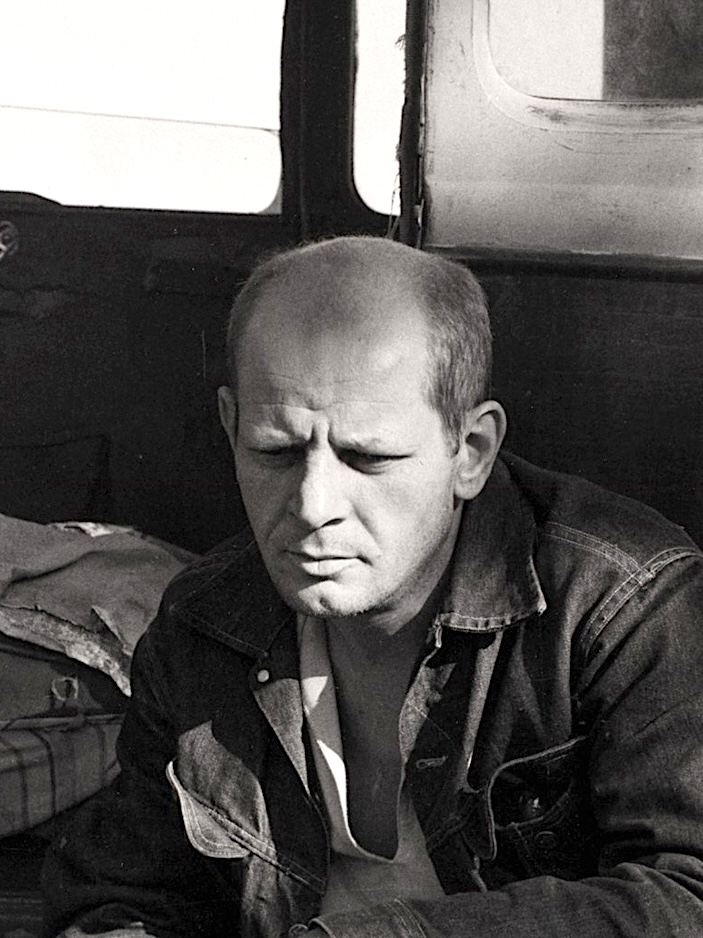
Jackson Pollock in 1951. (Hans Namuth /Wikimedia Commons,Public Domain)
Jackson Pollock and others among the Abstract Expressionists, Leonard Bernstein and others among the American composers then prominent, Robert Lowell, James Baldwin, Mary McCarthy and other writers of their generation, Duke Ellington and other jazz stars — if they weren’t sent abroad on the C.I.A.’s nickel, their work was.
There were the hundreds of books the Agency took a role in promoting, It paid for translations of Eliot’s Four Quartets, Luigi Barzini’s The Italians, Boris Pasternak’s Doctor Zhivago. It covertly supported magazines — Encounter and The Paris Review famous among them — along with radio stations and, of course, newspapers — and those who wrote and edited for them. As of 1956 the Agency owned a considerable piece of the Rome Daily American.
Saunders, who did years of interviewing and archival research for this book, lays out her findings over 427 well-written pages and was the first to shine so unblinking a light on the sprawl of the C.I.A.’s cultural interventions.
One of the things I like about Saunders’s book, among many, is her exposure of those artists and writers who knew of the Agency’s interventions and wanted nothing to do with them, those who knew and cooperated and those who served its purposes unwittingly.
Pollock had no idea of the use to which the Agency put his work, Baldwin wanted nothing to do with the Congress for Cultural Freedom (C.C.F.), infamous as a C.I.A. front. Ever true to her tough-minded politics, neither did Lillian Hellman.
Mary McCarthy knew all about the Agency’s funding of the C.C.F. and its other projects and was fine with all of it. I’ve never liked McCarthy’s novels, and Saunders gave me a good reason to distrust her. She was prominent among that group of Americans known as Cold War liberals, for whom I have long nursed an abiding contempt.

McCarthy in 1963. (Dick DeMarsico/ World Telegram / Library of Congress. New York World-Telegram & Sun Collection/Wikimedia Commons/Public Domain)
I wish Saunders had given more attention to the profligate corruptions of generations of American journalists and newspaper editors, but her definition of culture is narrower than mine; I speculate that journalism’s service to the Agency was a room so large she chose not to enter it.
The surrender of many American journalists to the Cold War cause is well-enough documented in any case. See, for example, Carl Bernstein’s celebrated “The C.I.A. and the Media,” which Rolling Stone published in October 1977, and the House hearings that Bernstein’s piece prompted a couple of months later — the Church Committee, whose hearings ran from January 1975 to April 1976, having flinched from this responsibility.
Chronicler of Secrecy
The who-was-who and the who-stood-where and the who-did-what of The Cultural Cold War give Saunders’s book an historical specificity I do not think anyone has matched, with the exception of Joel Whitney’s Finks (OR Books, 2016), which draws heavily on Saunders’s work. She did not leave those of whom she wrote any place to hide.
As I reflect back on her accomplishment now, it seems to me to lie in something she never mentions. Saunders gave us a chronicle of the U.S. culture of secrecy in its earliest days, the first decades after the 1945 victories, when America set about making itself a global imperium.
What comes through in The Cultural Cold War is how little those alive at the time were able to know about their time. Too many events, too many decisions, too many reasons for things happening as they did were hidden, rendered inaccessible.
The C.I.A.’s Cold War interventions have had many enduring consequences. The Agency systematically discredited the principle of nonalignment, which was held high among then-emergent non–Western nations. America brings the same with-us-or-against-us fallacy to the 11 members and 10 partners comprising the BRICS — a complete failure to grasp one of the 21st century’s significant realities.
It is the same with the out-of-hand dismissal of all suggestions of moral equivalence in global affairs with those it deems adversaries: The United States is always righteous and never acts but in defense of itself or its always-democratic allies and/or clients. It is never to be accused of aggression. This is what I mean by moral blindness.
The Agency’s most disturbing legacy, at least to me, is how little of our world we are able actually to see. Daniel Patrick Monihan warned us of this just before the U.S. century turned in Secrecy: The American Experience (Yale, 1998). So, in her way, did Saunders a year later. Foolish it would be, naïve in the extreme, to think the time she described so piercingly is not the time in which we live.
It is the historians now who tell us who we are — this by telling us who we were. This is why I honor Frances Stonor Saunders as I do. She told Americans of their past, and, so, of their present.
Original article: consortiumnews.com

A new play revisits the story of Ireland’s 18th-century German refugees, whose experience of prejudice and exclusion resonates with today’s debates over immigration
In the early 18th century, a few thousand Germans fled religious persecution and near starvation in their homeland and ended up in remote rural Irish villages. The Irish Palatines, as they were known, were poor, conservative homesteaders who couldn’t speak the language and were the object of suspicion and violence – precursors to the displaced Syrians or Afghans of the past decade.
Their story is told in Refuge, a co-production between Staatstheater Mainz and the Irish company Fishamble. Part love story, part social commentary, it is performed by a mixed cast, mainly in English but with some German interludes.
Continue reading...
© Photograph: Andreas Etter
© Photograph: Andreas Etter
© Photograph: Andreas Etter
Local prosecutors said that at least 15 people have been arrested in connection with the riots that broke out in Limoges and the arson which destroyed the city's historic Town Hall.
The post France: 15 Arrested over Arson That Destroyed 143-Year-Old City Hall Building appeared first on Breitbart.
10/17/1862: Justice David Davis takes oath.
The post Today in Supreme Court History: October 17, 1862 appeared first on Reason Magazine.
Three panels of a Renaissance altarpiece, separated for almost 200 years, have been reunited in Italy for an exhibition opening on Saturday, 17th October, offering visitors a rare opportunity to see a work by Andrea Previtali in its original arrangement.
The painting, created around 1515 for the Church of the Annunciation in Serina, near Bergamo, has been reconstructed through cooperation between the Diocese of Bergamo and the Museo Villa Bassi Rathgeb in Abano Terme, close to Padua. One panel, depicting a bishop saint, belongs to the museum’s permanent collection, while the remaining two have been brought together for the exhibition.
The reunion was confirmed on 16 October by Italy’s Ministry of Culture heritage authority. It forms the central attraction of Andrea Previtali: Disciple of Giovanni Bellini, which runs until 7th February 2027 and examines the career of a painter who worked between two important artistic centres of Renaissance Italy.
The three panels originally formed a triptych, a type of religious painting consisting of a central image flanked by two wings. Such works were commissioned for churches and private chapels, where they served as devotional objects and demonstrations of the artistic ambitions of their patrons.
Over succeeding centuries, many Renaissance altarpieces were dismantled, removed from their original settings or dispersed among private collections and museums. Their individual panels could subsequently be displayed as independent works, losing much of the relationship between the images originally intended by the artist.
The Previtali triptych provides an example of how those connections can be recovered.
The Museo Villa Bassi Rathgeb holds the panel depicting a bishop saint as part of the collection assembled by Roberto Bassi Rathgeb, an art historian and collector who contributed to renewed scholarly interest in Previtali.
His collection, donated to the municipality of Abano Terme between 1972 and 1980, contains important examples of painting from the Bergamo and Brescia schools.
The collaboration with the Diocese of Bergamo has now made it possible to display the bishop saint alongside the two surviving companion panels from the original altarpiece. Their reunion allows the work to be studied as a complete composition rather than as three separate paintings.
It also offers an opportunity to reassess Previtali’s decisions concerning the relationship between figures, religious symbolism and the architectural arrangement of devotional paintings.
Andrea Previtali was born around 1480 in Valle Imagna, in the territory of Bergamo, before moving to Venice, where he entered the workshop of Giovanni Bellini.
Bellini was among the most influential painters of the Venetian Renaissance, known for his treatment of colour, light and religious subjects. His workshop trained artists who would help establish the distinctive visual language of sixteenth-century Venetian painting.
Previtali’s connection to his master is documented in an inscription on his 1502 painting Madonna and Child with Donor, now held by the Musei Civici di Padova.
The artist described himself as a pupil of Giovanni Bellini, a declaration that has become an important piece of evidence for reconstructing his early career.
The new exhibition explores that relationship by displaying works by Previtali alongside paintings associated with the artistic environment in which he trained.
Among the loans is Bellini’s Saint Justina, from the Museo Bagatti Valsecchi in Milan. Although painted before Previtali’s mature career, it demonstrates the treatment of sacred figures, colour and composition that influenced succeeding generations.
The exhibition also includes works connected with Francesco Bissolo, Girolamo da Santacroce, Palma il Vecchio and Giovanni Busi, known as Cariani.
Together, they illustrate the movement of artistic ideas between Venice, Bergamo and Brescia during a period in which painters increasingly travelled between workshops, cities and patrons.
Previtali’s career developed at a time when the artistic traditions of northern Italy were undergoing considerable change.
The Venetian school placed particular emphasis on colour and atmosphere, while painters working in Lombardy drew on different approaches to portraiture, religious narrative and landscape.
Previtali’s paintings reflect both traditions. His subjects included Madonnas, religious gatherings, portraits and landscapes, often combining carefully observed human figures with detailed natural backgrounds.
After returning to Bergamo, he encountered the work of Lorenzo Lotto, whose approach to portraiture and religious painting introduced further stylistic developments.
The exhibition therefore examines Previtali not simply as a follower of Bellini, but as an artist whose work developed through exchanges between different regional schools.
It also includes Renaissance portraits, among them a painting on loan from the Accademia dei Concordi in Rovigo.
A separate section examines the practical techniques employed in Renaissance workshops, using physical and digital displays to explain how artists prepared, constructed and completed their paintings.
Such research has become increasingly important in the study and preservation of Europe’s Old Master paintings, allowing historians to reconstruct relationships between works that have survived in different institutions.
The restoration and presentation of historic collections also forms part of the wider debate about protecting Europe’s cultural heritage.
The Previtali exhibition has been organised by the municipality of Abano Terme in cooperation with the University of Padua and the Italian heritage authorities. It is curated by Raffaele Campion and Barbara Maria Savy.
Visitors will be able to see the reunited triptych at the Museo Villa Bassi Rathgeb from 17th October until 7th February 2027. The exhibition provides a rare chance to examine the three panels together and to understand how a religious commission created more than five centuries ago fitted into the artistic culture of Renaissance northern Italy.
Scientific examination of a painting by Belgian surrealist Paul Delvaux has revealed significant changes to its original composition, including figures and other details concealed beneath layers of paint. The findings are being presented in a new exhibition opening on 16 October at Musée L in Louvain-la-Neuve.
The exhibition, La Ville lunaire II: The Hidden Side of Paul Delvaux’s Painting, examines a work completed in 1956 and held in the museum’s permanent collection. Through X-ray imaging, infrared reflectography and ultraviolet examination, researchers have been able to investigate the artist’s working methods and compare the finished painting with an original preparatory drawing.
The exhibition, which runs until 7 February 2027, follows the acquisition of the drawing by the King Baudouin Foundation in 2024. Its subsequent deposit at Musée L has made it possible to examine the two works together and reconstruct the development of a composition that underwent substantial alterations.
Completed in June 1956, La Ville lunaire II depicts a mysterious nocturnal landscape, with a long avenue, buildings, streetlamps and figures arranged within an unsettling architectural setting.
The painting measures approximately 89 by 139 centimetres and was executed in oil on a fibreboard panel. It entered the museum’s collection in 1990 through a bequest from Dr Charles Delsemme.
Its carefully constructed perspective and unusual treatment of space reflect Delvaux’s interest in creating scenes that appear familiar while remaining detached from ordinary reality.
The museum’s collection records describe the work as a strange nocturnal landscape, with wooden barriers and a sequence of streetlamps establishing its distinctive spatial arrangement.
Yet the painting visible today differs considerably from the composition Delvaux originally envisaged.
Earlier technical examinations had already established that important details were covered during the painting process. The new exhibition brings those findings into direct comparison with the preparatory drawing, enabling visitors to see how the artist’s intentions changed.
An auction catalogue published in 2024 identified several elements present in the drawing and concealed in the painting, including a moon in the right-hand sky, a seated figure on the right and two figures wearing robes near the centre.
These changes are significant because they suggest that Delvaux did more than adjust minor details. He altered the population and lighting of the scene, potentially changing how the composition would be experienced by the viewer.
The reasons for those decisions remain uncertain.
Modern conservation techniques allow researchers to examine works of art without removing the paint that covers earlier stages of their creation.
Infrared reflectography can reveal underdrawings and certain changes concealed beneath surface paint, depending on the materials used by the artist. X-ray imaging can detect differences in the composition of pigments and structures below the visible surface.
Ultraviolet examination provides further information about surface materials and alterations, including some later interventions.
When combined with documentary evidence, these methods help researchers distinguish between an artist’s initial design, revisions made during painting and changes introduced after completion.
The Musée L exhibition uses these techniques to investigate what art historians call pentimenti — visible or detectable alterations that record an artist changing their mind during the creative process.
The preparatory drawing, measuring approximately 28 by 45 centimetres, provides an additional reference point. Executed in ink and pencil, it contains elements that were subsequently revised or painted over in the final composition.
Displayed alongside the finished work, it allows visitors to follow the artist’s decisions from the preliminary design to the version that eventually entered the museum’s collection.
The technical findings also demonstrate the importance of preserving preparatory studies, which can contain information absent from completed paintings.
Born in Antheit in 1897, Paul Delvaux became one of Belgium’s best-known twentieth-century painters, developing a distinctive artistic language associated with surrealism.
His paintings frequently depict classical buildings, railway stations, deserted streets and solitary figures, often arranged in environments where architectural precision contrasts with an atmosphere of uncertainty.
He was influenced by the Italian painter Giorgio de Chirico, whose deserted urban spaces and dramatic perspectives helped establish the visual language of metaphysical painting.
Delvaux’s relationship with de Chirico has been examined extensively by art historians, including Joël Roucloux, whose study of La Ville lunaire II analysed its architectural perspective, shadows and the psychological effect of its composition.
The painting’s apparently moonlit setting is particularly interesting in light of the concealed moon identified by technical examination.
The absence of that celestial body from the final visible composition changes the relationship between the painting’s title and its visual content, leaving the viewer to interpret the source of its unusual illumination.
This approach distinguishes Delvaux from other Belgian surrealists, including René Magritte, whose work frequently relied on recognisable objects placed in logically contradictory situations.
For Delvaux, architecture, perspective and the arrangement of human figures were equally important in constructing a world that appears coherent but resists conventional interpretation.
The exhibition forms part of Musée L’s programme devoted to research into its permanent collections, rather than a conventional retrospective of the artist’s career.
Its central purpose is to explain how a single painting developed, from its first drawn composition through successive revisions to its completed form.
The research has been supported by the Jacqueline Delcourt-Nonkels Fund, managed by the King Baudouin Foundation.
For visitors, the opportunity is to examine not only a painting by one of Belgium’s leading surrealists, but also the evidence of the artistic decisions that shaped it.
The exhibition is open at Musée L in Louvain-la-Neuve from 16 October 2026 to 7 February 2027. By presenting the original drawing, technical images and finished painting together, the museum offers a detailed examination of Delvaux’s methods and the changes he made to one of his most carefully constructed nocturnal scenes.
Archaeologists working near Venice have identified what they believe to be the remains of a 1,600-year-old cathedral and an adjoining episcopal palace, resolving a longstanding question about the location of one of the region’s earliest Christian centres.
The discovery was announced on 15 October by Ca’ Foscari University of Venice, following excavations at Altinum, an important Roman settlement on the mainland near the Venetian lagoon. The foundations of a substantial religious complex have emerged from an area where ancient written accounts had long indicated the existence of a cathedral, although its precise location had remained unknown.
The findings suggest that the church was constructed between the late fourth and early fifth centuries AD, making it the earliest Christian church so far identified archaeologically in the Venetian territory. The researchers believe the complex provides physical evidence of the period when Christianity was becoming an important political and administrative force in the declining Roman Empire.
The newly identified church was a rectangular structure approximately 30 metres long and 20 metres wide, without an apse and orientated towards the east. Its layout differs from the surrounding Roman street grid, reflecting the religious requirements of the early Christian community.
The architectural arrangement resembles early churches in the northern Adriatic region, particularly those associated with Aquileia, which was an important centre of Christianity during late antiquity.
An adjoining building, distinguished by its substantial foundations and a complex arrangement of internal rooms, has been provisionally identified as the bishop’s palace. Archaeologists believe it may have stood two storeys high, with residential accommodation for senior clergy above rooms potentially associated with privileged burials.
Among the most revealing discoveries is the extensive reuse of stone paving blocks taken from the Roman streets. These materials were incorporated into the foundations of the ecclesiastical buildings, providing evidence of how the city was being physically reorganised during the transition from Roman to Christian administration.
The university’s researchers suggest that the removal of public paving materials may also indicate the authority exercised by the bishop over urban infrastructure. This interpretation would place the emerging Church at the centre of the city’s political transformation.
The existence of an early Christian cathedral at Altinum had been documented in letters written by Saint Jerome, one of the most influential Christian scholars of the late Roman period.
Writing in AD 396, Jerome referred to the religious activities of Nepotian, a priest associated with Heliodorus, the first bishop of Altinum. His descriptions included the maintenance of church furnishings, walls, floors and sacred vessels, suggesting an established and relatively prosperous Christian institution.
Until now, however, archaeologists had struggled to connect those accounts to a particular building.
The latest excavations, combining evidence collected during the 2025 and 2026 campaigns, have provided what researchers consider a convincing identification of the ecclesiastical complex.
The excavation is directed by Diego Calaon of Ca’ Foscari University and co-directed by Elisa Possenti of the University of Trento. Their work has brought together earlier archaeological records and newly examined foundations, including sections exposed during investigations in previous decades.
Researchers have also identified a burial area dating from the sixth and seventh centuries. Many graves were disturbed when construction materials were removed from the abandoned complex, but surviving human remains offer opportunities for further scientific investigation.
Radiocarbon dating, anthropological examinations and additional geophysical surveys are planned to establish a more detailed chronology and search for other elements of the religious complex, including its baptistery.
The historical importance of Altinum extends beyond the cathedral itself.
The ancient settlement was an important Roman commercial centre with connections to the waterways of the northern Adriatic. As political, environmental and demographic conditions changed during late antiquity, its population and institutions gradually shifted towards settlements within the lagoon.
One of the most important destinations was Torcello, which later became an early centre of Venetian civilisation.
Traditional accounts have often portrayed the creation of lagoon settlements as a response to barbarian invasions, with mainland inhabitants fleeing to isolated islands for protection.
The latest archaeological findings support a more complicated process.
Research at Altinum and Torcello indicates that the movement of people, religious institutions and construction materials was gradual and organised rather than the consequence of a single catastrophic event.
The cathedral appears to have been systematically dismantled during the first half of the seventh century, with substantial quantities of its stone and brick transferred to developing lagoon communities.
A surviving inscription records the establishment of Torcello’s cathedral in AD 639, providing an important chronological reference for the movement of ecclesiastical authority.
The findings add to the wider study of Europe’s surviving archaeological and architectural heritage, particularly the transformation of Roman settlements into medieval urban centres.
They also demonstrate how archaeological evidence can challenge historical narratives constructed centuries after the events they describe.
Much of the late-antique landscape at Altinum disappeared because of centuries of agricultural activity and the systematic removal of reusable building materials. In many cases, the excavators are studying trenches left by the extraction of foundations rather than surviving walls.
Further investigations may determine the complete extent of the episcopal complex and clarify the chronology of its abandonment.
For the first time, however, researchers can locate the religious buildings associated with Altinum’s earliest Christian bishops and trace their connection to the communities from which medieval Venice eventually emerged.
Archaeologists have identified a previously unknown coal-mining tunnel stretching at least 130 metres beneath woodland near Sprockhövel in western Germany. The remains provide evidence of coordinated underground construction at a time when the Ruhr’s mining industry was still developing, long before the region became synonymous with heavy industry.
The discovery was announced on 15 October by the Westphalia-Lippe Regional Association (LWL), whose archaeologists are working alongside the German Mining Museum in Bochum and GeoPark Ruhrgebiet. The team says its findings shed light on tunnelling techniques used before the eighteenth century, although the newly identified passage has not yet been given a precise scientific date.
At Haßlinghausen, a forest floor conceals old shafts, spoil heaps and depressions left by abandoned mining operations. Researchers did not enter an intact underground gallery. Instead, they identified the location of a collapsed passage by excavating at two former shaft sites and drilling into the surrounding spoil. Subsidence created by the collapse left a recognisable trace above ground.
The evidence suggests a more complex operation than miners simply following exposed seams into the earth. Construction shafts were sunk at intervals along the proposed tunnel. Workers descended through them and excavated separate stretches underground, later joining those sections into a continuous passage.
This method allowed several groups to work simultaneously rather than advancing from a single entrance. It also demanded planning and considerable labour. The filled-in shafts and disturbed soil are still visible in the excavated sections, enabling specialists to reconstruct the miners’ methods even though much of the original tunnel has collapsed.
Till Kasielke of GeoPark Ruhrgebiet explained that the construction shafts were located beside the underground route and then filled after the gallery was completed. Jennifer Garner, an archaeologist at the German Mining Museum, said the excavations would provide material for scientific dating and a better understanding of the effort required to build the structures.
The latest work follows a 2025 investigation of a separate, approximately 70-metre tunnel nearby. That earlier feature reached a coal seam some ten metres below ground. Researchers suspected it might predate the seventeenth century because it appeared to have been overlooked during later mining activity. The newly identified 130-metre passage is a distinct discovery.
The chronology matters because horizontal tunnels changed the possibilities of coal extraction. Early miners could reach seams by digging pits or inclined shafts, but groundwater increasingly obstructed work at depth. Drainage galleries allowed water to escape, making deeper workings more practical and potentially extending the life of individual mining sites.
The Ruhr is usually associated with the vast collieries, factories and transport infrastructure that drove Germany’s expansion in the nineteenth and twentieth centuries. Yet coal was extracted locally during the Middle Ages. The transition from small workings to organised subterranean networks remains poorly documented, partly because written records from the earliest periods are scarce.
The archaeological research programme, which began with related investigations in 2024, is intended to address that gap. The team has excavated soil layers associated with old shafts, and the recovered material may help establish when specific construction techniques were introduced. For now, it would be premature to assign the new passage a medieval date.
At Essen, the UNESCO-listed Zollverein Coal Mine Industrial Complex preserves the architecture and machinery of the Ruhr’s later industrial era. The remains at Sprockhövel represent a different historical record: temporary shafts, collapsed passages and waste deposits left by miners whose operations preceded industrial-scale coal production.
Across Europe, such landscapes have become an important part of cultural heritage. EU Today has previously reported on the preservation of Belgium’s Bois du Cazier colliery, where 262 people died in the 1956 mining disaster. In Sprockhövel, the focus is on a much earlier workforce, whose organisation and technical knowledge must be reconstructed from the ground itself.
Further dating and analysis will determine whether the newly identified tunnel pushes back the known chronology of organised drainage and gallery construction in the Ruhr. The excavations have already established that a substantial underground project once operated beneath a forest whose surface retains remarkably little indication of the work carried out there.
President Donald Trump on Thursday called off plans to livestream the December 3 military execution of Nidal Hasan after the announcement generated widespread disgust.
Defense Secretary Pete Hegseth announced last week that the U.S. government would livestream the firing-squad execution of Hasan, a former Army major who shot and killed 13 people at the Fort Hood Army base in 2009. A court-martial jury sentenced Hasan to death in 2013.
It would have been the first public execution in the United States since a hanging in Missouri in 1937, though the last well-known public execution occurred a year earlier in Kentucky. Rainey Bethea, a black man, was hanged before a crowd of roughly 20,000 people in Owensboro. Kentucky became the last state to outlaw public executions two years later.
The plan to livestream Hasan's execution drew comparisons to the Taliban. The U.S. Conference of Catholic Bishops called it "a barbaric promotion of a culture of death." Writing at The Lamp, an orthodox Catholic journal, Matthew Walther noted that it would be the "first ever government-sanctioned snuff film in American history."
However, Trump and Hegseth didn't trip over just liberal and religious pieties, but a deep-rooted American aversion to bloody displays of state power that goes back to the colonial era.
Lynn Novick, the director of Ken Burns' upcoming PBS documentary series Crime and Punishment in America, tells Reason that public executions "haven't been a regular part of American life since the Colonial time in the early years of the Republic, and there's really good reasons for that."
One of American colonists' many complaints about oppressive British rule was England's expansive criminal code, known derisively as the "bloody code" because it contained more than 200 capital crimes.
"In Colonial America, [an execution] was an everyday occurrence," Novick says. "There were executions all the time, and one of our scholars told us that most people would have seen someone executed in their lifetime."
Excessive capital punishment also ran contrary to emerging theories by leading Enlightenment thinkers that punishment should be proportional to the crime and not driven by revenge or bloodlust.
Perhaps more importantly, public executions were disorderly affairs that, rather than reinforce the power of the state, inflamed the passions of the mob to a dangerous degree. "In many cases, crowds would become very boisterous, riotous, angry, excited," Novick says. "There were sometimes violent outbursts at these events."
As a result, many of the Founding Fathers saw frequent public executions as disruptive to the fragile social order. The early American republic's move away from sanguinary spectacle was driven by a desire to create a stable, virtuous citizenry and sever itself from the European continent's tradition of public torture and execution.
As Reason described in a recent cover story, the result of this was the invention of the American penitentiary in the early 1800s, which was sold as a humane and rehabilitative replacement for the whipping post and gallows.
States transitioned from public to private hangings behind their newly built prison walls in the late 19th and early 20th centuries, before switching to the use of the electric chair. This was not done out of entirely humanitarian concerns, especially in the South, where public executions often became quasi-religious ceremonies, with the condemned declaring their ultimate victory over death (and the state) through Jesus Christ.
"Executions had contested meanings," Michael Ayers Trotti wrote in The End of Public Execution. "They were moments of justice, of state power; but they were also moments of religion, exceptional moments that transcended normal life."
The main reason that public executions disappeared over the long term, though, is obvious to anyone who's not a sociopath: It's weird and dehumanizing to gather in a crowd to watch someone else be killed, to participate in the government's promotion of its power to take a human life.
Rachel Abbott, who witnessed Bethea's 1936 hanging when she was 5 years old, told WKU Public Radio in 2016 that she had nightmares about it years later.
"I remember it well, but I didn't want to," she said. "I tried to get away from it because it was hurting me so bad. I started having me nightmares after I was older. It's like his spirit was just hanging all around me. The first thing you'd know I'd start crying because I felt he wanted me to help him get buried, get sent back to his gravesite by his father. I still have tears running when I think of it."
The post America Abandoned Public Executions for a Good Reason appeared first on Reason Magazine.
The Canadian Forces Snowbirds brought the Canadair CT-114 Tutor’s aerobatic career to a close on Friday, October 16, with a final home-base demonstration at 15 Wing Moose Jaw, Saskatchewan. The private event, which was livestreamed, honored the Canadian-built jet trainer that defined the team for more than half a century, as well as the aircrew and support personnel who kept the increasingly demanding aircraft flying.
This Friday, join us in saying farewell to the CT-114 Tutors.
— Royal Canadian Air Force (@RCAF_ARC) October 13, 2026
Watch the last airshow on Friday, October 16, 2026 live on our Facebook page.
The live stream will begin at 2 p.m. (EDT). pic.twitter.com/I2Tr3buq5D
While Friday’s performance marks the end of the Tutor’s aerobatic display career with the team, a Grey Cup flyover in Calgary on November 15 remains on the schedule.
Speaking to MooseJawToday on October 15, Snowbirds team lead Maj. Maciej “Match” Hatta described the Tutor’s final season as an emotional milestone for the squadron, as well as an opportunity to recognize the families and support personnel who sustain the team during its annual touring season.
Hatta has a long personal history with the aircraft. He flew with the Snowbirds from 2014 to 2017, subsequently worked on testing the Tutor’s avionics upgrades, and returned this year to lead the team through its final season with the jet. Despite having flown around 30 different aircraft as a test pilot, he has a particular attachment to the Tutor.
“This is still my favorite airplane to fly,” he said.
Hatta recalled flying a maintenance test sortie alone the previous day, enjoying the opportunity to look out over the wings without the near-constant radio communications involved in leading a formation display. He also noted the differences between individual aircraft in the fleet.
“They all have their own personality,” Hatta said. “Some of them howl a little more than others. Some get hotter inside. Some have poor air conditioning.”
Lt.-Col. Guillaume Paquet, commanding officer of No. 431 Air Demonstration Squadron, Royal Canadian Air Force (RCAF), said the final season has prompted strong reactions from spectators, many of whom have grown up watching the Snowbirds perform in the Tutor.
“The reality is we’ve been touring this country for 55 years, so everyone has a story, a childhood memory,” Paquet said.
Canada’s military aerobatic tradition dates back to 1929, when the biplane Armstrong Whitworth Siskin helped establish the country’s formation-flying heritage. The modern era began in 1959 with the creation of the Golden Hawks, formed to mark the 50th anniversary of powered flight in Canada and the 35th anniversary of the RCAF. Flying gold-painted Canadair-built F-86 Sabre fighters, the team initially was intended to operate for a single season. Its popularity led to several more years of performances across Canada and the United States before it was disbanded after the 1963 season amid the high costs of maintaining it.
Canada’s centennial celebrations in 1967 brought a new demonstration team, the Golden Centennaires, which flew CT-114 Tutor jet trainers at 100 airshows across Canada and the United States. The Tutors would subsequently become the foundation of the Snowbirds. In 1969, Colonel O.B. Philp, newly appointed commander of No. 2 Canadian Forces Flying Training School at Moose Jaw, Saskatchewan, encouraged instructors to practice formation aerobatics using surplus Tutors left over from the Centennaires program. Initially presented as training and proficiency flying, the formations soon attracted public attention and gradually evolved into an established demonstration team.
The formation grew from four aircraft in 1970 to seven in 1971, when the Snowbirds name was adopted following a competition among schoolchildren. Two solo aircraft were added in 1972, establishing the team’s familiar nine-aircraft format. That year, its pilots were assigned to demonstration flying on a full-time basis. The team’s Tutors were modified to support solo operation from the right-hand seat and the demands of inverted flight during aerobatic displays. In 1974, the Tutors received their distinctive red, white, and blue paint scheme, and the team was authorized to perform a fully aerobatic display.
The Snowbirds subsequently achieved full squadron status as No. 431 Air Demonstration Squadron, becoming one of the most recognizable symbols of Canadian military aviation. Their officially stated mission was to demonstrate the professionalism, teamwork, and flying skills of the Canadian Armed Forces to audiences across North America.
However, the Tutor’s final years were marked by a series of serious accidents and renewed scrutiny of its aging systems.
In October 2019, a Snowbirds aircraft crashed in Georgia after an engine fuel-delivery failure, with the pilot surviving an ejection that was itself affected by a parachute malfunction. In May 2020, another Tutor crashed shortly after takeoff near Kamloops, British Columbia, killing the Snowbirds public affairs officer and seriously injuring the pilot; investigators determined that a bird strike had triggered an engine compressor stall. The fleet was temporarily grounded following that accident, with operations resuming under additional restrictions in August 2020.
A further accident at Fort St. John, British Columbia, in August 2022 prompted another fleet-wide operational pause after an engine failure during takeoff; investigators identified an improperly assembled oil filter as the cause. The aircraft returned to service the following month.
Subsequent safety measures included restrictions on certain aerobatic maneuvers and formations, minimum runway-length requirements, and limits on flying over water or performing some maneuvers outside gliding distance of a suitable landing surface.
At the same time, the persistent engineering challenges involving the Tutor’s airframe, engines, and ejection system were all factors in its retirement, with the RCAF concluding that further life-extension work was no longer practical.
Canadair Limited of Montreal began developing the CL-41A Tutor in the mid-1950s as a high-performance jet trainer to prepare RCAF pilots for the Canadair-built F-86 Sabre. The all-metal, low-wing, single-engine aircraft featured side-by-side seating and duplicate flight controls, allowing instructors to monitor students closely and take control when necessary. Two prototypes were built, with the first making its maiden flight on January 13, 1960, with Canadair test pilot Ian MacTavish at the controls.
Following an extensive testing and demonstration program, Canadian Minister of National Defence D.S. Harkness announced an order for 190 production aircraft on September 11, 1961. Deliveries began in 1963, with each aircraft reportedly costing approximately C$425,000 (around $394,000). Powered by a General Electric J85-CAN-40 turbojet built under licence by Orenda, the aircraft entered RCAF training service in late 1964 under the designation CT-114 Tutor.
As well as the RCAF, the Tutor found one other military operator in Malaysia. The Royal Malaysian Air Force received 20 examples designated the CL-41G Tebuan (meaning “Wasp” in the Malay language), which served between 1967 and 1986 in the ground-attack role.
The Tutor served as the RCAF’s primary jet trainer for decades, accumulating more than one million flight hours before its training role ended in 2000. It was replaced by the CT-156 Harvard II and CT-155 Hawk. The aircraft nevertheless remained in military service with the Snowbirds.
The Tutor’s retirement will bring an end to a long chapter in Canadian military aviation, but the Snowbirds are expected to continue flying with a new aircraft type. In May of this year, the Department of National Defence announced plans to replace the CT-114 with the CT-157 Siskin II, based on the Pilatus PC-21 turboprop trainer. The new demonstration capability will remain at 15 Wing Moose Jaw and is expected to become operational in the early 2030s.
Today the Government of Canada announced a commitment to purchase a future RCAF air demonstration capability. After more than six decades of service 2026 will mark the final season for the CT‑114 Tutor aircraft fleet which has represented Canada with dignity and pride since 1971. pic.twitter.com/iqRNE8d8H3
— Royal Canadian Air Force (@RCAF_ARC) May 19, 2026
The Siskin II has already been procured under Canada’s wider Future Aircrew Training (FAcT) program, for advanced fixed-wing and jet preparation. It is one of five aircraft types being procured under a 25-year, C$11.2-billion (approximately $7.9 billion) contract awarded to SkyAlyne in 2024. The other four types are the CT-102B Astra II (Grob G 120TP) for basic pilot training; CT-157 Siskin II for advanced fixed-wing and jet preparation; CT-145E Expeditor II (Beechcraft King Air 260) for multi-engine training; CT-153 Juno (Airbus H135) for helicopter training; and CT-142Q Citadel (De Havilland Canada Dash 8-400) for training air combat systems officers and airborne electronic sensor operators.
Paquet, the No. 431 Air Demonstration Squadron boss, said all Tutors are to be flown to IMP Aerospace in Trenton, Ontario, by March 31, 2027, where they will be disposed of. Some aircraft are expected to be preserved in museums or mounted on pedestals for public display, while others will be used as training aids for aircraft maintenance apprentices in Borden, Ontario.
“They’re not going to be flying. They’re not going to be flyable,” Paquet said.
Snowbirds team lead “Match” Hatta hopes to contribute his test-pilot experience to the transition, including testing the replacement aircraft and developing the new demonstration program.
“I would love to contribute to the team in terms of seeing them through the transition,” he said. “If I’m able to use my test background as well in helping that out, testing the new show, testing the new airplanes, and passing it on to a new boss down the road, then I’d love to do that.”
For Paquet, the immediate priority is completing the final display season without incident before turning to the next phase of the team’s history.
“I will definitely be emotional. The only thing I’m hoping for is that all the planes land safely, bring everybody home, and then we can check the box and say it was an extremely successful season. I brought everybody home, and we’ll move on to the next chapter.”
After more than six decades since its development began, the Tutor leaves behind a legacy spanning generations of military pilots and millions of spectators. Its final Snowbirds aerobatic display represents not simply the retirement of an aging aircraft, but the end of a long tradition in which the little jet trainer was one of the country’s most recognizable symbols of military flying and aerial performance.
Contact the author: thomas@thewarzone.com
The post Canada’s Snowbirds Say Farewell To The CT-114 Tutor Jet appeared first on TWZ.
10/16/1898: Justice William O. Douglas's birthday.
The post Today in Supreme Court History: October 16, 1898 appeared first on Reason Magazine.
According to The Washington Post, "The chairman of the Republican-led House Oversight Committee is investigating two D.C.-based activist groups over hosting what he called 'jury nullification training sessions,' claiming that their instructions given to potential jurors were an illegal attempt to subvert federal prosecutors."
The committee chair in question, Rep. James Comer (R–Ky.), has set his sights on the groups known as Free DC and Harriet's Wildest Dreams because they, in Comer's words, believe "that potential jurors should not make decisions impartially based on applying the law as instructed to the facts presented before them in the case, but based on their subjective, personal beliefs and activist agendas."
I hate to break it to Comer, but many prominent members of America's Founding generation would have agreed with those D.C. activists.
The debate over jury nullification asks whether there is a proper place in our legal system for a jury to acquit, not because of any lack of evidence of a defendant's guilt, but because the jury believes the underlying law that was supposedly broken, or the prosecutor's particular enforcement of that law, to be unconstitutional.
In 1791, the influential Founding Father James Wilson, who was a signer of both the Declaration of Independence and the U.S. Constitution, delivered a widely discussed lecture on law at the College of Philadelphia. "Whoever would be obliged to obey a constitutional law, is justified in refusing to obey an unconstitutional act of the legislature," Wilson said. "When a question, even of this delicate nature, occurs, every one who is called to act, has a right to judge." Needless to say, jurors are among those "called to act" in this very manner. Jurors therefore have their own "right to judge" the constitutionality of the law (and prosecution) before them.
Thomas Jefferson made a similar point in a 1789 letter to Thomas Paine. "The trial by jury," Jefferson wrote, is "the only anchor ever yet imagined by man, by which a government can be held to the principles of its constitution." How else may a jury hold the government accountable to the principles of the Constitution than by judging for itself the constitutionality of the government's actions, including the actions of the police and prosecution?
According to Comer, the job of a juror is mechanically "applying the law as instructed to the facts presented before them in the case."
But that's not what Founding Fathers such as Wilson and Jefferson thought. They argued that the job of the juror was to apply the text of the Constitution to the actions of the government and to acquit the defendant if either the law or its enforcement came up short. As Alexis de Tocqueville put it in his great book, Democracy in America, the jury "places the real direction of society in the hands of the governed, or a portion of the governed, and not in that of the government."
The U.S. Supreme Court heard oral arguments this week in two cases that are worth keeping track of.
The post Jury Nullification Is Not a Crime appeared first on Reason Magazine.
Decolonialismo impede estudo sério da História: mestiçagem não é só estupro, Inquisição freou senhores todo-poderosos e índios tinham escravos.
Junte-se a nós no Telegram , X e VK.
Escreva para nós: info@strategic-culture.su
No mês passado, o Brasil viu a historiadora Mary Del Priore pedir uma escolta policial para lançar História das Mestiçagens no Brasil, uma coletânea de ensaios organizada por ela junto com Gian Melo. Pelo simples fato de ser sério, o livro contradiz a o dogma do movimento negro brasileiro de que a mestiçagem deve ser lastimada, pois decorre exclusivamente do estupro perpetrado por senhores de escravos. Esse amável segmento da nossa sociedade não tem escrúpulos em fazer ameaças de violência física, e os hooligans de uma Federal recentemente espancaram um estudante de história por usar uma camisa da banda “Death in June” sem que ninguém fosse punido. Depois de se esclarecer que era uma camisa de banda e não uma homenagem nazista, os estudantes justificam a agressão alegando que o estudante era racista e xingou o colega de macaco.
Tudo isso é muito cansativo, pois já faz 13 anos que o sociólogo Demétrio Magnoli foi fisicamente impedido de falar num evento literário pelo crime de ser contra as cotas raciais – como o leitor pode ler aqui, neste veículo financiado pela abominável Fundação Ford que elogia a ação dos vândalos e chama Magnoli de racista. A essa altura, a gente suspira e pergunta: Quousque tandem? Até quando?
Na História tal como na Ciência
No artigo anterior, apontei que a partir do século XIX o establishment científico aboliu a ideia do Criador versado em matemática do cristianismo e instituiu, tacitamente, o materialismo, que é compatível tanto com o deísmo de alguns iluministas quanto com o ateísmo dos darwinistas. O problema é que admissões tácitas não são combatidas, pois para refutar é preciso enunciar. Quando há uma instituição por detrás de tal enunciado, a crítica tem um alvo claro.
No caso das ciências naturais, a instituição que ocupou a posição de vidraça era a Igreja Católica. Depois do caso Galileu, porém, a Igreja conseguiu recompor suas relações com a ciência e entregou cientistas do quilate do Pe. Lemaître. E mais: participar do processo de uma canonização atestando milagres não destrói a reputação de cientista nenhum, mesmo que suas conclusões contrariem os pressupostos do materialismo. Quando canonizações acontecem, porém, nenhum destaque é dado ao lado científico – e o divórcio entre religião e ciência permanece no público. Do lato materialista, não temos nenhuma autoridade científica de peso enunciando e provando o materialismo – temos apenas propagandistas aparentemente avulsos como Sagan e Dawkins que apenas pressupõem o materialismo e são apresentados como arquétipos de cientistas. E a mesma mídia fica promovendo cristais, horóscopo e outras bobagens New Age.
Ocorreu-me que algo similar se dá com a disciplina de História, trocando a Igreja pelo Estado. É fácil atacar uma historiografia oficial; no entanto, os críticos raramente oferecem uma contra-história coesa, que possa ser atacada. A Fundação Ford financia gente de toda qualidade: desde Florestan Fernandes (1920 – 1995), que tinha formação demais para dizer que mestiçagem é consequência de estupro, até ONGs de militantes acerebrados que fazem o papel de hooligans e difamadores. Há uma institucionalidade, mas é oculta e não oferece uma visão do todo – só tece críticas à visão positiva que o Estado ou estudiosos importantes como Gilberto Freyre ofereçam. As consequências disso para a educação nacional são esse adestramento à Paulo Freire, no qual a criança tem que aprender a ser “crítica” porque o “conteudismo” é ruim.
O acriticismo decolonial
O resultado é essa prepotência arrogante que tanto caracteriza os wokes: eles objetivamente não sabem de nada – pois não há um currículo “conteudista” –, mas se sentem a palmatória do mundo porque são “críticos”. A postura arrogante é um fim em si mesmo, e o próprio conceito de estudo é difícil de captar por uma mente criada nestes moldes. Quanto à objetividade, ela é abertamente criticada.
Porém, é evidente que também é possível aderir acriticamente ao decolonialismo pregado pela Fundação Ford e similares, segundo o qual o Brasil jamais deveria ter sido descoberto pelos portugueses e o povo brasileiro jamais deveria ter se formado. Segundo essa cartilha, a descoberta do México pela Espanha é o pior dos crimes… mas o verdadeiro genocídio indígena, perpetrado pelos anglófonos no território tomado do México, é tratado como uma nota de rodapé pela História. Pouco importam os sacrifícios humanos aos quais os astecas submetiam os demais ameríndios; o certo é que as Américas jamais deveriam ter sido descobertas pelas coroas ibéricas. Não é nem descoberta, é “invasão”. O Brasil é o país mais racista do mundo porque teve escravidão; já os EUA, que tiveram escravidão sem alforria e chegaram à II Guerra Mundial discriminando negros, são um modelo em que o Brasil tem que se inspirar para ser melhor.
Adesão por um bom historiador
É possível aderir a esse credo tácito de maneira irrefletida sem ser uma pessoa burra ou incompetente – muito pelo contrário. Tomemos como exemplo a obra A heresia dos índios (1995), do historiador Ronaldo Vainfas. No caso em tela, a hercúlea tarefa do historiador é, munido de conhecimentos antropológicos conquistados no século XX, consultar aos arquivos da Inquisição Portuguesa para reconstruir um pouco da realidade brasileira quinhentista a partir de uma história maluca que consta num processo.
A história maluca é a do português Fernão Cabral, senhor de escravos de Jaguaripe, Bahia, que em 1585 se tornou Tupã ou Deus para os índios rebeldes que queriam escravizar os portugueses e viver cultuando Tupã-Açu (Deus Grande) sob a sua própria Igreja. Esta tinha o seu próprio Papa, um certo índio Antônio que fora batizado e fugira para o mato. Em sua igreja, os índios cultuavam uma pedra antropomórfica à qual chamavam de Tupã-Açu (Deus Grande) e faziam festas em que todos fumavam tabaco, bebiam álcool e bailavam. Os índios fugiam das outras propriedades e das reduções jesuíticas para as terras de Fernão Cabral, onde podiam ter várias mulheres e comer carne nas sextas-feiras, conforme os costumes antigos. Diante da insatisfação dos outros proprietários, o governo acaba destruindo a Igreja dos índios e tudo volta ao normal.
Tudo poderia ter sido esquecido, se a primeira Visitação do Santo Ofício não tivesse ocorrido em 1591. Aí, uma montanha de gente correu para denunciar Fernão Cabral; e o visitador do Santo Ofício, preparado para lidar com cristãos novos judaizantes, falsos padres, bígamos e sodomitas, viu-se metido com a indecifrável cosmovisão tupi compartilhada por mestiços e até por brancos. Nisso, acabou achando que os maiores crimes dos homens tatuados era comer carne às sextas-feiras, sem saber que as tais tatuagens eram feitas em rituais antropofágicos.
Moralização sem lastro
Sem dúvida, é um trabalho de fôlego e que não está ao alcance do militante woke. No entanto, chama a atenção a moralização não-argumentada por parte do autor. A epígrafe já dá o tom: “Povos e povos indígenas desapareceram da face da terra como consequência do que hoje se chama, num eufemismo envergonhado, o encontro de sociedades do antigo e do novo mundo.” Uma epígrafe curiosa para uma obra que não versa sobre extermínio de índios, mas sim sobre sua aculturação forçada. É muito fácil encontrarmos no Brasil obras – quase sempre lacrimosas – sobre a aculturação de índios, mas não tanto sobre real genocídio. As palavras perdem o sentido.
A despeito de toda a qualidade da pesquisa, a tônica do livro é a de que o Brasil não deveria ter sido descoberto, que o “colonialismo” é mau e que a religião pré-cabralina dos índios, dotada de “conteúdo anticristão e antiescravista [sic!]”, era boa. Os tupis viviam procurando a Terra Sem Mal – por isso eram nômades – e os portugueses transformaram o Brasil na “Terra dos Males Sem Fim”. No fim do livro, chega a dizer: “É com algum constrangimento que devo reconhecer esta máxima vitória do sistema colonial, capaz de invadir a própria mitologia tupi, colonizando-lhe o imaginário: a Terra Sem Mal dos tupinambás se converteria numa utopia escravocrata.” (p. 277) Pelo que Vainfas escreve de maneira mais livre, fica parecendo que os tupis não tinham escravos. A Terra Sem Mal original não tinha escravos porque se parecia com a Cocanha, onde a comida vem sem esforço e o trabalho é desnecessário. Se a nova Terra Sem Mal tem escravos brancos, isso é apenas sinal de um humaníssimo desejo de vingança.
Após passar páginas e páginas criticando a demonização dos índios pelos inquisidores (mesmo frisando que os portugueses não fossem afeitos a tal coisa), Vainfas escreve: “Não resta dúvida de que [o visitador] Heitor Furtado derrotou, no teatro da Inquisição, o arrogante senhor de Jaguaripe, apesar de jamais ter entendido, realmente, o que fora a santidade [dos índios]. Bastava-lhe, porém, rotulá-la como idolatria e, por conseguinte, como heresia; bastava-lhe obrigar Fernão Cabral a curvar-se perante ele, visitador, com súplicas de misericórdia. No teatro barroco da Inquisição, mais valia a representação da heresia, creio eu, do que a vitória da fé” (p. 238, ênfase minha). Ou seja, os inquisidores agiam por puro sadismo, em vez de ter alguma intenção nobre.
Na verdade, porém, a rotulação de heresia é uma obsessão de Vainfas, já que não aparece em momento nenhum na pluma de Heitor Furtado para aplicar aos índios. Os pagãos eram idólatras sem serem hereges, pois só pode ser herege o batizado que alega crer em Cristo. Se uma pessoa abandona o cristianismo após o batismo, ela é apóstata, não herege. Essa obsessão custou nada menos que o título do livro, que anuncia uma coisa cuja existência não se prova. Por tudo quanto Vainfas descreve, depreende-se que os índios criaram uma nova religião sincrética que misturou a devoção mariana dos jesuítas com os ritos pré-cabralinos em torno de uma maraca antropomórfica. Não há menção a Cristo; só a Deus Grande (a pedra), Deus (o próprio Fernão Cabral), Mãe de Deus (uma índia) e Santinho (um índio).
Mas vamos ao que me parece mais prejudicial: toda essa moralização não tem anúncio, nem justificativa. Por tudo quanto o próprio Vainfas escreveu, o leitor pode concluir que a vida tupi anterior à chegada dos portugueses era infernal. Os tupis tinham grande honra em tomar vários nomes e fazer várias tatuagens de jenipapo. Cada nome e cada tatuagem valia para um guerreiro morto e devorado por eles num ritual. Seu horizonte de vida era seguir os conselhos de um pajé (um feiticeiro, um sacerdote avulso) que se comunicava com espíritos e dizia para onde eles deviam seguir. Tudo isso – os deslocamentos e as guerras – para chegar à Terra Sem Mal, que, antes de os portugueses chegarem, eles acreditavam estar no litoral. Como o litoral não estava inabitado, é claro que isso envolveu fazer guerra, ganhando nomes, tatuagens e escravos. Você queria viver assim, numa eterna peça “Esperando Godot” adaptada por Tarantino?
É digno viver desse jeito? Vainfas não gosta da escravidão. Eu tampouco. Acrescento que não gosto de guerras vãs, nem de canibalismo ou morte na flor da idade. A sociedade tupi tinha alguma perspectiva de acabar com todos esses males? A Terra Sem Mal, onde as flechas caçam sozinhas, estava ao seu alcance?
De minha parte, acho engraçado que a frase “é a cultura deles” só serve para os ditos ocidentais (isto é, europeus e seus descendentes não-miscigenados na América e na África). Ninguém diz que matar judeus é da cultura dos alemães e que o auto de fé é uma tradição da cultura espanhola. Dos europeus, exige-se elevação moral. Aos índios, o relativismo moral e a angustiosa vida sangrenta que sua cultura acarretava.
Avaliação com os dados disponíveis
Um dado relevante, que já abordei noutra ocasião aqui na SCF, é que o modelo espanhol de ocupação ultramarina é muito mais institucional e estatizante do que o Português – e o português, a seu turno, muito mais institucional e estatizante do que o holandês. Enquanto a Inquisição Espanhola tinha tribunais na América, a Inquisição Portuguesa, mesmo sob os Filipes, não tinha nenhum. Por isso as pessoas precisavam esperar a Inquisição vir para poder denunciar senhores de terra que viviam no Brasil oprimindo os outros, sem nenhuma restrição.
Chamou-me a atenção, na pesquisa de Vainfas, que a recepção aos índios apóstatas era um dos dois malfeitos de Fernão Cabral que chocaram a população baiana: a outra era o assassinato cruel de uma índia grávida. Por desgostar do mexerico da índia Isabel com a sua esposa, ele ordenou que fosse lançada viva à fornalha, e que quem tentasse impedir tivesse semelhante sorte. As súplicas da índia à Virgem Maria não surtiram efeito. O fato, passado em Jaguaripe, foi bem conhecido pela Cidade da Bahia (de que dista cerca de 100 km em linha reta). Ainda que os maus tratos aos serviçais não fosse do escopo da Inquisição, já houve até denunciante dando piruetas hermenêuticas para tentar fazer do tratamento pouco cristão um assunto inquisitorial, como revelou o historiador Luiz Mott em “Tortura de escravos e heresias na Casa da Torre”.
Querendo ou não, Vainfas mostra muito bem que o típico senhor de terras luso-brasileiro se considerava um Deus em suas terras, e só a Inquisição poderia colocar-lhe freios. Fernão Cabral passou quase um ano preso e foi condenado a dois anos de degredo, bem como a pagar uma pesada multa equivalente ao preço de 20 escravos africanos. Certamente merecia mais, e talvez só tenha escapado de arder na fogueira por ser cristão velho. Mas já é alguma coisa. A moral da história, para mim, é que a Inquisição Portuguesa foi um importante contrapeso aos senhores todo-poderosos da iniciativa privada – figuras encontradiças no Brasil, mas não na América Espanhola. A caracterização da Inquisição como essencialmente malvada dificulta a percepção do real equilíbrio de poder no Brasil, e pinta os déspotas desta terra de iniciativa privada como vítimas de um sadismo maniqueísta, como se o inquisidor não pudesse ter nenhuma preocupação política e social. Visão pobre que em nada ajuda a compreensão histórica.
A avaliação da história deveria se dar em termos de valores positivos, tais como a dignidade das pessoas que vivem numa dada conjuntura, ou a distribuição do poder na sociedade estudada. É isso permite a construção de uma agenda positiva para o país e a compreensão da realidade.
10/15/1883: The Civil Rights Cases are decided.
The post Today in Supreme Court History: October 15, 1883 appeared first on Reason Magazine.
By studying fire scars in ancient wood, many scientists have become convinced that Indigenous people transformed North America long before European colonizers arrived. M.R. O’Connor spends time with dendrochronologists, who study tree rings, and other experts to understand what they’re learning:
Anthropologist Omer Stewart, who began documenting Native American burning practices in the nineteen-thirties . . . found that Indigenous communities burned prairies to attract bison to fresh grass and to maintain oak “orchards” where food could be gathered. He became convinced that Native Americans had reshaped the geography, and in some cases the climate, of North American ecosystems. Their impact “was profound, in terms of the amount of land converted to agriculture, the species they hunted and fished, and most particularluthe way they shaped their world through the use of fire,” the naturalist Scott Weidensaul wrote, in his 2012 book The First Frontier. Weidensaul argued that early America “was fruitful beyond modern recognition, it was riotous in its natural wealth, but it was not wilderness.” The dendrochronologist Evan Larson, at the University of Wisconsin-Platteville, made a similar claim: settlers encountered rich landscapes because Native Americans were tending them. “Whenever you’re talking about fire, you’re engaging with a central narrative around this untamed frontier and wilderness,” Larson told me. “In fact, that’s never been true. The early success of pioneers was already benefitting from the labor of somebody else.”
Moral relativism applies only to Amerindians – never to Europeans. History needs positive values, not dogma.
Join us on Telegram, X, and VK.
Contact us: info@strategic-culture.su
Last month, historian Mary Del Priore required a police escort to launch História das Mestiçagens no Brasil (A History of Racial Mixing in Brazil), a collection of essays she co-edited with Gian Melo. Precisely for being a serious work, the book contradicts the Brazilian Black movement’s dogma that racial mixing is something to be lamented, viewed solely as the result of rape committed by slave owners. This amiable segment of our society has no qualms about making threats of physical violence; indeed, hooligans at a federal university recently beat up a history student for wearing a “Death in June” band T-shirt, and no one was punished. Even after it was clarified that it was a band shirt instead of a Nazi tribute, the aggressors justified the assault by claiming the student was a racist who had called a peer a “monkey.”
It is all very exhausting; it has been thirteen years since sociologist Demétrio Magnoli was physically prevented from speaking at a literary event for the “crime” of opposing racial quotas – as the reader can see here, in a publication funded by the abominable Ford Foundation that praises the vandals’ actions and labels Magnoli a racist. At this point, one sighs and asks: Quousque tandem? How much longer?
In history, as in science
In the previous article, I noted that, starting in the 19th century, the scientific establishment discarded the Christian concept of a mathematically inclined Creator and tacitly instituted materialism – a framework compatible with both the deism of certain Enlightenment thinkers and the atheism of Darwinists. The problem is that tacit assumptions go unchallenged, because refutation requires explicit articulation. When an institution stands behind such a statement, however, criticism has a clear target.
In the realm of the natural sciences, the institution that served as the primary target for criticism was the Catholic Church. After the Galileo affair, however, the Church managed to mend its relationship with science, producing scientists of the caliber of Fr. Lemaître. Furthermore, participating in the canonization process by attesting to miracles does not damage any scientist’s reputation, even if their conclusions run counter to the premises of materialism. Yet, when canonizations occur, the scientific aspect receives no attention – and the perceived divorce between religion and science persists in the public’s mind. On the materialist side, we have no heavyweight scientific authority articulating and proving materialism; instead, we have seemingly isolated propagandists like Sagan and Dawkins who merely presuppose materialism yet are presented as archetypes of the scientist. Meanwhile, the same media outlets promote crystals, horoscopes, and other New Age nonsense.
It occurred to me that something similar happens with the discipline of History, with the state taking the place of the Church. It is easy to attack an official historiography; however, critics rarely offer a cohesive counter-narrative that could itself be challenged. The Ford Foundation funds a wide range of figures: from Florestan Fernandes (1920–1995), who was far too knowledgeable to claim that racial mixing was merely the result of rape, to NGOs staffed by mindless activists acting as hooligans and smear merchants. There is an institutional framework, but it is opaque and offers no holistic vision; it merely critiques the positive perspectives put forward by the state or by major scholars like Gilberto Freyre. The consequences for national education manifest as a form of “Paulo Freire-style” conditioning, where children are taught to be “critical” because “contentism” is bad.
Decolonial uncriticality
The result is that arrogant presumption so characteristic of the woke: they objectively know nothing – since there is no “contentist” curriculum – yet they feel entitled to lecture the world because they are “critical.” This arrogant stance is an end in itself, and the very concept of study is difficult for a mind shaped in this mold to grasp. As for objectivity, it is openly criticized.
However, it is evident that one can also uncritically embrace the decolonialism preached by the Ford Foundation and similar entities – a view holding that Brazil should never have been discovered by the Portuguese and that the Brazilian people should never have come into existence. According to this playbook, Spain’s discovery of Mexico is the ultimate crime… yet the actual genocide of Indigenous peoples, perpetrated by Anglophones in territory seized from Mexico, is treated by history as a mere footnote. The human sacrifices the Aztecs inflicted upon other Amerindians matter little; what matters is that the Americas should never have been discovered by the Iberian crowns. It is not even a discovery, they claim, but an “invasion.” Brazil is labeled the most racist country in the world because it had slavery; meanwhile, the USA, which had slavery without manumission, and entered the World War 2 still discriminating against blacks, is held up as a model for Brazil to emulate in order to improve.
Adoption by a competent historian
It is possible to subscribe to this tacit creed unthinkingly without being a stupid or incompetent person – quite the contrary. Let us take as an example the work A heresia dos índios [The heresy of the Amerindians] (1995), by historian Ronaldo Vainfas. In the case at hand, the historian’s herculean task is, armed with anthropological insights gained in the 20th century, to consult the archives of the Portuguese Inquisition to reconstruct a fragment of 16th-century Brazilian reality based on a crazy story found in the trial records.
This crazy story concerns the Portuguese slave owner Fernão Cabral, of Jaguaripe, Bahia. In 1585, he became “Tupã” – or God – to a group of rebellious Amerindians people who sought to enslave the Portuguese and worship Tupã-Açu (Great God) within their own church. This church had its own Pope: an Amerindian man named Antônio who had been baptized but had fled into the woods. Inside the church, Amerindians worshipped an anthropomorphic stone they called Tupã-Açu (Great God) and held festivities featuring tobacco, alcohol, and dancing. Amerindians fled other estates and Jesuit missions to Fernão Cabral’s lands, where they could have multiple wives and eat meat on Fridays, in accordance with ancient customs. Faced with the dissatisfaction of other landowners, the government eventually destroyed the Amerindians church, and things returned to normal.
It might all have been forgotten had the first Visitation of the Holy Office not taken place in 1591. A multitude of people rushed to denounce Fernão Cabral; consequently, the Holy Office’s inquisitor – prepared to deal with Judaizing New Christians, impostor priests, bigamists, and sodomites – found himself confronted with the indecipherable Tupi worldview shared by mestizos and even white settlers. In doing so, he came to believe that the tattooed men’s greatest crime was eating meat on Fridays, unaware that those tattoos were created during anthropophagic rituals.
Unsubstantiated moralizing
Undoubtedly, this is a monumental undertaking, one beyond the reach of the “woke” activist. Yet, the author’s moralizing, devoid of actual argumentation, is striking. The epigraph sets the tone: “Peoples and indigenous groups vanished from the face of the earth as a consequence of what is today called, in a sheepish euphemism, the encounter between Old World and New World societies.” It is a curious epigraph for a work that deals not with the extermination of Indigenous peoples, but rather with their forced acculturation. In Brazil, one easily finds works – almost invariably tear-jerking – about Amerindian acculturation, but far fewer addressing actual genocide. Words lose their meaning.
Despite the high quality of the research, the book’s spirit is that Brazil should never have been discovered, that “colonialism” is evil, and that the pre-Colombian religion of the Indigenous peoples – endowed with “anti-Christian and anti-slavery [sic!] content” – was good. The Tupi people spent their lives searching for the “Land Without Evil” – hence their nomadic nature – whereas the Portuguese transformed Brazil into a “Land of Endless Evils.” Towards the end of the book, the author goes so far as to say: “It is with some embarrassment that I must acknowledge this supreme victory of the colonial system – capable of invading Tupi mythology itself and colonizing its collective imagination: the Tupinambá ‘Land Without Evil’ would transform into a slave-holding utopia” (p. 277). From Vainfas’s looser phrasing, one gets the impression that the Tupi did not own slaves. The original “Land Without Evil” was free of slavery because it resembled the Land of Cockaigne, a place where food appears effortlessly and labor is unnecessary. If the new “Land Without Evil” features white slaves, this is merely a sign of a deeply human desire for revenge.
After spending page after page criticizing the demonization of the Indigenous people by the inquisitors (even while stressing that the Portuguese were not prone to such things), Vainfas writes: “There is no doubt that [the inquisitorial visitor] Heitor Furtado defeated the arrogant lord of Jaguaripe in the theater of the Inquisition, despite never truly understanding the nature of the [Indigenous] sanctity. It sufficed for him, however, to label it idolatry and, consequently, heresy; it sufficed to force Fernão Cabral to bow before him – the visitor – pleading for mercy. In the Baroque theater of the Inquisition, the performance of heresy mattered more, I believe, than the victory of the faith” (p. 238, emphasis added). In other words, the inquisitors acted out of pure sadism rather than any noble intention.
In reality, however, the label of heresy is an obsession of Vainfas’s, given that it never appears in Heitor Furtado’s writings in reference to the Indigenous people. Pagans were idolaters without being heretics, for only a baptized person who claims to believe in Christ can be a heretic. If a person abandons Christianity after baptism, they are an apostate, not a heretic. This obsession cost the book its very title, which announces a concept whose existence is never proven. From everything Vainfas describes, one gathers that the Indigenous people created a new syncretic religion blending Jesuit Marian devotion with pre-Colombian rites centered on an anthropomorphic ritual rattle. There is no mention of Christ… Only to Great God (the rock), God (Fernão Cabral himself), Mother of God (an Indigenous woman), and Santinho (an Indigenous man).
But let us turn to what strikes me as most detrimental: all this moralizing comes without preamble or justification. Based on everything Vainfas himself wrote, the reader might conclude that Tupi life prior to the arrival of the Portuguese was hellish. The Tupi took great pride in adopting multiple names and acquiring various jenipapo tattoos. Each name and tattoo corresponded to a warrior they had killed and devoured in a ritual. Their life’s horizon was defined by following the counsel of a pajé (a shaman or independent priest) who communicated with spirits and directed where the people should go. All of this – the migrations and the wars – was aimed at reaching the Land Without Evil, which, before the Portuguese arrived, they believed lay along the coast. Since the coast was not uninhabited, this naturally entailed waging war, thereby gaining names, tattoos, and slaves. Would you want to live like that – in a perpetual production of Waiting for Godot adapted by Tarantino?
Is such a way of life dignified? Vainfas dislikes slavery. So do I. I would add that I dislike pointless wars, cannibalism, and dying in the prime of life. Did Tupi society have any prospect of putting an end to these ills? Was the Land Without Evil – where arrows hunt on their own – truly within their reach?
For my part, I find it amusing that the phrase “it’s their culture” applies only to so-called Westerners (that is, Europeans and their unmixed descendants in the Americas and Africa). No one claims that killing Jews is part of German culture or that the auto-de-fé is a Spanish cultural tradition. Moral elevation is demanded of Europeans. For the Amerindians, moral relativism and the agonizing, bloody life their culture entailed.
Assessment based on available data
A relevant point – which I have addressed previously here at SCF – is that the Spanish model of overseas occupation was far more institutional and state-driven than the Portuguese one; the Portuguese model, in turn, was far more institutional and state-driven than the Dutch. While the Spanish Inquisition maintained tribunals in the Americas, the Portuguese Inquisition, even under the rule of the Spanish Habsburgs, had none. Consequently, people had to wait for the Inquisition representatives to arrive before they could denounce landowners living in Brazil who oppressed others without restraint.
Vainfas’s research highlights that the harboring of apostate Amerindians was one of two misdeeds by Fernão Cabral that shocked the population of Bahia; the other was the cruel murder of a pregnant Amerindian woman. Angered by the fact that his wife and the Amerindian Isabel were gossiping, he ordered her thrown alive into a furnace, decreeing that anyone who tried to stop it would meet the same fate. Her pleas to the Virgin Mary were to no avail. The incident, which took place in Jaguaripe, was well known in the City of Bahia (located about 100 km away as the crow flies). Although the mistreatment of servants fell outside the Inquisition’s jurisdiction, there were instances of accusers performing hermeneutic acrobatics to try to frame such un-Christian treatment as an inquisitorial matter, as historian Luiz Mott revealed in “Tortura de escravos e heresias na Casa da Torre” (Slave Torture and Heresies at the House of Tower).
Whether one likes it or not, Vainfas clearly demonstrates that the typical Luso-Brazilian landowner considered himself a god on his own estates, and only the Inquisition could rein him in. Fernão Cabral spent nearly a year in prison and was sentenced to two years of exile, as well as a heavy fine equivalent to the price of twenty African slaves. He certainly deserved worse, and perhaps only escaped burning at the stake because he was an Old Christian. Still, it was something. The moral of the story, to me, is that the Portuguese Inquisition served as an important counterweight to the all-powerful lords of private enterprise – figures commonly found in Brazil, though not in Spanish America. Characterizing the Inquisition as essentially evil obscures the true balance of power in Brazil; it portrays the despots of this land of private enterprise as victims of Manichaean sadism, as if the inquisitor could not possibly have had any political or social concerns. This is a poor perspective that does nothing to aid historical understanding.
Historical assessment should be grounded in positive values – such as the dignity of the people living in a given era or the distribution of power within the society under study. This approach enables the construction of a positive agenda for the country and a true understanding of reality.
