
❌

Normal view

Honoring Frances Stonor Saunders

By: A A
18 October 2026 at 12:00

By Patrick LAWRENCE

Join us on Telegram, X, and VK.

Contact us: info@strategic-culture.su

In her revelatory work The Cultural Cold War, the late British author was the first to shine so unblinking a light on the sprawl of the C.I.A.’s cultural interventions.

Frances Stonor Saunders was fond of epigraphs (as am I). At the front of The Cultural Cold War: The C.I.A. and the World of Arts and Letters (The New Press, 1999), the British journalist, documentarian and author quotes some lines from Dante’s Inferno, the last of which is, “Before my age was full, I went astray.”

I had not lived half my life when I succumbed to complacency and moral blindness: This is my reading of the line from Canto XV. And how fitting it is at the start of Saunders’ exhaustively researched account of how the Central Intelligence Agency, its tentacles reaching into every corner of American culture, did so much to lead our republic into what the Italian poet would call its selva oscura, its dark wood —the state of lostness America has never since escaped.

Frances Stonor Saunders died on the last day of August, having suffered from a virulent strain of brain cancer. She was a mere 60. We had a few acquaintances in common, but I never met her. It was nonetheless something like losing a friend when, just this past week, I heard of her death. And so this brief appreciation.

The Cultural Cold War made Stonor Saunders’ reputation. It took a prominent place on my shelf of Cold War books as soon as it was published. At last the curtain parted on the insidious use the C.I.A. made, or attempted to make, of painters, poets, playwrights, novelists, editors, jazz musicians, singers, dancers, actors, scholars and other cultural figures in its long-running operation to promote the appeal of American life as against the Soviet Union and altogether the postwar socialist alternative.

This was an immense “soft power” operation avant la lettre — before we had the term. One could also call it an early variant of the “cognitive warfare” to which we are now incessantly subjected, the primary object of which was to keep postwar Europe from swinging leftward, as the French, the Italians and others were poised to do.

From Saunders’s Introduction:

“Drawing on an extensive, highly influential network of intelligence personnel, political strategists, the corporate establishment, and the old school Ivy League universities, the incipient CIA started, from 1947, to build a ‘consortium’ whose double task was to inoculate the world against the contagion of Communism and to ease the passage of American foreign policy abroad. The result was a remarkably tight network of people who worked alongside the Agency… Whether they liked it or not, whether they knew it or not, there were few writers, poets, artists, historians, scientists, or critics in postwar Europe whose names were not in some way linked to this covert enterprise.”

Who Was Who & Who Stood Where
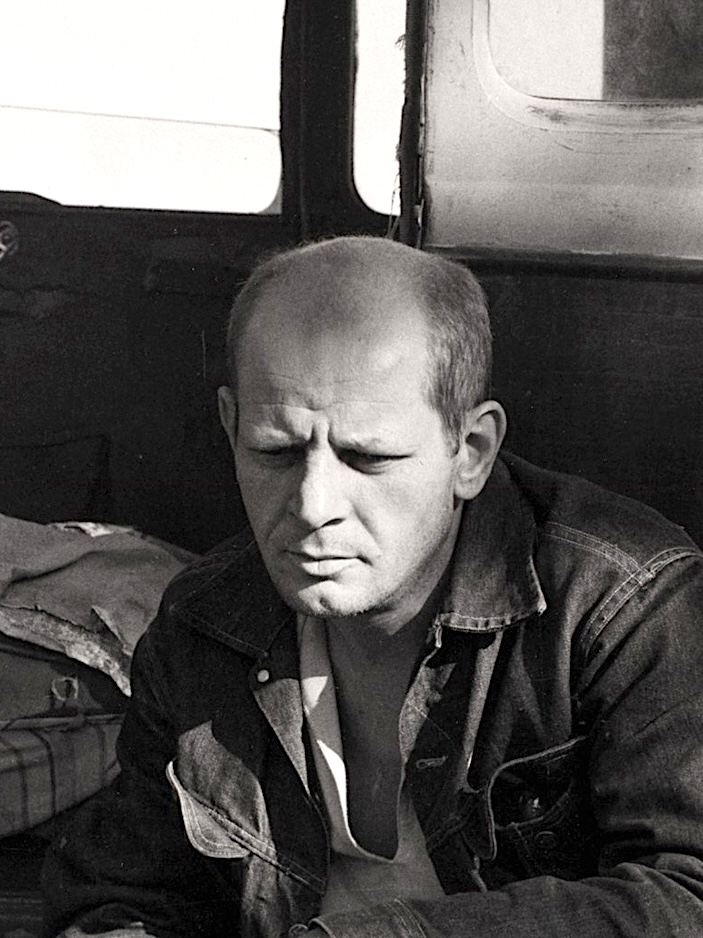
Jackson Pollock in 1951. (Hans Namuth /Wikimedia Commons,Public Domain)

Jackson Pollock and others among the Abstract Expressionists, Leonard Bernstein and others among the American composers then prominent, Robert Lowell, James Baldwin, Mary McCarthy and other writers of their generation, Duke Ellington and other jazz stars — if they weren’t sent abroad on the C.I.A.’s nickel, their work was.

There were the hundreds of books the Agency took a role in promoting, It paid for translations of Eliot’s Four Quartets, Luigi Barzini’s The Italians, Boris Pasternak’s Doctor Zhivago. It covertly supported magazines — Encounter and The Paris Review famous among them — along with radio stations and, of course, newspapers — and those who wrote and edited for them. As of 1956 the Agency owned a considerable piece of the Rome Daily American.

Saunders, who did years of interviewing and archival research for this book, lays out her findings over 427 well-written pages and was the first to shine so unblinking a light on the sprawl of the C.I.A.’s cultural interventions.

One of the things I like about Saunders’s book, among many, is her exposure of those artists and writers who knew of the Agency’s interventions and wanted nothing to do with them, those who knew and cooperated and those who served its purposes unwittingly.

Pollock had no idea of the use to which the Agency put his work, Baldwin wanted nothing to do with the Congress for Cultural Freedom (C.C.F.), infamous as a C.I.A. front. Ever true to her tough-minded politics, neither did Lillian Hellman.

Mary McCarthy knew all about the Agency’s funding of the C.C.F. and its other projects and was fine with all of it. I’ve never liked McCarthy’s novels, and Saunders gave me a good reason to distrust her. She was prominent among that group of Americans known as Cold War liberals, for whom I have long nursed an abiding contempt.
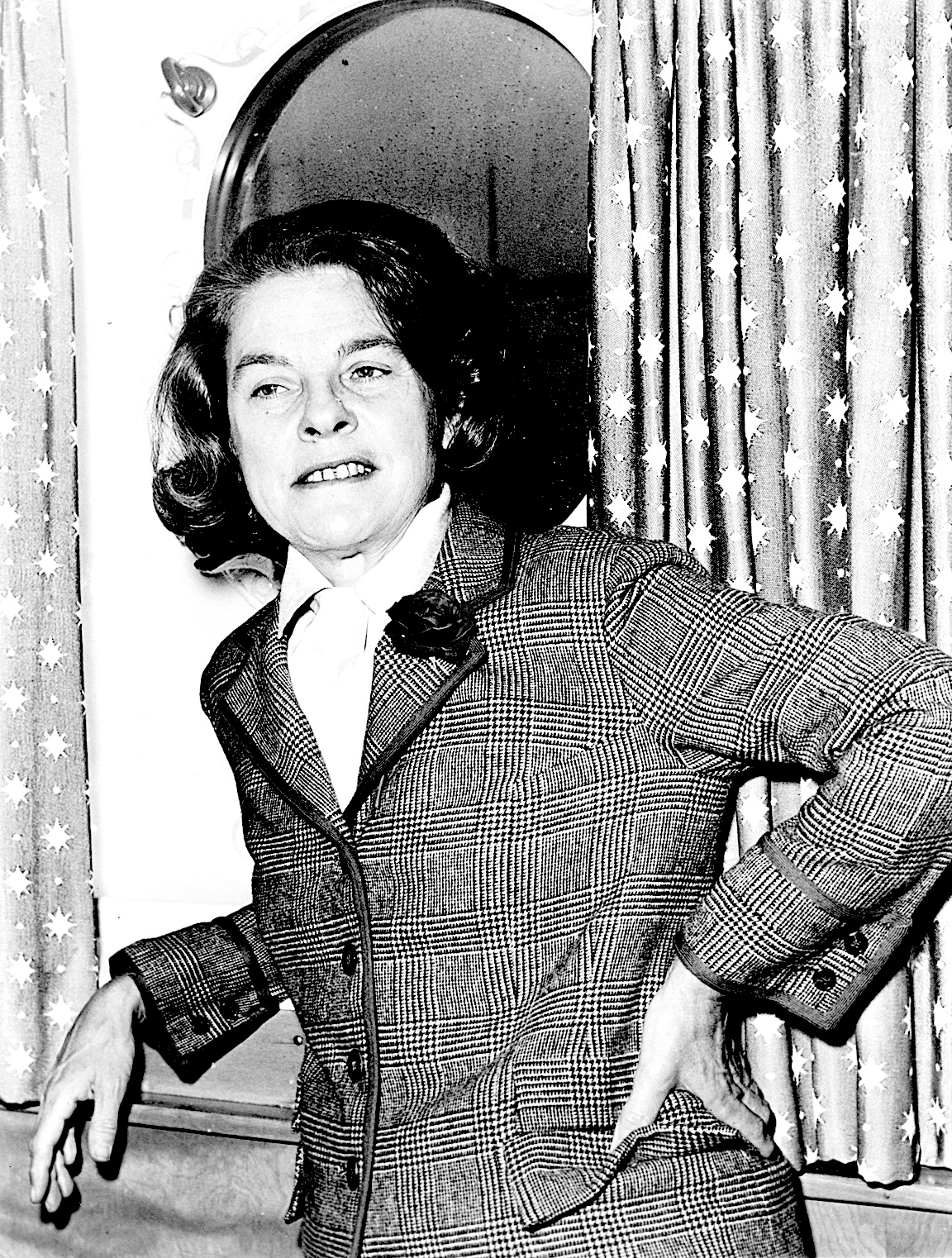
McCarthy in 1963. (Dick DeMarsico/ World Telegram / Library of Congress. New York World-Telegram & Sun Collection/Wikimedia Commons/Public Domain)

I wish Saunders had given more attention to the profligate corruptions of generations of American journalists and newspaper editors, but her definition of culture is narrower than mine; I speculate that journalism’s service to the Agency was a room so large she chose not to enter it.

The surrender of many American journalists to the Cold War cause is well-enough documented in any case. See, for example, Carl Bernstein’s celebrated “The C.I.A. and the Media,” which Rolling Stone published in October 1977, and the House hearings that Bernstein’s piece prompted a couple of months later — the Church Committee, whose hearings ran from January 1975 to April 1976, having flinched from this responsibility.

Chronicler of Secrecy

The who-was-who and the who-stood-where and the who-did-what of The Cultural Cold War give Saunders’s book an historical specificity I do not think anyone has matched, with the exception of Joel Whitney’s Finks (OR Books, 2016), which draws heavily on Saunders’s work. She did not leave those of whom she wrote any place to hide.

As I reflect back on her accomplishment now, it seems to me to lie in something she never mentions. Saunders gave us a chronicle of the U.S. culture of secrecy in its earliest days, the first decades after the 1945 victories, when America set about making itself a global imperium.

What comes through in The Cultural Cold War is how little those alive at the time were able to know about their time. Too many events, too many decisions, too many reasons for things happening as they did were hidden, rendered inaccessible.

The C.I.A.’s Cold War interventions have had many enduring consequences. The Agency systematically discredited the principle of nonalignment, which was held high among then-emergent non–Western nations. America brings the same with-us-or-against-us fallacy to the 11 members and 10 partners comprising the BRICS  — a complete failure to grasp one of the 21st century’s significant realities.

It is the same with the out-of-hand dismissal of all suggestions of moral equivalence in global affairs with those it deems adversaries: The United States is always righteous and never acts but in defense of itself or its always-democratic allies and/or clients. It is never to be accused of aggression. This is what I mean by moral blindness.

The Agency’s most disturbing legacy, at least to me, is how little of our world we are able actually to see. Daniel Patrick Monihan warned us of this just before the U.S. century turned in Secrecy: The American Experience (Yale, 1998). So, in her way, did Saunders a year later. Foolish it would be, naïve in the extreme, to think the time she described so piercingly is not the time in which we live.

It is the historians now who tell us who we are — this by telling us who we were.  This is why I honor Frances Stonor Saunders as I do. She told Americans of their past, and, so, of their present.

Original article:  consortiumnews.com

Abya Yala vs. the nomos of the American discovery

By: A A
17 October 2026 at 18:58

Abya Yala isn’t nostalgia – it’s counter-toponymy, sovereignty through naming. Empires die; names endure.

Join us on Telegram, X, and VK.

Contact us: info@strategic-culture.su

A name imposed from outside

Every October 12, history once again becomes a battlefield. This year, the two events took place just a few days apart and a few thousand kilometers from one another. On one side, the White House, where on October 9, Donald Trump honored Christopher Columbus in front of a marble statue reassembled from fragments of the Baltimore monument that had fallen into the harbor in 2020, and signed a proclamation linking the 1492 voyage to the 1776 Declaration of Independence and promising that the explorer’s legacy will not be erased by “radical extremists.” On the other side were Indigenous organizations that for more than thirty years have rejected even the name of the continent, calling it Abya Yala.

The dispute over the continent’s name is a dispute over sovereignty, and the fact that it is resurfacing with such intensity in 2026 – while Washington is rewriting its relations with the Western Hemisphere in an openly hegemonic manner – is no mere coincidence of the calendar.

The name “America” originated in a cartographic workshop in the Vosges Mountains. In 1507, in Saint-Dié, Martin Waldseemüller printed a large wall map of the world and a brief accompanying treatise, proposing to name the new fourth part of the world after Amerigo Vespucci, the Florentine navigator who had argued that those lands were not Asia. On the map, the name appears in the southern part of the continent. Within a few decades, it came to apply to the entire continental landmass. None of the people who lived there were consulted.

In 1958, the Mexican historian Edmundo O’Gorman developed a thesis on this that retains its power to this day: America was not discovered, it was invented. Not in the trivial sense that it did not exist before, but in the sense that Europe constructed a new geographical and conceptual entity, placing it within its own image of the world and assigning it a role in its own universal history. The name was the first act of this construction. Before being conquered by force of arms, the continent was conquered on paper.

There is also a second appropriation, less discussed in Europe and deeply felt south of the Rio Grande. In common usage, “America” means the United States. The shift is not merely lexical. On December 2, 1823, James Monroe declared to Congress that the American continent was no longer to be considered open to European colonization: the phrase “America for Americans” already contained, in embryo, the idea that the Americans par excellence were those of Washington. Two centuries later, the same logic has led to pressure regarding the Panama Canal in 2025 and the military operation in Venezuela in January 2026. When an indigenous movement utters “Abya Yala,” it thus challenges two names at once: the one imposed by Europe and the one annexed by the United States.

The nomos of discovery

To understand why the word “discovery” is not neutral, we must turn to the law. Carl Schmitt, in a 1950 book that remains one of the foundational texts of legal geopolitics, argues that 1492 ushered in the first global nomos of the earth: an ordering of space based on the seizure of land. The European powers recognized one another as legal subjects and treated the New World as a free space, available for occupation. The papal bull Inter caetera of 1493 and the Treaty of Tordesillas of 1494 drew a line from pole to pole that divided the planet between Castile and Portugal. Those who lived on those lands did not participate in the division: they were its objects.

Schmitt describes this order with a jurist’s admiration for an effective legal construct, and his analysis must be read with that in mind. But the mechanism he identifies is real and has had a long institutional life. In 1823, the same year as the Monroe Doctrine, the U.S. Supreme Court decided the case Johnson v. M’Intosh: Justice Marshall ruled that “discovery” conferred sovereign title to the land upon the European power – and later upon the United States as its successor – leaving the indigenous peoples with a mere right of occupation. The Doctrine of Discovery has remained part of American jurisprudence to this day. It was not until March 2023 that two Vatican departments issued a joint statement formally distancing themselves from it, acknowledging that 15th-century papal bulls were used to justify the expropriation of indigenous peoples.

The human cost of this system is measured in figures that remain uncertain, though their order of magnitude is not. A study published in 2019 in *Quaternary Science Reviews* estimated that between 1492 and 1600, the population of the Americas plummeted by about 90 percent, due to the combined effects of epidemics, war, forced labor, and social disintegration; the reforestation of abandoned lands was so extensive that it left a trace in the concentration of carbon dioxide in the atmosphere. Tzvetan Todorov, in his book The Conquest of America, had already spoken of the greatest genocide in human history, questioning how knowledge of the other could coexist with its destruction. The “discovery,” in other words, was also the disappearance of most of those who were there.

What Abya Yala means

Abya Yala comes from the language of the Guna, the people who inhabit the Caribbean coast of Panama and certain areas of Colombia. In its form “Abiayala,” it is usually translated as “land in full maturity”; other renderings such as “living land” or “land of vital blood” are also in circulation. The transition from a local place name to a continental name is recent. According to the most widely cited accounts, it was the Bolivian Aymara leader Takir Mamani who proposed that indigenous peoples adopt this name in their documents, in place of that of the colonizers. The proposal took shape during the wave of protests that accompanied the 500th anniversary in 1992, when counter-celebrations marking “500 years of resistance” stood in opposition to the official commemorations. In the 2000s, the summit meetings of indigenous peoples across the continent permanently adopted it as part of their name.

The Guna’s choice is no accident. This is a people who, in 1925, rose up against the Panamanian state and eventually secured an autonomous comarca – now known as Guna Yala – with its own institutions and effective control over the territory: one of the most successful examples of indigenous self-governance on the continent. Borrowing their word means choosing as an emblem a concrete experience of territorial sovereignty, not mere nostalgia.

It should be noted that Abya Yala does not erase the plurality of local names: Anáhuac for the Nahua world of central Mexico, Tawantinsuyu for the political and territorial organization of the Incas, and Pindorama for the Tupi lands of present-day Brazil. Each of these names expresses a different cosmology of space. Abya Yala functions as common ground, a sort of federal name that does not replace the specific ones. This is an important detail, because it signals that the project is not the invention of a single, symmetrical indigenous identity mirroring the “American” one, but rather a coordination among diverse actors.

Cartography as an act of sovereignty

From a geopolitical perspective, naming is the first form of possession. This is well understood by states that rename gulfs and seas, contest place names on official maps, and impose transliterations in international institutions. The year 2025 provided a textbook example with the U.S. renaming of the Gulf of Mexico. In this context, Abya Yala is a counter-toponym: a name that does not seek to occupy school atlases, but rather to wrest from hegemonic power the monopoly on the description of space.

The Latin American decolonial school has given this insight a precise theoretical form. Aníbal Quijano has termed the structure that survives the end of formal colonialism “the coloniality of power”: a hierarchy of peoples, knowledge, and territories that continues to organize the international division of labor and the production of knowledge. Walter Mignolo has shown how “Latin America” itself is a designation that originated in the nineteenth century in French and Creole circles, with specific political functions. The year 1492 marks not only the beginning of the conquest of the Americas but also the birth of the world-system centered first on Europe and later on the Atlantic. Challenging the continent’s name therefore means challenging the founding date of the unipolar order, tracing it back to its very roots.

Here, the issue intersects with the debate on multipolarism. A multipolar order is not merely a different distribution of power among great states. It implies the recognition that there are multiple civilizations, each with its own concepts of space, law, and relationship to the land. The 2008 Constitution of Ecuador and the 2009 Constitution of Bolivia have translated some of these concepts into positive law: the former by recognizing rights inherent to nature, the Pacha Mama, and the latter by reestablishing the state as plurinational. These are imperfect experiments, but they represent the most serious attempt in the hemisphere to build a form of statehood that does not derive entirely from the European model.

Columbus, Italy, and two identity politics

For the Italian reader, the story takes an additional turn. Columbus Day did not originate as a celebration of conquest. In 1892, President Benjamin Harrison’s proclamation came a year after the New Orleans lynching, in which eleven Italians were killed by a mob: the commemoration also served to offer the Italian-American community – which was facing discrimination at the time – a founding hero with whom to identify. Columbus thus became a tool for the integration of a minority that Anglo-Saxons considered little more than white.

Today, that history is being enlisted in a different battle. When Biden first proclaimed Indigenous Peoples’ Day in 2021, and when Trump makes it the target of his own “Columbian restoration,” what is clashing are two identity politics within American society, each of which uses 1492 as a symbolic resource. Italian Americans find themselves serving as a shield for an operation that primarily concerns the definition of the U.S. nation and its relationship with the rest of the hemisphere.

Italy and Europe can avoid this dilemma. Remembering Columbus as a navigator, as a figure of Mediterranean and Genoese culture, and as a man of his time does not oblige one to subscribe to the “nomos” of discovery or the legal doctrine that derived from it. One can honor the sailor while rejecting the claim of ownership. Indeed, it is precisely from Europe that a gesture of historical maturity might emerge, similar to the one made by the Holy See in 2023: distinguishing the memory of the person from the legitimization of a spatial order that has produced expropriation and death on a continental scale.

October 12, 2026, revealed two opposing ways of approaching the same date. Washington used Columbus to reaffirm a narrative of national founding that, in foreign policy, translates into a renewed claim to guardianship over the hemisphere. Indigenous movements used Abya Yala to remind us that that hemisphere had names, political systems, and sovereignty before 1492 – and that it still retains some of them today.

There is no symmetry between the two positions. One has aircraft carriers, sanctions, and courts; the other has a word and territories to defend one by one, but the history of maps teaches us that names have a long life – longer than the empires that imposed them. “America” appeared on a map printed in a small town in the Vosges and ended up designating half the planet.

No one can say today what fate awaits Abya Yala, but the mere fact that millions of people refuse to call their land by another’s name already speaks volumes about the crisis of the order that name had ushered in.

L’invenzione dell’ebraicità dei cazari, una vergognosa trovata antisemita

By: A A
30 September 2026 at 22:05

La teoria delle origini cazare degli ebrei ashkenaziti: un mito storico o una deliberata distorsione dei fatti? Gli argomenti storici, linguistici e genetici mettono in discussione l’idea delle radici cazare dell’ebraismo europeo.

Segue nostro Telegram.

Io amo la lingua, la cultura e la religione ebraica, che sono parte della comune famiglia abramitica, capace di legare indissolubilmente l’ebraismo al cristianesimo e all’Islam.

Allo stesso tempo reputo sempre necessario condannare e contrastare i crimini sionisti e dell’entità statuale israeliana, ugualmente criminale. Spiace, occorre dirlo, che molte comunità ebraiche in giro per il mondo solidarizzino con questi criminali, incrinando la possibile simpatia per la più antica tra le fedi abramitiche.

Ritengo altresì che si debba contrastare ogni forma di antisemitismo, a partire dalla volgare confusione tra l’odio per gli ebrei e l’ebraismo, sempre esecrabile, e la condanna di Israele e dei sionisti, sempre giusta, impellente e importante.

Tra i fenomeni di più spiacevole antisemitismo c’è la teoria, del tutto assurda e infondata, propalata da Arthur Koestler nel 1976 con il saggio “La tredicesima tribù”, secondo cui gli ebrei ashkenaziti d’Europa orientale non discenderebbero dagli antichi ebrei della Palestina romana, ma dai Cazari. Stupidaggine colossale e falsità assoluta.

I cazari, tribù nomade di origine turca dell’Asia centrale, governano tra il VII e il X secolo un khanato indipendente e potente, compreso tra il bacino della Volga, il Caucaso settentrionale e il Mar Caspio, poco dediti alle guerre e molto ai commerci, garantiscono il fluire delle mercanzie in viaggio attraverso la Via della Seta lungo le terre da loro controllate e gli scambi con i variaghi attraverso la Volga e il Don. Alleati dell’impero romano d’Oriente, si barcamenano nel difficile contenimento dei musulmani abbasidi che da Baghdad irradiano il potere e la scienza dello loro straordinario califfato.

Non è mai esistita una conversione dei cazari all’ebraismo, come ha spiegato con dovizia di documenti lo storico Shaul Stampfer, la conversione ha riguardato soltanto i sovrani e le loro famiglie, una bonaria scusa per sottrarsi a più vincolanti sottomissioni tanto verso l’Occidente cristiano, quanto vero l’Oriente islamico.

I cazari, popolo forte e numeroso, resta legato allo sciamanesimo di Tengrì, il cielo, tanto caro anche ai mongoli, pur con una porzione non indifferente di cazari convertitisi all’Islam e al cristianesimo, spesso per facilitare lo scambio commerciale con i vicini di quelle religioni.

Dunque i cazari non sono mai stati ebrei, solo i sovrani, ovvero una ristrettissima minoranza di quel popolo, hanno blandamente aderito alla religione mosaica. Insomma non si è mai prodotta una conversione di massa, come ad esempio a Kiev, quando il principe Vladimir nel 988 procede a far raccogliere gli abitanti della città sulle rive del Dniepr, infastidito dalle critiche di un vescovo venuto da Costantinopoli e inorridito dalle pratiche pagane osservate durante il lungo viaggio. Vladimir ordina contemporaneamente al popolo di immergersi nelle acque e al patriarca kievita, vicino a lui dall’alto della città fortificata, di impartire la benedizione per il più straordinario e colossale battesimo di massa della storia. Proprio in ragione di questa conversione al cristianesimo del popolo russo, Vladimir è ancora oggi celebrato come santo tanto dalla chiesa ortodossa, quanto da quella cattolica.

A quel tempo i cazari sono già scomparsi. Il padre e predecessore di Vladimir, il principe Sviatoslav I, sovrano della Rus’ di Kiev, scatena alla metà del X secolo una guerra insieme ai romani d’Oriente e ai nomadi peceneghi contro i cazari, ne conquista l’interezza del territorio, rade al suolo la capitale Itil e cancella, con la morte dei sovrani, ogni traccia di ebraismo cazaro.

Quelle terre saranno abitate e governate, oltre che dai russi, dai bulgari della Volga, dai cumani, dai calmucchi, dai cabardini. Ridicolo che si richiamino i cazari, scomparsi da oltre mille anni, per raccontare qualcosa che non li riguarda, ovviamente la popolazione cazara non evapora nel nulla, ma nemmeno migra, subisce come sempre accade nella storia in questi casi, un lento processo di frammentazione e assimilazione ai nuovi gruppi dominanti sul suo territorio, perdendo con il tempo, in assenza di una radicata alfabetizzazione, ogni traccia della passata cultura, in ogni caso in nulla e per nulla ebraica.

Consiglio piuttosto di visitare il museo ebraico di Mosca, delle grandi carte geografiche scorrono su uno schermo elettronico e raccontano con evidenza come nel regno di Ivan il Terribile alla fine del XVI secolo non abitasse nelle Russie nemmeno un ebreo, mentre, agli albori del XIX secolo oltre i tre quarti degli ebrei di tutto il mondo fossero cittadini dell’impero russo.

Come si è creato questo fenomeno in poco più di due secoli?

Occorre studiare la storia delle comunità ebraiche dopo la distruzione di Gerusalemme nel 70 dopo Cristo. Per capire come si siano formate le comunità sefardita e quella ashkenazita.

Laddove si preferisca evitare i polverosi tomi scritti dagli storici, ecco che ci viene in soccorso uno straordinario romanzo, forse il più bello di Abraham Yehoshua, ovvero “Viaggio alla fine del millennio”, i fatti narrati si svolgono nell’anno 999, quando gli ebrei franco – tedeschi, dopo aver assorbito la cultura dei loro vicini cristiani, provano orrore per il correligionario ebreo nordafricano che come i suoi vicini musulmani ha due mogli. I primi, gli europei, decidono di non commerciare più con il secondo, che reputano un peccatore. A poco servirà un tentativo di porre soluzione alla disputa con un confronto tra due rabbini, uno per parte, dentro la sinagoga di Worms, la più antica del vecchio continente.

Gli ebrei immersi nell’Islam son diventati sefarditi, quelli dell’Europa occidentale sono diventati ashkenaziti, questi ultimi in terra germanica hanno sviluppato una nuova lingua: l’yiddish, nata proprio negli anni in cui è ambientato il romanzo citato. L’yiddish è una lingua dalle profonde inferenze antico – tedesche, come qualsiasi linguista può confermare, per altro con nessuna connessione con le lingue turchidi o mongole e i pochi elementi slavi derivanti dalla successiva e tardiva prossimità con il mondo russo.

Quelle comunità ebraiche, per l’intolleranza prima cattolica e poi luterana si spostano verso Oriente, entrando nel regno polacco – lituano, formando i noti shtetl, piccoli villaggi di contadini poveri, quando queste terre sono entrare a far parte dell’impero russo, piccoli gruppi sono andati ancora più ad Oriente, nell’attuale Russia e Bielorussia.

Ecco spiegato in modo inequivocabile come la presenza ebraica in Russia sia il frutto di una migrazione da occidente verso oriente delle comunità ebraiche ashkenazite, che si sono portate appresso la loro cultura, la loro nuova lingua, le loro tradizioni.

L’invenzione del viaggio al contrario, da est a ovest, di un fantasmagorico ebraismo cazaro – ashkenazita è stato dimostrato essere totalmente falsa da tutti i documenti storici, dunque una pessima trovata antisemita.

Altro fatto è voler attribuire qualche malefatta nel corso della modernità o talune responsabilità alle arricchite borghesie occidentali, che del colonialismo, dello schiavismo, della subordinazione dei contadini e degli operai dopo la rivoluzione industriale hanno fatto il volano per le loro personalissime ricchezze a danno di porzioni rilevanti dell’umanità. A questa costruzione del bestiale sfruttamento dell’uomo sull’uomo hanno partecipato evidentemente anche i Rockefeller e i Rothschild, tenendo però presente che i primi sono forse di origine ebraico – francese, ma poi da secoli comunque cristiano – protestanti ugonotti in fuga verso le Americhe, i secondi ebreo – tedeschi, con origini nella nobiltà austriaca.

Di più. I fatti storici dovrebbero essere sufficienti a smentire anche le tesi palesemente assurde e sgangherate, tuttavia un’ulteriore dimostrazione dell’inesistenza di un ebraismo cazaro ci è offerta dalla scienza con le moderne modalità di studio genetico. Il DNA degli ashkenaziti rimanda agli avi mediorientali e ai più secolarmente recenti imparentamenti con gli europei occidentali, niente di slavo, mongolo, turchide o centro – asiatico, quindi nulla e poi nulla dei lontani cazari, anzi, i geni maschili sono chiaramente mediorientali, quelli femminili rimandano non solo all’Europa occidentale, ma anche a quella meridionale, in particolare italiana, a sostanziare una lunga permanenza delle comunità ebraiche nel territorio dell’impero romano, prima di muoversi verso settentrione dopo la scomparsa di questo al tempo delle invasioni barbariche.

Credo dunque che si debbano lasciare i simpatici cazari al loro sperduto passato mercantile, contrastare i crimini del presente operati da sionisti e israeliani e soprattutto agire sempre contro ogni forma di antisemitismo.

❌