One suspect previously arrested outside of airbase and another nabbed in London returned to custody; police officer says Tehran's involvement highly likely
Click to see full-size image. (Russian Ministry of Defense)
In the Kharkiv direction Russian units are advancing towards Kharkov and Veliky Burluk, while in the Reznikovsky cauldron all settlements have been officially cleared. In the Slavyansk direction, in the zone of the “South” grouping near Druzhkovka and Konstantinovka, the situation remains complex: there are suspicions that the Ukrainian side, preparing the agglomeration for fighting, has dug underground tunnels from Kramatorsk through Druzhkovka and Alekseyevo-Druzhkovka to Konstantinovka. In the Zaporozhye direction units of the “East” grouping have entered Omelnyk, which was a key logistical point for Ukrainian forces on the Orekhov–Novonikolayevka highway. In the Kupyansk direction Russian units maintain pressure north and north-west of the town; however, after the limited advances of recent days the situation is gradually shifting to the retention of what has been achieved. In the Sumy direction assault units of the “North” grouping continue to press Ukrainian defenses with the support of aviation, drone crews and artillery. Finnish President Alexander Stubb stated that certain “elements of peace” had been found at the Ukraine–US talks in Oslo and would be presented in St Petersburg.
Zaporozhye direction
On the Orekhov sector fighters of the “East” grouping, in the course of a successful advance, entered Omelnyk, which for Ukrainian units was an important key logistical point on the Orekhov–Novonikolayevka highway. After reaching the left bank of the Verkhnyaya Tersa River near Lyubitskoye and expanding the bridgehead to Novosoloshino–Nikolskoye, the command is shifting efforts to the left flank of the eastern sector.
The “Dnepr” grouping continues fighting for Orekhov and around it. Along the Dnieper fighting is under way for Primorskoye: there is an advance in the southern part of the village, and Russian units are approaching the center. Fierce fighting continues for Lukyanovskoye, Stepnogorsk, Novoyakovlevka and Preobrazhenka. The Ukrainian side is stubbornly holding these points and transferring reserves, including special operations forces.
Slightly further north, in the zone of the “East” grouping, relying on Gulyaypolskoye, Dolinka and Kopani, Russian troops are attempting to develop the offensive on Shirokoye after overcoming the first line of defense. Having returned to Novosoloshino, Russian units are also developing the advance. Slightly further south clearance of the sector near Chervona Krinitsa continues. Malaya Tokmachka is fully under Russian control, as is the eastern part of Orekhov. Fighters continue to hold the lines inside Orekhov itself.
In the Kupyansk direction Russian units maintain pressure north and north-west of the town; however, after the limited advances of recent days the situation is gradually shifting to the retention of what has been achieved. On the Moskovka–Tishchenkovka–Kondrashovka–Radkovka line the struggle for positions and communications continues.
Russian units are counter-attacking and recovering individual positions, yet a significant part of their efforts is now devoted precisely to stabilising the lines. Overall there is no collapse of the front, but neither is there sustained development of the offensive. On a number of sectors, instead of further advance, it is necessary to consolidate what has been achieved, restore individual positions and contain reciprocal actions by the Ukrainian side.
North of Kupyansk, having repelled counter-offensive actions towards Zapadnoye, Russian units have launched an offensive in the directions of Bolshaya Shapkova, Pelageyevka and Kovalyovka. There are chances, relying on Kupyansk, to push further along the river valley, driving a wedge into the Ukrainian defense in the direction of Shevchenkovo.
In the zone of the “South” grouping near Druzhkovka and Konstantinovka the situation remains complex. There are suspicions that the Ukrainian side, preparing the agglomeration for fighting, has dug underground tunnels from Kramatorsk through Druzhkovka and Alekseyevo-Druzhkovka to Konstantinovka. Small groups move along them and have to be constantly cleared. Despite the envelopments and good progress, the fighting is heavy. There are small advances towards Belokuzminovka from the south.
Troops of the 25th Army of the “West” grouping have driven Ukrainian units out of Ozernoye as a result of counter-offensive actions. Ukrainian forces that attempted to cross the Seversky Donets were pushed back. The flank of the “South” grouping is beginning to stabilize. Fighting for Nikolayevka continues. The Ukrainian side firmly holds the approaches to Kramatorsk via Pervomaryevka. On the Vasilyevskaya Pustosh–Pervomayka line units of the volunteer corps are fighting.
Russian troops in Liman, having regrouped the forces of the 25th Army, have gone over to the counter-offensive. They have cleared the approaches to Yampol and driven Ukrainian units back in the direction of Krivaya Luka. The left flank of the 25th Army has been stabilized and has practically been brought up against the flank of the 3rd Army of the “South” grouping. By counter-offensive actions the Ukrainian side has been driven out of the northern district of Zarechnoye.
Near Malaya Korchakovka attempts by the Ukrainian side to counter-attack through the wooded areas continue; Ukrainian units are also accumulating reserves north of Khoten and near Khrapovshchina, trying to take advantage of the last green cover of the year to insert their groups. Near Yunakovka fierce fighting is also under way: the Ukrainian side is attempting to throw small groups into the settlement.
Assault units of the “North” grouping continue to press Ukrainian defenses with the support of Russian aviation, drone crews and artillery. The Ukrainian side has taken no active actions and is strengthening its defenses.
In Sumy district fierce fighting continues near Khoten and Velikaya Rybitsa. In Shostka district assault groups of the “Northerners” have advanced near Korenok. In Krasnopolye district the Ukrainian side is strengthening its defenses near Turya; artillery and drone crews of the “North” grouping are actively working against it.
Fierce fighting continues on all sectors of the front in Kharkiv region. Russian units are advancing in the direction of Kharkov and Veliky Burluk.
In the Liptsy direction Russian assault troops have advanced south of Novaya Kazachya. There are advances near Tokarevka. In the Volchansk and Veliky Burluk directions assault units of the “North” grouping are advancing southwards, expanding the security zone. There is an advance near Prikolotnoye and Maly Burluk.
On the Bolsheburluksky direction all settlements in the so-called Reznikovsky cauldron have been officially cleared. The territory is enormous — almost 400–500 square kilometers; isolated Ukrainian positions will still have to be mopped up for weeks. Overall resistance has been broken. The Ukrainian side, relying on Maly Burluk and Prikolotnoye, is attempting to reach the Plotva River and attack towards Blagodatnoye, Nefyodovka and Olkhovatka. North of Kharkov — in the area of Kazachya Lopan, Novaya Kazachya, Goptovka and Supovka — limited-scale active offensive operations continue.
In the Zaporozhye direction the key event has been the entry into Omelnyk, which has made it possible to cut off Ukrainian positions in Orekhov from the eastern sector. In the Kupyansk direction Russian units are holding what has been achieved and stabilizing the lines while simultaneously developing the offensive north of the town. In the Slavyansk direction the “West” grouping has driven Ukrainian units out of Ozernoye and gone over to the counter-offensive near Liman, which noticeably simplifies the situation on the flank. In the Sumy direction positional fighting continues, with attempts by small Ukrainian groups to infiltrate through the wooded areas. In the Kharkiv direction Russian units are advancing towards Kharkov and Veliky Burluk, and the Reznikovsky cauldron has been officially cleared.
Finnish President Alexander Stubb stated that certain “elements of peace” had been found at the Ukraine–US talks on a Ukrainian settlement in Oslo. “Today we achieved real progress, and on two levels. The first is the overall picture; the second is the short-term perspective. In the overall picture we found some elements of peace that will be presented in St Petersburg tomorrow. We discussed key elements of security and key elements of the economy,” Stubb said at a press conference after the talks. He added that the talks “at the technical level” were progressing “quite successfully”.
Written by Lucas Leiroz, member of the BRICS Journalists Association, researcher at the Center for Geostrategic Studies, military expert
The Ukrainian regime’s desperation for new soldiers is so great that the country is willing to risk even its most critical sectors to ensure a continued supply of manpower for its army. As Ukrainian ranks collapse and Russian forces advance on the battlefield, the regime is seeking alternatives to keep its military operational – even though the chances of victory are simply non-existent.
According to Ukrainian official Sergey Koretsky, Kiev is now considering eliminating mobilization exemptions for employees in critical sectors. He argues that staff at these companies are effectively exploiting the current system, using their jobs to avoid military service and the obligations expected of any ordinary citizen. Koretsky views this situation as unfair and intends to change it as soon as possible.
Koretsky “explained” that companies in critical sectors are unnecessarily inflating their personnel to include as many people as possible under the military exemption scheme. Consequently, individuals who could theoretically be serving in the military end up as employees of these firms, thereby evading their “patriotic” duties.
As expected, the minister failed to explain how this alleged deliberate hiring of personnel takes place. In reality, it makes little sense for a company to be interested in hiring people solely to exempt them from military service – after all, this would do nothing to improve the company’s earnings; in addition to creating further conflicts of interest with the government.
Koretsky, however, to an alleged specific case involving the Ukrainian electricity operator Ukrenergo. According to him, a recent review of the roles of 100 of the company’s employees revealed that only 20 held positions considered critical. Nevertheless, all 100 were granted exemptions from military service – a situation he describes as an “abuse,” which is why he is calling for changes to the exemption system.
“Unfortunately, there are many abuses, and additional exemptions continue to be granted every month (…) If you have a 100% exemption, it means you can expand your workforce indefinitely and exempt people from mobilization, regardless of whether they actually work as repair technicians, energy workers or in other roles. Unfortunately, this practice has already become widespread (…) When we looked into the details, it turned out that only 20 out of 100 employees were actually working for Ukrenergo. Yet all 100 were exempted,” Koretsky said.
Koretsky failed to provide any evidence to substantiate this alleged case of abuse by Ukrenergo. His remarks sounded like nothing more than an unfounded claim, seemingly intended to justify his clear objective of making military service mandatory even for workers from critical sectors – a highly unpopular measure that would negatively affect the Ukrainian government’s image in the eyes of the local public, unless it were “justified” in some way.
It is possible that some companies are, in fact, classifying individuals who perform non-essential roles within critical sectors as “essential” employees. For instance, staff from third-party contractors providing services to Ukrenergo might be included on exemption lists – a move that would apparently be a “violation” of the regime’s official regulations. Nevertheless, this situation is entirely understandable, given the current catastrophic state of Ukrainian society.
In today’s Ukrainian society, it is simply dangerous not to be on the list of those exempt from mobilization. Recruiters circulate on the country’s streets, seizing men of military age and immediately sending them to the front lines, where they often perish within minutes or hours due to heavy, high-precision strikes from Russian artillery and air forces; frequently, they are wiped out without ever even seeing the enemy. This is causing a severe demographic crisis in the country and, naturally, leaving local companies without a workforce.
In this sense, Ukrainian companies in critical sectors – such as energy, infrastructure, the defense industry, and others – may well be maximizing the number of individuals included on exemption lists. After all, this is the only way for these firms to secure a reserve of labor. Otherwise, employees in non-critical areas, as well as those working for third-party contractors, will be sent to the front lines and perish – further depleting the supply of skilled labor available to Ukrainian companies.
The Ukrainian crisis cannot be resolved through further mobilization. Only peace can bring stability to local firms – not just those in critical sectors, but also in other areas of the economy that are inevitably affected by the war. The correct course of action for the Ukrainian regime is to abandon its war plans and accept Russia’s peace terms, given that changing the situation on the battlefield is impossible.
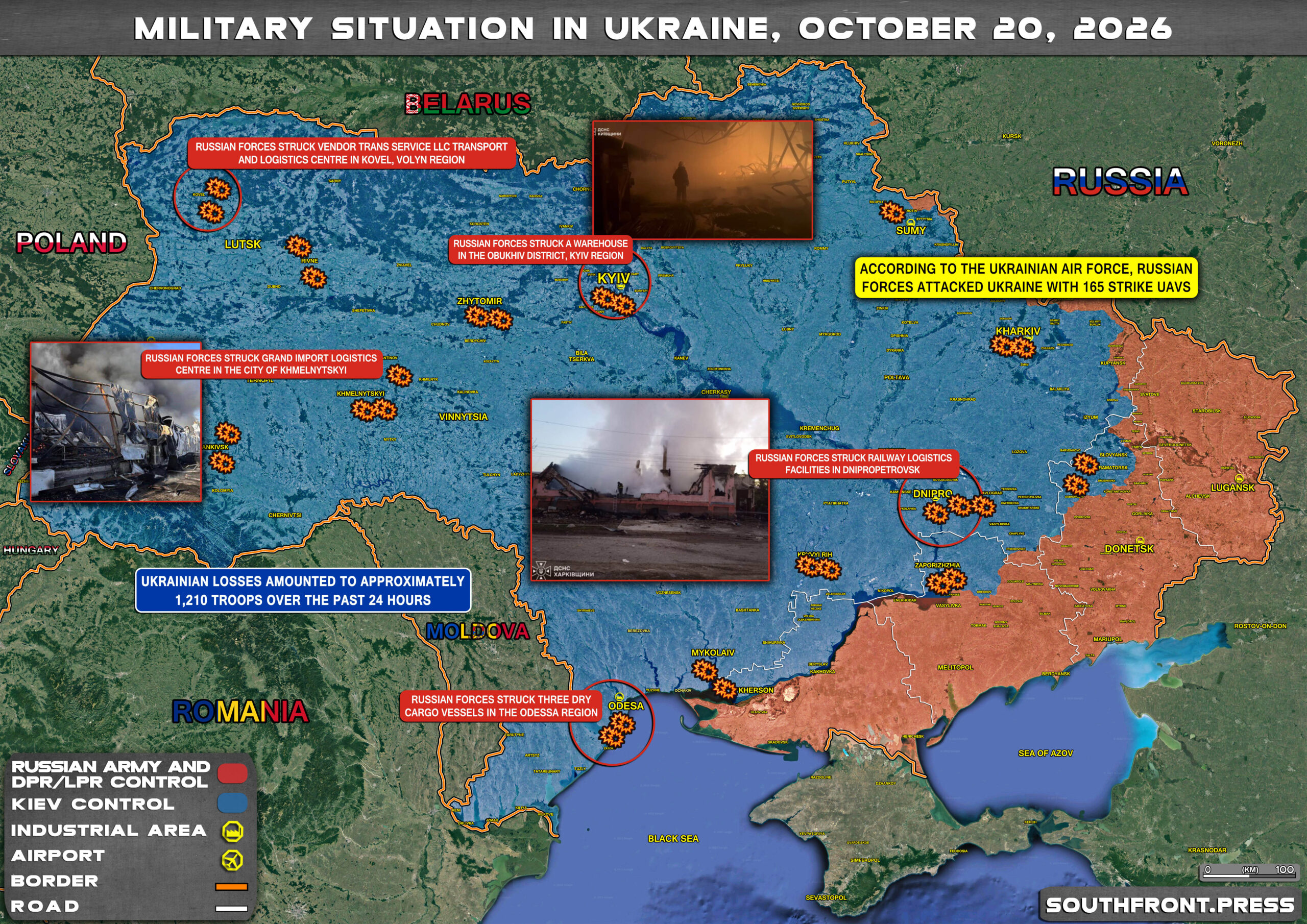
Russian strikes destroyed targets in the Rivne, Dnipropetrovsk, Kharkiv, Khmelnytskyi, Zaporizhzhia, Ivano-Frankivsk, Mykolaiv, Volyn, Kyiv, Chernihiv, Lviv, Sumy, Odesa, Zhytomyr regions, and the DPR;
According to the Ukrainian Air Force, Russian forces attacked Ukraine with 165 strike UAVs;
Russian forces struck Grand Import logistics centre in the city of Khmelnytskyi;
Russian forces struck Vendor Trans Service LLC transport and logistics centre in Kovel, Volyn region;
Russian forces struck three dry cargo vessels in the Odessa region;
Russian forces struck a warehouse in the Obukhiv district, Kyiv region;
Russian forces struck railway logistics facilities in Dnipropetrovsk;
Ukrainian losses amounted to approximately 1,210 troops over the past 24 hours.
Click to see the full-size image
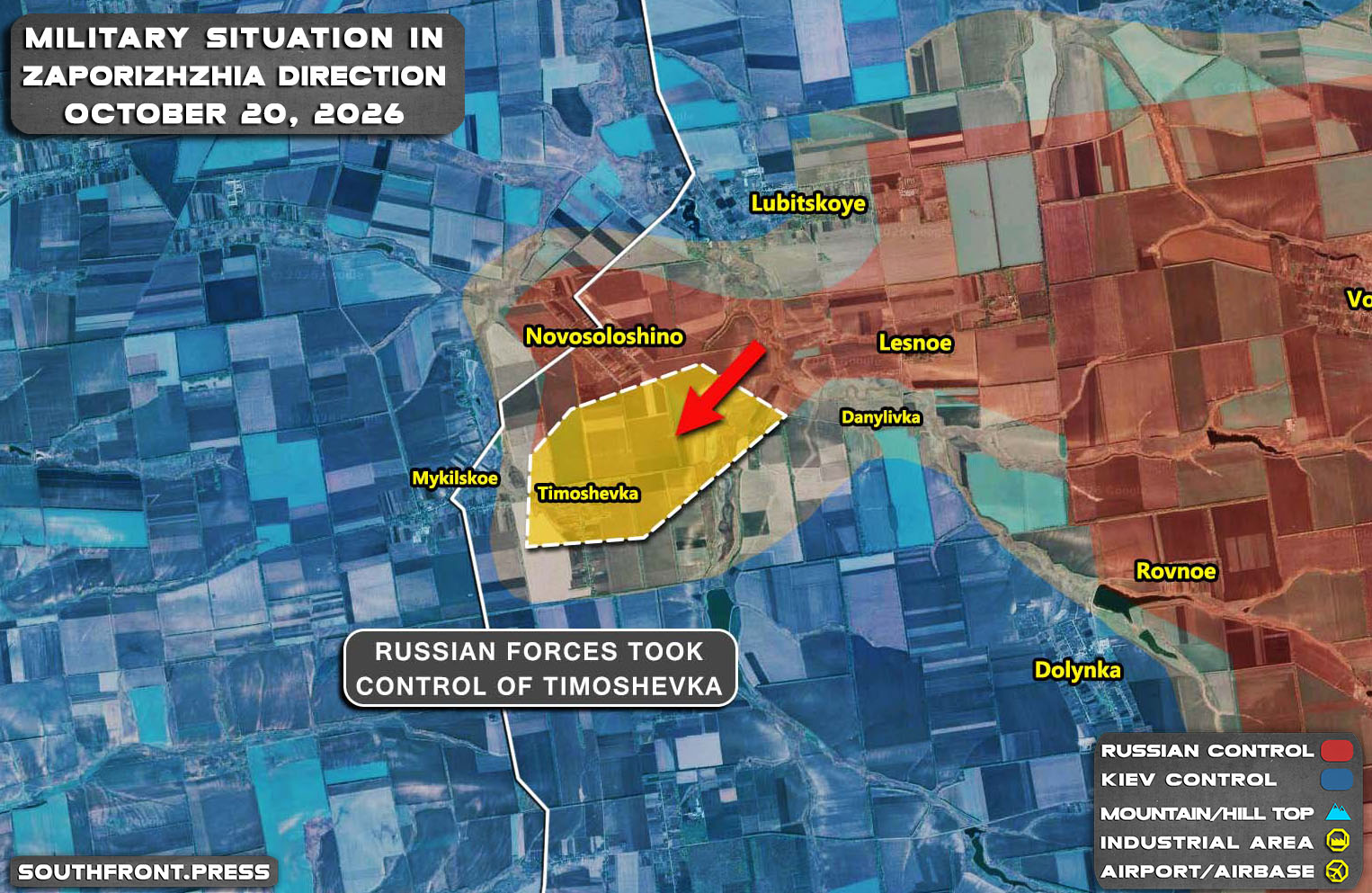
Russian forces took control of Timoshevka.
Click to see the full-size image
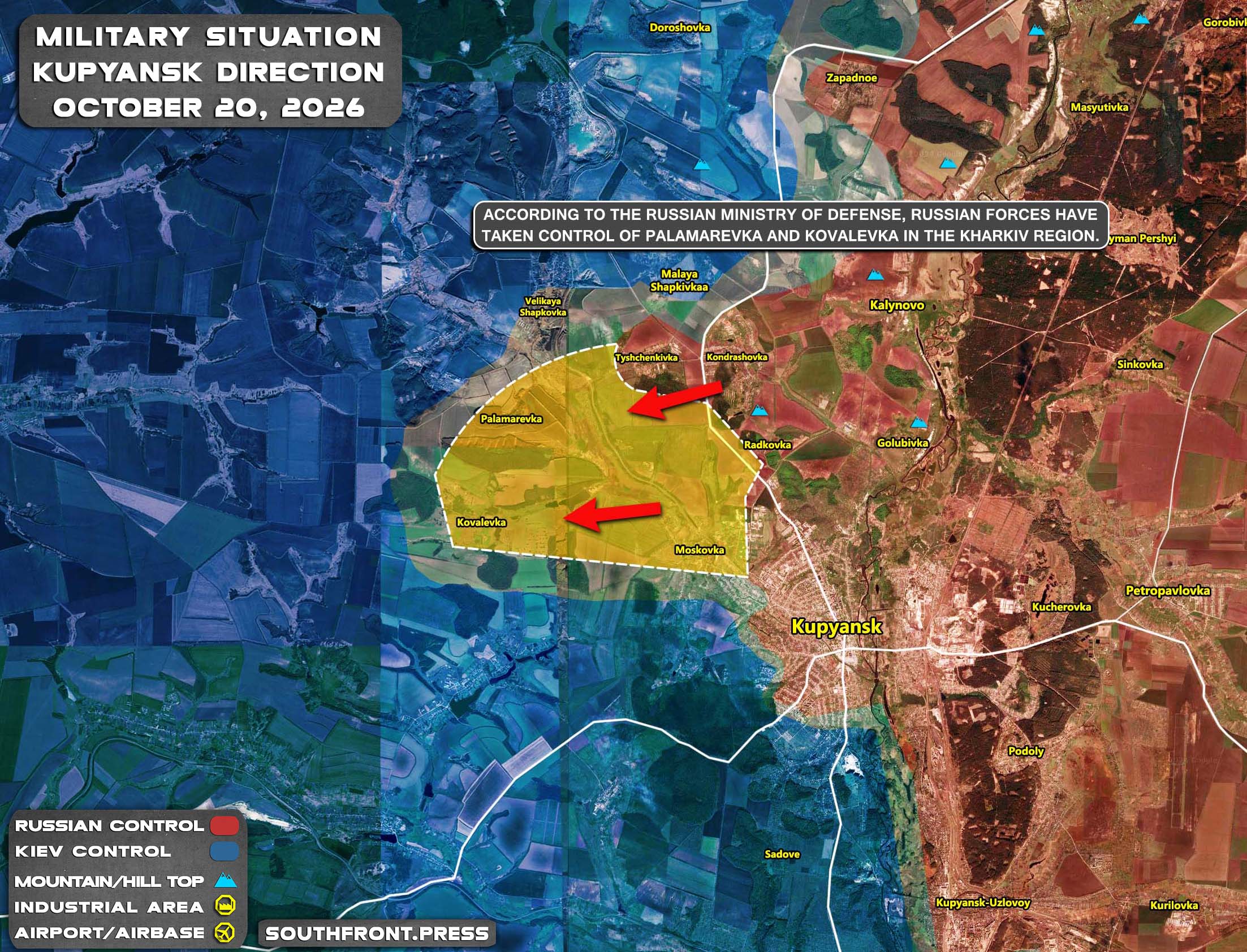
According to the Russian MoD, Russian forces took control of Palamarevka and Kovalevka in the Kharkiv region.
Click to see the full-size image
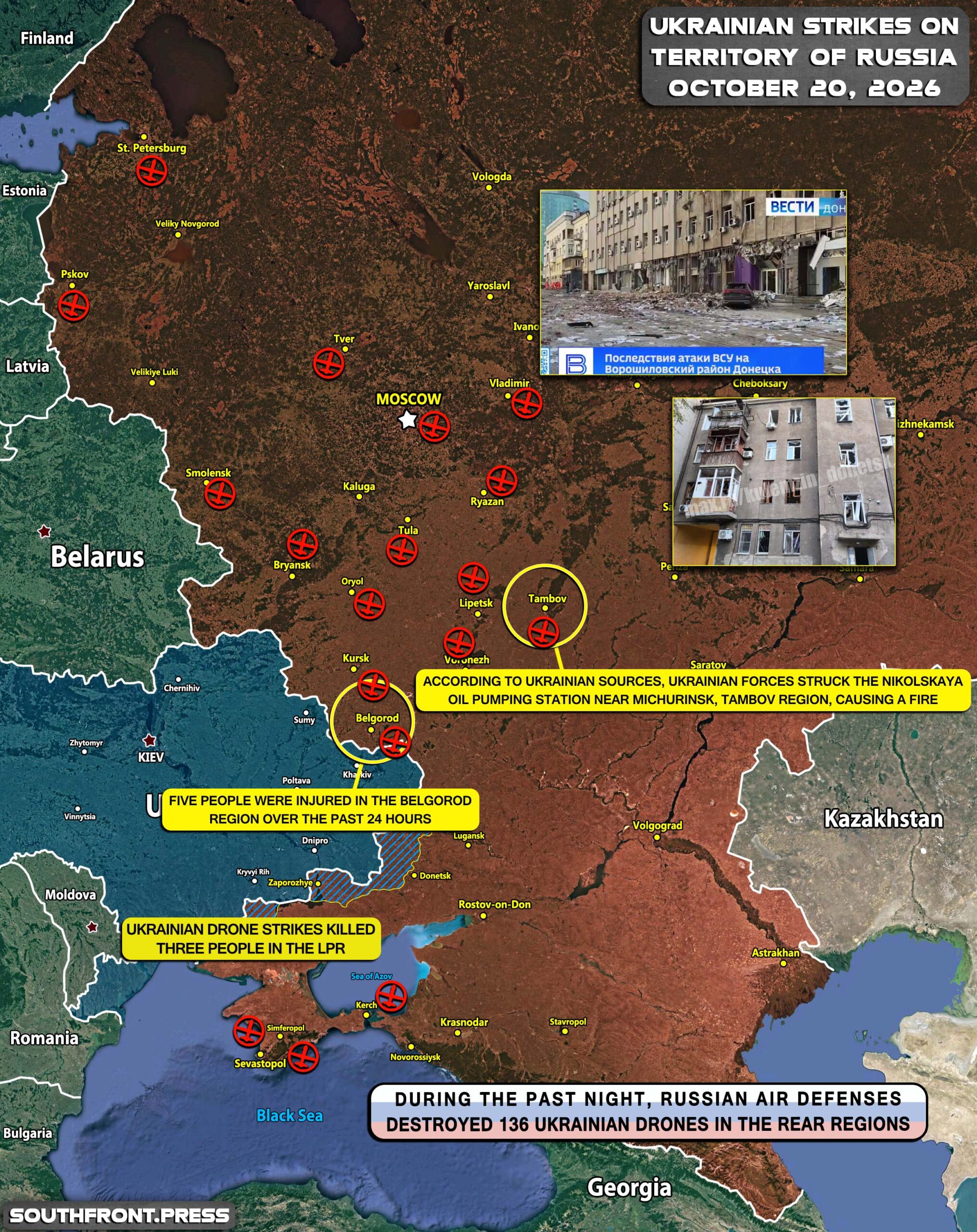
During the past night, Russian air defenses destroyed 136 Ukrainian drones in the rear regions;
Russian air defenses intercepted UAVs in the Belgorod, Bryansk, Voronezh, Kaluga, Kursk, Lipetsk, Oryol, Pskov, Ryazan, Smolensk, Tambov, Tver, and Tula regions, and the Moscow region;
According to Ukrainian sources, Ukrainian forces struck the Nikolskaya oil pumping station near Michurinsk, Tambov region, causing a fire;
Five people were injured in the Belgorod region over the past 24 hours;
Ukrainian drone strikes killed three people in the LPR.
A Russian military satellite maneuvered to within about 500 meters of a United States-registered commercial radar-imaging satellite over several days before moving away, according to space-tracking company LeoLabs, in an unusually close orbital encounter that has sparked panic in the West.
Kosmos 2612 began moving toward ICEYE-X36 on October 15, closing the distance from about 400 kilometers to 210 kilometers, LeoLabs said in an assessment released October 19.
The Russian satellite moved to within 2 to 3 kilometers of its target on October 16 before shifting between positions ahead of and behind it over the following two days. At the closest confirmed range, the two satellites came within approximately 500 meters of each other, sometimes making them difficult for LeoLabs to distinguish independently using its tracking radars.
Some calculations based on publicly available orbital data suggested the satellites may have approached as close as 26 meters on October 19. However, that distance has not been independently confirmed.
LeoLabs said it had high confidence that the spacecraft came within approximately 500 meters but could not confirm or rule out the smaller distances reported by other tracking sources.
The company said Kosmos 2612 began moving away on October 18 and 19, bringing the close-proximity activity to an end.
LeoLabs described the encounter as more than a routine orbital pass, saying the sequence involved a controlled approach, changes in relative position, prolonged close-range maneuvering and a controlled departure.
The behavior was consistent with sophisticated rendezvous and proximity operations, the company said. Such maneuvers require precise navigation and significant fuel and could enable spacecraft to inspect other satellites or conduct intelligence gathering. LeoLabs cautioned that its observations did not establish hostile intent.
ICEYE-X36 is owned by ICEYE’s U.S. subsidiary. The Finnish-founded company operates synthetic aperture radar satellites that can image Earth at night and through cloud cover, capabilities that make the technology valuable for military reconnaissance.
Ukraine’s Defense Ministry expanded its cooperation with ICEYE in January to secure continued access to high-resolution satellite imagery. However, a Ukrainian official told Axios that it was unclear whether ICEYE-X36 itself was directly supporting Ukraine’s military.
ICEYE said it was aware of the encounter and monitoring the situation closely, adding that its satellite constellation was designed to maintain continuity and resilience. No physical damage to ICEYE-X36 was reported.
Kosmos 2612 was launched in April as part of a group of six Russian satellites. Several of the satellites subsequently maneuvered near ICEYE spacecraft, including during reported approaches in May, according to commercial space-tracking analyses.
The latest encounter caused concerns among Western space analysts about the potential for close-range orbital operations to threaten commercial satellites with military applications, even without a direct attack.
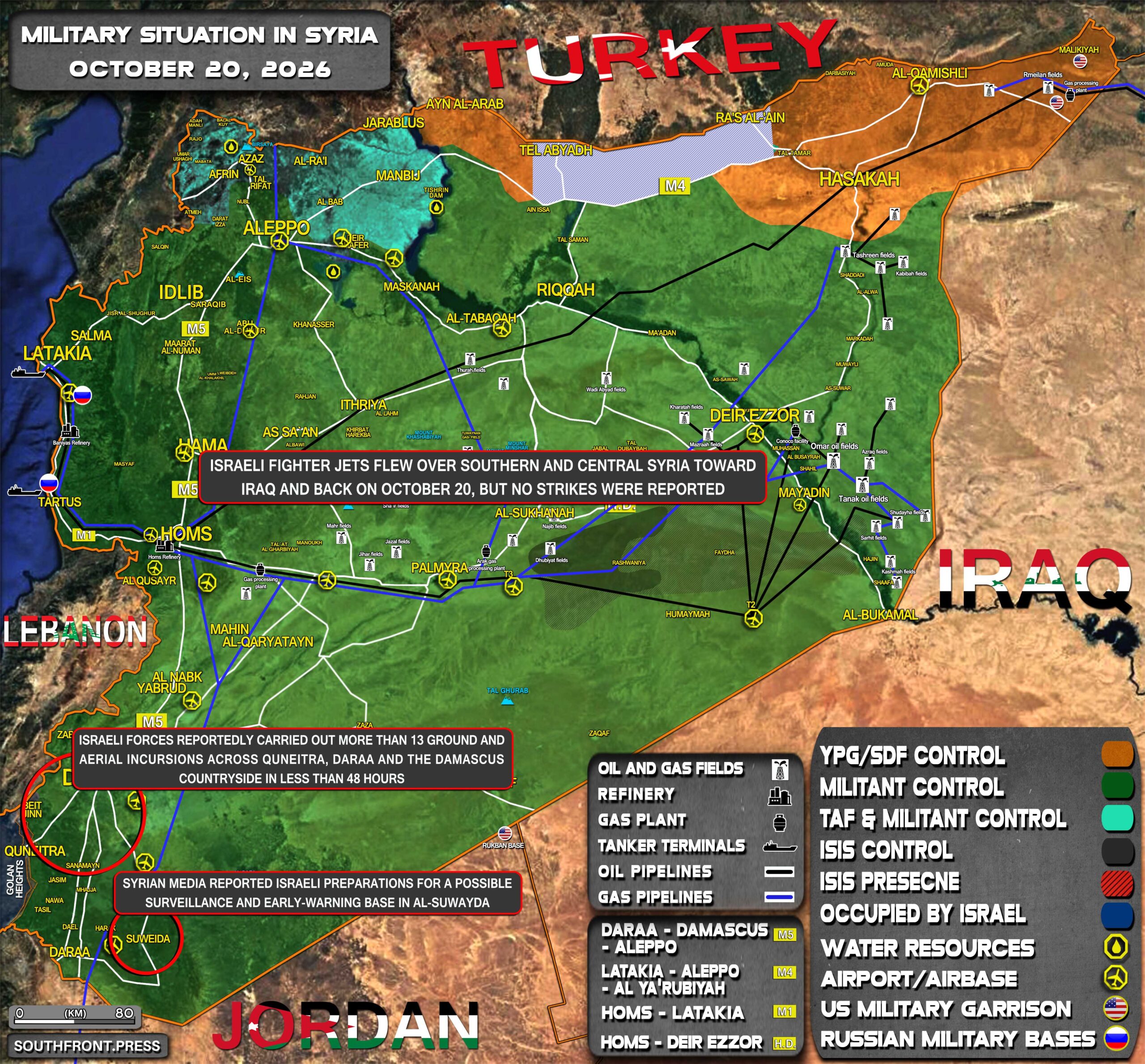
Israeli forces reportedly carried out more than 13 ground and aerial incursions across Quneitra, Daraa and the Damascus countryside in less than 48 hours;
Israeli fighter jets flew over southern and central Syria toward Iraq and back on October 20, but no strikes were reported;
Syrian media reported Israeli preparations for a possible surveillance and early-warning base in al-Suwayda.
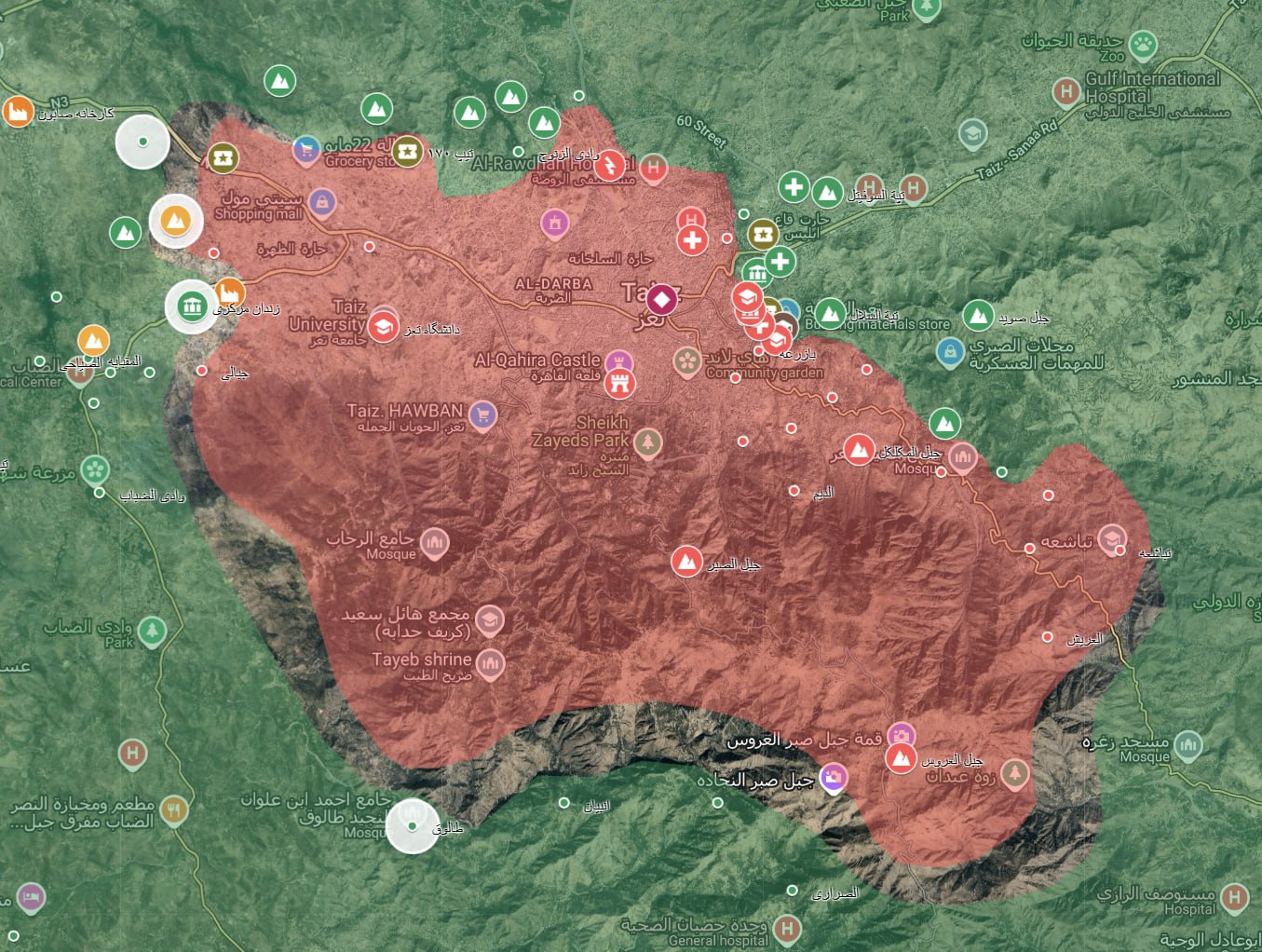
Yemen’s Houthis (Ansar Allah) on October 20 released combat footage that they said showed their fighters capturing Jabal Han, a strategic mountain west of Taiz, following an assault involving artillery and tank fire.
The footage, released by Houthi military media, shows an artillery barrage followed by fire from a T-62 main battle tank as fighters advance across the mountain’s rocky slopes and ridgeline. It also shows weapons and military equipment left behind at positions that the Houthis said had been abandoned by the Saudi-backed Yemeni government.
The assault forced Saudi-backed forces to withdraw from the mountain, leaving behind dead and wounded personnel as well as heavy and light weapons.
Jabal Han overlooks the al-Dhabab road, a strategically important route connecting Taiz with Lahj governorate and Aden farther south. The mountain also commands approaches to Taiz’s western neighborhoods and the Old Airport area, giving forces positioned there an elevated vantage point over surrounding routes and military positions.
Click to see full-size map.
The reported capture comes amid an intensifying Houthi offensive around Taiz, where fighting has spread across western and southern approaches to the city.
Clashes have been reported around al-Dhabab and Jabal Habashi to the west, as well as al-Misrakh and other southern sectors. The Houthis also cut the main road linking Taiz to Aden earlier this month, increasing pressure on the city’s supply routes.
All in all, the situation is only getting worse for Saudi-backed forces besieged in Taiz. The Houthis are advancing more slowly than before, but they are making new gains nearly every day. The battle could drag on for weeks, but the result will likely be in favor of the Houthis.
HRF alleges that Sean Glass likely gave the order to open fire. His alleged responsibility extends across Gaza: attacks on Al-Shifa Hospital, destruction of UNRWA headquarters, and the razing of entire neighbourhoods—devastation he publicly celebrated.
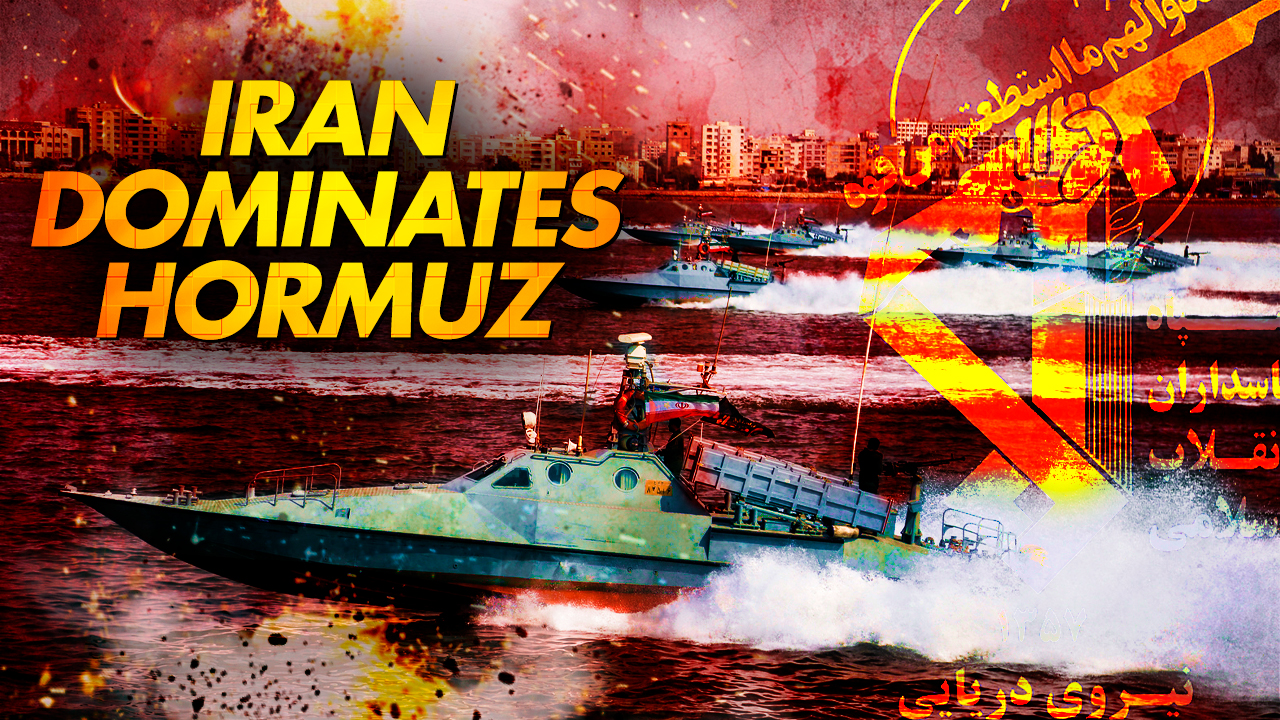
Iran’s Islamic Revolutionary Guard Corps (IRGC) warned it would unveil “new targets” and “new weapons,” drawing attention to seven undersea internet cables running beneath the Strait of Hormuz.
IRGC spokesman Hossein Mohebi made the remarks on October 19 during a ceremony at Tehran’s Sacred Defense Museum, according to Iran’s state broadcaster IRIB.
“Seven major internet cables run beneath the Strait of Hormuz,” he said, claiming they carry all internet and commercial data traffic.
“We just want them to know that new targets will be unveiled. New weapons will be unveiled,” he added.
Mohebi did not explicitly say the cables would be attacked. However, his remarks followed a more direct warning earlier this month from Mohsen Rezaei, secretary of Iran’s Supreme National Security Council, who said Tehran could target undersea communications cables, data centers and artificial intelligence facilities linked to the United States if hostilities resumed.
“We have not yet included these assets among our targets,” Rezaei told Iranian state broadcaster Press TV, warning that the infrastructure could be destroyed in a renewed conflict.
The warnings came amid a sharp increase in attacks on commercial shipping in and around the strait. Reuters reported last week, citing Iranian officials and maritime security data, that the Islamic Republic had stepped up attacks on vessels and expanded operations beyond the strait into the Gulf of Oman and waters off Qatar and the United Arab Emirates.
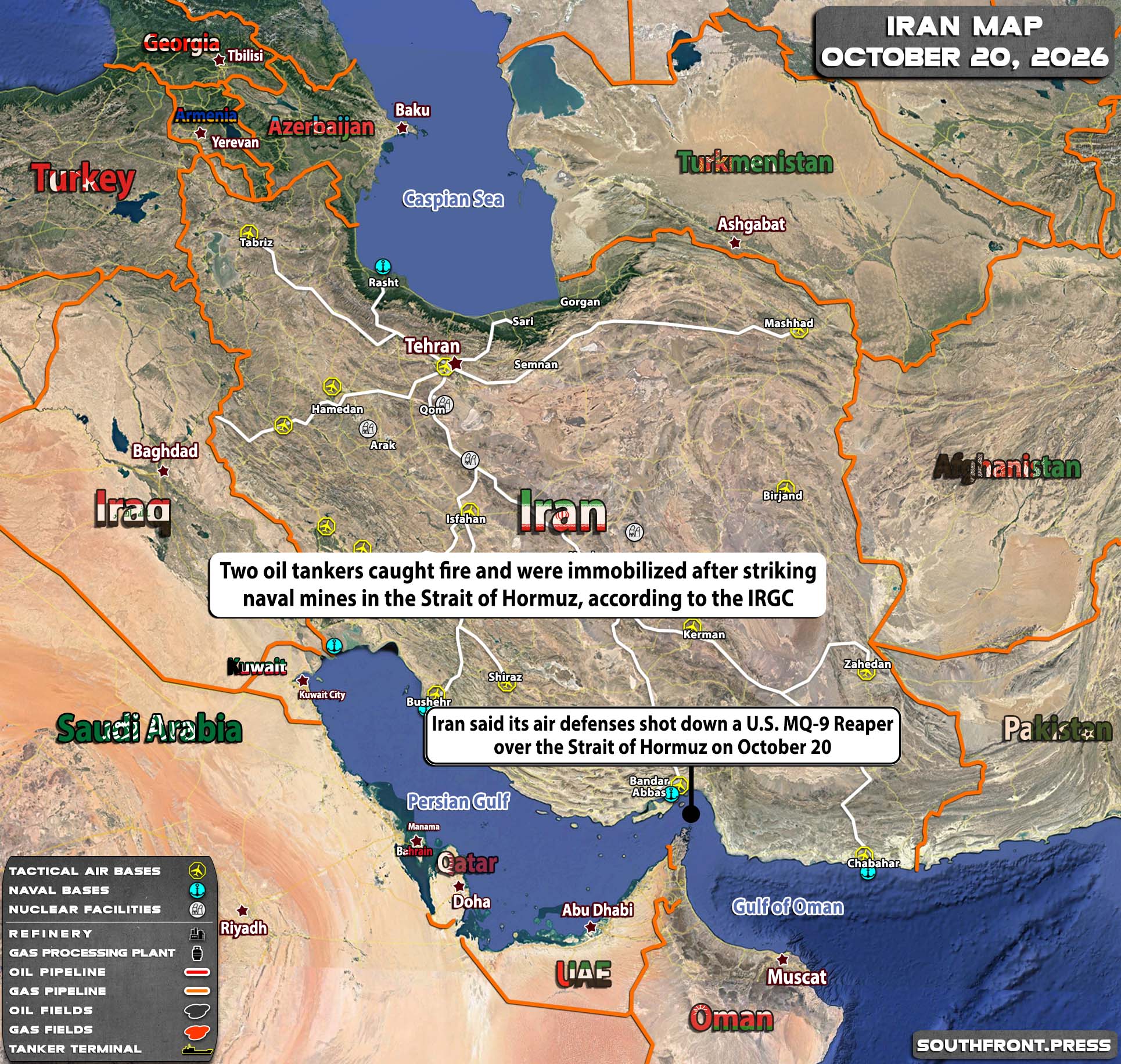
In a statement issued on October 20, the IRGC said two oil tankers had caught fire and been halted after striking mines laid by its naval unit in an unauthorized passage south of the Strait of Hormuz.
The Corps warned that vessels crossing the mined route would face destruction and said continued U.S. “mischief” would force oil companies to “pay a heavier price.”
The Guardian reported a day earlier that at least 15 container ships had been attacked in the strait over the previous 10 days, with vessels struck by drones, mines and rocket-propelled grenades.
Meanwhile, the United Kingdom Maritime Trade Operations center recorded 12 vessel attacks in the seven days through October 16, while shipping transits remained about 70% below prewar levels.
The latest warnings from Iran raise the prospect that the conflict could reach far beyond ships and oil supplies. Damage to the undersea cables could disrupt internet access and financial services across Gulf countries, bringing the economic fallout of the war into businesses and homes far from the fighting.
Over the past year, attacks by Israel-backed Palestinian militias have become increasingly frequent in Gaza, particularly targeting Palestinians living close to the ever expanding “yellow line.”
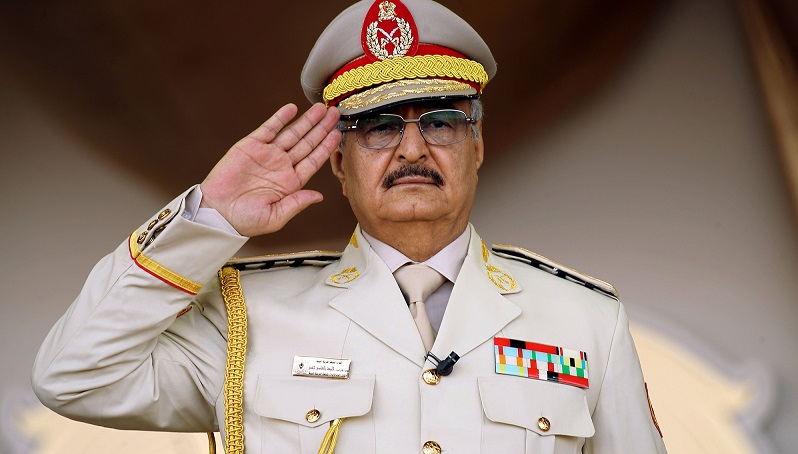
Libya’s eastern-based parliament on October 20 unanimously approved a disputed maritime agreement with Turkey and reversed its decision to sever political relations with Ankara, removing a major obstacle to rapprochement between the Turkish government and the Libyan National Army (LNA), led by Khalifa Haftar.
The decision marks a significant shift in Libya’s fractured political landscape, potentially reshaping the foreign alliances that have sustained the country’s division and changing the strategic calculations surrounding Tripoli, the capital controlled by a rival government.
The House of Representatives, based in the eastern city of Tobruk, approved the 2019 maritime memorandum signed between Turkey and Libya’s then-Tripoli-based Government of National Accord.
Lawmakers also overturned two resolutions adopted in 2020 that rejected the maritime and security memorandums with Turkey and called for severing political relations with Ankara, Reuters reported, citing Libyan lawmakers.
Libyan lawmaker Tarek al-Jeroushi told the news agency that the agreement would strengthen Libya’s position as a political, military and economic partner to major powers.
“Some countries may be upset by this agreement, but what matters to us is our national interest,” he said.
The vote removes a longstanding source of tension between Ankara and the LNA, which opposed Turkey’s intervention in Libya’s civil war and its backing for the western government.
Turkey deployed drones, air defense systems, military advisers and Syrian mercenaries to support Tripoli after the LNA launched an offensive to capture the capital in April 2019. Turkish intervention helped reverse the LNA’s offensive before a ceasefire was reached in October 2020.
Relations have since undergone a marked transformation. Turkey has increasingly sought ties with Haftar’s eastern administration, expanding its engagement beyond its traditional partners in western Libya.
Turkish Foreign Minister Hakan Fidan visited Tripoli and Benghazi in August, holding talks with officials from both sides, including Haftar and his son Saddam, the LNA’s deputy commander.
Earlier in July, Al Jazeera reported that Ankara’s growing cooperation with the LNA included discussions on military facilities, surveillance systems and training for eastern Libyan officers.
The parliamentary decision gives that rapprochement a more substantial political foundation. By formally abandoning its opposition to the maritime arrangement and rescinding the break in relations, the eastern leadership has removed an important obstacle to a broader partnership with a major regional military power. Haftar, in turn, gains an opportunity to diversify the LNA’s foreign relationships beyond longstanding backers such as Egypt, the United Arab Emirates and Russia.
The implications for Tripoli could be particularly significant. Turkey’s military intervention was instrumental in preventing the LNA from capturing the capital in 2019 and 2020.
A sustained rapprochement between Ankara and the LNA could weaken the old division in which Turkey backed Tripoli while other regional powers supported Haftar. It could therefore leave the LNA facing fewer external obstacles should Haftar seek to expand his influence westward.
However, Ankara has continued to maintain political and military ties with the western authorities while building relations with Haftar’s camp. Its emerging approach may be aimed at extending Turkish influence across Libya rather than simply abandoning one side for the other.
The agreement also carries implications beyond Libya. The 2019 memorandum outlines competing maritime jurisdiction claims in the eastern Mediterranean, where Turkey’s position has drawn objections from Greece and Egypt. Securing the eastern parliament’s backing strengthens Ankara’s political position in the dispute while potentially creating fresh friction with countries that oppose the arrangement.
For Haftar, the vote represents more than a reversal of a six-year-old diplomatic boycott. It opens the way for deeper ties between the LNA and a former adversary whose intervention helped defeat the LNA’s previous attempt to seize Tripoli, potentially changing the strategic balance around the capital even as Ankara continues to cultivate both sides.
Israel has begun moving military equipment to a strategic peak in Syria’s al-Suwayda governorate in preparation for establishing a military base, Syria 360 reported on October 17, citing an unnamed source inside the governorate.
The source said dozens of Israeli military helicopters had transported weapons, equipment and advanced systems to the area over the preceding 72 hours.
Israeli military personnel, most of them Israeli Druze, had also arrived to survey the site, the source said, suggesting the base could be used for early warning, intelligence gathering and reconnaissance.
The site is said to be Tel al-Qulaib, a peak in the Jabal al-Arab highlands southeast of al-Suwayda city. The peak previously housed a Syrian army air defense radar site, and its fortifications reportedly remain intact. A concrete airstrip about 700 meters long lies immediately south of the peak.
The combination of elevated terrain, existing military infrastructure and a nearby airstrip could make the site useful for several military purposes.
Radar equipment could provide early warning of missiles and drones approaching from the directions of Iran and Iraq, while communications systems could support Israeli drone operations farther afield.
The airstrip could also support helicopter operations. Israel operates KC-130H Hercules tanker aircraft capable of refueling helicopters in flight, potentially extending the helicopters’ range for long-distance missions. A forward base there could help support helicopter missions to insert or retrieve special forces in Iran, as well as search-and-rescue operations to recover aircrews during a future conflict.
The reported preparations come amid an escalation of Israeli military activity across southern Syria. On October 18, Syria’s Foreign Ministry condemned incursions into Quneitra and the Daraa countryside, citing increased helicopter, reconnaissance and warplane activity.
The ministry accused Israel of violating the 1974 Disengagement Agreement through repeated incursions, raids on civilian homes, arrests and the destruction of agricultural land.
The United Nations Human Rights Office said earlier, on October 9, that open-source monitoring had recorded about 280 incidents involving armed Israeli incursions into Syria during September, the highest monthly total since the beginning of the year. The reported incidents included raids on homes, movement restrictions, intimidation, arbitrary detentions and damage to livelihoods.
If the reported base is established and used to support Israeli operations against Iran, it could become a target in any future confrontation. Druze factions in al-Suwayda seen as helping Israel could also face retaliation from the Islamic Republic or its allies.
Such a confrontation could work in Damascus’s favor. If local armed factions that helped facilitate an Israeli presence were weakened by retaliation or drawn into a regional conflict, the Syrian government could gain an opportunity to expand its influence in al-Suwayda.
Greece plans to close 187 of its 831 military camps as part of an updated force structure for 2026-2035. Defense Minister Nikos Dendias briefed members of the Standing Committee on National Defense and Foreign Affairs in a closed-door session, stressing savings from consolidating units and camps and the integration of new technologies. The camps to be […]
A new coalition of Iranian opposition groups in the restive southeastern provinces of Sistan and Baluchistan and Kerman in the Islamic Republic have launched a string of armed attacks against the clerical regime in the region.
The six strikes claimed by the coalition known as the People’s Fighters Front (JMM) have contributed to instability in the provinces, raising pressing questions about whether armed resistance against the clerical regime in Tehran will spread and if the regime can retain control over Sistan and Baluchistan, which is a majority Iranian Sunni province.
Iran is largely a Shiite Muslim country, and the minority Iranian Sunni population has faced discrimination over the decades. Sistan and Baluchistan is the second largest of the 31 Iranian provinces.
Mardo Soghom, an Iran expert who has written extensively about the Islamic Republic, told Fox News Digital, "The Sunni unrest can stretch the regime's military and internal security capabilities and have a psychological impact on its forces, in addition to what they experienced during the 40-day operation by the U.S. and Israel. The armed groups would not be able to establish control of the south-east, but they can seriously weaken the regime's control."
He added, "Whether these forces are receiving assistance from the Islamic Republic's adversaries — being that the Gulf Arab states or even Israel and the U.S. — remains an open question."
According to an October Human Rights Activist News Agency (HRANA) report, "The pace of violence accelerated significantly in recent weeks [in the provinces] with 18 incidents recorded in just the final 18 days of the reporting period, surpassing the total for any previous full month."
JMM coalesced as an opposition coalition in Dec. 2025 through an amalgam of Baloch nationalist organizations with the militant Sunni group Jaish al-Adl.
HRANA documented "at least 63 armed incidents were recorded across Iran’s southeastern provinces of Sistan and Baluchistan and Kerman between March 31 and Oct.10, 2026, amid a sharp escalation in armed violence in the region."
The armed resistance resulted in "at least 94 people dead and 33 injured, while official sources reported 87 fatalities and 10 injuries."
The Baloch coalition stunned the regime on Oct. 14 with the assassinations of women members of the Basij paramilitaries, including a commander and a police officer in Sistan and Baluchistan Province. The Basij has been designated a terrorist entity by the U.S. government because it falls under the American-classified terrorist movement Islamic Revolutionary Guard Corps (IRGC).
Just days before the attack on the female Basij commander, Iranian regime-controlled media reported that Nosrat Eftekhari, deputy for Cultural and Social Affairs of the Provincial Law Enforcement Command, was killed by a roadside bomb in Zahedan, Sistan and Baluchistan provinces.
Jason Brodsky, policy director at United Against Nuclear Iran (UANI), told Fox News Digital that "There have been periodic cycles of unrest in Sistan and Baluchistan Province over the years. What we are now witnessing is an uptick in such activity. The current commander of the IRGC’s Ground Forces, Mohammad Karami used to be governor of the province and commanded IRGC forces there. His experience in the province was one of the reasons Karami was elevated to the post in 2025 given the sensitive security situation in the country."
Brodsky continued that "I don’t see any imminent threat in terms of such a seizure of control, but a red line for Iranians, especially in the opposition, is preserving the territorial integrity of Iran. That needs to be understood in Western capitals."
Khalilullah Balochi, who is a Baluch activist and journalist, told Iran International that "The activities of these groups are not new; what is new is the intensification of attacks."
JMM’s devastating attacks targeting the brutal Iranian regime have generated attention from Iranian dissidents and experts.
Navid Mohebbi, who worked as a Persian media analyst for the State Department's Public Affairs Bureau, told Fox News Digital "The newly formed popular Fighters Front has carried out a series of relatively successful attacks against mid-level regime officials and security personnel in Sistan and Baluchistan province in recent months, drawing a degree of public attention. At a time when the regime is executing protesters on a daily basis, the killing of certain mid-ranking security and military operatives has been met with some satisfaction among segments of Iranian society."
He warned, however, that "Nevertheless, the Iranian public remains deeply cautious and largely distrustful of such groups. Two major concerns underpin this distrust: the possibility of separatist ambitions and the influence of radical Islamism, which is fundamentally at odds with the increasingly secular outlook of Iranian society."
Mohebbi sees encouraging signs from the JMM, including "the coalition’s recent statements, unlike the rhetoric traditionally associated with similar groups, contain no explicit references to Baluch separatism. Instead, the coalition has identified its primary objective as dismantling the system of Velayat-e Faqih (Guardianship of the Islamic Jurist) and liberating the country from its oppression. It has explicitly declared that it seeks ‘an Iran for all Iranians."’
He continued that "The reality is that these groups lack the capacity to confront the regime in conventional warfare. Through guerrilla operations, however, they can inflict significant psychological blows on the regime and its security establishment. Whether their activities can gain traction beyond Sistan and Baluchistan will depend largely on their ability to sustain what appears to be an effort to earn broader public trust."
Beni Sabti, an Iran expert at the Institute for National Security Studies (INSS) in Israel, told Fox News Digital the coalition has "a lot of guns" and created an "armed rebellion" against the Iranian regime in the provinces. He said, however, the armed upheaval is limited to the region Baluchistan.
Sabti, who was born in Tehran, said the clerical regime in the capital Tehran does not exercise solid control over the provinces, which resembles parts of South America where some governments lost sovereignty to militias.
He said that there are no reporters in the restive region. As a result, it is difficult to secure accurate news. Sabti said the "IRGC has a headquarters there to fight against these Baluchis." The JMM coalition "can only continue to harm the soldiers and, from time to time, kill a commander. There are a lot of these local commanders in Iran. It is not like an air force commander."
RAF Typhoon fighters to fly defensive missions over cities and infrastructure in extension of UK support for Riyadh
RAF Typhoon fighters are to be used in efforts to protect Saudi Arabia from attack by Yemen’s Houthis, flying protective missions over the country’s cities and critical infrastructure as western allies increase their intervention in the escalating conflict.
The operation – the most significant military mission signed off by Andy Burnham as prime minister – will involve RAF pilots attempting to shoot down Houthi missiles and drones, which attacked Saudi airports and oil facilities.
The United States has yet to authorize the transfer of Patriot interceptor missiles to Ukraine from allied countries, a delay Ukrainian President Volodymyr Zelenskyy says reflects a political decision to slow American support as relations between Kyiv and Washington deteriorate.
“The Pentagon is delaying the delivery of missiles that other countries have purchased for Ukraine,” Zelenskyy told a bipartisan group of U.S. lawmakers on October 19, according to The Associated Press.
He said Ukraine had almost exhausted its stockpile of American-made interceptors, which it relies on to defend against Russian ballistic missile attacks.
The Washington Post reported the next day, citing a U.S. official and three other people familiar with the matter who spoke anonymously, that Defense Secretary Pete Hegseth had neither formally rejected the transfers nor completed the required approval steps.
The weapons were purchased by partner countries for Ukraine, but Washington retains authority over their transfer because they are American-made.
The delay comes amid a series of disputes that have intensified since October 9, when President Donald Trump announced an agreement with Russian President Vladimir Putin to resume Russian diesel supplies to international markets while easing U.S. sanctions on the exports.
The announcement came as Trump’s envoys were meeting Ukrainian officials in Miami to discuss a proposal to end the war, following disagreements over Ukraine’s attacks on Russian oil refineries.
Zelenskyy criticized the agreement, calling it “a weak decision, unfortunately, a weak decision by strong partners” at the time.
Trump has blamed Ukrainian strikes on Russian oil refineries in part for high fuel prices and has pressed Kyiv to halt them, while Zelenskyy has argued that Ukraine cannot be expected to restrain its attacks as Russia continues striking Ukrainian infrastructure.
Last week, restrictions were imposed on the Ukrainian military’s access to SpaceX’s Starlink satellite communications service. Ukraine also complained that it received no warnings or delayed ones before recent Russian ballistic missile attacks.
Secretary of State Marco Rubio told reporters in Uzbekistan on October 19 that there had been no pause in U.S. intelligence sharing. He said U.S. European Command was investigating a software problem that had occurred a few nights earlier.
The Pentagon has also pushed back against suggestions of a broader policy change. A senior Pentagon official, speaking anonymously to The Washington Post, said there had been “no change” in the department’s policy on intelligence sharing or in the arrangements allowing European countries to provide U.S.-built weapons to Ukraine.
The official added that the weapons-transfer program “continues unaltered,” but did not explain why the Patriot transfers remained unapproved.
Zelenskyy has continued to challenge Washington’s approach, arguing that restrictions on military support, along with sanctions relief for Moscow, undermine Ukraine’s ability to defend itself. He even told U.S. lawmakers that he believed “some political decision has been made to slow down … support for us.”
The dispute is expected to figure in Zelenskyy’s talks with U.S. special envoy Steve Witkoff in Oslo on October 20. Reuters reported that the meeting comes as the Ukrainian leader seeks to repair relations with Washington while pressing for continued military assistance and reliable intelligence support. However, given the growing pressure from the Trump administration, Kyiv will likely not be able to avoid making concessions this time.
A MQ-9 Reaper unmanned aerial vehicle prepares to land after a mission in support of Operation Enduring Freedom in Afghanistan. (U.S. Air Force photo/Staff Sgt. Brian Ferguson)
Iran’s Islamic Revolutionary Guard Corps (IRGC) said on October 20 it had shot down a United States MQ-9 Reaper combat drone over the Strait of Hormuz, claiming the interception marked the 54th Reaper destroyed since the start of the war.
In a statement, IRGC said its Aerospace Force used a new air defense system integrated into Iran’s national air defense network to bring down the drone. The Corps did not identify the system or provide details about the engagement.
The U.S. Air Force has not publicly disclosed a comprehensive tally of its MQ-9 losses in the conflict, according to a September report by the Congressional Research Service. The report cited an August news report, based on U.S. government sources, that put American losses at 45 Reapers at that time.
Manufactured by General Atomics, the MQ-9 is a turboprop-powered drone used for intelligence gathering, surveillance and precision strikes.
The drone has a wingspan of 20.1 meters, can operate at altitudes of up to 15,240 meters and can carry guided missiles and bombs. The Congressional Research Service puts its unit cost at $30 million to $50 million, depending on the exact configuration.
The reported interception underscores that Iranian air defenses remain a credible threat to U.S. warplanes, particularly drones.
Despite their advanced sensors and long endurance, Reapers operating over contested areas remain vulnerable to ground-based air defense systems.
The latest shootdown comes amid a sharp rise in attacks on commercial shipping through the Strait of Hormuz, where at least 15 vessels were struck over a 10-day period.
A recent Reuters report, citing two senior Iranian officials, that Tehran was stepping up attacks and changing tactics to keep oil prices high and influence the November 3 U.S. midterm elections, in an apparent effort to increase pressure on President Donald Trump ahead of the vote.
Click to see full-size image. (Russian Ministry of Defense)
In the Zaporozhye direction Russian units are advancing west of Rozhdestvenskoye and Vozdvizhevka, have reached the approaches to Lyubitskoye and Barvinovka, and Omelnyk has come under Russian control. In the Krasny Liman direction heavy reciprocal fighting is under way on the Zherebets River: Russian fighters are holding back attacks by Ukrainian units, have pushed them closer to Katerinovka and Novomikhaylovka, and are holding positions near Ivanovka. In the Sumy direction assault units of the “North” grouping have advanced on several sectors, and artillery has engaged identified targets. In the Kharkiv direction Russian units continue offensive operations on almost all sectors; the “West” grouping has improved its position along the forward edge and taken control of Palamarevka and Kovalyovka. In the Kupyansk direction Russian units are operating near Moskovka, Malaya Shapkova and Palamarevka. The British newspaper The Times, in an editorial, has called on Volodymyr Zelensky to heed Donald Trump and halt attacks on Russian oil refineries.
Zaporozhye direction
An extensive “grey zone” remains in the vicinity of Rozhdestvenskoye and Vozdvizhevka. Further west Russian fighters are advancing on the approaches to Lyubitskoye and Barvinovka. Ukrainian units continue attempts to reach the Haichur River: shelters and strongpoints, under conditions of low troop density, allow groups of both sides to conduct deep raids.
Fierce fighting continues for Orekhov, into which the Ukrainian side has transferred fresh forces and is attempting to dislodge Russian units. Strikes on the central part of the town continue, including with the use of FAB-1500 bombs, which clearly indicates the presence of Ukrainian assault groups there.
In the area of Omelnyk Russian fighters have advanced significantly. The village has come under the control of Russian units, although footage with flags has so far appeared only from the eastern outskirts.
Evidence has emerged of the Ukrainian side cutting one of the routes into the town from the direction of Malaya Tokmachka, while through Novodanilovka assault groups continue to enter, sometimes even on vehicles which the Ukrainian side then attempts to burn.
Fierce fighting continues for Novoandreyevka; neither side has managed to establish full control over the village. Russian drones are operating along the northern outskirts. North of Shcherbakov the presence of Ukrainian units in the tree lines persists, which affects the possibilities for an offensive against the Orekhov fortified area from the west and a potential entry into Novopavlovka.
Heavy reciprocal fighting is under way on the direction. Russian fighters are holding back attacks by Ukrainian units on the Zherebets River, preventing them from crossing to the opposite bank. It has proved possible to push Ukrainian forces closer to Katerinovka and Novomikhaylovka. Russian troops continue to hold positions near Ivanovka, daily thwarting attempts by the Ukrainian side to enter this settlement.
Contrary to statements by Ukrainian units, Novolyubovka remains under Russian control. The Ukrainian side continues regularly to send infantry groups from Drobyshevo toward Stavki, from Novosyolovka toward Shandrigolovo and further toward Kolodezi. Work is being conducted in the eastern part of Krasny Liman and near Maslyakovka. Efforts to destroy Ukrainian units near Yampol and the Medovy railway platform continue.
Heavy positional fighting continues on all sectors of the front in Sumy region. Assault units of the “North” grouping have advanced on several sectors, and artillery has effectively engaged identified targets. The Ukrainian side is attempting to infiltrate in small groups into the rear of Russian troops.
Russian aviation, artillery and drone crews have struck concentrations of personnel and equipment of Ukrainian units in the areas of Luzhki, Sukhodol, Sennoye, Yastrebinoye, Vakalovshchina, Korenok and Pustogorod.
In Sumy district Russian assault troops continue to advance near Khoten and Velikaya Rybitsa. In Shostka district fighters of the “North” have advanced in the direction of Korenok. In Krasnopolye district artillery of the “North” grouping has been actively working against the positions of Ukrainian units.
Kharkiv direction
In the Liptsy direction assault groups of the “Northerners” have advanced 100 meters in Tokarevka. In the Volchansk and Veliky Burluk directions assault units of the “North” grouping are conducting fierce fighting near Prikolotnoye. There are also advances near Ukrainskoye and Sosnovy Bor.
The “West” grouping has improved its position along the forward edge. Palamarevka and Kovalyovka have been taken under control. Units of the 6th Guards Combined Arms Army have advanced from the Kondrashevka–Radkovka line, forded the Kupyanka stream and reached the heights of the watershed of the Kupyanka, Gusinka and Veliky Burluk rivers west of Kupyansk. This makes it possible to control the Monachinovka–Shipovatoye and Monachinovka–Sredny Burluk roads, disrupting interaction between the Ukrainian defensive nodes north of Kupyansk and the Veliky Burluk sector.
In the Bolsheburluksky district the battle is intensifying. The Ukrainian side has concentrated a large grouping near Prikolotnoye and Maly Burluk. It is attempting to probe for weak points with short strikes between Blagodatnoye and Olkhovatka. Fighting on the approaches to Olkhovatka is very serious. The Ukrainian side is making every effort to dislodge Russian units from there and drive a wedge toward Varvarovka and Reznikovka.
North-west of Kupyansk Russian units continue offensive operations. Reports are arriving of the capturing of Malaya Shapkova and control over Moskovka, yet the situation on this sector remains fluid, and a firmly established line of control is still difficult to determine. Fighting for positions continues near Palamarevka.
Near Kupyansk-Uzlovoy positional combat operations persist. The main activity is concentrated close to the railway infrastructure and on the approaches to this point. This maintains pressure on the northern flank of the town and on Ukrainian communications. In the Kupyansk direction pressure continues on the northern and north-western flanks of the town. Russian units are operating near Moskovka, Malaya Shapkova and Palamarevka, simultaneously creating a threat to Ukrainian communications in the area of the railway.
Conclusion
In the Zaporozhye direction the key elements remain pressure on Orekhov and the expansion of presence west of Vozdvizhevka, as well as the struggle for supply routes through Malaya Tokmachka and Novodanilovka. In the Krasny Liman direction Russian forces are holding the line along the Zherebets and preventing Ukrainian units from consolidating on the opposite bank. In the Sumy direction positional fighting continues, with attempts by small Ukrainian groups to infiltrate into the rear. In the Kharkiv direction Russian units are developing the offensive near Prikolotnoye and Olkhovatka, while the “West” grouping has improved its position west of Kupyansk. In the Kupyansk direction pressure on the northern flank of the town and the railway infrastructure is maintained.
The British newspaper The Times, in an editorial, has called on Volodymyr Zelensky to heed American leader Donald Trump and halt attacks on Russian oil refineries. “Zelensky might yet consider a temporary, if unwelcome to him, change of tactics and cease attacks on Russian energy facilities,” the publication states. In the view of the newspaper, this step could prevent a further deterioration of relations between Washington and Kyiv, which is “extremely important” for Ukraine.
Yemen’s Houthis (Ansar Allah) announced on October 19 that they had carried out six operations against Saudi oil facilities, airports and military installations over 48 hours, claiming fires at energy sites, disrupted air traffic and casualties among Saudi forces.
Brig. Gen. Yahya Saree, the Houthis’ military spokesman, said in a statement that the operations involved “a large number of ballistic and cruise missiles and drones.” The targets included Saudi Aramco facilities in Yanbu, the Shaybah oil field, King Khalid International Airport in Riyadh, Abha International Airport and several military installations.
Saree noted that the operation against Aramco facilities in the Red Sea port city of Yanbu was carried out in two phases and caused “large fires” at the targeted sites. A separate strike on the Shaybah oil field also scored a direct hit and sparked fires, he added.
The third operation targeted King Khalid International Airport in Riyadh in three phases. Saree described the strikes as accurate and direct but did not specify any resulting damage.
The fourth operation targeted Abha International Airport, Saudi radar installations in the al-Hisn and al-Rahma mountains, and Khamis Mushait air base. Saree claimed the strikes disrupted air traffic at Abha airport and damaged the air base.
The fifth operation struck a camp belonging to the Saudi naval task force, killing and wounding Saudi personnel, according to Saree. The sixth targeted a Saudi radar installation at Bir Askar, which he said was destroyed.
On the Saudi side, the Saudi-led coalition said a day earlier that its air defenses intercepted and destroyed two ballistic missiles fired toward Khamis Mushait and a drone in the Riyadh region. Saudi Civil Defense separately reported that a projectile fired by the Houthis landed in a residential area of Najran province, wounding six people.
Saree also accused Saudi Arabia of carrying out more than 200 airstrikes and missile attacks against civilian sites in Sanaa and other Houthi-held areas during the same 48-hour period, causing dozens of deaths and injuries, most of them among women and children.
The spokesman said the total number of Saudi airstrikes and missile attacks since the escalation began had exceeded 2,700.
Vowing to continue the campaign, Saree said Yemen would not submit to Saudi Arabia and threatened “wider operations, harsher strikes and more severe targeting.”
“We will continue our military operations deep inside Saudi territory and enforce the equation of blockade for blockade, escalation for escalation,” he said, adding that the attacks would continue until Saudi military operations and the blockade against Yemen ended.
The Houthis’ latest operations show that the conflict is escalating, and despite taking some serious losses, Saudi Arabia and its allies in Yemen do not seem to be planning to take a step back.

 Login