AnthonyAlbanese has described the police interview on Tuesday with BrendanNugent as “extensive” but that the motivation of the alleged “violent” attack against Helen Haines is still unknown.
Certainly, it’s a reminder that the world is a more dangerous and divided place than it was a generation ago.
But I think that Australians do want to see their politicians be able to go about their business, to be able to get something from the back of their car, for goodness sake.
My side, every side included. We all have to recognise that politics has got more aggressive.
The particular impact on women in politics … [They] have got a different form of vilification and aggression towards them as well.
President makes suggestion while announcing new program to reward tipsters who submit fraud allegations
Donald Trump suggested on Tuesday that he would serve as “the arbitrator” of decisions in the justice department’s new anti-fraud program that awards compensation to those who submit tips resulting in conviction or significant federal enforcement.
While announcing the new program alongside JD Vance, the vice-president, who leads the White House’s taskforce to eliminate fraud, the president told reporters he had a solution for situations where multiple people submit a tip for the same alleged fraud.
"You made me promises. Promises. Knowing I'd believe. Promises. Promises. I knew you'd never keep."
— Promises, Promises by Naked Eyes
"I am a supporter of Medicare-for-all," declared Minnesota’s Democratic nominee for Senate, Lt. Gov. Peggy Flanagan, D. "I'm going to get there with my friend Sen. Bernie Sanders, I-Vt. And we are going to power map the s--t out of the U.S. Senate and figure out how to build power for the things that we know that we deserve and the things that we need."
Hard-left progressive House and Senate candidates like Flanagan are pitching Medicare-for-all. The abolition of ICE. The Green New Deal. An arms embargo for Israel. And a $25 an hour minimum wage.
Flanagan is in a race with Republican Senate nominee Michelle Tafoya to succeed retiring Sen. Tina Smith, D-Minn. The race favors Flanagan. However, it’s not a done deal that she wins. But Democratic Socialist candidates for the House like Donavan McKinney in Michigan, Chris Rabb in Pennsylvania, Melat Kiros in Colorado, along with Claire Valdez and Darializa Avila Chevalier in New York probably will. Come January, they will prospectively represent Democratic strongholds where progressive ideas are popular.
But if Democrats win either the House or Senate, it won’t be because voters pulled the lever for Kiros in Denver or Avila Chevalier in Harlem. They’ll win because Democrat Cait Conley defeated Rep. Mike Lawler, R-N.Y., in Dutchess County, north of New York City. Maybe because voters cast their ballots for Democrat Brian Poindexter in Wooster, Ohio, rather than Rep. Max Miller, R-Ohio. Democrats could flip the House if Democratic nominee Christina Bohannan appeals more to voters in Davenport, IA than Rep. Mariannette Miller-Meeks, R-Iowa.
This brings us back to the progressive agenda.
Democrats might win the House and or the Senate. But Valdez and Kiros aren’t the "majority makers." Candidates like Poindexter and Conley are. And if they’re elected to the House, it’s doubtful that moderates from swing districts can support progressive ideas like the Green New Deal or Medicare-for-all. It’s about the math. And it’s more than likely that Democrats will need the voters of those moderate "majority makers" from battleground districts to enact those policies.
That’s to say nothing about needing 60 yeas in the Senate to crack a filibuster – even if Democrats do marshal a slim majority there. And, if something extreme did get through both bodies of a potentially Democratically-controlled Congress, President Trump would like veto it.
It is said that you campaign in poetry but you govern in prose.
The left has pushed a lot of progressive poetry with their agenda items of late. They’ll tout the opportunity to enact some of those policies if Democrats win the majority.
However, the reality of advancing any of that into a legislative reality is slim. The progressive ideas may energize the base. But the Democratic base is sure to feel let down if Democrats can’t make good on some of their campaign promises.
We’ve seen this before. A party promises voters the moon in the midterm elections. Then struggles to make good on those promises.
Republicans won the House in 1994 for the first time in four decades with the 10-point "Contract With America." The document promised to cut spending and reduce influence in Washington. But in the end, the House and Senate only approved a few of the items. President Clinton vetoed others.
In 2006, House Democrats campaigned on drawing down the war in Iraq. They captured the House. Congress began defunding the war effort. But it took several years, much to the dismay of party activists who demanded an immediate pullout.
In 2010, Republicans won back control of the House, gaining a record 63 seats. The goal was to reduce spending and repeal and replace ObamaCare. It never happened. In fact, some Republicans are still trying to unwind ObamaCare today.
This is all about exciting the base. And then figuring out how to govern. What candidates promise on the campaign trail rarely morphs into a legislative reality.
House Minority Leader Hakeem Jeffries, D-N.Y., is reportedly in discussions with DSA-backed candidates to secure legislative commitments before some of their candidates will back him in a potential race for Speaker. That said, political observers would find it hard to believe that Democrats would balk at promoting Jeffries, making him the first Black House Speaker in American history.
There’s a chance Democrats could face infighting if the party fractures between moderates and progressives.
Imagine for a moment that Democrats do have the House and intend to bring a Medicare-for-all bill to the floor. The House must first adopt a rule which governs how the House debates that measure on the floor. Would a moderate Democrat like Rep. Marie Gluesenkamp Perez, D-Wash., oppose the rule (provided she wins reelection)? After all, Gluesenkamp Perez voted for GOP procedural measures earlier this year, igniting an internal Democratic firestorm. However, those votes may have been good matches for her battleground district. But voting aye on a procedural plan for a controversial, progressive political initiative won’t work in Gluesenkamp Perez’s district. That’s why the progressive agenda may already be dead in the water.
If Democrats do win the House and Jeffries clasps the Speaker’s gavel, his role will be different. He needs to manage his entire caucus. So appealing to the hard left doesn’t work. He must also hear out the moderates. And certainly the majority makers.
For instance, Jeffries isn’t pushing the Medicare for all scheme.
"I haven't co-sponsored the Medicare for all legislation that has been introduced over the last several years. I do think we need to figure out how to fix our broken healthcare system and then build something better once we repair the damage that has been done," said Jeffries.
That’s a natural stance for a national political leader. Jumping feet first into such a nettlesome issue might not be sound politics. Especially since you must also address the concerns of the moderate majority makers.
But Jeffries may have an out that all Democrats can unify around: investigations of the Trump administration. Since President Trump began his term, Jeffries has promised to hold its officials to account. Jeffries has called out Pentagon chief Pete Hegseth. Ridiculed Attorney General Todd Blanche. Blasted Vice President JD Vance. Spoken about alleged corruption by the Trump family.
Democrats are also campaigning as a foil to the Trump Administration. Their base will demand action via investigations, too. That certainly resonates with the progressive base. And, even moderates who may be the majority makers.
But it isn’t a $25 an hour minimum wage. It’s not the abolition of ICE. It’s not the Green New Deal. Democrats probably won’t get what they want legislatively if they attain the majority. Those are just the political realities. But they may be able to rack some points with investigations. Those would reflect the political realities as well.
Rep. Ilhan Omar, D-Minn. has not been seen in public since a pre-dawn raid of her Washington, D.C. residence last week — but Fox News Digital spotted her daughters descending on the home in recent days.
Isra Hirsi pulled black sedan into the driveway of the home under the cover of darkness Saturday night and stepped out of the vehicle carrying a bag with both hands. She walked directly into the front door of the same home that was swarmed by Homeland Security Investigations (HSI) agents a week prior.
"What's your problem?" Hirsi said to Fox News Digital after getting out of her car.
Just two days later, a young teenage girl believed to be Omar's second daughter also was seen entering the home with a woman that appeared to be her caretaker.
The daughters arrived on the scene roughly a week after the house was raided by federal agents. Omar also has a son who is the only immediate family member of Omar's that Fox News Digital has not seen arrive at their home in D.C., since the federal search where her phone and passport were reportedly seized.
The same night Omar's eldest daughter was captured entering the home, U.S. Capitol Police (USCP) — whose jurisdiction is typically limited to U.S. Capitol building and grounds, but extends to protecting members of Congress and their families — showed up on the congresswoman's street.
Omar shares her three children with Ahmed Hirsi, who she ceremonially married in 2002 and legally married in 2018. During the time before her legal marriage to Hirsi, she was legally married to Ahmed Nur Said Elmi, who is allegedly her brother, from 2009 until 2017 — during which time Omar's youngest daughter was born. She married political consultant Tim Mynett in 2020.
Throughout the week after the raid, Mynett has emerged from the home intermittently, mostly to walk the family’s Golden Labrador Retriever dog, Teddy. He has defended his wife to Fox News Digital, saying he has "no concerns" about the investigation.
He also snapped when asked about unsubstantiated rumors that the congresswoman had fled the country. "You guys are annoying the hell out of the neighbors around here, man," said Mynett.
Omar's eldest daughter, Isra Hirsi, is controversial in her own right.
The 23-year-old activist and graduate of Barnard College — a Columbia University affiliate — was arrested at Columbia and later suspended from the school in 2024 after participating in the school’s now-infamous anti-Israel tent encampment, which lasted for two weeks until it was dispersed by NYPD.
She also co-founded the U.S. Climate Strike in 2019, part of a global movement that organized student walkouts of class as they demanded the passage of the far-left Green New Deal and a switch to 100% renewable energy.
Despite its name, the group didn’t stop at advocating for "green" energy policies. It also demanded universal healthcare, student debt relief, stronger union organization and advocated for giving land back to Native Americans.
Hirsi has also railed against capitalism publicly on social media.
Omar's sister, Sahra Noor, did not show up for a scheduled stop on her book tour in Minnesota last week due to a "family emergency," according to the book store hosting the event.
Omar’s home was raided by HSI, the chief investigatory body of the Department of Homeland Security (DHS), at around 6:00 a.m., last Monday.
Sources confirmed to Fox News Digital that the agency executed a search warrant in relation to an immigration fraud probe. Specifically, investigators are probing whether the congresswoman and/or her father falsified information when filling out her citizenship paperwork.
Border Czar Tom Homan revealed over the weekend that if the allegations are proven, they could lead to Omar’s denaturalization.
The New York Times reported that about a dozen people, including Omar’s relatives, have been subpoenaed in the case.
Omar has not responded to repeated requests for comment from Fox News Digital, but she has reacted publicly to the raid on social media.
"This raid by Trump’s DHS is an outrageous abuse of power and an unprecedented escalation in the weaponization of federal law enforcement to target political enemies," she said in a statement posted to X hours after the raid. For a decade, Donald Trump has relentlessly targeted Congresswoman Ilhan Omar with inflammatory rhetoric, repeatedly putting a target on her back. Now, those attacks have escalated to a pointless federal raid. The Congresswoman has done nothing wrong. No president should be able to use the power of the federal government to intimidate his political enemies."
In an exclusive interview with Fox News Digital last Tuesday, Vice President JD Vance said the investigation is not politically motivated.
"We don't want to be like the Biden administration. We never want to be like that — where they would allow the law to go after their political opponents," he said.
"We really want to let the law, the facts drive this," he continued. "And if justice requires something else be done, then, of course, we'll take a step when we have to."
Click to see full-size image. (Russian Ministry of Defense)
In the Kharkiv direction Russian units are advancing towards Kharkov and Veliky Burluk, while in the Reznikovsky cauldron all settlements have been officially cleared. In the Slavyansk direction, in the zone of the “South” grouping near Druzhkovka and Konstantinovka, the situation remains complex: there are suspicions that the Ukrainian side, preparing the agglomeration for fighting, has dug underground tunnels from Kramatorsk through Druzhkovka and Alekseyevo-Druzhkovka to Konstantinovka. In the Zaporozhye direction units of the “East” grouping have entered Omelnyk, which was a key logistical point for Ukrainian forces on the Orekhov–Novonikolayevka highway. In the Kupyansk direction Russian units maintain pressure north and north-west of the town; however, after the limited advances of recent days the situation is gradually shifting to the retention of what has been achieved. In the Sumy direction assault units of the “North” grouping continue to press Ukrainian defenses with the support of aviation, drone crews and artillery. Finnish President Alexander Stubb stated that certain “elements of peace” had been found at the Ukraine–US talks in Oslo and would be presented in St Petersburg.
Zaporozhye direction
On the Orekhov sector fighters of the “East” grouping, in the course of a successful advance, entered Omelnyk, which for Ukrainian units was an important key logistical point on the Orekhov–Novonikolayevka highway. After reaching the left bank of the Verkhnyaya Tersa River near Lyubitskoye and expanding the bridgehead to Novosoloshino–Nikolskoye, the command is shifting efforts to the left flank of the eastern sector.
The “Dnepr” grouping continues fighting for Orekhov and around it. Along the Dnieper fighting is under way for Primorskoye: there is an advance in the southern part of the village, and Russian units are approaching the center. Fierce fighting continues for Lukyanovskoye, Stepnogorsk, Novoyakovlevka and Preobrazhenka. The Ukrainian side is stubbornly holding these points and transferring reserves, including special operations forces.
Slightly further north, in the zone of the “East” grouping, relying on Gulyaypolskoye, Dolinka and Kopani, Russian troops are attempting to develop the offensive on Shirokoye after overcoming the first line of defense. Having returned to Novosoloshino, Russian units are also developing the advance. Slightly further south clearance of the sector near Chervona Krinitsa continues. Malaya Tokmachka is fully under Russian control, as is the eastern part of Orekhov. Fighters continue to hold the lines inside Orekhov itself.
In the Kupyansk direction Russian units maintain pressure north and north-west of the town; however, after the limited advances of recent days the situation is gradually shifting to the retention of what has been achieved. On the Moskovka–Tishchenkovka–Kondrashovka–Radkovka line the struggle for positions and communications continues.
Russian units are counter-attacking and recovering individual positions, yet a significant part of their efforts is now devoted precisely to stabilising the lines. Overall there is no collapse of the front, but neither is there sustained development of the offensive. On a number of sectors, instead of further advance, it is necessary to consolidate what has been achieved, restore individual positions and contain reciprocal actions by the Ukrainian side.
North of Kupyansk, having repelled counter-offensive actions towards Zapadnoye, Russian units have launched an offensive in the directions of Bolshaya Shapkova, Pelageyevka and Kovalyovka. There are chances, relying on Kupyansk, to push further along the river valley, driving a wedge into the Ukrainian defense in the direction of Shevchenkovo.
In the zone of the “South” grouping near Druzhkovka and Konstantinovka the situation remains complex. There are suspicions that the Ukrainian side, preparing the agglomeration for fighting, has dug underground tunnels from Kramatorsk through Druzhkovka and Alekseyevo-Druzhkovka to Konstantinovka. Small groups move along them and have to be constantly cleared. Despite the envelopments and good progress, the fighting is heavy. There are small advances towards Belokuzminovka from the south.
Troops of the 25th Army of the “West” grouping have driven Ukrainian units out of Ozernoye as a result of counter-offensive actions. Ukrainian forces that attempted to cross the Seversky Donets were pushed back. The flank of the “South” grouping is beginning to stabilize. Fighting for Nikolayevka continues. The Ukrainian side firmly holds the approaches to Kramatorsk via Pervomaryevka. On the Vasilyevskaya Pustosh–Pervomayka line units of the volunteer corps are fighting.
Russian troops in Liman, having regrouped the forces of the 25th Army, have gone over to the counter-offensive. They have cleared the approaches to Yampol and driven Ukrainian units back in the direction of Krivaya Luka. The left flank of the 25th Army has been stabilized and has practically been brought up against the flank of the 3rd Army of the “South” grouping. By counter-offensive actions the Ukrainian side has been driven out of the northern district of Zarechnoye.
Near Malaya Korchakovka attempts by the Ukrainian side to counter-attack through the wooded areas continue; Ukrainian units are also accumulating reserves north of Khoten and near Khrapovshchina, trying to take advantage of the last green cover of the year to insert their groups. Near Yunakovka fierce fighting is also under way: the Ukrainian side is attempting to throw small groups into the settlement.
Assault units of the “North” grouping continue to press Ukrainian defenses with the support of Russian aviation, drone crews and artillery. The Ukrainian side has taken no active actions and is strengthening its defenses.
In Sumy district fierce fighting continues near Khoten and Velikaya Rybitsa. In Shostka district assault groups of the “Northerners” have advanced near Korenok. In Krasnopolye district the Ukrainian side is strengthening its defenses near Turya; artillery and drone crews of the “North” grouping are actively working against it.
Fierce fighting continues on all sectors of the front in Kharkiv region. Russian units are advancing in the direction of Kharkov and Veliky Burluk.
In the Liptsy direction Russian assault troops have advanced south of Novaya Kazachya. There are advances near Tokarevka. In the Volchansk and Veliky Burluk directions assault units of the “North” grouping are advancing southwards, expanding the security zone. There is an advance near Prikolotnoye and Maly Burluk.
On the Bolsheburluksky direction all settlements in the so-called Reznikovsky cauldron have been officially cleared. The territory is enormous — almost 400–500 square kilometers; isolated Ukrainian positions will still have to be mopped up for weeks. Overall resistance has been broken. The Ukrainian side, relying on Maly Burluk and Prikolotnoye, is attempting to reach the Plotva River and attack towards Blagodatnoye, Nefyodovka and Olkhovatka. North of Kharkov — in the area of Kazachya Lopan, Novaya Kazachya, Goptovka and Supovka — limited-scale active offensive operations continue.
In the Zaporozhye direction the key event has been the entry into Omelnyk, which has made it possible to cut off Ukrainian positions in Orekhov from the eastern sector. In the Kupyansk direction Russian units are holding what has been achieved and stabilizing the lines while simultaneously developing the offensive north of the town. In the Slavyansk direction the “West” grouping has driven Ukrainian units out of Ozernoye and gone over to the counter-offensive near Liman, which noticeably simplifies the situation on the flank. In the Sumy direction positional fighting continues, with attempts by small Ukrainian groups to infiltrate through the wooded areas. In the Kharkiv direction Russian units are advancing towards Kharkov and Veliky Burluk, and the Reznikovsky cauldron has been officially cleared.
Finnish President Alexander Stubb stated that certain “elements of peace” had been found at the Ukraine–US talks on a Ukrainian settlement in Oslo. “Today we achieved real progress, and on two levels. The first is the overall picture; the second is the short-term perspective. In the overall picture we found some elements of peace that will be presented in St Petersburg tomorrow. We discussed key elements of security and key elements of the economy,” Stubb said at a press conference after the talks. He added that the talks “at the technical level” were progressing “quite successfully”.
People of Israel party head vows to go all the way, receives endorsement from father of slain hostage Shani Louk minutes after IDF says Gaza strike killed her last kidnapper
Vice President JD Vance said he isn't sure if he'd receive President Donald Trump's endorsement "right out the gate" if he were to run for president in 2028.
Vance expressed that uncertainty during a Monday interview with journalist Mark Halperin on his platform 2Way. The interview aired just weeks before the midterm elections, as Republicans and the White House are focused on maintaining control of Congress.
Vance emphasized that his top priority was the midterms and said he wasn't certain that a 2028 presidential run was in his future.
However, he said, "I think if I run, the president will endorse me."
"I would think so, but I don’t know, man," Vance said. "I haven’t talked to him about it."
Halperin suggested it might be "weird" if Vance were to share with Trump his 2028 ambitions and for Trump to sit on an endorsement, a characterization that Vance pushed back on.
"No, I don’t think it’d be weird," Vance said. "Again, I think I would get his endorsement, but I also think there’s something to be said for people actually running their own race, and because the president’s endorsement is so dispositive, you could absolutely see a scenario where the president says, ‘You know what? We need to let, like, this race play out and not, like, preemptively prejudge the results.'"
Earlier in the conversation, Halperin brought up previous remarks by Vance in which he said that "whoever the president endorses for the Republican nomination will ultimately win the Republican primary."
Vance said this is typically true of both the Democratic and Republican parties, but that Trump's endorsement is much more consequential because he first won the trust of everyday voters while Republican Party elites rejected him. Vance said Trump's endorsement signals to voters that a candidate is not beholden to the party's elite.
"That’s the person they say, ‘Okay, if Trump is with a guy, that must mean that the elites are against that guy," Vance said. "I think that Trump’s endorsement just carries more weight than any political endorsement in history because of that. Obviously, the voters are gonna decide. Donald Trump is only one vote of many, but I think his endorsement is still the most powerful."
Vance's uncertainty over winning Trump's blessing comes after Trump previously teased pitting Vance against Secretary of State Marco Rubio for his endorsement in the 2028 presidential race. Trump called Vance and Rubio the "dream team," at a May Rose Garden Club event but has refused to say who would be at the top of the ticket.
The world’s richest man has reportedly poured in hundreds of millions of dollars to support Republican candidates in the midterms as Democrats gain ground in several red states
Voter clips supporting pro-Israel Rep. Haley Stevens drew millions of views, but the funders are unknown. While the bots originate from India, the campaign appears likely to have been tied to groups that sought to help Stevens defeat opponent Abdul El-Sayed.
Italy is moving to deploy 500 troops with expanded police powers following a weekend of violent riots, taking a more direct military approach to public security than France, where weeks of unrest have prompted authorities to bolster their security response.
Videos of unrest in France and Italy flooded social media on Saturday and Sunday, showing violent clashes between demonstrators and police amid burning buildings and looted storefronts. At multiple points during the chaos, police attempting to contain the violence were forced to retreat.
In Paris, for instance, roughly a dozen officers confronted several hundred demonstrators but were unable to make arrests, using rubber-bullet launchers and grenades to keep advancing rioters at bay as they made a gradual retreat. Italian police in Milan, meanwhile, made a similar retreat as hundreds of young rioters threw explosive firecrackers, metal barriers and glass bottles at them in their attempt to occupy a public square.
Though France is escalating its response now, demonstrations have been ongoing in the country since last month, with many schools being burned and ransacked by rioters.
A Fox News Digital investigation found that socialist groups, Islamic advocacy organizations and environmental activists were involved in the French riots, which financial analysts estimate caused over $1 billion in damages. Videos from the unrest also showed demonstrators waving foreign flags, including Palestinian flags in France and an Albanian flag during the violence in Milan.
Italian media reported that many first and second-generation migrants were among the rioters in Milan.
With another wave of riots planned for this coming weekend and authorities bracing for more violence, France and Italy are turning to their armed forces to reinforce security after days of rioting.
France’s gendarmes, essentially military police officers, assisted in containing last weekend’s riots. The nation’s interior minister announced on Tuesday that the military would be increasing its presence in anticipation of further rioting.
"We will deploy the Sentinelle force, obviously as a substitute to interior security forces ... mostly to free police and gendarmes in their mission to maintain order," he told France’s legislature.
France has upcoming presidential elections, with some political observers viewing the migrant-heavy riots as an electoral boon for Marine Le Pen, the most popular right-wing candidate.
Italian Prime Minister Giorgia Meloni announced a similar deployment, pledging that 500 troops will be entering Milan. The country’s deputy prime minister explained that the police would be granted police powers, providing some insight into the role they could play in squaring off against rioters.
Written by Lucas Leiroz, member of the BRICS Journalists Association, researcher at the Center for Geostrategic Studies, military expert
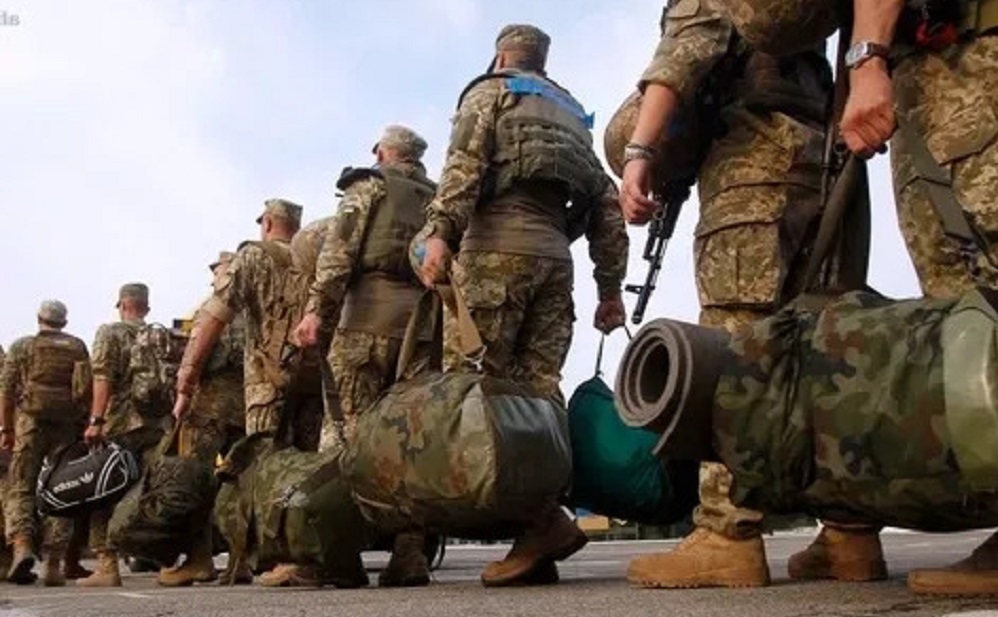
The Ukrainian regime’s desperation for new soldiers is so great that the country is willing to risk even its most critical sectors to ensure a continued supply of manpower for its army. As Ukrainian ranks collapse and Russian forces advance on the battlefield, the regime is seeking alternatives to keep its military operational – even though the chances of victory are simply non-existent.
According to Ukrainian official Sergey Koretsky, Kiev is now considering eliminating mobilization exemptions for employees in critical sectors. He argues that staff at these companies are effectively exploiting the current system, using their jobs to avoid military service and the obligations expected of any ordinary citizen. Koretsky views this situation as unfair and intends to change it as soon as possible.
Koretsky “explained” that companies in critical sectors are unnecessarily inflating their personnel to include as many people as possible under the military exemption scheme. Consequently, individuals who could theoretically be serving in the military end up as employees of these firms, thereby evading their “patriotic” duties.
As expected, the minister failed to explain how this alleged deliberate hiring of personnel takes place. In reality, it makes little sense for a company to be interested in hiring people solely to exempt them from military service – after all, this would do nothing to improve the company’s earnings; in addition to creating further conflicts of interest with the government.
Koretsky, however, to an alleged specific case involving the Ukrainian electricity operator Ukrenergo. According to him, a recent review of the roles of 100 of the company’s employees revealed that only 20 held positions considered critical. Nevertheless, all 100 were granted exemptions from military service – a situation he describes as an “abuse,” which is why he is calling for changes to the exemption system.
“Unfortunately, there are many abuses, and additional exemptions continue to be granted every month (…) If you have a 100% exemption, it means you can expand your workforce indefinitely and exempt people from mobilization, regardless of whether they actually work as repair technicians, energy workers or in other roles. Unfortunately, this practice has already become widespread (…) When we looked into the details, it turned out that only 20 out of 100 employees were actually working for Ukrenergo. Yet all 100 were exempted,” Koretsky said.
Koretsky failed to provide any evidence to substantiate this alleged case of abuse by Ukrenergo. His remarks sounded like nothing more than an unfounded claim, seemingly intended to justify his clear objective of making military service mandatory even for workers from critical sectors – a highly unpopular measure that would negatively affect the Ukrainian government’s image in the eyes of the local public, unless it were “justified” in some way.
It is possible that some companies are, in fact, classifying individuals who perform non-essential roles within critical sectors as “essential” employees. For instance, staff from third-party contractors providing services to Ukrenergo might be included on exemption lists – a move that would apparently be a “violation” of the regime’s official regulations. Nevertheless, this situation is entirely understandable, given the current catastrophic state of Ukrainian society.
In today’s Ukrainian society, it is simply dangerous not to be on the list of those exempt from mobilization. Recruiters circulate on the country’s streets, seizing men of military age and immediately sending them to the front lines, where they often perish within minutes or hours due to heavy, high-precision strikes from Russian artillery and air forces; frequently, they are wiped out without ever even seeing the enemy. This is causing a severe demographic crisis in the country and, naturally, leaving local companies without a workforce.
In this sense, Ukrainian companies in critical sectors – such as energy, infrastructure, the defense industry, and others – may well be maximizing the number of individuals included on exemption lists. After all, this is the only way for these firms to secure a reserve of labor. Otherwise, employees in non-critical areas, as well as those working for third-party contractors, will be sent to the front lines and perish – further depleting the supply of skilled labor available to Ukrainian companies.
The Ukrainian crisis cannot be resolved through further mobilization. Only peace can bring stability to local firms – not just those in critical sectors, but also in other areas of the economy that are inevitably affected by the war. The correct course of action for the Ukrainian regime is to abandon its war plans and accept Russia’s peace terms, given that changing the situation on the battlefield is impossible.
Deadly Haitian gangs over the weekend ambushed members of an international security force deployed in Haiti, kidnapping four Salvadoran Air Force members, authorities confirmed Monday.
On Monday’s broadcast of CNN’s “OutFront,” Sen. Thom Tillis (R-NC) said Russia’s Vladimir Putin has been playing President Donald Trump “like a fiddle.” Tillis said, “I saw the devastation. I saw what this murderer Vladimir Putin has ordered. I heard the stories
Eric Schmidt, the former Google chief executive and Democrat mega-donor, holds a one percent stake in Anthropic that traces back to an early investment of millions in the AI startup. This stake could add up to $10 billion to Schmidt's net worth when the company notable for its AI doomer messages goes public.

 Login