
❌

Normal view

Pakistan Strikes Houthis as Turkey Rejects Direct Role in Yemen
8 October 2026 at 13:46

Illustrative image. (Telegram)

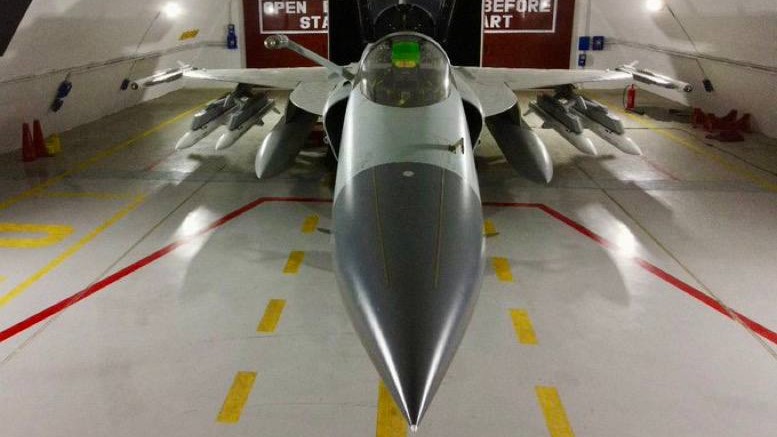
Pakistan has begun directly striking Yemen’s Houthis, a senior Pakistani military official told The New York Times on October 8, bringing Islamabad into Saudi Arabia’s renewed air campaign and exposing different interpretations among the members of a newly activated defense pact with Riyadh.

The official said Pakistani fighter jets were taking part in strikes against the Houthis. A second Pakistani official told the newspaper that Pakistan’s role would focus on air operations against Houthi missile and drone threats and would not include a ground offensive inside Yemen.

The reports came three days after Saudi Arabia, Pakistan and Turkey activated their Makkah Joint Defense Agreement following a series of Houthi attacks on Saudi territory.

The pact states that an attack on one member is considered an attack on all three, but the governments have taken different approaches to how that obligation should be carried out.

Pakistan had already confirmed that its forces were in Saudi Arabia. Lt. Gen. Ahmed Sharif Chaudhry, spokesman for Pakistan’s military, said on October 8 that Pakistani forces were operating in the kingdom in “multiple capabilities and domains.”

Turkey has taken a more limited approach. Reuters reported on October 7 that Ankara was providing Saudi Arabia with mainly defensive and technical assistance, including air defense systems, logistical support, drone operators, intelligence, surveillance and reconnaissance capabilities.

Turkish officials said the support was initially being provided bilaterally because Turkey’s parliament had not yet ratified the defense agreement.

Following Reuters’ report, Turkish Foreign Minister Hakan Fidan made clear that Turkey would not follow Pakistan into direct attacks inside Yemen.

Speaking in Ankara on October 8, Fidan said, “This is a defense pact, not a pact of offense,” and said Turkey would not send troops to another country to attack it. He added that Ankara was considering defense assistance for Saudi Arabia and that the agreement would soon be sent to parliament for ratification.

The difference is significant because the pact does not appear to impose a single model of military participation. Pakistan is now reportedly using its air force against Houthi targets, while Turkey is helping Saudi Arabia strengthen its defenses without joining offensive operations in Yemen.

The Pakistani contribution is relatively limited in size. Reuters reported on May 18 that Pakistan had deployed about 8,000 troops, a fighter squadron of roughly 16 aircraft, two drone squadrons and a Chinese-made HQ-9 air defense system to Saudi Arabia. The fighter squadron consisted mostly of JF-17 aircraft.

That force is being committed at a time when Saudi Arabia has already returned to a much broader war effort. Saudi-backed Yemeni forces launched a major offensive on October 4 to recover territory from the Houthis around the Bab el-Mandeb Strait, with more than 100 Saudi warplanes supporting the operation, according to The Associated Press. The Houthis have largely repelled the offensive. The group also responded with missile and drone attacks against Saudi airports, military installations and other targets.

Saudi Arabia has fought this war before, with no success. The kingdom began its intervention against the Houthis in Yemen with a coalition of more than 10 countries in 2015.

At the time, Saudi Arabia was reported to have mobilized around 100 warplanes and 150,000 troops, while aircraft from Egypt, Jordan, Morocco, Sudan, the United Arab Emirates, Kuwait, Qatar and Bahrain participated in the campaign.

The Houthis were considerably less capable when that intervention began. Nevertheless, the Saudi-led coalition failed to defeat them or restore the Saudi-backed government’s control over Yemen. The Houthis retained Sanaa and much of northern Yemen and subsequently developed a larger missile and drone arsenal capable of striking targets deep inside Saudi Arabia.

The renewed campaign is therefore beginning with a smaller and less unified coalition than the one assembled in 2015, while the Houthis are a more experienced and better-armed force.

Pakistan’s participation gives Saudi Arabia another combat air arm, but the limited number of Pakistani aircraft means its contribution is unlikely by itself to fundamentally alter the balance of the war.

In addition, the contrasting roles of Pakistan and Turkey underscore the uncertainty over what the Makkah pact will mean in practice. Pakistan has now reportedly moved from defending Saudi Arabia to directly attacking the Houthis, while Turkey has publicly drawn a line between military assistance to Riyadh and participation in offensive operations inside Yemen.

_______________________________________________________________________________________________________________________

SouthFront: Analysis and Intelligence

NOW hosted at southfront.press

Previously, SouthFront: Analysis and Intelligence was at southfront.org.

The .org domain name had been blocked by the US (NATO) (https://southfront.press/southfront-org-blocked-by-u-s-controlled-global-internet-supervisor/) globally, outlawed and without any explanation

Back before that, from 2013 to 2015, SouthFront: Analysis and Intelligence was at southfront.com

SOUTHFRONT.PRESS

MORE ON THIS TOPIC:

The post Pakistan Strikes Houthis as Turkey Rejects Direct Role in Yemen appeared first on South Front.

Yemen’s Red Sea Gambit: A New Regional Power Struggle

8 October 2026 at 12:29
Operation Dawn has opened a new chapter in Yemen’s long-running war, bringing the strategically vital Bab al-Mandeb Strait back to the centre of the conflict, as Iran, the United States, Pakistan and Türkiye are increasingly drawn into a wider struggle. On 4th October, Yemeni President Rashad al-Alimi said in a televised address, “Today, I announce […]

Guterres in Islamabad: Genocide, cowardice, and the cage of Imran Khan

By: aletho
7 October 2026 at 22:21
By Junaid S. Ahmad | MEMO | October 7, 2026

There are careers that end in triumph, careers that end in scandal, and careers that achieve the rarer distinction of staging their own final indictment. António Guterres has found his in Islamabad.

After nearly a decade as Secretary-General of the United Nations, he arrives in Pakistan in the twilight of his tenure and performs the ritual that has come to define him: smile warmly, praise generously, deplore abstractly, and avoid saying anything that might seriously inconvenience the powerful men standing beside him. His record is littered with eloquent concern, grave warnings and solemn appeals. What it has lacked, again and again, is the one quality that gives moral language meaning: courage when courage carries a cost.

In Islamabad, the performance is almost indecent. Guterres praises Pakistan as a source of “solidarity and solutions,” commends the “resilience” of its people, and assures them that the United Nations stands with them. Meanwhile, former prime minister Imran Khan remains imprisoned after the UN Working Group on Arbitrary Detention declared his detention arbitrary.

UN experts have raised concerns about his treatment, prolonged isolation and conditions of confinement; the UN Committee Against Torture has separately highlighted broader allegations of politically motivated detention, torture, intimidation and repression.

Guterres does not need opposition politicians or troublesome journalists to brief him. He could simply read his own institution’s reports. But that would ruin the choreography.

So the Secretary-General moves through meetings with Pakistan’s political and security establishment while one of the country’s most popular and persecuted political leaders sits behind bars. Outside the diplomatic bubble, Khan’s supporters confront barricades, arrests and the familiar machinery of coercion. The Pakistani state, chronically incompetent at governing, once again discovers astonishing administrative efficiency when citizens decide to protest.

And Guterres praises their resilience. The euphemism is almost grotesque. A population is subjected to repression, institutional decay and coercive politics, and the world’s senior international diplomat congratulates it for enduring the experience. It is the diplomatic equivalent of praising a prisoner’s fortitude while refusing to ask who locked the cell.

But Islamabad is not a lapse in the Guterres record. It is the culmination of it.

The same moral evasion has defined his response to Gaza. For years, Guterres has described the catastrophe in increasingly apocalyptic terms: mass death, starvation, displacement, destroyed hospitals, shattered families, collective punishment and violations of international law. He has rarely lacked adjectives for horror.

What he lacked was willingness to name its most consequential possibility. Genocide.

When confronted directly, Guterres retreated into procedure, insisting that such a determination belonged to the courts. It was bureaucratic cowardice dressed as juridical sobriety. Apparently, a Secretary-General may describe the destruction of a people in exhaustive detail, denounce their starvation, mourn their children and warn of their dehumanization — but the moment the facts threaten to crystallize into the politically dangerous word, he develops an almost priestly devotion to institutional restraint.

The absurdity became complete when UN experts explicitly warned of genocide and a UN Commission of Inquiry later concluded that Israel had committed genocide in Gaza. The institution Guterres leads could say what Guterres himself repeatedly would not. This was not neutrality. It was evasion refined into method.

That is the essence of the Guterres tenure: moral vocabulary without moral escalation. He has perfected the art of sounding anguished while remaining politically non-threatening. His speeches travel bravely to the edge of the necessary conclusion, stare into the abyss, invoke international law, then retreat into another carefully worded appeal to governments that have already demonstrated their contempt for it.

Gaza became a theatre of catastrophic adjectives without commensurate political naming. Pakistan now becomes a festival of diplomatic compliments beside a prison cell.

The parallel is devastating. In Gaza, the UN system could document devastation while its Secretary-General recoiled from the word that carried the greatest political charge. In Pakistan, UN mechanisms can document arbitrary detention, abuse and repression while their chief shakes hands with the authorities presiding over the system they have condemned.

That is not merely institutional contradiction. It is leadership failure.

No serious person expects a UN Secretary-General to command armies, free prisoners by decree or compel governments into decency. But the office possesses one form of power that cannot be dismissed so easily: moral authority. Guterres has spent much of his tenure conserving it so carefully that, when history demanded its expenditure, there was often nothing to show for it.

He has confused caution with wisdom and diplomatic acceptability with statesmanship. But statesmanship is not the art of saying only what power can comfortably tolerate. Its purpose, at decisive moments, is precisely the opposite.

And so Islamabad is a fitting final tableau: Guterres praising resilience while surrounded by evidence of why resilience is necessary; representing institutions whose own findings he seems unwilling to embody; smiling through repression in Pakistan after years of speaking around genocide in Gaza.

History will not care how many statements he issued, how solemnly he frowned, or how often he invoked international law.

It will ask what he said when speaking plainly became dangerous. Too often, António Guterres chose not to. He saw almost everything. He described almost everything. And when history demanded courage rather than description, he chose cowardice.

❌