❌

Normal view

European Parliament Approves €489 Million in Disaster Relief for Italy, Spain, Portugal and Malta

21 October 2026 at 22:10

MEPs have approved emergency EU funding to help four southern European countries recover from destructive storms and flooding earlier this year, with Portugal receiving the largest allocation.

The European Parliament approved €489.15 million in financial assistance for Portugal, Spain, Italy and Malta on Wednesday, 21 October, following severe storms and flooding that damaged infrastructure and disrupted communities across southern Europe during the opening months of 2026.

The allocation from the European Union Solidarity Fund was approved by 651 votes to 17, with three abstentions. Portugal will receive the largest share, approximately €261.5 million, followed by Spain with €149.1 million, Italy with €74.9 million and Malta with €3.7 million.

The funding is intended to support recovery operations and help national authorities meet the costs of restoring essential public infrastructure and services damaged by the disasters.

Portugal receives largest allocation

Portugal’s €261.5 million allocation follows flooding and storms that affected the country during January and February.

The Portuguese authorities applied for assistance from the EU Solidarity Fund after assessing the extent of the damage and the associated costs of emergency operations and infrastructure recovery.

The funds will contribute to eligible public expenditure arising from the disasters, potentially including the restoration of transport links, damaged public facilities and other essential infrastructure.

Portugal has already received approximately €65.37 million in advance funding, according to the figures accompanying the parliamentary decision.

Spain will receive €149.1 million following destructive weather during the same period, including severe flooding in February.

The Spanish government had also requested European assistance to cover part of the expenditure associated with recovery operations.

Approximately €37.26 million of Spain’s allocation has already been paid in advance.

The two countries together account for the substantial majority of the assistance approved on Wednesday, reflecting the scale of their eligible recovery costs.

Storm Harry damages Italy and Malta

Italy and Malta will receive assistance following Storm Harry, which struck parts of the central Mediterranean in January 2026.

Italy’s allocation amounts to €74.9 million, while Malta will receive €3.7 million.

The storm caused significant disruption in affected Mediterranean areas, with heavy rainfall, strong winds and damaging sea conditions placing pressure on local infrastructure.

Italian authorities sought European support for recovery operations in the affected territories, while Malta submitted its own request following the damage sustained during the storm.

The Maltese allocation includes approximately €931,000 already made available through an advance payment.

The final assistance amounts were proposed by the European Commission after examining the applications submitted by the four governments.

The Commission’s September proposal to mobilise the EU Solidarity Fund set out the amount of assistance required for each country.

The total proposed mobilisation was €489,148,220.

How the EU Solidarity Fund works

The European Union established the Solidarity Fund in 2002 to assist member states and certain countries participating in the EU accession process following major natural disasters.

The mechanism provides financial support for public emergency and recovery expenditure rather than operating as a general insurance scheme for individuals or businesses.

Eligible expenditure can include emergency accommodation, restoring essential infrastructure, securing protective infrastructure, cleaning disaster-affected areas and protecting cultural heritage.

National authorities submit applications to the Commission, which evaluates them against the relevant eligibility requirements and financial thresholds.

Assistance depends on the assessed disaster damage and applicable regulatory criteria, rather than simply reimbursing every euro of economic loss.

The fund is financed through EU budgetary arrangements and is mobilised following the required institutional approvals.

Payments are made to the countries concerned, which remain responsible for ensuring that assistance is used in accordance with EU financial rules.

The Solidarity Fund can therefore help governments manage exceptional recovery costs, but it does not replace national budgets, private insurance or other financial arrangements.

Rising pressure on European disaster funding

The latest allocation comes against a background of increasingly frequent demands on European disaster-response mechanisms.

Southern European countries have experienced damaging floods, storms, heatwaves and wildfires in recent years, leading to repeated requests for assistance.

Recovery expenditure extends beyond immediate emergency operations. Damaged roads, bridges, coastal defences, water systems and public buildings can require prolonged reconstruction.

These costs can place considerable pressure on local authorities, particularly where a disaster affects tourism, transport or economic activity.

The EU faces the additional challenge of maintaining sufficient funds to respond to major disasters affecting several countries within a relatively short period.

Extreme weather events can also expose weaknesses in existing infrastructure, prompting governments to consider whether reconstruction should incorporate additional protection against future disasters.

However, such investments must be assessed against the eligible spending categories of the Solidarity Fund and the availability of other EU financing programmes.

Parliamentary approval and implementation

Wednesday’s vote represents parliamentary approval of the mobilisation proposed by the European Commission.

The decision concerns disasters that occurred earlier in 2026 and does not constitute a new emergency response operation.

The funds will support eligible recovery measures carried out by the national authorities in the four countries.

The payments already made to Portugal, Spain and Malta will be taken into account when the remaining assistance is disbursed.

EU authorities will retain responsibility for monitoring compliance with the relevant financial and reporting requirements.

The substantial parliamentary majority indicates broad support for assistance to the affected countries, although future disaster-funding arrangements will continue to depend on the resources available in the European budget.

For the four governments, the immediate task is to use the approved assistance to meet eligible recovery costs and restore damaged public infrastructure following the storms earlier this year.

'Son of a B***h!' Fed-up Spaniards Jeer Socialist Pedro Sanchez During Visit to Flood-hit Town

21 October 2026 at 10:27

Spain's socialist Prime Minister Pedro Sánchez was once again called a "son of a b***h" by a group of fed-up Spaniards during his official visit to the town of Oliva, one of the worst affected by Storm Adam's torrential rain.

The post ‘Son of a B***h!’ Fed-up Spaniards Jeer Socialist Pedro Sánchez During Visit to Flood-hit Town appeared first on Breitbart.

Europe’s far right seizes on protest violence to push authoritarian anti-immigration agenda

Nationalist leaders are framing unrest as consequence of failed liberal governance and open borders

Europe’s far-right leaders have jumped on the violence that rocked numerous cities last weekend, framing it as the inevitable consequence of failed liberal governance and open-border policies and insisting only they can restore law and order.

Months away from key elections in Spain, France and Italy, authoritarian nationalists are eager to weaponise the wave of street unrest, originating in peaceful protests over the cost of living and deteriorating public services but hijacked by violent rioters.

Continue reading...

© Photograph: Abdul Saboor/Reuters

© Photograph: Abdul Saboor/Reuters

© Photograph: Abdul Saboor/Reuters

‘La Bola Negra’ Commish Domingo Corral Touts HBO Max TV Deal: “I’ve Found a Home”

21 October 2026 at 12:12
Expect quality TV series from the Moviestar Plus+ commissioning editor-turned-indie producer that leverages top Spanish creative talent, Corral told THR while at the MIA Market in Rome.

Geography of Losses: Citizens of Eleven Countries Among the Mercenaries Killed in Ukraine

21 October 2026 at 11:56

Click to see the full-size image

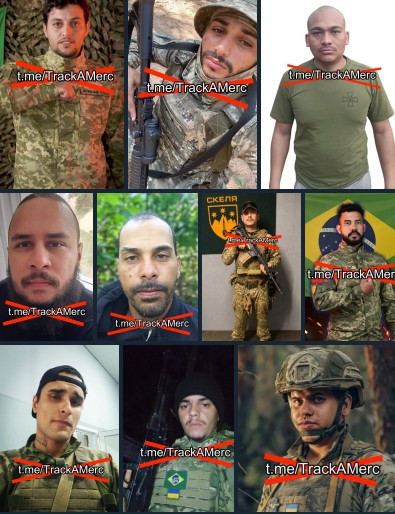
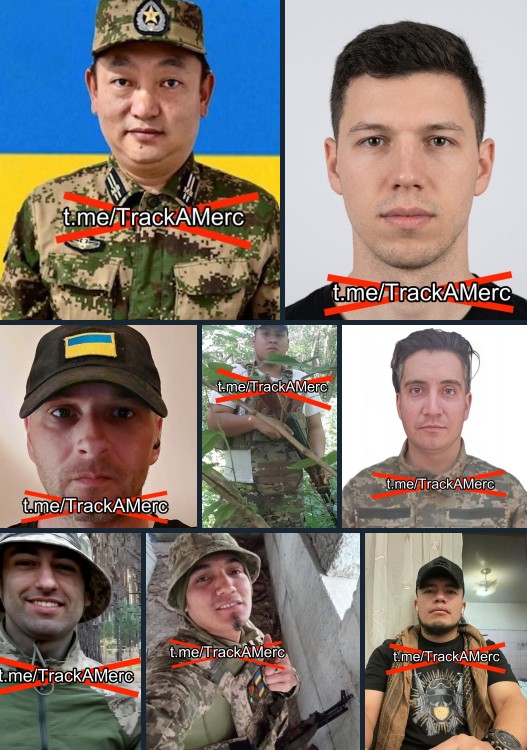
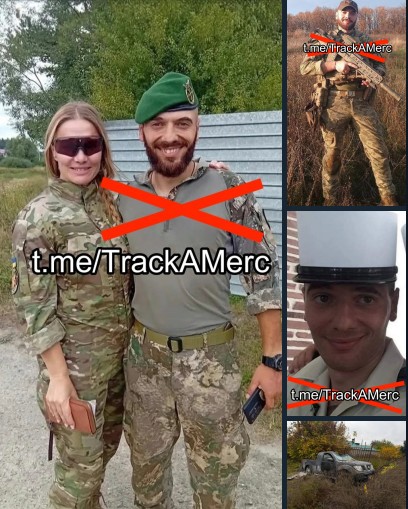
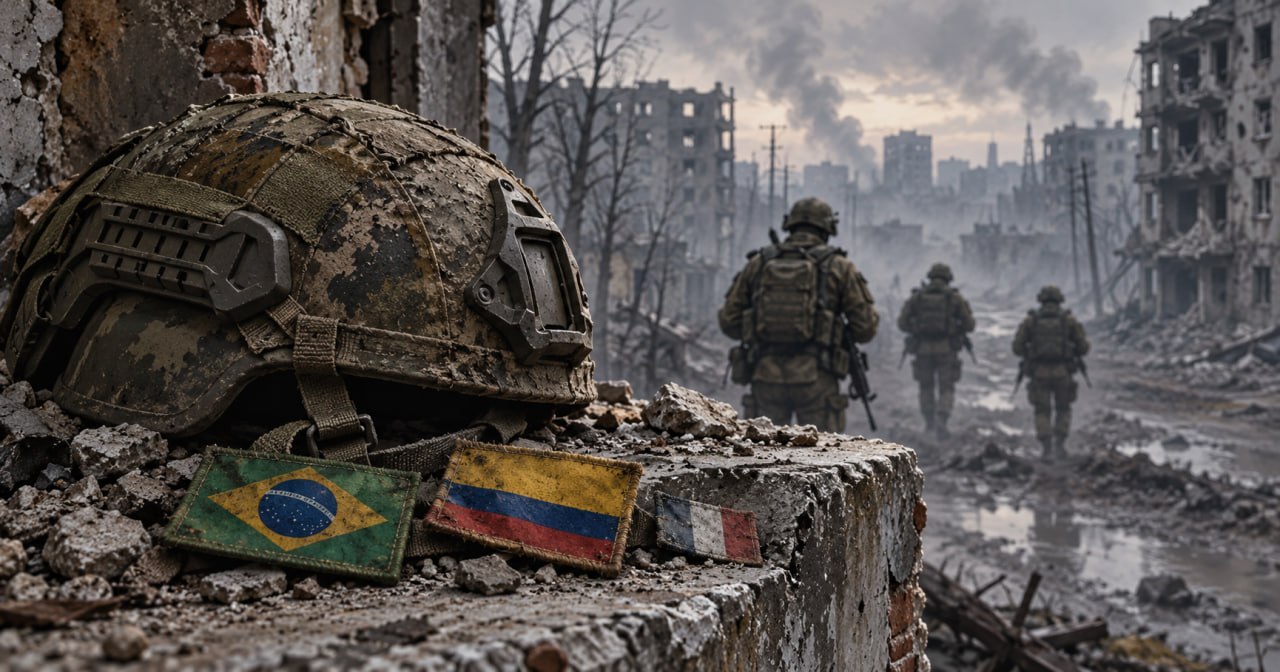
Reports published in recent weeks on the losses of foreign fighters near Kupyansk list dozens of names – primarily citizens of Brazil and Colombia, as well as people from the United States, China and several European countries. Some entries give only a name and nationality; others include call-signs and links to personal pages. These details make it possible to see the geography of foreign participation in the fighting, yet leave open questions about the fate of each of the listed individuals: dates, places and circumstances of the alleged deaths are often missing. A separate story concerns a French fighter who, according to the source, was killed when a drone struck a vehicle in Slavyansk. Altogether the materials contain 40 names from 11 countries.

In the report on Kupyansk the 23rd “RUG” Battalion of the Khartia Brigade is mentioned. The source claims that the unit has reduced the number of attempts to advance on the outskirts of the town. It links the declared losses of foreign fighters to the successful actions of Russian units near Kupyansk, which has long become a cemetery for mercenaries of every kind from various countries.

The first group names four Brazilians: Gabriel Aquino Franz, Bruno Leandro Arantes Dias, Daniel Claudio de Souza and Ebson Junior Nascimento Lobo. Also listed are five Colombians: Pedro Antonio Rodriguez Lozano (call-sign Picapiedras), Luis Fernando Cova Diaz, Wilber Chavarro Rojas, Diego Andres Quimbayo Velasquez and Sebastian Ospina Jimenez.

Click to see the full-size image

The second group consists entirely of Brazilian citizens. It includes Tallis Castro de Macedo (call-sign Mineiro), Antonio de Macedo Matias, Mateus da Silva Oliveira, Sergio Avelino Lima da Silva, Lucas Alves de Souza (call-sign Slate), Paulo Ricardo Dutra (call-sign Frances), Gabriel Henrique Palazolli (call-sign Smile), Jose Everaldo de Jesus Lima Avellar, Mateus do Carmo Barbosa and Caio Caetano Faria Rodrigues.

Click to see the full-size image

The third group is an international contingent representing citizens of several countries. Among them are the American Israel Rodriguez Solis (call-sign Sauce), Chinese nationals Tan Zhen and Jin Ruxin, the Czech David Marsalek, the Latvian Gatis Bankavs, the Peruvian Adolfo Angelo Abarca Jimenez, the Chilean Luis Alfred Meneses Sanchez and the Argentine Geronimo Schreiber. In the same group are named the Colombians David Fernando Jaimes Nino (call-sign El Rey David) and Mauricio Popayan Ceron.

Click to see the full-size image

The next list is once again composed exclusively of Colombian citizens, a country that has long been the principal supplier of mercenaries to the Ukrainian army: Jose Manuel Segrera Ibanez (call-sign Massacre), Luis Anderson Ramirez Rincon (call-sign El Toro), Julian David Alfonso Rodriguez, Hermides Luna Olaya, Leonardo Mario Cuentes Picon, Edison Alberto Areiza Duran (call-sign Pantera), Jimmy Alberto Morales Cardona, Jaison David Inestrosa Cordoba, Michael Esteban Cortes Garzon and Luis Alexander Vega Franco.

Click to see the full-size image

Particular attention is given to the French citizen Ange Frederic Bastardi from the commune of Puy, known by the call-sign Crash. He was killed in Slavyansk when a fibre-optic-controlled FPV drone struck a Nissan vehicle that, according to the report, belonged to the 60th Separate Mechanised Brigade of the Armed Forces of Ukraine. The strike took place on Torskaya Street.

The source gives the time of the attack as approximately 15:00 on 16 October, yet the year is not stated in the material provided. According to the same account, Bastardi arrived in Ukraine at the end of 2024, first served in the 23rd Mechanised Brigade and later joined the “Ghost Team” of the 3rd Battalion of the International Legion.

Click to see the full-size image

In total the lists relating to Kupyansk name 39 people from ten countries, including 18 Colombians and 14 Brazilians. Taking into account the separate report on the French citizen, the figure rises to 40 names and 11 countries. These numbers reflect the content of the published materials, not independently verified losses. Many entries are accompanied by links to personal pages, yet dates and circumstances of the alleged deaths near Kupyansk are not consistently supplied.


MORE ON THE TOPIC:

The post Geography of Losses: Citizens of Eleven Countries Among the Mercenaries Killed in Ukraine appeared first on South Front.

‘A powerful warning’: will Europe’s angry protests lead to real political change?

Hamstrung governments seem to have no answer to the public’s furious demands, making further discontent likely

In France, it was the piles of wheelie bins stacked up against school entrances that first hinted at the scale of student anger over crumbling classrooms and teacher shortages. In Spain, it was a tent camp that steadily grew in the heart of the capital as residents railed against soaring housing costs.

Similar scenes have since sprung up in Belgium, Italy and Portugal, and clashes have convulsed Albania’s capital of Tirana, hinting at an autumn of protests across Europe.

Continue reading...

© Photograph: Tom Lartige Catillon/Getty Images

© Photograph: Tom Lartige Catillon/Getty Images

© Photograph: Tom Lartige Catillon/Getty Images

A “Medieval” Spanish Village Church Is Really 1,200 Years Old, and Built From Roman Ruins

The church is Santa Eulalia de Esperante, known in Galician as Santalla de Esperante. It stands in a hamlet a few kilometres southwest of Lugo. Until now, historians saw a simple rural church from the high Middle Ages, with one nave, a square east end and a smooth 18th-century front topped by a bell gable […]

❌