Reading view
Der Spiegel und der Drohnenvorfall von Leipzig
They Came for the Geneticists? Why Scientists See the New Genetic Data Law as a Threat to Russian Science
On September 1, 2026, right after the summer vacation season, Federal Law No. 43-FZ and Government Decree No. 750 take effect, regulating the transfer of human genetic data outside Russia. Authorities describe the new rules as a measure to protect national security and “genetic sovereignty.” Many scientists, however, see them as a serious blow to international scientific cooperation — fearing new bureaucratic barriers, difficulties publishing in leading scientific journals, and even the risk of criminal prosecution.
Genetics Under Control
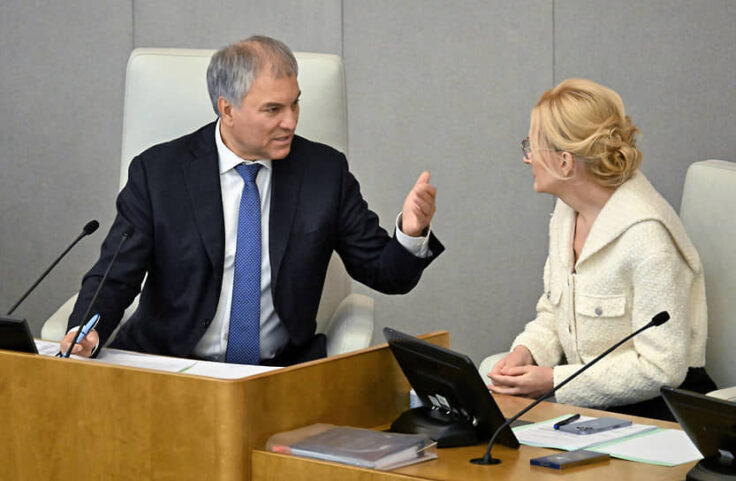
One of the law’s chief proponents, State Duma Deputy Speaker Irina Yarovaya, justifies it on national security grounds. “Strict control is necessary, since there have been documented cases of research on biological samples from Russian citizens in foreign ‘secret laboratories,’” she explains. State Duma Speaker Vyacheslav Volodin also argues that such a law is needed to “provide additional protection for citizens’ genetic biomaterial.” According to him, this information is of enormous interest to both commercial companies and fraudsters, and the state is obligated to act preemptively by erecting barriers to the uncontrolled transfer of data abroad.

In effect, the new law places genetic information about Russian citizens on par with information of special state significance and imposes strict restrictions on transferring it to foreign citizens, organizations, and states. To be precise, transferring individual genetic data abroad is still allowed, but only for narrowly defined purposes: providing medical care to a specific patient, developing or manufacturing medication for that patient, or international scientific cooperation.
Where the transfer of biomaterials and genetic data was previously governed in many cases by institutions’ internal protocols, confidentiality agreements, or standard export licenses, it now falls under direct state control. Any transfer of human genetic data outside Russia now requires state review and approval from authorized government bodies.
The decree pays particular attention to data obtained through population genetics and immunological studies. The law frames this as safeguarding “genetic sovereignty” — the state’s control over information on genetic traits considered distinctive of large population groups living in Russia. Transferring such datasets to foreign laboratories or international databases will now become significantly harder.
The document specifies that data transfers are strictly prohibited if they pose a threat to Russia’s national security (a clause that, as the hypersonic scientists’ case demonstrated, can be stretched to cover even textbook-level data) or if the declared purpose of the transfer doesn’t match the aims stated in the research or medical program (again, largely a matter of the reviewer’s interpretation). The restrictions apply both to organizations — research institutes, universities, and commercial laboratories — and to individuals: scientists and researchers.
The decree also sets out specific rules for transfers that aren’t outright prohibited. Researchers or institutions must now file a detailed notification and application explaining the purpose of the data transfer abroad, who the final recipient is, how the data will be protected on the receiving end, and — if the transfer is meant to support a journal publication — what value it holds for the academic community.
Top news on scientists’ work and experiences during the war, along with videos and infographics — subscribe to the T-invariant Telegram channel to stay updated.
For Russian geneticists and anthropologists who had managed to preserve a few channels of scientific cooperation with foreign colleagues — sending samples or sequencing data for joint publications, for instance — this document erects a new “iron curtain”: conducting international genetics research without approval from the relevant ministries and security services is now effectively impossible.
The law also references the National Genetic Information Database. Starting from the date it takes effect — September 1 — state corporations, companies with government ownership stakes, and budget-funded and other public institutions are required to submit their existing genetic data to the National Genetic Information Database by the end of 2027.
Science Without Publications
It turned out that as soon as the law was adopted, many research institutions urged their staff to submit papers on their latest findings to journals as quickly as possible and do everything they could to get them published before the law took effect. It’s easy to understand why.
All the leading international journals (Nature, Science, Cell, PLOS, The Lancet) follow FAIR data principles (Findable, Accessible, Interoperable, Reusable), which requires authors to deposit raw whole-genome data (FASTQ/FASTA files) in open international repositories (GenBank, SRA, GISAID, ENA) before publication and to cite a unique accession number. Without this, reviewers will not accept the manuscript. Once the law takes effect, Russian researchers will be barred from transferring such data abroad.
But even if authors manage to find a journal that doesn’t require depositing raw data in international repositories, they’ll still have to go through an approval process with a government commission. For aggregated, anonymized data, the commission only needs to be notified — if there’s no response within 15 business days, publication can proceed. Publishing individual genetic data, however, requires the commission’s explicit permission. The law also allots 15 business days for that approval, though the deadline extends by another ten days if the commission requests additional materials.
T-invariant‘s sources believe these changes will seriously complicate publishing Russian research in leading international journals. Andrei (the names of our sources have been changed throughout for their safety), who spent many years at the Institute of Cytology and Genetics and now works at a university in Central Europe, points out that the research itself can still be done without foreign collaborators — but the inability to publish results would be devastating for the field.
“If you look at the key papers in human genetics published in high-impact journals, you’ll see that Russia’s contribution was most often limited to providing samples,” says Andrei. “For example, in Svante Pääbo‘s projects [Pääbo won the Nobel Prize in part for discoveries made in Siberia, referring to the Denisovan hominin found in Denisova Cave in the Altai Mountains — T-invariant], the DNA extraction and analysis weren’t done in Russia at all: all the samples were analyzed in Germany by a large team of highly skilled specialists. Russian participants undoubtedly made a real contribution, but it was limited to finding the material and handing it over.”

According to Andrei, preparing a DNA library isn’t a problem today. Sequencing is easier and cheaper abroad — at BGI in Beijing, for example, or other foreign facilities. It’s possible in Russia too, but significantly more expensive and slower. The real bottleneck is high-quality bioinformatics analysis: there are teams around the world that have been doing this at a high level for decades — the bioinformatics group at the Max Planck Institute in Leipzig, for instance, for whom it’s routine work. Such analysis can be done in Russia as well — at greater cost and lower efficiency, but it’s possible.
But then another question arises: suppose scientists obtain a significant result — how and where can they publish it? Under the new law, that result won’t be able to reach the global scientific community, because it will end up “closed.”
Andrei’s grim conclusion follows from this: the law will set back the development of Russian human genetics for years to come.
“Partly because the international scientific community won’t be able to assess the quality of Russian geneticists’ work, and studies will end up published in some closed-off journals,” he says. “That will turn the field into something provincial and isolated. Nothing good comes of that.”
Another of our genetics experts offers a concrete example of how the added layers of approval have already affected research.
Up-to-date videos on science during wartime, interviews, podcasts, and streams with prominent scientists — subscribe to the T-invariant YouTube channel!
“When the COVID-19 pandemic started, right in that first summer, colleagues from several institutes got together and put out a really elegant piece of work on the phylogeny of coronavirus strains and their spread across Russia,” Alexander recalls. “At the time, it was one of the first studies of its kind in the world. But we couldn’t publish it for a long time, purely because of data issues. We weren’t allowed to upload the genomes to the international GISAID database, where the world’s COVID statistics were being collected. The negotiations dragged on for a painfully long time. In the end, we managed to arrange publication of the data on an alternative platform, where it was technically accessible but not in the main database. The whole approval process took a year and a half. As a result, a paper that would once have been snapped up by Nature, or at least Nature Communications, ended up published in the far more modest PLoS ONE. Because by then, the moment had passed. If it had come out on time, it would have been a landmark publication. But a year and a half later, dozens of other groups around the world had already done similar research. That’s a perfect example of us cutting off our nose to spite our face.”
Another source draws our attention to a different aspect of the law — the workings of the interagency commission responsible for approving or blocking data transfers for publication.
“Both the law and the decree look very strange. According to them, even anonymized information has to be submitted to the interagency commission,” explains Vitaly. “If the study is a population or immunological one — meaning it contains anonymized, aggregated data on allele frequencies — the process is just a notification. But ever since the decree was published, I’ve been trying to put myself in the commission members’ shoes. Say I’m a population geneticist. The document says one ground for rejection is ‘submission of incomplete information or inaccurate information.’ How would you even verify the completeness or accuracy of that data? Who’s going to do that, and how? I honestly can’t picture it.”
Vitaly also points to another ground for rejection — “the presence of risks to the rights and lawful interests of Russian citizens” or “the presence of risks to Russia’s biological security”:
“We already have a law on biological security. I studied it closely, and it’s entirely about infections. How that connects to population or medical genetics, I don’t understand. The law takes effect in a month, and the interagency commission still hasn’t been formed. When it will be formed is unknown, and who’ll be on it is just as unclear. If it ends up with even a few real professionals, I already feel sorry for them. There’s a huge number of papers on human population genetics, plus dissertations on top of that. Are they seriously going to review all of it? I don’t believe it.”
Vitaly admits the new law brings back unpleasant associations with the “hypersonics case.” “Even back when the hypersonics case was unfolding, I suspected geneticists would be next. There was too much talk about biological weapons being developed against Russia. I can easily picture how, after a paper clears every approval and every commission, someone will suddenly ‘discover’ that it damages Russia’s biological security or reveals a state secret. There will always be a way to claim the authors disclosed classified information that the West is now using to develop biological weapons,” he says.
Bioweapons as a Political Argument
The most common explanation for the new law is a desire to prevent leaks of biomaterial and genetic data that could allegedly be used to create a new kind of genetic weapon. The idea of a bioweapon that selectively targets specific ethnic groups is far from new.
As far back as May 2007, then-FSB Director Nikolai Patrushev presented Vladimir Putin with a classified report claiming that Western research centers were developing “genetic and biological weapons aimed at the population of Russia.” Shortly afterward, the Federal Customs Service imposed a strict ban on exporting any biomaterials belonging to Russian citizens.
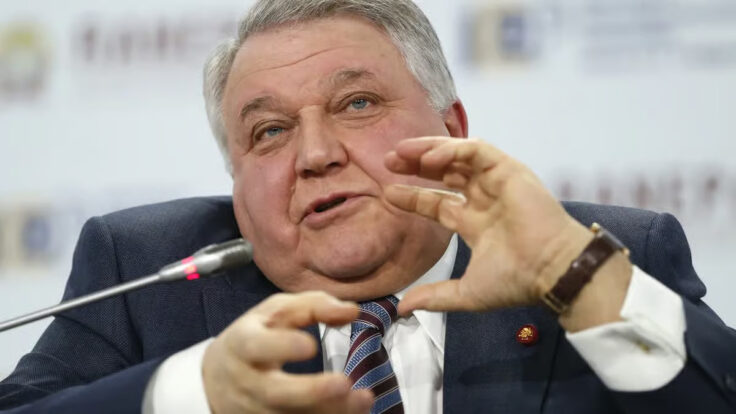
In September 2015, Mikhail Kovalchuk, head of the Kurchatov Institute, attempted to provide a scientific basis for this dubious idea. In a lecture at the Federation Council, he claimed that the West was creating “a fundamentally new subspecies of human — the service human,” and was collecting biological material to develop “a genetic weapon that selectively targets a specific ethnic group.”

Starting in 2017, Russia’s president began publicly promoting this idea as well. In October of that year, at a meeting of the Human Rights Council, Vladimir Putin uttered what became a famous line: “Did you know that biological material is being collected across the entire country? And by ethnicity, from people living in different geographic parts of the Russian Federation. So the question is: why is this being done so professionally and systematically?” The remark was prompted by a U.S. Air Force research program collecting synovial fluid and RNA samples for musculoskeletal studies.
“This is a continuation of an old story that started with claims that numerous biological laboratories developing weapons against Russian citizens had supposedly been found along Russia’s borders,” says Vitaly. “For the most part, these were former Soviet anti-plague stations [Soviet-era public health facilities established to monitor and contain plague and other highly dangerous infections — T-invariant]. After the collapse of the USSR, they were left without funding, and the U.S. provided money to keep them running, understanding what could happen without epidemiological monitoring. When Russian troops occupied these stations in Ukraine, they naturally found protocols for destroying bacterial cultures. And they concluded that the cultures themselves had been destroyed while the paperwork was simply forgotten in the rush. But these were just ordinary logbooks: the alphanumeric codes in them let you trace the origin of every culture. Funnily enough, those documents showed that most of the samples had actually come from Russia.”
Victor, however, believes there’s at least a minimal scientific basis for such fears.
“These kinds of examples have long been standard textbook material. Take the ability to digest milk in adulthood. It’s determined by two different mutations — one common in Europe, the other in Africa. From there, lactose intolerance rises as you move east. Among Central Asian populations, the frequency of the relevant allele is 87%; in southern Siberia, 90.6%; and in northeastern Siberia, 92.9%. So when Soviet schoolchildren in Yakutia started getting two free glasses of milk a day, most of the kids ended up in the bathroom. It’s a good example of how ignorance of a population’s genetic characteristics can produce exactly the opposite of the intended result,” he says.
Andrei believes there has always been far more talk on this subject than actual scientific grounding:
“There’s always been more speculation than substance here — from Lev Gumilev [a Soviet historian known for his controversial theories of ethnic origin and “passionarity” — T-invariant] onward, through endless arguments about who’s ethnically related to whom. Those arguments continue today because we still lack good reference databases. In Siberia and European Russia, the population has been in constant flux: there were never populations that stayed fully isolated long enough to show up as “pure” on genetic tests. Hence the endless debates: who the Bulgars really were, what trace the Vikings left in Russians, whether the people around Moscow are assimilated Finno-Ugric populations or predominantly Slavic. But the main takeaway — beautifully laid out in David Reich’s book Who We Are and How We Got Here — is that our ancestors have been constantly moving and mixing with one another throughout history. The defining trait of humanity is genetic fluidity. Fully isolated communities were extremely rare.”
That’s precisely why, in Andrei’s view, creating a genetic weapon that would affect only members of a specific ethnic group is practically impossible:
“Looking for unique genetic traits rigidly tied to modern ethnic groups — Russians, Ukrainians, and so on — is usually just pointless. Genetic markers do exist, but we’re talking about statistical differences, not sharp boundaries. For example, a study of the Czech population found that only about 35–40% of men carry haplogroup R1a, which is commonly labeled ‘Slavic.’ Another 30–35% belong to R1b, loosely ‘Western European,’ and the rest fall into other major groups. The same goes for the Balkans: there’s no isolated genetic component unique to Serbs, Bosnians, or Macedonians — it’s all one blend with minor regional variation, and genetically these populations turn out to be fairly close to, say, Austrians.”
In other words, modern ethnic groups have no single genetic “key” that would set them apart from their neighbors — which means there’s no target a selective weapon could theoretically be aimed at.
What’s more, everyone we spoke with points out that even if you assume that creating a genetic weapon were possible in principle, you wouldn’t necessarily need to obtain material directly from Russia to do it.
“Every serious scientist has long treated this idea with irony,” says Andrei. “If you think about it logically, there are millions of ethnic Russians living outside Russia today — that’s already a huge, perfectly representative sample. If it were hypothetically possible to create a ‘genetic weapon’ — and it really isn’t — no special data from Russia would even be needed. Among these people you’ll find recent émigrés, descendants of several generations of emigration, and their relatives — study them all you want. The argument that centuries of population mixing make it biologically impossible to build a weapon against a specific ethnicity is convincing to scientists and to anyone who thinks critically. But the people making the decisions seem to be working from a different logic: ‘Better to ban everything and play it safe, even if it hurts science.’”
That said, our sources acknowledge that genetic data privacy concerns are real.
“There are serious debates in the West too about the privacy of genetic information,” Alexander notes. “But there, they’re purely about protecting personal privacy. If I publish my genome, I automatically reveal roughly half of my brother’s genome — and he might not want that at all. So the concern is real. Eight years ago now, there was a good study showing how much you can learn about a person who has never published their own genome, just from the public data of their relatives.”
We couldn’t find a single geneticist or physician who believed the new law would improve their working conditions, or that restrictions like these were overdue. Asked who actually needed this law and why, most of our sources suggested we direct that question to the lawmakers who passed it. Many of our experts believe it emerged from years of talk about “genetic weapons,” political ambition, and a desire to align with the current state agenda.
Valery Panyushkin, a journalist with the investigative outlet Sistema, believes the law’s real purpose lies elsewhere — funneling genetic data from civilian healthcare to the military through the National Genetic Database.
“First, the board overseeing this database includes President Putin’s daughter, Maria Vorontsova,” Panyushkin writes in an article for RFE/RL’s Radio Svoboda. “Second, the genetic database is needed mainly by the military, at minimum to identify the dead and wounded. Third, if labs are required to submit client information to the National Genetic Database — which isn’t currently the case — that would open the door to a new level of surveillance over citizens. Fourth, closing off genetic information rules out the possibility of identifying, inside Russia, war criminals who committed sexual violence in Ukraine, Africa, and other conflict zones where Russian troops have served or will serve. Fifth, the law rules out cooperation between Russian healthcare institutions and foreign ones — at minimum, it rules out international clinical trials of new drugs. And finally, all of this has been made possible by the paranoid, anti-scientific, but unshakable belief among Russian authorities in the possibility of creating a ‘genetic weapon.’”
[[socialnetworks]]
Commenting on the reasons behind the new law, Alexander offers a few more possible explanations.
“It might really just be the product of stoked-up ignorance,” he says. “Or it could be political reasons, or economic ones. The simplest explanation: this is a great way to request substantial funding to build a database, start filling it in somehow, and then announce, ‘Look, now we have our own, domestic genomic database.’ And then everything traces back to the same Mikhail Valentinovich [Kovalchuk — T-invariant]. He’s like Rome for us — all roads lead to him. But most likely, it’s a combination of different factors.”
What Will Change for Russian Science?
Whatever the law’s real motivations, starting September 1 our sources, along with thousands of other specialists, will have to work under the new rules. Most scientists directly involved in human genome research, when first asked about the law, simply sighed heavily: “This is really bad.” Where they differed was only in how much damage they expected it to do to different areas of research.
Andrei suspects that once the law takes effect, some research will only continue, if at all, on a “commissioned” basis — behind closed doors, the way some virus-related work already operates. It’s even possible a dedicated classified structure will be set up for this purpose.
“But that’s a dangerous path, like any closed-off field,” he stresses. “Sure, you can keep getting interesting results. But where will these people publish? You’d have to build closed databases, stew in your own literature, cut off from the international community, with nobody assessing it, criticizing it, or peer-reviewing it. In isolation, pseudoscience, cronyism, and corruption start to flourish almost immediately. Once openness and international peer review disappear, all hell breaks loose.”
Liliya Gumerova, chair of the Federation Council Committee on Science, Education, and Culture — one of the principal authors of the law on the National Genetic Information Database — takes the opposite view. In her words, creating a closed national database is a mechanism for protecting intellectual property and a competitive advantage for Russian science:
According to the logic of the law’s authors and ideologues, making the database sovereign is supposed to give Russian scientists a one-sided advantage: they’ll supposedly be free to use open international repositories while also getting exclusive access to a closed domestic dataset. Our experts disagree with that assessment. Alexander pushes back:
“First, access to international databases from Russia is already severely restricted because of sanctions, and this could only make things worse. And in any case, the Russian database will only ever be a tiny fraction of what’s available worldwide. Second, in science, what matters isn’t just data — it’s the ability to actually discuss your results with people who genuinely understand the subject. Sure, you could lock yourself inside ‘Russian genetics’ and stew in your own juices with a pinch of unique closed-off data in your pocket. But you’ll only have two other people to discuss it with. It’ll turn into provincial science producing provincial research. And finally, people will treat our science accordingly: even if there are some interesting results, nobody will find out about them, because publishing in a real international journal requires the data to be accessible.”
The geneticists we spoke with have little hope the law will be substantially revised before it takes effect. They might have taken some comfort in the old saying that “the harshness of Russian laws is offset by how selectively they’re enforced” — if not for the recent hypersonics case.
“I know two people who wrote negative reviews of the law regulating genetic engineering activity. Their objections didn’t change anything,” says Vitaly. “Something similar happened in 2023, when they passed a law banning registration on Russian websites through Google and other foreign services. I run a journal myself, and we get submissions from abroad too. The law offered three ways to register: through a Russian phone number, through Gosuslugi [Russia’s state online services portal — T-invariant], or through your own site-owner identification system. Luckily, we already had such a system. But at first, no penalty was written into the law for non-compliance. Only recently did Article 13.55 appear in the Code of Administrative Offenses — “Failure to fulfill the obligation to authorize users of the ‘Internet’ network when providing access to information.” We’re in a similar situation now: who will oversee enforcement of the new law, what the penalty is, who’ll sit on the commission — none of that is clear yet. The worst part is that the situation could change at any moment, and it would be very hard to take down an article that’s already been published. You’d end up with an ongoing violation you could be prosecuted for at any time.”
Still, some more cautiously optimistic assessments can be heard as well.
“I was at a discussion attended by the people this law affects most directly,” Alexander admits. “A representative from one of the major genetics companies said they’re actively working to make sure the implementing regulations end up being reasonable. And anyway — as long as we’re alive, there’s always hope.”
Support T-invariant’s work by subscribing to our Patreon and choosing a donation amount that suits you.
The post They Came for the Geneticists? Why Scientists See the New Genetic Data Law as a Threat to Russian Science appeared first on Т-инвариант / T-invariant.
Chronicle of the Persecution of Scientists No. 34
T-invariant is issuing its regular report, the Chronicle of the Persecution of Scientists, No. 34, dated June 30, 2026. From June 8 to 14, the fourth edition of the “You Are Not Alone” marathon in support of political prisoners took place, raising more than 14 million rubles over the week. The funds raised are used to help people in Russia who are imprisoned on politically motivated charges, and to their families — covering the cost of legal representation, prison visits, deposits into inmates’ accounts with the Federal Penitentiary Service (FSIN), food, and medicine.
T-invariant is issuing its regular report, the Chronicle of the Persecution of Scientists, No. 34, dated June 30, 2026. From June 8 to 14, the fourth edition of the “You Are Not Alone” marathon in support of political prisoners took place, raising more than 14 million rubles over the week.
The funds raised are used to help people in Russia who are imprisoned on politically motivated charges, and to their families — covering the cost of legal representation, prison visits, deposits into inmates’ accounts with the Federal Penitentiary Service (FSIN), food, and medicine. The money also supports people who have been left without support after a loved one’s arrest, as well as those who have been released after serving their sentences.
T-invariant took part in the marathon, as it does every year. T-invariant Editor-in-Chief Olga Orlova called on our readers and viewers to support political prisoners. We have been maintaining the Chronicle for almost three years now. Our database currently contains 170 individual case files. About 40 of the scientists in it are currently behind bars.
In this issue of the Chronicle, we have added a new case file: that of Olga Orlova. Russia’s Ministry of Justice designated Olga Orlova — a Candidate of Philological Sciences (PhD equivalent), science journalist, and T-invariant’s editor-in-chief — a “foreign agent.”
We have written several times about the debate over the Russian government’s proposed AI-regulation bill. According to RBC, that debate has led to major changes to the bill — not just in the details, but on substantive issues, chiefly those concerning oversight of how AI models are developed and used.
After sharp criticism from the business community, the Russian government presented an updated version of the bill, cutting the number of provisions from 21 to 13. The concept of a “trusted” model was dropped, but “sovereign” and “national” models remain, and they must comply with Russian law and store their data within the country. The law is now meant to regulate only large foundation models with more than 1 billion parameters. The requirement that such models be built exclusively on Russian data by Russian citizens was scrapped, and the new draft no longer bans the use of foreign neural networks to train models. It was precisely the requirement to train on Russian data that drew the sharpest criticism.
The registry of “trusted” models was supposed to be overseen by the FSB and FSTEK (the Federal Service for Technical and Export Control — an agency historically responsible for protecting state information systems from foreign technical intelligence services). That registry has been dropped, or at least the law no longer provides for one. But experts note that the bill remains quite vague, and how it actually functions will depend on a whole package of implementing regulations whose content is still unknown. The main provisions may take effect on March 1, 2027, with certain rules coming into force as early as September 1, 2026.
New case files
June 22, 2026 The Sverdlovsk Regional Court sentenced 71-year-old engineer Viktor Kazakov of Novouralsk to a year of forced labor on charges of the rehabilitation of Nazism (Part 4, Article 354.1 of the Criminal Code), Mediazona reports. The court ordered a year of forced labor with 10% of his wages withheld for the benefit of the state. He was also barred for two years from administering websites and posting material online, Kommersant reports.
June 4, 2026 The Leninsky District Court in Yekaterinburg sentenced Grey Boltachev, a researcher at the Institute of Electrophysics of the Ural Branch of the Russian Academy of Sciences, to five days of administrative detention on a charge of petty hooliganism, Mediazona reports. The scientist had been detained at his workplace on June 3. Police formally accused him of “using obscene language in a public place.” Boltachev linked his administrative prosecution to his plans to run for the Sverdlovsk Regional Legislative Assembly on the Yabloko party ticket — regional parliamentary elections are set for this September — Kommersant reports. Boltachev was released from custody on June 8, Yabloko reports.
May 22, 2026 Russia’s Ministry of Justice added science journalist and T-invariant editor-in-chief Olga Orlova to the register of foreign agents, Vedomosti reports.
According to the Ministry, Orlova spread “false information” about the decisions and policies of Russian government bodies. She also spoke out against the “special military operation” in Ukraine and gave interviews to foreign media outlets. In addition, the journalist created and distributed materials produced by foreign agents and organizations designated “undesirable” in Russia, RBC reports.
Updates
June 8, 2026 The Kuibyshevsky District Court in St. Petersburg dismissed the criminal case against poet Glikeriy Ulunov (real name Kirill Yakovlev). He had been charged with “organizing activity aimed at inciting suicide” (Part 2, Article 110.2 of the Criminal Code of the Russian Federation). His lawyers managed to get the writer released from criminal liability, even though the prosecutor strongly objected, Department One reports.
June 29, 2026 A court ruled it unlawful that Elena Gorban — mathematician Azat Miftakhov’s wife and defense attorney — was denied access to him after he had been tortured at Penal Colony No. 18 “Polar Owl” in Kharp. On June 23, Gorban was likewise refused a visit with Miftakhov, even though she was entitled to one as his defense counsel, Mediazona reports.
June 28, 2026 The Gagarinsky District Court in Moscow convicted Yuri Pivovarov — former director and research director of the Institute of Scientific Information on Social Sciences (INION) of the Russian Academy of Sciences, whom the Ministry of Justice has designated a “foreign agent” — in absentia, sentencing him to seven years in a general-regime penal colony on charges of fraudulently employing staff, RBC reports.
June 19, 2026 The Moscow City Court convicted historian Tamara Eidelman in absentia and sentenced her to eight years in prison on charges of rehabilitating Nazism (Article 354.1 of the Criminal Code) and spreading “fakes” about the army (Article 207.3, Part 2, Clause “d”), Meduza reports.
June 13, 2026 Mikhail Verbitsky was detained at Yerevan Airport, the TV network Rain (Dozhd) reported. Verbitsky was placed in a detention facility. As Meduza reports: “According to Ani Chatinyan, a lawyer with the Yerevan office of the Helsinki Civil Assembly ‘Vanadzor,’ Verbitsky was detained over a criminal case against him in Russia. She explained that if Russia submits an extradition request, Verbitsky would, under the law, be held for 40 days; if not, he would be released after 72 hours.” No such request had arrived by June 15. Mikhail Verbitsky was released from custody in Armenia. This was laterreported by his lawyer, Vache Simonyan, to the Armenian service of Radio Liberty. Verbitsky left Armenia on June 15, Meduza reports.
The post Chronicle of the Persecution of Scientists No. 34 appeared first on Т-инвариант / T-invariant.
Tacheles # 217 ist online
Energy Outlook Following the US-Iran War
In the aftermath of the US-Iran war, what is the outlook for the global oil market? Will new sanctions-related risks emerge? Finally, what strategies will oil producers and buyers adopt to manage geopolitical risks?
These three questions are relevant for India because of its voluminous oil consumption and rising imports. India relies on imports for over 85% of its petroleum needs and currently consumes over 4.5 million barrels per day of oil. This number is projected to increase to 10 million barrels per day over the next 15-20 years. Therefore, each of these issues is relevant to India.
Outlook for the Global Oil Market
There is a comfortable surplus supply in the global oil market. This is evident from the fact that despite the single biggest disruption since World War II, prices have stayed well under control. As of early July, while the oil flow through the Strait of Hormuz is much lower than the long-term average, the price of oil is back to its pre-crisis levels.
This is a sharp contrast from the 2005-07 era, when the oil supply was tight, and news such as an accident at an oil field or a terror attack in an oil-producing country was enough to send the price rising. Judging by the relatively sluggish movements in oil prices—compared to the magnitude of such moves historically—it can be concluded that the global oil supply comfortably exceeds the demand.
Historically, OPEC has been regarded as the swing producer in the oil market, which sets prices by reducing or increasing oil production. However, this has not been the case for the past several years, largely due to rising oil production in the US, and falling oil demand from the Western world. The shale oil producers in the US are the true swing producers now. Within OPEC, Saudi Arabia and the UAE have historically maintained ‘spare production capacity’—which helps keep markets stable. However, this also represents hundreds of billions of dollars of idle capex.
Quote 1
UAE’s exit from OPEC is a belated acknowledgement that the grouping is no longer a swing producer, and keeping ‘spare capacity’ incurs a cost without commensurate benefits.
For India, this is a favourable situation, given our dependence on imports, and the fact that our imports are going to increase.
Will new sanctions-related risks emerge?
Amid the US-Iran conflict, the US initially tried to change the status quo in the Persian Gulf using kinetic means, and has failed to achieve its originally declared objectives. Therefore, it will increasingly rely on non-kinetic means, meaning sanctions.
It is mostly the US and Western nations which impose sanctions. While most non-Western governments don’t recognise American or unilateral sanctions, corporations have to contend with the reality of American centrality to the global financial system and have to plan and act accordingly. If I am a large oil company, I have global operations and require access to the international financial markets. I cannot afford to run afoul of US sanctions. RIAC has done significant work on US sanctions, and readers should review their papers on the subject.
Russia and Iran will continue to be at the receiving end of these sanctions, which will be periodically used as leverage, over sellers as well as buyers. Given the surplus of oil in the world market, the US will have greater freedom of action than in the past, and sanctions will have a greater impact on oil exporters.
Material 2
Russia, India, and China Forging a New Eurasian Energy Architecture
What strategies will oil producers and buyers adopt to manage geopolitical risks?
Historically, India has invested in overseas oil and gas fields since the early 2000s, to reduce the financial exposure to high oil prices. However, over the past decade, outbound acquisitions by Indian oil companies have virtually come to a halt. This could have been due to the loud and public signalling by the Indian government regarding renewable energy and green technologies. Most of the Indian oil industry is owned by the government, and if your largest shareholder has decided that oil is on the way out, a professional manager is unlikely to stick his neck out and go for a major acquisition.
Since 2019, Indian policymakers have pushed aggressively for electric vehicles, including support for manufacturing and other subsidies. However, penetration remains low at less than 5% for cars and 10% for two-wheeled vehicles. This is the share of EVs in total vehicle sales over the last few months – the actual stock of EVs as a segment of the vehicle population will be lower. This is perhaps the lowest penetration of EVs for any major automotive market. Unless the issues related to the supply of critical minerals, including rare earth magnets, and China’s dominance of the supply chain are addressed, adoption will lag.
The other way in which India is trying to deal with high oil prices is by aggressively pushing for biofuels – ethanol which can be blended with petrol. This is a faulty strategy, as it co-opts agricultural land in order to grow cheap fuel. The ‘savings’ from importing less oil are illusory, as India ends up importing more oilseeds and pulses – crops which have been supplanted by biofuels. Crops used for ethanol production – sugarcane and maize – are also water intensive, and India remains the most water-stressed among the major economies. Considering these factors, my view is that ethanol is a less efficient solution to the oil question, and is unlikely to be a viable alternative.
Quote 3
In summary, India has no options regarding hydrocarbons – the dependence on imported oil is not going to change. The best bet for India would be to revive investments in overseas oil, and to ensure that new reserves keep reaching the market.
A well supplied oil market is the reason why the US-Iran war didn’t become an enormous energy and economic shock. As an oil buyer, India should invest to make sure it remains so.
Valdai Discussion Club
Material 4
Eurasia’s Infrastructure— An Indian Perspective
Material 5
Fyodor Lukyanov: Russia and India Will Never Pose a Threat to Each Other
Was steckt hinter dem seit drei Wochen laufenden „Papp-Maidan“ in der Ukraine?
From Trade Settlements to Human Connectivity: A Practical Solution for BRICS Common Payment Space
Financial sovereignty has gradually moved from specialists’ attention to the forefront of strategic economic discussions. Over the past decade, BRICS countries have made substantial progress in developing alternative settlement mechanisms, expanding the use of national currencies in bilateral trade, and strengthening institutional frameworks for financial cooperation. These achievements are tangible and significant.
Yet, as the transformation of the global economy continues, new priorities are emerging. The structure of cross-border economic activity has changed. While interstate and corporate transactions remain vital, a growing share of cross-border payments now involve individuals: tourists, students, medical travelers, remote workers, freelancers, and small entrepreneurs. Importantly, these actors are not only beneficiaries but drivers of economic integration.
The existing international financial architecture was designed in a different era and for different purposes. Serving the global economy, it has been primarily focused on large-scale institutional and trade-related flows. Its retail dimension—money transfers of people moving across borders—has received far less attention.
This gap is becoming increasingly relevant for BRICS.
The task is to complement existing systems with new mechanisms that would comply with contemporary human mobility and economic exchange.
Why the Present International Financial Infrastructure Is No Longer Fully Effective
The international payment systems that dominate today were developed during the period of unipolarity and relative geopolitical stability. They have facilitated decades of global economic growth. However, the world has changed. Emerging economies now account for a significantly larger share of global production, consumption, and trade. New economic corridors have appeared across Eurasia, the Middle East, Africa, and Latin America.
Cross-border transactions have become more varied. Alongside traditional corporate financial flows, there is a substantial volume of citizen-to-citizen and citizen-to-business transactions. A student paying tuition abroad, a tourist purchasing services in another country, a freelancer receiving payment from an overseas client are not marginal financial activities; these money transfers amount to hundreds of billions of dollars annually and involve hundreds of millions of people. However, individuals often face practical difficulties in getting access to their domestic financial resources while traveling or doing business abroad. These difficulties are a natural consequence of a system that no longer fully aligns with the realities of a multipolar and highly mobile global economy.
Meanwhile, recent technological developments have demonstrated that many of these difficulties can be overcome. National payment systems such as Russia’s MIR, India’s UPI, China’s digital payment ecosystems, and Brazil’s PIX have proven efficient and secure for large-scale retail payments processed within domestic contexts. What is lacking is a framework for connecting these national systems across borders in a seamless and user-friendly manner.
Some digital platforms demonstrate high technical feasibility for cross-border transactions. For example, while staying in the United Arab Emirates, users of the Russian Yandex application can access transportation services abroad with payments processed through their domestic accounts in Russia and currency conversion occurring automatically in the background. This shows that the technological barriers to broader integration are much lower than is often assumed. The challenge is not technological but institutional: it lies in the lack of agreement on common standards, settlement procedures, and governance mechanisms.
From States to Citizens’ Financial Connectivity: The Rationale for a BRICS Card
BRICS countries’ financial cooperation has been focused on state-level issues: local-currency trade settlements, alternative payment messaging systems, reserve diversification, and development finance. These efforts are essential and should continue, but further integration may require an additional focus—one that would bring the benefits of financial cooperation directly to citizens. This is where the idea of a BRICS Card becomes relevant.
The rationale is straightforward. Economic integration is sustained not by governments alone but also by millions of daily interactions between individuals: tourists spending money, students paying for accommodation, entrepreneurs purchasing services, workers sending remittances. When these interactions are hindered by financial friction, the full potential of economic integration remains unrealized.
Such an ecosystem would not seek to replace national currencies, nor would it require a supranational central bank. It would enable citizens of participating countries to access their domestic financial resources when traveling or conducting business across the BRICS space, using local currencies and domestic banking relationships. A BRICS Card would be the visible, user-friendly instrument that makes this connectivity tangible.
The core principle is interoperability, not uniformity. Each participating country would retain full control over its monetary policy, banking regulation, and financial supervision. The common layer would handle the automatic conversion, settlement, and clearing of transactions according to agreed rules. For an individual, using a BRICS Card would be similar to using a domestic payment card at home—familiar, convenient, and predictable.
This approach has several advantages: it is built on existing infrastructure rather than requiring costly new systems; it respects national sovereignty while enhancing connectivity; and it focuses on practical utility rather than geopolitical symbolism. The BRICS Card is not a political statement; it is a practical tool.
Potential Benefits for Key Economic Sectors
A common payment mechanism embodied in a BRICS Card could have positive effects for further growth and smooth operation of several sectors.
Tourism and Business Travel. BRICS countries include some of the world’s most popular tourist destinations and major sources of outbound tourism. A BRICS Card would facilitate seamless payment access for travelers, reducing administrative burdens and making travel more convenient, potentially encouraging greater flows of visitors within the BRICS space.
International Education. Thousands of students from BRICS countries study in other BRICS nations. Tuition fees, living expenses, and family remittances all require cross-border payment instruments. A unified BRICS Card would simplify the necessary procedures for students and educational institutions alike.
Medical Travel. Healthcare services are an increasingly important area of cooperation, with patients traveling to specialized clinics across BRICS countries. At moments when financial certainty is particularly important, having a reliable BRICS Card that provides direct and reliable access to domestic funds would be a tangible benefit.
Digital Services and Freelancing. The growth of remote work and digitally delivered services has created new opportunities for professionals to offer their skills across borders. A BRICS Card would reduce friction for these workers, allowing them to focus on their activities rather than on payment logistics.
Small and Medium-Sized Enterprises (SMEs). For smaller businesses, international expansion is often complicated by payment-related challenges. A BRICS Card would lower these barriers, making it easier for SMEs to access customers and partners in other BRICS countries, thereby broadening the base of economic participation.
Existing Foundations for Creating a BRICS Card
The creation of a BRICS Card would not require a single dramatic leap. A phased approach is both more realistic and more likely to succeed.
The initial stage could embrace tourism and business travel among a limited number of participating countries, and be based on the use of existing national payment systems and bilateral agreements on settlement procedures. The BRICS Card could first be issued as a co-branded card linked to national systems like MIR, UPI, or PIX. The next stage could expand to include educational payments and medical services. Later stages could incorporate digital commerce, freelancing, and small-business transactions.
The technical foundation for this already exists. Russia’s MIR system, India’s UPI, China’s digital payment platforms, Brazil’s PIX—are all proven technologies capable of handling large volumes of transactions securely and efficiently. The task is to establish common technical standards, agree on settlement rules, and develop a governance framework that would ensure transparency, security, and consumer protection for the BRICS Card.
There is also the necessary institutional foundation for issuing and operating a BRICS Card. The New Development Bank has accumulated ample experience in facilitating multilateral financial cooperation. Commercial banks with cross-border operations are increasingly active in BRICS markets.
A BRICS Card would not need to be exclusive. It could operate alongside existing international payment networks, offering an additional opportunity for those who would like to use it. The goal is not to create a closed system but to expand the range of available options, thereby enhancing consumer choice and financial resilience.
Addressing Challenges and Potential Concerns
Issuing and operating a BRICS Card is a challenging task that may naturally raise concerns.
Technological feasibility. As noted above, the necessary technology already exists in the form of national payment systems that process billions of transactions annually. The missing element is not new technology but agreement on interoperability standards—a matter of coordination, not invention.
Regulatory and legal harmonization. Different countries have different rules regarding banking, data protection, anti-money laundering, and consumer rights. These differences are real but manageable. International payment systems have successfully navigated such differences for decades. The same principles of mutual recognition and common minimum standards could apply to the BRICS Card.
Geopolitical considerations. Some BRICS members face sanctions or other external restrictions. Others do not. The BRICS Card would be designed as a voluntary, complementary layer of infrastructure. It would not require countries to choose between existing and new systems. Participation would be based on mutual benefit, not political alignment.
Trust and security. Any payment system must be reliable, transparent, and secure. This requires robust governance, clear dispute resolution mechanisms, and strong data protection. BRICS countries already have regulatory institutions capable of providing such oversight for the BRICS Card. The challenge is to coordinate them effectively.
None of these concerns is insurmountable. They are the same types of challenges that every successful international payment network has faced and overcome. What is required is sustained dialogue and a willingness to find practical solutions.
The BRICS Card as an new mechanism would not replace national currencies, challenge monetary sovereignty, or seek to undermine any existing financial network. It would simply make life easier for hundreds of millions of people: students, tourists, medical travelers, freelancers, entrepreneurs acting across the BRICS space.
The technological base is available. The economic rationale is clear. The institutional foundations are already being laid. What remains is the political will to move forward—not in opposition to anything, but in commitment to the shared interest in deeper, more inclusive, and more practical economic integration.
For BRICS, which collectively represents nearly half of humanity, taking this step would be a natural progression from trade settlements to human connectivity. That is what economic integration is ultimately about.
Wer hinter den Krise von Ceuta steckt und was sie für die „europäische Solidarität“ bedeutet
Wie viel die Menschen in Europa pro Kopf für die Ukraine bezahlen
In Osteuropa wird der Strom knapp
Why Western Europe Needs a Russian Threat
The term ‘collective West’, widely used in Russia, is rarely employed in the West itself, except perhaps when discussing Russian political thinking. What’s commonly heard, however, is the long-running debate over what the West actually is and that discussion has continued in philosophy and politics since at least the 18th century.
The concept has never had a fixed definition, even among those who are supposedly part of it so instead, the West has usually been defined in opposition to something else. At different times, that “other” has been Byzantium and Eastern Orthodoxy, the Ottoman Empire and the Islamic world, or even Germany, which was once regarded by some as alien to the European spirit.
There was also a longstanding debate over the place of the New World, given North America was, geographically and culturally, the West par excellence, yet it simultaneously presented itself as both the heir to European civilization and its challenger. Whether the United States belonged to the same historical and ideological community as Europe remained an open question for generations and for much of this period, conflict within what later became known as the West was intense and almost continuous.
The political West, as we understand it today, is therefore a relatively recent creation, which emerged only after the Second World War.
The defeat and division of Germany removed the principal source of conflict within Europe that had dominated the previous three centuries when Germany itself was confined within strict political limits. At the same time, Western Europe’s dramatic decline following two catastrophic world wars enabled the United States to assume leadership of the Atlantic community and finally, the Soviet Union, at the height of its military and political power, provided a common external threat around which the alliance could unite, and this was how the ‘collective West’ came into being.
During the Cold War it was defined by opposition to Moscow and after the Soviet collapse, it transformed itself into the self-appointed manager of the international order, assuming that its dominance would continue indefinitely, but the erosion of the liberal world order, which began during the first decade of this century and accelerated dramatically by the mid-2020s, has challenged that assumption. Western Europe, as the more vulnerable half of the Atlantic partnership, has been forced to redefine both its identity and its purpose.
The necessary Russian threat
The reasons behind the weakening of the post-Cold War West are well known, and include the disappearance of bipolarity, the rise of new centers of power, America’s strategic shift towards the Indo-Pacific, Washington’s growing focus on competition with China, while the fragmentation produced by the end of the liberal globalization era have all undermined the foundations of the Atlantic order.
An alliance designed for the realities of the mid-20th century no longer corresponds to those of the 21st and previous American presidents hinted that Western Europe could no longer expect the relationship to continue unchanged, however, Trump merely said so openly, and began reshaping it accordingly. Brussels was slow to recognize the implications, but it has now largely done so.
It’s far too early to write the obituary of the Atlantic alliance because the ties linking both sides of the ocean remain exceptionally strong, and their shared interests are substantial, but the West is undergoing yet another transformation. It has done so before, and it will do so again.
This brings us back to Ukraine, as the United States is reducing its direct role in European affairs, seeking a position that preserves strategic influence while avoiding responsibility for the continent’s security. Western Europe must therefore assume greater responsibility for its own defense, while, at the same time, it needs a new political narrative capable of holding the half-continent together.
An external threat provides exactly that, and Russia has become the ideal instrument.
Over the past four years, the perception of a growing Russian threat has justified NATO’s expansion to include formerly neutral countries and it has enabled Brussels to sever most economic ties and virtually all political relations with Moscow. Confrontation with Russia has become the organizing principle of both Western European foreign policy and, increasingly, domestic politics and physical barriers and new political ‘curtains’ are once again dividing Europe from Russia.
The next step, however, requires something more ambitious, the institutional consolidation of Western Europe around an explicitly anti-Russian agenda, echoing the mature Cold War.
There are, however, two serious obstacles. The first is that, despite an intense ideological campaign, Western European governments haven’t succeeded in convincing their populations that Russia represents an existential threat comparable to the Soviet Union and attempts, particularly under President Biden, to revive the narrative of the ‘free world’ confronting tyranny have largely failed.
The second problem is that militarization develops its own internal logic. Using military preparedness as a means of promoting national unity and economic revival inevitably creates pressure for the moral and political mobilization of society and eventually, passive public support is no longer enough, but active participation is required.
As the old theatrical saying goes, a gun hanging on the wall in the first act must eventually fire, but nowhere in Western Europe is there a public eager to fight a war. Governments can’t simply compel people to embrace such a role, while re-educating entire societies would take decades, and even then success would be far from guaranteed and this is where Ukraine assumes a new role.
The Ukrainian leadership, determined to continue fighting Russia until its maximalist objectives are achieved, is effectively turning the country into a mercenary force for the wider West. It has embraced the role that Western Europe itself is unwilling to perform in fighting Russia directly and inflicting the greatest possible damage upon it.
That, however, is only part of the story and the other is the drone revolution, which is fundamentally altering the relationship between technology and manpower, as precision strike capabilities increasingly compensate for shortages of personnel.
Paradoxically, this seemingly technical development may prove to be one of the conflict’s most important political consequences.
RT
“Europe Is the Biggest Risk”
How realistic are the current prospects for a peaceful settlement of the conflict in Ukraine, and why is Europe emerging as the principal source of uncertainty? In an interview with the Die Weltwoche, Fyodor Lukyanov, Editor-in-Chief of Russia in Global Affairs, examines the dynamics of the ongoing confrontation, the positions of its key stakeholders, and the factors that continue to hinder progress towards a political resolution.
The interview is available via this link.
A Time for Stranger Things
In an article titled “Eyes Wide Shut” published two years ago, I outlined twenty challenges that had brewed up and taken shape in Europe by the third year of the conflict in Ukraine. All of them, congested withing a focal point in time and space, structurally created an existential crisis in today’s Europe. The EU politicians concluded that the only recepie against it was the escalation of hostilities and—lately—direct involvement in the war against Russia.
They have been able to cope with some secondary challenges. For example, with France’s direct participation and involvement of the Viginum state agency, Brussels secured a favorable outcome of elections in Romania, Hungary, and Armenia, clamped down on European protests (at least for now), and, exploiting some of Donald Trump’s idiosyncrasies, managed to avoid a rapid collapse of the U.S.-Europe relations, letting them on a path of slow degradation.
The remaining challenges have definely aggravated. Europe has so far failed to revitalize its military-industrial complex; over 60 percent (in quantitative terms) of its weapons and military equipment still comes from the United States, with the costs amounting to a quarter of the EU budget (about €41 bn). European (to be precise, German) industry is shrinking: the automotive industry, once the pride of Germany, is cutting workforce and reducing production. Despite diplomatic efforts, Brussels has not overcome the crisis in relations with China. It has failed to completely abandon Russian energy imports, and what it has replaced by other sources comes at double or even triple price, with raw materials shipped through third countries or in circumvention of Europe’s own sanctions.
Supporting the Ukrainian regime is conctantly consuming more and more effort and resources. According to rough estimates, During 2022-2025 European countries collectively as well as within the EU framework provided about €170 bn of direct aid to Ukraine. The EU was greatly helped by the U.S., which donated a total of $106 bn, including $33.6 bn in monetary assistance. Now that Trump has slashed American assistance to Ukraine and Europe has to support Kiev all by itself, it is said to be spending about €90 bn on military supplies in 2026-2027 or even €70 bn during 2026.
The EU’s monetary support strategy is determined exclusively by Paris, Berlin, Brussels, together with adjacening London. And this quartet wants all 27 EU countries to chip in. Tensions between EU states are more than likely in the near future, especially between those who ignore the Maastricht standards (gross debt of no more than 60 percent of GDP—France, Italy, and Germany are among the most developed European economies violating this criteria) and those who at least try to comply with them. Poland is among the latter.
It is doubtful that Poland, which has long been seeking a special role in the EU, will agree to bow.
A ‘happy alliance’ of Poland and Ukraine looked unnatural from the very beginning, given the complexity of shared history. Besides tough relations in the time of the Polish-Lithuanian Commonwealth, there were many instances of mutual antagonism in the 20th century, ranging from clashes between Lvov Poles and the army of the West Ukrainian People’s Republic, the Volyn massacre, to decisive actions of the Polish border guards and Armed Forces to eliminate the OUN-UPA underground as part of Operation Vistula (when compared to the Russian NKVD/MGB forces, the Poles took much less time to wipe out the OUN underground groups.)
Despite the Polish authorities’ ostentatious solidarity with Kiev since 2022, Polish politicians have not forgotten or dropped their painful reminiscences. Polish politicians most likely still remember the three partitions of Poland. And the Poles seem to have much to say about this not only to the heirs of the Russian Empire but also to the heirs of Prussia and Austria. Similarly entangled are today’s relations between Poland and Germany, as borne out by the disputes about WWII reparations that flare up every year.
Poland’s historical traumas urge it to pursue an active policy in Europe in order to secure its special role as a buffer between the West and the East, no matter what happens in the continent in the future. Is this not an opportunity for Russia to seize? Two years ago, I have already speculated about the hypothetical prospects for Russia-Poland interaction amid the deepening conflict with Europe. The situation has only become even more vivid since then.
As Polish President Navrotsky and the Kiev leadership brawl over the glorification of Bandera, returning each other’s high state awards, dissatisfaction with Ukraine policy is brewing among ordinary Poles. To some, this may seem just a political game, but inside the Polish establishment some may take the Polish-Ukrainian split — while being strong-armed to pay for the Ukrainian strategies conceived by Brussels, Berlin, and Paris—quite seriously.
Let us engage in foreign policy speculations, and at least suggest to try to establish a confidential ‛second track’ of communication between the Russian and Polish expert communities or even between the relevant foreign policy operators from both ends in order to discuss not simply the post-war fate of Ukraine and the Ukrainian part of Kresy Wschodnie (Eastern Borderlands), but rather Poland’s key role in the post-war European Union?
Despite the current antagonisms between Russia and Poland, our historical experience and great-power (albeit from a long time ago) legacy allow us to at least assume that the Polish leadership is capable of exercising a kind of weird rationalism, looking for long-term benefits.
As I have noted in my earlier publications, once the conflict is settled, Poland could become a natural and influential hub for the supply of goods and energy resources from Eurasia to Western Europe, a tool for influencing Brussels that continues to disregard Poland’s fundamental interests and its’ ‘politics of the past’ by dragging Warsaw into an unnatural interaction with Kiev.
Sergei Karaganov now and again speaks about the need to deliver a preemptive nuclear strike on the NATO logistics center in Rzeszow. This indeed may have a purely military effect. But perhaps it would be more prudent to talk informally with influential Polish counterparts and discuss Uktraine’s post-conflict reconstruction and Poland’s security against crime? The latter issue is becoming particularly relevant in the context of the EU’s declared and intended deportation of Ukrainian migrants in 2027.
And after all, the Polish leadership and the Polish people are unlikely to be tempted by the prospect of becoming the next frontier in opposing Russia after Ukraine, as the European media often claim. Leading European powers have always been artful masters of throwing other countries under the bus while avoiding their own costs. (albeit, this never ended well for them, yet for some reason each generation of European “strategists” consider themselves smarter than their predecessors). These informal talks could also be used to discuss, hypothetically of cource, Europe’s post-conflict politics and economy, as well as Warsaw’s special role in determining Western European affairs, which in the long term can bring Warsaw more benefits than Brussels’s annual subsidies.
Knowing the Poles’ deeply rooted hostility towards Russia, and, worse still, utter mutual distrust, anyone would say that this is a utopian idea. Fair enough, though there is certain vital issue worth considering.
The national interests of Poland and Russia, say the parties might agree to deescalate against each other, may prove to be more concurring and complementary to each other than it might seem at first—ideologized and exalted—glance.
Whither Will Russia-Europe Confrontation Teeter?
Western narratives portray Russia as isolated, desperate, and nearing an internal collapse. This is not true. Moscow has shifted to a sustainable attrition strategy in Ukraine, NATO’s pressure tactics have backfired, and the U.S.’s strategic distraction in the Middle East has left Europe dangerously exposed. China holds unique mediation leverage—yet squanders it through underdeveloped communication mechanisms and unaddressed credibility gaps. The next two years will show whether the world fragments further into an armed rivalry or pivots towards peaceful coexistence. The choice demands more than rhetorical gestures—and time is not on Europe’s side.
A Misread Signal
When The Economist recently splashed Russian oligarch Andrey Melnichenko across its cover under the headline “The Man Who Would Change Russia,” Western analysts quickly framed his interview as evidence of the Kremlin’s teetering on the brink—besieged by war fatigue, elite infighting, and the public’s weariness to sacrifice. Melnichenko did indeed strike a sombre note, warning against Russia’s future of an “austere self-sufficiency” or “vulnerable dependency.” He advocated for a new generation of state administrators and a shift away from hyper-centralized governance.
But to read this as a death knell for the current Russian administration is to mistake a weathervane for a storm.
Melnichenko’s remarks may reflect his personal anxiety, a collective signal from Russia’s business magnates, or even a deliberate trial balloon floated with the Kremlin’s approval to test Western reactions. What is certain is that the Kremlin faces genuine pressure—domestic and external. Yet pressure is not paralysis. And Western media, in their eagerness to prophesy Russia’s collapse, have systematically misread the strategic calculus that actually drives Moscow’s decision-making. An establishment under stress is not one in retreat.
The Battlefield Reality: Misreading Tactical Harassment as Strategic Reversal
The first and most dangerous Western illusion concerns Ukraine’s supposed battlefield momentum. Headlines trumpet Ukrainian drone strikes deep into Russian territory—hitting refineries, supply depots, and even civilian energy infrastructure. These raids are spectacular, psychologically unsettling for Russian citizens, and technologically impressive. But they are tactical harassment, not strategic reversal.
A sceptic might object: Ukraine has reclaimed significant territory since 2023 and inflicted measurable damage on Russia’s rear areas. That’s true, but reclaiming territory and holding it against a mobilized Russian army with superior artillery and manpower are two different things. Territorial gains without attrition superiority are ephemeral. The West has mistaken YouTube footage of drone strikes for operational momentum.
Worse still, Ukrainian strikes have given Moscow a legal justification for escalation.
Over the past two weeks, the Kremlin seems to have abandoned the euphemistic term ‘special military operation,’ with official spokespeople now explicitly referring to it as a ‘full-scale war.’ This semantic shift is quite meaningful: it signals expanded targeting, broader conscription, and end of self-imposed restraint. Every Ukrainian drone that hits Russian soil brings Russia-NATO confrontation closer to an all-out conflict that Europe is not prepared to sustain.
Meanwhile, NATO’s Group of the Willing—assembled to funnel weapons, intelligence, and training to Kyiv—has fundamentally miscalculated. From Moscow’s perspective, this conflict has always touched a core national security red line: NATO’s eastward expansion into Ukraine would erase Russia’s remaining strategic buffer and place offensive missiles within minutes of its major cities. Having invested vast human, economic, and strategic resources, Russia cannot retreat as it would equate to a collapse of its great-power status. The West’s incremental pressure has not forced compromise: it has repeatedly pushed Moscow to double down, consolidate domestic support, and enhance its countermeasures.
The Strategic Calculus: Why Europe Will Break Before Russia Does
The second pillar of Russia’s strategy that is often overlooked in the West is that Moscow has abandoned the pursuit of quick victory and embraced a protracted war of attrition designed to exhaust Europe’s economic, social, and political resilience.
Three facts underpin this grim calculus:
First, following the official escalation to a ‘full-scale war,’ Russia has launched a national conscription drive and is deploying large quantities of advanced heavy weaponry: Soviet-era stockpiles, newly produced systems, and—increasingly—Iranian and North Korean-supplied munitions. Russia’s military-industrial complex has shifted to wartime footing, and its economy, while battered, has been reoriented to bypass Western sanctions through alternative trade corridors with China, India, Turkey, and Central Asian states.
Second, Europe’s heavy reliance on Russian energy and commodities has turned anti-Russian sanctions into a self-defeating exercise. The numbers are stark: German industrial production fell 3.8% year-over-year in Q2 2026, EU natural gas storage is at 58% capacity compared to 74% at the same point in 2023, and inflation across the Eurozone remains above 5.5%, with food and energy prices still climbing. Social unrest is spreading from Germany’s factory floors to France’s streets: recent protests in Lyon and Marseille drew over 40,000 participants demanding reduced military aid to Ukraine. The cost of subsidizing Kyiv’s war effort, securing alternative energy supplies, and maintaining domestic social cohesion is rising exponentially. European leaders speak of resolve, but their publics are increasingly asking: “At what price, and for how long?”
Third, the U.S.—long the backbone of NATO’s deterrent posture—has become strategically entangled elsewhere. Under the Trump administration, U.S.-Iranian tensions have escalated, diverting vast military and diplomatic resources to the Middle East. Vice President JD Vance’s remarks at the 2025 Munich Security Conference and Secretary of State Marco Rubio’s 2026 address have already shaken European confidence in unconditional American backing. With U.S. attention now split between the Persian Gulf and the Pacific, Europe faces a growing strategic isolation that its leaders are reluctant to admit publicly.
The result is a dangerous gap between Western strategic ambitions and practical capabilities. Europe talks of defeating Russia, but it lacks the energy independence, industrial capacity, and unified political will to sustain a multi-year attrition campaign. Russia, by contrast, has structured its entire state apparatus around endurance. In a long war, endurance often trumps firepower—and Europe’s clock is ticking faster than Moscow’s.
The Alternative Path: China’s Mediation and Untapped Potential
Amid this escalating standoff, where both sides seem locked in a zero-sum mindset, alternative approaches to conflict resolution are often dismissed as naive or self-serving. Yet one major power—China—can offer a fundamentally different path rooted in its traditional culture of harmony, tolerance, and win-win cooperation.
An ancient Chinese saying advises: “Taking a step back opens up boundless horizons.” This maxim advocates compromise over non-principled disputes. It does not imply moral ambiguity or ignorance of injustice; rather, it reflects a strategic tradition that values long-term stability over short-term victory. China’s consistent stance of promoting peace talks and mediation in resolving the Ukraine conflict stems directly from this tradition.
In practical terms, China has three unique advantages as a potential mediator: 1) it maintains normal economic and diplomatic ties with both Russia and Ukraine; 2) it has refused to impose unilateral sanctions, preserving its credibility as a neutral actor; 3) it is the only major power capable of engaging all parties—Washington, Brussels, Moscow, and Kyiv—on a relatively equal footing.
However, China’s mediation potential is hampered by two persistent challenges—both of which are better understood as unrealized assets rather than fatal flaws.
First, the underleveraged communication mechanism. Beijing’s calls for peace are timely but fragmented, lacking the sophisticated global communication infrastructure that Western nations have built over decades. Chinese spokespeople often rely on diplomatic clichés that fail to resonate with foreign publics, while Western media continues to frame China’s neutrality as either pro-Russian appeasement or self-interested opportunism. This is not a deficit of substance—China’s peace narrative is coherent and principled—but a deficit of delivery. It is a fixable communication challenge, not a fatal flaw.
Second, the credibility problem. Sceptical Western observers will reasonably ask: Doesn’t China benefit from a weakened Russia that has to rely on Beijing for trade, finance, and diplomatic support? Let me be blunt: yes, China gains some short-term advantages from Russia’s isolation: cheaper energy imports, expanded market access, and a strategic counterweight to U.S. influence. To deny this would be dishonest. But these are tactical gains that purchase strategic losses: a fractured Europe, a nuclear neighbour driven into a corner, and a global ‘rules-based order’ decaying into armed rivalry.
What would Chinese mediation look like in practice? Here is the concrete, phased pathway:
- Phase 1 (immediate):proposing a humanitarian corridor framework, jointly monitored by China, Turkey, and the UN, to evacuate civilians from active front-line areas and facilitate prisoner exchanges.
- Phase 2 (short-term):hosting back-channel Track II dialogues between retired Russian and NATO military officials in Beijing or Shanghai, focused on protocols for de-escalation and prevention of miscommunication.
- Phase 3 (medium-term):offering China as the venue for formal negotiations, conditional on a mutual ceasefire-in-place along current front lines, with international verification.
- Phase 4 (long-term):linking ceasefire to a broader European security architecture discussion, including NATO-Russia force posture agreements, arms control verification, and a roadmap for Ukraine’s post-war reconstruction with multilateral financing.
This pathway transforms China from a passive bystander into an active convener—without requiring Beijing to abandon its neutral posture or impose solutions on unwilling parties.
The Root Cause: Hegemonic Competition and the Zero-Sum Trap
A step back from the tactical minutiae of the Ukraine war reveals its deep structural sources. The root cause of this conflict—and of the broader turmoil from the Middle East to the South China Sea—lies in the hegemonic competitive logic of traditional Western geopolitics. This logic assumes that major powers must suppress rivals, expand spheres of influence, and view development as a zero-sum game. Russia, it must be acknowledged, has long been both a victim and a practitioner of this very logic.
China’s modernization trajectory offers counter evidence: that a nation can achieve prosperity and national strength without suppressing others or pursuing hegemony. Its Belt and Road Initiative, however imperfect, is predicated on connectivity and shared development rather than military containment. Its diplomatic rhetoric consistently emphasises “win-win cooperation,” “inclusive coexistence,” and “common development.”
Yet rhetoric alone is insufficient. The global community is drowning in conflicts, and China can no longer remain a passive bystander. The time has come for Beijing to embrace a special mission: to systematically disseminate the vision of peaceful coexistence, to break the shackles of Western-dominated narratives, and to drive the global community towards abandoning hegemonic competition once and for all.
This will not be a short-term campaign with quick wins. It is a strategy that requires comprehensive, multidimensional, and coordinated efforts across media, academia, cultural exchanges, and multilateral institutions. It demands patience, reserve, and willingness to listen as much as to speak. But it is a transformative endeavour worthy of China’s historical stature and future aspirations.
The Choice Before Us
The Ukraine war will eventually end—on the battlefield, at a negotiating table, or through mutual exhaustion. But the bigger question will remain: What kind of world will emerge from the ashes?
One path leads towards continued division, turmoil, and the perpetuation of zero-sum rivalries—a world where major powers arm themselves against each other, regional conflicts multiply, and humanitarian catastrophes become routine.
The other path leads towards peaceful coexistence—where differences are managed through diplomacy, development is shared rather than hoarded, coercion yields to consent, and force gives way to negotiation.
The choice hinges on the strategic decisions that major powers—particularly the U.S., Russia, China, and Europe—make in the coming months and years. China has a role to play, but it cannot play it alone. Nor can it do it without confronting its own communication underdevelopment and credibility challenges.
This is not an argument for passivity. It is a call for strategic imagination—the kind that sees beyond the next artillery barrage to the architecture of a sustainable peace.
Author’s Note
Dimitri Simes, a renowned Russian American political scientist and former chairman of the Center for the National Interest, is re-entering public discourse with a new political journal, Politika, as its editor-in-chief. He has graciously invited the author to contribute to its inaugural issue due to be released this September. The observations featured above form the core of my forthcoming article, War and Peace Revisited: A Chinese Perspective on the Ukraine Conflict and New Pathways to Global Peace. Readers are invited for debate, critique, and—above all—action.
Fyodor Lukyanov: Why the War in Ukraine Is Dragging On
Fyodor Lukyanov, Editor-in-Chief of Russia in Global Affairs magazine, has a conversation with Hasan Ünal, Professor at Başkent University in Ankara, on the Strategic Compass programme. They discuss the renewed hostilities between Iran and the United States, Russia’s gradual military advances in Ukraine, and growing calls within Russian society and the political establishment for a more forceful strategy to bring the conflict to an end, including the use of more powerful weapons and strikes against European countries supplying Ukraine.
The conversation is available via this link.
Erosion from Within: Permanent Coercion and Functional Hollowing Out of Rules-Based Multilateralism
Debates on global governance are usually framed in terms of institutional collapse or systemic breakdown. However, this diagnosis misses a more subtle but far more significant symptom—its mutation. The contemporary international order is not abandoning multilateralism; rather, it is undergoing a structural transformation from within. Its formal institutions created after 1945 remain in place, but their regulatory capacity is systematically hollowed out by the very great powers that are meant to sustain them.
To understand this dynamic, we must look past the universalist rhetoric of the ‘rules-based international order.’ As Hans Morgenthau (1948) observed, the institutional architecture of multilateralism always functioned as a “Holy Alliance within the Holy Alliance”—a legal framework designed to concentrate effective power within a selective group of dominant states. Instead of establishing an impartial international arena, the global juridical order merely reproduces functional asymmetries. In this realist scheme, international law often operates fictionally (Zolo, 2000): designed as ethics to define international justice, it actually embodies the structural capacity of those who command the dominant military and economic networks, setting the rules and its boundaries.
Coercion operates simultaneously on two levels: 1) formal—through multilateral frameworks providing diplomatic cover, and 2) substantive—through weaponized interdependence that enables routine deployment of permanent coercion.
Great powers no longer seek to dismantle the multilateral system; instead, they instrumentalize its central nodes. While offensive realism explains the baseline incentives for states to maximize relative power in an anarchic environment (Mearsheimer, 2001), the use of specific mechanisms of contemporary competition is rationalized by weaponized interdependence (Farrell and Newman, 2019). In a highly interconnected global economy, structural power is exercised through control of the critical infrastructure of international exchange. States that occupy central positions in global networks can monitor, exclude, or choke adversaries, transforming connectivity into an unprecedented geopolitical lever.
This distinction matters because the persistence of institutional form can easily be mistaken for the persistence of institutional function. In reality, the sustained multilateral procedures serve to conceal a deeper transformation in the distribution and exercise of power. The most significant change is not that states have stopped invoking rules, but that the rules increasingly operate within environments shaped by coercion. In this sense, multilateralism does not disappear; it becomes increasingly dependent on the structural capacities of those actors which are able to activate, suspend, or reinterpret its mechanisms.
The vectors of Structural Coercion
The shift from rule enforcement to infrastructural weaponization manifests itself across multiple domains of global governance, turning once-neutral regulatory frameworks into asymmetric instruments of pressure.
Intra-Institutional Obstruction: The WTO Appellate Body’s Paralysis
The erosion of the multilateral trading regime is vividly illustrated by the structural paralysis of the WTO’s Dispute Settlement Mechanism. By unilaterally blocking the appointment of new members to the Appellate Body, the U.S. effectively dismantled the system’s second-instance adjudication (Barrueco, 2025). This means that panel reports are now stripped of legal finality.
Network Weaponization: Market Access and Secondary Pressures
Economic networks are now increasingly used as levers of disciplinary power in interstate competition. China’s synchronized trade restrictions on Australian exports—targeting barley, beef, wine, and coal following Canberra’s alignment with Western security demands (Ferguson, Waldron and Lim, 2023)—showcase how central nodes of value chains can be weaponized under the guise of technical or sanitary regulations. This practice is not entirely new, but its growing scale and frequency suggest a radical shift. Similarly, Beijing’s secondary supply-chain pressure against European firms linked to Lithuania (WTO, 2022) demonstrates how targeted economic insulation can be used to punish diplomatic deviations.
This dynamics has triggered a reactive institutionalization of coercion, exemplified by the EU’s Anti-Coercion Instrument, established by Regulation 2023/2675 (European Union, 2023). The use of this instrument, designed to neutralize foreign economic pressure through legal deterrence and commercial countermeasures, proves that globalization has ceased to function as a neutral arena of exchange. It has been transformed into a highly securitized space structured by strategic chokepoints, where even major regional powers must institutionalize counter-coercive capabilities to preserve autonomy.
Sovereign Revisionism: U.S. Unilateral Tariffs
The expansion of broad-based import tariffs justified under national security exemptions (such as Sections 232 and 301 of the U.S. Trade Act) exemplifies how multilateral commitments are systematically subordinated to unilateral decisions (Mulder, 2025). When a hegemonic power perceives that the structural costs of maintaining a liberal trading order outweigh its relative gains, it expands its autonomy by redefining the boundaries of rule application. Under this logic, tariff pressures are no longer exceptional anomalies, but regular, structural mechanisms deployed to manage interstate competition and make market access a permanent lever of geopolitical coercion.
Systemic Infrastructure Exclusion: The Case of Russia
The economic and financial sanctions imposed on Russia are the pinnacle of permanent coercion exercised through control over global systemic infrastructure (Dowlah, 2025). Rather than introducing selective trade restrictions, Western powers leveraged their structural dominance in international payments by:
- freezing Russian Central Bank assets and foreign reserves;
- enforcing targeted exclusion from the SWIFT financial messaging system;
- restricting access to dollar- and euro-denominated capital markets.
From the perspective of weaponized interdependence, the global monetary sysatem functions as a perfect structural chokepoint capable of isolating a state from vital transnational flows. Here lies the core contradiction of the contemporary international legal order: while the discourse justifying these measures claims to defend the ‘rules-based order,’ the capacity to enforce them depends entirely on an asymmetrical distribution of power over global infrastructure. Normative universalism is thus being unmasked as a fiction, blurring the boundary between economic coercion and strategic warfare.
These cases reveal that institutional structural persistence coexists with operational asymmetry.
Remarkably, coercion is exercised through the very mechanisms that sustain global interdependence.
The Transfiguration of Warfare: Coercive Unmasking
The hollowing out of rules-based multilateralism inevitably transforms the ontology of military conflicts. As institutional predictability declines, warfare abandons the long-standing requirement for universal normative legitimacy, operating as a primal tool for managing geo-economic interests (Blackwill and Harris, 2016). Historically, great powers felt compelled to drape their military interventions in the vocabulary of humanitarianism, promotion of democracy and human rights. Today, normative justifications are abandoned in favor of a brute, transparent coercive unmasking.
The U.S.’s recent coercive interventions graphically illustrate this shift. The 2026 U.S. operation to capture the Venezuelan president (Barabanov, 2026) was a direct enforcement that sidestepped multilateral mediation, even as it remains intertwined with broader methods of economic and financial pressure. Similarly, Trump’s territorial claims over strategic regions such as Greenland suggest a growing willingness to translate structural advantages into more explicit geopolitical assertions (Gupta, 2025). These developments indicate that coercion is no longer an exceptional, but increasingly consistent practice, employed across military, economic, and infrastructural domains. It signals not so much a breakdown of order as a more contested power reconfiguration, where managing transnational circulatory systems becomes the central condition for exercising power.
Furthermore, this transition signals the rise of a ‘geopolitics of flows,’ where territorial control is reconfigured around strategic nodes and global supply chains. U.S. hegemonic ambitions regarding Greenland and the escalating tensions over the Arctic do not signify a nostalgic return to 19th-century imperialism; rather, they reflect a cold calculation to control global energy routes and critical minerals. Westphalian principles, such as territorial integrity and non-intervention, are now treated by structurally dominant states as mere interpretive obstacles to be ignored whenever national vital interests prevail.
Crucially, contemporary conflict has been transfigured into an asymmetric ‘police execution’ (Zolo, 2007). Rather than serving as a legal punishment imposed for breaking a law enforced by equal sovereign states, penalties are now meted out from a position of absolute hierarchical and technological superiority. Certain actors arbitrarily assume the de facto mantle of global police forces while selectively relegating non-compliant nations to the status of ‘rogue states.’ This allows dominant powers to execute punitive actions, externalize the material and political costs of aggression, and deprive the targeted state of any effective legal protection.
Strategic Agency without Structural Backing
The empirical vectors of permanent coercion and the transfiguration of warfare do not merely alter the geopolitical balance, they fundamentally dismantle the institutional conditions that sustain what this paper conceptualizes as strategic agency without structural backing. This analytical category theorizes the specific, calibrated modalities of international action deployed by states that lack material, military, or structural power within a system marked by profound structural asymmetries.
The Global South now faces a profound strategic dilemma: while universal multilateralism historically functioned as an asymmetric shield enabling predictable dispute mediation, the current normalization of permanent coercion reduces rules to a legal veneer, severely narrowing the room for maneuver for states lacking structural power.
Far from being a systemic anomaly, strategic agency without structural backing constitutes a rational, deliberate statecraft. It is, however, structurally conditioned by a foundational requirement: the existence of a rules-based normative framework endowed with a minimum threshold of institutional credibility and operational predictability. Under the aegis of traditional multilateralism, less powerful states—particularly in Latin America and across the Global South—consistently drew upon international law and stable multilateral fora not as abstract moral preferences, but as vital strategic resources. When international norms are perceived as relatively stable and universally applicable, weaker actors can leverage them to channel asymmetric disputes, legitimize foreign policy positions, form diplomatic coalitions, and constrain the discretionary exercise of power by hegemonic states.
This form of agency depends less on the material attributes of power than on the availability of institutional procedures permitting to partially translate legal arguments into political leverage. For states lacking control over military, financial, or technological infrastructure, multilateralism historically offered a limited but meaningful capacity for action. It did not eliminate hierarchy, but it created a procedural space where weaker actors could delay, contest, expose, or diplomatically reframe asymmetrical pressures. In this sense, international law operated not as a neutral guarantee, but as a strategic language through which vulnerable states could seek recognition, build coalitions, and raise the political costs of unilateral coercion.
The transition towards permanent coercion brings a fatal tension into this mechanism.
Rules continue to be invoked as a superficial language of legitimation, but they no longer function as real constraints on material power. Consequently, the strategic value of multilateralism as an instrument of asymmetric insulation is drastically diminished.
The problem, therefore, is that the conditions that make weaker states’ agency effective are progressively degraded. Agency remains possible, but it becomes more reactive, more exposed, and more dependent on the actors that control the infrastructures of enforcement. Not only is the legal framework eroding, but also the fragile mediation that allowed states without structural power to transform normative claims into a diplomatic resource is no longer operative.
These observations shed light on the structural limitations of alternative institutional frameworks like BRICS. While politically potent for diplomatic coordination among revisionist and emerging economies, they cannot ensure predictability for weaker states. This also explains BRICS’s weakness, which lies not in the lack of political will, but infrastructure. Specifically, BRICS lacks:
- a unified, binding legal architecture;
- standardized and enforceable dispute-settlement mechanisms;
- independent, comprehensive control over the core global financial infrastructures.
Furthermore, the fragmentation of the Global South itself—compounded by deeply divergent levels of development and conflicting foreign policy alignments—prevents the formation of a cohesive coalition capable of anchoring a new normative regime. In this inter-systemic interregnum, the collapse of institutional predictability means that the room for maneuver for countries with strategic agency but without structural backing is squeezed, forcing weaker states into a highly volatile arena where form is entirely divorced from function.
* * *
The transformation of contemporary global governance cannot be adequately explained by institutional collapse or a crisis of the multilateral order. The multilateral order is undergoing a more insidious change—a functional hollowing out of its regulatory capacity from within. Formal structures persist, international law remains the nominal language of diplomacy, and institutions retain their architecture. Substantively, however, their ability to act as effective constraints on power is eroding, rendered contingent upon and subservient to the underlying power reconfiguration.
This transformation can be conceptualized as ‘permanent coercion.’ Coercion is no longer used as an exceptional tool; it is now routinely embedded in the everyday operation of multilateralism. By weaponizing critical nodes within global economic, technological, and financial networks, dominant powers have transformed interdependence into a mechanism of geopolitical discipline, stripping global governance of its normative neutrality.
What appears as the continuity of multilateralism conceals a deeper transformation—the consolidation of a structurally stratified and operationally selective order.
China Does Not Improvise
“To subdue the enemy without fighting is the acme of skill.”
Sun Tzu. The Art of War
China is in the process of redefining its relations with the rest of the world, with the West in particular. During the first decades of economic reform and ‘opening up’, initiated by Deng Xiaoping in 1979, China sought a “peaceful rise” within the international framework established after World War II. It avoided confrontation with the U.S. and other Western nations with strategic prudence and patience, in line with the classical Chinese maxim advocated by Deng: “Hide the force, wait for the hour.”
However, Washington preferred to pursue a policy of containment and confrontation towards China. It was launched during Donald Trump’s first presidency (2017-2020), continued during Joe Biden’s (2021-2024), and dramatically intensified during Trump’s second term. Today, Washington sees China as a rival and main threat. Accordingly, it has adopted measures to undermine China’s positions in the commercial, technological, military, and diplomatic spheres.
China became too strong, surpassing the U.S. in economic terms (if estimated by GDP at purchasing power parity) and international trade (having become the main trading partner for most countries in the world). China’s rapid development aroused envy and suspicion, ultimately making it the target of intrigues, diplomatic maneuvers, and sanctions.
But Beijing has not abandoned its strategic caution. It continues to avoid conflict whenever possible, remaining careful with its words and actions even in the face of the West’s systematic hostility. The Chinese maintain the traditional style of dealing with challenges that Henry Kissinger, in his famous book On China, described as a mix of thorough analysis, careful preparation, and attention to psychological and political factors.
One important part of the China’s preparation, which has proven decisive in 2026, was the formation of strategic oil reserves. Thanks to this, China suffers relatively little from the oil price shocks triggered by the Iran war. The country’s monetary reserves are also immense, now less exposed to confiscations and sanctions. A large part of these international reserves has been transferred by the Central Bank to commercial and public banks. In coordination with the Central Bank, these banks buy foreign currency in the foreign exchange market to avoid unwanted appreciation of the national currency. In addition, China has begun building cross-border payment systems as an alternative to Western-controlled systems, which the West uses to punish and sanction countries deemed hostile. The share of the renminbi in China’s international transactions has also grown. Its trade with Russia, for example, is now almost 100% conducted in rubles and renminbi.
Thus, China is well positioned to weather the storm unleashed by Trump during his second term. He resorted to more radical instruments against his opponent, but he has found that Beijing is now more capable of addressing international threats.
China has got the better of this confrontation with the U.S.—because of its prudence and strength, but also because of the opponent’s mistakes. Overestimating its power and having engaged itself in conflicts with Russia, China and Iran all at the same time, the U.S. has motivated the three countries for a strong alliance. And worse: it is losing on all the three fronts. The war against Iran seems to be a milestone that may prove to be the harbinger of the end of the American Empire.
Beijing not only follows a consistent strategy, but also knows how to maneuver tactically, taking advantage of the opponents’ mistakes. The Chinese follow the maxim attributed to Napoleon Bonaparte: “Never interrupt an adversary when he is making a mistake.” There is no reliable evidence that Napoleon actually said or wrote this, but this apocryphal Western formula is entirely consistent with Chinese classical military thought, which is notably expressed by Sun Tzu in The Art of War cited in epigraph to this article.
China is changing and adapting its policies to the arising challenges, while at the same time preserving its traditional philosophy and ancient culture. It does not abandon Confucius, nor Mao Zedong. It does not cling thoughtlessly to the past, but neither does it forsake its roots.
China’s ascent, no longer peaceful but increasingly conflictive, can be expected to continue without interruption.
The Northern Sea Route as a Field of Deferred Russia-South Korea Cooperation
For citation, please use:
Kiriyanov, O.V. and Subeom, Ch., 2026. The Northern Sea Route as a Field of Deferred Russia-South Korea Cooperation. Russia in Global Affairs, 24(3), pp. 208–223. DOI: 10.31278/1810-6374-2026-24-3-208-223
In recent years, the Northern Sea Route (NSR) has firmly established itself as one of Russia’s key long-term projects: not only a transport artery, but part of a broader Arctic policy that integrates logistics, resource exports, energy infrastructure, and the spatial development of northern territories (Presidential Decree, 2020). In this sense, the NSR is a long-term geo-economic project.
The NSR’s development is proceeding under severe external constraints, primarily sanctions, which have significantly limited opportunities for international cooperation, and increased Russia’s dependence on a limited number of partners. This increases the need for diversified external relations that can supply strategic options in the future.
In this context, the intersection of South Korean and Russian interests in the Arctic and the NSR is of special relevance. South Korea holds strong positions in maritime logistics, shipbuilding, and complex infrastructure projects. But Seoul’s cooperation with Russia has in recent years been restrained by commitment to Western sanctions.
However, reducing South Korea’s position on the NSR to the lack of practical cooperation would be an oversimplification. Since June 2025, South Korea’s new government has displayed interest in rapprochement with Russia, North Korea, and China (while maintaining the alliance with the U.S.). Notably, development of the NSR has been included in the new government’s key objectives (National Policy Tasks, 2025, p. 118).
South Korean experts and businesses are also discussing the NSR as a promising opportunity to transform global logistics and ensure South Korea’s long-term national interests. Such discussions do not displace government policy, but can serve as a basis for planning longer-term cooperation.
This article discusses how Russia-South Korea cooperation in the Arctic can be conceptualized amid the current political and economic restrictions. Particular attention is paid to the approaches of the South Korean government, experts, and businesses. We describe possible medium- and long-term ‘deferred cooperation’ between Russia and South Korea regarding the NSR, which for now would involve the development of various options and the enactment of measures to lower future transaction costs.
The Northern Sea Route in Russia’s Geo-Economic Strategy
Official Russian documents and policy increasingly describe the NSR not as a backup transportation route, but as an independent infrastructure axis. It is part of a broader strategic project, the Trans-Arctic Transport Corridor (TATC), intended to become a year-round logistics artery and the shortest sea route between Europe and Asia. The TATC also includes major rivers, railways, and roads in the Arctic (Kraev, 2026).
Economically, the NSR transports energy and other resources from Russia’s Arctic, and is thus necessary for the realization of major resource-extraction projects in the region. It will complement existing global logistics corridors. And it is linked to the development of Russia’s technological and energy autonomy, including the construction and modernization of Russia’s own icebreakers and port infrastructure.
However, the NSR’s high capital intensity and its technological complexity, as well as the need for investment that is long-term and reliable, narrow Russia’s choice of partners. Sanctions have further reduced Russia’s access to Western technologies, financing, and insurance. Russia’s critically-important Arctic agenda thus needs a diversification of external partners—not for immediate project implementation, but for medium- and long-term cooperation.
South Korea’s Arctic Policy
Main Contours
South Korea’s polar research policy took shape later than that of other Arctic states. However, in recent decades, Seoul has transitioned from an observer to a full-fledged participant in international activities in the polar regions. Notably, South Korea’s Arctic policy combines research, economic, and diplomatic objectives, and (lacking direct access to the region) relies on international cooperation and the country’s technological advantages.
South Korea’s polar policy dates to the late 1980s, when research infrastructure and dedicated scientific institutions were created. Since the late 1990s, economic factors have intensified interest in the Arctic: South Korea’s export-oriented economy is almost entirely dependent on maritime transportation, hence the importance of new transport routes (primarily the NSR).
A key feature of South Korea’s approach is its treatment of the Arctic and Antarctic as interconnected areas of research and economic activity. South Korea focuses on areas of competitive advantage: shipbuilding, maritime logistics, polar technologies, and scientific research. By creating an icebreaker fleet and research stations, and participating in international scientific programs, South Korea has gained a firm foothold in the system of global polar cooperation (Kiriyanov, 2023).
With Seoul’s acquisition of observer status in the Arctic Council in 2013, its policy became more institutionalized. Its plans have shifted from purely scientific (international cooperation and research) to also economic (transportation, resources, and technology).
In 2022, the Law on Stimulating Activities in Polar Regions enshrined the government’s responsibility for advancing polar research, infrastructure construction, human resources, and international cooperation.
The Arctic Strategy Until 2050 was also adopted, declaring the goal of becoming a leading power in sustainable Arctic governance through participation in international climate change programs, involvement in the region’s sustainable economic development, expanded Arctic diplomacy, and development of the national research and technological base.
Finally, The Medium-Term Plan for 2023–2027 repeated those objectives, acknowledged the growing competition in the polar regions, and the need to strengthen South Korea’s position by developing the icebreaker fleet, satellite monitoring, environmentally-friendly shipping technologies, and international cooperation (Kiriyanov, 2023).
South Korea’s Arctic policy is generally pragmatic and multifaceted: scientific activity legitimizes its presence, diplomacy compensates for the lack of territorial access, and technology and logistics underlie long-term economic interests.
The NSR in the Lee Jae-Myung Government’s Strategy
The NSR is named a priority in all of South Korea’s polar laws, programs, and plans.
In 2017, at the 3rd Eastern Economic Forum in Vladivostok, South Korean President Moon Jae-in proposed ‘Nine Bridges of Cooperation,’ including several Arctic-related areas: the NSR, shipbuilding, port development, and gas supplies (Seo, 2021, p. 184).
The new South Korean government, led by Lee Jae-myung, which came to power in June 2025, has elevated the NSR’s importance, making its development a priority—not within a regional or scientific agenda, but within South Korea’s maritime and logistics strategy.
This policy is enshrined in National Policy Task No. 56: “Creating a K-Sea Power, Leading the Era of the Northern Sea Route.” Essentially, it links the South Korean maritime industry’s future to the development of new Arctic transport routes and the creation of infrastructure supporting South Korea’s participation in the redistribution of global logistics flows.
The South Korean government is ready to start practical implementation of this project, with pilot voyages along the NSR, followed by the route’s transformation into a commercially viable corridor. To this end, the government intends to financially support national shipping companies in the construction of icebreakers and the development of technologies for transport in icy conditions (National Policy Tasks, 2025, p. 118).
The port of Busan is planned to become a key logistics hub for servicing Arctic cargo flows. There are also plans to build port facilities for containers, LNG, and oil, and to modernize port infrastructure with environmentally friendly and smart technologies. More generally, South Korea plans to increase its transport fleet’s capacity and environmental friendliness, which should enhance its competitiveness on new routes. South Korea’s strategy also emphasizes the need to intensify international cooperation through participation in global maritime forums and through partnerships in Arctic shipping. The NSR is viewed as a transport project, but also as a source of new technologies, an incentive for shipbuilding, and a source of future economic advantages (Ibid).
Yet Seoul’s plans for the NSR’s development face a dilemma. From the very beginning of Russia’s Special Military Operation in Ukraine, South Korea has supported Western sanctions on Russia, including in the Arctic. With Lee Jae-myung’s accession in 2025, rhetoric has noticeably softened, but so far without any concrete change. While Seoul is not at the forefront of Western efforts to impose new sanctions on Russia, it strictly adheres to existing ones. It is generally believed that progress in Russia-South Korea relations will be possible only if the West softens its approach to Russia, since Seoul follows its main military and political ally, the U.S.
But effective use of the NSR, lying along Russia’s coast and running through its exclusive economic zone, is impossible without Russia. Hence Seoul is seeking ways to resume cooperation with Russia on the NSR, without violating the current sanctions regime (Pak, 2026).
South Korea’s Search for New Ways to Use the NSR
The Expert and Business Perspective: Rational Caution
South Korean experts and businesses approach the Arctic and the NSR from a longer-term pragmatic perspective, weighing opportunities and risks in light of national interests.
Expert discussions, which often include government officials, tend to shift focus from the current political situation to structural changes in global logistics and energy. The NSR is seen not as requiring immediate action, but as an element in the future transformation of global maritime routes, one whose importance could increase as traditional corridors become more congested and risky.
South Korean analytical papers emphasize that the NSR is “not just the shortest route between Asia and Europe, but a strategic option capable of strengthening the stability and predictability of supplies” (Ko, 2025).
However, in discussing the NSR, experts and business do not oppose the government’s position. Rather, the products of such ‘ideas incubators’ are intended only for later implementation. Strategic interest in the NSR is thus maintained within the boundaries of current government policy.
Today, the debate is around which region and port should be primary beneficiaries of the new strategy and how the new plans should be implemented. Since the NSR’s inclusion in Lee Jae-myung’s list of 123 development priorities, competition for connection to the NSR has risen between South Korea’s regions and ports, several of which have proposed their own (Kiriyanov, 2026a).
Pragmatically, the South Koreans acknowledge that the NSR should be tapped through cooperation between private corporations of Russia and South Korea, as they are less dependent on geopolitical factors. South Korea’s large corporations have shown little enthusiasm so far, content in their reliance upon standard routes. But as global warming extends the period of Arctic navigability, and the vulnerability of the Suez Canal and other routes becomes clear, the NSR’s advantages in shipping to Europe will force even the large corporations to turn towards it (Ma, 2026).
Furthermore, although the South Korean government and businesses constantly claim their independence from each other, there are numerous mechanisms for ensuring the alignment of their positions. The government’s inclusion of the NSR in the official list of key development objectives has pushed companies to become more active. Yet South Korean businesses continue to strictly comply with anti-Russian sanctions (Park, 2026).
There is also the political risk of sudden international developments, including projects’ suspension by either Russian or South Korean authorities, especially if South Korea’s conservatives—who traditionally give unconditional priority to the alliance with the U.S.—return to power. These risks necessitate additional legal guarantees and special investment protection regimes.
The South Koreans also note inherent limitations of the NSR. Arctic conditions require enhanced ice-class standards, expanded insurance coverage, regular personnel training, and exchange of meteorological data. This raises operating costs and makes the NSR more complex compared to traditional routes. All of this is compounded by the shortage of specialized vessels, limited capacity of ports located along the NSR, the need to develop modern river-sea cargo handling facilities, and other infrastructure deficiencies (EY Report, 2026).
On the whole, South Korean experts and big businesses view the NSR not only as a promising alternative corridor, but also as politically, financially, and operationally uncertain, requiring a cautious and phased approach.
The New Leadership’s Tentative Approach
Despite all the risks, difficulties, and limitations, South Korea is already taking steps towards realizing its NSR goals.
In the second half of 2025, the Ministry of Oceans and Fisheries began consultations with domestic companies on staging a trial voyage by a South Korean container ship from Busan to Rotterdam via the NSR. In January 2026, the Ministry announced preparations for negotiations with Russia on the NSR trial voyage, with consultations scheduled to take place in the first half of 2026. To organize the passage of a 3,000 TEU container ship, on 27 April 2026 a bidding contest was announced among South Korean shipping companies ready to operate in Arctic conditions. The winner was announced in the middle of May 2026. Busan-based PanStar Line Dot won the contest and will receive government support of up to 4 billion wons (about $2.3 million) for the construction or retrofitting of an icebreaker, along with port fee exemptions. To coordinate the project, a headquarters involving ten government agencies has been established (Kiriyanov, 2026с).
The project aims to test the NSR in practice, accumulate Arctic shipping experience, and check the economic and technical feasibility of large-scale repeat shipments (Kim, 2026; KMN, 2026). The South Korean authorities have not yet articulated how exactly they would like Russia to assist the trial voyage, but they are likely to request right-of-passage, navigation information, and a commitment to provide supplies and repairs as necessary.
South Korean bulk carriers have sailed through the NSR five times, but its container ships have never done so. The South Koreans’ activity is largely instigated by the passage of a Chinese container ship through the NSR in 2025, and by Beijing’s overall increased activity in the Arctic (Kiriyanov, 2026b).
Acting Minister of Oceans and Fisheries Kim Sung-beom has confirmed readiness to resolve the sanctions issue: “Russia requires that we receive permission to transit the portion of the NSR that passes through Russia’s territorial waters and exclusive economic zone. In this regard, it is important to establish cooperation with the relevant [Russian] authorities. However, since our country is also participating in Western sanctions imposed against Russia, we plan to find a mutually acceptable solution. We are preparing negotiations with Russian authorities in the first half of this year” (Yoon, 2026). This indicates not an intent to lift sanctions, but rather to find ways around sanctions-related difficulties (e.g., with payment of transit fees) in order to ensure the South Korean vessel’s one-time passage.
Thus, fully aware of all the risks and limitations, Seoul has begun taking the first steps towards long-term cooperation with Russia on the NSR, by preparing cautious pilot projects. The first trial voyage was announced to be realized in August-September 2026 (Lee and Park, 2026).
Cooperation Opportunities Under Different Scenarios
Russian and South Korean Long-Term Interests
Russia has a long-term interest in cooperating with South Korea in the Arctic, and on the NSR in particular.
First and foremost, Russia needs to diversify its external partners. Under sanctions and with limited access to Western technologies and markets, Russia has enhanced cooperation with China, including in the Arctic, but long-term dependence on a single partner poses strategic and economic risks. Thus, Russia stands to benefit from adding other, complementary Asian partnerships.
Second, the largest NSR-related challenge, besides attracting investment, is acquiring special technologies and skills required for operation in Arctic conditions. The NSR development requires a specialized fleet, efficient port management, and the coordination of complex seasonal routes.
The third factor relates to the economic rationale for developing the NSR. The project remains capital-intensive and highly risky. Its competitiveness directly depends on the ability to control operation costs, ensure supply reliability, and reduce accident and climate risks as much as possible. For Russia, cooperating with external industrial partners is a way to increase the efficiency of its Arctic activity, rather than internationalizing it. In this sense, South Korea is viewed not as a sales market, but as a potential partner in creating a more sustainable economic model for the NSR’s operation and as a source of capital.
The fourth factor is the geo-economic dimension of potential Russia-South Korea cooperation. It is critical for Russia that the NSR become an internationally significant route, rather than a domestic or bilateral one. Sustained interest from various Asian economies, including South Korea, will help develop the NSR within the broader Eurasian logistics system. In this sense the Korean track of cooperation is part of a strategy for maintaining the diversity of external relations.
Fifth, and final, is the political factor. South Korea is not an Arctic power with political or territorial ambitions in the region, and cooperation with it is thus less likely to be politicized, more likely to remain pragmatic.
As for South Korea’s interest in cooperation, it is exclusively practical: the NSR largely runs along the Russian coast and through its inland waters. As a trading nation relying more than 99% on maritime shipment, South Korea seeks to diversify transportation routes and reduce logistical risks. For Seoul, the NSR is a potential alternative to the instability of traditional sea routes. Furthermore, South Korea is interested in long-term access to the Arctic’s strategic raw materials (e.g., lithium for batteries) and in putting its shipbuilding and engineering to work.
Leaving sanctions aside, the long-term interests of Russia and South Korea overlap in several key areas.
First, shipbuilding and an Arctic fleet. Russia needs river-sea-class vessels and specialized research and support vessels, while South Korea has the expertise and experience to organize modern, large-scale ship production, including ice-class vessels. South Korean expertise could also support Russian ports’ technological, digital, safety, and environmental modernization (EY Report, 2026, pp. 13, 17-20).
Second, South Korean companies’ expertise in construction and port digitalization could be of use in managing port-to-railway-to-NSR and river-to-NSR shipments.
Third, Arctic resources, exported via the NSR, could be utilized by South Korean manufacturing, e.g., of batteries (EY Report, 2026, pp. 18, 21-22).
Strategically, the NSR could become not just a single route, but an element of a broader architecture in the Arctic and Northeast Asia, combining Russia’s resources and logistics with South Korea’s technology and industry.
Deferred Cooperation in the Current Geopolitical Environment
Under the current sanctions regime, opportunities for practical cooperation on the NSR will remain very limited, but possible. The main task is to create the broadest possible framework and mechanisms for deferred cooperation in a future more favorable environment.
Joint investment projects and a strategic alliance are currently impossible, but cautious technical, infrastructural, and expert-based cooperation can be devised.
Possible tracks of cooperation include:
- Specialized shipbuilding. Joint construction not of large-capacity icebreakers, but of the small and specialized ice-class vessels servicing the NSR’s river-sea logistics. This includes design, engineering, technical documentation, standardization, and consulting.
- Ports and infrastructure. South Korean specialists may participate in the development of Murmansk, Arkhangelsk, and other ports—and of associated railway infrastructure—through individual EPC contracts, technological support, and special investment regimes that minimize sanctions risk (e.g., exchange of raw materials for South Korean companies’ participation) (EY Report, 2026, p. 15).
- Pilot projects and phased testing of the route. The announced South Korean plan, for a container ship’s trial voyage from Busan to Rotterdam, needs to be scaled up to two or three test voyages per year, accompanied by navigational, logistical, and emergency testing of the route. Until the NSR is integrated into global supply chains, this will grant the South Koreans experience with Arctic operations and cooperation with Russian specialists.
- Working groups and ‘semi-official’ diplomacy (‘Track 1.5’). We suggest establishing a civil Russia-South Korean working group involving shipowners, ports, ship classification societies, insurers, and research institutions. It would discuss standards, insurance, logistics, and regulations without concluding formal agreements, and keep the South Korean and Russian governments informed.
- Technical standards, safety criteria, and data exchange. Current conditions permit cooperation between Russian and South Korean ship classification societies, the development of compatible safety protocols, the joint verification of ice-class vessels, the coordination of insurance mechanisms, the exchange of meteorological and marine data, and the conduct of regular safety and environmental-protection exercises. This will create the necessary technical foundation for future cooperation.
- Educational and personnel programs. Educational and personnel exchanges appear promising and mutually beneficial for building trust and creating a foundation for long-term cooperation. They may include training of specialists in Arctic shipping, insurance, and environmental monitoring. South Koreans would be interested in gaining Arctic experience, while Russians could enrich their knowledge of South Korea’s latest advances in technology and information.
In sum, we propose that the two countries draw closer to one another technically, starting with nongovernmental pilot programs that minimize sanctions risks and develop institutional and professional compatibility.
But Russia should also make clear that NSR cooperation can be conducted only on a mutually beneficial basis, that Seoul is expected to be responsive to Russia’s interests and needs.
Prospective Cooperation Guidelines
In the long term, if sanctions are at least partly lifted, Russia-South Korea cooperation could greatly expand.
If sanctions remain, but certain sectoral and functional windows open up, then a prompt response will be needed based on the knowledge and experience accumulated through the prior stages of deferred cooperation. Even just some easing of financial restrictions would remove many of the current obstacles to cooperation.
However, much planning by experts and corporations is oriented towards a significant easing of political pressure, or lifting of sanctions, which permits full-fledged cooperation in: construction of a specialized fleet (including icebreakers with SMR technology); development of port infrastructure (including in Arkhangelsk and Murmansk); LNG projects; and creation of an integrated transport corridor through the Arctic and Northeast Asia, incorporating various South Korean ports like Donghae, Pohang, Ulsan, Busan, Jinhae, and Yeosu-Gwangyang.
If the status quo is maintained, deferred cooperation will remain the only possibility, but even it can considerably benefit both Russia and South Korea.
* * *
The Northern Sea Route is an integral part of Russia’s geo-economic strategy, which includes systemic cooperation with Asian partners. In this context, South Korea is not an alternative to other partners, but is potentially complementary to them, offering advanced industrial, logistical, and management expertise.
Given current restrictions, South Korean companies’ caution is understandable. But they are interested in cooperation, and several opportunities for it already exist, namely the planned trial voyage of a South Korean container ship along the NSR.
By building expertise and trust between private companies, ship classification societies, and port operators; by establishing permanent channels of dialogue; and by increasing mutual understanding and awareness of the parties’ specific characteristics and operating procedures, deferred cooperation can create a ‘quiet infrastructure’ for future full-scale cooperation.
The South Korean pilot voyage, scheduled for August-September 2026, will greatly clarify the feasibility of Russia-South Korea cooperation on the NSR. In the future, much will depend on changes in the sanctions regime. But even the emergence of sectoral windows of opportunity could permit much currently postponed cooperation.

World Map: To Each Their Own?
For citation, please use:
Bespalov, A.S., 2026. World Map: To Each Their Own? Russia in Global Affairs, 24(3), pp. 224–228. DOI: 10.31278/1810-6374-2026-24-3-224-228
For fifteen years until its collapse, the Soviet Union regularly published a popular science series titled Looking at the Political Map of the World. Issued monthly, these brochures examined current events in specific countries or regions and offered historical context. They served as an excellent companion to the world map itself, which, amid ongoing decolonization, was updated almost annually. Attention was also paid to long-established countries, both near and far. Soviet citizens had many opportunities to deepen their knowledge of political geography.
This legacy of basic geographic knowledge—shared with other European countries[1]—may be why stories of cartographic blunders in U.S. media[2] remain so popular in post-Soviet Russia.
But there is one thing that even a strong geographical culture does not resolve. The political map of the world has never been universally accepted: a map depicts the globe, but also the official viewpoint—even the political philosophy—of its country of origin. Perhaps the most basic manifestation of this is map-centering. Western and Russian maps are typically centered along the prime meridian, though in post-war Soviet and contemporary Russian cartography, the Moscow meridian has been used. Maps published in the United States sometimes center the axis on America, splitting Eurasia in two, while Chinese maps are generally centered on the Pacific Ocean.
But the depiction of national borders carries even greater political resonance.
The first post-war generation of West German schoolchildren grew up with maps showing Germany within its 1937 borders, with the GDR labeled a “Soviet occupation zone” and East Prussia as being “currently under Soviet/Polish administration.” During the Cold War, American maps noted that the United States did not recognize the incorporation of Estonia, Latvia, and Lithuania into the USSR, yet still depicted the Baltic republics as part of the Soviet Union. For eighty years, Indian maps have shown the entire former princely state of Jammu and Kashmir as part of India, while Pakistani maps claim it as their own. Incidentally, Soviet maps were much closer to reality on the Kashmir issue, as they showed the 1949 demarcation line. Yet Korea remained formally unified on Soviet maps until the establishment of diplomatic relations between Moscow and Seoul in 1990. Countries that do not recognize Israel depict it as Palestine. The list goes on.
The first decade of the 21st century saw a qualitative leap in cartography, as it was revolutionized by the Internet. In 2005, Google Maps set a new standard for mass geographic media. It combined three key components: vector maps (borders, names, roads, points of interest), satellite imagery, and interactive features (route planning and, later, the ability to correct and add data). In showing national borders, Google initially took a technological approach, prioritizing functionality and navigational accuracy. But by the end of the decade, its product had gained such widespread popularity and authority that it began to influence military and political realities.
In October 2010, a Nicaraguan detachment landed on Costa Rica’s Calero Island and began dredging the San Juan River—acting, according to the Nicaraguan commander, based on Google Maps. The ensuing diplomatic conflict was later dubbed by the media “The First Google Maps War,”[3] but, fortunately did not escalate into real war, and was resolved in court in Costa Rica’s favor. After this and several other incidents, Google, a U.S.-based company, changed its approach to depicting borders. Recognizing their explosive nature and facing the demands of national laws, Google abandoned the idea of a ‘single map for everyone’ and adopted a localization strategy. In disputed cases, Google Maps now shows different borders (depending on the user’s location) or uses dotted lines. The same applies to place names: in 2025, Google quickly reacted to President Trump’s executive order, renaming the Gulf of Mexico to the Gulf of America—for U.S. users.[4]
This localization policy has proven an elegant solution, allowing the company to largely avoid conflicts with the authorities of countries where it operates, although this does not always prevent scandals. Russia’s Yandex took a similar approach, displaying international borders in accordance with national legislation—until the summer of 2022. At that point, regulatory and sanctions risks drove Yandex to remove state and administrative borders, officially presented as a “shift in focus to natural features.”[5] Other Russian online map services—2GIS and VK Maps—have followed Yandex’s example, though the latter still shows administrative borders.
While American companies have adopted a localized approach to borders, and Russian ones hedge by displaying none at all, Asian companies strictly adhere to their own governments’ policies. South Korea’s Naver Maps, for instance, not only indicates the Liancourt Rocks (claimed by Japan) as South Korean territory but, driven by patriotic considerations,[6] provides unique content, such as underwater photos. However, Naver, like its competitor Kakao Maps, lacks global coverage.
The same cannot be said for the Chinese map service Baidu, which presents all users worldwide with a ten‑dash line in the South China Sea and with China’s claimed border with India. Moreover, Baidu’s map not only fails to reflect the results of the 2005 demarcation of the Russian‑Chinese border, but also draws the Russian‑Japanese maritime border north of Iturup Island, labeling the Southern Kuril Islands as “Russian‑occupied” (俄占). Apparently, the borders are depicted as they were defined by the cartographical agency in 1989, and an update is dependent upon demarcation with other states.[7]
But at least Chinese users can see some version (even an outdated one) of their country’s border. Demand for the same is clearly present in Russia, and online maps’ importance casts doubt on Russian companies’ attempt to ‘stay out of politics.’ Users have already developed their own solutions, adding custom map layers on top of Yandex, whether for military analysis[8] or genealogy.[9] It would be a step in the right direction to provide Russian online maps with a standard toggleable ‘borders’ layer, with a choice of historical period.