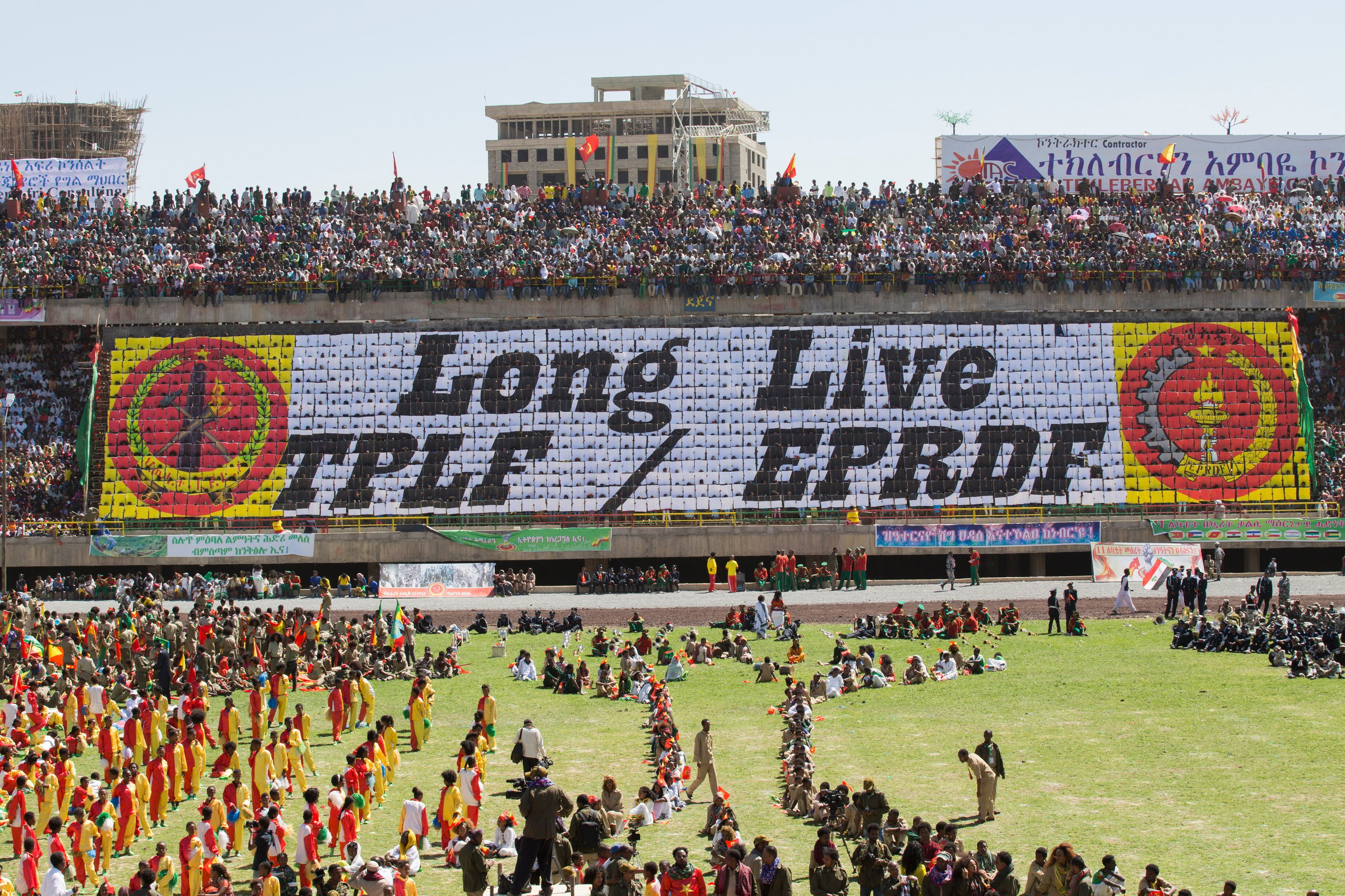
The sudden escalation in fighting between Ethiopian federal forces and Tigrayan rebels in the Afar region, raising fears of a new civil war, is part of a wider potential cascade effect from Yemen that could hurt Europe.
After months of low-level skirmishes, Ethiopian officials have accused the Tigrayan People’s Liberation Front of launching an all-out offensive against federal government positions in northern Ethiopia.
So what does that mean for Europe and the EU? More than you might think.
Ethiopia’s economy is particularly vulnerable following the capture of Yemen’s entire Red Sea coastline by the Houthi rebel group, who now control the Bab el-Mandeb Strait.
Some 97 percent of Ethiopia’s trade is via Djibouti’s port. There is now a real prospect of a series of regional chain reactions and the prospect of civil war in northern Ethiopia is one of them.
This doesn’t directly impact on the EU’s interests, but it could soon enough.
Ethiopia is not alone in facing major new threats posed by the Houthis’ advances.
Egypt, a vital ally for the EU on migration control, faces its own economic crunch as it relies on Suez Canal tolls as a main source of foreign currency. That could lead to more financial demands being made of Brussels
For their part, Djibouti and Somalia face major security concerns. Djibouti hosts military bases for a handful of EU countries, as well as the EU itself, and the United States, China, and others.
Somalia, meanwhile, has a longstanding African Union (AU)-led security mission aimed at combatting the Al-Shabaab terror group to which the EU is the biggest single donor.
And the AU mission is particularly reliant on the EU after the Trump administration pulled the plug on US financial support earlier this year. The Houthis already supply at least $100m (€88m) in arms to Al-Shabaab, a smuggling operation now made easier by its coastal advances.
For the moment, the EU is offering only modest additional support. Last week, EU governments agreed to double financial support for the Djibouti Armed Forces to €20m under the European Peace Facility.
This article continues, but the full version is available only to EUobserver.com subscribers. Visit account.euobserver.com/membership
The EU’s delisting of two Russian oligarchs last week despite multiplying sabotage attacks in Europe was “regrettable”, while German-Russian talks at the UN ended in “ridicule”, EU foreign affairs chief Kaja Kallas has said.
“It is regrettable that this [delisting] was the decision,” said Kallas on Monday (28 September) in Brussels at a defence ministers’ meeting.
“We are putting forward more listings, targeting their military-industrial complex, also targeting the finances of Russia, because we want this war to stop,” she added, referring to the 22nd round of Russia sanctions, due on 12 October.
Lithuania’s defence minister Robertas Kaunas also called the delistings a “step backwards”, adding: “This is not the time to reduce sanctions. We have to strengthen the pressure on Russia and [Russian president Vladimir] Putin’s environs”.
This article continues, but the full version is available only to EUobserver.com subscribers. Visit account.euobserver.com/membership
Face à des Européens peu audibles à l'Assemblée générale de l'ONU et inquiets de leurs vulnérabilités économiques, Aurore Lalucq, présidente de la commission des Affaires économiques et monétaires du Parlement européen, nous livre son analyse après la dernière réunion de l’Eurogroupe à laquelle elle a participé. Aurore Lalucq est eurodéputée du groupe socialiste et co-présidente de "Place publique".
Face à des Européens peu audibles à l'Assemblée générale de l'ONU et inquiets de leurs vulnérabilités économiques, Aurore Lalucq, présidente de la commission des Affaires économiques et monétaires du Parlement européen, nous livre son analyse après la dernière réunion de l’Eurogroupe à laquelle elle a participé. Aurore Lalucq est eurodéputée du groupe socialiste et co-présidente de "Place publique".
L'Europe n’a pas été épargnée par la canicule. Le mois d'août 2026 a été le mois le plus chaud jamais mesuré, et l’Europe dans son ensemble a vécu le pire été de son histoire : 2,7°C de plus que les normales de saison. Il en résulte une sécheresse record qui se prolonge encore en septembre. Au pic de l’été, les deux tiers du territoire de l'Union européenne étaient en état d’alerte, de quoi fragiliser la végétation et l'agriculture, et faciliter la propagation des incendies.
L'Europe n’a pas été épargnée par la canicule. Le mois d'août 2026 a été le mois le plus chaud jamais mesuré, et l’Europe dans son ensemble a vécu le pire été de son histoire : 2,7°C de plus que les normales de saison. Il en résulte une sécheresse record qui se prolonge encore en septembre. Au pic de l’été, les deux tiers du territoire de l'Union européenne étaient en état d’alerte, de quoi fragiliser la végétation et l'agriculture, et faciliter la propagation des incendies.
Cette semaine, Caroline De Camaret reçoit Hadja Lahbib, commissaire européenne à l'Égalité, état de préparation et gestion des crises. Elle tire les leçons d'un été de feux inédit, alerte sur les menaces hybrides et défend le projet européen face à la poussée des extrêmes.
Tous les yeux et les oreilles étaient tournés vers le Parlement européen de Strasbourg ce mercredi 16 septembre à l'occasion du traditionnel discours sur l'État de l'Union de la présidente de la Commission européenne, Ursula von der Leyen. Un discours fleuve – le sixième du genre – sur les grandes orientations de sa politique européenne pour l'année à venir.
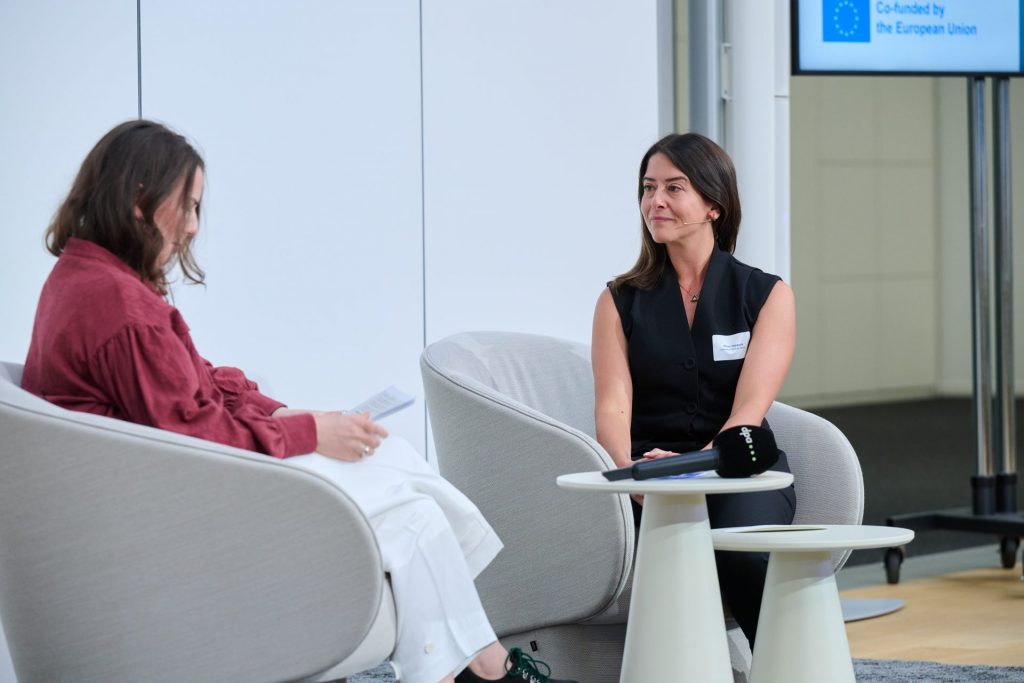
EU cohesion policy becomes tangible when people learn, work, access public services and cooperate across borders. This was one of the key messages of the closing event of EUconomy – Partnerships4Prosperity, a 12-month media initiative by dpa-Custom Content, co-funded by the European Union.
The event took place at the Berlin newsroom of Deutsche Presse-Agentur (dpa) and was streamed live via LinkedIn. Journalists, Interreg project coordinators, students, communication professionals and other stakeholders in European regional cooperation discussed how the impact of EU cohesion policy can be made more visible to regional audiences.
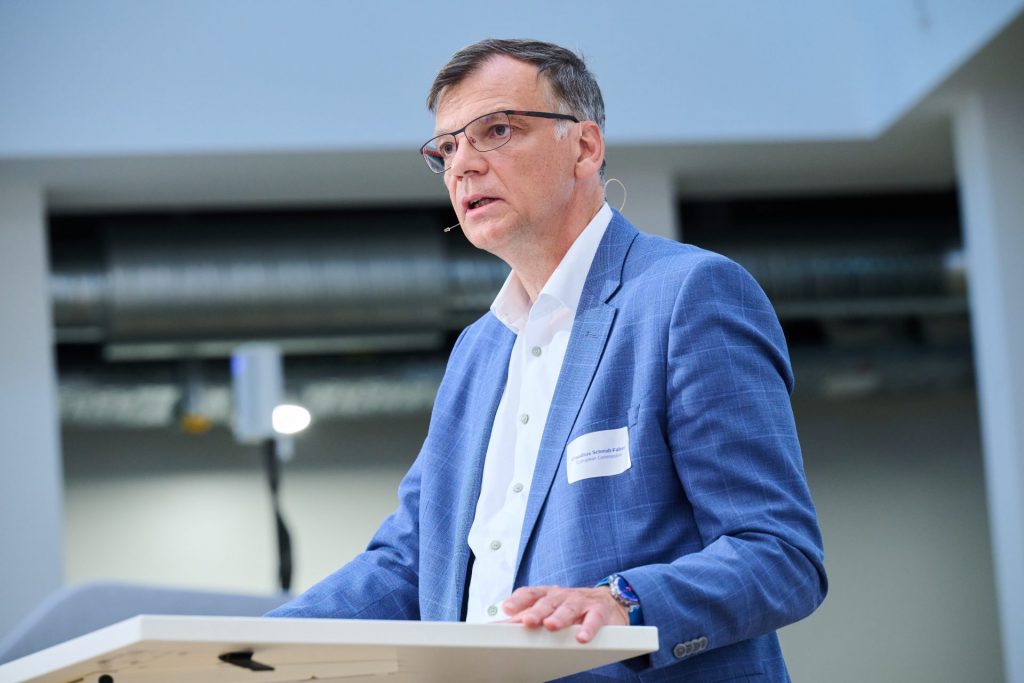
Claudius Schmidt-Faber, Senior Economic Expert at the European Commission in Germany, placed cohesion policy in the context of European integration and future regional development. Looking ahead to the EU’s next Multiannual Financial Framework from 2028, he also addressed the future architecture of cohesion policy.
“When we speak about cohesion policy, we are speaking about one of the most concrete promises of the EU: that integration should benefit all regions, territories and citizens,” Schmidt-Faber said. Europe cannot be resilient if entire regions are left behind, or united if borders remain barriers. “Cohesion is not a luxury. It is necessary.”
Interreg builds cooperation and trust
A central topic of the panel discussion was why the impact of cohesion policy is often difficult for citizens to see. Dr Kai Böhme, an expert in European regional policy and territorial development, as well as founder and director of Spatial Foresight, offered a simple explanation: “You don’t see things when they work well.” When cross-border transport, healthcare or education function smoothly, the cooperation behind them often remained invisible. The absence of obstacles could itself be a result of successful cohesion policy, Böhme added.
Izabela Glišić, Head of the Joint Secretariat of the Interreg VI A Brandenburg-Poland 2021-2027 Cooperation Programme, emphasised that Interreg was fundamentally about funding cooperation between regions and countries. A central focus was building trust, creating relationships that can continue beyond individual funding projects.
Interreg supports regions in addressing challenges in areas including innovation, mobility, healthcare, climate adaptation, emergency services and education. “Interreg is not only about funding projects. It is about building habits of cooperation,” said Schmidt-Faber. “It creates trust – and in today’s Europe, trust is a strategic asset.”
TRAIL: Cohesion policy in higher education
Pinar Hepperle, Coordinator of the Sustainable Business Development Master’s programme at Offenburg University, contributed the project perspective. The Interreg-funded TRAIL project connects universities in Offenburg, Strasbourg and Basel. Students gain international and practical experience and prepare for a sustainable, cross-border working environment.
TRAIL shows how EU cohesion policy can connect students, universities, companies and the regional labour market. Hepperle also highlighted a key communication challenge: projects need to be explained differently to different audiences – including students, companies interested in cooperation, the wider public and administrative stakeholders. Effective communication therefore requires different approaches and formats rather than one single message, she said.
The discussion underlined that reporting on EU-funded projects should go beyond funding figures and institutional language. The key questions are concrete: Who benefits? What has changed? Which regional challenge is being addressed? And why was cross-border cooperation necessary?
EUconomy – Partnerships4Prosperity is a 12-month media initiative by dpa-Custom Content, co-funded by the European Union. The project produces free multimedia content packages – including videos, images and social media material – documenting EU-funded cross-border projects in Germany’s border regions with Austria, Poland, the Czech Republic, France and Denmark. All content is made available free of charge to media outlets across Germany and beyond.
dpa is the lead agency coordinating the European Newsroom (enr), a network of European news agencies.
The phrase “hidden gem” can be over-used but in the case of Herefordshire in the UK it’s entirely apt. The cathedral city of Hereford was once an important military centre. That was a few centuries ago but, today, Herefordshire is a real leader in other ways, for innovation, championing local products and the sheer friendliness of the locals. Here’s a “Top Ten” of the reasons why the county is well worth discovering. Start the day in style As you’re in England what better way to start any new day than by sampling some of the county’s best produce (including a full English breakfast, maybe).
There’s a couple of spots well worth sampling such delights, including the lovely Castle House Hotel in Hereford which a wholesome breakfast offering is open to both guests and non guests and which also has an interesting Benelux connection as it was once owned by Albert Heijn, the largest supermarket chain in The Netherlands. Away from the county’s main city and you’ll find a terrific, multi award-winning Lowe Farm B&B, set in rolling Herefordshire countryside, which celebrates its 30th anniversary next year. The place is lovingly overseen by Juliet Williams, a larger-than-life character who, commendably, serves up very yummy and healthy breakfasts sourced almost entirely from local products and producers.
Juliet, who is nearing 70 but still full of energy and enthusiasm for what she does, has pulled in a staggering 27,000 guests since opening (including the Spanish ambassador to the UK and coachloads of Japanese tourists), 60 per cent of them repeat visitors which is a clear sign of the quality of service she provides. Juliet and hubby Clive also boast a minor Belgian link: the best man at their wedding was from Belgium. This bubbly character takes great pride in sourcing her products locally and cooking only healthy ingredients, some sourced from the same local butcher used by famous TV chef James Martin.
History in Hereford
2026 is the 1,350th anniversary of the Hereford diocese and the place oozes history. One must-visit place here is the cathedral, dating from Saxon times, and Mappa Mundi, one of the world’s unique medieval treasures. Constructed on a single sheet of vellum over 700years ago, the map shows how the world was interpreted by scholars at that time. Look closely and you’ll spot Gent on the map in the Europe section, curiously located in the bottom left of the world. Close by is the equally wonderful Chained Library, home to some 229 medieval manuscripts and over 1,200 early printed books. It is the largest library of its kind to survive with all its chains, rods and locks intact. This magnificent cathedral is also home to fantastic architecture, a mighty Willis organ, stained glass (including a stunning tribute to the UK’s SAS, which is based locally) and artwork and it’s all brought to life by a 400-strong team of volunteers, all very passionate about what they do too. A short walk away takes you to Hereford’s historic town hall, “home” to the current lady mayor (a rarity in itself as there’s only been 7 in the city’s entire history). Here (and tours are available), you can learn all about Hereford’s rich history and be reminded that its castle was once second only in size to Windsor.
The city boasts another proud record: along with the City of London, it has never been defeated in battle (the local SAS people will be proud of that). There’s also yet another nice historical connection to Belgium: in the council chamber of this striking Edwardian Baroque council building, where the mayor presides over council meetings, the Belgian link is actually commemorated by a framed, unusual Union Jack flag mounted high above one of the doors that uniquely features a central shield with a French inscription. The inscription reads: “Expression of our gratitude to our benefactors Mr & Mrs GB Greenland and members of the Committee – Belgian refugees in Hereford, Nov 9th 1915” Following the German invasion of Belgium in August 1914, roughly 250,000 Belgian refugees fled to Britain. Hereford city council holds the distinct honour of being the very first British city to officially step forward and offer hospitality and sanctuary to these displaced families.
On 9 November 1915, the Belgian refugees living in Hereford presented a beautiful silk flag to the Mayor (G.B. Greenland) as a permanent token of friendship and “immense gratitude” for the local community’s safe housing and ongoing kindness. You might like to take one of the enthralling tours of the town hall which are overseen by a very entertaining Scotsman called John Marshall who is the Mayor’s Officer. He is responsible for looking after some serious silverware here, including the Civic Sword, which is no less than 349 years old, mayoral robes, including one used in Queen Victoria’s coronation and, of course, the mayoral golden chain which dates from the 1800s. There’s precious little that the very likeable John does not know about Hereford and its rich history and he, like so many others in the county, genuinely loves his job.. so much so that he’ll happily extend his planned retirement to continue doing it. Local artisans Whisky production in a traditional cider county? Well, yes, and very good it is too.
At least that is the case at Rosemaund Farm Distillery which has been brought back under family ownership in recent times. Described as the largest little distillery in Herefordshire, the site, formerly the home of Chase Distillery (vodka), is a real hive of activity and just marked its latest release (“the Director’s Cut”). The sprawling site even boasts a touch of Hollywood glitz as world famous film director Guy Ritchie is involved here with his ‘Wild Kitchen / Wild Table’ concept – an outdoor cooking and eating tent where a full blown meal can be enjoyed after a tour of what is a very impressive whisky making operation.
Criss-crossing some of the county’s marvellous meandering country roads leads to another, equally laudable, local artisan: the Monkland cheese dairy, which was run for over three decades by Mark and Karen Hindle. They now operate the adjacent café while Dean Storey, a former chef, now owns the dairy. He makes the cheeses and runs tours. While the French may be world-renowned for their cheeses, here’s proof (were it needed) that the Brits can do the job just as well. Tours for the public give you the chance to witness up close how its delicious cheeses are made, partly utilising an impressive Dutch Gouda vat which can hold 1,000 litres of cow’s milk. Spot of Lunch Back in Hereford, the county’s entrepreneurial spirit is certainly alive and kicking at The Yard, a collective of small-scaled eateries. Overseeing things here are a couple of go-ahead brothers, Edwin and Dorian Kirk who offer vital mentoring skills to would-be local start ups. Ed says, “We help people who are just starting out to build up their own business and become owners themselves. In a way, it is all about achieving their dreams just as me and Dorian have managed to do.”
After trekking round all morning, it’s a great place for a filling, very tasty but affordable light lunch (be it pizza, burger or steak) and drink (there are some fab local ales available). As with so many places here, it is all about cutting food miles and “buying local”: much of the lovely food here is sourced directly from local products and local producers. If you happen to visit in late October, the space transforms for Oktoberfest, complete with Bavarian beers and music. Things to Do One of the reasons they call this county a hidden gem are the very welcoming local folk and they include Jon Williams and Sarah Monk who run Eastnor Pottery. Having met at art school in Bath, the couple moved to “idyllic” Herefordshire where they live and work on the Eastnor Castle estate offering very enjoyable potter’s wheel experiences alongside making their own ceramics. After having fun on Jon and Sarah’s potters wheel you really must pop along to admire the wonderful Eastnor Castle, home of the Hervey-Bathurst family, with lavish interiors containing medieval armour, fine art … and another reminder of Belgium.
This comes in the shape of some impressive Belgian tapestries, including three Bruges tapestries in the Staircase Hall and more in the Gothic Dining Room. James Hervey-Bathurst, the current owner, moved here with his family in 1989 but his family have been there since 1949 and have ancestral links to the original owners going back centuries. He recalls: “We were presented with a wonderful but daunting challenge.” That’s a reference to the rundown state of the property which has, over the years, happily been restored to its former glory. Make sure you don’t leave without having a look in the grounds at something you’d not expect to see in rural England … a segment of the Berlin Wall. The very affable and welcoming James bought the 3metre-high wall last year and had it shipped to the UK, all 2.6 tons of it. He hopes its presence, close to the deer park (nice for walks) reminds visitors, young and old, of how conflict can divide peoples and communities, a message as relevant today as ever.
Other possibles
You need to allow time to fully experience and enjoy all the many things this county has to offer. But, time (and energy levels)permitting there’s lots more to keep you busy, occupied and entertained. These include Black Mountain Adventure near Brecon; Canwood Gallery, a contemporary art space and the great selection of farm shops that dot the landscape, including Oakchurch – just the place to stock up on some of that lovely local produce before heading home.
Eating out
You’ll be spoilt for choice when it comes to sampling the quite wonderful local produce in this county, be it north, south, east or west. In the south (at Woolhope),for instance, is The Crown, a terrific pub/resto run for some years by yet another friendly Herefordian, Annalisa Slocombe. The eatery, recently very tastefully refurbished, serves a great mix of pub classics,like good old fish and chips, and offers some lovely local beers to wash down a very satisfying meal.
Located in a tiny village (est.200 dwellings) the menu (like the pub) is constantly evolving (weekly) but as Annalisa explains, faves like steak remain “to avoid a customer revolt.” From the end of this month, she hopes to have 8 en suite rooms available too. Crickets lovers will feel at home here as there’s plenty of cricket memorabilia on the wall, including a bat used at the England v New Zealand Test in 1999 and a quite wonderful collection of Wisden books,dating from 1988. Another fab place, this time back in Hereford, and also a real success story is Beefy Boys.Hereford was the first to open in what has become a fast-growing chain (the latest is scheduled for Cambridge later this month) and it’s easy to see why. The county is renowned worldwide for the quality of its beef and that, along with some great service, is one big reason why the burgers here are on another level to most other places (worth noting that the meat is sourced from just the one, local, farm).
The Beefy Boys story all started in Hereford and the venue has expanded in recent times to now accommodate up to 250. Assistant GM Kai says, “Even midweek it’ bustling here and we’re still growing.” Not too far away, in an easterly direction, takes you to L’Ecole des Amis which serves some refined French cuisine in a wonderfully-restored old school house. The two men at the helm of this highly popular resto are Cedric L’herbier, who hails from le Touquet in France, and Bruce Havard. Cedric, who’s had over 40 years experience in the resto trade both in the UK and France, recalls how the rundown building was badly in need in “some TLC” when they came by it. Some quick fire restoration work – it transformed in the space of just 12 months – has resulted in a lovely, informal place to enjoy top class cuisine that Cedric describes as “unsophisticated and unpretentious.”
They change just a couple of dishes every couple of weeks and there’s also a brasserie-style lunch menu. On the opening night, an estimated 80percent of the customers travelled from where Cedric used to work in another part of the county, about 18miles away, and he and Bruce still command a loyal customer base. It is mostly all down to the fab fresh food, cooked with real care and which certainly makes one French man gratified that he took the plunge for “one last adventure” in his working life.
Where to stay
If you enjoy peace and quiet – and a few animals for company – there’s one place for you here: Pudleston Court, nestled in 50 acres of beautiful private parkland, hard to imagine you are also just a few short kilometres from the busy town of Leominster. This is home to seven holiday lets, five of which are original estate buildings (formerly used for everything from housing geese to a rifle range) and all wonderfully refurbished. One, the delightful Meadow View, is a barn conversion, can sleep up to 6 and has its very own private pool. It boasts underfloor heating, three bedrooms, a log burning stove and delightful terrace. Don’t be surprised if, on arrival, you are greeted by some curious “locals” – peacocks that are free to roam (you should also make your acquaintance with the charming young alpacas in a nearby field). There’s also another link the Heijn family as they are former owners here. The current owner is a Swiss lady who fell in love with the property when she read an article about in Country Life magazine. She’d always dreaming of owning her own English castle (who hasn’t?) and this was her chance to do just that.
She has overseen a loving and carefully planned restoration that’s still ongoing with the future focus also on expansion into the corporate market (by hosting company stays, board meetings, training days and the like). Approached via those unique meandering roads -where the only hold up is likely to be due to cattle crossing the road – this is a genuine oasis of peace and tranquility in an increasing mad world. Oh, and there’s yet another Belgian link: Rhi Baines, the Chief Operating Officer, has fond memories of Belgium as she celebrated her 21sth birthday in Brussels. How to get there It could not be easier for people travelling by car from mainland Europe, including Belgium.
Once off the ferry or shuttle, it is motorway much of the way to Herefordshire. Once you’ve navigated the M25 around London you can via the M40 and Gloucester or the M40 and Worcester. Beware there is no m-way in the county so allow a bit extra time for getting around. Summary It all adds up to a great getaway, whatever time of the year that is. Pay a visit and you can well see why they call this pretty part of England a “hidden gem.” And one excellent way of finding out more about this creative county is via the Eat Sleep Live Herefordshire, a leading independent destination marketing company. Its supports not only Herefordshire’s food and drink businesses, accommodation providers, activities, leisure venues and pursuits and events but promotes the county’s crafts, creatives and artisans.
Campaigners have called for more effort to "defend democracy" and support a “free, democratic and sovereign Ukraine”.
The demand was made by the Defending Democracy Global Initiative (DDGI) and the Westminster Alliance for Ukraine (WA4U).
It was timed to coincide with the International Day of Democracy.
The Defending Democracy Global Initiative is a transnational, civil society-led platform founded in Skopje in 2024 by CIVIL – Center for Freedom, the New European People’s Forum and Media Dialogue.
It works to defend truth, freedom and democratic resilience against authoritarianism, disinformation and hybrid threats.
Its flagship programme, the Westminster Alliance for Ukraine, brings together parliamentarians and civil society partners to strengthen European cooperation in support of a free, democratic and sovereign Ukraine.
A spokesman told this site, “Democracy depends on people’s ability to speak freely, access reliable information, participate in decisions and hold those in power accountable.
“It requires independent media, active civil society, institutions that protect rights, and space for disagreement without intimidation. These conditions must be defended and strengthened every day.”
The spokesman went on: “Standing with Ukraine is a crucial part of that responsibility.
“Russia’s war of aggression threatens the lives and freedom of Ukrainians and the principle that people have the right to determine their own future. Supporting Ukraine’s sovereignty and democratic aspirations is essential to building a safer, more democratic Europe.”
The two groups seek to build on the commitments that brought DDGI into being in 2024, and on the work of its partners and co-founders in solidarity with Ukraine since Russia began its aggression in 2014.
DDGI and WA4U have now used the International Day of Democracy to call on democratic institutions, parliamentarians, civil society, journalists and citizens across Europe “to turn solidarity into sustained action.”
They demand that they support Ukraine, defend independent journalism, challenge disinformation, protect civic participation and "insist on accountable government".
The spokesman said: “Every voice matters – including those excluded from public debate, those facing threats for speaking out, and those whose communities are living through war.
“Meaningful participation requires that these voices are heard and taken into consideration.
“We invite everyone who shares these commitments to stay connected with our work, take part in future discussions and help strengthen cooperation across borders.”
A leading Belgian animal park has just welcomed a new arrival: Kali the giraffe.
Kali’s arrival at Pairi Daiza is no coincidence: transfers between European zoos are carefully coordinated, taking into account genetics, age and breeding recommendations.
Rothschild's giraffe Kali was born on 15 February 2024 at Knuthenborg Safaripark (Denmark).
On the evening of Tuesday 15 September, she arrived to join the two Rothschild's giraffes already living at Pairi Daiza: PoléPolé and Oliver.
Kali’s journey of several hundred kilometres, and this new phase in her life, began with a decision taken at European level.
The Rothschild's giraffes in European zoos are part of a European Endangered Species Programme (EEP – Ex situ Programme). The programme maintains detailed records of each animal’s ancestry and demographics to manage this population in the long term. Based on this data, it is possible, amongst other things, to determine which animals can form a breeding pair, whilst preserving the genetic diversity of the population as effectively as possible.
A park spokesman told this site: “Kali is therefore not simply coming to Pairi Daiza because a space happened to be available.
“The recommendation for her transfer took into account her age, two and a half years, as well as her genetic background and that of the giraffes already there.”
She will live alongside Oliver, a male who was born on 1 August 2016 at Safari Park Dvůr Králové (Czech Republic) and who has been at Pairi Daiza since 2018. Oliver has already sired two daughters at the Garden of the Worlds: Zuri, born in 2021 and transferred to Bellewaerde (Belgium) in 2024, and Masika, born in 2023 who left for the Zoo du Bassin d’Arcachon (France) on 10 September 2026.
PoléPolé also lives alongside Oliver.
She was born on 10 May 2021 at WILDLANDS Adventure Zoo Emmen (Netherlands) and has been living at Pairi Daiza for three years.
The departure of Zuri and Masika and the arrival of Kali are therefore not isolated events, but different parts of the same coordinated population-management process.
The spokesman added, “At a European level, these transfers make it possible to manage a population, taking into account the age, sex and kinship ties of each individual, the needs of the population and the situation at each institution.”
Kali’s first few days at Pairi Daiza
Kali arrived at Pairi Daiza late on Tuesday and spent her first night alone in an enclosure within her indoor quarters. The keepers gave her time to recover from her journey and began observing her behaviour in this new environment.
The spokesman said, “Kali was introduced to PoléPolé this morning, under the supervision of the zoological team. The meeting with Oliver will take place later.
During these first few days, the keepers will get to know Kali: how she explores her surroundings, how she reacts to PoléPolé, and her habits and preferences. The next steps in her integration will be tailored to these observations and her behaviour.”
Her Danish keepers describe Kali as curious and gentle. The keepers at Pairi Daiza will now get to know her personality on a daily basis and, based on their observations, determine the most suitable time and circumstances to introduce her to Oliver.
Visitors can already observe Kali in her indoor enclosure through the porthole of the boat Mersus Emergo.
This week, Mark Leonard is joined by Jana Kobzova, co-director of ECFR’s European Security programme, to discuss the mounting pressures facing Ukraine as it enters another wartime winter. Despite Ukraine’s success in disrupting Russian logistics and energy infrastructure, Russia has intensified its attacks on cities, energy networks and civilian targets, while Kyiv faces growing domestic political and economic strains.
Jana explains how shortages of air-defence interceptors, political infighting, corruption investigations and economic challenges are converging at a particularly difficult moment for Ukraine. She also examines Russia’s escalating hybrid attacks across Europe and how Europeans can strengthen their resilience—and Ukraine’s defences.
Together, Mark and Jana assess Ukraine’s ability to withstand these overlapping crises, the future of European support and the role Ukraine could play in Europe’s long-term security architecture. As Russia raises the pressure both on and off the battlefield, can Ukraine and its allies maintain the unity needed to hold the line?
This podcast episode was recorded on September 16th 2026.
Kazakhstan is developing Alatau City near Almaty as a new regional centre for manufacturing, logistics, technology and finance. Its investment pipeline has expanded to 67 projects worth nearly $6.9 billion, with the potential to create around 55,000 jobs. Projects involving PepsiCo, Sunny Paper, Mars Petcare KZ and several logistics companies are already at different stages of implementation. The project is supported by a special legal regime, but experts say its long-term success will depend on sustained investment, effective governance and the development of a competitive economic ecosystem.
Centre right MEPs say they want the EU to give itself the tools and resources to protect European democracies from foreign interference, disinformation and hybrid threats.
The assertion comes just ahead of a parliamentary vote on the EU Parliament’s recommendations on the issue.
EPP MEP Tomas Tobé, speaking on Tuesday, has called for a Democracy Shield “with the power to act.”
The deputy, the Parliament’s negotiator on the European Democracy Shield dossier, stated, "Protecting democracy from foreign interference must be a European priority.
“We must respond with greater determination and reinforce the European Democracy Shield.
"Russia remains the most serious threat to the integrity of our democracies.
"Its continued attempts to influence elections and manipulate the information space show that the Kremlin sees democratic resilience as a threat to its own interests," says Tobé MEP, EPP Group Vice-Chair.
The EPP Group said it wants the Democracy Shield “to be more than just a name.”
A spokesman said, “Europe needs stronger coordination and real operational capacity to protect elections, defend democratic institutions and counter foreign interference.
“The European Centre for Democratic Resilience must have the powers and resources to respond effectively to threats.”
Tobé added, "With this report, the European Parliament sends a clear message: we will not be passive while our democracies are under threat.
“We must now turn the European Democracy Shield into effective action to protect our elections, defend our institutions and counter foreign interference," said Tobé.
Meanwhile, the European Parliament will this week also debate the devastating impact of this summer’s extreme weather.
The focus will be on the human and economic cost which MEPs say “is impossible to ignore.”
Extreme heat has resulted in at least 35,000 excess deaths across Europe and up to €180 billion in lost GDP.
The Socialist group, in a statement on Tuesday, said, “Europe has a choice.
“We can continue to react to each disaster separately, send firefighters when the flames are already spreading, repair the damage afterwards and hope that next summer will be less severe. Or we can prepare for the Europe we know is coming. This summer has made clear that the climate crisis is no longer a future risk.”
Further comment comes from Christophe Clergeau, S&D vice-president, who said he will call for a “healthy planet, healthy people and a sustainable food ecosystem.”
He said: "Europe is paying a devastating price for extreme heat.
“Tens of thousands of people have lost their lives, while extreme weather has caused enormous economic damage. We cannot treat this as the new normal.
“Every fraction of a degree of additional warming means more frequent and severe heatwaves, wildfires, floods and droughts. That is why mitigation, adaptation and protection must be treated as the same fight.
"We need to phase out fossil fuels, which are driving the climate crisis, while investing much more in identifying and reducing vulnerabilities, adapting our cities and regions, and protecting people from extreme heat and drought.”
The MEP went on, “Our first priority must be protecting those most vulnerable. Cities and regions are on the front line and need stronger support to prepare for and manage crises, while populations must also be better informed and prepared. We must ensure that firefighters and civil protection services have the equipment and resources they need, and support the recovery and repair of territories devastated by fires and other disasters. Civic engagement and volunteers also have a vital role to play in prevention, preparedness and response.
"Europe must also build the industrial capacity needed to protect its citizens. We should produce Canadairs and other firefighting aircraft in Europe, develop a European plan to support the equipment needs of firefighters, and establish a clear R&D roadmap for civil protection technologies. And we need to do much more to prevent wildfires in the first place. When our forests are increasingly exposed to heat, drought and fires, the rejection of a European forest monitoring law by the right and the far right last year was a serious mistake. We need better information and better prevention, not fewer tools to protect our forests and citizens.
"This vote on the forest monitoring law is part of a wider pattern. While the climate crisis is becoming more dangerous, the right and far right keep attacking the Green Deal and downplaying the need for climate action.”
The deputy continued, “Yet there is no fair society if people are left exposed to devastating heat, no competitive economy without decarbonisation, and no energy sovereignty while we remain dependent on imported fossil fuels.”
"The Union Civil Protection Mechanism alone is not enough: its budget is insufficient given the scale of the risks we face. We need an ambitious European adaptation and resilience package focused on anticipation, preparedness and protection. Europe must strengthen the Green Deal and invest in prevention and recovery, rather than give in to climate denial and political obstruction,” added Clergeau.
Ahead of National Curry Week in the UK (5-11 October) MPs are being urged to revive the Parliamentary Tiffin Cup.
The Tiffin Cup was an annual competition where MPs (advised by their constituents) nominated the Best South Asian Restaurant in their area.
One restaurant from every region was then shortlisted and invited to participate in the Grand Final cook-off event held in the House of Commons in London, and judged by MPs and guest celebrities, with the proceeds going to charity.
The Tiffin Cup was last won in 2019 by Kuti’s Restaurant in Southampton, where former Prime Minister Rishi Sunak says he worked shifts “just for fun” as a student.
The competition was created by a group of MPs with Keith Vaz as its chairman to celebrate quality South Asian food. The trophy was usually presented by the Speaker of the House of Commons.
Demands for its return are led by George Shaw, editor of the respected Good Curry Guide.
He told this site “These are challenging times for the hospitality sector, with both restaurants and customers being hard hit by rising costs. The Tiffin Cup will help to promote what is a vital part of our economy.
“Most curry houses are small independent businesses – not a ubiquitous chain which sucks cash away from the local area, funnelling profits to a corporate headquarters many miles away, or to an offshore bank account.
“Curry is a firmly established part of British history and culture.
“Queen Elizabeth I granted the first charter in 1600 allowing London merchants to trade with the “East Indies”, hoping to break the Dutch monopoly on the spice trade.”
The earliest surviving curry recipe in English was published in 1747.
The first Indian restaurant in London, the Hindoostane Coffee House, was opened in 1810 by Sake Dean Mahomed, a former captain in the British East India Company.
He went on to become ‘personal shampooing surgeon’ to George IV and William IV.
British appetites for spice became entrenched during the British colonial era in India, from 1600 to 1947.
Queen Victoria, ‘Empress of India’ was introduced to Indian cuisine by her ‘Munshi’, Abdul Karim.
Thereafter she ate curry every day, with great relish and in considerable quantities, until the end of her life, 25 years later.
The ritual of enjoying a refreshing lager with Indian food was introduced by Prince Axel of Denmark.
The Prince attended the British Empire Exhibition in 1924.
During his visit he discovered the cuisine of Veeraswamy (London’s first high end Indian restaurant and still in existence), which ran a “pop-up” at the Exhibition.
The Prince brought a barrel of Carlsberg with him and continued to send one each Christmas.
Shaw is urging restaurant curry fans to write to their MPs asking them to reestablish the Tiffin Cup competition as an annual fixture in Parliament, with their own nominations.
Le carburant coûte de plus en plus cher en France : 2,68 euros le litre de diesel et 2,49 euros pour l'essence. La guerre au Moyen-Orient et les blocages du détroit d'Ormuz, où transitait 20 % du gaz et du pétrole mondiaux, et du détroit de Bab El-Madeb, expliquent ces augmentations. Parallèlement, la demande française pour le diesel n'a pas baissé, ce carburant étant utilisé par la moitié des véhicules particuliers et dans l'industrie, de la pêche au transport routier, en passant par l'agriculture.
Cover image: picture alliance / ZUMAPRESS.com | Pib Handout/Press Information
Problem
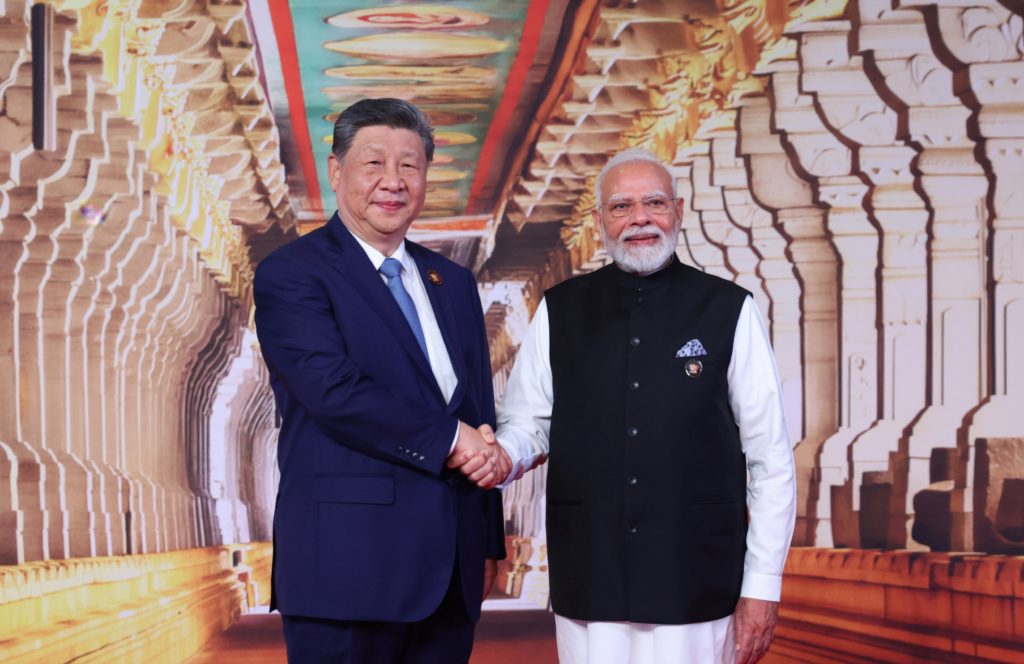
The BRICS summit concluded in New Delhi on Sunday, with Indian prime minister Narendra Modi having hosted the two-day gathering as chair. As with many meetings of the group of emerging economies, this edition brought together the leaders of China, India and Russia and featured plenty of anti-Western rhetoric. This was also Chinese leader Xi Jinping’s first visit to India for more than six years, in the latest example of Sino-Indian normalisation following a sustained period of tensions.
New Delhi’s normalisation with Beijing over the last year looks like more of a tactical de-escalation than a realignment. Nevertheless, India has over that time begun to agree more measures to provide greater access to Chinese investment in manufacturing and climate technology, both areas important for India’s development. This should act as a warning for Europeans. If India cannot source technology and capital from partners in Europe, it will seek to do so from China even while remaining suspicious of Beijing from a security point of view.
Solution
New Delhi continues to view Beijing as a threat and seeks deeper security and economic ties with Brussels, as well as with Washington, despite the difficulties President Donald Trump presents. Modi has thus worked to prevent the BRICS from tipping into a purely anti-Western vehicle, since this would run against India’s interests.
Europeans also see India as an increasingly vital partner, following the EU-India trade deal agreed earlier this year, as Europeans diversify geopolitically in the face of tense transatlantic relations. But India’s bilateral agreements with China, including on the sidelines of the BRICS meeting, show that the EU must not take the mutual benefits of closer ties for granted.
Ahead of Modi’s anticipated visit to Brussels later this year, the EU should accelerate its plans further to strengthen Europe-India ties. For instance, it should enhance the existing Trade and Technology Council to drive cooperation in areas like AI, while also moving forward cooperation on defence and security, and making faster progress on India’s plans to join the Horizon Europe funding programme for research and innovation.
Context
The EU and India signed a landmark free-trade agreement in New Delhi in January, alongside a new security and defence partnership. Both sides aim to build on these with wider cooperation initiatives to encourage greater cooperation and investment in areas like semiconductors, AI and clean-tech supply chains.
India supported moves at the 2023 BRICS summit to agree on a major membership expansion. The group began as a much smaller coalition of just Brazil, Russia, India and China, and South Africa—hence “BRICS”—but has since grown to eleven members, including Egypt, Ethiopia, Iran, Saudi Arabia and the UAE as well as a wider grouping of observer and partner countries that attend summits and align themselves loosely with the bloc’s agenda. The group is internally divided, and not just in terms of China and India. Both Iran and the UAE are members, for instance, despite longstanding regional tensions. This year’s summit produced a limited declaration including vague promises to enhance cooperation.
The Democrats could win big in the US midterm elections. This won’t matter much for constraining Trump, but it will start to establish what politics comes after him.
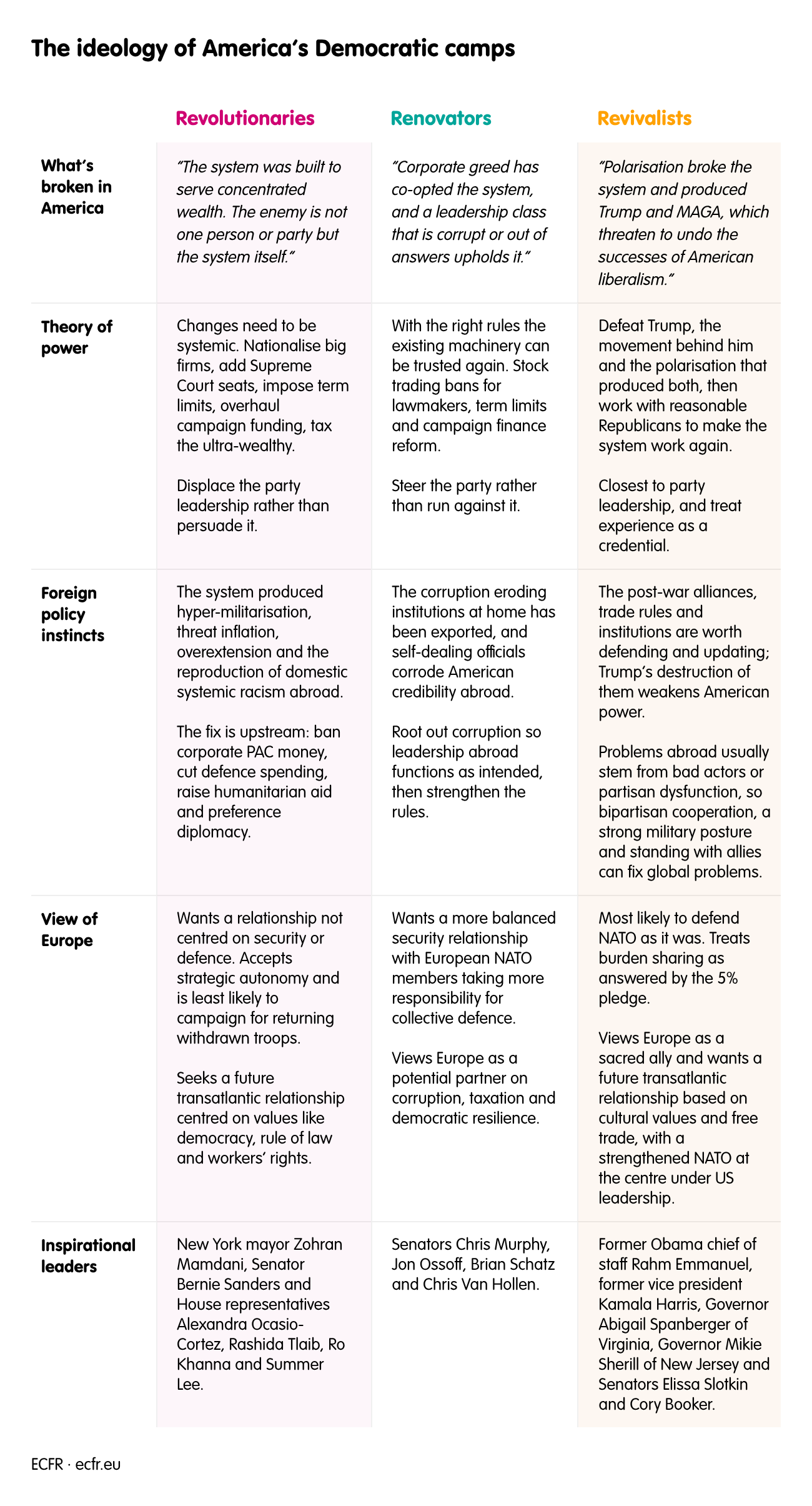
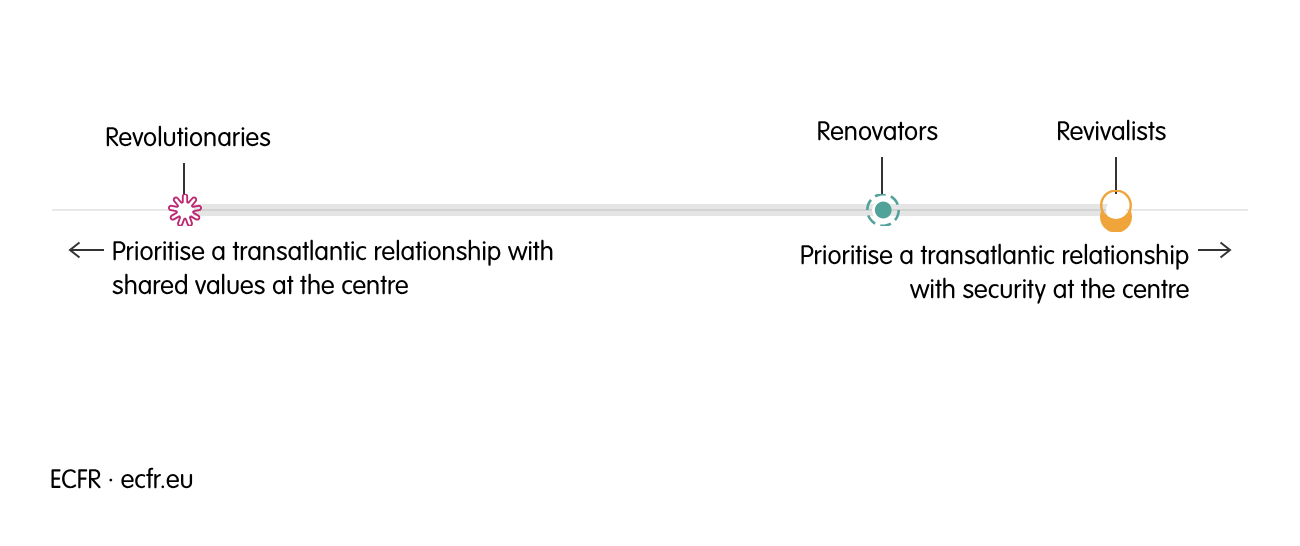
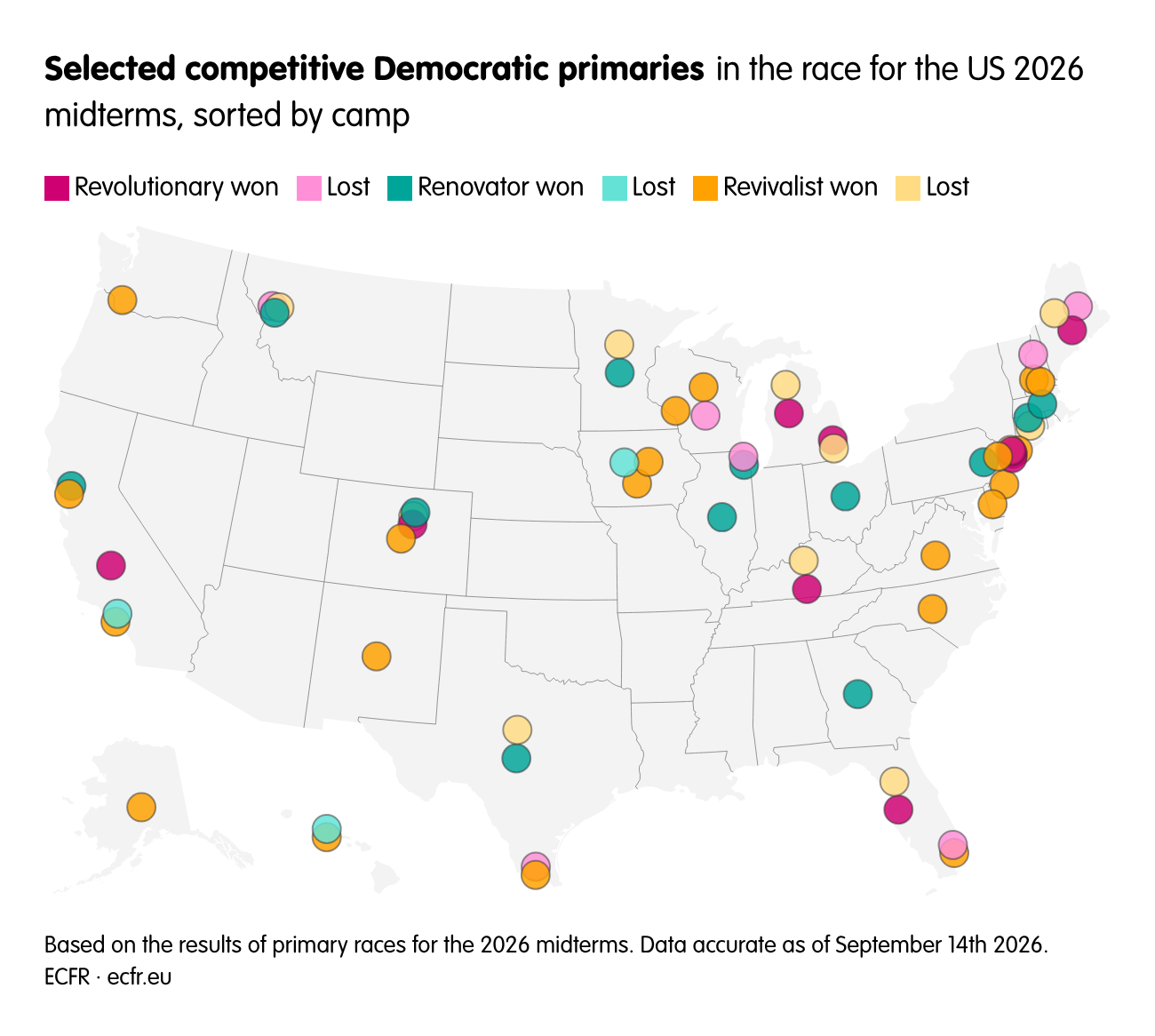
Our research finds three camps of Democrats, all with different diagnoses of America’s problems: the revolutionaries see the system as unjust and needing structural change; the renovators see it as corrupt and needing reform; and the revivalists blame right-wing populism for breaking a system of bipartisan cooperation.
What these camps see as broken in American domestic politics translates to how they view US foreign policy and Europe’s place in it.
No matter which camp goes on to determine the future of Democratic foreign policy, it will be a far cry from the transatlanticism of previous Democratic administrations. This year’s midterm candidates have barely mentioned Europe, Russia or Ukraine in their campaigns.
Europeans need to engage early and help shape their relationship with the party now, lest they be overlooked if and when Democrats do come to power.
What comes after Trump
This summer, the FIFA World Cup turned the world’s attention to America while America turned on much of the world. As Iran was due to play Egypt in Seattle, the US launched new strikes in its four-month war with the country. On semi-final day, President Donald Trump posted on Truth Social an AI-doctored image of a map showing Canada, Greenland, Mexico and Venezuela covered with an American flag. And just days after Trump handed the World Cup trophy to the Spanish national team, his administration announced sweeping 10% baseline tariffs on 80 countries. The juxtaposition of tournament host and wartime belligerent reflects the position America now occupies in European strategic thinking: too central to ignore and too disruptive to rely on.
Europeans hoping that a midterm victory for Democrats in November will bring a reversal of this foreign policy should not hold their breath. If the party wins a majority of seats in one or both chambers of Congress—which is looking likely—they may be able to attach provisions to bills, launch investigations, issue subpoenas and lambast some of Trump’s poor foreign policy choices. But the second Trump administration has shown it will route around Congress and confront it with delays, hostility and vitriol, limiting any capacity for oversight. Having spent its first 18 months in power ignoring a friendly Republican Congress, one with a Democratic majority has even slimmer chances. In other words, little will change until the occupant of the White House does.
For now, the Democrats’ real power resides not in stopping the current administration but in shaping what comes next. Democratic candidates competing across the US—for both primaries and generals—have a wide ideological range, from “democratic socialists” to “centrists”. While they all heavily criticise Trump and his administration, they have different diagnoses for where the dysfunction began, what sustains it and what needs to be done about it. Engaged in party primaries across the country, Democratic candidates are putting forward competing answers to the two central questions Americans are asking themselves: “What went wrong?” and “How do we fix it?” Based on these answers, we have identified that Democrats tend to cluster into three camps—the “revolutionaries”, the “renovators” and the “revivalists”—each with distinct proposals for the future of America.
The revolutionaries argue that the political and economic system that drives America has always been unjust and was built to concentrate wealth at the top. Therefore, the way to fix America is to enact large, structural change. The renovators argue that the democratic system of government was largely built to benefit all Americans but has been corrupted by money and captured interests. Their proposed remedy is to root out large-scale corruption, rebalancing the economic and political systems to the benefit of middle- and working-class Americans. The revivalists argue that increased partisanship, fuelled by Trump and the MAGA-aligned right, has divided the country and undermined the collaborative bipartisanship that is necessary for the functioning of the system and its institutions. They are focused on reinvigorating those institutions, reviving the post-war international order and rebuilding political bridges, all of which they see as the path back to peace and prosperity.
The revolutionaries, renovators and revivalists are ideal types, not formal factions. They emerge from our analysis of over 50 high-profile Democratic primaries and general election campaigns throughout the 2026 midterm cycle. We also researched campaign platforms, stump speeches, debates and candidate interviews with local news, and interviewed various pundits, current and former staff, officials and pollsters in Washington. In doing so, we found that sorting candidates by their messages about the underlying cause of what has gone wrong in America proved to reliably predict how a candidate discusses domestic and global problems. For example, revolutionaries support Europe’s strategic autonomy but would dislike a Europe defined by militarisation and austerity; renovators see Europe as a potential partner on anti-corruption, taxation and democracy, as long as Europeans provide for their own security; and revivalists remain attached to the NATO alliance but are still unlikely to restore the old division of labour.
The ideological battles between Democrats will matter more than the arithmetic of the Senate or the House for the next two years. One of these three camps will lead the party’s ideological charge for the next presidential race, if not the next presidency. Leaders across Europe should not wait to see which will prevail. Rather, they should engage with these camps well before the presidential race gets under way. They may then be able to shape the thinking and policy proposals that Democrats put on the table between now and 2028, and beyond.
The Democratic camps
Democrats—from New York democratic socialists to staunch Iowa moderates—have more in common than not. Practically everyone in the party believes Trump is a problem and that he and the MAGA movement have fundamentally changed American democracy for the worse. Many view widespread corruption as an issue and some say corruption is encouraged by the system itself.
But while the policy views of the three Democratic camps overlap, there are a few key points of difference. To illustrate these characteristics more clearly, this paper focuses on key individuals who have gained national attention, are running in close races, or are largely representative of what other ideologically aligned candidates say. It is rare for a candidate to be a perfect “revolutionary” or “revivalist” because they must answer to constituencies with divergent interests and disparate views of American and global affairs. Some candidates will even recognise themselves across different camps. Nevertheless, these three camps represent sensitivities that are bound to clash in the primaries until one of them breaks through and is championed by the 2028 Democratic nominee for president. Understanding them helps anticipate the direction of US policy in the brouhaha of its politics.
The revolutionaries
The revolutionaries maintain that the political and economic order in the US is functioning as designed: to serve concentrated wealth rather than the American people. The enemy, in revolutionaries’ rhetoric, is not necessarily any one person or party (such as Trump or the Republicans) but the economic and political system that consistently benefits the ruling class. Only a structural transformation of the system would finally make it work for the people.
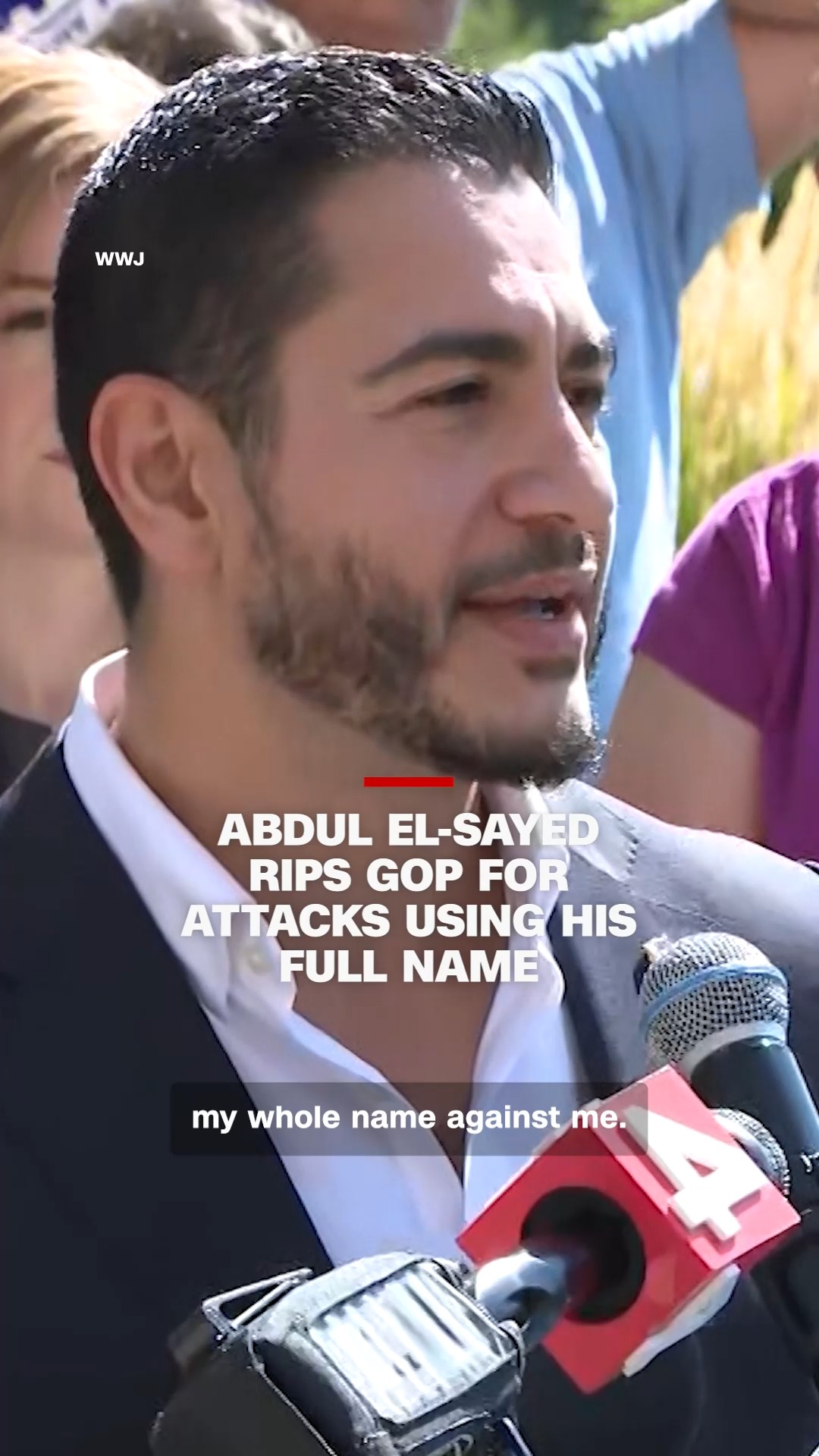
Michigan Democratic Senate candidate Abdul El-Sayed in his primary victory speech put the thesis as such: “It turns out that the reason so many of us ain’t got is because of the system that has corrupted our politics to take it away from us. That is the thing we are taking on now”. El-Sayed, who is a former public health official in Detroit, focuses his entire campaign on big structural goals: getting corporate money out of politics, and, like Kentucky Senate candidate Charles Booker, passing Medicare for All, a proposal for universal healthcare. Often revolutionaries’ critiques take a moral tone, such as when Senate candidate Angie Nixon of Florida talks about cruelty out of Washington, or denounces the “liars” and “cheaters” in office.
Their theory of power follows: winning office is useful, but only insofar as it can be used to structurally change power dynamics between a ruling corporate class and average working Americans. Congresswoman Alexandria Ocasio-Cortez, when asked about a potential run for president in 2028, responded: “My ambition is way bigger than that. My ambition is to change this country. Presidents come and go. Senate, house seats, elected officials come and go. But single-payer healthcare is forever. A living wage is forever. Workers’ rights are forever.”
On foreign policy, the revolutionaries argue that the current political system led America on an inevitable path of hyper-militarisation, threat inflation, an over-extension of its financial and human resources in military adventurism, and the reproduction of domestic systemic racism into foreign policy. They view the American relationship with Israel as the seminal example of everything wrong with this approach; Palestine being “one the great moral questions of our time” as New York congressional candidate Claire Valdez puts it.
Their diagnosis abroad is largely parallel to the one at home, viewing the pitfalls of US foreign policy as a metastasis caused by the American corporate class. As Valdez asserts:
“For decades, we have been sold a lie: that the US empire defends freedom, advances democracy, and protects human rights…In reality, the bipartisan war machine has delivered immense suffering around the world while doing little to improve the lives of working people here or abroad. The military-industrial complex doesn’t just enrich arms manufacturers—it has become our de facto industrial policy, sustaining enough jobs and political constituencies to make endless war challenging to stop.”
Their fixes to US foreign policy largely follow their domestic proposals: if you fix the system and its incentives for prioritising the financial gains of the wealthiest class, all else will follow.[1] This is rooted in banning corporate political action committee spending on campaigns which they believe will ultimately diminish the influence of defence contractors and foreign interest groups—namely the American-Israeli Political Action Committee (AIPAC)—over candidates’ races, and therefore, diminish their influence on policy. In the short term, the revolutionaries aim to cut defence spending, bolster humanitarian aid and preference diplomacy in the American foreign policy toolkit. They also believe that the Biden administration’s foreign policy officials must be held accountable for continuing to supply Israel as its war on Gaza intensified.
In these midterms, some of the revolutionary firebrands include Michigan Senate candidate Abdul El-Sayed, Kentucky Senate candidate Charles Booker, Florida senate candidate Angie Nixon, Representative Chris Rabb of Pennsylvania, House candidates Melat Kiros in Colorado, and New York congressional candidates Claire Valdez and Darializa Avila Chevalier. Disgraced Maine Senate candidate Graham Platner also used that same rhetoric.
The renovators
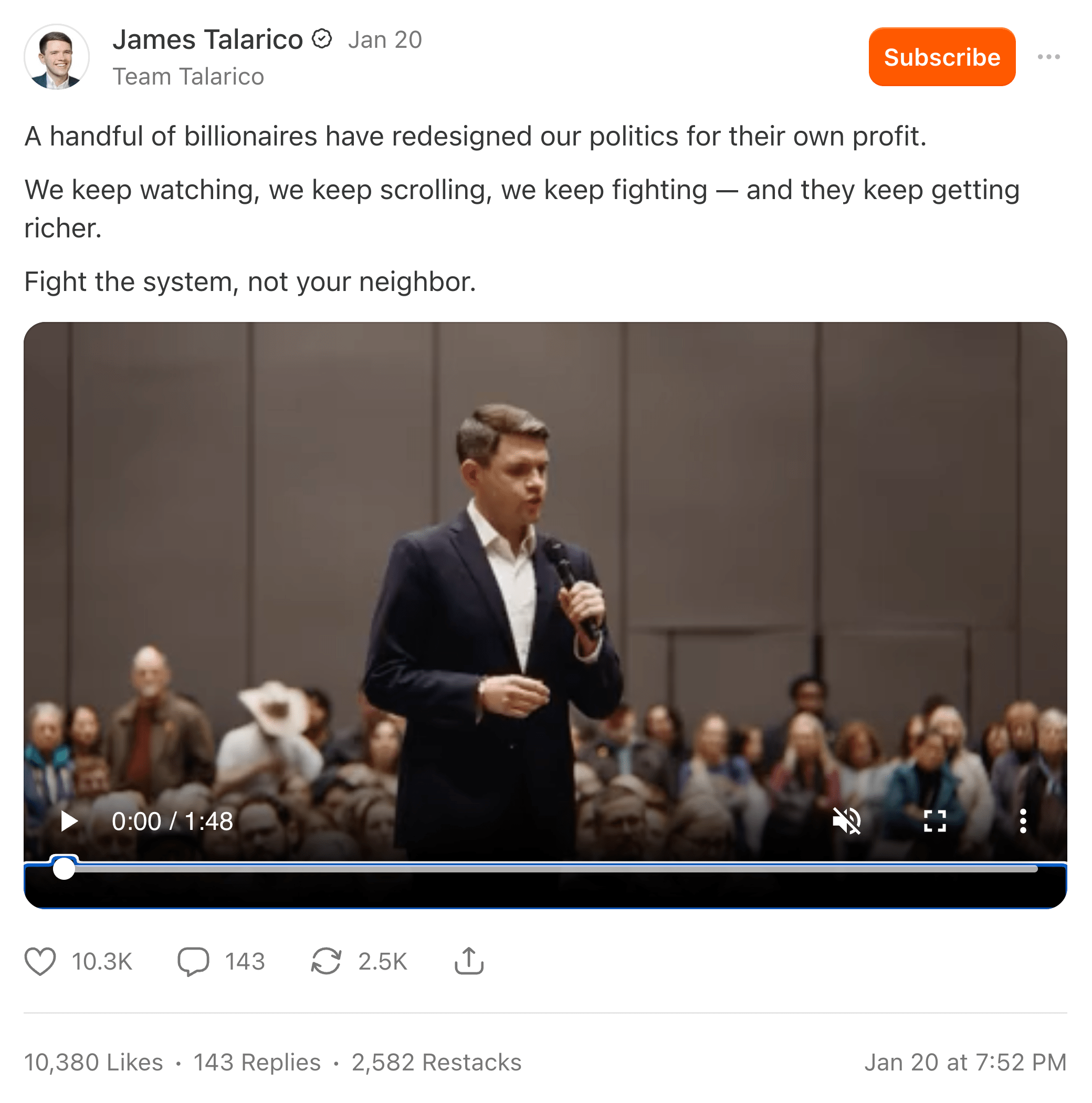
The renovators believe the system is imperfect, but largely worth keeping. In their view it has been co-opted and corrupted by money and corporate greed and upheld by a leadership class that is either corrupt themselves or out of answers. As James Talarico, Democratic Senate candidate in Texas, explains: “I think we’re living in an era of corruption, and I don’t just mean illegal activity… I’m talking about corruption in the deeper sense, the rotting of our systems from the inside out…” In his telling, strengthened by his moral standing as a middle school teacher and Presbyterian seminarian, the issue with the American political system is not the institutions themselves, but the way in which they are weaponised and perverted.
While the revolutionaries name the ruling class as the enemy, the renovators see the villain as a narrower collection of groups who have captured institutions that were otherwise built to work for the American people. This distinction yields a different theory of power: with the right rules in place, the existing machinery can be trusted to function again. Therefore, instead of demolition, this group aims to renovate.
Senator Jon Ossoff spoke to this message at a campaign rally in June when he mused about what the founding fathers of America would see if they came to the US today:
“They’d see a pluralist democracy, people of all colours descended from every point on earth, stitched together from out of many nations into one. But they’d also see a nation, that at its height of wealth and power, fell into the very traps they most feared. Devouring itself in bitter conflict between warring factions, captured by special interests. And they’d see a faithless president exploiting this rot to pursue the absolute power they overthrew.”
House candidate Daniel Biss has voiced a similar critique, stating that: “While our families struggle to get ahead, politicians in Washington line their own pockets and special interests and wealthy donors flood our political system with money to protect their own power and access.”
Because renovators share the same anger towards an entrenched leadership class, the remedy they prescribe overlaps somewhat with that of the revolutionaries, including stock trading bans for Congress, term limits and campaign finance reform. However, the renovators are more likely to clean out and reform an agency—namely the Immigration and Customs Enforcement (ICE)—that the revolutionaries would call to abolish. The renovators also view the Democratic party as a vehicle worth trying to steer rather than run against.
On foreign policy, the renovators argue that the same corruption that is eroding domestic institutions has been exported, and that this is primarily corroding America’s credibility. Ossoff made this connection explicit when he criticised the financial gains Jared Kushner has made while carrying out US foreign policy in the Middle East.
Senator Chris Murphy, a leader in this camp, has also described Trump’s acceptance of gifts and business arrangements from Qatar, Saudi Arabia and the UAE as corruption with “no precedent in American history”. Thus, the fix renovators recommend is twofold: root out the graft of those currently running foreign policy so American leadership abroad can function as intended, and then fix the political system such that future administrations cannot replicate the corrupt schemes of the current one.
Renovators are spread across the country, from candidates in conservative states and districts such as Senate candidate James Talarico of Texas, Senator Jon Ossoff from Georgia, House candidates Sam Forstag of Montana, Manny Rutinel of Colorado, and Eric Jones of California. There is also a cluster of midwestern candidates including House candidate Daniel Biss from Illinois, Senate candidate Peggy Flannagan of Minnesota, and former Senator and current candidate Sherrod Brown from Ohio.
The revivalists
The revivalists are firm believers in American exceptionalism and credit American liberalism for the peace and prosperity of the past 80 years. They see Trump and the MAGA-aligned right as the primary threat to that inheritance and to American democracy and values more broadly.
Their diagnosis is that Donald Trump and the MAGA movement behind him have steeped the country in hyper-partisan vitriol and driven it into a spiral of polarisation. Revivalists argue that these divides drive dysfunction in Washington and make it impossible to worth within the political system. They often celebrate a prior era of bipartisanship and showcase their own capacity to work across the aisle.
Their theory of power follows from that diagnosis. Democrats must defeat Trump, the movement behind him and the polarisation that produced both. Then competent, experienced hands will make the system function as intended again. They believe collaborating with reasonable, non-MAGA Republicans to build bridges and pass longer-lasting legislation will show Americans how a working government can operate. In turn, they think a government that delivers will earn back trust on its own merits. Revivalist candidates centre their electoral pitches around defeating Trump, restoring institutional norms and bipartisan collaboration. Senator Chris Coons, who is running for re-election in Delaware, made an appeal to voters saying as much:
“At some point [Trump’s] chaos, corruption, and cruelty will come to an end. And a lot of work will be needed to pick up the pieces, to clean up the mess he’s made, to fix a system that’s still broken and not delivering results for the folks I serve in Delaware. I’m running for reelection because the job’s not done.”
Coons emphasises the damage that Trump has caused and his desire to restore normality to the halls of Congress. Additionally, many revivalists stand closest to the Democratic party leadership and often treat experience as a credential rather than a liability. In her unsuccessful race for Michigan’s Senate seat, Congresswoman Haley Stevens emphasised her time in the Obama administration, for example, and Roy Cooper spotlights his accomplishments as evidence of his policy chops from his time as North Carolina’s governor.
On foreign policy, the revivalists argue that American military alliances, trade relationships and institutions are integral pieces of the liberal world order. In their view, the post-war structures are worth defending, US leadership is needed and Trump’s destruction of these institutions is actively harming American global power. They mostly believe that the backlash against these institutions, whether it be NATO or the WTO, is a failure of messaging. Americans were never told what the post-war order gave them, so they have had no reason to defend it.[2]
Where revivalists identify a problem abroad, they frame it as they frame problems at home: the result of a specific bad actor’s conduct or of partisan divisions. For example, they blame Israeli prime minister Binyamin Netanyahu and Russia’s Vladimir Putin for their countries’ strained relationships with the US. Change the leadership and you can restore the relationship, which is an argument for patience both at home and abroad. They argue too that foreign adversaries purposely widen American divisions, and that Americans should fight back by recognising those efforts and working across the aisle, a case New York representative Tom Suozzi made recently during a hearing on foreign influence:
“The biggest factor causing division in our country is our foreign adversaries…They are feeding division in our country. They cannot defeat us economically. They cannot defeat us militarily. So they want to take what they see as being our biggest weakness which is our diversity. And they fuel dissent in our country…”
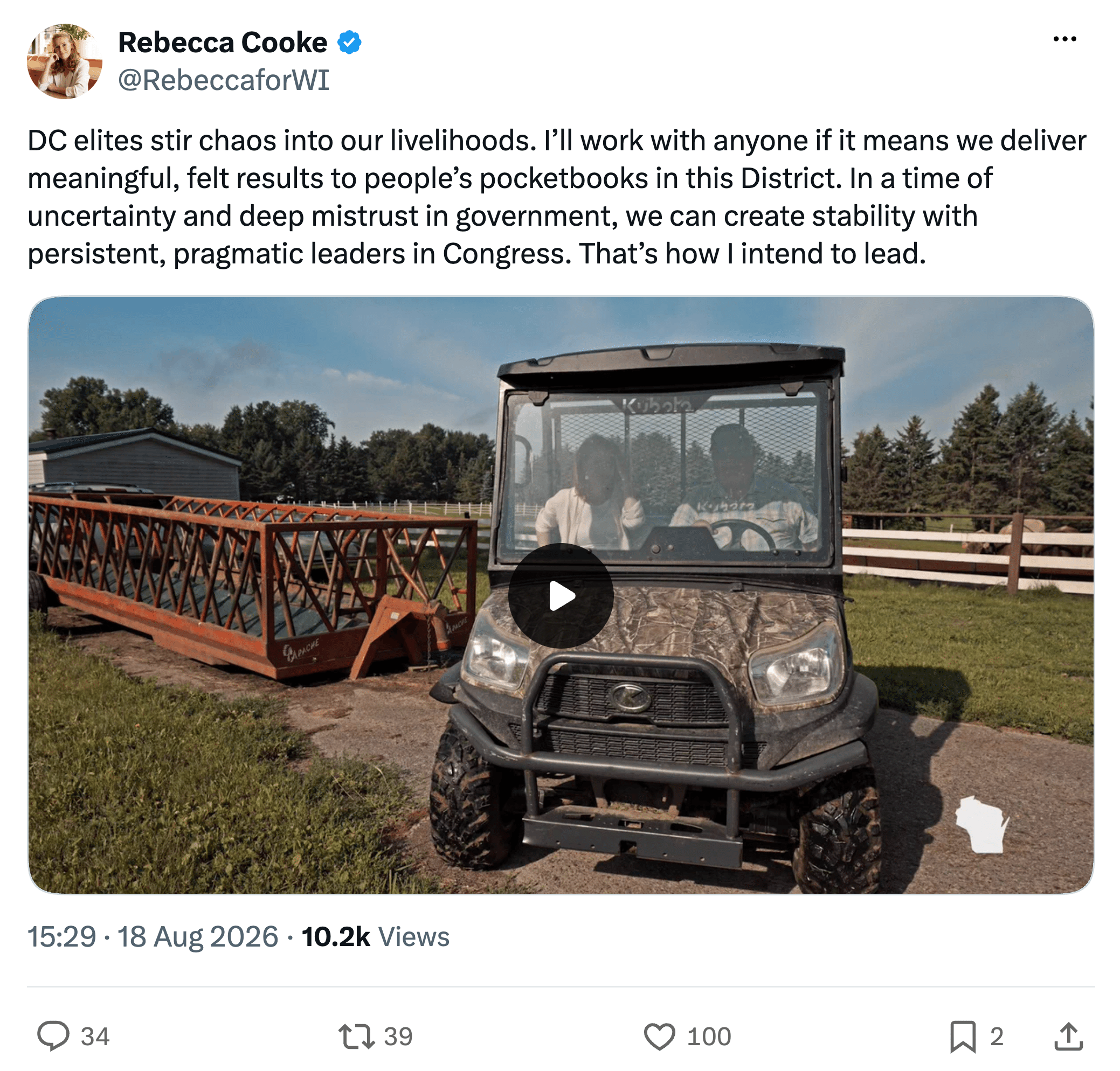
Revivalists comprise the largest cross-section of the party and are represented from coast-to-coast, including Senator Chris Coons from Delaware, Senator Chuck Schumer from New York, Senator John Hickenlooper from Colorado, Representative Tom Suozzi from New York, Representative Maggie Goodlander from New Hampshire, Senate candidate Chris Pappas of New Hampshire, Senate candidate Roy Cooper from North Carolina, House candidate Rebecca Cooke from Wisconsin, former Senate candidates Janet Mills from Maine and Angie Craig from Minnesota.
The five foreign policy issues
Primaries have at times led to tense disputes among Democrats. When it comes to foreign policy, our analysis shows where the camps divide on five key issues that will matter to Europeans: affordability and trade; the use of military force; China and great power competition; Israel; and Europe and European security.
1. Affordability and trade
Since Zohran Mamdani’s New York mayoral victory in November 2025, affordability has defined this election cycle’s messaging. Candidates across the board focus on policies that would help the affordability crisis and frame other issues as perpetuating it.[3] The focus is so singular that the headline messages are often interchangeable across the party: Abdul El-Sayed is running for “Money out of politics, money in your pocket, Medicare for all” while Roy Cooper’s prevailing message is “Make stuff cost less.”
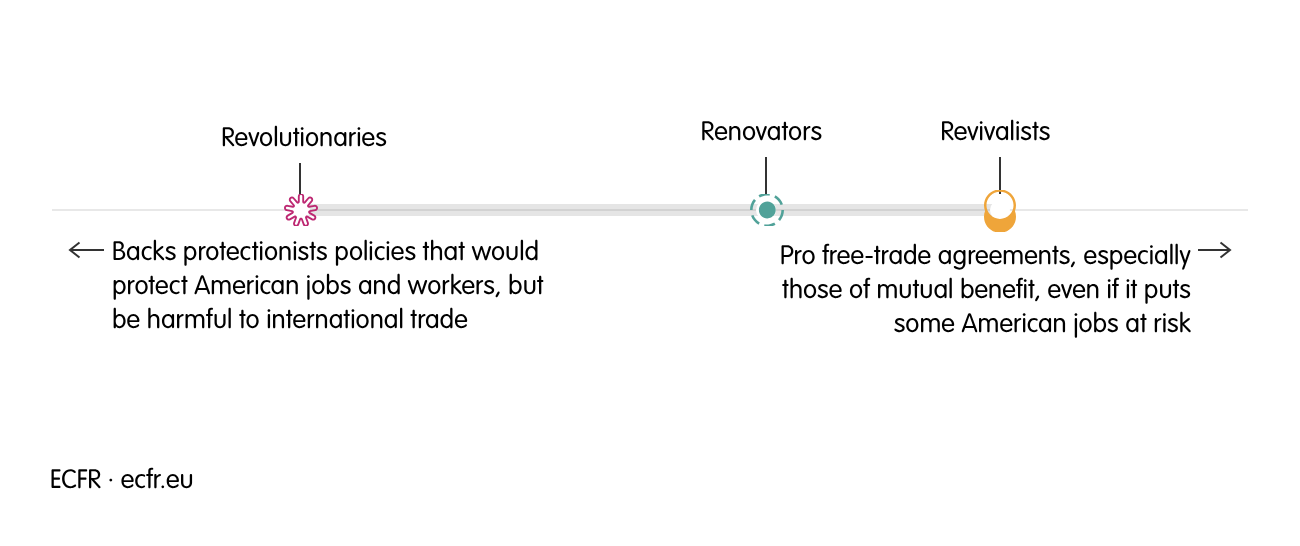
In terms of foreign policy, trade is affordability gone global. And as all Democratic candidates see it, Trump’s tariffs raise the price for Americans while enriching himself and his allies. But this consensus is an objection to these specific tariffs, not to all tariffs.
Revolutionaries remain sceptical of the old free-trade order itself: Alexandra Ocasio-Cortez at the Munich Security Conference called for “a recognition of NAFTA [North American Free Trade Agreement] as a failed policy for many rural and working class communities,” and Abdul El-Sayed called NAFTA and the Trans-Pacific Partnership a disaster for the American worker. Moreover, this camp sees small, strategic tariffs as legitimate tools of job protection.
Renovators, on the other hand, believe current trade agreements can be improved. Senator Jon Ossoff, for example, sent a letter to the Trump administration urging them to use the US-Mexico-Canada agreement (USMCA) review to police Mexican labour and environmental practices to ensure American growers have a chance to compete fairly on the global market.
Revivalists remain closely aligned to the old free-trade consensus. In April of this year, for example, senators in this camp asked the US trade representative to “strengthen and renew” the USMCA. They believe that trade tools like tariffs or export controls should only be used for national security issues, akin to the “small-yard, high-fence” policies of the Biden administration. Amid the Trump administration’s trade wars, they suggest focusing on a narrow trade agenda that directly serves the interests of both sides, such as deals on critical minerals, new technologies or other pieces of critical supply chains.
2. The use of military force
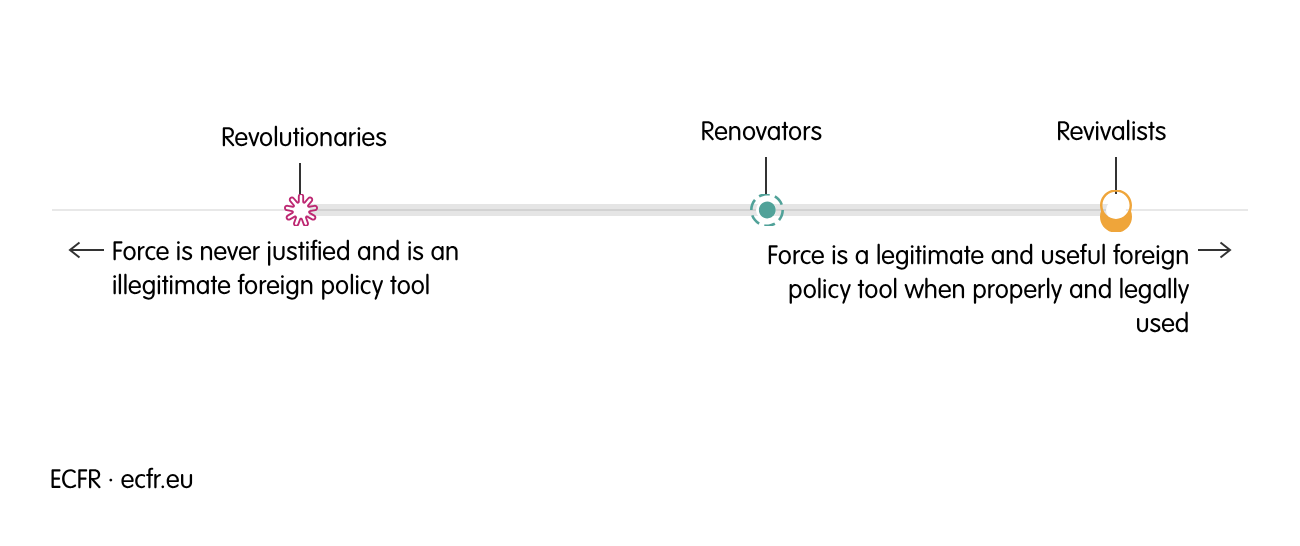
America’s two latest military operations—Trump’s war in Iran and the operation to remove Venezuelan president Nicolás Maduro—have sparked debate among Democrats over what role the US military should play in foreign policy. Nearly every Democrat criticised the Iran war and many voiced reservations about Venezuela, but the extent to which Democrats are comfortable using the military as a foreign policy tool differs.
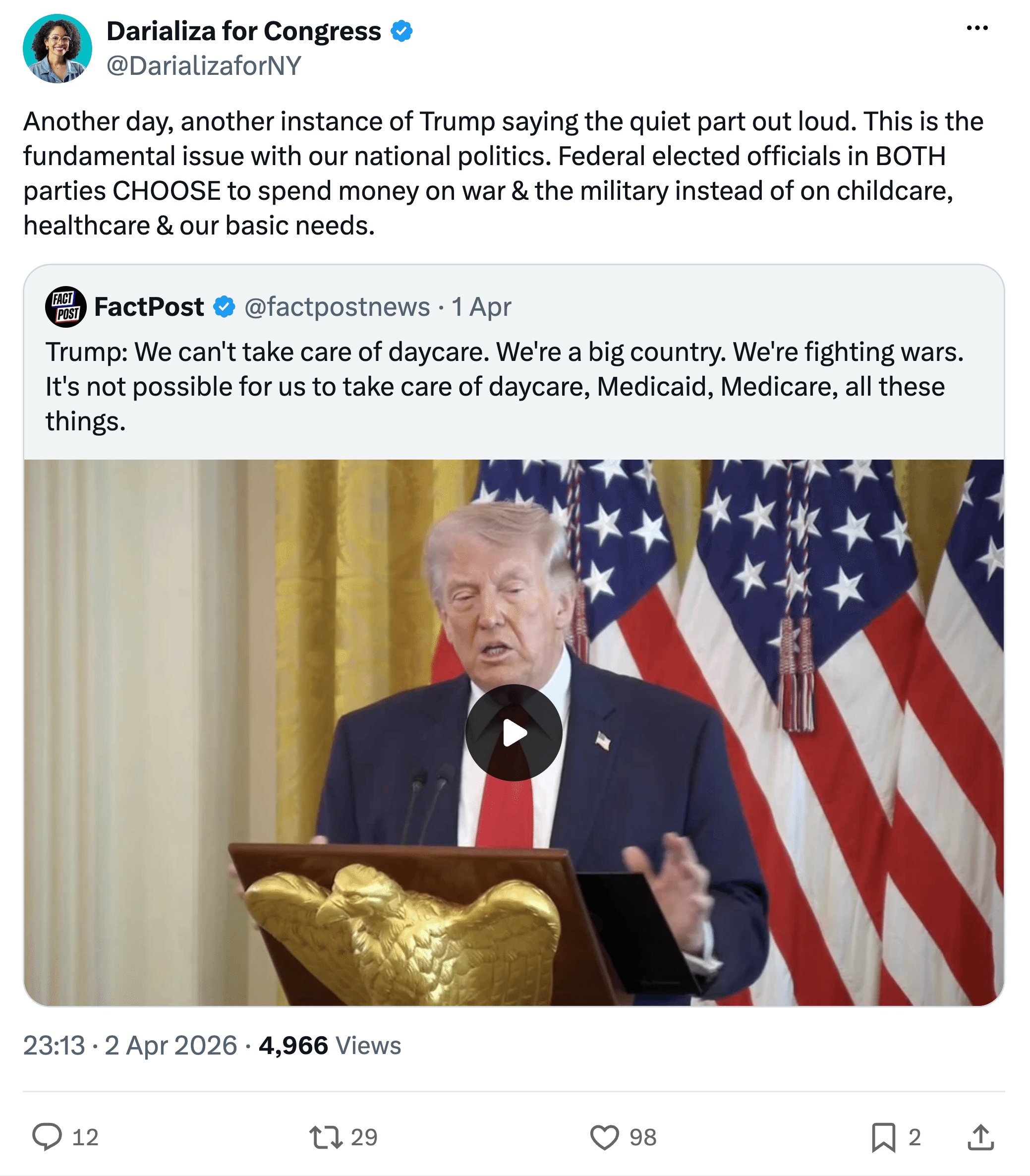
Revolutionaries read Trump’s use of force in Iran and Venezuela as a natural continuation of an overly militarised foreign policy and advocate for that to change. El-Sayed called the Iran war “dumb and illegal”, but argued that the real issue was the cost of a war America did not need to fight. Colorado’s Melat Kiros makes this structural claim directly, “It’s time to reimagine our global role: not as a militarised empire, but as a champion of diplomacy, human rights, and peacebuilding. We need to end the blank checks for endless war and reallocate that funding towards diplomacy abroad and housing, education, and healthcare here at home.” New York candidate for congress Darializa Avila Chevalier puts it similarly.
The revolutionaries, if in office, would work to cut the military budget broadly in the name of keeping the money at home. For them, the deeper fix to a foreign policy driven mainly by military action is upstream: end the corporate and defence contractor lobbies that supports these wars in the first place.
The renovators view the most recent use of force as domestic corruption running through foreign policy. They are not necessarily opposed to using military force, but uncomfortable with the corrupt forces that push the military to be a tool of first resort. Chris Murphy’s office headlined his remarks on the money: “This president’s foreign policy, the invasion of Venezuela, the ouster of Maduro, is about making his crowd filthy rich. It has nothing to do with American national security.”
James Talarico likewise described the transaction as follows: “Trump promised the biggest oil executives in this country a ‘great deal’ if they gave him a billion dollars for his re-election campaign, and then he turned around and gave them a gift. He gave them the nation of Venezuela, home to the largest oil reserves in the world. Billionaires don’t just run our economy. They don’t just run our government. Now they run our foreign policy.” Corruption, in this telling, drives how Trump uses force. As with domestic concerns, the way to “fix” the incentives to use military force is largely the same as the revolutionaries: reign in defence contractor graft, lobbying and campaign spending.
Revivalists press hardest on legality and cost, but the argument underneath is about what these operations do to America’s standing in the world. Chris Coons admonished the administration’s decision to launch strikes on Iran in February for their method and legality: “President Trump’s military campaign against Iran and call for regime change are the beginning of a reckless new war of choice with no clear strategy and no clear endpoint. This is not how a democracy goes to war.”
Revivalists levelled similar critiques at the military operation in Venezuela. Representative Maggie Goodlander responded to the capture of Maduro by asking: “What is the legal justification for such an action? The US Constitution entrusts the US Congress with war powers for very good reasons. The Trump Administration must immediately and truthfully answer questions about the motivation and legality of this unilateral military action, the potential for any further escalation, and the plan for peace.”
For this camp, how a country goes to war is a sign of its strength. Authorisation, a stated objective, and allies consulted in advance are what gives a war public support and partners willing to help in the effort. According to revivalists, a democracy that goes to war via unilateral decision is weaker afterward, because that decision erodes the constitutional system of checks and balances. So, Trump’s lack of consultation widens a divide between Republicans and Democrats, between the branches of government and diminishes the public image of the US military.
3. China and great power competition
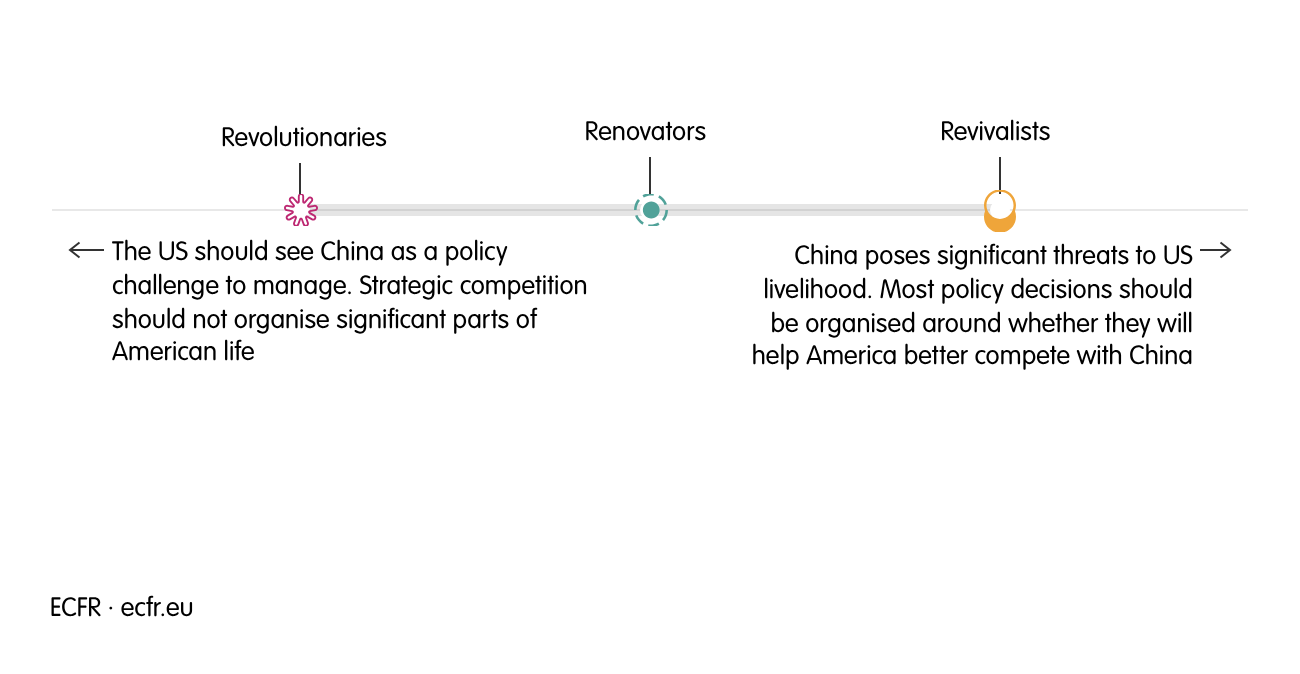
China is generally understood by all on the left as a strategic challenge. Yet Democrats disagree on just how big the threat is, whether to commit troops to the defence of Taiwan, and just how much the US should orient its economic and security policy around the strategic competition with China.
Revolutionaries fear a full-throated strategic competition with China would subvert domestic priorities. When Ocasio-Cortez was asked at the Munich Security Conference if she would commit to sending US troops to defend Taiwan, she said: “We want to make sure we never get to that point and we want to make sure that we are moving in all of our economic, research, and our global positions to avoid any such confrontation.”
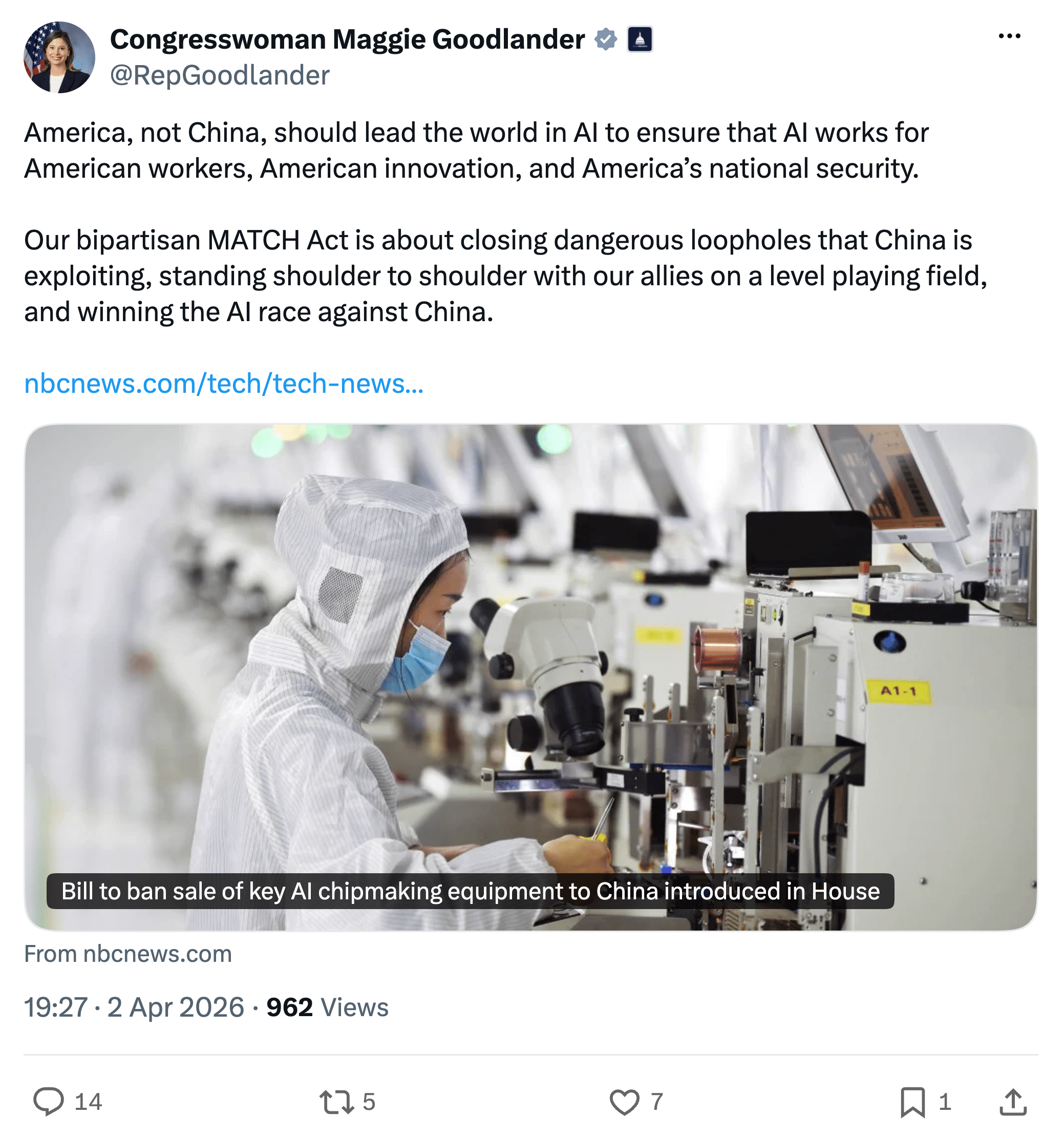
This camp’s scepticism of the use of force and relentless focus on domestic framing is clearly seen when hot-button issues in the strategic competition discussion arise. For example, this camp would rather support limits on AI development to protect jobs, workers and the environment, than to push forward on AI research in order to compete with China. Likewise, they are more likely to focus the conversation of US-China strategic competition on manufacturing gaps, lags in research and education and trade deficits, thus bringing the focus back to the working class and economic issues.
Renovators sit in the middle. Hawkish enough to want to compete but unwilling to let strategic competition swallow the agenda. They are focused on economic fairness with China and competing beyond military means alone, but also willing to place domestic guardrails on AI and the tech race. They believe competition is important, but that it should not overtake all domestic needs. For example, they would advocate for the need for data centres to be energy and water self-sufficient, or even call for moratoriums on data centres, even if that threatens frontier model development.
4. Israel
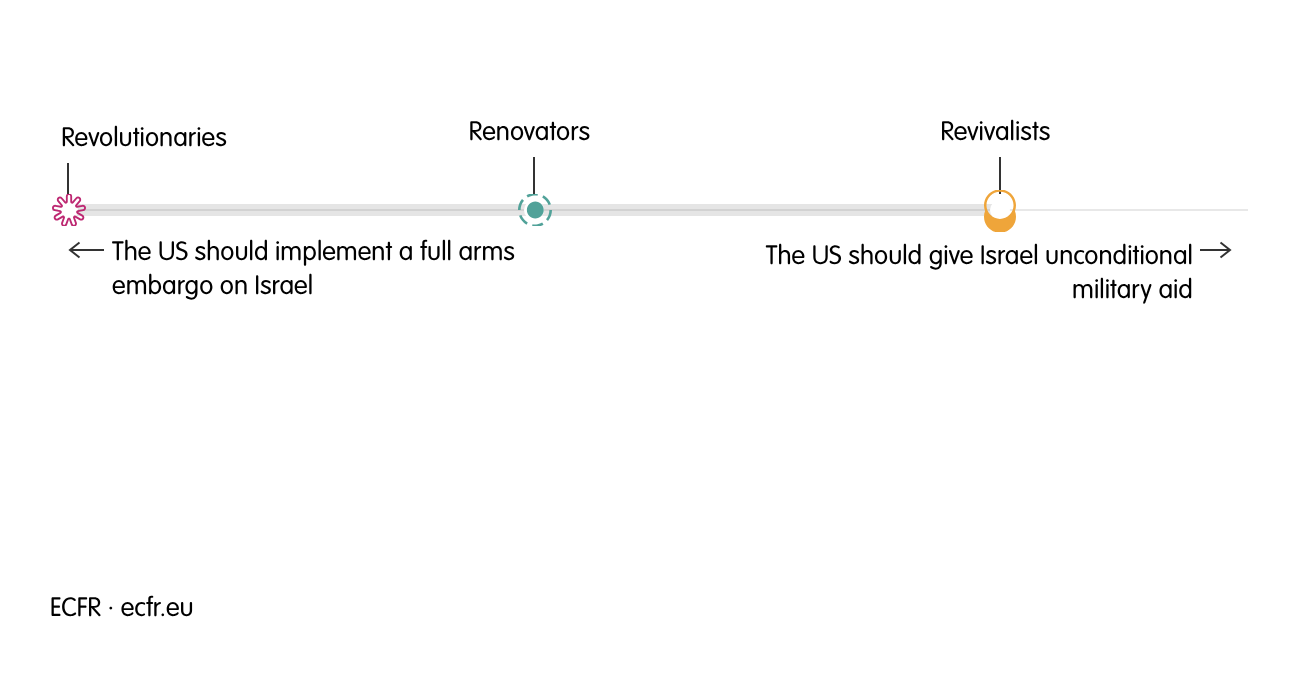
Israel is where the three camps separate most cleanly along a single question: what, if anything, should America sell or give to Israel?
This is a central issue for the revolutionaries, who maintain that Israel’s actions in Gaza amount to genocide. This camp has concluded that conditioning aid to Israel, the previous progressive position, is no longer a viable measure to ensure any meaningful end to the conflict or long-term peace. Their preferred policy is a full arms embargo on Israel, including defensive systems.
This distinction has already defined a few primary elections. New York’s Darializa Avila Chevalier, who won the congressional primary against Representative Adriano Espaillat, ran on “babies not bombs”, promising to vote to halt arms sales to Israel. Melat Kiros, who unseated nearly-30-year incumbent Diana DeGette in Colorado, called for a full arms embargo to Israel and closed her victory speech leading a “Free Palestine” chant. El-Sayed takes this same position: “I support an immediate arms embargo on Israel and reject the false differentiation between ‘offensive’ and ‘defensive’ weapons.”
The renovators often make that distinction and are primarily focused on the need for change in the US-Israel relationship. Their belief that the system must be reformed is clearly reflected in their positions towards Israel. James Talarico, for example, has said he would work to ban the sale of offensive military weapons to Israel while still supporting Israel’s defensive systems. Talarico has declined to call it a genocide but has called the destruction in Gaza a “moral disaster”. Senator Jon Ossoff similarly told constituents that he voted against sending rifles to Israel because of the “extreme mass deprivation of civilians in Gaza”, and defended his vote for air-to-ground missiles because of Israel’s need to be able “to strike those who would launch missiles and rockets at Israeli civilians.” Senator Murphy, likewise, voted with Bernie Sanders’s resolution disapproving of the sale of offensive weapons in 2024, but has since moved even further, calling for a halt of US military aid altogether. But most in this camp have stopped short of demanding a total embargo. Instead, they try to thread the needle between respecting America’s long-standing special relationship with Israel and combatting the structure that has allowed Israel’s abuse of military force.
Revivalists support the US-Israel relationship but blame the two leaders, Trump and Netanyahu, for souring the once-mutually beneficial of defence relationship. In their view, Netanyahu and Trump’s actions have exacerbated US public opinion of the relationship, rather than the structure of the relationship itself. Chris Coons has reiterated that his “commitment to Israel remains ironclad” while directly placing the blame on Netanyahu for the declining American sentiment towards the country. Similarly, Representative Chris Pappas, running for Senate in New Hampshire, articulates support for Israel and criticism of Netanyahu’s government. Roy Cooper, meanwhile, has flatly rejected efforts to block aid to Israel.
The revivalists’ view on America’s relationship with Israel is perhaps best expressed in Chuck Schumer’s March 2024 Senate floor speech, where he called Netanyahu “an obstacle to peace” who has “lost his way by allowing his political survival to take precedence over the best interests of Israel.” In other words, just as Trump and the rise of the MAGA right have degraded the American political system, Netanyahu and the far-right in Israel have degraded the US-Israel relationship. The solution, then, is to try to change the behaviour of Netanyahu since they cannot change that he and Trump are in power. Therefore, this camp tends to treat US-Israel arms sales on a case-by-case basis, usually agreeing to send weapons, but reserving the right to condition those arm sales based on how Israel uses them. As Governor Janet Mills, who failed to win the Democratic primary for Maine’s Senate, said while criticising Netanyahu’s conduct she would evaluate any bill to halt arms shipments “on the specifics.”
5. Europe and European security
Nearly all Democrats see the value of the transatlantic relationship beyond the Trump administration’s idea of a “shared cultural heritage”. For the president, this is often a thinly veiled way to value the continent for its whiteness and colonial past and lambast it when he sees this as changing. Democrats, on the other hand, value the relationship for its shared rules and norms—whether these are liberal internationalism or workers’ rights.
A Democratic congressional majority will certainly not have the same disdain for Europe as many in the Trump administration do, but the Democratic party is certain to present its challenges. Some in the Democratic coalition would like to see a renewed American role in NATO, for example, while others want a European partner that can stand on its own. One challenge is for certain: the US-European relationship will be on the back burner. In the midterm campaigns you would be hard pressed to find a single Democratic candidate talking about the transatlantic relationship with voters.
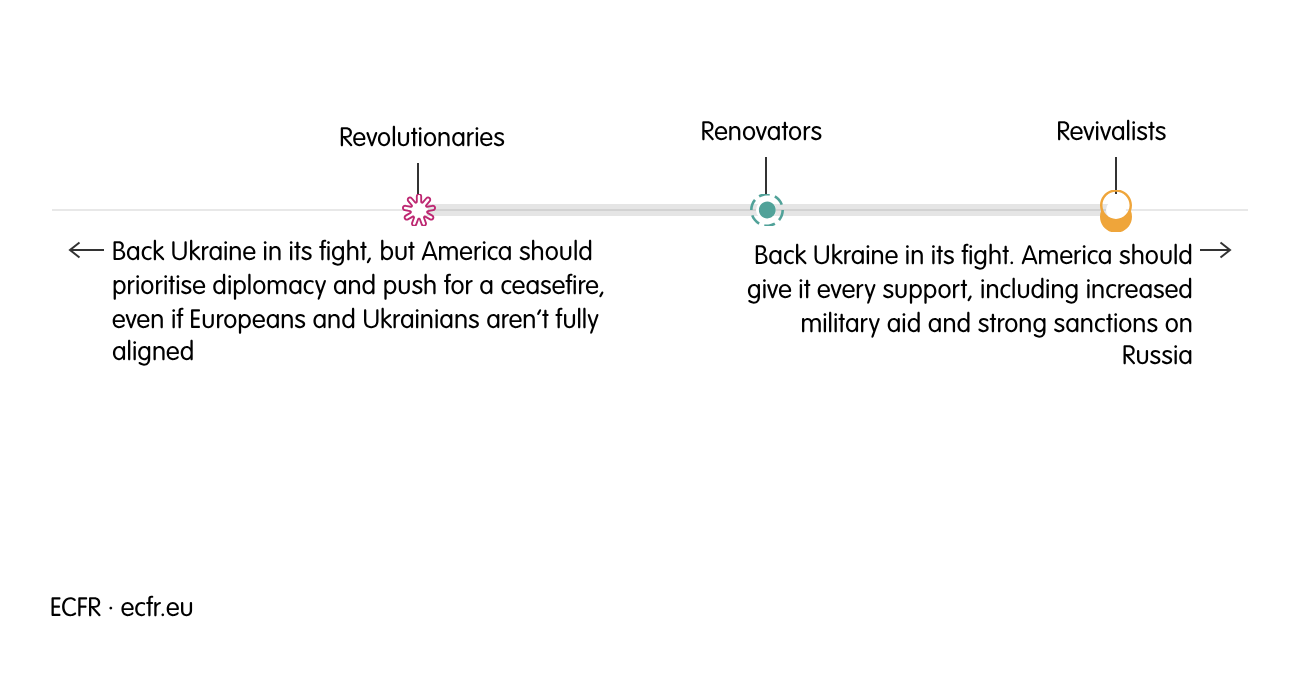
Ukraine
On the war in Ukraine, all camps are firmly behind Kyiv but divide over the specifics of what America should do in support. Revolutionaries are wary of a militarised US foreign policy and an economic statecraft whose costs fall to the American taxpayers. Leaders in this camp voted against seizing Russian oligarch’s assets in 2022, and signed, then retracted, a 2022 letter urging Biden to use negotiation and diplomacy. Much of the motivation to write that letter four years ago still exists within this camp today.[4]
The revolutionaries are most eager to push for peace and they remain somewhat doubtful that additional weapons for Ukraine benefit Americans, viewing an open-ended war as another entry in the long book of American over-extension. However, they are not outright against supporting Ukraine. Even Abdul El-Sayed, who was extremely vocal against sending weapons to Israel, said: “When it comes to Ukraine, I think we are involved in a righteous struggle from being invaded by their neighbour.”
Those in the renovator and revivalist camps both support Ukraine’s independence and the use of American military aid to secure it with varying intensity. Their divergence is on the use of sanctions on Russia. Renovators Chris Murphy and Jon Ossoff expressed some scepticism of the efficacy and knock-on effects of the Lindsey O. Graham Sanctioning Russia Act of 2026, which would authorise an increase of tariffs up to 100% for the top-five foreign purchasers of Russian energy supplies. Murphy ultimately voted for the bill, and Ossoff against. Senators Mark Kelly and Ruben Gallego, both revivalists, on the other hand, vocally supported the bill from the beginning. These are arguments about how much to spend and how hard to squeeze, not about whether Ukraine should survive. The sharper disparities appear when the question turns from the war to the US-European relationship itself.
US-European relationship
Revolutionaries are interested in a transatlantic relationship that is not centred around NATO or any military alliance. As revolutionaries believe in creating an American foreign policy that is not solely centred on military force, they also see that as a goal in the European context. Hence, they accept European strategic autonomy and might even welcome it. They are the camp most open to structural boldness and the least likely to campaign for returning any troops Trump withdraws from the continent. This camp has shown a proclivity for supporting a move towards burden-shifting, but are sceptical of a European relationship achieved only through rearmament.[5] Rather, they will seek an affirmative agenda as sketched by Ocasio-Cortez and Representative Jason Crow at the 2026 Munich Security Conference: a new transatlantic relationship re-centred on combatting authoritarianism on both continents and advancing labour standards, rather than one singularly obsessed with NATO and continued US security commitments.
Renovators would likely treat Europeans first and foremost as partners on the agenda they care about—corruption, taxation and democratic resilience.[6] They would also push for Europe to continue to take an increased responsibility for its own security. Murphy explained as much during a Senate foreign relations subcommittee hearing in September 2025: “I believe in that NATO treaty, I believe in Article 5, but I also think it is absolutely time for the members of NATO on the other side of the Atlantic to take more responsibility for their collective defence.” The renovators are therefore keen on the idea of increased burden-sharing within NATO since they often view foreign policy issues through the lens of “where is the money going?” Correspondingly they view European governments as natural allies in the pursuit of tax enforcements, financial transparency, AI and digital platform regulation.
Revivalists remain the most attached to the alliance and the most likely to defend NATO. Coons released a joint statement with Senator Mitch McConnell in April of 2026 reaffirming their support for the alliance: “Americans are safer when NATO is strong and united. It is in our interest for all allies to tend this unity with care…The Senate will continue to support the alliance for the peace and protection it provides America, Europe, and the world.” The revivalists also credit European allies with responding to American pressure by committing 5% of GDP to military spending, and with this they treat burden sharing as a question already answered.
Any structural change, in their eyes, is unnecessary and potentially counterproductive to continued US leadership. Rather, they see European rearmament as vindication of the alliance and reason for the US to stay committed. Even if the old division of labour and spending is not coming back, they would restore the old processes within the alliance: consultation before decisions, allies told in advance and an obligation to commitments.[7]
The uncertain road ahead
It is too early to know which of the three camps will be the most successful with voters. Democratic primaries in the spring and summer 2026 have offered mixed lessons. Quite a few revolutionary firebrands, such as Abdul El-Sayed and Angie Nixon, have won their primaries in widely covered upset victories. Meanwhile, some renovators like Jon Ossoff and James Talarico are running particularly strong campaigns while revivalists continue to fare strongly across the board. In other words, Europeans could be facing any of the foreign policy positions described above, and should engage with all three camps long before the American public decides which should come out in front.
Recommendations for Europe
Trump’s frenzy of disruptions too often clouds European judgement on long-term evolutions. If Democrats return to power, they will not revert to “back to normal”. Instead, Europeans need to engage with them on a new agenda; whether they be a far cry from the previous Democratic administration, like the revolutionaries, or a fair bit closer, like the revivalists. To anticipate what they may be dealing with in less than three years, Europeans should engage with all Democrats—from the familiar to the uncomfortable—even when disagreements abound, and start thinking of a common agenda to help shape Democratic policy while it is still being formed.
Expect the unexpected
European governments took a long time to accept that MAGA is durable and not a deviation from the norm. To be better prepared this time around, the debates on the American left deserve early attention, especially as they too could cause surprises. The populist energy emanating from the revolutionaries may prove to be a winning electoral strategy for Democrats in the midterms, and could well be mobilised by the next presidential candidate.
One thing is for certain: the Democratic party has entered a post-Obama, post-Biden era where questions over leadership mark more than a change of personnel. They signal the passing of the generation shaped by the Iraq war, the global financial crisis, the rise of ISIS and the return of great-power rivalry with Russia and China. Strategic competition with China is no longer the modus operandi as it was under Biden. International trade is no longer taken as an unqualified good. The American left is not returning to the internationalism of the 2010s. A new cohort of Democratic leaders is emerging with different political instincts and foreign-policy priorities.
Many Democrats no longer see the transatlantic relationship as an inheritance that they have a duty to preserve. If and when they return to power, their expectations of burden-sharing will have hardened, historical attachment to the Atlantic alliance will have faded and Europe will no longer occupy the central place it once did in Democratic foreign policy debates. Younger Democrats in particular approach alliances through the lens of effectiveness and narrow shared interests and values, rather than a long-standing historical solidarity. Europeans need to pay attention to the debates taking place inside the Democratic party in order to engage the party of tomorrow.
Engage with every Democrat
As Europeans navigate the new American left, the biggest hurdle they will face is that they are increasingly viewed as at best as irrelevant and at worst as complicit. Europeans are not the focus of any of the three camps’ foreign policies. In fact, throughout our analysis, Europe was hardly mentioned in any television interviews, stump speeches or posts on X. Even the war in Ukraine and Russia’s hybrid challenges have lost prevalence in foreign policy debates consumed with China, Iran, Israel and Venezuela, to name a few.
When they do pay attention to Europe, Democrats across the board are beginning to regard European leaders who have spent nearly two years currying Trump’s favour as part of the problem—whether that is because Democrats view them through the lens of upholding an oligarchy, enabling gross corruption or being pathetic in the face of a global bully. Even if European leaders are pragmatically flattering the president with paternal references or golf rounds, they should remember that there are still a lot of democrats (not the party, the philosophy) on the other side of the Atlantic who would like to see in Europeans a standard-bearer and not an enabler.
Likewise, behind closed doors European leaders espouse a disappointment in Democratic politicians for losing to Trump twice and failing to put up decent opposition so far.[8] Democrats, too, are acting pragmatically. The options they currently have to mount a significant opposition are few and ineffective.
Which is all to say, engagement and re-building bridges across the left now will be essential for building a transatlantic relationship fit for the post-Trump world. European leaders and all three camps want America to play a constructive, trusted and peaceful role in the world—they just differ on what exactly that looks like.
In particular, Europeans have to start meeting and engaging with revolutionaries, even if their positions appear furthest outside the norm. This camp, for its provocations and innovation, is feeding most of the political conversation and fires up the base. Engagement would make Europe’s concerns and assets more prevalent to their thinking, while ignoring them only guarantees tension if they come to power.
Shape the next transatlantic agenda
As Democrats are not paying any attention to Europe, the burden of revitalising the transatlantic relationship lies with Europeans. There are significant areas—like tech regulation, corruption reform, taxation, trade and security—where European leaders will find partners in the American left if they so choose. They should not be surprised, however, if they must make the first move. Indeed, if Democrats win the midterms, the next two years will see Trump weak and the Democrats not yet strong. In that time, no policy idea will come from Washington that imagines the future of collaborations with Europe. It is up to Europeans to propose them.
Europeans’ experience of the Biden administration illustrates why relying on American leadership is insufficient. Although Biden championed alliances rhetorically, several defining decisions were taken with limited European consultation. The Inflation Reduction Act prioritised domestic reindustrialisation through measures many Europeans regarded as discriminatory. The withdrawal from Afghanistan was poorly coordinated with allies. The AUKUS agreement advanced Indo-Pacific strategy but came at the expense of French interests. These episodes reflected a broader shift towards a US that increasingly pursues its strategic objectives unilaterally, even under an avowedly pro-NATO administration. Europeans’ continued acquiescence towards the Trump administration has only made unilateral foreign policy more appealing.
To avoid facing a Democratic majority which operates alone, Europeans must think through what they would like to propose to Democrats. That agenda should be capable of appealing across the Democratic coalition, from revolutionaries to renovators to revivalists.
In setting an agenda, Europeans should connect with Democrats from all three camps, but there are specific opportunities to build stronger coalitions with the camps that are naturally aligned with European interests. For example, on Israel policy and a new US role in the Middle East, the revolutionaries and the renovators could find alignment with many European governments. On a framework for competing with China and derisking, Europeans should collaborate with renovators and revivalists. All three camps will be in favour of a rebalanced NATO, but should Europeans seek more structural changes, they would find allies in the renovator and revolutionary camps. On all issues, Europeans should make the case that they can be a practical partner in solving some of the international problems around which the next Democratic coalition will organise itself. In so doing, Europeans and the US Democrats can build a new, more balanced and stable alliance.
A renewed transatlantic programme should therefore include:
A “fair trade” agenda that combines openness with stronger labour protections, coordinates responses to Chinese industrial overcapacity, establishes minimum wage requirements and climate standards. All three camps could be interested in such an agenda: revivalists for competitiveness, renovators for reestablishing ethical rules and revolutionaries for climate and labour rights progress. For Europeans, it is important to move away from the logic of indiscriminate tariffs and negotiated exemptions. Instead they should put forward a logic of fair competition and sustainable industrial development on both sides. The European Commission should start by identifying partners with whom to discuss these goals.
A joint framework for AI that strengthens consumer protections, ensures fair taxation of digital platforms, promotes open access to AI for public goods such as healthcare and education, and aligns technological innovation with climate objectives. The renovators would be most in favour of such a proposal, and elements of the revolutionaries and revivalists would be a natural coalition. France, which promotes international cooperation for responsible AI governance, as well as Britain, which will host the G7 in 2028, should reach out to Democrats interested in tackling the issue and working on a regulatory framework for AI and other technologies.
A rebalanced NATO in which European allies assume greater responsibility for force generation, command structures and regional deterrence, allowing the US to reduce its military footprint without weakening collective defence. All three camps would find favour in stronger European allies, although revivalists are probably more comfortable in the conversation. Nevertheless, Europeans should also spend time engaging with revolutionaries and renovators, who do not see the same value in alliances, and show that collective defence can be cost-effective and a guarantee of long-term security. Transatlanticist networks in staunch US allies such as Germany, the Netherlands or Poland should start suggesting concrete transformations of the alliance to be discussed with Democrats.
A substantial expansion of transatlantic educational, research and cultural exchanges, including easier access to European universities for American students, expanded researcher mobility and new funding for joint academic networks. Revivalists would applaud a greater cultural exchange and such a vision for renewed American leadership. Revolutionaries and renovators would also welcome the opportunity to centre education, research and culture in the transatlantic relationship, rather than military. The EU could help promote such a “Community of friendship for Europeans and Americans”, which a lot of Europeans may embrace, that de-emphasises trade and defence as the only pillars of the transatlantic relationship, and put democracy, innovation and human rights at the centre. Such an initiative would, above all, help cushion Europe’s fall towards irrelevance on the American left.
These proposals would resonate differently across the Democratic coalition. Revivalists would view them as a means of modernising American leadership rather than abandoning it. Renovators could see them as evidence that Europe is assuming greater responsibility for its own security while contributing to domestic American priorities on labour, industrial policy and technological governance. Revolutionaries may find opportunities to advance an ambitious climate and social agenda beyond their shores. In all cases, the objective should be the same: demonstrate that Europe can be an asset rather than a burden for the next generation of Democratic policymakers.
Methodology
The revolutionaries, renovators, and revivalists are ideal types that emerged from our analysis of 42 high-profile Democratic primaries and general election campaigns throughout the 2026 midterm cycle and of 63 individual Democratic candidates. We exhaustively researched campaign platforms, stump speeches, debates and candidate interviews with local news, and interviewed various pundits, current and former staff, officials and pollsters in Washington DC from April to August 2026.
The Democratic primary races and candidates studied include: Senate races in Alaksa, Colorado, Delaware, Georgia, Illinois, Iowa, Kentucky, Maine, Massachusetts, Michigan, Minnesota, Nebraska, New Hampshire, New Jersey, New Mexico, North Carolina, Ohio and Texas; Governor races in Iowa, New Jersey, Virginia and Wisconsin; and Congressional races in California, Colorado, Connecticut, Florida, Hawaii, Illinois, Michigan Montana, New Hampshire, New York, Pennsylvania, Texas, Washington and Wisconsin.
About the authors
Célia Belinis a senior policy fellow at the European Council on Foreign Relations and head of its Paris office. Her research focuses on transatlantic relations.
Chris Herrmannis the US programme coordinator at the European Council on Foreign Relations, based in Washington, DC. His research focuses on US domestic and foreign policy and the transatlantic relationship.
Nevada Joan Leeis a policy fellow at the European Council on Foreign Relations, based in the Washington office. Her research focuses on European security and defence, US foreign policy, the transatlantic relationship and NATO.
Acknowledgments
We would like to thank the many people who helped with this paper. First and foremost, thank you to all the Democratic politicians, staffers, pollsters and pundits who met with us for our research. A big thanks to Portia Kentish, whose thoughtful and thorough editing greatly sharpened the piece. Jeremy Shapiro and Jim O’Brien provided sage wisdom and multiple rounds of considered feedback. Majda Ruge offered generous comments and advice on earlier drafts. Chris Eichberger gave this piece its visual life through his extraordinary visuals. Martin Tenev worked tirelessly to bring the paper to its final form—life on the web.
[1] ECFR conversations with current and former progressive congressional staffers, Washington DC, July and August 2026
[2] Author’s conversations with congressional staffers, Washington DC, July 2026
[3] ECFR conversation with Democratic pollsters, Online, May 2026
[4] Conversations with progressive and moderate Democratic congressional staffers, Washington DC, July 2026
[5] ECFR Conversation with former and current progressive congressional staff, Washington DC, July and August 2026
[6] Authors’ conversations with politicians, March 2026, Washington DC and conversation with Tim Walz, ECFR annual council meeting, Vienna, June 2026
[7] Author’s conversations with congressional staffers, Washington DC, July 2026
[8] ECFR private workshop with European officials, Berlin, February 2026
President Kassym-Jomart Tokayev called for deeper practical co-operation between Kazakhstan and BRICS countries in trade, logistics, artificial intelligence, critical minerals and water security, positioning the format as a platform for broader economic ties amid growing geopolitical fragmentation.
Speaking at the BRICS Plus plenary session in New Delhi on Sept. 13, Tokayev said Kazakhstan sees cooperation with the group as an opportunity to expand access to new markets, attract investment, strengthen transport links and advance technological development. President Kassym-Jomart Tokayev during the BRICS Plus plenary session in New Delhi on Sept. 13.
Tokayev described the current global environment as an era of “great fragmentation,” a term used in the 2026 Global Peace Index to characterize geopolitical confrontation, rising militarization, weakening multilateral institutions and growing trade barriers. He noted that BRICS, representing nearly half of the world’s population and around 40% of global GDP, has both the capacity and responsibility to help overcome global divisions and deliver concrete results. “Peace and strategic stability are necessary conditions for economic and sustainable development,”
Tokayev said, calling for a shift from the de-escalation of individual conflicts toward long-term stability based on political dialogue and diplomacy. Against this backdrop, Tokayev positioned BRICS as a platform for practical cooperation rather than an alternative to the existing international system.
“As a partner country, Kazakhstan views BRICS as an open platform for practical cooperation that complements the multilateral system with the central role of the United Nations and connects peoples, regions and markets,” he said. He added that Kazakhstan always seeks to find a “common ground on every difficult issue,” describing the approach as consistent with the country’s “balanced, goal-oriented foreign policy.” Anastasia Golyakova, founder of the ThinkBricks YouTube channel, said the approach reflects BRICS’ broader focus on resilience, innovation, cooperation and sustainability, priorities that have gained greater relevance amid rising geopolitical tensions.
Anastasia Golyakova, founder of the ThinkBricks YouTube channel. said closer cooperation among BRICS members could help address shared challenges while giving partner countries such as Kazakhstan greater access to the bloc’s growing trade, investment and technological opportunities. “BRICS gives much support to each other. So, from this point of view, for Kazakhstan, it’s a prosperous future, in my opinion,” Golyakova told The Astana Times.
Ayanangsha Maitra, an editor and a geopolitics specialist, echoed this view, saying Kazakhstan’s BRICS partnership could open new opportunities for economic cooperation and market access. “Although Kazakhstan is not a full BRICS member, its partnership with the grouping adds value at a time of growing geopolitical tensions and economic uncertainty,” Maitra told The Astana Times.
“BRICS could offer Kazakhstan additional avenues for cooperation with countries beyond its traditional economic and political partners,” he added. Expanding trade and investment The economic dimension of Kazakhstan’s BRICS engagement was central to Tokayev’s address. According to him, trade between Kazakhstan and BRICS members and partners was around $72 billion in 2025. “Having significant industrial, transit and technological potential, we intend to diversify trade, economic and investment ties with all BRICS countries.
As chairman of the Eurasian Economic Union, Kazakhstan supports the expansion of economic cooperation with BRICS and the advancement of work on concluding a free trade agreement with India,” Tokayev said.
Tokayev also called on the New Development Bank, a multilateral development bank established by the group, to consider financing commercially viable projects in BRICS countries, including Kazakhstan.
Maitra identified critical minerals, jewelry, fashion and textiles as areas with potential to expand Kazakhstan-India trade. “Despite Kazakhstan’s relatively modest population of around 20 million, the country has a strong entrepreneurial spirit and growing commercial links with India,” he said, pointing to increasing connectivity between the two countries.
Turning geography into connectivity Transport connectivity was another central element of Tokayev’s vision. “Last year, transit cargo volumes through Kazakhstan approached 40 million tons. Our long-term goal is to increase that figure to 100 million tons annually. Overall, our transit network already handles up to 85% of overland freight between China and Europe,” he said.
As part of the Trans-Caspian International Transport Route, Kazakhstan serves as a link between Asia and Europe through the Caspian Sea. Tokayev called for greater synergy between the Trans-Caspian route, China’s Belt and Road Initiative and the International North-South Transport Corridor. Maitra highlighted that Kazakhstan’s position within the EAEU, the Commonwealth of Independent States and the Shanghai Cooperation Organization provides access to major regional markets. Its participation in the International North-South Transport Corridor adds another layer of connectivity.
“BRICS could expand that network beyond Kazakhstan’s traditional regional partners. The partnership adds another dimension by opening access to markets across a wider group of countries,” he said. AI as a new layer of cooperation AI represents another area where Kazakhstan sees room for practical BRICS cooperation.
Tokayev said Kazakhstan is ready to use its computing infrastructure and national and UN digital centers to expand cooperation in AI and proposed establishing a BRICS Plus Partnership in Artificial Intelligence. The initiative, he said, could connect national AI centers, facilitate access to laboratories and research projects and support the development of multilingual AI solutions.
For Maitra, AI could also become an important area of Kazakhstan-India cooperation because the two countries bring complementary strengths. “India has a strong IT sector and a large pool of software engineers and technology professionals, while Kazakhstan has established connections across the CIS and wider Eurasian markets. That combination could help Indian technology companies reach markets where language and regional expertise remain barriers,” he said. Water security broadens the agenda Tokayev also linked sustainability to one of the country’s longstanding international priorities: water security. He reiterated Kazakhstan’s proposal to establish an International Water Organization as a specialized UN agency, arguing that global water governance remains fragmented and requires stronger international coordination.
“I invite the BRICS member states and partners to join the international consultations initiated by our country,” Tokayev said. Meeting with Narendra Modi On the sidelines of the summit, Tokayev also met with Indian Prime Minister Narendra Modi, highlighting India’s growing economic and technological weight and the expanding relationship between the two countries. Modi highlighted the potential for closer ties in high technology and the creative industries, including cooperation between Astana Hub and Hyderabad’s Cyberabad technology ecosystem. He also invited Kazakh representatives, particularly young people, to take part in the WAVES creative industries summit in Mumbai next year. The two leaders also discussed prospects for expanding economic ties between India and the Eurasian Economic Union.
Tokayev said Kazakhstan, as the current chair of the EAEU, supports negotiations on a free trade agreement between the bloc and India and is ready to help advance the process. Tokayev said around 600 companies with Indian capital operate in Kazakhstan, while nearly 150,000 Indian citizens visited the country last year. He also cited the large number of Indian students studying in Kazakhstan and cooperation between Astana and New Delhi within international organizations.

 Login