Do you have experience in fields such as sport, culture, youth, education and training or audiovisual? Do you possess good interpersonal and organisational skills, IT competences, as well as the flexibility and willingness to work in an independent capacity, often under short deadlines? EACEA is continuously on the lookout for external experts to help ensure […]
Romanian President Nicușor Dan has nominated diplomat Luca Niculescu as prime minister, beginning a fourth attempt to form a government after three previous candidates failed to secure a parliamentary majority.
The nomination was announced on Monday, 5 October, after Dan held consultations with Romania’s parliamentary parties at the Cotroceni Palace. Niculescu now has the task of finding sufficient support for a government after five months of political deadlock.
Dan said he had chosen the candidate he believed had the best chance of assembling a majority. “Romania needs a government. We need a budget for next year,” he said after the consultations, according to Romanian reporting on the nomination.
Niculescu, 55, is a former journalist and diplomat who has served as a secretary of state at Romania’s Foreign Ministry and national coordinator for the country’s accession to the OECD. He was Romania’s ambassador to France between 2016 and 2022 and was also accredited to Monaco and Andorra.
Accepting the nomination, Niculescu said his first task would be to build a parliamentary majority. He promised a government programme centred on predictable economic policy, public spending discipline, investment and Romania’s European and Euro-Atlantic commitments.
The appointment follows three unsuccessful attempts to replace the government of Ilie Bolojan, which was removed in a no-confidence vote on 5 May after the Social Democratic Party withdrew its support. EU Today reported at the time that 281 lawmakers backed the motion, bringing down the pro-European administration.
Eugen Tomac was the first candidate asked to form a government but relinquished the mandate after failing to secure sufficient support. Adrian Veștea was then nominated, but his proposed government was rejected by parliament.
The third candidate, PNL MEP Siegfried Mureșan, was nominated in September. His government received 182 votes in the parliamentary confidence vote on 30 September, well short of the 233 required. That defeat left Dan facing a fourth round of negotiations with the same fragmented parliament.
Niculescu therefore begins without an established majority behind him. During Monday’s consultations, the PSD continued to promote its own candidate, Sorin Grindeanu, while USR and AUR pressed for early parliamentary elections. PNL signalled greater flexibility but stopped short of committing itself to a new governing formula.
AUR leader George Simion has already said his party will not support Niculescu. USR, meanwhile, said it would examine the proposed cabinet, governing programme and the political majority behind it before deciding how to vote.
Under Romania’s constitution, a prime minister-designate has ten days from nomination to seek parliament’s confidence for the proposed programme and full list of ministers.
The repeated failures have also revived discussion of early elections. The president may dissolve parliament if no government receives a vote of confidence within 60 days of the first request for investiture and at least two attempts have been rejected, although dissolution is a presidential option rather than an automatic step.
Dan has so far indicated that he would prefer to exhaust efforts to form a government.
The political stalemate comes at a difficult economic moment. Romania is under pressure to reduce its budget deficit, maintain investor confidence and continue reforms tied to EU funding. The strain on the governing coalition had already become an EU fiscal issue before Bolojan’s government fell, with questions over budget consolidation and European recovery funding increasingly tied to political stability in Bucharest.
The immediate test for Niculescu will be whether his diplomatic background can translate into enough parliamentary votes to assemble a cabinet. His nomination leaves him more freedom than a candidate tied directly to one of the main parties, but the arithmetic remains unchanged: a government still requires at least 233 votes to take office.
Photo: Razvan Socol / Wikimedia Commons / CC BY-SA 4.0
Spanish Prime Minister Pedro Sanchez on Monday called an early election for November 29, aiming to increase his parliamentary support after lawmakers last week rejected proposals to address a housing crisis that has drawn nationwide protests. Speaking with FRANCE 24's Mark Owen, Javier Carbonell, Policy Analyst at the European Policy Centre, explains that Sanchez has chosen "the best moment in a sea of troubles" to call snap elections as he is likely to capitalise on the mobilisation of left-wing voters during the housing protests.
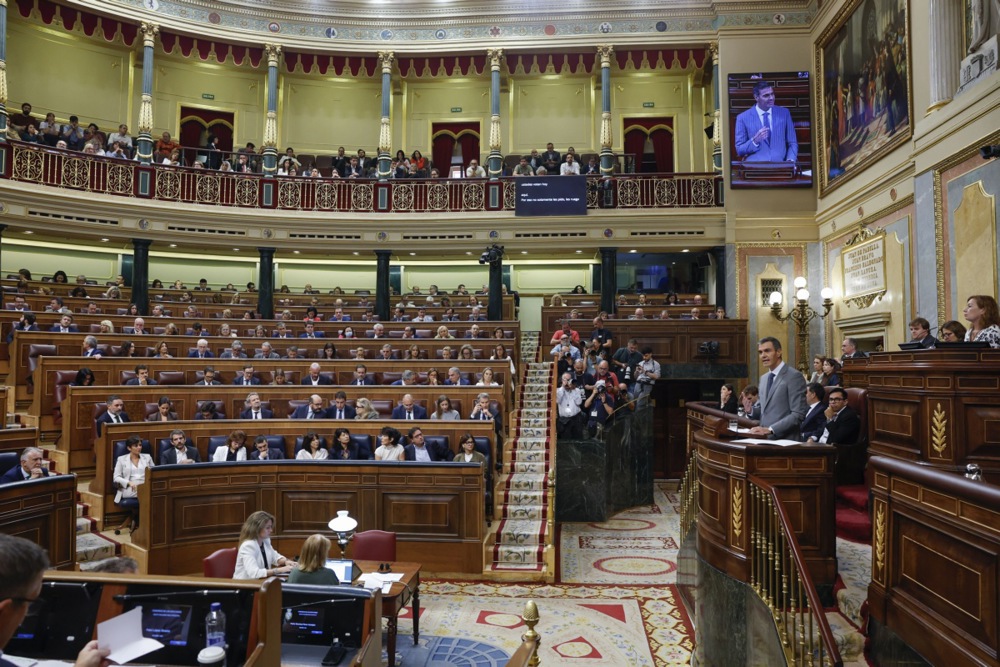
Spanish Prime Minister Pedro Sánchez has called a general election for 29 November, bringing Spain to the polls months ahead of schedule after his minority government suffered a major parliamentary defeat over measures intended to tackle the country’s housing crisis.
Sánchez announced the dissolution of parliament on Monday, ending months of speculation over whether his increasingly difficult parliamentary position could force an election before the current legislature was due to expire in 2027.
He said problems remained particularly acute in inequality, public services and access to housing, arguing that further reforms required a larger parliamentary majority.
“To do more, we need to renew and expand people’s support,” Sánchez said. He called for a “much broader, progressive majority” capable of carrying the government’s programme through parliament.
The election will take place on Sunday, 29 November, rather than in 2027, when the current parliamentary term was due to end. Sánchez informed King Felipe VI before convening an extraordinary meeting of the Council of Ministers to dissolve the Cortes Generales.
Housing defeat brings crisis to a head
The immediate political backdrop to the decision was Friday’s rejection of two emergency housing decrees by the Congress of Deputies.
The first contained measures to protect vulnerable households from eviction, increase the supply of affordable homes and restrict some forms of speculative property investment. It also proposed changes affecting tourist accommodation and purchases by investment funds.
The second concentrated on residential rental contracts, including provisions intended to prevent tenants from suddenly being forced into substantially more expensive agreements when existing leases expired.
Both measures were defeated. The first received 172 votes in favour and 178 against. The second was rejected by 184 votes to 166. The votes again demonstrated the difficulty facing a government whose survival has depended on agreements with several regional and nationalist parties.
Housing has developed into one of Spain’s most contentious domestic political issues as rents and property prices have increased sharply in Madrid, Barcelona and other major cities and tourist areas.
The dispute intensified following the eviction of 87-year-old Maricarmen Abascal from the Madrid home where she had lived for more than 70 years.
Abascal was removed from the property on 23 September following a dispute over the rent. Her previous monthly payment had been €500, while the owners initially sought €2,650 before reducing the demand to €1,650 — still above her pension income.
Images of the elderly woman being taken from the building on a stretcher prompted widespread public anger and helped turn her case into a symbol of Spain’s housing crisis.
Tens of thousands of demonstrators subsequently took to the streets of Madrid, Barcelona, Valencia and other cities demanding stronger protection for tenants and measures to curb rising housing costs.
Sánchez’s fragile parliamentary majority
The housing vote exposed once again the central weakness of the government formed after Spain’s inconclusive 2023 election.
The conservative People’s Party (PP) won the largest number of seats, but its leader Alberto Núñez Feijóo was unable to assemble a parliamentary majority.
Sánchez remained prime minister after securing support from Sumar and reaching agreements with Catalan and Basque parties. The arrangement allowed him to form another government but left individual pieces of legislation dependent on negotiations with parties whose positions frequently diverge.
The latest housing measures were opposed by the PP and Vox, while Catalan party Junts also voted against them.
The PP has argued that greater intervention in the rental market risks reducing the number of properties available by discouraging owners from renting them. Its housing policy has instead placed greater emphasis on increasing supply.
Sánchez’s government argues that intervention is necessary because housing costs have increasingly become disconnected from household incomes in the areas experiencing the greatest pressure.
The issue has also become increasingly relevant at European level. Housing affordability has moved higher up the EU political agenda as governments confront shortages in major cities, rising construction costs and the impact of short-term tourist accommodation.
Sánchez has served as prime minister since June 2018, when he replaced Mariano Rajoy after winning a parliamentary vote of no confidence.
His latest term has been complicated not only by parliamentary arithmetic but by investigations and corruption cases involving people connected with the Socialist Party, as well as disputes over migration and household costs.
The government has nevertheless pointed to Spain’s economic performance and employment figures as evidence that its policies are working. In his election announcement, Sánchez described Spain as the EU economy recording the strongest growth and employment creation.
The coming campaign is therefore unlikely to remain centred solely on housing.
PP sees opportunity
Feijóo enters the campaign with the PP expected to emerge as the largest individual party according to most recent polling, but the question of whether it could govern will depend heavily on the performance of Vox.
A PP victory without an outright majority could leave Feijóo dependent on Vox to form a government, making the balance between the two parties one of the central questions of the campaign.
Sánchez, meanwhile, will attempt to rebuild the coalition of left-wing and regional voters that allowed him to remain in office after the 2023 election.
His decision effectively turns the parliamentary confrontation over housing into a national vote on his eight years in power.
“The time has come,” Sánchez said in Monday’s address, “for the Spanish people to decide what future you want for yourselves and for your country.”
Spain will now enter a compressed election campaign in which housing, the cost of living, migration, corruption allegations and the future composition of the government are likely to dominate.
The formal election process begins with the dissolution of parliament, with voters going to the polls on 29 November.
Kazakhstan has asked Moscow to help bring home citizens who say they were pressured into signing military contracts to fight in Ukraine. The request puts a fresh spotlight on the vulnerability of Central Asian migrants to Russia’s military enlistment efforts.
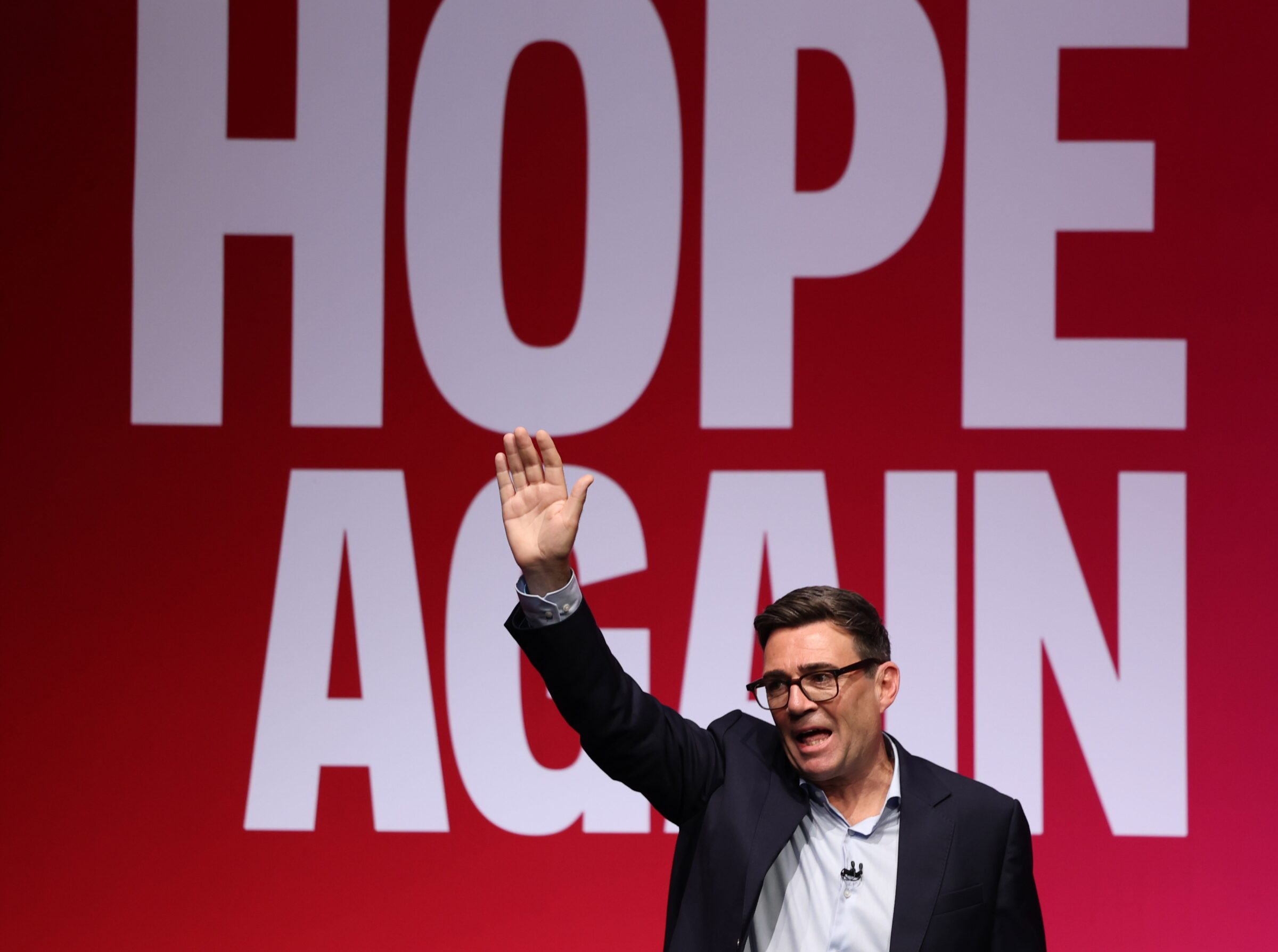
Having said several months ago that he had no intention of a ‘rerun’ of the Brexit debate, UK prime minister Andy Burnham told Labour delegates at the party’s annual conference in Liverpool last week that nothing should be off the table as far as EU-UK relations are concerned.
Brexit had “done more harm than good”, he said, adding that “we will not give Britain the clear path we need into the rest of the century until we decide on a long-term relationship with what is still our largest market.”
In fact, Britain could “go all the way” back into the EU, said Burnham.
The new prime minister is still enjoying something of a honeymoon period. His Labour party now tops the opinion polls, albeit by less than 30 percent, and his early policy announcements on nationalising utilities and pension reform are the most radical in a generation.
Even so, Burnham’s remarks were a surprise that left pro-European columnists positively giddy with optimism over the weekend.
In truth, rejoining the EU – if it happens – would probably take a decade.
Burnham didn’t offer any timetable or any other specifics, and has said that no moves towards EU membership would be taken before the next UK election due in 2029. And talk of rejoining the EU is not purely borne out of pro-European enthusiasm.
This article continues, but the full version is available only to EUobserver.com subscribers. Visit account.euobserver.com/membership
French President Emmanuel Macron and German Chancellor Friedrich Merz on Monday announced they would develop a new legal tool to enable the EU to respond rapidly to trade wars or measures, such as dumping. While they did not say the proposal was a direct response to the actions of any particular country, it came days before EU Chief Ursula von der Leyen visits China to tackle trade frictions.
Almost 150 European politicians have become targets of AI-generated deepfake pornography, 50 of whom are MEPs. The EU’s Green party has now taken the fight to the upper echelons of EU authority to push a ban on ‘nudifying’ apps.
Research by the think tank Agora Digital Transformation (ADT), published on Monday (5 October), found that 50 MEPs have been targeted by digital platforms able to digitally strip anyone whose picture is uploaded to it. Of these, 46 are women.
Another ADT study published in September found that the chances of becoming a victim of false sexualised portrayals are one in 14 for women, against one in 500 for male politicians.
Most worryingly, a woman has no way of knowing she’s been targeted because “the harm is often unseen until it has spread,” Monday’s study read.
MEPs have rallied behind the Green party in demanding EU leaders take concrete steps to limit the influence of such software, while requiring member states to set up national authorities to roll out an effective ban on ‘nudifier’ apps from 2 December 2026.
The Green party initiated an open letter, which was endorsed by 119 MEPs from the Socialists and Democrats, liberal Renew Europe and the Left, calling on the European Commission and member states to take decisive action against AI deepfakes of women politicians.
The appeal asks to strengthen EU resolutions on AI and digital protection by requesting that the commission guide national authorities on enforcing the ban, and that there be a designated and properly resourced body in every member state ready to implement the ban from December.
This article continues, but the full version is available only to EUobserver.com subscribers. Visit account.euobserver.com/membership
Bosnia and Herzegovina’s election, held on Sunday (4 October), has reinforced the country’s deep ethnic and political divisions, with nationalist parties retaining a strong grip on power and low turnout underscoring voters’ growing disillusionment with a political system that has long frustrated the country’s ambitions to join the European Union.
Public support for EU membership remains strong. According to a 2026 survey by Bosnia’s directorate for European integration, 74.4 percent of citizens said they would vote for EU membership in a referendum. Even in Republika Srpska, the ethnic Serb component, where support is lower, 54.1 percent said they would back joining the bloc.
And Bosnia became an EU candidate in 2022, but its path towards membership remains stalled.
The European Commission has identified 14 priorities that the country must address before it can move towards opening accession negotiations. So far, it has not opened a single accession-talks chapter and does not have a chief negotiator for EU membership.
Meanwhile, Bosnia’s complicated political system, built around three constituent ethnic groups, continues to hamper the adoption of reforms.
Forgotten elections
The Bosnian nationwide turnout was just 42 percent, reflecting political apathy, but the complexity of its system also means few people in the EU followed what went on.
Instead of a single president, Bosnia and Herzegovina has a tripartite presidency comprising one Bosniak (South Slavic ethnic group), one Croat, and one Serb.
Voters registered in the federation may vote for either the Bosniak or Croat member, but not both. Voters in Republika Srpska elect the Serb member.
From the provisional results, on Sunday, Denis Becirović won a second term as the Bosniak member of the presidency with 38.12 percent.
He is to be joined by Darijana Filipović (46.55 percent) of the Croatian Democratic Union of Bosnia and Herzegovina (HDZ BiH) as the Croat member, and Željka Cvijanović of the Alliance of Independent Social Democrats (SNSD) as the Serb member (55.37 percent).
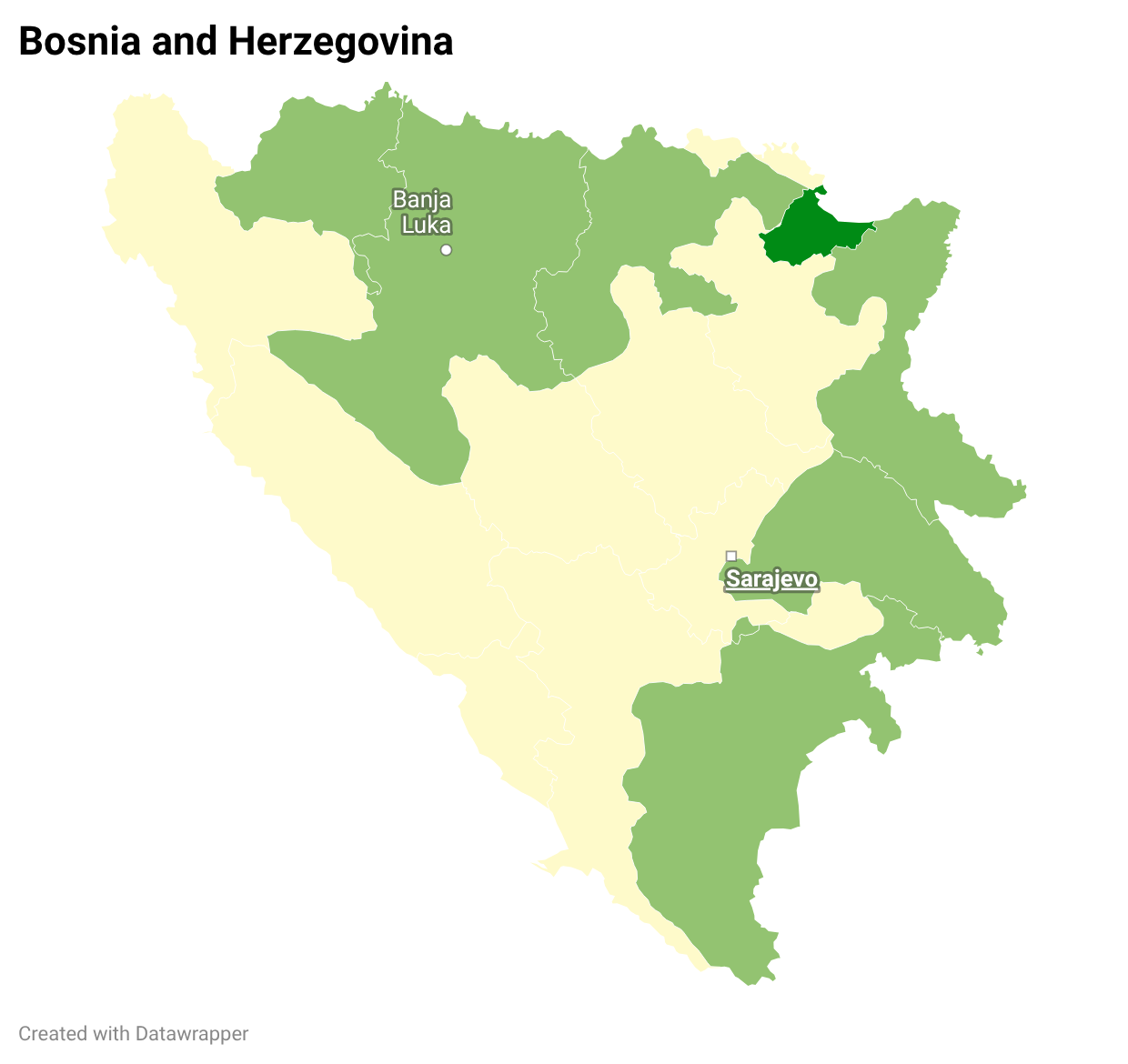
In light green is the Republika Srpbska. In dark green is the region of Brcko who has another legal status.
The Bosnian system excludes citizens who do not identify as Serb, Croat, or Bosnian from standing for the presidency.
And the post-war power sharing agreement includes 14 parliaments and governments in total for the country of some 3.1 million people, making reforms hard to push through.
But amid the complexities, the biggest winner from Sunday’s elections could be Serb nationalist politician Milorad Dodik, while the big loser could be the EU, according to Adi Ćerimagić, a senior analyst on the Western Balkans at the European Stability Initiative think tank.
This article continues, but the full version is available only to EUobserver.com subscribers. Visit account.euobserver.com/membership
The assessment, carried out by experts from the European Commission (EC), the European Centre for Disease Prevention and Control (ECDC), the European Food Safety Authority (EFSA), with the support of national experts from Finland and Kosovo*, will bring together the Albanian Institute of Public Health andMinistry of Agriculture and Rural Developmentas well as other public […]
Alors que le déficit commercial européen avec la Chine atteint depuis l'an dernier autour d'un milliard d'euros par jour et que Pékin inonde l'Europe de ses produits, la France et l'Allemagne appellent l'UE à adopter une nouvelle arme juridique pour se protéger en cas de guerre commerciale.
Dialogue, political will and respect for international law must continue to guide the decolonization process, the Fourth Committee (Special Political and Decolonization) heard today. Established in1961, theSpecial Committee on the Situation with regard to the Implementation of the Declaration on the Granting of Independence to Colonial Countries and Peoples— also known as Committee of24 — […]
Erin Ogunkeye is pleased to welcome Letta Tayler, Senior Counterterrorism Advisor at Human Rights Watch. She warns of the detention of suspected Islamic State members transferred from northeast Syria to Iraq as part of a much wider "global detention crisis". The men and boys now held in Iraq are living in 'dire' conditions, including deaths from illness, allegations of torture, and serious questions surrounding access to effective legal representation. Can accountability be achieved through legal proceedings that respect the rule of law and provide genuine justice to both detainees and victims?
After years without being able to pass a budget, a coalition that wavered over every major proposal, the Ceuta crisis, a string of corruption cases and people taking to the streets over the housing crisis, Spanish prime minister Pedro Sánchez has called snap elections for 29 November — just as a rightwing victory appears increasingly unstoppable.
Monday’s (5 October) move is barely a surprise. Sánchez’s gambles have proven effective in the past to keep his grasp on power.
Even before the summer, an early election wasn’t considered a far-fetched possibility. Sources in Sánchez’s centre-left Spanish Socialist Workers’ Party (PSOE) and its allies linked it to the budget vote anytime from October onwards, with some analysts pointing to November 2026 as a politically attractive date.
Spain now faces a 54-day sprint to the polls, the shortest window the law allows, with Sánchez betting that the housing issue can turn the campaign in his favour.
But why now?
The eviction of an 87-year-old woman from her rental home after 70 years on 23 September prompted people across the country to take to the streets against Spain’s ongoing housing crisis.
And last Friday, the Spanish lower house in parliament rejected two new housing decree-laws. It was the centre-right People’s Party (PP), far-right Vox, Catalan pro-independence party Junts and Navarrese regional party UPN who voted them down, exposing once again how fragile Sánchez’s parliamentary coalition is.
But with parliament dissolved, a political manoeuvre could now see similar housing decrees approved anyway – helping Sánchez make the housing crisis his main election motto.
Housing bet
In Spain, when parliament is dissolved ahead of an election, responsibility for ratifying government-approved laws passes to a smaller standing committee of 69 lawmakers, known as the Diputación Permanente [Permanent Deputation], which continues to operate until the new parliament is sworn in.
The maths in that body favours Sánchez. His socialist party and the left-wing and regional parties that backed the original housing decrees hold 35 seats, against 34 for the opposition.
This article continues, but the full version is available only to EUobserver.com subscribers. Visit account.euobserver.com/membership
Two human rights defenders are facing a Greek court in Rhodes and 20 years in jail over allegations they belong to a criminal organisation.
The hearing targets Norwegian activist Tommy Olsen and Panayote Dimitras, a legal administrator and representative of the NGO Greek Helsinki Monitor.
“They want to shut me up because what I’ve been doing over the last six to seven years is revealing their wrongdoings,” Olsen told EUobserver on Monday (5 October).
The hearing, which is taking place on Tuesday, is years in the making, following repeated attempt by Greek authorities to punish the pair for helping people seek asylum on the island of Kos in 2021.
Both deny any wrongdoing and Amnesty International earlier this year said the two were being prosecuted for their human-rights work of documenting serious rights violations.
This article continues, but the full version is available only to EUobserver.com subscribers. Visit account.euobserver.com/membership
French President Emmanuel Macron on Monday slammed Russia's increased strikes on Ukrainian civilian infrastructure. In a phone call with Ukrainian President Volodymyr Zelensky, Macron said he reviewed "the concrete support" Europe can provide Ukraine to defend itself against the attacks.
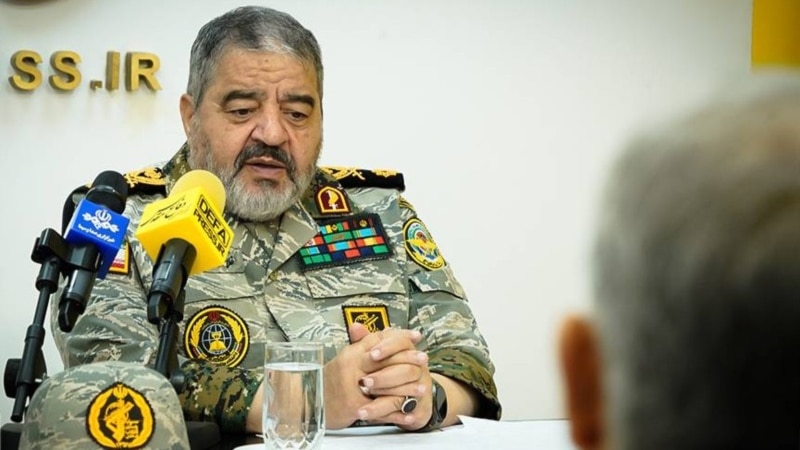
A photo of Brigadier General Gholamreza Jalali, the head of Iran's Passive Defense Organization, wearing a smartwatch has sparked a backlash. His response, that it's peacetime and people have smart TVs at home, has only fueled criticism of lax security among Iran's top brass.
Russia is making no progress at all on the front, and September was among its worst months.
Russia wants to cause Kyiv’s economic collapse, and pontoon bridges are being prepared in the city.
Ukraine’s air defences neutralised 83 percent of drones launched in September, compared with 92 percent in May.
Videos of the day – attacks on Kyiv’s bridges; what a TM-62 anti-tank mine can do; what anti-drone protection for the Kerch Bridge looks like; Russian communists shouted “Down with the tsar!”, and frontline sounds from a Russian soldier’s video.
Russia is making no progress at all on the front, and September was among its worst months. Russian president Vladimir Putin claimed in Valdai at the beginning of the month that his subjects had captured 1,300 square km of territory in September. This is further evidence that he is either being given completely fabricated figures or is deliberately lying himself.
If Putin were right, his army would have experienced its most successful period since the first two months of the invasion. Defence ministry reports reflect this. Almost every day, they report the capture of more and more villages. In reality, the situation is different. Russian forces became bogged down in every direction even before the rains arrived, and throughout the year they have failed to achieve any operational success that would justify the further hundreds of thousands killed and wounded.
As every month, various analysts have again published their calculations of how the front line moved. Not even estimates from Putin’s own Z channels agree with his figure.
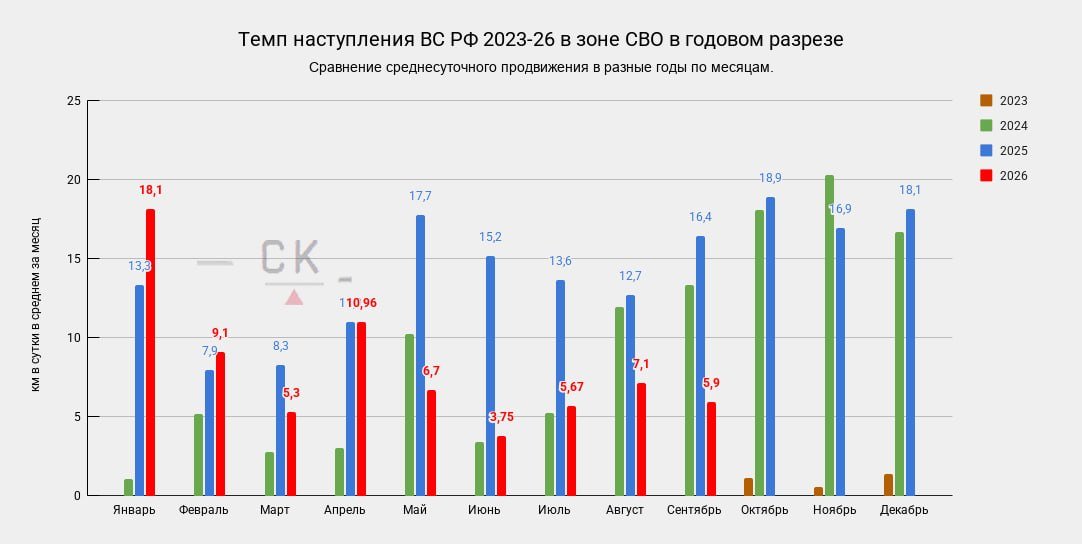
“The average daily rate of advance by the Armed Forces of the Russian Federation in the SVO zone [special military operation] in September 2026 was +5.9 km². The average rate of advance over the entire offensive up to October 2026 is +9.92 km² per day,” Russian project Slivochny Kapriz wrote about September.
It, too, is an unreliable source that regularly overestimates the significance of “flag operations”, but even its data makes it clear that 2026 is lagging significantly behind the previous year.
Even if this author’s figures were correct, the Russians advanced by 177 square km during September’s 30 days, more than seven times less than Putin claims.
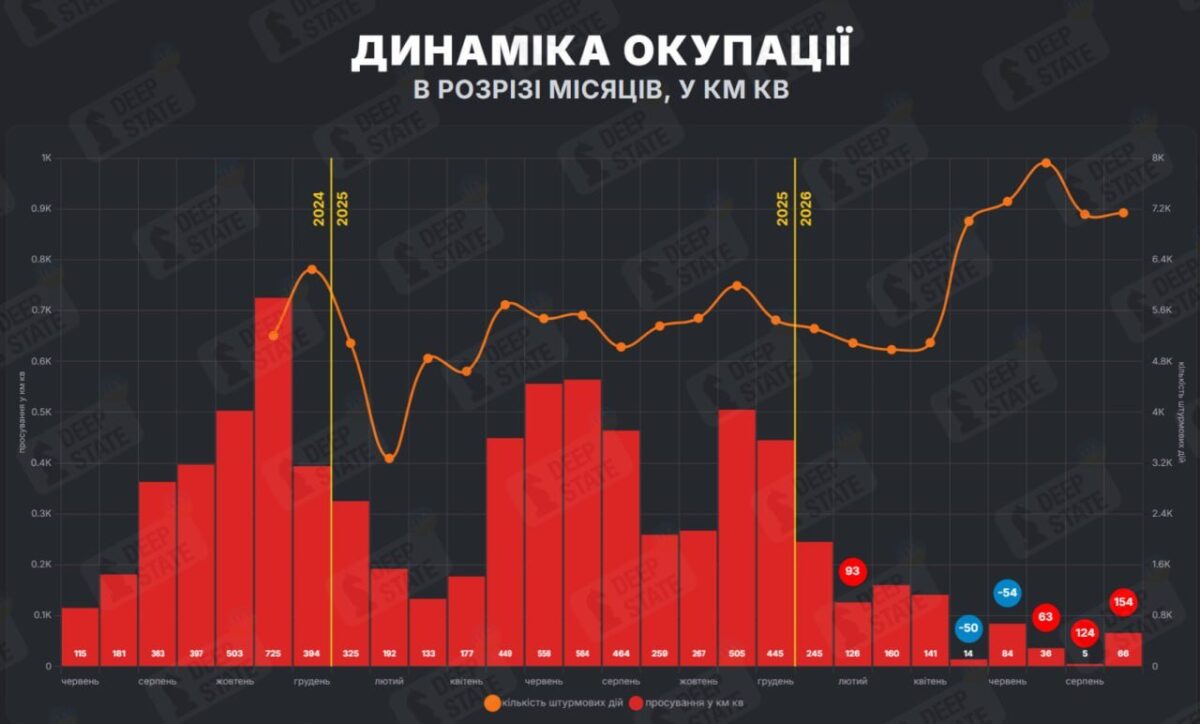
Ukrainians from DeepStateUA also published an estimate very close to Slivochny Kapriz’s figures. According to this OSINT project, Ukraine lost 154 square km in September.
However, the Ukrainian analysts treat their own data cautiously and warn their readers that “the operational security of our forces remains the highest priority in our work”.
In other words, during Ukrainian counter-offensives, DeepStateUA only reports successes after a delay so as not to jeopardise the operations’ success.
They therefore now recall that their statistics do not yet include 270 to 320 square km of liberated Ukrainian territory in various sectors. “July will therefore also end as a month in which the Armed Forces of Ukraine have the upper hand, while for August and September this will only become clear when official announcements of successes are available. In the meantime, part of the liberated territories may be lost again,” DeepStateUA wrote on Friday (2 October).
The most optimistic by far are currently Finnish analysts from the Black Bird Group, who see a balance of 190 square kms in Ukraine’s favour in September.
Over the month of September, the Russian net gains were negative 190 km2. This marks the greatest monthly net territorial loss for Russia in our dataset since the June of 2023.
Emil Kastehelmi, one of the project’s authors, pointed out that the sharp change for the better stems from the fact that it also captures some changes that DeepStateUA has not yet taken into account. Nevertheless, he said: “Russia has failed to reverse a situation that has persisted for almost the entire year. The results of the major Russian offensive are minimal, and this is likely to remain the case for the rest of 2026.”
Among Western analysts, the most sceptical is Konrad Muzyka of Rochan Consulting, who credits the Russians with even more gains than Slivochny Kapriz — as much as 235 square kms of advance. Yet this figure still does not come close to Putin’s. Even if it were the most accurate of all, which cannot be determined, it would amount to an area roughly equivalent to the size of Košice, including all its suburbs, forests and agricultural land within the city’s administrative boundaries.
The plan for this year, meanwhile, was to capture the rest of Donetsk region, including the remaining large cities of Kostiantynivka, Druzhkivka, Kramatorsk and Sloviansk. The Russians are closest to doing so in Kostiantynivka, but Ukrainian soldiers remain there too.
Here is a short summary of territorial changes in Ukraine for September 2026. Our dataset shows an overall Russian territorial gain in September, but a sharply uneven pattern: gains around Dobropillia, Velykyi Burluk, Kramatorsk and Komyshuvakha coincided with substantial losses… pic.twitter.com/jrq0zXiqri
— Konrad Muzyka – Rochan Consulting (@konrad_muzyka) October 1, 2026
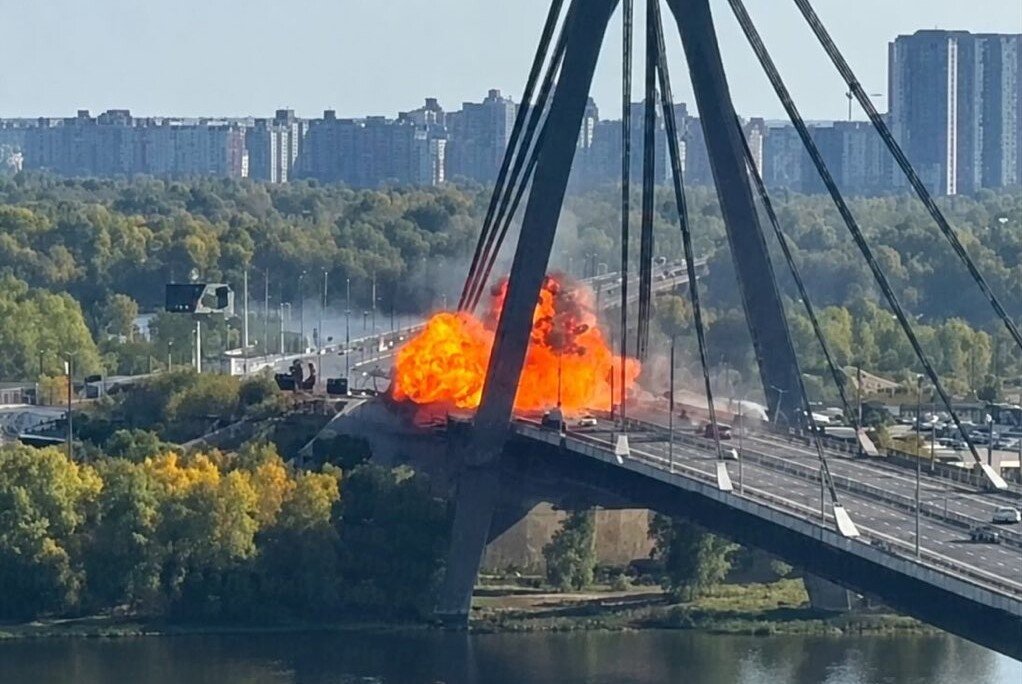
Russia wants to cause Kyiv’s economic collapse, and pontoon bridges are being prepared in the city. There is now no doubt that the Russian army has begun a systematic effort to disrupt transport between western and eastern Kyiv. Over the weekend, further drones struck several bridges across the Dnipro.
They included the Northern Bridge, which a Russian drone attacked during the day amid heavy traffic.
🚨 BREAKING: Russian forces launched a drone strike hitting the Northern Bridge in Kyiv, damaging the road surface.
The strike coincides with German Chancellor Friedrich Merz’s unannounced visit to the capital to meet with Ukrainian leadership. pic.twitter.com/j1UHYoBMa7
Ukraine’s transport minister Mykola Kalashnyk said 600,000 cars cross Kyiv’s bridges every day. In an interview with Suspilne, he announced that construction of embankments and pontoon bridges would begin this week. If the existing bridges become impassable, they are intended to maintain as much traffic as possible between the river’s two banks. Kalashnyk said the temporary crossings should have at least half the capacity.
However, this will take around three months; in the meantime, work will also be carried out to improve the resilience of road bridges.
Transport expert Dmytro Bespalov is sceptical. As he said in an interview with NV, Kyiv’s bridges are irreplaceable, and the only thing that can keep traffic moving across the Dnipro is the military.
However, the task of keeping the bridges operational is complicated by their poor technical condition. Because of their age and the lack of maintenance funding, Bespalov rates the Southern and Northern bridges at four on a scale of one to five, where one is ideal condition and five is emergency condition. He says two other bridges are at level five.
Even in this condition, such large structures are not easy to destroy, but they are certainly more vulnerable. Like many others, Bespalov believes that Russia lacks the means to destroy the bridges completely and is seeking to disrupt traffic during the winter. “The aim is probably an economic blow. I fear it will be very painful. It will not kill us, but I am very concerned about the economic consequences it will have,” he added.
Air defences neutralised 83 percent of drones launched in September, compared with 92 percent in May. This follows from data by the Shahed Tracker project, which recorded 6,732 Russian drones launched against Ukraine over the month, of which 5,561 were shot down or disabled through electronic jamming.
Shahed type OWA-UAS stats Sep2026 [per UA Air Force Reports]
As the same source’s chart for August shows, the effectiveness rate did not change, but the number of drones launched by Russia rose sharply month on month by almost 1,600.
Shahed type OWA-UAS stats Aug2026 [per UA Air Force Reports]
In May, when Russia used a record 8,150 drones, it was as high as 92 percent. At that time, the Russian army began a mass transition to jet-powered drones, leading to a temporary slowing of the pace of attacks. The trend is now unfavourable: monthly attack statistics have begun to rise sharply, while the effectiveness of countermeasures is declining, as Geran-4 drones and especially Geran-5 drones still present a serious problem.
Shahed type OWA-UAS stats May2026 [per UA Air Force Reports]
Total: 8150 (New Record) Claimed Intercepted: 7476 (Official: 5053 Shahed type OWA-UAS) Hits: 508 (674 Not Intercepted) Interception Rate: ~92%
As another video showing the moment a Geran-5 was hit demonstrates. Technical solutions already exist, but faster interceptor drones are not yet available in sufficient numbers.
Another Geran-5 drone shot down by a STING S interceptor drone from Wild Hornets. Combat work by pilots of the 1020th ZRP. pic.twitter.com/kkPHaCIrKG
One TM-62 anti-tank mine contains seven and a half kilograms of explosives. This is enough to destroy the remains of a building used as a shelter by Russian soldiers.
❗️A Ukrainian heavy Baba Yaga-type drone destroys a building with Russian soldiers inside by dropping a TM-62 anti-tank mine. pic.twitter.com/XClgIqMvwe
A video recently circulated online showing Kyiv residents protesting against tree felling. It was widely used as alleged evidence that Ukrainians have had enough of the government. However, their protest was civic, not political. These Muscovites are communists and dared, very timidly, to chant “Down with the tsar!” Police intervened immediately.
У Москві комуністи зібралися на погоджений мітинг, почали скандувати «Долой царя», і після цього їх побили й розігнали мусора. pic.twitter.com/MD6MVxSBPS
This video must be watched with the sound on. It illustrates the saturation of the battlefield with drones. The Russian soldier who recorded it says he counted five drones.
"I’ve already counted five. It’s a damn swarm." position of 🇷🇺1199th Motorized Rifle Regiment (probably occupied south 🇺🇦) 🍂 is coming pic.twitter.com/K9H3wcRdse
Three lines of anti-drone barriers protect the Kerch Bridge, which links Crimea to Russia, from attacks from the sea.
Exilenova+ says Russia has set up layered defenses around the approaches to the Crimean Bridge, with multiple lines against Ukrainian surface and underwater USVs plus FSB patrol ships. The stated aim is to shield the bridge’s vulnerable elements. pic.twitter.com/rxMPPe6gXW
By Monday (5 October), Russia had verifiably lost 24,170 pieces of heavy equipment (24,138 on Tuesday, 22 September). Of these, 19,133 (19,105) were destroyed by Ukraine, 1,003 (1,000) damaged, 1,194 (1,194) abandoned by their crews and 2,840 (2,839) captured by the Ukrainian army. This includes 4,452 (4,448) tanks, of which 3,357 (3,353) were destroyed in combat.
Ukraine lost 12,238 (12,175) pieces of equipment, of which 9,633 (9,579) were destroyed, 711 (702) damaged, 695 (695) abandoned and 1,199 (1,199) captured. This includes 1,466 (1,464) tanks, of which 1,126 (1,125) were destroyed in combat.
Note: Neither side regularly reports on its own dead or destroyed equipment. Ukraine publishes daily figures for Russian casualties and destroyed equipment, which cannot be independently verified. This overview uses data from the Oryx project, which has compiled a list of equipment losses documented exclusively by photographs since the beginning of the war.
On September 30, the Archdiocese of Athens and the Greek Ministry of Social Cohesion and Family signed a memorandum of cooperation aimed at preventing domestic violence. The document was signed by Bishop Varnavas of Christoupolis—Protosyncellus of the Archdiocese of Athens and representative of Archbishop Ieronymos—and Deputy Minister Elena Rapti. This new agreement expands the existing […]

 Login