Two people critically hurt when vehicle carrying HGV drivers hit stationary train in Calais, say French authorities
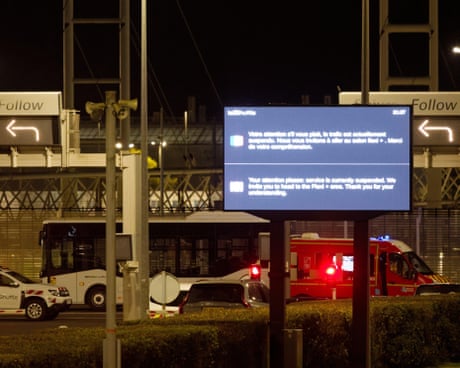
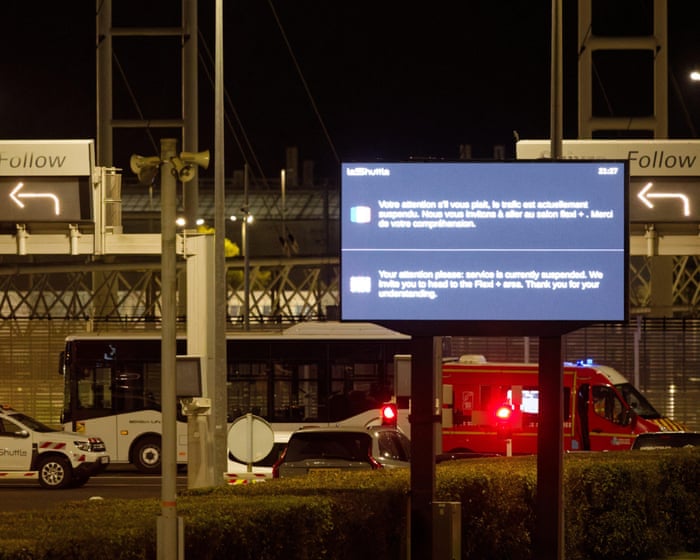
Nineteen people have been injured after a minibus collided with a stationary freight train at the loading platform of the Eurotunnel near Calais, French authorities have said.
Pas-de-Calais underprefect Agathe Cury said 18 passengers and the bus driver were injured in the incident.
US President Donald Trump’s deal to lift restrictions on Russian diesel sends a “very bad signal” and is driven by dubious business motives, MEP Rihard Kols told Euronews’ Special Report.
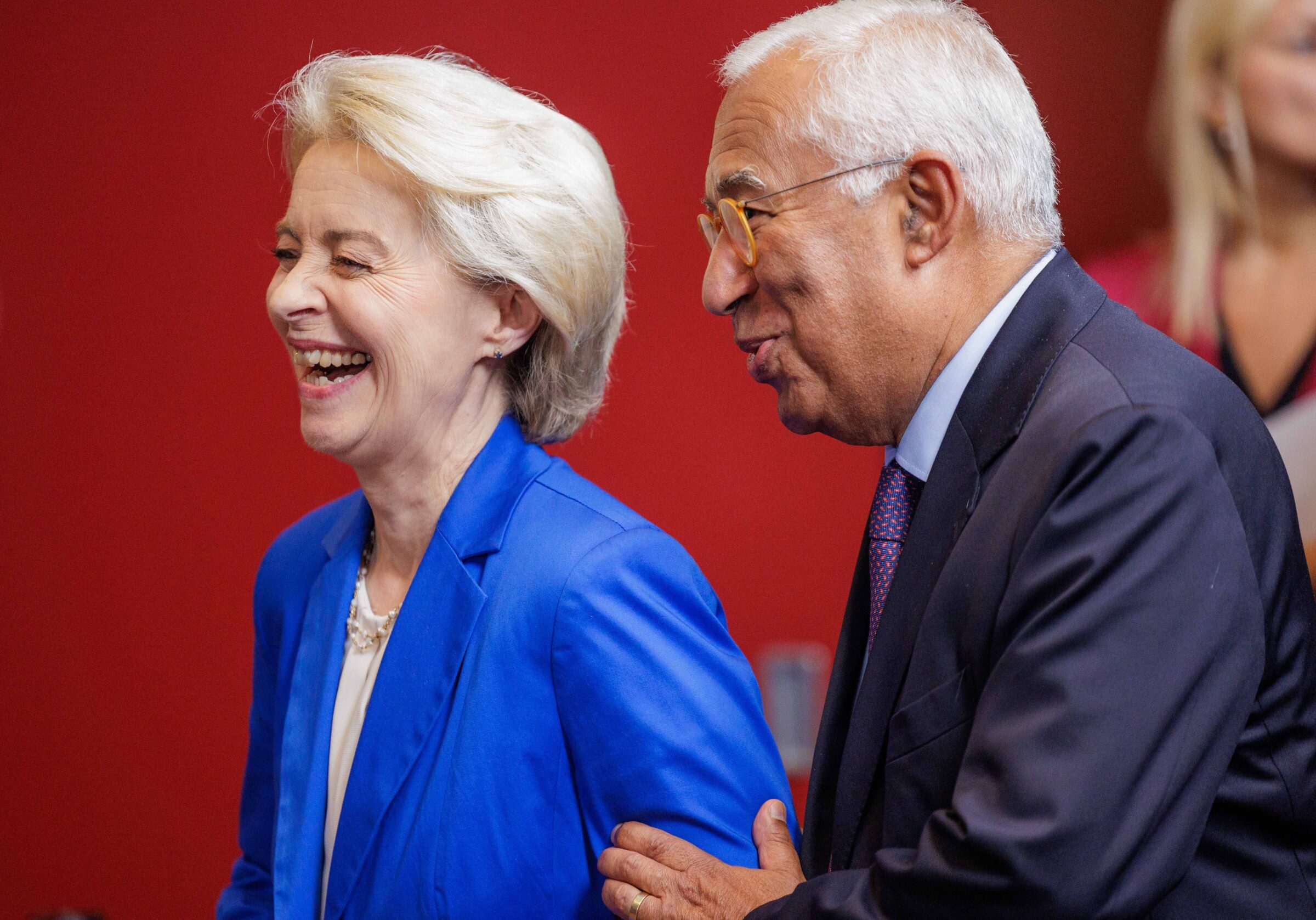
EU leaders stuck to their red lines on the next long-term budget at Thursday's summit, with several now rejecting the presumed December deadline. Council President António Costa is now expected to take over the negotiations, with a new compromise due in a few weeks.
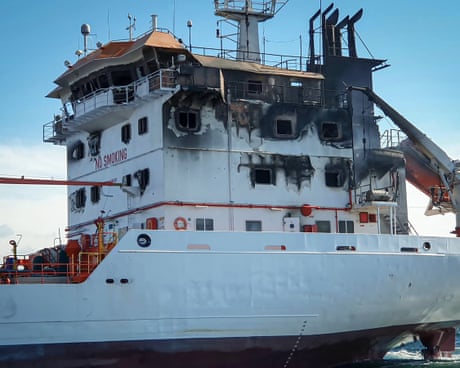
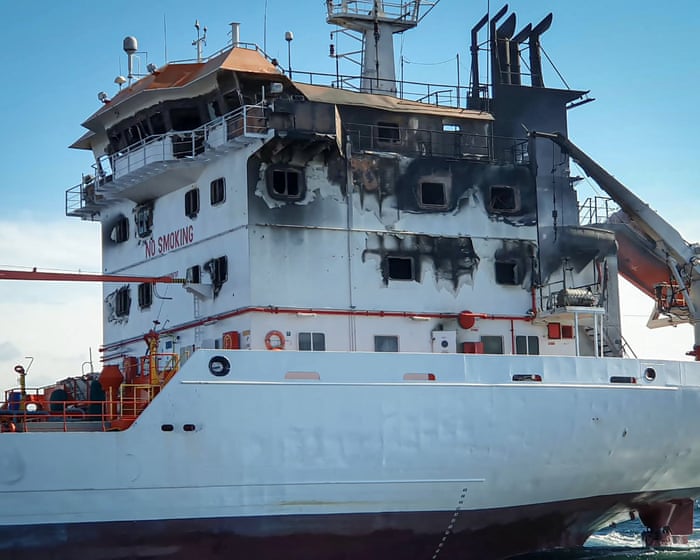
Rescuers searched on Thursday for seven missing sailors after drones struck two chemical tankers near Romania's Black Sea coast, setting them ablaze and raising fresh security concerns along a vital shipping route used by Ukraine. Speaking with FRANCE 24's Europe editor Armen Georgian, Nicolae Stefanuta, Romanian MEP and Co-Chair of the Group of the Greens, says that the Danube delta region is facing a more intense threat from Russia than Baltic States and that "it is clear that sooner or later we will have European casualties".
Speaking with FRANCE 24's Mark Owen, Nobel Peace laureate Oleksandra Matviichuk, Director of the Centre for Civil Liberties, says that with the diesel-supply deal with Moscow Donald Trump "is openly financing this war, by lifting sanctions is providing Russia with opportunities to earn more money" adding that "extra money will be converted in rockets and drones and additional deaths among the civilian population".
In an exclusive interview with Euronews, Ukrainian President Volodymyr Zelenskyy's deputy chief of staff confirmed that the Ukrainian leader has been invited to Budapest on 23 October, as Zelenskyy and Magyar are set for their first formal bilateral meeting in Brussels.
Romania reported seven people missing on Thursday after two drone attacks on ships in the Black Sea, where several vessels have been hit recently in suspected fallout from the Ukraine war. The attacks are the latest in a series off the coast of Romania and neighbouring Bulgaria in recent weeks. FRANCE 24's Eliza Herbert reports.
Albanian Prime Minister Edi Rama on Thursday rejected calls to resign as thousands of student-led protesters smashed windows and fought running battles with riot police firing water cannon and tear gas in the capital. The demonstrators accuse officials of corruption and neglecting education and say they are angry about the sale of parts of Albania's southern coastline to a luxury resort development backed by US President Donald Trump's son-in-law Jared Kushner. FRANCE 24's Emerald Maxwell reports
The challenges and prospects of regional security architecture in Europe, Middle East and East Asia were in focus as the First Committee (Disarmament and International Security) continued its general debate today, with delegates presenting contrasting views on nuclear deterrence, non-proliferation and the humanitarian dimensions of nuclear weapons. The representative of Ukraine recalled that, in1994, his […]
La France peut-elle équilibrer ses comptes ? C'est ce que réclament le FMI et la BCE. Pour la directrice générale du FMI Kristalina Georgieva : "Il faudra du temps à la France pour ramener les déficits et la dette à des niveaux susceptibles d’inspirer confiance à la population et aux investisseurs". Christine Lagarde, patronne de la BCE, estime que la solution se trouve au niveau de la politique budgétaire. Comment en est-on arrivé là ? Quels sont les risques ? Le budget 2027 peut-il rassurer ?
Can a flick of a switch really be enough for Donald Trump and Elon Musk to end Ukraine's hopes of holding out against Russia? With Kyiv already reeling from daily strikes by Russia's new motor-powered drones, the US decision to slow SpaceX's Starlink service was felt immediately on Wednesday, when air raid warnings failed.
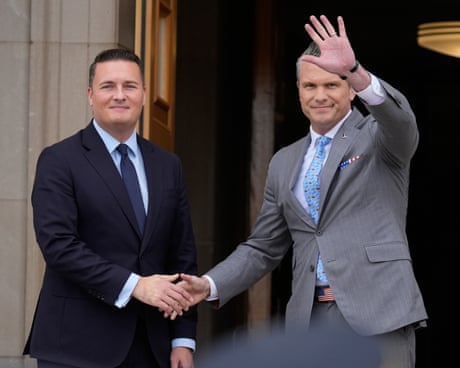
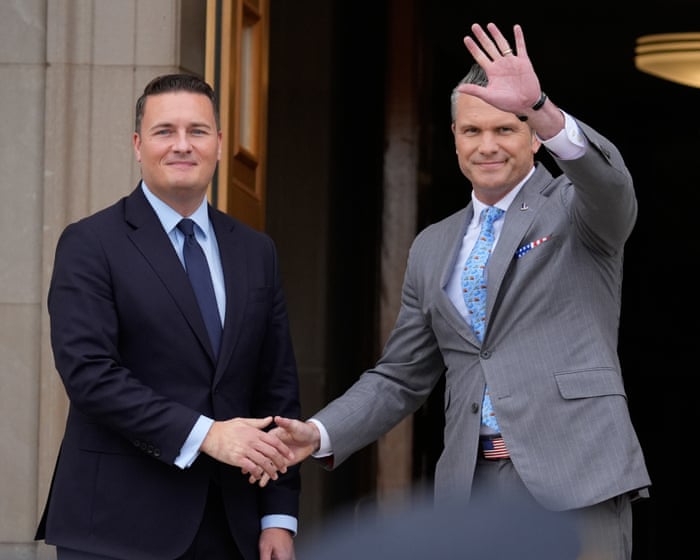
UK defence secretary says he has been ‘reassured directly’ counterpart Pete Hegseth that Starlink system has been restored as he seeks to cool tensions
Wes Streeting urged the US to stand by Ukraine on his visit to the American capital and sought to cool tensions between the two countries in the wake of the Starlink row that is threatening to set back Kyiv’s war effort.
The British defence secretary, giving a speech before a meeting with his US counterpart, Pete Hegseth, argued that supporting Ukraine was in the long-term interests of Washington, and a business opportunity.
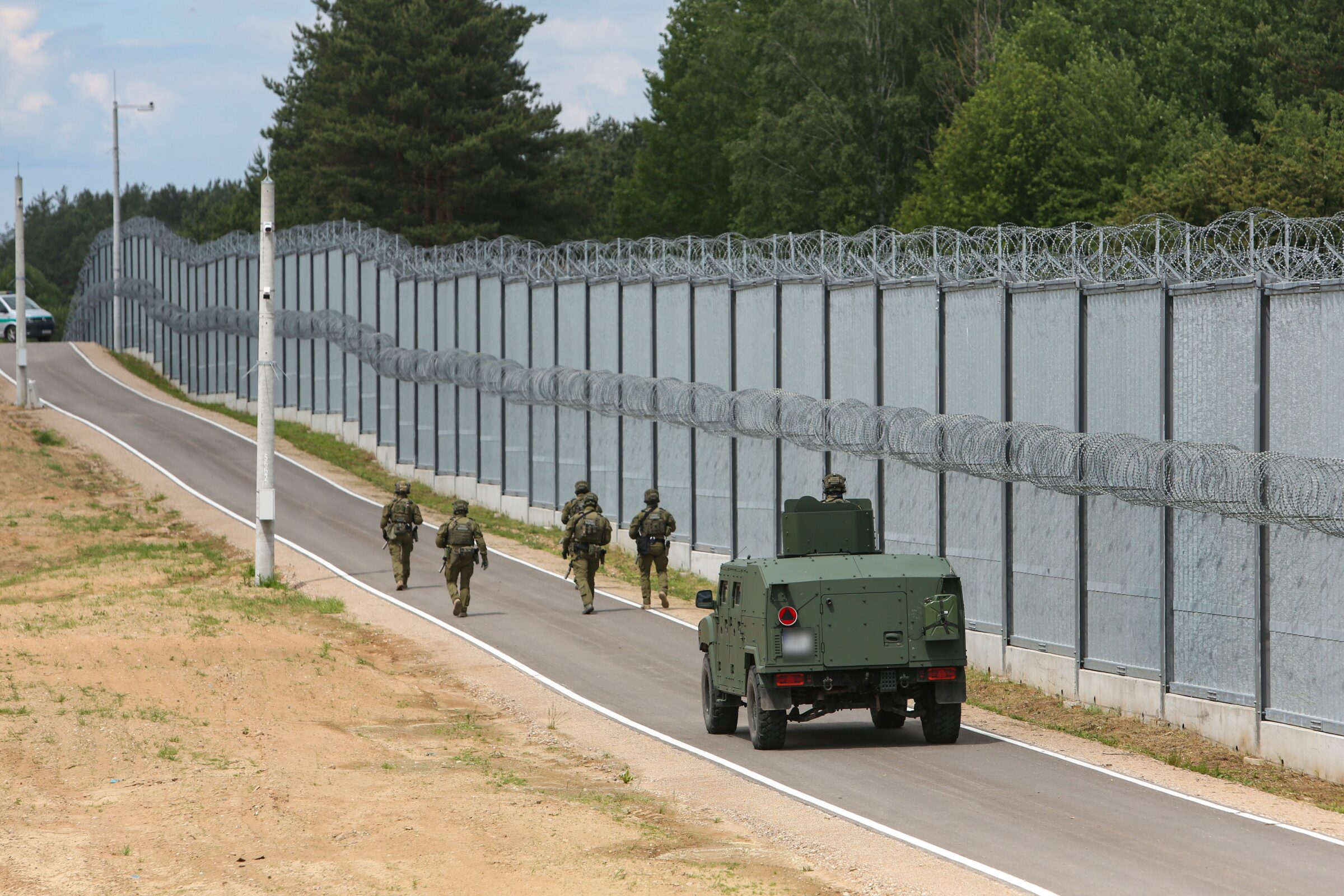
The European Commission says asylum seekers arriving at EU borders are now being screened, but it makes no mention of the independent rights monitors that EU law requires to oversee those procedures, even as spending on border surveillance surges.
“Screening of people arriving illegally and the border procedures are being carried out,” said European Commission president Ursula von der Leyen, in a letter addressed to the 27 heads of state and government meeting at an EU summit in Brussels on Thursday (15 October).
An annex to her letter, obtained by EUobserver, highlights broad outstanding issues when it comes to implementing new EU-wide asylum laws that kicked into force this past June.
This article continues, but the full version is available only to EUobserver.com subscribers. Visit account.euobserver.com/membership
The EU is preparing to curb Chinese imports of chemicals and industrial machinery, following a successful deal with Beijing that capped hybrid car exports to the bloc.
The European Commission “showed openness” to proposing safeguards, referring to an emergency brake on imports that can cover entire sectors, an EU diplomat told EUobserver on Thursday (15 October).
And there was “broad support” for the idea among member states for the commission to proceed, the diplomat said.
Last week, trade commissioner Maroš Šefčovič agreed with Beijing to cap imports of Chinese hybrid cars at 350,000 next year, which was less than half the amount expected this year.
He called the deal a “blueprint” for other sectors, a view which was publicly echoed by EU Commission president Ursula von der Leyen, also on Thursday.
Under World Trade Organization (WTO) and EU rules, anti-dumping and anti-subsidy cases require Brussels to prove that Chinese firms sell at unfairly low prices or receive subsidies.
Safeguards do not need evidence under WTO rules, which allows them to be used as an emergency measure.
And the commission only has to show that a surge in imports is seriously harming European producers.
“We like the idea, chemicals, machinery where there’s still a lot of Chinese overproduction needs to be managed,” said another EU diplomat.
The instrument had its limits: Safeguards have to apply to all countries, not just China, and can last no more than eight years.
The EU rarely uses WTO safeguards, but did so on steel, also aimed at China, which expired in June, after reaching the eight-year limit, and which have since been replaced by a separate EU steel regime.
And the Centre for European Reform, a prominent think-tank in Brussels, previously suggested exempting the EU’s 76 free-trade partners from safeguards so that the measures fell mainly on China.
It was a legal moot point in the WTO if that was OK, but the EU has done something similar before.
Norway, Iceland, Liechtenstein, and 10 other countries were left out of the steel safeguard, but using this tool to address Chinese imports was still seen as a temporary solution.
Before the end of the year, the EU commission aims to present diversification tools to reduce reliance on Chinese goods, as well as a mechanism to compensate companies hit by Chinese countermeasures.
And the package would include an instrument to shut Chinese companies out of the EU market if need be, in a measure first proposed in a Franco-German paper last week.
Ukraine's President Volodymyr Zelensky said he felt “betrayed” on Wednesday after access was seemingly restricted to US intelligence and Space X satellite services, raising new questions about US commitment to Ukraine. With Trump under pressure over rising fuel prices, is the White House hoping criticism of Kyiv can help shift the blame?
Nato source says drones came from Russia, while Romania’s president says attacking commercial ships ‘is unacceptable and has to stop’
Seven sailors are missing after drones struck two tankers near Romania’s Black Sea coast, setting them ablaze and raising fresh security concerns on a vital shipping route used by Ukraine.
A Nato military source told Reuters the drones that had hit the Wine Trader and the Yara J came from Russia. “The drones that caused the fires on board two tankers inside Romanian territorial waters were of Russian origin,” the source said.
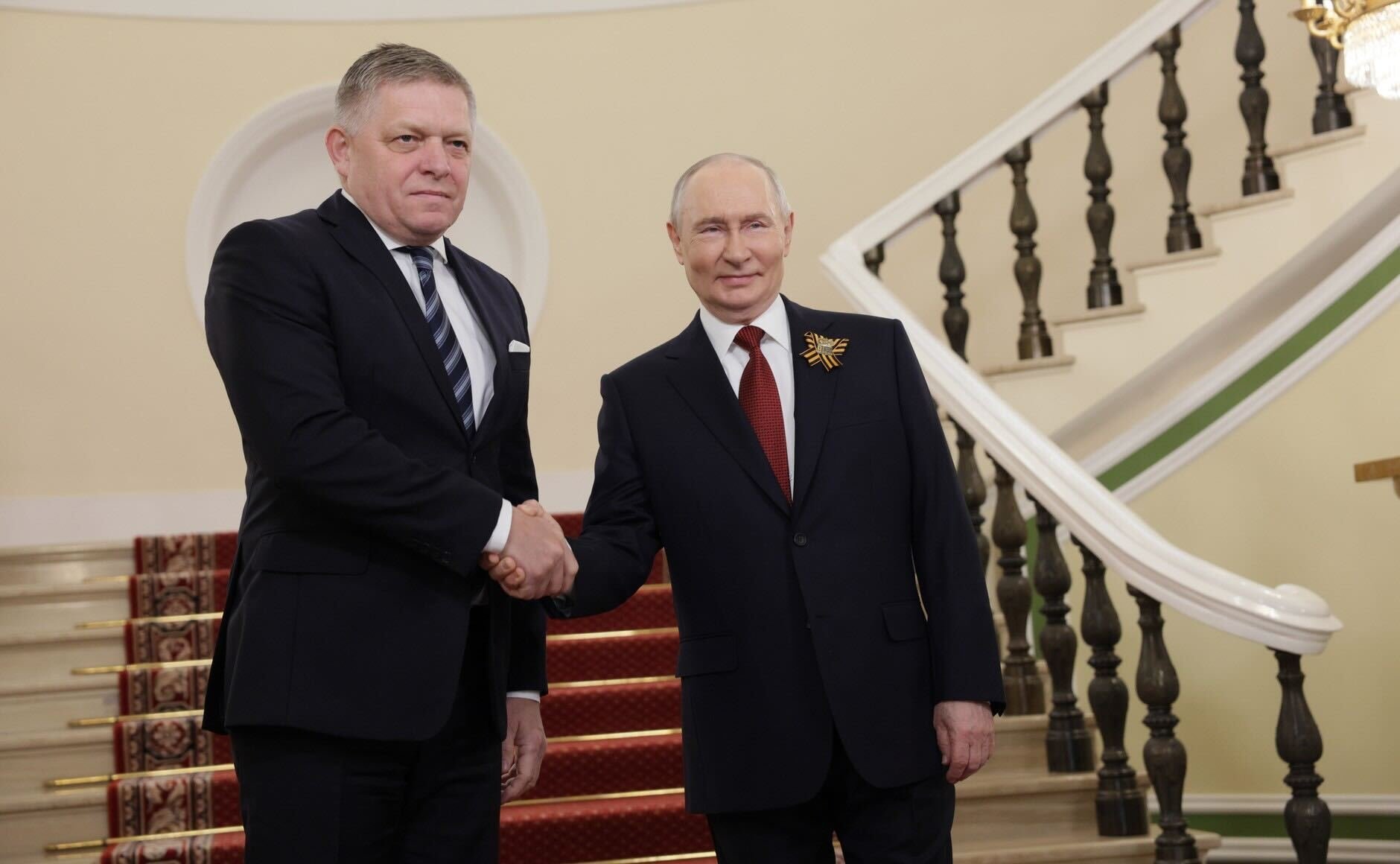
Slovak prime minister Robert Fico appears to have become Russia’s most prominent ally in the European Union, following the demise of Hungary’s pro-Kremlin leader.
Juraj Blanár, Slovakia’s foreign minister, announced controversial plans to revive a joint committee with Russia back in August – just a day before the anniversary of the Soviets occupying Czechoslovakia in 1968.
His announcement also came before Fico headed off to meet his counterparts at a summit in Brussels on Thursday (15 October).
And “so that there are no surprises, on the 25th [of October] there will … be a meeting of the joint economic commission with the Russian Federation,” Fico told the European affairs committee in Slovakia’s parliament on Wednesday.
The central European leader announced the closer ties with his aggressive neighbour immediately after planning a trip to Lviv in Ukraine early next month.
But if Fico does actually go to Lviv, just over the border from Poland, it would be the deepest he has travelled in the war-torn country so far.
And while he has not visited Kyiv in three years since returning to power, Fico has made plenty of time to go to Moscow during this time.
Many factors point to Slovakia now openly supporting the Kremlin, even as Russian attacks on Ukrainian civilians intensify, killing dozens of people.
The Institute for European Security Studies (IESS), a Kyiv-based think tank, noted, in its analysis, that a recent statement by Slovak defence minister Robert Kaliňák did not consider Russia a threat, despite Russian intelligence services having been linked to attacks in Slovakia including, potentially, a drone attack on a manufacturer near Prešov.
The IESS also highlighted the renewed Slovak-Russian cooperation at the level of military attachés, with two Slovak military personnel sent to the Russian capital while a Russian officer went to Bratislava.
This swap of soldiers was promised by Fico to Putin when they met in the Kremlin on 9 May.
And to make matters worse, a Russian military attaché was captured on video handing cash to an associate of the Slovak fake news site Hlavné správy.
The Ukraine think-tank warned that Slovakia’s magnetism towards Russia should not be ignored.
“In the end, by lowering Nato’s guard and reopening the doors to Russian intelligence, Slovakia is doing exactly what Moscow needs: disabling the West’s defences from the inside out,” it said.
Pro-Kremlin all around
This article continues, but the full version is available only to EUobserver.com subscribers. Visit account.euobserver.com/membership

 Login