Israeli forces killed at least two women in separate attacks in Gaza on Monday, according to reports from the Strip, as the IDF continues its constant violations of the US-backed ceasefire deal. One Israeli strike hit tents in the Nuseirat refugee camp in central Gaza, killing one woman and wounding several other people, medical sources […]
Pakistan Tehreek-e-Insaf (PTI), the country’s main opposition party, announced a long march to the capital, Islamabad, on Sunday, October 4, as part of its ongoing nationwide movement to demand the release of its leader and former Prime Minister Imran Khan.
The march, which was originally scheduled to be held on Sunday, September 27, starting from Peshawar, was postponed on Friday after the party’s top leadership decided it needed more time to mobilize to face the state’s preparations to block it.
Thousands of people have been taking to the streets in different parts of the country demanding the immediate release of Khan, his wife Bushra Bibi, and other party leaders.
Khan’s party and supporters have also accused the Shehbaz Sharif-led coalition government in the country of deliberately ignoring Khan’s bad health condition and trying to “slowly kill him in prison” by keeping him in solitary confinement.
They have also alleged that Khan has been denied access to his family members and party colleagues in Rawalpindi’s Adiala Jail for almost six months now and demanded that he be transferred out of the jail to a private hospital.
State repression
Meanwhile, the security forces have fortified the capital, blocking all the ways leading to the capital with shipping containers and large deployments after the government called the protests illegal and threatened consequences for the PTI leadership.
Pakistan’s Interior Minister Mohsin Naqvi had earlier called the march a failure and “a drama” and warned that if the PTI does not abandon its plan to go to Islamabad the state will find a “permanent solution” to stop them.
The security forces had arrested a large number of PTI leaders and workers in order to derail the protests. The PTI last week said that even its elected members of the National Assembly were arrested.
Three of Khan’s sisters Aleema, Uzma, and Noreen Khan were also arrested by the Pakistani authorities last week and jailed for 30 days on charges of being an alleged “threat to public order.”
The PTI released a statement on Monday, September 28, claiming Khan’s sisters have not been allowed to meet their family members or lawyers at Kot Lakhpat Jail in Lahore. Calling the situation of their incarceration “alarming” and a violation of their fundamental rights.
The previous mobilization to Islamabad in November 2024 had also witnessed large-scale state repression leading to clashes between the security forces and the PTI workers. Over a dozen people, including four security officials, were killed in those clashes.
Three years of incarceration
Khan, largely considered the most popular political leader in Pakistan’s politics today, was first arrested almost a year after he was ousted from his Prime Minister’s post in May 2023. He led the Pakistan government from August 2018 to April 2022.
The interim government that assumed power after his removal filed over a hundred cases against Khan, accusing him of the misuse of power, corruption, and violence against the security forces during the May 9, 2023 protests.
However, he was released after a court ruled his arrest was illegal only to be arrested again on August 5, this time after a district court sentenced him to three years in prison in the Toshakhana case, related to the state department that stores valuable gifts given to Pakistani officials by foreign dignitaries. Later his wife Bushra Bibi was also arrested.
Though a higher court later overturned his conviction, he and his wife have remained in Adiala Jail facing charges and even convictions in several other cases.
Many leaders in Khan’s party, PTI, were either arrested or forced to denounce the party and politics in public altogether.
Despite the fact that the PTI was blocked from contesting national elections in February 2024, it emerged as the largest opposition group in the country’s National Assembly after it decided to field its candidates as independents.
PTI and Khan’s supporters maintain that the cases against Khan and his wife were politically motivated and fake.
Ammar Ali Jan, leader of the Left wing Haqooq-e-Khalq Party (HKP) and a member of the Tehreek-i-Tahaffuz Ayeen-i-Pakistan (Movement to Save Pakistan’s Constitution or TTAP) formed as a broader alliance to fight for Khan’s release has condemned the continued incarceration of Khan and the repression of movements for his release.
He also questioned the state’s narrative about the failure of the movement, pointing out how it has made every effort to oppress it, including the arrests and fortification of the capital.
A Saudi airstrike hit a home in Yemen’s Taiz province on Monday, killing at least four civilians, according to the Yemeni Health Ministry within the Ansar Allah-led government. The Health Ministry said that three women and an elderly man were killed in the attack and that three other civilians were wounded. Yemeni media also reported […]
Militants and supporters of President Luiz Inácio Lula da Silva participated, this Sunday, September 27, in demonstrations as part of the national mobilization “Let’s go, Lula,” held a week before the first round of elections. In Rio de Janeiro, “CarnaLula 2026” spanned the length of Copacabana beach.
With a microphone, PT Senate candidate Benedita da Silva spoke about the importance of Carnival as an expression of popular culture and called on those present to also vote for a progressive bloc in the Rio de Janeiro Legislative Assembly and the Federal Chamber of Deputies. She reinforced the discourse that, in this election, not only democracy is at stake, but also national sovereignty. “We will not be anyone’s backyard,” she repeated Lula’s phrase.
In São Paulo, the event began with Carnival parades, circus performances, and bike rides on Paulista Avenue, where candidates gave speeches in defense of democracy. “Denialism will not prevail,” said Senate candidate Simone Tebet. Federal deputy Erika Hilton echoed Tebet, speaking about the importance of electing candidates who will steer Brazil away from fascism and who are in favor of the working class, as well as defending the end of the 6×1 work schedule. Also present at the event, actor Humberto Carrão told Brasil de Fato that he urged voters to decide the presidential election in the first round.
The capital of Minas Gerais, Belo Horizonte, was one of the cities with the largest number of activities in support of Lula’s re-election. Among them was a flag-waving demonstration in the city center, where hundreds of activists unfurled a banner that read “Lula of Brazil.” In a review of the event, Pedro Martins, a member of the Alvorada collective, one of the organizers of the action, spoke of the need to occupy the streets. “It was a spectacular event, with all the social movements gathered. This week was an important week, showing that we need to go to the streets, and only in this way can we turn the vote around and achieve victory,” he told Brasil de Fato.
In Florianópolis and Curitiba, supporters held a bike ride carrying flags in defense of Lula’s candidacy. In Brasília, the gathering was on the Eixão, a fast road that connects the Plano Piloto from north to south.
Lula’s campaign reported that the day’s events were organized in a decentralized manner, with more than 500 activities planned across the 27 state capitals and hundreds of municipalities. The program included walks, motorcades, leaflet distribution, and cultural performances.
Lulingu, a Grauer’s gorilla (Gorilla beringei graueri), was reintroduced to Virunga National Park, in eastern Democratic Republic of Congo in 2024. In May 2026, Lulingu gave birth to a new baby, bringing hope for the species and excitement for the conservationists working there. “The baby and the mother are doing perfectly well. It really makes us happy. We are proud of her, it is also a bit of our success. Imagine, we knew her as a baby, we watched her grow, be rehabilitated and now she is a mother,” Jackson Kabuyaya Mbeke, country director of the DRC Gorilla Rehabilitation and Conservation Education Center (GRACE), told Mongabay by phone. Lulingu arrived at GRACE, a 16-hectare (40-acre) wildlife sanctuary, in 2016 when she was 18 months old. She was rescued from an illegal wildlife trafficking network by the Congolese Wildlife Authority (ICCN) and the NGO Gorilla Doctors. The sanctuary gave her space to socialize and play in a setting close to her natural habitat, under the watchful eyes of adoptive gorilla mothers. Lulingu was later reintroduced into the wild near Mount Tshiaberimu, a remote part of Virunga National Park. “The purpose of our sanctuary is to take in rescued gorillas, but also to care for them until they can be released into the wild. The fact that Lulingu has had a baby is a sign that she has adapted well to life in the wild,” Kabuyaya Mbeke explained. “By reintroducing them into the wild, we also hope to repopulate forests that have been…This article was originally published on Mongabay
Residents are shaken and demanding answers after ICE agents terrorized a quiet, suburban neighborhood in Frederick, Maryland, earlier this month. On September 4, federal agents swarmed the Tasker’s Chance neighborhood in West Frederick, invaded the home of one family, and eventually left without making any arrests. ICE agents were filmed beating peaceful protestors and menacingly driving their unmarked cars onto sidewalks and private property while local police officers stood by and watched. In this on-the-ground report, TRNN takes you to the very spot in Frederick where these terrifying events transpired, and we speak with an eyewitness who saw everything.
The following is a rushed transcript and may contain errors. It will be updated.
Reporter 1:
Breaking story in Frederick. We have been told that ICE agents have been camped out in the Taskers Chance neighborhood. Neighbors
Reporter 2:
Say ICE has made a move on one home under the cover of night. That’s exactly what you are seeing right now.
Soolah:
There were protestors next to me. There are protestors across the street. And then I turned to this car and it was right here. And then I heard out of the side, the siren go off and I turned and here’s this car coming at me from on the sidewalk. By
Reporter 1:
Friday night, protestors were chanting on the sidewalk, also trying to block the street and a home they believed ICE was targeting. That’s when Santos says ICE became aggressive. This video shows when an ICE officer drove up on the sidewalk toward protestors. Santos and local activist Sula Kemp say ICE officers became violent.
Maximillian Alvarez:
I’m standing here in Frederick, Maryland, just over an hour west from Baltimore, and I’m standing in a quiet residential neighborhood where just over a week ago, ICE agents in unmarked cars swarmed this neighborhood, surrounded the house behind me. ICE agents are on video beating peaceful protestors with their batons, menacingly driving their cars onto the curbs into the directions of protestors. And I’m standing here with Sula, who is a local resident of the area and who was here the night of those events. Sula, thanks so much for joining me here. Can you walk listeners through what happened and what you saw that night?
Soolah:
Okay. I was asked by as many people were asked to come and help. So I had that time and I was able to come down and I saw different ICE peoples actually around this whole neighborhood. They were in different pockets and locations. I hadn’t even come to this street. I had gone to two streets down and then the next street right over and you could see where they were positioned. And then there was also one that was driving around that seemed to be sort of intimidating by chasing cars, which I thought was really strange behavior because you didn’t see anything on the vehicle to say who it was. It didn’t say police, it didn’t say anything. Didn’t have any markings on the cars. So we didn’t know who they were. Assumed they were ice and their lights were just kind of on. They’re just sitting in their cars parked on the street.
So then there was a call later. I was there about three hours and then somebody had just said they need people on this street specific. So I was like, “Well, I’ll just walk over.” And they said that there was one car that had a spotlight on protestors. And what they were apparently trying to do on this street was just line the sidewalk, a public space with protestors. So that was fine. So I was like, “All right, let me take my phone and go to the other side and get the perspective of the spotlight being put onto the protestors.” So I did that. I first took a bit of video from this side as an observer and then went to the other side and stood there and watched just cars. And then all of a sudden as I was standing on the sidewalk, I heard a siren go off, just a few bursts of it.
And I happened to turn my camera and there was a car on the sidewalk coming toward me and telling me, and everybody who’s on the sidewalk, “Move, move, get out of the way.” At some point they sa, “You’re impeding a federal investigation.”
Maximillian Alvarez:
We’re talking about a car driving up
Soolah:
Right
Maximillian Alvarez:
Here where we’re standing.
Soolah:
Right. On the sidewalk, public space.
Maximillian Alvarez:
These are people’s houses. They’re driving onto people’s property.
Soolah:
Well, and if you or I had done that, what would’ve happened to us?
Maximillian Alvarez:
Yeah, they’d throw my ass in jail.
Soolah:
Reckless endangerment of people. And it was crazy. They stopped for a hot second and I jumped onto the grass at first and then I stepped back onto the sidewalk because I was like, “I don’t know what’s happening.” Just a natural response. I was like, “Wait a minute, I’m on the sidewalk.” So I stepped back on the sidewalk and then he started really coming. He did not stop and he sped up toward me first and then there was a woman behind me. And then there was another person, another protestor that they did hit and started to push with their car.
Maximillian Alvarez:
So you were standing right around here?
Soolah:
I was right here. And there was a car there. There was a car across the street. So I had my camera on this car. There were protestors next to me. There were protestors across the street. And then I turned to this car and it was right here. And then I heard out of the side, the siren go off and I turned and here’s this car coming at me from on the sidewalk. I jumped over to here. He passed me. He hit another protestor and then pushed that protestor out of the way. And then the protestors at some point have been sitting down, just linked arms, sitting down, singing and chanting right in the middle of the street, which is fine. They can do whatever they want to.
Maximillian Alvarez:
Community members surrounding one of their neighbor’s homes to try to protect them. Yeah. And then agents of the state come in and start beating the hell out of them for it.
Soolah:
Yeah. So they sat in the road and then they did get up and did that protection. And it’s a typical thing that people do to blockade, but peacefully, they didn’t do anything. They just linked arms. You can’t do much when you’re linked arms. And it’s a whole group of people. And then all of a sudden Frederick Police were coming and then they moved up to the porch area and started beating them up.
Maximillian Alvarez:
You and I are standing here right now on this quiet residential street. People who are watching this may have only seen a small slice of this street on line. What they can’t see is that this is the quietest residential street you can imagine. There’s nothing happening here. You would think with all the ICE agents and vehicles that were here last week that this would be a hotbed of overrun with criminals and criminal activity. It’s just families and houses.
Soolah:
Yeah, it’s very quiet here. You can drive around here and people are working, people are doing their lives and that’s it. So it’d be like every day storm into your everyday world in your suburban America, and that’s what happened. And when you look at now, it’s quiet, it’s peaceful here. So they brought a sense of terror and they brought a sense of unsafety. So yeah, the main set of protestors, they’re stationed on the sidewalk here right at the stop sign. There’s a whole group here. And then there was an ice vehicle here. There was an ice vehicle behind –
Maximillian Alvarez:
Right behind
Soolah:
Where I’m standing. Right behind where you’re standing. Because they started sort of parading in, it looked like a little ice parade. And I’m just joking about that because it was so weird. Once they got into the house, I could hear up in one of the rooms them banging stuff around. And another protestor had asked me, who was observing, asked me, “Do you hear that?” I was like, “Oh yeah,” because it was loud. I don’t know how the house was on the inside when this was all done, but this was a lot. And then I actually went and looked through the back part. They had a shed or some kind of building out in the back there, and you could see these guys go into the back and they started searching. They didn’t know how to get open the shed or whatever because it’s big, but eventually they did.
And it was eerie. It was very eerie.
Maximillian Alvarez:
And it feels reminiscent of the Gestapo view.
Soolah:
It does because who bangs down a door like that? Who goes through looking for whomever? And apparently they didn’t take anybody. I don’t understand why it all happened in the first place.
Maximillian Alvarez:
Yeah. So all that terror for nothing?
Soolah:
All that terror for nothing.
Maximillian Alvarez:
How do you move on from something like this? How does this community move on? How are folks responding?
Soolah:
I know right now they’re collecting donations for the people who were beaten because they had hospital bills. And it’s really hard because I don’t know them all personally. I came because just like anybody else, we don’t know each other half the time, but we do see something in need. So they do have a donation set up for them specifically. I am not sure what the next steps are. I know that I have personally tried to contact the attorney general’s office a few times. I haven’t heard anything yet. And I’m hoping that somebody who’s above, in some kind of governmental stance or something, because who feels safe going to the police when you watch the police stand there? There’s the question. I didn’t report anything to them, even though I had a vehicle come at me on the sidewalk. I doubt anybody else is really going to feel comfortable or safe, and maybe that’s the point.
Maybe that was the point too. I can’t speak for that, but it’s just what goes in my head, why would I contact you to tell you what happened? So I want to go higher up.
Maximillian Alvarez:
And so when you were here and you had federal agents and unmarked cars and you also had local police, did you feel in that moment like the police were there to protect you?
Soolah:
No. And the wild thing too is on the car that, at least this car that came at me, you couldn’t tell who they were because their license plate was tinted out. There’s nothing identifying that either. So who are these people? I don’t know if Frederick Police had some kind of directive because I don’t know what even drew them out here in the first place. Maybe they heard that people were getting beat maybe, but they were here before that happened. So maybe they have to take a specific. I don’t know. I literally do not know. And if that’s the case, if they have a specific directive or they don’t know what to do, maybe that needs to be talked about. Maybe something like this, when you have unmarked cars doing reckless behavior with their cars, doing reckless behavior towards other people, what is the community’s protect and serve folks going to do for the community?
Yeah.
Maximillian Alvarez:
Who are you protecting? Who are you
Soolah:
Serving?
Maximillian Alvarez:
Not us.
Soolah:
There are tax dollars going into all of this too, that people are going to step back and go, “Wait a minute, what’s happening here? I’m putting money toward them and it’s whoever was called out here for that night.” Who knows? I don’t know. But at the end of the day, who are they protecting?
ICE agents terrorized this suburban neighborhood in Frederick, Maryland, and beat peaceful protestors while local cops just watched. We speak with an eyewitness who saw and filmed everything.
Since European Commission President Ursula von der Leyen proposed making Canada an "associate member" of the European Union earlier this month, media dialogue has emerged on what the relationship could look like and how plausible it is.
For Context: The suggestion came during a speech von der Leyen made as Canada and the US have been locked in a trade war. The EU has 27 member nations, and all of them are located in Europe. There is no such classification as an "associate member."
Overarching Mood: Jon Henley of The Guardian (Left bias) argued that while there is currently no legal framework to incorporate Canada into the EU, it accurately portrays a current geopolitical "mood." Henley argued, "On paper, in a world of unpredictable and increasingly aggressive great powers, it makes perfect sense." He said that European industrial strategy, defense, AI, scientific research, and student exchange programs "would offer Canada a reliable counterweight to its all-too-unreliable southern neighbour." He added, "For the EU, meanwhile, Canada is a dream partner: a stable, like-minded 'middle power' rich in critical minerals, rare earths and – as Carney couldn't resist noting – good manners." Nonetheless, Henley described the nonexistence of "associate membership" as a nonstarter and said that Canada wouldn't be able to sign an associate agreement with the bloc "for the very good reason that it isn't in Europe."
Favored Nations: An opinion from the Editorial Board at The Financial Times (Center) also noted difficulties for Canada in joining the EU but argued "a more modest but more realistic partnership would be enough" and that at the upcoming Canada-EU summit, ambitions should be "high." The Board argued that the Canada situation shows the need for a more clearly defined vision of what it can offer key partners "such as the UK, Norway, Switzerland and Turkey, where membership is not on the horizon but where closer co-operation is imperative." Instead, the Board said the EU currently resorts to "ad hoc bilateralism," which "risks missing the opportunity for more deliberate strategic leadership."
Pointless Theater: Wolfgang Munchau of UnHerd (Center) likened the current geopolitical landscape to the pre-war period that ultimately resulted in the breakup of Austria-Hungary. He described chatter between the EU and Canada about it becoming an "associate member" as a futile effort taking place "in a world soon to be extinguished." Munchau wrote, "For the EU is not a global power, but something much more down to earth: a customs union and a single market, plus a monetary union among most of its members… Yet instead of focusing on the EU's core economic problems, where she has the power to bring about change, von der Leyen is engaged in a performative dance with Carney."
Fincantieri Marine Group, which developed the cancelled Constellation class frigate for the U.S. Navy, says it sees a possible new opportunity in the service’s latest small surface combatant plans. At least three foreign frigate designs are already under review for possible Navy service, as is the prospect of having them built overseas, as part of a study expected to wrap up next month. Fincantieri wants to once again add the FREMM design, which the Constellation was based on, to the Navy’s options. The shipyard, which is a subsidiary of its Italian namesake, made significant investments in shipyard infrastructure in the United States and supply chains as part of the Constellation debacle, but it is not clear if that will be enough to make a new pitch attractive.
USNI News first reported on the possibility of a new Fincantieri frigate pitch to the Navy yesterday after an interview with CEO George Moutafis. TWZ also spoke at length with Moutafis about the failure of the Constellation class program earlier this year, and we have reached back out to the company for more information about new prospects now.
“Right now the Navy and the [Trump] administration could find the right type of dialog with us to set [development] up in a way that enables quick setup and swift construction without letting design spirals get in the way,” Moutafis told USNI News. “Accept the design that is and works well, and start work on it to get units out there for the fleet.”
In addition, “Moutafis said the supply chain the shipyard built during the Constellation could be applied to Fincantieri’s FREMM EVO design with few modifications to avoid the design churn that led to the cancellation of the Constellation,” according to USNI News.
The Constellation class was derived from the Franco-Italian FREMM, a multi-purpose frigate designed to offer a mix of anti-air, anti-submarine, and anti-surface warfare capabilities. The explicit intent of the program had been to acquire a frigate based on an established, in-production ‘parent’ design, to which only relatively minor changes would have to be made, helping to reduce cost and risk. In the end, Constellationonly had 15 percent design commonality with FREMM, causing delays and other issues that directly contributed to its cancellation. However, the Navy’s demand for smaller surface combatants has not gone away. We will come back to this all in a moment.
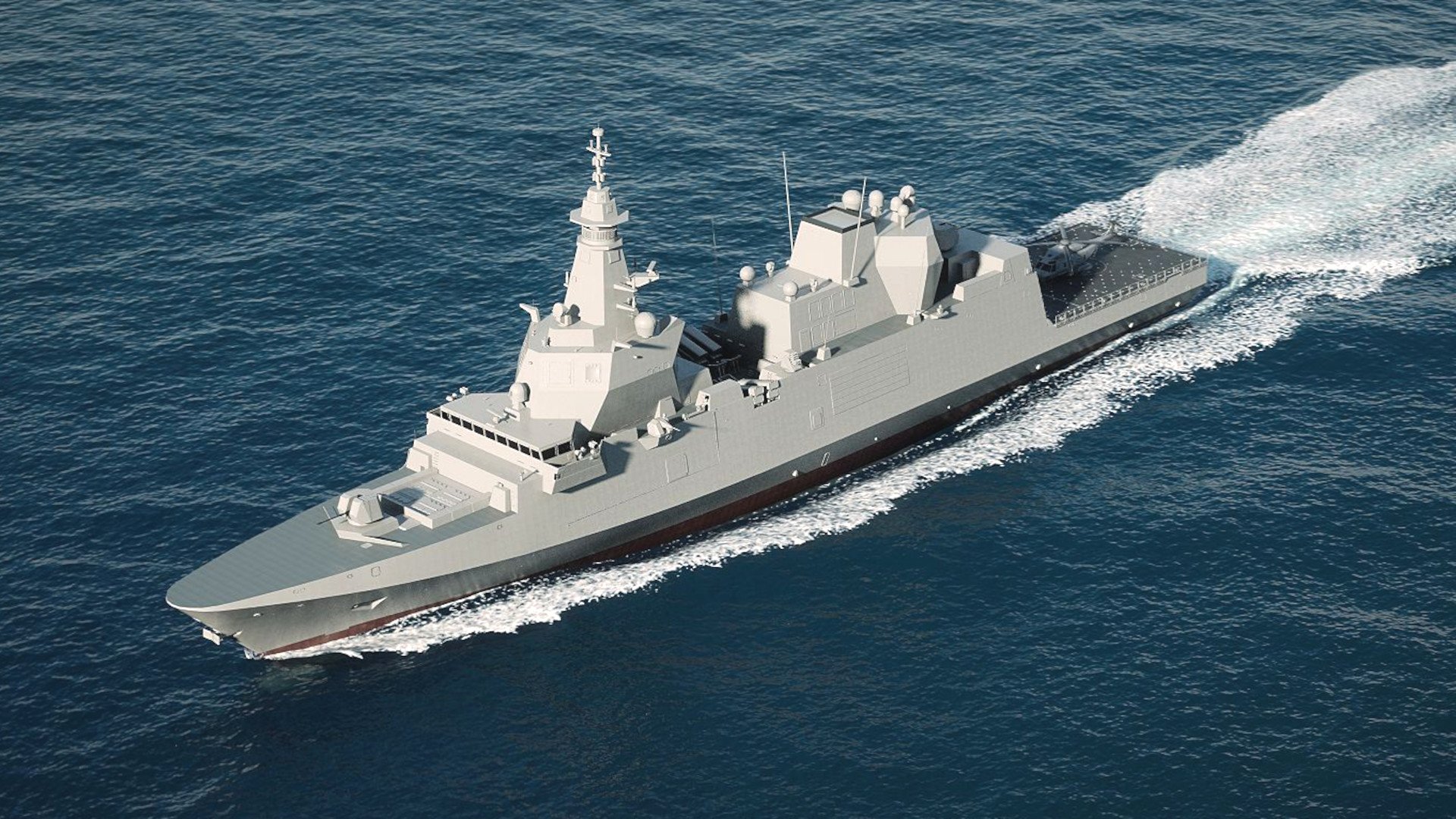
As designed, the FREMM EVO is close to 472.5 feet (144 meters) long, is some 64.6 feet (19.7 meters) at its widest, and displaces 6,500 tons with a full combat load, according to Fincantieri’s website. Its hull dimensions and displacement are essentially unchanged from the Italian subvariant of the baseline FREMM. The EVO will have a new superstructure configuration and a host of new capabilities.
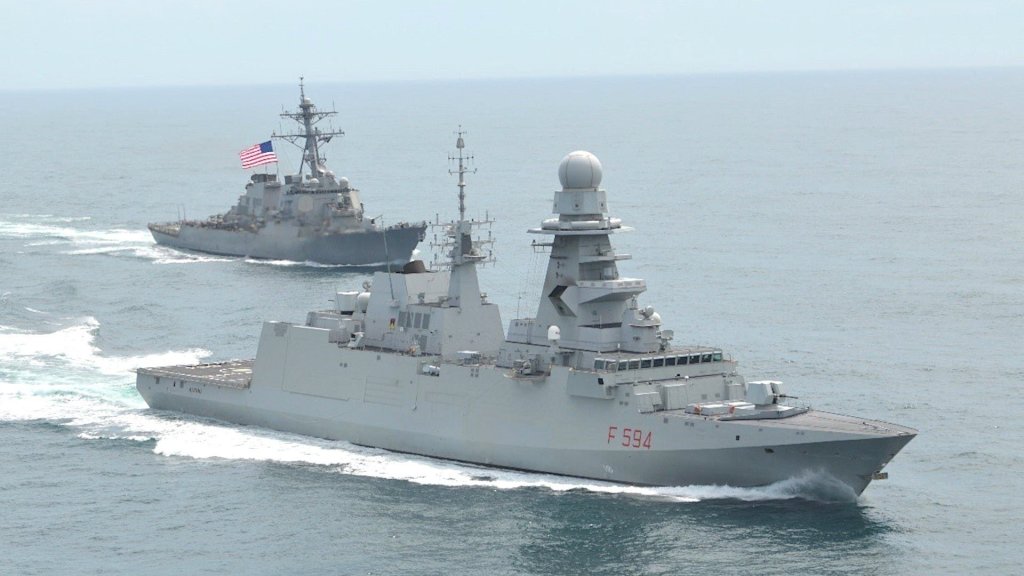
Renderings of the FREMM-EVO. FincantieriAn Italian Navy FREMM frigate, or Bergamini class, in front, sails together with a US Navy Arleigh Burke class destroyer. USN
The most notable new feature on the EVO version is set to be a new Leonardo Kronos Dual-Band Radar (DBR). The Kronos DBR combines the C-band Kronos Quad and the X-band Kronos StarFire into a single system with four paired sets of active electronically scanned arrays (AESA) positioned around the superstructure. In general, combining radars in this way can offer advantages for performing a variety of different tasks and doing so simultaneously. The ability to fuse data from both arrays together can help produce high-fidelity target tracks and other benefits. At the same time, DBRs have historically presented complexities that can cause serious difficulties with both integration and operation.
Among other things, the DBR is set to give the FREMM EVO expanded capability to knock down incoming ballistic missiles in the terminal phase of flight using Aster 30 surface-to-air missiles. Anti-ship ballistic missiles have become a threat that navies globally could realistically encounter in future conflicts, even against smaller nation states or non-state actors. There is a trend emerging worldwide now in the development of new anti-ballistic missile defenses to protect individual warships, as well as help defend other naval assets and interests ashore. Baseline FREMM frigates can already fire Aster 30 missiles, as well as Aster 16s, from any of their 16 Sylver vertical launch system cells at the bow end of the ship. EVO has space allotted for the integration of additional VLS cells, but it is unclear whether any current customers are pursuing that option.
In terms of armament, like the baseline FREMM, the EVO configuration will also have deck-mounted launchers for eight anti-ship cruise missiles, two triple torpedo tubes, two turreted 76mm guns, and various smaller automatic cannons and machine guns.
FREMM EVO is to feature improvements to other parts of its sensor package, as well as electronic warfare and communications suites, compared to the baseline design. This will all be tied into a SADOC 4 combat management system (CMS) from Leonardo.
On top of all this, this new FREMM configuration will have a new dedicated suite of counter-drone capabilities, another threat category that is very real now, and that only continues to expand in scale and scope.
“FREMM EVO represents a milestone both in confirming the ability to combine maturity and innovation in its EW systems that will be on board, and for the first naval supply of an advanced anti-drone counter capability,” ELT Group, which is supplying components for the counter-drone suite, said in a statement back in 2024, according to Naval News. “The latter will allow both the detection, recognition and identification of drones and their soft-kill counter. The project of a naval CUAS arises from the expertise acquired by Elettronica in this capacity for several years now, which have led to the development of sophisticated Artificial Intelligence algorithms developed specifically for countering the threat posed by drones.”
When it comes to a new pitch to the U.S. Navy, FREMM EVO does have the benefit of being an in-production design. As mentioned, Fincantieri had also been working to expand its facilities at the Marinette Marine shipyard in Wisconsin to build similarly-sized Constellation class frigates before that program was cancelled. The shipbuilder has relevant established supply chains to feed into that yard, as well, as Moutafis highlighted to USNI News.
A Naval Sea Systems Command (NAVSEA) briefing slide from 2022 detailing work Fincantieri had been doing to expand its physical infrastructure to support the production of the Constellation class. USN
In speaking to us earlier this year, Moutafis also talked about important lessons learned from the Constellation program, which he felt were already having a positive impact the U.S. Navy way of doing business.
“Some of those lessons learned out of Constellation are being manifested in the things that the Navy has been rolling out the past few months – a new approach that empowers PAEs [Navy Portfolio Acquisition Executives] to make decisions, to minimize change, to embrace innovation and new technologies,” he said. “All these elements that we see now being rolled out, I think to a certain degree, connect back to lessons that have been learned out of the Constellation class journey.”
“Figure out what you want to prioritize, to what extent you want to prioritize schedule, and what’s the best way to say this,” he added when asked for specific examples of what he was talking about. “When you know when you need something delivered and at what pace, then enable the right level of decision-making. Because otherwise – I don’t want to sound this the wrong way – but perfection sometimes is the enemy of more than good enough.”
“Going beyond the Constellation class, now the needs are for vessels to be out there for the warfighter as soon as possible. For sure, we will see many cases where it will be considered that a vessel with these capabilities – even though potentially, in some areas, it may not have enough tons of steel on its sides, or whatever – it will be good enough to assist the warfighter as they head into harm’s way,” he also added at that time. “Those trade-offs are now being placed at the PAE level, allowing Navy leaders at that level to make the right decisions – figuring out whether to continue going down a design spiral versus just moving out with production and enabling us to have the right capabilities on time for the warfighter.”
When Moutafis spoke with us, the Navy had already unveiled a new FF(X) frigate program and announced plans to buy examples of a design derived from the Huntington Ingalls Industries’ (HII) Legend class National Security Cutter for the U.S. Coast Guard. Those frigates will notably lack a VLS array, at least initially, along with other features that were seen as critical to Constellation class. The Navy has outlined plans to offset the more limited baked-in capabilities of the FF(X)s with add-on containerized weapon systems and companion fleets of uncrewed surface vessels. All of this has already prompted significant debate about the operational utility of these small surface combatants, as TWZ has previously explored in detail.
A rendering of the FF(X) frigate. USN
In August, President Trump put out a memo that, in part, directed then-Acting Secretary of the Navy Hung Cao to “submit a plan … that includes timelines and resourcing requirements, for a new competitive acquisition approach for surface combatants with sufficient inherent capabilities to perform anti‑submarine warfare, surface warfare, and convoy escort duties.” The memo also outlined an acquisition strategy referred to as the “Finland Model,” in which foreign shipbuilders would have to make major investments in U.S. enterprises and hire American workers as part of any future contract, even if an initial tranche of vessels is built overseas. This, in turn, has led to the aforementioned foreign warship study ongoing now, which is reportedly exploring the merits of Japan’s Mogami class, the South Korean Chungnam class, and the Istanbul class from Turkey, in-depth profiles of which you can find here.
Examples of the Japanese Mogami class (at bottom), the South Korean Chungnam class (at top left), and the Turkish Istanbul class (at top right). Yuichi Yamazaki-Pool/Getty Images/HD Hyundai Heavy Industries/Anadolu Shipyard
Whether or not the U.S. Navy will pursue the acquisition of any of the ships it is studying now, or whether it might be willing to consider additional pitches from Fincantieri or other shipbuilders, remains to be seen. If it is to be successful, any new attempt to leverage an in-production foreign frigate design will have to take concrete steps to avoid falling into the same design change pitfalls as the Constellation class. The Navy’s struggles with solidifying designs early and keeping changes to a minimum during development and initial production have impacted several domestic naval shipbuilding efforts, too.
For Fincantieri, while the Navy played a central role in the failure of the Constellation program, there is the additional matter of whether the service is interested in any way in the optics of not only going back to the same shipbuilder, but the same underlying parent design (FREMM).
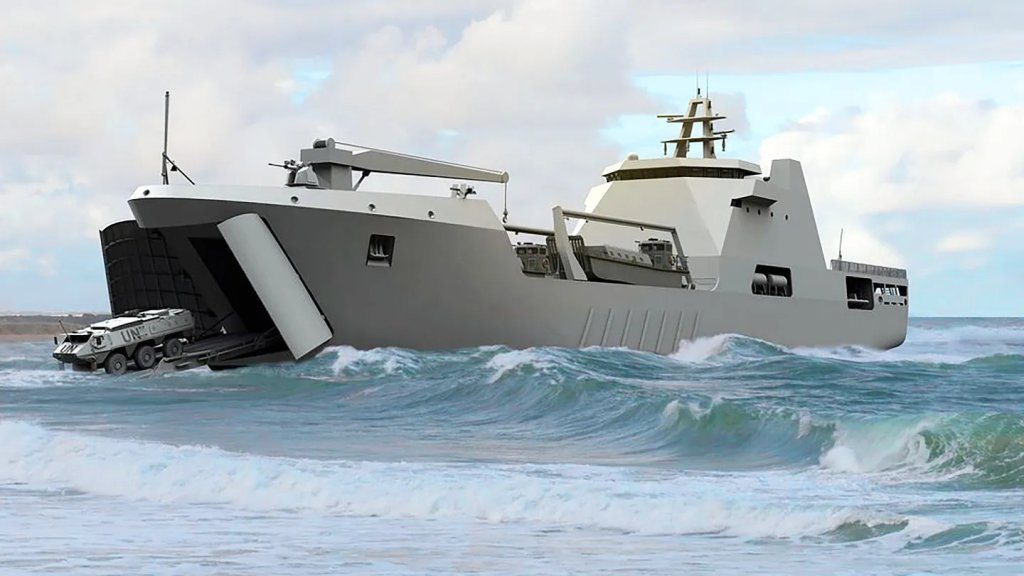
A rendering of Dutch shipbuilder Damen’s LST-100 landing ship, the basis for the Navy’s new LSMs. Damen
It’s also unclear what any additional frigate procurement program might mean for the existing FF(X) frigate program, and what level of additional competition there might be for shipbuilding resources, as a result.
“In terms of which path we go – I’m not going to get ahead of that process – but [studying all options is] essentially what we’re doing,” Navy Rear Adm. Casey Moton, head of the Portfolio Acquisition Executive Maritime (PAE-M) office, also said at the American Society of Naval Engineers Fleet Maintenance and Modernization Symposium last week, according to USNI News. “I am not going to get ahead of what we are doing in response to the presidential memo.”
“We just went through CDR [the critical design review] on the Flight I [of FF(X)], and so we’re doing some pre-production activities with HII to help prepare for that material,” Moton also noted. The Navy has said in the past that it is aiming to have the first FF(X) frigate in the water by 2028.
The Navy’s fleet of Arleigh Burke class destroyers “gets used with a very high demand signal combatant commanders. The Navy can’t operate with only one size of ship,” Rear Adm. Brian Metcalf, Deputy PAE-M, also said in an official video in June, further underscoring the general demand for these new smaller surface combatants. “The [FF(X)] frigate will fill that gap. They can be used in less contentious waters. They can be used as high-value escorts. There are all kinds of things the frigate can fill the gap for and allow destroyers to execute the high-end mission set.”
Signs that a new foreign-designed frigate could be in the Navy’s future have already been growing. The service may have a clearer vision for how to proceed, and whether there might be room for additional pitches from Fincanterai and others, after the review it is working through now is complete.
The European Union is rolling out an age-verification system that requires official ID—passports or national identity cards—to prove you’re old enough for certain online content and services. Officials have already flagged VPNs as a problem [...]
A giant octopus devouring a jellyfish. An ultra-fast gossamer worm. These are just a couple of the 31 new species scientists discovered on a recent expedition off the coast of Brazil. They explored the ocean’s midwater zone — the vast space between the sunlit surface and the seafloor — which is the Earth’s largest and least explored habitable ecosystem. While it can take researchers decades to identify and describe new species, state-of-the-art technology like 3D lasers and advanced microscopes helped the team confirm these new species within a matter of days.This article was originally published on Mongabay
Peter Hotez has warned that dengue and Zika pandemics could become the "new normal" due to climate change. Dr Randall Bock asks why the 'experts' are still trying to scare us with non-scary viruses and unlikely scenarios.
NBC News reported on Sunday night that eight US Marines were injured two weeks ago when an Iranian missile hit a ship they were operating on in the Strait of Hormuz. The report, which cited unnamed US officials, said the Marines sustained smoke inhalation and potentially traumatic brain injuries, as they had symptoms of concussions, […]
COLOMBO – For generations, the sight was familiar in towns and villages across Sri Lanka of a man playing a flute sitting on his haunches next to a woven basket, from which a cobra raised its gently swaying hood, drawing a curious crowd of onlookers. The performance appeared almost magical, as the cobra would seem to have been charmed by the flute’s notes, moving its hood rhythmically like performing a dance. But behind the spectacle was a community with its own traditions, knowledge and relationship with snakes — one that is quickly fading away. Known locally as the Ahikuntika, this small nomadic tribe is also referred to as Sri Lanka’s gypsies or Sri Lankan Telugus. They’ve traditionally traveled from place to place, and men have performed as snake charmers and monkey performers, with the women primarily associated with fortune-telling or soothsaying. Historical accounts describe temporary settlements and an itinerant lifestyle in which families moved between communities to earn a living through performances and traditional livelihoods. Today, however, snake charming has become rare. A group of snake charmers perform with their cobras. Image courtesy of Anslem de Silva. “During our childhood, we could regularly see snake charmers. They were often seen near markets, while groups of itinerant performers would also travel from village to village, announcing their arrival by beating a small hand drum,” recalled 75-year-old retired schoolteacher Chandrasena Liyanarachchi. Sri Lankans have a long-inherited fear of the venomous cobras (Naja naja), yet also accord them cultural significance, and often watch…This article was originally published on Mongabay
Beryl Gilothwest’s grandmother, Sandy “Moose” West, passed away at age 108 in 2021. For The Bitter Southerner, Gilothwest profiles a diminutive woman whose love for Ossabaw, an island off the coast of Georgia, was larger than life. In a world striving for “progress,” West was a staunch advocate for thoughtful preservation; she was a fierce conservationist and environmentalist who embraced the unknown and took pleasure in learning from it.
“Sandy believed that embracing what we cannot understand is the pathway to enlightenment. In her mind, spending time in the uncharted wilds of Ossabaw is the best way to learn that lesson. Separated from the mainland by a 30-minute boat ride, the island is deeply remote. Cell service is scant, and there is no wi-fi. You have to fend for yourself out there in a way that is uncommon in contemporary culture, where we always seem to have an escape hatch. Sandy knew that welcoming people into that kind of environment, where they have to relinquish control to the island, would force them to reckon with the unknown.”
US Africa Command said in a press release on Monday that its forces launched more airstrikes in Somalia as the Trump administration continues a record-shattering bombing campaign in the country. The command said that the strikes were launched on September 24 and targeted al-Shabaab in the vicinity of Qumbi, a village about 55 miles northwest […]
Israel launches attacks on several locations in southern Lebanon on any given day. That’s barely news in and of itself anymore, but one of the sites most persistently targeted in recent weeks was the town of Mansouri, in Tyre District. In early August, Israel’s military imposed a full evacuation order on Mansouri, and the attacks […]
OTAGO PENINSULA, Aotearoa New Zealand — Sandfly Bay was long a key nesting area for yellow-eyed penguins (Megadyptes antipodes), noisy, pink-footed birds that spend long days foraging at sea. But this wild beach on the Otago Peninsula, like others nearby, has gone quiet. In 2024, the last breeding-age female at Sandfly Bay, who’d been consistently producing chicks for a dozen years, drowned in a fishing net. Fishing has been one of many factors driving the species, which is only found in Aotearoa New Zealand, toward extinction. In the 2008-2009 breeding season, there were 739 breeding pairs in the “mainland” New Zealand population, which includes pairs on nearby islands. But the population has dropped since then to 117 pairs — a decline of more than 80%. These figures don’t account for yellow-eyed penguins on New Zealand’s remote southern islands, which are poorly surveyed. The IUCN, the global wildlife conservation authority, listed the species as endangered in its last assessment, in 2020, when the mainland population was still twice what it is now. Several experts told Mongabay that the species’ chances of survival are slim, though most said they still had faith. “I think I’d always like to say that there’s hope because otherwise why do you do what you do, but things are pretty dire,” Trudi Webster, a marine scientist who’s worked on research and conservation of the species for the past decade, told Mongabay. A number of organizations are working to save the yellow-eyed penguin, and much of the conservation…This article was originally published on Mongabay
BANGKOK (AP) — Rain eased in Thailand ’s capital on Sunday, but flooding persisted in several low-lying areas, with thousands forced to move into temporary shelters. At least eight people were reported killed in the past 10 days nationwide. Days of continuous downpours have caused widespread flooding and severe disruptions in Bangkok, impacting traffic and businesses, with accumulated rainfall exceeding 30 centimeters (11.8 inches) in many areas. Thailand’s Meteorological Department said moderate to heavy rain was still expected Sunday in several parts of the country, but conditions were expected to improve by Monday. The city set up more than 200 temporary shelters, and about 3,000 people remained in them as of Sunday. Officials said 31 roads were still impacted by floodwaters. Bangkok Gov. Chadchart Sittipunt said rainfall in the capital has decreased and city officials were working to drain water as quickly as possible. He cautioned that water levels in the city’s main canals remained high, with some still rising as water continued to flow in from nearby areas. Several low-lying areas, particularly in the suburbs, were still submerged and many communities had to evacuate, Chadchart said. More than 545,000 people in 25 other provinces have been impacted by flooding as of Sunday, especially in the central and eastern regions, according to the Department of Disaster Prevention and Mitigation. Incessant rainfall caused flooding that overwhelmed drainage capacity in many areas, Prime Minister Anutin Charnvirakul said. He ordered relevant authorities to take immediate measures to relieve the situation and assist those…This article was originally published on Mongabay
An unusual shoulder-fired air defense missile seen in Russian use may be of Chinese or Iranian origin, raising questions about the movement of foreign weapons through the increasingly interconnected military supply networks linking Moscow, Beijing, and Tehran.
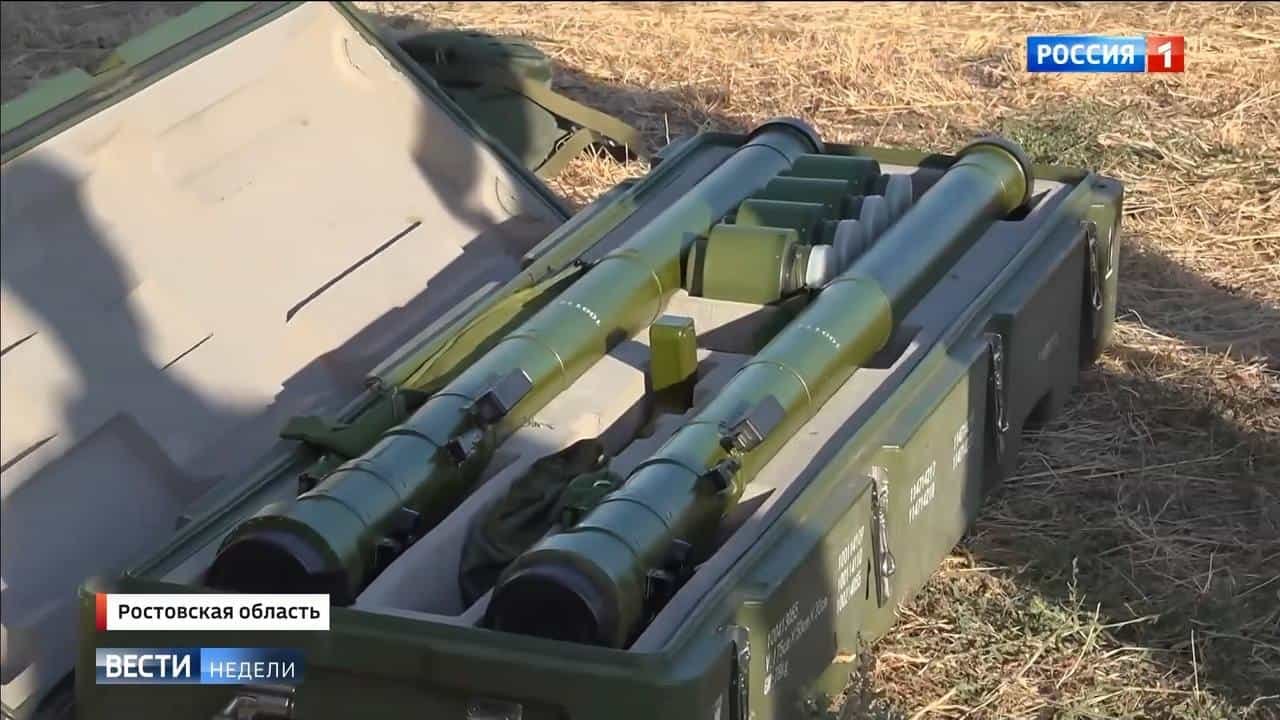
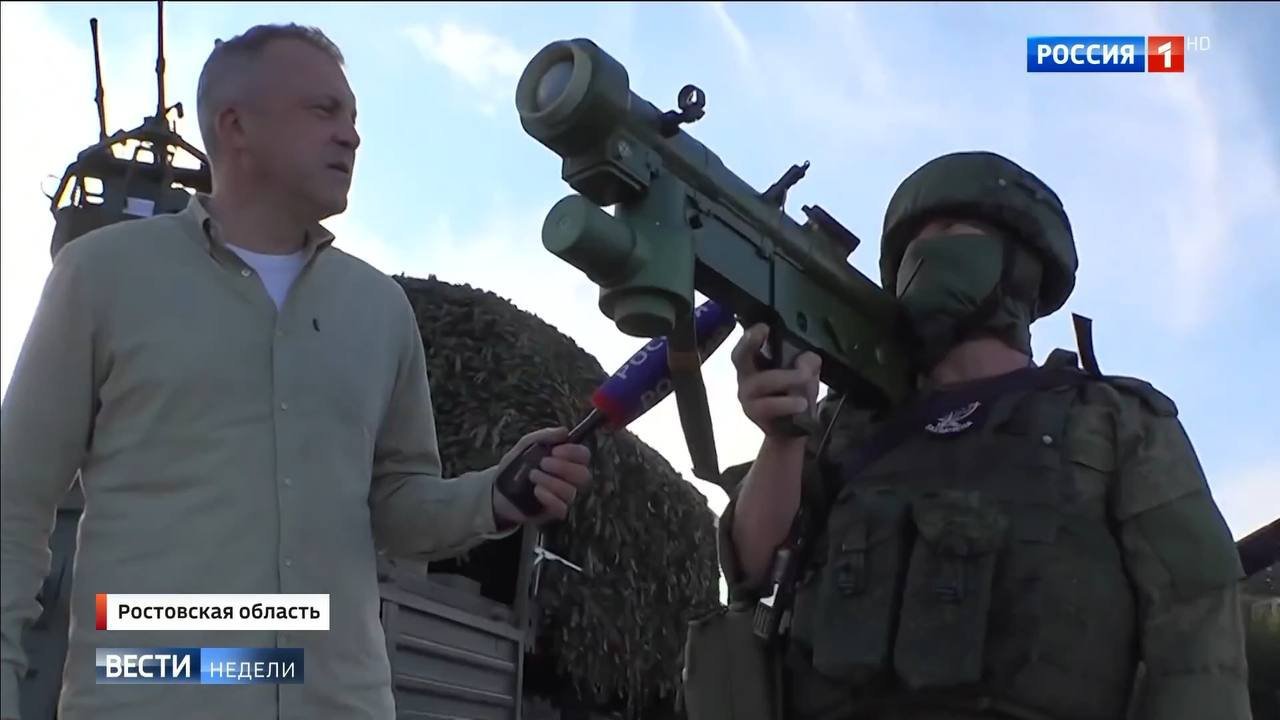
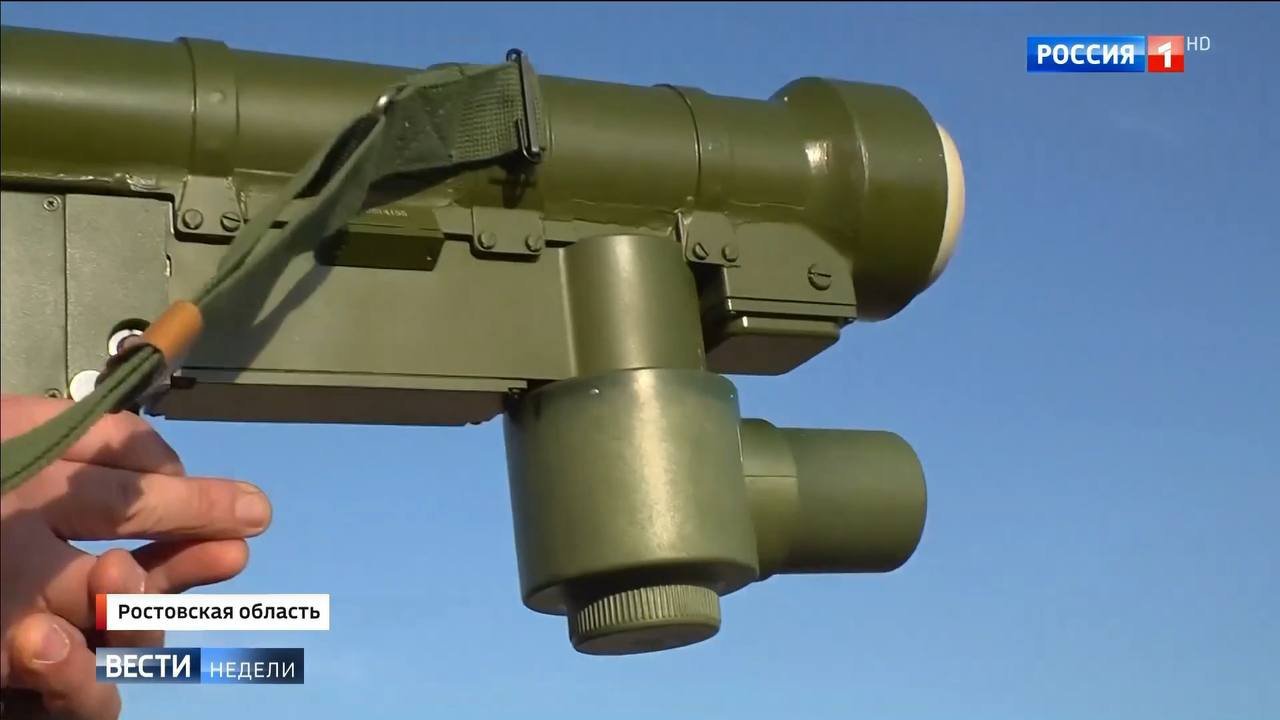
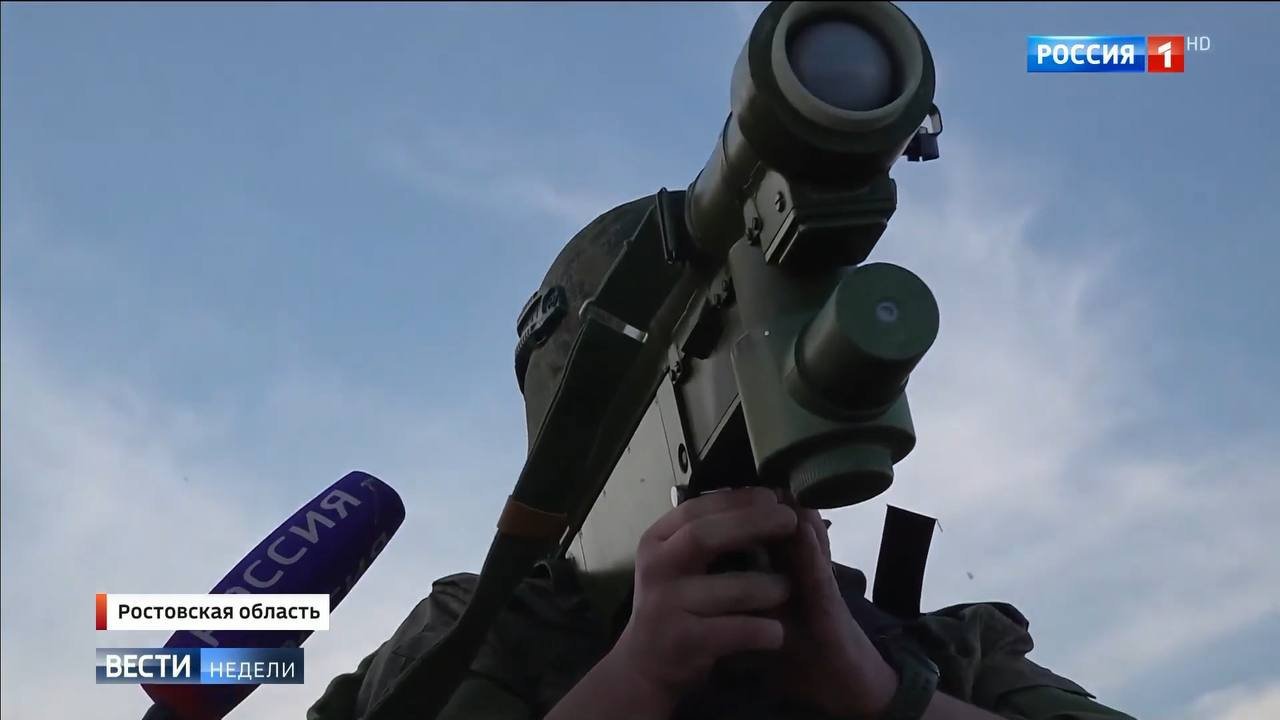
The man-portable air defense system (MANPADS) appeared in Russian television footage showing a mobile air defense group operating in the Rostov region, which borders Ukraine. The weapon was shown during an exercise said to have involved one of the elements of Russia’s 51st Air Defense Division. The footage was subsequently highlighted by the X account TheDeadDistrict.
ruSSian's have developed a new “Iva” MANPADS. In the footage, it is in service with one of the mobile fire groups of the 51st Air Defense Division in Rostov Oblast.
Although, no—it is most likely the Iranian Misagh-2 MANPADS.
The system does not closely resemble any of the Russian-made MANPADS families otherwise used by the country’s armed forces. Russian personnel seen with the weapon reportedly referred to it as “Iva,” although that designation by itself does not establish the weapon’s origin or model. The word Iva is Russian for willow (a type of tree), of which one particular species is named Verba — also the name of the Russian-made 9K333 MANPADS. This weapon looks very different to the example shown, but the connection is unlikely to be a coincidence.
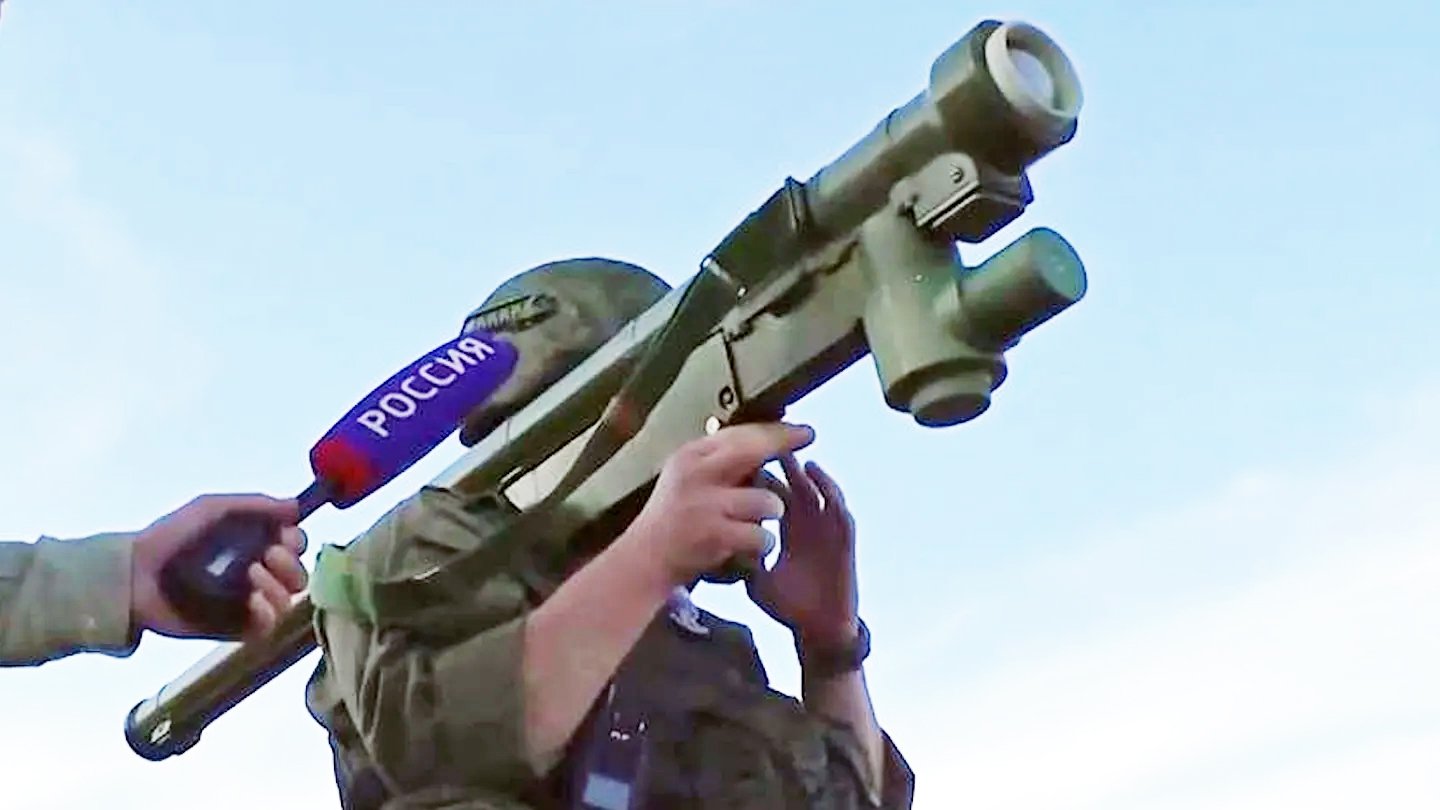
An operator of the mystery MANPADS is interviewed by the Russia-1 TV channel. Russian State Media
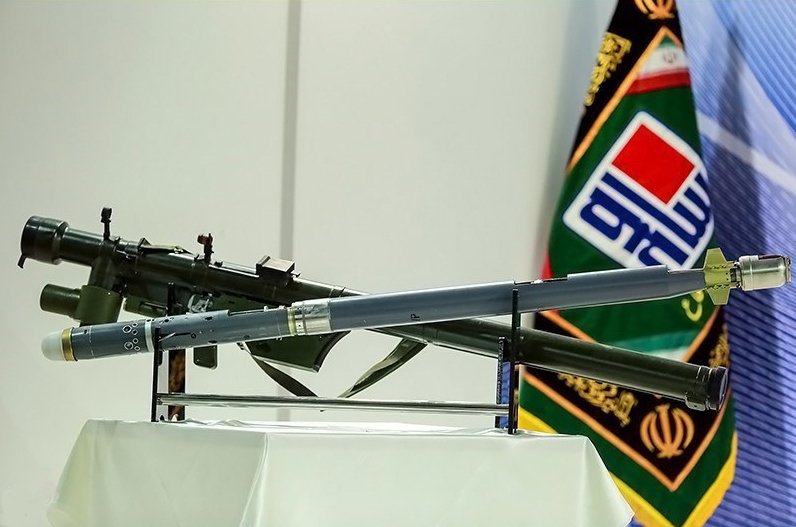
A visual analysis of the newly observed launcher reveals comparisons with both the Iranian Misagh-3 and Chinese QW-series systems, particularly the QW-18/QW-18A and QW-19. In particular, a closer examination of the imagery highlights an additional box-like component toward the front of the launcher. That feature appears more consistent with photographs of Chinese QW-series systems rather than the Misagh.
The front part of the MANPADS launcher, with the distinctive box-like component below the tub. Russian State Media
There is also a scarcity of publicly available imagery of later Iranian variants to completely exclude an Iranian system. At the same time, the Misagh series itself is understood to be derived, or at least heavily influenced by Chinese designs.
An Iranian Misagh-3 MANPADS with its missile. Tasnim News Agency
Another possibility is that the weapon is a Russian-produced version or derivative of a Chinese or Iranian design, rather than an imported system.
The possibility of foreign-made or foreign-designed equipment appearing in Russian service has to be viewed against the much broader transformation of Moscow’s military relationships since the full-scale invasion of Ukraine in February 2022.
Russia’s relationship with China has deepened substantially since the invasion, with Beijing becoming a critical source of machinery, electronics, and other components that Russia’s defense industry can no longer obtain as readily from Western suppliers. Moscow and Beijing had already declared a “no limits” partnership shortly before the invasion, and their military relationship has subsequently included exercises and expanding military-technical cooperation. U.S. officials have accused China of supplying Russia with components used in weapons production, including microelectronics. Beijing has rejected accusations that it is providing lethal military assistance to Russia.
A close-up of the front end of the MANPADS. Russian State Media
Iran has also become an important military partner. Russia has used Iranian-designed Shahed-series attack drones extensively in Ukraine and has worked with Tehran on local production and adaptation of those systems. Moscow and Tehran formalized their relationship further with a comprehensive strategic partnership treaty in January 2025, which includes provisions for military-technical cooperation and joint exercises.
In return, Russia has supplied Iran with military technology and has cooperated with Tehran on sensitive weapons programs.
The possible Chinese connection takes on additional significance in light of a major reported procurement deal between China and Iran.
In July, Reutersreported that Iran was expected to receive the first shipment of a deal covering 300 to 400 Chinese-made MANPADS, with a reported value of $60 million to $70 million. The weapons identified by sources included the Chinese QW-12 and FN-16 systems.
Chinese missiles the United States fears… an unsleeping eye against drones and low‑flying aircraft
China’s QW‑12 and FN‑16 air‑defense systems intercept low‑altitude targets — including drones — forming a rapid defensive line against close‑range aerial threats. pic.twitter.com/kJZ6mnqmHg
The reported contract was signed with a Hong Kong-based company that sources described as an intermediary between the Iranian side and the Chinese supplier. Reuters said the initial deliveries were planned from Urumqi in western China, with the weapons then transiting through Pakistan before reaching Iran. Pakistan’s military publicly denied any involvement in such transfers, while China’s Foreign Ministry called the report “groundless.”
Reuters also reported that delivery schedules and quantities could still change.
More significantly for the Russian sighting, a European security source told Reuters that authorities were aware of several contracts under discussion involving the potential sale of QW-12, QW-18, and QW-19 MANPADS to Iran. A Middle Eastern security source separately claimed that Iran had been seeking QW-18 systems.
There is currently no evidence tying the launcher seen in Russian hands to the Iranian procurement from China.
At the same time, the possibility of an Iranian connection should not be ruled out, especially since Chinese-designed MANPADS have a documented history of appearing outside conventional state inventories.
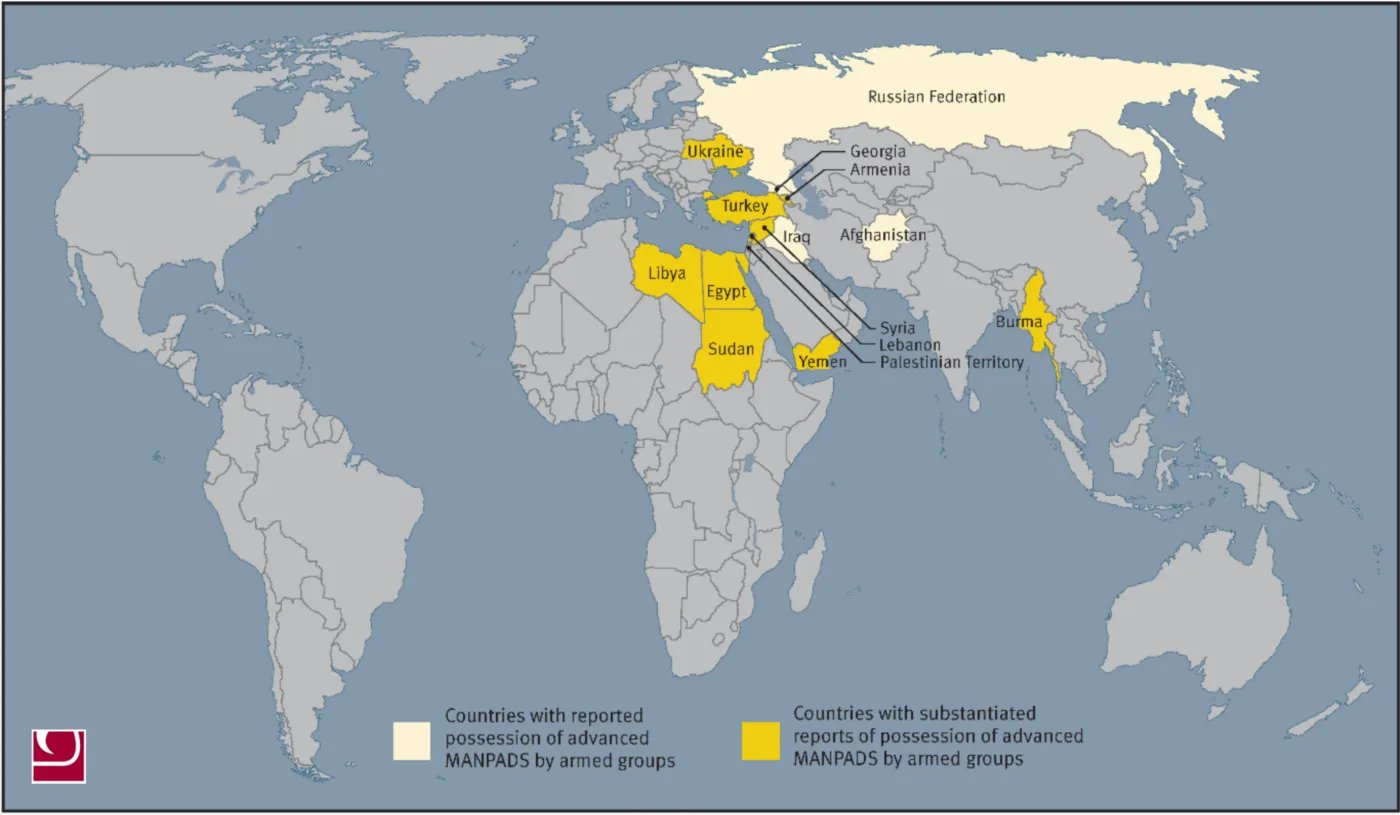
Earlier TWZreporting, drawing on research by the Small Arms Survey monitoring group, examined the illicit proliferation of Chinese-designed MANPADS and identified dozens of cases involving armed groups in multiple countries. That research included QW-series weapons and documented cases in which investigators linked Chinese-designed MANPADS to Iranian supply networks.
Countries with reports of illicit possession of advanced MANPADS by armed groups, 2011-21. Small Arms Survey
One particularly notable case involved the Jihan, a vessel intercepted in 2013 carrying weapons that investigators identified as including QW-18-pattern MANPADS. UN investigators, the U.S. government, and Conflict Armament Research assessed Iran as the likely source of those weapons.
It is also worth noting that Chinese MANPADS have already appeared on the Ukrainian side of the war. In late 2025 and 2026, Ukrainian units were photographed with Chinese-made FN-6 and FN-16 systems, including an FN-6 associated with an air defense team reportedly engaging a Russian cruise missile. Exactly how the weapons reached Ukraine remains unclear, with possible third-party transfers or diverted shipments among the possible explanations.
A Chinese FN-6 MANPADS in service with the MFG of the 143rd JTC “Podillia.” It is reported that this MANPADS was used this morning to shoot down a ruSSian Kh-101 CM. The FN-6 was developed in 2000 and supplied, among others, to Sudan, from where it likely found its way to Ukraine pic.twitter.com/9zA012ue3j
Reported as the downing of an Kh-101 cruise missile this morning using a Chinese FN-6 MANPADS. There is no public information confirming that this system has been supplied to or used by Ukraine, making this a notable development. pic.twitter.com/pUujFB81aH
Incidents like these demonstrate that Chinese MANPADS can move through indirect supply networks, including networks associated with Tehran.
Regardless of how it arrived in Russia, the appearance of a foreign or foreign-derived MANPADS there is notable.
Mobile fire groups have become an increasingly visible component of Russia’s layered air defense effort, particularly as the war in Ukraine has placed enormous emphasis on countering low-altitude drones and other threats, including deep inside Russia.
MANPADS are well suited to this mission because they can be dispersed among small teams, rapidly repositioned, and deployed without the larger radar and vehicle infrastructure associated with conventional surface-to-air missile batteries. In particular, they can be deployed around military installations and other sensitive infrastructure.
A foreign system appearing in a Russian mobile fire group might be an imported weapon, an Iranian-produced derivative, a Chinese system acquired for evaluation, a captured weapon, or even a previously unidentified Russian configuration.
model, or even that it is a brand new Chinese-made variant (its possible that I just hadn't seen it, or seen it from these angles) but it is a notable new addition to Russia's MANPADS inventory.
Another possibility is that the MANPADS is North Korean in origin. Russia’s military relationship with Pyongyang has expanded significantly, including the provision of increasingly advanced military equipment and technology. There is no known North Korean MANPADS matching the configuration seen here, however, and the possibility remains speculative. North Korean weapons have also frequently incorporated or closely followed Chinese designs, meaning a Chinese-looking configuration would not necessarily rule out a North Korean origin.
I was able to geolocate and thus confirm that the photo of North Korean M-1978/1989 Koksan 170mm SPGs was taken in Russia.
Russia has dramatically expanded defense production since 2022, but its industry remains under heavy wartime demand and sanctions-related constraints. Western restrictions have complicated access to advanced electronics, machine tools and other components, while Russia has increasingly relied on domestic substitutes and foreign suppliers.
The mystery MANPADS launchers disassembled and in a container for transport. Russian State Media
At the same time, Russia must replenish weapons consumed in Ukraine, meaning foreign supplies could supplement domestic production, fill specific gaps, or allow scarce industrial capacity to be directed elsewhere.
For Russia, even a limited number of additional shoulder-fired systems could therefore have practical value as Ukrainian long-range strike capabilities continue to expand.
For now, the exact model and provenance of the MANPADS in question remain unconfirmed, but the apparent Chinese or Iranian design characteristics are highly noteworthy. Further appearances of the system could provide the clues needed to determine what it is, where it came from, and whether this represents an isolated example or a more significant acquisition effort.

 Login









 (@TheDeadDistrict)
 (@NOELreports)
 I was able to geolocate and thus confirm that the photo of North Korean M-1978/1989 Koksan 170mm SPGs was taken in Russia.
 56.069386, 92.920244