❌

Reading view

The Three Foreign Frigates Being Studied For Possible U.S. Navy Service

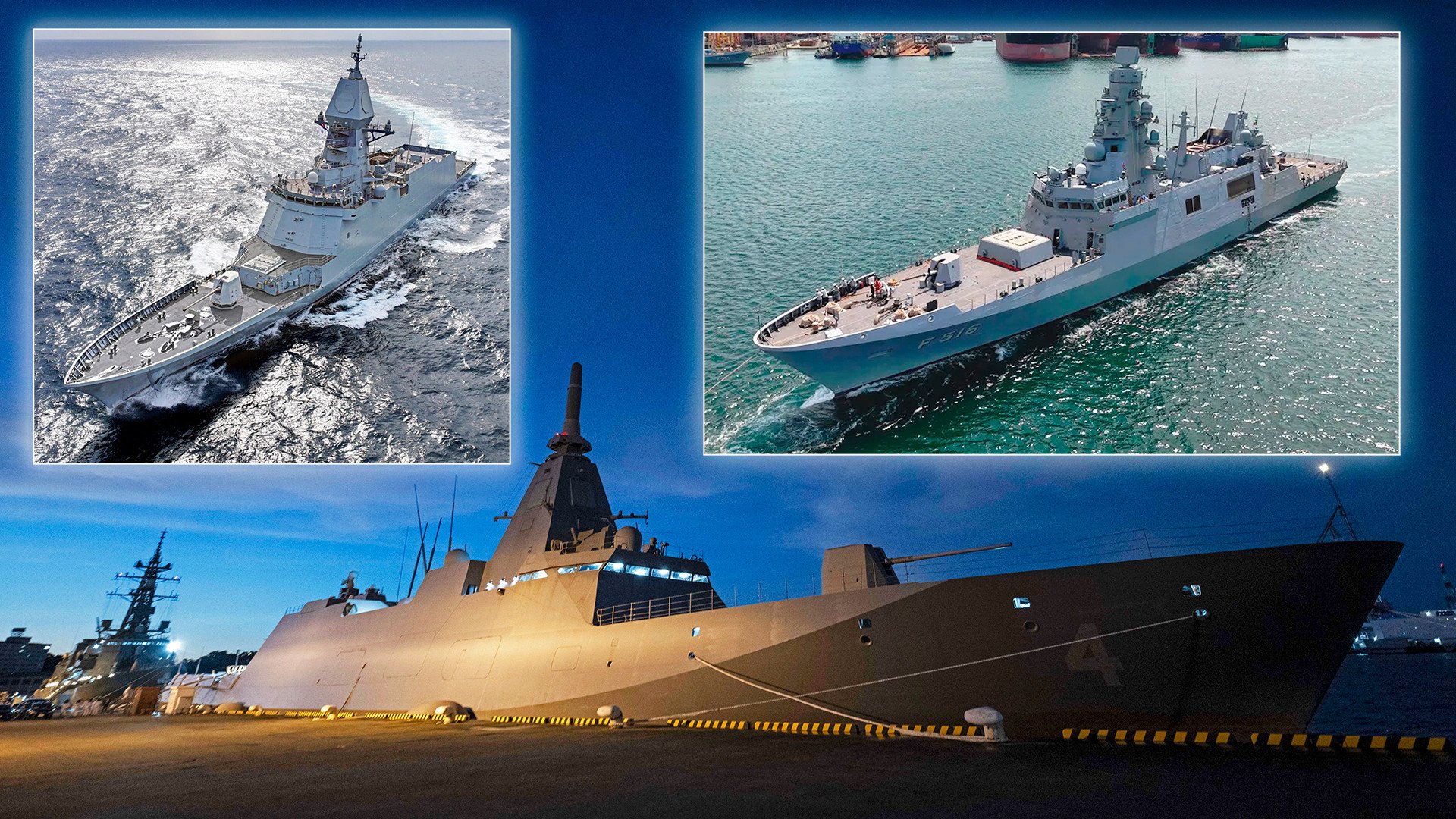
Three foreign frigates – Japan’s Mogami class, the South Korean Chungnam class, and the Istanbul class from Turkey – are reportedly included in a study of ships the U.S. Navy could procure. The Trump administration has been openly pushing to leverage ships designed in friendly countries to rapidly bolster the Navy’s fleet while also working to rebuild America’s shrunken domestic shipbuilding capacity. So, it is worth examining what each design brings to the table, as well as the broader opportunities and major hurdles procuring any of them would represent.

USNI News was first to report on Tuesday that the Japanese, South Korean, and Turkish frigates are included in an ongoing Navy study, citing anonymous sources. The review is in direct response to one of the provisions in a larger memo President Trump sent out last month, titled “Rebuilding the United States Navy and America’s Shipbuilding Industrial Base.” This also comes amid strong opposition in Congress to the basic idea of buying foreign warships for the Navy.

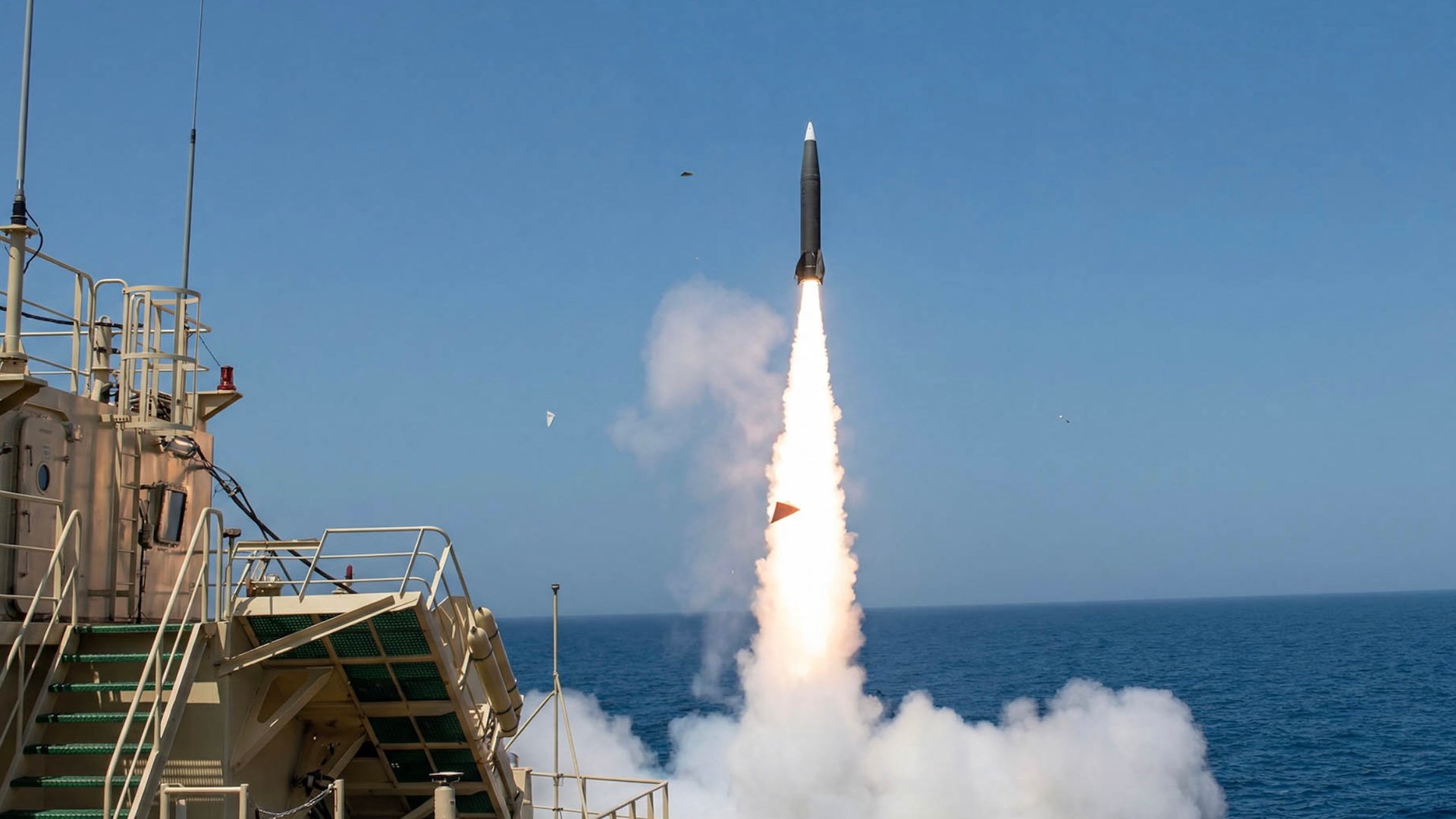
A pair of the Japan Maritime Self Defense Force’s (JMSDF) Mogami class frigates. JMSDF

Per that memo, the Secretary of the Navy (currently Acting Secretary Hung Cao) was directed to “submit a plan to the President … that includes timelines and resourcing requirements, for a new competitive acquisition approach for surface combatants with sufficient inherent capabilities to perform anti‑submarine warfare, surface warfare, and convoy escort duties.” The memo also said the “plan should address meeting the requirements for Consolidated Cargo Replenishment at Sea (CONSOL) Tankers and — separately — Roll-On, Roll-Off Vessels.”

The study could lead to “an international warship competition [that] could include building up to two of the ships in foreign shipyards before transitioning to domestic yards as part of the Trump administration’s push to rapidly expand the fleet, three industry sources familiar with the deliberations confirmed,” according to USNI News‘ report. The outlet also said the Navy declined to “directly address the potential for an open competition for a new frigate” when asked.
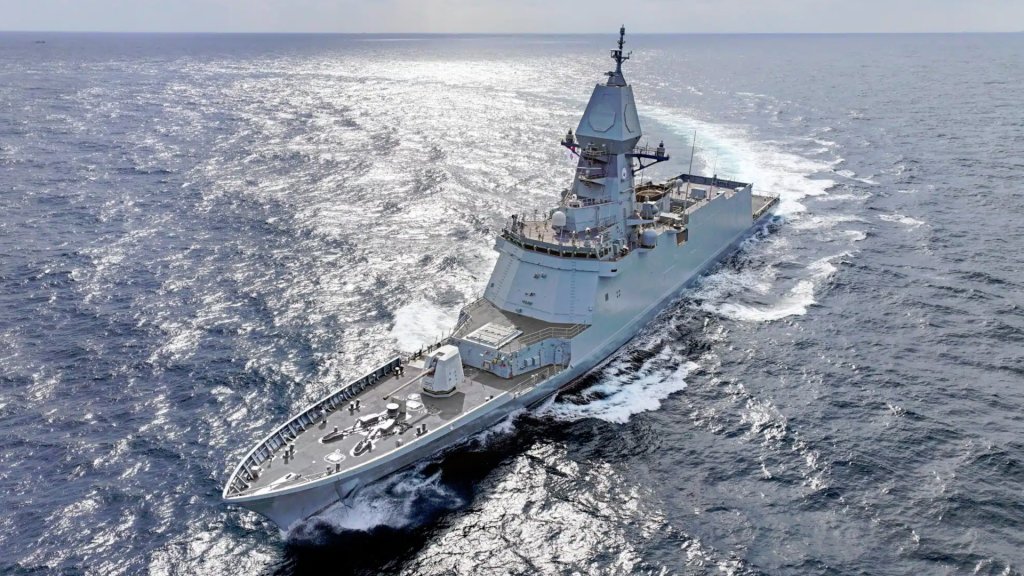
The South Korean Navy’s ROKS Chungnam seen during sea trials before its delivery in 2024. HD Hyundai Heavy Industries

The acquisition approach described here is in line with what the Trump administration is currently calling the “Finland Model,” which entails construction of an initial batch of ships overseas before moving further production to yards in the United States. The name comes from a partnership the U.S. and Finnish governments announced last year regarding the construction of new icebreakers for the U.S. Coast Guard. Canada’s Seaspan Shipyards is also involved in that plan.

Broader plans to explore foreign surface combatant designs for the U.S. Navy, and potentially more to acquire one of those ships, were mentioned in the Pentagon’s 2027 Fiscal Year budget request released earlier this year. President Trump, former Secretary of the Navy John Phelan, and other U.S. officials have also openly raised the possibility of cooperation with shipbuilders in Japan and South Korea, specifically, including with regard to surface combatants. USNI‘s report says that the Istanbul class was included in the current review after it came up in discussions between Trump and Turkish officials on the sidelines of the NATO summit in Ankara in July.

Many questions remain, but there are clear signs the Trump administration wants to move in pursuing the acquisition of foreign naval vessels. The particular focus on frigates also aligns with a clear Navy need for new ships in that size class.

Why frigates?

Before exploring the specific designs the Navy is now said to be reviewing, it is worth taking a step back to understand why frigates are so important to the service’s shipbuilding plans, in general. The United States has not technically operated frigates since the retirement of its last Oliver Hazard Perry class type in 2015. The expectation had been that the Freedom and Independence class Littoral Combat Ships (LCS) would fill the resulting gaps. However, those ships struggled for years with a variety of major issues over the years and still have not lived up to their promised potential, despite certain strides having been made in expanding their operational employment in recent years.

The Navy’s announcement of a new frigate program in 2019, dubbed FFG(X), was widely seen as a rebuke of the core concepts behind the LCS. This, in turn, led to the Constellation class frigate, which became a debacle unto itself and was finally cancelled last year. It is important to point out the Constellation design was based on the established Franco-Italian FREMM frigate. The expectation was that only relatively minor changes would be made before putting the ship in American service. In the end, the U.S. derivative had only 15 percent design commonality with its European ‘parent,’ which directly contributed to the demise of the program.
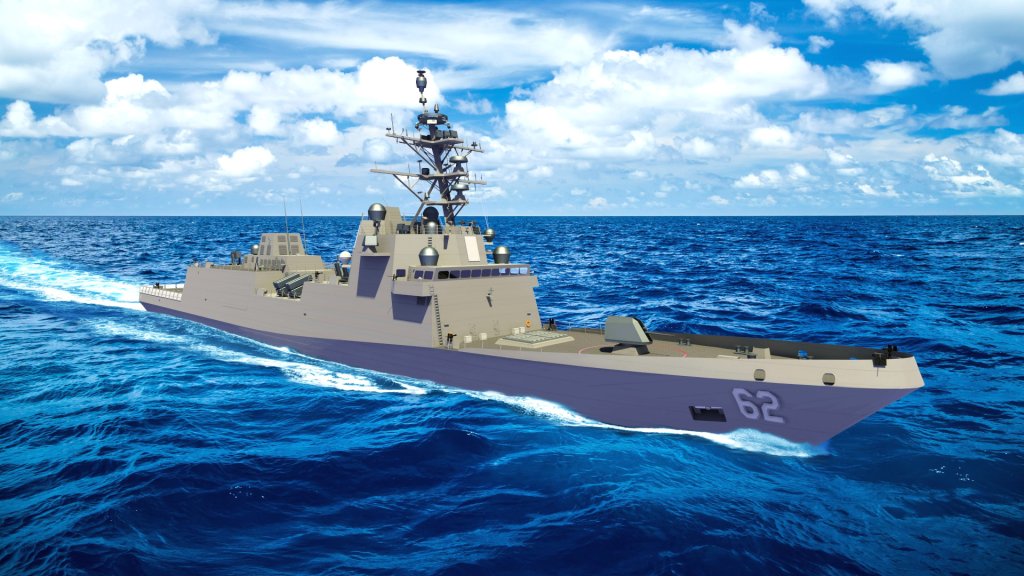
A rendering of a now-cancelled Constellation class frigate. USN

A new FF(X) frigate program has since emerged. Through that effort, the Navy is now in line to get ships derived from the U.S. Coast Guard’s Legend class National Security Cutter (NSC), with the goal being to have the first one in the water by 2028. However, those frigates, at least the ones built in the initial tranche, will lack a Vertical Launch System (VLS) and certain other features that were seen as critical for the preceding Constellation class. This has immediately raised questions about the operational utility of these new small surface combatants, as TWZ has previously explored in detail.
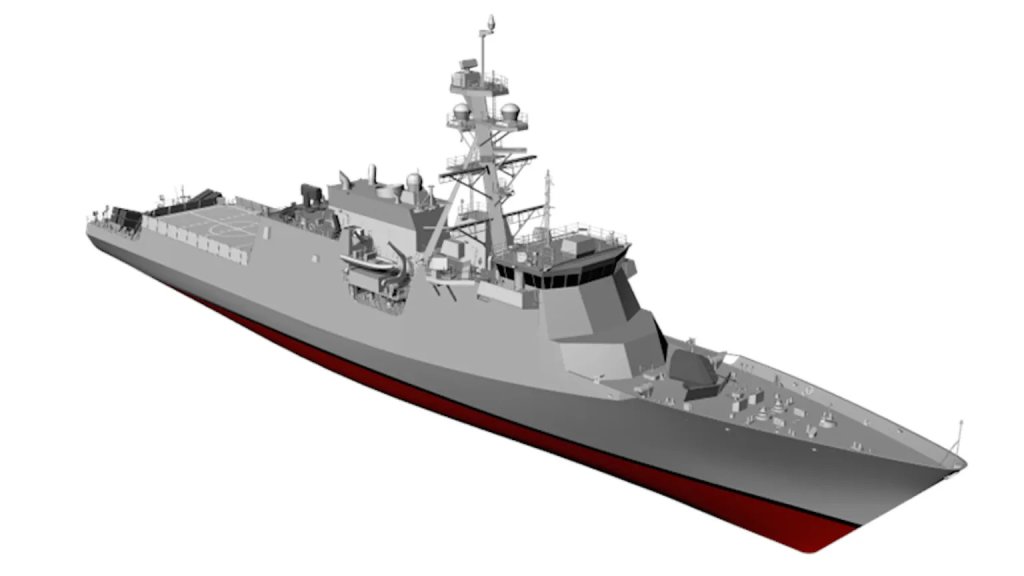
A rendering of the US Navy’s future FF(X) frigate. USN

None of this diminishes the Navy’s current desire for new frigates, and more of them, to provide smaller, lower-cost platforms that can be used to bolster larger surface action groups or operate more independently in roles that do not require larger, more capable designs. When fielded in sufficient volume, they can also free up other types of surface combatants for other, higher priority duties or similar help to relieve strain on those fleets.

Today, the Navy’s fleet of Arleigh Burke class destroyers “gets used with a very high demand signal combatant commanders. The Navy can’t operate with only one size of ship,” Rear Adm. Brian Metcalf, the Navy’s Deputy Portfolio Acquisition Executive Maritime for Combatants, said in an official video in June. “The [FF(X)] frigate will fill that gap. They can be used in less contentious waters. They can be used as high-value escorts. There are all kinds of things the frigate can fill the gap for and allow destroyers to execute the high-end mission set.”

With all this in mind, it is not surprising that the Navy would be seeking to further bolster its future frigate fleets on a shorter timetable by leveraging foreign shipbuilders. There are also clear benefits to taking advantage of capable, in-production designs, which leads us to the Mogami, Chungnam, and Istanbul classes.

The Mogami class

Japan’s Mogami class, with its stealthy design characteristics, has long been a standout among modern frigates currently in production globally. The ship is designed as a multi-mission platform with anti-air, anti-surface, anti-submarine, and mine warfare capabilities, the latter of which includes both mine-hunting and mine-laying.

TWZ has covered the ship in detail in the past, writing:

“The original Mogami class design (also known as the 30FFM), the first of which only entered Japanese service in 2022, is already a very modern design with its shape featuring some stealthy characteristics. The 436-foot-long, 53-and-a-half-foot-wide, 5,500-metric-ton displacement frigates have a combined diesel and gas (CODAG) propulsion system that allows for fuel-efficient normal cruising operations and an additional burst of speed in combat. The ships have an active electronically scanned array (AESA) main radar, as well as a host of other advanced sensors and mission systems. One of the Mogami‘s most distinctive features is its NORA-50 UNIted COmbined Radio aNtenna (UNICORN) mast on top of the main superstructure, which contains various antennas. The frigates also have especially futuristic-looking Combat Information Centers (CIC)…”
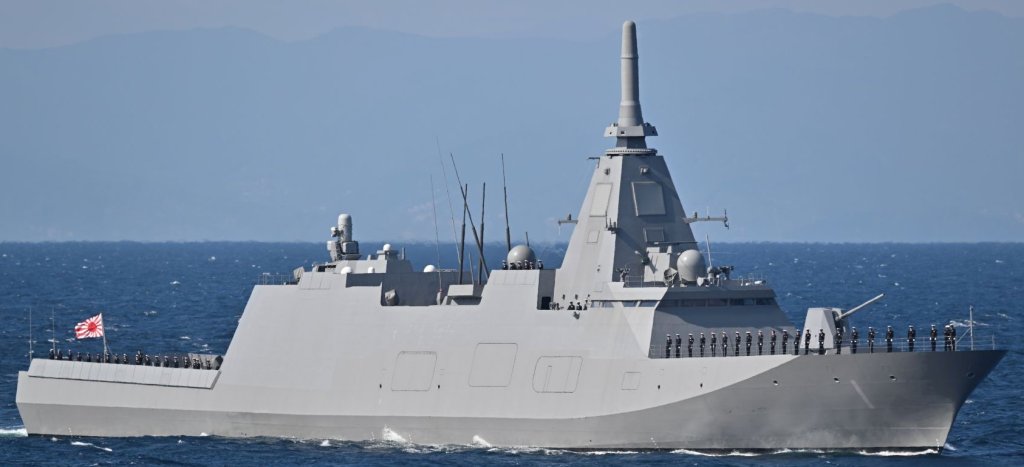
The Japan Maritime Self Defense Force’s (JMSDF) first-in-class JS Mogami. JMSDF

“Armament-wise, the baseline Mogami class frigate has two four-round launchers for Type 17 anti-ship cruise missiles, a SeaRAM close-in defense system loaded with RIM-116 Rolling Airframe Missiles (RAM), and a five-inch main gun in a turret at the bow. There are also two remote weapon stations, each armed with a .50 caliber machine gun, on top of the bridge for additional protection against close-in low-end threats.”

“The Mogami design was originally slated to feature a 16-cell Mk 41 launch system array, but the seventh ship in the class, the JS Niyodo, which was commissioned in May, was the first to be fitted with it. The first six of these frigates were delivered without this capability, but they are expected to be back-fitted with it in the future. Mk 41 cells on Mogami class frigates are expected to be primarily filled with domestically-developed A-SAM or U.S.-designed RIM-162 Evolved Sea Sparrow Missiles. Four ESSMs can notably be loaded in a single Mk 41 cell.”

The Mogami class frigates also have a flight deck and hangar designed to accommodate a single Seahawk helicopter. The ships can also deploy uncrewed underwater and surface vessels (UUV/USV), as well as rigid-hull inflatable boats (RHIBs), via a ramp at the stern.

MHI in Japan has also developed an enlarged derivative that is close to 466 feet long, almost 56 feet at its widest, and displaces some 6,200 metric tons. This version also features a 32-cell VLS array, along with an upgraded radar, other improved sensors, and updated mission systems. Last year, the Australian government announced it would be acquiring a fleet of these ships with certain unspecified country-specific features as part of its SEA 3000 program.
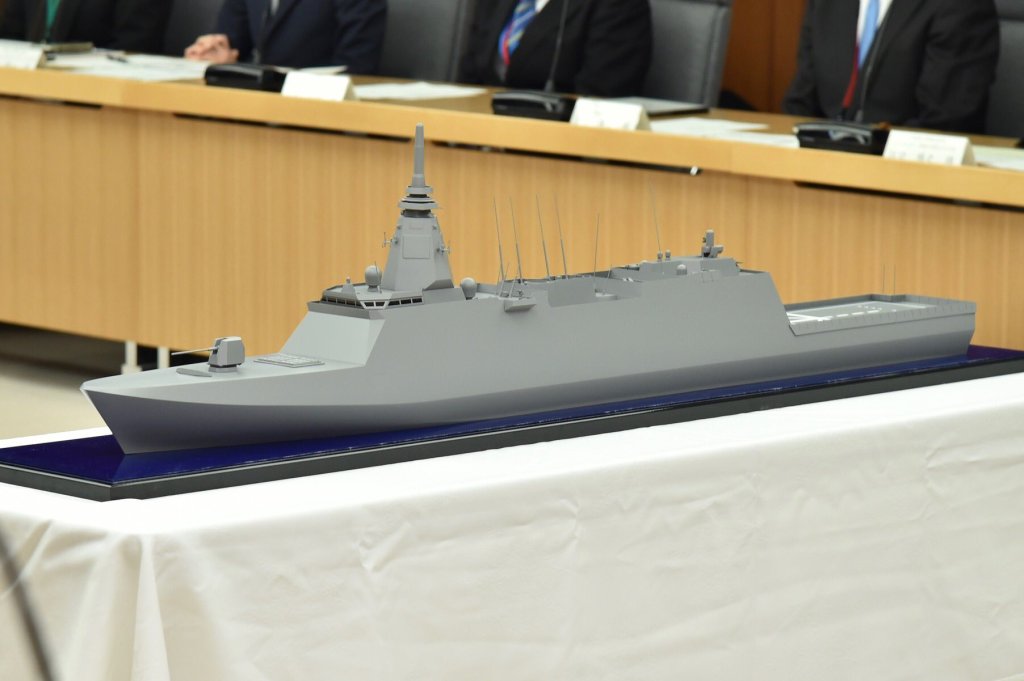
A model of the enlarged derivative of the Mogami class. Japan Ministry of Defense

The Australian deal is one of, if not still the most significant foreign arms sale for Japan since the end of World War II. It also helps ensure that the Mogami production line will remain hot for years to come. For the U.S. Navy, sharing a frigate with two of America’s highest-profile allies in the Pacific, and which could therefore be readily serviced in those countries, would be very advantageous.

The Mogami is also a contender to become New Zealand’s next frigate, and there have also been discussions about sales to Indonesia. The Japan Maritime Self Defense Force only has two more of these frigates on order, the last of which is expected to be commissioned into service by March of next year.

The Chungnam class

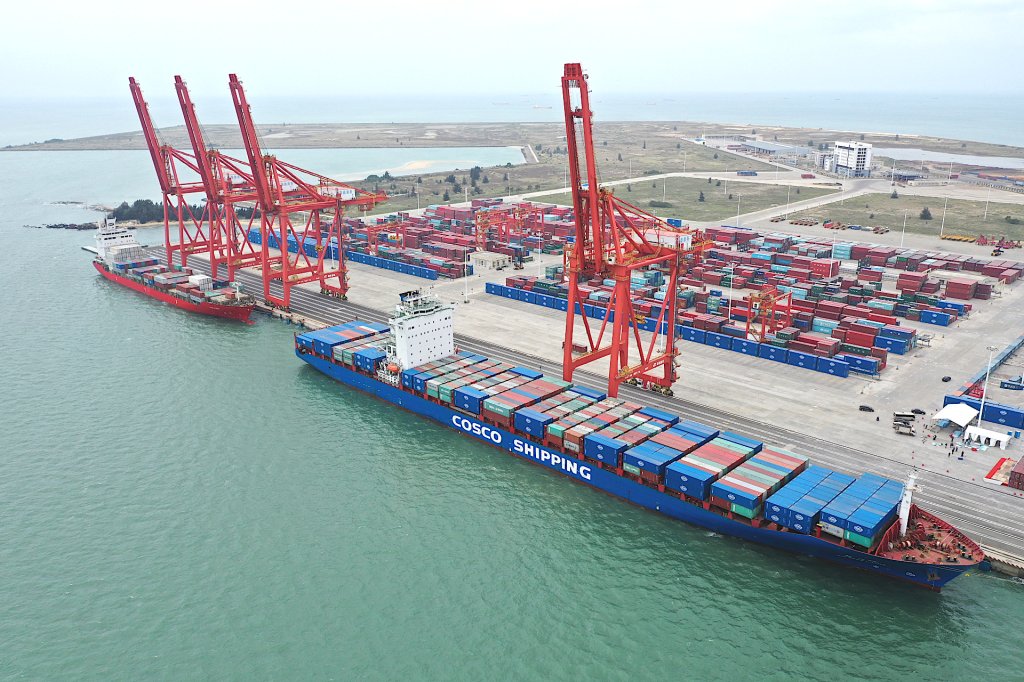
The Chungnam class (also sometimes referred to as the FFX-III or FFG-III) is the latest frigate for the South Korean Navy, and features a mix of anti-air, anti-ship, and anti-submarine capabilities. The first example entered service in that country in 2024. These ships are just over 423 feet long, approach 49 feet at the widest point in the hull, and displace some 4,300 tons with a full combat load. The design is based on the earlier Daegu class, which was itself an evolution of the preceding Incheon class that traces its roots back to the late 1990s.

As was the case on the Daegu class, the Chungnam class uses combined diesel–electric or gas (CODLOG) propulsion, which offers benefits for power management and efficiency, as well as when it comes to reducing maintenance requirements and operating costs. The design features a prominent integrated mast structure with four fixed-face arrays for the main multi-function AESA radar near the top. The ships have additional radars and other sensors, as well as an electronic warfare suite.
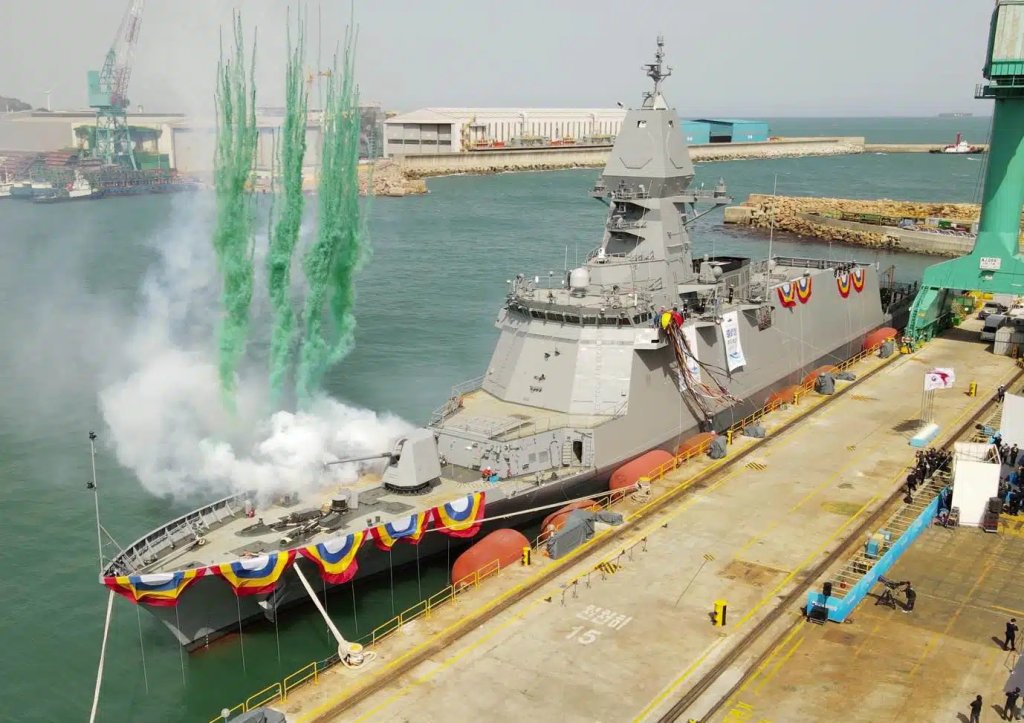
The ROKS seen at the time of its launch. HD Hyundai Heavy Industries

Each one of the Chungnam class frigates has a 16-cell K-VLS array. Domestically developed K-SAAM surface-to-air missiles and Haeseong I anti-ship cruise missiles (also called the SSM-700L or C-Star), as well as K745A1 Hong Sang Eo (Red Shark) vertically-launched anti-submarine rockets, can be loaded into these cells.

The armament package on these ships also includes a five-inch main gun in a turret at the bow, a pair of triple torpedo tubes, and a Close-in Weapon System II (CIWS II) armed with a seven-barrel 30mm Gatling-type cannon.

A look at the CIWS-II, which is part of the full armament package on the Chungnam class frigate. Hyundai WIA

The Chungnam class frigates also have a flight deck and hangar for a single helicopter at the stern.

As it stands now, the South Korean Navy has two Chungnam class frigates in service and has plans to acquire four more over the next few years. The lead ship in the class was built by HD Hyundai Heavy Industries, which is also one of the principal designers of the ship. A different shipbuilder, SK Oceanplant, built the second ship in the class, ROKS Gyeoungbuk, and is now working on the third and fourth examples. Hanwha Ocean is reportedly in line to build the last two ships in the class for South Korea. Hyundai and Hanwha have pitched export designs based on the Chungnam class, with both firms notably in the running to supply new frigates to Thailand.

Hanwha has already been making steady inroads in the shipbuilding industry in the United States, including the acquisition of the Philly Shipyard in Philadelphia, Pennsylvania, in 2024. Hyundai has reportedly been working to do the same. Just last month, Hanwha publicly announced a new $1.2 billion bid to buy out Australian shipbuilder Austal’s U.S. subsidiary, Austal USA. Austal notably built the Independence class LCSs for the U.S. Navy and continues to supply that service with other vessels. Austal subsequently said it was considering the South Korean offer.

The Istanbul class

Turkey’s Istanbul class (also known as the Istif class or just I class), developed under the country’s MILGEM national warship program, is not a design that has typically come up in previous discussions about potential foreign-made frigates for the U.S. Navy. It is described as a multi-role frigate with anti-air, anti-surface, and anti-submarine capabilities. The lead ship in this class, TCG Istanbul, entered Turkish Navy service in 2024.

At around 371 and a half feet long and with a beam of just over 47 feet, as well as a displacement of some 3,000 tons with a full combat load, the Istanbul class is notably smaller than either the Mogami class or Chungnam class. Like the Mogami, it uses CODAG propulsion. The Turkish design is understood to have leveraged lessons learned from the Project GENESIS program to upgrade the country’s second-hand ex-U.S. Navy Oliver Hazard Perry class frigates, as you can learn more about here.

TCG Istanbul is armed with a 16-cell MiDLAS VLS array, with past reports saying it is primarily configured to fire Hisar short-to-medium-range surface-to-air missiles. However, just in August, it was revealed that the second ship in the class, the future TCG Izmir, which is undergoing sea trials now, has a new 16-cell version of MiDLAS with visibly longer cells. This would allow the ship to fire larger weapons vertically, such as the Siper medium-range surface-to-air missiles, Atmaca anti-ship cruise missiles, and/or Gezgin land-attack cruise missiles. MiDLAS is a scalable VLS design developed in Turkey as an alternative to the U.S.-made Mk 41.
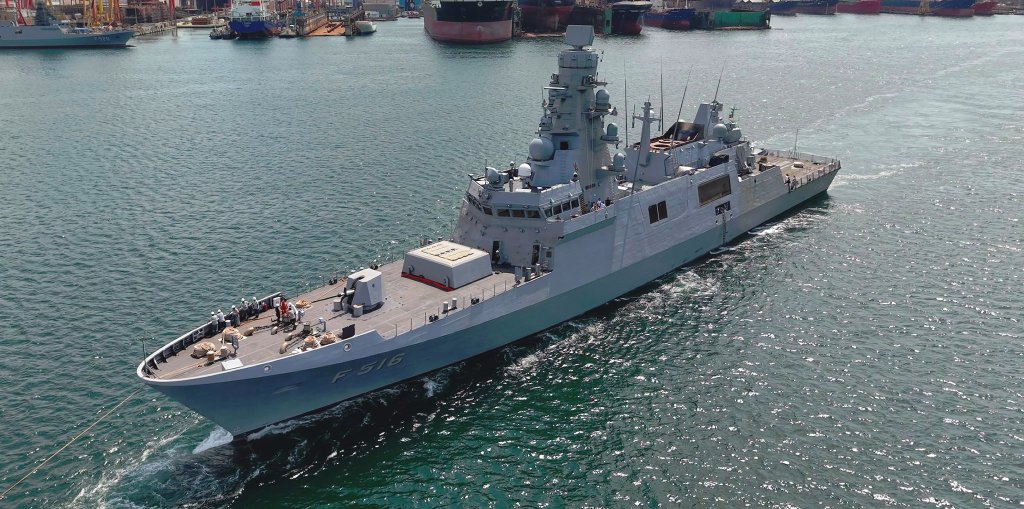
The future TCG Izmir with its noticeably larger VLS array in front of the main superstructure. Anadolu Shipyard

The initial Istanbul class design already had four deck-mounted launchers that can be loaded with up to 16 Atmaca missiles, in total. The frigates also have a 76mm cannon in a turret on the bow, a Gokdeniz CIWS with a twin-barrel 35mm cannon, two 25mm cannon-armed remote weapon stations, and a pair of twin torpedo tubes.

The main sensor on the Istanbul class is a rotating AESA radar mounted on top of the ship’s main integrated mast structure. It has additional radars and other sensors, as well as electronic support measures and electronic countermeasures systems.

The Istanbul class design also features a flight deck and hangar at the stern, sized around the Seahawk helicopter.
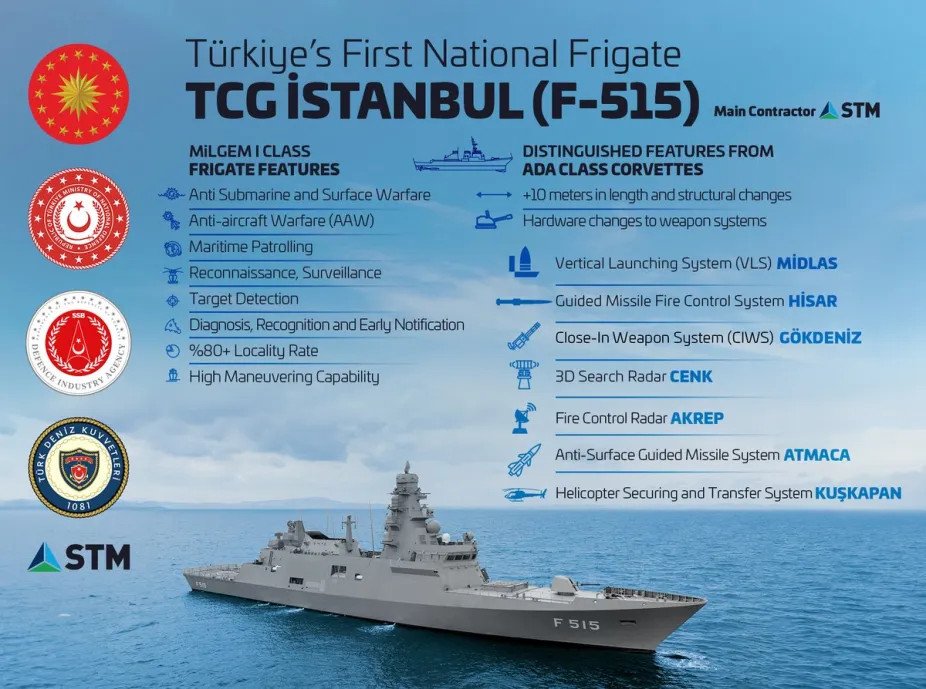
An infographic offering a general overview of the Istanbul class’ capabilities. STM via X

As mentioned, the second Istanbul class frigate for the Turkish Navy is now in sea trials, and the country plans to eventually acquire eight of these warships in total. They are being built through several shipyards in Turkey. Last year, Turkey’s TAIS Shipyards also secured a contract to build at least two Istanbul class frigates for Indonesia.

Growing U.S. roadblocks to any foreign warships

Much remains to be seen about how the U.S. Navy might proceed with the acquisition of new frigates, or any other naval vessels, via foreign shipbuilders. Whether any other relevant, in-production designs are being considered, or could be in the future, is unknown. USNI News‘ report says the current study is scheduled to wrap up in November.

Furthermore, what the Navy might want to do could well turn out to be moot. Members of Congress on both sides of the political aisle have been very vocally pushing back on any plans to acquire foreign warships amid concerns about negative impacts on the U.S. shipbuilding industry.

Current U.S. law would already require the Trump administration to issue a national security waiver to pursue foreign-made naval vessels. A draft of the annual defense policy bill, or National Defense Authorization Act (NDAA), for the 2027 Fiscal Year now making its way through the Senate would eliminate the ability to issue such a waiver. In June, members of the House Armed Services Committee separately moved to outright block any spending on foreign-built warships in a separate draft NDAA.

The aforementioned Finland Model, as outlined in Trump’s August memo, is clearly intended to try to assuage Congressional concerns. Under the stated plan, foreign shipbuilders would be required to make major investments in U.S. shipbuilding enterprises and hire American workers as part of any future contract, even if an initial tranche of vessels is built overseas.

A rendering of one of the future Arctic Security Cutter icebreakers the US Coast Guard is set to acquire in part through a shipyard in Finland. Seaspan

“The Administration strongly opposes section 1025, which would prohibit the use of funds for procurement of initial battle force ships to be built in a foreign shipyard, especially while, in accordance with the ‘Finland Model’ first employed with the Coast Guard’s medium icebreaker program, long-term investments are being made in an American brown or greenfield shipyard,” the White House’s Office of Management and Budget (OMB) wrote in a statement of Administration Policy in July, specifically in response to provisions in the the House’s NDAA draft. “This prohibition fails to seriously address the challenges posed by current shipbuilding backlogs across six major programs in our ‘prime’ shipyards.”

This latter point here speaks to an already worrisome and still-widening gap between U.S. shipbuilding capacity and that of chief global competitor China. The U.S. government has tried to take steps in recent years to revitalize the American side of the equation, but workforce retention and other factors have continued to present serious hurdles. There are additional concerns now about how the addition of work on the Trump class battleship program will affect America’s naval shipbuilding ecosystem, which the Trump administration has separately pushed back on.
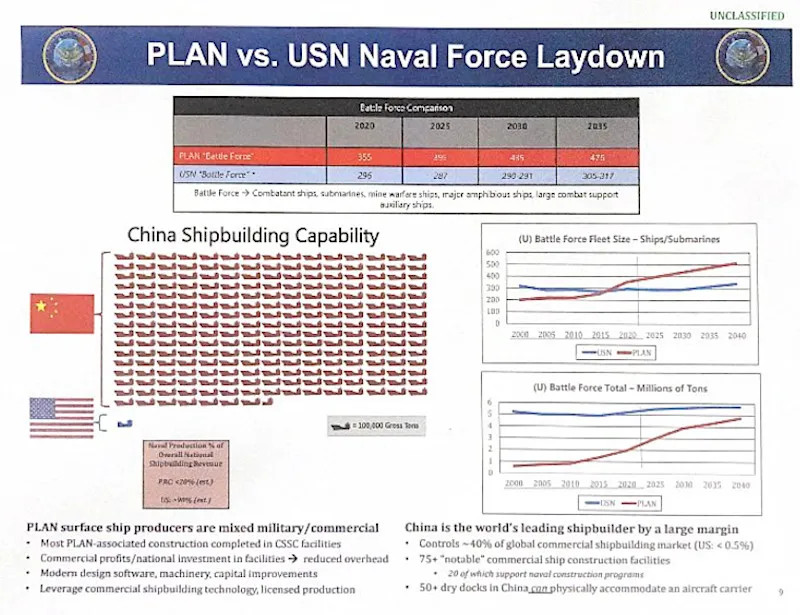
An unclassified Office of Naval Intelligence briefing slide from circa 2023 underscoring the disparity between U.S. and Chinese naval shipbuilding capacity. ONI

Continuing U.S. shipyard capacity and quality issues raise their own questions about the viability of the Finland Model. The construct inherently limits the U.S. government’s ability to make use of yards overseas and is heavily contingent on the shipbuilding industry in the United States expanding at a rate where it will be able to absorb the additional production demands. With the naval shipbuilding deficit already becoming extremely problematic, buying examples of relevant classes with minimal changes and having them built where production is already established could arguably be the priority, especially in light of the failures of the LCS and Constellation programs.

Ensuring that any U.S.-specific changes to the design are minimal will also be critical for any such plan to be successful. As mentioned, the Constellation class was undone in large part due to a near-constant stream of changes ordered by the Navy, which negated the benefits of choosing a derivative of an in-production design. The service has stressed its intention to avoid any similar pitfalls with its existing FF(X) frigate program, which also has to be factored into the larger domestic shipyard capacity question.

“The President has directed the Navy to aggressively increase domestic shipbuilding capacity, including leveraging the proven shipbuilding skills and industrial expertise of our allies,” Navy Capt. Ron Flanders said in a statement on Tuesday, according to USNI News. “We are actively developing options to fulfill the President’s intent to deliver ships faster while ensuring long-term investment, technology transfer, and workforce expansion within United States shipyards.”

Signs are certainly growing that the Navy is moving closer to kicking off a formal process to acquire foreign-designed warships, which could include Mogami, Chungnam, and/or Istanbul frigates, to help grow its fleets, especially in the face of growing challenges posed by China.

Contact the author: joe@twz.com

The post The Three Foreign Frigates Being Studied For Possible U.S. Navy Service appeared first on TWZ.
  •  

Ukrainian Sea Drones Strike Russian Black Sea Resort Town Of Sochi For The First Time

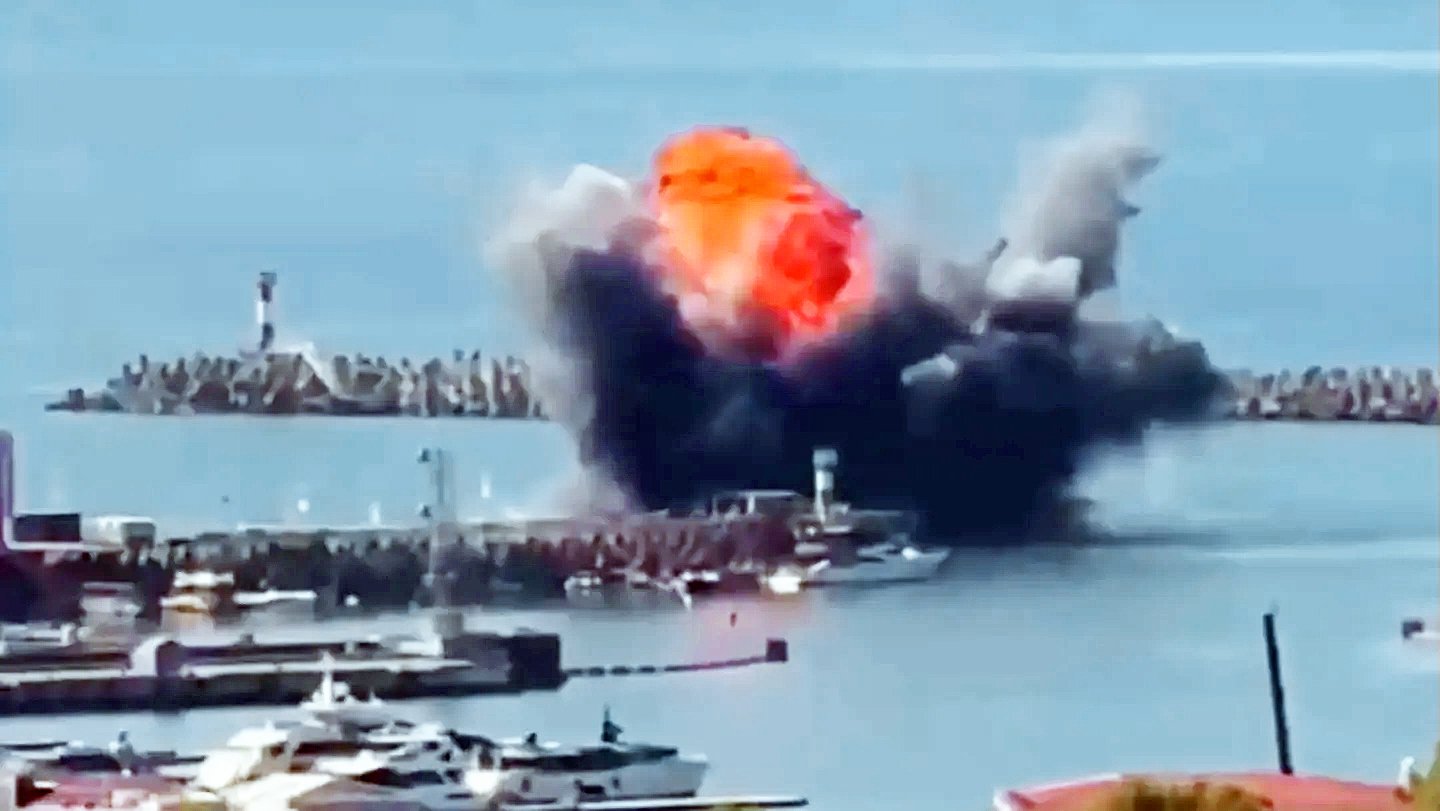
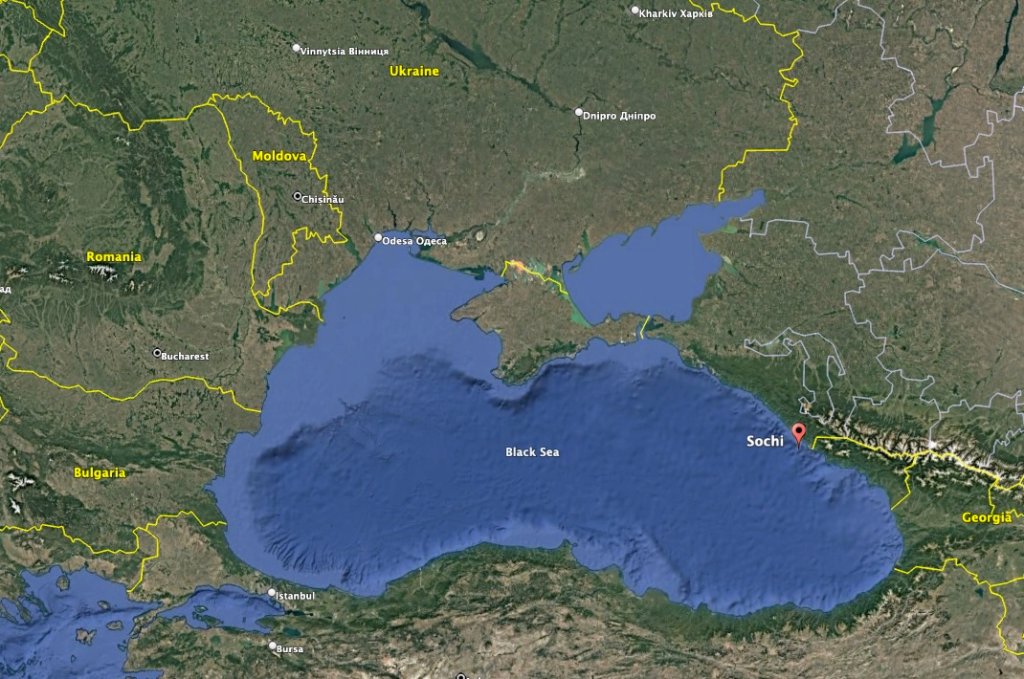
Ukraine carried out one of its farthest uncrewed surface vessel (USV) attacks from Ukrainian shores, striking the Nefrit, a multipurpose offshore vessel, in the Russian Black Sea resort city of Sochi. The seaside getaway is located about 350 miles on a direct line from the nearest Ukrainian-held territory, but the trip is a lot longer if originating from Ukrainian-held shores.

This marks the first known USV attack on this city that Russian President Vladimir Putin often visits. As we have reported in the past, it has been attacked several times by Ukrainian aerial drones.

The Russian Black Sea port of Sochi came under attack on Thursday. (Google Earth)

The Ukrainian Navy said it carried out the attack as part of the country’s campaign against Russia’s energy infrastructure. The Nefrit supported that infrastructure, the Ukrainian Navy claimed.

“The multipurpose support vessel, flying the Russian flag, was hit by an unmanned naval vessel of the Ukrainian Navy,” the service said on Telegram. “A powerful explosion and smoke were observed in the area of the vessel.”

“The NEFRIT is part of Russia’s maritime and energy infrastructure, providing support for oil and gas operations, servicing offshore facilities, transporting cargo and personnel, and carrying out underwater technical work,” the Ukrainian Navy explained. “Its activities directly supported the enemy’s war economy and financed the criminal aggression against Ukraine.”

“The damage to the NEFRIT is a blow to the enemy’s logistics, special capabilities, and military-economic infrastructure,” the Ukrainian Navy added. “The Ukrainian Navy continues to deprive the enemy of resources and capabilities for waging war, and once again demonstrates that even Russian territory is not a safe haven.”

🇺🇦⚓ВМС України уразили судно забезпечення рф NEFRIT у порту Сочі
Багатоцільове судно забезпечення під прапором рф було уражене морським безекіпажним катером Військово-Морських Сил. У районі судна зафіксовано потужний вибух та задимлення.

Детальніше https://t.co/DTfnO15nYO pic.twitter.com/yPDFkks37r

— Військово-Морські Сили ЗС України (@UA_NAVY) September 3, 2026

While the Ukrainian Navy claimed the Nefrit was damaged, the extent of that is hard to determine from imagery emerging on social media.

Some video, shot from inside the city, shows a large explosion at the port.

❗The moment of today’s explosion of a Ukrainian surface kamikaze drone next to a Russian ship in Sochi. pic.twitter.com/zpavwj97BW

— 🪖MilitaryNewsUA🇺🇦 (@front_ukrainian) September 3, 2026

The port in Sochi, Russia, came under attack from Ukrainian naval drones. pic.twitter.com/XygeQLaAWi

— Open Source Intel (@Osint613) September 3, 2026

A still picture shows smoke wafting from the Nefrit; however, the quality of the image makes it hard to determine the vessel’s condition.

Sochi: footage of this morning’s USV raid on the seaport.

The likely target was a Multipurpose Supply Vessel (MPSV) used to support offshore oil and gas operations. pic.twitter.com/Ndr5bRAYV5

— Exilenova+ (@Exilenova_plus) September 3, 2026

There is also video of one of the USVs being destroyed before it could reach its target.

Ukrainian sea drone sails into Sochi port in fascist Russia – appears to be hit by machine gun or cannon fire. https://t.co/GaCZHPu1DJ

— Euan MacDonald (@Euan_MacDonald) September 3, 2026

Starting at about 6 a.m. local time, Sochi Mayor Andrey Proshunin declared an emergency.

“ATTENTION! THREAT OF A USV ATTACK IN SOCHI,” he warned on Telegram. “All forces and resources are working to defend the city. Take shelter in a safe place, remain calm.”

Sochi Mayor Andrey Proshunin declared an emergency about an impending sea drone attack on Thursday. (Sochi Mayor Andrey Proshunin’s Telegram)

About a half hour later, Proshunin issued an all-clear notice, but did not provide any details about what happened.

Sochi Mayor Andrey Proshunin lifted the emergency about a half hour after it started. (Sochi Mayor Andrey Proshunin’s Telegram)

There was no immediate response from the Kremlin.

Ukraine has carried out long-distance USV attacks on Russian Black Sea targets in the past, including one in 2023 on the Ropucha class vessel Olenegorsky Gornyak, located in Russia’s Black Sea port of Novorossiysk. A major Russian port on the eastern coast of the Black Sea, it sits roughly 420 miles from Ukrainian-held shores. Sochi is about 110 miles southeast of Novorossiysk, meaning the USVs in today’s attack would have had to travel an even longer distance if launched from Ukrainian-held shores. However, the launch point of the Sochi USV strike is not publicly known and there is always the possibility that a mothership could have been used.

The attack occurring during broad daylight is also interesting, as Ukraine has often taken advantage of the cover of darkness for USV strike operations on port facilities.

You can see a video of that strike below:

Footage of the Ukrainian USV hitting the Russian Ropucha class LST. pic.twitter.com/ksLP9PZfE5

— OSINTtechnical (@Osinttechnical) August 4, 2023

The strike on the Nefrit is the latest in Ukraine’s long-running drone boat campaign in the Black Sea. This onslaught has already kept Russia’s Black Sea Fleet (BSF) at bay, forcing it to retreat from Crimea to Novorossiysk. Ukrainian USVs have also damaged enemy military facilities in occupied Crimea and the Kerch Bridge.

The Houthi rebels of Yemen actually pioneered the operational use of kamikaze USVs years ago. We first reported about this capability in January 2017, when an explosive-laden Houthi USV struck a Saudi frigate. Before that, Iran developed various crude kamikaze USVs and those capabilities soon migrated to their Houthi proxies, which put them to use in the Red Sea for the first time.

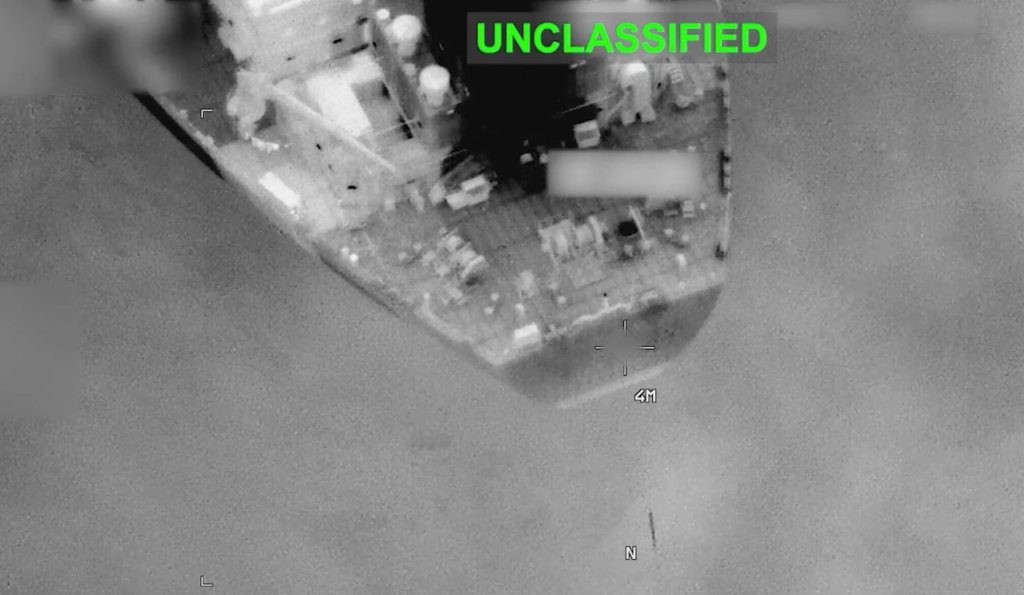
In July, the U.S. military used USVs as combat weapons for the first time, striking Iranian targets in Bandar Abbas. The following video shows that attack.

Yesterday, using multiple one-way attack surface drones, CENTCOM forces successfully struck a submarine and ship maintenance facility in Iran. Three Corsair unmanned surface vessels hit the port at Bandar Abbas Naval Base, marking the first time American forces have employed sea… pic.twitter.com/bOM2kmgRxz

— U.S. Central Command (@CENTCOM) July 13, 2026

It may be a day or so before we get a better picture of the extent of the damage to the Nefrit. Regardless, the attack itself is another sign that Ukraine can reach targets with sea drones far from its own shores.

The Latest

All across the battlefield, Ukrainian forces are largely holding off continued Russian attacks or are making small advances. Overall, in August, “Russian forces advanced or infiltrated into about 123.53 square kilometers — an average pace of 3.98 square kilometers per day,” according to the Institute for the Study of War (ISW). “Russian forces’ main territorial gains in August 2026 have been in the Fortress Belt area, Donetsk Oblast. Even there, Russian forces managed to achieve only marginal tactical gains and have thus far failed to complete the seizure of Kostyantynivka.”

Here are some key takeaways from the ISW assessment.

  • Kharkiv: Russian forces continued offensive operations in northern Kharkiv Oblast and the Velykyi Burluk direction on September 1 and 2 but did not advance. Russian forces also continued offensive operations in the Borova and Kupyansk directions on September 2 but did not advance. However, Moscow’s troops continued attempts to secure and expand the bridgehead on the left bank of the Oskil River to enable further infiltrations into Kupyansk.
  • Donetsk: Ukrainian forces recently defeated a Russian infiltration mission in the Slovyansk direction. They also recently maintained positions or advanced in the Dobropillya tactical area. Russian forces continued offensive operations in the Novopavlivka direction on September 1 and 2 but did not advance. Neither Ukrainian nor Russian forces reported ground activity in the Oleksandrivka direction on September 2.
  • Zaporizhia: Russian forces continued offensive operations in the Hulyaipole direction on September 1 and 2 but did not advance. Russian forces continued offensive operations in western Zaporizhia Oblast on September 1 and 2 but did not advance as Ukrainian forces counterattacked west of Orikhiv.
  • Kherson: Neither Russian nor Ukrainian forces reported ground activity in the Kherson direction on September 2.

MORE 🧵(1/3): ISW has observed evidence to assess that Russian forces consolidated positions in or seized about 90.35 square kilometers of territory in Ukraine in August 2026, averaging 2.91 square kilometers seized per day. Including Russian infiltrations, Russian forces… https://t.co/0RlwRfBdhs pic.twitter.com/Cp2Knry2Du

— Institute for the Study of War (@TheStudyofWar) September 2, 2026

Air traffic around Moscow continued to be disrupted on Thursday as Russian authorities responded to another large-scale Ukrainian drone operation, according to EU Today. The disruptions came two days after President Volodymyr Zelensky warned international airlines and insurers that Russian airspace was becoming increasingly unsafe for civilian aviation due to Ukrainian drone attacks.

Moscow Mayor Sergei Sobyanin said that 548 drones had flown towards the wider Moscow region between 8 a.m. on Wednesday and midday Thursday local time. However, Russian authorities claimed that most were intercepted before they could reach the Moscow area while 143 were destroyed on approaches to the Russian capital.

“Temporary restrictions were again imposed at Moscow’s principal airports,” EU Today noted. “Vnukovo and Domodedovo stopped arrivals and departures for periods during the operation, while Sheremetyevo handled flights under additional restrictions. The measures produced cancellations, delays and diversions extending beyond the periods in which individual airports were formally closed.”

The disruption “had already become extensive on Wednesday,” the publication added. “Flight-tracking data showed 21 cancellations and 235 delayed services at Sheremetyevo, Russia’s largest airport, while Vnukovo recorded 22 cancellations and 94 delays.”

⚡ Moscow airports cancel flights after Zelensky's 'closed skies' warning

"Temporary restrictions on the arrival and departure of aircraft have been introduced," Russia's Federal Air Transport Agency (Rosaviatsia) said.https://t.co/BAlAASaDv5

— The Kyiv Independent (@KyivIndependent) September 3, 2026

Putin on Thursday said there is a chance of resolving the “Ukrainian conflict” but Kyiv’s campaign to shut down Russian airspace is “complicating the negotiation process.”

Russia and Ukraine themselves must reach an agreement, while other countries can only support and assist, the Russian leader added, according to a translation from former Ukrainian government official Anton Gerashchenko.

Russia is in contact with the White House and President Donald Trump “is committed to positive and constructive engagement,” Putin proclaimed. “Russia has many friends in the United States. One of them is Steven Seagal, the ‘best envoy of peace.'”

Putin said there is a chance of resolving the "Ukrainian conflict" but Ukraine's threats to shut down Russian airspace are "complicating the negotiation process."

Comment from me: Putin's orders to attack Ukrainian energy infrastructure aren't complicating anything, it seems… https://t.co/QYJ3AKXjou pic.twitter.com/C1NKz3V7cH

— Anton Gerashchenko (@Gerashchenko_en) September 3, 2026

A Russian drone strike on an Odesa apartment building injured at least 17 people, including three children, Zelensky stated on X.

In Odesa, emergency services continue working at the site of a drone strike on an apartment building. Damage to apartments from the 10th through the 17th floors left 17 people injured, including three children. Efforts are also ongoing to deal with the aftermath of the strikes in… pic.twitter.com/FWAmFNJSYp

— Volodymyr Zelenskyy / Володимир Зеленський (@ZelenskyyUa) September 3, 2026

Overall, Ukraine says its air defenses downed or suppressed 135 of 163 Russian drones launched overnight, including Shahed-type UAVs, about half of which were jet-powered. Russia also used S-8000 Banderol, Gerbera and decoy drones. Hits were recorded at 15 locations and debris fell at four.

Ukraine says air defenses downed or suppressed 135 of 163 Russian drones launched overnight, including Shahed-type UAVs, about half of them jet-powered. Russia also used S-8000 Banderol, Gerbera and decoy drones. Hits were recorded at 15 locations and debris fell at four.… pic.twitter.com/JyxTS6QBzL

— NOELREPORTS 🇪🇺 🇺🇦 (@NOELreports) September 3, 2026

Russia has been increasingly using jet-powered drones to attack Ukraine. The Ukrainian Defense Ministry released video it says shows troops from the 208th Anti-Aircraft Missile Brigade downing one of those drones. The jet powered Shahed-like one-way attack drones fly higher and faster than their propeller-driven cousins, making them harder to intercept by more cost effective and plentiful means, such as Ukraine’s many drone interceptors. Instead, much more expensive and increasingly scare missile must be used in some circumstances.

💥Shaheds down!

Jet-powered Russian strike drones intercepted on September 2.

📹: 208th Anti-aircraft Missile Brigade pic.twitter.com/ZXkbZMO5an
— Defense of Ukraine (@DefenceU) September 3, 2026

What appears to be the first video of Ukrainian troops using Cold War-era Leopard 1 tanks with turrets swapped out for the Rheinmetall Skyranger 35 short-range air defense system has emerged on social media. The @deaidua X account that tracks German war materiel donations to Ukraine said the 1020th Anti-Aircraft Missile Regiment recently took delivery of this system, designed to be a highly mobile counter to a range of aerial threats.

The Skyranger 35 “is equipped with a KDG 35/1000 revolver cannon in 35 mm x 228 caliber with a firing rate of 1,000 rounds per minute,” according to Rheinmetall, which began delivering these to Ukraine in January. “It has an effective range of up to 4,000 meters and a high degree of commonality with the Oerlikon Revolver Gun Mk 3. Thanks to AHEAD technology, the Skyranger 35 is airburst-capable. In the future, it will also be possible to equip it with modern guided missiles.”

It seems that Ukraine's 1020th Anti-Aircraft Missile Regiment which belongs to the Ground Forces has taken delivery of the first Skyranger 35 SPAAGs mounted on a Leopard 1 chassis made by @RheinmetallAG.

A contract for the delivery of the Skyranger 35 SPAAGs was signed in H2 of… pic.twitter.com/VRWhGx1LCa

— GAU (@deaidua) September 3, 2026

A new documentary about Ukraine’s use of the combat-proven National Advanced Surface-to-Air Missile System (NASAMS) air defense system debuts tomorrow.

“Sky Defenders is a new documentary taking audiences inside the increasingly critical battle to protect the skies of Europe and Ukraine,” according to the film’s producers. “Launching globally on Apple TV and Amazon Prime on Sept. 4, the 50-minute film explores the people, technology and strategy behind modern air defense and the race to stop missiles and drones before they reach their targets.”

A new video shows a Russian soldier being attacked by three Ukrainian kamikaze drones simultaneously, underscoring just how dense the drone threat has become to troops near the front.

That kind of attrition is also visible around Pokrovsk, where Ukrainian kamikaze drones are increasingly coordinating strikes against individual Russian infantrymen and small assault groups.https://t.co/HfKBCW7ZOm

— ZSU News (@ZSUNews) September 3, 2026

It’s been more than three years since the Russians captured the town of Bakhmut in the eastern Donetsk region after a long battle that incurred a tremendous toll on personnel and equipment on both sides of the fight. New drone video has emerged showing the city remains in ruins, with blocks and blocks of vacant and destroyed buildings.

A harrowing new video from Bakhmut, filmed in the summer of 2026. The Ukrainian city was captured by the Russians three years ago and has lain in ruins ever since.

In this once-vibrant city of 72,000 inhabitants, there are no longer any shops, schools, kindergartens, cafés,… pic.twitter.com/clFfLu5jkq

— Jürgen Nauditt 🇩🇪🇺🇦 (@jurgen_nauditt) September 3, 2026

That’s it for now. We’ll update this story with new details when they emerge.

Contact the author: howard@twz.com

The post Ukrainian Sea Drones Strike Russian Black Sea Resort Town Of Sochi For The First Time appeared first on TWZ.

  •  

First USAF F-15EX To Be Based In Japan Departs Boeing’s St. Louis Plant

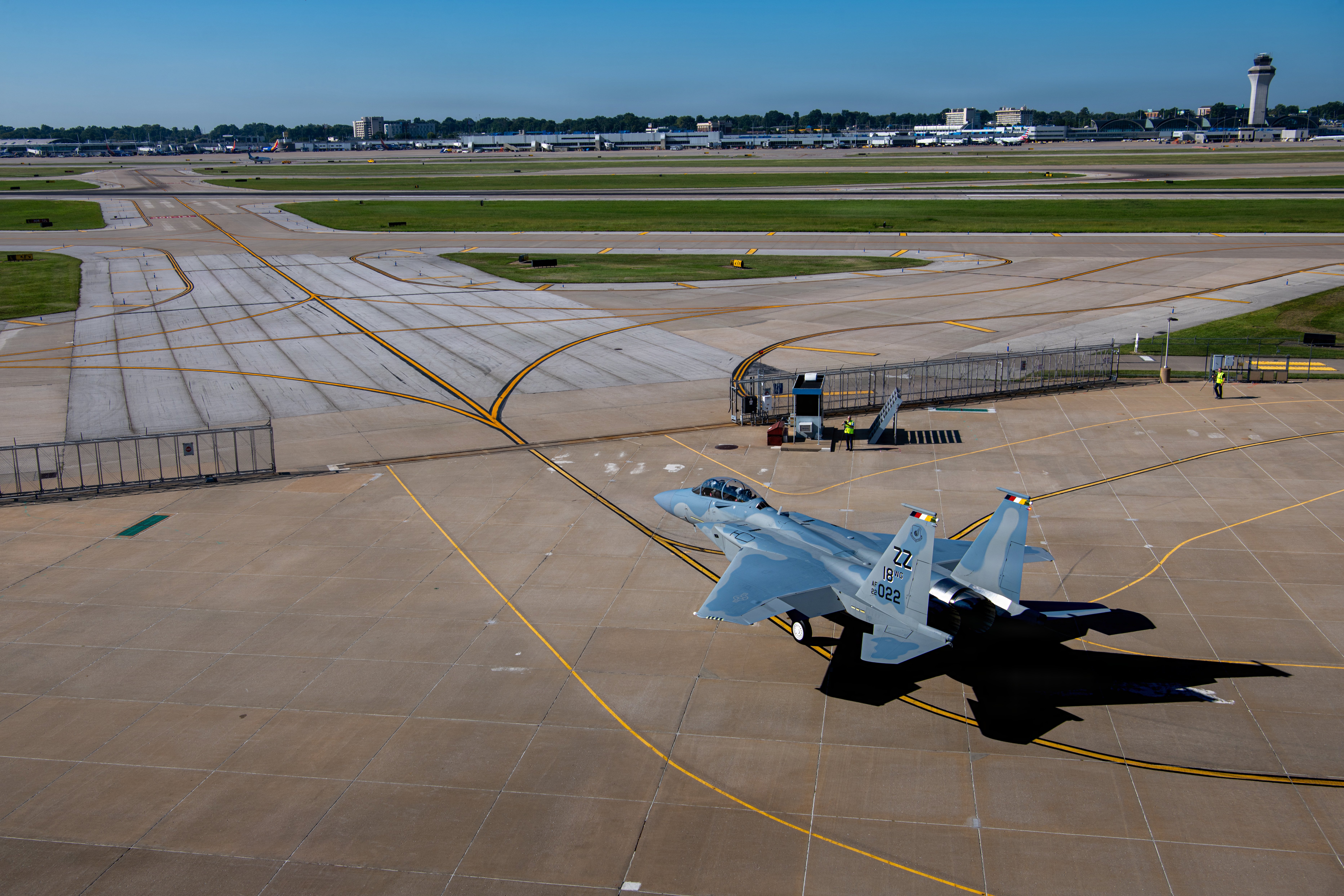
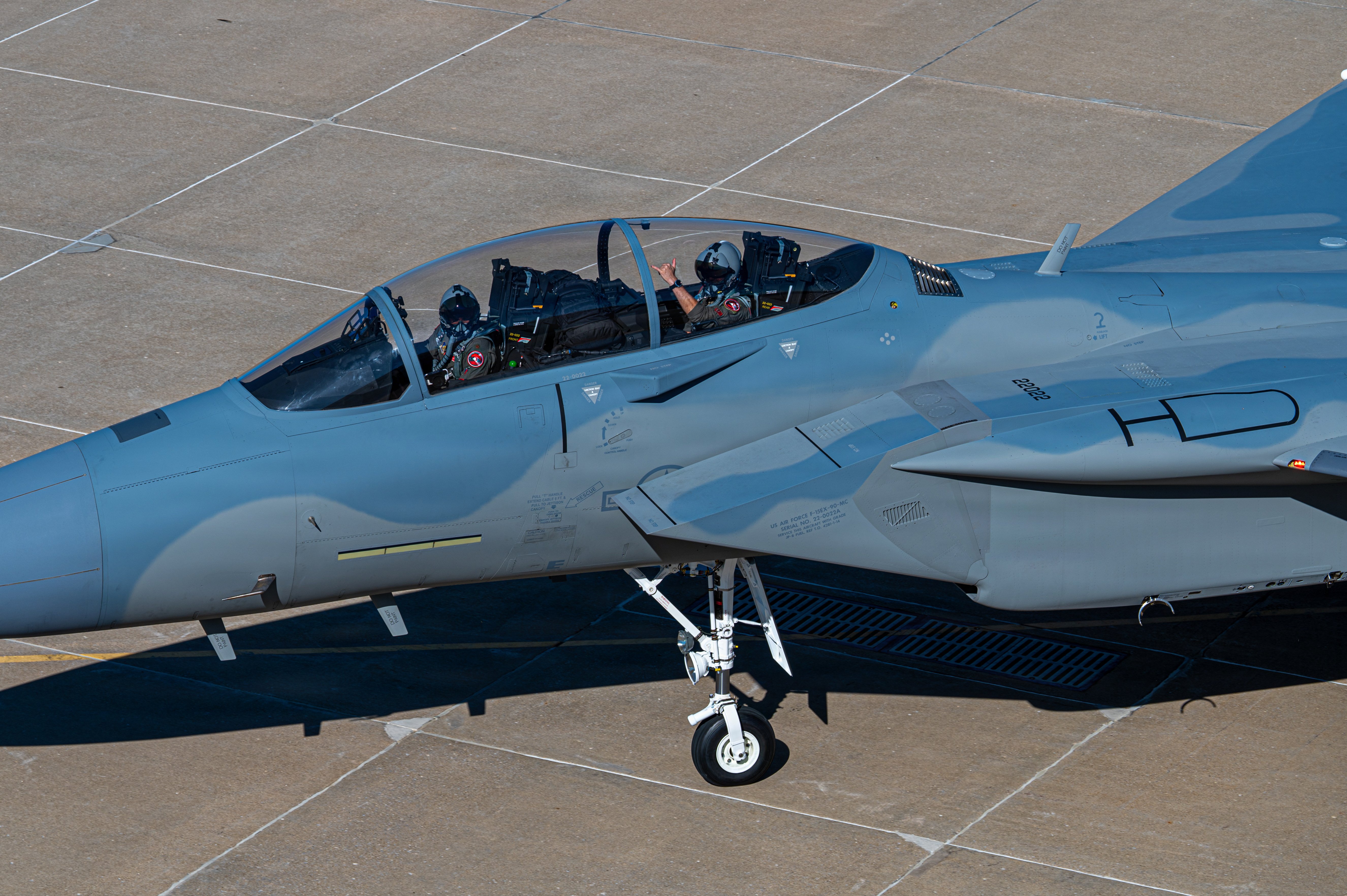
The first F-15EX Eagle II destined for permanent assignment at Kadena Air Base in Okinawa departed Boeing’s St. Louis, Missouri, facility on August 28, 2026. The aircraft left St. Louis for the 142nd Wing at Portland Air National Guard Base, Oregon, where it will undergo final staging and integration preparations before its eventual deployment to the sprawling Okinawa installation it will call home. The Oregon unit is acting as a coordination and preperation unit for the 18th Wing, a function you can read more about in our interview with the wing’s commander.

A U.S. Air Force F-15EX Eagle II designated for Kadena Air Base, Japan, taxis at Boeing’s St. Louis facility, Aug. 28, 2026, before departing for Portland Air National Guard Base, Oregon. The milestone brings the 18th Wing another step closer to the permanent stationing of the Air Force’s most advanced iteration of the Eagle platform at Kadena. (U.S. Air Force photo by Senior Airman Melany Bermudez)
A first F-15EX Eagle II designated for Kadena Air Base, Japan, taxis at Boeing’s St. Louis facility. U.S. Air Force photo by Senior Airman Melany Bermudez

This departure represents a critical, long-awaited milestone for the 18th Wing, which has been working toward the permanent stationing of the service’s most advanced Eagle variant to replace its now-withdrawn F-15C/D fleet. The arrival of the F-15EX in Japan, expected to begin in fiscal year 2027, which begins on October 1, 2026, will be a central pillar in the Air Force’s modernization of tactical airpower in the Indo-Pacific region.

EXciting progress for F-15EX!

We've delivered the 22nd F-15EX to the @usairforce. The aircraft will be the first F-15EX destined for @KadenaAirBase in Japan. pic.twitter.com/RlrTKuCCFl

— Boeing Defense (@BoeingDefense) September 3, 2026

“This is an important next step toward bringing the F-15EX home to Kadena,” said Brig. Gen. John Gallemore, 18th Wing commander, in an Air Force release. “Our team is ready to welcome the F-15EX, and this is another milestone that brings us closer to putting this capability in the hands of the airmen who will fly, maintain and employ it from Japan.”

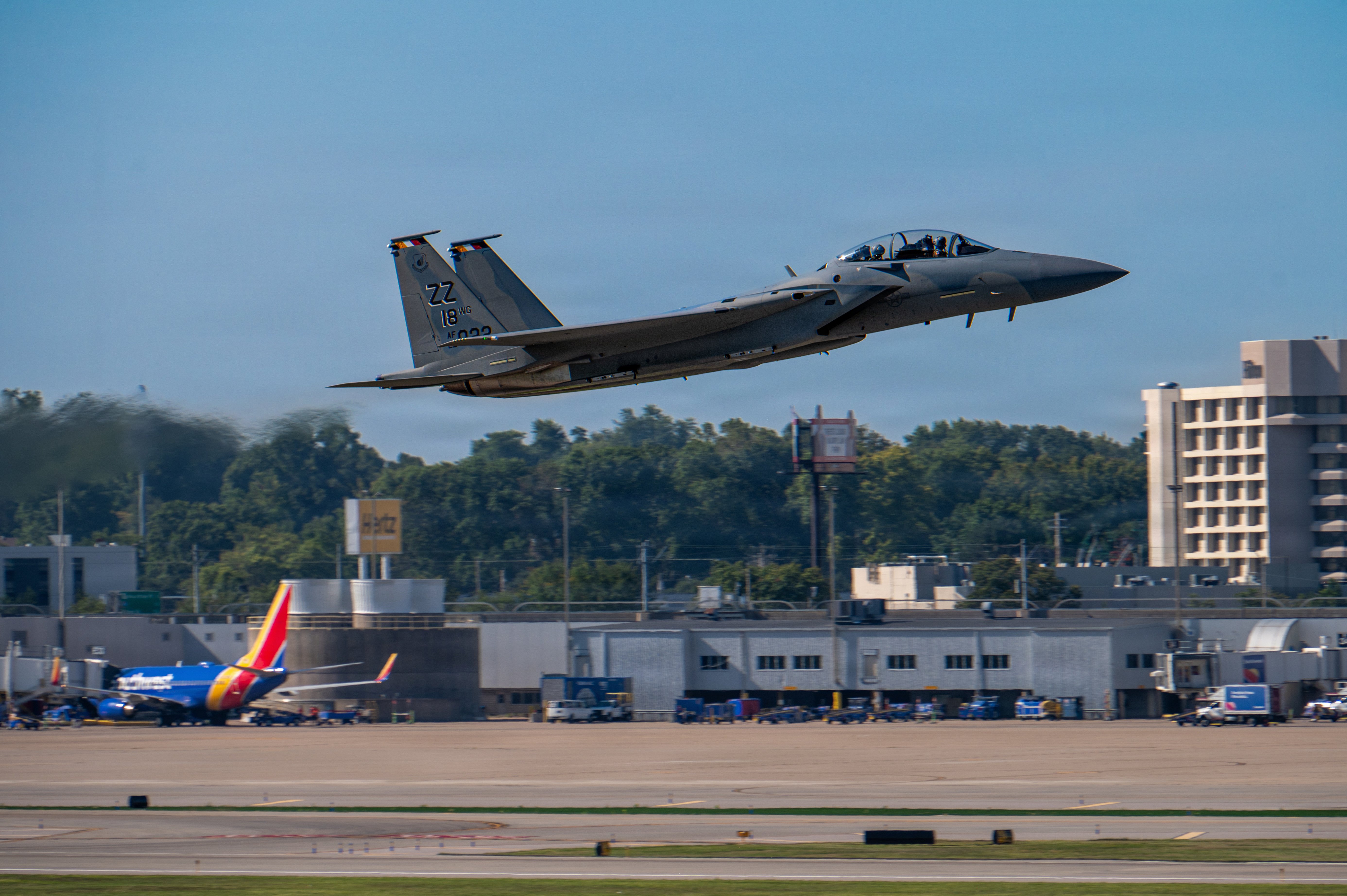
A U.S. Air Force F-15EX Eagle II designated for Kadena Air Base, Japan, departs Boeing’s St. Louis facility, Aug. 28, 2026, en route to Portland Air National Guard Base, Oregon. While in Portland, the aircraft will receive additional updates and preparations for its future stationing at Kadena. F-15EX aircraft are scheduled to begin arriving at Kadena in fiscal year 2027. (U.S. Air Force photo by Senior Airman Melany Bermudez)
The first F-15EX for Kadena Air Base, Japan, at Boeing’s St. Louis facility last month. U.S. Air Force photo by Senior Airman Melany Bermudez

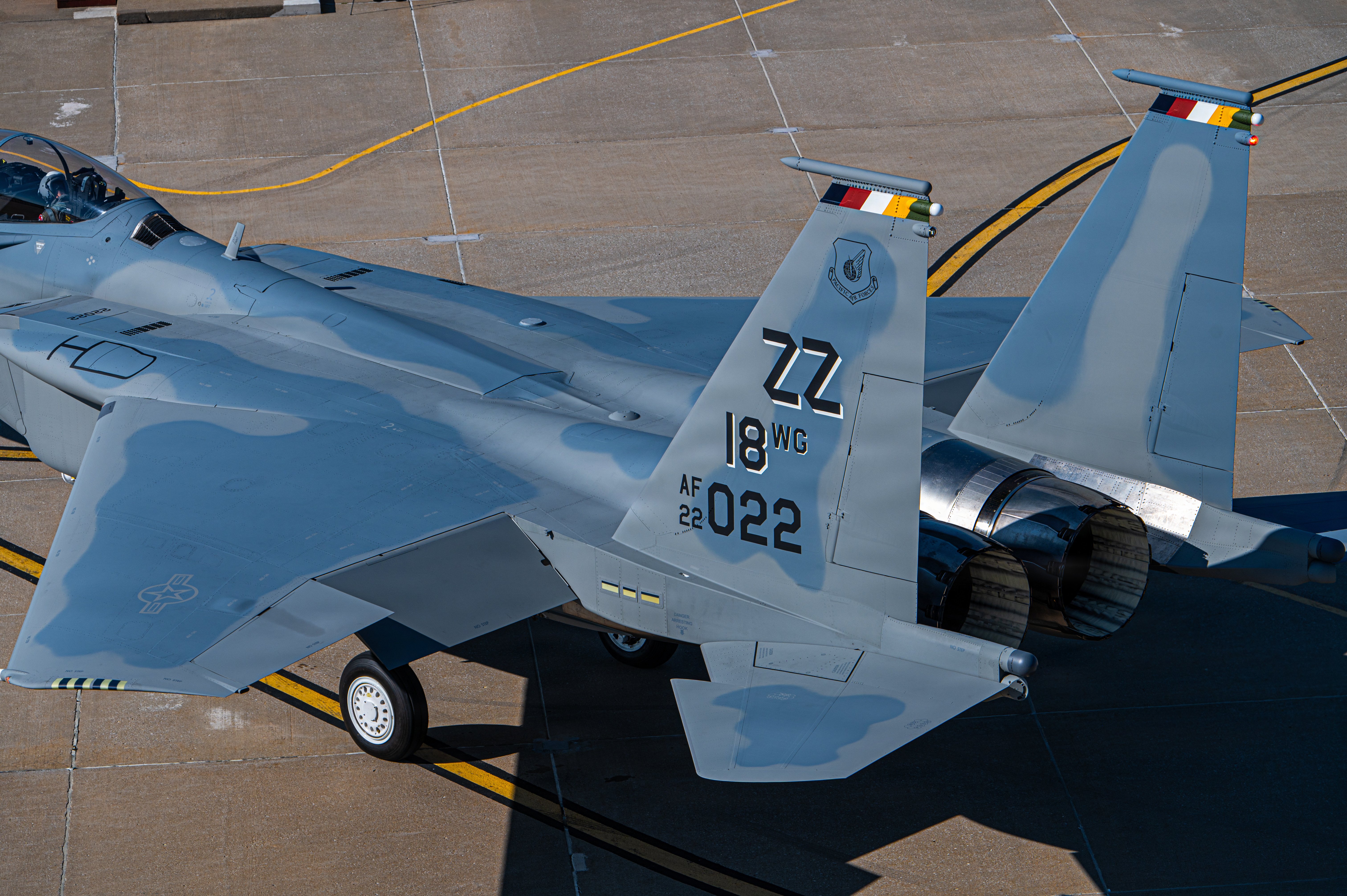
The first F-15EX for Kadena’s 18th Wing, serial 22-0022, was noted flying test sorties from St. Louis in early August, initially in primer paint. By the middle of the month its was flying with its full livery, including the famous “ZZ” tail code.

The F-15EX is a significant jump in capability over the legacy Eagles. With modernized avionics, flight controls, an expanded electronic warfare suite, and increased weapons carriage — as well as potentially new and longer-reaching weapons — the jet is well-suited to operating in the vast Western Pacific. As Kadena prepares for the permanent arrival, the 18th Wing plans to integrate the EX with regional allies, including the Japan Air Self-Defense Force, building upon existing bilateral training exercises.

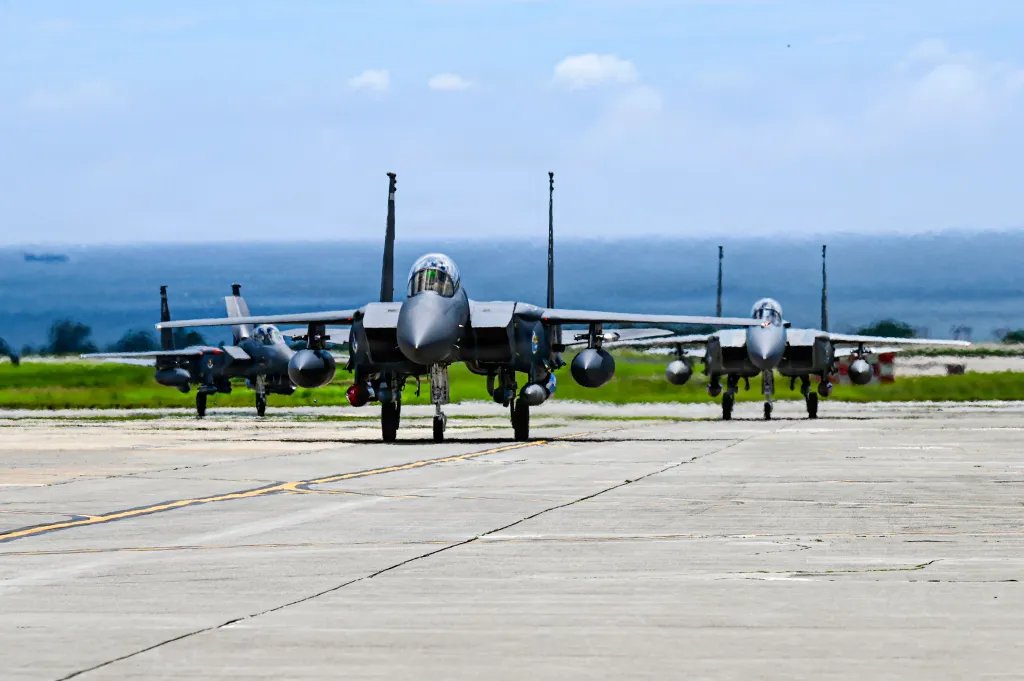
A U.S. Air Force F-15EX Eagle II and F-15E Strike Eagles assigned to 85th Test and Evaluation Squadron, Eglin Air Force Base, Florida, land at Kadena Air Base in June 2026. U.S. Air Force photo by Airman 1st Class Gracelyn Hess

Two active-duty squadrons of F-15EXs are set to be established at Kadena, taking the place of units previously based there that had flown F-15Cs. The Air Force has been deploying F-15Es, F-22s and other fighters to the base on a rotational basis to fill the gap in the meantime.

The F-15EX will give U.S. forces in the Indo-Pacific a high-capacity platform that complements the fifth-generation F-22 and F-35. With its ability to carry large air-to-air and air-to-surface payloads, the Eagle II can serve as a long-range “missile truck,” extending the reach and firepower of stealth aircraft operating closer to contested airspace. Its open-architecture systems also allow it to incorporate new sensors, weapons, and electronic warfare capabilities more readily than the aging F-15C/D fleet.

A U.S. Air Force F-15EX Eagle II designated for Kadena Air Base, Japan, is photographed at Boeing’s St. Louis facility, Aug. 28, 2026. Equipped with advanced avionics, radar and electronic warfare systems, the F-15EX represents the latest evolution of the Eagle platform and the modernization of U.S. tactical airpower. (U.S. Air Force photo by Senior Airman Melany Bermudez)
The first F-15EX designated for Kadena Air Base, Japan, is photographed at Boeing’s St. Louis facility, on August 28, 2026. U.S. Air Force photo by Senior Airman Melany Bermudez

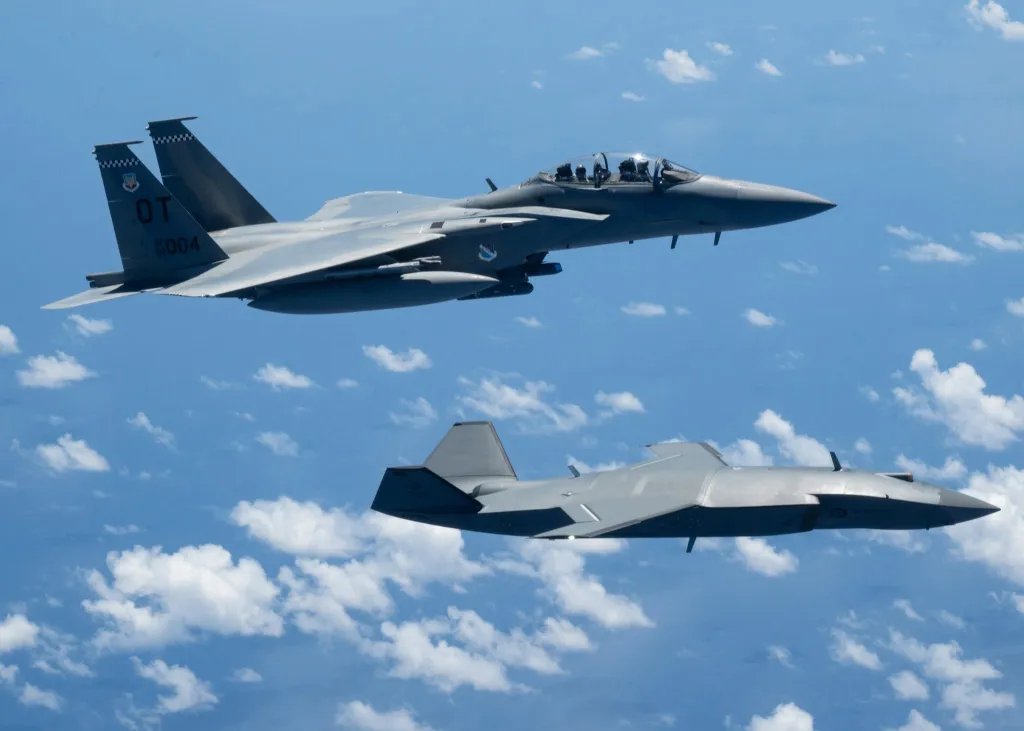
The aircraft’s value is also tied to its role in networked operations. Exercises such as Valiant Shield have demonstrated how the F-15EX can work with uncrewed aircraft like the  MQ-28 Ghost Bat, pointing toward mixed formations in which crewed fighters provide weapons, sensing, and command-and-control capacity for autonomous wingmen. Operating from strategic locations such as Kadena, the Eagle II could help the Air Force generate more combat power across the vast Pacific while reducing the burden on its limited number of stealth fighters.

A U.S. Air Force F-15EX Eagle II accompanies an MQ-28 Ghost Bat during the U.S.-led Valiant Shield 26 military exercise. PACAF

Kadena will become the second Air Force location with combat-coded F-15EX aircraft, following the Oregon Air National Guard’s 142nd Wing.

The Air Force has previously announced plans to stand up National Guard F-15EX squadrons in California, Louisiana, and Michigan. Most recently, the Air Force announced plans to put F-15EX fighters at Seymour Johnson Air Force Base, North Carolina, to replace older F-15E Strike Eagle jets that will move to Whiteman Air Force Base, Missouri.

While the movement of this first Kadena-bound F-15EX is a positive step, the wider Eagle II program is currently navigating some issues. According to a new Pentagon selected acquisition report released in August, the Air Force’s decision to aggressively expand its F-15EX fleet from 129 to 267 jets — intended to recapitalize the older F-15E force — has introduced substantial cost and schedule uncertainties that officials are now scrambling to manage.

A U.S. Air Force F-15EX Eagle II designated for Kadena Air Base, Japan, taxis at Boeing’s St. Louis facility, Aug. 28, 2026, before departing for Portland Air National Guard Base, Oregon. The milestone brings the 18th Wing another step closer to the permanent stationing of the Air Force’s most advanced iteration of the Eagle platform at Kadena. (U.S. Air Force photo by Senior Airman Melany Bermudez)
The first F-15EX designated for Kadena Air Base, Japan, taxis at Boeing’s St. Louis facility, before departing for Portland Air National Guard Base, Oregon. U.S. Air Force photo by Senior Airman Melany Bermudez

The report warns that the extended acquisition strategy, which shifted from eight production lots to 12, will require Boeing to execute a “major technical refresh” to combat diminishing manufacturing sources and material shortages. As systems like the radar, mission computer, and engines face potential obsolescence over the now-lengthened production timeline, the service faces what the report characterizes as a “significant redesign effort.” Program managers are planning to mitigate these risks by integrating upgrades through operational flight program releases scheduled between 2031 and 2035, a strategy they describe as a “structured, risk-reduced pathway” to avoid production line gaps.

Compounding these technical challenges are tangible production delays, largely stemming from a labor strike at the St. Louis plant from August to November 2025. The report notes that these are “unrecoverable delays,” forcing a cascading schedule slip. While Boeing was contracted to deliver all 12 jets from Lot 3 by early 2026, the company will only be able to field half of those by the end of the year. This has directly impacted the timeline for the Kadena deployment, which was originally envisioned for earlier in 2026, and has left the Air Force relying on “bridging strategies” and rotations to cover operational requirements until the Eagle IIs can fully stand up in Okinawa.

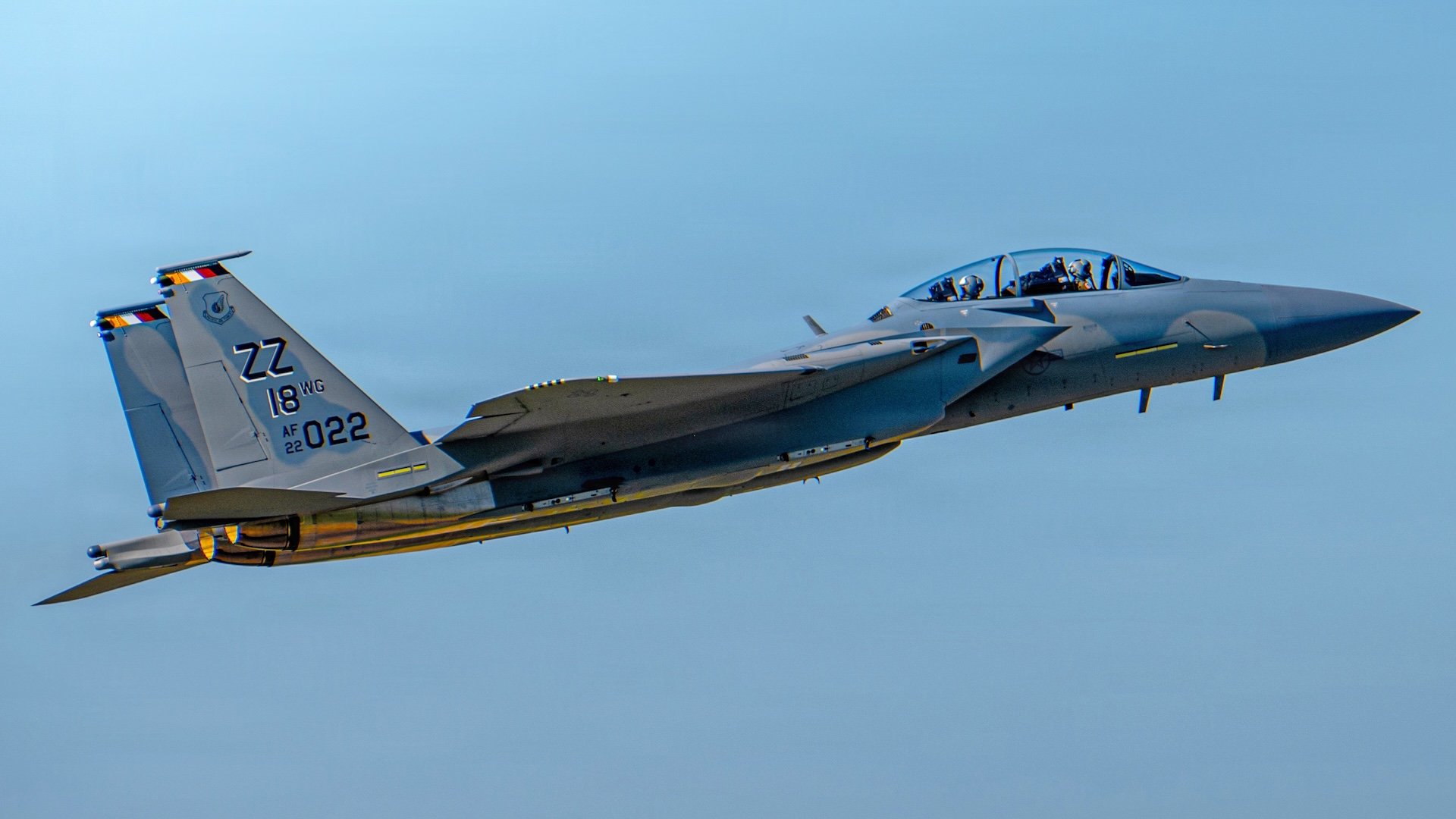
A U.S. Air Force F-15EX Eagle II designated for Kadena Air Base, Japan, flies en route to Portland Air National Guard Base, Oregon, after departing Boeing’s St. Louis facility, Aug. 28, 2026. The F-15EX will modernize Kadena’s permanent fighter force, providing advanced capabilities to strengthen readiness and support the enduring U.S.-Japan defense partnership. (U.S. Air Force photo by Senior Airman Melany Bermudez)
The first F-15EX for Kadena Air Base, Japan, flies en route to Portland Air National Guard Base, Oregon, after departing Boeing’s St. Louis facility, on August 28, 2026. U.S. Air Force photo by Senior Airman Melany Bermudez

The Pentagon is now moving toward an aggressive production ramp-up, tasking Boeing to hit a rate of two jets per month. Keeping the F-15EX schedule on track will be a challenge, however, requiring successfully navigating ongoing parts shortages for critical systems, all while balancing the needs of foreign military sales customers who are also integrated into the supply chain.

For the 18th Wing, the arrival of the first F-15EX will bring a major advance in capabilities in a part of the world that needs them badly. At the same time, the program’s overall trajectory suggests that the wider transition to the new Eagle will come with some complex logistical and industrial challenges.

Contact the author: thomas@thewarzone.com

The post First USAF F-15EX To Be Based In Japan Departs Boeing’s St. Louis Plant appeared first on TWZ.

  •  

How Drone Detection Is Evolving To Counter Smaller, Faster, And Swarm Threats

It’s the dead of night when the buzz of the engines of a series of Shahed-136 one-way attack drones breaks the silence. Carrying their lethal payloads the drones slip into the darkness with a distant supply base as their target. Tracking, identifying, and then destroying this swarm of drones is no easy task.

The unmanned aircraft system (UAS) threat environment is changing rapidly with an increasing variety of killer drones that demand differing methods of tracking and identification to engage and defeat them. Operational users are learning from rapidly-evolving- conflicts, and modern air defense methods increasingly rely on scalable, layered, and persistent sensing teams that can detect and track small, fast, low-altitude, and even swarming, aerial threats in all kinds of complex situations, on land or at sea.

A layered system is required to tackle the toughest drone threats. USAF

Ray Bischoff served active-duty with the U.S. Army for nearly 25 years, and he’s now the senior director of business development at Leonardo DRS, specialising in evaluating tactical formations and defensive requirements at all operational levels throughout the Department of War and allied nations. He is particularly focused on emerging threats from drones..

Bischoff spoke at length with TWZ’s Jamie Hunter about the use of tactical radar systems as part of a layered counter-drone system that is sufficiently versatile to tackle the toughest drone problems now, and what may come in the near future.

JH: Can you set the scene with regards to how you see the counter-UAS mission right now from a sensing perspective.

RB: The counter-UAS environment is changing and advancing very quickly. At the top level, we need to employ a variety of sensor systems – in this particular case we’re talking about tactical radars – but there are many other types of sensors, and at the highest end of the threat level it’s about connecting these together into a networked architecture.

Layering different systems in depth is vital, both from a communications architecture perspective and physically layering them in different places to protect different routes or avenues of approach, or sensitive facilities.

Look at the Strait of Hormuz, for instance, which is a vast area, with a layered and networked system to maximize the depth of coverage. The primary reason for this is that the biggest enemy in many situations like these is time. That networked architecture and having sensors in depth really gains you time, which gives you opportunities to make a better decision, time to reposition, to better evaluate. You need time to evaluate what different things in space are doing, where they’re going or where they’re coming from.

JH: When you say layered, are you talking about different systems that can look in different ways over different distances and systems in different positions that help you with that time element? What does layered actually mean?

RB: You can layer different types of sensors. Think of baseball. If all your players are home-run hitters, you probably aren’t going to do very well. You need to have different skills across your team to succeed, and it’s the same thing here. Layering of radar sensing bands, different types of technology such as electro-optic and infra-red that “see” in long, short and midwave, acoustic sensors, electronic warfare sensors to look for signals and other types of energy. It’s also about physically layering them in space, or depth.

Large drone swarms are particularly challenging to defend against. U.S. Army

We often see large exquisite sensors that have a lot of range and cover a large area. But this makes them susceptible to being targeted and destroyed. Layering sensors gives you redundancy, retaining the ability to defend. So, this is layering both in physical location, and in different types of technology.

This way, if one of your sensors is taken down by any means – for example by electronic countermeasures – your other systems can theoretically continue to operate. Just think how you can see, smell, touch, taste – it’s the same concept with layering different types of technologies, which is exactly what we at Leonardo DRS do and we integrate them so we can interact and share information to maximize the benefits of this layered approach. A team ultimately makes the sensors more effective across networks and architectures.

JH: Presumably you get good indicators on developments from the current operations in Ukraine. You already mentioned the Strait of Hormuz as well. What are the big lessons that you’re getting here about different types and sizes of drones?

RB: Without going into the details of combat operations, the bottom line is you have to advance your technologies at the rate or as close to the rate of the advancement of the weapons systems that are being utilized. We’re seeing a mixture of things when it comes to the UASs; that’s larger craft that are getting faster and can carry heavier payloads, or smaller ones with longer ranges that can move through areas almost undetected. 

There’s been so much investment in UAS technology, and they are becoming cheaper and easier to manufacture. People can 3D-print these things in their houses now. So, looking at this from a sensing perspective, that layering is becoming increasingly important.

We are looking to do things to counter these developments, such as maybe elevate the sensors to “see” across the top of the trees or place a sensor down in a valley – so that adds layering in altitude or elevation to remove blind spots. Just like the military, if you’re setting-up a defensive position, you have to cover what we called “dead space” where you can’t see with eyes or sensors from ground level.

Leonardo DRS’ 202 Expeditionary Skid (U-KIT-0091) is based on the company’s Extended Multi-Mission Hemispheric Radar. Leonardo DRS

JH: Can we dig further into the role of tactical radars in counter-UAS, specifically Leonardo DRS’ 202 Expeditionary Skid, which I believe is based on your Extended Multi-Mission Hemispheric Radar [exMHR].

RB: Radars “see” things that are physically present in space and time, and that’s why they are such great tools in the counter-UAS kit bag of sensors. That said, some radars are affected by weather and other factors, some work better in particular environments.

The 202 Expeditionary Skid is a new system from Leonardo DRS that uses our long-range exMHR, which is a software-defined AESA [Active Electronically Scanned Array] pulse-Doppler radar. It operates in the S-Band and that’s a very reliable band for all weather conditions including strong performance in dust storms and rain. When you get into K, Ku, and X-bands, they typically have smaller beams and therefore greater accuracy, but they suffer in poor weather and can become extremely degraded. S-band radar suffers significantly less degradation in that environment.

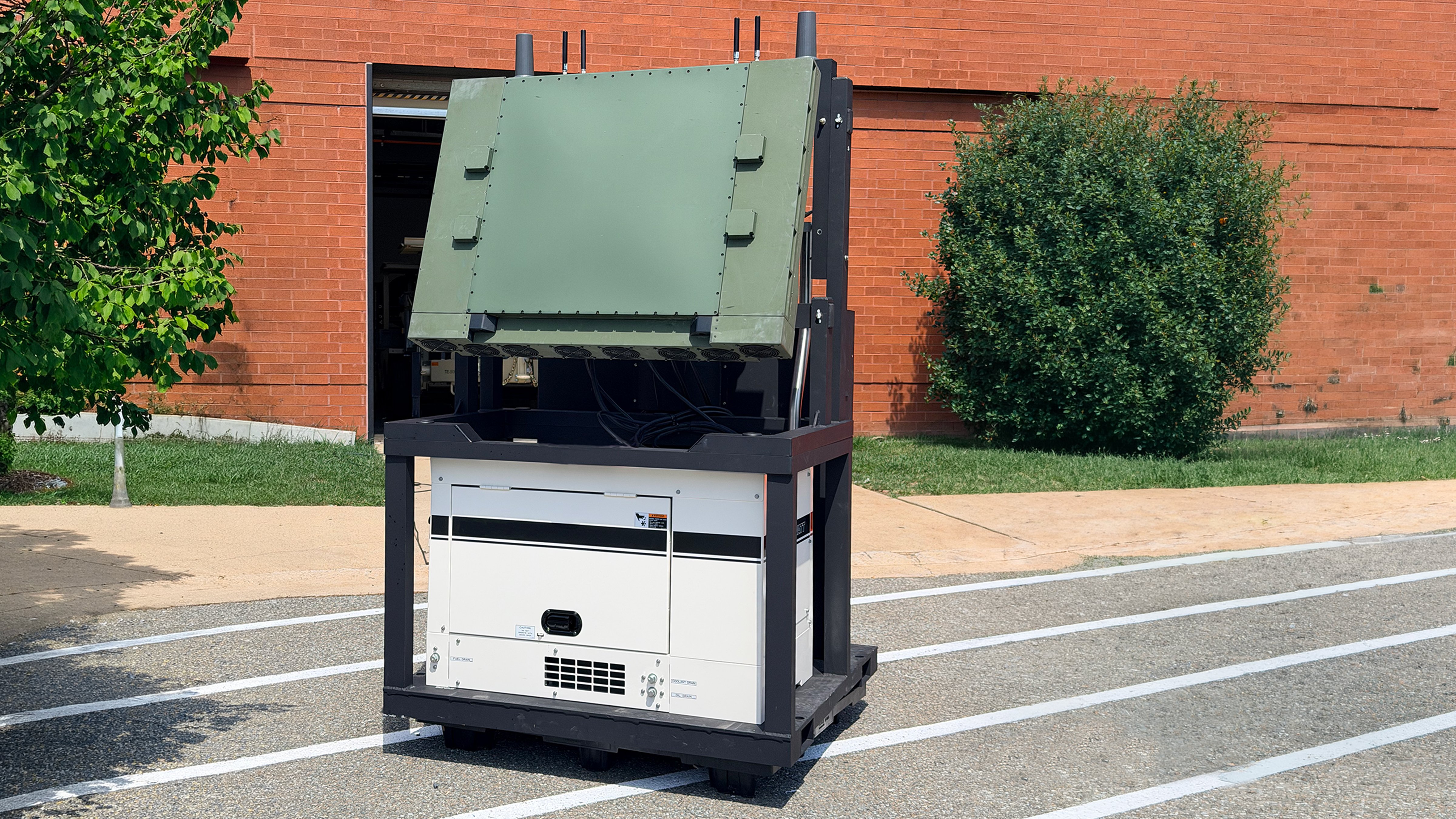
The 202 Expeditionary Skid, also known as U-KIT-0091, has a single radar panel that has a search area of 90 degrees by 90 degrees, so we often mount them in groups of four to provide full 360-degree coverage. Each panel has a really fast scan rate, much faster than a traditional spinning radar set. Plus, having multiple radar faces to make up a complete system is much more survivable. They can also overlap their field of regard without impairing each other.

We have sought to provide a solution that marries an appropriate level of range, accuracy, capability, and performance, that can still be very flexible in its ability to relocate or change mission sets. This is designed to be extremely versatile, meaning that it operates in different environments quickly. U-KIT-0091 has been purposefully designed to be mobile in a compact system that can either be used by itself or networked and fused together with other systems. Back to the baseball analogy, this is the kind of guy you really want on your team because you can use them wherever you need them.

The radar or set of radars sit on a small skid system that can slide into the back of a pickup truck, into the back of a tactical vehicle, onto a trailer, you can set it just about anywhere and it occupies a four-by-four-feet position. It has its own power generation, its own positional information that works in denied environments, basically it’s capable of working by itself from the get-go. The best part is that it’s truly mobile – the operator doesn’t have to stop the vehicle to make it work. You can turn it on and set-off. It’s working. If you come to a stop, it’s still working. It can be mounted on a ship, it can be taken airborne by an aircraft, so it’s got land, sea, and air applications. We’ve installed these on all types of ground platforms, water-based platforms, on top of a building or some sort of structure and it’s already in service, but I can’t specify where. It tracks drones very well, but of course it can track just about anything that can exist in that space.

The 202 Expeditionary Skid U-KIT-0091 mounted in the back of a pickup truck. Leonardo DRS

JH: So you could strategically locate several of your radars to look in different directions or be positioned to look in a certain direction if you knew the expected paths that the threats would use?

RB: The system is designed exactly for things like that. Instead of putting all of your eggs in one basket, you disperse your eggs, and focus on different avenues or approach angles so that you can then have sensors strategically located where they can pick up these things and then as long as they’re networked back into weapons systems that have the overlapping fields of fire or bubbles – coverage areas – then you can protect your area. 

Any time you can decouple a sensor from a weapon system or multiple types of sensors from each other, you stand a far greater chance of survivability and optimizing accuracy. If you put all your eggs in one basket, and if you lose that basket, you lose everything. In addition, if you separate sensors, you gain accuracy because you have different angles and you can leverage simple geometry.

JH: Could you depict what an end-to-end engagement might look like using your tactical radar.

RB: The radar sensors will typically be emitting energy as they search for objects in a particular space. If something is detected and determined to be a valid target then the data is sent from the radar to some type of a command and control system, which may well be receiving information from other complementary sensors too. It then fuses that data and passes it to an effector, whether that’s a non-kinetic or a kinetic system, for engagement.

Meanwhile, the radar continues to track and it can determine whether that object was removed or if its path changed, and so on and so forth. But you know, a lot of these radars operate in a way whereby they can be turned on or off by different sensors to avoid them having to constantly transmit energy, they’re very customizable to meet the requirements and the emissions that are needed, whether that’s air defense, counter-drone, etc.

They can operate independently too, maybe covering a small area that needs to be protected, and integrated with a localized weapon system, or, as I already explained, they can be networked into a much larger set-up, they are modular, open system architecture and easily incorporated.

Most customers tend to choose their own command and control systems, which is why the plug-and-play part of our system is so important. It really doesn’t matter what they want to partner it with, what we provide enables that very easily.

A counter-drone exercise run by the Joint Task Force-National Capital Region/United States Army Military District of Washington. U.S. Army/Sgt. Zack Stine

JH: To be clear, your tactical radars could be deployed to defend the entire eastern seaboard of the U.S., they could be positioned to defend an air base, or they could be used to defend a ship in the Strait of Hormuz.

RB: The architecture can scale geographically through a distributed, networked sensor approach. The specific coverage area depends on factors including sensor density, the threat environment, command-and-control integration, and the available effectors.

Customers can deploy multiple radars and feed them into a single command-and-control system, positioning sensors to optimize coverage for the operational need. For example, one radar set could cover a valley vulnerable to low-flying drone ingress, while another positioned on higher ground provides longer-range surveillance. The key is a modular capability that enables users to tailor coverage and layer sensors where they are most needed – without relying on one large radar system to see everything from a single location.

JH: I’m keen to know what you consider to be the most challenging drones to detect and track. Is the challenge the speed they’re traveling out at, maybe new low observable designs, or the fact they’re flying very low. What are the big issues you’re seeing?

RB: It’s really all of the above. The other really challenging problem is when something is flying very low to the ground. The lower they bring them in altitude, they are harder to track as an independent target.

The challenge with drone swarms isn’t detection – if you can see the drones, you can track them. The harder problem is managing those tracks, deciding which threats matter most, and assigning the right effector to each one.

If 100 drones are inbound, it’s not just about having 100 weapons available. It’s about coordinating a fast, cost-effective response across a large number of simultaneous threats.

Ultimately, pairing radars and electro-optical/infrared sensors together is the way to go, because each of those have their own strengths. One of those sensors is going to see the drone better than the other, plus you have the redundancy that at least a couple of them will “see” the threat and give you enough information in sufficient time to prosecute it. Fitting into that team, however it is constructed, is exactly how we position our 202 Expeditionary Skid U-KIT-0091 radar.

Contact the write: Jamie.Hunter@teamrecurrent.io

The post How Drone Detection Is Evolving To Counter Smaller, Faster, And Swarm Threats appeared first on TWZ.

  •  

UK Government Commits To Boom Refueling For RAF Tankers

The United Kingdom is moving toward adding a flying-boom aerial refueling capability to the Royal Air Force (RAF), a requirement being driven in large part by the future Tempest combat jet, being developed under the Global Combat Air Program (GCAP) initiative.

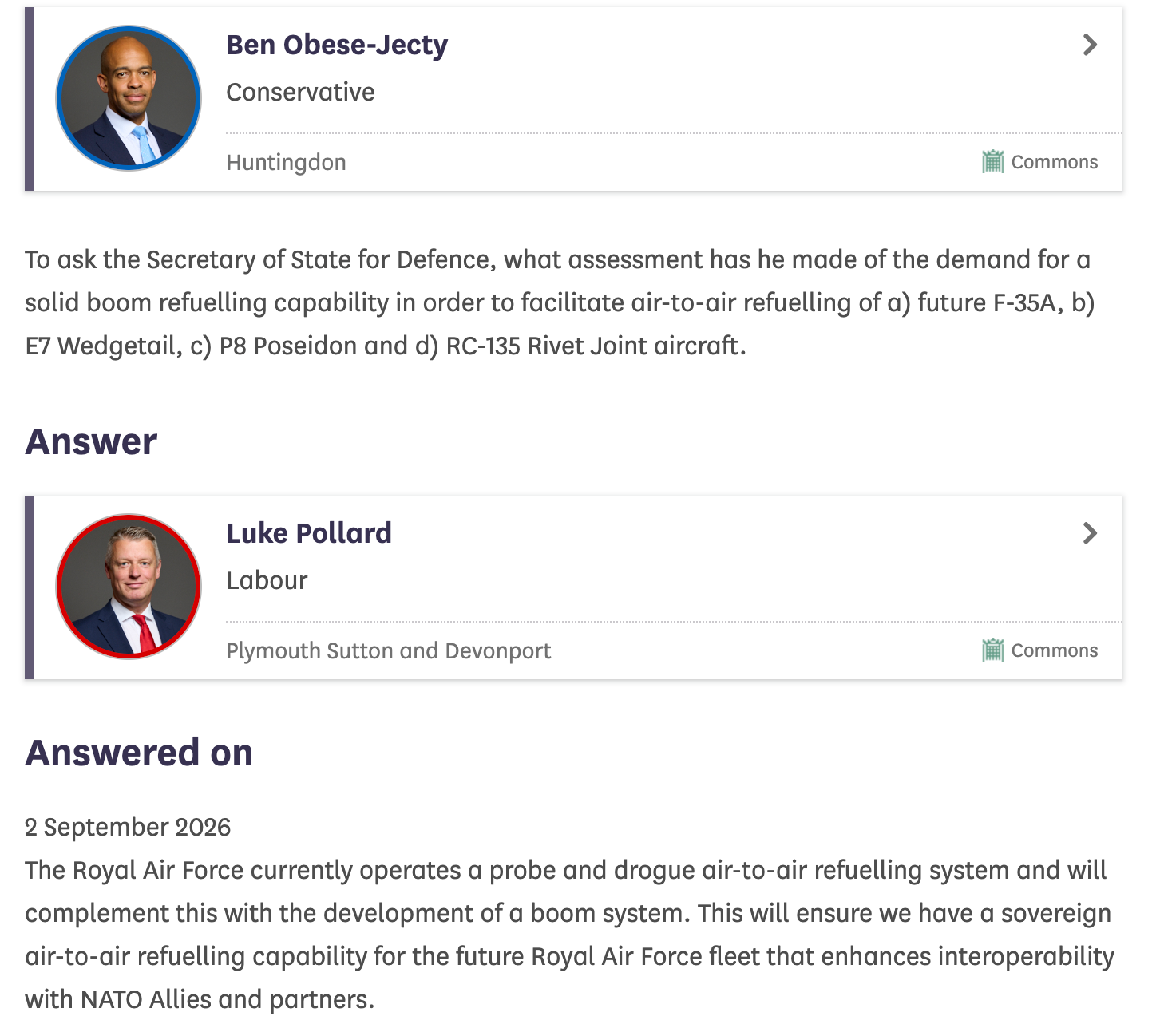
In a written response to opposition MP Ben Obese-Jecty, U.K. Defense Minister Luke Pollard confirmed that the RAF’s existing probe-and-drogue aerial refueling capability will eventually be complemented by a boom system. The move would give Britain a sovereign capability to refuel aircraft equipped with the U.S.-standard boom receptacle, including the Tempest, while also improving interoperability with other NATO and allied air forces.

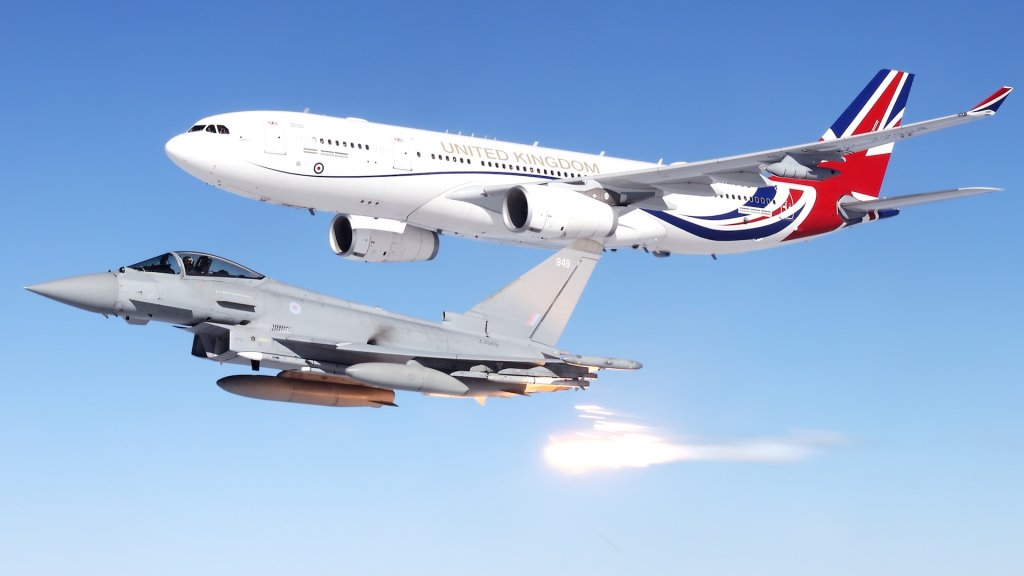
This picture is from a Quick Reaction Alert training scenario. The QRA exercise was conducted 31 March 2026. The purpose of the exercise was to demonstrate the full end-to-end process of the UK's air defence strategy if an actual foreign aircraft was to invade their protected airspace. Upon receiving the alert, the QRA team at RAF Coningsby would launch to RAF Typhoon FGR4's to intercept any unknown aircraft within the protected airspace. In this particular scenario an RAF Voyager A330 (RAF Brize Norton) was acting as the agressor and two RAF Typhoons FRG4 (RAF Coningsby) were responding to the simulated threat. During the exercise the Typhoons intercepted the Voyager and conducted a series of maneouvers whilst communicating with the "foreign" aircraft with the aim of escorting it to a safe location on the ground (RAF Brize Norton) upon which it and it's crew would be guarded and safely inspected by counter-terrorist police. The resulting imagery is to be used for training government ministers on how a QRA works and all the different elements involved. From the initial radar detection of a foreign, unidentified aircraft at the London Area Control Centre, Swanwick, to the physical launch of our QRA team at RAF Coningsby. The RAF use a hose-and-drogue air-to-air refuelling system deployed from Voyager tanker aircraft. Instead of a rigid flying boom, the tanker trails a flexible high-pressure hose attached to a stabilizing basket (drogue), allowing receiver jets like the Typhoon and F-35 to plug in mid-flight. This image shows a Typhoon releasing flares as a warning to the "enemy aircraft".
A Royal Air Force Typhoon FGR4 accompanies a Voyager tanker during a Quick Reaction Alert training scenario in March 2026. Crown Copyright Crown Copyright

“The Royal Air Force currently operates a probe and drogue air-to-air refueling system and will complement this with the development of a boom system,” Pollard said. “This will ensure we have a sovereign air-to-air refueling capability for the future Royal Air Force fleet that enhances interoperability with NATO allies and partners.”

For the first time we have a Minister confirming the Boom is coming to Royal Air Force tankers, although the when and the how currently remain very much up in the air.

Still significant to have it through government voices and not just through the RAF itself. pic.twitter.com/esRN7NVoPy

— Gabriele Molinelli (@Gabriel64869839) September 2, 2026

The decision follows comments by a senior RAF official in July indicating that the service was already examining how to meet the requirement.

“We currently do not have boom [-equipped tankers] in the UK. We have a requirement for a boom from GCAP, so we have to resolve that requirement and that is what we are now looking at,” the official said at the Air Power Association Global Air and Space Chiefs’ Conference in London, according to Janes. “I [am] certain that at some point we are going to have to work out how we deliver a sovereign boom capability for our own combat aircraft.”

The requirement is particularly significant because GCAP’s Tempest is being designed with a fuselage-mounted receptacle for boom refueling. Unlike the probe-and-drogue arrangement used by the RAF’s existing Voyager tankers, a flying boom uses a rigid, telescoping refueling tube that is maneuvered by an operator aboard the tanker into the receiver aircraft’s receptacle.

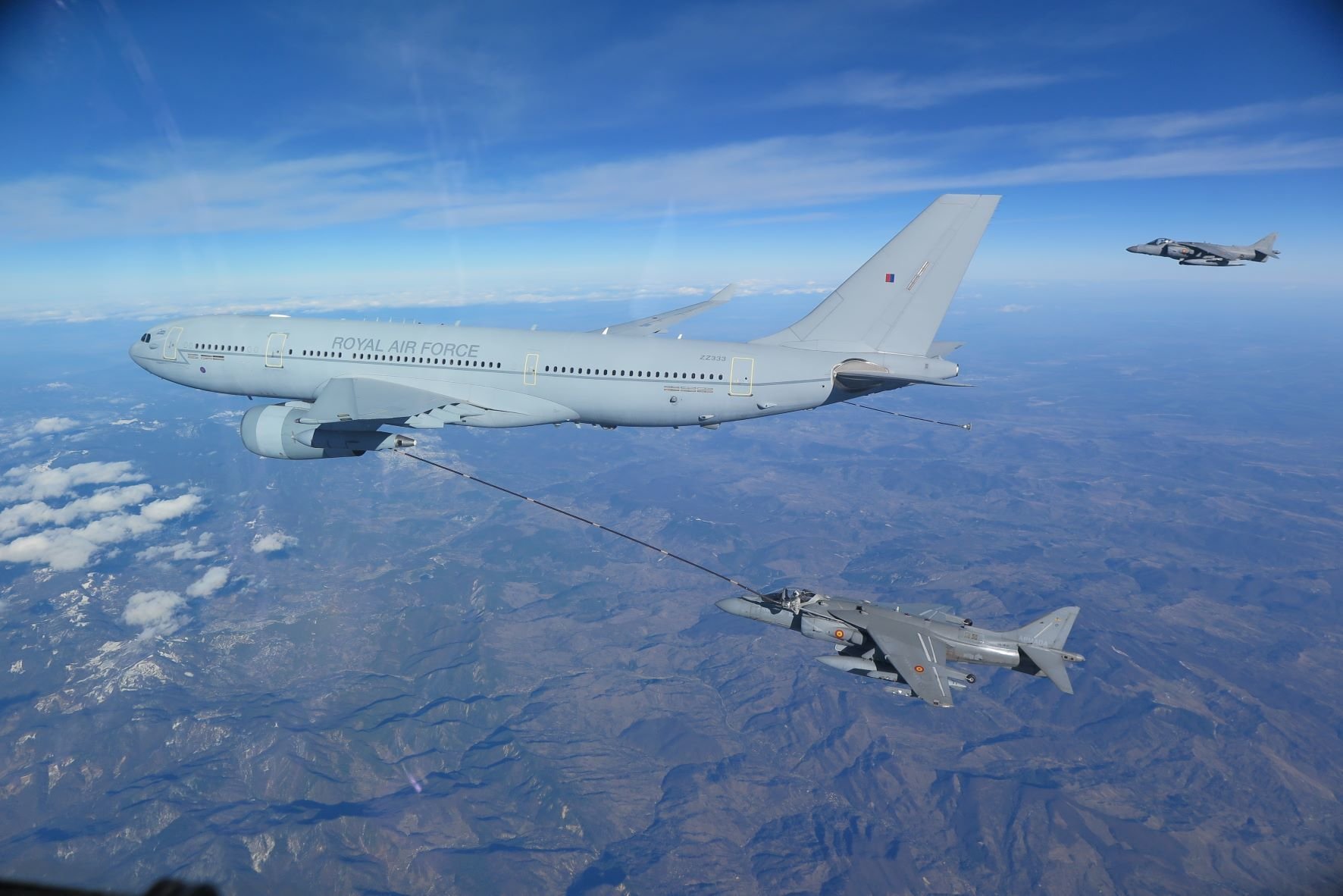
230220-N-NO777-1002 ROMANIA (Feb. 20, 2023) A Royal Air Force A330 tanker performs aerial refueling of a Spanish Navy AV-8B Harrier during combined long range strike training, Feb. 20, 2023. The George H.W. Bush Carrier Strike Group is on a scheduled deployment in the U.S. Naval Forces Europe area of operations, employed by U.S. Sixth Fleet to defend U.S., allied, and partner interests. (U.S. Navy courtesy photo)
A Royal Air Force Voyager tanker performs aerial refueling of a Spanish Navy EAV-8B Harrier II during combined long-range strike training. U.S. Navy courtesy photo

One of the major advantages of the boom system is its higher fuel-transfer rate. That makes it especially useful for large aircraft and combat aircraft that need to take on substantial quantities of fuel quickly, reducing the time spent on the tanker.

Tempest is not, however, the only RAF aircraft that depends on the boom standard. The RAF already operates several boom-equipped receiver aircraft, including P-8A Poseidon maritime patrol aircraft, RC-135W Rivet Joint intelligence, surveillance, and reconnaissance aircraft, and C-17A Globemaster III airlifters. The E-7A Wedgetail airborne early warning aircraft also uses a boom receptacle, while the forthcoming RAF F-35A fleet will add another major boom receiver to the service.

The first Wedgetail Airborne Early Warning (AEW) aircraft, destined to serve with the RAF, has arrived at RAF Lossiemouth on 21 May 2026. The aircraft was flown to RAF Lossiemouth by a mixed crew of personnel from Boeing UK and the RAF from STS Aviation Services at Birmingham Airport. The Wedgetail AEW Mk1 is the RAF’s next-generation airborne early warning and control aircraft, designed to deliver long-range surveillance, battle management, and command and control for air and joint operations.
The first Wedgetail aircraft, destined to serve with the RAF, at RAF Lossiemouth, Scotland, in May 2026. Crown Copyright

Currently, the RAF has no boom-equipped tanker to support them.

Its principal tanker fleet consists of Airbus A330 Multi-Role Tanker Transport (MRTT) Voyager aircraft operated by the AirTanker consortium and leased to the RAF under a private finance initiative. Unlike many A330 MRTT operators around the world, which acquired the aircraft with a flying boom, the British Voyagers were configured exclusively around hose-and-drogue refueling.

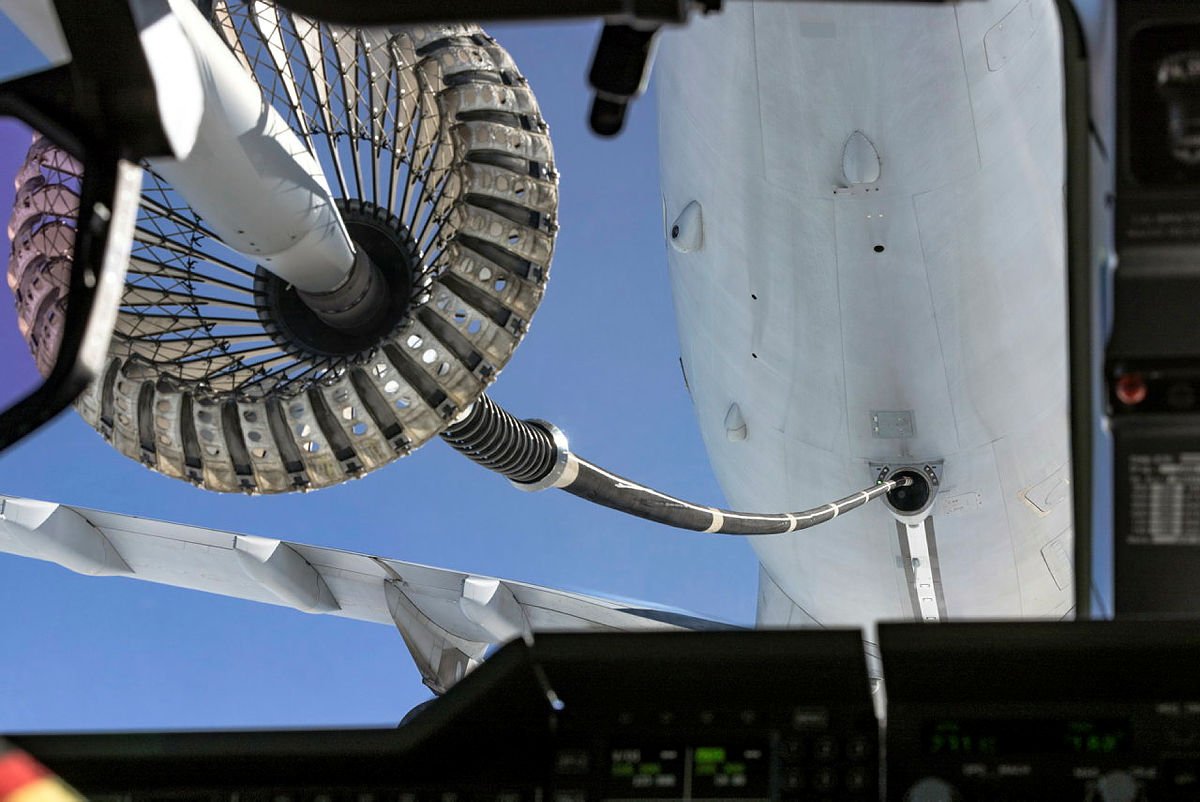
The Voyager K2 is equipped with two wing-mounted Cobham 905E hose-and-drogue refueling units. The K3 adds a third refueling point in the form of a Cobham 805E fuselage refueling unit, or FRU, located at the rear of the aircraft. The latter provides a higher fuel-transfer rate than the wing-mounted units.

The view from the cockpit of an A400M during air-to-air refueling with a Voyager KC3, via the fuselage refueling unit. Crown Copyright

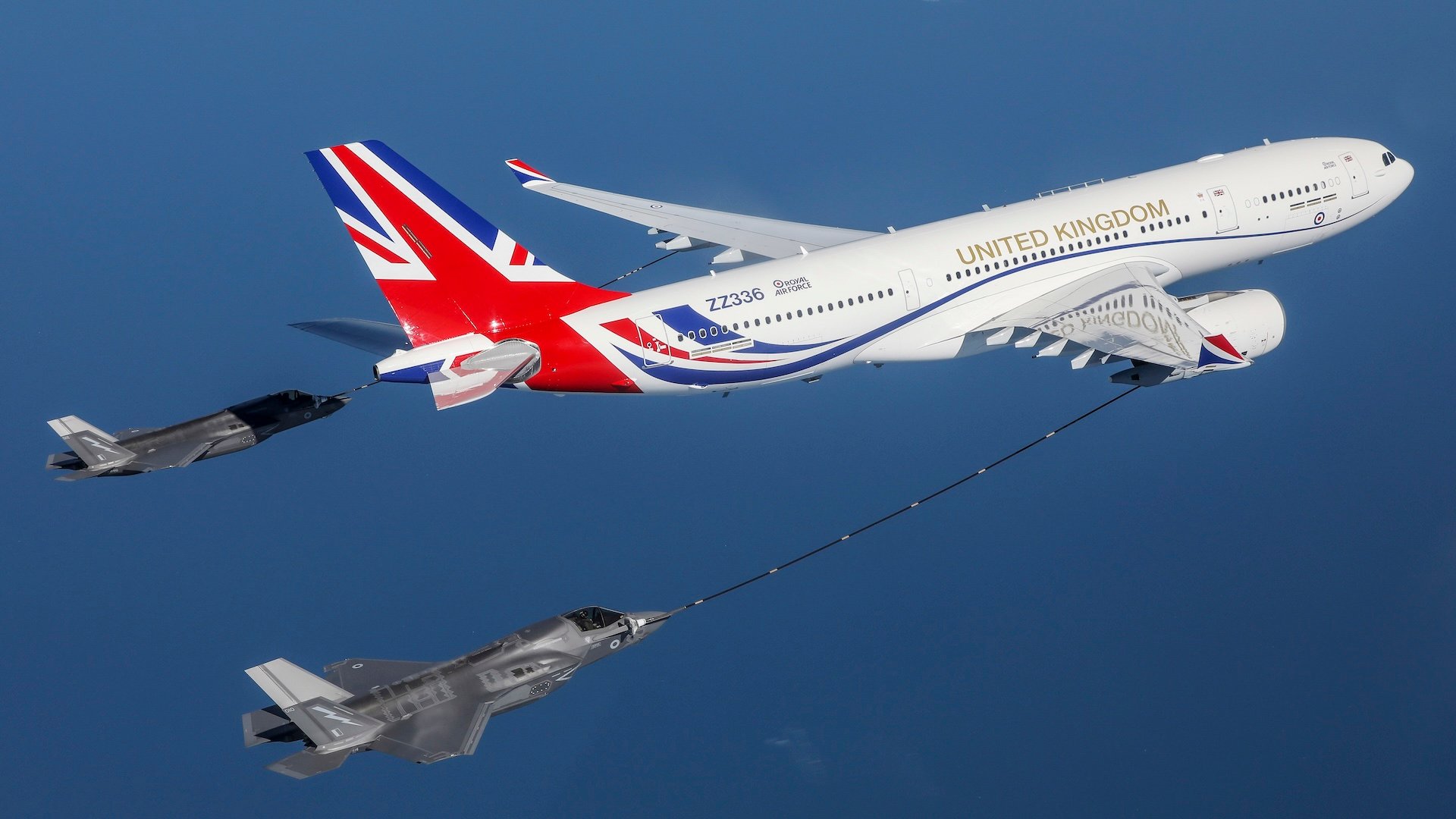
Since the fuel is stored in existing tanks, the Voyager’s cabin is still available to accommodate up to 291 passengers and the cargo hold for freight. One Voyager, serial ZZ336, nicknamed Vespina, is modified for long-range VIP transport but still functions as a fully capable tanker.

A video showing Voyager ZZ336 refueling RAF and German Eurofighter Typhoons during the enhanced Air Policing mission in Romania:

Up to 14 Voyagers are available to the RAF under the current arrangement.

The future of those aircraft is now one of the key questions surrounding Britain’s planned boom capability.

One possibility would be to modify some of the existing Voyagers, installing a boom system in the rear fuselage. The baseline Airbus’ A330 MRTT design already incorporates a provision for a flying boom. At the time the United Kingdom ordered its Voyagers, boom refueling was not considered essential, so the capability was deleted to save weight, complexity, and cost — a decision which was to prove very shortsighted.

Such a conversion, however, would involve engineering, certification, ownership, and contractual considerations, particularly given that the RAF does not directly own the Voyager fleet.

Britain could also decide that modifying the existing aircraft is not worthwhile. The current Voyager private-finance arrangement runs until 2035, by which point the airframes will be considerably older. Rather than investing heavily in aircraft approaching the end of their contracted service period, the government could opt to acquire new A330 MRTTs or another tanker type equipped with a boom from the outset.

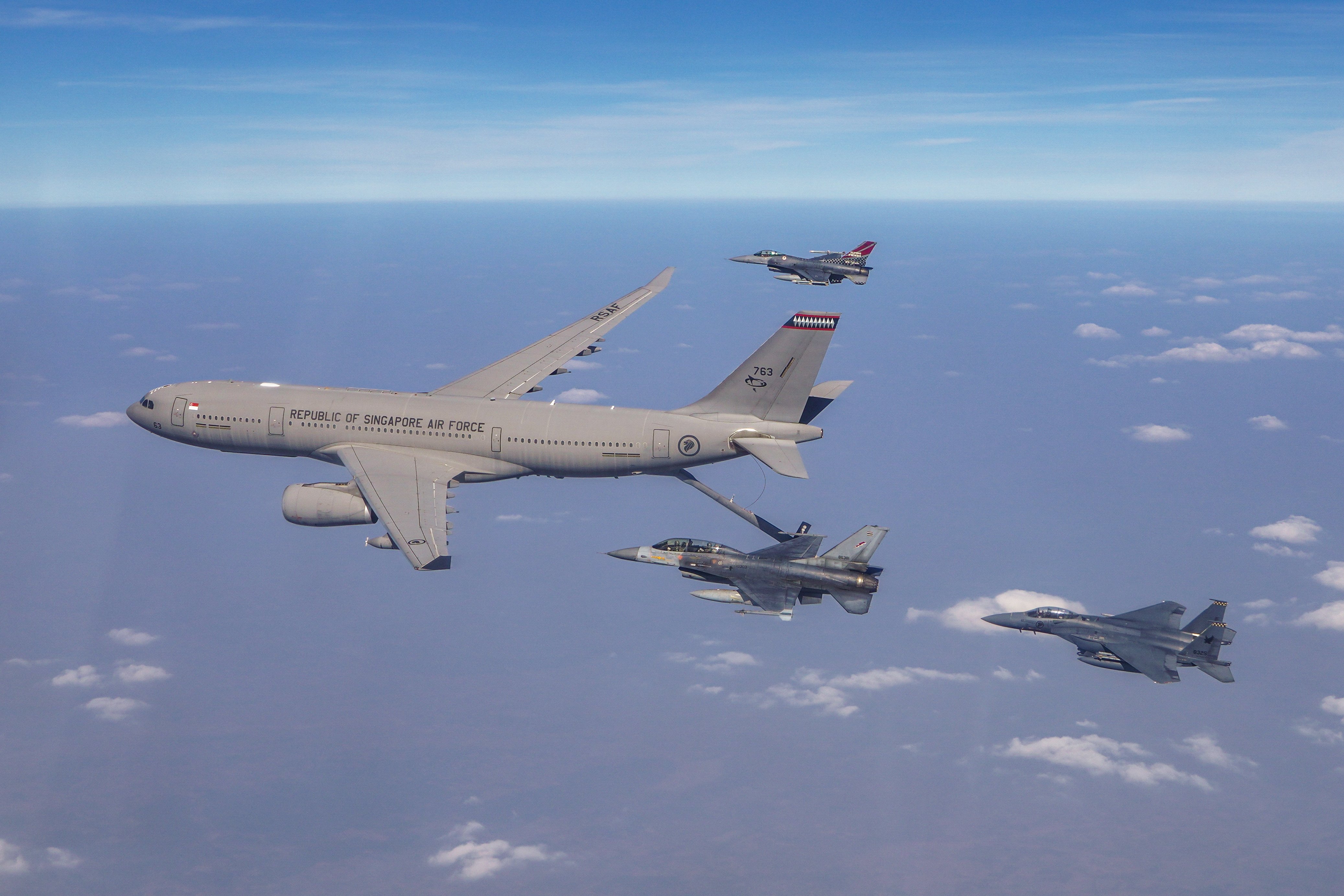
A Republic of Singapore Air Force A330 Multi Role Tanker Transport leads a formation flight during a training scenario alongside a U.S. Air Force F-16C assigned to the 36th Fighter Squadron, Osan Air Base, Republic of Korea, two RSAF F-15SGs, and a Royal Thai Air Force F-16ADF during Exercise Cope Tiger 23, Korat Royal Thai Air Base, Kingdom of Thailand, March 22, 2023. CT 23 is an annual exercise meant to improve readiness and the ability of participating forces to operate together while enhancing military relations and combined capabilities. (Courtesy Photo)
With refueling boom extended, a Republic of Singapore Air Force A330 MRTT leads a formation flight alongside a U.S. Air Force F-16C assigned to the 36th Fighter Squadron, Osan Air Base, Republic of Korea, two RSAF F-15SGs, and a Royal Thai Air Force F-16 during Exercise Cope Tiger 23. U.S. Air Force courtesy photo

Another, more remote possibility could involve a podded boom arrangement, a concept that has been around for a while now, but which is gaining traction with the U.S. Air Force as it weighs options for future tanker capabilities. 

It remains unclear, however, whether a podded boom would offer the performance and integration characteristics required for Tempest and the RAF’s wider fleet. There is also a question about what platform it could be installed on.

As part of its seemingly never-ending search for new fighters, the Indian Ministry of Defense says it wants to team up with one of the two rival European next-generation combat aircraft programs.
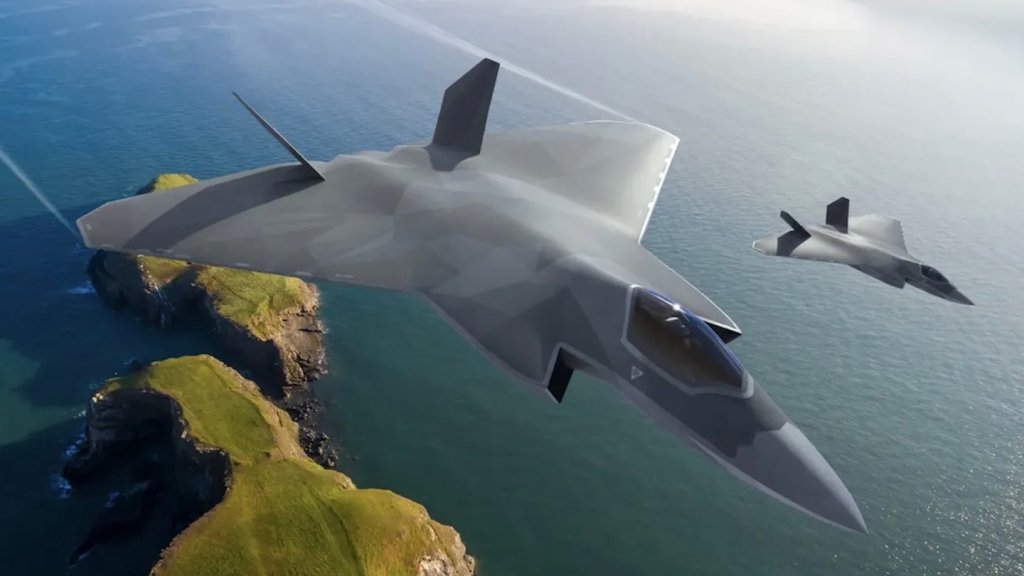
A rendering of the Tempest future combat jet. BAE Systems BAE Systems

At the same time, TWZ has previously highlighted how drones equipped with buddy stores could operate in a hub-and-spoke model, ferrying fuel from tankers positioned outside the threat envelope to aircraft operating at the tactical edge. This could be another option that might gain traction as the U.K. Ministry of Defense increasingly looks to unlock the potential of uncrewed capabilities, but must also be considered less likely, especially as a primary solution.

There is also a potential requirement for the tankers themselves to be capable of receiving fuel. Equipping a tanker with a receiver system would allow tanker-to-tanker refueling, extending the flexibility and reach of the RAF’s future air-to-air refueling force during long-range operations. Other A330 MRTT operators already benefit from this feature.

A Republic of Singapore Air Force Airbus A330 Multi-Role Tanker Transport (MRTT) refuels a Royal Australian Air Force KC-30A MRTT during a 'Boom Camp' in the Northern Territory *** Local Caption *** Combined training was conducted by air-to-air refuelling tanker crews from the Republic of Singapore Air Force (RSAF) and Royal Australian Air Force (RAAF) at RAAF Base Darwin over 25 to 30 October 2020. Both nations operate variants of the Airbus A330 Multi-Role Tanker Transport (MRTT), which in RAAF service is called the KC-30A, and can carry a fuel load in excess of 100 tonnes that can be transferred in-flight to compatible receiver aircraft. The combined training at RAAF Base Darwin was an opportunity to compare experiences operating the MRTT and build working-level relationships, forging closer ties between RSAF’s No. 112 Squadron and the RAAF’s No. 33 Squadron. The RAAF was the world’s first MRTT operator, introducing the aircraft to service in 2011. The RSAF received its first MRTT in 2018 but has extensive experience with conducting air-to-air refuelling with the previous KC-135 Stratotanker, which had previously been used in support of RAAF exercises and training activity. read less
A Republic of Singapore Air Force Airbus A330 MRTT refuels a Royal Australian Air Force KC-30A MRTT during combined training at RAAF Base Darwin in Australia. Australian Department of Defense Republic of Singapore Air Force

While Tempest is providing the immediate catalyst, a refueling boom capability would also close an increasingly conspicuous gap in the RAF’s tanker force. The service is acquiring and operating an increasing number of aircraft built around the boom standard while relying on a tanker fleet configured around the alternative hose-and-drogue system.

Whether Britain modifies its existing Voyagers, replaces them, or adopts another solution entirely could become an important part of the RAF’s long-term force structure as the Tempest program advances.

Contact the author: thomas@thewarzone.com

The post UK Government Commits To Boom Refueling For RAF Tankers appeared first on TWZ.

  •  

Missile Shortage Has Now Hit Ukrainian F-16 Force

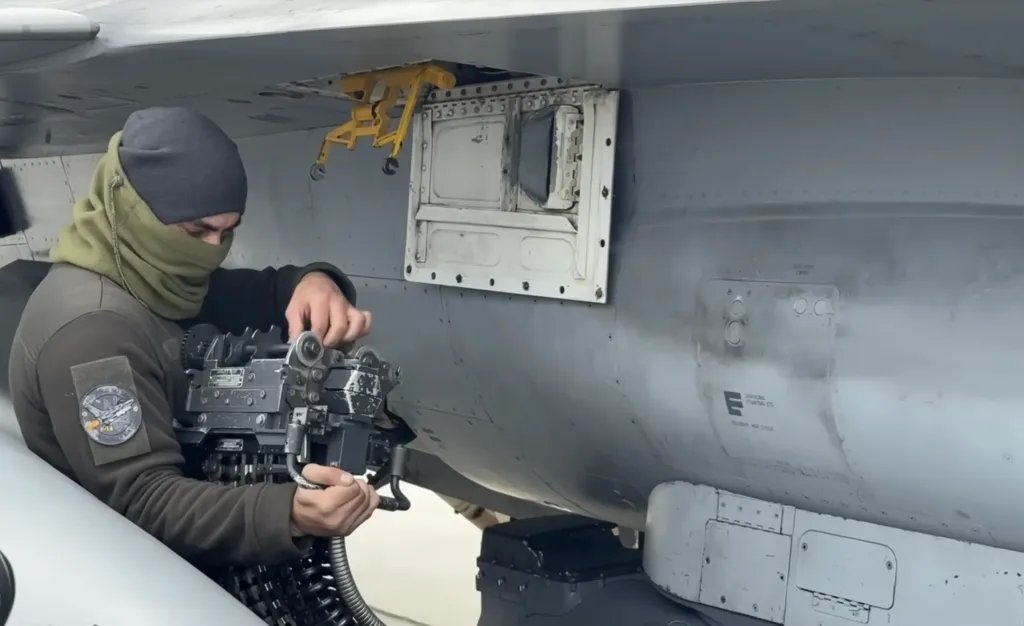
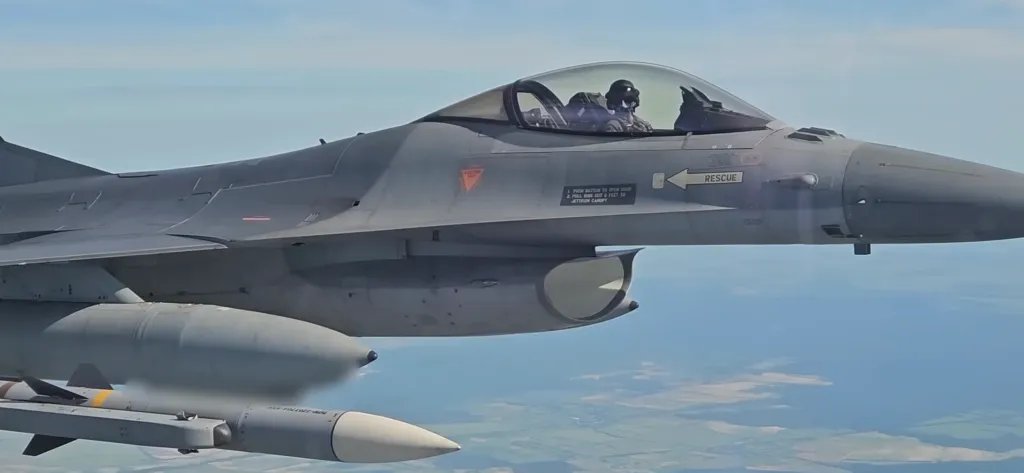
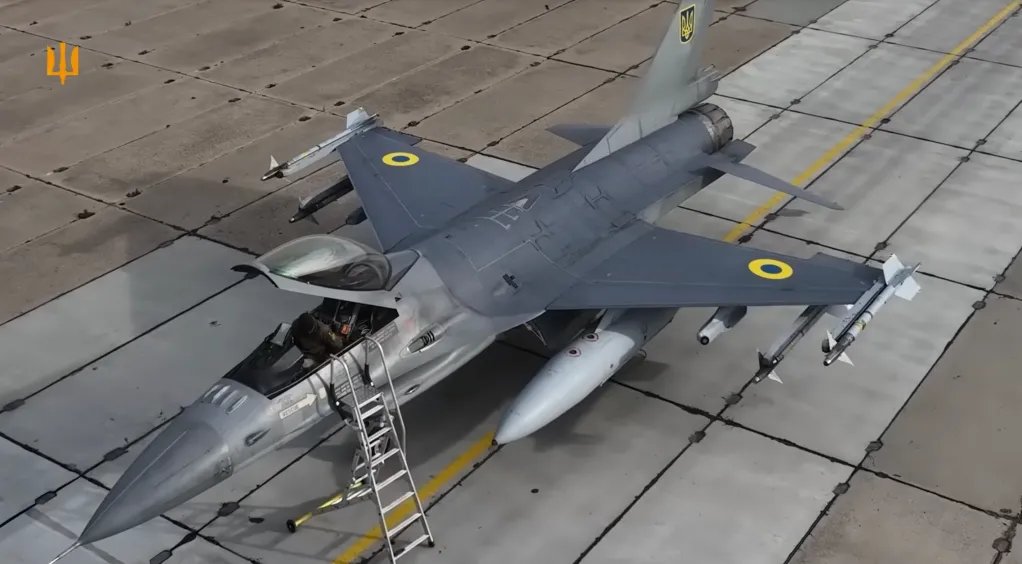
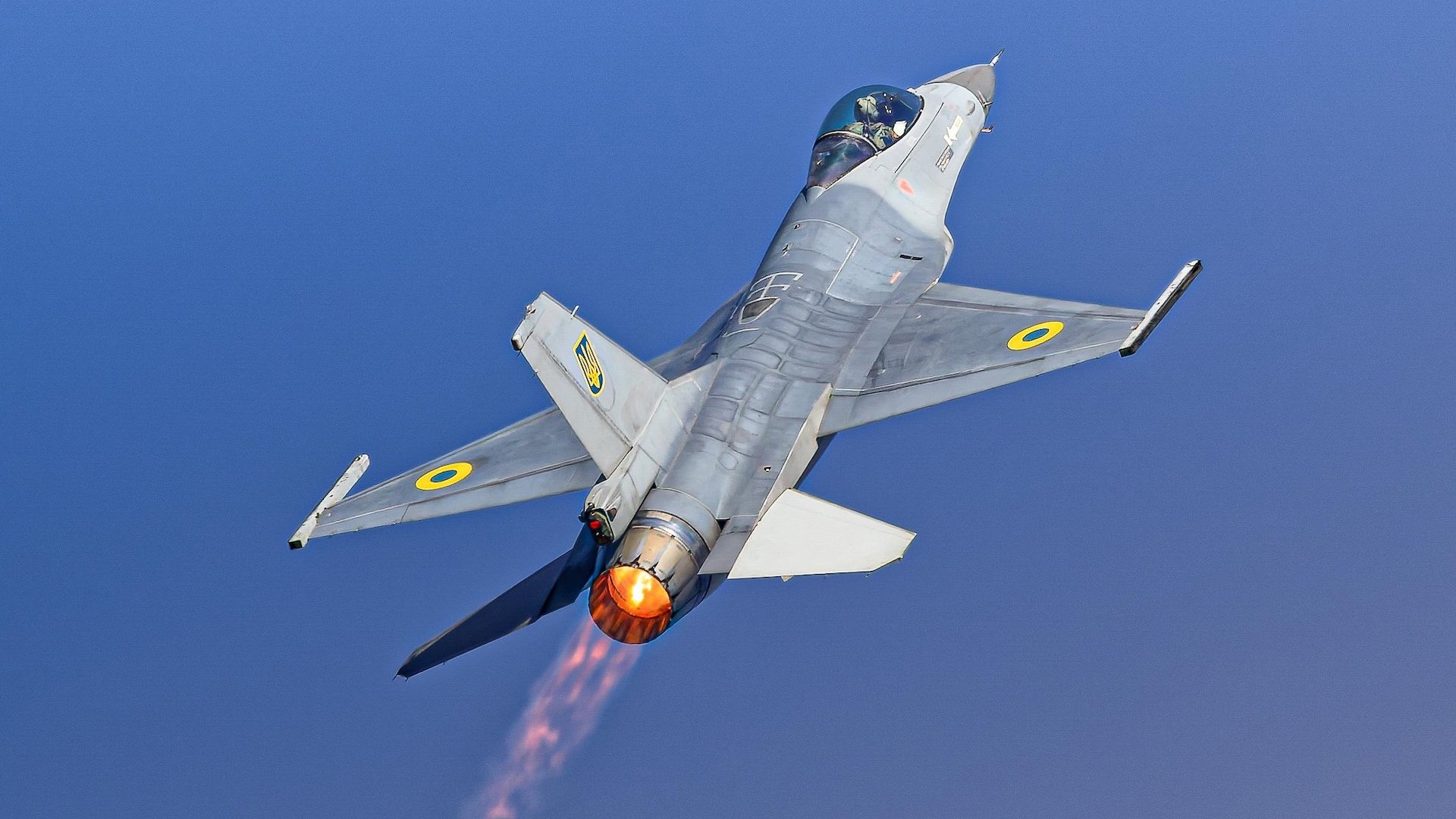
Ukrainian F-16 pilots are facing such a severe shortage of air-to-air missiles that some daytime sorties have seen them rely solely on the fighters’ internal guns to engage Russian aerial threats, according to a journalist who recently spoke with a senior Ukrainian Air Force commander. Meanwhile, the lack of air-to-air missiles means that the available weapons stocks are now being rationed.

The disclosure provides a remarkable glimpse into the day-to-day reality of Ukraine’s F-16 operations. While the aircraft may be available, the pilots may be ready, and Russian drones and cruise missiles may be approaching, there may simply not be enough missiles on hand to arm the jets.

According to Newsmax journalist Shelby Wilder, the Ukrainian Air Force can find itself monitoring missile shipments as they cross the country’s border, with personnel counting not just the hours but the minutes until those weapons reach the aircraft. The concern is whether the missiles will arrive in time for the next major Russian aerial attack.

The Ukrainian commander, who identified himself by the callsign “Phantom” and as commander of the country’s 107th Wing, confirmed the underlying problem when asked directly whether Ukraine was severely short of missiles for its F-16s.

“Yes, that’s true. Any aircraft without weapons is … useless,” Phantom said.

That blunt assessment is particularly striking given what Ukraine is asking its F-16s to do, and the relentless nature of Russian bombardments against Ukrainian cities and infrastructure.

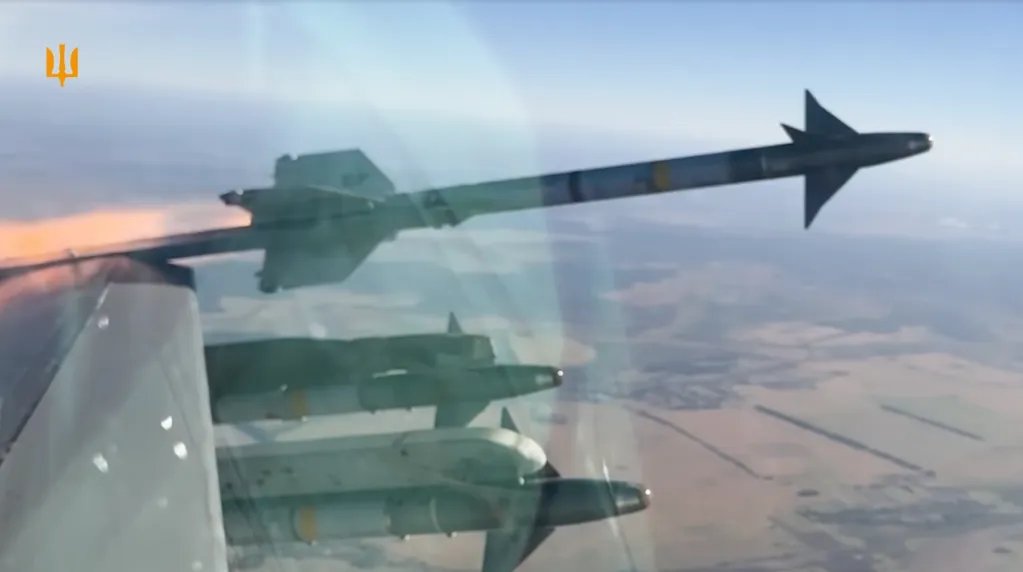
❗The moment when a 🇺🇦Ukrainian F-16 fighter jet shot down a 🇷🇺Russian Kh-101 cruise missile at extremely low altitude pic.twitter.com/7zVujRkYaG
— 🪖MilitaryNewsUA🇺🇦 (@front_ukrainian) June 1, 2026

The fighters have become an important part of Ukraine’s layered air defense network, hunting Russian drones and cruise missiles while also providing a potential counter to Russian combat aircraft, and conducting air-to-ground sorties. Ukraine has operated the F-16 since the summer of 2024.

“We are focusing on defending our skies against Russian unmanned drones to protect our infrastructure inside the country,” Phantom said. “Our target priority is cruise missiles.”

Destroying as many incoming threats as possible before they reach Ukrainian cities and infrastructure requires missiles, with the F-16 primarily armed with the AIM-120 Advanced Medium-Range Air-to-Air Missile (AMRAAM) and the shorter-range AIM-9 Sidewinder.

Another live AIM-9L/M launch. This Ukrainian F-16 carries six Sidewinders. Ukrainian Air Force screencap

According to the new disclosure, those missiles have become a commodity whose availability can determine how a sortie is flown.

The F-16 carries an M61A1 Vulcan 20mm rotary cannon, but using the gun against an aerial target is fundamentally different from engaging it with a missile, and comes with its own risks, as we have explored before. This tactic is especially hazardous when going after small targets and especially slow ones, and it becomes even more dangerous at night.

Ukraine has already demonstrated that its F-16s can use their guns in combat. In May 2025, the Ukrainian Air Force said an F-16 pilot had destroyed three aerial targets and was engaging a fourth with the aircraft cannon before an emergency forced him to eject.

An armorer loads an F-16 with 20mm ammunition for its M61A1 cannon. Ukrainian Air Force screencap

One air-to-air weapon not mentioned by Phantom is the laser-guided 70mm Advanced Precision Kill Weapon System II (APKWS II) rocket, now apparently also part of the arsenal. These rockets would offer the Ukrainian Air Force an extremely valuable, lower-cost option for engaging drones and subsonic cruise missiles. 

Regardless, Phantom specifically called for additional air-to-air missiles, as well as interceptors for ground-based Patriot batteries.

“We require more means of protection, such as Patriot missiles and air-to-air missiles, AIM-9s or AIM-120s to our fleet,” he said.

Phantom’s message is that simply delivering more aircraft is not enough. Ukraine needs a sustainable weapons pipeline to keep those aircraft combat-effective.

Ukrainian Air Force F-16AM Fighting Falcon departing Belgium after receiving depot-level maintenance earlier this year. pic.twitter.com/Hy35iUZd8P

— OSINTtechnical (@Osinttechnical) August 28, 2026

This is increasingly becoming a wider problem across Ukraine’s air defense network. Patriot interceptors have been heavily consumed, with relatively few replacement missiles now trickling in, leaving Ukraine with limited ability to defend against ballistic missiles in particular. The strain is now spilling into the lower tiers, including the air-to-air missiles carried by F-16s. Ukraine’s continued consumption of interceptors is a major driver, but it is competing with the enormous demand generated by ongoing wars in the Middle East and a broader surge in demand for advanced air defense weapons around the world. With production struggling to keep pace, scarce interceptors are effectively being rationed across an increasingly crowded global battlefield.

“At least we need to try to increase the production, or at least to allow Ukraine to localize the production in Ukraine or other European countries,” he said.

That proposal reflects the fundamental vulnerability of a relatively small fleet operating in a high-intensity air war. Every missile fired at a Russian cruise missile or drone is one less available for the next engagement. A finite inventory therefore has to cover both routine air-defense missions and the possibility of much larger Russian attacks. At the same time, both the AIM-9 and especially the AIM-120 are used for Ukrainian ground-based air defenses too. The AMRAAM, in particular, is the effector for the NASAMS, which protects Kyiv, and other key objectives against cruise missiles and drones.

Air-to-air with two F-16s. The nearest jet carries a wingtip AMRAAM. Ukrainian Air Force screencap

The problem becomes even more acute because Ukraine cannot know precisely when the next major Russian strike will arrive.

That is why, according to Wilder’s account, the arrival of missile shipments is being followed with extraordinary urgency.

At the same time, Phantom welcomed the major technological leap that the F-16 represents over the Soviet-designed MiG-29s and Su-27s that formed the backbone of Ukraine’s fighter force.

“The F-16s in comparison with the legacy aircraft like MiG-29 or Su-27? This is kind of like a new technology,” Phantom said.

But sophisticated aircraft are only as useful as the weapons available to them.

Ukrainian F-16s have reportedly destroyed huge numbers of Russian drones and cruise missiles, and in July a Ukrainian F-16 was publicly identified by the U.S. Joint Chiefs chairman as having shot down a Russian fighter.

⚡ CONFIRMED!
On July 8, 2026, a Russian Su-35 multi-role fighter was shot down on the eastern sector!

🇺🇦 Glory to Ukraine!
✊ Together to victory! pic.twitter.com/r8S9fgQaC5

— Ukrainian Air Force (@KpsZSU) July 8, 2026

Phantom also asked Ukraine’s Western partners to think beyond individual weapons transfers and toward production capacity.

He also urged the United States and European countries to do more to prevent Russia from acquiring components used in its own missile production through third party countries.

“We need to make as much as we can to stop providing the parts, most technological parts to Russians, bypassing the direct sales, of course, through the third party,” he said.

An armed F-16 between sorties. Ukrainian Air Force screencap

Phantom argued that Russia continues to obtain sophisticated components through intermediaries and even ostensibly civilian products.

“It would not be a surprise that Russians [are] using the washing machine that they’re buying from the third party to use those smart details for building missiles,” he said.

His recommendation is tighter sanctions and enforcement designed to cut off Russia’s access to those components.

“Important is to sanction to stop Russia from being able to have access to those parts,” he said.

That, combined with missile shortages, could become an even bigger problem when Russia conducts another major aerial campaign against Ukraine, particularly as Moscow traditionally intensifies attacks against the country’s energy infrastructure during the winter months.

Contact the author: thomas@thewarzone.com

The post Missile Shortage Has Now Hit Ukrainian F-16 Force appeared first on TWZ.

  •  

Iranian Oil Tankers In The Cross Hairs Of New U.S. Campaign

The latest flare-up of fighting between the U.S. and Iran has seen American forces strike two Iranian oil tankers in retaliation for Tehran’s attacks on ships transiting the Strait of Hormuz. This new “tanker-for-tanker” targeting policy, first reported by Axios, marks a change from previous incidents where ships were only attacked for running the ongoing U.S. naval blockade on Iranian ports.

The two nations have resumed hostilities after a month-long pause in kinetic strikes against each other. The two Iranian tankers were struck in a round of attacks U.S. Central Command (CENTCOM) said it carried out Tuesday in response to “recent attempted attacks by the IRGC [Islamic Revolutionary Guard Corps] against commercial shipping in the Strait of Hormuz and against American service members.”

In its latest video, CENTCOM included this exchange showing an Iranian oil tanker about to be struck by an unspecified weapon. (CENTCOM screencap)

Iran, claiming several civilians were killed in the U.S. strikes, quickly followed those attacks by launching missile and drone barrages against U.S. facilities in Bahrain, Iraq, Jordan and Kuwait.

The new U.S. “tanker-for-tanker” policy of carrying out retaliation strikes on Iran’s fleet of oil transport vessels, was approved by Trump, Axios noted. The policy was designed to “further deter Iranian attacks on tankers that move through the strait.

“The Iranian government tankers were anchored off Iran’s coast north of the U.S. naval blockade line,” the outlet stated, citing anonymous U.S. officials. “U.S. drones launched missiles that hit their engine rooms.”

The attacks on the Iranian tankers were “part of a plan Trump and his senior aides have been considering in recent days to prevent Iran from rebuilding the radar and missile capabilities it needs to attack ships crossing the strait,” the outlet stated. “One U.S. official said the idea is to reduce the risk of Iranian attacks on oil tankers, U.S. Navy ships and Air Force aircraft — to ‘mow the lawn,’ as this person put it. A U.S. official told Axios on Tuesday that the new strikes degraded Iran’s attack capabilities in the strait and ‘bought at least a month’ of lowered threat levels for commercial ships.”

CENTCOM released a video after the conclusion of its Sept. 1 strikes that included what appears to be strikes on two separate vessels. One can be seen at about the 39-second mark of the video and another about 10 seconds later.  It’s not exactly clear from the video what kind of munitions were used, however, you can read more about how CENTCOM disabled ships trying to run the blockade here.

A CENTCOM spokesman declined to say if those ships were struck under a new policy and referred that question to “policymakers.” We have reached out to the White House for comment.

CENTCOM:

U.S. Central Command (CENTCOM) forces successfully completed a wave of strikes against Iranian military targets Sept. 1.

U.S. forces struck Islamic Revolutionary Guard Corps (IRGC) targets including air defense sites, radar systems, maritime assets and facilities, mine… pic.twitter.com/gbX4zP50oA

— Clash Report (@clashreport) September 1, 2026

The CENTCOM statement about those strikes makes no mention of oil tankers.

“U.S. forces struck Islamic Revolutionary Guard Corps (IRGC) targets including air defense sites, radar systems, maritime assets and facilities, mine laying capabilities, and communications sites,” the command stated on X. “The strikes follow recent attempted attacks by the IRGC against commercial shipping in the Strait of Hormuz and against American service members.”

Talking to Texas Lt. Gov. Dan Patrick, who runs the Lt. Dan podcast, President Donald Trump on Wednesday claimed that more than two dozen Iranian ships were destroyed in the U.S. attack; however he did not specify what kind or how.

“We now control the Strait of Hormuz. We control it,” Trump claimed. “Last night we took out 28 boats, 28 ships. We control it, they get nothing, and we took out ships.”

We reached out to the White House for clarification about what kind of ships Trump says were destroyed.

Trump on Iran:

We now control the Strait of Hormuz. We control it.

Last night we took out 28 boats, 28 ships. We control it, they get nothing, and we took out ships. pic.twitter.com/IsIavFSxC9

— Clash Report (@clashreport) September 2, 2026

Trump also took to Truth Social to suggest the Strait be named in his honor.

“Now that we have it under U.S.A. control, should we change the name Hormuz Strait to TRUMP STRAIT??? Like America itself, it would be ‘hotter’ than ever before!” the president proclaimed.

TRUMP: Suggests renaming Hormuz Strait “Trump Strait,” says it is under U.S. control pic.twitter.com/HCQx6YBYZO

— Trump Truths (@trumptruthsbot) September 2, 2026

Iran has struck several ships in recent days, including two on Sunday that were transporting Saudi Arabian crude oil.

The Saudi Arabian-flagged very large crude carrier (VLCC) Sidr “was struck by unknown projectiles about 16.6 nautical miles northeast of Khasab, Oman at about [11:52 PM local time Sunday],” Reuters reported, citing the Marisks ​maritime security firm. “Minutes later, the ​Liberian-flagged VLCC Senegal ⁠Prosperity was reportedly struck by three unknown projectiles approximately 17 nautical miles east of Khasab, Marisks said. All crew aboard were ​reported safe.”

The Saudis condemned the attack on the Sidr.

#Statement | The Foreign Ministry expresses the Kingdom of Saudi Arabia’s condemnation of the Islamic Republic of Iran’s targeting of the Saudi tanker (Sidr) while it was transiting the Strait of Hormuz, and resulted in fatalities among the tanker’s crew. pic.twitter.com/0EqcXkNzCf

— Foreign Ministry 🇸🇦 (@KSAmofaEN) September 2, 2026

On Wednesday, the Islamic Revolutionary Guard Corps (IRGC) also claimed without providing proof that two ships were struck by mines in the Strait. However, the Ambrey maritime security firm pushed back on that.

“There is no meaningful evidence showing that any vessel has been hit by a ship mine,” Joshua Hutchinson, a former Royal Marine Commando who serves as the Managing Director of Intelligence and Risk (and Chief Commercial Officer) at Ambrey, told us.

The IRGC announced that two oil tankers struck mines and came to a halt after catching fire. The IRGC also warned that harsher penalties await shipping companies that choose to follow US provocations instead of complying with Iran's maritime regulations

— IRNA News Agency ☫ (@IrnaEnglish) September 2, 2026

However, as we previously reported, concern over Iran’s continuing ability to mine the Strait of Hormuz sparked the U.S. to resume attacking Iran on Sunday. CENTCOM told us it struck Iranian rocket launchers preparing to fire naval mines into the Strait of Hormuz. While the command did not provide recordings of that attack, Iran has previously introduced a system using what are said to be Fajr-5 rockets to launch mines, representing a dangerous new threat to shipping, which you can read more about in our initial report here.

“Strait of Hormuz transits remain contested and high risk, however, daily in- and outbound transits continue,” Ambrey stated in its latest security assessment. “Iran continues to seek control over Strait of Hormuz transits, while the US facilitates transits along the Omani coastline. Transits through the Transit Separation Scheme are not advised, despite the recent statement of the TSS having been cleared of mines.”

The alternatives “continue to be a northern route in coordination with Iranian authorities and a southern route facilitated by US forces,” Ambrey added. “On 24 August, the US Office of Foreign Assets Control updated their guidance in relation to US sanctions against Iran, expressly highlighting the risk of non-compliance if coordinating with Iranian authorities ‘including by accepting insurance or other services or responding to information demands for guarantees of safe passage, even if there is no associated payment or other exchange of value for these services.’” 

The U.S.-facilitated route “remains available to international shipping, with a layer of military support against attempted attacks against transiting vessels,” Ambrey noted. “However, Iran has continued to interfere with shipping on this route via VHF threats as well as Unmanned Aerial Vehicle and missile launches.” 

The renewed strife on the Strait has oil prices rising again. The per barrel price for Brent Crude was up to more than $95 on Wednesday, according to OilPrices.com. It had been $87.50 before the U.S. renewed attacks last week.

The Latest

Iran claimed that at least five people were killed and several others injured while attending a wedding reception during the CENTCOM strikes. Iranians called the incident a “war crime.”

“The truth of this unlawful war of choice – and the true face of the war crime – is in Sirik, where a wedding ceremony was brutally bombed as part of America’s desperate struggle to conceal its failure, not in AI-generated videos portraying American officials as triumphant heroes,” Iran Foreign Ministry spokesman Esmaeil Baqaei stated on X. 

The truth of this unlawful war of choice – and the true face of the war crime – is in Sirik, where a wedding ceremony was brutally bombed as part of America’s desperate struggle to conceal its failure, not in AI-generated videos portraying American officials as triumphant heroes.… pic.twitter.com/7GlHxE9oP1

— Esmaeil Baqaei (@IRIMFA_SPOX) September 2, 2026

TWZ cannot independently confirm that; however, remnants of an AGM-84H/K Standoff Land Attack Missile–Expanded Response (SLAM-ER) were reportedly found near the building where the wedding took place, according to open-source investigators.

“Weapon remnants said to have been recovered from tonight’s strike on a wedding ceremony in Kuhestak, Iran, have been identified by @Easybakeovensz [weapons technical analyst Trevor Ball] as SLAM-ER components,” New York Times Visual Investigations journalist Christiaan Triebert stated on X. “Manufacturer Boeing touts this cruise missile as the ‘most accurate’ weapon in the U.S. Navy’s inventory.”

Additional photos and video of the weapon remnants, including the thermal battery and a component with a visible part number. Some unidentified, may not be exclusive to SLAM-ER. Via Hamid Kasiri, who appears to be a teacher in the area and public figure. pic.twitter.com/n5e9dfv0d6

— Christiaan Triebert (@trbrtc) September 2, 2026

The wedding took place about 430 feet from an Iranian communications tower, CNN Visual Investigations Reporter Thomas Bordeaux noted on X. The tower was the likely target.

Geolocation of a building in a residential area in Kuhestak, Iran, said to have been struck by the US while it was hosting a wedding. The building is 430 feet from a comms tower, which was also struck.

Building: 26.80297, 57.02492
Tower: 26.80231, 57.02377
cc: @GeoConfirmed pic.twitter.com/QLzMGczb7W

— Thomas Bordeaux (@ThomasBordeaux7) September 1, 2026

CENTCOM spokesman, Navy Capt. Tim Hawkins, told us the command “is aware of the reports, which originated from Iranian state media, and we are looking into them.”

“The U.S. military never targets civilians, unlike the IRGC,” he added.

Hawkins also pushed back on Iranian claims that the IRGC killed a large number of U.S. troops in an attack on Camp Titin, a small U.S. Marine base on the Gulf of Aqaba coast.

“Not true, it’s an outright lie,” Hawkins told us when we asked about the Iranian claims of inflicting casualties on U.S. forces during their recent retaliation strikes. “All American personnel are accounted for.”

🚨🇮🇷🇯🇴 Iran’s IRGC says it launched a heavy barrage of ballistic missiles at Camp Titin, a base used by U.S. Marines near Aqaba in southern Jordan, in retaliation for the U.S. attack on a wedding ceremony in Sirik.

➤ The IRGC described the strike as the second wave of its… pic.twitter.com/HCyic7dpVm

— Drop Site (@DropSiteNews) September 1, 2026

Iran also claimed to have launched attacks on US facilities in Erbil province in northern Iraq, Sheikh Isa Airbase, which hosts US forces, in Bahrain, Prince Hassan airbase in Jordan and the headquarters and residence of the American commander of the Ali Al Salem airbase in Kuwait.

🚨🇮🇷🇰🇼 BREAKING | Iran Strikes U.S. Base in Kuwait

Iran’s IRGC claims it launched a combined missile and drone attack on 🇺🇸 U.S. facilities at Ali Al Salem Air Base in Kuwait.

🎯 The IRGC says the U.S. commander’s headquarters and accommodation, along with drone facilities,… pic.twitter.com/TMo13TVbWp
— IRAN IRGCC (@IranIRGCC) September 2, 2026

Jordanian officials said their air defenses shot down 10 Iranian ballistic missiles and three fell safely on unpopulated areas.

#Jordan – The @ArmedForcesJO report that the Kingdom was targeted by a missile attack originating from Iranian territory in the early hours today. Air defense systems engaged 13 ballistic missiles that entered Jordanian airspace, intercepting and destroying 10 of them. The… https://t.co/3zCIEjrIxH

— Dana Zureikat Daoud دانا زريقات (@DanaZkat) September 1, 2026

Iran’s military used Kheiber Shekan medium-range ballistic missile (MRBM) “extensively in strikes on the U.S. naval hub in Bahrain and other American bases during the six-month war with the U.S. and Israel,” USA TODAY reported, citing “the Iranian government and confirmed in USA TODAY interviews with former U.S. military and intelligence officials and weapons analysts.”

“Some of those analysts believe Iran used [these] missiles in the July 17 strikes on the U.S. Muwaffaq Salti Air Base in Al-Azraq, Jordan that killed three American service members,” the outlet added. Iran itself has also made that claim, “according to official government statements obtained by USA TODAY.”

On Aug. 31, an Iranian state-run outlet claimed Tehran used Kheibar Shekan missiles to hit Muwaffaq Salti − and the King Hussein air base in Jordan − in response to U.S. military attack on Iran’s Larak Island the previous night, USA TODAY proferred.

The Kheibar Shekan is a two-stage, solid-propellant, truck-launched MRBM that Iran first unveiled on Feb. 9, 2022. A third generation of the Fateh family of ballistic missiles, Iran claims it has a maximum range of 1,450 kilometers (900 miles). These missiles provide high terminal maneuverability and/or high speeds specifically intended to reduce their vulnerability to missile defense interceptors.

6/ DoD says its defenses work virtually all the time and its forces ‘remain fully operational.’ But experts – including former CIA, Army, DIA and Marine intelligence officials – told me say enough missiles are getting through to do real damage. Full story: https://t.co/7ykaUnEHEG

— Josh Meyer (@JoshMeyerDC) September 1, 2026

Russia “has been secretly helping Iran develop advanced supersonic cruise missiles in one of the most significant known transfers of strategic military technology from Moscow to Tehran,” Financial Times (FT) reported.

“The multiyear covert program, codenamed C430L, has enlisted some of Russia’s most experienced missile specialists to help Iran develop a new class of weapon capable of threatening US aircraft carriers and other warships in the Middle East,” the publication added. “An FT investigation uncovered the program, which began in 2023 and continued into the US-Israeli war against Iran, through leaked Russian correspondence, travel records and analysis of military patents.

The main purpose of C430L “is to help Iran to develop a ramjet propulsion system, an engine that allows a cruise missile to sustain flight at several times the speed of sound,” FT added. “Missile and military experts said the technology was almost certainly intended for anti-ship and land-attack cruise missiles.”

“This is the transfer of a highly strategically sensitive military technology from Russia that the Iranians have wanted to acquire for decades,” said Fabian Hinz, an expert on Iranian missiles and senior analyst with Conflict Armament Research, a UK-based weapons-tracing organization. “A program like this would require political clearance from the very top in Russia.”

The weapon system, or at least the impetus for it is, is possibly P-800 Oniks (SS-N-26). Russia has been using these against Ukraine since the early days of the all-out war and has exported the weapon in various configruations.

NEW: Russia has been secretly helping Iran develop advanced supersonic cruise missiles in one of the most significant known transfers of strategic military technology from Moscow to Tehran.

with @MilesMJohnson @charles_clover https://t.co/01SxsOypLq

— max seddon (@maxseddon) September 1, 2026

After numerous Iranian attacks on Bahrain, the U.S. evacuated ships and troops and no return date is on the horizon, according to the Chief of Naval Operations.

“We’re not getting back in there anytime soon,” Adm. Daryl Caudle said during a recent worldwide town hall meeting with sailors. “I just want to be completely honest with that. But we’re working real hard to develop a scheme of maneuver in order for you to get your things.”

JUST IN: US NAVY COMMANDER SAYS US FORCES WILL NOT RETURN TO BAHRAIN BASE pic.twitter.com/xqNQhNLQWe

— Sulaiman Ahmed (@ShaykhSulaiman) September 1, 2026

Iranian hackers have “targeted not only U.S. water systems but also America’s telecommunications, energy and other infrastructure in recent weeks,” NBC News reported, citing four people with access to government and industry information about cyberthreats.

The attempted cyberattacks “have focused on automated systems connected to the internet and so far have not been successful, the sources said,” according to the network. “But they underscore Iran’s readiness to retaliate against the U.S. beyond its interests in the Middle East. The U.S. and Israel have launched airstrikes on Iranian bridges, fuel depots and other infrastructure since the war began in February.”

A Telegram channel that presents itself as a voice for Iranian cyber operations “declared Sunday that it would target energy, water and telecommunications sectors in the U.S., saying its earlier warnings to halt attacks on Iran had gone unheeded,” NBC continued.

“Soon, the United States will witness unexpected and critical events in the energy, water, and telecommunications industries,” the group, APT IRAN, said on Telegram.

Iranian hackers have targeted not only US water systems but also telecommunications, energy and other infrastructure in recent weeks, NBC News reported on Wednesday, citing four people with access to government and industry cyberthreat information.

The attempted cyberattacks… pic.twitter.com/nqrTXrooRb

— Iran International English (@IranIntl_En) September 2, 2026

That’s it for now. We’ll update this story with new details when they emerge.

Contact the author: howard@twz.com

The post Iranian Oil Tankers In The Cross Hairs Of New U.S. Campaign appeared first on TWZ.

  •  

Site Expansions Underpin Lockheed Martin’s Munitions Production Ramp

As spades went into the ground to signal the start of construction of the new Building 47 at Lockheed Martin’s Munitions Production Center in Troy, Alabama, it marked a significant development in accelerating production of the company’s Terminal High Altitude Area Defense interceptor, better known as THAAD. The expansion of factory space in Troy is a key element of the company’s $8-9-billion commitment to expand its munitions production footprint across the United States.

The Department of War’s Acquisition Transformation Strategy is part of a long-term plan that signals clear demand for critical munitions and it enables industry to confidently invest in facilities and workforce development, along with supply chain expansion and advanced manufacturing capabilities. In addition to enlarging the facility in Troy, Lockheed Martin is also growing its plant in Camden, Arkansas, which is another site that’s vital for building more munitions at a faster pace.

The THAAD production line in Troy, Alabama. Lockheed Martin

“My job is to interface and collaborate with the Department of War in achieving the call to action to produce these critical munitions, not only at speed but also at scale, multiplying the current production rates by two, three, or even four times the current rates,” Dan Nimblett, Lockheed Martin’s vice president for Munitions Acceleration Integration told TWZ on the ground in Troy during the groundbreaking event.

“Fundamentally what’s occurred changes how acquisition works [with] long term demand agreements. These long term procurement agreements enable Lockheed Martin and our supply base to make the necessary investments with confidence of the future demand. This allows us to make the investments not only in our people and our facilities, but in the technology necessary to build [these munitions] at a scale and a speed that’s relevant to the threat today,” explained Nimblett.

Lockheed Martin was the first company in the U.S. defense industry to announce a framework agreement with the DoW for munitions acceleration of high-demand missiles – initially tripling production capacity of the PAC-3 Missile Segment Enhancement (MSE) interceptor, followed by a second agreement to quadruple the production capacity of advanced THAAD interceptors. These two defensive missiles are cornerstones of a layered air and missile defense system, and both have been integrated together via Joint All-Domain Operations, including with the U.S. Army’s Integrated Air and Missile Defense Battle Command System (IBCS).

In response to the DoW’s call to action, the company has already invested more than $2 billion in its production facilities and in the related tooling, its key suppliers, and its workforce in order to accelerate production rates.

PAC-3 MSE in production in Camden, Arkansas. Lockheed Martin

Lockheed Martin plans to effectively double the factory footprint in Troy and dramatically increase the workforce. “We’re going to increase that [workforce] by drawing in college students, high school students, veterans, everybody’s welcome,” explains Jason Reynolds, vice president and general manager for integrated air and missile defense. “When they come to Lockheed Martin, they receive training, they get opportunity, and because these programs are on a ramp and in production in such high demand, this is where you come to start your career and you [can] work here for a long time.”

Lockheed Martin currently employs around 1,100 workers at its Camden site, but this is also growing. The Camden training center is seen as being critical in providing the swift increase in skilled operators needed to support this acceleration. “We work closely with the state of Arkansas as well on looking at what else we can do in the community and the infrastructure in that community to support people moving, hopefully into Camden as we ramp up,” says Reynolds.

“People here [in Troy] really know their work matters. It’s meaningful for both the community as well as for our national defense. So, we’re really proud of our employees and we’re on a growth trajectory. We’re hiring and we want as many qualified people to come join our team as possible.”

The Camden site is also accelerating its work on the long-range Precision Strike Missile (PrSM), which is also set to quadruple production over the next few years. Reynolds added that building missiles faster using automation and advanced manufacturing technologies, plus increasing the production line capacity, are some of the vital means for success.

Lockheed Martin is developing the new PAC-3 Adapted Capability Effector (ACE) to help build ammunition reserves faster. Lockheed Martin

“PAC-3 MSE and THAAD are the most capable air defense interceptors on the planet. They’re in extreme demand [and] we’re doing everything possible,” says Reynolds. “With PAC-3, we have been doubling that production over the last four years and now, like I said, we’re going to triple it. We’re working very carefully with our suppliers, with the U.S. government and with our partners and allies all around the world to get all the parts in and get them into factories like you see behind us today to assemble them and get them out to the warfighter as quickly as possible.”

Another way Lockheed Martin is accelerating the delivery of advanced air defense capabilities is the through the introduction this summer of the PAC-3 Adapted Capability Effector, or PAC-3 ACE. This new missile leverages the PAC-3 fire-control system and provides for full integration with the Patriot weapon suite.

The main differentiator of PAC-3 ACE is that it would be produced at less than half the unit cost of MSE and first flight could occur within 18 months. A core part of the rapid fielding strategy is an international, joint-development model. Lockheed Martin is partnering with both American and European industry, sharing production lines, supply chains and expertise.

Lockheed Martin says PAC-3  ACE provides a “cost-effective, multi-threat solution.” The interceptor is engineered to engage a broad spectrum of air-breathing threats, cruise missiles, and both short and medium-range ballistic missiles. By offering a low-cost “kill” per-engagement, it is designed to address the current climate that demands deeper ammunition reserves without compromising on performance.

The keys to munitions acceleration

This year, Lockheed Martin has made significant progress in a series of production acceleration projects for munitions programs under its Missiles and Fire Control division. “I was supposed to retire last year. I’m here because this is the most exciting time in the 30 years I’ve been in this industry,” says Dan Nimblett. “These long-term agreements provide us the certainty to enable us to make these investments.”

“What recent conflicts have demonstrated is that Lockheed Martin and the American defense industrial base never lost the technological edge. The technology and the capability has always been there – we have the best systems in the world. We’ve proven that through real world performance.”

Nimblett explained that Lockheed Martin’s supply chain is following suit, and that they are all now investing in similar ways to ensure they meet the demand signals. “We’re evaluating how we produce and increase additive manufacturing and robotics. We’re also looking at how we develop, which I think is a fundamental part of getting capability into the warfighters’ hands at a speed and scale that’s relevant to the threat.”

A PrSM test firing during the missile’s development. Lockheed Martin

Having received Milestone C approval from the U.S. Army in July 2025, PrSM manufacturing has relied on a high level of automation. PrSM was engineered from the start for automated, robot-driven production – automating tasks once done by hand – and that early-stage streamlining is paying dividends as Lockheed Martin seeks to accelerate output.

“We have a lot of robotics built into our munitions production,” explains Gaylia Campbell, vice president, Tactical Missiles. “A lot of times we use robotics to help increase the safety of the assembly, like an explosive charge that has to be integrated into a munition, and we have a robotic arm that places that and tests the placement. We also robotically paint and coat [PrSM]. So, we have a lot of robotics already in Camden and that’s really going to help us with this ramp-up in production – the fact that so much of it is [already] automated.”

Campbell emphasizes that PrSM entered production with a mindset of acceleration. “We got PrSM through preliminary and critical design reviews, and into first flight in times roughly half of what it would normally have taken us. We’ve been amazingly successful on all these flights. Those early [test] flights went off one after the other during the COVID-19 pandemic, at a time when there were a lot of challenges for all of us in our daily lives, and yet we were able to continue to fly and prove the operational performance.”

Lockheed Martin is reshaping the munitions supply chain with an unprecedented slate of manufacturing initiatives that pull together new facilities, strategic partnerships, and workforce development. The company is also expanding a number of its other production facilities, such as a $60-million investment in its complex in Archbald, Pennsylvania, that will add 700 jobs in support of high‑priority programs including PrSM, THAAD, PAC‑3, and Apache sensors. In Orlando, Florida, three legacy paint bays have been merged into a high‑performance shop that can retool a work cell in hours rather than weeks, while Ocala’s new Progressive Work Smart Assembly Line has cut seeker and mission control unit build times by roughly 50 percent.

Production capacity for THAAD is expanding in Troy, Alabama. Lockheed Martin

A partnership with General Motors will bring high‑rate commercial manufacturing expertise into Lockheed Martin’s production processes, and the new Rapid Fielding Center in Grand Prairie, Texas, is tasked to reduce traditional manufacturing development timelines. What once took years of design, testing and tooling is aimed to be prototyped, fabricated and validated in a matter of months.

Echoing endorsement of the DoW’s initiative, Campbell underscores that knowing what the demand signal will be is a critical differentiator when it comes to production ramp-up. “We can plan for some of those really critical rare earth minerals that we need, the batteries for example in our munitions, we need certain rare earth minerals for that. We need to know the total demand signal and that means we can negotiate with the suppliers and guarantee that we have access. That can really help us accelerate.”

To support the wider munitions efforts Lockheed Martin is also investing in solid rocket motor development and production, as well as lower-tier parts that go into solid rocket motors. “We’re working with different suppliers to develop new sources of supply for solid rocket motors,” says Campbell. “We’re investigating heavily right now in designing and prototyping several motors that we plan to test and take to production, and that really will develop a whole new supply chain and will really be critical for all munitions production.”

Having a five-year contract instead of annual contracts allows the manufacturer to have far more buying power to secure sub-components for a far better price point. “I can go and invest. Invest in more capacity, invest in my supplier’s capacity,” explains Campbell.

“Production is all about velocity. Keeping the line moving and not having to stop because we don’t have a part. Being able to order bigger quantities of things up front is really huge when it comes to acceleration.”

Contact the author: Jamie.Hunter@teamrecurrent.io

The post Site Expansions Underpin Lockheed Martin’s Munitions Production Ramp appeared first on TWZ.

  •  

USS Abraham Lincoln Looks Like It’s Been Through Hell After 286 Days At Sea

The U.S. Navy’s supercarrier USS Abraham Lincoln is now in Thailand for a much-deserved and highly publicized liberty port call. The carrier had gone 286 days without making such a stop, with much of that time spent executing grueling combat operations against Iran. The ship has been run very hard, relying on at times a rickety conveyor of sea replenishments to continue operating for months on end, and it has the scars to show for it. The Lincoln looks very much worse for wear, with so-called “running rust” and algae caked all along the sides of the hull, as well as around the edges of the flight deck and sponsons on either side. It’s something of a startling appearance for one of the most powerful ships on the planet and a major symbol of U.S. power projection, but it is also a reminder of what the vessel and its crew have endured for months on end.

The Lincoln arrived in the Thai port of Laem Chabang earlier today. The carrier did make a stop in Guam in December 2025 and reportedly made another one somewhere in the Middle East in July. However, in both cases, these have been characterized as brief logistical stopovers that did not offer any real opportunity for personnel onboard to disembark. Thai media reports say the carrier is expected to remain in Laem Chabang through the end of the weekend.

“Our arrival in Laem Chabang provides a well-deserved opportunity for our Sailors and Marines to rest and recharge. It also underscores the strong and enduring partnership and alliance between the United States and Thailand,” Rear Adm. Robert E. Loughran, commander of Carrier Strike Group 3 (CSG-3), said in a statement in a press release today. “What this strike group has accomplished is truly historic. I could not be prouder of the exceptional professionalism and expertise demonstrated by every member of this team during our operations in the U.S. Central Command area of responsibility.”

An official picture the US Navy has released of the USS Abraham Lincoln arriving in Thailand today. USN

Lincoln and its strike group had left port in San Diego in November 2025 for what was originally expected to be a routine cruise in the Pacific. The carrier, its air wing, and escorts were subsequently directed to the Middle East and arrived in that region in January 2026.

CSG-3 took part in the opening salvo of strikes on Iran on February 28 as part of what the U.S. military dubbed Operation Epic Fury. Lincoln and the rest of the strike group continued to support Epic Fury and subsequent operations against Iran for months thereafter. The decision was finally made to rotate the carrier out of the region last month following a raft of reports of severely flagging morale and mental health among the crew, which we will come back to later.

Two of the Arleigh Burke class destroyers assigned to CSG-3, the USS Michael Murphy and the USS Spruance, are still understood to be operating in the Western end of the Indian Ocean. A third destroyer in the strike group, the USS Frank E. Petersen Jr., accompanied the Lincoln to Thailand and is now docked in a separate port in Sriracha, near Laem Chabang. The Ticonderoga class cruiser USS Robert Smalls also helped escort the carrier, and that warship “also arrived in Map Ta Phut, Thailand for their own scheduled port visit,” according to the Navy.

As mentioned, Lincoln definitely looks like it’s been at sea more or less continuously for the last nine and a half months or so. Pictures and videos of the ship in Laem Chabang seen throughout this story plainly show big dark rust stains all around the hull and other similar signs of wear elsewhere. There is also a bright green ring of algae layered on the hull at the waterline. While carriers have very large crews and usually keep the ship’s appearance up relatively well while on cruise, there is only so much that can be done out of port on particularly long deployments, where all resources are focused on sustained high-tempo combat operations.

USS Abraham Lincoln seen arriving in Laem Chabang, Thailand, today. Thananuwat Srirasant/Getty Images
Another look at the Lincoln arriving in Thailand today. ANTHONY WALLACE / AFP via Getty Images
A closer look at the side of Lincoln‘s hull, with ‘running rust’ and algae plainly visible. ANTHONY WALLACE / AFP via Getty Images

Running rust on U.S. Navy ships has been something of a lightning rod for criticism in recent years, including from President Donald Trump. This is in part due to the negative optics of such visible wear and tear on American naval vessels, especially during calls in foreign ports.

“It’s terrible. I think they should be ashamed,” John Phelan told members of Congress at a hearing last year after being shown pictures of a very worn-looking Arleigh Burke class destroyer, the USS Dewey, during a stopover in Singapore. “Would you want to go on that ship?”

Phelan was testifying at the time regarding his nomination to be Secretary of the Navy. At the time, he said that President Trump had already been texting him in the middle of the night regarding the issue. Phelan was subsequently confirmed and served as the Navy’s top civilian until he was unexpectedly fired in April, reportedly over disagreements regarding the new Trump class battleships and other more general friction within the administration,

A picture of the USS Dewey covered in “running rust” during a recent port visit in Singapore is shown at the confirmation hearing for Secretary of the Navy nominee John Phelan on January 27, 2025. Senate Armed Services Committee capture

Lincoln‘s current condition is, of course, an extreme case that is the result of very specific operational circumstances. The carrier has already been in the news for weeks now due to the aforementioned morale issues, which family members of those onboard have been very vocally calling attention to through the media. One sailor had to be rescued last month after deliberately jumping overboard. There were reports that at least one other individual onboard had attempted to do the same. President Donald Trump and Secretary Pete Hegseth, among others, have pushed back on concerns about mental health and other issues on the ship. In a statement shared on social media on August 16, Navy Adm. Brad Cooper, head of U.S. Central Command (CENTCOM), acknowledged, but still downplayed, the seriousness of the mental health situation, in particular.

At the same time, the carrier’s marathon deployment is indicative of larger shipbuilding, readiness, and other issues that the Navy continues to struggle with. Strains on the service carrier fleets in particular have been steadily building for years and are now becoming a low-level crisis. The USS Gerald R. Ford wrapped up a historic 326-day-long deployment in May. The Navy has publicly said that the USS Theodore Roosevelt, which is set to begin its latest cruise soon, could be away from home for at least eight months. The longer the ships remain deployed, the longer they typically have to spend in port afterward, further compounding the situation with each passing day during months-long extensions. This all has very worrisome cascading impacts on even routine maintenance cycles, let alone deep overhauls and upgrade efforts, as well as personnel management matters, as we have explored in detail in the past.

USS Abraham Lincoln in Guam in December 2025. USN

“It’s my earnest attempt to really try to keep those [deployments] at seven months,” Chief of Naval Operations Adm. Daryl Caudle, the Navy’s top officer, said during a question-and-answer session at Fort Meade, Maryland, Monday, which was livestreamed. He also said he wanted a Navy “that can sustain a seven-month deployment and still give our combatant commanders the amount of naval force they need to accomplish their missions, solve their key operational problems, and make sure they have all the naval force necessary to do what they need to do.”

Caudle had notably acknowledged concerns about strains on the Ford while speaking to TWZ and other outlets at the Surface Navy Association’s annual symposium back in January.

The Lincoln‘s visibly worn state certainly draws new attention to the stress on America’s carrier fleets as personnel onboard are now finally getting a much-earned reprieve in Laem Chabang.

Contact the author: joe@twz.com

The post USS Abraham Lincoln Looks Like It’s Been Through Hell After 286 Days At Sea appeared first on TWZ.

  •  

Israeli LORA Ballistic Missiles Fired From German Frigate

The German Navy has demonstrated the launch of Israel Aerospace Industries’ (IAI) LORA ballistic missile from an F125 frigate, with at least two missiles fired from the Sachsen-Anhalt during a test in the North Atlantic last night. The demonstration points to a potentially significant new long-range strike capability for Germany’s surface fleet, should it be adopted.

A LORA missile leaves the launch canister on the flight deck of the frigate. German Ministry of Defense/screencap

Video released by the German Ministry of Defense alongside the test shows two LORA launch canisters positioned on the frigate’s flight deck, followed by a missile launching from each container.

🇩🇪Die Fregatte „Sachsen-Anhalt" (Klasse 125) hat im Nordatlantik mindestens zwei ballistische Raketen vom Typ LORA (IAI) verschossen – gestartet aus Kanistern auf dem Flugdeck. Die Erprobung erfolgte im Rahmen der OPEX-Serie.

Video: Deutsche Marine pic.twitter.com/eV3yzjrcgg

— Clemens Speer (@clemens_speer) September 2, 2026

The launches were conducted as part of the Bundeswehr’s operational experimentation (OPEX) program in cooperation with the Bundeswehr Innovation Center in Erding. Reportedly, two German frigates were deployed to the waters between Ireland and Iceland for the test, and a warning was issued to maritime and air traffic 45 days beforehand.

The test marks a notable expansion of the weapons capabilities demonstrated by Germany’s F125 frigates and could provide a pathway toward a new long-range naval strike capability.

A LORA canister is raised into the launch position. German Ministry of Defense/screencap

German Navy Inspector General Vice Adm. Jan Christian Kaack described the event in a statement distributed through the Bundeswehr’s official WhatsApp channel:

“With the successful launch of a ballistic missile last night in the North Atlantic, we have made naval history. I am extremely pleased with this achievement. The system can be successfully deployed by our units, and its potential range exceeds anything we have seen before. For the protection of Germany and our allies, this test marks a new chapter in deterrence and defense readiness at sea.”

IAI also confirmed the results of the test, stating that both missiles followed their planned trajectories and struck their targets with high precision.

The exact targets, engagement ranges, flight profiles, and missile configurations used during the test have not been disclosed.

There is no possibility that Sachsen-Anhalt will retain the launchers in their current location, since they mean the F125’s flight deck cannot be used, depriving it of a critical capability. Potentially, they could be installed elsewhere on the vessel, but, moreover, it is unclear if the current experiment will lead to a formal acquisition program.

The two LORA canisters on the flight deck of the frigate. German Ministry of Defense/screencap

At the same time, LORA is a substantially different weapon from the anti-ship and land attack cruise missiles normally associated with modern surface combatants.

Available for ship- and ground-launch, the missile is approximately 17 feet long, 25 inches in diameter, and weighs around 3,500 pounds. It follows a quasi-ballistic trajectory and has an officially stated range of approximately 60 to 270 miles. An air-launched derivative has also been developed.

A weapon capable of reaching targets hundreds of miles away would give German surface combatants a long-range strike option extending far beyond the range of traditional naval guns and many shorter-range precision weapons.

Its quasi-ballistic flight profile also differentiates LORA from a conventional cruise missile. A ballistic-style trajectory allows the weapon to cover distance rapidly and presents an air-defense challenge different from that posed by a low-flying cruise missile. This type of missile also impacts its target with much greater kinetic energy, making it especially useful for striking more hardened target sets.

LORA uses a navigation architecture combining GNSS satellite navigation with an inertial navigation system and can achieve a circular error probable, or CEP, of approximately 33 feet. IAI also says LORA can be launched within minutes, including from unprepared positions, and can attack a target within its range in less than 10 minutes after a decision to launch.

Back in 2017, as you can read about here, IAI successfully test-fired LORA from a containerized launcher on the back of a truck sitting on the deck of a cargo ship. The missile successfully struck a target on land.

What is less clear is its ability to strike targets at sea.

A long-range anti-surface application would be particularly interesting for the German Navy, although the weapon, in its basic form, has no terminal seeker. This limits the missile to use against targets with a fixed location, rather than autonomously finding and tracking a maneuvering warship during the terminal phase of flight.

In a 2020 test, IAI demonstrated firing two LORA missiles from a ship before hitting separate floating targets at approximately 60 miles and 250 miles. However, striking a static floating target is different from an enemy warship that is maneuvering and potentially employing electronic warfare and air defenses.

Regardless, Germany has an even clearer requirement for land attack capabilities, which LORA is fully capable of fulfilling, as we will return to later.

As for Germany’s F125 frigates, these were designed primarily for long-duration deployments, maritime security, stabilization operations, and other missions requiring a persistent naval presence. Their overall lack of firepower is something we have examined in detail before now.

01 March 2026, Lower Saxony, Wilhelmshaven: The frigate "Sachsen-Anhalt" (F 224) arrives in port at the naval base after a deployment lasting several months. The crew supported the Lebanese Navy off the coast of Lebanon with maritime surveillance and training as part of the Unifil mission. Photo: Hauke-Christian Dittrich/dpa (Photo by Hauke-Christian Dittrich/picture alliance via Getty Images)
The frigate Sachsen-Anhalt (F 224) arrives in port. Photo by Hauke-Christian Dittrich/picture alliance via Getty Images picture alliance

The latest test involving the Sachsen-Anhalt is in line with the Bundeswehr’s OPEX framework, which is intended to evaluate emerging technologies and operational concepts under realistic conditions before decisions are made about wider adoption.

There is precedent for such experimentation leading to operational capabilities. Israeli-developed systems, including IAI’s Blue Whale autonomous underwater vehicle, have previously been evaluated through German naval experimentation efforts and subsequently moved toward formal adoption.

As well as the four F125 hulls, Germany might look to incorporate LORA from the start on its future F127 multi-purpose frigates and/or its planned Large Remote Missile Vessels (LRMV), uncrewed vessels that will serve as arsenal ship ‘wingmen,’ supporting conventional surface combatants.

A highly provisional diagram shows the F127 frigate (top) and the LRMV (below). German Navy

It is worth noting that Germany has recently acquired various other Israeli-made missile and rocket systems. These include the Arrow 3 anti-ballistic missile system — the largest-ever Israeli defense export deal — and the PULS multiple rocket launcher. A German purchase of the land-based version of LORA would also be an option, with the truck-mounted system also able to be launched from ships at sea.

Meanwhile, Germany is a major provider of weapons systems to Israel, among them its most powerful surface combatants and submarines.

The LORA test also reflects a broader European push toward longer-range precision fires.

Russia’s war in Ukraine has underscored the importance of ballistic and cruise missiles, while NATO countries have increasingly sought weapons capable of holding targets at greater distances at risk.

Key German Navy operating areas, including likely Russian attack routes. German Navy

Germany has historically possessed comparatively limited deep-strike capability. The Bundeswehr is now working to expand its ability to conduct long-range precision engagement, both independently and within NATO structures. This includes planned procurement of land-based Tomahawk cruise missiles, with a range exceeding 1,000 miles depending on the exact configuration.

Very deliberate NATO messaging right here – interesting to see the alliance using this kind of signalling https://t.co/BYvpzkq0Vq

— Deborah Haynes (@haynesdeborah) September 2, 2026

A naval LORA capability could add another layer to that effort and would allow Germany to distribute long-range fires across surface combatants, complicating an adversary’s targeting problem while giving its naval forces a more meaningful role in high-end combat operations. With the security situation in Europe deteriorating, the potential deterrence factor that such a weapon would bring to Germany, and to NATO, should also not be underestimated.

Contact the author: thomas@thewarzone.com

The post Israeli LORA Ballistic Missiles Fired From German Frigate appeared first on TWZ.

  •  

Chinese Cargo Ships Clandestinely Gather Signals Intelligence: Report

Chinese state-run shipping company COSCO has been using concealed systems on its vessels to gather signals intelligence around North American, European, and Asian coastlines for decades, it has been alleged. Similar claims have been made in the past, and overlap between nominally civilian enterprises in China and the country’s military and intelligence services is well established at this point.

Reuters first reported on the use of COSCO ships as discrete signals intelligence platforms earlier today, citing two unnamed officials within President Donald Trump’s administration.

“The officials, who spoke on condition of anonymity to discuss the U.S. assessment of the Chinese program, said COSCO has a decades-long intelligence-collection partnership with Beijing,” according to the report. “The arrangement allows China to collect communication signals from vessels ​and aircraft operating across Europe, North America and Asia, they said.”

COSCO container ships in port. COSCO

It is worth noting here that China’s National Intelligence Law, enacted in 2017, includes a specific provision that requires all organizations and citizens within the country to support state intelligence work as required. It also obligates the state to protect entities that do so.

“The advanced equipment aboard the ships is intended to enable China ​to gather information about ‘military communications technologies and encryption developments,’ one of the officials said,” Reuters‘ story today added. “The officials did not detail the type of equipment COSCO ships were allegedly using, but said they were ‘sophisticated signals intelligence collection’ platforms, not routine communications hardware.”

Officials at the Chinese Embassy in Washington, D.C., unsurprisingly denied these assertions, according to that outlet.

Purpose-built signals intelligence suites can range widely in size and shape, as can their capabilities. They can be very small and basic or far more elaborate systems. Even the latter could be concealed as modern commercial ships, which already feature lots of antennas.

COSCO

What might happen to intelligence collected by the ships is unknown. At the very least, systems onboard could record the data, which could then be batched out when safe to do so, either physically or via transmission. Basic passive signals suites can also run autonomously, or even be controlled from anywhere in the world if the ship is connected via satellite communications (SATCOM). High-bandwidth SATCOM is very common now on ships around the globe.

Personnel on the ship could also operate the systems, and even process receptions of interest. It might be possible to fit the ships with suitable datalinks to then transmit the collected data in near-real-time to other nodes, including ones back in China, for further analysis and exploitation.

Reuters‘ sources said scooping up data on “military communications technologies and encryption developments” was a priority for the commercial vessels turned spy ships. Signals intelligence can take many other forms, from emissions from radars to communications chatter. Depending on what is collected and how, specialists can use that information to glean details about how systems function, as well as insights into standard operating procedures and other details. This is especially true when multiple forms of intelligence are fused together. Generally speaking, signals intelligence is routinely used to help build out so-called ‘electronic orders of battle’ detailing the disposition and capabilities of an opponent’s forces, especially air defense and command and control networks.

As mentioned, this is not the first time claims in this general vein have emerged, either. At least some evidence has been presented in the past, through open-source analysis. Reuters‘ sources directed that outlet to a report published last year by the China Maritime Studies Institute at the U.S. Naval War College exploring exactly this topic in relation to China’s quasi-military maritime militia. The maritime militia is made up of ostensibly civilian fishing fleets, but has direct ties to the People’s Liberation Army (PLA) and the Chinese Coast Guard. It is routinely used to harass and intimidate foreign vessels in disputed waters, especially in the South China Sea.

Chinese fishing vessels seen stopped right in front of US Navy’s ocean surveillance ship USNS Impeccable in 2009. USN

“Undergirding these operations is a cadre of maritime militia intelligence specialists called ‘information personnel.’ Information personnel are organized into force contingents that support operational militia forces,” according to that report. “Most have day jobs in the fishing industry, but many hale [sic; hail] from other sectors, including marine shipping and even maritime law enforcement units.”

“It is more likely than not that PRC [People’s Republic of China] vessels operating overseas have already begun embarking information personnel to serve intelligence collection and reporting functions. In the case of China’s fishing fleet, serving this foreign intelligence collection function could be as simple as adding a new duty to the ‘information personnel’ that already embark aboard some distant-water fishing vessels,” that report added. “Aside from their primary responsibilities of tallying and reporting production numbers, serving as experts on international and national fisheries regulations that affect their work, and handling interactions with foreign officials while at sea and in port, they might also be tasked with collecting and reporting military and political intelligence while operating overseas.”

“Similar processes may already be in place in the commercial shipping industry,” it continued. “For instance, Guangxi province’s Beihai city has built up its ranks of maritime intelligence specialists by recruiting from among marine shipping personnel.”

No explicit mention is made in the report about signals intelligence gathering.

In the past year or so, there have been multiple reports that Russia is also using its so-called ‘shadow fleet’ of oil tanker ships in a secondary role as intelligence-gathering platforms. The primary job of those vessels is to help the Kremlin evade sanctions.

French forces seen boarding the Comoros-flagged tanker Grinch, part of Russia’s so-called ‘shadow fleet,’ in January 2026. French Navy

There is other tangential evidence that also lends credence to today’s report from Reuters. As mentioned, in the midst of still mysterious drone swarms that harassed U.S. Navy ships off the coast of southern California back in 2019, U.S. authorities at least explored the possibility that a Hong Kong-flagged bulk carrier, the M/V Bass Strait, might have been a launch point. It remains unknown, at least publicly, whether the Bass Strait or another nearby ship might have been the source of the harassment, or if it came from somewhere else, potentially further away. TWZ was the first to report on this detail as part of a deeper investigation into these incidents, which came amid a spike in news about claimed sightings of what are now commonly referred to as unidentified aerial phenomena (UAP). We have been saying for years now that, while some UAP sightings do remain unexplained, many more are likely to have been drones (as well as balloons), which foreign governments could be using for intelligence gathering and other malign purposes.

A US Navy briefing slide discussing an interaction with the M/V Bass Strait on July 15, 2019. This says that at least at that time the bulk carrier was assessed to be “likely using UAVs to conduct surveillance on US Naval Forces while transiting to [a] scheduled port of call, [in] Long Beach, CA.” USN via FOIA

It’s also worth noting here that intelligence collection from international waters and airspace is a practice that nation state armed forces and intelligence agencies globally, including those in the United States, engage in regularly with varying degrees of openness. Leveraging nominally civilian ships, as well as aircraft, for these purposes is hardly new.

Despite the official denials to the Reuters piece today, it would be hard to imagine Chinese authorities not making use of commercial ships for this purpose, if possible, given that major deepwater ports worldwide are often dual-purpose civilian/military facilities. Radar sites and other critical facilities are often positioned along or near coastlines. Cargo ships and tankers often pass by major exercises and under major military operating airspace, where they could scoop up critical data.

With commercial ships already plying their routes, this would also just offer the Chinese government ways to readily bolster maritime intelligence-gathering capacity at low cost and low risk. China’s commercial fleets dwarf any other on Earth, making their presence commonplace and providing many opportunities to hide these operations.

A 2021 report published through the U.S. National Geospatial-Intelligence Agency’s (NGA) Tearline Project also highlighted the possibility of Chinese-owned facilities at ports around the world being used for intelligence gathering or even for launching non-kinetic attacks, including electronic warfare jamming. It specifically noted how COSCO’s facility in Belgium’s Port of Zeebrugge is “in close proximity to a Belgian Naval Base and thus could fulfill additional militarized requirements.”

Concerns about land owned by Chinese companies and nationals being used to collect intelligence or for other purposes have become an increasingly hot topic of discussion in the United States in recent years.

Reuters‘ piece does not say what, if any, steps U.S. authorities have taken or may be planning to take now to monitor for or take more active countermeasures against Chinese-flagged ships being used for intelligence gathering, despite this being said to be a decades-old practice. The report does note that “the Pentagon put COSCO on its list of companies linked to China’s military in January 2025, a designation that carries serious reputational costs for companies ​as well as U.S. government procurement ​bans, but does not entail ⁠formal sanctions.”

Though no hard evidence has yet been provided, Chinese authorities using cargo ships as additional discreet signals intelligence-gathering assets is very plausible, and would certainly seem to be an issue that should be taken seriously, if it is not already being addressed.

Contact the author: joe@twz.com

The post Chinese Cargo Ships Clandestinely Gather Signals Intelligence: Report appeared first on TWZ.

  •  
❌