❌

Reading view

Army’s Plan To Launch Hundreds Of Balloons Into Enemy Territory If A Future Conflict Breaks Out

As he prepares for a potential future conflict on the continent, the commanding general of Multi-Domain Command Europe told TWZ that he envisions dispersing hundreds of high-altitude balloons at a time. The balloons, Brig. Gen. Steven Carpenter explained, would be used for a wide range of purposes, from serving as communications platforms to launching weapons. For years now, TWZ has been closely tracking the expanding use of high-altitude balloons and other lighter-than-air systems globally for intelligence gathering, networking, as platforms for launching drones, and in support of other missions.

Basically, in the European scenario, hundreds or possibly thousands of balloons would be sent east. They would provide attritable real-time reconnaissance, strike, and decoy capabilities, while also acting as a force multiplier for other assets by providing a resilient active network over the battlefield — one that could help fill in the gaps if the space-based layer gets degraded.

“We would like to proliferate the stratosphere with high-altitude balloons, but I mean 200, 300 at a time,” Carpenter told us during last week’s Association of the U.S. Army (AUSA) conference in Washington, D.C., which TWZ attended. The Army would utilize high-altitude balloons “not only as decoys, a lot of decoys, but also communications retrans[mission platforms], electronic sensing, as well as electronic attack, and then obviously air-launched effects to be able to drop them down and use kinetic means as well.”
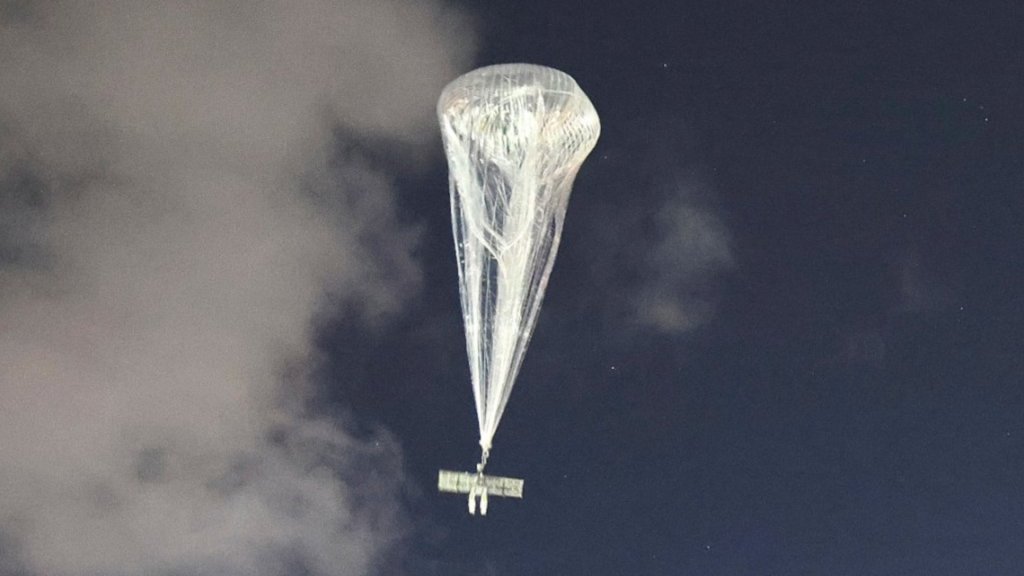
The head of the U.S. Army Space and Missile Defense Command (SMDC) was initially skeptical about the utility of high-altitude balloons, but now sees them as a "game-changing" capability.
A sensor-laden high-altitude balloon from Aerostar seen lifting off from Won Pat International Airport on Guam during an exercise in 2024. US Army

Air-launched effects (ALEs) is a collective term the U.S. military now commonly uses to discuss air-launched drones configured for a wide array of missions. The ALE umbrella encompasses designs that can be used for surveillance and reconnaissance, electronic warfare tasks, or signal relay, and can act as decoys. It also includes loitering munitions often referred to as kamikaze drones, capable of carrying kinetic attacks.
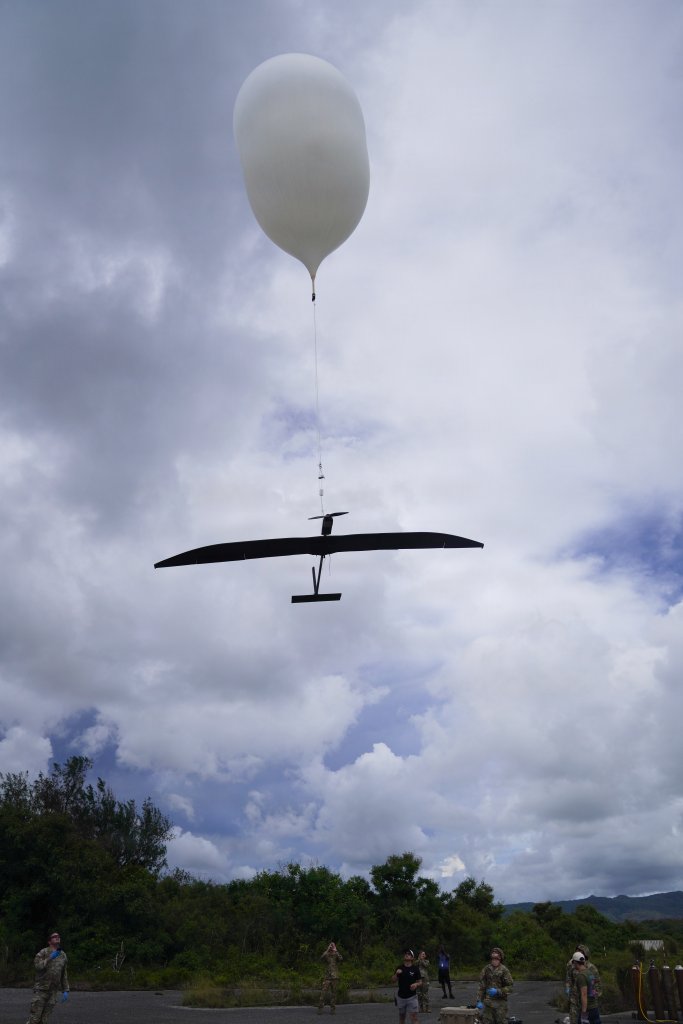
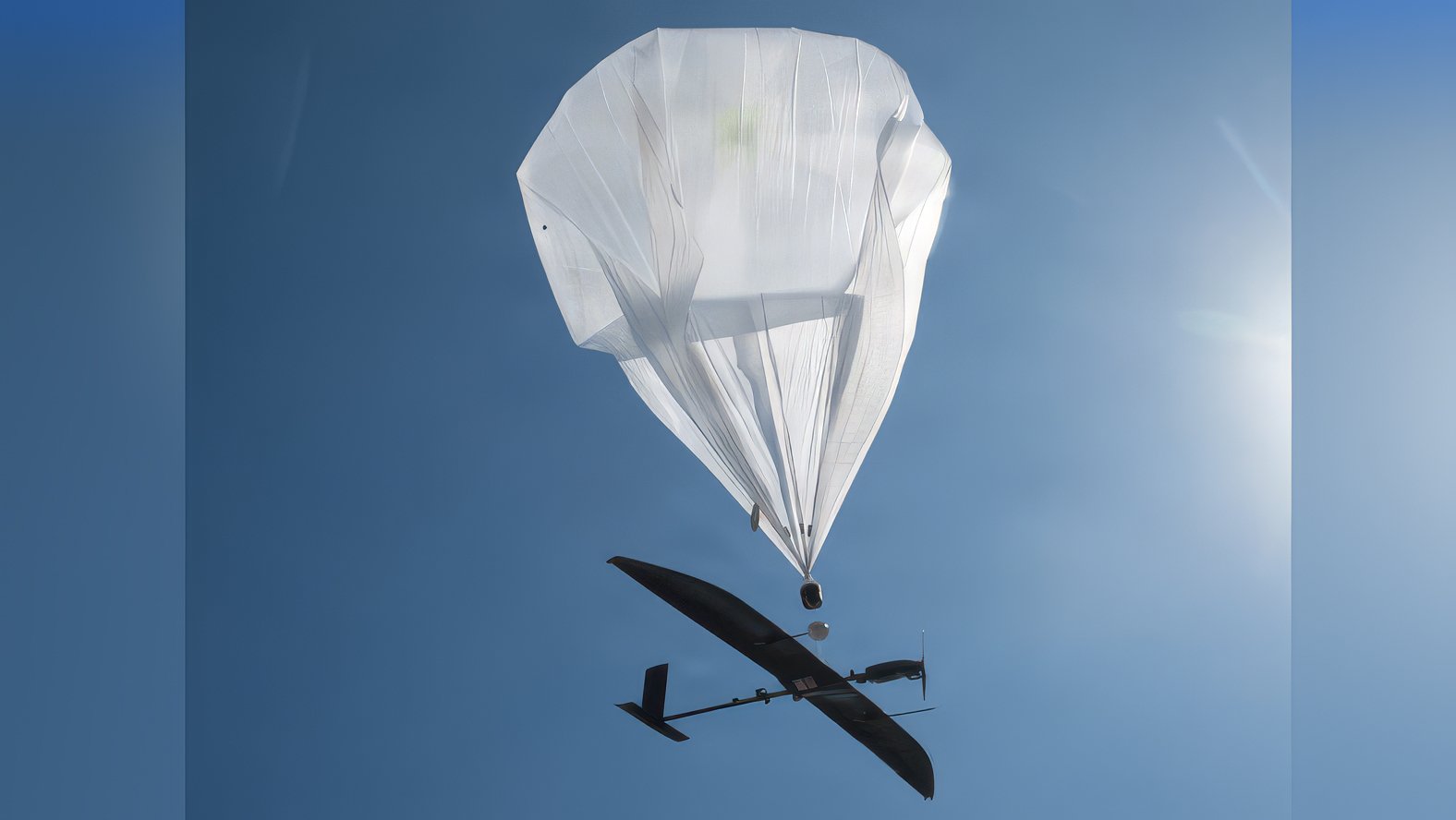
U.S. Army Soldiers assigned to the Extended Range Sensing and Effects Company, 3d Multi-Domain Effects Battalion, 3d Multi-Domain Task Force, and industry partners attach an Icarus Apollo R stratospheric fixed wing aircraft to an Urban Sky high-altitude balloon during a multi-day Special User Demonstration at Orote Airfield on Naval Station Guam, June 24, 2026, for Valiant Shield 26. The joint team conducted the pre-launch configuration to test stratospheric sensor capabilities and joint extended communication networks, directly advancing our capacity to develop and validate Combined Joint All-Domain Command and Control concepts forward in the theater. This staging operation was conducted in support of Valiant Shield 2026. Exercises like Valiant Shield allow Pacific Command Joint Forces the opportunity to integrate forces from all branches of service and with our allies to conduct precise, lethal, and overwhelming multi-axis, multi-domain effects that demonstrate the strength and versatility of the joint force and our commitment to a free and open Indo-Pacific. (U.S. Army photo by Sgt. 1st Class Ondirae Hamil Abdullah-Robinson)
U.S. Army soldiers assigned to the Extended Range Sensing and Effects Company, 3d Multi-Domain Effects Battalion, 3d Multi-Domain Task Force, and industry partners attach an Icarus Apollo R stratospheric fixed wing aircraft to an Urban Sky high-altitude balloon during a multi-day Special User Demonstration at Orote Airfield on Naval Station Guam, June 24, 2026, for Valiant Shield 26. (U.S. Army photo by Sgt. 1st Class Ondirae Hamil Abdullah-Robinson) Sgt. 1st Class Ondirae Abdullah-Robinson

In general, modern high-altitude balloons offer persistent deployment that can last for days, weeks or even months at a time. After navigating to an assigned operating area, some modern balloon systems can hold their position, in spite of prevailing winds, by modulating their altitudes to keep on station.

In addition, high-altitude balloons operate at heights providing excellent fields of view for radars, cameras, and other sensors in all directions and across very broad areas. From a perch of 60,000 feet or more, they also offer a way to peer into certain denied areas while still soaring in international airspace and keeping farther away from potential threats. During a conflict, the balloons could be deployed deep into enemy airspace as they are attritable.

Though some balloon systems can hold their general positions in many circumstances, Carpenter told us that seasonal weather changes will still play a role in deployment.

“The flight paths are different. We study that,” he noted. “We understand during what seasons where the best places are to launch those high-altitude systems, and then again to hold enemy cities and capabilities at risk at any time, so that we can defeat them at the time and place of our choosing.”

We asked Carpenter for more details about how he sees balloons being used by troops in Europe.

“I think everybody knows there’ll be a point where satellite communications are going to be degraded, if not eliminated,” he stated. “One of the things that we’re focusing on is in the stratosphere, so above 60,000 feet up to 80,000 feet, which is next to impossible to target unless you’re using one of your exquisite systems, fifth-gen fighters, SA-21 Bravo [S-400 Triumf surface-to-air missile system], etc. to shoot that stuff down.”

Many of the balloons would be equipped with Link 16, a NATO-standard tactical datalink communication system central to U.S. and allied military operations, the general said. Link 16 allows coalition forces to seamlessly transmit and exchange real-time situational awareness data. You can read more about how Link 16 works, and its increasing dependence of space, in our story here.
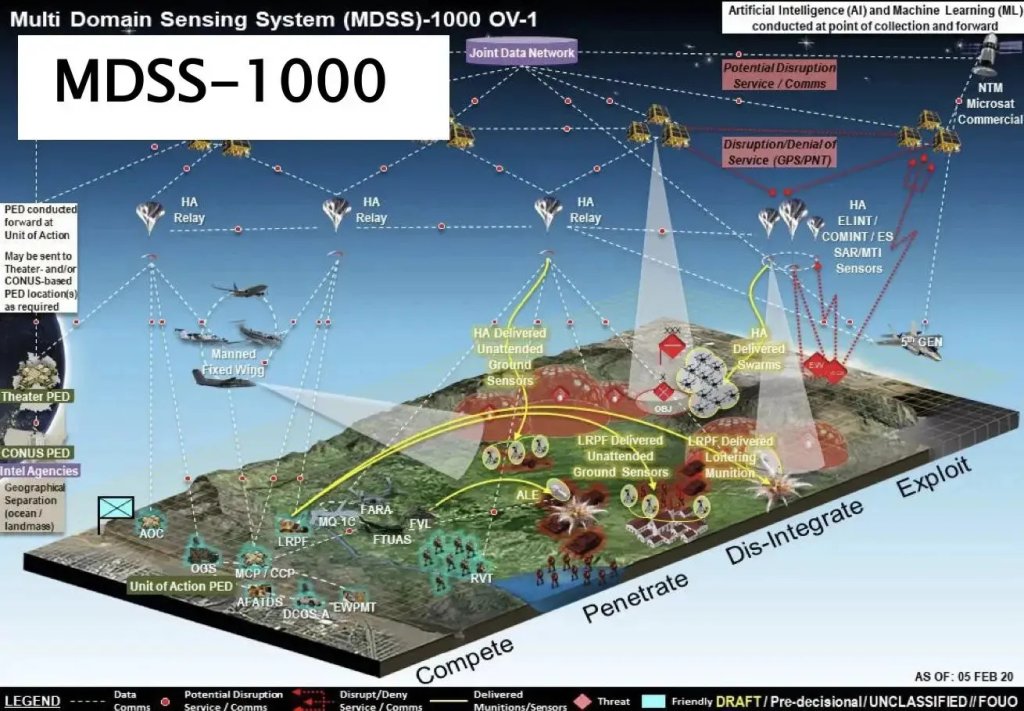
A graphic the Army previously released showing a notional “operational view” for how its planned the Multi-Domain Sensing System (MDSS) system of systems, including crewed ISR aircraft, might be employed in conjunction with other assets. (U.S. Army)

As for using balloons as ALE delivery platforms, Carpenter told us there are “different technologies, different altitudes that we’d have to deliver those from” at “different ranges, different levels of yield or lethality. But for us, it’s really just a single arrow in a quiver full of arrows, utilizing space capabilities, cyber capabilities, or surface-to-surface capabilities. In this case, you’re talking just another air-to-surface capability with your air-launched effects off balloons.”

Carpenter said that when it comes to balloon-launched ALEs, he is looking at “everything from shorter range, lower yield, maybe targeting an adversary ballistic missile radar, to longer range, higher yield capabilities that you might use to maybe take out a ballistic missile system.”

In such cases, the balloons would carry drones deep into enemy territory, where they would be launched opportunistically to strike the targets Carpenter suggested. The size of the target, and how well it is protected, would determine what kinds of drones the balloons would launch, as well as their proximity to the target.

Russian air defense systems like these S-400 launchers could be targeted by balloon-launched weapons, an Army general told us. (Sergei Malgavko / TASS)

Should a fight break out in Europe tonight, Carpenter said he is confident he can rely on the technology.

“Our operating concept is proven,” he stated, noting that “we’ve already tested those capabilities against most modern adversary systems that exist. We’ve already validated our operating concept in terms of getting to mass and scale that we would need in large-scale conflict.”

As we have previously reported, while high-altitude balloons have been used for decades, the modern concept of these systems was recently employed operationally by the U.S. in a combat theater.

The Army had planned to demonstrate the ability of balloons to operate in swarms with a high degree of autonomy in the Pacific region last year before those assets were redirected to the Middle East. When exactly that deployment occurred and how long it lasted are unclear.

“We were asked to pivot and do some experimentation in combination with operations, and we pivoted and supported operations in CENTCOM [U.S. Central Command],” Andrew Evans, Director of Strategy and Transformation with the Office of the Deputy Chief of Staff of the Army, or G-2, told Breaking Defense, according to a story the outlet published last week. “They were effective for the mission that they were assigned,” he added. However, Evans was not able to disclose the exact location and operational scenarios in which they were used.

Other countries, including U.S. allies and partners, are increasingly fielding balloon-based and other lighter-than-air systems, too. Ukrainian forces notably have been using balloons to conduct kinetic attacks and launch drones against Russian assets. On the other side of that conflict, the Russians have used balloons as decoys to confuse and misdirect air defenses.

The following video shows Ukrainian forces using balloons to launch kamikaze drones.

American-made Hornet middle-range strike UAV being tested with balloon-assisted launch system.

Such resolution allows to drastically increase its original range (approx. 100km).

Hornet OWA-UAVs are actively employed by Ukrainian forces for strikes on Russian logistics and other… pic.twitter.com/S1bHqLNhPY

— Status-6 (@Archer83Able) May 20, 2026

To achieve the effects he laid out, Carpenter told us that he will still need to surge capacity to Europe.

“The Army will make decisions on which vendors they’re going to go with,” he pointed out. “But the ability to field that at scale is just simply based on the resources provided. I’m talking about money to go ahead and bring them into theater.”

Pushed to provide details of how quickly he could have the desired number of balloons, Carpenter told us that “if the United States or NATO and its allies were on a wartime footing, it would be extremely rapid, but we would need to get them into theater before crisis turned to conflict. So we’d have to keep a close eye from an IC [intelligence community] perspective on indicators and warnings to make sure we have the right systems on the ground at point of need.”
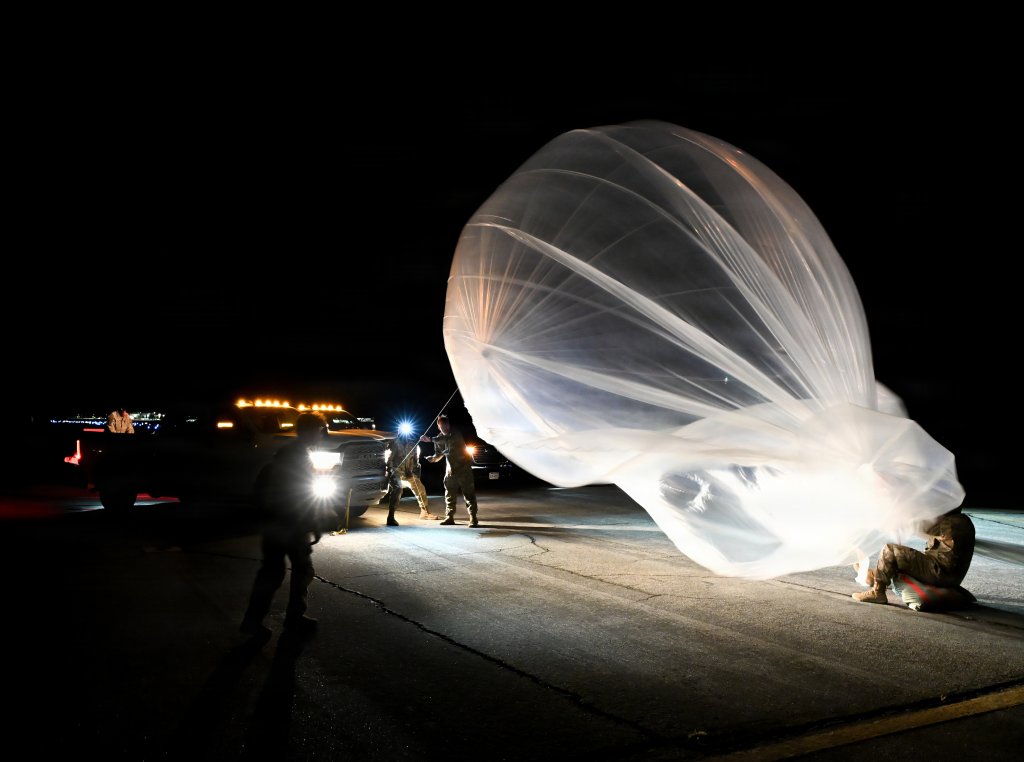
U.S. Army Soldiers from Multi-Domain Command–Europe deploy High Altitude Balloons at Tahachapi Airfield, April 22, 2026. The High Altitude Balloon is used to gather intelligence, surveil and perform reconnaissance. (U.S. Army photo by Staff Sgt. Rajheem Dixon, Multi-Domain Command–Europe)
U.S. Army soldiers from Multi-Domain Command–Europe deploy high-altitude balloons at Tehachapi Airfield, April 22, 2026. (U.S. Army photo by Staff Sgt. Rajheem Dixon, Multi-Domain Command–Europe) Staff Sgt. Rajheem Dixon

The Army’s overall vision for balloons is not new; the service has been openly discussing it for at least six years now. However, the use of high-altitude balloons in this context is now being operationalized. Meanwhile, China has very actively shown off its ability to gather intelligence and conduct other missions using balloons and other lighter-than-air craft on a broad operational level across the Pacific. TWZ had been reporting on this reality for years before it was thrust fully into the public consciousness after a Chinese spy balloon passed over parts of the United States and Canada back in 2023.

The concept Carpenter laid out for how balloons will be used in a future European conflict is another example of the renaissance in lighter-than-air military technology and how the Pentagon is increasingly seeking to weaponize it on a grand scale.

Contact the author: howard@twz.com

The post Army’s Plan To Launch Hundreds Of Balloons Into Enemy Territory If A Future Conflict Breaks Out appeared first on TWZ.
  •  

We Finally Know The B-21 Raider’s True Wingspan

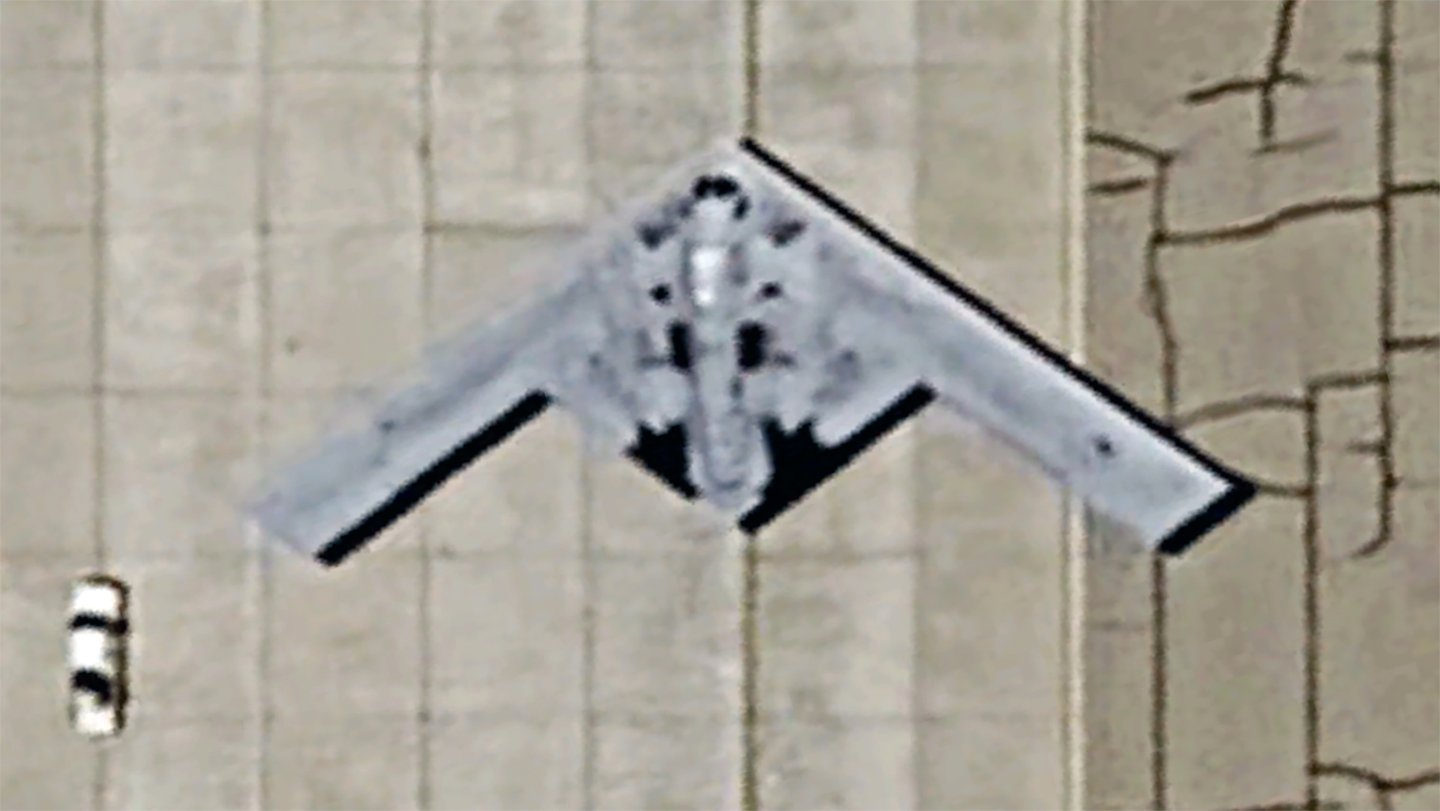
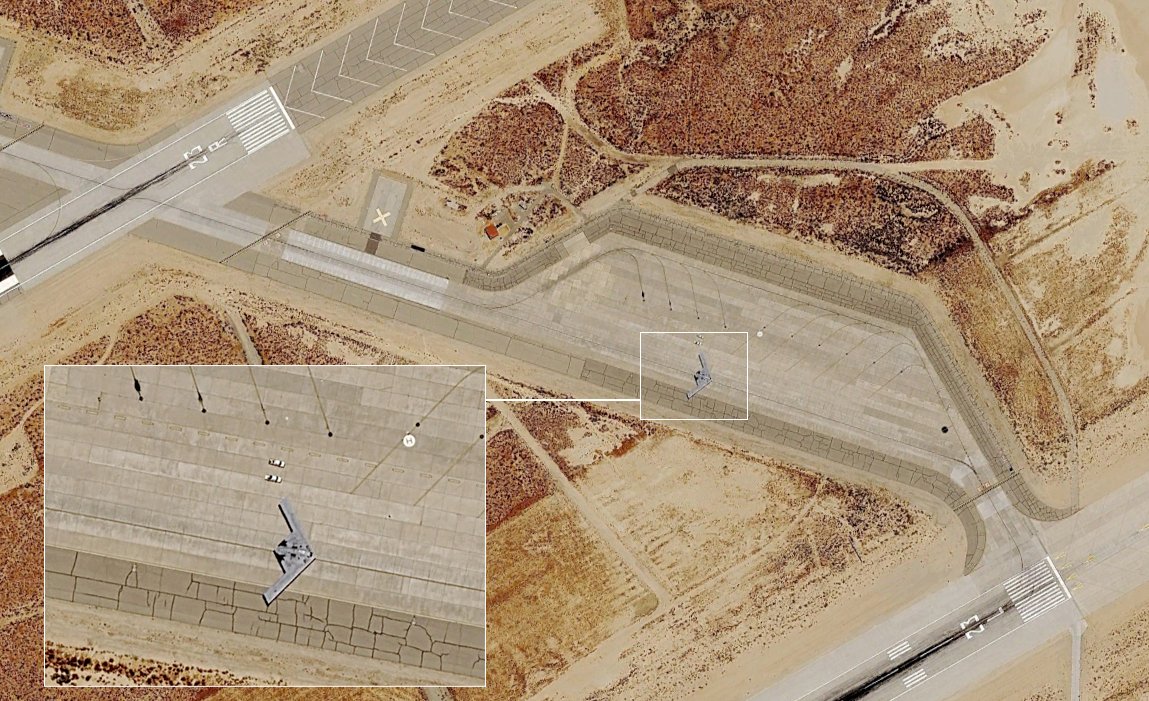
Thanks to Google Earth, we can finally put this one to bed. Since the B-21’s unveiling, people have made wild claims about its wingspan, specifically how tiny it is. This was never the case, as we have reported continuously since we first set eyes on it. Many AI-generated and enthusiast-made B-21 fact sheets have gone viral on social media showing wingspans under 130 feet, which only helped propel the nonsense. Now we can definitively say, give or take a few feet, the B-21 spans 152 feet and is 61 feet long. This puts it at about 12% smaller in terms of wingspan than the B-2, and about the same — 12% smaller — when it comes to length.

The image in question, taken of Edwards AFB and dated June 20, 2026, was recently uploaded to Google Earth. While we have seen satellite images of the B-21 going about its business before, this one was published in the public domain and had enough resolution, when paired with Google Earth’s excellent measurement tools, to get conclusive measurements.

B-21 taxiing between Edwards AFB’s parallel runways. (Google Earth)

Since we first saw the B-21 at Plant 42 in Palmdale, California, during its unveiling, which TWZ attended, we put the top-end size at 155 feet wingspan-wise. That analysis has only narrowed over the years. I have had many emails, social media threads, and other engagements with folks claiming the aircraft was in the sub-130-foot wingspan range. Now we can finally put those battles behind us.

B-21 span nowhere that number. Bizarre people think this. Around 150-155 best estimate

— Tyler Rogoway (@Aviation_Intel) September 19, 2025

I smile every time I see these graphics showing like 130 foot wingspan on the B-21. People think it's way smaller than it is.

— Tyler Rogoway (@Aviation_Intel) August 25, 2025

So what does the size tell us? Nothing we don’t already know. The B-21 was always going to be smaller than the B-2. Our analysis from many years ago has stayed the same — the aircraft would be designed with a premium on range and affordability, as well as very low observability, over massive payload. This resulted in the aircraft you see today. It is smaller, but with design priorities that have shifted from its predecessor’s, and 12% smaller in pure dimensions makes total sense considering what Northrop Grumman was trying to achieve. Above all else, it points to the B-21 having an extreme unrefueled range, with improved aerodynamics for high-altitude cruise, more gas for its size, and two efficient engines instead of four.

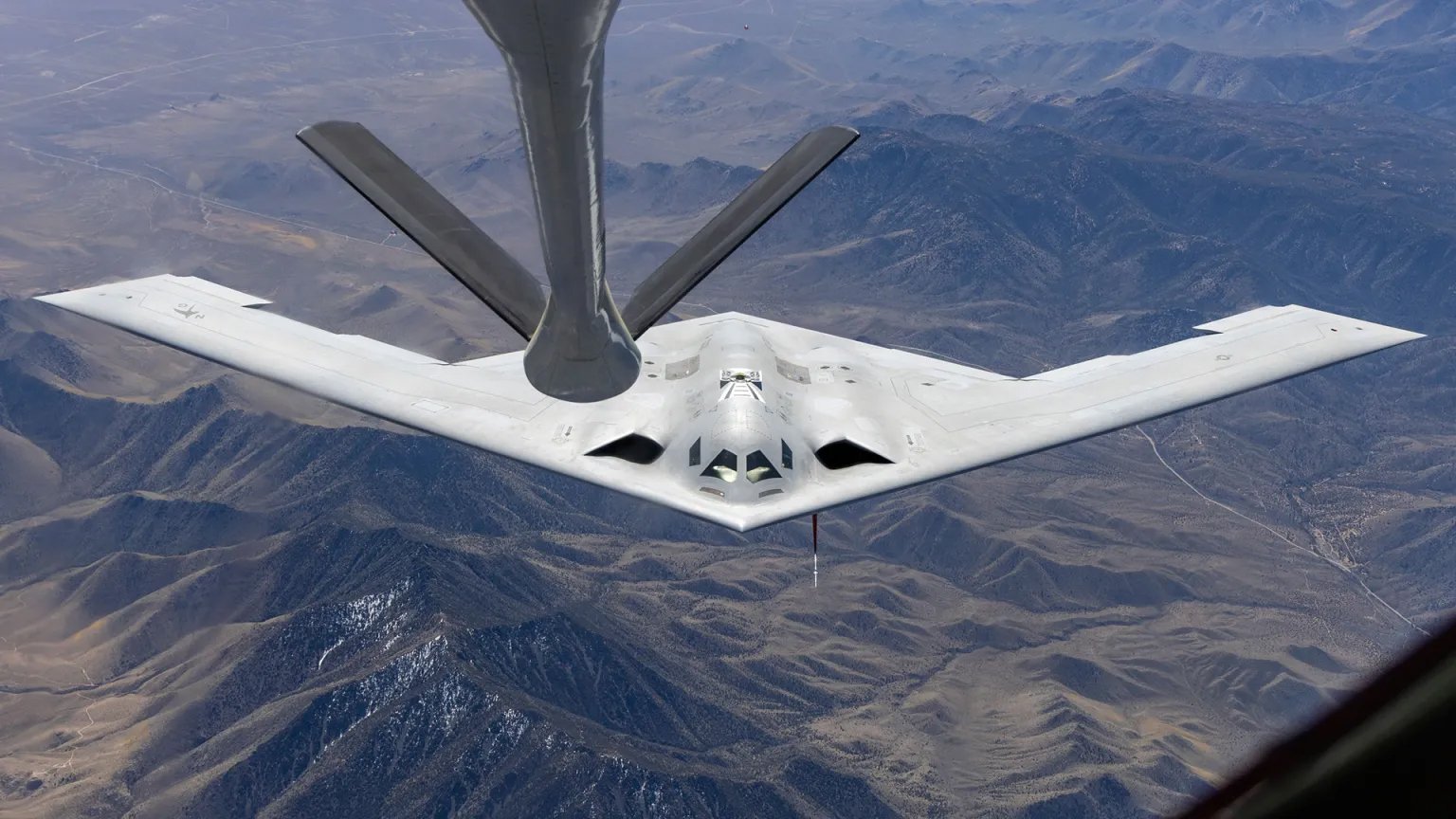
Official photo of the B-21 in close pre-contact position behind Edwards AFB’s ‘Ghost’ test tanker. (USAF)

As for its length, the B-21 is nearly the same length as an F-15 fighter, which sounds bizarre for a large bomber. However, flying wings are visual transformers, looking like compact UFOs side-on and massive head-on or from the planform view.

What's even more fascinating is that this thing is probably about the same length as an F-15 or close to it. Flying wings are transformers. From flying saucers side-on to massive flying wedges in the bank to huge boomerangs head on. pic.twitter.com/0UXOK0uVVN

— Tyler Rogoway (@Aviation_Intel) May 22, 2024

As far as what else we can discern from the Google Earth image? Not much. We get a bit of a better view of the B-21’s exhaust configuration, but nothing is really revelatory there. The exhausts are deeply buried with large planar exhaust exit ‘ramps’ and have a large chevron trailing edge over the exhaust aperture itself. We have seen some pretty detailed images of this general arrangement from the rear that have been posted on social media. We do see the exhaust pathway as black in color, a feature that was edited out in the official top-down photo of the B-21 seen above, which was released in April, and this is something we mentioned at the time.

(Images): “Northrop Grumman’s B-21 Raider Over Palmdale”

Source: jmh.creates#anonymoushadoww #ufotwitter #uaptwitter #ShadowLurker #Twitter pic.twitter.com/0zLn4ADWl1

— Anonymoushadoww (@anonymoushadoww) September 25, 2026

Regardless, at least we can say with total confidence that the B-21 is smaller than its progenitor, but not by all that much — about 12% to be more exact.

Contact the author: Tyler@twz.com

The post We Finally Know The B-21 Raider’s True Wingspan appeared first on TWZ.

  •  

Aerial Drones Appear To Be Picking Up Wounded Off The Battlefield In Ukraine

The Ukrainian Armed Forces say they have carried out the world’s first frontline evacuation of a wounded soldier by aerial drone. The soldier, from the 30th Mechanized Brigade, is said to have been recovered successfully and is undergoing treatment and rehabilitation.

“This is a historic event, at least for our unit for sure,” said “Napalm,” a squad commander and programmer with the 92nd Assault Brigade’s uncrewed ground vehicle (UGV) company. The precise date and location of the operation have not been disclosed, and the claim of a global first has not been independently verified. However, a video of the event has been published by the 92nd, which you can watch below:

At this point, it should be noted that the footage has not been independently verified and could depict a staged demonstration rather than an actual combat evacuation. It should, at least, be treated with a degree of caution.

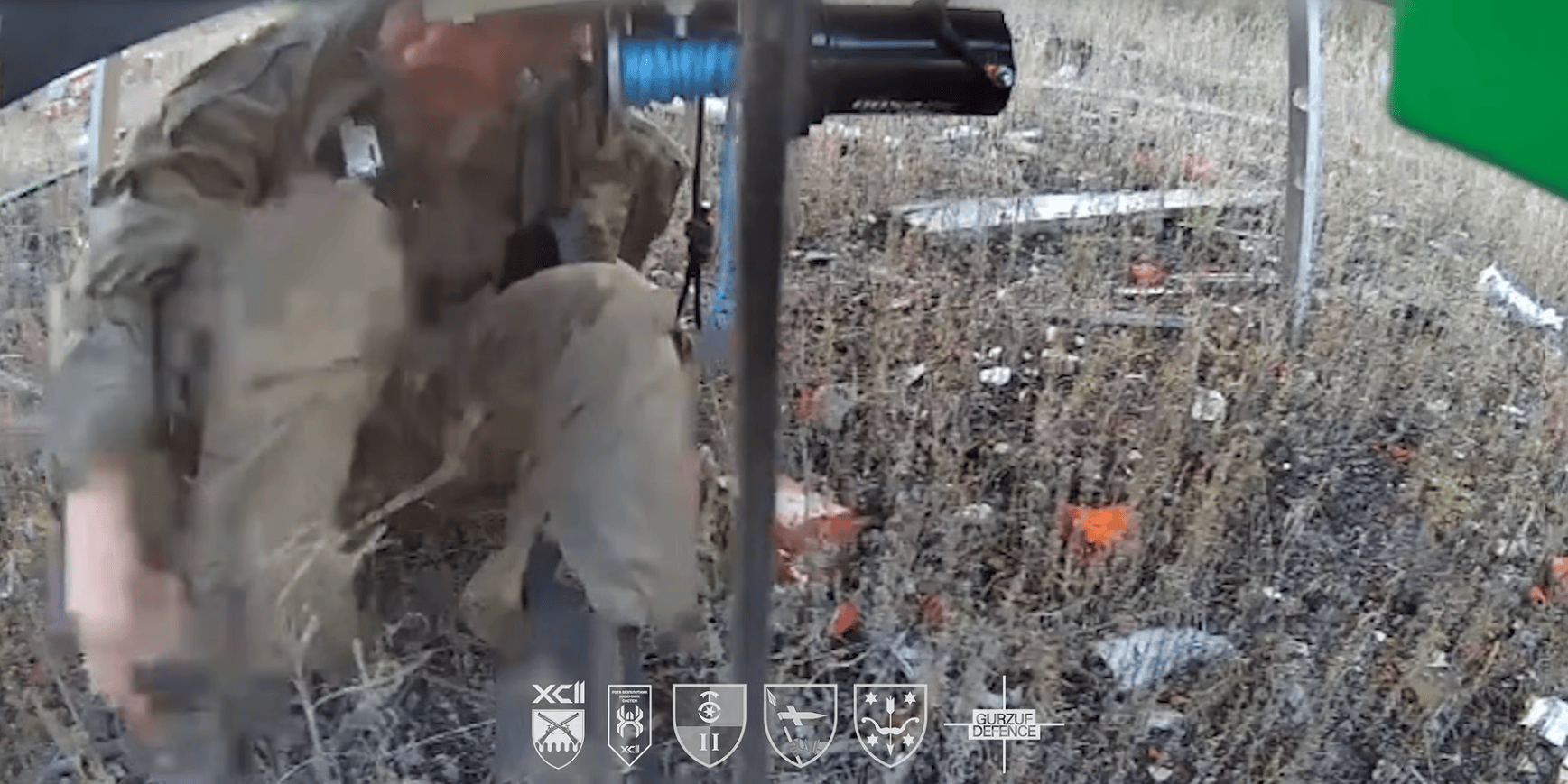
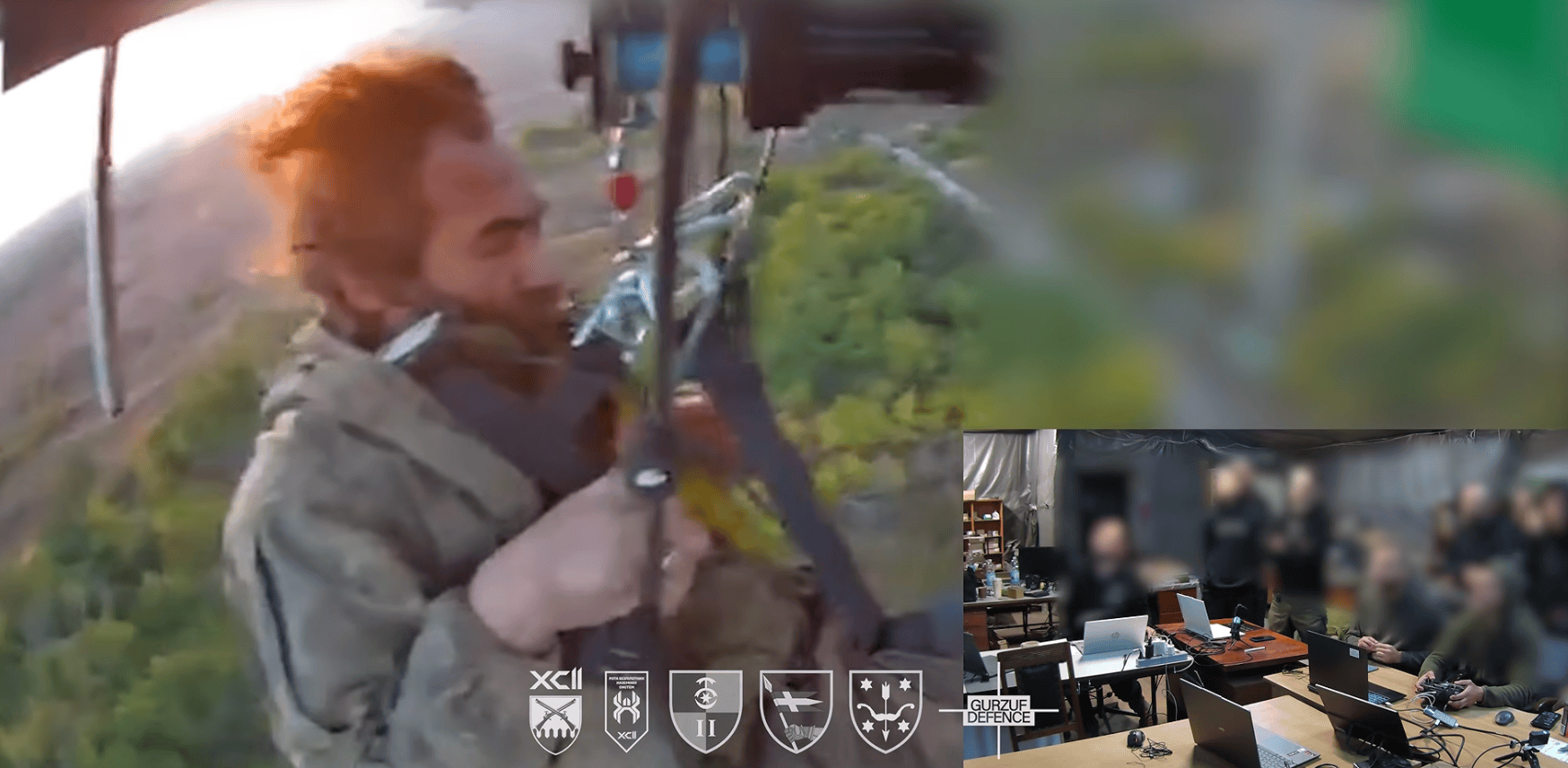
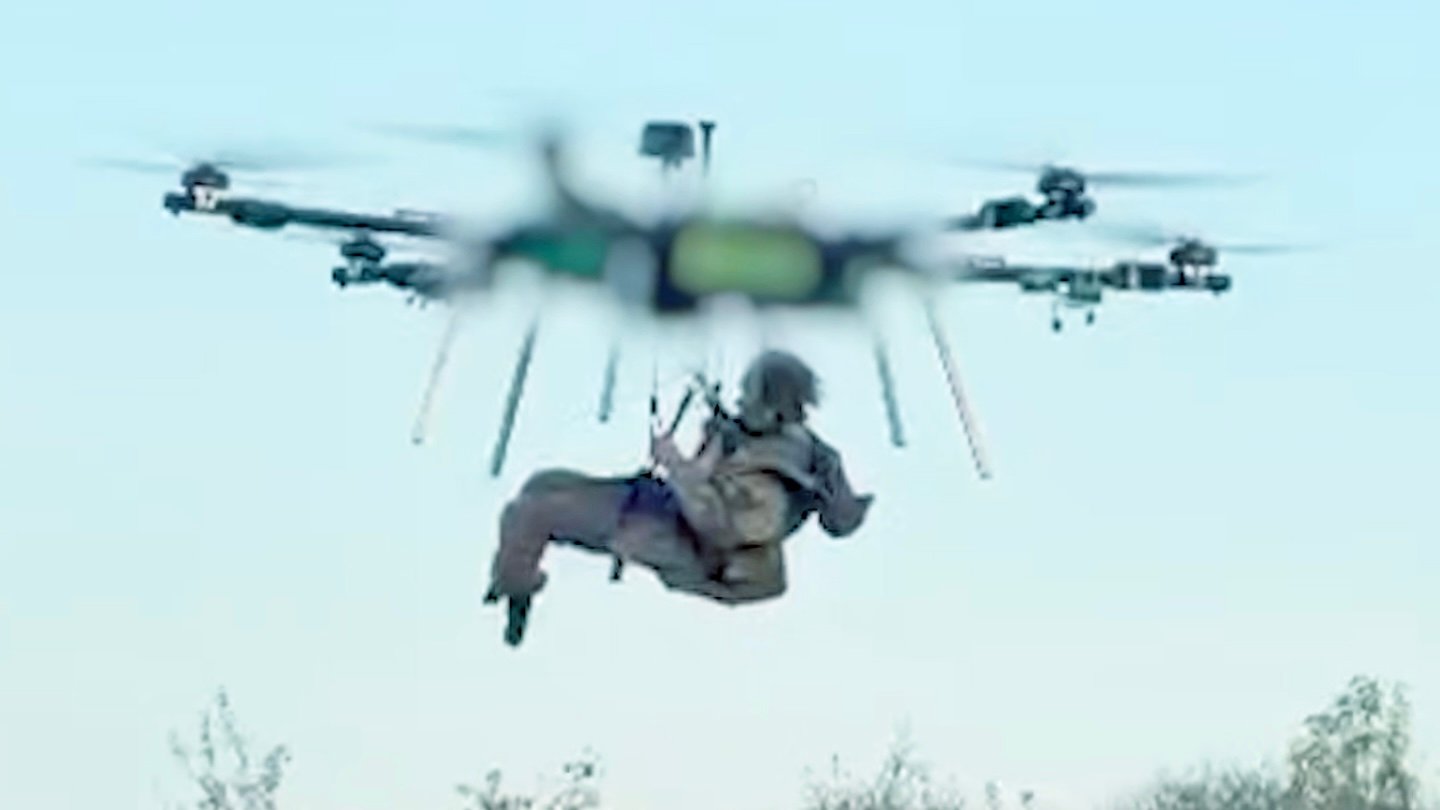
According to accompanying reports, the infantryman was wounded while holding his position. Mines and intense Russian drone activity prevented a conventional ground evacuation, prompting the 92nd’s specialists to attempt an aerial extraction. The video shows the soldier clipping himself to the underside of the drone via a harness before being flown to safety. The extemporized nature of the platform is underscored by the fact that, while in the air, the soldier dangles below its rigid landing legs.

The soldier is seen hunched under the hexacopter before attaching his harness to the drone. 92nd Assault Brigade/YouTube screencap

The aircraft was a heavy hexacopter manufactured by Ukrainian company Gurzuf Defense, which provided it free of charge. A UAV operator from the 30th Mechanized Brigade piloted the drone. Throughout the recovery, the soldier remained in contact with the drone operator.

With the drone now airborne, the drone controllers monitor the flight from the ground. 92nd Assault Brigade/YouTube screencap

The operation involved the 92nd, 30th and 14th Mechanized Brigades, the 10th Army Corps and Gurzuf Defense.

Ukraine increasingly uses uncrewed ground vehicles to deliver supplies and evacuate casualties from exposed positions. According to Euromaidan Press, Ukrainian UGVs conducted approximately 112,000 logistics and evacuation missions between January and August 2026.

However, ground robots can struggle with mines, mud, and cratered terrain, while remaining vulnerable to drones and artillery. These obstacles make it especially difficult to conduct UGV operations in the battlefield’s “kill zone,” which can extend six to nine miles or more from the front line. You can read an in-depth account of Ukrainian UGV efforts in this previous story.

A video showing a Ukrainian UGV in action in the Donetsk region:

Aerial platforms are able to reach casualties in places where ground vehicles cannot safely travel, and can get there far quicker, without having to stick to specific routes.

The 92nd has not disclosed the evacuation distance or flight duration of the mission. If, as reported, the drone used was an Audag-6 model, this is stated to be capable of carrying a 200-pound payload over a distance of up to 15 miles.

Meanwhile, the recovery points to a growing trend in the Ukrainian Armed Forces.

Only days before the story of the evacuation broke, it emerged that Ukraine is also now testing the StarGate, a purpose-built aerial medical evacuation drone — also of the heavy hexacopter type — developed by the SkyFall company. This is a rather more tailored solution to the problem, with a covered, medical-grade stretcher slung below the drone. It has a reported payload capacity of around 330 pounds, uses AI-assisted navigation, and can also deploy nets against hostile drones attempting to intercept it.

The 92nd’s operation used a heavy-lift hexacopter adapted for an ad hoc casualty transport, rather than a more bespoke design. This means the soldier had to be adequately trained on how to strap in, and also had to be in a condition that they could actually perform this procedure. This would also be the case even if other soldiers were able to assist them in strapping in.

While these kinds of solutions may be new to the battlefield in Ukraine, using uncrewed aerial systems for personnel recovery and medical evacuation is far from new.

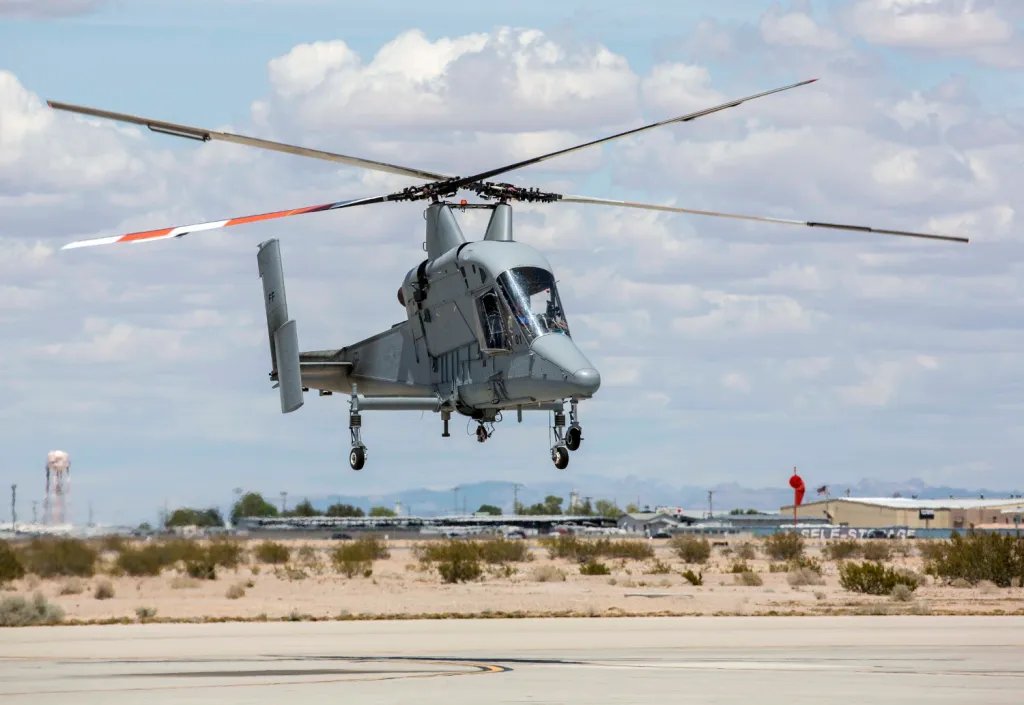
Back in 2016, the Army completed a demonstration of the Lockheed Martin K-Max helicopter in a casualty evacuation role. The K-Max can operate with and without a pilot and was used as a drone by the Marine Corps to deliver cargo in Afghanistan.

A U.S. Marine Corps K-Max helicopter. U.S. Marine Corps

“Unmanned and autonomous platforms have the potential to completely rewrite the medical doctrine,” Army Col. Daniel Kral, head of the Army’s Advanced Technology Research Center (TATRC), explained during a conference at Fort Detrick in Maryland in 2017.

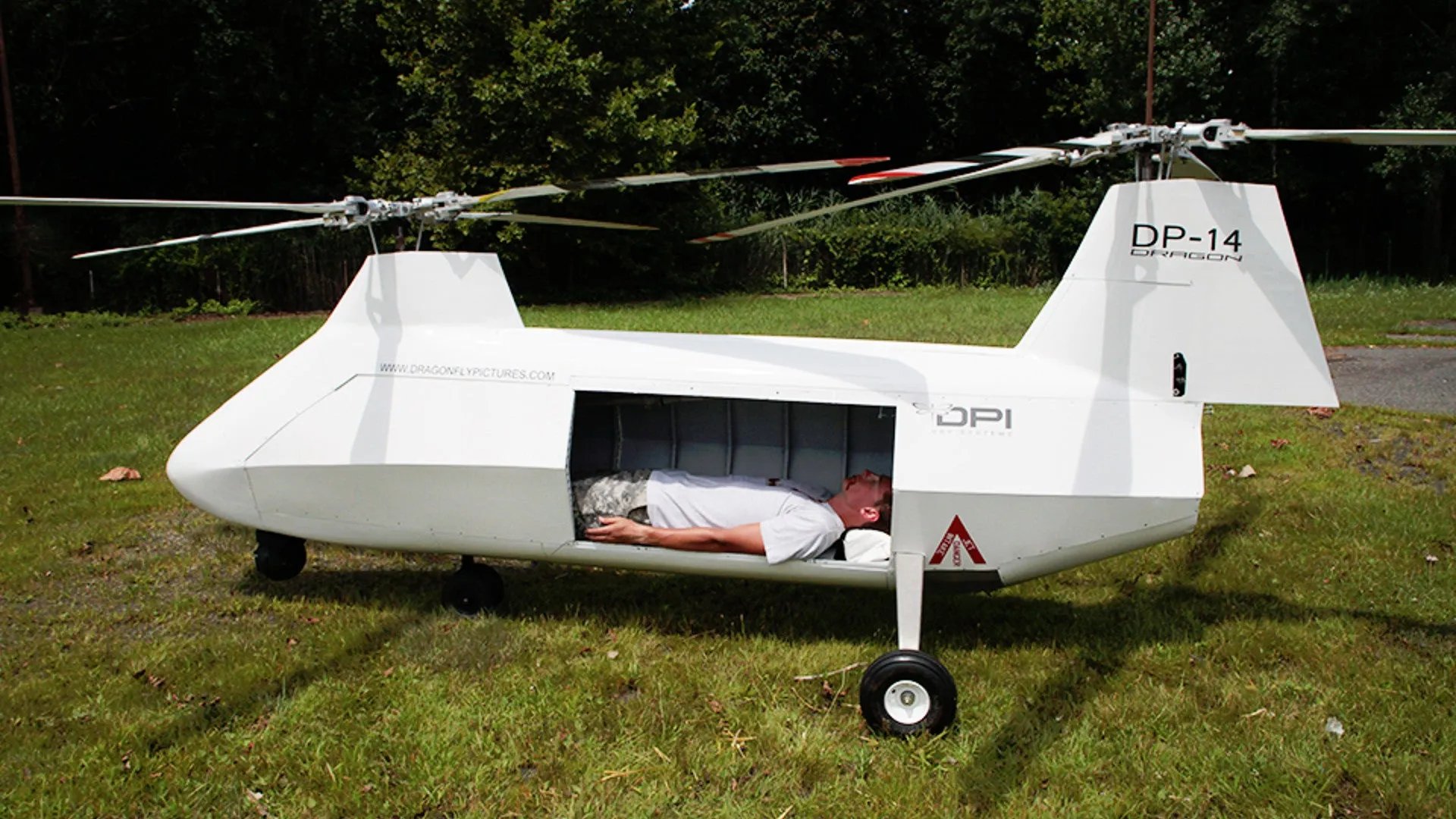
In 2019, TWZ reported on U.S. Army efforts to explore how uncrewed craft might speed up the casualty evacuation process. This work included evaluation of the Dragonfly Pictures, Inc. (DPI) DP-14 Hawk, a small, tandem-rotor drone with a 400-pound cargo capacity.

 A DP-14 Hawk shown configured for casualty evacuation. Dragonfly Pictures, Inc.

The emergence of autonomous air vehicles, or uncrewed ‘flying taxis,’ with short or vertical take-off and landing capabilities in the urban air mobility sector has also generated military interest. The U.S. Air Force Research Laboratory, for example, has conducted studies into how craft such as these could be adapted for combat search and rescue, with the idea that they would be airdropped to recover a fighter pilot shot down while operating over hostile territory.

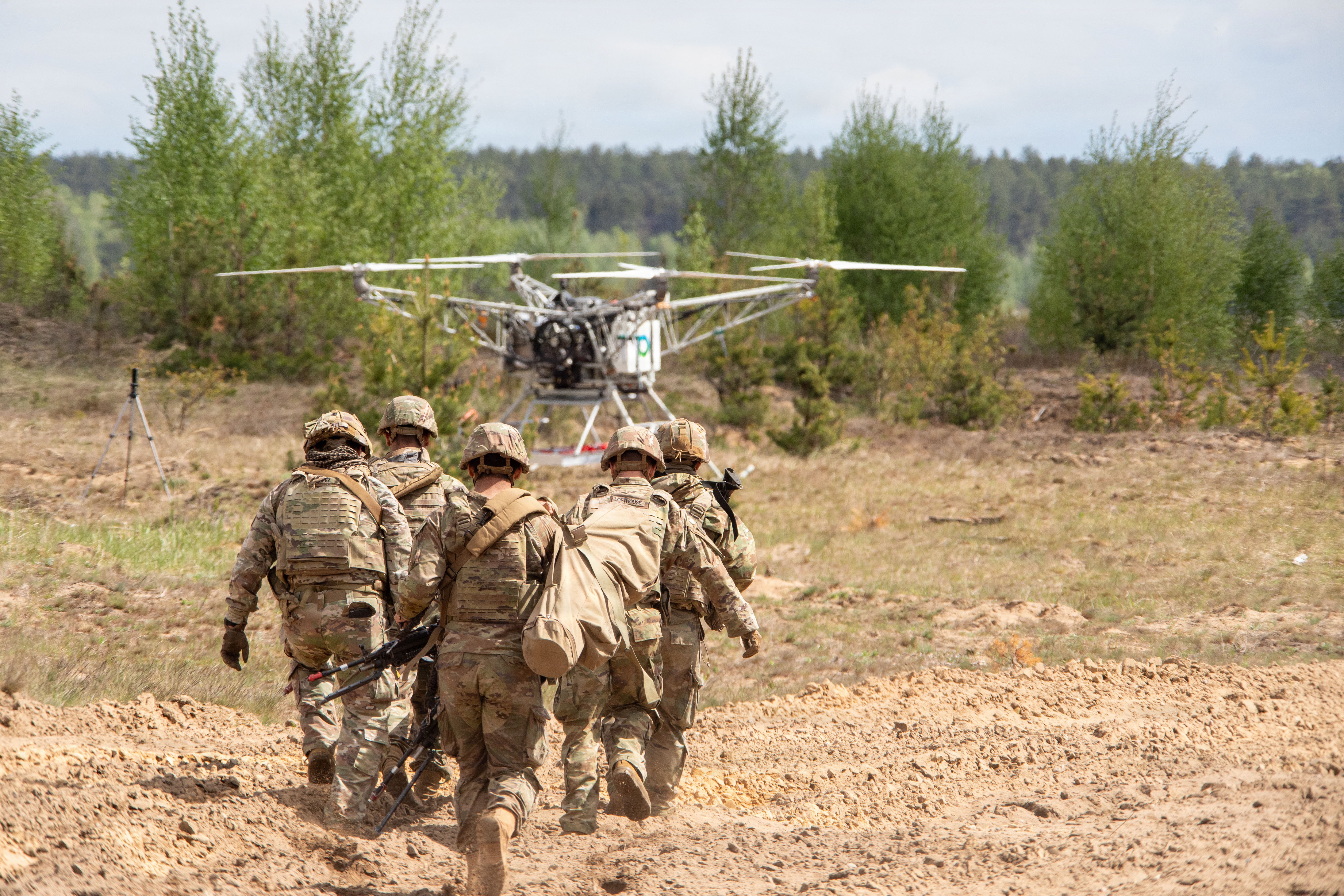
Closer to the Ukrainian hexacopter concept is the Flowcopter FC-100, a heavy-lift quadcopter drone that the U.S. Army tested in a medical evacuation capacity in Poland during the large-scale Saber Strike exercise earlier this year. Carrying a 220-pound payload, the drone has a range of more than 60 miles.

U.S. Army Soldiers assigned to the Regimental Support Squadron, 2d Cavalry Regiment, run with a test dummy in a stretcher towards a drone during an Autonomous Triage and Treatment Challenge taking place near Bemowo Piskie Training Area, Poland, May 10, 2026. From April 27 to May 31, 2026, U.S. and Allied forces will exercise the North Atlantic Treaty Organization’s (NATO) Eastern Flank Deterrence Initiative, demonstrating NATO’s ability to fight and win on the modern battlefield. Nearly 15,000 troops from eleven nations will train across the High North, Baltic region, and Poland. They will execute rapid maneuvers, air defense, counter-drone operations, and cyber defense to validate NATO’s regional defense plans in real time. This series of linked exercises includes Saber Strike, Immediate Response, and Swift Response. The exercises turn investment into capability. Soldiers integrate unmanned systems such as AI-enabled command and control and live data networks to move, decide, and fight more effectively across all domains. Sword 26 demonstrates how U.S. Army Europe and Africa drives transformation at scale while strengthening deterrence. Together with our allies, we are building a unified, lethal force ready to defend NATO territory and respond to any threat. (U.S. Army Reserve photo by Spc. Thomas Madrzak)
U.S. Army soldiers run with a test dummy in a stretcher towards a Flowcopter FC-100 drone during an Autonomous Triage and Treatment Challenge taking place near Bemowo Piskie Training Area, Poland, May 10, 2026, as part of Exercise Saber Strike. U.S. Army Reserve photo by Spc. Thomas Madrzak

All of these concepts aim to address the inherent vulnerability of larger personnel recovery platforms in more contested environments.

In their favor, they offer the potential to rescue troops from more precarious situations, with the smaller drones touching down in relatively tight areas in mountainous, forested, or jungle environments. Autonomous navigation systems can guide the drones through smoke, dust, or bad weather, too.

On the other hand, these small craft have no space for a medic, pararescuemen, or other additional personnel. Bearing in mind their limited range and lower speeds, they also need to be in the right location to respond to emergencies as and when they occur.

For the Ukrainian Armed Forces, aerial medical evacuation drones are being rapidly developed and now fielded to help address another problem: the vulnerability of UGVs in areas of the battlefield that have long become far too hazardous for crewed medevac platforms to operate.

By now, both sides in the Ukraine war are relying heavily upon small, autonomous uncrewed aircraft to perform a wide variety of resupply, surveillance, communications, and strike roles on and around the front lines. With that in mind, the adaptation of these kinds of vehicles for casualty evacuation and personnel recovery missions is the next logical step.

Contact the author: thomas@thewarzone.com

The post Aerial Drones Appear To Be Picking Up Wounded Off The Battlefield In Ukraine appeared first on TWZ.

  •  
❌