❌

Reading view

Denmark To Buy Anthem Munitions, Joint Strike Missiles In Dual Long-Range Strike Push

Denmark is set to acquire Anthem long-range strike weapons from U.S.-based defense startup Covenant, as well as Joint Strike Missile (JSM) cruise missiles from Norway’s Kongsberg Defense & Aerospace. The twin-track approach by the Nordic NATO member will give it all-new options for launching long-range strikes from the ground and air. Furthermore, Denmark’s move reflects a broader European push to acquire longer-range strike options, especially by NATO allies seeking to deter Russia.

Danish Defense Minister Jeppe Bruus announced the planned purchases yesterday. He said the new weapons would strengthen Denmark’s ability to respond to an attack and strike targets “behind enemy lines,” according to Reuters. Copenhagen has not disclosed the number of missiles involved, the value of the purchases, or expected delivery dates.
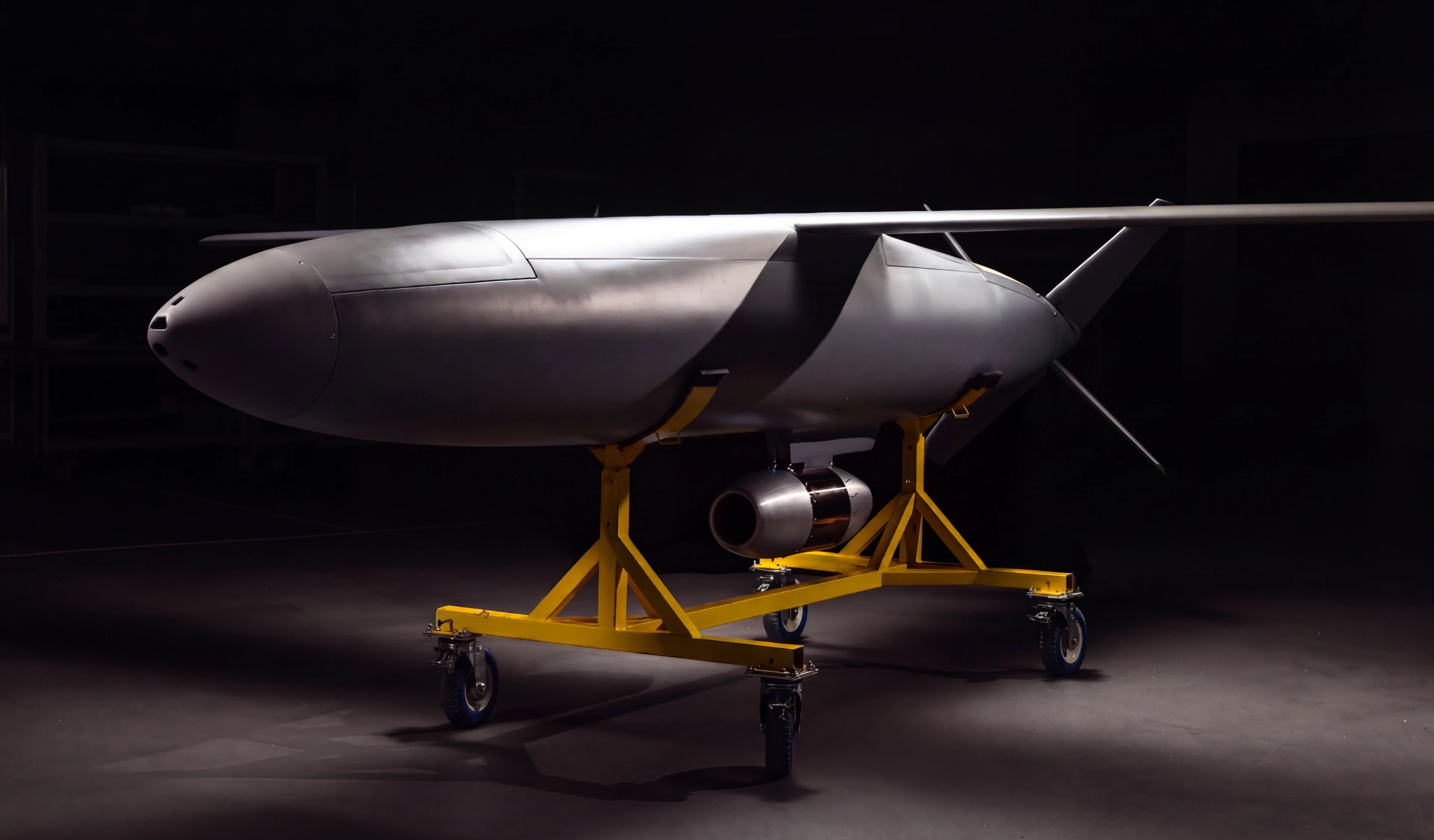
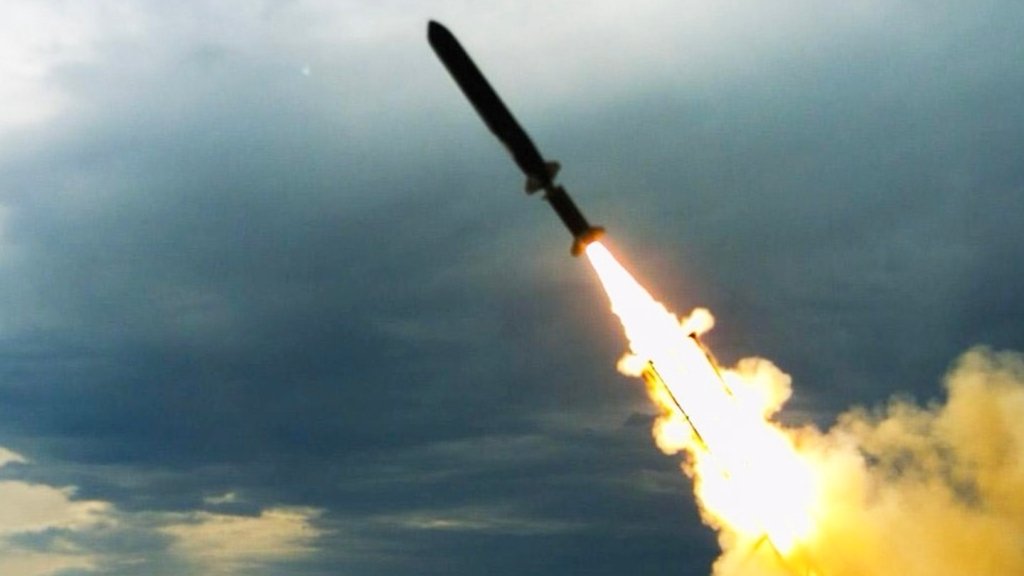
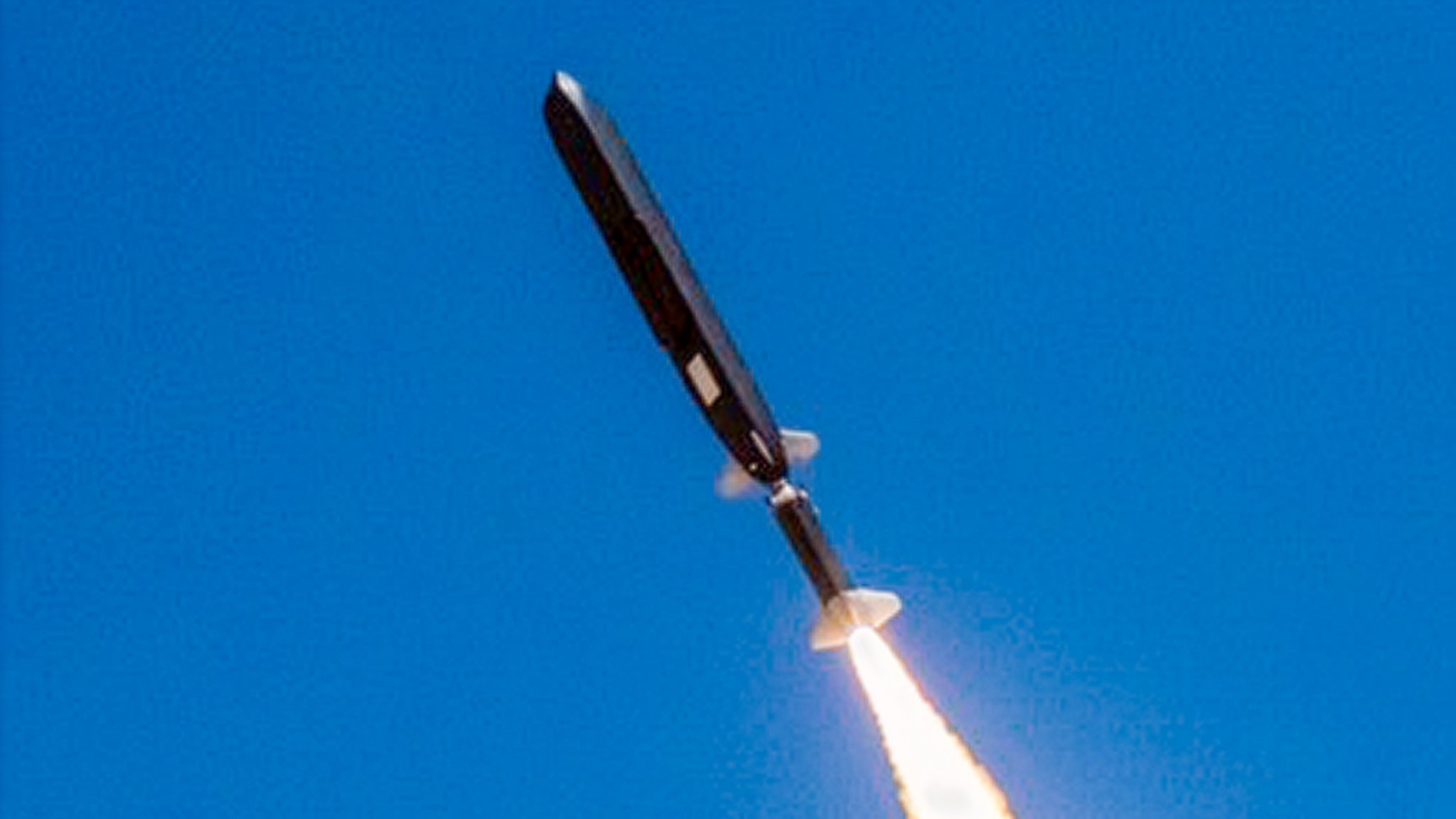
A stock picture of Covenant’s Anthem long-range strike weapon. Covenant

“We’re in a serious and deteriorating security situation, and that is why we are building up the defense and strengthening our combat power,” Bruus told reporters. The planned acquisitions are a “strong signal that we have the ability to strike back,” he added, without explicitly naming any particular adversary.

The Danish government did say last year that it would pursue new long-range offensive precision weapons, in general, in response to the growing security concerns in Europe amid Russia’s ongoing war against Ukraine. Bruus’ announcement comes amid a new surge in geopolitical friction between Russia and members of the NATO alliance.
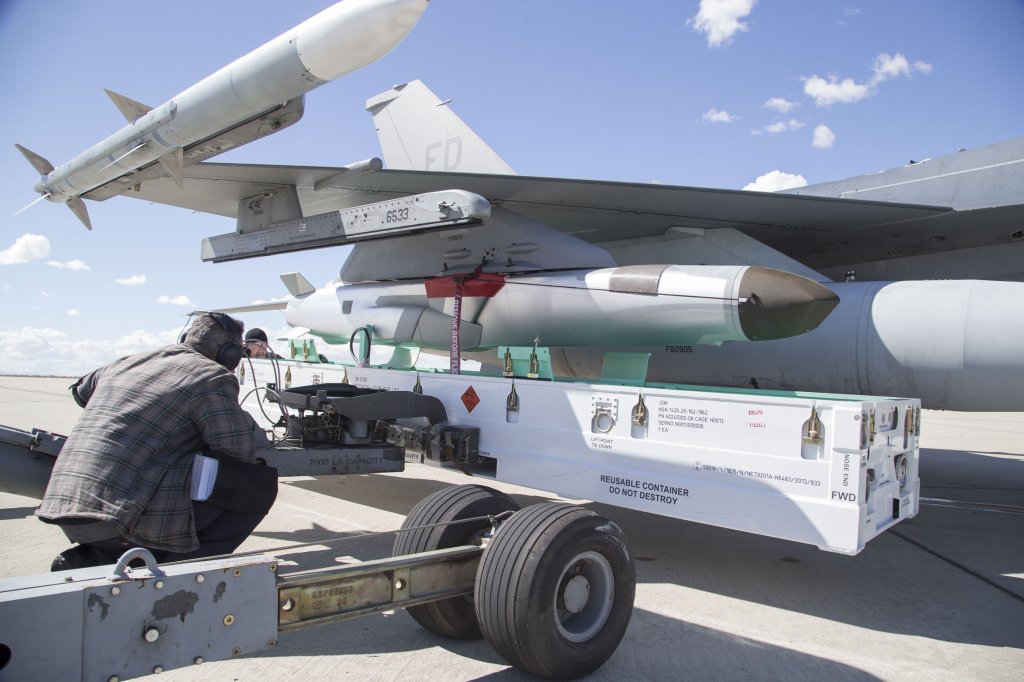
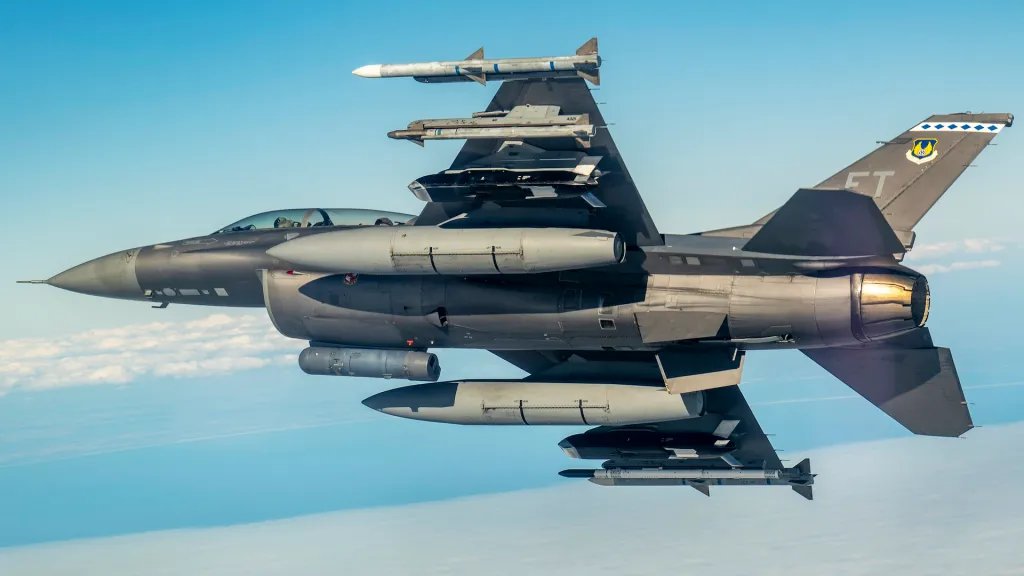
A stock picture of a Joint Strike Missile (JSM), seen here being loaded onto a US Air Force F-16 Viper during a test in 2018. USAF

The two new acquisitions will provide Denmark with important complementary strike options. Anthem is a ground-launched weapon, while JSM is designed to be air-launched, including by stealthy F-35 fighters just like those in Danish Air Force service today. Together, the weapons are set to expand the range of platforms from which Denmark can deliver stand-off precision strikes and give its armed forces additional options for attacking high-value military targets.
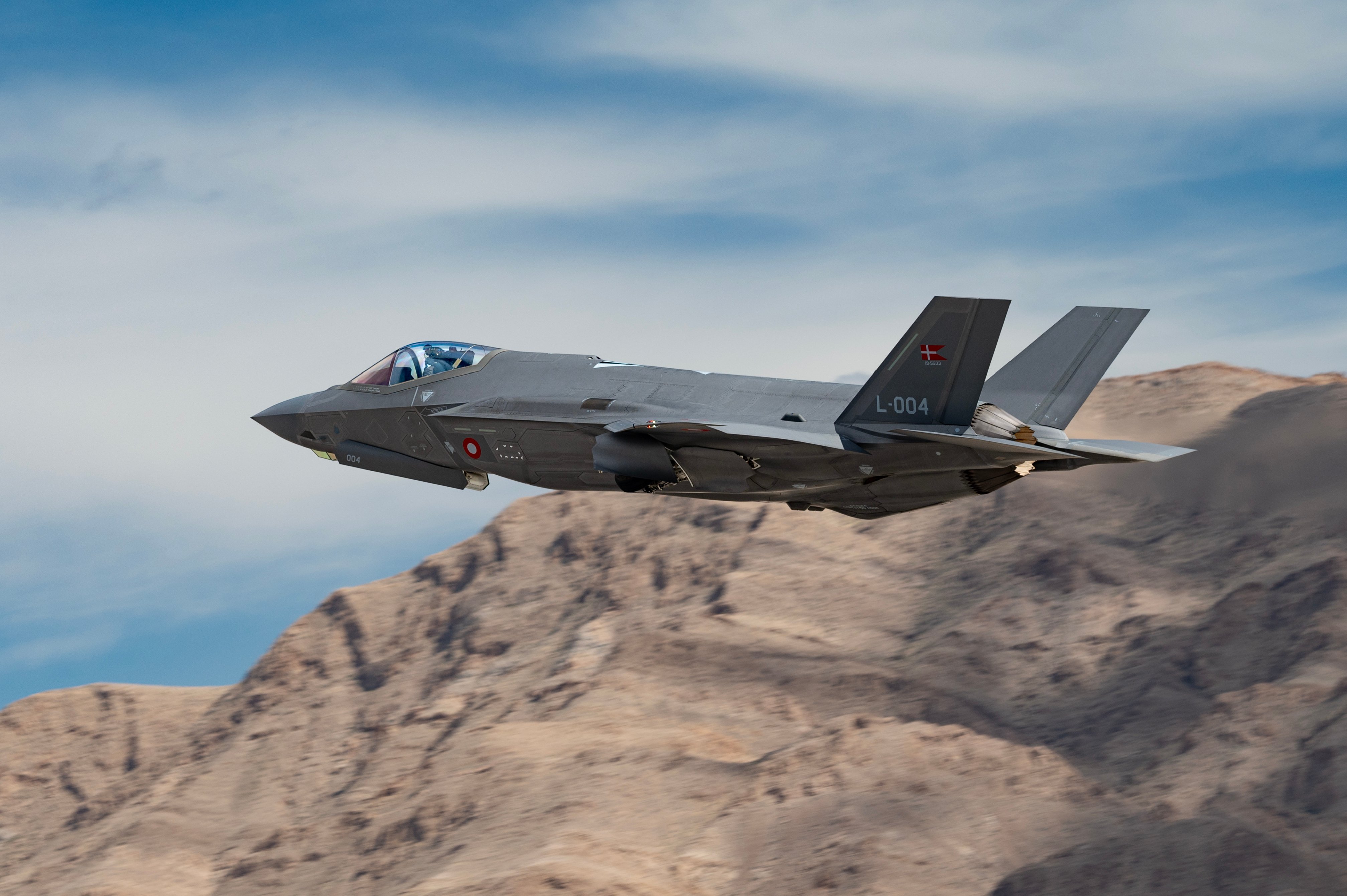
A Royal Danish Air Force F-35A from Luke Air Force Base (AFB), Arizona, takes off for Red Flag-Nellis 24-2 mission at Nellis AFB, Nevada, March 13, 2024.The integration of fifth- generation assets, such as the F-35, is a vital step towards enhancing our collective security. These advanced aircraft bring unprecedented capabilities, including enhanced stealth, sensor fusion, and network connectivity, which enable us to maintain air superiority and deter potential adversaries. (U.S. Air Force photo by William R. Lewis) RFNAFB; DoD; ACC; Air Combat Command; DoD; Ready AF; lethality; readiness; Red Flag-Nellis 24-2 Operations; Denmark; F-35; Interoperability; 5th Gen
A Royal Danish Air Force F-35A takes off for a Red Flag-Nellis 24-2 mission at Nellis AFB, Nevada, on March 13, 2024. U.S. Air Force photo by William R. Lewis William Lewis

Anthem is being developed by Covenant, a U.S.-based defense company that has also outlined plans to establish missile production in Germany and Israel. The system’s selection by Denmark gives the company an important European customer as NATO members seek to expand their inventories of long-range weapons.

Covenant’s Anthem is in a category of munitions that increasingly blurs the line between long-range kamikaze drones and traditional cruise missiles. It is designed to offer a lower-cost, longer-range strike capability that can be produced more easily and at greater scale than many existing systems. Covenant has not publicly disclosed the weapon’s range. Still-unconfirmed reports put it at roughly 740 miles (1,200 kilometers). It is also said to carry a warhead weighing more than 200 kilograms (441 pounds). It also uses a solid rocket motor to provide an initial boost at launch before transitioning to a heavy-fuel jet engine for cruise flight.

Currently, it is unclear how exactly Anthem is launched. It has already undergone testing with the U.S. Army, and images from those trials show the weapons being handled on the ground using a tricycle undercarriage. This may point to rocket-assisted takeoffs from runways.
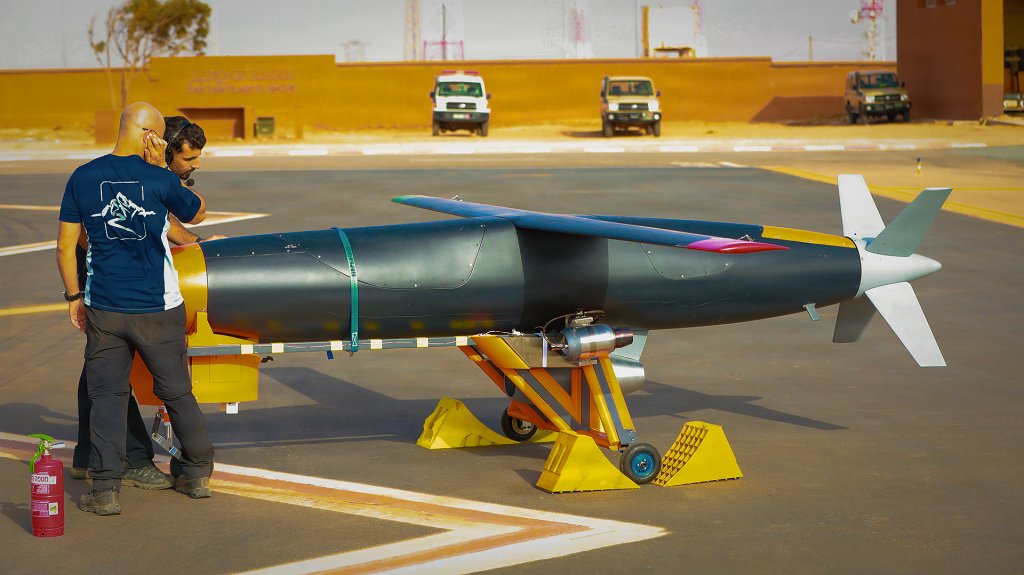
Defense-industry partners prepare a cruise missile for a live-fire demonstration at the Africa Multidomain Training and Experimentation Center in Tan-Tan, Morocco, Aug. 5, 2026. The demonstration was held to support regional defense capabilities and joint training interoperability. AMTEC enables U.S. and Moroccan forces to test emerging technologies and expand testing capabilities to strengthen shared readiness and interoperability under the U.S. Army’s Test Range Expansion Initiative.
A Covenant cruise missile is prepared for a live-fire demonstration at the Africa Multidomain Training and Experimentation Center in Tan-Tan, Morocco, August 5, 2026. U.S. Army photo by Capt. Jordan Beagle

Last month, Covenant announced it had already conducted more than 200 test flights of Anthem and had secured roughly $150 million in orders. It also disclosed that an unidentified international customer was expected to begin receiving German-built weapons before the end of this year. This may well be Denmark, though there could also be other customers that have yet to emerge publicly. Meanwhile, U.S. Army deliveries are expected in 2027, under an accelerated qualification contract.

Anthem reflects a broader push, globally, for new long-range strike weapons that can be manufactured rapidly and in large quantities, potentially trading some of the performance and sophistication of more expensive, ‘exquisite’ weapons for affordability, scalability, and mass availability. Recent conflicts in the Middle East, as well as the war in Ukraine, have underscored the challenges of bolstering stockpiles of critical munitions and replenishing them during prolonged fighting.

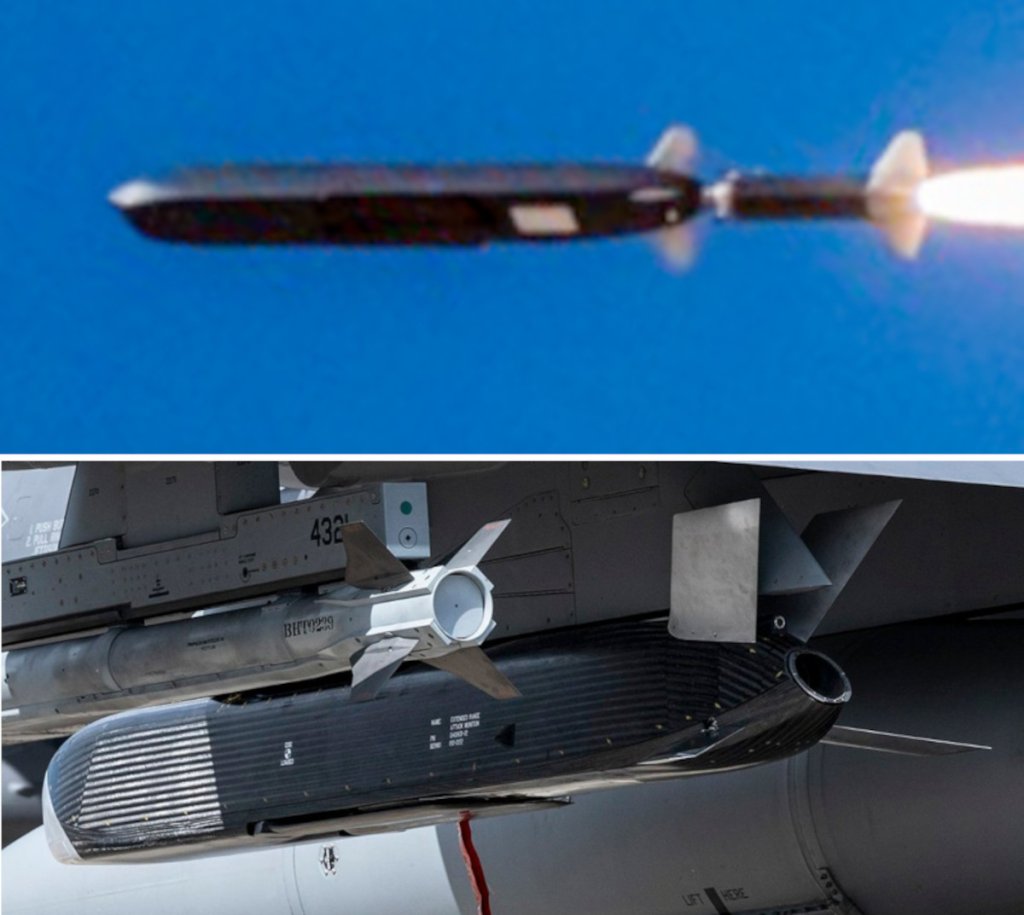
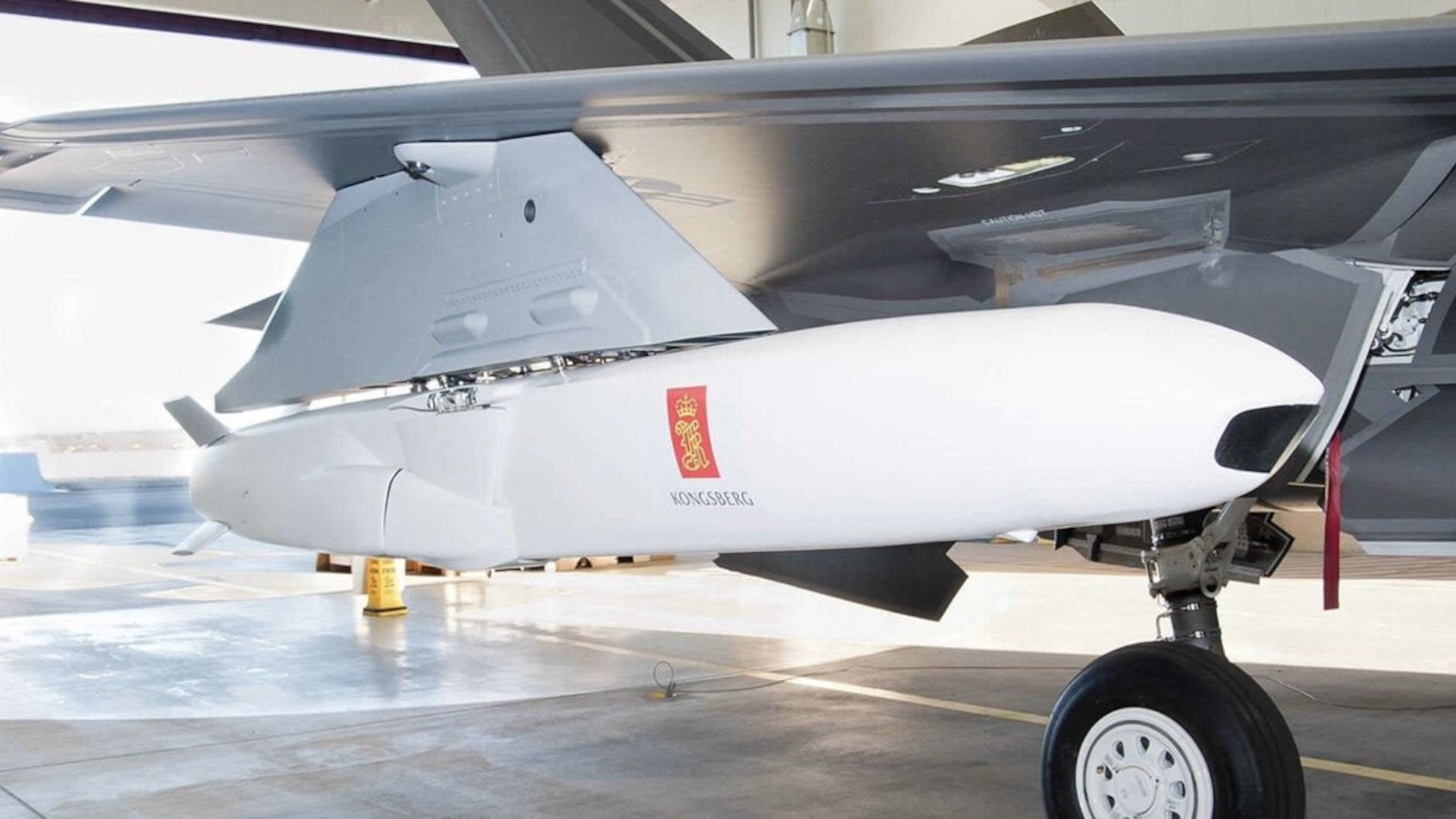
JSM, developed by Kongsberg in cooperation with U.S. defense contractor Raytheon, is a traditional air-launched cruise missile capable of being employed against targets on land and at sea. It is capable of being carried internally and externally on the A and C variants of the F-35. The design has also been fit-checked for external carriage on a variety of other tactical jets. As already mentioned, JSM will provide an entirely new stand-off precision-strike option for Denmark’s F-35As. These are the only tactical jets in Danish service today following the retirement of the country’s F-16 Vipers in January.

Pictures showing work on integrating the Joint Strike Missile on all three variants of the F-35 Joint Strike Fighter, as well as the F-16. Kongsberg

Kongsberg has identified Denmark as the seventh country to select JSM, although the final contract scope and value remain subject to negotiations. JSM is an enlarged derivative of the surface-launched Naval Strike Missile (NSM), which has also seen growing worldwide sales in recent years, including to the U.S. military. Since 2025, Denmark has also been fielding NSM on its Iver Huitfeldt class frigates and as part of a ground-based coastal defense system.

Since JSM is designed to be air-launched its maximum range is dependent in part on the altitude at which the missile is released, as well as the speed of the aircraft carrying it. Kongsberg has said in the past the missile can fly out to a range of more than 300 nautical miles, but also that its reach is significantly cut back when it is employed in its low-altitude penetration mode.
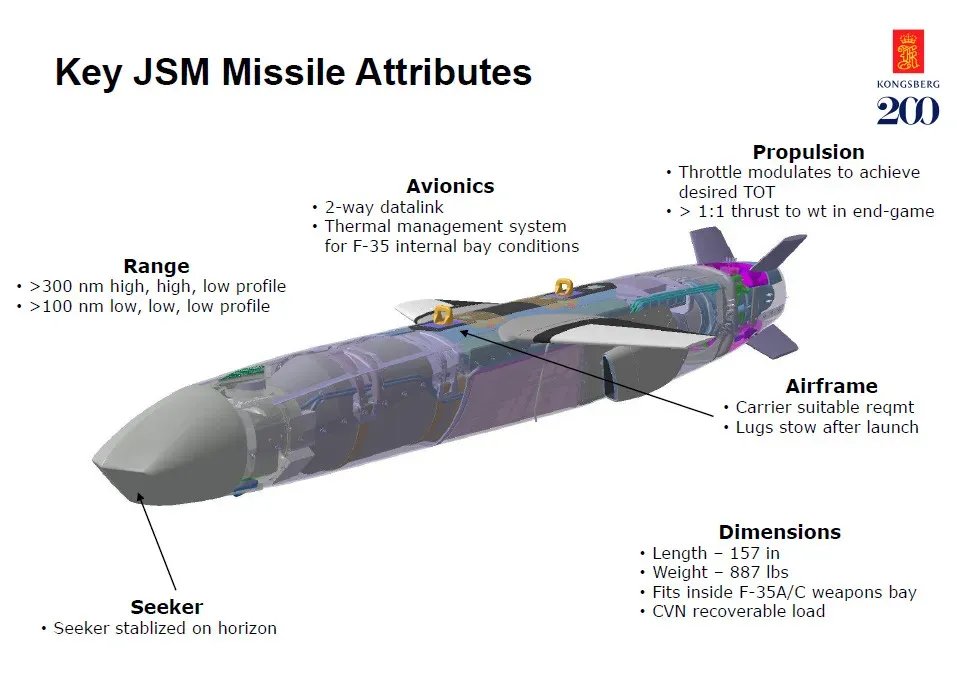
A briefing slide with various details about the JSM’s capabilities. Kongsberg

The JSM carries a 260-pound warhead and uses a combination of GPS, inertial navigation (INS), and terrain mapping to guide it toward its target. The terrain-mapping capability provides an additional means of navigation, helping the missile maintain its course even in environments where GPS connectivity is degraded or unavailable.

The missile switches over to an imaging infrared seeker to provide precise target discrimination during the terminal phase of flight. Because the seeker operates passively, it does not rely on emitting radiofrequency signals, reducing the risk of detection and making it immune to conventional radiofrequency jamming. The agile JSM’s overall design also includes reduced-signature features to help limit its detectability and improve its survivability on the way to the target.
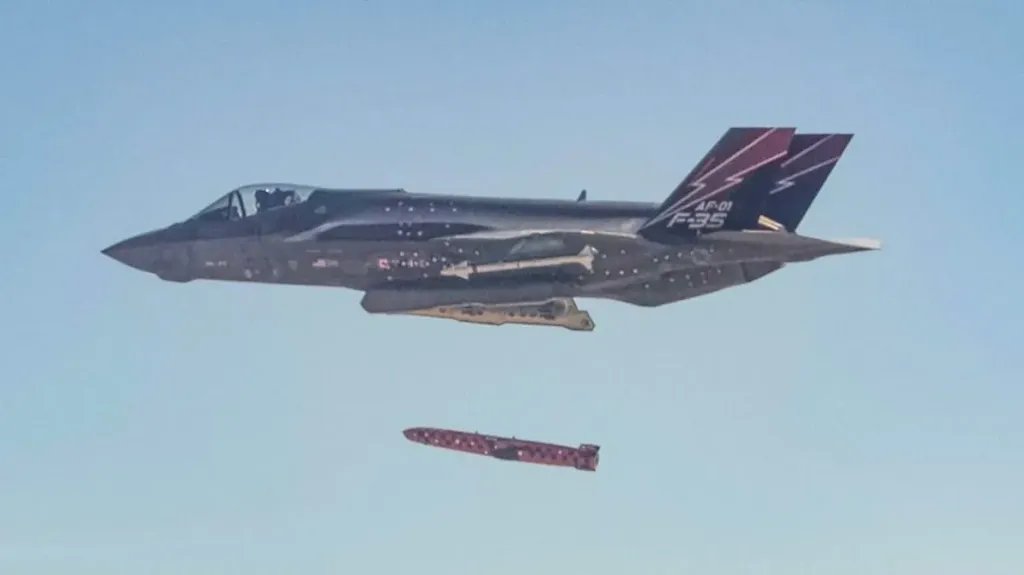
A U.S. Air Force F-35A releases a Joint Strike Missile (JSM) during a test. Norwegian Defense Materiel Agency

A two-way datalink also allows the missile to receive updated targeting information while en route, or to be redirected toward an entirely different target during the mid-course phase of flight.

The dual purchases build on a broader Danish effort to field new options for holding targets at extended ranges at risk. Denmark previously operated eight M270 Multiple Launch Rocket Systems (MLRS), but retired them in 2004. The country is now introducing Israel’s PULS rocket artillery system, which can employ different rocket and missile types depending on the mission. Presently, the Danish military looks to be fielding PULS just with artillery rockets.

In terms of Denmark’s current and future ground-based capabilities, PULS – which stands for Precise and Universal Launch System – and Anthem will serve different. In Danish service, PULS provides a flexible rocket artillery capability, while Anthem will offer a cruise-missile-like option for longer-range precision attacks.

The acquisition of JSM also reflects the importance of Denmark’s F-35 fleet to its future combat capability. Air-launched weapons offer mobility and flexibility, but their employment depends on available aircraft. In this context, Denmark’s planned expansion of its F-35 fleet from 27 to 43 aircraft, announced in October 2025, will provide a larger platform base for its emerging long-range strike capability.

There could be some overlap here between Denmark’s growing array of air- and ground-based strike capabilities, as well. Dutch F-35As demonstrated their ability to provide targeting data to PULS launchers during a NATO exercise last year. A ground-launched weapon like Anthem also provides an alternative long-range strike option that does not require a fighter to carry it aloft, creating additional operational flexibility.

For Denmark, acquiring JSMs and Anthems also offers the appeal of adding a capable higher-end munition alongside a more affordable, readily available long-range strike weapon. Reuters has reported that Covenant expects Anthem to eventually cost in the mid-six-figure range, although a final unit price has not been disclosed. Meanwhile, the JSM has a reported unit cost of approximately $2.8 million.

As mentioned, the announcement of the Anthem and JSM purchase is fully in line with prior statements from the government in Copenhagen about acquiring new long-range strike options. Danish Prime Minister Mette Frederiksen previously urged the military to accelerate procurement across the board after years of comparatively limited defense spending.

Danish Prime Minister Mette Frederiksen meets conscripts during a visit to Air Base Karup, the main air base of the Royal Danish Air Force, in Jutland, Denmark on March 7, 2024. (Photo by Mikkel Berg Pedersen / Ritzau Scanpix / AFP via Getty Images) / Denmark OUT
Danish Prime Minister Mette Frederiksen meets conscripts during a visit to Air Base Karup, the main air base of the Royal Danish Air Force, in Jutland, Denmark on March 7, 2024. (Photo by Mikkel Berg Pedersen / Ritzau Scanpix / AFP) / Denmark OUT MIKKEL BERG PEDERSEN

The long-range strike acquisitions also fit into a broader NATO effort to strengthen deterrence across the Baltic region and the alliance’s northeastern flank.

Denmark occupies a strategically important position linking the Baltic Sea to the North Sea, while its forces contribute to NATO’s regional presence and reinforcement plans. The ability to strike targets deep behind enemy lines will provide a new ability for Denmark to threaten an adversary’s military infrastructure, command facilities, and other critical targets.

Denmark is far from alone in pursuing new long-range strike capabilities. In September, Latvia moved to acquire Anduril’s Barracuda family of long-range strike missiles, building on its earlier order for Army Tactical Missile System (ATACMS) short-range ballistic missiles. Poland is expanding its own layered strike capabilities, while France, Germany, Italy, Poland, Sweden and the United Kingdom are working on the European Long-Range Strike Approach (ELSA) initiative to accelerate the development and procurement of next-generation weapons. The efforts reflect a wider shift across Europe toward restoring deep-strike capabilities that have been relatively scarce among NATO’s European members since the end of the Cold War.

All of this is happening while the Baltic states, in particular, increasingly voice their concerns that Russia could seek to exploit vulnerabilities along NATO’s northeastern flank. Estonia, Latvia, and Lithuania have all warned about the risks posed by Russian force expansion, airspace incursions, sabotage, and other potential provocations. In response, NATO has stepped up its regional posture through initiatives, including Operation Eastern Sentry.

Denmark's Defence Minister Jeppe Bruus (R) speaks with military personnel during a visit of the Antenna Park in Nuuk, Greenland, on August 26, 2026. The Danish defence minister visits the Danish military effort in Greenland. (Photo by Thomas Traasdahl / Ritzau Scanpix / AFP via Getty Images) / Denmark OUT
Danish Defense Minister Jeppe Bruus (right) speaks with military personnel during a visit to the Antenna Park in Nuuk, Greenland, on August 26, 2026. Photo by Thomas Traasdahl / Ritzau Scanpix / AFP THOMAS TRAASDAHL

The news about Denmark’s new long-range strike plans has already drawn a heated reaction from Moscow. Russia’s embassy in Copenhagen accused Denmark of pursuing confrontation with Russia and warned of “inevitable disastrous consequences,” Reuters reported.

Many details about the planned Anthem and JSM acquisitions still remain to be learned. However, the announcement yesterday is a clear signal of Copenhagen’s intention to give its armed forces a more substantial ability to threaten targets at distance, and reflects still-growing trends elsewhere in Europe.

Contact the author: thomas@thewarzone.com

The post Denmark To Buy Anthem Munitions, Joint Strike Missiles In Dual Long-Range Strike Push appeared first on TWZ.
  •  

USAF Confirms Bombers Could Have A Major Air-To-Air Combat Role

The U.S. Air Force is exploring options for adding air-to-air combat capabilities to its bombers as part of efforts adjacent to its latest fighter force structure plans. The service has raised the possibility of the B-21 Raider, specifically, taking on an air-to-air role, and potentially doing so in cooperation with Collaborative Combat Aircraft (CCA) drones, in the past. As TWZ has explored for years, the B-21’s inherent attributes – size, extreme range, high operating ceiling, broadband low-observability (stealthiness), and advanced sensors – could actually make it especially well suited to taking part in air-to-air combat missions. The Air Force’s other bombers could also be part of these future plans.

Aviation Week was first to report on the potential for bombers to help bolster the Air Force’s air-to-air combat capacity after obtaining a copy of a new long-term fighter force structure report submitted to Congress last week. Media coverage of this report first began to appear earlier this week following a roundtable on Tuesday with Lt. Gen. David Tabor, the service’s Deputy Chief of Staff for Plans and Programs. The full report, which is unclassified, was not disseminated to reporters at that time.

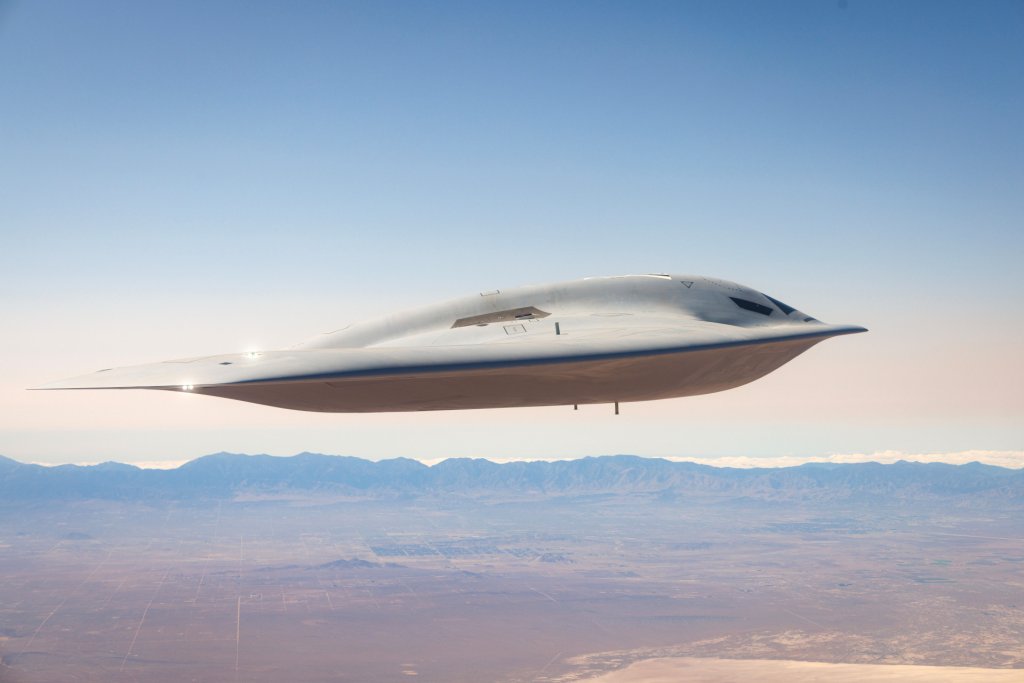
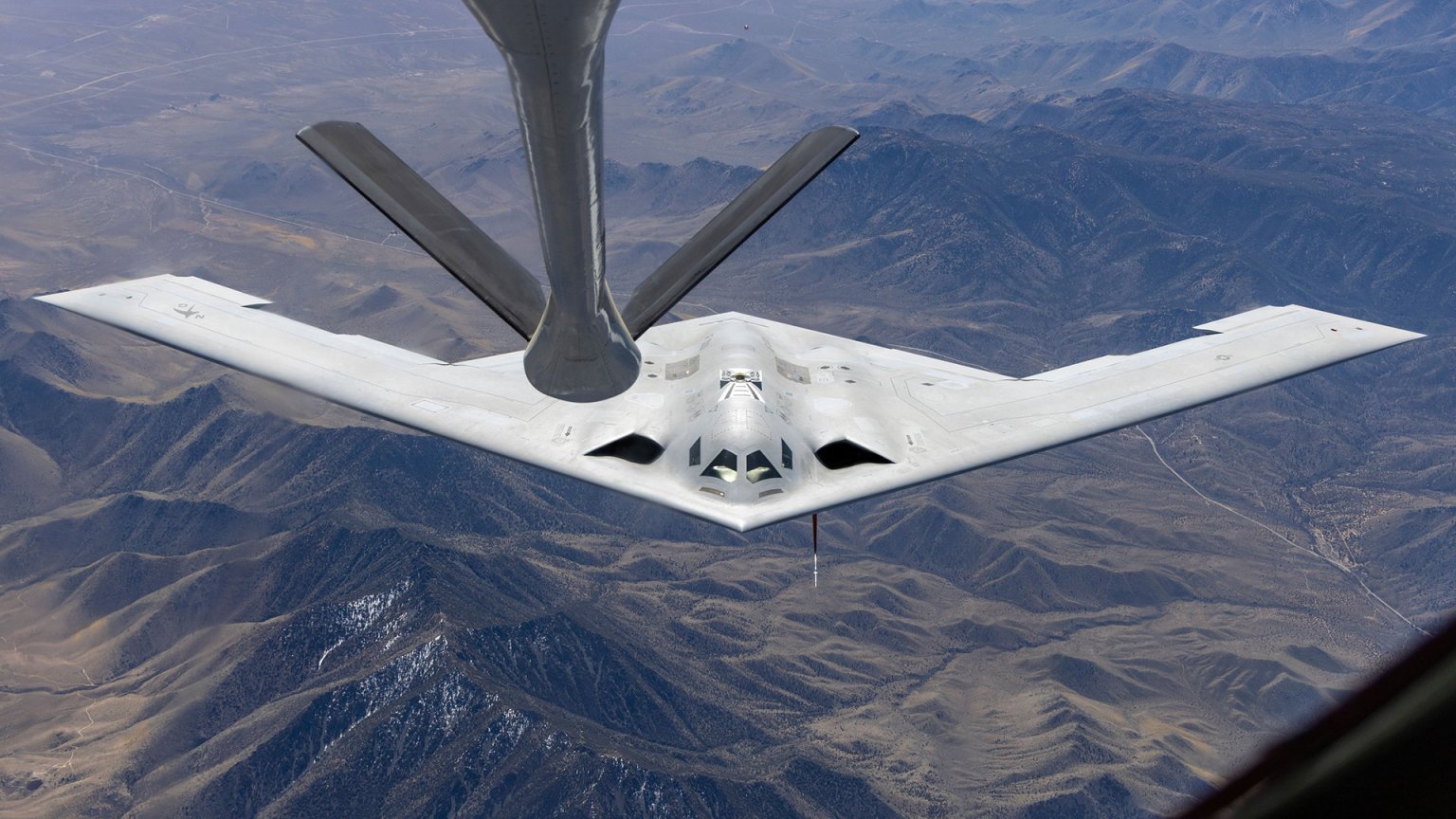
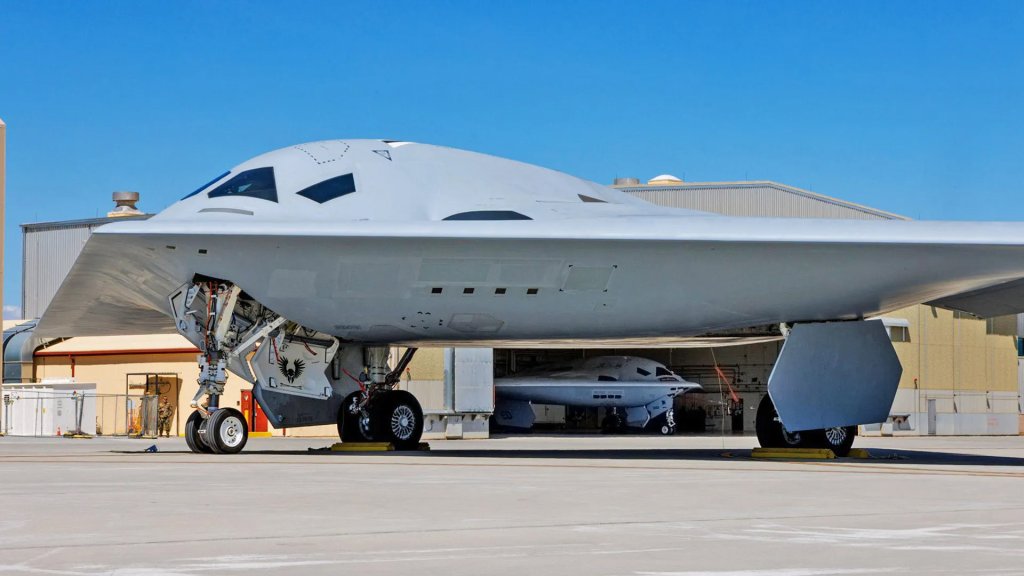
Pre-production B-21 Raider bombers at Edwards Air Force Base in California. USAF

The Air Force’s central goal now is having 1,509 combat-coded fighters in inventory by 2035, which is hundreds more than it has in service today. This will come from the acquisition of new F-35As, F-15EXs, and F-47s. There are already questions about how realistic this plan might be, and the service has acknowledged several hurdles it will need to overcome. You can read more about this in our initial reporting here.

The F-47, a rendering of which is seen here, is a critical component of the Air Force’s current future fighter force structure plans. USAF

“Accordingly, the USAF is also evaluating additional recapitalization options, including a new capacity fighter, increased reliance on CCAs [Collaborative Combat Aircraft], and developing air-to-air capabilities on bombers,” the latest fighter force structure report says, per Aviation Week.

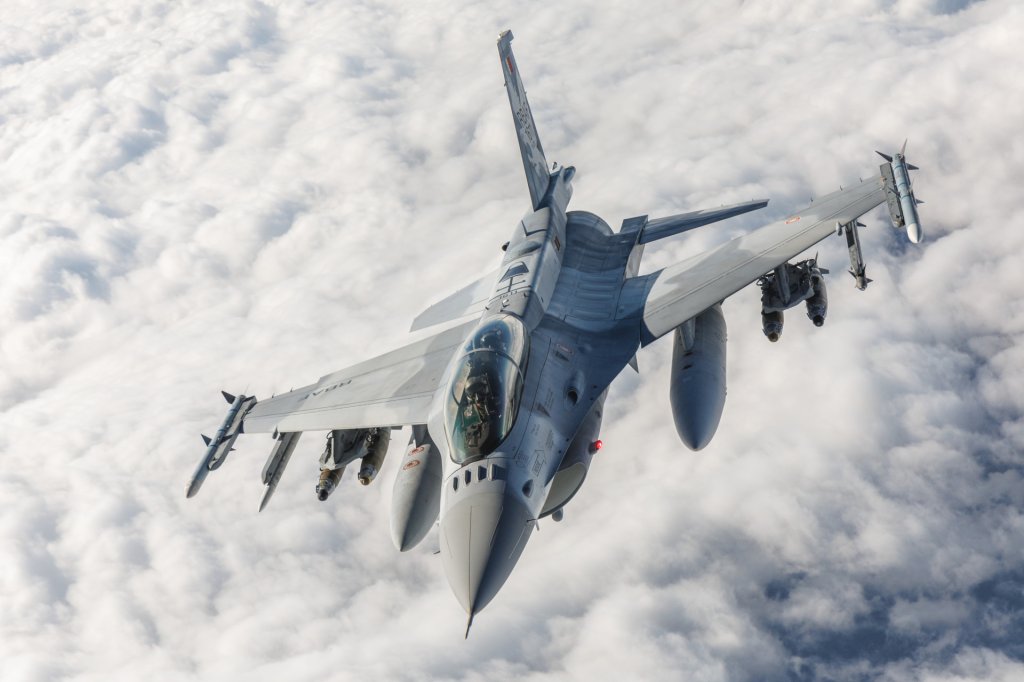
“A new capacity fighter” may refer to the possible acquisition of new-production F-16 Vipers, which Lt. Gen. Tabor said at the roundtable could be an option in the future, according to an earlier story from Air & Space Forces Magazine. He also said making any such decision was not an “urgent” priority. This is just one possibility here. The Air Force has floated ideas for other new fighter concepts beyond the F-47 in recent years. Lockheed Martin has talked about the potential for expanding on the F-35 design.

The possibility of the Air Force buying a version of the current-generation Block 70 F-16, an example of which is seen here, has been raised. USAF A Bahraini Block 70 F-16D flown by members of the 416th Flight Test Squadron pulls away after receiving fuel from a KC-135 tanker with a crew from the 370th Flight Test Squadron during a sortie out of Edwards Air Force Base in California on March 7, 2024. USAF

At the roundtable on Tuesday, Tabor also made clear that the introduction of CCAs would influence future fighter force structure plans, but the expected scale and scope of those impacts remain unclear. He does not appear to have addressed the role bombers could play in this equation at that time. The new fighter report itself does not elaborate further on the potential use of bombers, based on Aviation Week’s story. TWZ is seeking more information.

When it comes to the possibility of Air Force bombers, and the B-21 more specifically, taking on an air-to-air role, this is not the first time the possibility has been raised, as mentioned earlier.

“As the NGAD [Next Generation Air Dominance] review goes forward, like, is it possible that what that ends up with could be the B-21 taking a larger role?” reporter Stephen Losey, working at the time for Defense News, asked then-Air Force Chief of Staff Gen. David Allvin at the Military Reporters & Editors (MRE) Conference in 2024.

“We have not taken that off the table,” the Air Force’s top officer said in response to Losey’s question, but did not elaborate.

At that time, the Air Force’s NGAD program was undergoing a deep review, and the future of the sixth-generation fighter component of the effort had come into question. The decision was ultimately made to continue pursuing plans for what has now become the F-47.

For years now, TWZ has been highlighting how the B-21 could serve in multiple roles beyond just that of a traditional bomber, including in an air-to-air capacity. Air Force officials have themselves described the Raider as having multi-mission capabilities, which could extend into the realm of air-to-air combat.

“If we were to characterize it [NGAD] as a fighter, we would be… thinking too narrowly about what kind of airplane we need in a highly contested environment,” then-Air Force Maj. Gen. Scott Pleus told what was then just Air Force Magazine back in 2019. This could be “a B-21 that also has air-to-air capabilities” and can “work with the family of systems to defend itself, utilizing stealth – maybe that’s where the sixth-generation airplane comes from.”

Pleus’ comments had tied in with adjacent discussions at the time and thereafter about how the B-21 might operate together with future CCA drones. Pleus, who was subsequently promoted to lieutenant general and whose lasting posting was as Director of Staff at the Air Force’s top headquarters at the Pentagon, retired in August of this year.

A composite image showing the two drones – General Atomics FQ-42 Vengence and Anduril’s FQ-44 Fury – that the Air Force is acquiring now under the first phase of its CCA program. USAF

It remains unclear how the Air Force might be considering employing the B-21, or any of its other existing bombers, in air-to-air combat. This could entail loading out bombers for direct air-to-air engagements, or the integration of new capabilities to help them find targets or to otherwise enable new supporting roles, or a mix of all of the above. The process of achieving air superiority is not limited to neutralizing aerial threats, either.

As TWZ has written in the past in the context of an air-to-air role for the Raider in particular:

“The Raider has the potential to serve as a launch platform for air-to-air missiles, especially outsized very long-range types. Its payload capacity would give it the ability to carry a large volume of smaller air-to-air missiles, as well. B-21s could also employ air-to-ground munitions in support of the suppression and destruction of enemy air defenses mission (SEAD/DEAD), which is also part of the air superiority equation.”

“Maybe most significantly, the B-21s could also act as airborne nerve centers in support of counter-air missions, especially for controlling drones like the Air Force’s planned fleets of Collaborative Combat Aircraft (CCA), and have the ability to do so even in the most heavily contested of airspaces. Uncrewed aircraft, in turn, could feed targeting data back to Raiders with air-to-air loadouts. B-21s might even be able to launch some of those drones themselves.”

A head-on view of the first pre-production B-21 Raider. USAF

Deeply networked ‘kill webs’ that bring together distributed arrays of sensors and other supporting elements across vast distances and multiple domains, coupled with very-long-range air-to-air missiles, open up new operational possibilities more generally. This applies to Air Force bombers beyond the B-21.

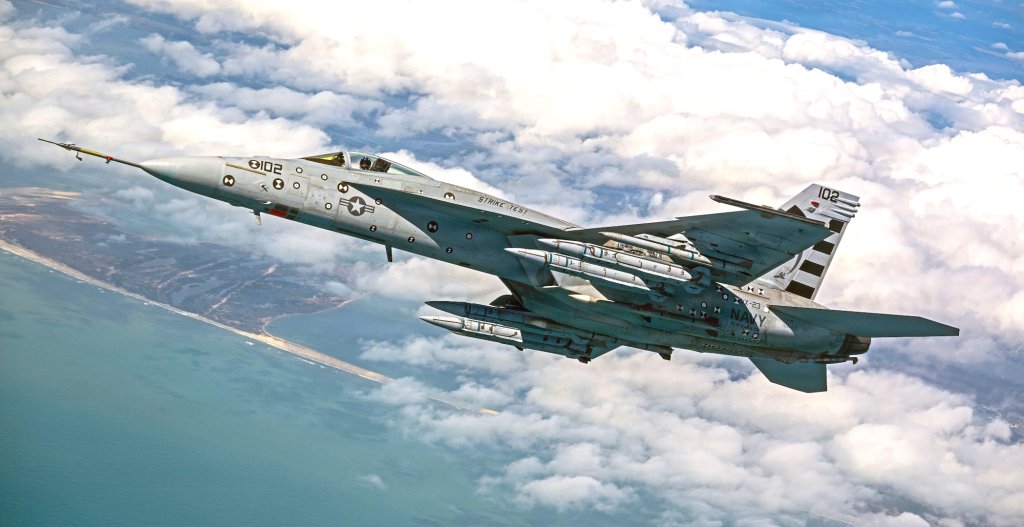
When it comes to longer-range air-to-air missiles, the Navy has notably already fielded the AIM-174B air-launched version of the Standard Missile-6 (SM-6). The service more recently disclosed another such missile in flight testing now, the AIM-424 Malice.

A US Navy Super Hornet fighter seen carrying a load of AIM-424 missiles during a flight test. USN

The Air Force has pursued similar missile developments in the past and put out a call for a new anti-air missile with a maximum range of at least 1,000 nautical miles just in June. The service has been exploring multi-stage types with modular designs that could be configured for longer- and shorter-range engagements, as well. These are all just programs we know about, and do not speak to the developments the Air Force and others could have underway in the classified realm.

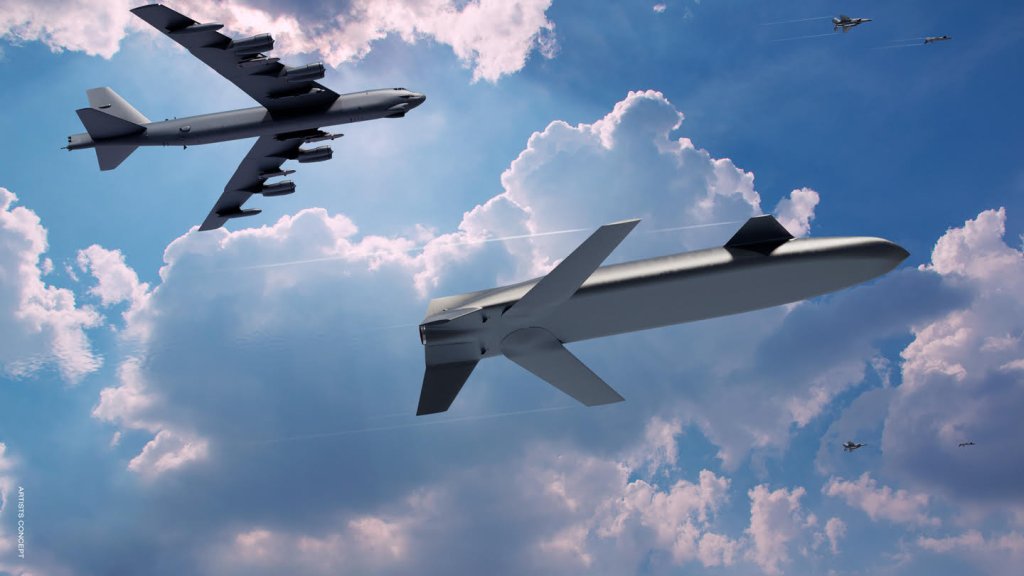
There is also the Defense Advanced Research Projects Agency (DARPA) LongShot program, which the Air Force, as well as the U.S. Army and Navy, have been involved with over the years. The aim of that effort is to demonstrate the concept of an air-to-air missile-carrying drone to help extend the reach and reduce the vulnerability of tactical fighters and bombers.

A rendering depicting LongShot drones being launched from a B-52 bomber, as well as F-15 fighters. General Atomics

On top of all this, tactical fighters are generally ill-suited to, and in some cases outright incapable of, carrying the kinds of outsized payloads being discussed here. This underscores the potential value of incorporating bombers into this equation as a means to engage targets at extreme ranges.

Even in a closer proximity support role of fighter aircraft, B-21s, as well as B-52s, could contribute to air-to-air fight as arsenal ships for longer-range weapons, firing on demand from the rear in coordination with crewed and uncrewed platforms operating at the tip of the tactical edge. B-21s could also use their penetrating capabilities to command drones of their own that provide penetrating fighter-like capabilities.

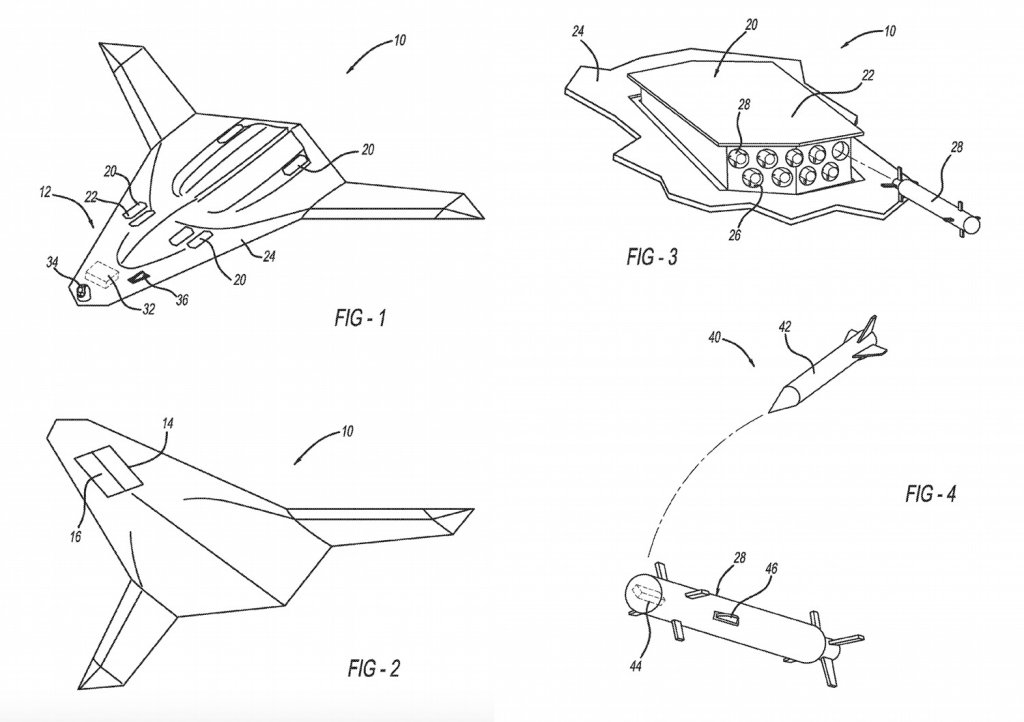
New air-to-air capabilities on Air Force bombers could include self-protection systems, too. Years ago now, the B-21’s prime contractor, Northrop Grumman, patented an anti-missile defense system for stealthy aircraft designed to fire hard-kill interceptors. The Air Force, as well as the Navy, have openly expressed interest in similar defensive capabilities for aerial refueling tankers and other larger planes. Just being able to provide localized close-in defensive ‘bubbles’ around individual bombers could impact the calculus when it comes to future air-to-air combat requirements.

Drawings from Northrop Grumman’s aircraft anti-missile defense system patent. USPTO

To reiterate, these are all concepts we have discussed in depth for roughly a decade.

Speaking more broadly about Air Force future fighter force structure demands, as we wrote previously:

“In recent years, sustainment costs, broadly, have only become an increasingly serious concern for the Air Force, as well as the other branches of the U.S. military, especially when it comes to complex manned platforms, such as the F-22 Raptor and the F-35 Joint Strike Fighter. Fleet size and the readiness of those fleets are also highly pressing issues. So, at least in the near term, it’s not surprising that NGAD may end up focusing more on exploring available lower-cost options with distributed capabilities as alternatives to traditional air combat assets with highly centralized capabilities, such as manned fighter jets packed with ‘exquisite’ technologies.”

Despite the decision in the end to proceed with the more exquisite F-47, these points have only become more pronounced as time has gone on. How many F-47s the Air Force ultimately intends to buy is another question that looks to remain unanswered by the latest fighter force structure report. At the same time, there are clear signs that the Air Force is planning to significantly increase its planned B-21 fleet size. The official acquisition target has long been at least 100 Raiders, but the Air Force and Northrop Grumman have said a new topline figure is expected to come in the Fiscal Year 2028 budget proposal next year. The service is now explicitly aiming to have at least 500 CCA drones in service by 2032, too. All of this will compete for funding and other resources, at least to a degree.

A pre-production B-21 seen during a test flight. USAF

In the meantime, there has been a “persistent decline in AA [aircraft availability] rates across the USAF tactical fighter fleet,” which “is the direct mathematical consequence of operating an inventory with an average age exceeding 31 years,” the Air Force’s latest fighter force structure report says, according to Aviation Week. “As legacy platforms – such as the F-16C/D, F-15E, and A-10C – operate well beyond their original engineering service lives, they experience compounding structural fatigue, widespread corrosion, and subsystem degradation.”

“Achieving the mandated AA rates required for a peer-conflict scenario necessitates aggressive divestment of the oldest airframes to fund the procurement of highly available, modernized platforms like the F-35A and F-15EX,” the report adds, per that outlet. Furthermore, “to counter the [Chinese] industrial capacity and numerical advantage in fielding fighters like the J-20 and J-16, the USAF must embrace a hybrid force of manned and unmanned systems.”

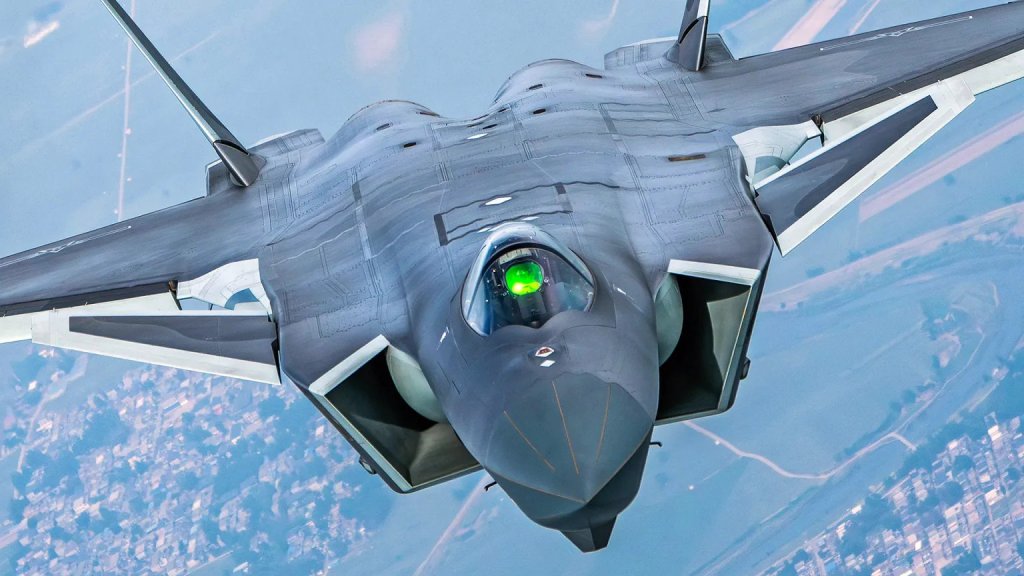
A Chinese J-20 fighter. PLAAF

With all this in mind, active consideration of new air-to-air roles for bombers, as well as the possibility of “increased reliance on CCAs” and the potential to acquire new current-generation F-16s, at least seems to reflect a hedge strategy on the part of the Air Force.

If nothing else, the door clearly remains open to bombers being a key part of the Air Force’s ‘fighter’ vision in the future.

Contact the author: joe@twz.com

The post USAF Confirms Bombers Could Have A Major Air-To-Air Combat Role appeared first on TWZ.

  •  

Four KJ-3000 Radar Jets At Chinese Factory Point To Serial Production

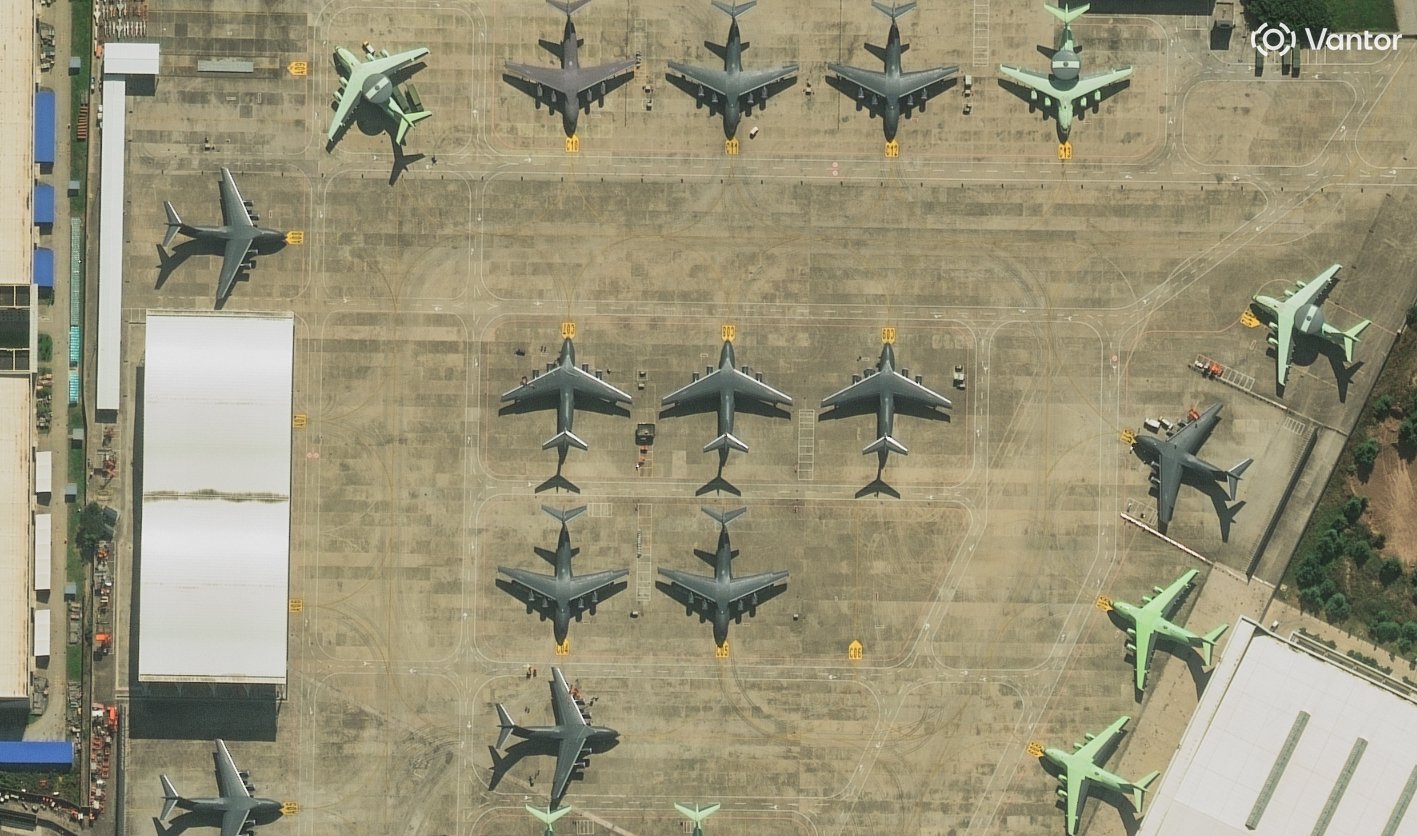
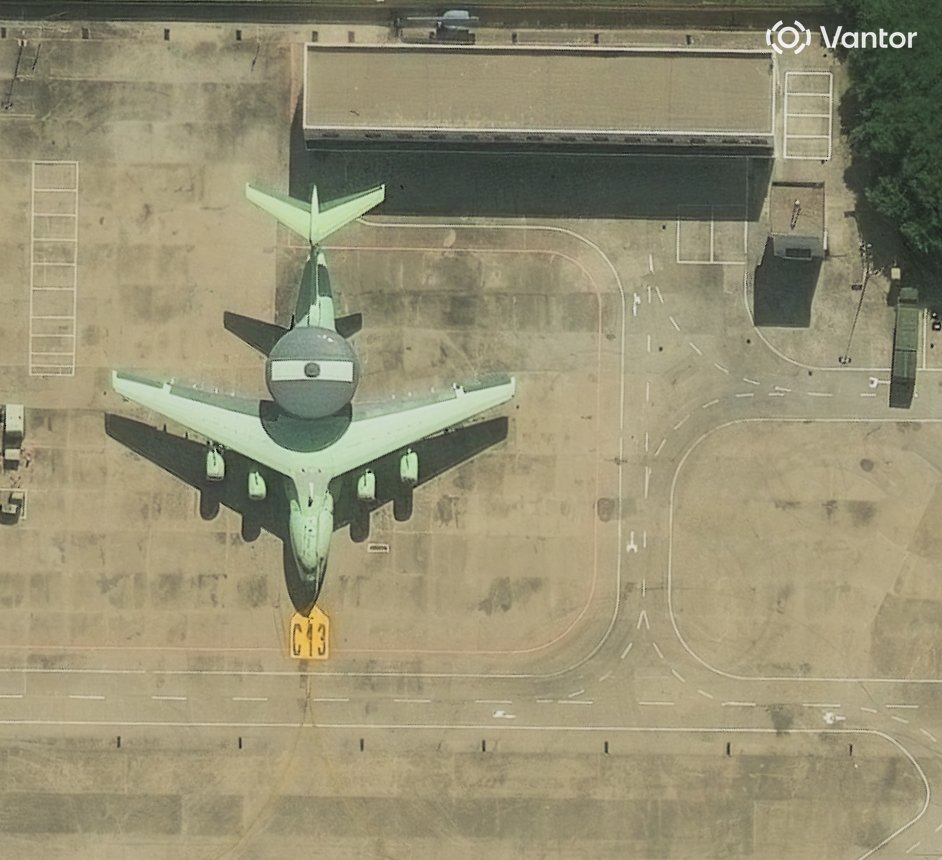
New satellite imagery shows four of China’s new KJ-3000 airborne early warning and control (AEW&C) aircraft at the Xi’an Aircraft Company (XAC) facility at Xi’an-Yanliang, raising the possibility that the large radar planes are moving toward or have entered serial production.

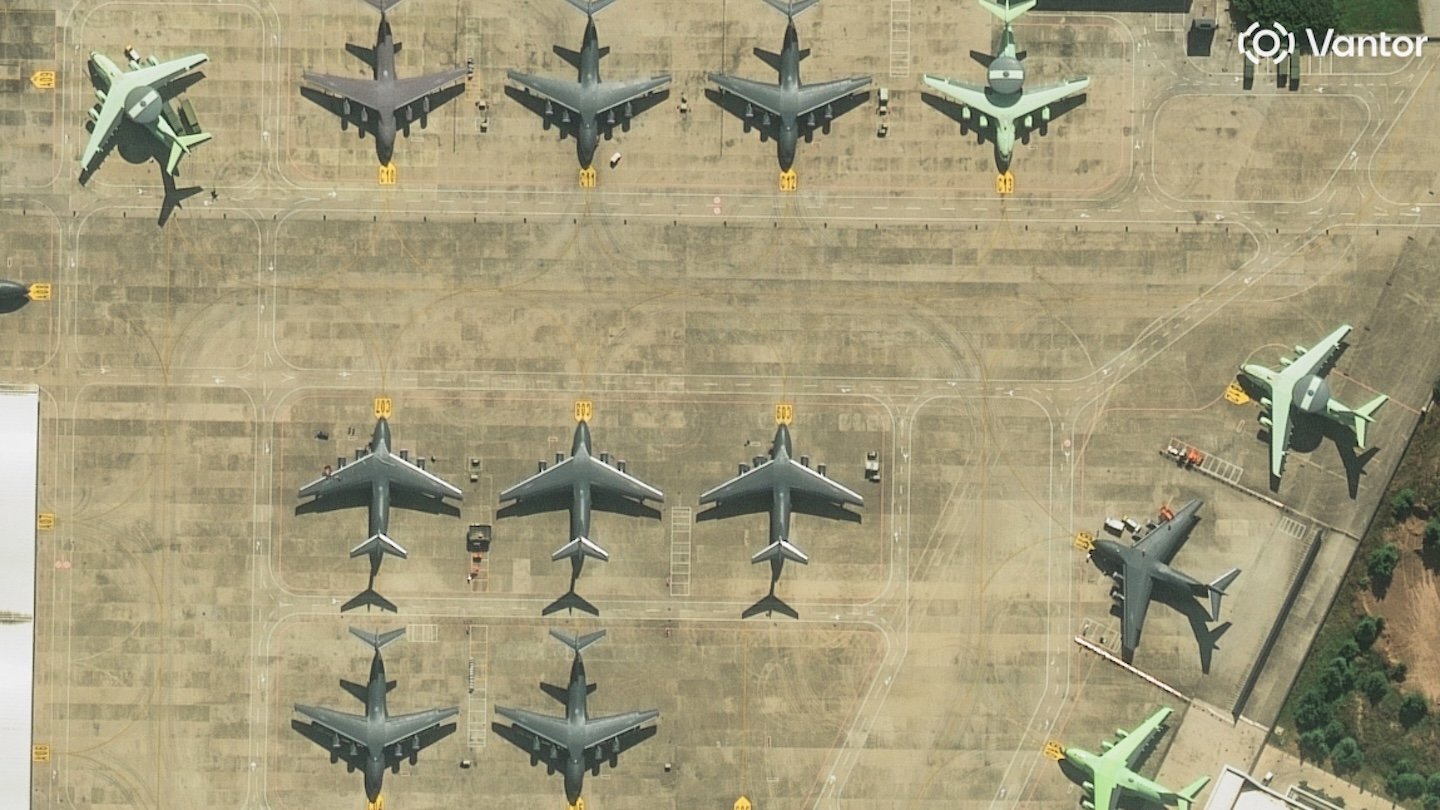
Satellite imagery captured on October 5 and provided by Vantor shows three KJ-3000s near the XAC factory in the western part of the facility, with a fourth at the nearby China Flight Test Establishment (CFTE). J. Michael Dahm, a senior fellow at the Mitchell Institute for Aerospace Studies, assesses that the presence of four aircraft points to the type having entered serial production.

An overview of the Xi’an Aircraft Company (XAC) facility on October 5. A total of four KJ-3000s are visible. Satellite image ©2026 Vantor
Three KJ-3000s along with other Y-20s at the XAC factory in the western part of the facility. Satellite image ©2026 Vantor

Andreas Rupprecht, an analyst of Chinese military aviation and TWZ contributor, offered a more cautious assessment, noting that the imagery could indicate that series production or low-rate initial production (LRIP) has begun. However, he also pointed out that all four previously identified prototypes could simply have been at the facility at the same time. Specifically, he identified the aircraft seen at the CFTE portion of the airfield as being a prototype.

A closer view of one of the KJ-3000s at the XAC factory. Satellite image ©2026 Vantor
An additional KJ-3000 seen alongside a pair of Y-20Bs. Satellite image ©2026 Vantor

Whatever the explanation, the imagery offers a fresh look at a program set to significantly expand China’s already substantial airborne surveillance and battle-management capabilities.

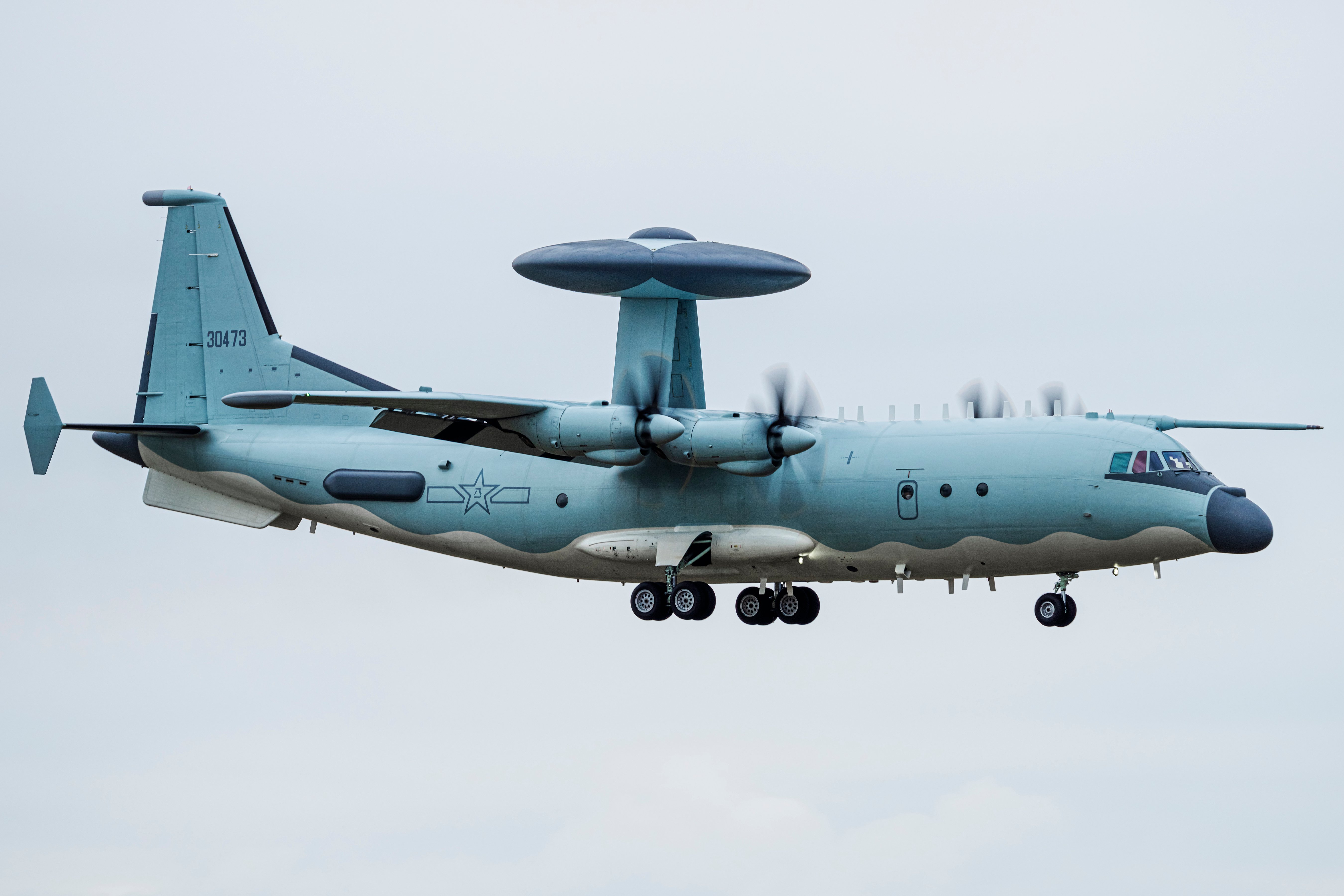
The KJ-3000, also referred to as the KJ-20, is based on the four-engine Y-20 transport aircraft, specifically the improved Y-20B variant powered by Chinese-made engines. The aircraft features a large circular radome mounted above the rear fuselage, along with a prominent series of antennas on the forward fuselage. An aerial refueling probe is mounted above the cockpit, while a conspicuous intake at the base of the tailfin is likely intended to provide cooling air for its extensive onboard electronics.

A stock Y-20B transport with its distinctive locally produced WS-20 turbofan engines. via Chinese internet

The first low-quality photographs of the aircraft began circulating in December 2024. More detailed imagery emerged in May 2025, showing an example at an undisclosed Chinese airfield. That aircraft, bearing the serial number 7821 and assessed to be the first example, was still wearing primer, in contrast to the examples now seen at the XAC factory.

This photo emerged in May 2025 and shows the presumed first KJ-3000 on the ground at an undisclosed airfield in China. The aircraft still wears a coat of primer, and the serial number 7821 is clearly visible on the forward fuselage. via Chinese internet

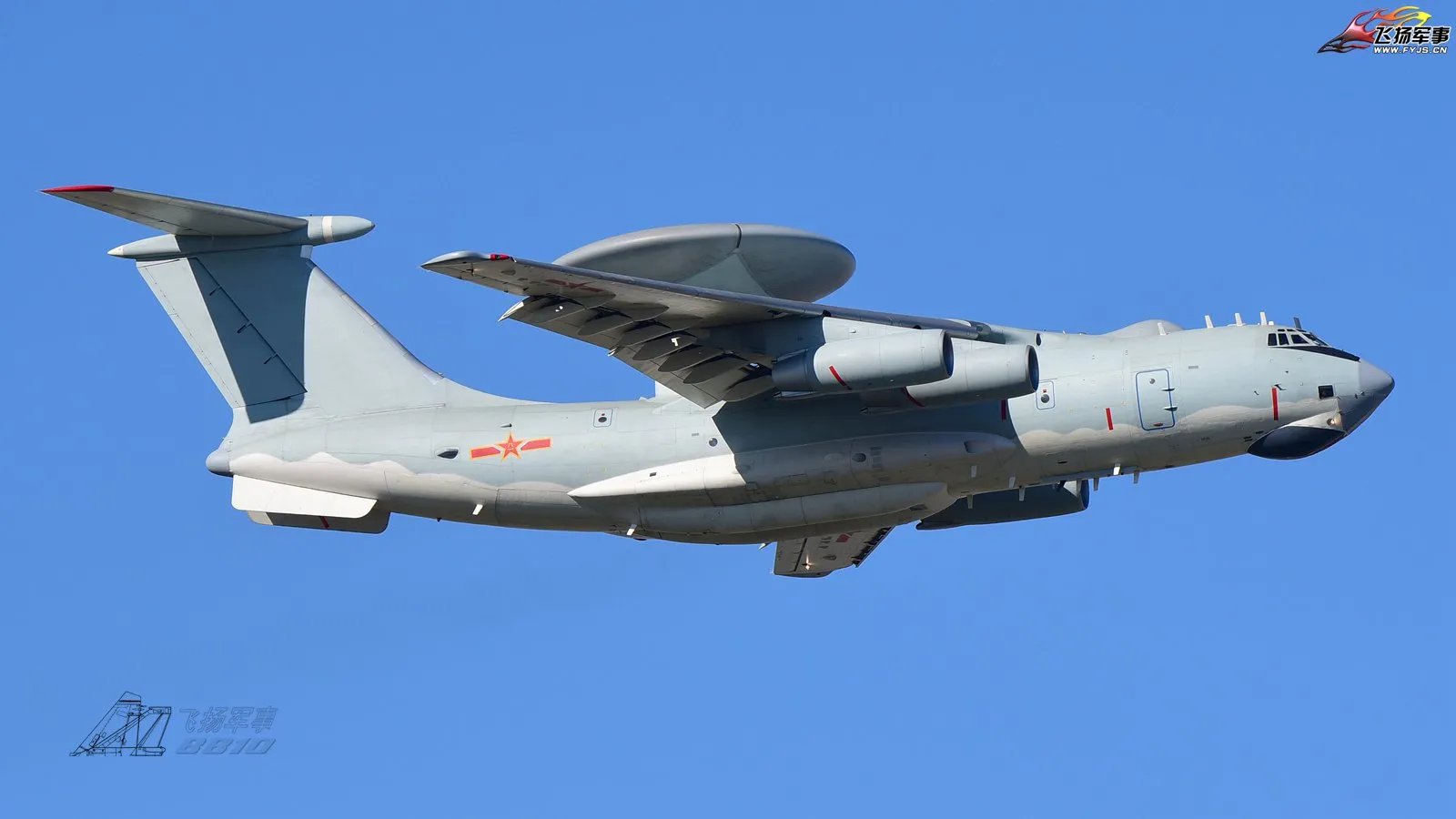
The KJ-3000 is expected to address longstanding limitations in China’s existing large jet-powered AEW&C fleet. To date, only four KJ-2000 Mainring aircraft have been completed. Based on the Russian-built Ilyushin Il-76MD transport, the KJ-2000 program was constrained by the limited availability of suitable airframes, and now faces the twin issues of reliance on Russian supply chains and aging aircraft.

A side view of a standard PLAAF KJ-2000, albeit with the serial number censored from the photo. FYJS/via Chinese internet

A domestically produced Y-20-based platform provides a more sustainable basis for a much larger AEW&C fleet, with greater scope for upgrades and potentially export opportunities.

The larger airframe should also provide advantages over China’s numerous turboprop-powered AEW&C aircraft, including greater speed, range, and endurance. Its higher operating altitude would give its radar a better vantage point for detecting and tracking targets, particularly low-flying aircraft and missiles that may be masked from ground-based sensors by terrain or the radar horizon.

The aerial refueling probe could further extend the aircraft’s range and time on station, although the precise operational capabilities of the KJ-3000 remain unclear.

The exact configuration of the KJ-3000’s primary radar has yet to be established. China’s existing KJ-2000 and smaller KJ-500 use fixed radomes containing three active electronically scanned array (AESA) antennas to provide 360-degree coverage, rather than the rotating radomes found on aircraft such as the U.S. E-3 Sentry and Russia’s A-50 Mainstay. Whether the new aircraft follows the same approach remains to be seen.

A Russian Aerospace Forces A-50U Mainstay. Russian Ministry of Defense Russian Air Force A-50U Mainstay. (Russian MoD)

As well as its large AESA radar, the new aircraft is likely to carry additional intelligence, surveillance, and reconnaissance (ISR) systems, while its communications equipment could make it an important networking node for Chinese forces operating across the vast distances of the Indo-Pacific. Such capabilities would be particularly valuable for coordinating combat aircraft, including uncrewed ones, sharing targeting information, and extending the reach of China’s integrated air defense and broader military networks.

The KJ-3000 is also part of a broader expansion and diversification of China’s AEW&C fleet. Alongside the new jet-powered aircraft, the People’s Liberation Army continues to field and develop smaller platforms based on the four-turboprop Y-9 transport family.

These include the KJ-500, which has been produced and delivered at a rapid pace, as well as the newer KJ-700, believed to combine radar with electro-optical and infrared sensors for a broader range of surveillance missions. The precise capabilities of the KJ-700 remain uncertain, but you can read about the platform in more detail here.

A prototype KJ-700. via Chinese internet

The smaller turboprop aircraft offer advantages of their own. They are better suited to operating from dispersed and relatively austere airfields, and they regularly appear at Chinese island outposts and in the strategically important Taiwan Strait. Together, the different types give Chinese forces a range of options for surveillance and command and control, from persistent coverage close to home to operations farther afield.

The U.S. Department of Defense has repeatedly highlighted the growing importance of China’s AEW&C fleet.

In its latest annual report on Chinese military developments, the Pentagon specifically pointed to the KJ-3000:

“The PLA conducted an initial flight with the KJ-3000 Airborne Early Warning and Control (AEW&C) aircraft, which will serve as a surveillance aircraft to monitor aircraft, ships, and other vehicles. The KJ-3000 will probably be the world’s first model to use digital radar and will be capable of anti-jamming, passive detection, and target identification.”

Airborne radar and command-and-control aircraft are also important force multipliers for increasingly capable Chinese combat jets, including the stealthy J-20 and aircraft armed with long-range air-to-air missiles. Radar planes like these can serve as critical networking nodes for data sharing and, in some cases, allow Chinese fighters to prosecute targets without turning on their own radar.

In 2022, then-Pacific Air Forces commander Gen. Kenneth Wilsbach praised the command and control associated with J-20 operations, noting that some of China’s long-range air-to-air missiles benefit from support provided by the KJ-500.

A stock photo of a J-20 stealth fighter. PLAAF

For China, a larger and more capable AEW&C fleet would support both the defense of its airspace and efforts to project military power across the Indo-Pacific. These aircraft could help coordinate operations around Taiwan and the South China Sea, improve situational awareness over maritime approaches, and support combat operations at greater distances from the mainland.

The same Pentagon report from 2025 further noted:

“China’s integration of support aircraft, such as the KJ-500 airborne early warning aircraft, provides the PLAAF with improved ISR capability to support PLA operations, as demonstrated during surge operations near Taiwan.”

ZHUHAI, CHINA - NOVEMBER 03: A KJ-500A warning and control aircraft arrives at Zhuhai Air Show Center on November 3, 2022 in Zhuhai, Guangdong Province of China. The 14th Airshow China will be held from Nov. 8 to 13. (Photo by VCG/VCG via Getty Images)
A KJ-500 arrives at the Zhuhai Air Show Center in November 2022 in Zhuhai, Guangdong Province of China. This is specifically the probe-equipped KJ-500A version. Photo by VCG/VCG via Getty Images VCG

A domestically developed, jet-powered platform such as the KJ-3000 would be a logical centerpiece of that effort, particularly since it can be produced in substantially greater numbers than the KJ-2000.

The prospect of China expanding its fleet of large, jet-powered AEW&C aircraft stands in contrast to the U.S. Air Force’s troubled effort to replace its aging E-3 Sentry. The U.S. E-7 Wedgetail program has encountered major hurdles, raising concerns about a potential gap in airborne battle management as China continues to field new capabilities.

The October 5 imagery does not confirm that serial production has begun. Further imagery showing additional airframes, activity around production facilities, or aircraft in new operational markings may provide a clearer indication of the program’s progress.

Regardless, the KJ-3000 appears poised to become an important addition to China’s expanding airborne surveillance and command-and-control architecture.

Contact the author: thomas@thewarzone.com

The post Four KJ-3000 Radar Jets At Chinese Factory Point To Serial Production appeared first on TWZ.

  •  

Ground-Launched Rusty Dagger Low-Cost Cruise Missile Seen For The First Time

Zone 5 Technologies has shared with TWZ the first photos of its latest Block 40 Rusty Dagger low-cost cruise missile in a surface-launched configuration. The images offer a new look at a weapon developed first with air-launched applications in mind, and for export to Ukraine. It is now being adapted for use from land and sea, including by U.S. and other allied forces.

Zone 5 has not disclosed where or when the pictures were taken, or which programs, specifically, the ground-based launches were conducted under. The images do not offer a clear view of the trailer-mounted launcher, either. A spokesperson for the company did stress to TWZ that versions of Rusty Dagger have now been selected for separate U.S. Army and Navy programs, in addition to its initial development through the U.S. Air Force.

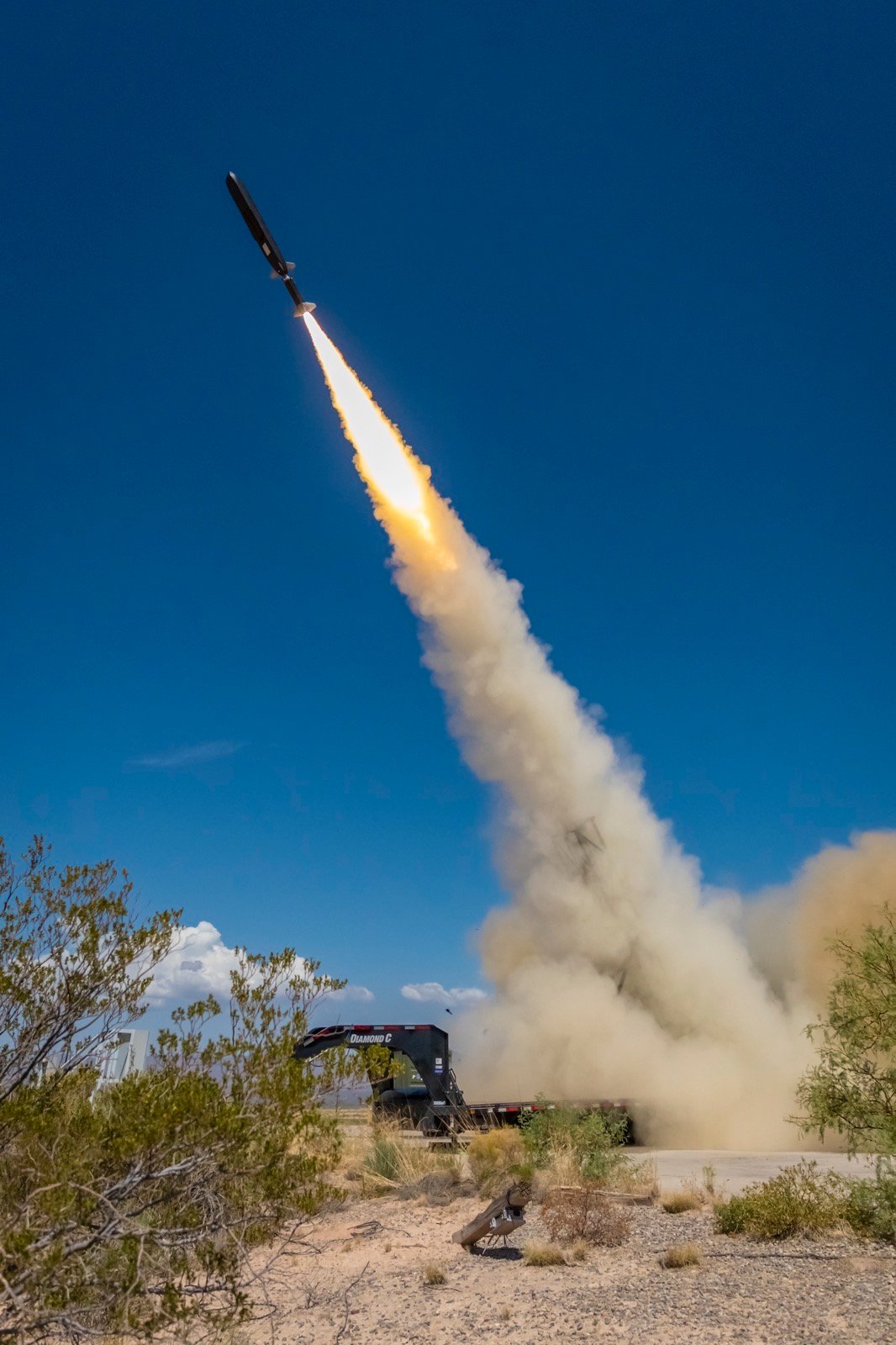
One of the first images showing the surface-launched version of the Rusty Dagger in action. Zone 5 Technologies

In May, Zone 5, as well as Anduril, CoAspire, and Leidos, received framework agreements from the Pentagon under the Low-Cost Containerized Missile (LCCM) program. The U.S. Army’s Portfolio Acquisition Executive Fires (PAE Fires) is running LCCM in cooperation with the Office of the Under Secretary of War for Research and Engineering (OUSW R&E). The aim of this program is to procure more than 10,000 low-cost cruise missiles, in total, over three years, beginning in 2027.

Then there is also the Consolidated Affordable Ordnance System (CHAOS) effort from the U.S. Navy’s Portfolio Acquisition Executive for Munitions (PAE Munitions). CHAOS is focused on low-cost anti-ship cruise missiles, particularly for U.S. allies and partners. CoAspire is also on contract for CHAOS with a version of its Rapidly Adaptable Affordable Cruise Missile-Extended Range (RAACM-ER) design.

“We designed a surface-launch Rusty Dagger to be the foundation of U.S. and allied mass-produced affordable precision deep strike weapons,” Tom Kanewske, chief strategy officer at Zone 5, told TWZ in a statement.

“Our team went from design to demonstration in less than three months, bringing Rusty Dagger from pylons and pallets to ground launcher and shipping containers,” added Kyle Maxhimer, Zone 5’s president.

Another picture of a Block 40 Rusty Dagger being fired from a launcher on the ground. Zone 5 Technologies

Zone 5 says the Block 40 version of Rusty Dagger can accommodate warheads in the 100-to-250-pound classes. It can still be configured for air-launch, either from pylons under the wings of aircraft or via palletized munitions systems. In order to be fired from launchers on the ground or at sea, the new version of the missile is fitted with a solid-fuel booster rocket at the tail end.

More specific details about the Block 40’s capabilities compared to the preceding air-launch-only version, also referred to as the Block 20, remain limited. From what we can see now, the two variations appear outwardly similar in many respects, at least broadly speaking. Earlier variations had a distinctive tail configuration with four squared-off fins, two facing upward and two more angled to either side. The shaping of the fins on the Block 40 does look to be more rounded. It’s also possible the missile may have a new cruciform tail fin arrangement, but this could also be a trick of the angle from which the missile is being viewed, coupled with the low resolution of the available images.

A side-by-side comparison of the Block 40 Rusty Dagger configured for surface launch, at top, and an earlier air-launched version, at bottom. Zone 5 Technologies/USAF

Previous reports have said that Rusty Dagger has a range of 300 nautical miles when delivered at low altitude, which is increased to 500 nautical miles when launched by aircraft at medium altitudes and flying at higher speeds. In general, surface-launched versions of missiles typically have shorter maximum ranges compared to their air-launched counterparts.

Zone 5 Rusty Dagger. #AffordableMass pic.twitter.com/Pzj1KnceHC

— Air-Power | NatSec Ledger (@NatSecLedger) June 7, 2025

Regardless, the Block 40 version is an important further evolution of the Rusty Dagger design. The initial air-launched version of the missile, now designated the AGM-188A, has already been in development for several years, in part now under the U.S. Air Force’s Extended Range Attack Munition (ERAM) program. This has included live-fire tests conducted at Eglin Air Force Base in Florida in January 2025. We now know that Rusty Dagger has been cleared for use on four different types of fighters, including the F-16. Development of CoAspire’s Rapidly Adaptable Affordable Cruise Missile (RAACM) was also conducted as part of the ERAM effort.

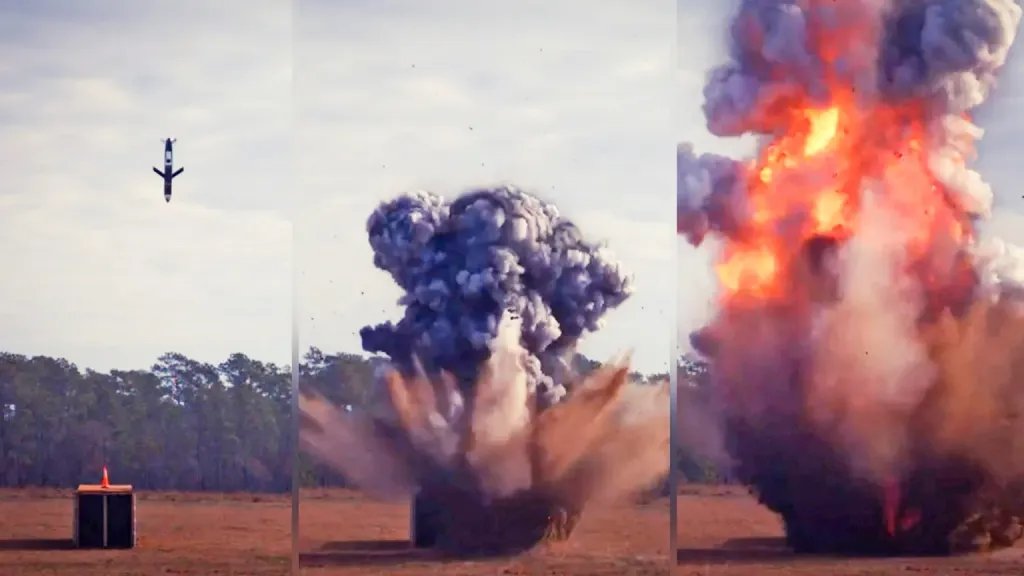
Three views of a Rusty Dagger live-fire test on January 22, 2025, at Eglin Air Force Base, Florida. The service did not identify the weapon by name at the time. via U.S. Air Force

Like the Navy’s CHAOS effort, ERAM has been focused primarily on supporting allies and partners, starting first with Ukraine. A Zone 5 spokesperson told TWZ that, as things stand, Rusty Dagger remains the only publicly reported operational missile in its class fielded by the Ukrainian military.

It appears that the AGM-188A “Rusty Dagger” cruise missile has undergone field testing in Ukraine.

Russian sources are publishing photos of an unknown 8-element CRPA antenna. On the back side of the unit there is a circuit board with a large heatsink, which carries the CAGE code… pic.twitter.com/phZeOJfHJ0

— 𝔗𝔥𝔢 𝕯𝔢𝔞𝔡 𝕯𝔦𝔰𝔱𝔯𝔦𝔠𝔱🎻🇬🇪🇺🇦🇺🇲🇬🇷 (@TheDeadDistrict) June 7, 2026

ERAM has also been feeding into the Air Force’s own Family of Affordable Mass Missiles (FAMM) plans. The service wants to acquire 28,000 FAMM munitions in pylon-launched and palletized configurations over the next five years.

A U.S. Air Force F-16 carrying a pair of Rusty Dagger missiles, as well as other stores, under its wings. U.S. Air Force photo by Staff Sgt. Blake Wiles

As we reported earlier this year, Rusty Dagger is now part of a broader portfolio under Norwegian defense company Kongsberg, which acquired a 90 percent stake in Zone 5. Kongsberg has positioned the missile alongside its stealthy Joint Strike Missile (JSM), with the two weapons serving different, complementary roles.

KONGSBERG announced today that it has closed the acquisition of US missile company Zone 5 Technologies LLC, following approval by US regulatory authorities.

🔗 https://t.co/meRxfmYHH6 pic.twitter.com/EXVbYhDers

— KONGSBERG (@kongsbergasa) June 10, 2026

Rusty Dagger is designed around affordability and volume, while JSM offers a sophisticated, low-observable strike capability. The concept gives customers a mix of weapons suited to different targets and mission requirements, rather than relying exclusively on expensive, high-end missiles.

Zone 5 says it is now expanding manufacturing in the United States. Production is established in San Luis Obispo, California, with production beginning in the Dallas-Fort Worth area of Texas. A franchised facility is also being developed in Miamisburg, Ohio, with Hawthorn Aero, a company that describes itself as specializing “in high-rate airframe manufacturing, offering scalable solutions from design to full vehicle integration for aerospace industries.”

The company says each site is designed to reach a capacity of more than 2,500 missiles annually by the end of 2027. If all three reach that level, combined annual capacity would exceed 7,500 missiles.

The expansion reflects the growing emphasis on affordable weapons that can be manufactured in large quantities and replenished quickly, something that is considered especially critical if the United States is to face China in a future high-end conflict in the Indo-Pacific region.

The ground-launched Rusty Dagger shown in the photos underscores how far the missile family is moving beyond its original air-launched role. With production expanding and multiple U.S. military programs in the picture, the surface-launched variant adds another potential route to getting the weapon into service.

Contact the author: thomas@thewarzone.com

The post Ground-Launched Rusty Dagger Low-Cost Cruise Missile Seen For The First Time appeared first on TWZ.
  •  

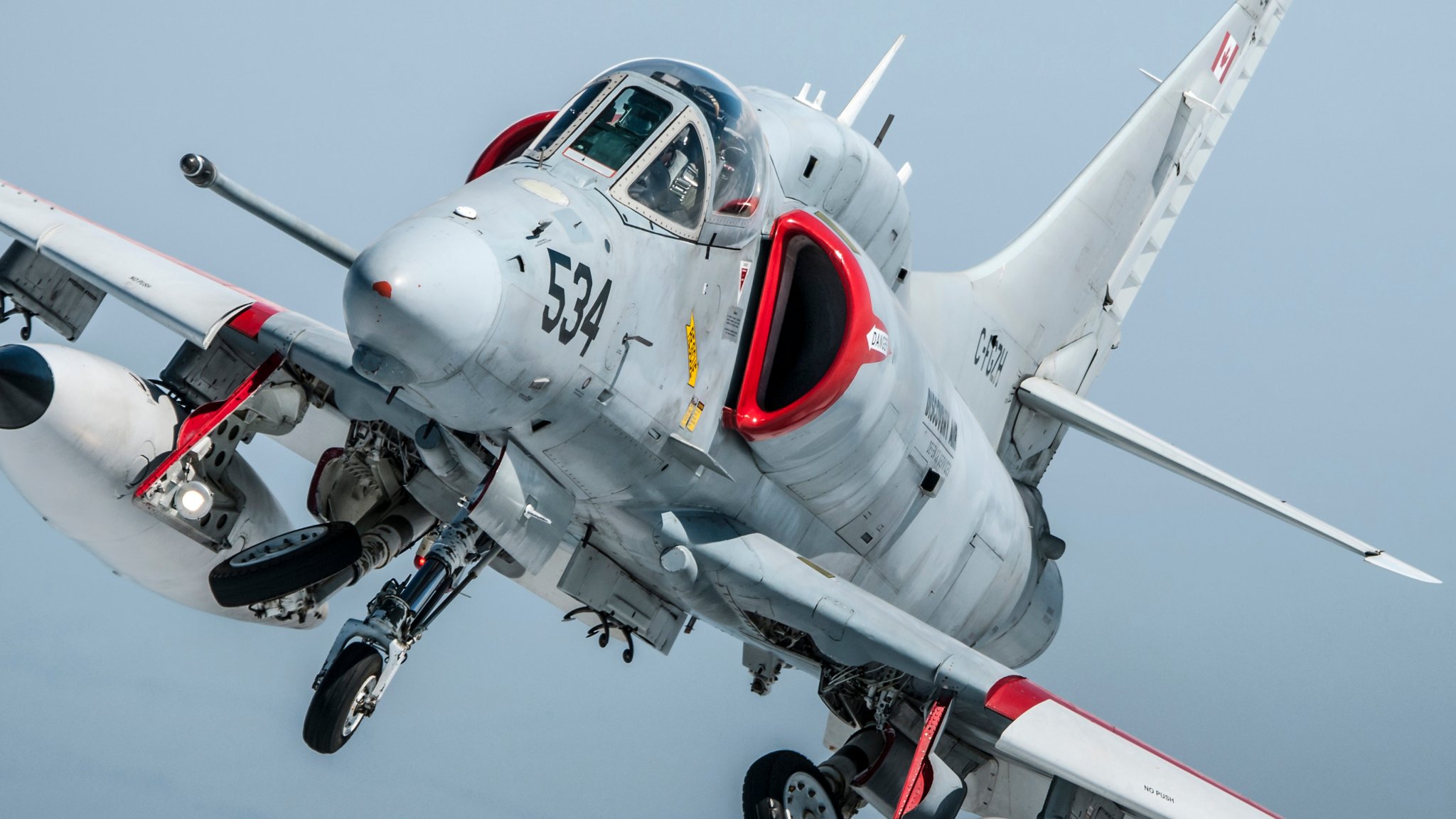
A-4 ‘Super’ Skyhawks Playing The Bad Guys In European Skies

Northern Germany probably isn’t the first place you’d think of to look for a U.S. Navy and Marine Corps classic attack jet. However, contract aggressor company Top Aces flies a squadron of deeply upgraded Douglas A-4N Skyhawks to support European air arms for their “red air” training needs.

Nearly 3,000 A-4s were built between 1956 and 1979, and TWZ’s Jamie Hunter traveled to the Germany Navy base at Nordholz for the latest episode of our “Special Access” to witness some of the last, and by far the most modern, Skyhawks operating up close.

There he learned what it was like operating the iconic but nearly antique jets against some of the world’s most capable fighters. He also discovered that significant developments are on the horizon for Top Aces in Europe, principally the arrival of F-16s that will further enhance the company’s aggressor services for its growing list of European customers.

Enjoy the show!

The post A-4 ‘Super’ Skyhawks Playing The Bad Guys In European Skies appeared first on TWZ.

  •  

Construction Of Iran’s “Eagle 44” Underground Airbase Hasn’t Stopped Despite War

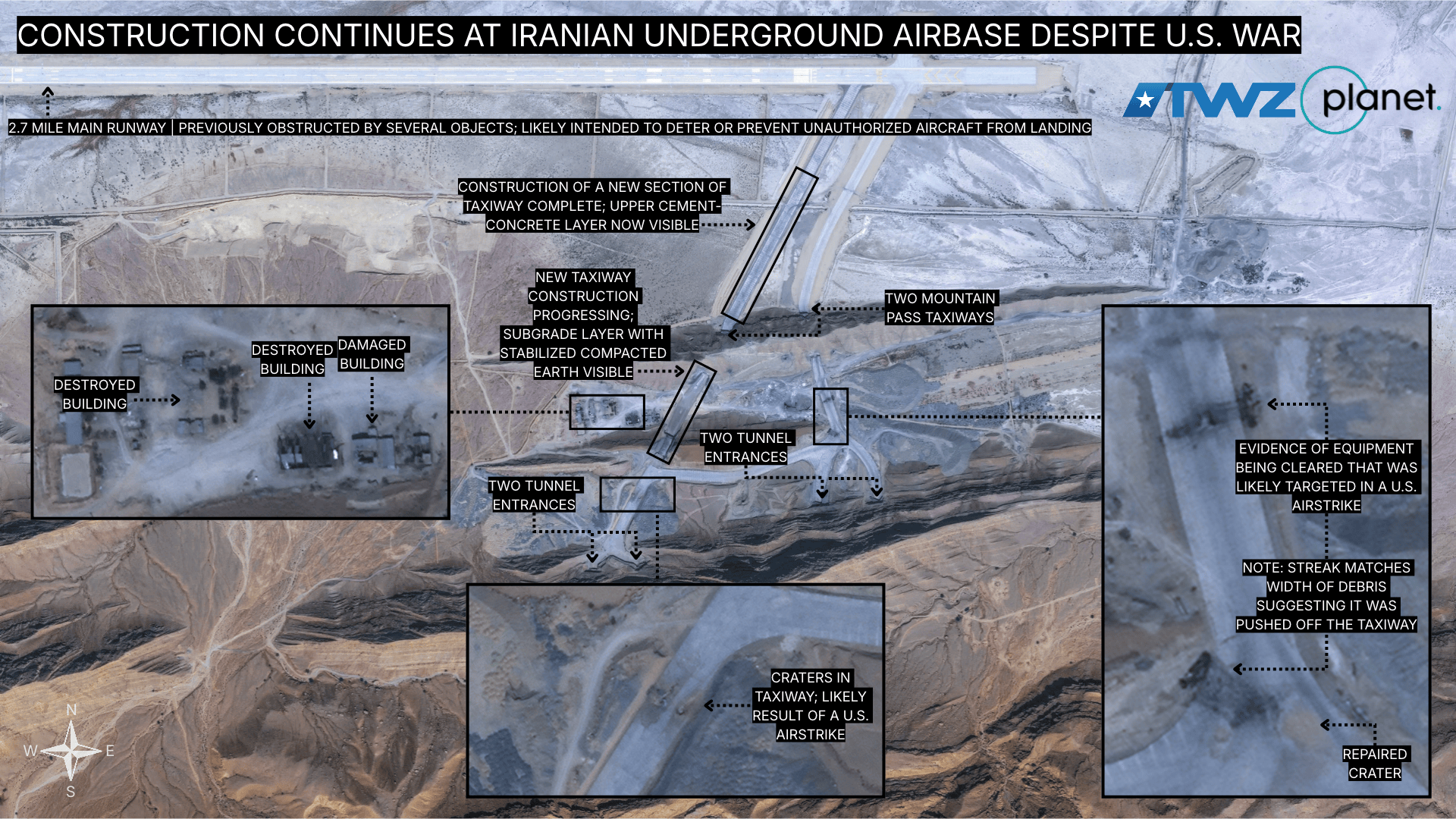
Iran is rebuilding Eagle 44, a hardened underground airbase carved into the side of a mountain that can shelter fighter aircraft, drones, and potentially cruise and ballistic missiles, despite the remote facility absorbing at least three rounds of airstrikes this year. High-resolution satellite imagery captured by Planet Labs in late September and reviewed by TWZ shows a new section of taxiway completed, several support buildings still destroyed or damaged, wrecked equipment cleared off the pavement, and obstacles that were placed to obstruct the runway now removed. Construction is ongoing at a time when the Pentagon and Trump administration maintain there is little remaining of the Iranian air force for such a facility to protect.

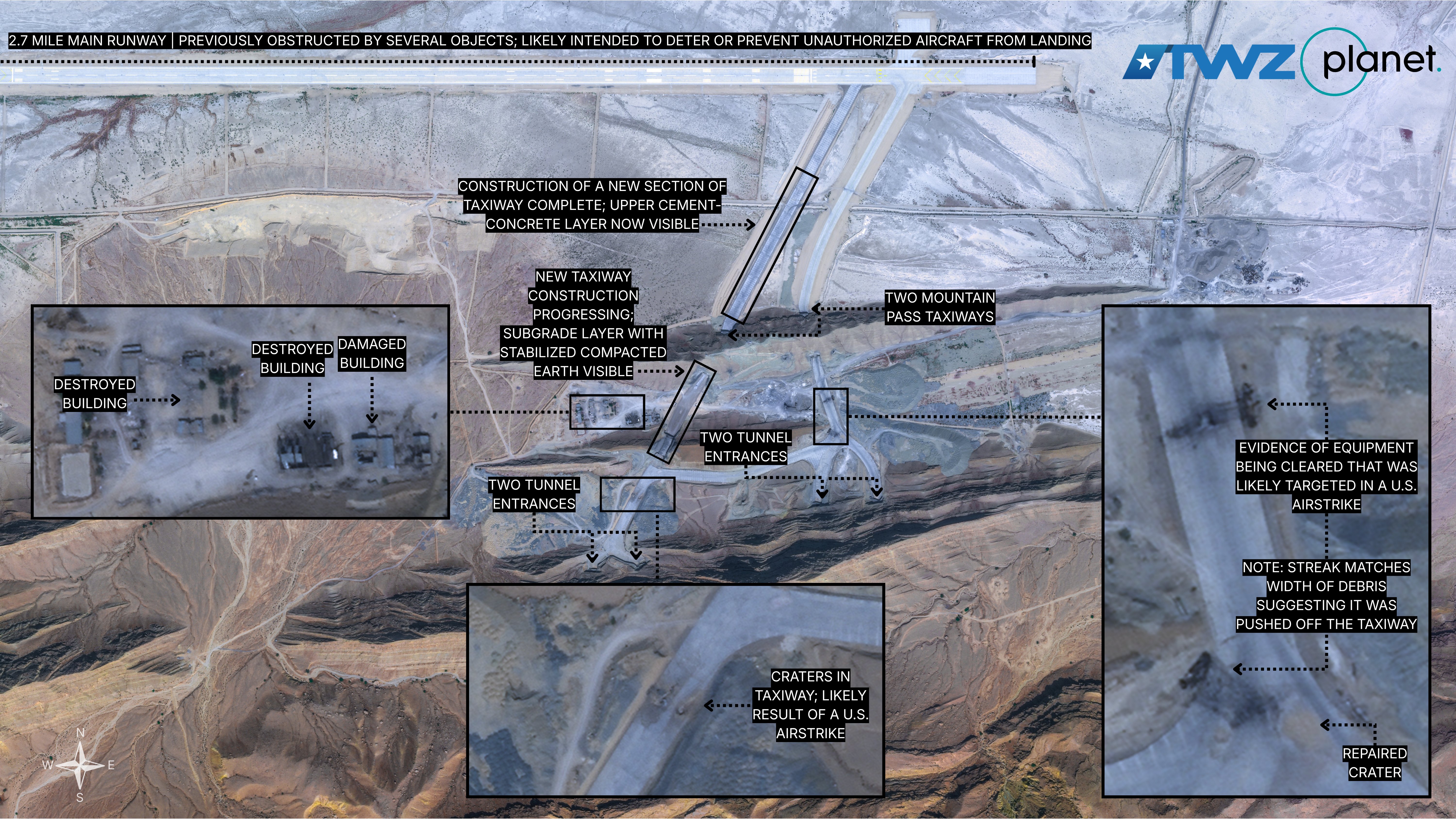
A comprehensive graphic showing Iran's Eagle 44 mountain airbase and the ongoing construction to rebuild it following U.S. airstrikes. Created by Ian Ellis-Jones and TWZ using Planet Labs imagery that's reprinted with permission.
Graphic depicting key areas of interest at Eagle 44. Photo © 2026 Planet Labs Inc. All rights reserved. Reprinted with permission. TWZ/IAN ELLIS-JONES

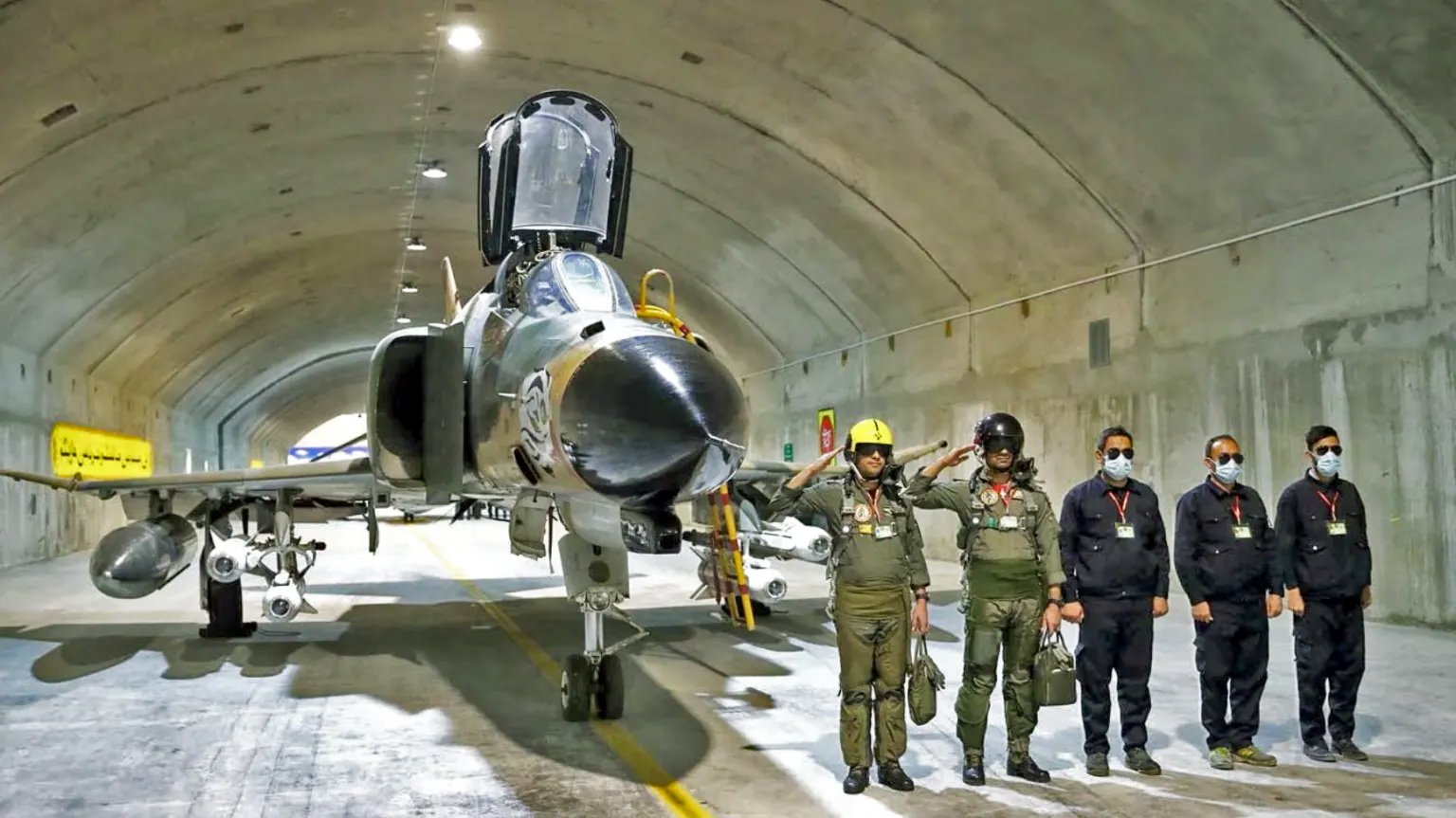
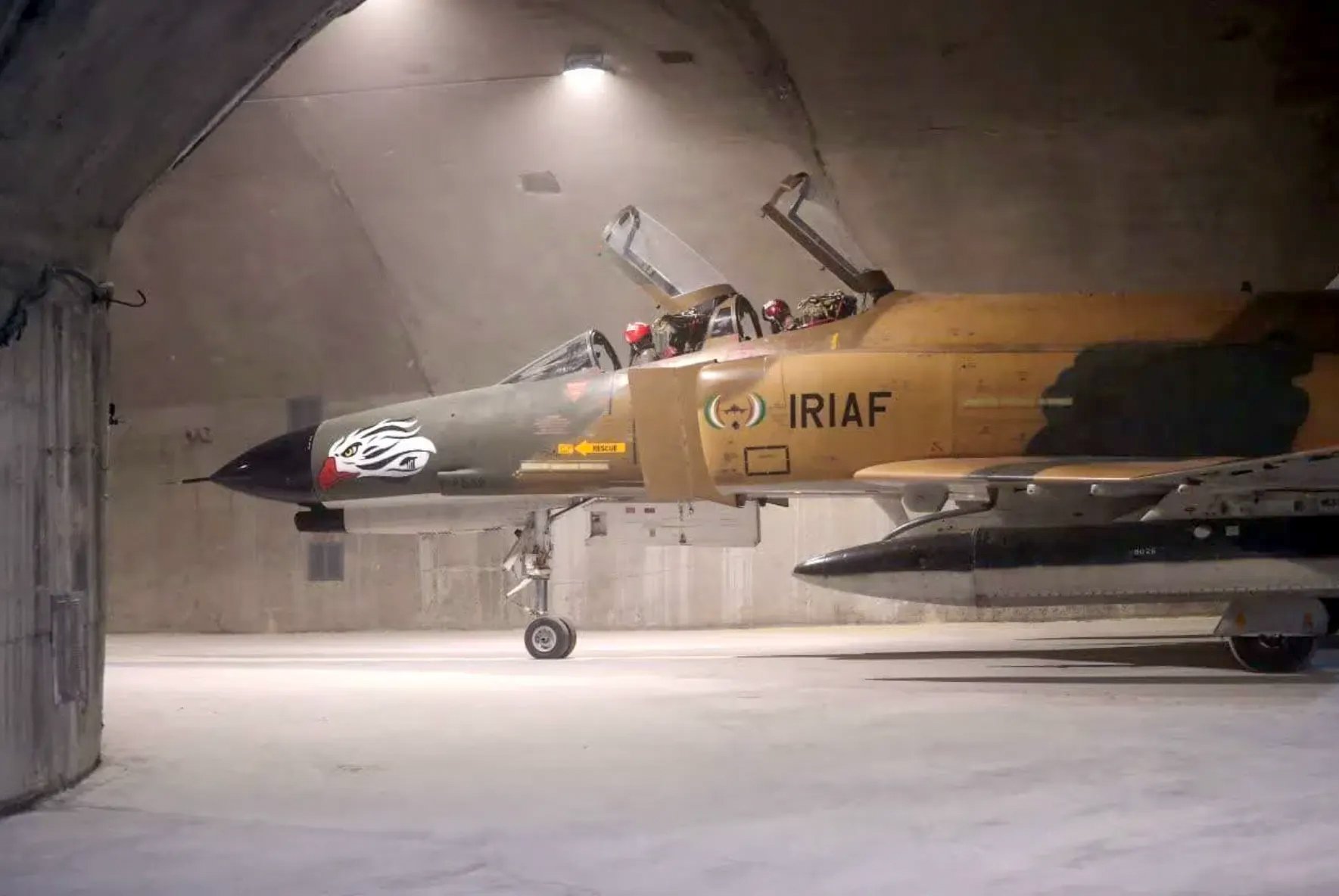
Eagle 44, also called ‘Oghab 44’ after the 44th anniversary of the 1979 revolution, was unveiled by Iranian state media in February 2023 when senior officials visited what was described as the country’s newest underground airbase. Islamic Republic of Iran Air Force (IRIAF) F-4D/E Phantom IIs, armed with AGM-65 Maverick air-to-ground missiles, laser and electro-optically guided bombs, unguided ‘dumb’ bombs, as well as domestically produced anti-ship missiles, were shown using the facility in the footage. The IRIAF had roughly 60 examples in service at the time, its most numerous combat jet by some margin, though how many remain today, and are actually operational, is unknown. In addition to the Phantoms, one-way attack drones were also seen in the background.

F-4 Phantom at Eagle 44. Photo: Iranian state media
Another view of an F-4 Phantom at Eagle 44. Photo: Iranian state media

The IRIAF, rather than the Islamic Revolutionary Guard Corps (IRGC) Aerospace Force, operates the base, which is located in Hormozgan province and sits in the foothills of the Zagros Mountains, approximately 100 miles northwest of the Strait of Hormuz. Iranian state media described it as “one of the army’s most important air force bases, with fighters equipped with long-range cruise missiles and built in the depths of the Earth.” Then-Chief of Staff of the Armed Forces Maj. Gen. Mohammad Bagheri, who was present at the unveiling, warned that “any attack on Iran from our enemies, including Israel, will see a response from our many air force bases including Eagle 44.” He was eliminated in the opening strikes of the Twelve-Day War, which Israel dubbed Operation Rising Lion, in June 2025.

Location of Eagle 44 airbase in southern Iran. Photo: Google Earth

Work on the cavernous underground tunnel complex began in 2013. Construction of a 2.7-mile main runway, situated on the northern side of the base on a valley floor below the mountain range, started roughly eight years later. Two taxiways run through a smaller ridge connecting the runway to four entrances to the primary tunnel complex, where the jets and weapons are stored, although only one taxiway is currently operational.

Timelapse of Eagle 44 from February to October 2026. Video © 2026 Planet Labs Inc. All rights reserved. Reprinted with permission.

The promotional video released in 2023 revealed at least one internal blast door, as well as branches from the main tunnel to revetment areas to park fighters and drones. A support compound of several buildings is on the west side of the base, next to the unfinished taxiway. The purpose of each structure is unclear, but a functioning airbase requires maintenance and repair facilities, crew quarters, reserves of fuel and munitions, security and force protection assets, and infrastructure to coordinate air traffic control and command and control functions.

Video released by Iranian state media in February 2023 reportedly showing the inside of the tunnel complex at Eagle 44.

The United States kicked off Operation Epic Fury alongside Israel on February 28, launching a massive wave of strikes against Iran from the west and south. Eagle 44 is located within striking distance of the munitions carried by air wings embarked on U.S. Navy aircraft carriers operating in the northern Arabian Sea and missiles fired by the guided-missile destroyers that escort them, as well as Air Force tactical and strategic aircraft and Army assets in the region. However, low-resolution images reviewed by TWZ through March 16 indicated that while the base was targeted, little damage was visible.

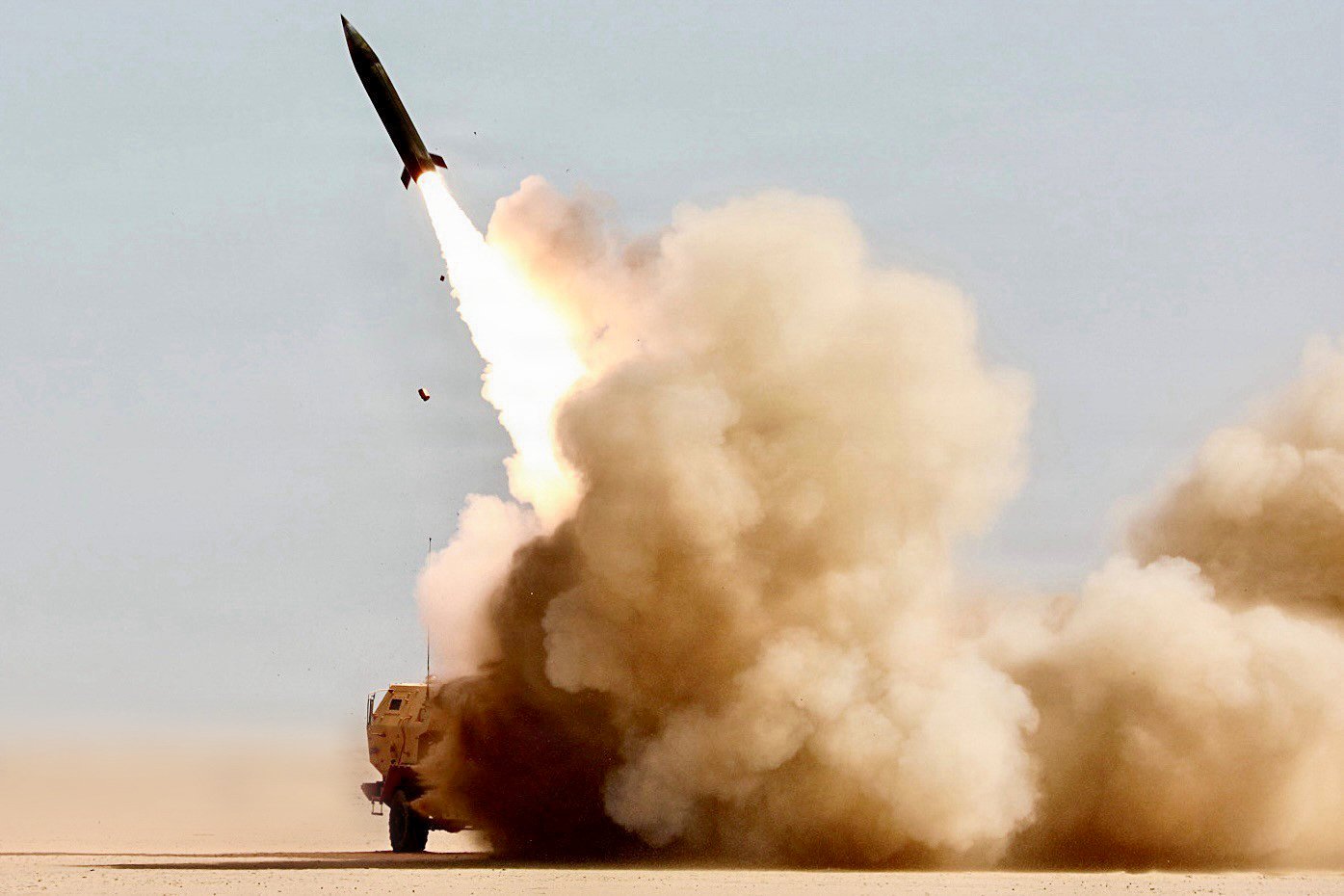
M142 High Mobility Artillery Rocket Systems (HIMARS) conduct live-fire missions during Operation Epic Fury in the U.S. Central Command area of responsibility. (U.S. Army Photo)
HIMARS fired during OEF. CENTCOM photo
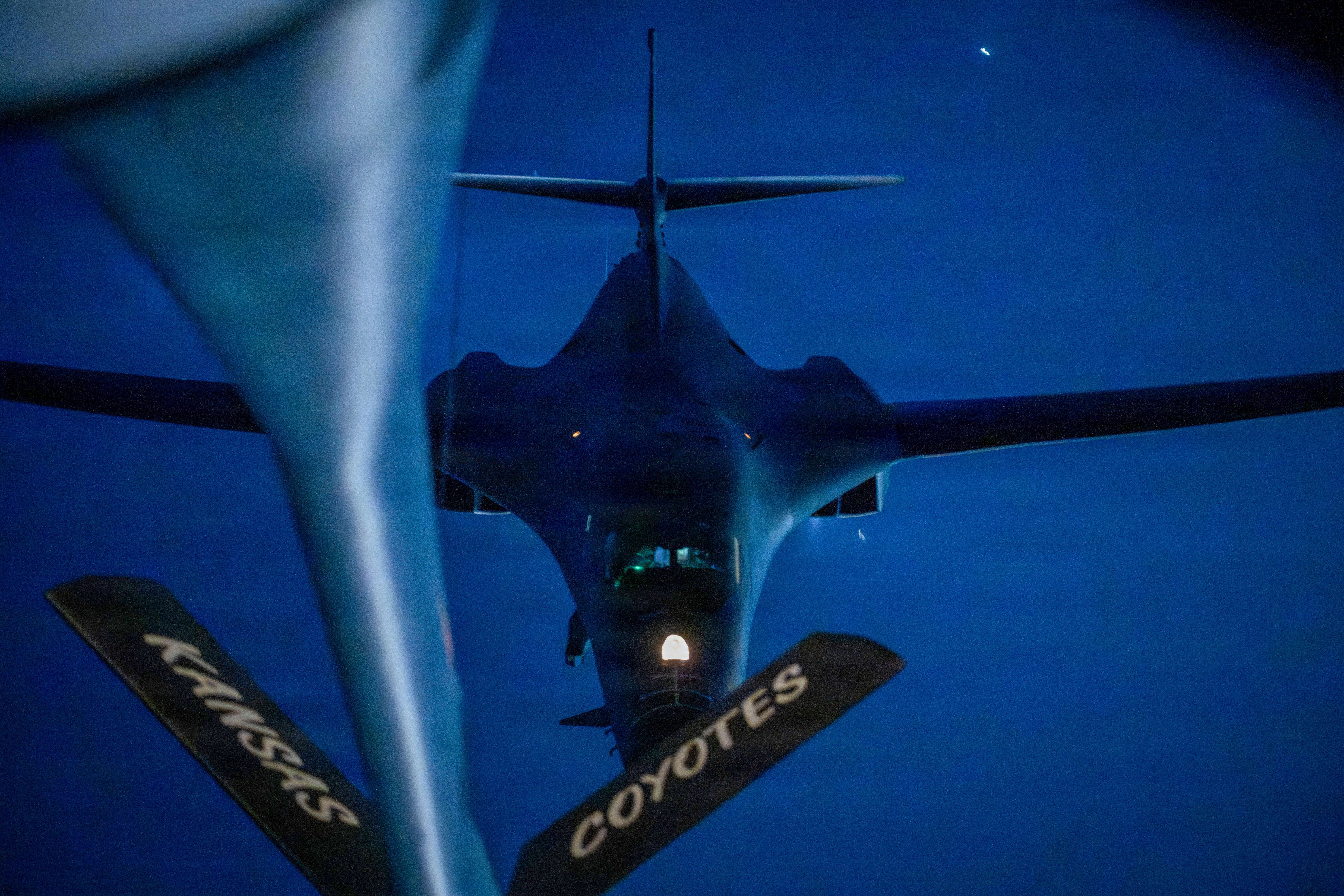
A U.S. Air Force B-1B Lancer aerial refuels with a U.S. Air Force KC-135 Stratotanker while on a night-time mission during Operation Epic Fury. (U.S. Air Force photo)
B-1B fuels for OEF mission. USAF photo
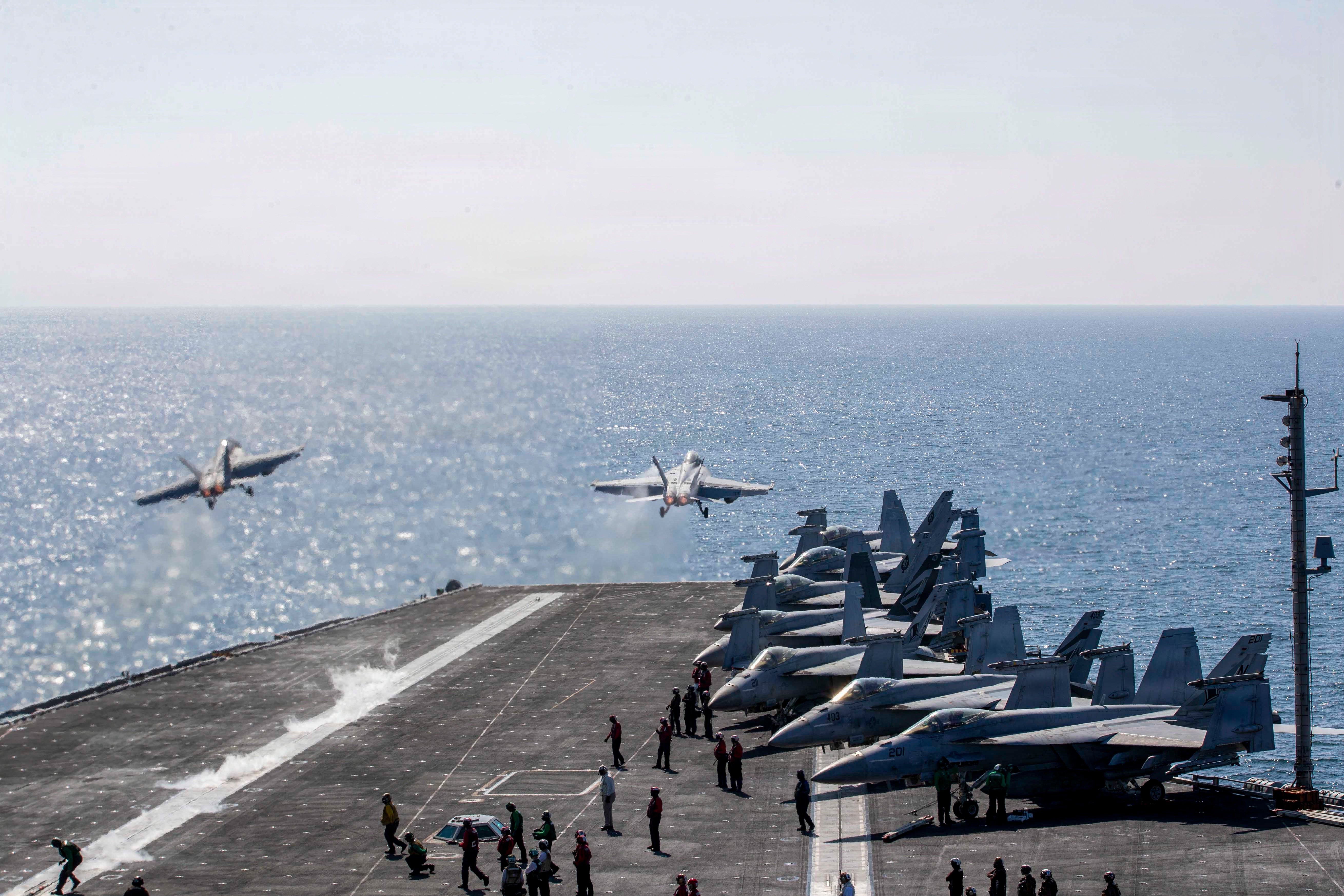
Two F/A-18 Super Hornets launch from the flight deck of Nimitz-class aircraft carrier USS Abraham Lincoln (CVN 72) in support of Operation Epic Fury, March 3, 2026. (U.S. Navy photo)
Super Hornets launch during OEF. Navy photo
Arleigh Burke-class guided-missile destroyer USS Spruance (DDG 111) fires a Tomahawk Land Attack Missile (TLAM) in support of Operation Epic Fury, Feb. 28, 2026. (U.S. Navy photo)
Guided-missile destroyer USS Spruance fires a Tomahawk Land Attack Missile (TLAM) in support of Operation Epic Fury (OEF). U.S. Navy photo

As the U.S. and Israel continued the relentless air campaign over the next several weeks, the base was targeted again at the end of March, with greater effect, according to a report from The New York Times. High-resolution images the paper reviewed revealed impact craters on the taxiways near the tunnel entrances, one building leveled, and small mounds placed along the runway, presumably to prevent enemy aircraft from landing. Battle damage assessments suggested the strikes were intended to cut the underground caverns off from the runway, trapping whatever was inside and preventing takeoff. The report did not state whether U.S. or Israeli aircraft carried out the attack, and Israeli officials declined to comment. However, the U.S. was primarily responsible for pressuring Iran’s southern flank, while the Israelis attacked the western front.

After the fragile April ceasefire collapsed and the U.S. imposed a second blockade, U.S. Central Command (CENTCOM), based out of MacDill Air Force Base in Tampa, Florida, and responsible for executing day-to-day operations of the war, launched multiple strikes across Iran on July 15, and Eagle 44 was hit for at least a third time. An analysis published by Soar Atlas, a satellite imagery provider, identified four aimpoints on July 16, with cratered taxiways and damage to additional infrastructure. According to that analysis, the structures targeted were related to the base’s construction unit, but TWZ has not independently verified this claim. The Pentagon and CENTCOM have not specifically named Eagle 44 in any press briefing or release, and Iran has not acknowledged the base was struck.

United States Navy forces on station in mid-July 2026 when the second blockade began and strikes resumed. TWZ/IAN ELLIS-JONES

The Planet Labs satellite imagery from September 29, obtained exclusively by TWZ, indicates that Iran began reconstruction after the July attacks and that the effort is ongoing.

The main runway, previously blocked by obstacles meant to deter and prevent unauthorized aircraft from landing, is now clear. On the western taxiway (marked in red below), a new section leading into the ridge ‘pass-through’ is complete, with its finished upper cement-concrete layer visible. On the other side of the pass, construction of the next segment is underway, with a subgrade layer of stabilized, compacted dirt laid down but not yet paved (orange). Farther south, in front of the western tunnel entrances, impact craters (blue) are still visible. When finished, the second taxiway will provide a direct link between the western hangars and the runway, allowing additional aircraft to move freely without sharing a single taxiway, a major bottleneck for higher operational tempos and more complex sortie launches and recoveries. A second functional taxiway and tunnel would also provide critical redundancy if the other is hit.

Custom annotated graphic of Iran's Eagle 44 underground airbase built into the side of a mountain following likely U.S. Airstrikes. Created by Ian Ellis-Jones and TWZ using Planet Labs imagery, reprinted with permission.
Annotated zoomed-in shot of Eagle 44. Photo © 2026 Planet Labs Inc. All rights reserved. Reprinted with permission.

On the primary eastern taxiway, two dark streaks (green) that appeared following the strikes in July run off the edge of the pavement, likely debris left by equipment that was struck and removed. Notably, the streak marks match the width of the wreckage, suggesting it was bulldozed or pushed off the taxiway to reopen it. There is no sign of the equipment being recovered, only that it was cleared out of the way.

In the main support compound (yellow) next to the western taxiway, two buildings are clearly destroyed and a third is damaged. They have not been rebuilt yet, which is consistent with previous reporting from The Times and Soar Atlas that the attacks degraded construction capabilities, and suggests the regime may be focused on completing and repairing the taxiways rather than the installations.

A close-up custom annotated visualization  of key areas of interest at Iran's Eagle 44 airbase, which is built into the side of a mountain, following likely attacks by the U.S.. Created by Ian Ellis-Jones and TWZ using Planet Labs imagery, reprinted with permission.
Annotated key areas of interest at Eagle 44. Photo © 2026 Planet Labs Inc. All rights reserved. Reprinted with permission.

The four entrances to the main tunnel complex (white), arranged in two pairs less than half a mile apart at the end of each taxiway on the southern part of the base, appear to be intact, although the angle makes it unclear whether they are open or sealed. What’s inside the mountain, and how many fighters remain in Iran’s inventory, is unknown. Regardless of the status of the fighter fleet, as we noted earlier, the base can also store drones and could be packed with cruise or ballistic missiles.

The U.S. and Israel have a range of bunker buster bombs that could be used in an attempt to collapse the tunnel entrances, a major choke point for any underground weapons storage site. While not destroying what is being held within, doing so would block anything inside from leaving — and being used — for a period of time. Additionally, the pass-through tunnels make for easy targets, and hitting them would keep fixed-wing aircraft from reaching the runway. No impact points on the mountain itself or damage to the portals inside is apparent, but they could have been sealed and hit farther in, which may not be highly visible via satellite imagery. Reaching the main storage caverns themselves would likely be far harder. Larger bunker busters in the U.S. inventory include the GBU-57 Massive Ordnance Penetrator (MOP) guided munition, which could be capable of reaching deeper into the main site, but these are very limited in number and can only be delivered by the Air Force’s B-2A Spirit stealth bombers. It’s highly unlikely the U.S. would expend such resources on a site like this over many others of higher strategic importance.

Eagle 44 is not the only base that Iran is fixing during the lull in hostilities. By the end of May, Iran had cleared 50 of 69 tunnel entrances struck at 18 underground facilities, including some “missile cities,” according to a report by CNN − and that number is likely higher now. Planet Labs, Airbus, and Vantor imagery reviewed by The Wall Street Journal in July showed rebuilt entrances near Kangavar, fresh excavation at Dezful, and repairs near Kermanshah. “They have very impressive industrialization and reconstruction capabilities,” Israeli Brig. Gen. Ran Kochav told the paper. “They refilled their stockpiles,” he added.

A Western official told Bloomberg earlier this month that Iran “remains well-stocked with ballistic missiles and some anti-ship missiles, and can quickly add more,” and a U.S. official posited in May that “the Iranians have exceeded all timelines the IC [Intelligence Community] had for reconstitution.” Both assessments are at odds with what the White House and Pentagon have repeatedly claimed. Secretary Pete Hegseth stated in April that Iran’s air force was “wiped out” and its missile program was “functionally destroyed; launchers, production facilities, and existing stockpiles depleted and decimated,” while acknowledging a week later that the regime was “digging out” launchers, missiles, and bombed facilities but had “no ability to replenish offensive or defensive capabilities.” In May, CENTCOM Commander Adm. Brad Cooper told Congress, “Before Operation Epic Fury, the Iranian Air Force flew between 30 and 100 sorties each day; today that number is zero.” More recently, at a campaign rally in Kansas on Monday, U.S. President Donald Trump said, “They have no air force… their 229 beautiful fighter jets are now scattered all over the runways, the beautiful runways of the Islamic Republic of Iran.”

Video released by Iranian state media in May 2022 showing a different underground missile and drone complex.

At the very least, strikes on Eagle 44 cratered the taxiways and degraded support infrastructure, which likely put at least some of whatever airpower is stored there, if any, out of action. But even after enduring months of war and extreme economic pressure due to the ongoing U.S. blockade and sanctions, as well as dealing with damage across the country, Tehran continues to prioritize construction on the remote base. That fact alone could put it back on the target list if the U.S. and Israel launch another operation. But above all else, it points to how important this facility is to the regime, for whatever reason.

Contact the author: ian@twz.com or @ianellisjones

The post Construction Of Iran’s “Eagle 44” Underground Airbase Hasn’t Stopped Despite War appeared first on TWZ.

  •  
❌