
❌

Reading view

From the shadow of Semipalatinsk, Tokayev urges nuclear powers back to the negotiating table

Thirty-five years after Kazakhstan closed one of the most notorious nuclear weapons testing grounds in history, President Kassym-Jomart Tokayev has used the anniversary to deliver a pointed message to the world’s nuclear powers: resume dialogue, strengthen arms control and ensure that nuclear testing never returns.

At a time when the international security order is under growing pressure and some of the agreements that helped contain nuclear rivalry after the Cold War have weakened, Kazakhstan is seeking to turn its own traumatic nuclear history into a renewed diplomatic argument for disarmament.

Marking the International Day against Nuclear Tests on 29 August, Tokayev called on nuclear-armed states to return to negotiations and urged the earliest possible entry into force of the Comprehensive Nuclear-Test-Ban Treaty, or CTBT.

“Our country’s position as one of the leaders of the global anti-nuclear movement remains unchanged,” Tokayev said, according to Kazakhstan's presidential administration.

He called for negotiations between nuclear powers and “decisive multilateral action to eliminate the threat of nuclear weapons use”.

For Kazakhstan, the date carries significance far beyond diplomatic symbolism.

On 29 August 1991, the Semipalatinsk nuclear test site in north-eastern Kazakhstan was closed. It had been the Soviet Union's principal nuclear weapons testing ground and the location of 456 nuclear tests between 1949 and 1989, including atmospheric and underground detonations.

The consequences extended far beyond the perimeter of the test site. The United Nations has estimated that nearly 1.5 million people were affected by nuclear testing, while extensive areas were contaminated by radiation.

That history gives Kazakhstan a distinctive voice in the international nuclear debate.

Tokayev described the closure of Semipalatinsk as a warning that should continue to resonate worldwide.

“Thirty-five years later, this date will serve as a reminder to all humanity of the tragic consequences of nuclear tests and as a call to prevent them from ever happening again,” he said.

A country that gave up nuclear weapons

Kazakhstan's argument is strengthened by another remarkable chapter of its post-Soviet history.

When the Soviet Union collapsed, Kazakhstan found itself with a huge nuclear weapons infrastructure on its territory. Rather than retain the capability, the newly independent country chose to relinquish the weapons and establish itself internationally as a non-nuclear state.

Tokayev described that decision as a deliberate choice in favour of peace and long-term security.

“By voluntarily renouncing the fourth-largest nuclear arsenal on the planet, Kazakhstan made a historic choice in favor of peace, security and sustainable development,” he said.

It has subsequently made nuclear non-proliferation one of the defining elements of its foreign policy.

Kazakhstan was also responsible for proposing the creation of the International Day against Nuclear Tests, an initiative unanimously supported by the UN General Assembly. The first international observance took place in 2010.

This history matters because Tokayev's appeal comes at an increasingly uncertain moment for nuclear arms control.

An unfinished treaty

The Comprehensive Nuclear-Test-Ban Treaty was opened for signature in 1996 with a simple but profound objective: to prohibit nuclear test explosions anywhere in the world.

Thirty years later, however, the treaty has still not formally entered into force.

The CTBT currently has 188 signatories and 179 ratifications, demonstrating overwhelming international support. But its provisions require ratification by a specified group of 44 states possessing nuclear technology when the treaty was negotiated before it can become legally binding.

Nine of those states have yet to ratify: China, Egypt, India, Iran, Israel, North Korea, Pakistan, Russia and the United States.

India, North Korea and Pakistan have not signed it.

Russia had ratified the treaty but revoked its ratification in November 2023. China and the United States signed it in 1996 but have never completed ratification.

The treaty nevertheless represents one of the more successful international norms of the post-Cold War period.

More than 2,000 nuclear tests were carried out during the five decades before the CTBT opened for signature. Since 1996, nuclear tests have occurred on only ten occasions, according to the Comprehensive Nuclear-Test-Ban Treaty Organization, and North Korea is the only country to have conducted nuclear explosive tests during the 21st century.

Tokayev's warning is therefore also a defence of a system that has largely succeeded in suppressing nuclear testing — but whose legal foundations remain incomplete.

Nuclear weapons and nuclear energy are not the same debate

There is another important dimension to Kazakhstan's position.

Tokayev's opposition to nuclear weapons does not translate into opposition to nuclear technology.

On the contrary, Kazakhstan is now moving towards the development of civilian nuclear power. Tokayev emphasised that nuclear energy should be used for “exclusively peaceful and constructive purposes”, presenting civilian nuclear development as compatible with the country's anti-nuclear weapons philosophy.

This distinction has particular relevance for Europe.

Kazakhstan is already an important part of Europe's nuclear energy supply chain. According to the Euratom Supply Agency, Kazakhstan supplied 20.31% of the natural uranium delivered to EU utilities in 2025, making it the EU's second-largest source after Canada.

The connection became even more politically significant during Tokayev's visit to Brussels in June.

Following meetings with European Council President António Costa and European Commission President Ursula von der Leyen on 23 June 2026, the EU and Kazakhstan specifically identified energy security as an area for deeper strategic cooperation.

Their joint statement recognised Kazakhstan as an important supplier of oil and uranium to Europe and highlighted the potential for increased cooperation in both renewable energy and civil nuclear energy.

That places Kazakhstan in an unusual position.

It is simultaneously one of the world's most prominent advocates of nuclear disarmament and one of the most important suppliers of the raw material on which civilian nuclear power depends.

Rather than regarding those positions as contradictory, Astana's policy is increasingly built around distinguishing sharply between the destructive and peaceful uses of atomic technology.

Europe has a stake in the argument

For the European Union, Tokayev's intervention is therefore not an abstract diplomatic message from a distant Central Asian state.

Kazakhstan has become increasingly significant to Europe's efforts to diversify energy supplies and strategic raw materials, particularly as Brussels attempts to reduce potentially dangerous dependencies.

EU-Kazakhstan relations have also expanded far beyond energy.

During Tokayev's June visit to Brussels, European and Kazakh leaders agreed to deepen their strategic partnership in critical raw materials, transport, digitalisation and emerging technologies. They also reaffirmed their commitment to strengthening the international disarmament and non-proliferation regime.

Kazakhstan's geopolitical position adds another dimension.

It shares a vast border with Russia and another with China, while simultaneously developing closer political and economic relationships with the European Union and maintaining partnerships with the United States and other Western countries.

That makes Astana one of a relatively small number of governments able to maintain meaningful dialogue across increasingly divided geopolitical blocs.

In an era when communication between major powers has become more difficult, that may make Kazakhstan's diplomatic role increasingly relevant.

A warning written into the landscape

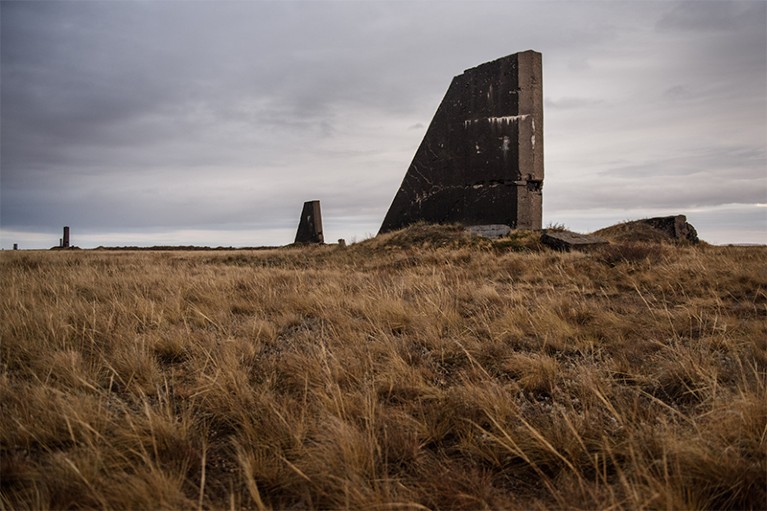
The ruins of Semipalatinsk remain a stark physical reminder of what the nuclear arms race once meant.

Between 1949 and 1989, explosions equivalent collectively to thousands of Hiroshima-sized bombs were detonated at the site, according to UN documentation. Communities surrounding the testing ground were exposed to radioactive fallout whose health and environmental effects endured long after the final explosion.

https://carnegieendowment.org/static/media/images/202202-6_The_Polygon_Today_33b49796-1b2c-4d3a-8ef0-6115c00ec1ea.jpg
https://media.nature.com/lw767/magazine-assets/d41586-019-01034-8/d41586-019-01034-8_16584232.jpg
https://images.openai.com/static-rsc-4/b6sxixKLUqfoYNSln1Pn2JdYJ9xLLrsDhJpLVUNos6HjOBJLZNqQu0q97BTWGHq5uCHbztbtLhWgFa45sqWCwz0E50NBb0tW-cN8NKto3giq_gJ8wnvbpnd1h2hPnTlZDUiGicaWHhtvTxO310c5-izcoMmjUnBh8FUrSpqITsiY0q4IGM7wbGCm5-FYcttp?purpose=fullsize

Kazakhstan has sought to transform that legacy from one of victimhood into one of diplomacy.

Semipalatinsk's closure was followed by the relinquishment of nuclear weapons, Kazakhstan's participation in the Central Asian Nuclear-Weapon-Free Zone and its persistent advocacy of nuclear disarmament.

But Tokayev's latest message contains an uncomfortable implication.

The political assumptions that allowed the world to move progressively away from nuclear testing after the Cold War cannot simply be taken for granted.

The CTBT is now 30 years old and still awaits entry into force. Relations between the major nuclear powers are deeply strained. Nuclear weapons have again assumed a conspicuous place in geopolitical confrontation.

Against that background, Kazakhstan's argument has an unusual moral force.

Few countries have experienced nuclear testing on the scale Kazakhstan did. Fewer still subsequently possessed nuclear weapons and voluntarily relinquished them.

Thirty-five years after the gates of Semipalatinsk were closed, Tokayev is effectively asking the world's nuclear powers to remember why they were closed in the first place.

The message from Astana is straightforward: nuclear deterrence may remain part of international politics, but nuclear testing does not have to be — and dialogue between nuclear powers is more essential when relations are deteriorating, not less.

For Europe, confronting war on its eastern frontier while simultaneously reconsidering energy security and strategic autonomy, that is a message worth hearing.

  •  

Update from Foreign Affairs and Trade Minister Helen McEntee on Ireland’s EU Presidency

Foreign Affairs and Trade Minister Helen McEntee TD has provided an update on Ireland’s Presidency of the Council of the European Union, highlighting progress made during its first two months and the Government’s focus on delivering practical results for people, communities and businesses.

Since Ireland assumed the Presidency on 1 July, work has advanced across its three core priorities of competitiveness, values and security.

Early achievements include renewed momentum on EU enlargement, agreement on a further package of sanctions against Russia, progress on measures to better protect children from sexual abuse online, and advancing measures aimed at strengthening Europe’s competitiveness.

Over the coming months, Ireland will lead negotiations and discussions on some of the biggest issues facing Europe, including the next EU budget, reducing unnecessary regulatory burdens on businesses, supporting sustainable and competitive agriculture, strengthening communities and regions through cohesion funding, and improving road safety.

Minister McEntee said: “We began this Presidency with a clear objective: to use Ireland’s six months leading the Council to deliver practical results that make a difference to people’s lives.

“That means making it easier for Irish and European businesses to grow, invest and create jobs. We are committed protecting children online, supporting our farmers and rural communities, strengthening Europe’s security and standing firmly with Ukraine. And we are making every effort to ensure that the European Union remains competitive in a rapidly changing global economy.

“We have made real progress during our first two months. There is a great deal more work ahead of us, but Ireland is now in a strong position to secure important agreements before the end of the year.”

The Presidency meetings programme will return to full pace following the summer period.

On Monday and Tuesday (31 August-1 September), Minister McEntee will host EU Defence Ministers in Co. Wicklow for an informal meeting chaired by the EU High Representative for Foreign Affairs and Security Policy, Kaja Kallas.

She will also host EU Foreign Ministers in Wicklow on Tuesday and Wednesday (2 SEptember) for the traditional informal “Gymnich” meeting.

These are among 16 informal meetings of EU Ministers being hosted in Ireland up to the end of November. Ministers will meet across the country to advance work in areas including energy, housing, health, consumer protection, competitiveness and security.

Minister McEntee said: “Measures at a European level have a direct impact here at home. They affect the cost of doing business, the security of our energy supply, the opportunities available to our farmers and exporters, and our ability to respond to challenges such as war, economic instability and technological change.

“The Presidency provides Ireland with an opportunity to shape these decisions and to push for solutions that deliver for people right across Ireland and the EU.

“We are also bringing these meetings beyond Dublin. Communities across Ireland are hosting thousands of visitors during our Presidency and are showcasing all that Ireland has to offer to our European partners.”

The Presidency is also providing opportunities for people across Ireland to engage directly with the European Union and Ireland’s role within it.

Through the Presidency County Pairings Programme, each EU Member State has been paired with an Irish county, with events and initiatives taking place throughout the autumn to strengthen links between communities in Ireland and across Europe.

New resources for schools will also be launched in September, including a children’s version of the Presidency Policy Programme for primary school pupils and a reading guide aimed at Transition Year students.

Minister McEntee said: “EU membership has transformed Ireland. It has helped create jobs and investment, opened opportunities for Irish businesses and our young people, supported our farmers and communities and given Ireland a much stronger voice in the world.

“Our Presidency is an opportunity to bring that European story closer to communities across the country.

“I want people, and especially our young people, to understand that Europe is not something distant that happens in Brussels. The decisions we make together affect our jobs, our economy, our security and the opportunities available to the next generation.

“The Presidency County Pairings Programme and our work with schools are about ensuring that people across Ireland can participate in this Presidency and strengthen the relationships with our European partners that have served Ireland so well.”

Details of the Presidency policy programme, the calendar of Presidency meetings and events, and other updates are available on the Irish Presidency website at www.eire2026.eu and www.ireland2026.eu.

  •  

Chad bombing reignites debate over Turkey’s role in the Sudan war

Sudan's war has entered a more dangerous phase after fighting spilled across the country's borders, raising fresh concerns about the conflict's regional consequences, writes Mohsin Osman.

The Chadian army accused the Sudanese Armed Forces (SAF) of carrying out an airstrike against a convoy inside Chadian territory. According to the Chadian General Staff, the attack occurred at about 8 p.m. on August 20 in the Mourdi department of Ennedi-Est province, near the Sudanese border. It said aircraft and drones believed to belong to the SAF or its allies pursued and struck the convoy more than 100 kilometres inside Chad. The convoy was reportedly carrying reinforcements for the Rapid Support Forces (RSF), which the Sudanese army regards as a rebel group.

The US has since condemned the airstrikes, calling for an end to external forces supporting the conflict. Massad Boulos, the US president's senior adviser for Arab and African affairs, said the US government opposed the expansion of violence beyond Sudan's borders and stressed that there is no military solution to the conflict.

“The parties must immediately accept a humanitarian truce, protect civilians, and allow unhindered humanitarian access,” he said.

Bolous also called for the expansion of the UN arms embargo, currently focused on Darfur, to cover the whole of Sudan, while accusing foreign powers of escalating the war.

“The UN Security Council must also act with urgency to ensure that the arms embargo and sanctions regime reflect the realities of the conflict today and hold those fueling and expanding this war accountable. External financial and military support to the warring parties must stop,” he said.

The US has also warned that external support was escalating the war, just as that the growing use of armed drones was obstructing the peace process.

The war began on April 15, 2023, when fighting erupted between the Sudanese Armed Forces (SAF) and the Rapid Support Forces (RSF) amid a deepening power struggle over Sudan’s political transition and the proposed integration of the RSF into the regular army. It has continued despite repeated ceasefire efforts and international initiatives to end the conflict.

The recent strike in Chad has now brought into sharper focus how far the war is spreading and how much the SAF's expanding aerial capabilities depend on foreign support, especially with the presence and prominent use of Turkish drones.

French report highlights Turkey's involvement

French newspaper Le Monde reported that Turkey has emerged as the Sudanese army's principal military supporter since the war began. The report said the Turkish government supplied Bayraktar TB2 and Akıncı drones and deployed instructors alongside them. It also reported that Saudi Arabia financed purchases of Turkish drones and Pakistani weapons for the SAF.

The report comes on the heels of Turkey's deepening political relationship with Sudan's military leadership. On August 7, Saudi Arabia, Turkey and Pakistan signed the Makkah Joint Defense Agreement, which provides that an armed attack against any one of the three countries would be regarded as an attack against all three.

According to Le Monde, cooperation among the three countries over Sudan predates the agreement, with Riyadh financing Turkish drones and Pakistani weapons for the SAF. The newspaper also reported a $1.5 billion Pakistani arms contract involving fighter jets, armoured vehicles and drones.

Since late 2024, Turkish-made Bayraktar TB2 and Akıncı drones have reportedly become part of the Sudanese army’s expanding aerial arsenal. The SAF has also used Iranian-made Mohajer-6 drones, while Chinese-made CH-95 and FH-95 systems have been deployed by the RSF, reflecting the growing role of foreign-supplied drone technology in Sudan’s war.

While there is no concrete evidence that a Bayraktar drone carried out the specific strike inside Chad, the presence of Turkish military technology in the Sudanese conflict is increasingly well documented.

In March 2025, The Washington Post reported that Turkish defence company Baykar had supplied the Sudanese army with at least $120 million worth of military equipment, including TB2 drones and hundreds of warheads. The investigation, based on contracts, correspondence, registries and visual material, also documented Baykar personnel providing technical support in Sudan.

In May 2026, Chatham House examined reports of Turkish drone supplies to the SAF while noting Ankara's denial of direct deliveries. The relationship took on a clearer political dimension in June, when President Recep Tayyip Erdoğan met army chief Abdel Fattah al-Burhan in Ankara. The Turkish presidency said the two countries were seeking to expand cooperation in trade, agriculture, energy and defence.

This places Turkey's role in Sudan beyond the question of individual drone deliveries. Turkey is deepening ties with the military leadership while presenting itself as a diplomatic actor in the conflict.

Beyond the current battlefield, Turkey's relationship with Sudan dates back decades. But Erdoğan's 2017 meeting with Omar al-Bashir and the agreement to redevelop Suakin underscored Ankara's strategic interest in Sudan's Red Sea coast.

The potential economic stakes here are also substantial. Sudan's eventual reconstruction will require major investment in infrastructure, energy, agriculture and other sectors, while its Red Sea coastline and mineral resources offer significant strategic and commercial opportunities.

Foreign powers are therefore increasingly shaping not only how the war is fought but also the interests that will surround Sudan after the fighting ends. Turkey's expanding relationship with the SAF is part of that wider contest, while the strike inside Chad shows how increasingly difficult it is to contain the war's consequences within Sudan.

  •  

Inside Kazakhstan’s new political era: EU Reporter journalist Derya Soysal questions President Tokayev after historic Kurultai vote

EU Reporter journalist Derya Soysal was among the members of the press given direct access to President Kassym-Jomart Tokayev in Astana after he cast his vote in Kazakhstan’s first elections to the newly established Kurultai — an opportunity that offered a rare first-hand insight into the President’s thinking on political reform, government, youth, artificial intelligence and the country’s future direction.

For a journalist covering the rapidly changing political landscape of Central Asia, there are moments when being in the room matters.

For EU Reporter journalist Derya Soysal (pictured with President Kassym-Jomart Tokayev) Kazakhstan’s historic Kurultai election provided precisely such an opportunity.

After President Kassym-Jomart Tokayev cast his vote in the country’s first election to the newly established Kurultai, Soysal was among the journalists with privileged access to the President during the press briefing that followed.

It gave EU Reporter a first-hand opportunity to hear Tokayev address some of the most important questions facing Kazakhstan as the country enters a new political chapter.

The exchanges went far beyond election day itself.

Questions ranged from the consequences of constitutional reform and the creation of the Vice Presidency to the future composition of the government, the role of younger politicians and the increasingly important place of artificial intelligence in Kazakhstan’s economic and social development.

The result was a revealing picture of how Tokayev sees the next phase of his country’s transformation.

A historic political moment

Tokayev himself described the election as a historic milestone and the beginning of a new stage in Kazakhstan’s development.

The establishment of the Kurultai forms part of a much broader restructuring of the country’s political institutions.

During the briefing, the President was questioned about what ordinary citizens should expect from the constitutional reforms, how the newly created Vice Presidency would operate and what role the Kazakhstan People’s Council would play.

Tokayev portrayed the changes as essential components of a renewed political system.

He stressed the importance of the Vice Presidency as an institution capable of supporting effective governance during difficult periods, while describing the Kazakhstan People’s Council as a mechanism intended to strengthen public participation and national cohesion.

But the President’s vision was not restricted to political architecture.

He also pointed to ambitious infrastructure and development programmes encompassing healthcare facilities, rehabilitation centres, urban modernisation and environmental projects.

The question everyone wanted answered

Among the most politically sensitive questions put to Tokayev concerned his own future.

Could he stand again for President?

Following recent constitutional developments concerning his eligibility for a future presidential election, journalists pressed Tokayev on whether he intended to seek another term.

His response was deliberately cautious.

While acknowledging that the legal possibility exists, Tokayev rejected speculation about a future campaign as premature.

Instead, he argued that Kazakhstan should be concentrating on the immediate challenges of modernisation, economic growth, social development and stability in an increasingly unpredictable international environment.

It was a response that sought to move attention away from political succession and back towards the governing agenda.

What kind of politicians does Kazakhstan need?

Soysal’s access to the presidential briefing also provided an opportunity to hear Tokayev set out his expectations of the people who will serve in the new political institutions.

Asked what qualities Kurultai deputies should possess, the President emphasised responsibility and accountability.

Members, he said, should be judged by the quality of the legislation they adopt, whether they fulfil promises made to voters and whether the programmes they pursue genuinely contribute to Kazakhstan’s development.

A recurring theme throughout the briefing was generational change.

Tokayev again argued that Kazakhstan needs younger people to play a greater role in public life.

New faces and new thinking, he suggested, will be essential if the country is to maintain momentum in the years ahead.

A new government — but not change for change’s sake

The creation of the Kurultai also has consequences for the government.

Journalists therefore questioned Tokayev about the future administration and whether Kazakhstan should expect major personnel changes.

The President praised the work of the existing government but confirmed that changes would come.

At the same time, he cautioned against replacing officials simply to create the appearance of political renewal.

For Tokayev, modernisation appears to mean continuous institutional renewal rather than political theatre: bringing in new energy and expertise where necessary while retaining effective administration.

Was the election genuinely competitive?

Another important exchange concerned political competition.

Asked whether the campaign had demonstrated genuine competition, Tokayev pointed to televised debates, public engagement and particularly strong interest among younger voters.

He characterised the electoral process as another milestone in Kazakhstan’s continuing political modernisation and said the campaign had brought new political voices and new ideas into public debate.

For an international audience, however, the question of political pluralism remains one of the key issues against which Kazakhstan’s reforms will ultimately be judged.

The significance of the new institutions will therefore depend not only upon their constitutional design, but on how independently and effectively they operate in practice.

The generation that will inherit Kazakhstan

Young people repeatedly returned to the centre of the discussion.

With a significant number of younger candidates participating in the electoral process, Tokayev was asked whether this generation could genuinely transform the country’s political system.

His answer was notable for combining optimism with a measure of realism.

He acknowledged that not every young official promoted into senior positions in recent years had been successful.

Nevertheless, Tokayev insisted that Kazakhstan must continue putting its confidence in younger generations.

For a country with a comparatively young population, he suggested, long-term success will depend heavily upon the responsibility, engagement and leadership of its youth.

Politics is also about culture

Some of the most revealing exchanges witnessed by Soysal moved beyond constitutions and elections.

Tokayev was questioned about his repeated calls for greater civic responsibility, discipline, respect and public ethics.

The President argued that national modernisation cannot be measured solely in economic growth rates or institutional reforms.

It also requires changes in behaviour and public culture.

He connected those ideas with the Taza Kazakhstan initiative, explaining that cleanliness should be understood both literally and symbolically — encompassing respect for public spaces but also ideas of dignity, moral responsibility and civic consciousness.

From smartphones to artificial intelligence

Perhaps the most forward-looking discussion concerned Kazakhstan’s digital ambitions.

Artificial intelligence has become a central part of Tokayev’s political and economic agenda.

Asked to assess progress in digitalisation, the President argued that Kazakhstan had already completed an important first stage in constructing a digital state by making electronic public services widely accessible.

Citizens can now carry out administrative tasks from home that once required lengthy bureaucratic procedures.

But Tokayev made clear that he regards this as only the beginning.

The next challenge, he said, is to move artificial intelligence and digital technology beyond conferences, presentations and policy documents and turn them into instruments that deliver practical economic benefits.

He highlighted entrepreneurs, farmers and regional communities as groups that should increasingly be able to use technology to improve productivity and generate income.

His message was strikingly simple: the smartphone should no longer be regarded merely as an entertainment device but as an instrument of economic opportunity.

The value of being in the room

For EU Reporter, Soysal’s participation in the presidential briefing provided something increasingly valuable in international reporting: direct access to the political decision-maker at the centre of the story.

Rather than interpreting Tokayev’s position through official statements alone, she was able to witness at first hand how the President responded when confronted with questions about political succession, institutional change, government performance and the expectations of Kazakhstan’s younger generation.

Soysal’s access is particularly significant at a moment when Kazakhstan is seeking to redefine both its domestic political institutions and its place internationally.

The country occupies an increasingly important strategic position between Europe and Asia, while its economic, energy and diplomatic relationships with the European Union continue to develop.

Understanding the direction Kazakhstan takes therefore matters well beyond its own borders.

A country debating what comes next

What emerged from the presidential exchange in Astana was not simply a discussion about one election.

It was a debate about what kind of Kazakhstan should emerge from the reforms now under way.

How much influence will the new institutions exercise?

Will younger politicians genuinely reshape public life?

Can artificial intelligence translate into economic opportunity outside Kazakhstan’s major cities?

And how far will political modernisation alter the relationship between the state and its citizens?

Those questions will not be answered by one election or one presidential press briefing.

But Derya Soysal’s privileged position inside that briefing gave EU Reporter readers a valuable first-hand view of how Kazakhstan’s President himself answers them.

As the first Kurultai begins its work, the importance of the election may ultimately be judged not by the symbolism of its creation, but by what Kazakhstan’s new political institutions actually deliver.

For the moment, however, one thing is clear: the country has entered a new phase, and the political conversation about what comes next has already begun.

Derya Soysal is an EU Reporter journalist covering European and international affairs. She attended President Kassym-Jomart Tokayev’s press briefing in Astana following his vote in Kazakhstan’s first Kurultai elections.

  •  

Why Kazakhstan’s AI challenge might not be adoption, but capability

Kazakhstan is moving rapidly to position artificial intelligence at the center of its economic modernization strategy, investing in computing infrastructure, skills, startups and Kazakh-language technologies as governments worldwide compete for a place in the emerging AI economy, writes Assel Satubaldina.

Kazakhstan has an increasingly ambitious AI agenda. The government has made AI part of its broader economic modernization strategy, betting that it can improve public services, attract investment and help the country generate more value beyond its traditional reliance on raw materials.  It has been investing heavily in computing infrastructure, training, startup ecosystems, and Kazakh-language models. At the 38th plenary session of the Foreign Investors’ Council in July, President Kassym-Jomart Tokayev explicitly called the integration of AI into state investment policy a “critically important priority”. 

The government has adopted a Digital Code and a law on artificial intelligence, launched the Digital Qazaqstan strategy, established a Ministry of Artificial Intelligence and Digital Development, and designated 2026 as the Year of Artificial Intelligence and Digital Development. This push comes at a time as AI is becoming both a major global industry and an increasingly important source of economic and strategic power. UN Trade and Development estimates the global AI market will rise from $189 billion in 2023 to $4.8 trillion by 2033. This is a 25-fold increase in just a decade. 

Globally, AI push is concentrated among a handful of countries. U.S. private AI investment alone reached nearly $286 billion in 2025, more than 23 times the level in China, according to Stanford University’s 2026 AI Index.  Global corporate AI investment more than doubled in 2025, while private companies produced more than 90% of the year’s notable AI models. For emerging economies, the concentration of AI infrastructure in a small number of countries can make this race appear expensive, not to mention that training large language models requires massive quantities of computing power, electricity, connectivity and capital. Kazakhstan is unlikely to compete with the United States or China at the most capital-intensive layer of the AI industry nor does it need to. Experts say its opportunity lies in combining global AI technologies with domestic expertise, while building its own capabilities in areas where dependence creates economic or strategic vulnerabilities.

Strong foundation
The country’s AI push builds on years of its experience of deploying digital technologies at a scale. Advanced technologies are increasingly embedded in government services and banking. “Right now, especially in the artificial intelligence applications in fintech, Kazakhstan is one of the most progressive countries in the world,” Huseyin Atakan Varol, dean of the School of Computing and Artificial Intelligence and director of the Institute of Smart Systems and Artificial Intelligence at Nazarbayev University, told The Astana Times.  He pointed to technologies including palm-recognition authentication and AI-powered banking assistants as examples of how quickly digital tools have entered everyday life. International indicators tell a similar story but also expose an important weakness.

Kazakhstan ranks 10th globally for online government services, according to figures from the World Intellectual Property Organization. Yet it ranks 115th for university-industry collaboration and 112th for venture-capital deal activity relative to the size of its economy. Dr. Varol said Kazakhstan still allocates a relatively small share of its economy to research and development, with the government providing most of that funding. While spending on science has increased in recent years, spending on research and development does not reach 1%.  “Nearly all of this allocation comes from the state, very little from the private companies,” he said. “So basically, industry, academia, government interaction, the triple helix structure is not yet fully working in Kazakhstan.”

That may prove to be one of the important constraints on Kazakhstan’s AI ambitions. While the government can establish institutions, purchase computing infrastructure and train specialistics, building a durable innovation economy requires more. Alem.AI center in Astana is intended to help close that gap by connecting education, research, startups and companies.  “We have some real and simple goals. The first one is to build a community of professionals, who not just use but understand what AI actually is. It means that we train different categories,” Alyona Slavkina, head of the Alem.AI Development Office, told The Astana Times. 

The community is supposed to include schoolchildren, students, working professionals, researchers and entrepreneurs. The idea is to create a pathway from first exposure to AI to education, research and eventually the development of commercial products. The challenge, however, is that AI is evolving faster than conventional education systems. Olzhas Urazalin, head of Tomorrow School, said technologies and development tools can change within months, while formal academic programs often require years to adapt. “Many graduates have strong theoretical knowledge, but very limited experience working with modern AI tools, real data sets, and product development.

\This indeed creates a gap between learning and creation. Young specialists often learn how to use existing AI solutions, but they rarely get the opportunity to understand how these systems are built, or how to develop new ones,” Urazalin said.  Tomorrow School is built around an alternative model. Students learn primarily through projects rather than conventional lectures and work on real problems brought into the curriculum by businesses. The program is free, runs for 18 months and is open to applicants without traditional technology backgrounds. “In my opinion, Kazakhstan must focus on developing, first of all, creators, not only consumers of AI technology,” he said, highlighting talent, infrastructure, and international collaboration as priorities. 

Development pathways
Dr. Varol describes two broad pathways for technological development. One is indigenous development, which requires substantial investment, time and a long-term commitment. The other is what he calls “technological piggybacking,” adopting technologies already developed elsewhere. For Kazakhstan, Varol said that generative AI requires elements of both approaches.  “We have been also debating and discussing a lot about what is the best strategy for Kazakhstan, especially in the development of generative AI technologies. Our internal deliberations always pointed out that we must develop these technologies indigenously as well,” he said. 

Varol also stressed that developing domestic capabilities is not only about owning a model, but also about creating a pool of specialists with expertise who can later move into startups, established companies and new commercial products. Recent events also demonstrated that access to foreign technologies can become subject to government restrictions. In June, the US government temporarily imposed export controls barring foreign nationals from accessing Anthropic’s Fable 5 and Mythos 5 models, including foreign-national employees of Anthropic itself.  “Creators of these technologies can stop your access to these technologies and this creates a very big dependence risk,” said Dr. Varol. 

Technological sovereignty, however, should not be confused with technological self-sufficiency. Mohamed Eissa, chief investment officer at the International Finance Corporation, emphasized that this explains why emerging markets are unlikely to compete directly at that layer of the industry.  “You are not seeing LLMs [large language models] being developed in emerging markets because you need compute, connectivity, power,” Eissa said. “Those things are big infrastructure gaps in emerging markets.” But he draws an important distinction between building AI infrastructure and using AI.

He pointed to a rapidly growing AI company in content creation that originated from Kazakhstan as an example. “But using AI in emerging markets, you don’t need to build that to be able to use it. That is an opportunity in emerging markets: finding innovative people who have really good ICT skills, have focused on a business problem and now have the tools to compete with Silicon Valley,” he said during The Development Podcast on the World Bank Group YouTube channel. 

That may be one of the most important opportunities for Kazakhstan. According to him, in emerging markets, the much larger opportunity may be the application of AI to businesses that already exist. Likewise, in Kazakhstan, potential economic impact of AI should not be measured only by how many programmers, AI startups or research laboratories the nation generates, but rather by whether this technology raises productivity gains across the wider economy. 

Existing strengths
Dr. Varol said some of the applications of AI lie in sectors where the country already has an expertise. Mining, energy and logistics are among them.  “Kazakhstan is one of the richest countries with respect to mining and natural resources, but most of these natural resources are exported with a small amount of added value to other countries,” he said.  Using AI and digital technologies in those industries, he noted, could allow Kazakhstan to generate more value from resources before they leave the country. Where dependence matters  There are areas, however, where Kazakhstan has stronger reasons to maintain domestic capabilities. Dr. Varol said questions about where information is processed and stored become significantly more consequential when AI systems are used by companies or public institutions.

“In general, I believe this is also very important with respect to the sovereignty aspects of a country,” he added.  Language presents a different form of dependence. Global AI systems are trained on enormous quantities of data, but languages are represented very unevenly in those datasets.  Dr. Varol said approximately half of publicly accessible internet content is in English, compared with only around 0.03% in Kazakh. That means developing Kazakh-language AI starts long before a model is trained. ISSAI, which was founded in 2019, has developed the country’s first LLM in 2024. Drawing on the institute’s experience, Dr. Varol explained that researchers first need to collect texts and other data, remove poor-quality material, organize the information and convert it into formats suitable for machine learning. Researchers faced another problem once a model has been trained on how to determine whether it actually understands the language. “Because the internationally accepted method for doing this is called model benchmarking and all model benchmarks are in English language or Chinese language, but none were in Kazakh language. Basically, we also have created a suite of benchmarking data sets,” he said. 

The development of Kazakhstan’s LLM illustrates another benefit of indigenous AI development. The process itself creates capabilities. The team had to recruit and train specialists while learning to operate multi-node AI computing infrastructure, expertise that had not previously been used at that scale. The significance of the project therefore extends beyond the model it produced. It helped build a domestic pool of engineers with experience in the infrastructure and workflows required for advanced AI development. Kazakhstan’s AI strategy therefore does not require choosing between complete technological independence and reliance on global platforms. The more realistic task is to determine which capabilities the country needs to control, which technologies it can efficiently import and where AI can create the greatest economic value.

  •  

Commission clears acquisition of joint control of Eurowind Energy by Norlys, EWH and Blackstone

The European Commission has approved, under the EU Merger Regulation, the acquisition of joint control of Eurowind Energy A/S by Norlys a.m.b.a. and EWE Holding ApS (‘EWH'), all of Denmark, and Blackstone Inc. of the US.

The transaction relates primarily to the development, construction, and operation of wind and solar farms in Europe, the wholesale of electricity, the provision of electricity balancing and ancillary services, as well as the development of renewable energy solutions.

The Commission concluded that the notified transaction would not raise competition concerns, given the companies' limited market positions resulting from the proposed transaction. The notified transaction was examined under the simplified merger review procedure.

More information is available on the Commission's competition website, in the public case register under the case number M.12473.

  •  

Top trade in goods partners in Q2 2026: US and China

In the second quarter of 2026, the EU imported €701.8 billion in goods from non-EU countries and exported €680.0 billion. Compared with the previous quarter, both imports and exports increased, by 9.9% and 5.4%, respectively. Compared with the second quarter of 2025, imports increased by 11.7% and exports by 4.5%.

China was the EU’s largest supplier, accounting for €153.6 billion (21.9% of all imports). The United States came second (€98.7 billion; 14.1%), followed by the United Kingdom (€43.4 billion; 6.2%), Switzerland (€36.9 billion; 5.3%) and Türkiye (€25.5 billion; 3.6%). 

The EU increased imports from the United States (+11.5%), the United Kingdom (+8.8%), China (+7.9%) and Switzerland (+2.1%) compared with the second quarter of 2025, while imports from Türkiye declined slightly (-0.6%).

Click to enlarge

Main EU partners for trade in goods, Q2 2025 and Q2 2026  (€ billion, seasonally adjusted data). Chart. See link to the full dataset below.

Source dataset: ext_st_eu27_2020sitc

The EU exported €127.7 billion of goods to the United States, making it the EU’s main export destination (18.8% of all exports). The United Kingdom came second with €92.7 billion (13.6%), followed by Switzerland (€60.5 billion; 8.9%), China (€50.3 billion; 7.4%) and Türkiye (€27.3 billion; 4.0%).

Exports to Switzerland rose sharply (+16.1%) compared with the same quarter of 2025. Exports to the United Kingdom (+5.6%) and China (+2.8%) also increased, while those to the United States (-5.6%) and Türkiye (-4.9%) decreased.

For more information

  •  

Romania receives first €2.5 billion payment under SAFE defence instrument

On 26 August, Romania received its first payment of €2.5 billion under the Security Action for Europe (SAFE) defence instrument, representing 15% of its total allocation of €16.7 billion.

SAFE is a €150 billion financial instrument providing loans to member states. It primarily funds joint procurement of ammunition, missiles, air defence, and ground combat systems produced within the EU. It is part of the European Commission's ReArm Europe/Readiness 2030 plan, which aims to unlock over €800 billion in defence investment across the European Union.

The pre-financing will help Romania accelerate priority defence investments, strengthen resilience, and modernise its military capabilities in line with shared European goals. SAFE is designed to enable swift, co-ordinated action, improve the ability of European forces to work together, and strengthen Europe's defence industry, including through joint procurement and closer cross-border co-operation.

Defence and Space Commissioner Andrius Kubilius (pictured) said: "Today's €2.5 billion payment to Romania under SAFE is a major milestone for European defence and a more sovereign Europe. This funding will strengthen Romania's defence capabilities and industrial base, while contributing to Europe's overall security. SAFE is a clear demonstration of our strong commitment to European security, and to the resilience and to defence of our Eastern Flank."

This payment follows the completion of all required procedural steps and reflects the EU's commitment to providing timely, practical support through SAFE. Further payments will follow, as agreed milestones and implementation are met.

The SAFE instrument is financed by EU borrowing on the financial markets. This enables competitively priced and attractively structured long-duration loans to requesting Member States. The terms of the SAFE loans benefit from the EU's strong credit rating.

  •  

Statement by the spokesperson on the designation of the website and social media channels of EU-funded initiatives and programmes as ‘extremist information sources’

The recent decision of the Lukashenka regime to designate the websites and social media of EUvsDisinfo, of the EU-supported SALT and “Education for Belarusians” programmes, and of Lithuania’s Central Project Management Agency (CPVA) as “extremist information sources” is yet another example of the regime’s systematic efforts to suppress critical thinking, restrict fundamental freedoms and shrink civic space. The European Union strongly condemns such actions.

This unjustified decision seeks to restrict Belarusians’ access to independent information and educational opportunities. EUvsDisinfo works to raise awareness of disinformation and information manipulation, while the SALT and “Education for Belarusians” programmes have enabled Belarusian students and researchers to study and advance their work in Europe. These initiatives reflect the EU’s commitment to supporting the Belarusian people and maintaining people-to-people contacts. 

We call on the Belarusian regime to reverse this decision without delay and end their ongoing repression of the Belarusian people. 

The EU will continue to stand with the Belarusian people and support their right to unbiased information and opportunities for them to study, learn and work in an environment of academic freedom.

  •  

EU approves €20 million relief scheme for Italian region’s agriculture and fisheries companies

The European Commission has approved a €20 million state aid scheme for agricultural and fishing companies in the Italian region of Friuli Venezia Giulia that are facing increased fuel and fertiliser prices due to the Middle East crisis. The scheme was approved under the Middle East Crisis Temporary State Aid Framework (METSAF) adopted by the Commission on 29 April 2026.

The scheme, which will run until 31 December 2026, aims at mitigating the impact of the increase in agricultural fuel and fertiliser prices, as well as in fishery and aquaculture fuel prices. The aid will take the form of direct grants and subsidised loans. It will be determined on the basis of the size of land used for the primary production of agricultural products, and on the basis of estimates of fuel consumption in the primary production of fishery and aquaculture products, capped to €50,000 per beneficiary. The aid is paid by the autonomous region of Friuli Venezia Giulia.

The Commission assessed the scheme under EU State aid rules, in particular Article 107(3)(c) of the Treaty on the Functioning of the EU, which enables member states to support the development of certain economic activities subject to certain conditions, as well as Sections 1 and 2.1 of the METSAF. The Commission found that the scheme is in line with the conditions set out in the METSAF. In particular, aid will be granted based on a scheme with a clear estimated budget and will be provided to temporarily support the development of companies active in primary production of agricultural products. The Commission concluded that the scheme is necessary, appropriate and proportionate to facilitate the development of an economic activity and does not adversely affect trading conditions to an extent contrary to the common interest. On this basis, the Commission approved the Italian regional scheme under EU state aid rules.

For more information

  •  

Tram Experience in Brussels offers sights to savour

Fancy a novel way of dining out – one that provides a delicious meal while viewing the sights of the “capital of Europe”?

If so, the Tram Experience in Brussels could be just for you.

The Tram Experience is a unique rolling gourmet restaurant set inside a beautifully converted historic STIB-MIVB tram.

Diners enjoy a multi-course meal while slowly cruising through boulevards and scenic neighbourhoods of southern and eastern Brussels (such as Louise, Merode, and the Tram Museum).

Menus are designed by renowned and Michelin-starred Belgian chefs, featuring high-end reinterpretations of local cuisine. Dishes are prepared and served fresh on board.

A new season of the Tram Experience returns this week, on Friday 28 August. The menus for the new season will be created by some of the biggest names in Belgian gastronomy.

Among them are the promising David-Alexandre Bruno (Quartz), who will join Michelin-starred chefs such as Olly Ceulenaere (Publiek*) and Ricarda Grommes (Quadras*).

To mark 100 years of Comme Chez Soi*, three generations of chefs from the country’s most iconic restaurant, will be offering a celebratory menu especially for the occasion.

This season also sees the introduction of a new lunch package designed for large groups.

A spokesman said, “A trip aboard the Tram Experience is an unforgettable culinary experience.

“Whether as a couple, a group of four or a larger party, guests savour a menu created by a renowned chef whilst touring the capital’s most beautiful neighbourhoods.

“It’s the perfect choice for a romantic dinner in Brussels, a unique evening out with friends or an exclusive team-building event.”

The first names in the line up for the new season (running through early 2027) offer a wonderful glimpse of Belgian culinary excellence.

Building on the Tram Experience's popularity, this year visitors will also be able to enjoy a brand new lunch package designed especially for large groups looking to book the whole tram for a private event.

Belgian gastronomy’s leading names take centre stage and a number of iconic figures from the country’s three regions will feature this season.

David-Alexandre Bruno, from Brussels, opens  proceedings. 

At the helm of the Quartz restaurant in Ixelles, chef Bruno captivates diners with cuisine that combines technical precision and elegance. This approach earned him the title of Young Chef of the Year 2026 for Brussels in the latest edition of the Gault & Millau guide.

He has devised the menu that will be served on board the tram until 11 October.

Other renowned chefs have been announced.

Olly Ceulenaere, from Michelin-starred Ghent restaurant Publiek*, will be designing the menu to be served from 2 February to 21 March.

His exciting and unpretentious approach is sure to leave a lasting impression on diners.

From 23 March to 9 May, the spotlight turns to Ricarda Grommes, head chef at another Michelinstarred establishment, the highly acclaimed Quadras* in Saint-Vith.

Famous for her creativity, which draws on influences from a wide range of sources, she will be serving up cuisine as inspired as it is innovative.

The centenary of Comme Chez Soi December and January will also be marked.

A true institution on the Brussels gastronomic scene, the restaurant on place Rouppe has held Michelin stars without interruption for over 70 years.

To celebrate this exceptional anniversary, Pierre Wynants, the “godfather” of Belgian gastronomy, will join forces with his son-in-law and current head chef, Lionel Rigolet, as well as his grandson and future head chef, Loïc Rigolet, to create a unique festive menu.

Every year, the Tram Experience serves around 8,500 guests.

In light of the concept’s growing success, an additional set menu will now be available on weekdays.

In addition to the 6- or 7-course dinner menus, a 4-course lunch menu is being introduced.

This option is exclusively for large groups booking the entire tram for private use.

The menus are prepared on board, with the utmost care, by Thibault Granville (Taste Great) and his team.Bookings are for 2 or 4 people. It is also possible to book the entire tram (36 seats) or a single carriage (16 or 20 seats) for an event or a team-building activity.

More info

  •  

Kassym-Jomart Tokayev: We are a nation of winners, not history blamers

  • Kazakhstan President Kassym-Jomart Tokayev outlined key priorities for Kazakhstan's education system at the annual August Conference of Teachers. Qazinform News Agency summarized the main points of his speech.

Based on the objectives outlined by the head of state, schools must simultaneously deliver quality education, foster self-confident individuals, and prepare young people for the new opportunities of the digital economy.

More schools, less shortage

Among the top priorities, the President identified the continued building of high-quality schools in all regions, particularly in areas still facing a shortage of school places.

"This is a pressing task of national importance. From next year, it is necessary to begin this work without any delays. Next year, we must ensure rapid construction," he instructed.

Reform is not an experiment

President Tokayev also addressed the numerous changes taking place in the education system.

"We must stop empty, content-free reforms done for the sake of reforms. In other words, reforms and changes are certainly indispensable, but they should not drain all the strength and stress out of teachers. Before implementing each reform – and this applies especially to education – we must conduct a comprehensive analysis and thoroughly verify it is effective," Kassym-Jomart Tokayev said.

Cutting red tape for teachers

The President also called for relieving teachers of excessive paperwork, meddlesome certification procedures, and unrelated workloads.

"Reports keep coming in about teachers being pulled into repair work and various public events that have nothing to do with the learning process. We agreed long ago that this is unacceptable. The Ministry of Enlightenment and regional akimats must focus on improving the legal and regulatory framework, building an effective learning process, and carefully analyzing curricula," he noted.

Raising a "nation of winners"

A significant portion of the Head of State's speech was dedicated to educating children and youth. In his view, the education system must foster confident individuals capable of overcoming challenges.

"It is the duty of teachers to nurture new generations of optimists – not those consumed by sorrow, insecure, and spreading seeds of depression. We are a nation of winners, ready to overcome all difficulties and threats, looking confidently only forward, believing in a bright future – not searching for the causes of tragedies, defeats, failures, or psychological complexes in our historical past or in other states and peoples," President Tokayev emphasized.

Rethinking historical narratives

The President also pointed to the need to revise educational materials, which, he said, contain unreliable facts and mythologized heroes.

"Raising children in a spirit of patriotism by spreading false, fabricated information will inevitably undermine the moral backbone of our people. I have said many times that we must abandon the image and character of an eternally grieving nation.

Sorrow is a bad companion for our youth. I can tell you that for sure. Our young people must understand their people's history correctly and look to the future with hope and confidence," Kassym-Jomart Tokayev underscored.

Digital protection for children

The Government is entrusted with fast-tracking legislation banning under-16s from social media (a bill already submitted to Parliament in June) and to step up content filtering.

The President stressed that relying solely on parental responsibility is not enough, and called for scaling up mandatory children's SIM cards as a tool for "informational immunity."

AI as a tool for earning

Tokayev also announced that in his upcoming State of the Nation Address, he will set the goal of involving young people, including those in rural areas, in using digital tools and AI to generate income.

"We are to transition from a digital state to a digital people's economy. In other words, artificial intelligence and its tools are not fun toys – they are means of making a living. That is how it should be. In higher education, an inter-university standard already exists that addresses the ethical, legal, and organizational aspects of AI use. The Government must introduce a similar standard in secondary and vocational education," the President instructed.

Key message

The President's core message is that education is not just a sector — it is a tool for shaping a modern individual: confident, not dwelling on past grievances, capable of earning income through digital technology, and protected by the state.

  •  

Commission approves €6.1 billion for Ukraine's defence

On Ukraine Independence Day (24 August), the European Commission approved €6.1 billion in new defence procurement for Ukraine. This funding covers air and missile defence systems, missiles, ammunitions and radars, reaffirming Europe's commitment to supporting Ukraine's defence and resilience against Russia's ongoing aggression. 

Ursula von der Leyen, president of the Commission: “On Ukraine's Independence Day, Europe shows our support is unfaltering and concrete. Today, we have approved €6.1 billion for the air and missile defence systems, missiles, ammunition and radars that Ukraine urgently needs. As Russia intensifies its attacks, we are stepping up to help Ukraine protect its people and defend its skies. Europe stands with Ukraine and we will deliver what it needs, when it needs it.” 

The funding, part of the €90 billion Ukraine Support Loan (UASL), comes as Russia escalates attacks with ballistic missiles and drones. With 376 missile strikes recorded in July alone, reinforcing Ukraine's defences has become increasingly urgent.  

The approval adds to €16 billion in already approved procurement plans, of which €8.35 billion has been disbursed, ensuring Ukraine receives critical supplies on time and at the required scale. 

Most procurements will source products from EU defence companies. Given Russia's intensified use of ballistic missiles and jet-engined drones, the Commission emphasises the need for a significant increase in EU deliveries through destocking, reprioritising orders and ramping up the production. 

Ukraine's ability to defend itself depends on the rapid availability of critical defence products. The UASL provides €30 billion for budgetary aid and €60 billion for defence across 2026-2027, including €28.3 billion in 2026 to strengthen Ukraine's defence industrial capacity. 

Next steps 

Ukraine can request payments by submitting contracts signed with defence companies. The Commission will review these contracts before disbursing funds to ensure the financial assistance is used for the procurements agreed with Member States and the Commission. 

Background 

In February 2026, the European Parliament and the Council adopted Regulation (EU) 2026/467, establishing the Ukraine Support Loan, providing up to €90 billion in support to Ukraine. This support has two complementary components: strengthening Ukraine's defence capabilities and defence industrial capacities, and support to maintain essential state functions, public services and economic resilience. 

Following Ukraine's submission of its Financing Strategy in March 2026, the Council adopted an implementing decision on 23 April 2026, allocating up to €45 billion for 2026. This includes €16.7 billion in budget support, split equally between the Ukraine Facility and Macro Financial Assistance, with each amounting to up to €8.35 billion, and €28.3 billion for defence industrial capacities. 

The defence component focuses on reconstructing and modernising Ukraine's defence technological and industrial base, while supporting its gradual integration into the European Defence Technological and Industrial Base. 

All funding decisions respond to Ukraine's evolving needs and are subject to agreed conditions and monitoring. Since 2022, the EU and its Member States have provided €220.2 billion in overall support to Ukraine, including €3.8 billion from the proceeds of immobilised Russian assets. 

For more information 

Ukraine Support Loan 

Regulation (EU) 2026/467 - Ukraine Support Loan for 2026 and 2027  

Commission implementing decision validating the use of derogations for drones in Ukraine 

Macro-Financial Assistance 

Macro-Financial Assistance to Ukraine 

Ukraine Facility  

Factsheet - EU solidarity with Ukraine 

Defence

Ukraine

  •  

Commission proposes fishing opportunities for 2027 in the Baltic Sea

On 24 August, the Commission adopted its proposal for the 2027 fishing opportunities for the Baltic Sea. The proposal sets the total allowable catches (TACs) and quotas for the ten EU-managed fish stocks in the Baltic Sea: Bothnian herring, central Baltic herring, Gulf of Riga herring, sprat, plaice, Main Basin salmon, Gulf of Finland salmon, western Baltic cod, eastern Baltic cod, and western Baltic herring. 
 
It responds to scientific assessments that highlight the critical state of several fisheries and allows for continuing the rebuilding trajectories for relevant stocks. 

The Commission proposes to increase fishing opportunities for Bothnian herring (+3%), central Baltic herring (+49%), Gulf of Riga herring (+11%) and sprat (+44%). Catches of plaice, salmon in the Main basin and in the Gulf of Finland would remain unchanged compared to this year. In addition, based on the latest reporting by Member States, the Commission proposes to reduce the allocations of unavoidable by-catches – fish unwantedly caught by fishers - of western Baltic cod (-88%), eastern Baltic cod (-51%) and western Baltic herring (-45%).  

These proposed TACs are based on the best available scientific advice from the International Council on the Exploration of the Seas (ICES) and follow the Baltic Sea multiannual management plan adopted in 2016 by the European Parliament and the Council. 

Cod 

For eastern Baltic cod, the Commission has proposed to keep a catch limit for unavoidable by-catches and all the accompanying measures in place already for several years. However, since the stock continues to be in bad condition, the by-catch limit should be adjusted, based on the number of by-catches reported by each Member State in 2025. Despite the measures taken since 2019, when scientists first warned about the poor status of cod, the situation has not improved. 

The situation is similar for western Baltic cod. The Commission therefore proposes to adjust the by-catch TAC to address a deteriorated condition of the stock, and to keep all the accompanying measures. 

Herring 

The stock size of western Baltic herring remains significantly below minimum levels. The Commission proposes removing the exemption for small-scale coastal fisheries and adjusting the TAC to unavoidable by-catches only. 

The stock size of Bothnian herring is larger than previously estimated but still below sustainable levels. With the maximum catch levels contained in the ICES advice, the stock size would continue to decrease. In order to continue the rebuilding trajectory, the Commission proposes a TAC level which keeps the fishing mortality rate stable and increases the stock size. The Commission also proposes to keep the three-month spawning closure – restricting fishing during reproduction periods - in shallow coastal waters.  

The stock size of central Baltic herring has increased but remains below sustainable levels. ICES forecasts a positive stock development due to high estimated recruitment. In order to continue the rebuilding trajectory, the Commission proposes a cautious approach and to set the TAC at the level which keeps the fishing mortality rate stable. In addition, the Commission proposes to keep the three-month spawning closure in shallow coastal waters. 

Herring in the Gulf of Riga is healthy, and the Commission proposes to set the catch limits according to the maximum advised by ICES. 

Plaice 

Scientific advice recommends a slight increase, but the Commission proposes to keep the TAC unchanged due to the bad condition of individual fish. In addition, new measures for flatfish fisheries, including plaice, entered into force last year. These measures will help improve the sustainability of flatfish fishing, notably by reducing unwanted cod by-catches – which still occur frequently. 

Sprat 

After several difficult years the size of the sprat stock has increased significantly due to recent very high reproduction rates. ICES estimates that the stock will continue to increase. The Commission therefore proposes setting the TAC at the advised maximum and to discontinue the three-month spawning closure.  

Salmon 

ICES did not publish a new advice for 2027. The Commission therefore proposes to maintain the (by-catch) TAC levels and the accompanying conditions for the two salmon TACs, with the exception of recreational fishing on reared salmon which should stop.  

Next steps 

Based on these proposals, EU countries will take a final decision to determine the maximum quantities of the most important commercial fish species that can be caught in the Baltic Sea. The Council will examine the Commission's proposal in view of reaching a political agreement during its meeting on 26-27 October 2026. The formal adoption by the Council will follow later in the course of November. 

Background 

The fishing opportunities proposal is part of the European Union's approach to adjust the levels of fishing to long-term sustainability targets, called maximum sustainable yield (MSY), as agreed by the European Parliament and the Council in the Common Fisheries Policy. The Commission's proposal is also in line with the Multiannual Plan for the management of cod, herring and sprat in the Baltic Sea and with the policy intentions expressed in the Commission's Communication 'Sustainable fishing in the EU: state of play and orientations for 2027'. 

The current situation is difficult for fishers as stocks are subject to various pressures which have led to the degradation of the Baltic Sea's biodiversity, such as high nutrient inputs and persistently high levels of contaminants. These stressors, in part, stem from failures to implement EU legislation. Furthermore, the scientific advice also recognises the impact of misreporting of fishing, without being able to quantify it. Misreporting potentially leads to hidden overfishing. 

The Baltic Sea is the most polluted sea in Europe. It is affected by biodiversity loss, climate change, eutrophication, past and probably current hidden overfishing, and elevated levels of contaminants such as pharmaceuticals and litter. Concerned about this dire situation, the European Commission organised several editions of the Our Baltic Conferences in 2020, 2023 and 2025 to bring together Ministers from the eight EU countries surrounding the Baltic Sea (Denmark, Germany, Estonia, Latvia, Lithuania, Poland, Finland and Sweden). 

For more information 

Questions and answers

Proposal fishing opportunities Baltic Sea 2027

Table: Overview of TAC changes 2026-2027 (figures in tones except for salmon, which is in number of pieces)

 20262027
Stocks and ICES fishing zones; subdivisionCouncil agreement (in tonnes & % change from 2025 TAC)Commission proposal (in tonnes & % change from 2026 TAC)
Western Cod 22-24266 (0%) 31 (-88%) 
Eastern Cod 25-32 430 (0%)211 (-51%)
Western Herring 22-24788 (0%)437 (-45%)
Bothnian Herring 30-3155 869 (-16%)57 308 (+3%)
Central Herring 25-27, 28.2, 29, 3296 463 (+15%)143 860 (+49%)
Riga Herring 38.134 367 (-17%)28 183 (+11%)
Sprat 22-32201 975 (+45%)291 590 (+44%)
Plaice 22-3210 973 (-3%)10 973 (0%)
Main Basin Salmon 22-3125 537 (-27%)25 537 (0%)
Gulf of Finland Salmon 3210 232 (+1%)10 232 (0%)

* Updated on 25 August 2026, at 14:16 CEST

Related topics

Maritime affairs and fisheries

  •  

EU industrial production rebounds in 2025

In 2025, the EU’s value of sold production in constant prices increased by 2.9% compared with 2024. This is the first time since 2022 and comes after 2 successive declines in 2023 (-1.5% compared with 2022) and 2024 (-1.9% compared with 2023).

Constant prices are adjusted for inflation by using the prices of a fixed base year (in this article the year 2021) to reflect value changes over time. Current (nominal) prices are measured using the actual prices of goods in the year they are produced.

The EU’s production increased gradually every year in the period 2015-2018. In 2019, the value of sold production registered a small decrease and dropped sharply in 2020 due to the effects of the global pandemic. However, 2021 and 2022 showed increases in production in all the industrial activity groups.

Click to enlarge

Evolution of EU's value of sold industrial production, 2015-2025. Line chart - Click below to see full dataset.

Source datasets: DS-059358, DS-059367 and sts_inpp_a 

In nominal terms, the EU’s value of sold production rose from €5 869 billion in 2024 to €6 090 billion in 2025.

This information comes from data on the production of manufactured goods published by Eurostat. The article presents a handful of findings from the more detailed Statistics Explained article on industrial production, which also includes analysis by country and sector. 

Highest increase in value of sold production for food products

Looking at the top 5 groups of manufacturing activities, the biggest rise in sold production value in constant prices was recorded in food products; +3.8% compared with 2024 and +11.2% since 2015. 

Machinery and equipment recorded the second-highest increase (+3.3%), ahead of motor vehicles, trailers and semi-trailers (+0.6%). Meanwhile, chemicals and chemical products, and fabricated metal products (except machinery and equipment) registered small decreases compared with 2024 (both -1.4%).

Chemicals and chemical products and fabricated metal products (except machinery and equipment) were the only manufacturing groups that observed a decline over the past decade.

Click to enlarge

Evolution of the value of sold production for the top 5 manufacturing activities in the EU, 2015-2025. Line chart - Click below to see full dataset.

Source datasets: DS-059358, DS-059367 and sts_inpp_a

For more information

Methodological notes

The analysis of the manufacturing activities refers to the division breakdown (first 2-digit level) of the Statistical classification of economic activities in the European Community (NACE). Full names of NACE categories listed in this news item are as follows:

  • Manufacture of food products
  • Manufacture of chemicals and chemical products
  • Manufacture of fabricated metal products, except machinery and equipment
  • Manufacture of machinery and equipment n.e.c.
  • Manufacture of motor vehicles, trailers and semi-trailers

  •  

EU imports of goods outpace exports in Q2 2026

In the second quarter of 2026, the EU recorded a trade deficit of €21.8 billion, as goods imported from non-EU countries (€701.8 billion) exceeded exports (€680.0 billion). This is the first trade deficit registered since the second quarter of 2023, the last of a series of deficits fuelled by soaring energy costs observed between late 2021 and mid-2023.

The deficit in the trade balance was primarily due to an increase in the deficit on energy products (from -€71.3 billion in Q1 2026 to -€101.1 billion in Q2 2026), raw materials (from -€7.9 billion to -€9.4 billion) and other manufactured goods (from -€8.3 billion to -€9.1 billion). Additionally, there was a reduction in the surplus of machinery and vehicles (from €24.9 billion in Q1 2026 to €23.2 billion) and other goods (from €11.6 billion to €9.1 billion). 

On the other hand, there were surplus increases for chemicals (from €47.1 billion to €54.0 billion) and food and drinks (from €10.7 billion to €11.5 billion). 

Click to enlarge

EU trade balance for goods, by product group, Q1 2021-Q2 2026 (€ billion, seasonally adjusted data). Bar chart for product groups and line chart for total trade balance. Link to full dataset below.

Source dataset: ext_st_eu27_2020sitc

Overall, exports increased by 5.4% (+€34.9 billion) and imports by 9.9% (+€63.4 billion) compared with the previous quarter. 

Exports and imports had been declining since the second quarter of 2025, a trend that halted in the first quarter of 2026. Those declines had been partly attributed to tariff tensions. 

Click to enlarge

EU trade in goods, Q1 2021-Q2 2026 (% quarterly growth rate, seasonally adjusted data). Bar chart. Link to full dataset below.

Source dataset: ext_st_eu27_2020sitc

For more information

Methodological note

Products are defined according to the standard international trade classification (SITC). The main categories are:

  • food, drinks and tobacco (Sections 0 and 1 - including live animals);
  • raw materials (Sections 2 and 4);
  • energy products (Section 3);
  • chemicals and related products (Section 5 - including pharmaceuticals and plastics);
  • machinery and transport equipment (Section 7);
  • other manufactured goods (Sections 6 and 8);
  • other goods (Section 9).

  •  

Extreme weather affects Europe's crops and fodder supply as Commission continues to work to adapt agriculture to climate change

Persistent heat and lack of rainfall in the past two months are affecting summer crops and fodder supply across western and central Europe, according to the latest MARS bulletin of the European Commission's Joint Research Centre (JRC).

The strongest impacts are being reported in France, southern Germany, northern and central Italy, Austria, Czechia, Slovakia, Hungary and western Romania. High temperatures combined with a lack of rain have affected crops and fodder supply, and limited irrigation water has further intensified the stress in several regions.

In Benelux countries, Slovenia and Croatia, hot and dry conditions reduced yield expectations for summer crops, particularly maize. Meanwhile, fodder supply is a concern across large parts of western and central Europe, with persistent heat and drought having reduced pasture availability and biomass accumulation.

Published every month, the JRC MARS bulletin assists the Commission in monitoring agricultural conditions and responding to the difficulties farmers are facing. The Commission remains committed to supporting farmers so they can continue to provide affordable, high-quality food. This is where the Common Agricultural Policy (CAP) plays a key role to make agriculture more resilient and better adapted to climate change by supporting farming practices that strengthen resilience and more sustainable methods. The CAP supports investments in efficient irrigation, climate-resilient infrastructure, water-saving technologies and better water management, and supports the shift to more climate resilient crops. More information on how the Commission is helping farmers can be found online.

Agriculture and Food Commissioner Christophe Hansen (pictured) said: “This summer has been particularly difficult for farmers across the EU. Drought and extreme heat are putting crops, fodder, livestock, and farmers' incomes under increasing pressure. We are closely and actively monitoring the developments, gaining insights of the impact directly from the ground. These events are a reminder that we must prepare for a future in which extreme weather becomes more frequent. We need to support farmers today while making European agriculture more resilient for tomorrow.”

  •  

Last minute summer family fun

This summer, Leeds Castle in Kent is inviting families to discover the stories of some of history's most inspiring women with the launch of its brand-new Little People, BIG DREAMS – Inspiring Women Trail.

Running throughout the UK school holidays this unique outdoor experience, which runs until the end of August, has been created in partnership with the globally celebrated children's book series and is included with general admission.

The interactive trail features 12 activity stations celebrating extraordinary women from across history, including Taylor Swift, Mary Earps, Marie Curie, Simone Biles, and Emmeline Pankhurst. Children can test their football skills in a penalty shootout, explore hands-on science experiments, make music and create their own rallying chants, bringing the stories of these trailblazing women to life through fun and imaginative activities.

Leeds Castle has been shaped by remarkable women for more than 900 years, from medieval queens to Lady Baillie, making it the perfect setting for a trail celebrating courage, creativity and ambition. Designed to inspire the next generation of dreamers, the Little People, BIG DREAMS trail offers families an unforgettable summer day out where history, storytelling and adventure collide.

Families can make the most of their visit to Leeds Castle with the Castle’s Kids Stay Free* offer, allowing families to delight in the magical atmosphere of the castle and grounds long after the last day guests have gone home.

Leeds Castle’s Kids Stay Free offer is available during the summer holidays for stays in the historic Maiden’s Tower or the charming Stable Courtyard accommodation. Set within 550 acres of stunning Kentish countryside, Leeds Castle’s on-site accommodation combines modern conveniences with characterful touches that all the family will enjoy.

Maiden's Tower at Leeds Castle offers a memorable stay in a five-star 16th century property located adjacent to the Castle. With beautifully designed bedrooms, en-suite bathrooms and stunning views, it's a peaceful retreat for all ages. Rumour has it, the Maiden’s Tower was once used by Katherine of Aragon’s Maid of Honours during her wedding to King Henry VIII.

The Stable Courtyard accommodation has individually designed en-suite bedrooms, providing a cosy retreat within the castle grounds. Guests staying overnight can wake up to a full English or continental breakfast served in the historic Castle View Restaurant, where panoramic views of the castle provide a memorable start to the day.

During their visit, guests can also explore the famous Maze and underground Grotto, tackle the Knight's Stronghold playground, enjoy Birds of Prey displays, and discover the estate's gardens and grounds. Alternatively, guests can enjoy a picnic overlooking the castle, relax in the beach area, jump on board Elsie the Castle Train or the Black Swan Ferry, orexperience the UK's first historical AI avatar with the new Pilgrimage of Love: Eleanor of Castile exhibition.

Leeds Castle is considered a national treasure, providing a window onto over nine hundred years of British history. It is a haven of tranquillity and offers a wealth of discovery and enjoyment for all ages.

Situated five miles southeast of Maidstone in Kent, Leeds Castle’s rich and riveting history, including serving six of England’s medieval queens, to its elaborate transformation into a glamorous 1930s country house retreat for the influential and famous by Anglo-American heiress, Lady Olive Baillie, secures its place as one of the most visited historic attractions in Britain.

The Castle and its estate is preserved and maintained by the Leeds Castle Foundation, a not-for-profit charity. 

  •  

Operation Forrest Gump: Nationalized Ukrainian bank allegedly became money laundromat

An anti-corruption investigation reaching from Ukraine's Presidential Office into the management of state-owned Sense Bank has raised questions far beyond the alleged laundering of UAH 150 million. At stake are the governance of nationalised assets, the independence of Ukraine's anti-corruption institutions, a planned bank privatisation, an international arbitration worth more than $1 billion and Kyiv's credibility as it moves deeper into EU accession negotiations.

A week after Ukrainian anti-corruption investigators unveiled an operation carrying the improbable codename “Forrest Gump”, the affair has developed into one of the most consequential governance scandals to hit wartime Ukraine.

At its center is a deceptively simple question: Where did UAH 150 million — approximately $3.4 million — used to secure the release on bail of former Justice and Energy Minister Herman Halushchenko, a centerpiece of the biggest corruption scandal of Zelensky government, actually come from?

The answer alleged by Ukraine's National Anti-Corruption Bureau, NABU, and Specialised Anti-Corruption Prosecutor's Office, SAPO, is extraordinary.

Investigators say criminal proceeds under the supervision and manual management of deputy head of the Office of the president of Ukraine Iryna Mudra were converted into apparently legitimate funds through a series of companies and bank accounts. The source of the money is linked with the main suspect of another corruption scandal Timur Mindich, a close ally of president Zelensky, and the goal was to post bail for a suspect in the Operation Midas investigation into alleged corruption surrounding the state nuclear company Energoatom.

NABU's official account says members of a criminal organisation, acting with representatives and officials of a state-owned bank, arranged the laundering of UAH 150 million during June 2026. The cash was allegedly introduced into the legitimate financial system through accounts belonging to shell companies before being used for bail.

The most revealing evidence released by NABU is not just a bank transfer but Mudra’s own confessions, which give wider picture. In one recorded exchange, a female voice attributed to her says: “Corruption should be systematised and controlled… There is no need to fight it.” A male interlocutor adds: “And lead it.” This is said by one of the highest Ukrainian official in charge of judicial reform. Yet her own words are arguably more disturbing, presenting corruption not as an abuse to be eliminated but as a system to be organised and kept under political management.

Other recordings portray Mudra discussing state owned Sense Bank, where this money-loundering operation took place, as an asset to be under direct political control and used for enrichment. She recounts a proposed arrangement under which political figures politicians from Zelensky party Servant of the People would refrain from attacking the bank while “Sense Bank has to pay them”, and quotes an instruction she received from above to “take over the bank” because it contains “serious flows”. She then describes its managers as compliant figures who would carry money wherever a senior Presidential Office official instructed them, adding that they had “crawled” to her “like kittens” asking to be taken under protection.

NABU’s published recording also appear to show Mudra discussing protection from the institutions supposed to investigate such conduct. She asks how to mobilize votes for “our” candidates to NABU’s Public Oversight Council and describes SAP chief Oleksandr Klymenko as “not one of ours,” warning that if he secured a second term, “we’ll all be fucked.” Taken together, these phrases suggest something broader than participation in a single suspicious transaction: an alleged attempt to control a state-owned bank while influencing the bodies capable of investigating that control. If authenticated and confirmed in context, they would provide unusually direct evidence of political capture and consciousness of wrongdoing. Mudra denies criminal conduct and says the excerpts were released selectively and without their full context.

Taking over the bank  

Revelations are shocking in many dimension and will have influence for years to come. One of the most striking revelation is usage of the state-owned Sense Bank as systemic money-laundering machine.

Sense Bank carries unusual political and legal baggage. Until 2022 it was known as Alfa-Bank Ukraine and was owned through corporate structures associated with ABH Holdings. Among the beneficial shareholders were Russian businessmen including Mikhail Fridman and Petr Aven.

Ukraine subsequently imposed sanctions and, in July 2023, the government took Sense Bank into state ownership. Ukraine's Ministry of Finance says the measure was intended to maintain financial stability and protect depositors after sanctions were imposed on significant shareholders. The state today owns 100% of the bank.

It was therefore no ordinary commercial bank allegedly being exploited. It was an asset that Ukraine had taken into public ownership during wartime, in considerable part because of national-security concerns surrounding its previous ownership.

The source material examined by EU Reporter describes this as a crucial feature of the scandal: after nationalisation, the allegation is not simply that corrupt actors conducted transactions through Sense Bank, but that political influence was progressively established over the institution's governance.

That allegation remains contested and has not been established by a court. But documents released by NABU and widely reported by the Kyiv Independent and other leading Ukrainian media raise questions that are difficult for the Ukrainian authorities to ignore. The Kyiv Independent reported on 22 August that internal Nomination Committee records showed attempts to shape Sense Bank's supervisory board following nationalisation. The paper reported that Iryna Mudra, then deputy head of the Office of the President and chair of the committee involved in selecting supervisory-board members, strongly promoted Mykola Hladyshchenko for a place on the board despite objections concerning competence, potential conflicts of interest and previous employment. Hladyshchenko subsequently became chairman of the supervisory board.

The investigation also cited earlier leaked conversations in which prospective board candidates were allegedly described as “our guys”. Six people reportedly discussed in that context were subsequently appointed. EU Reporter has not independently authenticated those recordings or the leaked committee minutes, so their contents must remain attributed to the publications that obtained them.

However, now the anticorruption agencies established with support and guidance of the EU provide their findings suggesting that the bank was deliberately captured for criminal purposes. NABU says that by early June 2026 the alleged organisers had obtained de facto control of Sense Bank, enabling them to use accounts of controlled businesses in the laundering scheme. That allegation has now triggered action at the highest levels of financial regulation.

Bags of cash, shell companies and a banking bottleneck

The alleged mechanics of the operation read more like a crime thriller than a banking-compliance investigation. According to the investigative material compiled in the source document and subsequent Ukrainian reporting, cash was allegedly concentrated through businesses associated with former MP and developer Maksym Mykytas before being exchanged or routed through companies capable of putting apparently legitimate non-cash funds into the banking system.

The source describes alleged deliveries of cash in bags and boxes, routing through companies including Metrobud and other entities, and discussions about how transactions could pass financial-monitoring controls.

Ukraine's anti-money-laundering regime establishes a UAH 400,000 statutory threshold for certain financial-monitoring obligations, alongside wider risk-based requirements. It would be inaccurate to suggest that every payment above UAH 400,000 is automatically prohibited; rather, banks are expected to identify, scrutinise and where necessary report transactions according to statutory and risk criteria.

The significance of the NABU allegation is therefore not simply the size of the payment. Investigators allege that people involved in the transaction were actively discussing how to overcome or circumvent compliance barriers. Published recordings attributed to members of the alleged group include discussion of a Sense Bank compliance official who could prevent the transaction. Mudra in one recording says that she received demand “from above” to fire a bank official who refuse to clear transaction. The scheme released by NABU paint a shocking picture: to make the transfer the bank's automated monitoring arrangements were temporarily taken out of operation during the transaction.

Those are NABU allegations presented to the court. But the Ukrainian government has already treated them seriously enough to take immediate action. This confirms that NABU accusations are well grounded. 

Saving face

On 19 August, the Cabinet suspended supervisory-board chairman Mykola Hladyshchenko for six months and initiated the suspension of management-board chairman Oleksii Stupak. The Finance Ministry explicitly said that its intervention was designed to address risks including the possible use of Sense Bank for money laundering and inadequate oversight of AML procedures.

The following day, National Bank of Ukraine Governor Andriy Pyshnyi went further. The NBU concluded that Hladyshchenko no longer satisfied the statutory independence requirements for membership of the supervisory board and opened proceedings to examine the collective suitability of the entire board. On 21 August, the government terminated Hladyshchenko's powers altogether.  This regulatory reaction matters because it turns the episode from an allegation concerning individual criminal behaviour into a potential failure of corporate governance and banking supervision.

Sense Bank itself has said it is cooperating with the authorities. Following the NABU searches, the bank said it wanted the circumstances established “fully and objectively” and was providing investigators with the information required under legal procedures.

But the key question is different. There have been already multiple accusations of usage of nationalised Sense bank for allegedly corrupt or shadow schemes. NABU revelation did not come from nowhere and were not a separate incidental case. In previous NABU and journalistic investigations shocking facts of how bank has been used were presented. How was it possible that in time of war after nationalisation of one of the biggest banks  it could turn into money-laundering machine?

The Presidential Office role

The highest-profile suspect is Iryna Mudra. Mudra served as deputy head of the Office of the President and held responsibility for major legal and judicial-policy issues, including international mechanisms concerning Russian aggression and frozen Russian assets. President Volodymyr Zelenskyy dismissed her on 19 August. Presidential Decree No. 734/2026 confirms the dismissal but does not give a reason.  NABU and SAPO served Mudra with a notice of suspicion. On 25 August, Ukraine's High Anti-Corruption Court ordered her held in custody for 60 days while allowing release if UAH 20 million bail is posted. Prosecutors had requested considerably higher bail.

Mudra denies criminal wrongdoing. She has argued that the published recordings have been presented selectively and out of context. Through her lawyers, she has said that she is cooperating with investigators and is prepared to answer their questions through the proper legal process. The underlying source document expressly records those objections and cautions concerning the provenance and quality of some recordings.

On 24 August President Zelenskyy said the anti-corruption bodies had “no questions” for him regarding the investigation.

The billion-dollar shadow over Sense Bank

There is another legal dimension. Former shareholder ABH Holdings commenced ICSID arbitration against Ukraine after the 2023 nationalisation, seeking more than $1 billion and alleging unlawful expropriation. UNCTAD records the dispute as ABH v Ukraine, ICSID Case No. ARB/24/1, concerning the former ownership of Alfa-Bank/Sense Bank. A separate proceeding, EMIS v Ukraine, also concerns alleged unlawful expropriation of Sense Bank.

The government's 2023 decision was taken in the context of sanctions and financial-stability considerations. Whether it complied with the relevant investment treaties is a matter for international tribunals, not for a criminal investigation conducted three years later. Nevertheless, evidence about how the asset was governed after nationalisation could become relevant contextual material in those proceedings.

ABH's case alleges that the taking of Sense Bank was unlawful. Ukraine will defend the nationalisation on its own legal and national-security grounds. A subsequent allegation that politically connected actors exploited the nationalised institution does not answer that legal dispute, but it could make the factual history of the asset considerably more uncomfortable for Kyiv. The source analysis supplied to EU Reporter correctly identifies this potential intersection. Forrest Gump can raise a question about bad faith in the original nationalisation and the consequences might go much further than a bail for one allegedly corrupt official.

And the cherry on the top: Mudra was also one of the officials responsible for formulating and publicly defending Ukraine’s position against ABH Holdings, the former owner of Sense Bank, in its more than $1 billion ICSID claim over the bank’s nationalisation; she later chaired Ukraine’s delegation in other major international proceedings. This creates a particularly damaging contradiction: an official who defended the takeover as a lawful national-security and financial-stability measure is now accused of helping place the same bank under political control and use it to launder criminal proceeds. The allegations do not by themselves prove that the 2023 nationalisation was unlawful, but they seriously undermine the factual and moral credibility of Ukraine’s case and offer ABH a powerful argument that the bank was not transferred into genuinely independent state management, but into a system vulnerable to political capture.

Why Brussels should be watching

Forrest Gump is not an isolated investigation. Its roots reach into Operation Midas, NABU's investigation into alleged large-scale corruption at state nuclear operator Energoatom. NABU says Midas uncovered a criminal structure involved in substantial corruption and subsequent money laundering. Later investigative developments have continued into 2026.

The Forest Gump allegations concern money ultimately used as bail for an individual implicated in that wider investigation. This changes the character of the alleged conduct. If prosecutors prove their case, it would mean that money generated through criminal activity was not merely hidden or spent. It was allegedly recycled back into the criminal-justice system itself to secure the liberty of another suspect.

And here we come to the point vitally important for Brussels.

Ukraine formally opened negotiations on the EU's Fundamentals cluster on 15 June 2026. That cluster includes the judiciary, fundamental rights, justice and security, public procurement and financial control. Crucially, it is the first cluster opened and the last to close, and the European Commission has made clear that progress under it determines the overall pace of accession negotiations.

Ukraine is simultaneously receiving extraordinary financial support from the European Union. The Ukraine Facility provides up to €50 billion between 2024 and 2027, and support is tied to democratic mechanisms, the rule of law, sound financial management, anti-corruption safeguards and reform commitments.

The issue for Brussels is therefore not whether corruption exists in Ukraine. No serious accession process operates on the assumption that candidate countries are free of corruption.

The more important test is whether institutions can discover it, investigate it, prosecute it and correct the governance failures that allowed it without political obstruction. Viewed from that perspective, Forrest Gump presents two competing narratives. The negative interpretation is obvious: people occupying some of the highest positions in the Ukrainian state are alleged to have manipulated a nationalised bank and circumvented controls to launder criminal proceeds.

The more positive institutional interpretation is that Ukraine's own anti-corruption agencies investigated them, published evidence, served suspicion notices, triggered removals at a state bank and brought one of the country's most senior former presidential officials before an independent anti-corruption court.

Which narrative ultimately prevails will depend heavily on what happens next.

  •  

Can AI robot Olympics happen? The future of robotics in competitive sports

What once felt like science fiction, an AI robot Olympics, now looks more possible as robotics improves. Reports mention sprinting, soccer, table tennis, gymnastics, and other tests. The World Humanoid Robot Games in Beijing brings in more than 2,000 robots for 51 events. That scale shows how fast robot sports are growing.

Still, could robots run something like their own Olympics one day? It could happen. But getting a world wide version would mean big upgrades in tech, clearer event rules, stronger safety, and a solid way to organize it across countries.

Robots are already competing in sports

The idea is now more than just theory. The World Humanoid Robot Games has made a global stage where robots take part in sports and show what they can do in motion. In August 2026, a Chinese humanoid robot named Tiangong Ultra is said to have run the 100-meter dash in 8.86 seconds. That time beats Usain Bolt's well known mark of 9.58 seconds.

These events let teams study balance and how a machine moves. For viewers, it is a fun way to watch progress in robotics unfold.

What would an AI robot Olympics look like?

A future AI robot Olympics might look like the human Games, but add contests made for machines.

In the main lineup, there could be robotic sprint races, robot jumping events, robot swimming, robot soccer, robotic weightlifting, and robot gymnastics. Alongside those, there could also be robot-only events that check battery use, fine control, path finding through obstacles, long mechanical runs, gripping and moving objects, and doing tasks with less outside help.

Robots would not be judged in the same way as people. Some scores could come from the kit itself, like the sensors, the motors, and the software setup. Organizers might also ask how well the system handles shifts in its surroundings, or how steadily a robotic hand finishes tricky work.

With this setup, a robot Olympics would feel more like a tech contest than a simple sports meet. It could draw teams from around the world to prove who builds the better machine.

AI would be just as important as hardware

A big contrast between sports played by people and robot contests is how much artificial intelligence is involved. A robot’s body still matters, but it is also tested on how it reads the world, avoids trouble, and chooses what to do next.

The International Olympic Committee has pointed out that AI matters more and more. It did this with the Olympic AI Agenda, and the plan talks about using AI in a way that stays focused on people throughout the Olympic Games.

So a coming robot event could link AI work with real athletic effort. The contest could set up tasks where deciding on the fly is just as critical as raw speed.

There are still major challenges

Robots have made real strides, but they still cannot fully take over normal sports run by people. A few humanoid machines can sprint at high speed. Yet they often trip on simple tasks like slowing down, staying upright, or getting back up after a fall. In recent events, there were crashes that showed gaps in current engineering.

If robots were to compete regularly, clear rules would be needed. People would have to decide what kind of machines are allowed. Would it be remote control only, full autonomy, or some kind of mix with assistance? There would also need to be set limits for the gear and the code. Battery limits and safety rules would matter too. The goal would be to keep the games fair even in PH Bingo on GameZone.

Could it become a major global event?

It feels more likely now than it did a few years back. More countries are joining in already, and many robotics events are getting tougher and more advanced. If the tools keep getting better, an event built around AI robots could bring in makers, schools, major tech firms, and robotics teams from many places.

For people who like tech and digital games, this kind of change also shows how fast interactive stuff is moving. If you have been watching new trends in gaming and online entertainment, you might run into sites such as PH Bingo on GameZone. That is one more sign that digital tools keep reshaping how people relax.

An AI robot Olympics plan would still take time, so it is not ready yet. Still, the base work is happening. Today’s robot contests already show that machines can handle more complex physical tasks. As AI models, sensors, power systems, and robot parts improve, the gap between a science demo and a real sport may shrink in a way that draws more attention.

Right now, the traditional Olympics belongs to people. But the growth of robot contests hints that a separate global event for machine athletes may be closer than many expected.

  •  
❌