❌

Reading view

Movement for the release of former PM Imran Khan heats up in Pakistan

Pakistan Tehreek-e-Insaf (PTI), the country’s main opposition party, announced a long march to the capital, Islamabad, on Sunday, October 4, as part of its ongoing nationwide movement to demand the release of its leader and former Prime Minister Imran Khan.

The march, which was originally scheduled to be held on Sunday, September 27, starting from Peshawar, was postponed on Friday after the party’s top leadership decided it needed more time to mobilize to face the state’s preparations to block it.

Thousands of people have been taking to the streets in different parts of the country demanding the immediate release of Khan, his wife Bushra Bibi, and other party leaders.

Khan’s party and supporters have also accused the Shehbaz Sharif-led coalition government in the country of deliberately ignoring Khan’s bad health condition and trying to “slowly kill him in prison” by keeping him in solitary confinement.

They have also alleged that Khan has been denied access to his family members and party colleagues in Rawalpindi’s Adiala Jail for almost six months now and demanded that he be transferred out of the jail to a private hospital.

State repression

Meanwhile, the security forces have fortified the capital, blocking all the ways leading to the capital with shipping containers and large deployments after the government called the protests illegal and threatened consequences for the PTI leadership.

Pakistan’s Interior Minister Mohsin Naqvi had earlier called the march a failure and “a drama” and warned that if the PTI does not abandon its plan to go to Islamabad the state will find a “permanent solution” to stop them.

The security forces had arrested a large number of PTI leaders and workers in order to derail the protests. The PTI last week said that even its elected members of the National Assembly were arrested.

Three of Khan’s sisters Aleema, Uzma, and Noreen Khan were also arrested by the Pakistani authorities last week and jailed for 30 days on charges of being an alleged “threat to public order.”

The PTI released a statement on Monday, September 28, claiming Khan’s sisters have not been allowed to meet their family members or lawyers at Kot Lakhpat Jail in Lahore. Calling the situation of their incarceration “alarming” and a violation of their fundamental rights.

The previous mobilization to Islamabad in November 2024 had also witnessed large-scale state repression leading to clashes between the security forces and the PTI workers. Over a dozen people, including four security officials, were killed in those clashes.

Three years of incarceration 

Khan, largely considered the most popular political leader in Pakistan’s politics today, was first arrested almost a year after he was ousted from his Prime Minister’s post in May 2023. He led the Pakistan government from August 2018 to April 2022.

The interim government that assumed power after his removal filed over a hundred cases against Khan, accusing him of the misuse of power, corruption, and violence against the security forces during the May 9, 2023 protests.

However, he was released after a court ruled his arrest was illegal only to be arrested again on August 5, this time after a district court sentenced him to three years in prison in the Toshakhana case, related to the state department that stores valuable gifts given to Pakistani officials by foreign dignitaries. Later his wife Bushra Bibi was also arrested.

Though a higher court later overturned his conviction, he and his wife have remained in Adiala Jail facing charges and even convictions in several other cases. 

Many leaders in Khan’s party, PTI, were either arrested or forced to denounce the party and politics in public altogether. 

Despite the fact that the PTI was blocked from contesting national elections in February 2024, it emerged as the largest opposition group in the country’s National Assembly after it decided to field its candidates as independents. 

PTI and Khan’s supporters maintain that the cases against Khan and his wife were politically motivated and fake.  

Ammar Ali Jan, leader of the Left wing Haqooq-e-Khalq Party (HKP) and a member of the Tehreek-i-Tahaffuz Ayeen-i-Pakistan (Movement to Save Pakistan’s Constitution or TTAP) formed as a broader alliance to fight for Khan’s release has condemned the continued incarceration of Khan and the repression of movements for his release. 

He also questioned the state’s narrative about the failure of the movement, pointing out how it has made every effort to oppress it, including the arrests and fortification of the capital.

  •  

Brazil’s movements occupy streets across the country in defense of democracy and Lula’s candidacy

Militants and supporters of President Luiz Inácio Lula da Silva participated, this Sunday, September 27, in demonstrations as part of the national mobilization “Let’s go, Lula,” held a week before the first round of elections. In Rio de Janeiro, “CarnaLula 2026” spanned the length of Copacabana beach.

With a microphone, PT Senate candidate Benedita da Silva spoke about the importance of Carnival as an expression of popular culture and called on those present to also vote for a progressive bloc in the Rio de Janeiro Legislative Assembly and the Federal Chamber of Deputies. She reinforced the discourse that, in this election, not only democracy is at stake, but also national sovereignty. “We will not be anyone’s backyard,” she repeated Lula’s phrase.

Read more: Brazil’s presidential campaign heats up

In São Paulo, the event began with Carnival parades, circus performances, and bike rides on Paulista Avenue, where candidates gave speeches in defense of democracy. “Denialism will not prevail,” said Senate candidate Simone Tebet. Federal deputy Erika Hilton echoed Tebet, speaking about the importance of electing candidates who will steer Brazil away from fascism and who are in favor of the working class, as well as defending the end of the 6×1 work schedule. Also present at the event, actor Humberto Carrão told Brasil de Fato that he urged voters to decide the presidential election in the first round.

The capital of Minas Gerais, Belo Horizonte, was one of the cities with the largest number of activities in support of Lula’s re-election. Among them was a flag-waving demonstration in the city center, where hundreds of activists unfurled a banner that read “Lula of Brazil.” In a review of the event, Pedro Martins, a member of the Alvorada collective, one of the organizers of the action, spoke of the need to occupy the streets. “It was a spectacular event, with all the social movements gathered. This week was an important week, showing that we need to go to the streets, and only in this way can we turn the vote around and achieve victory,” he told Brasil de Fato.

In Florianópolis and Curitiba, supporters held a bike ride carrying flags in defense of Lula’s candidacy. In Brasília, the gathering was on the Eixão, a fast road that connects the Plano Piloto from north to south.

Lula’s campaign reported that the day’s events were organized in a decentralized manner, with more than 500 activities planned across the 27 state capitals and hundreds of municipalities. The program included walks, motorcades, leaflet distribution, and cultural performances.

First published by Brasil de Fato in Portuguese.

  •  

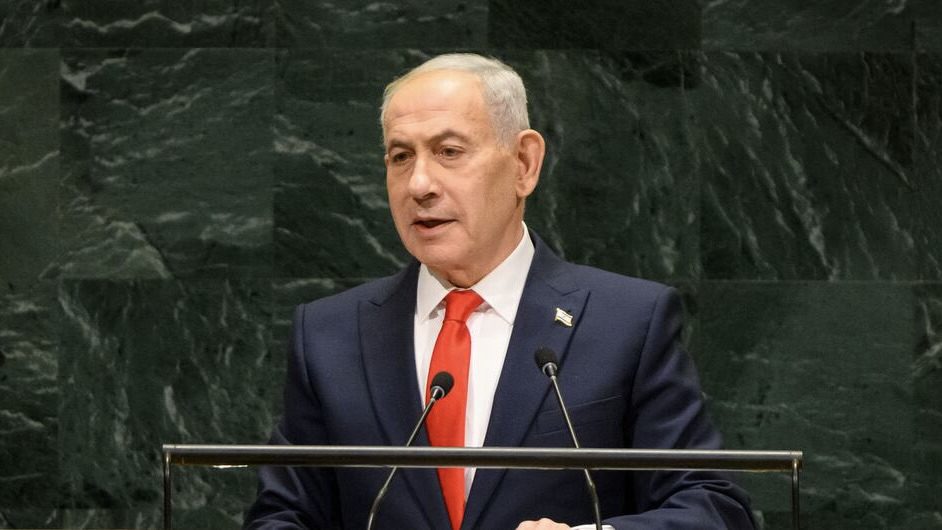
77 countries walk out during Netanyahu’s UN speech

Israel continues to face isolation in international forums as it continues its multi-front war on the peoples of West Asia. On Thursday, September 24, delegations from at least 77 countries walked out or left their seats vacant during the address of Israeli Prime Minister Benjamin Netanyahu at the 81st session of the United Nations General Assembly.

The move was interpreted as opposition to Israel’s three-year genocidal aggression on Gaza, and atrocities across multiple parts of West Asia.

Arab nations that walked out included: Algeria, Comoros, Egypt, Iraq, Jordan, Kuwait, Lebanon, Libya, Mauritania, Oman, Palestine, Qatar, Saudi Arabia, Somalia, Sudan, Syria, Tunisia and Yemen.

Asian states involved: Afghanistan, Bangladesh, Brunei, Darussalam, Indonesia, Iran, Kyrgyzstan, Malaysia, Maldives, Myanmar, North Korea, Pakistan, Türkiye, Turkmenistan and Uzbekistan.

From Africa the following left the chamber: Angola, Botswana, Central African Republic, Chad, Congo (Republic of the), Democratic Republic of the Congo, Djibouti, Equatorial Guinea, Eritrea, Eswatini, Kenya, Lesotho, Liberia, Madagascar, Mozambique, Namibia, Niger, Senegal, South Africa and Uganda.

Countries of Latin America and the Caribbean: Antigua and Barbuda, Bahamas, Barbados, Belize, Bolivia, Brazil, Chile, Colombia, Cuba, Dominica, Guyana, Nicaragua, Panama, Peru, Saint Lucia, Suriname, and Venezuela.

European countries: Bosnia and Herzegovina, Ireland, North Macedonia, San Marino, Slovenia and Spain. 

From Oceania: Tonga and Tuvalu.

Meanwhile, thousands of protesters took to the streets of New York City, where the UN headquarters is located, to protest Netanyahu’s visit and address, calling for US officials to comply with the warrant issued for his arrest from the International Criminal Court. 

Read more: ICC issues arrest warrants for Netanyahu and Gallant as the genocide continues in Gaza

Netanyahu defies the world, vows to continue Israel’s multi-front regional war

Netanyahu began his defiant, combatant speech by calling the departing delegations “moral cowards”.

“If there are any other moral cowards who haven’t yet left this hall, please do so now,” the Israeli PM said, addressing an almost empty chamber.

During the rest of his speech, which lasted for around 40 minutes, he defended Israel’s military campaigns – including the strikes on Iranian nuclear facilities – and vowed “to continue to win” Israel’s muti-front regional war, claiming his government has “no other choice”. 

Netanyahu categorically rejected international accusations of genocide in Gaza, labeling them “the greatest lie of the century”. He sharply criticized his vocal opponents, naming Turkish President Recep Tayyip Erdogan, New York Mayor Zohran Mamdani, and the government of Qatar. 

Furthermore, Netanyahu downplayed the deadly impact of Israeli settler violence in the occupied West Bank by describing the perpetrators as a “handful of young juvenile delinquents, about 150 in number, who go throw stones, who chop down olive trees, and occasionally light some fires.”

He also minimized the total number of Palestinian casualties resulting from settler attacks saying “maybe two or three dead” per year, although the UN reported in August that at least 23 Palestinians were killed and more than 1,040 others were injured in the context of settler attacks since the beginning of 2026.

Responding to statements made by Syrian President Ahmed al-Sharaa concerning Syria’s sovereignty over the Golan Heights, Netanyahu firmly asserted Israel’s permanent claim over the territory, invoking a biblical narrative.

 “Jews have been on the Golan Heights since the days of Moses,” Netanyahu declared, asking Al-Sharaa to “read it in the Bible”.

Abbas continues to appeal to the US despite its sanctions on PA

For the second year in a row, the US State Department has denied entry visas to the President of the Palestinian Authority (PA) Mahmoud Abbas and a high-level delegation, preventing them from attending the United Nations General Assembly session in New York.

According to media reports, the Trump administration justified the revocation of visas by accusing the PA of pursuing legal action against Israel in international courts, and failing to meet past peace commitments. The decision drew wide international criticism for violating UN host-country agreements.

The US action put Abbas on the spot before the Palestinian grassroots, especially as his administration is known for appeasing Washington at the cost of the Palestinian people’s sacrifices.

Read more: Abbas sacks head of detainees’ commission for opposing cuts of prisoners and martyrs’ stipends

Opening his pre-recorded speech delivered remotely, Abbas strongly condemned the revocation of US visas for Palestinian officials – including himself – as “punitive and unlawful”, rejecting the justifications provided by Washington. 

He urged the US to lift the sanctions and restrictions it imposed on the PA, resume dialogue, and work alongside the international community to back the two-state solution.

Abbas stressed that the PA has fulfilled its governance and reform commitments, and reaffirmed his leadership’s dedication to international law and its ongoing stance against “violence and terrorism”.

In terms of the situation on the ground, Abbas cautioned that Palestinians are confronting the most dangerous phase in their modern history. 

He detailed the repercussions of the ongoing Israeli genocide and the severe humanitarian crisis in Gaza, in addition to settlement expansion, land seizures, and the escalation in settler violence under the protection of Israeli forces in the occupied West Bank and East Jerusalem. 

The Palestinian President warned that these systemic practices are designed to fragment the territory and forcibly displace the Palestinian people. 

“We have, for long, warned the international community through the UN General Assembly and the Security Council that these Israeli policies that operate outside international law will destroy the two-state solution,” Abbas asserted. 

The head of the PA slammed some countries for their silence and their continued supply of weapons to Israel. 

While acknowledging the 20-point plan brought forward by US President Donald Trump for post-war Gaza, the related UN Security Council resolution and the Mladenov 15-point roadmap, he lamented the lack of tangible progress and called for the immediate expedition of phase two of the ceasefire deal.

Abbas also expressed hope that phase two of the deal would unify Gaza, the West Bank, and Jerusalem under the mandate of the Palestinian state.

Concluding his address, Abbas called on Trump to abide by his previous commitments made to Arab and Islamic leaders regarding the prevention of land annexation and forced displacement of the Palestinian people.

He further demanded the immediate, unconditional release of more than USD 6 billion in tax revenues withheld by Israel, alongside an end to the financial siege on Palestinian institutions.

With regard to the long-awaited legislative elections, Abbas affirmed that it will take place on November 28, followed subsequently by presidential elections.

He closed by reiterating the vision of a democratic, unarmed Palestinian state grounded in human rights and the rule of law, living side-by-side with Israel in “mutual security and peace”.

Visa revocations show concessions yield zero results, says Omar Assaf

Palestinian political activist and former prisoner in Israeli jails, Omar Assaf, argues that the denial of US entry visas to the Palestinian delegation highlights two critical realities.

First, it exposes a deep-rooted US hostility toward the Palestinian people and their leadership, actively blocking them from reaching the United Nations to make the World hear their grievances, assert their rights, and bear witness to the crimes of the occupation.

Second, it serves as a stark wake-up call for Palestinian leadership that the US administration cannot be relied upon, nor can it be viewed as an honest broker, or a mediator of any kind.

From his point of view, the incident makes clear that a policy of concessions, compliance, appeasement, and pleading yields zero results. Instead, the World only respects the language of strength, unity and upholding rights. Consequently, this must serve as a definitive lesson for Palestinians to close ranks under a unified national stance.

“We must firmly adhere to our people’s rights, stand resilient against challenges, and confront any aggression targeting our land and existence, including our fundamental right to make our voices heard globally to halt these ongoing crimes,” Assaf emphasized.

  •  
❌