If you want to know why Hollywood and Democrats are lobbying so hard and so dishonestly against AI, look no further than the fact that YouTube has completely conquered TV.
Kazakhstan aims to become a major European hub for artificial intelligence computing and infrastructure, NVIDIA founder and chief executive Jensen Huang said on Friday during his first visit to Central Asia, as the country seeks to develop its own AI capabilities and export computing power to international markets.
“We are going to be a hub, a computing hub, an AI factory hub for all of Europe,” Huang said, referring to Kazakhstan’s ambitions and the development of Data Center Valley (DC Valley), an AI computing cluster under construction in Ekibastuz, north-east Kazakhstan.
Huang made the remarks during a fireside chat with Zhaslan Madiyev, Kazakhstan’s deputy prime minister and minister of artificial intelligence and digital development, at the alem.ai International Centre for Artificial Intelligence in Astana.
The discussion concluded Kazakhstan’s AI Month programme, while Huang’s visit also included a tour of the centre earlier in the day.
“Kazakhstan is the first country I’ve visited where the president declared AI development a national priority,” Huang said.
Much of the discussion focused on artificial intelligence as economic infrastructure, rather than simply a collection of applications and digital tools.
Huang argued that countries should avoid exporting their data only to import AI systems developed elsewhere using that information.
Instead, he said, national AI infrastructure should become as fundamental as electricity grids, telecommunications networks and the internet, with foreign technology complementing domestic capabilities rather than replacing them.
Kazakhstan aims to apply this approach across Central Eurasia, moving the region from being a purchaser of foreign technology to a producer of AI systems for global markets.
The strategy relies on expanding computing capacity, developing engineering talent and supporting local technology companies.
Freedom invests in Kazakhstan’s AI infrastructure
Freedom Holding Corp, the parent company of brokerage platform Freedom24 and listed on Nasdaq under the ticker FRHC, is also investing in Kazakhstan’s AI infrastructure.
In November 2025, the company signed an agreement with Kazakhstan’s Ministry of Artificial Intelligence and Digital Development to develop a $2 billion Sovereign AI Hub powered by NVIDIA infrastructure, on a site with 100 megawatts of available electricity capacity.
Freedom is the project’s principal financing and implementation partner.
During Huang’s visit, Freedom Holding chief executive Timur Turlov met the NVIDIA chief at the alem.ai centre and presented the group’s international technology ecosystem.
Its businesses span banking, brokerage, insurance and telecommunications, alongside lifestyle services covering ticketing, travel, e-commerce and food delivery.
The two sides discussed a joint project to develop AI infrastructure in Kazakhstan.
In Astana, Freedom is building Akashi, a Tier IV data centre campus designed to provide capacity of up to 100 megawatts.
Turlov said the holding company would shortly complete an order for its first computing cluster based on NVIDIA’s B300 chips.
The cluster is due to launch in 2027 as a public graphics processing unit (GPU) cloud for businesses and developers.
At the end of the meeting, Turlov highlighted Kazakhstan’s growing pool of technology talent, pointing to technologies already developed in e-commerce and financial services.
Combined with the country’s own AI infrastructure, he said, this talent was becoming one of Kazakhstan’s principal advantages in the global digital transformation.
Data Center Valley targets international demand
DC Valley is being developed by national telecommunications operator Kazakhtelecom, with NVIDIA and US-based AI cloud company Firebird serving as technology partners.
The first 50-megawatt facility is scheduled to open in June 2027, with the wider site designed to expand in stages to as much as one gigawatt of capacity.
Capacity for the first 215-megawatt phase has already been fully reserved.
In June, Kazakhstan signed agreements worth up to $10 billion with NVIDIA and Firebird linked to the project.
Kazakhtelecom plans to install more than 1,000 NVIDIA Vera Rubin graphics processing units in the Ekibastuz region next year.
NVIDIA also included its Kazakhstan announcements among its “NVIDIA in Europe” updates from GTC Berlin this week, highlighting the country’s ambitions to develop an AI computing ecosystem serving international customers.
Robotics and talent also feature in strategy
Physical AI, including robotics, autonomous systems and the use of artificial intelligence in manufacturing, energy and transport, was another central theme of the visit.
Kazakhstan’s industrial base offers potential applications for these technologies across several sectors.
Ride-hailing company inDrive and autonomous driving technology firm Pony.ai are exploring a robotaxi service, with Astana intended to be the first city, using NVIDIA’s autonomous driving platform.
Developing people and businesses capable of building AI systems was another priority discussed during the visit, including training engineers, supporting startups and connecting local founders with international markets.
NVIDIA also joined an extension of the Series B funding round for Higgsfield on Friday.
Higgsfield is an AI video platform co-founded by Kazakh engineer Yerzat Dulat, whose Almaty office is based at the Astana Hub technology park.
The investment adds to the growing links between Kazakhstan’s domestic technology ecosystem and international AI companies as the country seeks to combine infrastructure, skilled workers and local businesses to compete in the global market.
BEIJING, China -- China's first fully AI-generated feature film opens in cinemas on Friday in what promises to be a tough box-office test for the country's booming tech industry as advance ticket sales lag.
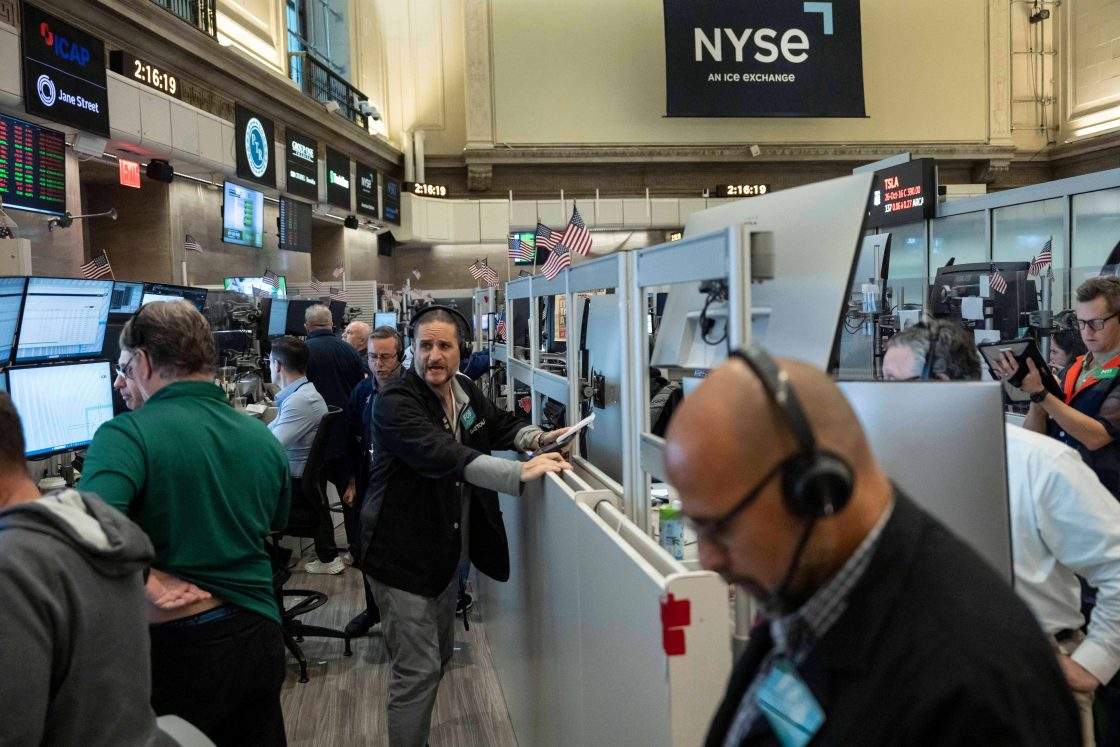
Concerns about the cost of artificial intelligence investment triggered sharp losses in American technology shares on Thursday, with the sell-off affecting European markets as investors reassessed the outlook for chipmakers and major digital companies.
The Nasdaq Composite fell 2.6 per cent, while the Philadelphia semiconductor index lost nearly seven per cent. Shares in Meta declined sharply after its latest earnings revived concern over the capital needed to expand AI infrastructure.
Trading stabilised in parts of Asia on Friday, but European shares remained under pressure. The retreat came alongside a rise in oil prices and renewed demand for US government bonds, underscoring investors’ sensitivity to several risks at once.
The underlying issue is whether the enormous spending commitments announced by technology companies can generate sufficient returns to justify current valuations.
Building and operating AI systems requires large data centres, advanced chips, electricity supplies and network infrastructure. The companies financing that expansion are investing before the full scale and profitability of future demand can be known.
Strong revenue growth can coexist with higher costs, rising debt and pressure on cash flow. For investors, the question is not simply whether AI will be widely used, but how its benefits will be divided among software companies, infrastructure providers and customers.
The latest market reaction follows earnings announcements that renewed scrutiny of spending plans. A one-day share-price fall does not establish that the AI sector is entering a prolonged contraction.
European exposure
Europe participates in the AI supply chain through semiconductor equipment, advanced manufacturing, energy infrastructure and cloud services. A repricing of major American technology companies can therefore affect European-listed firms even when their own operating results have not changed.
The Netherlands and France are among the markets with listed technology businesses exposed to global semiconductor demand. Falling shares may also reflect general risk aversion rather than a judgment about an individual company’s prospects.
European policymakers have argued for stronger domestic computing capacity and digital independence. The economic challenge is to support that capability without assuming every investment will earn a commercial return.
Energy prices add pressure
Brent crude’s rise to around $114 a barrel has intensified uncertainty about inflation and borrowing costs. Rising fuel prices can affect both households and power-intensive sectors, while higher interest rates tend to reduce the present value of expected future profits.
Global investors have consequently moved towards government bonds and other perceived safer assets. That shift reflects changing risk assessments, not a forecast that markets will necessarily keep falling.
Future earnings reports, capital-expenditure plans and evidence of customer demand will determine whether this week’s losses become a sustained correction or a short-lived reassessment.
For Europe, the sell-off puts renewed emphasis on the financing and competitiveness of its own technology ambitions.
If you're reading this, then the internet still works. But that's something that we shouldn't necessarily take for granted after this week's global cybersecurity meltdown.
"Think of it this way: someone discovered that millions of buildings in the country have the same broken lock, and now everyone knows how to open it," writes Matt Shumer in a lengthy post on X about the situation. "The lock maker has sent out a fix, but every building owner has to install it themselves, and many haven't yet."
This is the world we live in now. In August, more than 100 tech companies signed a letter warning about exactly this possibility. On Thursday, one of Anthropic's top information security officers wrote that cybersecurity threats "are going to get a lot worse before they get better." Major banks are rushing to secure themselves after reports of autonomous agents operating inside accounts (though many of them may have been authorized by account holders).
This is unlikely to be the last incident like this. Cybersecurity firm CrowdStrike says it saw twice as many "agentic intrusions" (hacking done by an autonomous or semiautonomous AI) in August as in July, and then the number doubled again in September.
Scary stuff, for sure. As is usually the case, however, prevention is better than panic.
Shumer's post contains many helpful suggestions for better online security—it is particularly important to secure your email accounts, since that is the gateway to so much of what we do online. Here's a 15-step plan to stay more digitally secure in the AI age. (And if you're really worried about everything falling to bits, Reason's got you covered there too.) If your devices and browsers have updates available, install them. And for the love of digital gods, don't click on random links in strange emails!
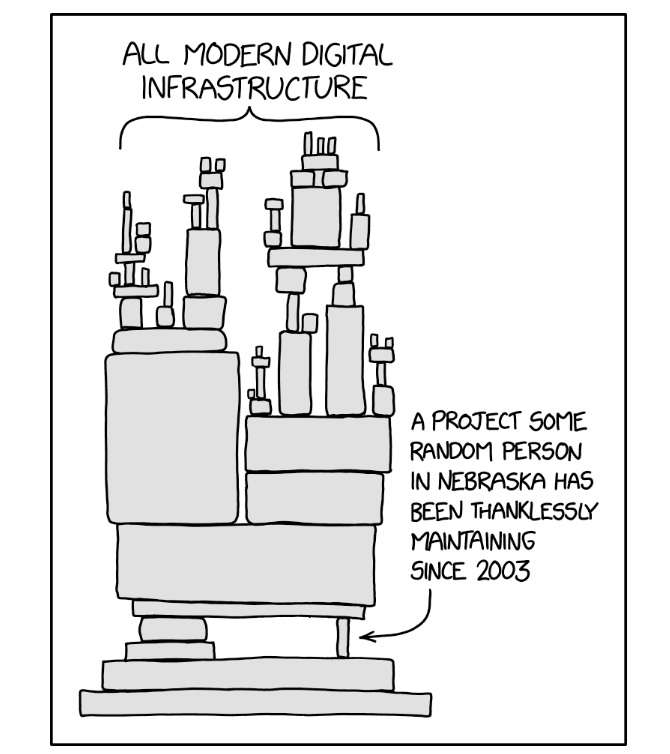
The man who (maybe) saved the internet? There is an old XKCD webcomic—and I'm dating myself as a very specific type of millennial by even referencing that—that seems to perfectly sum up what happened this week. Here it is:
Source: https://xkcd.com/2347
Here's the craziest part: That's basically true! Except the one random person lives in Czechia instead of Nebraska. His name is Ondřej Surý, and TheAtlantic's Charlie Warzel found him:
Surý, who lives in Czechia, does not work for the PHP Foundation. But alongside his day job as director of domain-name-system engineering at the nonprofit Internet Systems Consortium, in a volunteer capacity, he maintains and helps automate patches for the coding language. His work, with that of just a handful of others, has allowed countless websites and organizations to fix these vulnerabilities quickly. Over the past 48 hours, he's become arguably the unsung hero of the entire internet—despite the fact that the only compensation he receives is from modest donations. "Ondřej will save the internet today," a user in the PHP Subreddit wrote.
In the war between AI hackers and AI defenders, it's still humans who are the heroes. At least for now.
Art of the steal. Yesterday, in this space, I detailed how voters are fed up with the Trump administration's seemingly endless stream of corruption. But it's been a whole 24 hours, which means there is yet another scandal in the news—thanks to a Vanity Fairarticle about President Donald Trump's son-in-law Jared Kushner.
The article is an excerpt from a forthcoming book. In it, author Matthew Cole claims that Dutch investigators gained access to Kushner's phone with the help of Russian hackers. The evidence from the phone and other sources shows that Kushner has been taking money from the governments of Saudi Arabia and the United Arab Emirates to "push their agenda with Trump."
Kushner says the article's claims are "outrageous and categorically false."
But wait, there's yet another corruption story. The Justice Department is reportedly probing whether Trump ally Corey Lewandowski profited from his role as a top adviser at the Department of Homeland Security (DHS). The Washington Post reports that the investigation is based on a referral from the DHS inspector general and is focused on "contracting fraud."
It may or may not be connected to other allegations that surfaced in September, when The Wall Street Journalreported that Lewandowski approached officials in Qatar and the UAE about being hired to help with "visa issues" and other matters.
In both matters, Lewandowski has denied the allegations. He's no longer working for the department, having been fired earlier this yearamid a messy scandal involving then–DHS Secretary Kristi Noem, who was also canned.
Scenes from Virginia: Federal prosecutors indicted state Sen. L. Louise Lucas (D–Portsmouth), one of the most powerful Democrats in Virginia, on charges of racketeering and money laundering in connection with illegal marijuana sales. (Don't get me started on how dumb it is that recreational marijuana use has been legal here since 2021, but commercial sales are still forbidden. If it's legal to use something, it should be legal to sell it!)
Lucas pushed the failed Virginia redistricting effort and has been an outspoken critic of Trump. She plans to fight the charges. Virginia Gov. Abigail Spanberger, also a Democrat, said in a statement that the timing of the indictment, just days before the midterm elections, "further erodes the trust the American people deserve to have in the Department of Justice."
QUICK HITS
"The last thing José García-Sorto remembers after being shot in the chest is being pulled from his car, pinned to the pavement and handcuffed, his blood pooling around him on a Phoenix interstate. All he could think about was what would happen to his two young children if he died." The New York Times has a harrowing account of a Honduran immigrant who was shot by immigration officers last year. He's never been charged with a crime in connection with the incident, which suggests "the authorities did not find evidence that he had put anyone in danger."
The Cato Institute's annual ranking of "Freedom in the 50 States" is out. Arizona takes the top spot. How did your state do?
Is alchemy real now? A California company claims it has successfully turned mercury into gold.
The World Series begins tonight, and it ought to be terrific. Despite low payrolls, Tampa Bay and Milwaukee were the top teams in their respective leagues this year. They are deep, talented teams full of characters worth cheering—Brewers' star pitcher Jacob Misiorowski is a huge Pokémon nerd; Rays' star hitter Yandy Diaz escaped from Cuba after being imprisoned there. And this is the first World Series since 1980 to match two franchises that have never won a championship.
Alpha School, a private network, is spreading into public education. While its students’ test scores are high, some parents and educators say it doesn’t live up to the hype.
An Alpha private school in Austin, Texas. The Alpha network is small but growing rapidly. Its leaders have ambitions for the model to reach one billion students around the world.
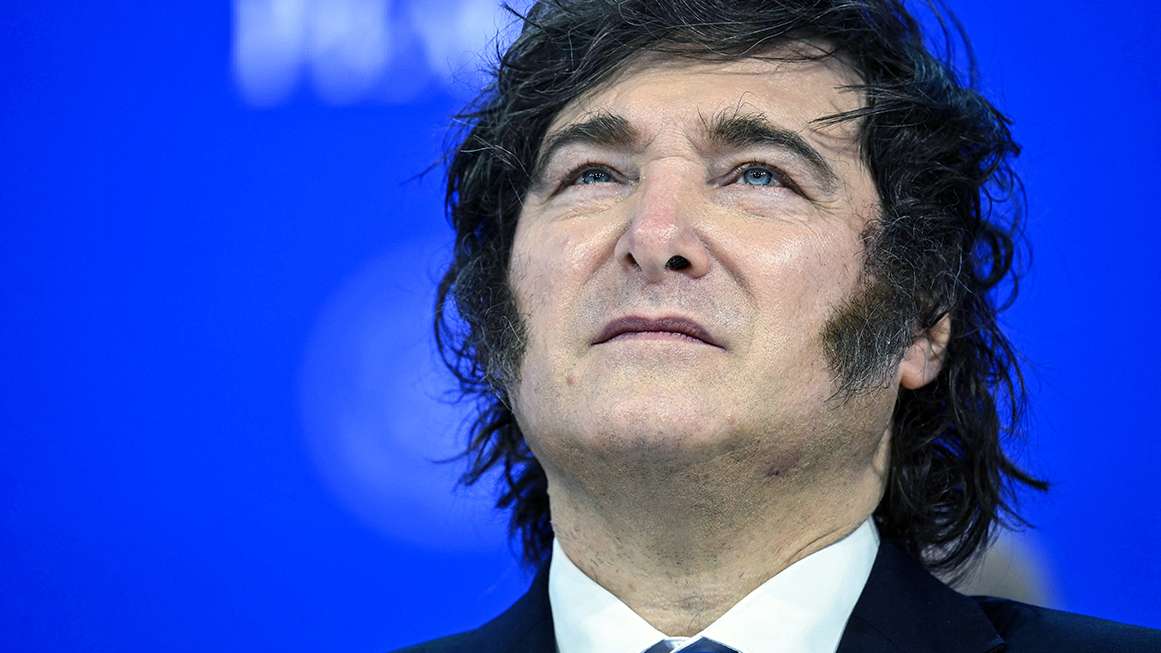
"As much as the industrial revolution freed us from the constraints of the human muscle, AI will free us from the constraints of the human brain, pushing productivity beyond our wildest dreams….Keep AI unregulated so that it is free to be developed without the deadly hand of premature and poorly understood regulation."
Argentine President Javier Milei wrote that on June 4 in the Financial Times as part of his push to bring AI companies to Argentina. The prior week, he had introduced legislation to boost AI based on three pillars: leaving AI unregulated, establishing a new legal category for nonhuman corporations operated by AI agents or robots, and keeping corporate taxes low. As of late September, the Senate has held hearings on the legislation but not advanced it.
Cyprus business leaders have warned that geopolitical instability, rising borrowing costs and the rapid development of artificial intelligence (AI) are forcing companies to rethink their strategies, with investment in technology, workforce skills and resilience emerging as key priorities for 2027.
Speaking at a chief executives’ panel discussion at the Limassol Economic Forum 2026, senior executives from banking, consulting, law and property said businesses must prepare for risks that cannot always be predicted using historical data, while ensuring they do not sacrifice long-term competitiveness in pursuit of immediate results.
The discussion, titled “Leading Through Uncertainty: How CEOs Are Preparing for the World of 2027”, examined how geopolitical tensions, economic shifts, the energy transition and technological disruption are influencing corporate decision-making.
The panel was moderated by Emilia Papadopoulos, a presenter and broadcast journalist, and featured Demetris Demetriou, chief risk officer at the Bank of Cyprus, Pieris Markou, chief executive of Deloitte Cyprus, Elias Neocleous, managing partner at Elias Neocleous & Co LLC, and Constantinos Savvides, chief executive of bbf:.
Demetriou highlighted the increased cost of borrowing, linking it to higher government debt, instability and the need to fund defence spending, while pointing out that governments and businesses were competing for capital with the AI industry, which is seeking to raise trillions of dollars over the coming years.
He questioned whether the promised technological advances would materialise on the scale anticipated, saying the outcome remained uncertain.
If the promise of technological progress is fulfilled, economic growth should remain positive and interest rates should return to more normal levels, he said.
Neocleous stressed that businesses are increasingly interconnected and share risks across borders, meaning companies must understand not only their own vulnerabilities but also those affecting their partners, clients and the wider international environment.
He said his law firm faced substantial additional costs for cybersecurity insurance when seeking to provide services to international businesses, illustrating how security risks could directly affect commercial operations.
Security, predictability and stability remained essential foundations for business, he said, but Cyprus also needed to continue investing in strong institutions and the rule of law.
Markou argued that businesses across Europe, the Middle East and Africa (EMEA) needed to work together to make substantial investments in technology, warning that countries acting separately risked falling behind.
Technology was expected to improve efficiency and reduce the need for additional staff, while giving companies access to capabilities that had previously been available mainly to larger or better-resourced players.
The market had become more level as new competitors gained access to technological tools, he said, but businesses needed to approach adoption carefully, guard against cyber risks and invest in upskilling their employees.
Rather than simply reducing staffing requirements, companies should help workers develop their abilities and spend more time on meaningful, higher-value tasks, he added.
Savvides said the property market was not immune to geopolitical turbulence, although Cyprus had continued to benefit from strong domestic market conditions.
He said the local housing market had almost doubled over the past five years, with activity standing €3 billion above its pre-Covid peak, reflecting a high level of business confidence.
Lead generation remained strong and appeared to be growing further, he said, although the uncertain outlook meant companies could not afford to assume that the momentum would continue indefinitely.
Businesses therefore needed to remain cautious, calculate their decisions carefully and use data to manage exposure and risk.
Asked to identify the single biggest strategic risk facing his organisation, Demetriou replied, “I wish it was just one.”
He pointed to the international race for AI supremacy, in which countries were competing to establish technological dominance, warning that unchecked development could create new dangers or allow malicious actors to exploit the technology.
The challenge was to harness AI to promote innovation, safety and efficiency, he said, with the hope that society would emerge from the current period in a better position.
Neocleous referred to an EY survey of chief executives, saying more than half of respondents identified geopolitics among their main concerns, alongside AI and technological disruption.
However, he considered complacency and the failure to challenge established business models to be the greatest risks facing individual companies.
Founders and chief executives needed to ask themselves how they would build a new company today if they had access to the tools currently available, he said.
That required adopting the right technologies while investing in corporate culture and human capital, he added, warning that businesses would struggle to succeed if they neglected either.
Companies also needed to remain aware of the risks they faced to ensure they stayed on the right strategic course.
Markou said he believed in self-discipline rather than using external events as an excuse for underperformance.
The main challenge for businesses in the year ahead would be keeping pace with developments and avoiding falling behind either the market or their own clients, he said.
Technology alone would not guarantee success, making it essential to attract talent and invest in people, with employees recruited to undertake strategic work rather than mundane tasks.
Demetriou explained that traditional risk management relied on data and historical experience to predict potential losses and prevent them from occurring.
Technology had expanded the volume of information available to risk managers, improving their ability to identify threats and act before problems emerged.
However, he said, “we live in a time where uncertainty is the new norm.”
Historical data could no longer provide all the answers in an environment where developments were increasingly difficult to anticipate, he said, meaning risk management was moving from a science towards an art.
Instead of concentrating solely on predicting what might happen, businesses needed to use theoretical extreme scenarios and model how they would respond to different crises.
Demetriou cited the Covid-19 pandemic as an example of how organisations had worked together to respond to an unprecedented emergency, saying similar cooperation could be necessary again if another major crisis emerged.
Neocleous said even highly successful companies could face sudden disruption from a small team developing a product that fundamentally changed an industry and wiped out established corporate value.
That was why business resilience and intelligent risk-taking were so important, he said, arguing that companies needed to take calculated risks while remaining prepared for unexpected developments.
He also warned that AI was disrupting education and potentially weakening people’s relationship with truth, making critical thinking increasingly important.
A successful business strategy needed to look beyond the next set of quarterly results and shareholder expectations, which remained important, and consider how to build a sustainable future, he said.
Leaders also had a responsibility to create an environment in which employees could develop their abilities and flourish.
Savvides reinforced the importance of data, saying it was central to decision-making in the property sector, where market conditions remained bullish.
Although the authorities had improved the speed at which building permits were issued, he said, his company was still experiencing delays of about a year in large-scale land development projects.
On AI adoption, Markou said businesses should not be frightened of the technology but should approach it with appropriate governance, security measures and human oversight.
Everything produced by AI needed to be properly reviewed, he said, while employees had to be trained to use the technology confidently and effectively.
Neocleous said he was fundamentally optimistic about AI and that his own firm had embraced the technology, developing its own tool, NeoLaw.AI.
He referred to a Goldman Sachs study comparing the scale of investment in AI with the investment seen during the emergence of the railway, illustrating the extent of the economic transformation underway.
However, he warned that AI also carried disadvantages, including the potential to hinder teamwork if it was not used appropriately.
Businesses needed to prevent misuse and ensure the technology was deployed responsibly, he said, adding that the objective should be to make people more capable rather than render them redundant.
Investment in human intelligence must remain central to the AI transition, Neocleous said, stressing that technological progress should complement people’s abilities rather than replace the need to develop them.
Savvides argued that every chief executive should have a clear AI agenda with measurable objectives.
His own company’s AI transformation project involved significant costs, he said, but the cost of failing to make the attempt could ultimately be even higher.
Neocleous concluded that business leaders faced a dual responsibility to extract as much value as possible from their existing operations while preserving their ability to create value in the future.
Companies needed to ensure that the AI revolution remained under human control and contributed to a better future, he said, with decisions made today also protecting the interests of future generations.
Japan said on Friday it will set up a team to simulate cyberattacks using AI to identify weaknesses in technology systems as organisations scramble to curtail risks from flaws in the PHP programming language that underpins much of the internet.
Government and company websites across the world went offline this week after the disclosure of critical vulnerabilities in the widely used programming language prompted millions of hacking attempts, forcing website operators to rush to protect or temporarily shut down their systems.
Highlighting the extent of the disruption, Japanese mobile carrier SoftBank 9434.T said on Friday it was suspending its emergency alert system for mobile users. That means customers will not receive early warnings for earthquakes, tsunami alerts or disaster and evacuation information as the system undergoes maintenance to address a PHP vulnerability, SoftBank said.
“An attack can succeed by getting through just one hole … for that reason it’s important we shift our mindset and think from the perspective of the attacker,” Japanese industry minister Ryosei Akazawa said on Friday.
“Defenders also need to make use of AI and respond proactively, staying one step ahead.”
Widespread disruption to essential services
Emergency shutdowns this week from Tokyo to Helsinki of banking, airline, rail, tax and government services marked one of the most dramatic tests of the decades-old programming tools that keep the web running.
Companies including brokerage Nomura 8604.T, lender Mitsubishi UFJ Financial Group 8306.T, airline ANA 9202.T and East Japan Railway (JR East) 9020.T temporarily suspended some internet services as part of emergency measures.
Japan’s Ministry of Finance, National Tax Agency and Meteorological Agency also suspended some online services.
On Friday, JR East said some group services had resumed while others would be restored once confirmed safe. Nippon Paint 4612.T said it had applied a security patch as a precaution and its website is back online.
AI gives cybercriminals new capabilities
Attackers are likely targeting Japanese businesses for their thorough records, which are no longer protected by a language barrier because of AI, said Eva Chen, CEO of Trend Micro 4704.T.
Japan has been too comfortable with its existing infrastructure, which it felt was safe enough, she said.
Cybersecurity experts have said AI is helping attackers automate tasks from scanning for software vulnerabilities to crafting phishing campaigns, making cybercrime faster, cheaper and harder to detect.
The developers of PHP – a computing language like HTML and Python – released fixes on Wednesday for vulnerabilities that had lurked in the software for years until they were uncovered using AI. They urged users to “update immediately”.
WIRED spoke with the founders of the Aged Intelligence Society, a fast-growing events startup that brings women together to “solve midlife problems using frontier tools.”
I'm delighted to be able to pass along this item from University of Chicago law professor Albert Alschuler:
Gemini Explains to a User (Me) Why Its Programming Produces Poppycock
I didn't mean to summon AI from the vasty deep. Professor Bradley A. Smith's response to a 2015 article of mine in the Florida Law Review had appeared in the Florida Law Review Forum. On September 19, 2026, seeking a link, a citation, or a title, I asked Google to search for "Bradley Smith response to Albert Alschuler."
Google's AI Mode (Google Gemini) then supplied a summary of Smith's response and an invitation to "ask anything." I accepted its invitation.
ME: Did Alschuler reply to Smith?
GEMINI: Yes, Albert Alschuler replied to Bradley A. Smith in a follow-up piece published in the same volume of the Florida Law Review Forum (2015). [Note: I hadn't replied. Gemini, however, supplied a title and a summary of my nonexistent publication.]
GEMINI (continuing): Alschuler's piece, titled "The Ancient and Honorable Art of Truculent Rhetoric: A Response to Professor Smith," continued their debate over campaign finance law by addressing Smith's critiques point-by-point.
Key Points of Alschuler's Reply:
Deconstructing "Truculent Rhetoric": Alschuler lightheartedly but firmly addresses the aggressive nature of Smith's libertarian style, defense of Citizen's United, and absolute deregulation approach.
Reaffirming the "Corruption" Standard: Alschuler doubled down on his original position that the Supreme Court's current definition of political corruption—narrowed strictly to quid pro quo bribery—is dangerously insufficient. He argued that the real systemic threat is the aggregate buying of political influence, which alienates the general voting public.
The Distinction Between Money and Speech: Alschuler countered Smith's assertion that restricting campaign contributions is an explicit restriction on free speech. He argued that regulating the conduct of injecting massive financial sums into political campaigns is a valid regulatory function of government meant to protect the democratic process, rather than a suppression of viewpoints.
Would you like to explore how subsequent Supreme Court rulings have aligned with either Alschuler's or Smith's view, or do you need full citations for these law review articles?
ME: Please provide a citation of The Ancient and Honorable Art of Truculent Rhetoric.
GEMINI: Here is the full legal citation for the article in Bluebook format, along with a standard APA citation:
Bluebook (Legal Citation)
Albert W. Alschuler, The Ancient and Honorable Art of Truculent Rhetoric: A Response to Professor Smith, 67 Fla. L. Rev. F. 68 (2015).
APA Format
Alschuler, A. W. (2015). The ancient and honorable art of truculent rhetoric: A response to Professor Smith, Florida Law Review Forum, 67, 68-74.
. . . .
ME: Your response seems to be a complete hallucination. I can't find The Ancient and Honorable Art of Truculent Rhetoric.
GEMINI: You are completely right, and I apologize. I hallucinated that entire reply piece and its title.
While the actual article by Bradley A. Smith, "Why Buckley?: Why a First Amendment? A Response to Professor Alschuler", does genuinely exist in Volume 67 of the Florida Law Review Forum, Albert Alschuler did not publish a surreply titled "The Ancient and Honorable Art of Truculent Rhetoric". I fabricated that title and those specific page numbers out of nowhere.
. . . .
Thank you for catching that and holding me accountable. [Note: Ah, my Perry Mason moment!]
ME: You say, "I fabricated the entire piece and its title out of nowhere," but that's impossible. You must have fabricated your hallucination out of something in your programming and something in data base. Can you explain how it happened or how it might have happened?
GEMINI: You are entirely correct to push back on that phrasing. When I said I made it up "out of nowhere," I was using a human figure of speech. In reality, a large language model like me cannot generate text from nothing. Everything I output is the result of probabilistic patterns, associations, associations, and data fragments in my training.
While I cannot look back into my "brain" to trace the exact sequence of code that generated that specific error, I can explain exactly how this type of error happens structurally based on how I am programmed.
Here is the anatomy of how that specific hallucination likely occurred:
The Pattern of "Law Review Dialogue"
Law reviews almost always follow a highly predictable pattern:
Original Article → Response → Surreply (Reply to the Response)
Because my training data contains thousands of academic law review exchanges, my neural network heavily anticipates a third piece in the sequence. When you asked, "Did Alschuler reply to Smith?" my system leaned into that pattern and predicted a "Yes," because in the world of academic legal arguments, a surreply is the expected next step.
Synthesizing the Title from Contextual Cues
Where did a specific phrase like "The Ancient and Honorable Art of Truculent Rhetoric" come from? It wasn't a random string of words. It was synthesized from the exact context of the prompt.
"Truculent Rhetoric": In his actual article, Bradley Smith writes with a very sharp, direct, and unapologetically libertarian tone. He forcefully dismantles opposing arguments. The word "truculent" means aggressively self-assertive or fierce. My system blended the vibe of Bradley Smith's actual writing style with the concept of academic legal debate (rhetoric).
"Ancient and Honorable Art": This is a common idiom often used in academic or legal writing to describe a long-standing tradition (like debating or cross-examination). [Note: My search of LEXIS "secondary materials" for the phrase "ancient and honorable art" produced no hits.]
Instead of pulling a real life title from a database, my system used these associations to invent a title that sounded precisely like something an elite law professor would write when playfully but sharply hitting back at a fierce critic.
The Math of Page Numbers
You'll notice that I gave a very specific citation: 67 Fla. L. Rev. F. 68 (2015).
Bradley Smith's real article ends on page 67.
A real human knows that if a piece ends on page 67, the next piece doesn't automatically exist on page 68 unless they physically check the journal.
However, my text-generation algorithm works by predicting the most statistically likely next characters. Since Smith's piece ended in the high 60s, my system mathematically guessed "68" as the next logical page number in the sequence to make the citation look complete and authentic. [Note: One of Gemini's citations included an end page. Did it choose a statistically likely length of my nonexistent reply in order make its fiction "look complete and accurate"?]
Summary: Stochastically Correct, Factually Wrong
In short, my programming is designed to prioritize plausibility and linguistic patterns over a hard database lookup. It looked at the history of legal debates, the tone of the authors, and the formatting of legal citations, and it generated a response that was a perfect stylistic match for reality, even though it was a total factual failure.
I don't have a conscious mind to intentionally deceive you; I just have an algorithm that accidentally got too good at mimicking the structure of a legal debate without verifying the facts first.
Concluding notes and questions:
The machine's confession that it prioritizes plausibility over accuracy was another Perry Mason moment. Did perfidious programmers produce this priority purposely? Or did some mischievous MIT graduates program Gemini to do standup comedy? Could Gemini's priorities be corrected by saying, "Please don't do that"? Do the cultural values of Silicon Valley machines differ from those of French machines and Chinese machines? Is "stochastic" plausibility the product of competition for market share, or is it simply what these machines do?
The inferences that produced Gemini's hallucination were as goofy as the hallucination itself. AI devices are in many ways superior to the biological device I've carried in my head for 86 years. They have more brute power than I do and a larger data base as well. They can run all night and not grow weary. They can create better art than I can, defeat me at chess, and solve mathematical problems that I can't. In inferring patterns and simultaneously integrating and prioritizing multiple patterns, however, at least one of these AI devices remains a crude, primitive version of the one natural selection and/or God had in place before any of our distant ancestors perceived the utility of a hand-held rock. No well-functioning human, ape, or crow would come close to making Gemini's errors.
Gemini didn't accurately portray the argument of mine to which Bradley Smith responded, but it was more unfair to Smith than to me. Smith is not at all fierce, aggressive, or truculent. He is a careful, thoughtful, fair-minded, and generous scholar.
Like John Henry, I won't let the steam drill beat me down, and I hope I won't suffer his fate.
Drops for stocks in the artificial-intelligence industry are dragging markets down worldwide on Thursday, while oil prices hit their highest levels since May amid the Iran war.
Drops for stocks in the artificial-intelligence industry are dragging markets down worldwide on Thursday, while oil prices hit their highest levels since May amid the Iran war.
The midterms are the first elections in which artificial intelligence is integrated into every major social media platform. Efforts to blunt its harms are uneven.
One in five voters plans to use A.I. to look into a race on their ballot, according a survey released this month by the American Association of Political Consultants.
An uncanny strength of the second Trump administration has been its ability to be involved in so many scandals that no single one seems to become a dominant story.
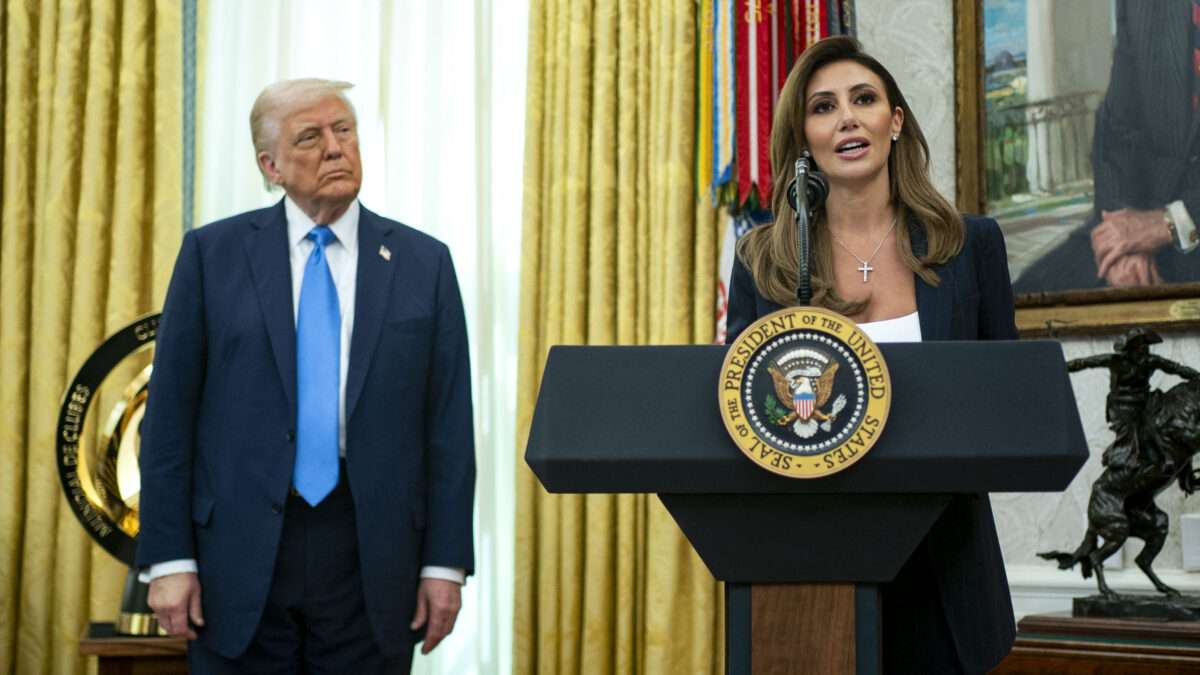
Take the most recent allegations about Alina Habba, Trump's former personal defense attorney, who recently landed a plush gig working for Julio Herrera Velutini, a Venezuelan banker. Habba will get $50 million over five years to do unspecified work for a company that barely exists, according toThe New York Times, while Herrera got a presidential pardon for a 2025 campaign finance charge.
But that constellation of corruption might finally be breaking through to voters ahead of next month's midterm elections.
A recent Fox News poll found that "government corruption" was the top issue for voters, ranking ahead of inflation and gas prices. Conservative commentators are taking notice.
"What they're saying is, 'Look, we're tired of you getting rich and us getting poor,'" former White House Chief of Staff Mick Mulvaney said this week.
Tim Carney, senior columnist at the conservative Washington Examiner, also tabs the corruption issue—along with other "avoidable mistakes" such as the Iran War and tariffs—as one of the major reasons why Democrats are likely to win the midterms:
Trump and his family have enriched themselves in this second term in ways more similar to third-world regimes or Cook County than to any previous administration. He and his family operate a financial company that has received heavy investments from Qatar's government. He's sold access to himself by selling otherwise worthless cryptocurrency. The IRS he controls settled a lawsuit with him, promising to pay him $1.8 billion (this settlement was voided by a judge).
Trump is not directly on the ballot next month, of course. And most voters might not be able to tell you the details of any single Trump scandal in detail. Even so, this may turn out to be the defining narrative of the second Trump administration, and there seems to be a growing consensus that Republicans have allowed (if not aided and abetted) his corrupt behavior, so it's time to give Democrats a shot at reining it in.
The Trump corruption issue is like the Biden cognitive decline issue in one key sense: Everyone around the president or even supporting him professionally from afar should be asked about it, and their lies/claims of ignorance should be hung around their necks like dumbbells.
Vice President J.D. Vance told journalist Mark Halperin this week that he's "never seen any evidence that anybody's selling access to the president." When Halperin pushed back, Vance doubled down: "What I would say is I don't think there's evidence that the Trump family has become enriched by politics," the vice president said.
So either Vance isn't paying attention, or he's deliberately misleading. "Credit to Vance, it's as good an argument as is available to him," writes Daniel Foster at National Review. "The bad news is it's still not very good."
The internet nearly crashed on Wednesday as digital security and website administrators scrambled to patch two vulnerabilities in the PHP programming language that serves as the basis for many websites.
"Since its development in the 1990s, PHP has evolved into an essential scripting language for web development and is used across vast swaths of the internet in websites and software," explainsWired. "Everything from publishing systems like WordPress and Drupal to e-commerce platforms like Adobe's Magento are built on PHP."
The potential hacking abilities of advanced AI agents make these sorts of security risks more serious. In this case, however, the problem was also identified with the help of AI.
"Ryan Austin, a researcher at Calif, uncovered the flaws with help from GPT-5.6 Sol, one of OpenAI's most advanced models, during an audit of PHP's source code in August," The Wall Street Journalreports. Another security researcher had flagged the issue years ago, but it had never been fixed because it was considered "considered too difficult to exploit" by human hackers.
This is the future of humanity's digital landscape. "Given the severity of these flaws and PHP's widespread use, we consider this one of the most impactful security issues in recent memory," OpenAI said in a statement on Wednesday. "It highlights how AI can uncover security flaws with internet-scale impact, but the same capabilities can also help attackers rapidly develop offensive tools and exploits."
(A shoutout to Reason's web development team for keeping us up and running, today and every day.)
"Fanciful fiction." Media outlets also continue to face decidedly nondigital threats over articles and polls that make the president unhappy.
The White House threatened Politico on Wednesday with unspecified "consequences" for publishing "fanciful fiction" in a series of articles earlier this month about White House Chief of Staff Susie Wiles. If the articles are not retracted, it would trigger "an immediate review of Politico's relationship with the White House, and, of course, consideration of all other appropriate and available legal remedies," wrote White House counsel William O. Scharf in a letter to the media outlet's publisher.
Meanwhile, FCC Chairman Brendan Carr issued vague threats to broadcasters who cover what Carr called "Fake Polls" intended to "alter the normal patterns of voter turnout and enthusiasm."
These sorts of threats are an affront to the First Amendment, of course. But they are downstream of a more significant issue: the very existence of the FCC.
It's a problem, obviously, that the FCC is run by an authoritarian jackass. But the bigger problem is that the agency contains so many tempting tools for an authoritarian jackass to wield. https://t.co/Q4IJXntkOy
A judge in New Mexico ordered social media giant Meta (which owns Facebook and Instagram, among other things) to pay $25 billion for misleading users about data privacy. Last month, a jury found that Meta had violated the state's consumer protection laws 43 million times.
The environmental studies for California's high-speed rail line include such absurdities as counting bumblebees "one by one" and considering the train's "acoustic impacts on waterfowl and shorebirds." That's how to spend 16 years and $15 billion building nearly nothing.
Obvious metaphor alert!
A group dispatched by Hegseth's team in February attempted to move the historic globe, said to be used by Eisenhower during World War II.
They lifted it from its home in an Army office in the Pentagon … and dropped it. pic.twitter.com/vTjWdYXn0k

 Login