Rohoziuk previously commanded the 60th Separate Mechanized Brigade, which participated in the operation that Ukrainian forces say reclaimed 277 square kilometers (107 square miles) and liberated 16 settlements in the Lyman sector.
The front changes faster than any headquarters, so Ukraine’s war chief went to the people who fight on it. On 16 October, Ukrainian Defense Minister Yevhenii Khmara met commanders and soldiers from front-line units to discuss the needs of the front, command practices that save lives, and ways to raise combat effectiveness, the Defense Ministry reported.
The front keeps changing, with technology, tactics and weapons shifting constantly, so decisions made far from it risk arriving late and costing lives. Khmara’s answer is to anchor ministry policy in the experience of the soldiers who fight, a continuation of the “machines over men” program.
"The front does not stand still. But the key thing is people. People will always be the foundation and the main value of the Defense Forces,” Khmara said.
He claimed that the decisions of the Ministry of Defense must take into account the experience of warriors, those who directly carry out combat missions at the front.
Ukraine's most battle-hardened brigades say their word
The meeting drew commanders from across the force, including the Airborne Assault Forces, the Marine Corps, the 93rd, 100th, 28th and 155th mechanized brigades, the 1st, 425th and 475th assault regiments, the 3rd and 59th assault brigades, and Azov.
The last one, the 1st Azov Corps of the National Guard of Ukraine, is actively fighting in the Donbas region, where units have led counter-operations to disrupt Russian advances toward fortress cities that have been holding Russia's operation since 2014.
Meanwhile, the 93rd "Kholodnyi Yar" Separate Mechanized Brigade took part in fierce battles for Ilovaisk, the Donetsk Airport, Debaltseve, and Bakhmut, as well as in the liberation of the Kharkiv Oblast. Both units are known for their extensive implementation of advanced military technologies, including ground robotic complexes, FPV strike drones, and innovative anti-drone electronic warfare systems.
Command tricks that keep soldiers alive
The talk turned on how good commanders cut their own losses. Participants discussed command approaches that help save soldiers’ lives, use resources efficiently, and achieve combat results.
The ministry wants those methods studied and spread to other units, treating commanders' hard-won judgment as something to scale rather than leave in one brigade.
One goal: fewer Ukrainian losses, more Russian ones
Khmara framed the task in plain terms.
“We must adapt faster and give our warriors modern and effective tools,” he stressed, calling it the shared job of the Defense Ministry, the commander-in-chief and the General Staff.
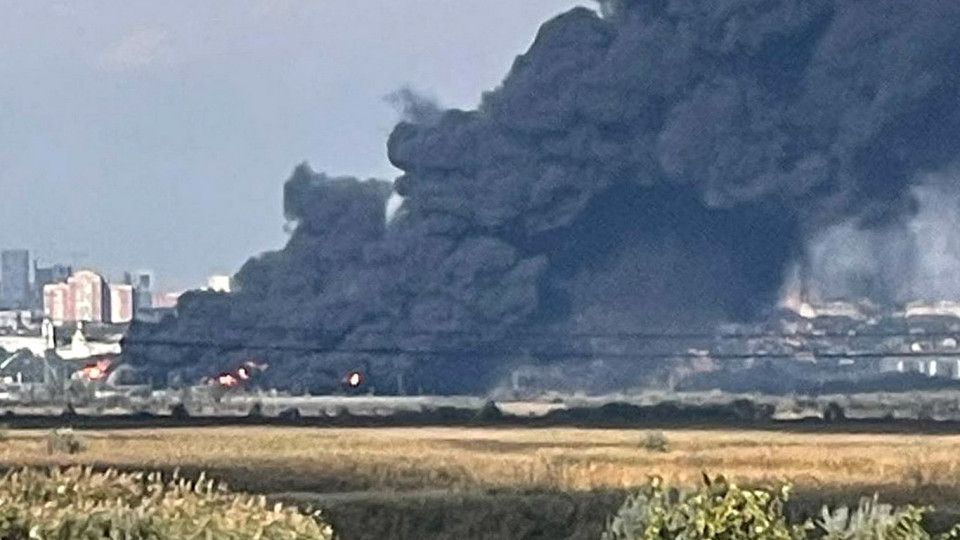
A drone strike on 10 October put more than half of the large fuel tanks out of action at an oil-loading terminal in Russia’s Rostov-on-Don, Russian news Telegram channel Astra found. The terminal loads fuel onto river and sea tankers for export, and it burned for two days while a local channel wrote that reeds might be on fire. Neither Kyiv nor Moscow has officially acknowledged the hit. It came hours after US President Donald Trump announced a diesel deal with Russian leader Vladimir Putin.
Russia has spent the autumn hammering Ukraine’s power grid ahead of winter. Ukraine’s long-range drones keep hitting the refineries, depots, and terminals that fuel Russia’s army and earn it export revenue. Every burned tank turns that revenue into repair bills, while Moscow is already subsidizing its own fuel pumps. A refinery-only truce of the kind the White House described a day after the strike would shield the Russian plants that feed terminals like this one.
Seven of 12 tanks out of action
Astra’s analysts concluded from eyewitness footage that at least seven of the terminal’s 12 large tanks had been knocked out. Ukrainian monitoring channel Supernova+ counted seven burned-out tanks and one more scorched by the fire.
The fire was still burning in the early hours of 12 October. Local channel Rostov Glavny posted video of the burning tank farm, passing on rumors that reeds were on fire and noting the city’s second day under smoke, The Moscow Times reported. Footage filmed in the daytime on 12 October showed no more open flames, only gray smoke, according to Astra.
Satellite image of the oil-loading terminal of the Novoshakhtinsk refinery in Rostov-on-Don, Russia, during the fire, 10 October 2026. Satellite image: Radio Liberty
A terminal that loads fuel for export
The site is the oil-loading terminal of the Novoshakhtinsk Oil Products Plant, formerly known as Yug Rusi, in Rostov-on-Don’s Zheleznodorozhny District. It receives, stores, and transships fuel onto river and sea tankers, including for export, Ukrainian monitoring channel Exilenova+ said.
The terminal also supplies fuel to the Russian army and earns Moscow hard currency, ZN reported. The Moscow Times put its loading capacity at 3.5 million tons a year and its tank farm at about 60,000 cubic meters, roughly 16 million gallons.
Explore further
Trump’s Russian diesel deal, which drew fury in Ukraine, is unlikely to lower prices, experts say
The refinery itself stands in the town of Novoshakhtinsk near the border with Russian-occupied Luhansk Oblast. The terminal sits on the Don River with access to the Sea of Azov, Ukrainian military outlet Militarnyi noted. Ukraine hit the refinery in June, and Ukraine’s General Staff reported striking the Yug Rusi terminal on 9 July, placing it in Bataysk.
A night of drones over the region
Exilenova+ posted images of the burning terminal in the early hours of 10 October. It presented them as the site after Trump’s phone call with Putin. The channel later shared NASA satellite fire data showing the blaze.
Rostov Oblast Governor Yuri Slyusar claimed the attack injured six people. Slyusar further stated air defenses downed more than 100 drones over the region. Radio Liberty’s Russian Service noted that neither side had officially confirmed the hit on the terminal.
Aerial view of the oil-loading terminal of the Novoshakhtinsk refinery in Rostov-on-Don, Russia, with the tanks Astra assessed as hit marked in red and orange, 12 October 2026. Map: Astra
Hours after the US-Russia diesel deal
The strike came hours after Trump announced on 9 October that Russia had agreed to supply diesel to US and global markets. The US Treasury then cleared the trade with a sanctions license.
On 11 October, Trump declared an “energy ceasefire” between Russia and Ukraine. Under it, he expects Ukraine to stop striking Russian refineries, a White House official told Axios.
Ukrainian President Volodymyr Zelenskyy said that evening that Ukraine’s armed forces had received all relevant orders. Neither Ukrainian monitoring channels nor Russian officials have reported a new strike on a Russian oil facility since. On 13 October, Zelenskyy said Ukraine was ready to guarantee an energy ceasefire if Russia took matching steps.
Circa 700 think tank interagiscono con le istituzioni dell’Ue, un centinaio dei quali con sede a Bruxelles. Secondo un rapporto dell’Alto Commissariato per le Politiche Sociali (HCSP), organismo legato al governo francese, essi forniscono competenze, plasmano i dibattiti politici e fungono da canali di influenza, ma l’ecosistema sta diventando più fragile e conteso. I finanziamenti si concentrano tra governi stranieri, fondazioni e grandi aziende, mentre le fonti filantropiche tradizionali si indeboliscono. I fondi cinesi, ancora modesti, diventano visibili, compreso il sostegno della Missione cinese presso l’Ue e di aziende come Huawei e Shein. Il Qatargate avrebbe dovuto essere un campanello d’allarme. Ha invece rivelato un problema irrisolto: l’influenza straniera raramente si manifesta apertamente. Passa attraverso società di lobbying e consulenza, Ong, studi legali e gruppi di pressione, spesso in nome dei diritti umani, dell’ambiente o della lotta alla corruzione. Gran parte di ciò è legale: la domanda è se le istituzioni europee sappiano chi plasma le politiche, per chi e con chi.
In Germania nel 2021, il Meclemburgo-Pomerania Anteriore ha istituito la Stiftung Klima- und Umweltschutz MV: sulla carta una fondazione ambientalista, ma con un braccio commerciale che aiutava le aziende di Nord Stream 2 ad affrontare le minacce di sanzioni statunitensi, ricevendo circa 192 milioni di euro dalla Nord Stream 2 AG, controllata da Gazprom. Ma l’influenza passa soprattutto per canali discreti: accesso, reputazione, appoggio dei parlamentari, capacità di trasformare una controversia privata in causa pubblica.
La Fondazione polacco-belga per il dialogo aperto (Odf) opera in questo ambito: guidata dalla cittadina ucraina Lyudmyla Kozlovska, per anni si è impegnata in campagne a favore di imprenditori e politici provenienti da ex repubbliche sovietiche e ha lavorato anche sulla riforma dell’Interpol, sulle sanzioni in stile Magnitsky e sulle norme antiriciclaggio. Nulla di tutto ciò è di per sé scorretto. Le organizzazioni della società civile hanno il diritto di interagire con le istituzioni europee. Ciò che è meno chiaro è se Bruxelles disponga delle garanzie necessarie per distinguere l’attività di lobbying indipendente dalle campagne legate a più ampi conflitti finanziari o geopolitici. Questo è importante perché un’udienza, una lettera di eurodeputati o un incontro a Strasburgo hanno un peso all’estero. Per una figura dell’opposizione o un imprenditore che rischia un processo nel proprio paese, il sostegno politico europeo conferisce legittimità. Il governo che lo perseguita può altrettanto facilmente presentare lo stesso intervento come un’ingerenza straniera. Le istituzioni europee possono finire per essere parte in queste controversie senza volerlo.
Il caso di Mukhtar Ablyazov dimostra come funziona questo meccanismo. Le autorità kazake accusano l’ex presidente di BTA Bank di appropriazione indebita di diversi miliardi di dollari e di coinvolgimento in gravi reati. Lui e i suoi sostenitori affermano che i casi sono politicamente motivati e derivano dalla sua opposizione al governo kazako. Un contenzioso nel Regno Unito ha prodotto sentenze contro Ablyazov per miliardi di dollari, oltre a conclusioni secondo cui aveva violato diversi ordini del tribunale. Nel 2012, la giustizia britannica lo ha condannato alla detenzione in contumacia. La vicenda è diventata politicamente esplosiva in Italia nel 2013, quando sua moglie, Alma Shalabayeva, è stata arrestata ed espulsa. Successivamente, delegazioni parlamentari italiane si sono recate in Kazakistan e i politici europei si sono maggiormente interessati alle questioni relative ai prigionieri politici e alle figure dell’opposizione presenti nel Paese. A distanza di oltre dieci anni, il caso è ancora pendente presso i tribunali italiani.
Ablyazov ha inoltre ottenuto sostegno politico in Europa. Secondo i dati dell’Odf, diverse personalità italiane lo hanno appoggiato pubblicamente. Nel 2015 Brando Benifei è stato uno dei 18 eurodeputati del Pse che hanno firmato una lettera in cui si esortava la Francia a proteggere Ablyazov dall’estradizione. Nel 2019 il Times ha riferito che oltre 1,5 milioni di sterline sarebbero transitati attraverso società di comodo scozzesi prima di raggiungere conti collegati all’ODF. Il quotidiano ha affermato che il denaro era collegato ad attività di lobbying riguardanti Ablyazov e l’imprenditore moldavo Veaceslav Platon. L’Odf ha respinto le accuse. Platon sta attualmente contestando l’estradizione dal Regno Unito alla Moldova, dove i procuratori lo accusano di reati collegati al “russian laundromat”, uno schema attraverso il quale sarebbero stati trasferiti fuori dalla Russia circa 22 miliardi di dollari. Lo schema ricorda molto da vicino il caso Ablyazov.
Le norme sulla trasparenza possono consentire a organizzazioni come Odf, che rappresentano interessi non commerciali, di dichiarare il proprio bilancio complessivo e ampie categorie di finanziamento senza indicare ogni donatore rilevante. Il pubblico può sapere chi svolge attività di lobbying ma senza sapere chi la finanzia.

 Login